Thursday, August 06, 2020

Column: I'm in Canada, where the COVID police are watching

Doyle McManus
Canadian Prime Minister Justin Trudeau has urged provincial leaders to be cautious in their coronavirus policies.  (Associated Press)
For two weeks, we waited for the pandemic police to come.
In mid-July, my wife and I headed on vacation to a rustic cabin her father built 65 years ago on a small lake north of Toronto.
Most Americans can’t visit Canada these days. Because of the coronavirus threat, both countries have closed their borders to nonessential traffic.
But my spouse is a dual U.S.-Canadian citizen, so we were allowed in — as long as we agreed to quarantine ourselves for 14 days.
Not a symbolic, wear-a-mask-and-keep-your-distance-but-go-about-your-business quarantine; a real one — no venturing beyond the cabin and the dock. No shopping trips, no long walks, no visitors.
And no swimming in the lake — a question I rashly asked one of the public health officers who telephoned almost every day to check on us.
“I’m sorry, but no,” he said. “It’s a public lake. You might run into someone out there. And if you got into trouble, someone would have to fish you out.”
“I’m really sorry,” he added. He sounded like he meant it.
But he also reminded me that the Ontario Provincial Police could show up at any time to make sure we weren’t breaking the rules — and that we could be fined the equivalent of U.S. $206 to $1,125.
He wasn’t kidding. In June, two Ontario men who violated quarantine after a visit to Minnesota were each fined about U.S. $850. Seven Americans who took an unauthorized hike in Banff National Park were each fined about U.S. $900.
It's one reason Canada is doing so much better in this pandemic than we are: Unlike Americans, they set tough rules — and mostly obey them.
The U.S. Centers for Disease Control and Prevention set guidelines to help governors decide when it was safe to reopen their states for business. But President Trump urged governors to ignore those rules, and many did — producing COVID-19 outbreaks across more than half the country.
That didn’t happen in Canada. Just as in the United States, most decision-making on health is at the level of provinces, not the federal government led by Prime Minister Justin Trudeau. But Trudeau urged caution, not recklessness, and provincial leaders followed suit — even those from the opposition Conservative Party.
The result: The United States has suffered almost twice as many COVID-19 deaths as Canada on a per capita basis.
Canada’s response to the crisis hasn’t been perfect. Its two biggest provinces, Quebec and Ontario, saw severe outbreaks in April and May. A wave of infections swept through nursing homes, claiming some 7,000 dead, about 80% of the country’s total.
Quebec, which allowed bars to reopen in June, may have acted a little early; the province suffered a mini-outbreak in July.
But elsewhere, reopening has been more deliberate. Toronto, the country’s largest city, allowed bars and restaurants to resume indoor service — with lots of spacing — only last week.
As a result, the epidemic’s spread has slowed. Canada reported 3,043 new cases last week; California, whose population is only slightly larger, reported more than 55,000.
It’s hard to avoid giving some credit to the elusive notion of national character: Canadians — unlike Americans — pride themselves on being a nation that generally follows the rules.
Last month, when Major League Baseball asked Trudeau’s government to relax the quarantine regulations to allow U.S. teams to enter Canada to play against the Toronto Blue Jays, the government refused — and exiled the Blue Jays to play out the season in the United States. It’s hard to imagine any U.S. politician doing that to a hometown team.
“Americans celebrate independence, individualism, personal liberty; many distrust government [and] resent politicians,” columnist Andrew Cohen wrote in the Ottawa Citizen. “Canadians accept big government, which is how we built the social welfare state…. We defer to authority.”
Last week, Trudeau unveiled a government-sponsored smartphone app that will notify users if someone they’ve been in contact with tests positive for COVID-19. More than a million Canadians downloaded it within three days.
In the United States, the proposed use of contact-tracing apps has sparked furious debate over invasions of privacy. In Canada, the main controversy has been that the app works only for those with up-to-date Apple or Android phones, so low-income people and the elderly may not have access.
Canada does have anti-government skeptics, of course. Anti-mask crusaders held small protests in Toronto and Montreal. But they attracted only a handful of supporters — and they didn’t get public backing from any major politician.
From what we could see, mask-wearing appears almost universal in cities and small towns. And businesses are diligent about requiring patrons to sanitize their hands when they enter. I discovered that when I walked into a liquor store and forgot to sanitize; an elderly clerk chased me down the aisle with a spray bottle in her hand.
Alas, the pandemic police never showed up to inspect us during our 14-day quarantine. They relied on our sense of civic responsibility — and those threats of giant fines — to keep us in line.
But that’s the point.
Canada hasn’t needed heroic or draconian measures beyond an initial lockdown to get the pandemic under control. All it needed was a set of sensible rules — and, crucially, a consensus across political parties that the rules were there to be followed.
That path was available to the United States, too. It’s a shame we didn’t take it.
UPDATE    
Lebanon blames blast on chemicals; port officials under house arrest
NO WORD OF IT BEING AN ATTACK 

 Photo by Ahmad Terro/UPI | License Photo

Aug. 5 (UPI) -- The Lebanese government on Wednesday placed Beirut port officials on house arrest as they investigate why highly explosive materials linked to this week's explosions were stored in warehouses there.

Authorities said a fire at the port caused a number of small explosions Tuesday before igniting 2,750 tons of ammonium nitrate. Lebanese Prime Minister Hassan Diab blamed the chemical for a larger explosion that knocked out windows across the city and led to at least 135 deaths and more than 4,000 injuries.

Beirut broadcaster OTV reported that the ammonium nitrate was placed in the warehouse six years ago by court order. The port's general manager, Hassan Koraytem, told the station that customs and state officials asked authorities for the chemical to be moved but "nothing happened."

The Guardian reported the chemical, which is used to make bombs and in fertilizers, was confiscated when a Russian-owned, Moldovan-registered vessel carrying it was impounded at the port. The ship, the Rhosus, was deemed to be unseaworthy, but the ship's captain told Radio Free Europe there was nothing wrong with the ship and it was detained over failure to pay port fees.

During a legal battle that lasted until 2015, the ship's captain and crew were forced to stay on board the Rhosus, prompting complaints from them about the safety of the chemical stores. After they left, Lebanese officials moved the ammonium nitrate to a warehouse at the port.

Lebanon's customs director-general, Badri Daher, told broadcaster LBCI that in the intervening years, the agency sent six warnings to the judiciary about the dangerous substance.

"We requested that it be re-exported but that did not happen," he said. "We leave it to the experts and those concerned to determine why."

The Lebanese Cabinet on Wednesday ordered port officials to be placed on house arrest until investigators can determine who is to blame for the blast. It's unclear how many officials and at what seniority will be confined.

Lebanese Information Minister Manal Abdesamad said the military would oversee the home confinements and that the arrests would be made within the next five days.

"As head of the government, I will not relax until we find the responsible party for what happened, hold it accountable and apply the most serious punishments against it," Diab said.

upi.com/7026909
Leaders knew stockpile could 'blow up all of Beirut'

Anger at politicians as city lies in pieces … 


Top story: Lethal stash was from impounded ship


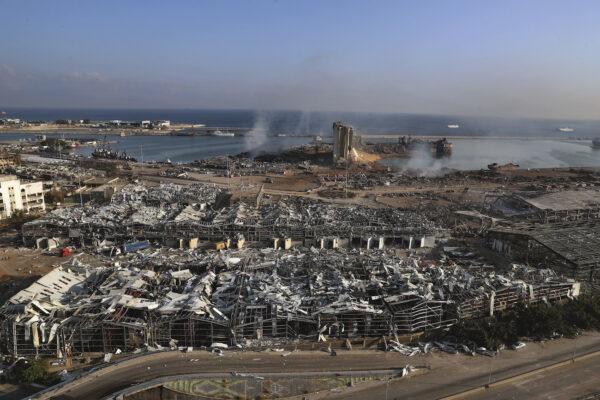
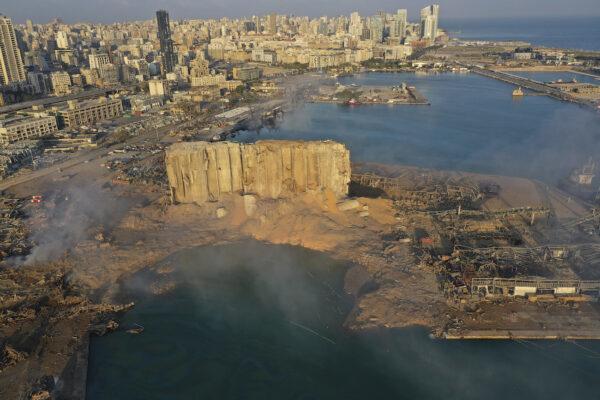
Aerial view of Beirut’s destroyed port. Photograph: Getty Images
by Warren Murray Thu 6 Aug 2020 

ALL VIDEOS ARE AT THE END

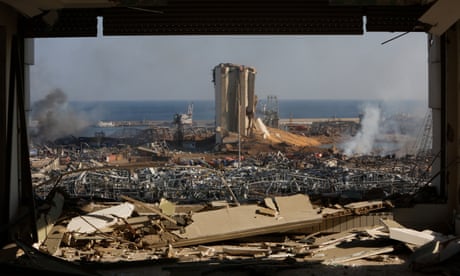
Lebanese officials have admitted the massive port explosion in Beirut that killed at least 135 people, injured thousands and left many more homeless came from nearly 3,000 tonnes of ammonium nitrate kept unsafely in a warehouse since 2014. As recently as six months ago, officials inspecting the consignment warned that if not moved it would “blow up all of Beirut”. The government, facing popular fury, said it was putting an unspecified number of Beirut port officials under house arrest pending an investigation into how the highly explosive materials came to be stored less than 100 metres from residential neighbourhoods.

In 2014 a Russian-owned vessel carrying the chemical – a fertiliser that can be used in bombs – was impounded at Beirut’s port, with its load apparently confiscated and taken ashore. Various reports said a fire started at a warehouse in the port before spreading to the ammonium nitrate’s storehouse and igniting the contents.

The explosion has left much of East Beirut uninhabitable and 300,000 people are said by the governor to have fled the city. International rescue crews have begun flying in to help with the search for survivors. Martin Chulov writes: “Ground zero of the explosion that destroyed much of the Lebanese capital was an enormous arc of warehouses, restaurants, homes and shops that, until Tuesday evening, were the still-functioning heart of an already dying city … Grappling with the cause of such a catastrophic event looms as yet another test for a government that has failed to convince many Lebanese that it is up to implementing a stated goal of introducing accountability. ‘If any country wants to help us, please help institutions you can trust,’ said Fady Haddad, a doctor. ‘Not through the government.’” Here is how anyone wishing to donate can help.

Beirut explosion: death toll rises to 137 as army takes control of site


Volunteers help clean up shattered streets as officials begin blame game over ammonium nitrate storage 

Beirut explosion: anger at officials grows after missed warnings

Michael Safi @safimichael Thu 6 Aug 2020

The death toll from a massive blast at Beirut’s port has risen again to 137, as the Lebanese army took control of the site on the first day of a two-week state of emergency.

The new casualty figures on Thursday morning include at least 5,000 injured and a health ministry spokesman said dozens were still missing. “This toll is not final,” he said.

As volunteers worked with the army to clean up shattered streets, buildings and hospitals, the government said it had formed an investigation committee to look into the explosion, which appears to have been set off by 2,750 tonnes of ammonium nitrate that had been stored at the port since 2014.

Lebanese officials have started blaming each other for leaving the highly explosive substance sitting so close to residential neighbourhoods for six years. The ammonium nitrate was taken from a ship that docked in Beirut in 2013 and was apparently abandoned by its Russian owner and mostly Ukrainian crew.

Badri Daher, the director general of Lebanese customs, said on Wednesday his office had sent six letters to the country’s judiciary urging them to deal with the chemicals either by exporting the load, reselling it or giving it to the army.


Part of the destroyed port as rescue work continues. 
Photograph: Wael Hamzeh/EPA

An unspecified number of port officials have been ordered to be placed under house arrest pending the investigation, which is scheduled to take five days. It will report to the national cabinet, which will refer its findings to the judiciary.

Amnesty International was among the organisations calling for an independent investigation into the circumstances leading up to the explosion.

“Whatever may have caused the explosion, including the possibility of a large amount of ammonium nitrate stored unsafely, Amnesty is calling for an international mechanism to be promptly set up to investigate how this happened,” said Julie Verhaar, the group’s acting secretary general.


Q&AWhat is ammonium nitrate, the chemical blamed for the blast in Beirut?Ammonium nitrate is a common industrial chemical used mainly for fertiliser because it is a good source of nitrogen for plants. It is also one of the main components in mining explosives.
It is not explosive on its own, rather it is an oxidiser, drawing oxygen to a fire – and therefore making it much more intense. However, it ignites only under the right circumstances, and these are difficult to achieve.
While ammonium nitrate can in fact put out a fire, if the chemical itself is contaminated, for example with oil, it becomes highly explosive.


Protests have been planned for central Beirut on Thursday afternoon as residents of the capital seethed at a disaster that appears to have been foreseeable and frequently warned about.


Beirut's ground zero: a rip through the heart of an already dying city

One one shattered balcony, someone hung a thin noose along with the sign, “Whose heads will be hung?” Lebanese social media was trending with the hashtag “Hang up the nooses”, as rage threatened to boil over in the grief-stricken city.

The French president, Emmanuel Macron, arrived in Beirut on Thursday morning, the first world leader to visit in the wake of the disaster. His office said he would head straight to the blast site. He is expected to call for international aid to rebuild Beirut but also press for changes to the political system – a major hurdle to receiving billions of dollars of aid to alleviate one of the worst financial crises in modern Lebanese history.

“For the president, it’s a matter of showing that France is there – that is its role – and that he believes in Lebanon,” the presidential palace said. “The visit is also an opportunity to lay down the foundations for a pact for the reconstruction of Lebanon, binding for all, that will limit conflicts, offer immediate aid and open up a long-term perspective.”

French aircraft were among several including from Turkey, Germany, Gulf countries and the World Food Programme to land in Beirut since Tuesday, bringing rescuers, medical supplies and equipment.

Tuesday’s explosion echoed another blast 15 years ago in which the former Lebanese prime minister Rafik Hariri was killed by a car bomb not far from the port. An international court trying four men accused of Hariri’s assassination and killing 21 others with him was supposed to give its long-awaited verdict on Friday.

But the court outside The Hague said it was delaying the announcement “out of respect for the countless victims of the devastating explosion that shook Beirut on 4 August, and the three days of public mourning in Lebanon,” its registry said in a statement.

Play Video
1:37 'It's a catastrophe': Beirut residents and mayor react to deadly blast – video

Play Video
1:03 Before and after: drone footage shows devastation caused by Beirut explosion – video


Play Video
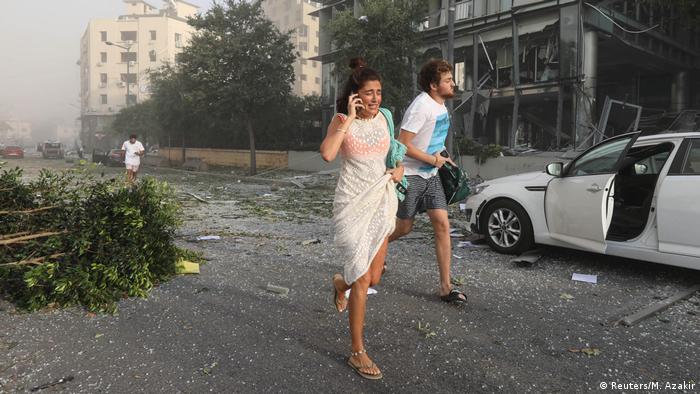
1:57 Beirut bride describes moment explosion hit during wedding photoshoot – video


CHEMISTRY 101

Beirut deadly blast: What makes ammonium nitrate so dangerous?

The huge explosion that rocked the Lebanese capital on Tuesday is thought to have been caused by ammonium nitrate. The chemical is often used as fertilizer — and in explosives.
    

Lebanese Prime Minister Hassan Diab says he believes Tuesday's explosion in Beirut could have been caused by large quantities of ammonium nitrate stored in the port.
The ammonium nitrate in question was said to have been brought to the Lebanese capital on a freight ship that was impounded for safety reasons in 2013. It had been en route from Georgia to Mozambique.
Diab said some 2,750 metric tons (3,025 US tons) of the highly explosive chemical had been stored at the port since then without necessary safety precautions in place.
The blast was so powerful it could be heard in Cyprus, some 200 kilometers (124 miles) further to the west, media reports said.
What is ammonium nitrate?
Ammonium nitrate is a white crystalline salt that can be fairly cheaply produced from ammonia and nitric acid. It is soluble and often used as fertilizer, as nitrogen is needed for healthy plant development.

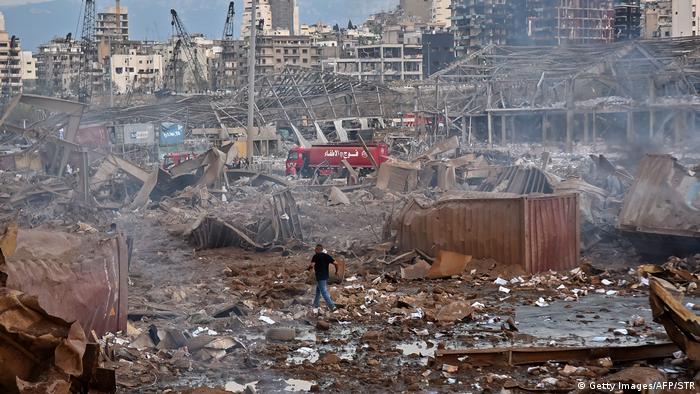
The port was completely destroyed by the explosion
Ammonium nitrate in its pure form is not dangerous. It is, however, heat sensitive. At 32.2 degrees Celsius (89.96 degrees Fahrenheit), ammonium nitrate changes its atomic structure, which in turn changes its chemical properties.
When large quantities of ammonium nitrate are stored in one place, heat is generated. If the amount is sufficiently vast, it can cause the chemical to ignite. Once a temperature of 170 C is reached, ammonium nitrate starts breaking down, emitting nitrous oxide, better known as laughing gas. Any sudden ignition causes ammonium nitrate to decompose directly into water, nitrogen and oxygen, which explains the enormous explosive power of the salt.
Deadly disasters
As ammonium nitrate is a highly explosive chemical, many countries strictly regulate its use. Over the past 100 years, there have been several disasters involving the chemical.
In 1921, for example, a massive blast occurred at a BASF chemical plant in Ludwigshafen in the German state of Rhineland-Palatinate. About 400 metric tons of a mixture of ammonium sulfate and ammonium nitrate exploded, killing 559 people and injuring 1,977. The plant was largely destroyed in the blast, which could be heard as far away as Munich, some 300 kilometers distant.

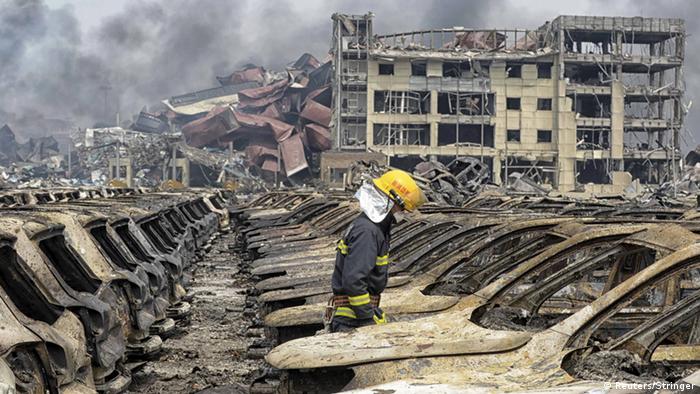
The 2015 explosion in Tianjin caused widespread destruction in the city
In 2015, explosions caused by ammonium nitrate ripped through the Chinese port city of Tianjin. Eight hundred metric tons of the chemical were said to have been stored along with other substances in a warehouse for hazardous materials. The blasts killed 173 people and destroyed an entire city district.
Two years earlier, in 2013, an ammonium nitrate explosion occurred at the West Fertilizer Company site in the US state of Texas, killing 14 people. And in 2001, 31 people died in Toulouse, France, in an explosion caused by the chemical.
Terrorist favorite
In Germany, the purchase and use of ammonium nitrate is regulated by the explosives act. This is because the cheap, highly explosive and relatively easily obtainable material  has in the past been used by terrorists to carry out attacks.
For example, in 1995, US conspiracy theorist and gun enthusiast Timothy McVeigh used a mixture of ammonium nitrate and other substances to bomb the Alfred P. Murrah Federal Building in Oklahoma City. Norwegian far-right extremist Anders Behring Breivik also used 

Massive Beirut Explosion Sinks Nearby Cruise Ship


Tuesday's massive explosion in Beirut, Lebanon, has so far claimed the lives of 135 people and injured around 5,000. The cause of the explosion was 2,700 tons of ammonium nitrate, sitting unsecured in a warehouse at the Port of Beirut. 
Beirut's governor, Marwan Abboud, said damage from the blast is widespread and extends over half of the city, with the cost of the damage estimated to be more than $3 billion. 


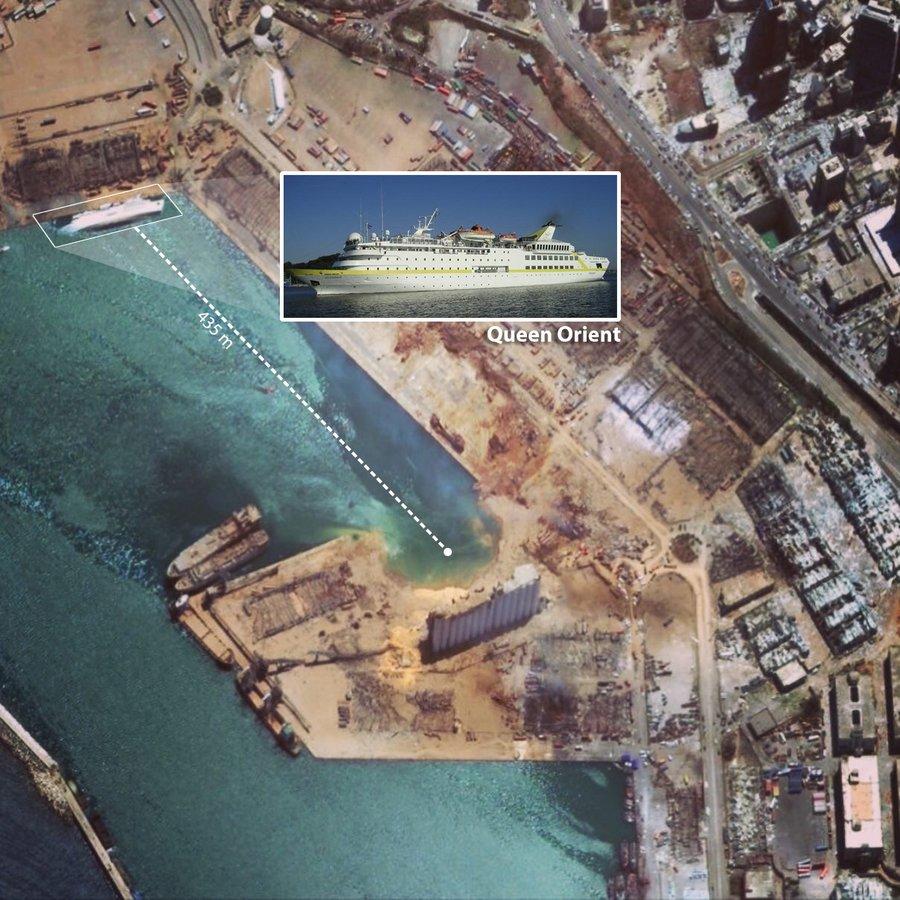
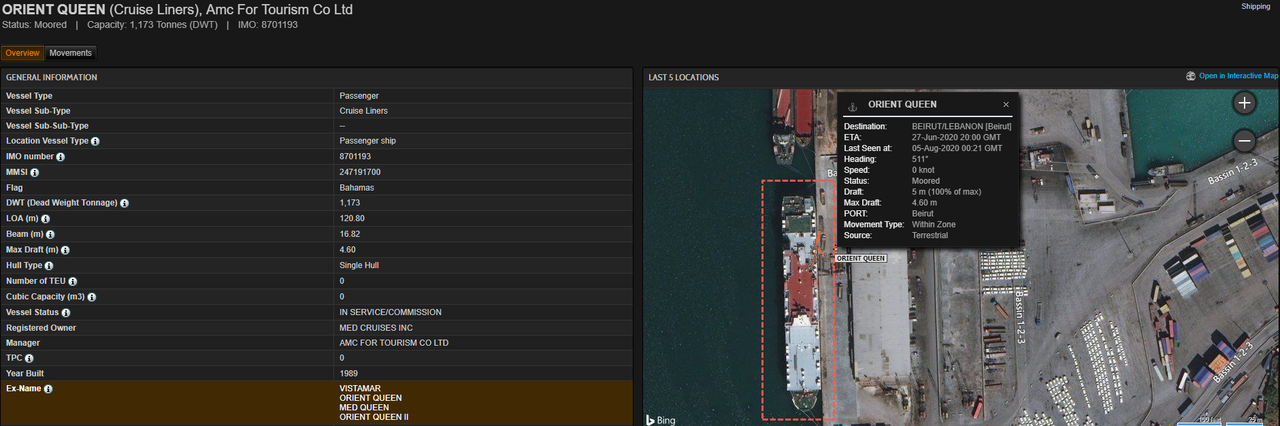
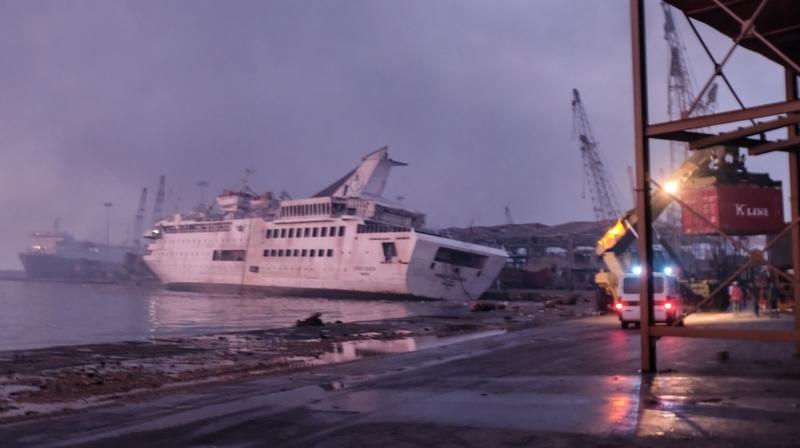
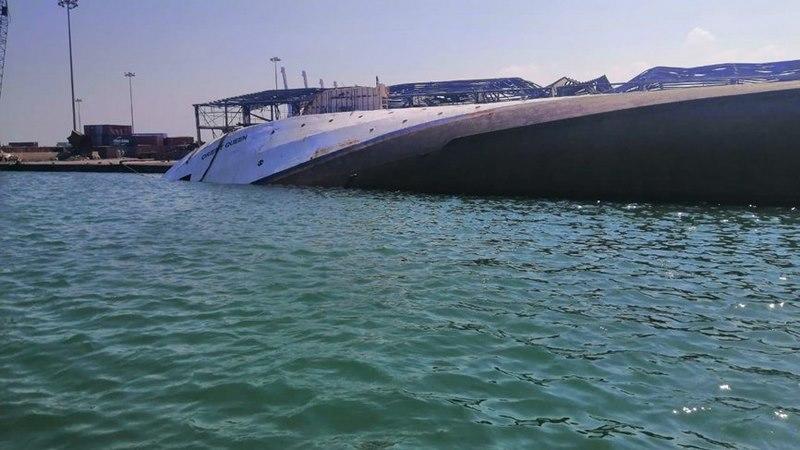
For more color on the sheer destruction, Dutch newspaper De Telegraaf cited Lebanese news agency National News Agency (NNA), which reports the blast also sunk a nearby cruise ship.
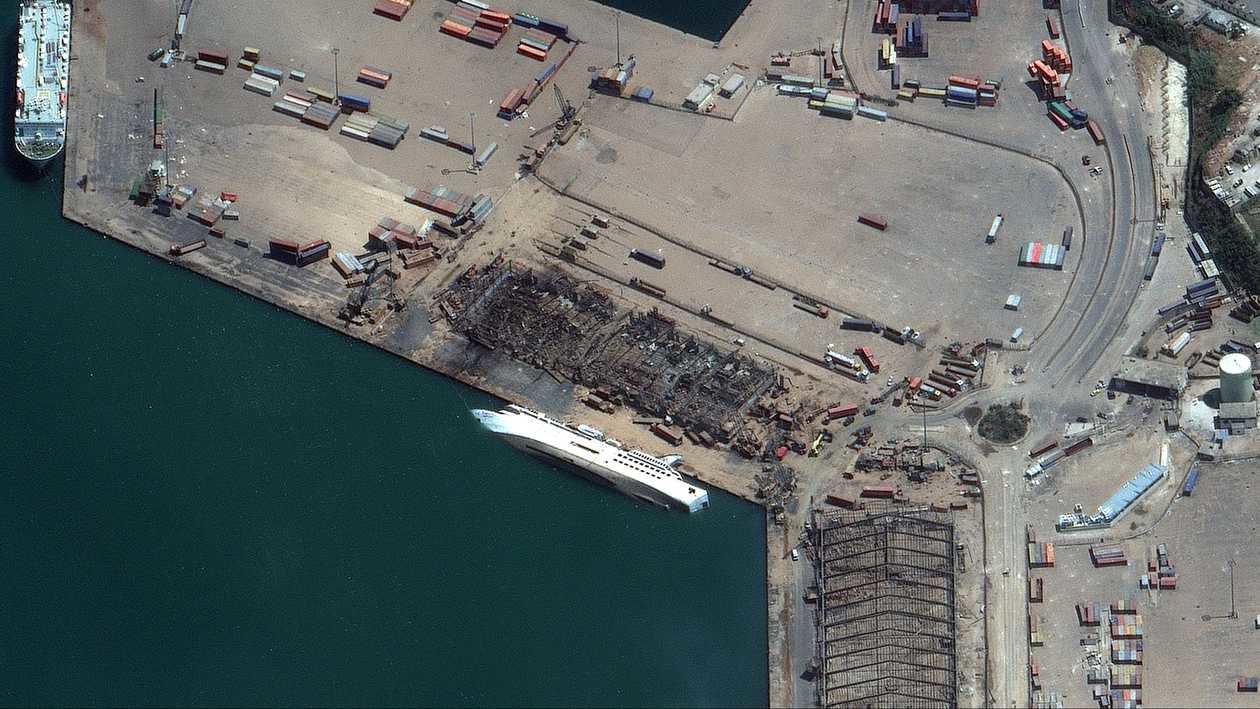
The Orient Queen, owned by Abou Merhi Cruises, measures an overall length of 400 feet long, was sunk by the ammonium nitrate explosion.
After the explosion, the vessel was severely left listing to the starboard, with two crew members killed and several injured.


The vessel eventually capsized hours later. 
Here's a video of the capsized vessel.

A satellite image via Maxar captured the sunken cruise ship. 
One can only speculate this wasn't a normal 'explosion'
AND THAT IS HOW CONSPIRACY THEORIES BEGIN