Thursday, December 17, 2020

Cuba rejects report on ailments by US, Canadian diplomats in Havana


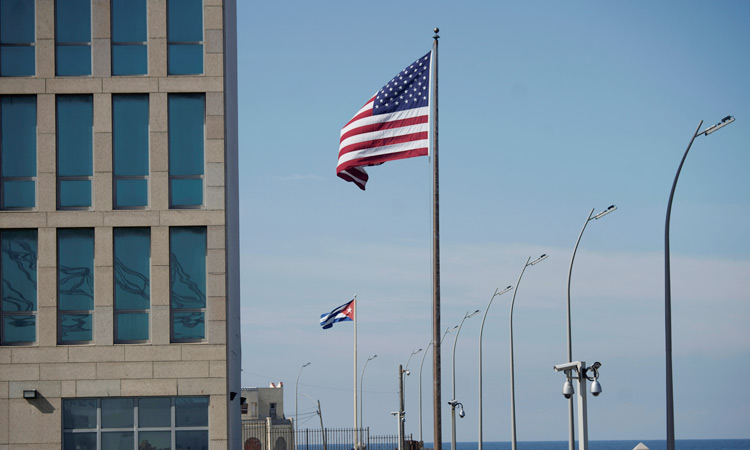
A view of Cuban and US flags beside the US Embassy in Havana, Cuba. Reuters

Cuba on Tuesday rejected a US government report concluding that directed radio frequency was the most plausible explanation for mysterious ailments suffered by US diplomats in Havana and elsewhere, calling it more "very unlikely" hypothesis than "demonstrated fact."

Luis Velázquez, the president of the Cuban Academy of Sciences, noted in the release that the organization disagrees with the National Academies of Sciences (NAS) December 6 report, even though it "made progress in defining the medical characterization of the causes and issued valid recommendations."


Canada has said more than a dozen of its embassy staff and relatives stationed in Havana experienced similar symptoms.

Between 2016 and 2018, dozens of US embassy staff, largely in Cuba, reported symptoms that included hearing loss, vertigo, headaches and fatigue, a pattern consistent with mild traumatic brain injury that came to be known as the “Havana syndrome.”

Canada has said more than a dozen of its embassy staff and relatives stationed in Havana experienced similar symptoms.


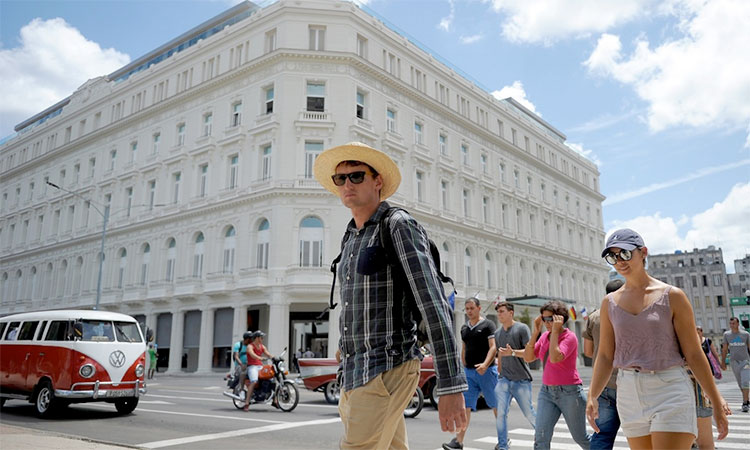
Tourists walk near the Manzana Kempinski Hotel, the first luxury five star plus tourist facility in Cuba. AFP
The administration of US President Donald Trump said the diplomats were attacked by some sort of secret weapon. Cuba has repeatedly said there is no evidence for that and denied any involvement.

The Cuban Academy of Sciences said on Tuesday the report by the US National Academies of Sciences, Engineering, and Medicine, commissioned by the US State Department and published on Dec.6, gives no scientific evidence of the existence of radio frequency waves.

“Cuba’s Academy of Sciences disagrees with the final conclusion regarding the causes of the ailments,” the academy said in a statement read to journalists by its President Luis Velazquez.

Velazquez, who did not take any questions at the news briefing in Havana, said the “investigation about these health ailments has suffered from a lack of fluid communication between US and Cuban scientists.”

US officials say off the record they cannot cooperate with Cuba on such a sensitive investigation where its Communist government has a strong interest in the outcome.

Cuba said the Trump administration has used the health incidents to further its political agenda of dismantling US-Cuban relations, after Trump’s predecessor Barack Obama had worked to improve diplomatic ties with Havana.

The administration reduced the US embassy in Havana to skeletal staffing and hiked its warning on travel to Cuba following the mysterious incidents.

Reuters

Thousands of children abused under New Zealand state and faith-based care

Interim report by Royal Commission of Inquiry into historic abuse of children in state care said most abuse survivors were between 5 and 17 years

COMMONWEALTH RESIDENTIAL SCHOOLS 
FOR INDIGENLOUS YOUTH
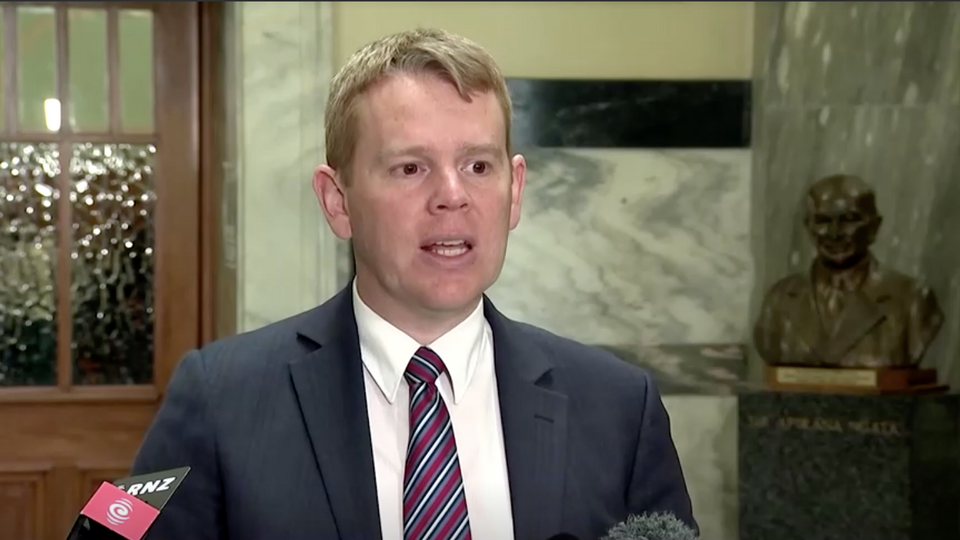
New Zealand Minister for Public Service Chris Hipkins, December 16, 2020. (Reuters)

Up to a quarter of a million children, young people and vulnerable adults have been abused in New Zealand's faith-based and state care institutions in the past several decades, a public inquiry has revealed.

An interim report by the Royal Commission of Inquiry into historic abuse of children in state care estimated that up to 256,000 people were abused between 1950 and 2019. This accounts for almost 40 percent of the 655,000 people in care during that period.

"The hurt and anguish that has been caused in New Zealand’s history is inexcusable,” said Minister for the Public Service Chris Hipkins, who described the report as a "difficult rad".

"All children in the care of the state should be safe from harm, but as the testimony sets out all too often, the opposite was true."

The report said most abuse survivors were aged between 5 and 17, but some were as young as 9 months and as old as 20. Most were abused over a five to 10 year period.

Physical assault and sexual abuse

The abuse included physical assault and sexual abuse, with staff in some psychiatric institutions forcing male patients to rape female patients. It also included the improper use of medical procedures including electric shocks on genitals and legs, improper strip searches and vaginal examinations, and verbal abuse and racial slurs.

"Sometimes I'd have shock treatment twice a day," said Anne, who at 17 was placed in a psychiatric institution in 1979.

"The records (said) I went blind, then they gave me shock treatment again that night," she told the inquiry.

Prime Minister Jacinda Ardern announced the Royal Commission in 2018 saying the country needed to confront "a dark chapter" in its history, and later expanded it to include churches and other faith-based institutions.

The report said the likelihood of children and young people abused in faith-based or religious homes ranges from 21 percent to 42 percent.

It found the number of people passing through care institutions was six times higher than previously estimated.

"On any assessment this is a serious and long-standing social problem that needs to be addressed," the report said, adding there was evidence that abuse continued today.

The report comes after private and public redress hearings where survivors bravely narrated harrowing accounts of physical and sexual abuse.

'I didn't wanna live anymore'

One Maori survivor, Peter, told the inquiry he drove a car off a cliff in an attempt to suicide to escape the abuse.

"I didn't wanna live anymore. I went over a cliff and smashed head-on into a bank. Again, if anybody just stopped and looked at why, they would have figured something out, but they didn't," he said.

The Catholic Church in Aotearoa New Zealand said it would study the report to learn how to deal with complaints and prevent abuse.

The report acknowledged that indigenous Maori children probably suffered the most, as 81 percent of children abused in care are Māori, while 69 percent of the children in care are Māori.

It said some faith-based institutions sought to "cleanse", through sexual and physical abuse, the cultural identity from Maori people in care.

Thousands of Maori people protested across New Zealand last year calling for an end to the practice of taking at-risk children away from families and placing them in state care.

Critics of the practice have said the process is racially skewed against the Maori, and is a legacy of colonisation.

Neighbouring Australia delivered a national apology in 2017, after a five-year inquiry into child sexual abuse revealed thousands of cases of sexual misconduct largely committed at religious and state-run institutions


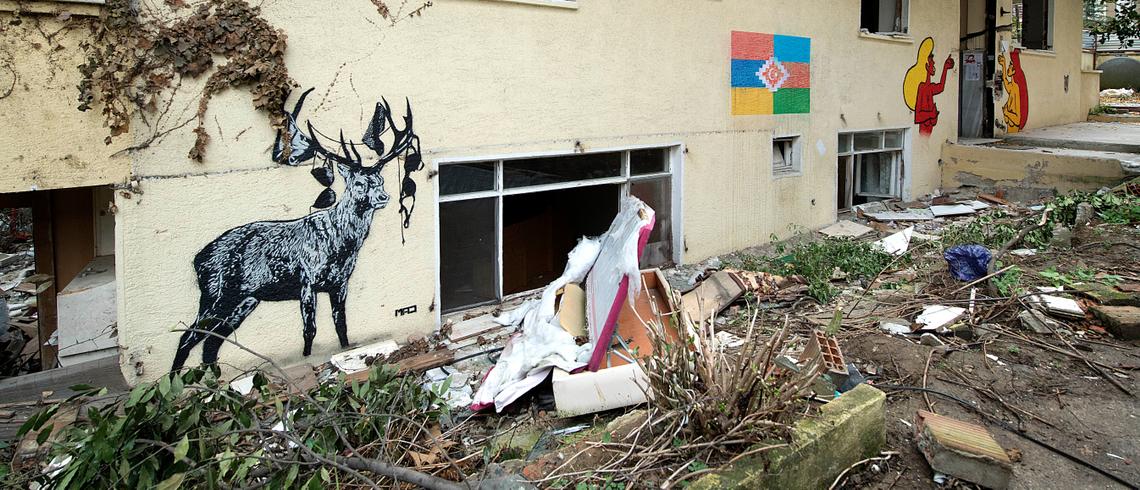
A building ready for demolition 
“Until it is torn down”: Artists create in abandoned building in Istanbul


MELIS ALEMDAR

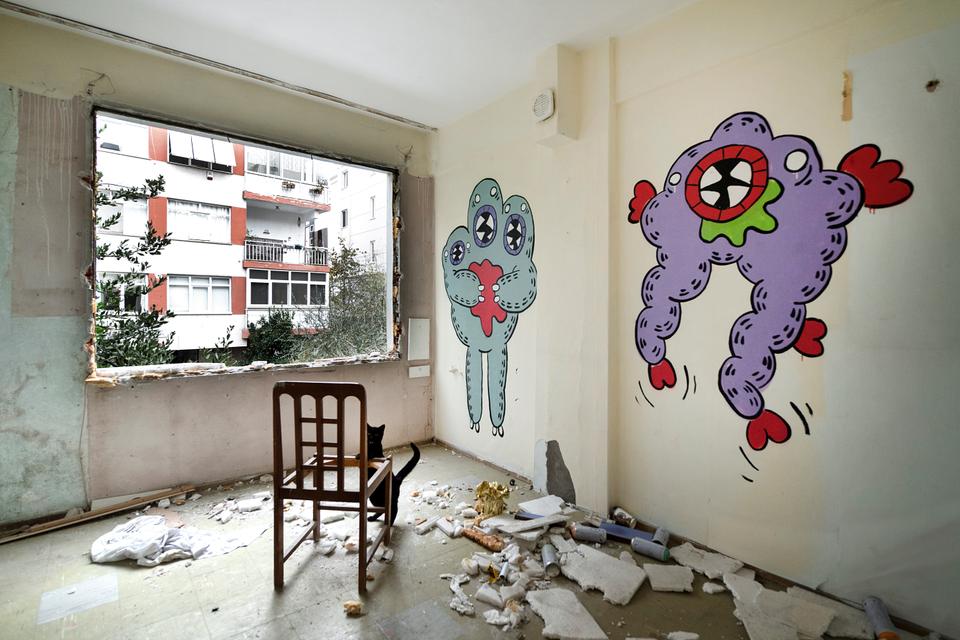
A building ready for demolition in Feneryolu, Kadikoy, on the Asian side of Istanbul, is the unlikely but delightful site of a group exhibition that challenges the notions of displaying art.

“We were told that the building would be torn down in 10-15 days,” says curator and sculptor Begum Tekay. “So we got together and created Mikrotopya in five days, and invited our friends to the opening on November 1.


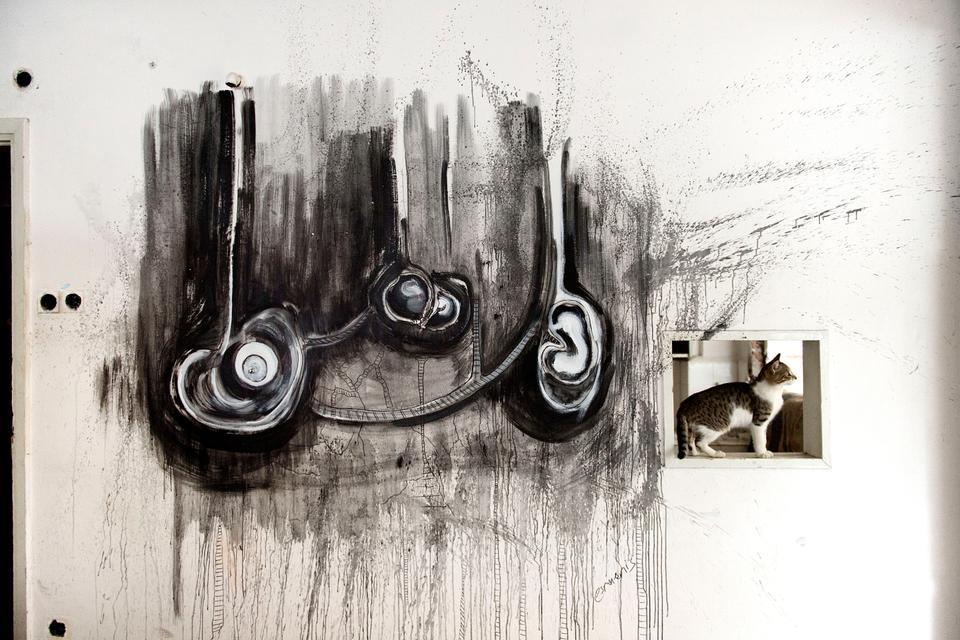
A cat stops by the work of Esra Enis.
A cat stops by the work of Esra Enis. (Selin Alemdar / TRTWorld)

As it is, the building that houses the exhibition is still standing and is safe to visit, but has an impending demolition date that is “any day now”.

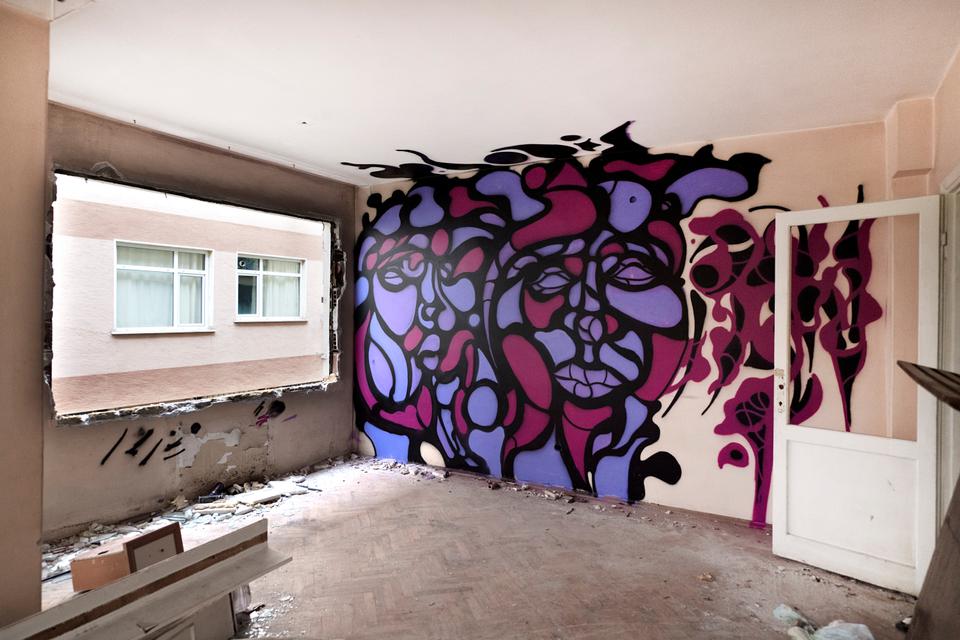
Graffiti artist Mre has taken over some walls on the first floor.
Graffiti artist Mre has taken over some walls on the first floor. (Selin Alemdar / TRTWorld)

Tekay is showing TRT World around an abandoned building with no window panes, doors, heating or electricity. The floors are a mixture of broken glass and bricks. You can see the linoleum on the floor of some apartments while remnants of carpet or wood floors remain in others.

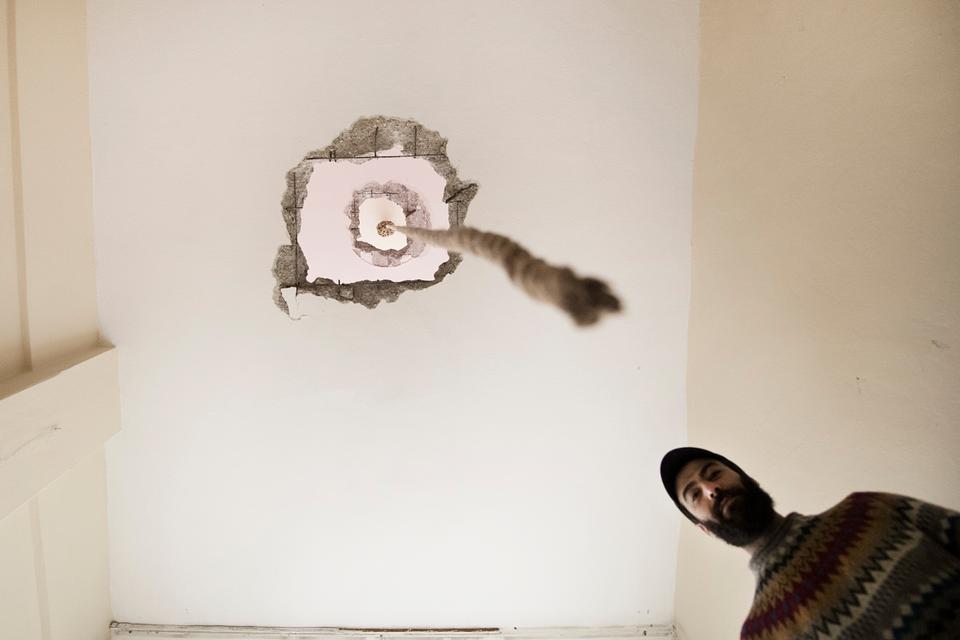
Artist Hamid Binandeh with his rope installation called ‘Path’, spanning three floors, starting from a knot.
Artist Hamid Binandeh with his rope installation called ‘Path’, spanning three floors, starting from a knot. (Selin Alemdar / TRTWorld)

Walls on the ground floor and the three floors above are filled with the creative output of sixteen artists, mostly using objects found in the building, with the exception of graffiti and a few other paint-based works.

Berat Cizer’s work can also be seen at Mikrotopya.
Berat Cizer’s work can also be seen at Mikrotopya. (Selin Alemdar / TRTWorld)

This is Mikrotopya: available for view “until it’s torn down” to make way for a newer, glossier apartment building, thanks to an urban renewal project. “‘Microtopia’ is primarily a term mentioned in a book, “Relational Aesthetics,” written by French art critic Nicolas Bourriaud. The main meaning of the word “microtopia” is that an artist should arrange ideal but realistic moments instead of seeking imaginary and remote utopian realities”.

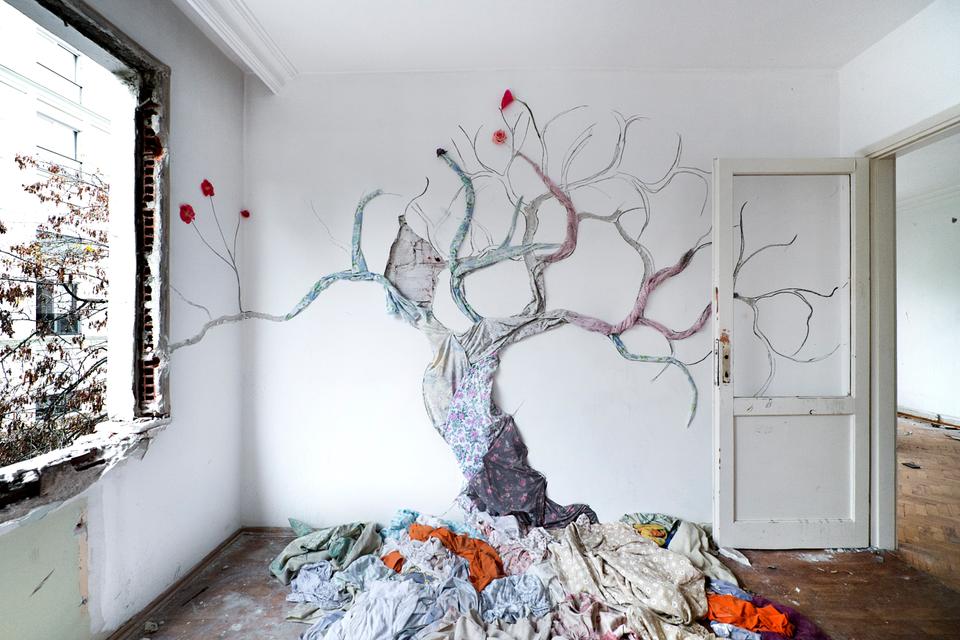
Songul Girgin’s tree was made with found fabrics from the apartment building.
Songul Girgin’s tree was made with found fabrics from the apartment building. (Selin Alemdar / TRTWorld)

Tekay, 29, an artist with a work in the exhibition herself, says it all happened very fast, and that nothing was preplanned. “All the artists came together, worked like bees, and saw each others’ works for the first time at the opening. The exhibition spread by word of mouth, and now we get people stopping by on their way from the grocery store, or who travel great distances within Istanbul just to take a look.”

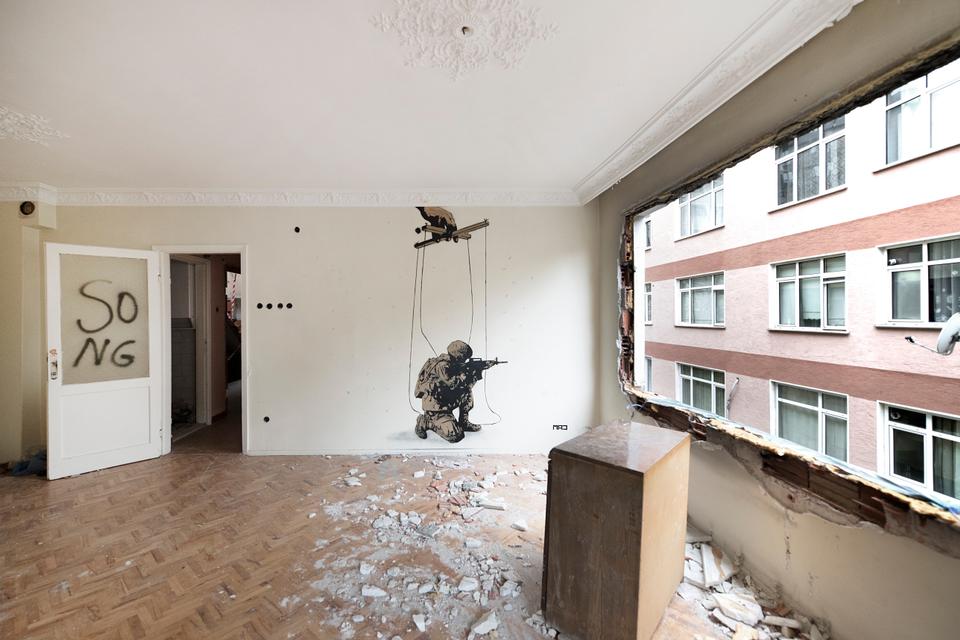
Mad’s puppet soldier stencil gazes out of the window threateningly towards civilian buildings.
Mad’s puppet soldier stencil gazes out of the window threateningly towards civilian buildings. (Selin Alemdar / TRTWorld)

The former residents attended the opening, and Tekay says the exhibition space held bittersweet memories for them as they walked through their old bedrooms, and hesitated on entering their neighbours’ former apartments.

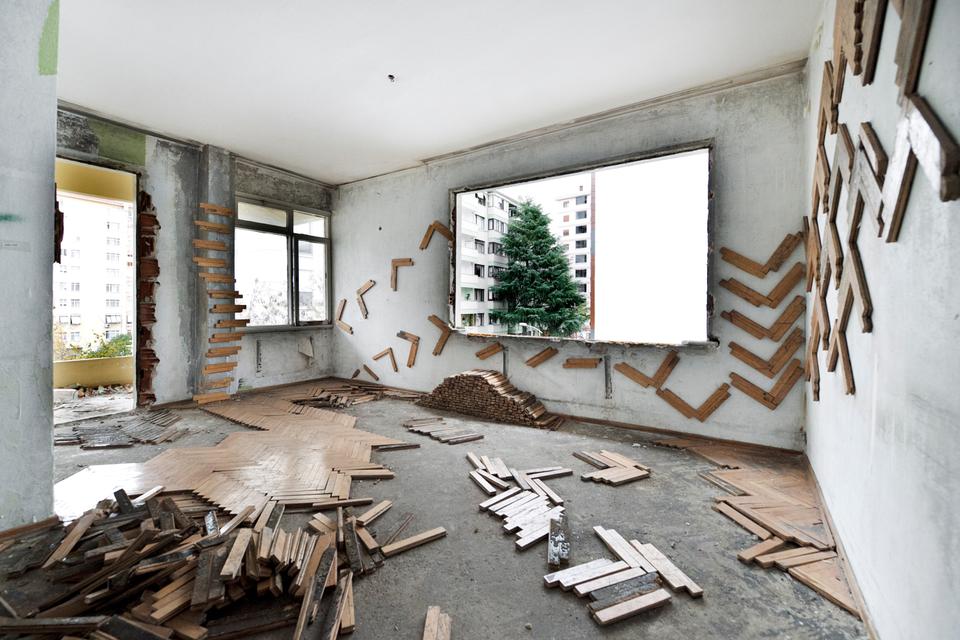
Sculptor Begum Tekay’s work is made from old-fashioned herringbone patterned floor tiles.
Sculptor Begum Tekay’s work is made from old-fashioned herringbone patterned floor tiles. (Selin Alemdar / TRTWorld)

The building is the furthest thing from the formality of a conventional gallery space or museum, allowing viewers to explore the artwork at their own pace and enjoy their surroundings. Stray cats accompany visitors from room to room, returning affection to those who bend down to pet them.

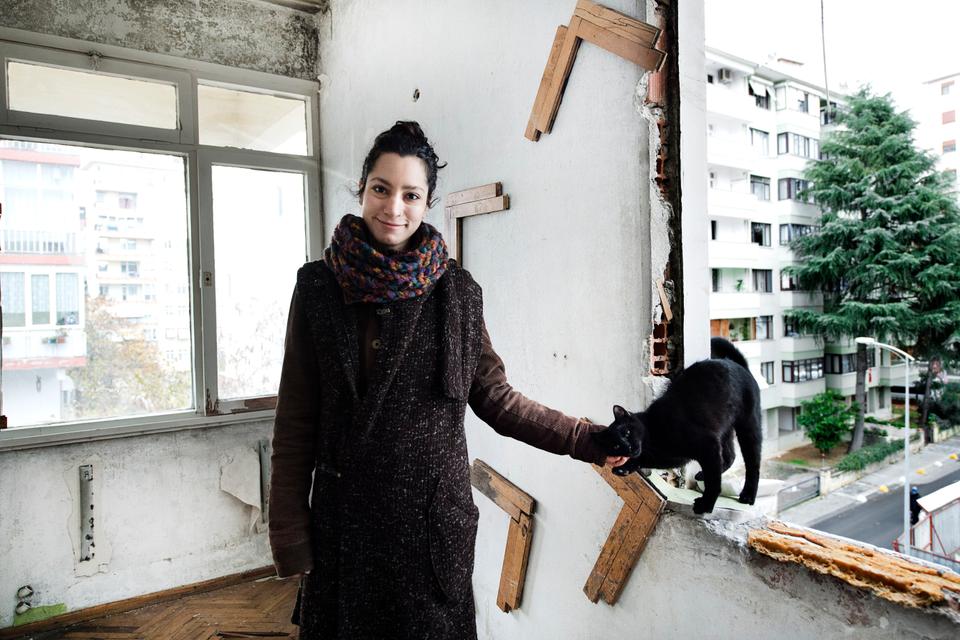
Curator and sculptor Begum Tekay with one of the neighbourhood felines.
Curator and sculptor Begum Tekay with one of the neighbourhood felines. (Selin Alemdar / TRTWorld)

The exhibition is open daily from 2pm to 6 pm, but if you’re lucky, Tekay may have unlocked the door a few hours earlier. Tekay, whose studio space is in the building next door, says she was able to realise this exceptional exhibition because she hails from the neighbourhood herself, and had relationships with the people who live there.

The contractor allowed Tekay and her colleagues complete freedom. The works do not have a common theme, and are open to interpretation in the best sense of the word. They have been produced using what limited material was found at the site, plus some spray paint and oils. Mikrotopya, in this sense, is an exploratory and experimental space, and the time pressure to see it only adds to the pleasure of having witnessed it.

TRT World recommends art lovers in Istanbul to go and see Mikrotopya at their earliest convenience - after all, the building that houses it is here today, gone tomorrow. Mikrotopya highlights the transient nature of many beautiful things in our lives.

The artists who have contributed to the exhibition are: Batikan Bostanci, Begum Tekay, Burak Cizer, Erdost Yildirim, Esra Enis, Hamid Binandeh, Hur, Mad, Mre, Muhittin Can, Nasa, Serror, Sinem Yeniaras, Songul Girgin, Suleyman Engin, and Pan. The address is Feneryolu Mah. Atilay Sokak No: 14, Istanbul.

Thumbnail photo: The work of Muhittin Can

Headline phot: The exterior of Atilay Sokak No: 14  


Arter in Istanbul, “a sustainable, vibrant cultural hb” in the making


Sikh priest commits suicide during India farmer protests

3 HOURS AGO

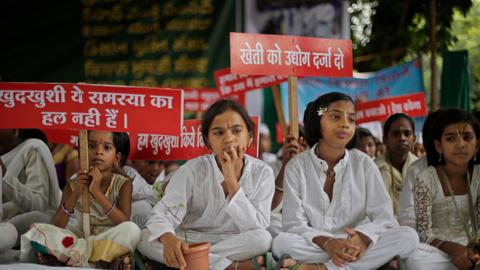
Farmers have been protesting for nearly a month against agricultural reforms that allow corporations to buy directly from the producer, fearing they will push down crop prices.
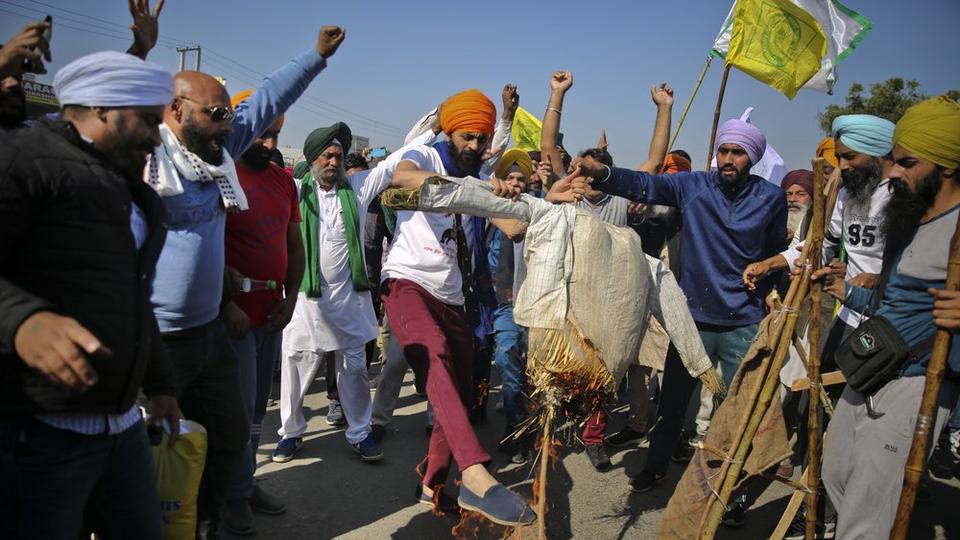
Protesting farmers burn an effigy of Indian Prime Minister Narendra Modi on a highway, refusing to move ahead unless they're allowed to proceed to their place of choice to protest, at the Delhi-Haryana state border in India on November 28, 2020 (AP)

A 65-year-old Sikh priest, Sant Baba Ram Singh, has committed suicide at one of the farmers protest sites in Indian capital New Delhi.

In his suicide note doing rounds on social media, Singh said he was "hurt to see the condition" of the protesting farmers.

His postmortem was done at a government hospital in Karnal district of his home state of Haryana.

Farmers have been protesting for nearly a month over the reforms, enacted in September, to deregulate the agriculture sector, allowing farmers to sell to buyers beyond government-regulated wholesale markets.

Blaming government apathy for Singh's suicide, opposition leader Rahul Gandhi said Prime Minister Narendra Modi's administration should immediately repeal the laws.

The reforms, contained in three laws, loosen rules around the sale, pricing and storage of farm produce, while farmers say that new rules threaten their livelihood.

Modi has tried to assure farmers the changes will bring them new opportunities but few have been convinced. Several rounds of talks between farm union leaders and the government have failed.
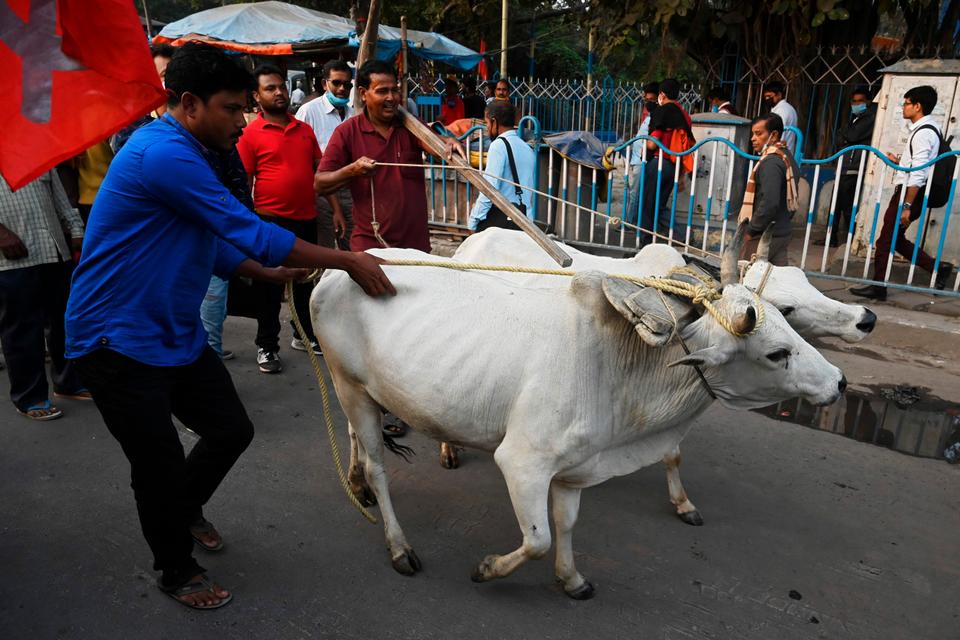
Farmers and activists from various political groups, along with bulls, take part in a rally in support of farmers against the central government's recent agricultural reforms in Kolkata on December 16, 2020. (AFP)

Top court's offer to mediate


India’s Supreme Court on Wednesday offered to set up a mediation panel to end the three-week protest.

The court sent notices to the government and the farmers’ representatives across the country seeking their views on the proposal and set on Thursday as the date for a possible decision.

Earlier, Chief Justice S.A. Bobde and Justices A.S. Bopanna and V. Ramasubramanian made the offer to set up the panel after five rounds of talks failed to end the impasse between the government and farmers.

“Your negotiations with protesting farmers have not worked apparently until now,” the Press Trust of India news agency cited the judges as telling government Solicitor-General Tushar Mehta.

READ MORE: India's farmers defiant despite Modi assurance

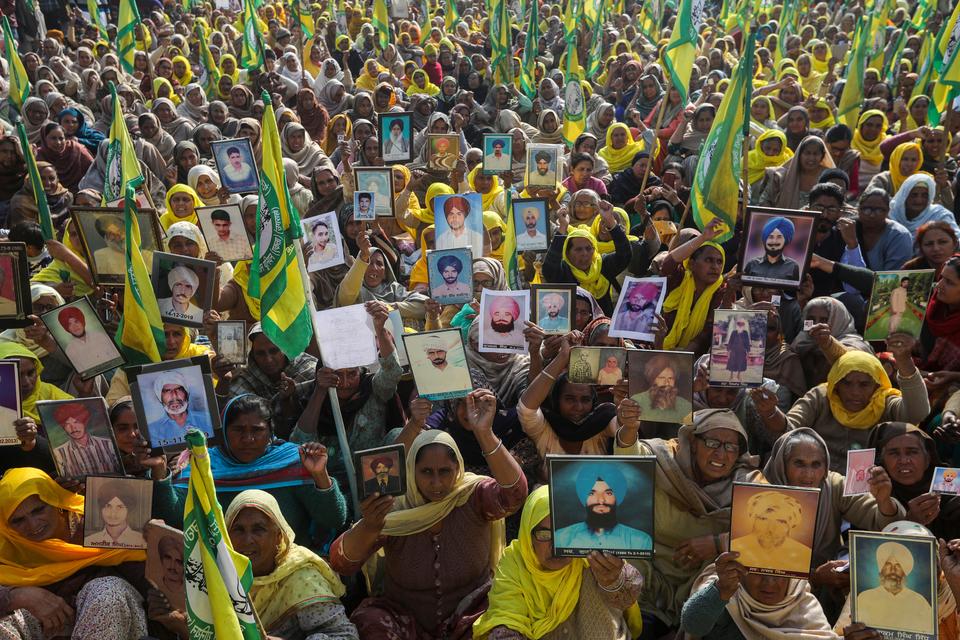
Women, including widows and relatives of farmers who were believed to have killed themselves over debt, attend a protest against farm bills passed by India's parliament, at Tikri border near Delhi, India on December 16, 2020. (Reuters)

India's 'invincible' women join protests


Legions of women have trekked to India's capital to join the farmer's protests, hoping not only to protect their livelihoods but also win visibility as farmers.

About 75 percent of rural women in India who work full-time are farmers, Oxfam says, with numbers rising as men migrate to work in factories and construction sites. Yet farming is still widely seen as men's work and only 13 percent of women own the land they till.

"Women are never counted as farmers ... we are always counted as housewives, but not workers," said Sunita Rani, 39, who owns a farm of less than an acre in northern Haryana state and joined the protests on New Delhi's border a fortnight ago.

"More women work as farmers than men, but their work is not seen as equal. This is a major national protest and I joined it so people know that we are also farmers," Sunita told the Thomson Reuters Foundation by phone.
Globally, more than 400 million women farm, yet only about 15% of farmland is owned by women, according to Landesa, a global land rights organisation, with many women doing unpaid work on family farms or as casual labourers.

In order to support women farmers, the government has spent billions of rupees on an empowerment scheme and provides training on agricultural techniques and support to find markets.

READ MORE: Indian government offers concessions as farmers intensify protests

Identity battle


But much remains to be achieved on the ground.

"We work from 7am to 5pm on the field, tilling the soil, cultivating, fencing fields but our contribution is not considered ... not a single woman in my village has land ownership," said 27-year-old Kavita Kumari.

Kumari was among hundreds of women farmers and farm workers who travelled for 15 hours in trucks from central Madhya Pradesh state to national highways bordering New Delhi where thousands are camping as entry to the city is barred.

"I have been a farmer since I was a child ... I can ride a bike, and a tractor. People will see if we can come forward for protests, we can also do farming," she said.

Women farmers have taken to the stage during the protests to oppose the new legislation.

"It matters to them to voice their thoughts and perspective on these laws," said Kavitha Kuruganti, convener of Alliance for Sustainable and Holistic Agriculture, a coalition of farmer groups taking part in the protests.

"Yet tens of thousands remain invisible even now.

It was not possible for men to participate (in the protests) if women were not doubling up back home and taking on the role of men who are here."

Visibility at the protest site, however, might not help women win their identity battle, since the protests are not about their rights, some campaigners said.

"They have always cultivated the land but never been called cultivators. They even get paid less (as farmer labourers) for the work they do," said Jai Singh, founder of Punjab-based charity Volunteers for Social Justice.

"The voices of women you hear at these protests are still very much from the margins.

Change for them will need a different venue and a different protest."
Wealthy Britain faces criticism after UNICEF feeds children there

“It should never have come to this” in one of the world’s richest countries, opposition Labour Party deputy leader Rayner says of UN’s first-ever emergency response in Britain
.
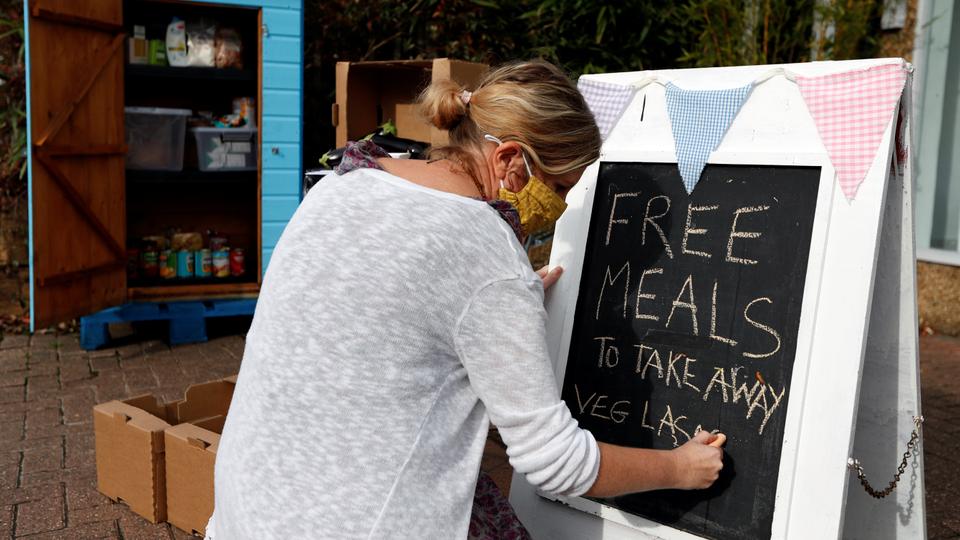
A woman writes on a stand informing about give away of free meals to children and families at the Open Door Community Space and Cafe in Berkhamsted, Britain, October 28, 2020. (Reuters)

The British government has faced criticism after it has emerged a UN agency is helping to feed hungry children as part of its first ever UK emergency response.

The opposition Labour party said it was "a disgrace" that a grant from UN children's agency UNICEF was helping fund breakfast for nearly 2,000 struggling families over the Christmas school holidays.

"We are one of the richest countries in the world," said Labour's deputy leader Angela Rayner, adding "it should have never come to this".

"Our children should not have to rely on humanitarian charities that are used to operating in war zones and in response to natural disasters."

Conservatives get the flak

The ruling Conservatives have already faced severe criticism and been forced to U-turn over the provision of free meals to the poorest children during school holidays.

That followed a high-profile campaign by Manchester United and England footballer Marcus Rashford during the coronavirus pandemic.

The UNICEF grant of $33,700 will be spent by several non-profit organisations in Southwark, south London.

They will receive 18,000 breakfasts, which will be distributed by schools for two weeks, and the programme will also provide 6,750 breakfasts over the February half-term break.

The UN agency has said the coronavirus pandemic is the most urgent crisis affecting children since World War II.

Govt proves itself right


"This is UNICEF's first ever emergency response within the UK, introduced to tackle the unprecedented impact of the coronavirus crisis and reach the families most in need," said Anna Kettley, director of programmes at Unicef UK.

"This funding will help build stronger communities as the impact of the pandemics worsen, but ultimately a longer-term solution is needed to tackle the root causes of food poverty, so no child is left to go hungry."

Johnson's official spokesman defended the government's record on the issue.

"We would point to the substantial action we've taken to ensure that children don't go hungry through the pandemic and I would point to the additional $21.7 million we pledged not too long ago to food distribution charities," he told reporters.

Source: TRT World


2020 Human Development Report urgently calls for nature-based development


Though many countries have made gains, Covid-19 may have hurt overall human development; solutions integrating social, economic, ecological systems is the way forward, UN says

The global financial crises, climate change, inequality, and the Covid-19 pandemic have pushed the planet’s buffering systems to their limits, and comprehensive and collective action is urgently needed, the UN said in its latest annual Human Development Report.

Titled, “The next frontier: Human development and the Anthropocene,” the report argues that the globe has entered a new geologic epoch, the Anthropocene, or the “Age of Humans.” Moving forward, it says, human development must consider the dimensions of agency and values, rooted in an understanding of and relationship with nature and stewardship.

The most striking part of the report this year was the introduction of a new measure of human development, one that is adjusted for each country’s per capita carbon dioxide emissions and per capita materials footprint (the amount of extraction of raw materials like fossil fuels and metals).

“Humans wield more power over the planet than ever before. In the wake of COVID-19, record-breaking temperatures and spiraling inequality, it is time to use that power to redefine what we mean by progress, where our carbon and consumption footprints are no longer hidden,” said UNDP Administrator Achim Steiner in a press release.

Global Inequality, Wealth, and Consumption

The report shows that individuals in wealthiest 1 percent emit 100 times the carbon dioxide as individuals in the poorest 50 percent each year, and that the growth in emissions for the highest income earners is linked to increased consumption and emissions from wealth and investments.

After adjusting the HDI for planetary pressures, only about 15 percent of the countries originally classified as “very high development countries” remained in that classification. Countries like Singapore, Iceland, Australia, and Canada, which ranked in the top twenty in the HDI dropped in ranking by as many as 92 places in the Planetary pressures-adjusted HDI (PHDI).

Meanwhile, countries like Algeria, Peru, Albania, and the Philippines each saw their rank rise by more than 20 places in the PHDI, demonstrating the smaller carbon and material footprint of these countries.

Wealthier individuals are able to benefit from nature, while exporting the costs of its use and damage to the less wealthy, the report shows, which is “choking the opportunities of the people who have less.”

These imbalanced relations have roots in systemic racism, colonialism, and classism, and affect dynamics both within and between countries.

“The actions of an indigenous person in the Amazon, whose stewardship helps protect much of the world’s tropical forest, offsets the equivalent of the carbon emissions of a person in the richest 1 percent of people in the world. Yet indigenous peoples continue to face hardship, persecution and discrimination,” says Steiner in the report.

Rise in Turkey’s HDI value

Turkey recorded an HDI value of .820 in 2019, putting it in the “very high human development” category. Ranked 54 out of 189 countries and territories, Turkey’s HDI value has increased by over 40 percent since the measurements started in 1990.

In this 30-year period, Turkey’s life expectancy at birth increased by 13.4 years, and GNI per capita increased by over 120 percent.

Turkey’s ranking rises by 10 places in the PHDI.

The report also included the Gender Inequality Index (GII), which measures gender-based inequalities based on reproductive health, empowerment, and economic activity. Turkey’s 2019 GII value is .306, putting it at 68 out of 162 countries.

Norway was ranked first with an HDI value of 0.957, followed by Ireland and Switzerland, each with a value of 0.955. Niger, Central African Republic, and Chad ranked the lowest, with index values of 0.394, 0.397, and 0.398, respectively.

The average index value of OECD countries was .900.

The Human Development Index (HDI) was introduced in 1990 to direct understanding and measures of development and progress away from Gross Domestic Product (GDP), to include societal well-being indicators such as life expectancy, access to knowledge and learning, average years of schooling, Gross National Income (GNI).

In later years, the human Development Report Office (HDRO) also added inequality-adjusted HDI, the Multidimensional Poverty Index, and the Gender Inequality and Gender Development indices to provide a more comprehensive picture of human development.

Source: TRT World
‘India and Pakistan no different on how they treat minorities’


https://www.trtworld.com/

Afghanistan, Bangladesh, Bhutan, India, Nepal, Pakistan, Sri Lanka are all in the same rickety boat when it comes to human rights.

The past ten years have been abysmal for minorities and civil rights activists in South Asian countries including India, Pakistan and Sri Lanka, according to the South Asia State of Minorities Report 2020.

Governments have introduced repressive laws that curb freedom of expression, persecute journalists and bar people from organising peaceful demonstrations, says the report published by the South Asia Collective, an international group of activists and NGOs.

Some laws disproportionately target minorities such as Muslims in India and Sri Lanka, and Christians in Pakistan.

One policy that transcends almost all the regional governments is their attempt to restrict the role of NGOs - especially if they receive funding from abroad.

India’s suffocating measures

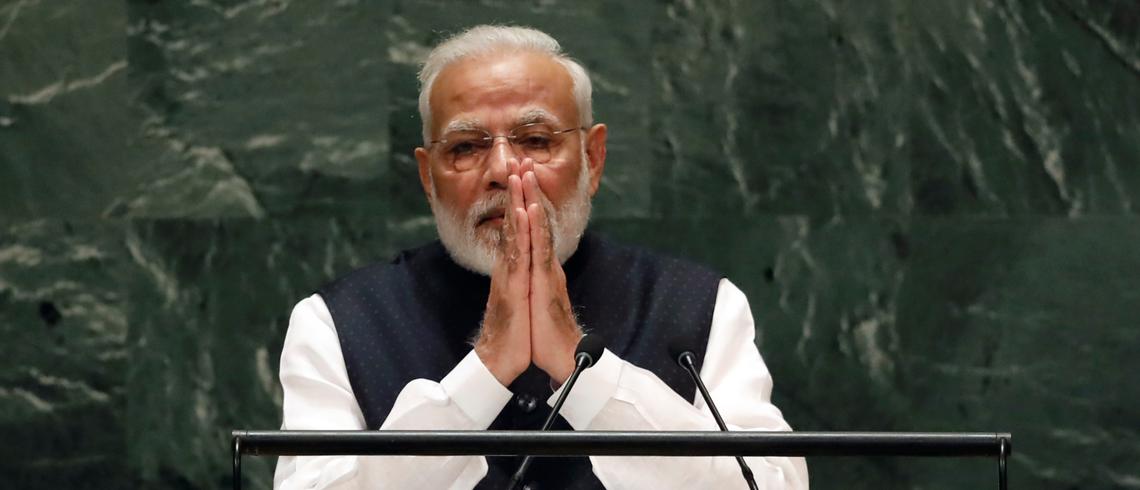
India, where minorities have faced state-sanctioned violence since the Hindu nationalist Bharatiya Janata Party (BJP) was re-elected last year, has handicapped foreign NGOs by setting limits on how they can spend money received from international donors.

Most of the affected NGOs are the ones that work in areas which highlight abuse of power, government indifference towards the plight of minorities, and the brutality of security forces.

“BJP rule has been characterised by the open targeting of several high-profile NGOs, with foreign funding freezes being the weapon of choice,” the report said. 

New Delhi's discriminatory amendment to citizenship law has further alienated India's Muslims. (AP Archive)

Other policy changes such as requiring NGOs to register with income tax authorities every five years are a similar tool of “administrative harassment”.

“Along with attempts to prevent groups working on critical issues, human rights defenders have also reported being subject to threats and intimidation by state agencies and ideological groups aligned to them.”

The intimidation is not limited to NGOs as journalists reporting on creeping BJP authoritarianism often feel the wrath of the state.

“...between 25 March and 31 May 2020, at least 55 Indian journalists faced arrest, physical assaults, destruction of property, threats or registration of FIRs (police reports),” the report said.

New Delhi increasingly relies on internet controls to curb dissent. Internet shutdowns jumped to 106 in 2019 from only six in 2014 as authorities used different laws to control the flow of information.

Kashmir faced a complete internet blackout for months after the Muslim-majority region’s nominal autonomy was withdrawn last year.

“The Indian government has reportedly submitted the most number of content takedown requests to social media platforms, and at least 50 people—mostly Muslims—were arrested for social media posts in just 2017 and 2018 alone,” the report noted.

India is also using the draconian Unlawful Activities Prevention Act to target Dalits, a caste of Hindus who face widespread discrimination under the country’s hierarchical caste system.

“Laws ostensibly meant for the protection of cows continue to provide institutional backing for similar campaigns against Muslims and Dalits,” the report said.

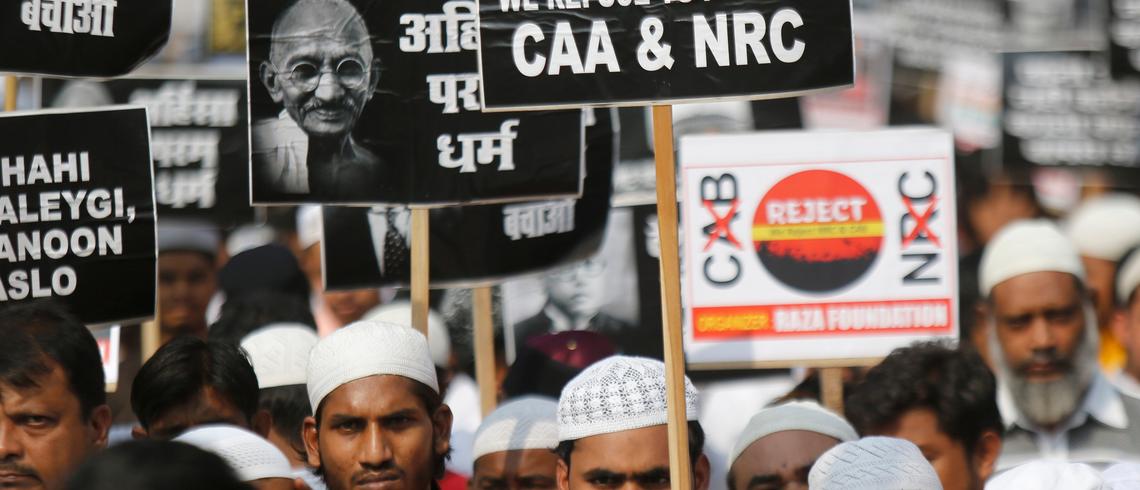
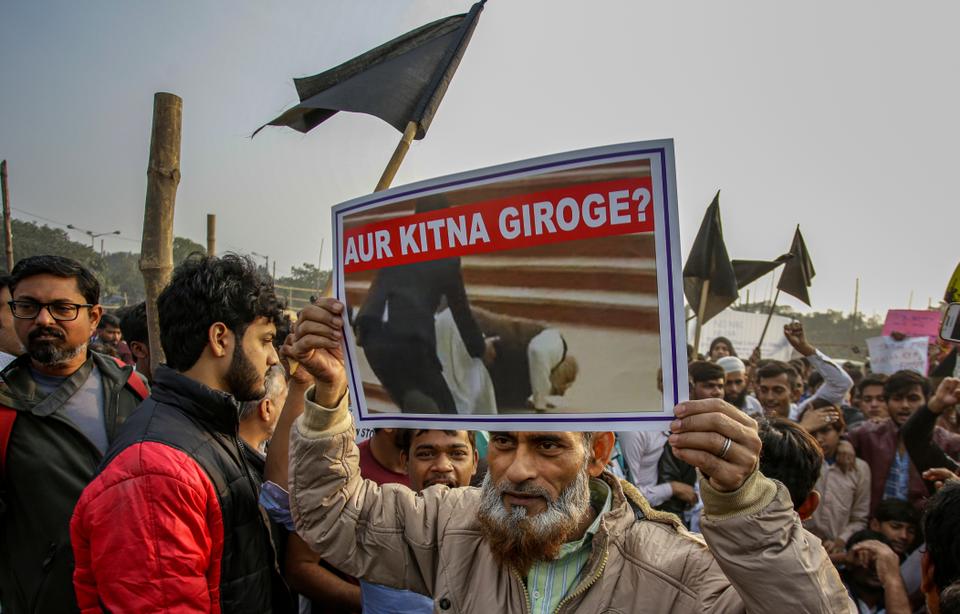
Changes in the Citizenship Act that target Muslim migrants and the brutal police reponse to subsequent protests — in which 22 people were shot dead in Utter Pradesh state in a single day — further illustrate the worsening status of minorities in India.

Thy neighbours are no good

In neighbouring Pakistan, India’s archrival, minorities and those activists trying to help them, fare no better.

“NGOs and INGOs (international NGOs) are subject to extensive regulation involving multiple, lengthy procedures of registration, security clearance, and approvals for funding,” the report said
.
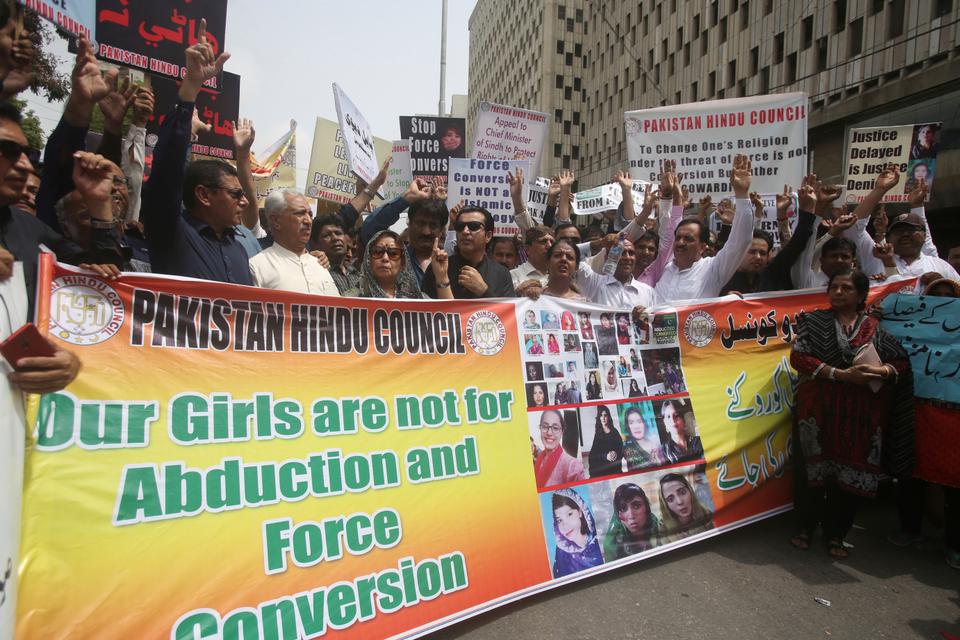
The Christians and Hindus in Pakistan regularly complain that young girls are forced to convert to Islam. (AP Archive)

In recent years, Islamabad has increased vigilance on NGOs which it fears might be working on a foreign agenda to promote dissent.

What will particularly bother Pakistan’s policymakers is the report's focus on how the country’s Blasphemy Law, meant to protect religious sentiments, continues to be misused against minorities.

“In reality, the law explicitly discriminates against Ahmadiyas since parts of it criminalise public expression of Ahmadiya beliefs and prohibit Ahmadiyas from calling themselves Muslims, praying in Muslim sites of worship and propagating their faith.”

Just this week, a report by the United States Commission on International Rights Freedom pointed out that Pakistan accounts for nearly half of the incidents of mob violence against alleged blasphemers.

At times, people accused of blasphemy are killed in court in front of police and lawyers.

Christians, another minority, are frequently targeted while authorities do little to protect them.

For instance, a church constructed in the Toba Tek Singh district of Punjab province had to be sealed in 2016 after local Muslims agitated against it.

This alienation doesn’t stop at the places of worship - young Chrsitan students are continuously harassed by their peers to convert to Islam, the report said.

Similarly, Sri Lanka witnessed rising levels of intolerance towards minorities in recent years, especially as successive governments tried to pacify extremist Buddhists to garner their votes.

Muslims in Sri Lanka have felt a wave of discrimination and official apathy after the suicide attacks that killed more than 200 people last year.

“After the Easter attacks, Muslims, particularly a large number of Muslim men, were arrested seemingly without reasonable cause.”

Jingoistic government-aligned media has helped paint Muslims as the villain in Sri Lanka.

“The incitement of hatred and vitriol by media outlets continues unabated. For example, Muslim Covid-19 patients were identified by their faith, unlike other patients, and blamed by the media


The staggering scale of India’s anti-Pakistan propaganda machine


Hundreds of fake news websites and NGOs linked to Indian entities were used to spread propaganda against Pakistan internationally.

For years Pakistan has accused its archrival India of engaging in hybrid warfare which relies on a disinformation campaign to undermine Islamabad at international forums. Now it seems much of that is true.

The EU DisinfoLab has uncovered a network of NGOs and fake media organisations linked to India that for more than a decade have been engaged in anti-Pakistan propaganda.

"It is the largest network we have exposed," Alexandre Alaphilippe, executive director of EU DisinfoLab told the BBC after the report “Indian Chronicles” was published on Wednesday.

Brussels-based DisinfoLab is a European NGO which aims to check the disinformation targeting the European Union, its parliamentarians and policies.

In a sophisticated operation, much of which has been linked to the New Delhi-based Srivastava Group, hundreds of fake media outlets, long-dead organisations and stolen identities were used to paint Pakistan in a negative light in the EU and elsewhere, the report says.

While DisinfoLab says it has not found any connection between this campaign and the Indian state, Pakistan’s foreign office came out with a strong statement.

“India not only spread disinformation but abused international institutions in its desire to malign Pakistan,” it said.

The revelations could deepen tension further between the two neighbours who have fought three wars and have come close to another full blown conflict last year.

Resurrected to deceive

The DisinfoLab investigation found that at least ten long-defunct NGOs and industry-related organisations were resurrected and used to lobby diplomats at international forums, especially the UN Human Rights Council (UNHRC).

For instance, the Commission to Study the Organisation of Peace (CDOP), an NGO that became inactive in the 1970s, was reactivated in the mid-2000s to organise events on the sidelines of UN sessions and send representatives to panel discussions.

Its origin has been linked to Srivastava Group.


What will worry many in Islamabad is that the NGOs in question are UN accredited, something which makes them appear legitimate.

The groups are also responsible for putting up “Free Balochistan” posters across Geneva in 2017. Pakistan’s restive Balochistan province is facing an insurgency, and India often highlights the human rights violations there to deviate attention from its own atrocities in Kashmir.

The International Club for Peace Research (ICPR), another dormant NGO that focuses on Africa, was resurrected in 2009 when it started to appear at the UNHRC sessions where Pakistan was targeted.

It was this so-called NGO which in 2012 issued a press release, distributed by Indian news agency DNA, demanding “enquiry into genocide in Bangladesh by Pakistani Army.”

“The (ICPR) website refers to promoting peace and to Mother Teresa in its “about us” section, lists past events and meetings related to peace and human rights in Africa, but its “news”, “pictures” and “demonstrations” sections are entirely about human rights in Pakistan,” DisinfoLab says.

The groups ostensibly lobby around issues that are sure to cause discontent within Pakistan.

“Generally, we found several other NGOs regularly covering the same issues around minorities in Pakistan, Balochistan, Kashmir and Gilgit-Baltistan. For a majority of these NGOs, these issues are not part of their original mission,” it notes.

For instance, in the southern Sindh province there’s strong resentment against the construction of upstream dams. But despite it being a domestic matter, the World Sindhi Congress was invited by one of the groups at the 2018 UNHRC to speak against the dam.

The report has also raised questions about the performance of UN bureaucracy as organisations set up to represent industry groups ended up in the hands of Indians and later used solely as tools to bash Pakistan.

Take for example the Canners International Permanent Committee (CIPC), which was established to promote the canning industry but stopped functioning in 2007. It was later reactivated by the same Indian network.

“The core theme of the original NGO – “canned foods” - was totally diverted by Indian Chronicles to undermine Pakistan at the Human Rights Council,” says DisinfoLab.

Another interesting example is of the African Regional Agricultural Credit Association (ARACA), which instead of proposing ways to help farmers, has used Geneva for anti-Pakistan activities.

A Pakistani dissident, Mehran Marri, also known as Mehran Baluch, who has more than 27,000 followers on Twitter, has spoken on behalf of ARACA.

Marri, who supports Balochistan’s secession from Pakistan, has also served as the President of Balochistan House, an organisation linked to Ankit Srivastava of the Srivastava Group.

“NGOs tied to this ecosystem are also often represented by official representatives of minorities in Pakistan, who can be seen to speak for different organizations,” notes DisinfoLab.

The media connection

The Indian disinformation network relies heavily on more than 700 fake media outlets to spread propaganda of the NGOs linked to Srivastava Group.

Fake news websites such as EU Chronicles, Japan Times Today, and Arizona Herald, regularly published Pakistan-centric stories.

The DisinfoLab found that the Indian news wire agency, ANI, a partner organisation of Reuters, often helped magnify the stories published by these outlets.

Once sent out by ANI, these stories were picked up by respectable media groups such as The Times of India and The Economic Times.

A glaring example of how the propaganda works can be seen in the 2017 interview of the Pakistani diplomat Hussain Haqqani published in another fake outlet, Times of Geneva.

The story titled ‘Baloch posters in Switzerland to isolate Pakistan’ was picked up by ANI and forwarded to its subscribers. It ended up on the webpages of Outlook India magazine and the Business Standard.


Yemenis return to their destroyed homes
Many Yemenis choose their own war-ruined homes over living like refugees elsewhere.

AMAL MAMOON  https://www.trtworld.com/

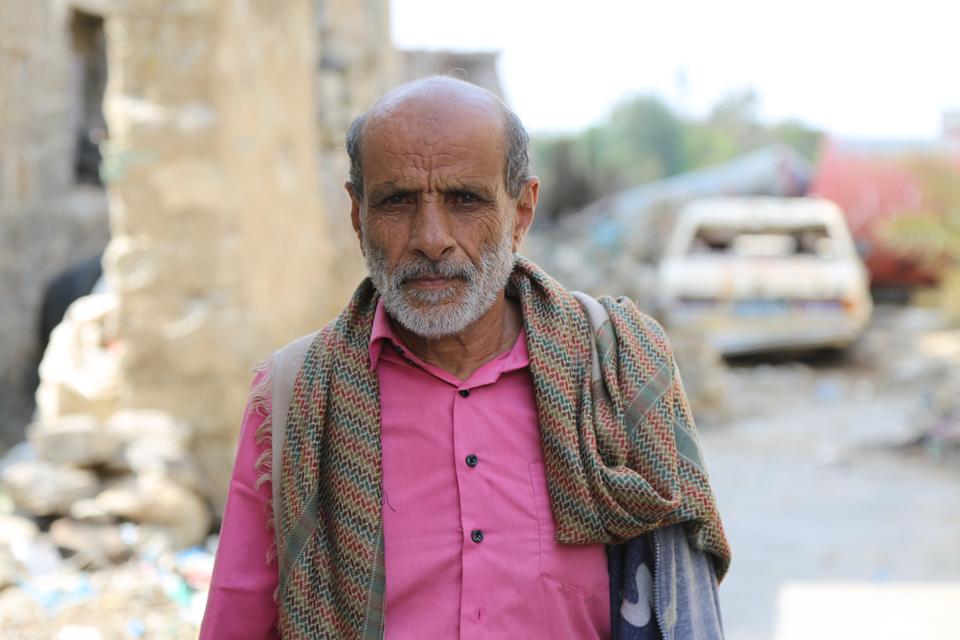
TAIZ — As soon as Yemen's Taiz city was gripped by war in 2015, Qaid al Silwi fled to the suburbs along with his wife and six children.

A 65-year-old retired architect, Silwi described his home as a "golden home" which he had built during his youth. The war pushed him out to a neighbouring province, where he spent two years at his son-in-law's home since he had no money to rent a separate place.

“I had no choice but to move to my son-in-law's home," Al Silwi told TRT World.

The thought of returning to Taiz preoccupied him until early 2019, when he learned from his neighbourhood friends that the fighting had subsided in the city.

"Hearing the news I immediately moved back” he said, "but my house was damaged by shelling and it wasn't livable at all"
.
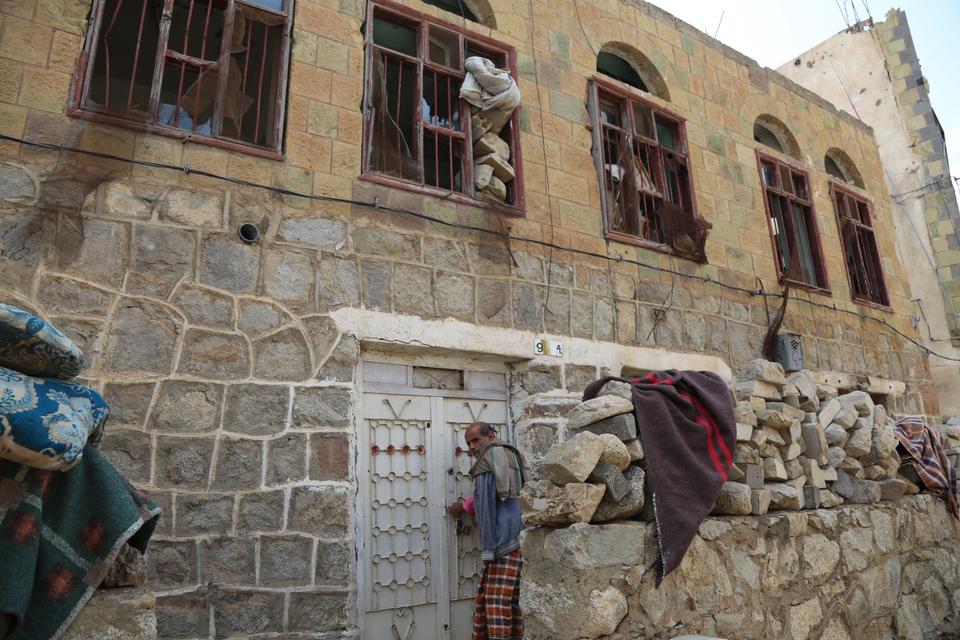
Silwi chose his war-ruined home in Taiz city as he was sick and tired of living like a refugee elsewhere. (Khalid Al-Banna / TRTWorld)

Between displacement and a damaged house, Silwi chose the latter and began living there along with his family.

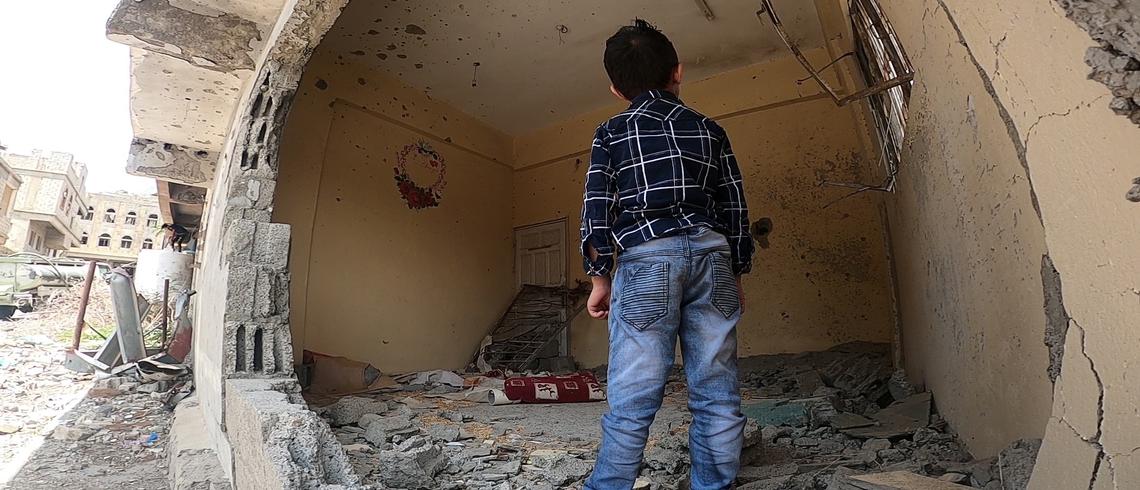
It's a two-storey building. The first floor has no windows, doors and walls left, while the ground floor has some walls intact. Silwi and his family members have carved out some space to live there.

Building a new life amidst the rubble brought some horrors, too. While setting up a living area, Silwi's grandson Mohammed, who helped him clean up an alley outside the front door, stepped on a landmine. "We heard a loud explosion. I went out and saw my grandson on the ground, bleeding".

Silwi took Mohammed to hospital, where doctors amputated a leg. After the accident, an IED disposal squad visited the area and cleared it from landmines.

"But it still is not safe out here. Every now and then the shooting and shelling happen on the frontlines, which are not far from here."
After returning to his damaged home in Taiz last year, many Yemenis repaired the walls of their ground floors to share the space with their surviving family members. 
(Khalid al Banna / TRTWorld)

Although Silwi is thankful to his relatives and son-in-law for welcoming him and his family into their home, he has decided to stay put in his own house no matter how bad the war gets in the coming months.

“A life in displacement is worse than a life amid fighting. I would rather prefer being dead than living like a refugee again"
.
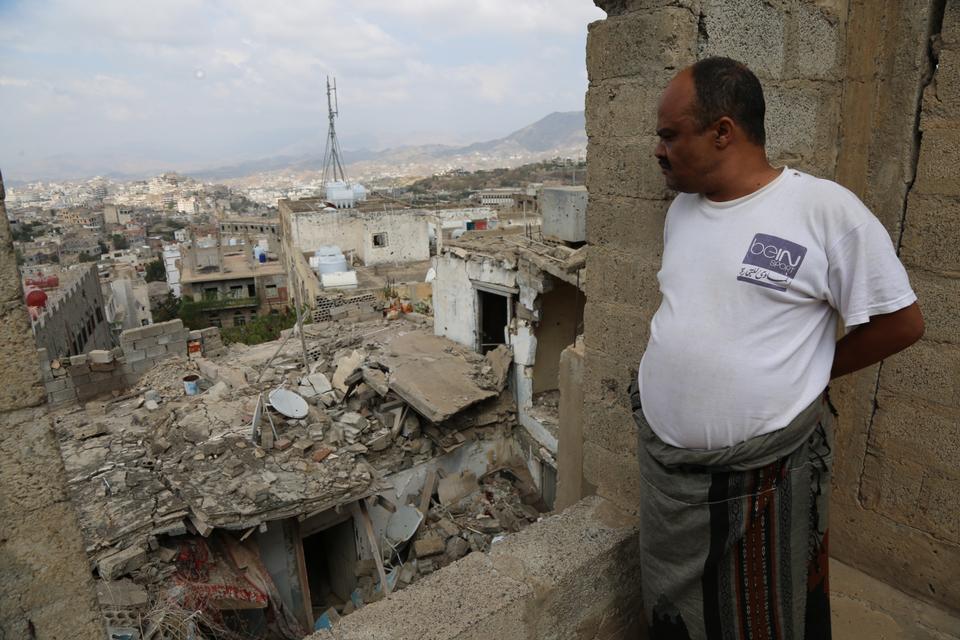
Mohammed Mukhtar recently returned to his home in Taiz city. The years of shelling and bombardment has reduced his three-story house to a mere skeleton of bare-brick walls. 
(Khalid al Banna / TRTWorld)
Like Silwi, several other families have returned to whatever little has remained of their homes.

“If we don’t return, where will we go? We don’t have any other choice. In the beginning we thought it would be a few weeks or months until the war would be over. But the war kept dragging for years," Silwi said.

“Yemenis usually have large families and how long can our relatives share their homes with us?"

Most of the returnees don’t have the money to renovate their homes. What most of them do is fix one or two rooms where they could sleep, eat and spend most of their free time.

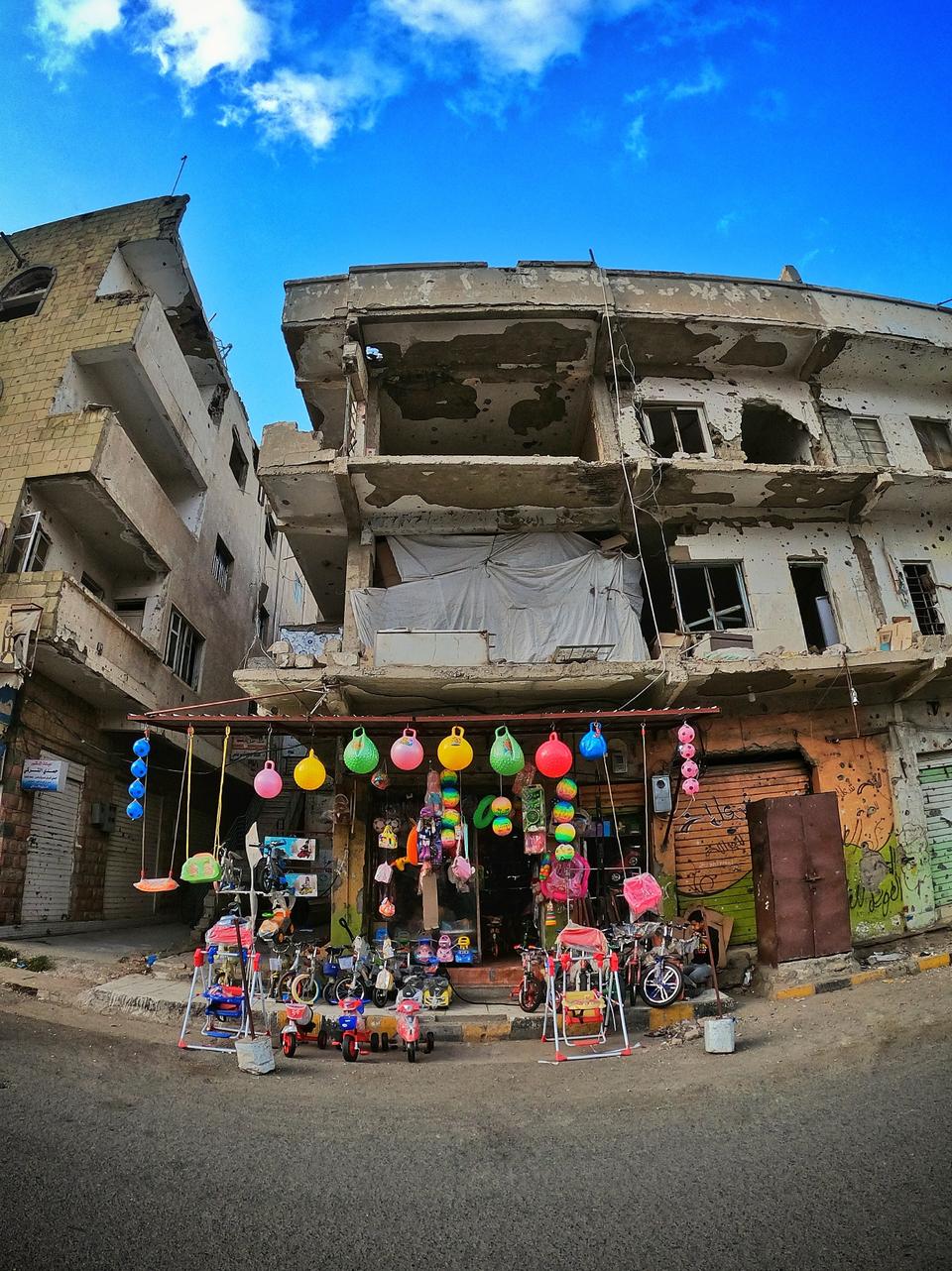
Many businesses have reopened in damaged buildings close to the frontlines of war in Yemen's Taiz city. (Khalid al Banna / TRTWorld)

Ahmed Kamel, 42, closed his shop and fled Taiz city in 2015. After spending four years in displacement and facing harsh spells of unemployment, he moved back to Taiz and reopened his shop.

“I’m dependent on this shop. Away from it, I was a jobless man, mostly depending on generous people and organizations," Kamel said.

“It is true the fighting is still not over yet but it's okay. It's not worse than being unemployed. Here I don’t ask people for help"
.
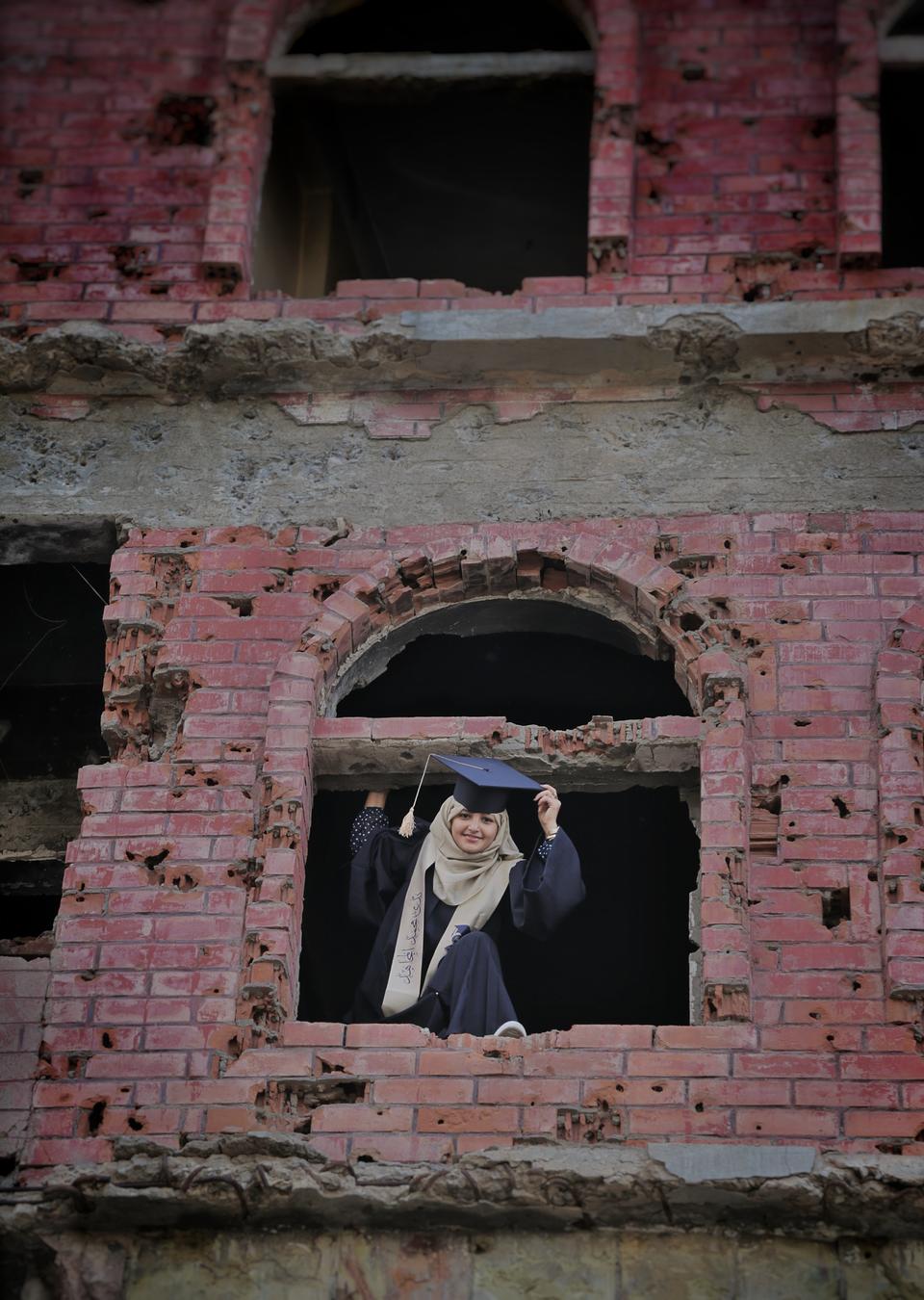
An undergraduate student from Taiz University posed for a photograph at a damaged house in Taiz city earlier this month. (Khalid al Banna / TRTWorld)

Kamel said children and women do get terrified by the sounds of shelling but they are also adapting to it and trying to "enjoy their lives in their own homes."

“My children are happy to meet their friends again and they don’t care about shelling. They don't want to leave their home again".

Source: TRT World

AUTHOR

Amal Mamoon  is a freelance journalist based in Yemen. She wrote for local and international media, her work were shown in Middle East Eye, The New Humanitarian (Formerly IRIN) and others.


Saudi enjoys ‘impunity’ over torture and abuse of migrant workers - HRW

MURAT SOFUOGLU   https://www.trtworld.com/

Human Rights Watch interviewed several detainees held in a deportation centre in Riyadh, where migrant workers have been tortured and abused continuously.

Saudi's culture of 'impunity' has increased to alarming levels, despite human rights groups consistently exposing Saudi atrocities against migrant workers in the country’s badly-conditioned detention centres.

Recent Human Rights Watch (HRW) research found that hundreds of detainees have been held under awful inhumane conditions in a deportation centre in the Saudi capital of Riyadh. The report indicated that torture and abuse have been common practices, which even allegedly led to three deaths there.

“There is the issue of impunity and a lack of accountability to the extent this continues. No one is allowed access to facilities. They [Saudis] think they can get away with it because there are no tracks on the detention centers. There is not adequate pressure at the moment," Nadia Hardman, a leading researcher of the Human Rights Watch, tells TRT World.

According to different estimates, there are nearly 10 million foreign workers, who are working across the country in different sectors from energy to services. From time to time, Riyadh has carried out a series of detentions, deporting hundreds of thousands of migrants.

Hardman has interviewed nine detainees after they returned to their home countries from Saudi Arabia. Two of them are Indians and seven of them are Ethiopians. All of them described various types of mistreatment and human rights violations in the Riyadh centre.

Some detainees have stayed under detention for more than a year and others have been for months. Many migrants have also feared becoming infected with Covid-19 due to being held in crowded rooms, where they lie on top of each other.

“We as human rights organisations are trying to expose what’s happening. But it needs an international community. It needs those governments that are also in relationship with Saudi Arabia but who also have nationals in the detention center. They need to demand the release of their civilians,” Hardman says.
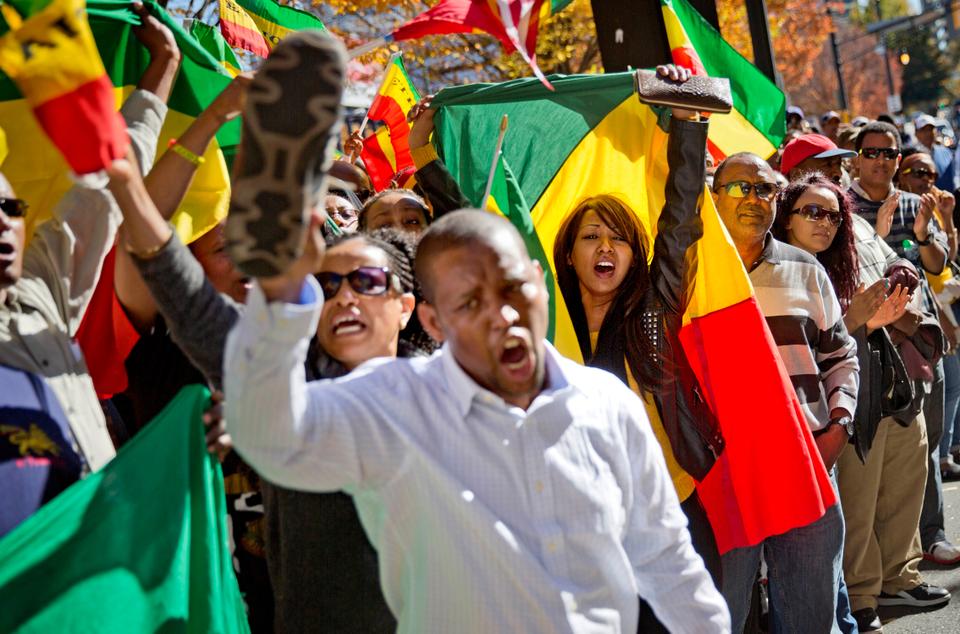
Protestors demonstrate against the treatment of Ethiopian migrant workers in Saudi Arabia, Nov. 18, 2013, in Atlanta. (David Goldman / AP Archive)

Saudi “impunity”

Apparently, neither the international community nor those governments, whose citizens have been detained in the Saudi detention centre featuring in the HRW report, are up to develop enough pressure to force the oil-rich kingdom, one of the wealthiest states, to abide by international law and standards on the treatment of migrants.

In September, the UN passed a resolution against Saudi Arabia on its mistreatment of refugees and migrants. There was, however, no effect. It suggests there was barely even a minor change in the cruel conduct of Saudis, Hardman and her colleagues observed.

“There seems to be no incentive for Saudi Arabia to change its behaviour. There is no consequence when there should be,” Hardman views.

“Of course many countries have trade relationships with Saudi Arabia and what happens in detention centers might not be priority. But this is migration detention. There is no punitive reason for people to be there. They have not committed a crime. If they have, they should be brought to a court to answer those crimes,” Hardman says.

“Having them in a deportation center for more than a year is just unimaginable,” she adds.

International law bans any prolonged detention, which is not sanctioned by courts, seeing it as arbitrary arrest.

The Indian government has shown some efforts to repatriate some of its citizens held in the deportation centre, according to Hardman. The Ethiopian government, which is now waging a war with its northern province, the Tigray region, has also tried in very slow motion to bring some of its citizens back home, she says.
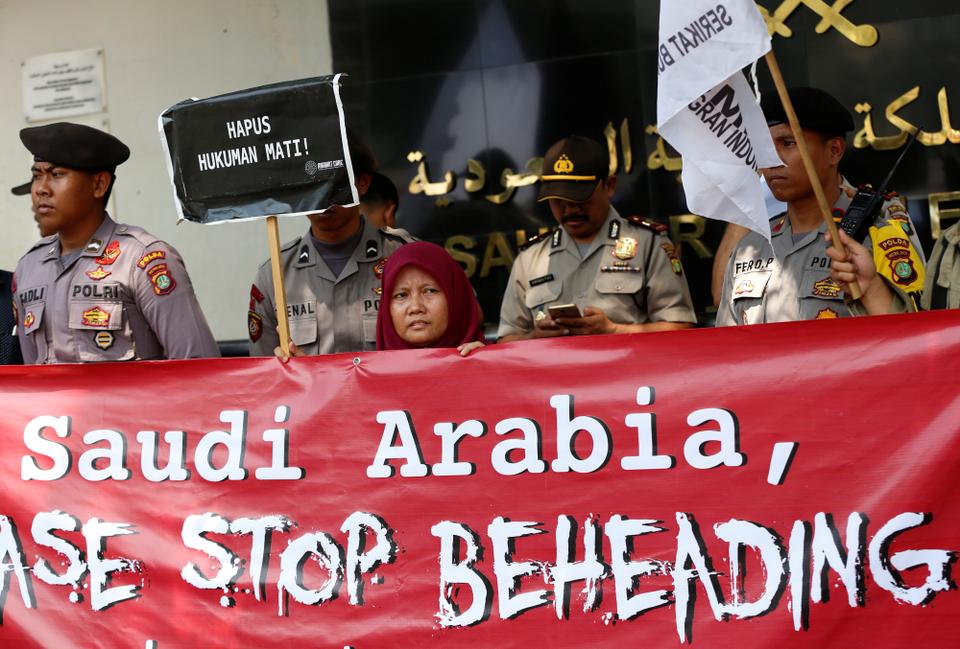
An activist holds a placard beside police in front of the Saudi Arabia embassy during a protest over the recent execution of an Indonesian migrant worker for murder, in Jakarta, Indonesia, March 20, 2018. (Darren Whiteside / Reuters Archive)
No hope!

“I spoke with some people, who said they expected to die there because they have seen other detainees abused so badly that they were unlawfully killed,” Hardman says.

While their treatment is appalling, there is no sign that their brutal captors could be held accountable for what they have done to migrants’ lives, Hardman says.
“The detainees feel that they don’t have hope. They don’t have expectations. Of course they asked me what would happen. But they don’t have expectations. The only thing they asked for is the world to know what is happening,” she says.
The HRW could not estimate the exact number of detainees in the Riyadh centre.

Saudi authorities have not replied to any requests from the HRW on both the number of detained migrants in the deportation centre, and migrant accounts of various mistreatment.

While Saudis have shown indiscriminate abuse against all detainees, they have still kept different nationalities in different rooms according to migrant accounts.

“You have the sub-Saharan African room. You have the South Asian area. We do not know exact nationalities. But we do know that people are being kept in separate areas,” says Hardman.

Hardman has also previously investigated the detained conditions of mostly Ethiopian migrants, who have been stuck in the war between Saudi Arabia and Yemen’s Houthis. They have been held in various Saudi detention centres across the country after being forcibly expelled by Yemen’s Houthis to the kingdom’s territory.  

Source: TRT World