Thursday, December 17, 2020

UPDATED
Fiji braces for flooding, huge waves as
Cat 5 Cyclone Yasa approaches

Fiji has issued a nationwide lockdown and declared a state of natural disaster as Cyclone Yasa barrels towards the island nation


.
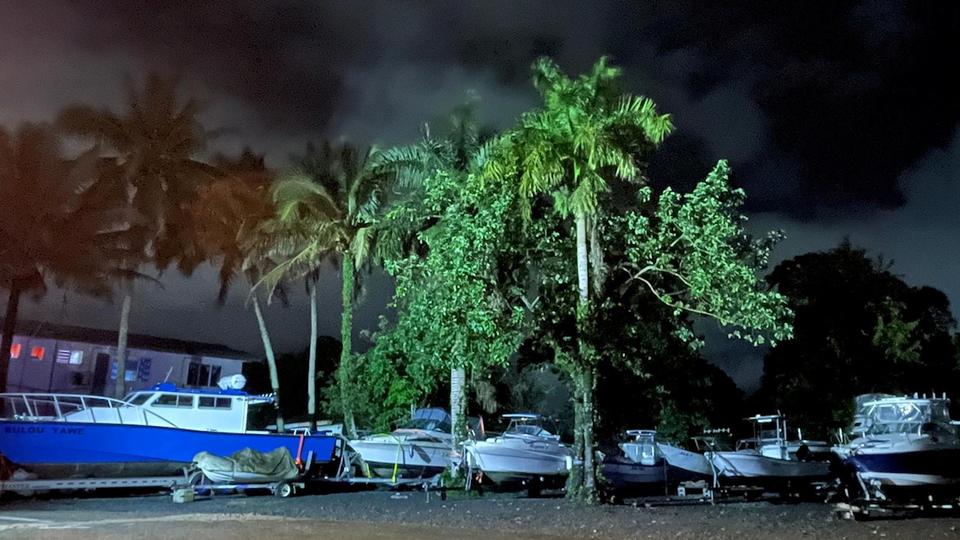
Vessels are seen onshore ahead of Cyclone Yasa at Royal Suva Yacht Club in Suva, Fiji December 16, 2020, in this image obtained from social media. (Reuters)

Fiji declared a state of natural disaster, ordering its entire population to take shelter ahead of a nightly curfew as a potentially devastating cyclone approached the Pacific Island nation.

Cyclone Yasa, a top category five storm, is expected to bring winds of up to 250 km/h and torrential rain across the South Pacific archipelago when it makes landfall overnight.

Still a few hours out from the worst weather, Fiji's Meteorological Service said storm force winds and heavy rains have been recorded in some parts of the country already.

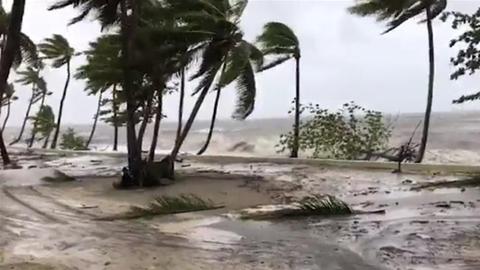
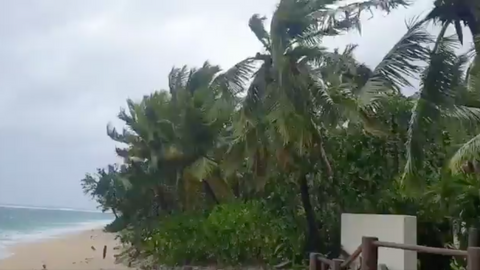
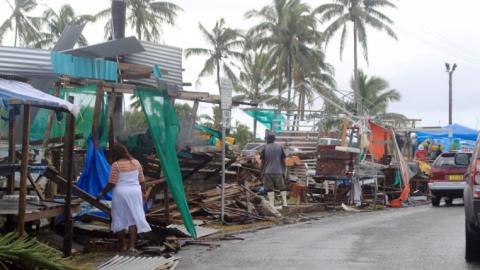
Images shared on social media showed roads blocked by landslides, floodwaters and fallen trees.

By 0800GMT, the centre of Yasa is forecast to be 100 km east of the village of Yasawa-i-Rara and potentially over Fiji's fifth-most populous province of Bua, home to 15,000 people, Fiji's National Disaster Management Office said.

Reinforcing the threat, Fiji Prime Minister Frank Bainimarama told the country's near 1 million population to find safe shelter ahead of a 14-hour nationwide curfew beginning 0400GMT.

"The impact for this super storm is more or less the entire country," Bainimarama said in a video posted to Facebook.

Update on Severe Tropical Cyclone Yasa
Image
Image

Yasa would "easily surpass" the strength of 2016's Cyclone Winston, he added, referring to the southern hemisphere's most intense tropical storm on record, which killed more than 40 Fijians and left tens of thousands of people homeless.

The curfew order was given as part of the state of natural disaster order, which will run for 30 days.

Over 95 percent of the population live in the direct path of Yasa, said Bainimarama, adding weather forecasts anticipated flash flooding and "severe coastal inundation" that included waves up to 10 metres high

Residents in the areas deemed most at risk said the warnings were been heeded.

"We'll see what happens," said Alumita Bati, a chef from the capital Suva who was forced to evacuate with her son and husband from their corrugated tin house in a low-lying settlement outside the country's most populous city.

Bati's family boarded up the windows of their house with more tin before going to her sister's house on higher ground where she felt safer but still "a bit scared".

Fiji banned the running of public transport, and was taking precautions with some 50 foreign yachts moored in the southern part of the island chain.

"The boats have been moved to mangrove shelter, which provide good protection against the winds," said Cynthia Rasch, chief executive officer of Port Denarau Marina.

Fiji in October opened to foreign boats in a bid to revive a tourism industry hit hard by the coronavirus. Dubbed the Blue Lane initiative, foreign yachts have to follow stringent requirements to enter Fiji, including a 14-day quarantine out at sea.


Brittney Deguara


Landslides, flooding, strong gusts and large swells are adding to the “destructive” Cyclone Yasa, which hit Fiji two hours earlier than predicted.

The category 5 cyclone made landfall in Bua, Vanua Levu, at 6pm Thursday (7pm NZ time), two hours earlier than originally predicted, according to Metservice Fiji. A state of natural disaster has been declared and a strict curfew imposed until Friday morning.

The eye of the storm is passing 100 kilometres east of Yasaway-i-rara and 90km southwest of Labasa, according to the Fijian Government.

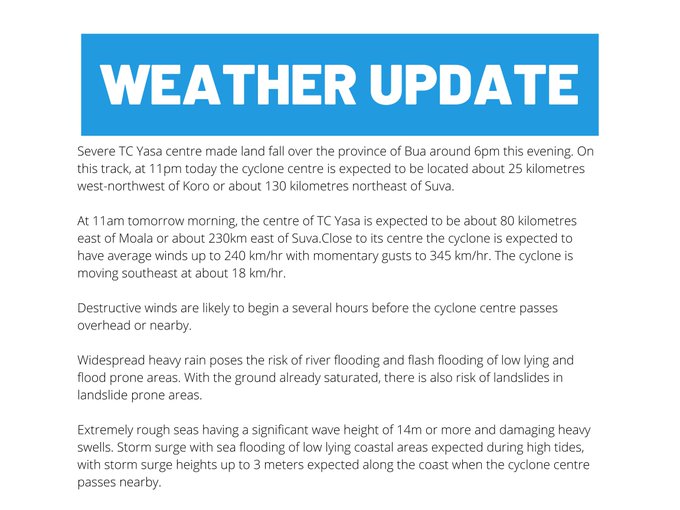
Metservice Fiji is predicting the centre of the cyclone to be located about 25km northwest of Koro and 130km northeast of Suva by 11pm. By 11am on Friday, it will be about 80km east of Moala and 230km east of Suva.

READ MORE:
Cyclone Yasa: Fiji prepares for damaging winds, flooding as category 5 storm heads for centre of island group
One dead, dozens hurt and 2000 Fijian homes destroyed by Cyclone Harold
Tonga declares state of emergency ahead of Tropical Cyclone Gita

New Zealand's National Institute of Water and Atmospheric Research (Niwa) is predicting “destructive impacts” for the islands, with damaging winds, flash flooding and dangerous seas expected with waves reaching heights of 14 metres or more.

Near the eye of the cyclone, wind speeds are forecast to average 240kmh with momentary gusts of up to 345kmh. The cyclone is moving southeast at about 18km an hour.

All major roads in the Ra Province’s Rakiraki are flooded. The region has been hit with rain and winds of more than 100kmh since 10am on Thursday, according to The Fiji Times.

Police are urging those in the region not to leave their houses.

SUPPLIED VIA THE FIJI TIMES
Bad weather from the approaching cyclone caused a landslide at Viwa on Thursday.

A landslide at Viwa has covered the road completely. Contractors are working to clear it, The Fiji Times reported.

Traffic lights in Nadi's CBD have been turned off to prevent the controller getting damaged.

More than 850,000 people, or more than 95 per cent of the country’s population, are reportedly in the direct path of the cyclone. A total of 1417 people have been evacuated to 53 evacuation centres across the country. Police are providing security at all the centres.

NIWA/SUPPLIED
Cyclone Yasa is making its way towards Fiji.

Cate Heinrich, who is in Suva, said power outages have already been experienced across the islands, and people have been told to stock up on food and drinking water to last the next few days.

“Everyone is inside and no-one’s moving anywhere now while we wait it out,” she told Stuff. “Everyone’s [as] prepared as they can be at this stage.”

FIJI POLICE FORCE/SUPPLIED
Heavy rain has caused flooding in parts of Fiji.

Fiji’s National Disaster Management Office (NDMO) is recommending people store enough water for up to seven days and boil it before drinking.

Heinrich, who is Unicef's Pacific chief of communication, said although she was not on the coast, she could feel the cyclone approaching. She described it as “very eerie”.

“It’s quite windy, the rain is coming down and ... you can feel that it’s coming, and it’s just going to get stronger. It’s getting closer and you can feel it.”

Heavy rain has already resulted in flooding in some areas. The Fiji Police Force issued a warning for people and children to stay clear of flooded areas.

“We have found a lot of children playing and left unsupervised in flooded areas, and please be reminded that we don’t want to arrest anyone due to disobedience of lawful order. However, if people continue to disregard our instructions, we will arrest them,” Fiji's assistant commissioner of police, Abdul Khan, said.

FIJI POLICE FORCE/SUPPLIED
Fiji Police are warning people to stay away from flooded areas as Cyclone Yasa nears.

Yasa is the fourth most powerful tropical cyclone recorded in the South Pacific region, according to Weather Watch, and is believed to be the strongest storm on Earth at the moment.

The level of damage could equal that caused by Cyclone Winston in 2016.

“Do not be caught off guard by this latest storm,” Prime Minister Frank Bainimarama said on Wednesday as the weather system moved towards Fiji.

The NDMO officially declared the situation a state of natural disaster on Friday. The declaration will remain for the next 30 days, with more regulations to follow.

“The declaration of Tropical Cyclone Yasa as a natural disaster under the Natural Disaster Management Act 1998 is now in force,” NDMO director Vasiti Soko said at a press conference, according to The Fiji Times.

“One of the key priorities in that is it allows the National Disaster Management Office to call all of government’s asset to be on standby and to be mobilised,” Soko said.

AILEEN TORRES-BENNETT/AP
A house is boarded up in preparation for Cyclone Yasa in the Tamavua neighborhood of Suva.

“There are provisions in the regulations where we will work with the Fiji Police Force in regards to evacuating people.”

A hurricane warning is in force for the Yasawa Group, the northern and eastern half of Viti Levu, Yadua, Galoa, Kia, Mali, Vanua Levu, Taveuni and nearby smaller islands, Matuku, Moala, Totoya and Lomaiviti Group.

The Fiji Meteorological Service has also issued warnings for storms, gales, storm surges, damaging heavy swells, heavy rain, severe flooding, and flash flooding.

A nationwide curfew has been in place since 4pm local time and will continue through to 6am Friday morning.

“Unless you are evacuating, that means stay off the roads and stay safely sheltered,” Bainimarama said in a post on Facebook on Thursday.

Bainimarama visited an evacuation centre in Newtown on Thursday to meet those who had been displaced.

Unicef is working with the Fijian Government to ensure the hardest hit regions will receive appropriate resources and care on Friday.

AILEEN TORRES-BENNETT/AP
A fast-food store is closed in the preparation for cyclone Yasa in the Samabula neighborhood of Suva.

Items such as tents, water and sanitation and health kits are prepared and ready to be distributed, with additional resources ready to be sent from Brisbane, Australia, if required.

“[We’re] hoping that the impact isn’t that huge, but we’re getting prepared,” Heinrich said.


COVID-19: 'Not enough evidence' taking vitamin D prevents coronavirus

The National Institute for Health and Care Excellence says more research is needed into the supplement.


Thursday 17 December 2020 

Some studies have suggested the supplement could lessen the severity of coronavirus

There is "not enough evidence" that taking vitamin D prevents or treats COVID-19, experts have concluded.

The National Institute for Health and Care Excellence (NICE), which led the UK's rapid review, said more research was needed, particularly of high-quality randomised controlled trials


The health secretary asked NICE, Public Health England (PHE), and the Scientific Advisory Committee on Nutrition (SACN) to review the evidence after some studies suggested vitamin D might help fight coronavirus infection.

A US study suggested patients with sufficient levels of vitamin D experienced reduced infection and were less likely to experience complications and die from COVID-19.

Dr Paul Chrisp, director of the centre for guidelines at NICE, said: "While there is insufficient evidence to recommend vitamin D for the prevention or treatment of COVID-19 at this time, we encourage people to follow government advice on taking the supplement throughout the autumn and winter period."

Current PHE advice states that people should take 10 micrograms (400 IU) of vitamin D every day between October and early March to keep bones and muscles healthy.

PHE also advises those most at risk of not having enough vitamin D - such as people with dark skin or care home residents - take a vitamin D supplement all year round.

Around 2.7 million vulnerable people across England have been offered free vitamin D supplements this winter.

Professor Ian Young, chairman of the SACN, said: "This evidence review confirms that currently there is not enough available evidence to determine that there is a causal relationship between vitamin D and COVID-19."


COVID Christmas rules: What's allowed during the festive season?

Experts believe people may not have been making enough vitamin D from sunlight this year due to prolonged periods indoors as a result of the pandemic.

Dr Alison Tedstone, chief nutritionist at PHE, said: "Vitamin D is important for our bone and muscle health.

"We advise that everyone, particularly the elderly, those who don't get outside and those with dark skin, takes a vitamin D supplement containing 10 micrograms (400 IU) every day.

"This year, the advice is more important than ever with more people spending more time inside."

A no-meat diet everywhere will not solve the climate crisis

by International Center for Tropical Agriculture (CIAT)
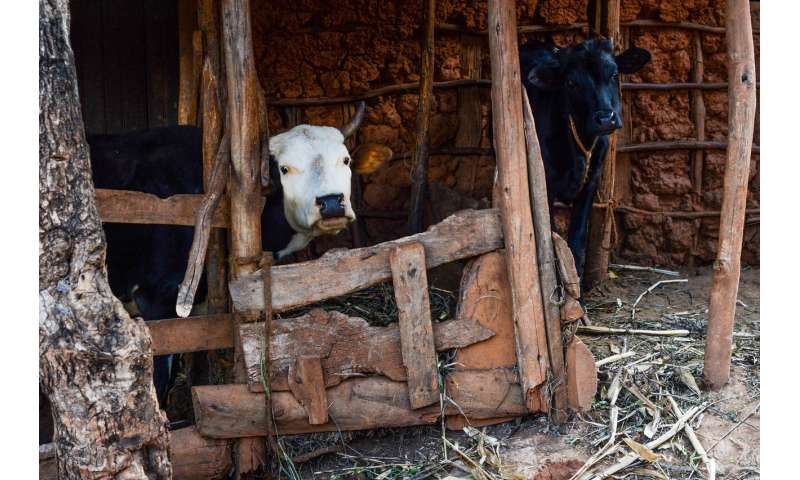
Livestock being fed improved forages in Tanzania. 
Credit: Georgina Smith / International Center for Tropical Agriculture

People in industrialized regions like the United States of America or Europe are generally urged to eat less meat and animal-source foods as part of a healthier and lower-emissions diet. But such recommendations are not universal solutions in low- or middle-income countries, where livestock are critical to incomes and diets, argue scientists in recently published research in Environmental Research Letters.

"Conclusions drawn in widely publicized reports argue that a main solution to the climate and human health crisis globally is to eat no or little meat but they are biased towards industrialized, Western systems," said Birthe Paul, the lead author and environmental scientist at the Alliance of Bioversity International and the International Center for Tropical Agriculture (CIAT).

For example, of all scientific literature on livestock published since 1945, only 13% covers Africa. Yet Africa is home to 20%, 27% and 32% of global cattle, sheep and goat populations. Eight of the world's top 10 institutes publishing livestock research are in the United States, France, the United Kingdom and the Netherlands. Only two, including the International Livestock Research Institute (ILRI), are headquartered in Africa, where the livestock sector is the backbone of the economy and where little data is available.

Authors further argue that a singular focus on negative livestock-related environmental impacts ignores the critical but more positive role livestock play in ecosystem services, income and asset provision or insurance in low- and middle-income countries. It also overlooks more systemic questions about how animals are raised.

"Mixed systems in low- and middle-income countries, where animal production is fully linked with crop production, can actually be more environmentally sustainable," said An Notenbaert, from the Alliance of Bioversity International and CIAT. "In sub-Saharan Africa, manure is a nutrient resource which maintains soil health and crop productivity; while in Europe, huge amounts of manure made available through industrialized livestock production are overfertilizing agricultural land and causing environmental problems."

Across Africa's savanna, pastoralists pen their herds at night, a practice shown to increase nutrient diversity and biodiversity hotspots, enriching the landscape. Feed production may also be more local, whereas, in industrialized systems, it is mostly imported. In Brazil, soybean—a major driver of deforestation in the Amazon—is made into concentrate and exported to feed animals in places like Vietnam as well as Europe.


"Meat production itself is not the problem. Like any food, when it is mass-produced, intensified and commercialized, the impact on our environment is multiplied," said Polly Ericksen, Program Leader of Sustainable Livestock Systems at the International Livestock Research Institute. "Eliminating meat from our diet is not going to solve that problem. While advocating a lower-meat diet makes sense in industrialized systems, the solution is not a blanket climate solution, and does not apply everywhere."

According to the Food and Agriculture Organization, meat consumption in sub-Saharan Africa will be as low as an average of 12.9 kilograms per person by 2028, due to low incomes and climate-induced heat stress in animals among other factors, with human health implications like malnutrition and stunting. By comparison, meat consumption in the United States is expected to rise above 100 kilograms per person—the highest in the world.

Authors acknowledge that livestock systems are known to be a major source of atmospheric greenhouse gases. But more data is needed for low- and middle-income countries to develop national mitigation strategies. They also urge a need to look beyond making animals more productive and toward resource-efficient and environmental systems that actively reduce emissions from agriculture.

The authors point to a range of higher-impact environmental solutions. Among them, improved animal feed so animals emit less greenhouse gases like methane per kilogram of milk or meat. Better managed grazing land, and mixing crop and livestock where manure is plowed back into the soil, can benefit both farmers and the environment.

"Better decisions about how to reduce global greenhouse gas emissions from livestock and agriculture in low- and middle-income countries can only be driven by better data," said Klaus Butterbach-Bahl, at the Institute of Meteorology and Climate Research, Atmospheric Environmental Research (IMK-IFU) Karlsruhe Institute of Technology (KIT) and ILRI.

"For that, we need more—and not less—locally adapted and multidisciplinary research together with local people in low- and middle-income countries, on sustainable livestock development, with all the supporting financial incentives, policies and capacity in place to intensify livestock production in a more sustainable way, on a bigger scale."


Explore further

More information: Birthe Katharina Paul et al, Sustainable livestock development in low and middle income countries - shedding light on evidence-based solutions, Environmental Research Letters (2020).

Journal information: Environmental Research Letters


Provided by International Center for Tropical Agriculture (CIAT)


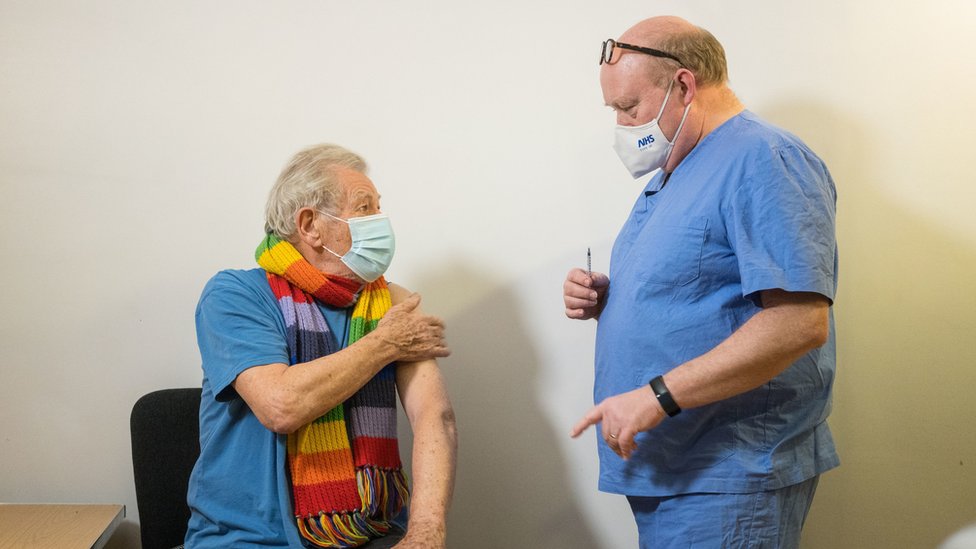
Sir Ian McKellen 'euphoric' to receive Covid-19 vaccine

Published
4 hours ago

IMAGEimage captio

Sir Ian McKellen has become the latest celebrity to be photographed receiving the Covid-19 vaccine.

The 81-year-old star of the X-Men and Lord of the Rings films said he felt "euphoric" to be vaccinated at Queen Mary's University Hospital in London.

"Anyone who has lived as long as I have is alive because they have had previous vaccinations," said the veteran actor.

Prue Leith, Marty Wilde and Lionel Blair are among other stars to have had the Pfizer vaccine administered.

"Who wouldn't want immunity from Covid-19 with a painless jab??" tweeted Leith after getting her jab this week.

The BBC is not responsible for the content of external sites.View original tweet on Twitter

Sir Ian said it was "a very special day" to receive the "painless" and "convenient" vaccination from GP Dr Phil Bennett-Richards.

"I would have no hesitation in recommending it to anyone," he continued, saying he felt "very lucky".

Healthcare workers, the elderly and people living in care homes are among the first to receive the vaccine in the UK.

Those receiving the Pfizer vaccine will be given a booster jab 21 days after their first dose.