Wednesday, September 22, 2021

In climate landmark, China promises to end coal funding overseas

Issued on: 21/09/2021 
The Celukan Bawang 2 power plant funded by China on Indonesia's resort 
island of Bali is seen in 2020 
Sonny Tumbelaka AFP/File

United Nations (United States) (AFP)

China will stop funding coal projects overseas, President Xi Jinping announced Tuesday, all but ending the flow of public aid for the dirty energy contributing to the climate crisis.

Xi made his announcement at the UN General Assembly where US President Joe Biden, seeking to show leadership in a growing competition with China, promised to double Washington's contribution to countries hardest hit by climate change.

China is still investing in coal, reducing the impact of Xi's commitment, but it is by far the largest funder of coal projects in developing countries such as Indonesia, Vietnam and Bangladesh as it goes on a global infrastructure-building blitz with its Belt and Road Initiative.

Xi vowed to accelerate efforts for China, the world's largest emitter, to go carbon neutral by 2060.

"This requires tremendous hard work and we will make every effort to meet these goals," Xi said in a recorded address.

"China will step up support for other developing countries in developing green and low carbon energy and will not build new coal-fired power projects abroad," he said.

China's announcement follows similar moves by South Korea and Japan, the only other nations that offered significant funds for coal projects.

The climate advocacy movement 350.org called Xi's announcement "huge," saying it could be a "real game-changer" depending on when it takes effect.

Helen Mountford, vice president for climate and economics at the World Resources Institute, said it was "a historic turning point away from the world's dirtiest fossil fuel."

"China's pledge shows that the firehose of international public financing for coal is being turned off," she said.

Chinese President Xi Jinping virtually addresses the UN General Assembly 
Spencer Platt POOL/AFP

But she said that private investors needed to make similar commitments. And she noted that China itself is still stepping up coal, an industry with political clout in the Asian power as well as the United States.

On a visit to China earlier this month, US climate envoy John Kerry said the addition of more coal plants "represents a significant challenge to the efforts of the world to deal with the climate crisis."

China brought 38.4 gigawatts of new coal-fired power into operation last year -- more than three times what was brought on line globally.

Non-governmental groups in a letter earlier this year said the state-run Bank of China was the largest single financier of coal projects, pumping $35 billion since the Paris climate agreement was signed in 2015.

- Biden promises more aid -

China's promise comes as momentum builds ahead of a UN conference in November in Glasgow which aims to raise the ambitions of the Paris accord.

Support for action has been growing with the planet breaking record after record on high temperatures and witnessing devastating severe weather linked to climate change including fires, severe storms and flooding.

Smoke belches from a coal-fueled power station near Datong, in China's northern Shanxi province, in 2015 
GREG BAKER AFP/File

One key section of the Paris accord that has lagged behind is mobilizing the $100 billion a year promised for nations hardest hit by global warming.

Biden, who has put the environment high on his agenda after defeating his predecessor, climate change skeptic Donald Trump, said the United States will double its contribution.

"This will make the United States a leader in public climate finance," Biden said.

Experts said that the announcement would take the American contribution to approximately $11.4 billion annually.

British lawmaker Alok Sharma, who will preside over the so-called COP26 conference in Glasgow, hailed Biden's announcement and said: "We must build on this momentum."

Currently, two-thirds of the funding is for mitigation -- reducing climate change -- rather than adjusting to current and expected future changes, such as sea-level encroachment, more intense extreme weather events or food insecurity.

In another climate announcement at the General Assembly, President Recep Tayyip Erdogan said Turkey would formally ratify the Paris agreement, which it earlier had only signed.

The developments amount to rare pieces of good news on the climate front following a slew of high-level scientific reports painting a bleak future picture, as the world's top polluters continue to spew greenhouse gases at alarming rates.

UN Secretary-General Antonio Guterres said he was "encouraged" by the "important" US and Chinese announcements but warned that far more needed to be done to address climate change.

Last week Guterres warned the world was on a "catastrophic" path to 2.7 degrees Celsius heating according to a new study by UN scientists.

BIDEN THE BLUFFER
US President Joe Biden addresses the UN General Assembly 

XI THE MAN WHO WOULD BE MAO
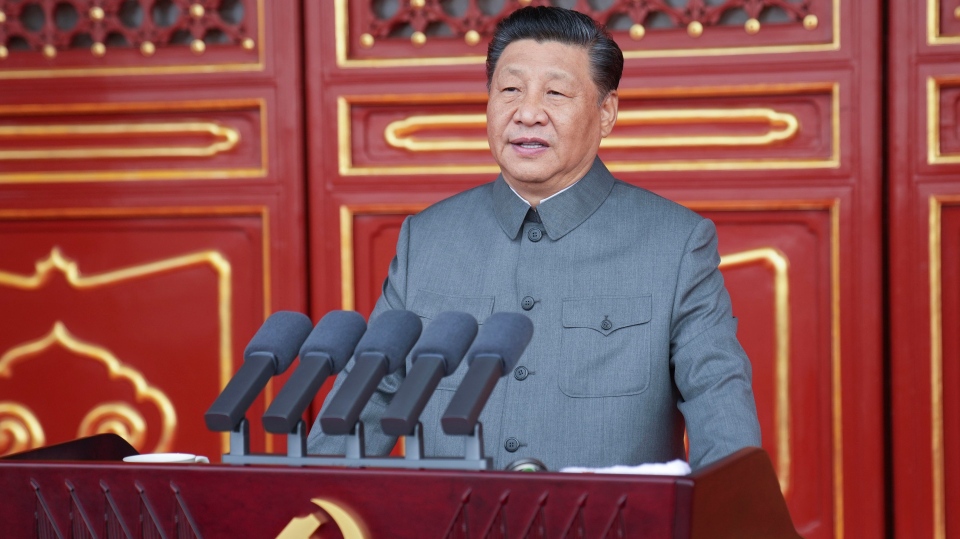
In this photo provided by China's Xinhua News Agency, Chinese President and party leader Xi Jinping delivers a speech at a ceremony marking the centenary of the ruling Communist Party in Beijing, China, Thursday, July 1, 2021. (Li Xueren/Xinhua via AP)

China's Xi Jinping promises to halt new coal projects abroad amid climate crisis

Caitlin Hu and Angela Dewan
CNNDigital
Tuesday, September 21, 2021 

In a rare address to the UN General Assembly, Chinese President Xi Jinping on Tuesday made a major new climate commitment on behalf of the world's largest emitter of greenhouse gases.

China will not build any new coal-fired power projects abroad, Xi said in a pre-recorded speech. The vow marks a shift in policy around its sprawling Belt and Road infrastructure initiative, which had already begun to draw down its coal initiatives.

China will also increase financial support for green and low-carbon energy projects in other developing countries, he said.

UN Secretary-General António Guterres, who had appealed to world leaders earlier in the day to show solidarity and act on the climate crisis, hailed China's announcement alongside a US commitment to increase climate financing for developing countries.
Sign up here to receive The Climate Barometer, delivering climate and environmental news to your inbox every week

"I am encouraged by the important announcements made today at the General Assembly by the leaders of the world's two largest economies regarding their commitment to climate action," he said.

"I welcome President Biden's announcement that the United States of America will significantly increase its international climate finance to approximately US$11.4 billion a year. This increased contribution from the United States will bring developed countries closer to meeting their collective commitment to mobilize US$100 billion a year in climate finance."


"I also welcome the announcement made by President Xi that China will end all financing of coal fired power plants abroad and redirect its support to green and low carbon energy. Accelerating the global phase out of coal is the single most important step to keep the 1.5-degree goal of the Paris Agreement within reach."

In his earlier speech to the assembly, US President Joe Biden had announced he would work with Congress to double again the United States' financial commitment to support developing nations. Biden pledged in April the US would increase its contribution to global climate financing to $5.7 billion per year, putting his new commitment over $11 billion per year.

"In April, I announced the US will double our public international financing to help developing nations tackle the climate crisis, and today, I'm proud to announce that we will work with the Congress to double that number again, including for adaptation efforts," Biden said.

Both the Chinese and US commitments were part of a day of leader speeches that marked the beginning of the UN General Debate among member states, and which Guterres had kicked off by warning humanity was on track for a "hellscape" of temperature rise that would bring "catastrophe."

Guterres had asked nations to end subsidies on fossil fuels, end the use of coal, invest in renewable energy, and tax carbon and pollution "instead of people's income."

"The climate alarm bells are also ringing at fever pitch," he said. "The recent report of the Intergovernmental Panel on Climate Change was a code red for humanity. We see the warning signs in every continent and region -- scorching temperatures, shocking biodiversity loss, polluted air, water and natural spaces.

More than a decade ago, world leaders from developed countries agreed to contribute $100 billion a year to support countries in the Global South that are facing the most direct impacts of climate, a goal that was missed. In 2019, developed countries contributed $79.6 billion for developing countries, around $20 billion short of the $100 billion annual goal, according to a recent Organisation for Economic Cooperation and Development report.

The US was also criticized for failing to transfer any money under the Trump administration; Trump pulled the US out of its global climate financing commitments when he pulled out of the Paris climate agreement. Under the Obama administration, the US paid $1 billion of a $3 billion commitment it originally made in 2014.

Even with Biden's new commitment, US allies contribute more to the effort. For instance, the European Union transfers around €25 billion a year (the equivalent of $29.3 billion).

China has invested heavily in new coal projects abroad in the past. According to the Green Belt and Road Initiative Center, which analyzes the BRI, China had announced or planned $160 billion worth of coal-fired plants globally between 2014 and 2020.

While reducing involvement in coal abroad, Beijing also has significant climate work to do domestically, where coal remains the primary energy source by a long shot. China consumed more coal than all other countries in the world put together in 2020, a study by the research group Ember showed. It accounted for 58% of the country's energy demand in 2020, according to the National Bureau of Statistics.

Though Beijing has repeatedly pledge to "strive" to reach peak carbon emissions by 2030, and to achieve carbon neutrality by 2060, that 2060 decarbonization target is still a decade behind those of the US and European Union.

The assembly is the last major international event before world leaders meet again at the G20 in Rome in October, followed immediately by the UN climate conference in Scotland.

"We are weeks away from the UN climate conference in Glasgow, but seemingly light-years away from reaching our targets," Guterres said in his initial address. "We must get serious and we must act fast".

Indonesia clings to coal despite green vision for economy

Indonesia, the eighth-biggest carbon emitter, recently brought forward its goal for net zero emissions from 2070 to 2060 or sooner, ahead of the United Nations Climate Change Conference in Glasgow in November, and joined a U.S.-led Global Methane Pledge.

Reuters
September 20, 2021
JAKARTA: Even as Indonesia wins cautious praise from some green groups for ambitious plans to cut carbon emissions, the world's biggest exporter of thermal coal shows no sign of weaning itself off the polluting fuel any time soon.

Indonesia, the eighth-biggest carbon emitter, recently brought forward its goal for net zero emissions from 2070 to 2060 or sooner, ahead of the United Nations Climate Change Conference in Glasgow in November, and joined a U.S.-led Global Methane Pledge.

It also plans to stop commissioning new coal-fired power plants and phase out coal for electricity by 2056 under a new, greener long-term economic vision.


Global business leaders convene on a vast array of topics ranging from sustainability and the geo-political outlook to emerging business trends.
Register Now It has touted DME as a replacement for imported liquefied petroleum gas and a feed stock for chemicals and fertilizer.

Making DME requires burning coal, so it needs to be paired with CCS to be environmentally friendly, Dadan said.

However, if Indonesia can adopt CCS more widely and cheaply, the technology could also be applied to coal power plants, extending their usage, he said.

"This appears like a win-win move to accommodate all sides because they don't dare to firmly shut down coal completely," said Egi Suarga of the World Resources Institute Indonesia.

He said that although using CCS technology is feasible, there is risk of leakage in trying to capture emissions from burning and mining coal.

RECORD PRICE

Coal power generation is Indonesia's second-biggest emissions source after deforestation, contributing 35% of its 1,262 gigatonnes of CO2 equivalent a year, government data showed.

Indonesia consumes about 130 million tonnes of coal annually to fuel 60% of its 73 gigawatt (GW) electricity capacity, and exports about three times that amount.

Renewable sources like solar, hydro and geothermal make up just 11% of its energy mix, even though experts say Indonesia has 400 GW of renewable potential.

The government has pledged to increase the renewable share to 23% by 2025. Still, data from energy think-tank IEEFA shows that about 16 GW of new coal power capacity is expected to come online between 2021 and 2030.

"Because all the demand in Java and Bali has been met by coal, and there is even an oversupply, that is effectively killing renewable energy," said Adhityani Putri, executive director of the Indonesia Cerah Foundation.

Coal power remains the cheapest option, costing about 600 rupiah (4.22 U.S. cents) per kilowatt-hour (kWh) last year, versus gas at about 1,600 rupiah per kWh and geothermal at 1,100 rupiah per kWH, the state utility data showed.

Cerah and other green groups have campaigned to retire coal plants early, but officials have said this could trigger fines for breaching contracts with independent power producers.

Meanwhile, coal prices hit all-time highs this year, helping Indonesia book record exports and a trade surplus in August. The government raised its 2021 coal output target by 14% to 625 million tonnes to cash in.

On the flip side, parliament is reviewing a government-proposed carbon tax, and Indonesia has ambitious plans to use its nickel reserves to become a production hub for batteries and electric vehicles.

As an archipelago, Indonesia is aware of its vulnerability to climate change, but policies must consider economic developments, including the future of coal and the jobs it provides, Finance Minister Sri Mulyani Indrawati said.

"If you don't think about things like this, the people could get lost in all of these transitions and it could become a social problem," she told Reuters, citing how anger over U.S. coal mine closures created "populist" voters. ($1 = 14,227.0000 rupiah)

ANTI ABORTION LAWS ARE SEGREGATION(IST)

US sports stars stand up for abortion rights

Megan Rapinoe, Sue Bird and Diana Taurasi are among more than 500 US female athletes who have petitioned the Supreme Court. The state of Mississippi wants to ban the right to abortion in the US.

OF WOMEN BY MISOGYNIST WHITE MALES


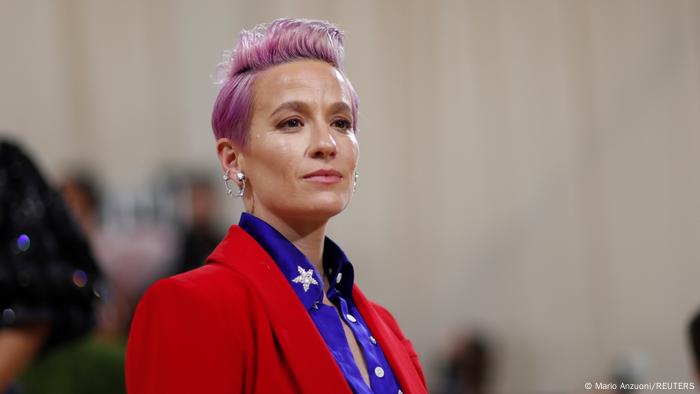
Megan Rapinoe at the Metropolitan Museum of Art Costume Institute Gala

More than 500 female athletes, coaches and sports associations have written to the US Supreme Court, the highest court in the US, in support of the right to abortion. 

Without the right to terminate a pregnancy, "the physical stresses of forced pregnancy and childbirth would undermine athletes' ability to reach their full potential," the letter states. "Pregnancy fundamentally alters a woman's body, interferes with and potentially impedes an athlete's access to higher education, elite competition, and a professional athletic career. Female athletes must have the power to decide if and when to dedicate their bodies to sport, pregnancy or both."

Known collectively as Athlete Amici, the athletes signed a formal appeal to argue that the right to abortion is essential for women athletes to pursue their sports at the same level that men are afforded. The group urged the court to reject a Mississippi law that would ban
most abortions after 15 weeks of pregnancy.

Rapinoe: 'Outrageous and un-American'

Signatories include football superstar Megan Rapinoe, women's national team captain Becky Sauerbrunn, two-time water polo gold medalist Ashleigh Johnson and basketball stars Sue Bird and Diana Taurasi. 

Bird, who is married to Rapinoe, and Taurasi won Olympic gold with the US team in Tokyo. A total of 26 female Olympic athletes and 73 professional athletes supported the appeal, along with various representative bodies such as the US player unions in football and basketball.

"As female athletes and people in sports, we need to have the power to make important decisions about our bodies and have control over our reproduction," Rapinoe said. Laws restricting abortion rights were "outrageous and un-American," the 36-year-old former world footballer said.

The Supreme Court on Monday scheduled arguments in a case from the state of Mississippi for December 1. In the case, the state is seeking to reverse the US Supreme Court's landmark 1973 decision that made abortions legal nationwide. Mississippi wants to ban all abortions after the 15th week. Exceptions are to be made only for medical emergencies or in the case of "severe foetal abnormalities."

Mississippi's state government had tightened the course on abortion rights after conservative jurist Amy Coney Barrett was appointed to the Supreme Court last year shortly before President Donald Trump was voted out of office. She gave the conservatives a majority of six votes to three in the Supreme Court.


Texas doctor performs abortion in test of

 new restrictive law

Issued on: 20/09/2021 - 18:02

Anti-abortion protestors and advocates of a woman's right to the procedure protest outside the US Supreme Court 
SAUL LOEB AFP/File

Washington (AFP)

A Texas doctor has revealed that he performed an abortion on a woman more than six weeks pregnant in what could be a test case for the constitutionality of the state's new law restricting the procedure.

Alan Braid, in a column published in The Washington Post over the weekend, said he provided an abortion on September 6 to a woman who was still in her first trimester but was "beyond the state's new limit."

The "Texas Heartbeat Act," which took effect September 1, bans abortion once a heartbeat can be detected, which usually takes place at six weeks -- before many women even know they are pregnant. It makes no exceptions for rape or incest.

"I acted because I had a duty of care to this patient, as I do for all patients, and because she has a fundamental right to receive this care," Braid, who has been practicing medicine for 50 years, wrote.

"I fully understood that there could be legal consequences -- but I wanted to make sure that Texas didn't get away with its bid to prevent this blatantly unconstitutional law from being tested," he added.

In the landmark 1973 case Roe v. Wade, the US Supreme Court guaranteed the right to an abortion so long as the fetus is not viable outside the womb, which is usually not until the 22nd to 24th week of pregnancy.

But the court, which was shifted to the right with the confirmation of three conservative justices nominated by Donald Trump, refused to block the Texas law from going into force.

The bill passed by Republican lawmakers in Texas, the country's second largest state, allows members of the public to sue doctors who perform abortions after six weeks or anyone who facilitates the procedure.

Abortion providers and others seeking to protect a woman's right to an abortion generally file suit against state prosecutors seeking to enforce restrictive abortion laws.

But Texas managed to avoid close judicial scrutiny by the Supreme Court because of the way the law was framed.

Braid's admission means that if he is prosecuted he could contest the constitutionality of the Texas law and force a court to rule on whether it violates Roe v. Wade.

The Justice Department has also filed suit against Texas, following through on a pledge by Democratic President Joe Biden to fight attempts by Republican-led states to restrict abortion.

© 2021 AFP


VIEW FROM THE USA

NDP Expected to Wield Power in Canadian Parliament as Trudeau Maintains Minority Govt

"We are going to continue fighting for you, just the same way we fought for you in the pandemic, you can count on us to continue those fights," said NDP leader Jagmeet Singh.


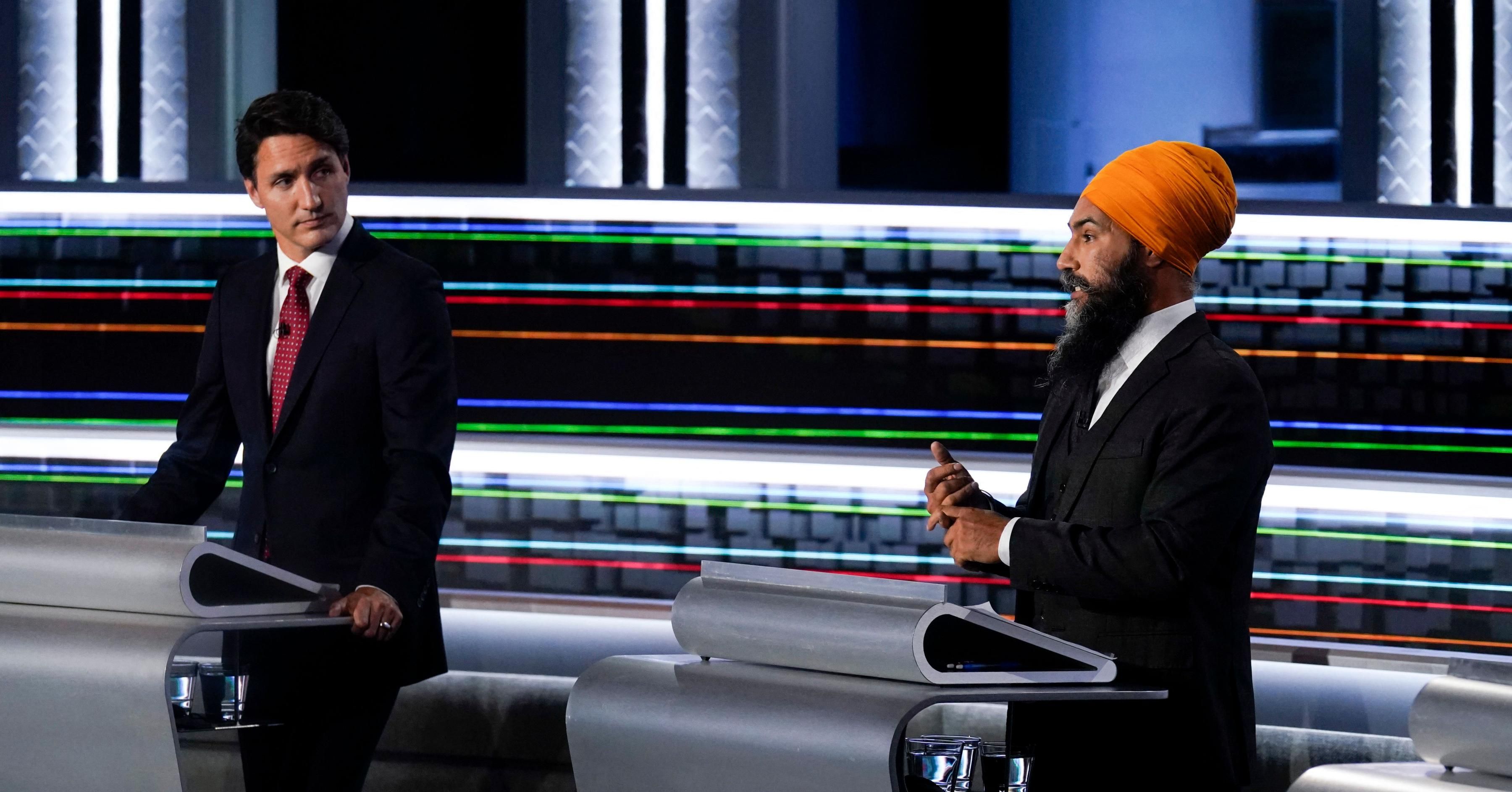
Canadian Prime Minister Justin Trudeau (L) and New Democratic Party Leader Jagmeet Singh participate in a debate in Gatineau, Quebec, Canada on September 9, 2021.
(Photo: Adrian Wyld/POOL/AFP via Getty Images)

JULIA CONLEY
COMMON DREAMS
September 21, 2021

The leader of Canada's left-wing New Democratic Party, Jagmeet Singh, responded to Monday night's snap election results with a pledge to continue fighting for climate action and far-reaching social reforms aimed at helping working families, as his party gained three seats in Parliament, putting its total at 27 as of this writing.

While holding fewer seats than Prime Minister Justin Trudeau's Liberal Party, the Conservatives, and the separatist Bloc Québécois, the New Democratic Party (NDP) will likely wield power in the new government as the Liberals rely on progressive lawmakers' votes to pass key legislation.

"In this pandemic, people got more help because we were there, we were able to increase the supports to people. If people want more help, more New Democrats will make it happen."
—Jagmeet Singh, NDP

"I want you to know our fight for you will continue," Singh told supporters after the votes were tallied Monday night. "You can be sure that we will be there for you, and you can also be sure that if we work together we can build a better society, and that's exactly what New Democrats will do."

The three seats the NDP picked up included a victory by Blake Desjarlais, who defeated a Conservative incumbent in Edmonton and doubled the party's seats in Alberta. The party had focused on the seat as a major target after the NDP came in second in Edmonton in 2019. Desjarlais will be Alberta's only Indigenous member of Parliament (MP).


Singh was also re-elected in Burnaby South, British Columbia. According to the CBC's Vote Compass, Singh was rated highest among all federal party leaders in competence and trustworthiness.


After Trudeau called for the snap election in mid-August, hoping to gain ground in Parliament by campaigning on his government's management of the coronavirus pandemic, Singh and the NDP pushed its message calling for higher taxes on corporations and the rich, universal prescription drug coverage, more ambitious climate targets than the Liberals have achieved, and other far-reaching policy changes.

The party pledged to "set a target of reducing Canada's emissions by at least 50% from 2005 levels by 2030, reaching further wherever possible to account for Canada's fair share," in contrast with recently passed legislation to reach net-zero emissions by 2050.

"We are going to continue fighting for you, just the same way we fought for you in the pandemic, you can count on us to continue those fights," Singh said Monday night. "We're going to make sure that we fight hard to defend our environment, to make sure we're fighting the climate crisis like we really want to win."

After calling for an election that many political observers saw as a risk, Trudeau will remain as prime minister but is expected to preside over a minority government, with the Liberals holding 158 seats in Parliament—one fewer than it won in 2019 and 12 short of the 170-seat threshold needed for a majority.

Canadian historian Christo Aivalis outlined some far-reaching and broadly popular legislative actions Trudeau could take promptly, working closely with Singh's party.

"All of this can start day one of a new Parliament," Aivalis said.

Trudeau is likely to rely on votes from the NDP to pass some of his signature policy pledges, including a national child care plan.

Singh pointed to his party's Covid-19 response—including pushing provincial governments to protect renters from evictions and support small businesses—as evidence that the NDP will continue working in the best interest of all Canadians following the elections.

"In this pandemic, people got more help because we were there, we were able to increase the supports to people," Singh said ahead of the elections. "If people want more help, more New Democrats will make it happen."
Misinformation on Reddit has become unmanageable, Alberta moderators say 
 CBC 

Company behind website says it takes the issue seriously, but moderators say problems persist

Madeleine Cummings · 
CBC News ·Edmonton
 Posted: Sep 21, 2021 
A Reddit moderator in Edmonton tackles a queue of misinformation targeting r/Alberta, a local community on the social media site. Three volunteer moderators say posts pushing misinformation and conspiracy theories about COVID-19 have surged in their online communities. 
(Nathan Gross/CBC)


Misinformation flooding some of Alberta's biggest online communities has become a major problem during the COVID-19 pandemic, according to three volunteer Reddit moderators in Edmonton.

In separate interviews with CBC News, the moderators said the number of posts pushing misinformation and conspiracy theories about COVID-19 has surged in their communities on Reddit, a huge social media and news aggregator site that hosts thousands of discussion forums or communities known as subreddits for millions of users.

The moderators say the vast majority of these posts come from users who have never participated in their online communities before.

Thousands of Albertans rely on their local Reddit communities, but volunteer moderators say keeping these places free of pandemic-related misinformation and disinformation — misinformation that is intentionally spread — has become increasingly difficult and time-consuming.

Alberta feed stores inundated with calls for ivermectin over false claims livestock dewormer treats COVID
How the spread of COVID-19 misinformation is undermining trust in public health

Posts questioning the safety of vaccines and masks, linking vaccines with 5G networks, comparing COVID-19 to the flu and promoting unproven treatments like ivermectin have become common, the moderators said.
Harassment, death threats common

"Our moderation queue went from probably one or two of those a week to dozens to hundreds every day, and it is unsustainable — we cannot keep up with that," said a 32-year-old Edmonton man who is a moderator for r/Alberta, a community or subreddit with more than 138,000 subscribers.

CBC News is not naming the man because he has received personalized threats and harassment from people whose posts he has removed in the past and he fears he could be targeted again.

A fellow r/Alberta moderator, who is an Edmonton student in his 20s, said death threats have become common in the team's inbox and the authors of misinformation posts often urge moderators to kill themselves.

Moderators say they often receive messages from authors of misinformation posts urging them to kill themselves. (r/Alberta moderator)

r/Alberta is not the only online community dealing with a deluge of misinformation.

Troy Pavlek, a moderator for r/Edmonton, a subreddit with more than 136,000 subscribers, said moderators handle between 50 to 100 misinformation posts per day.

He said users opposed to masks and vaccines pose as health-care workers and spread messages like, "Have you heard that vaccines can kill you?"

"The acceleration, just like our case counts, has gone exponential," Pavlek said.

Troy Pavlek, a moderator for the subreddit r/Edmonton, says misinformation on the site has become a big problem during the COVID-19 pandemic. Volunteer moderators say they're burning out, but feel responsible for keeping their communities free of pandemic-related misinformation. (Troy Pavlek)


Company changes inadequate, moderators say

Last month, moderators of r/Alberta and dozens of other subreddits around the world protested "rampant COVID-19 misinformation" on Reddit and asked the American company to take responsibility for it.

Following the online protests, the company banned one subreddit, quarantined 54 others and added a reporting feature for moderators to flag community interference. (A quarantine means the page won't show up in search results, and when users to try access it directly, they'll be shown a warning message.)

How social media platforms are fighting coronavirus misinformation

A Reddit spokesperson told CBC News the company takes the issue extremely seriously and has a goal of decreasing the burden placed on moderators.

The spokesperson said the company has changed how it detects users who evade bans by creating new accounts and said moderators can turn to a pool of experienced peers for help when it comes to unexpected traffic surges.

Moderators say the recent changes are inadequate because the flow of misinformation has not slowed down.

Rebekah Tromble, director of the Institute for Data, Democracy & Politics at George Washington University says online misinformation is harming society and accelerating the spread of COVID-19. (Madeleine Cummings/CBC)

"The very spread of these ideas in multiple spaces, multiple times are undoubtedly doing real harms to society, increasing the spread of COVID-19 and almost certainly leading to death," said Rebekah Tromble, director of the Institute for Data, Democracy & Politics at the George Washington University.

Tromble said companies could choose to restructure their platforms to be much smaller, but she didn't think they would do that "because where they achieve profit is through the very large, scalable model." She also talked about the possibility of governments breaking up tech companies through regulation.

She said the European Union has two large pieces of proposed legislation — the Digital Services Act and the Digital Markets Act — that "when they go into effect, are going to have clear spillover effects around the world."
Battling burnout

The Edmonton moderators said their teams have been struggling with burnout for months. Some moderators have left their positions and recruiting new ones can be difficult.

Despite being on the receiving end of so much invective, the volunteers said they cannot bring themselves to walk away because that would mean allowing more misinformation to spread in communities they care about.

"If I were to stop doing what I'm doing, then the misinformation just gets worse, and once we've made it a home for misinformation, once we've said this is OK, this is not something we're going to stop, then it sweeps in more and more, and this community, which has been a joy for me in the past, will never be a joy for anyone ever again," Pavlek said.
CTV: Race and the election

'Really frustrating': Racialized people feel ignored in federal election campaign

Omar Sachedina sat down with GEN Z BIPOC Canadians frustrated with the lack of discussion of race and racism on the campaign trail.


  • Black and people of colour in Canada are wondering why racism and issues about race have taken a backseat on the campaign trail.


Omar Sachedina
CTV National News National Affairs Correspondent

Brooke TaylorCTVNews.ca Writer
Saturday, September 18, 2021  EDT

TORONTO -- Given recent racist attacks in the country and racism hurled at campaigning candidates, racialized people living in Canada say they're concerned that systemic racism hasn't been at the forefront of any of the party leaders' messages.

Some almost 8 million Indigenous, Black and people of colour living in Canada, making up 22 per cent of Canada’s population, are wondering why there hasn't been more focus on racism and issues of race during the election campaign.

"I'm a woman of colour every day of my life, I don't get to turn that off," Samanta Krishnapillai, founder, executive director and editor-in-chief of On Canada Project, an Instagram account that shares information targeted towards Canada’s millennial and Generation Z populations, told CTV News.

She said she had hoped that systemic racism in Canada would be more central to all of the candidates' campaigns.

"I think that is really frustrating to see," she said.

For Krishnapillai, she feels as though the issues that impact people of colour haven't been seen as crucial during the election campaign.

"The fact that there are party leaders that are able to just move on from this subject and not constantly have it as part of what they're talking about kind of sucks … It's not like our experiences aren't as important," she said.


Not only is Krishnapillai not seeing these important conversations about race, she’s also not seeing the issues of young Canadians reflected in the election campaigns.

“People keep saying, ‘young people don't vote.’ What are you doing to get me to come vote? What are you talking about to get me to care, to get people like me to care?” she said. “It's just been a really lackluster election.”

And she’s not willing to accept the answer that it’s “just politics.”

“Why is that what we accept as politics, if you know that you can do better, why aren't you? You shouldn't have to wait until someone dies or bodies are recovered to do it,” Krishnapillai said.

When Justin Trudeau was elected prime minister in 2015, Krishnapillai said she was excited. She saw a feminist leader who was going to make change, but she sees things differently now.

“I think he's capable of greatness, but I also feel like, it just feels so performative and it doesn't feel genuine,” she said.

That's especially true, she said, after the death of George Floyd in the U.S. kicked off protests across Canada last year in response to police violence against Black and Indigenous people here. This year, meanwhile, thousands of unmarked graves at former residential schools were brought to light, and a family in London, Ont. was killed because – according to police – they were walking while Muslim.

"It really could have been, it could have been my mother," Sarah Barzak, executive director of the London School of Racialized Leaders, told CTV News.

Barzak said that she experienced racism in Canada since she was a child, with other kids telling her: "'go back to your country,' – like, I heard that a lot as a child."

She said she is disappointed that while politicians turned out to a memorial for the family killed in London in June, they have since gone silent on Islamophobia in the country, and systemic racism in general.

"They came, they took the mic, they took all their photo ops, and then they left," she said.

The candidates have spoken about diversity in Canada, but Barzak said just talking about it isn’t enough.

“I don't think it's enough to just say things like ‘diversity is our strength’, when hate crimes are clearly on the rise and there just isn't enough funding and enough push back,” she said.

And some forms of racism she says have gone unmentioned by the candidates on the campaign trail.

“I haven't heard any of the leaders discuss anti-Asian racism, and that has also been on the rise in relation to COVID and xenophobia and anti-Asian sentiment,” Barzak said.

After a tumultuous 18 months in which marginalized and racialized communities were hit harder by the COVID-19 pandemic, Barzak said it is time for the candidates to address these issues.

“Every marginalized community has really gone through the gutters, especially under this pandemic and I don't think there are excuses anymore,” she said. “I think even just acknowledging it is the bare minimum.”

Barzak said she is disappointed that issues of race haven’t been central to the candidates’ election campaigns, and she doesn’t think she’s alone in this feeling.

“I look at leadership and I'm just shaking my head,” said Barzak. “This isn't leadership, this is failure to me, and I think this is failure to a lot of people across the country.”

“This is systemic neglect,” she added.

Some voters were hoping for more, especially after politicians took a knee with protestors last summer.

“I definitely wish that after the year and a half that we all witnessed, you know, Black issues would be centred a little bit more anti-Blackness and issues particular to the Black community would have been discussed a little bit more,” Danièle-Jocelyne Otou, director of communication and strategic engagement of Apathy is Boring, an organization that aims to get younger Canadians involved in politics and Canadian and global issues told CTV News.

At the English-language leaders debate, where not a single Black person was invited to ask the candidates a question, issues that impact Black Canadians were left unaddressed. The anti-Asian hate that has been on the rise since the COVID-19 pandemic began was also not a topic of discussion.

“I wish that Black voices would have been amplified and highlighted throughout the debate as well. I would have loved to hear from some Asian folks about the last year that they've had and the issues that they would like to see moving forward,” she added.

Sometimes leaders do the bare minimum to engage voters, especially younger ones, and Otou says that's not enough.

"There's this assumption that all you have to do is one little TikTok meme and you'll get the youth vote without taking into account, again, youth interests over the last year and a half have drastically changed and they're paying more attention than ever to Canadian politics," she said.

Indigenous voters are also feeling left behind, as the federal party leaders have largely ignored the continuing discoveries of unmarked graves on the grounds of former residential schools.

The chief of Serpent River First Nation in Ontario had hoped to see the candidates present real solutions to healing these historical wounds.

"Canada needs to have truth before we can have reconciliation," said Chief Brent Bissaillion. "We still haven't gotten to that truth."

Bissaillion said he feels that issues impacting First Nations, Metis and Inuit in Canada haven’t been central to the parties’ campaigns.

“So it does get swept under the rug, and I feel that a lot of the issues that pertain to indigenous people pertain to a lot of other minorities and marginalized folks, and it is kind of disappointing that it's gone to the wayside during this campaign,” he said.

With more and more unmarked graves being discovered in the country, Bissaillion reflects on other moments that seemed like a reckoning in Canada.

“We've had several reckonings this country continually has reckonings every few years. And we continue to be in the same spot. Everything is symbolic,” he said.

Bissaillion said he would like to hear more about what steps the parties will take to follow through on various promises, and issues that impact First Nations, Metis and Inuit in Canada.

“I’d really like to hear from all parties on how we're going to start returning land back to our community so that we can take stewardship,” he said.

Krishnapillai, Barzak, Otou and Bissaillion will participate in CTV's Voters' Viewpoint panel with CTV’s Your Morning host Anne Marie Mediwake as part of CTV News' special election coverage. Join the Voters’ Viewpoint conversation online on CTVNews.ca, Facebook, Twitter, Instagram, and TikTok.


OPEN SOURCE FOR PATENTS AND TECHNOLOGY
Amnesty demands two billion Covid jabs for poorer world

Issued on: 22/09/2021 - 
Amnesty claims vaccine manufacturers are not living up to their commitments to provide the Covid jab to poorer nations
 AHMAD GHARABLI AFP

London (AFP)

Covid vaccine manufacturers are putting profit before lives, Amnesty International said on Wednesday, as it demanded two billion doses for poorer nations by the end of the year.

The human rights group said in a new report that US President Joe Biden was expected to outline a pledge at the UN General Assembly to fully vaccinate 70 percent of the world's population by next September.

"We need leaders like President Biden to put billions of doses on the table and deliver the goods, otherwise this is just another empty gesture and lives will continue to be lost," Amnesty chief Agnes Callamard said.

The group said AstraZeneca, BioNTech, Johnson & Johnson, Moderna, Novavax and Pfizer had all refused to share doses or technology to enable more of the world to get Covid jabs.

Most people in the rich world have been inoculated, but parts of Latin America, Africa and Asia have plunged into renewed crises with "tens of thousands of preventable deaths every week", Amnesty said.

Out of 5.76 billion doses administered worldwide, only 0.3 percent have gone to low-income countries with over 79 percent heading to upper-middle and high-income countries, it said.

In letters sent to Amnesty, all the companies pledged their support for human rights, but the report said their actions violated that commitment.

AstraZeneca and Johnson & Johnson were selling their doses at cost price, it noted.

But all of the six companies had fought a bid by India and South Africa to waive vaccine-related intellectual property rights at the World Trade Organization, despite receiving hefty government support themselves.

Amnesty launched a new campaign which it said was backed by the World Health Organization and UN High Commissioner for Human Rights "to hold states and big pharma to account".

Activists have repeatedly called on the world's richest countries to waive intellectual property rights to vaccines 
Adrian DENNIS AFP

With 100 days to go till the end of the year, it said the WHO's target of vaccinating 40 percent of the population of low and lower-middle income countries was at risk.

It demanded richer countries redistribute "the hundreds of millions of excess doses currently sitting idle" and for vaccine developers to ensure that at least half of doses produced go to poorer countries.

"We're calling on states and pharmaceutical companies to drastically change course and to do everything needed to deliver two billion vaccines to low and lower-middle income countries starting now," Callamard said.

"Profits should never come before lives," she said. "No one should spend another year suffering and living in fear."

© 2021 AFP
CLIMATE CHANGE
South Sudanese refugees homeless again after Sudan floods


Issued on: 22/09/2021 -
A South Sudanese refugee inspects a house damaged in floods in Al-Qanaa village in Sudan's southern White Nile state 
ASHRAF SHAZLY AFP

Al-Jabalain (Sudan) (AFP)

South Sudanese refugee Dawood Kour fled to Sudan to turn the page on a life of displacement, only to be forced onto the streets once more after floodwaters submerged his rickety shelter.

Kour crossed the border in November, fleeing years of conflict in his home city of Malakal -- itself prone to flooding.

South Sudan became the world's newest independent nation in 2011, seceding from Sudan. But in late 2013, it plunged into a devastating, five-year civil war that it has yet to fully recover from.

Since fleeing, Kour had lived in the Al-Qanaa camp, a growing community of around 35,000 refugees in the Al-Jabalain district of White Nile state.

But this month, Kour was displaced yet again as floodwaters inundated the camp. He moved to the nearest patch of dry land he could find -- the roadside.

The waters rose so fast that "we had no time to collect our belongings," Kour told AFP. "We only carried our children."

"We now have no food, medication or anything to fight the swarms of mosquitoes."

Over 288,000 residents and refugees have been affected in Sudan where heavy rains and flash floods have hit 13 of the 18 states, according to the United Nations.

Humanitarian needs have swelled, and been exacerbated by the disaster in neighbouring South Sudan too, where the deluge has affected and displaced about 426,000 people, the UN said.

In Sudan, thousands of refugees were relocated to different camps, while others took shelter in villages that were spared, but many are now living on the streets.

Over 288,000 residents and refugees have been affected by the heavy rains and flash floods in Sudan 
ASHRAF SHAZLY AFP/File

"They have become homeless," said Ibrahim Mohamed, a senior official at Sudan's refugee commission.

"We are facing a serious challenge of finding new land to relocate them to."

- No food, shelter –

Torrential rains pummel Sudan annually between June and October.

The downpours often leave the country grappling with severe flooding that wrecks properties, infrastructure and crops.

Last year, Sudan declared a three-month state of emergency as flooding that the UN has called the country's worst in a century left around 140 people dead and 900,000 affected.

Authorities say the floods have damaged or destroyed around 35,000 homes 
ASHRAF SHAZLY AFP

So far this year, the floods have killed more than 80 people nationwide and damaged or destroyed around 35,000 homes, according to Sudanese authorities.

In the Al-Jabalain district, neither Sudanese villagers nor the refugees were prepared for the inundation.

"Villagers say they have not witnessed such floods in 40 years," said Anwar Abushura, the head of Al-Qanaa camp.

Refugees desperately built a rudimentary dirt barrier to try to protect their shelters, Kour said.

"But the water arrived at such a fast pace, and the flood barrier collapsed within two days," he said.

Aid workers have warned of a looming outbreak of water-borne diseases among the doubly displaced refugees 
ASHRAF SHAZLY AFP/File

Many refugees had to make their way through the stagnant floodwater to salvage building materials and belongings from the collapsed shelters.

"We have no food or even rugs to sleep on," said refugee David Bedi, 45, whose shelter was engulfed.

"We just want to build roofs over our children's heads."

- 'Little chance' -

Aid workers have warned of a looming outbreak of diseases among the doubly displaced refugees.

AFP saw some people bathing in the floodwater and using it to fill drinking containers.

Al-Qanaa camp head Abushura said they were expecting a "medical disaster".

Around 150 refugees from Al-Qanaa and the nearby Al-Alagaya camp, including children, were diagnosed with malaria on Monday, according to figures compiled by Sudan's refugee commission.

Torrential rains pummel Sudan annually between June and October
 ASHRAF SHAZLY AFP/File

Darquos Manuel, 32, said food had been spoilt, "mosquitoes are eating the children and the rains continue to pour down even as we live on the streets".

"There is little chance for survival under these conditions," he said.

At Al-Alagaya camp, where many refugees were relocated, Nagwa James pointed to shelters that had buckled under the relentless torrents of water.

"We fear... we will get flooded the same way Al-Qanaa did," the South Sudanese refugee said.

Neither Sudanese villagers nor the refugees were prepared for the inundation 
ASHRAF SHAZLY AFP

Conditions were already poor, "mosquitoes are everywhere and there are a lot of infections", she added.

Mohamed Ali Abuselib, head of the camp, said refugees had been moved from low-lying areas.

But most are in the open, he added, "and we are expecting more floods".

© 2021 AFP

Missing wind variability means future impacts of climate change may be underestimated in Europe and North America

wind
Credit: Pixabay/CC0 Public Domain

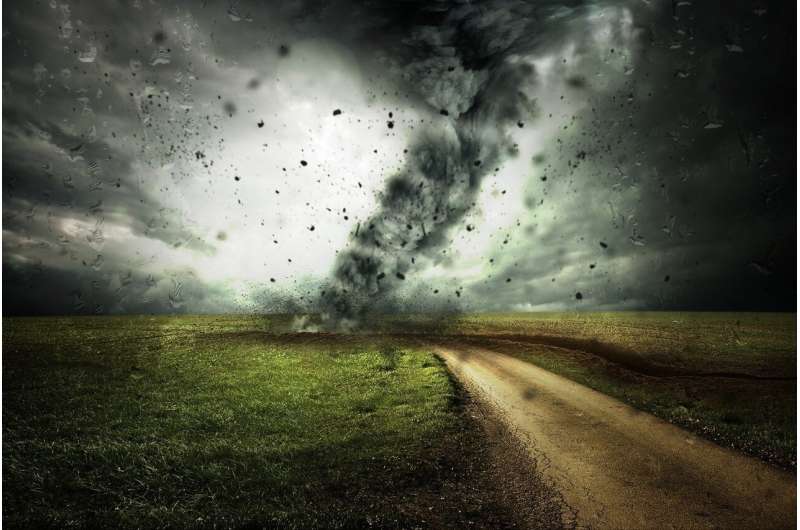
Extratropical winds have a strong influence on climate in extratropical regions, and are known to vary from decade to decade. However, their variability is currently not factored into climate models making predictions for future climates in these regions. Researchers inserted these into predictions for how extratropical climates will change by the middle of the century, and found uncertainty increased significantly, meaning unusually hot, cold, dry or wet decades are likely to be more frequent here than previously thought.

Climate models may be underestimating the impact  change will have on the UK, North America and other extratropical regions due to a crucial missing element, new research has shown.

Scientists at the University of Reading have warned that current projections of how a warming world will affect  and rainfall do not take into account the fact that extratropical winds—which have a strong influence on climate in the mid-latitudes—vary greatly from decade to decade.

The research team used observations of these winds over the 20th century to better represent their variability in climate model predictions of the future. They found that this made the predictions of future climate less certain in the extratropics—particularly in the North Atlantic  and particularly in winter—and that unusually hot, cold, wet or dry decades are projected to be much more likely by the middle of the century in this region than existing climate simulations suggest.

Dr. Christopher O'Reilly, a Royal Society University Research Fellow in the University of Reading's Department of Meteorology, said: "Variations between decades in the strength of winds in the more temperate regions of the world are a crucial missing ingredient in projections of the future climate of those regions.

"By adding this extra variability into , we showed that these winds may be an additional source of uncertainty on top of climate change. This could mean that within these regions, temperatures are pushed to relatively extreme highs or lows more often. While in some decades they could counteract increases to temperatures and  caused by climate change, in other periods they could make these extremes even more extreme.

"This is yet another reminder that preparation will be crucial as we face up to more variable regional climates as an impact of climate change in the future."

The team used wind observation data from the Met Office, Copernicus Climate Data Store and NOAA, among others, to carry out their analysis and bolster the climate model predictions.

The range of temperature and rainfall most likely to occur in future decades increased by 50% across Northern Europe, Northern America and the Mediterranean—with uncertainty nearly doubling in some cases.

This strengthens previous research that suggests rainfall and temperatures that are very unlikely today will fall within the likely range in future due to climate change.

The updated projections showed that the Mediterranean would see a higher frequency of drier-than-average winters. As studies show that dry winters in this region make heatwaves in Europe more common the following summer, this has health and infrastructure implications for several countries.

The study is published in Communications Earth & Environment.Rainfall becomes increasingly variable as climate warms

More information: Projections of northern hemisphere extratropical climate underestimate internal variability and associated uncertainty, Communications Earth & Environment, DOI: 10.1038/s43247-021-00268-7

Journal information: Communications Earth & Environment 

Provided by University of Reading 

Cyclones could soon devastate Europe, warns ‘storm chaser’ climate scientist


Cyclones could soon devastate Europe. - Copyright Canva

By Inva Hasanaliaj MA Journalism • Updated: 20/09/2021 - 

Meteorologist Nadia Bloemendaal can see into the future and it’s looking rough.

For now, she models data on extreme weather in the Global South but it’s already revealing trends that could shape life in Europe in the next 50 years.

Many young people worried about the climate crisis take up activism, but Bloemendaal prefers being behind a computer screen. This is where she says she can really make a difference.

Her work combines meteorology, mathematics and physics to produce a real-world picture of our changing weather. It’s the kind of scientific evidence informing climate policy debates worldwide.

Bloemendaal developed her cyclone early-warning system for communities in the Global South, and it’s now ringing alarm bells much closer to home. Recent bouts of extreme weather in Europe could be a sign of things to come.

In July floods hit Germany and Belgium, killing at least 180 people but storm warnings allowed the Netherlands to avoid casualties. These storms were a clear signal that Europe needs to start adapting to extreme weather, setting up “..early warning systems and adequate communication … that can save lives,” says Bloemendaal.

Look at climate change as the fuel for tropical cyclones she says, and if seawater reaches a temperature of 30 degrees Celsius that’s a lot of ‘cyclone fuel’.

“Climate change is the fuel for the tropical cyclone if we are going to have water that is 30 degrees Celsius that’s a lot of fuel for tropical cyclones to keep going and keep intensifying”.

Researcher Nadia Bloemendaal working at her desk at VU University Amsterdam
Nadia Bloemendaal

The scenario is set to get worse as temperatures increase and sea levels rise in the south. The effect of this could be temperatures in northern coastal regions reaching up to 27 degrees Celsius. Based on the science she is seeing, Bloemendaal says parts of the world that don’t see tropical cyclones now, may see them in the next 30 to 50 years.

She adds that we’re already experiencing the effects of climate change in Europe, arguing that based on the scientific data she’s seeing, the world has only a couple of years to stall its progress.

“There is research out there suggesting that we are going to see more hurricane-force storms which were once tropical cyclones and have moved into Europe,” Bloemendaal warns.

The 2021 Intergovernmental Panel on Climate Change (IPCC) report underlines this. Even at a targeted 1.5 degrees Celsius level of global warming, heavy rains and flooding are likely to increase in Europe, Africa, Asia, and North America.

The IPCC report says observational data from North America, Europe and Asia signals clearly that ‘human influence’ is the key factor in driving extreme weather.

Fixing the hole in the ozone layer was a success. How can we learn from it to cut carbon emissions?

Why stopping deforestation doesn't just save lives, it revives economies

What's it like being a 'storm chaser'?


Bloemendaal is keen to communicate her research in terms people without a scientific background can understand and has been fascinated by weather since she was a child.

“The way I got into meteorology is watching the movie Twister,” she says.

“That’s what started my interest in severe weather. That was the moment I was like, OK, I’m going to be a meteorologist. I want to be a storm chaser. I want to hunt those tornadoes.

"I want to find out more about them and I want to come up with a mechanism to basically save people from severe weather.”

Based at Amsterdam University’s Faculty of Science, Water and Climate Risk, Bloemendaal’s work is attracting a lot of attention from the wider scientific and business community.

I want to hunt those tornadoes - I want to find out more about them and I want to come up with a mechanism to basically save people from severe weather.

In the last two years, she has received prizes for her work on climate risk from Allianz and Lloyd’s. In 2020 she was part of the team awarded the Dutch Data Prize for their STORM dataset, which models tropical cyclone risk.

STORM uses historical records of all cyclone locations, adding meteorological data and current risk factors like climate change. It then models predictions of when the next tropical storm is going to hit and how intense it will be.

Rich nations like the US experience tropical cyclones and have sophisticated warning systems, but STORM is designed to be used everywhere. It can help protect people at the most basic level, by asking questions like “How big are the chances that your house is gone get hit by a tropical cyclone?” says Bloemendaal.
On the frontline of the climate crisis

For those living on the frontlines of the climate crisis, it’s only too clear cyclone warnings could save lives and livelihoods.

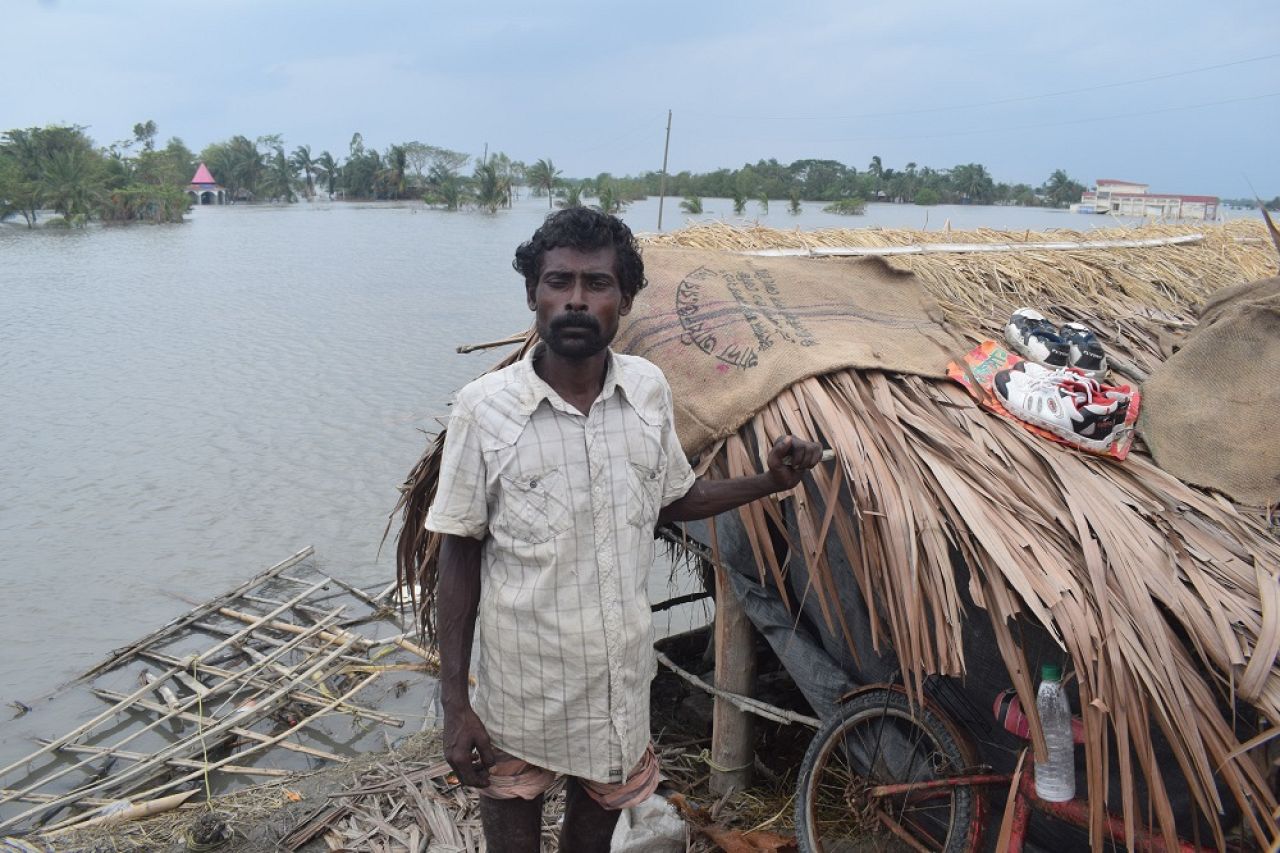
Kartik Chandra Mandal, 42, a farmer from Hajatkhali in Bangladesh, has twice seen his life devastated by tropical storms. In 2009 he was forced to abandon rice paddy fields which turned saline when flooded by seawater.

Mandal then had a job on a shrimp farm which was also ruined by extreme weather and ended up as a factory worker. In 2020, Cyclone Amphan swept his house away and now the family live perched precariously on a flood embankment.

Kartik Chandra Mandal, 42 years old
Rafiqul Islam Montu

“Frequent cyclones and other natural disasters make chaos of my life,” said Mandal.

“Natural disasters brought my life to zero, made me poorer, crippled me financially. I lost everything. My living expenses and debt burden increased a lot, now I make my living by borrowing.”

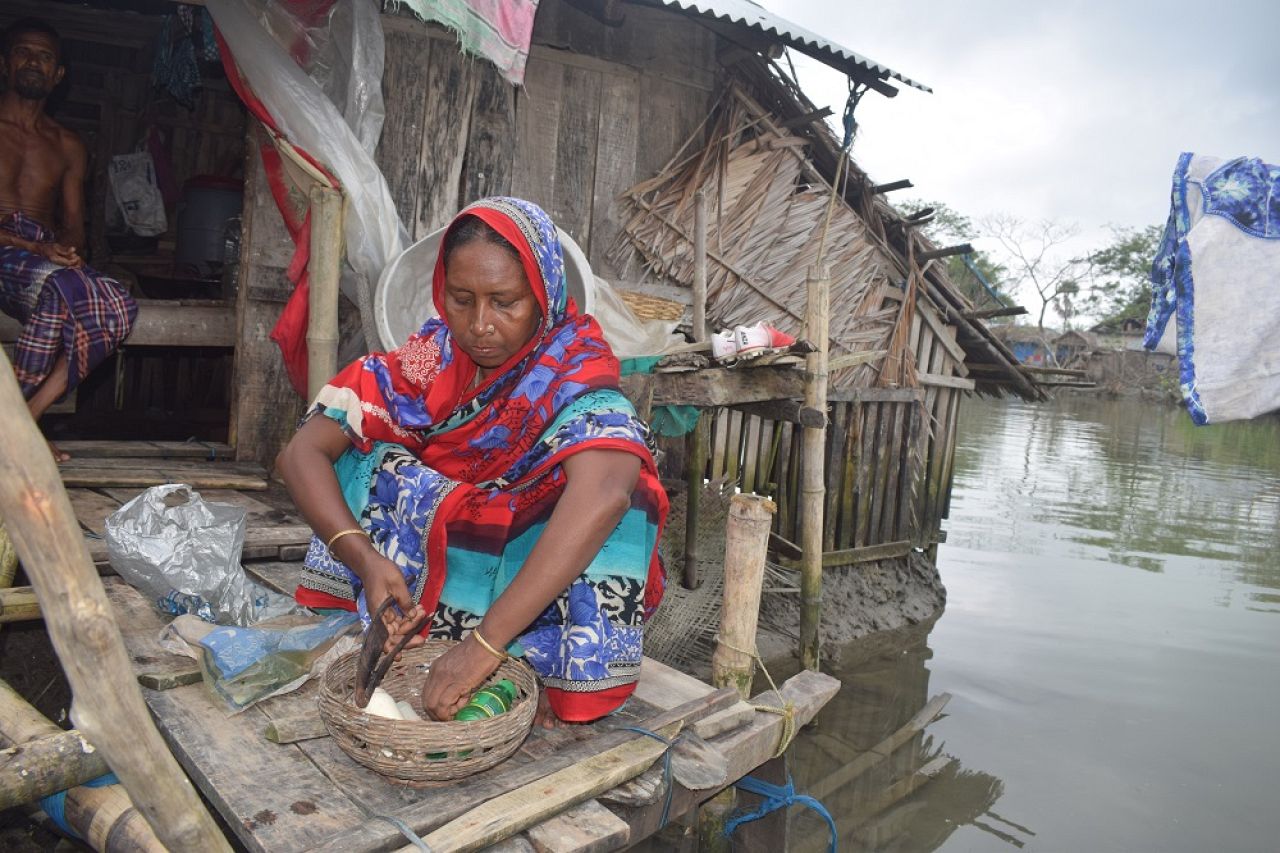
When Cyclone Amphan hit Sreepur in central Bangladesh, it brought saltwater flooding which left Sufia Begum’s village house underwater for the next ten months.

Begum 38, lost everything and she is certain the cause is climate change.

“We are tackling crises caused by climate change,” said Begum. ”Natural disasters have put an end to our normal livelihoods, we have to fight to make a living.”

Bangladesh has a small carbon footprint compared to other nations, including those in the Global North, but sees a much greater impact from the effects of global warming.

Sufia Begum is busy in front of the flooded house.
Rafiqul Islam Montu

Making a case for climate action

The experience of people like Begum and Mandal may feel abstract to voters in Europe. Bloemendaal’s risk modelling, however, makes a powerful real-world case for politicians here to take action.

The message is starting to filter through and young European voters have put the climate crisis firmly on their agenda. Data from the Reuters Institute Digital News Report in 2020 reveals over 72 per cent of people in the Global South are worried about climate change. But in Northern Europe, still only half this number voice concern and in the Netherlands, the figure is 5 per cent.

Dutch student Kim van Wijngaarden, 23, wants a tougher approach to the crisis from her country’s political leaders. She runs social media for Jongeren Milieu Actief or ‘Youth for Climate’ (JMA), publicising the group’s climate manifesto.

Drawn up with veteran Dutch politician and physicist Jan Terlouw alongside a group of other political youth organisations, the manifesto set out nine key actions JMA wants the government to implement. One of those was calling for a ‘green’ vote in the elections of March 2021.

With current policy, both in the Netherlands and worldwide, we are not going to stop the effects of harmful climate change.

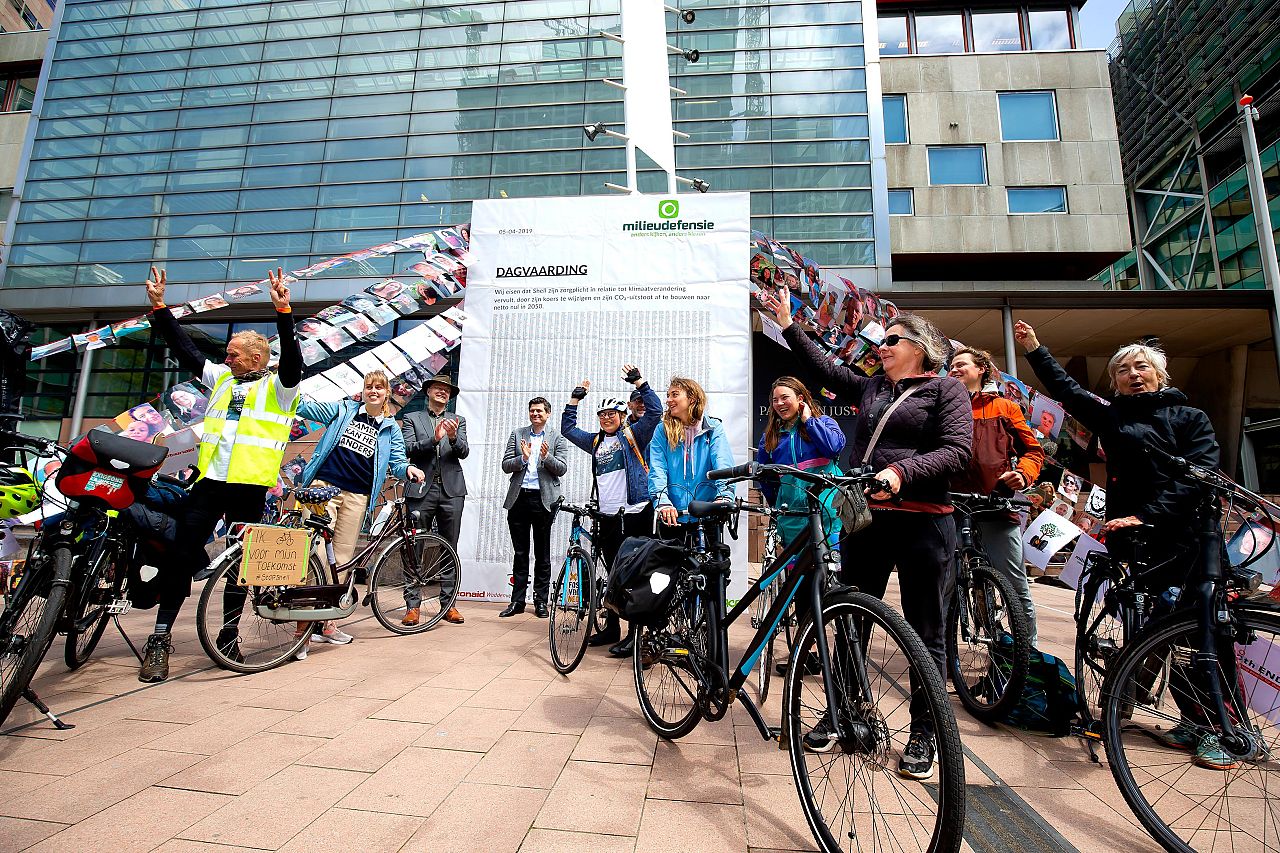
Van Wijngaarden joined other young activists who staged a public climate debate in front of the panel of judges in a lower court in the Hague.

“I know we need to take radical action,” says Van Wijngaarden, “I want a future, a future to be happy about. With current policy, both in the Netherlands and worldwide, we are not going to stop the effects of harmful climate change.”

General elections were held in the Netherlands from 15 to 17 March 2021 to elect all 150 members of the House of Representatives. The winner was the current Prime Minister, Mark Rutte and his People's Party for Freedom and Democracy.

Europe will miss its 2030 climate goal by 21 years at current pace

Roadtripping though a heatwave and wildfires: Is this the new normal for summer holidays?

Court action on climate change


Perhaps more effective was the court case climate activists, including JMA, brought against Royal Dutch Shell. On May 26 this year a Dutch court ruled Shell must cut its carbon emissions by 45 per cent by 2030, to meet targets set out in the 2015 Paris Climate Agreement.

The law has become a more powerful tool than mainstream politics in the fight against global warming, says Marjan Minnesma. She is the director of the Urgenda Foundation, which recently won another court case - this time against the Dutch state.

Urgenda and 900 individual Dutch citizens sued their government to require it to do more to prevent climate change. They won the case and the Dutch state is now legally obliged to limit Greenhouse gas emissions to 25 per cent below 1990 levels, by 2020.
The bikers at the Hague 26th May 2021 after winning the case against Shell.Kim van Wijngaarden

Minnesma points to the fast reaction by political leaders to Covid-19. She’d like to see the same decisive action on climate but isn’t optimistic.

“The Coronavirus is much more tangible than CO2 emissions due to its directly measurable consequences. The link between coal-fired power plants and flooding is difficult for many people to see,” she explains.

Guided by her scientific modelling and seeing clearly the predicament her own generation faces, Bloemendaal shares this sense of urgency.

“This pandemic hopefully will be sorted out in the next year or two, but climate change is going to happen over the next 20 to 30 years,” she argues.

“If you don’t do something right now you are going to see devastating effects in the future.”

It’s not only up to young people to act she adds.

"Just because you don’t live to see it doesn’t mean it isn’t going to happen."

This article is a part of a 2021 series between Euronews Green and Falmouth University.

Inva Hasanaliaj is studying for an MA in Journalism at Falmouth University. In this piece she shares how lessons learnt in the Global South could encourage Europeans to take action on climate change.

Additional sources
• RAFIQUL ISLAM MONTU


SEAMS WORLD CULTURE TAROT

Death and rebirth : a story from Myanmar of the 37 NATS

user avatar
RowenCreator
September 21, 2021

Card: Death

Artist Maitreya Lim

Country: Myanmar

The story of Maha Giri Nat and Sister Saw Meiyar Nat.

In Myanmar Nats are deities who are venerated in conjunction with Buddhism. There are 37 Great Nats as well many minor deities which may be spirits of trees, elements, or animals. Of the 37 Great Nats, they were mostly human beings who met with violent deaths and may also be call Nat Sein (“green Deities”).

Nat Deities are termed like saints and may inhabit the six heavens of Buddhism.

King Anawrahta of Bagan designated an official pantheon of 37 Nats after he had failed to enforce a ban on Nat worship. His strategy succeeded to combine Na worship with Buddism as the 37 Nats were shown worshipping Gautama Buddha and the head of the Nat, Thagyamin is a Buddhist protective deity.

For the Death card and the nature of death, we would portray the ending of one life and the beginning of another life which is the nature of Nats. The story centres on Maha Giri Nat and his sister Saw Meiyat Nat.

In his previous live, Maha Giri Nat was the son of the great U Tint Dor of Tagaung, a Master Blacksmith. He was known as Maung Tint Dei. He had great strength and was able to break the tusk of an elephant with his bare hands. He aided the villages in their work and was well liked and popular among the common folk.

On hearing about his fame, the king was afraid of the strong man and afraid that one day Maung Tint Dei would attack him and seize the throne. He tried to capture the strong man; however, due to his popularity among the common folk, he always was able to escape.

Hence the King tried another strategy. He picked Maung Tint Dei’s sister Saw Meiyar as the queen. While Saw Meiyar was in the palace, the king coxed her and told her that he wanted to give her brother a position in the palace. Believing the King’s words, Saw Meiyar invited her brother to the palace. Trusting that since his sister is the queen, he would be safe, Maung Tint Dei came to the palace. However, upon arrival at the court, the king tricked Maung Tint Dei into drinking a potion of deep sleep and had him arrested.

The king tried using various weapons and means of torture to kill Maung Tint Dei. Yet none of the weapons were able to harm him. In desperation, the king tied Maung Tint dei to a Sagawa tree and set him on fire.

The queen was kept in the dark while all this was happening until the day she saw her brother being tied to the tree and set on fire. She abruptly jumped into the fire and died together with her beloved brother.

In that instance both sister and brother became Nats and their abode was the Sagawa tree. Thereafter, any creature which came under the tree would die in a bad way. Thinking the tree to be cursed, the king dug up the tree by the roots and floated it down the river Ayarwaddy.

The Tree came to rest at the kingdom of Bagan. The two Nat spirits of Maha Giri Nat and Saw Meiyar Nat appeared in a dream to the king of Bagan. They promised to watch over the king and fulfill his wishes and bring prosperity to his kingdom if he would provide a shrine for them.

The King agreed and picked up the Sagawa tree from the water and requested a master sculptor to use the wood from the tree and make statutes of the brother and sister. Thereafter he held a grand gala celebration of Nat worship at Mount Poppa every year.

In addition, the King of Bagan led an army and defeated the king who murdered Maha Giri and Saw meiyar Nat. in the battle both brother and sister Nat aided the king of Bagan and his troops.

Mount Poppa being a holy mountain called Maha Giri.

Maha Giri is the Domestic lord of house hold issues and Nat Saw meiyar was the lord of the great mountain