Saturday, December 04, 2021

BC
Thompson Rivers University 
Protesters force TRU board of governors meeting to end

A silent protest was planned for 12:30 p.m. outside where the board of governors met, but that protest evidently found its way inside and forced the meeting to end

Sean Bradyabout 22 hours ago

One protestor, seen in this screen capture of TRU's live broadcast, can be seen holding a sign that reads "Brett has the power 2 make this right."

Protesters have interrupted a meeting of the board of governors at Thompson Rivers University, prompting chair Marilyn McLean to end the meeting.

Approximately 10 minutes into Friday's (Dec. 3) 1 p.m. meeting of the TRU board of governors, one protester could be seen standing up, calling on other protesters to also stand, and begin yelling.

At that point, board chair McLean stepped in to end the meeting.

"The meeting is being disrupted. At this point in time, I will declare this meeting suspended," McLean said before allowing governors to leave and packing up her things. The livestream ended shortly after, with protesters chanting, "No peace, no justice."

One woman, the only protester who was visible on the university's live broadcast, could be seen holding a sign that read, "Brett has the power 2 make this right," referencing TRU president Brett Fairbairn.

The board reconvened "a short time later," but the public was not allowed to attend the remainder of the board meeting, which had only covered three of its 14 agenda items before being interrupted.

That information comes from board chair McLean, who provided the following statement to KTW hours after the meeting was originally scheduled:

"This afternoon, a small group of vocal protestors interrupted the TRU Board of Governors meeting, resulting in a brief adjournment of the meeting until the board could reconvene virtually a short time later. As we were able to continue our agenda, it did not interrupt the governance and oversight the board provides the university.

"Our board is open to input from the community which is respectful and ensures everyone feels safe. The interruption meant that other members of the public could not be in attendance for the remainder of the meeting, and we are sorry for that."

A protest was planned outside the Brown Family House of Learning, where the TRU board of governors met on Friday, organized as a silent protest to begin at 12:30 p.m.

Friday's protest follows an earlier march on Nov. 29, when approximately 85 faculty and staff marched to TRU's Clock Tower building, where administration offices are located. That protest was in response to recent allegations against two top university administrators, vice-president of administration and finance Matt Milovick and associate vice-president of people and culture Larry Phillips.

Another march planned at Thompson Rivers University in wake of investigation


Two university senior executives are the subject of a complaint from a number of current and former TRU employees who allege racist, misogynist and bullying behaviours

Jessica Wallace

Dec 1, 2021


About 85 students and faculty took part in a march on Nov. 29, 2021, at Thompson Rivers University, calling for the university to place senior executives Matt Milovick and Larry Phillips on leave with pay while allegations of harassment are investigated. A second march is planned for Dec. 3
Michael Potestio/LJI/KTW

Another march on the Thompson Rivers University campus is being planned this week, in the wake of harassment allegations against two senior administrators.

Matt Milovick, TRU’s vice-president of finance and administration, and Larry Phillips, the university’s associate vice-president of people and culture, are the subject of a complaint from a number of current and former TRU employees.

Milovick and Phillips have been accused of racist, misogynist and bullying behaviours. The university’s board of governors is investigating the complaint and none of the allegations have been proven.

The complaint was emailed to the university on Feb. 8 of this year, but the investigation first came to light publicly when KTW reported on it on Nov. 23.

Charis Kamphuis, a law professor at TRU, is acting as the advocate for the complainants and has told KTW there are concerns about the way in which the investigation is being handled, including delays and the university not guaranteeing complainant anonymity.

On Monday, Nov. 29, about 85 faculty members and students marched between TRU’s Clock Tower building, where administration offices are located, and the Human Resources Building.

The Thompson Rivers University Faculty Association is calling for the two administrators to be placed on paid leave until the investigation wraps up. The probe is expected to be concluded in early 2022.

On Friday, Dec. 3, another march will be held on campus, this time outside of the House of Learning, where the TRU board of governors is meeting.

The silent protest will begin on at 12:30 p.m. at the north entrance of the House of Learning. The board of governors is meeting at 1 p.m.

Fossils dug up 100 years ago rediscovered wrapped in old newspaper

Fossils dug up 100 years ago rediscovered wrapped in old newspaper
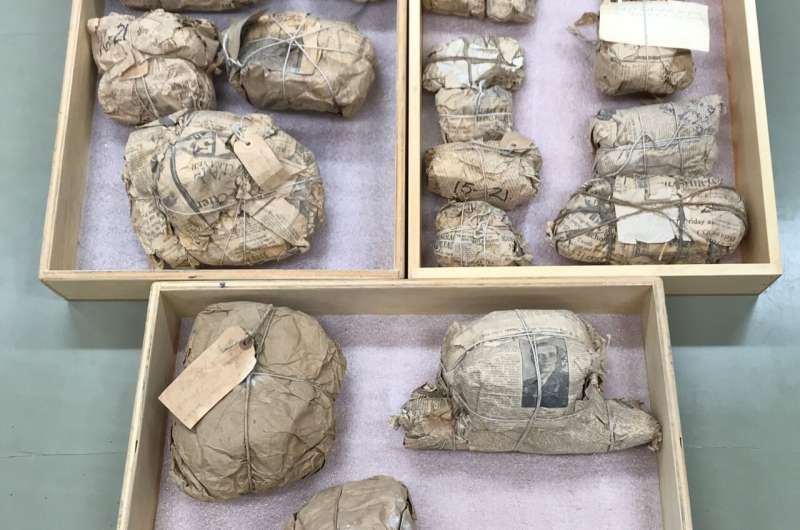
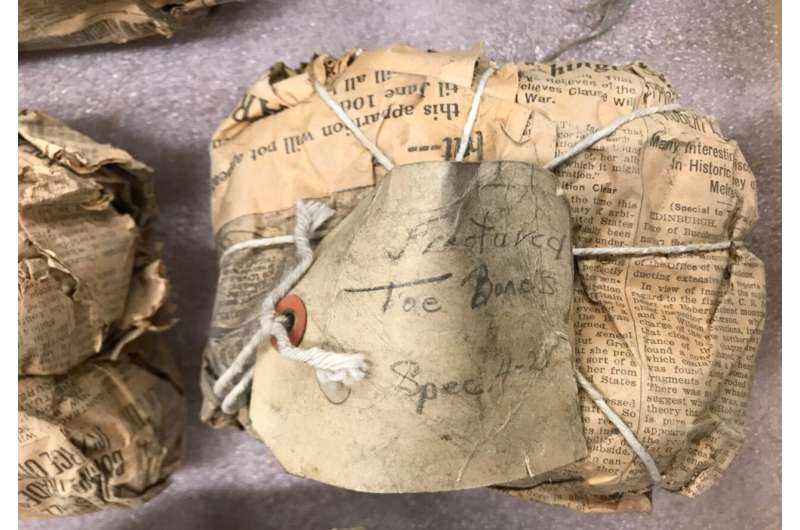
A handwritten tag on one of the fossils found wrapped in newspapers suggests it was
 unearthed during expeditions in the early 1920s. Credit: Clive Coy.

A stash of rediscovered dinosaur bones wrapped in century-old newspapers is set to reveal two pasts: one set in the 1920s and the University of Alberta's earliest paleontology, the other some 70 million years ago.

"It's always a surprise to find these bones that have been sitting in the ground for millions of years, but here we get a second surprise in finding them again," said Clive Coy, a paleontology researcher in the Faculty of Science.

Handwriting on the specimens suggests the haul is part of the 1920 and 1921 expeditions in what is now Dinosaur Provincial Park, led by the U of A's first paleontologist, George Sternberg.

The 20 or so pieces were pulled from a back shelf in a quonset on the University of Alberta's South Campus. Ranging in size from an apple to a melon, they're wrapped up in multiple layers of newspaper and tied up with bailing twine. Based on the labeling, Coy figures the bones were stored in the quonset in the late '60s or early '70s.

Potentially rare find

Coy is particularly interested in one labeled "three turtle skulls from quarry where numbers eight through 18 were collected."

"Turtle skulls are extremely rare and—considering how old they are and preserved in just newspaper—they could be quite important," he said.

Coy said dating the bones will be a challenge. When these bones were found 100 years ago, paleontologists of the day worked under the assumption that the Judith River Deposit in southern Alberta and Montana was one big deposit.

We now know the uppermost layer is a marine deposit that came in at the end of the Cretaceous, when that part of the world was flooded by an ocean, said Coy. The turtles are most likely from a time even earlier, from what is known as the Dinosaur Park formation, which existed somewhere between 72 million and 76 million years ago.

Unwrapping history

While he may unwrap the turtle skull bundle to have a look, Coy said the rest of the specimens have more value as historical artifacts.

"If we unwrap them, like unwrapping a mummy, then we just end up with a bone in a box, and I don't know that it's going to add much to our knowledge. But as a part of the U of A's historical past, that's where the greater value lies."

Fossils dug up 100 years ago rediscovered wrapped in old newspaper
Apart from any scientific value they may have, the rediscovered specimens offer a glimpse into the U of A's beginnings in paleontology. Credit: Clive Coy.

Sternberg owes his start at the U of A to John Allan, the university's first geologist, who had a vision of building a collection of fossil fauna and flora for the people of Alberta.

Until the start of the First World War, the federal and provincial governments of the day chose not to control foreign entities collecting Alberta fossils—which were being sent by rail out of the badlands as fast as they could be dug up as part of the Great Dinosaur Rush from 1910 to 1918.

"There was a time when, if you wanted to see Alberta dinosaurs, you had to go to Stuttgart, Paris, New York or London," said Coy.

Allan was one of the movers and shakers who encouraged the government to create a provincial museum in the late 1920s. He also lobbied for the protection of Dead Lodge Canyon or the Steveville Badlands, both of which are in the area that became Dinosaur Provincial Park in 1952 and was designated a UNESCO World Heritage Site in 1979.

Sternberg, who was part of a famous American family of fossil hunters, was in Canada during the war years to collect fossils for the Geological Survey of Canada.

To help lure Sternberg to the university, Allan bought a collection that Sternberg himself had freelanced, and hired him in 1919 to prepare that material.

That was a precursor to the famed 1920 and 1921 expeditions led by Sternberg with U of A geology grad student William "Bill" Kelly.

Almost as fast as the university's fledgling paleontology efforts took flight, they were grounded when Sternberg left for the Chicago Field Museum in 1922. Nothing would be done at the university for Sternberg's dinosaurs until 1934, when Allan accessed some money from the Carnegie funds to rehire Sternberg and his son to complete what had begun in 1919—which included founding the university's Dino Lab.

In 1935, the U of A hosted the first exhibition of dinosaurs in a public institution west of Toronto, on the third floor of the Fine Arts Building. It stood there for two decades until it was moved to the basement of the geology building, home of the Department of Earth and Atmospheric Sciences, where it has rested ever since.

Today, the Sternberg Museum of Natural History at Fort Hays State University in Hays, Kansas, is named for George and his -hunting family. Sternberg's protege Kelly would become one of the early pioneers in developing aerial photography for economic mineral exploration. Allan stayed on as the head of the U of A geology department until his retirement in 1949.

Today the university's Laboratory for Vertebrate Paleontology is one of 30 registered museum collections on campus and has on the order of 65,000 specimens—among the first of which now sit in Coy's lab wrapped in newspaper.

"Sternberg and Kelly would have been the last people to see the specimens inside that newspaper in the last 100 years," said Coy.

"There is historical interest as part of our heritage here at the university, tying in the early story of how we got up and going as the first publicly funded institution in Alberta to do this kind of thing."

Headless dinosaur reunited with its skull, one century later
Provided by University of Alberta 
JAPAN
Ehime nuclear reactor restarts after two-year halt


Shikoku Electric Power Co.'s Ikata No. 3 reactor (top right) in Ehime Prefecture | KYODO


KYODO
Dec 2, 2021

MATSUYAMA, EHIME PREF. – Shikoku Electric Power Co. restarted a nuclear reactor in Ehime Prefecture on Thursday that had been offline since December 2019 due to regular checks and a subsequent court injunction.

The utility rebooted the No. 3 reactor at the Ikata nuclear power plant after the March reversal of an injunction handed down by the Hiroshima High Court in January 2020 banning the reactor from operating over safety concerns.

The high court’s decision in 2020 was based on its view that the rules and risk assessment of Shikoku Electric and the Nuclear Regulation Authority regarding a possible disastrous eruption of Mt. Aso, about 130 kilometers away, were inadequate.

However, the same court reversed its earlier order in March this year in response to an objection from Shikoku Electric, allowing it to restart the reactor.

Shikoku Electric was initially due to restart the reactor in mid-October but was forced to postpone the move after announcing in July this year that one of its staff on night duty at the Ikata plant went to a gas station outside of the facility without permission on five occasions between 2017 and 2019, breaching safety regulations.

Shikoku Electric gained approval from Ehime Gov. Tokihiro Nakamura in mid-November to restart the reactor after providing all its staff on night duty with smartphones featuring global positioning system functions in order to prevent the recurrence of such an incident.


UN plans to drastically expand plastic waste management in India


FILE PHOTO: A woman collects plastic bottles for recycling at the garbage dump on the outskirts 

Thu, December 2, 2021
By Neha Arora

NEW DELHI (Reuters) - The United Nations Development Programme aims to almost triple its plastic waste management to 100 cities in India by 2024, A UNDP executive said, to combat the damaging effects of plastic pollution.

Across India's many towns and cities, which are often ranked among the world's most polluted, the absence of an organized management of plastic waste leads to widespread littering and pollution.

The UNDP programme, which began in 2018, has so far collected 83,000 metric tonne of plastic waste. India generates about 3.4 million tonnes of plastic waste annually, according to official estimates.

"In India although about 60% of plastic is recycled, we are still seeing the damage that plastic pollution is causing," Nadia Rasheed, Deputy Resident Representative, UNDP India, said in an interview at the Reuters Next conference broadcast on Friday.

The UNDP is working with federal think tank, NITI Aayog and have jointly developed a 'handbook' model for local municipalities as well as the private sector.

"In a country like India with nearly fifth of the world's population, a key challenge is how do we make these models scalable," Rasheed said in an interview recorded on Nov. 22.

The government needs stricter enforcement on controls around dumping of plastic waste and has a "long way to go" to raise awareness among households, Rasheed said, addding there was a need for investment into research for alternatives.

The programme suffered a setback after the COVID-19 pandemic led to widespread increase in waste, including medical plastic waste, and hit livelihoods of collectors, who often work in hazardous conditions.

"There was a real need to expand waste collection efforts and that was coming at the same time as lot of (COVID-19 related) restrictions were disrupting the normal waste collection," Rasheed said.

Plastic pollution is set to triple by 2040, the UN Environment Programme (UNEP) has predicted, adding 23-37 million metric tons of waste into the world's oceans each year.

India, also the world's third-biggest emitter of greenhouse gases after China and the United States, has set 2070 as a target to reach net-zero carbon emissions, much later than those set by others and twenty years after the U.N.'s global recommendation.

To watch the Reuters Next conference please register here https://reutersevents.com/events/next

(Reporting by Neha Arora)
Irish central bank makes first reserve gold purchases since 2009

Bloomberg News | December 1, 2021 | 

Central Bank of Ireland. Credit: Wikipedia

The Irish central bank has been adding to its gold reserves as inflation in the euro area runs far ahead of the European Central Bank target.


The Dublin-based institution’s purchase of 2 tons of gold in recent months has ended a more than decade-long period of unchanged holdings of the precious metal.

When asked about the reasoning behind the purchases, a spokesperson said that the central bank’s gold transactions “are commercially sensitive and no further comment can be made at this time.”

While the institution has given no reason for the increase in its stockpile, the Governor Gabriel Makhlouf last week warned that policy makers cannot afford to be complacent on inflation.

Central bankers’ appetite for gold grew in the first half of the year, with global reserves expanding 333.2 tons, 39% higher than the five-year average for the period, according to the World Gold Council, which noted strong purchases by Thailand, Hungary and Brazil.

Singapore increased its gold reserves by about 20% earlier this year in a largely under-the-radar move the central bank says will ensure the resiliency of its portfolio.

(By Lorcan Roche Kelly)
AUSTRALIA
Billionaire Adani’s disputed mine shows ditching coal isn’t easy

Bloomberg News | December 2, 2021 | 

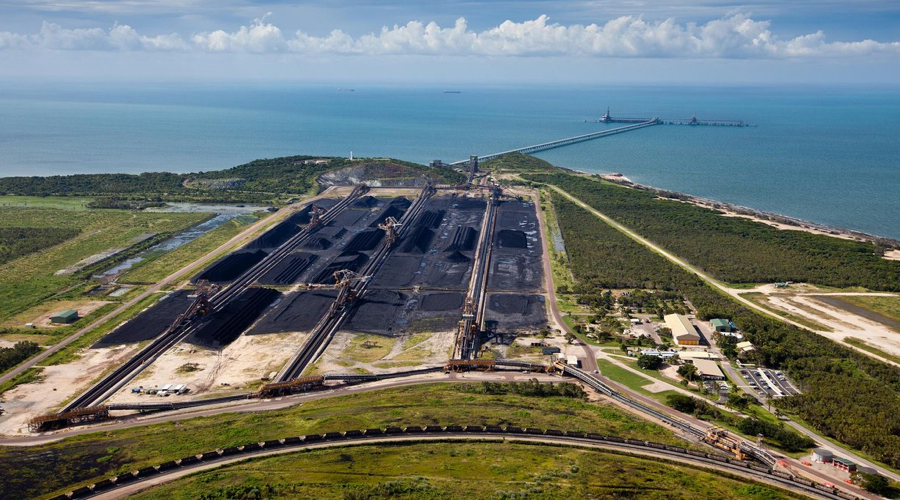
The Carmichael mine has been a lighting rod for climate change concerns in Australia. Image from Adani.

Billionaire Gautam Adani’s coal mine in Australia, a project that’s become a global emblem for opposition to fossil fuels, is preparing to begin exports after more than a decade of bitter dispute over its development.


Proposed in 2010 and stalled by legal challenges, financing setbacks and a sustained campaign from climate activists, the operation is scheduled to ship first cargoes before the end of December and aims to supply an initial 10 million tons of thermal coal annually for at least 30 years.

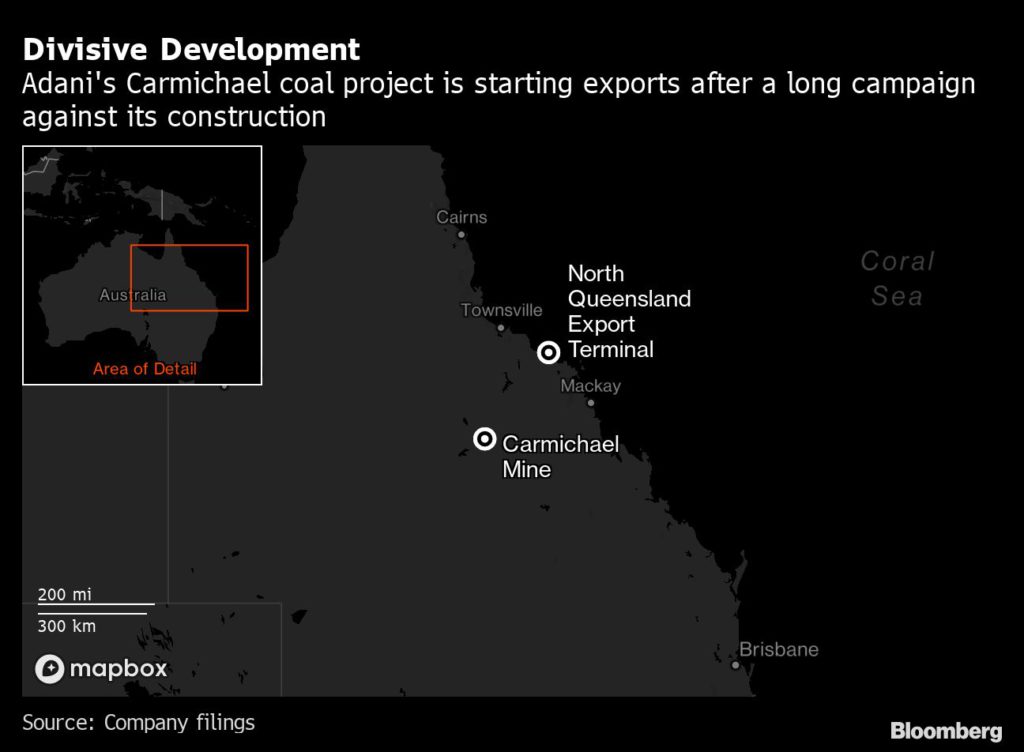
Opposition to the Carmichael mine, located inland from Australia’s iconic Great Barrier Reef in Queensland state, has spanned environmental activists to Wall Street banks, insurers and investors, offering a microcosm of the escalating international campaign against the most polluting fossil fuel in the past decade.


“Carmichael seems to have catalyzed a broader conversation about the future of thermal coal,” said Samantha Hepburn, a law professor at Melbourne-based Deakin University who has focused on mining and energy issues. “That’s happening not just for activists, but in boardrooms and for investors across the world who want to reduce their exposure to toxic investments.”

Yet the start of overseas sales also reflects coal’s still-pivotal role in the world’s energy mix, a status that led China and India — the top consumers — to dilute efforts to set a global deadline to phase out the fuel at the COP26 climate talks. Demand is rising in parts of Asia, and the remedy from Beijing and New Delhi to recent power shortages was to ramp up coal production.


Exports from Carmichael will be used to supply electricity to India and nations in Southeast Asia, according to Bravus Mining & Resources, an Adani unit in Australia. Analysts expect at least some of the material to be used by the conglomerate’s own power plants, though the company declined to specify details of its customers.

“We have already secured the market for the 10 million tons per annum of coal,” Bravus said in a statement, confirming its export plans are on track. “The coal will be sold at index adjusted pricing,” and all taxes and royalties will be paid locally, according to the company. Seaborne coal prices have swung wildly in recent weeks, plunging from a record high in October and then recovering some of the gains.

The project, which the company self-financed, has been scaled back from initial plans for a A$16 billion ($11 billion) operation that could yield 60 million tons a year. The company also lists more than 100 approvals secured for the development, and has developed conservation strategies including plans to protect the endangered black-throated finch, found in the project area

Australia’s government also argues that local mines like Carmichael could reduce global emissions, as the coal is higher quality and will displace the use of more polluting fuel.

Adani, Asia’s second richest man and the founder of the Adani Group, is facing sharp criticism as his companies seek to add investments in fossil fuels — including coal mines and power plants — even as he heralds a $70 billion campaign to build a world-leading renewable energy giant.

“We are doing all we can to make renewables a viable, affordable alternative to fossil fuels,” Adani told the Bloomberg India Economic Forum last month, lending support to Prime Minister Narendra Modi’s goal for the world’s third-biggest polluter to zero out emissions by 2070.

Ending India’s reliance on coal, which accounts for about 70% of electricity generation, is pivotal to that target, and Adani’s opponents point to proposals that could almost double the group’s coal-fired power capacity, and dramatically boost production of the fuel.Play Video

“Adani is trying to walk both sides of the street,” said Tim Buckley, director of energy finance studies at the Institute for Energy Economics and Financial Analysis.

The Carmichael project has commanded such wide attention over its initial planned scale, which could’ve created Australia’s largest coal mine, the fact it’ll boost global supply just as nations including the U.S. urge consumers to rapidly phase out the fuel’s use, and over opposition from some Indigenous landowners.

There have also been enduring concerns that the development, which includes a 200-kilometer (124 mile) railroad, could help enable a series of mines in Queensland’s previously untouched Galilee Basin, a coal-rich region about the same size as the U.K.

Though other proposals have made little recent progress, the Galilee Basin could potentially produce as much as 200 million tons a year — about the same as Australia’s existing thermal coal exports. Campaigners describe the prospect of new mines producing those volumes as “an unconscionable carbon bomb.”

The project has even impacted Australia’s politics. A defense of coal jobs by Prime Minister Scott Morrison’s governing coalition allowed it to hold support in Queensland’s mining strongholds in a 2019 national election and retain office. Morrison’s government is now facing criticism over a plan for net zero emissions which predicts coal and gas exports — forecast to deliver earnings of about A$110 billion this fiscal year — can continue beyond 2050.

Debate over the operation has been global. Paris-based Amundi SA sold holdings of State Bank of India’s green bonds because of the institution’s exposure to the mine, and Bank of New York Mellon Corp. said last month it would sever ties with Carmichael. Siemens AG faced street protests in Munich, and was scolded by both BlackRock Inc. and Fridays for Future activists, including Greta Thunberg, over a contract to supply rail signaling equipment for the project.

Lenders including Industrial & Commercial Bank of China Ltd. and Investec Plc specifically ruled out financing the mine, while banks like Goldman Sachs Group Inc. effectively excluded themselves by setting tighter policies on coal.

As Adani makes final preparations to ship initial cargoes, it’s facing new attempted disruptions. In recent days, protesters clambered aboard coal-laden wagons and laid themselves across a railroad that connects Carmichael to an export terminal. Authorities are failing to ensure there are sufficient deterrents to prevent unsafe protests that put lives at risk, Adani’s Abbot Point Operations unit said in a statement.

“It’s people power that’s slowed down Adani’s mine,” campaigner Andy Paine said Tuesday in a video, tethered to a rail with a steel pipe on the outskirts of the town of Bowen. “It’s people power that will save us from climate destruction.”

(By David Stringer and Rajesh Kumar Singh, with assistance from James Thornhill and Jason Scott)

Glencore boss defends coal business after activist push to exit
Bloomberg News | December 2, 2021 | 10:37 am Top Companies Coal

Gary Nagle. (Image courtesy of Glencore | Twitter)

Glencore Plc’s new chief executive officer defended the company’s sprawling coal business after it emerged this week that an activist investor was pushing for an exit from the dirtiest fuel.


Gary Nagle, who stepped into the top job at the end of June, said it was in the best interests of both the company and the planet for Glencore to run down the mines over the next 30 years. The company’s biggest investors agree with the strategy, he said.

Investors and the biggest mining companies have been grappling for years over who should own the world’s coal mines and some of Glencore’s rivals have already gotten out of the business because of pressure from shareholders. But more recently there has been a growing pushback from some climate activists and investors who are worried that the assets would actually produce more coal for longer under new owners.

However, activist hedge fund Bluebell Capital Partners asked Glencore last month to separate its thermal coal business, which it said has become a barrier to investment.

“We believe the rundown strategy is the right one both for our business and the world,” Nagle said Thursday during his first investor day as CEO. “We don’t have any major investors asking us to spin off coal. They are saying the spinoff scenario is the wrong scenario.”

The company is still prepared to exit the business if a majority of its shareholders asked for it, he said.

Glencore is the world’s biggest thermal-coal shipper and its billionaire former boss Ivan Glasenberg — who remains its second-biggest shareholder — has been a firm advocate of the business. Glencore is poised to report record profits for the year and pay bumper dividends, driven in large part by a surge in coal prices.


“We believe the right strategy is keep it and run it down responsibly rather than leaving it to someone who might not be in the public market, to someone pro coal who might want to exploit every ton in the ground,” Nagle said.

Glencore shares dropped as much as 6.3% on Thursday, underperforming other big miners. Investors may have been disappointed that the company failed to provide any more detail about potential shareholder returns, other than saying that the dividend will be “very healthy.”

(By Thomas Biesheuvel)

Astronomers find new clues on the origin of gold
MINING.COM Staff Writer | December 2, 2021 |

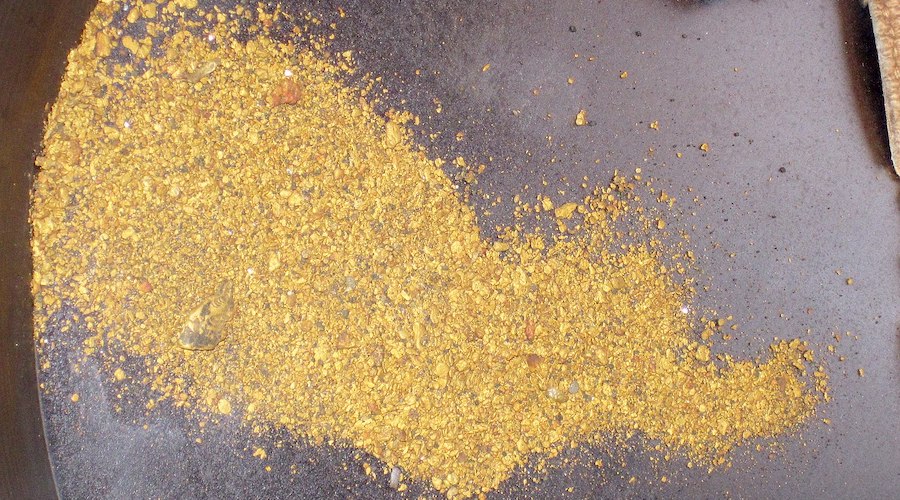
Gold. (Reference image by James St. John, Wikimedia Commons).

Using computer simulations, an international research team was able to demonstrate that the synthesis of heavy elements like gold and uranium is typical for certain black holes with orbiting matter accumulations known as accretion disks.


In a paper published in the journal Monthly Notices of the Royal Astronomical Society, the scientists explain that such black hole systems are formed both after the merger of two massive neutron stars and during a so-called collapsar, the collapse and subsequent explosion of a rotating star.

The internal composition of the accretion disks has so far not been well understood, particularly with respect to the conditions under which an excess of neutrons forms. A high number of neutrons is a basic requirement for the synthesis of heavy elements, as it enables the rapid neutron-capture process, or r-process. Nearly massless neutrinos play a key role in this process, as they enable the conversion between protons and neutrons.
Sectional view through the simulation of an accretion disk from the study by Oliver Just and his colleagues. 
(Graph courtesy of the GSI Helmholtzzentrum für Schwerionenforschung)

“In our study, we systematically investigated for the first time the conversion rates of neutrons and protons for a large number of disk configurations by means of elaborate computer simulations, and we found that the disks are very rich in neutrons as long as certain conditions are met,” Oliver Just, lead author is the study and a researcher at GSI Helmholtzzentrum für Schwerionenforschung, said in a media statement.

“The decisive factor is the total mass of the disk. The more massive the disk, the more often neutrons are formed from protons through the capture of electrons under emission of neutrinos and are available for the synthesis of heavy elements by means of the r-process.

However, if the mass of the disk is too high, the inverse reaction plays an increased role so that more neutrinos are recaptured by neutrons before they leave the disk. These neutrons are then converted back to protons, which hinders the r-process.”

The study shows that the optimal disk mass for prolific production of heavy elements is about 0.01 to 0.1 solar masses. The result provides strong evidence that neutron star mergers producing accretion disks with these exact masses could be the point of origin for a large fraction of the heavy elements. However, whether and how frequently such accretion disks occur in collapsar systems remains unclear.

Regardless of the current uncertainties, the scientists believe that their findings provide insight into which heavy elements need to be studied in future laboratories to unravel the origin of heavy elements.

The inspiration


The German, Belgian and Japanese researchers behind this study started from the premise that all heavy elements on Earth today were formed under extreme conditions in astrophysical environments: inside stars, in stellar explosions, and during the collision of neutron stars.

Like many other colleagues, they were intrigued by the question in which of these astrophysical events the appropriate conditions for the formation of the heaviest elements, such as gold or uranium, exist.

The spectacular first observation of gravitational waves and electromagnetic radiation originating from a neutron star merger in 2017 suggested that many heavy elements can be produced and released in these cosmic collisions.

However, the question remains open as to when and why the material is ejected and whether there may be other scenarios in which heavy elements can be produced.

But in the group’s view, black holes orbited by accretion disks of dense and hot matter are promising candidates for heavy element production.
Asteroid “ideal for mining exploration” to enter Earth’s orbit next week

Cecilia Jamasmie | December 1, 2021 | 

Asteroid 4660 Nereus will break into Earth’s orbit on December 11. 
(Reference image: iStock/adventtr)

An asteroid as big as a football field that has been singled out by scientists an ideal target for a mining exploration mission, will break into Earth’s orbit on December 11.


While the US National Aeronautics and Space Administration (NASA) as “potentially hazardous” due to its size and how close it will get to our planet’s surface, those features make of asteroid 4660 Nereus an attractive candidate for potential exploration.

As an Apollo-class asteroid, Nereus’ orbit frequently puts it close to Earth. Its orbital resonance is approximately 2:1, meaning that it orbits almost twice for every orbit of the Earth. This makes a mission to explore the asteroid very feasible.

Nereus will come the closest to our planet it has been in the past 20 years, yet it set to pass 7.4 million km away, which is about 10 times the distance between the Moon and Earth.

No missions are currently known to be ready to explore Nereus, however it has been considered before. Both NASA’s Near-Earth Asteroid Rendezvous-Shoemaker (NEAR) robotic mission and the Japanese Hayabusa mission looked into Nereus as target, but both eventually chose other options.

According to NASA, if a mission were to be launched this year, it would take anywhere between 426-146 days, though the delta-v this time around would be around 10.37 km/s, slightly higher than launching a rocket into low-orbit.

Asteroid exploration is a major field in astronomy, with space agencies, governments and private companies already involved in studying them as source of water and minerals.

RELATED: Scientists working on autonomous swarms of robots to mine the Moon

Luxembourg, one of the first countries to set its eyes on the possibility of mining celestial bodies, created in 2018 a Space Agency (LSA) to boost exploration and commercial utilization of resources from Near Earth Objects.

Unlike NASA, LSA does not carry out research or launches. Its purpose is to accelerate collaborations between economic project leaders of the space sector, investors and other partners.

Nearly 9,000 asteroids larger than 36 meters (150 feet) in diameter orbit near Earth. Geologists believe they are packed with iron ore, nickel and precious metals at much higher concentrations than those found on Earth, making up a market valued in the trillions of dollars.

Other space ventures in the works include plans to start mining the Moon as early as 2025, track space debris, build the first human settlement on Mars, and billionaire Elon Musk’s own plan for an unmanned mission to the red planet.
Steel’s path to go green will cost industry up to $278 billion
Bloomberg News | November 30, 2021 | 

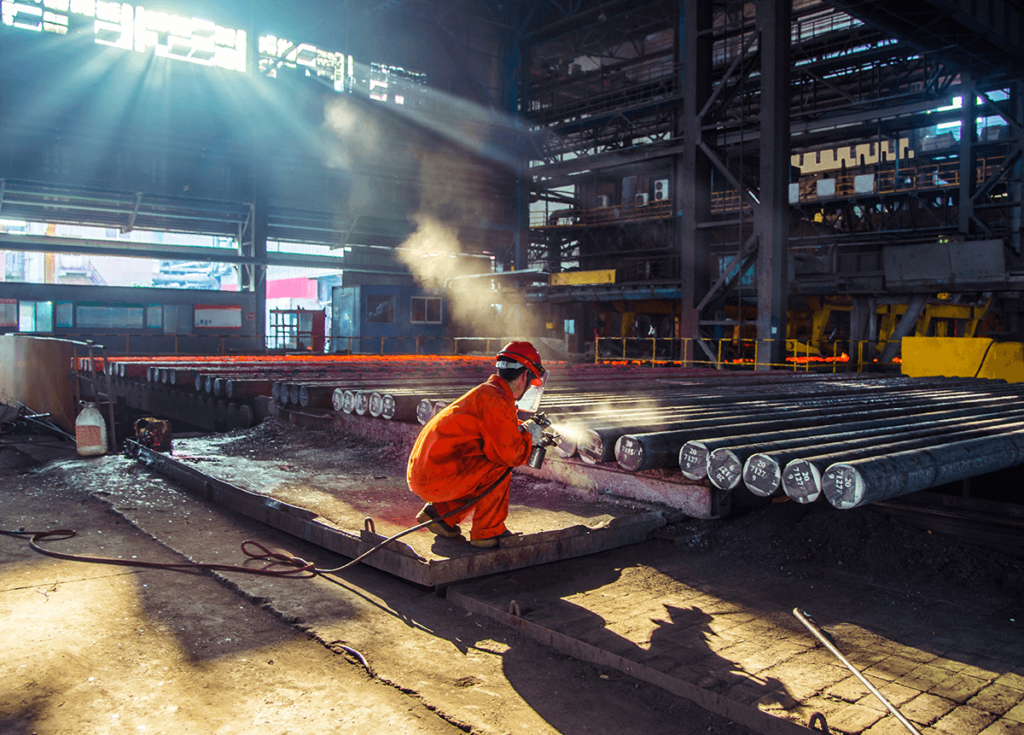
Stock image.

The world’s steel industry could eliminate its greenhouse gas emissions by 2050 through ramping up recycling, using hydrogen for fuel and capturing carbon from older plants, according to a BloombergNEF study. But getting there won’t be easy.


Steel production generates an estimated 7% of global greenhouse gas emissions and some processes can’t easily run on electricity. Switching to zero-carbon production methods will require the industry to spend $215 billion to $278 billion for capital investments, according to a report by Bloomberg’s energy data and analysis unit. Still, steel made under such a system could ultimately cost less than today’s prices.


“The steel industry has a challenging path to decarbonization: It is heavily reliant on coal, has limited opportunities to increase its share of recycled production due to scrap availability, and will need to wait for hydrogen costs to fall to realize cost-competitive clean production,” BNEF analysts including Julia Attwood wrote in the report.

About 69% of current production is fueled by coal in blast furnaces, according to the report. Given its combination of price and strength, there’s no obvious material replacement for steel required in everything from buildings to automobiles to toasters and medical equipment.

Governments will need to provide support to help the industry transition, and carbon prices or subsidies of up to $145 per ton of carbon dioxide will be needed to incentivize the initial phases of change in the next decade, BNEF said. The industry’s greenhouse gas emissions are equal to about 2.55 billion metric tons of carbon.

“Robust policy is essential to enable decarbonization of the steel industry,” the report said.

Net-zero steel

The report details a pathway for wiping out those emissions. Recycling scrap steel in electric arc furnaces would be greatly increased, with electricity coming from renewable sources. For primary steel production, newly built furnaces would be capable of running on hydrogen stripped from water using renewable power. Steel plants that use coal or gas could start blending hydrogen to help build the market for the fuel and lower its price. Some existing coal-fired plants would be fitted with emission-capturing technology.

By 2050, metal produced by this revamped system would cost less than current prices, according to BNEF. The five-year average price for crude steel stands at $726 per metric ton, while the technologies proposed in the report could make steel for $418 to $598 per ton.

“The technological pathways for the industry to decarbonize are becoming clear, there is growing policy to support decarbonization, customer demand for green steel is emerging,” BNEF said. “We estimate that 27% of steel capacity is already covered by a corporate net-zero target today.”

(By David R. Baker and Joe Deaux)
Peru says IMF sees leeway to hike taxes on mining sector

Reuters | December 2, 2021 

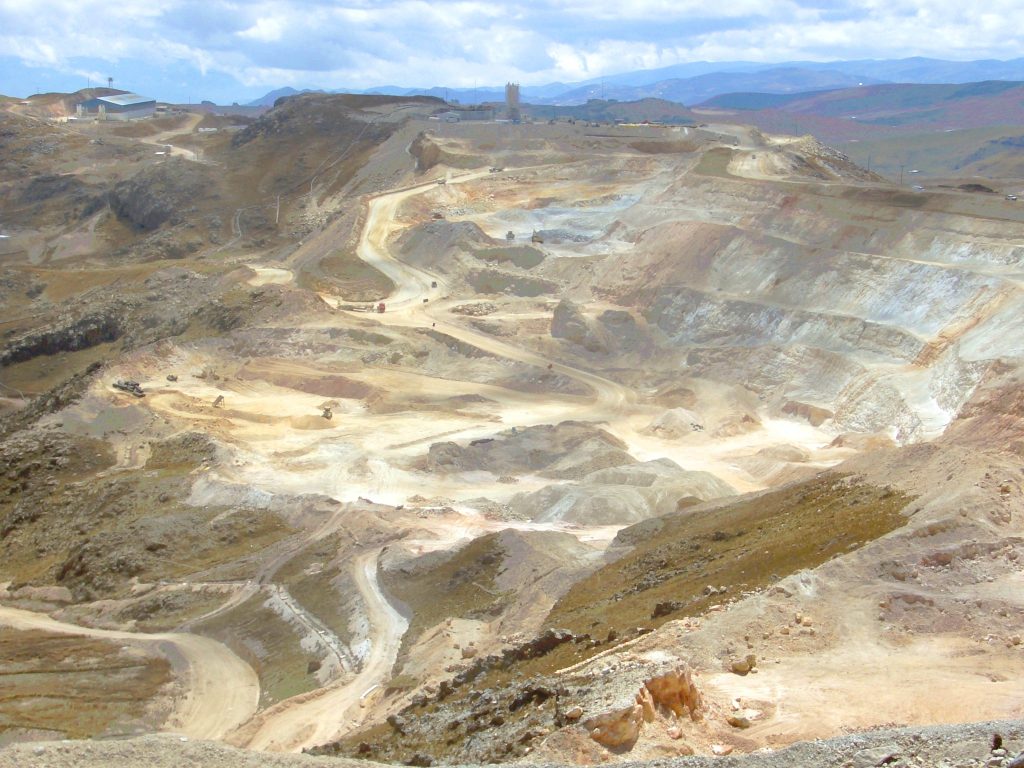
The Yanacocha gold mine in Peru. Credit: Wikipedia

Peru’s finance ministry said on Thursday that International Monetary Fund officials had concluded there is leeway in the country’s tax system for a reform to include higher taxes on the key mining sector.


Peru is the world’s No. 2 copper producer and hiking mining taxes is a cornerstone of socialist President Pedro Castillo’s agenda, in order to use the additional resources to fund social programs.

“The Peruvian tax system is internationally competitive, with a tax burden that is lower or similar to other resource-rich countries,” the finance ministry said about the IMF report.

“In that sense, the (IMF) says that, within that system, there is leeway to increase progressive (taxation),” it added.

The report has not been made public and the IMF has yet to comment on it.

Peru’s finance minister Pedro Francke has asked Congress for executive powers to reform the tax system. Congress has yet to vote on the request, which is mostly focused on the mining sector.

The government, however, has yet to spell out the details of its planned tax hike on the mining sector. Francke said earlier this year that he had enlisted the IMF in a bid to do so in a way that would not hurt competitiveness.

The mining industry has opposed the move, saying that taxes are already high in Peru and that any further increases would harm competitiveness.

(By Marcelo Rochabrun; Editing by Susan Fenton)