Tuesday, March 08, 2022

Former NASA astronaut Scott Kelly and Russian space chief engage in Twitter fight


By Kristin Fisher and Jackie Wattles, CNN
 Mon March 7, 2022

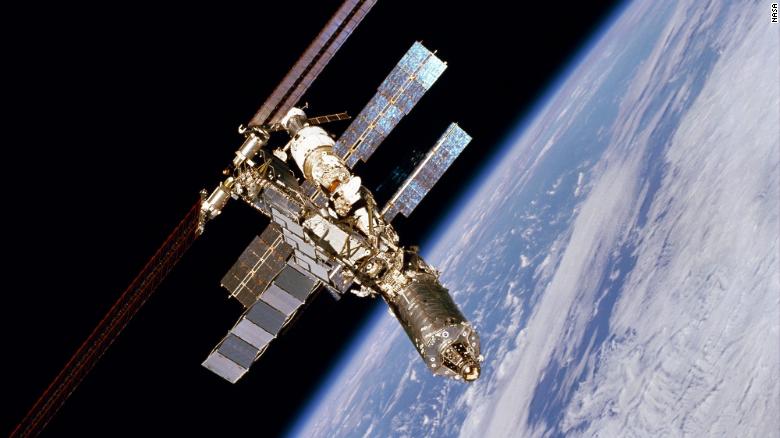
The International Space Station was photographed by one of the STS-98 crew members aboard the Space Shuttle Atlantis following separation of the shuttle and station on February 16, 2001.

(CNN)An extraordinary war of words is transpiring between the head of Russia's space agency and one of NASA's most famous former astronauts as the US-Russian partnership at the International Space Station hits its lowest point since its inception.
Scott Kelly, who famously spent a year in space aboard the station, has been blocked on Twitter by Roscosmos Director General Dmitry Rogozin after Kelly criticized Russia's invasion of Ukraine and Rogozin's repeated threats to pull out of the International Space Station, typically a venue of cooperation immune from geopolitical chaos.

"Get off, you moron!" Rogozin said in a quickly deleted Tweet. "Otherwise, the death of the International Space Station will be on your conscience."

"Dimon, why did you delete this tweet?" Kelly replied in Russian. "Don't want everyone to see what kind of child you are?"

In an interview with CNN, Kelly described it as "the first Twitter argument I've ever had."

Social media propaganda

Kelly said he felt compelled to speak out after Rogozin shared a Roscosmos-produced video showing two Russian cosmonauts floating inside the space station waving goodbye to NASA astronaut Mark Vande Hei, who is supposed to return to Earth with them on a Russian Soyuz spacecraft on March 30.


Expedition 46 Commander Scott Kelly of NASA rested outside of the Soyuz TMA-18M spacecraft minutes after he and cosmonauts Mikhail Kornienko and Sergey Volkov of Roscosmos landed on March 2, 2016, in Kazakhstan.

"If he's going to act like a child, then I'm going to treat him like one," Kelly said. "It's just unimaginable that the Russian space program would leave a person behind in space that they were responsible for bringing home. I don't see that happening."

But Kelly quickly reconsidered after remarking how he also thought it was inconceivable that Russia would launch a full-scale invasion of Ukraine.

"Even though I just said it was unimaginable, maybe they might leave a person behind. I don't know," Kelly said.

There are currently four NASA astronauts, two Russian cosmonauts, and one European Space Agency astronaut living and working aboard the International Space Station. But Vande Hei is the only NASA astronaut featured in the make-believe Roscosmos video.


The head of Russia's Roscosmos space agency, Dmitry Rogozin, stands in front of the Soyuz MS-20 spacecraft at the Baikonur cosmodrome on December 8, 2021.

"If I was him, I would feel like I'm just going to keep doing my job," Kelly said. "And if they (Roscosmos) want to leave me up here, then I'll find another way home."

Kelly, who is fluent in Russian after spending several years training in Moscow's Star City, commends most Roscosmos employees for being "professional, reasonable people" who "want this partnership to continue."

International cooperation

NASA has remained silent on Rogozin's most recent threats to abandon Vande Hei and detach the Russian segment from the space station. But last week, NASA said there were no signs Russia was withdrawing its support from the International Space Station as a result of US sanctions.

"We are not getting any indications at a working level that our counterparts are not committed to ongoing operation on the International Space Station. We as a team are operating just like we're operating three weeks ago," said Kathy Lueders, NASA's associate administrator for space operations.

The space station has been a beacon of international cooperation for more than two decades, and Kelly remains confident it can continue.

"NASA can do really amazing things when they put their minds to it, and I do think they can hold this partnership together," Kelly said.

But he also noted that "sometimes things become more important than spaceflight. In this case, it's Russia waging a war against an innocent country. And if I have the ability to speak up and get attention, and to help the Russian people see the truth, then I'm going to do it."

Ridesharing in space

For nearly a decade, Russia's Soyuz vehicles had been the only means of getting astronauts to and from the space station. But that reliance ended after SpaceX debuted its Crew Dragon capsule in 2020, and the US regained human spaceflight capabilities.
There were, however, tentative agreements for US astronauts to ride on Russian Soyuz vehicles and for Russian cosmonauts to fly with SpaceX in the future. If those agreements fall through, it's not clear if SpaceX will need to reconfigure its schedule to keep enough US astronauts on board the station.

Sign up for CNN's Wonder Theory science newsletter. Explore the universe with news on fascinating discoveries, scientific advancements and more.

Boeing is also working on its own crewed capsule that could be capable of ferrying astronauts to the space station for the United States and its partners. That project, however, is years behind scheduled and beleaguered with hangups. The latest update on that spacecraft came from NASA in January, when NASA and Boeing revealed they were looking toward a May launch of an uncrewed test flight of Boeing's spacecraft, Starliner.
NASA did not immediately respond to a request for comment on future ISS crew transportation matters Monday evening.

Climate change: Amazon rainforest may be approaching tipping point

Nature Climate Change

March 8, 2022

The Amazon rainforest may be nearing a tipping point of rainforest dieback —the point where rainforest will turn to savannah — with signs of resilience loss being found in over 75% of its area since the early 2000s, according to observational evidence presented in Nature Climate Change.

Tropical forests such as the Amazon play a critical role in climate regulation. Climate change and human-induced activities such as deforestation, however, have been putting increasing pressure on the Amazon rainforest in recent decades.

Using satellite remote sensing data, Chris Boulton and colleagues determine changes in the resilience —the ability of an ecosystem system to recover from a disturbance — of the Amazon rainforest between 1991 and 2016. The team combine this information with data on forest cover as a measure of the mean state of the ecosystem, as well as climate data. Analyses reveal that 75% of the Amazon has been losing resilience since the early 2000s, indicating that the forest may be approaching a critical transition. Loss of resilience is most prominent in areas that are closer to human activity, as well as in those that receive less rainfall. Importantly, loss of resilience does not coincide with a loss in the forest cover, implying that the forest could be nearing a tipping point without showing changes in its mean state.

The authors conclude that these findings are important as they provide observational evidence that drier conditions and deforestation are likely pushing the Amazon towards a critical threshold.

doi:10.1038/s41558-022-01287-8

Samsung says hackers breached company data, Galaxy source code

March 8, 2022 

Hackers claim to have picked up a Samsung source code that exposed the company’s device security systems. Among the items listed were algorithms for Samsung smartphone biometric...

By Heejin Kim
and
Vlad Savov
Bloomberg

Samsung suffered a cybersecurity breach that exposed internal company data, including source code for the operation of its Galaxy smartphones, the company said on Monday.

The statement came after a claim over the weekend that LAPSUS$, a hacking group that stole proprietary information from Nvidia’s networks, had gained access to Samsung data. The Korean electronics giant did not identify the attackers who compromised its systems. Measures to prevent further breaches have been put in place, a spokesperson said via text message, and customers’ personal data was not affected.

“There was a security breach relating to certain internal company data,” Samsung said. “According to our initial analysis, the breach involves some source code relating to the operation of Galaxy devices, but does not include the personal information of our consumers or employees. Currently, we do not anticipate any impact to our business or customers. We have implemented measures to prevent further such incidents and will continue to serve our customers without disruption.”

The LAPSUS$ hackers posted a 190GB torrent file to their Telegram channel late Friday, claiming it contained confidential Samsung source code that exposed the company’s device security systems. Among the items listed were algorithms for Samsung smartphone biometric authentication and bootloader source code to bypass some operating system controls.
RIP
Laurel Goodwin: Star Trek and Girls! Girls Girls! actress Laurel Goodwin dies age 79

By Gary Flockhart
Tuesday, 8th March 2022
US actress Laurel Goodwin, who starred in the original pilot episode of Star Trek and the film Girls! Girls! Girls! has died aged 79.

Goodwin enjoyed an extensive career in film and television, and made her Hollywood debut in 1962 opposite Elvis Presley.

She passed away on February 25, according to an online obituary. No cause of death was given.

Born in August 1942 in Kansas, the actress first signed a contract with Paramount Pictures at the age of 19.

Her performance in the film opposite Presley and was followed by her role in Papa’s Delicate Condition with Jackie Gleason.

She held multiple TV parts in shows including The Virginian, Get Smart, The Beverly Hillbillies, as well as the unaired Star Trek pilot.

In an interview for StarTrek.com in 2016, she explained: "I said, ‘Oh, no. Star Trek is it. I’ve got to do Star Trek. It’s great, it’s gonna be wonderful."

Goodwin and her husband, Walter Wood, later worked behind the scenes for many years, producing Stroker Ace with Burt Reynolds and Loni Anderson, together.
Crisis deepens, Ukraine accuses Moscow of ‘medieval’ tactics

By YURAS KARMANAU

1 of 21
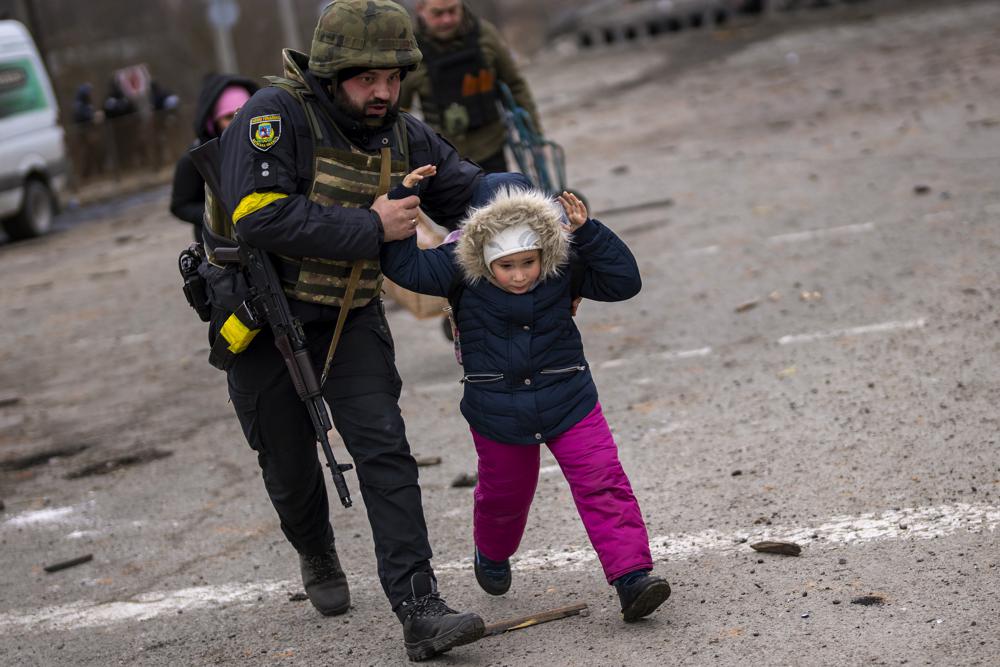
A Ukrainian police officer runs while holding a child as the artillery echoes nearby, while fleeing Irpin on the outskirts of Kyiv, Ukraine, Monday, March 7, 2022. Russia announced yet another cease-fire and a handful of humanitarian corridors to allow civilians to flee Ukraine. Previous such measures have fallen apart and Moscow's armed forces continued to pummel some Ukrainian cities with rockets Monday. (AP Photo/Emilio Morenatti)

LVIV, Ukraine (AP) — The humanitarian crisis in Ukraine deepened Monday as Russian forces intensified their shelling and food, water, heat and medicine grew increasingly scarce, in what the country condemned as a medieval-style siege by Moscow to batter it into submission.

A third round of talks between the two sides ended with a top Ukrainian official saying there had been minor, unspecified progress toward establishing safe corridors that would allow civilians to escape the fighting. Russia’s chief negotiator said he expects those corridors to start operating Tuesday.

But that remained to be seen, given the failure of previous attempts to lead civilians to safety amid the biggest ground war in Europe since World War II.

Well into the second week of the invasion, with Russian troops making significant advances in southern Ukraine but stalled in some other regions, a top U.S. official said multiple countries were discussing whether to provide the warplanes that Ukrainian President Volodymyr Zelenskyy has been pleading for.

Russian President Vladimir Putin’s forces continued to pummel cities with rockets, and fierce fighting raged in places. In the face of the bombardments, Zelenskyy said Ukrainian forces were showing unprecedented courage.

“The problem is that for one soldier of Ukraine, we have 10 Russian soldiers, and for one Ukrainian tank, we have 50 Russian tanks,” Zelenskyy told ABC News in an interview that aired Monday night. He noted that the gap in forces was diminishing and that even if Russian forces “come into all our cities,” they will be met with an insurgency.


In one of the most desperate cities, the encircled southern port of Mariupol, an estimated 200,000 people — nearly half the population of 430,000 — were hoping to flee, and Red Cross officials waited to hear when a corridor would be established.

The city is short on water, food and power, and cellphone networks are down. Stores have been looted as residents search for essential goods.

Police moved through the city, advising people to remain in shelters until they heard official messages broadcast over loudspeakers to evacuate.

Hospitals in Mariupol are facing severe shortages of antibiotics and painkillers, and doctors performed some emergency procedures without them.

The lack of phone service left anxious citizens approaching strangers to ask if they knew relatives living in other parts of the city and whether they were safe.

In the capital, Kyiv, soldiers and volunteers have built hundreds of checkpoints to protect the city of nearly 4 million, often using sandbags, stacked tires and spiked cables. Some barricades looked significant, with heavy concrete slabs and sandbags piled more than two stories high, while others appeared more haphazard, with hundreds of books used to weigh down stacks of tires.

“Every house, every street, every checkpoint, we will fight to the death if necessary,” said Mayor Vitali Klitschko.

In Kharkiv, Ukraine’s second-largest city, with 1.4 million people, heavy shelling slammed into apartment buildings.

“I think it struck the fourth floor under us,” Dmitry Sedorenko said from his Kharkiv hospital bed. “Immediately, everything started burning and falling apart.” When the floor collapsed beneath him, he crawled out through the third story, past the bodies of some of his neighbors.

Klitschko reported that fierce battles continued in the Kyiv region, notably around Bucha, Hostomel, Vorzel and Irpin.

In the Irpin area, which has been cut off from electricity, water and heat for three days, witnesses saw at least three tanks and said Russian soldiers were seizing houses and cars.

A few miles away, in the small town of Horenka, where shelling reduced one area to ashes and shards of glass, rescuers and residents picked through the ruins as chickens pecked around them.

“What are they doing?” rescue worker Vasyl Oksak asked of the Russian attackers. “There were two little kids and two elderly people living here. Come in and see what they have done.”

In the south, Russian forces also continued their offensive in Mykolaiv, opening fire on the Black Sea shipbuilding center of a half-million people, according to Ukraine’s military. Rescuers said they were putting out fires caused by rocket attacks in residential areas.

At The Hague, Netherlands, Ukraine pleaded with the International Court of Justice to order a halt to Russia’s invasion, saying Moscow is committing widespread war crimes.

Russia “is resorting to tactics reminiscent of medieval siege warfare, encircling cities, cutting off escape routes and pounding the civilian population with heavy ordnance,” said Jonathan Gimblett, a member of Ukraine’s legal team.

Russia snubbed the court proceedings, leaving its seats in the Great Hall of Justice empty.

Efforts to set up safe passage for civilians over the weekend fell apart amid continued Russian shelling. Before Monday’s talks began, Russia announced a new plan, saying civilians would be allowed to leave Kyiv, Mariupol, Kharkiv and Sumy.

But many of the evacuation routes headed toward Russia or its ally Belarus, which has served as a launch pad for the invasion. Ukraine instead proposed eight routes allowing civilians to travel to western regions of the country where there is no shelling.

Later, Russia’s U.N. Ambassador, Vassily Nebenzia, told the U.N. Security Council that Russia would carry out a cease-fire Tuesday morning and appeared to suggest that humanitarian corridors leading away from Kyiv, Mariupol, Sumy and Chernigov could give people choice in where they want to go.

The U.N. humanitarian chief, Undersecretary-General Martin Griffiths, addressed the Security Council and urged safe passage for people to go “in the direction they choose.”

Zelenskyy’s office would not comment on the Russian proposal, saying only that Moscow’s plans can be believed only if a safe evacuation begins. The office said Deputy Prime Minister Iryna Vereshchuk planned to make a statement on the issue Tuesday morning.

The battle for Mariupol is crucial because its capture could allow Moscow to establish a land corridor to Crimea, which Russia seized from Ukraine in 2014.

The fighting has sent energy prices surging worldwide and stocks plummeting, and threatens t he food supply and livelihoods of people around the globe who rely on crops farmed in the fertile Black Sea region.

The U.N. human rights office reported 406 confirmed civilian deaths but said the real number is much higher. The invasion has also sent 1.7 million people fleeing Ukraine.

On Monday, Moscow again announced a series of demands to stop the invasion, including that Ukraine recognize Crimea as part of Russia and recognize the eastern regions controlled by Moscow-supported separatist fighters as independent. It also insisted that Ukraine change its constitution to guarantee it won’t join international bodies like NATO and the EU. Ukraine has already rejected those demands.

Zelenskyy has called for more punitive measures against Russia, including a global boycott of its oil exports, which are key to its economy.

“If (Russia) doesn’t want to abide by civilized rules, then they shouldn’t receive goods and services from civilization,” he said in a video address.

He has also asked for more warplanes. Deputy U.S. Secretary of State Wendy Sherman said officials are “trying to see whether this is possible and doable.”

While the West has been rushing weapons to Ukraine such as anti-tank and anti-aircraft missiles, some officials fear that sending warplanes could be seen by Moscow as direct involvement in the war.

One possible scenario under discussion: Former Soviet bloc nations that are now NATO members could send Ukraine their own Soviet-era MiGs, which Ukrainian pilots are trained to fly, and the U.S. would then replace those countries’ aircraft with American-made F-16s.

Russia’s invasion has nearby countries terrified the war could spread to them.

U.S. Secretary of State Antony Blinken began a lightning visit to the Baltic states of Latvia, Lithuania and Estonia, former Soviet republics that are NATO members. Blinken hoped to reassure them of the alliance’s protection.

NATO has shown no interest in sending troops into the country and has rejected Zelenskyy’s pleas to establish a no-fly zone for fear of triggering a wider war.

___

Associated Press reporters from around the world contributed to this report.

___

Follow the AP’s coverage of the Ukraine crisis at https://apnews.com/hub/russia-ukraine
‘Some kind of terrible dream’ for Ukrainian women refugees

By JUSTIN SPIKE

A train with refugees fleeing Ukraine crosses the border in Medyka, Poland, Monday, March 7, 2022. Russia announced yet another limited cease-fire and the establishment of safe corridors to allow civilians to flee some besieged Ukrainian cities Monday. But the evacuation routes led mostly to Russia and its ally Belarus, drawing withering criticism from Ukraine and others.
 (AP Photo/Visar Kryeziu)


ZAHONY, Hungary (AP) — It’s a global day to celebrate women, but many fleeing Ukraine feel only the stress of finding a new life for their children as husbands, brothers and fathers stay behind to defend their country from Russia’s invasion.

The number of refugees fleeing Ukraine reached 2 million on Tuesday, according to the United Nations, the fastest exodus Europe has seen since World War II.

Polina Shulga tried to ease the journey for her 3-year-old daughter by hiding the truth.

“Of course it’s hard to travel with a child, but I explained to her that we’re going on vacation and that we’ll definitely come home one day when the war is over,” Shulga said.

She didn’t know what would come next after arriving in Hungary from Ukraine’s capital, Kyiv, but believed the experience was making her stronger. “I feel like I’m responsible for my child, so it was easier for me to take this step and leave, because if I had not had a child, I probably would not have dared to go into the unknown,” she said, as her little girl tugged at the hem of her coat.

Nataliya Grigoriyovna Levchinka, a refugee from Donetsk in eastern Ukraine, felt much the same.

“I’m generally in some kind of a terrible dream which keeps going on,” the retired teacher said. “I would be in some kind of abstraction if it wasn’t for my daughter. I wouldn’t be able to come to my senses.”

A decree by Ukraine’s government that prohibits men aged 18 to 60 from leaving the country means that most of those fleeing Ukraine are women and children. The policy is meant to encourage men to sign up to fight against Russia’s invasion or to keep them available for conscription into the armed forces.

That has led to heartbreaking scenes of separation, and growing worry as some encircled, battered parts of Ukraine slip out of reach.

In a refugee camp in Moldova, Elena Shapoval apologized for her tears. She doesn’t hide them from her two children, one 4 and one 8, while recalling their journey from Odesa. The younger one doesn’t understand what’s happening, Shapoval said. The older one tries to calm her, saying, ‘Mom, everything will be all right.’”

She cannot collapse as she thinks about the life they left behind. “I realize that we’ll have to work a lot now,” she said. “I need to get myself together because I have two children and I need to ball up my will like a fist.”

In Romania, Alina Rudakova began to cry as the realized she had forgotten about International Women’s Day. Last year, the 19-year-old from Melitopol received a bouquet of flowers from her father and gifts from other relatives.

“This year, I didn’t even think about this day,” she said. “This day was really awful.”

In a theater at the Ukrainian Cultural Center in the Polish city of Przemysl near the border, women and children filled makeshift beds. Some checked their phones yet again for news.

“It was difficult to prepare myself for traveling,” said one refugee from near Kyiv who gave only her first name, Natalia. “My sister said that I am very brave, but in my opinion I am a coward. I want to go home.”

And at the Medyka border crossing in Poland, Yelena Makarova said her hurried flight from Kremenchuk with her mother and teenage daughter marked the end of her life as she knew it. Her father, husband and brother all stayed behind.

“I wish that (the war) it would finish as soon as possible, because do you know, for every mother, what can be worse?” she said. “I can’t understand why our children are dying. I don’t know.”

___

Associated Press journalists around Europe contributed.

___

Follow the AP’s coverage of the Ukraine crisis at https://apnews.com/hub/russia-ukraine
EXPLAINER: Humanitarian corridors, from Syria to Ukraine

By AJ NADDAFF
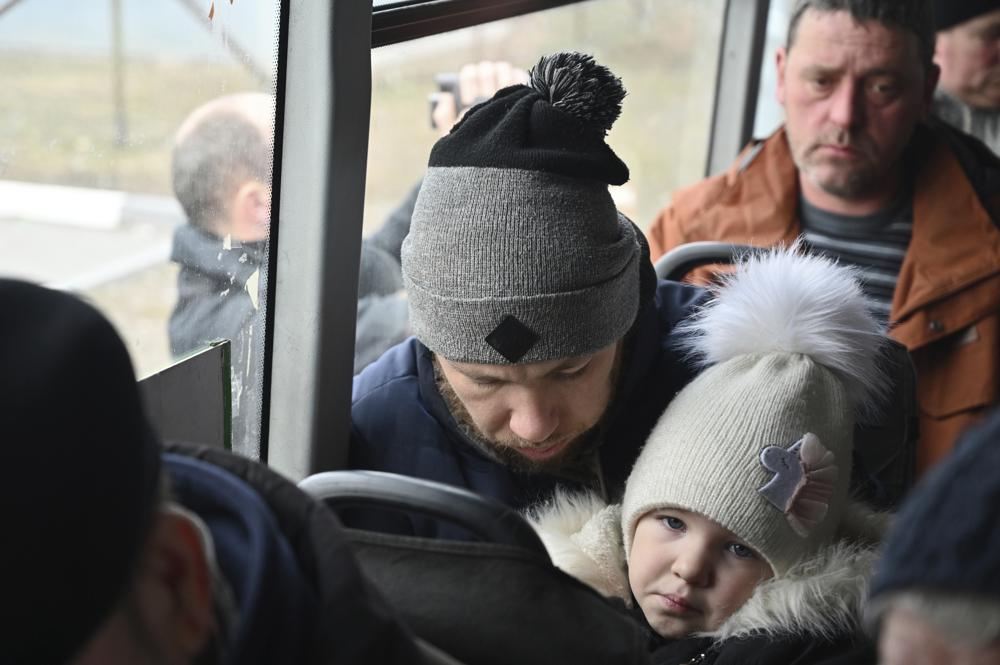
Refugees fleeing fleeing the military operation zone from the Mariupol area of Ukraine sit in a bus as they arrive at the border crossing in Veselo-Voznesenka, Russia, Monday, March 7, 2022. Russia announced yet another limited cease-fire and the establishment of safe corridors to allow civilians to flee some besieged Ukrainian cities. (AP Photo)


BEIRUT (AP) — As more Ukrainian towns and cities come under siege, concern is mounting for millions of civilians in the crossfire.

Russia has announced the establishment of safe corridors to allow civilians to leave, but there appeared to be few takers. Evacuation routes led mostly to Russia and its ally Belarus, drawing withering criticism from Ukraine and others. And Russia continued to pound some cities with rockets even after the announcement of corridors.

Such tactics were common during the Syria war after Moscow entered the war in 2015 to shore up President Bashar Assad’s forces.

WHAT ARE HUMANITARIAN CORRIDORS?

Humanitarian corridors arise when a population is caught in a war zone, particularly when a city or town is under siege. The idea is that hostilities are halted for a certain time to allow civilians who need to flee to do so along designated routes or to allow urgent humanitarian aid to enter for civilians who remain.

The term was first evoked during the Bosnian War in the 1990s, when the U.N. set up “safe areas” for civilians. But the attempt was seen as a failure since the U.N. was unable to protect the zones when they came under attack.

Humanitarian corridors also have been sought in the war in Ethiopia, where millions of people in the Tigray region have been under a government blockade for months.

HOW WERE THEY USED IN SYRIA?


During the Syrian civil war, the Russian and Syrian militaries pursued a strategy of systematically besieging opposition-held cities, towns and districts, sometimes for months or even years. The sieges rained destruction on the populations, with airstrikes, artillery and rockets blasting residential districts, hospitals and infrastructure.

Eventually in each case, the Russians and Syrians would offer humanitarian corridors, telling civilians and even some fighters they could leave. Most would then be funneled into the northwest province of Idlib, which remains to this day the last opposition-held enclave in Syria.

Humanitarian corridors were created for besieged districts around Damascus and parts of the cities of Homs and Hama. The largest and most famous was for eastern Aleppo in late 2016, capping four years of devastating siege.

WERE THEY SAFE?

Russian and Syrian forces were often accused of breaking the cease-fires surrounding humanitarian corridors with continued bombing of the besieged cities.

“When they talked about these humanitarian corridors or ceasefires, we never believed them. How can you trust someone to stop who is bombing you all the time?” said Afraa Hashem, a 40-year-old activist who survived the Aleppo siege and now resides in London.

She recalled how during a humanitarian corridor ceasefire on December 14, 2016, the house where she was sheltering with her family was hit by incendiary bombs.

There were also cases of civilians or fighters being detained by Syrian forces as they tried to use humanitarian corridors despite promises of safe passage. In some cases, opposition fighters reportedly opened fire on corridors, either to prevent people from leaving or to spark clashes.

Still, tens of thousands of people used the corridors to get out of the combat zones. They make up the bulk of the 3 million people crowded into Idlib province, which is surrounded by Syrian forces and is still hit by Russian airstrikes.

“After four years under bombs, they forced us to leave, that’s what it is” said Hashem. “They didn’t save us. They put us in another area of bombs, Idlib.”

SO WERE THE CORRIDORS EFFECTIVE?

Ultimately, they were effective in attaining the goals of Russia and the Syrian government: To regain control of opposition areas.

Critics say Russia and Damascus benefited another way as well by carrying out mass demographic change, removing large opposition populations, many of whom have not been able to return to their homes.

Human rights groups and humanitarian agencies point out that under international law, every effort should be made to ensure civilians’ safety no matter where they are.

The tactic of siege-plus-humanitarian corridor, they say, essentially gives residents a brutal choice between fleeing into the arms of their attackers or dying under bombardment.

They said the offer also gives an illusion of legitimacy to the mass slaughter of civilians who remain behind once the siege resumes in full force.

“It is not like Russia can create a humanitarian corridor for two days and then say, ‘Well, we’ve done our job, now we can destroy everything,’” said Sara Kayyali, Syria researcher for Human Rights Watch.

Ukraine war highlights internal divides in Mideast nations

By QASSIM ABDUL-ZAHRA and ZEINA KARAM

1 of 7
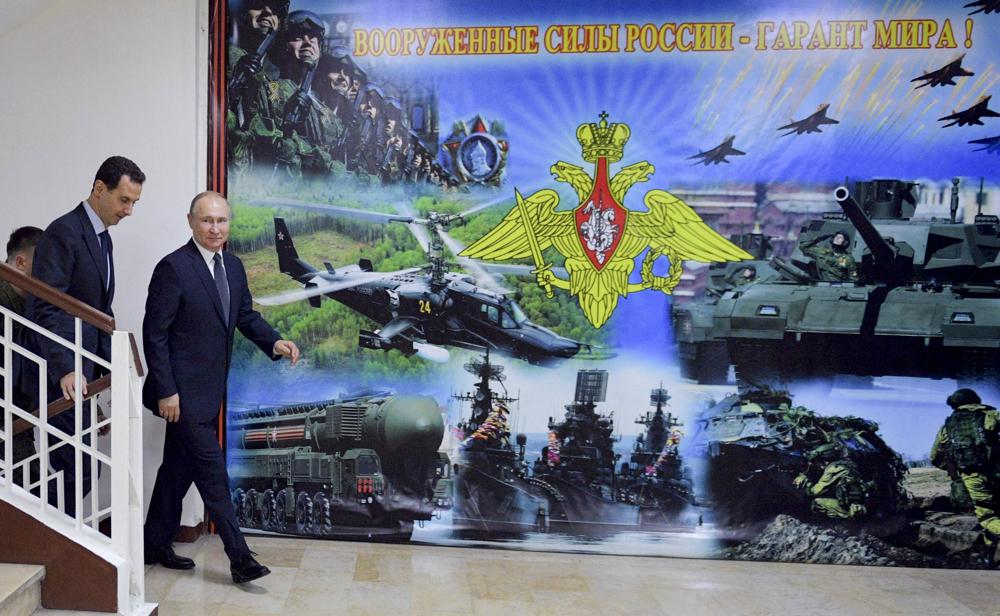
 Syrian President Bashar Assad, left, speaks to Russian President Vladimir Putin during their meeting in Damascus, Syria, Jan. 7, 2020. Russia's invasion of Ukraine has brought up deep divisions in the Middle East. While American influence has waned, Russia has made powerful friends, from Shiite militias in Iraq, to Lebanon’s Hezbollah group, to Houthi rebels in Yemen. Largely because of his Syria military intervention, they see Putin as a steady, reliable partner who unlike the Americans does not drop his allies. 
(Alexei Druzhinin, Sputnik, Kremlin Pool Photo via AP, File)


BAGHDAD (AP) — In a neighborhood of Iraq’s capital, a gigantic poster of Vladimir Putin with the words, “We support Russia,” was up for few hours before a security force arrived and hurriedly took it down. Then came the security directive: All public displays of Putin’s pictures shall be banned.

In Lebanon, the powerful Hezbollah militia railed against the government’s condemnation of Russia’s attack on Ukraine, calling for neutrality.

Such wrangling shows the deep divisions over the Ukraine war in the Middle East, where Moscow has embedded itself as a key player in recent years, making powerful friends among state and non-state actors while America’s influence waned.

Political elites closely allied with the West are wary of alienating Russia or the U.S. and Europe. But other forces — from Shiite militia factions in Iraq, to Lebanon’s Hezbollah group and Houthi rebels in Yemen — vocally support Russia against Ukraine.

These groups are considered to be Iran’s boots on the ground in the so-called anti-U.S. “axis of resistance.” Putin won their backing largely because of his close ties with Tehran and his military intervention in Syria’s civil war in support of President Bashar Assad.

They see Putin as a steady, reliable partner who, unlike the Americans, does not drop his allies. In their circles, they even have an affectionate nickname for Putin — “Abu Ali” — which is a common name among Shiite Muslims and meant to portray a certain comaraderie.

Meanwhile, governments are walking a tightrope.

“Iraq is against the war but has not condemned it nor taken a side,” said political analyst Ihsan Alshamary, who heads the Political Thought Think Tank in Baghdad. Iraq needs to remain neutral because it has shared interests with both Russia and the West, he said.

He said Iran’s allies in the region are outspokenly with Russia “because they are anti-American and anti-West and believe that Russia is their ally.”

Russia has invested up to $14 billion in Iraq and the northern Kurdish-run region, mainly focusing on the energy sector, Moscow’s ambassador Elbrus Kutrashev told the Iraqi Kurdish news agency Rudaw in a recent interview.

Among the major oil companies operating in the country are Russia’s Lukoil, Gazprom Neft and Rosneft.

Iraq also maintains close ties with the U.S., but Western companies have steadily been plotting to exit from Iraq’s oil sector.

Iraq’s strongest move so far came after its central bank advised the prime minister against signing new contracts with Russian companies or payments in light of U.S. sanctions. The decision will impact new Russian investment in the country, but little else, Russian industry officials said.

Last week, Iraq was among the 35 countries that abstained from a U.N. General Assembly vote to demand that Russia stop its offensive and withdraw troops from Ukraine. Lebanon voted in favor, while Syria, where Russian ties run deep, voted against. Iran also abstained.

In Lebanon, an unusually blunt Foreign Ministry statement denouncing Russia’s invasion of Ukraine caused an uproar and upset the Russians, forcing the minister to clarify that Lebanon did not intend to take sides and would remain neutral.

“They distance themselves and claim neutrality where they want, and they interfere and condemn where they want,” Hezbollah lawmaker Ibrahim Moussawi wrote on Twitter, taking aim at the Foreign Ministry. “What foreign policy does Lebanon follow, and what is Lebanon’s interest in that? Please clarify for us, foreign minister.”

Hezbollah, which also sent thousands of fighters to neighboring Syria to shore up Assad’s forces, has seized on Russia’s invasion of Ukraine to portray it as an inevitable result of U.S. provocations and yet another betrayal by the United States of its allies – in this case, Ukraine.

In Syria, where Russia maintains thousands of troops, billboards proclaiming, “Victory for Russia” popped up in areas of Damascus this week. In opposition-held areas, which still get hit by Russian airstrikes, residents hope pressure will ease on them if Russia gets bogged down in fighting in Ukraine.

In Iraq, the Ukraine war is highlighting divisions in an already fractured landscape during stalled efforts to form a new government, five months after parliament elections were held.

The huge billboard in support of Putin was briefly put up in a Baghdad neighborhood considered a stronghold of powerful Iranian-backed militias. After it was removed, the Russian Embassy in Baghdad tweeted an image of it.

“The poster was provocative, I am against it,” said Athir Ghorayeb, who works at a nearby coffee shop. Iraq is only just emerging from decades of war and conflict, he said. “Why do they insist on involving us in new problems?”

Many Iraqis see in Russia’s invasion of Ukraine echoes of Saddam Hussein’s invasion of neighboring Kuwait and subsequent years-long economic sanctions placed on Iraq. It was only a few days ago that Iraq finished paying reparations to Kuwait which totaled more than $52 billion.

On social media, Iraqi pages on Facebook with millions of followers have posted news of what is happening in Ukraine, sharing their views. “Our hearts are with the civilians, as those who have tasted war know its catastrophes,” posted one user, Zahra Obaidi.

“We have tents for refugees and internally displaced people, so you’re welcome to come use them,” Hafidh Salih posted.

Toby Dodge, a professor of International Relations at the London School of Economics, said Iraq’s moves — abstaining from the U.N. vote while limiting economic activity — were prudent, managing the short-term risks without taking an ideological stance.

But the longer the war drags on, the harder it will be to maintain this strategy.

“Iraq is deeply divided politically amongst players between pro-Iran and those that are anti-Iran trying to assert autonomy. The Ukraine becomes another performance, another example of where either side can burnish their credentials,” he said.

___

Karam reported from Beirut. Associated Press writer Samya Kullab in Kabul contributed reporting.
Food or power: Energy bill late fees force tough choices

By JASEN LO

1 of 7
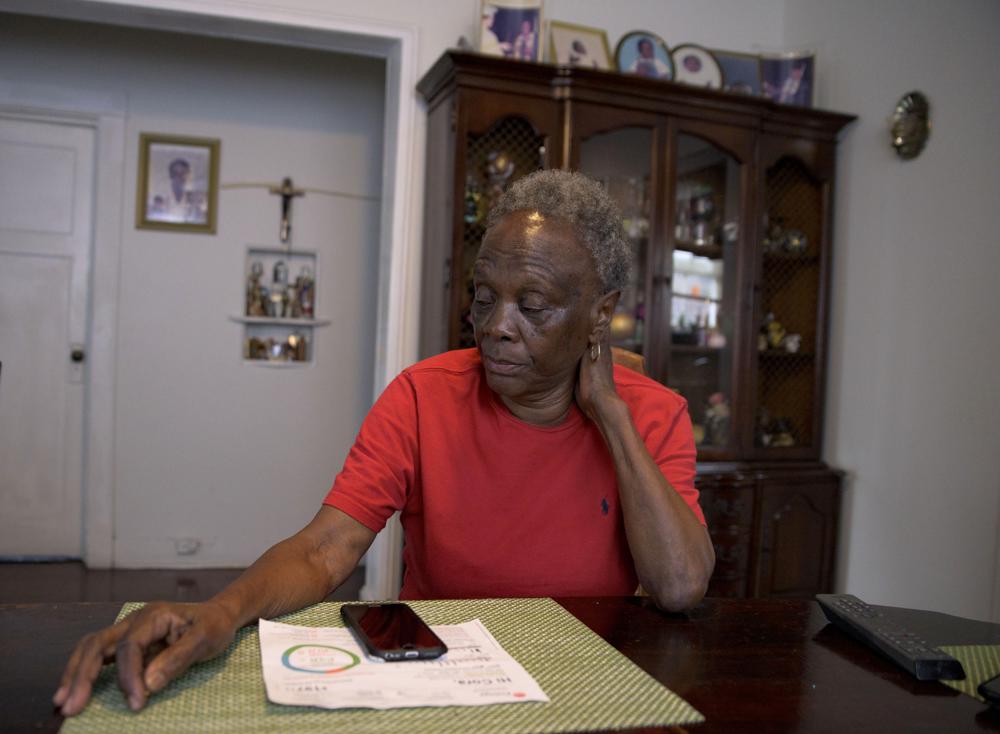
Mary C. Williams sits in her home in New Orleans on Friday, Feb. 4, 2022. Williams, who lives on a low fixed income, has high utility bills from Entergy, a major utility provider in Louisiana and three other Southern states, causing her to stress about keeping her lights on. (AP Photo/Matthew Hinton)

NEW ORLEANS (AP) — Chris Kinney, a resident of Rapides Parish in central Louisiana, has seen his electricity disconnected eight times in the past two years for falling behind on his energy bills to Cleco Power.

His family did everything they could think of to catch up: pawning possessions, accumulating vast bank overdraft fees, borrowing money and applying for energy assistance.

Somehow, Kinney’s outstanding balance kept growing.

While his electrical charges added up to about $6,400 for the past two years, Cleco Power also billed him over $1,250 for being late on paying his bills, including late fees, reconnection charges and deposits.

“These charges keep piling up and there is no way to catch up. The financial strain was just insane,” Kinney said.

Americans paid a combined $561 million in late payment fees to electrical utilities in 2019.

But how much you pay depends on where you live

An AP analysis of federal regulatory data found that several major utility companies in states like Louisiana, Mississippi, Kentucky, Florida and Maryland are charging customers late fees that are much higher than the national average.

Five power companies — Cleco Power, Kentucky Power Co. and three subsidiaries of Entergy Corp. — averaged more than $17.50 per customer in annual late fee revenues between 2011 and 2020. That’s three times the national average of $5.83 per customer in the same time period.

The fees account for a small part of major energy companies’ overall revenue — less than one-quarter of a percent on average — but for the people who must pay them, they can be crushing.

Late fees typically punish customers who are least able to afford their utility bill to begin with. Poorly insulated homes and damage from natural disasters all contribute to poor residents spending larger portions of their paychecks on their energy bills. And Black and Hispanic households are more likely to experience energy insecurity and face utility disconnections.

For those who fall behind, it often means choosing between paying for power and affording other necessities.

Mary Boyd, who is 83 and lives in New Orleans, said her expensive energy utility bills from Entergy — a major utility provider in Louisiana and three other Southern states — were causing her to choose between medication, and other expenses such as repairing the damage to her fence caused by Hurricane Ida.

“I am sick. I have high blood pressure, asthma and arthritis,” Boyd said. “Now just imagine this, this three hundred and some dollars energy bill takes away from food and other things.”

Power companies, including Entergy and Cleco Power, say late fees are an important tool to encourage customers to pay their bills.

“Ultimately, late payment policies are put in place to help protect all customers from potential rate increases caused by uncollected payments,” Entergy spokesperson Jerry Nappi said in an email. The company doesn’t profit from late fees, he said.

But for some major utility providers, including Entergy, late payment fees make up far more of the companies’ revenues than average.

Nine companies, including Baltimore Gas and Electric, Central Hudson Gas and Electric, and Cleveland Electric Illuminating Co., derive more than 0.5% of their total revenue from late payment fee collection from 2011 to 2020 — double and even triple the national average of about 0.24%.

Late fees are meant to cover the cost of collecting a bill, or the cost of disconnecting or reconnecting power to a residence.

They’re not meant to be punitive, said Odogwu Obi Linton, who sits on the board of directors of the National Association of Regulatory Utility Commissioners.

If a customer pays the bill quickly, the utility doesn’t have to carry or pursue collection of the debt, Linton said. This saves the utility company money on things like turnoff notices and making phone calls to collect late payments.

But advocates say the amount being charged doesn’t reflect expenses to power companies.

“Historically few, if any, of the late fees our utilities charge are cost-based,” said Kent Chandler, chairman of the Kentucky Public Service Commission.

Dan Kermode, a former policy advisor at the Washington Utilities and Transportation Commission, said that rules on late fee penalties in many states were decided long before the advent of new technologies and computer systems. Billing software and automated meters have made the cost of collecting late payments virtually zero for utilities.

In Louisiana, state regulations allow for up to a 5% penalty on late payments for all electric utilities. When asked for the rationale for why the late fees penalty was set at 5%, Public Service Commission press secretary Colby Cook said he could not comment because the rules on late fees, which were adopted in 1976, did not articulate the reasoning behind its adoption.

“This is what’s unique about late fees — these are charges which are not to collect costs, but to act as a disincentive for late payment,” Kermode said.

Some regulators and consumer advocates question whether late fees even work.

In Kentucky, the pandemic led to a moratorium on late fees for residential customers until the end of 2020. When looking back at the effects of that moratorium, the commission said, “late fees have little discernible effect on the timeliness of residential customer payments for utility service.”

___


Energy insecurity has affected Black and Hispanic households disproportionately, and the ongoing pandemic has made things even worse, according to Indiana University researchers in a paper they published in the science journal Nature Energy.

In New Orleans, an organization called Total Community Action helps disburse federal energy assistance, based on need. Nearly all of the group’s 7,000 clients who receive energy assistance are Black, even though only approximately 60% of New Orleans residents are Black.

In 2017, Black households spent 43% more of their incomes on energy costs than white households did, according to the American Council for an Energy-Efficient Economy. The council’s analysis, published in 2020, also found Native American households’ and Hispanic households’ energy costs accounted for much larger portions of their incomes than those of white households.

Older homes, including in low-income communities, generally are less energy-efficient in the first place — and floods or other disasters can damage those buildings to the point that they no longer qualify for government weatherization assistance.

“Homes in Louisiana have been impacted by hurricanes and by floods. It makes it so that we can’t come in and weatherize them because it needs a whole new roof,” said Lauren Holmes, who oversees energy assistance programs for the Louisiana Housing Corp. “That’s outside the scope of weatherization. We can’t go in and insulate an attic if you’ve got a four foot gaping hole in the attic.”

In neighboring Kentucky, most homes that apply for such assistance aren’t able to get it, either.

Kent Chandler, a member of the state’s Public Service Commission, said for every home the Kentucky Housing Corp. is able to weatherize using federal funds, roughly two homes cannot be retrofitted due to underlying health and safety problems that disqualify them from receiving that aid.

And weatherization isn’t the only thing affecting energy efficiency; how people heat their homes also plays a major role. In rural areas of Kentucky, many homes are heated with inefficient electric heating, which causes extraordinarily expensive bills in winter months, Chandler said.

Getting financial assistance to pay those bills, though, can be easier said than done for people who are unemployed or self-employed.

“When residents receive a disconnection notice, they only have a few days to get help and all the supporting documentation that is required before they are disconnected,” said Selton Jones, Total Community Action’s community service specialist for energy services. “If I play at a jazz bar and I’m just on the saxophone, I ain’t got no tax stubs.”

Those who get pensions, Social Security or other retirement income do have that documentation and are more able to get help paying their bills, but that still doesn’t always mean they won’t fall behind.


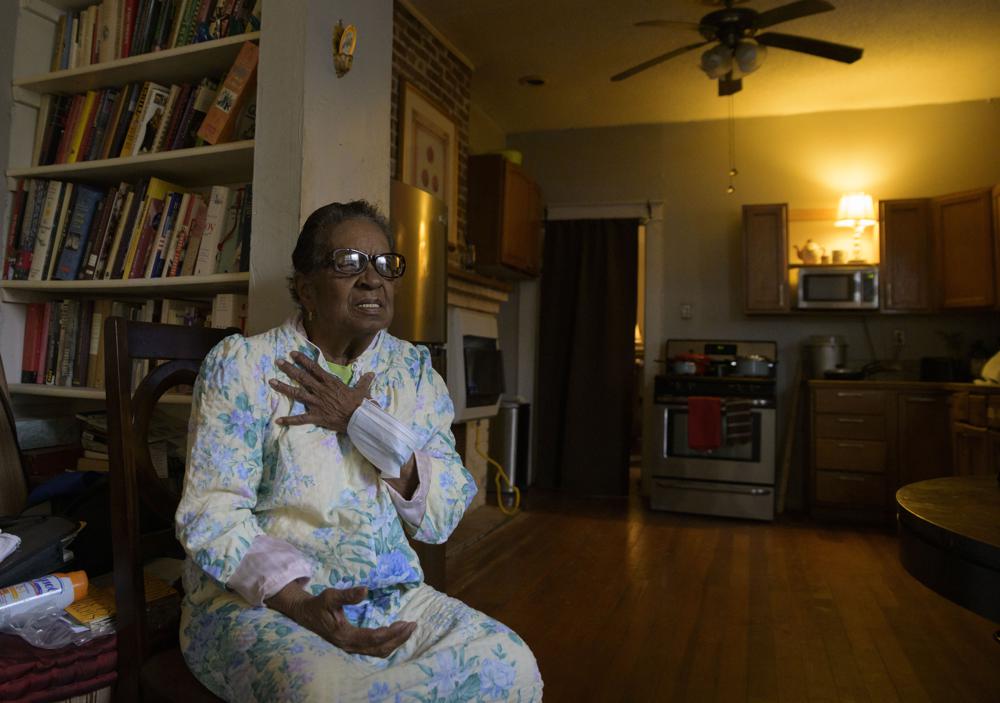
Carolyn Peters sits in her home in New Orleans, Friday, Feb. 4, 2022. Peters, who lives on a low fixed income, has high utility bills including late fees from Entergy, a major utility provider in Louisiana and three other Southern states. When asked about how she was planning to pay her outstanding bill, Peters said she would have to give up another necessity like medication. "It’s a strain,” she said. (AP Photo/Matthew Hinton)

Carolyn Peters lives in New Orleans on a fixed retirement income and has received aid from the federal Low Income Home Energy Assistance Program. Her bill in February from Entergy New Orleans was almost $500, including late fees that had been charged in previous months.

When asked about how she was planning to pay her outstanding bill, Peters said she would have to give up another necessity like medication. “It’s a strain,” she said.


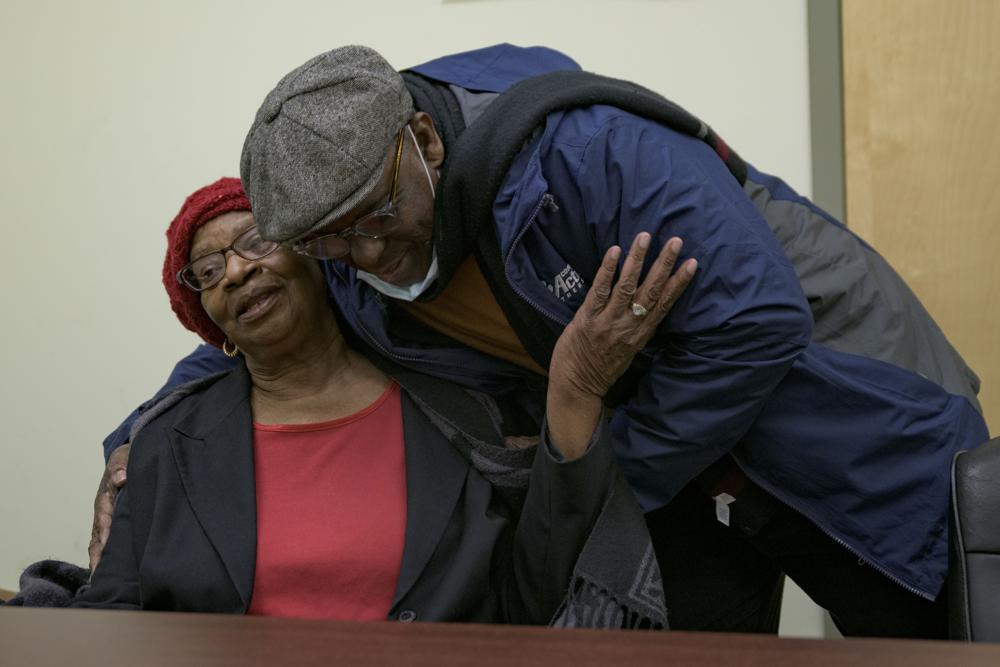
Mary Boyd is hugged by Glenis Scott at Total Community Action in New Orleans, Friday, Feb. 4, 2022. Boyd, who is 83 and lives in New Orleans, said her expensive energy utility bills from Entergy — a major utility provider in Louisiana and three other Southern states — were causing her to choose between medication, and other expenses such as repairing the damage to her fence caused by Hurricane Ida. (AP Photo/Matthew Hinton)

Leader of South Korea's ruling party attacked ahead of presidential election

07 March 2022 - BY HYONHEE SHIN
Monday's attack on Song Young-gil, leader of the Democrats and Lee's election campaign, was yet another twist in a race overshadowed by scandals, smear tactics and gaffes.
Image: SeongJoon Cho/Bloomberg

The chief of South Korea's ruling party was admitted to hospital on Monday after being hit on the head by a stranger while campaigning for this week's presidential election, in which early voting has been marred by some lapses.

A tight race between Lee Jae-myung of the ruling Democratic Party and Yoon Suk-yeol of the conservative main opposition People Power Party was reflected in a record turnout of nearly 37% in two days of absentee voting that ended on Saturday.

Monday's attack on Song Young-gil, leader of the Democrats and Lee's election campaign, was yet another twist in a race overshadowed by scandals, smear tactics and gaffes.

Song was struck on the head with a small hammer-like tool, wielded by a man wearing a traditional robe who approached him from behind, a video uploaded to YouTube by a Democrat campaigner showed.

Reuters could not independently verify the images, but party officials said Song was in stable condition and the man, subdued by officials, was handed to police.

“Violence harms democracy, it can never be accepted,” the party's presidential candidate, Lee, told another rally in the southeastern port city of Busan, and wished Song a rapid recovery.

The incident came as poll officials scrambled to revamp plans after early voting procedures were blighted by long waits outside poll stations for coronavirus sufferers, while other voters received ballots already marked.

As daily Covid-19 infections hover near unprecedented levels above 200,000 and more than 1 million receive treatment at home, parliament passed a legislative amendment to ease in-person voting by such patients.

But chaos erupted at many polling places during Saturday's special early voting for infected voters, spurring repeated apologies from the National Election Commission (NEC) for failing to ensure a stable and orderly process.

“All the problems resulted from our failure at thorough preparations, and we are fully responsible for falling short,” it said in a statement.

There was no sign of foul play, it added, but officials held an emergency meeting on Monday to tighten procedures ahead of the wider vote.

President Moon Jae-in expressed regret on Sunday, asking the NEC to fully explain the errors and guarantee all people's right to vote, his spokesperson said.

The chaos represented a blow for South Korea, tarnishing its 35-year democratic history of tight and relatively transparent management of elections, and a mostly successful fight on Covid-19.

Instead of letting voters directly cast ballots, some election workers collected and carried them in a shopping bag or wooden bucket to place in ballot boxes, the NEC said.

Some voters received ballot-papers that had already been used, while others had to wait in long queues in the cold, with at least one reported to have fainted.

Opposition candidate Yoon's campaign criticised the NEC, saying, “An elementary classroom election could not be sloppier,” and urged its chairwoman, Noh Jeong-hee, to step down.

Lee's party dismissed the opposition's demand for Noh's resignation but demanded steps to avert more confusion.

About 44 million South Koreans are eligible to vote for a successor to Moon, who is legally barred from re-election at a time of growing frustration over skyrocketing home prices, polarised politics and graft scandals.

What to know about South Korea’s presidential election


By HYUNG-JIN KIM and KIM TONG-HYUNG
1 of 8
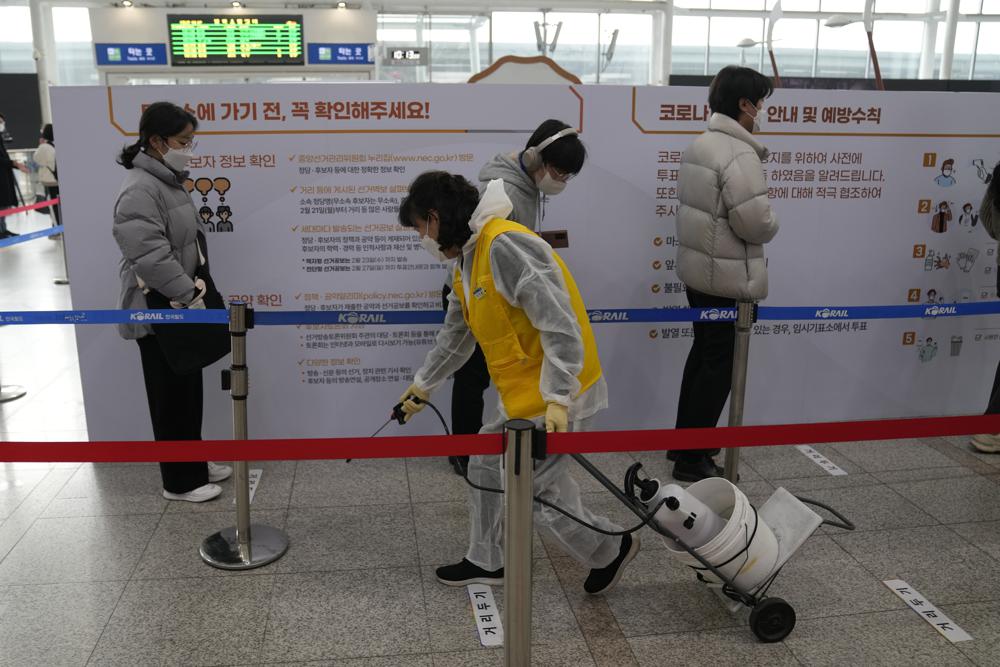
 A woman wearing protective gear sprays disinfectant as a precaution against the coronavirus while people wait in line at a local polling station of the early voting for the March 9 presidential election in Seoul, South Korea on March 4, 2022. Tens of millions of South Koreans are expected to vote Wednesday, March 9 to choose their new president. The winner will take office on May 10 for a single five-year term. Whoever wins, a new leader will be tasked with resolving various economic woes, easing threats from nuclear-armed North Korea and healing a nation sharply split along the lines of ideology, generation and gender.
 (AP Photo/Lee Jin-man, File)


SEOUL, South Korea (AP) — Whoever wins South Korea’s presidential election Wednesday will face a host of major issues, including skyrocketing housing prices, threats from nuclear-armed North Korea and a debate about how to heal a nation sharply split along ideological, generational and gender lines.

Here’s what to know about the election for leader of the world’s 10th-largest economy.

___

WHAT’S AT STAKE

The winner will take office on May 10 for a single five-year term. Current liberal President Moon Jae-in is barred by law from seeking reelection. The candidate who receives the most votes is declared the winner, even if that person fails to achieve majority support.

The present election system was adopted in 1987 when South Korea’s then military-backed government caved to massive pro-democracy protests and accepted sweeping liberalizing measures.

___
ADVERTISEMENT


THE CANDIDATES

The election has boiled down to a showdown between ruling liberal Democratic Party candidate, Lee Jae-myung, and his conservative opposition rival, Yoon Suk Yeol, from the People Power Party. Both have been criticized for negative campaigning and for not presenting long-term visions on how to lead South Korea.

Lee is a former governor of the populous Gyeonggi province that surrounds Seoul, while Yoon is a former prosecutor general who entered party politics last year.

___

WHO CAN VOTE

About 44 million South Korean nationals aged 18 or older are eligible to vote, out of the country’s population of about 52 million people. About 16 million of them already cast ballots during early voting last week.

Separately, about 161,820 voters who are living abroad also already cast ballots at polling booths established at South Korean diplomatic facilities. Tens of thousands of others on remote islands, at nursing homes or on ships have been voting by mail or fax.

On Wednesday, polling stations are open from 6 a.m. to 7:30 p.m.

___

MAIN ISSUES

Lee and Yoon have been bickering over North Korea’s advancing nuclear arsenal and an intensifying U.S.-China rivalry.

Lee, who has often expressed nationalistic views, hopes to win exemptions from U.N. sanctions against North Korea to revive stalled inter-Korean economic cooperation projects. He also believes Seoul could act as a mediator between Washington and Pyongyang to revive dormant nuclear diplomacy.

Yoon says he would seek a stronger U.S. security commitment to deter North Korean aggression. He wants to launch preemptive strikes on the North if it displays signs of attack.
ADVERTISEMENT


While Lee favors a balancing act between Washington and Beijing — Seoul’s chief security ally and its biggest trading partner, respectively — Yoon has made it clear that a boosted alliance with the United States would be the center of his foreign policy.

Both have promised to offer economic relief to small business owners hit by pandemic-related restrictions, provide millions of public housing units throughout the country and to create more jobs.

___

SCANDALS

The mudslinging between Lee and Yoon involves plenty of bizarre accusations targeting the candidates and their families.

Yoon’s wife was forced to apologize over suspicions that she falsified her work experience when applying for teaching jobs at colleges. Lee’s wife also apologized over allegations that she privately used official funds and made public servants do her personal errands while her husband served as a Gyeonggi governor.

Yoon has attacked Lee over allegations that Lee is a central figure in a corrupt property development project launched in the city of Seongnam when he was mayor there. Lee and his allies have tried to link Yoon to that scandal and also accused the opposition candidate and his wife of having depended on shamanism, an ancient religious belief, too much.

___

VIRUS FEARS

Wednesday’s vote will take place as coronavirus infections surge. Virus patients and others placed in quarantine are allowed to cast ballots when regular voting closes at 6 p.m. They are asked to vote at designated polling booths, while election workers will be equipped with gloves, masks, face screens and protective suits.

Arranging a voting process for virus carriers was crucial, with health authorities rapidly expanding at-home treatments to save hospital resources. As of Monday, more than 1.15 million people with mild or moderate symptoms were being asked to isolate at home.

‘Squid Game Election’: South Korean campaign gets ugly

By HYUNG-JIN KIM

1 of 6
Lee Jae-myung, center, the presidential candidate of the ruling Democratic Party, poses with his supporters during a presidential election campaign in Seoul, South Korea on March 3, 2022. Just days before March 9 election, Lee and Yoon Suk Yeol from the main conservative opposition People Power Party are locked in an extremely tight race. 
(AP Photo/Ahn Young-joon).


SEOUL, South Korea (AP) — The race between South Korea’s two leading presidential candidates has seen unprecedented levels of toxic rhetoric, mudslinging and lawsuits.

How bad is it?

“Hitler,” “beast,” and “parasite” are some of the choicer insults leveled by both camps. Some are even calling it “The Squid Game Election,” in reference to Netflix’s megahit survival drama where people are killed if they lose children’s games.

And the stakes? There’s widespread speculation that the loser will be arrested.

“It’s a dreadful presidential election when the losing contender faces prison. Please survive this dogfight in the mire!” senior opposition politician Hong Joon-pyo wrote on Facebook.

Just days before Wednesday’s election, Lee Jae-myung from the liberal governing Democratic Party and Yoon Suk Yeol from the main conservative opposition People Power Party are locked in an extremely tight race.

Their negative campaigns are aggravating South Korea’s already severe political divide at a time when it faces a battered, pandemic-hit economy, a balancing act over competition between its main ally, Washington, and its top trading partner, China, and a raft of threats and weapons tests from rival North Korea.

Opinion surveys show that both candidates have more critics than supporters.

“Isn’t our national future too bleak with an unpleasant and bitter presidential election that calls for choosing the lesser of two evils?” the mass-circulation Dong-A Ilbo newspaper said in an editorial.

Yoon has slammed Lee over his possible ties to an allegedly corrupt land development scandal. Lee has denied any connection, and in turn has tried to link Yoon to the same scandal, while separately criticizing him for his reported ties to shamanism — an ancient, indigenous religious belief.

There have also been attacks on the candidates’ wives, both of whom have been forced to apologize over separate scandals.

Yoon described Lee’s party as “Hitler” and “Mussolini” while an associate called Lee’s purported aides “parasites.” Lee’s allies called Yoon “a beast,” “dictator” and “an empty can” and derided his wife’s alleged plastic surgery.

Their campaign teams and supporters have filed dozens of lawsuits charging libel and the spread of false information, among other issues.

“This year’s presidential election has been more overwhelmed by negative campaigning than any other previous election, and the mutual hatred won’t easily die down after the election,” said Choi Jin, director of the Seoul-based Institute of Presidential Leadership.

Among the fault lines in the electorate are South Korean regional rivalries, views on North Korea, a conflict between generations, economic inequality and women’s rights issues.

Yoon is more popular with older voters and those in the southeastern region of Gyeongsang, where past conservative and authoritarian leaders came from. His supporters typically advocate a stronger military alliance with the United States and a tougher line on North Korea, and they credit past authoritarian rulers for quickly developing the economy after the Korean War.

Lee enjoys greater support from younger people and those from Jeolla province, Gyeongsang’s rival region in the southwest. His supporters generally want an equal footing in relations with the United States and rapprochement with North Korea while being extremely critical of past authoritarian rulers’ human rights records.

In a notable development, many surveys showed Yoon has received greater approval ratings than Lee from voters aged 18 to 29, most of whom were born after South Korea became a developed country.

“They didn’t experience poverty and dictatorships. ... They are very critical of China and North Korea, and they have rather friendly feelings toward the U.S. and Japan,” said Park Sung-min, head of Seoul-based MIN Consulting, a political consulting firm.

South Korea’s deep divisions are reflected in the troubles of the last three leaders. Their supporters say intense corruption investigations after they left office were politically motivated by their rivals.

During a corruption probe of his family, former liberal President Roh Moo-hyun jumped to his death in 2009, a year after he left office. His successor, the conservative Lee Myung-bak, and Lee’s conservative successor, Park Geun-hye, were separately convicted of a range of crimes, including corruption, and given lengthy prison terms after Roh’s friend and current President Moon Jae-in took office in 2017.

Park was pardoned in December, but Lee is still serving a 17-year prison term.

Moon’s government took a big hit with a scandal involving Moon’s former justice minister and close associate, Cho Kuk. Cho and his family members are alleged to have participated in financial crimes and the faking of credentials to help Cho’s daughter enter medical school.

Cho was seen as a reformist and potential liberal presidential hopeful. Moon’s early attempts to keep Cho in office split the public, with his critics calling for Cho’s resignation and supporters rallying to his side during large street protests.

Yoon originally served as Moon’s prosecutor general and spearheaded investigations of previous conservative governments. But he eventually left Moon’s government and joined the opposition last year after a conflict with Moon’s allies over the Cho case helped him emerge as a potential presidential contender.

“Cho’s case was a watershed in South Korean politics. It made Yoon a presidential candidate, and many in their 20s and 30s switched their support from Moon,” said Choi, the institute director.

During a recent TV debate, Yoon and Lee agreed not to launch politically motivated investigations against the other side if they win. But some question their sincerity.

In a newspaper interview last month, Yoon said that if elected, his government would investigate possible wrongdoing by the Moon government and also the land development scandal that Lee has been allegedly linked to.

When Moon’s government was conducting widespread investigations of past conservative governments, Lee said they were necessary to eradicate “deep-rooted evils and injustice.”

Cho Jinman, a professor at Seoul’s Duksung Women’s University, said a new president must exercise restraint and calm calls for political revenge by hard-line supporters.

“We now have an election race like ‘Squid Game,’ but it will be a new president’s responsibility to pull us out of it,” he said.

___

Associated Press writer Kim Tong-hyung contributed to this report.
Pentagon announces permanent closure of Red Hill fuel facility in Hawaii


A fuel tank at the Red Hill Bulk Fuel Storage Facility is shown in an undated photo supplied by the Hawaii Department of Health.

March 7 (UPI) -- The Pentagon announced Monday it will permanently close the 250 million-gallon Red Hill Bulk Fuel Storage Facility in Hawaii after a jet fuel leak last year forced thousands to evacuate.

"After close consultation with senior civilian and military leaders, I have decided to defuel and permanently close the Red Hill bulk fuel storage facility in Hawaii," Defense Secretary Lloyd Austin said in a statement, adding, "This is the right thing to do."

Mammoth, centrally-located bulk fuel storage facilities like Red Hill "likely made sense in 1943, when [it] was built," but make "a lot less sense now," he said.

Because U.S. forces in the Indo-Pacific are now so widely distributed and the technology to refuel them on the go has advanced, the need for the Red Hill facility has diminished.

"To a large degree, we already avail ourselves of dispersed fueling at sea and ashore, permanent and rotational," the Pentagon chief said. "We will now expand and accelerate that strategic distribution."

Under the plans, the Navy and the Defense Logistics Agency will defuel the facility, with an action plan to be delivered by no later than May 31 and defueling to commence "as soon as practicable." The target for completion is within 12 months.

In connection with the permanent closure of Red Hill, the Secretary of the Navy has been instructed to plan and budget "for all necessary corrective action" for any prior releases from the facility, the Pentagon said.

The Red Hill Bulk Fuel Storage Facility is unlike any other in the United States, consisting of 20 steel-lined tanks, each with a capacity of 12.5 million gallons. It was built during World War II into cavities mined about 2.5 miles east of Pearl Harbor.

The tanks are connected to three pipelines running through a tunnel to fueling piers at the naval facility. Eighteen of the tanks are currently operational, according to the Environmental Protection Agency.

Each of the 20 tanks at Red Hill measures 100 feet in diameter and is 250 feet in height, with the cavity built under approximately 100 feet of rock.

It has been plagued by leaks in recent years.

In January 2014 the Navy reported an estimated fuel release of up to 27,000 gallons of JP-8 jet fuel from one of the tanks during refilling.


Another fuel leak in November required the relocation of more than 4,000 families after they were left without safe drinking water. Red Hill was temporarily closed after that incident, which came shortly after the Hawaii Department of Health had cited the Navy for violations related to the operation and maintenance of the Red Hill facility.

The state agency ordered that the tanks be emptied. The Navy could have appealed the order, but Rear Adm. Blake Converse, deputy commander of the U.S. Pacific Fleet, told a congressional hearing in January the order would be carried out.