Tuesday, March 08, 2022

NATO or Moscow? 
Bulgaria torn between Russia and the West

Bulgaria has deep traditional ties with Russia. But the war in Ukraine is sowing significant divisions between pro-NATO and pro-Russian groups. Meanwhile, support for Russian President Vladimir Putin is waning.
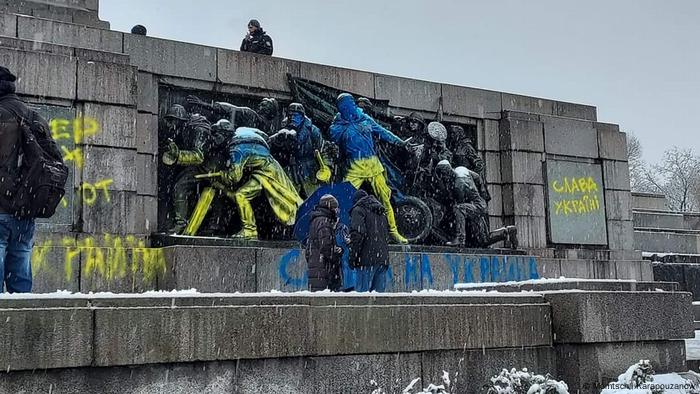


A Soviet memorial in Sofia has been the site of pro-Ukrainian protests

Each year on March 3, Bulgaria celebrates Liberation Day, marking the end of Ottoman rule after the Russo-Ottoman War of 1877-78. The commemoration is a sign of the historically close ties between Bulgaria and Russia, which have now been complicated by Russia's invasion of Ukraine.

On March 2, the Russian ambassador laid a wreath at the Monument to Freedom in honor of the victims of that 19th century conflict, but on that same day, a Bulgarian general was arrested for spying for Russia. It followed Prime Minister Kiril Petkov's decision to fire his defense minister for pro-Russian statements just a day earlier.
Deep internal divisions

When Defense Minister Stefan Yanev was dismissed, Petkov explained that "no minister has the right to have his own foreign policy via Facebook, no minister may be a burden on the coalition government, and no minister can call events in Ukraine anything other than 'war'."

Yanev, an officer in the army of a NATO member state, had described Russia's war of aggression against Ukraine as an "operation" on Facebook the previous weekend, thereby explicitly complying with the language rule set by Russian President Vladimir Putin.

As early as December last year, Yanev had on Facebook criticized the stationing of NATO troops in Bulgaria. In January, he warned about the "foreign media" doing damage to the Bulgarian "national interest" in its coverage of the conflict over Ukraine.

Yanev's firing shows the deep internal divisions in the government which only took office in December. Since the Russian attack on Ukraine, it has become increasingly difficult for Petkov to moderate tensions between members of his coalition — pro-Russian socialists and pro-Western reformers. The Socialists voted in both the Bulgarian and European parliaments to oppose sanctions against Russia and the banning of the Russian state media RT and Sputnik in the EU.

"In their rhetoric, the socialists condemn the Russian invasion of Ukraine, but they oppose both sanctions and military aid to Kyiv. Their pro-Russian orientation distinguishes them from the other governing parties," said Rumena Filipova, director of the Institute for Global Analytics in Sofia.

"This conflict has the potential to have the government fall apart," Filipova told DW. Resistance to the Petkov government's trans-Atlantic course also comes from the ultranationalist Regeneration Party.

"Their extreme positions on the abolition of all COVID measures, the blocking of neighboring North Macedonia's accession to the EU and their pro-Russian stance meet with broad approval in society. In doing so, they are putting pressure on the government, which in turn is making concessions to them," said Filipova.
A Bulgarian general spies for Russia

The new defense minister had hardly been sworn in when the next scandal caused a stir the following morning. Bulgarian general Valentin Tsankov, who according to media reports is the reserve general and deputy chairman of the Bulgarian Army Association, was arrested for spying for Russia.

Bulgaria's Foreign Ministry summoned the Russian ambassador and expelled two Russian diplomats. Just as one year earlier, a spy ring was uncovered in the Defense Ministry and the military secret service. Agents disguised as diplomats in the Russian Embassy are said to have been the spy's contacts.

General Tsankov has been in similar trouble before. In 2011, he was recalled from Washington as military attache when it was revealed that in the 1980s he had worked for the communist military intelligence service and had been trained in Moscow.

If the allegations against Tsankov, who has been accused of spying for Russia since 2016, are true, the case would be further evidence of Russia's ongoing infiltration of Bulgarian security agencies since the Cold War.

"Parts of the Bulgarian army and generals have often caused irritation with their pro-Russian statements, and their loyalty to NATO is questionable," said Filipova.
Public opinion at a tipping point?

It's not just socialists, nationalists and the security apparatus in Bulgaria who are traditionally pro-Russian. There is also sympathy for Moscow and Russian President Vladimir Putin among the general population. According to surveys by the polling institute Alpha Research, around 50% of the Bulgarian population had a positive opinion of Putin in early 2022.

At the beginning of February, only 40% had a positive view on Bulgaria's NATO membership — and only 28% were in favor of the country becoming more involved in NATO, in view of the looming war.

But Russia's attack on Ukraine seems to be changing public opinion; Four days after the attack, support for Putin fell to 32%.
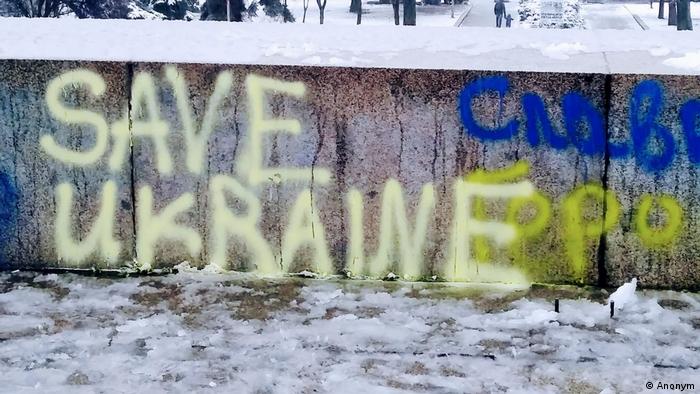


Since the start of Russia's invasion, pro-Ukrainian slogans have appeared on a Soviet monument

At the same time, an old and highly symbolic dispute over a monument to the Soviet Army in the center of Sofia has flared up again. For Russia sympathizers, it's a symbol of liberation from fascism, while pro-Western Bulgarians see it as a symbol of Soviet oppression.

Plans to move it go back to 1993, but have been delayed again and again. When pro-Ukrainian demonstrations took place after the start of the war, protesters spray-painted the monument in the Ukrainian national colors of blue and yellow, and wrote slogans like "Honor to Ukraine!" and "Putler — get out of Ukraine!"

Three demonstrators who spray-painted the monument were arrested, Interior Minister Boyko Rashkov said last Wednesday. He described the actions by the police, who had held the three minors overnight without informing their parents or lawyers, as "disturbing" and "intolerable."

The past week's turmoil shows the full extent of Bulgaria's division. Its relationship with Russia is more ambivalent than ever, in both government and the general population.

This article was originally published in German
Annalena Baerbock: Germany's first female foreign minister flourishes in a crisis

The Green Party politician has received widespread praise for how she is representing Germany in the face of Russia's invasion of Ukraine. On International Women's Day, DW looks at how she has exceeded expectations.


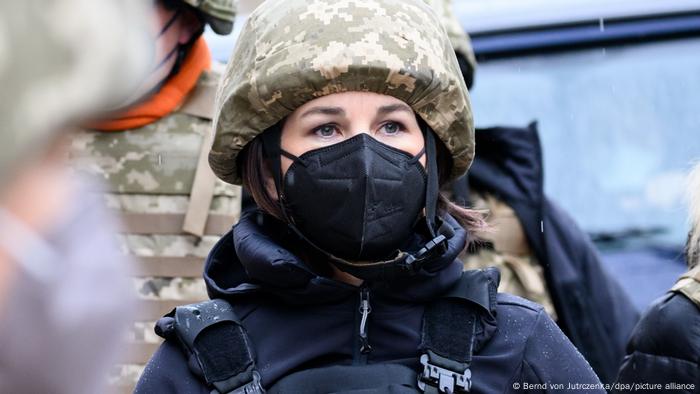
German Foreign Minister Annalena Baerbock has risen in popularity since she took office in December 2021

Annalena Baerbock, the former co-leader of the environmentalist Greens and now the first woman to serve as Germany's top diplomat, marks three months in office on International Women's Day (March 8).

She has emerged as one of the countryˈs most popular politicians, winning overwhelming praise also from conservative quarters for her clarity and steadiness in a time of great upheaval across Europe and major changes in German foreign policy.

On Thursday, the monthly Deutschlandtrend opinion poll found that Baerbock was easily Germanyˈs second-most-esteemed politician, after Chancellor Olaf Scholz, of the center-left Social Democrats (SPD). Some 50% of respondents said they were either pleased or very pleased with her work — a massive increase of 14 percentage points from the same time the previous month.

The growing appreciation for Baerbock stems largely from how she has handled Russia's invasion of Ukraine. On Twitter, German users have lauded her as "made for the role" of foreign minister and "the best choice" for the job that could have made.

Watch video00:21 Baerbock addresses UN after Russian invasion of Ukraine

Analysts have also noted that, ahead of Germany's 2021 federal election, Baerbock was the only chancellor candidate to call the Nord Stream 2 gas pipeline from Russia a mistake. Less than two weeks ago, amid Russian aggression toward Ukraine, Scholz indefinitely blocked the pipeline from going into service.

Exceeding expectations


Across the board, German news outlets, such as the weeklies Der Spiegel and Die Zeit, have been applauding the foreign minister for "speaking plainly" about the crisis and also talking directly to the Kremlin. When she went to Moscow in the days before the invasion, she seemed unflustered by her surroundings.

In her speech last week at the United Nations, Baerbock looked straight at her Russian counterpart, Sergey Lavrov, and said: "You are abusing your power as a permanent member of the Security Council. ... You can deceive yourself, but you do not deceive us."

Paul-Anton Krüger, the chief foreign policy writer for the Süddeutsche Zeitung daily, said her speech "made no attempt to hide behind diplomatic empty phrases. That's both good and long overdue."

Krüger said Baerbock's first months in office had confirmed for the general public what she spoke of in the autumn, namely "that switching to renewable energy as soon as possible ... is now mandatory," for both reasons of climate protection and security policy as European countries try to wean themselves off Russian gas.

In an article published by the Bavarian public broadcaster last week, foreign policy correspondent Barbara Kostolnik wrote last week of how Baerbock has exceeded expectations: "How many doubts, reservations and resentments were heard and read when Annalena Baerbock, wife, mother, 40, first entered the Foreign Ministry as Germany's top diplomat. More or less openly, many foreign policy observers asked the question that women are often asked: 'Can she do this?'"


Her election campaign to become German chancellor was marred by online trolling but also minor scandals such as plagiarizing parts of her 2021 book and delaying the payment tax on a Christmas bonus. Baerbock admitted her mistakes and apologized repeatedly, putting her firmly on the defensive, which many felt made her look weak. Now, Kostolnik emphasizes, in the face of a crisis, "nothing is left of that Annalena Baerbock, an insecure, tense, harried woman."

"She began cautiously," Kostolnik said, but quickly emerged as a decisive, clear leader acting on Germany's behalf internationally.

Baerbock's statement s day after Russia invaded Ukraine hit the right note: "We woke up in a different world today. ... We are stunned, but not helpless." These words, which were seen as refreshingly open and honest, were received in Germany as being in touch with the public mood.


'This young lady'


During Baerbock's campaign for chancellor and her early days in office, conservative pundits wondered whether the young mother was up for the job. But she went on the offensive arguing that if it was possible for Jacinda Ardern to combine a career and a political career in New Zealand, then it would also be possible in Germany. Baerbock has two daughters of primary school age and a stay-at-home husband.

Her first days in office saw users take to social media to ridicule her every minor slip of the tongue. For instance, when she spoke of "fressefreiheit" (which could be understood as a colloquial term for freedom of the mouth) instead of "pressefreiheit" (press freedom), a video of the lapse went viral on Twitter.

In February, it became obvious that not everyone had overcome sexist attitudes toward Germany's foreign minister when Christoph von Marschall, a correspondent for the Tagesspiegel daily, referred to the now-41-year-old top diplomat as "this young lady" on television, questioning whether she was fit for her role during a trip to Ukraine in which she visited troops wearing a flak jacket and military helmet. His comments were met with a barrage of criticism and accusations of sexism.

According to Agnieszka Brugger, a defense policy expert for the Greens, Baerbock's feminist leanings have given her special insight, particularly with regard to the current conflict.

Brugger told DW's Rosalia Romaniec that one of Baerbock's talents was "countering the narrative that powerful states have specific zones of geopolitical influence with another story, that of human security and human rights."

Brugger highlighted two exemplary Baerbock quotes: Security is "about whether families and children in the middle of our Europe can grow up safely and in peace" and when, after her trip to Ukraine's Donbas region, the foreign minister said that "only when women are safe is everyone safe."


Annalena Baerbock visited the Donbas region on a trip to Ukraine in January


Climate policy takes a backseat


When Baerbock took office in December 2021, she announced the transfer of responsibility for international climate policy from the Environment Ministry to her Foreign Ministry and said she would be Germany's chief negotiator at the UN climate conferences. This gives foreign climate policy a higher priority than before in the "traffic light" government. This was seen as an upgrade for the Foreign Office, which had lost ground to the Chancellery in recent years.

Since then the issue has taken a back seat — with the exception of her appointment of Greenpeace International chief Jennifer Morgan to the position of special representative for international climate policy in the Foreign Ministry three weeks ago.

Whether Baerbock's current popularity holds out in the long term remains to be seen. But she has used her first three months in office to defy her skeptics and hold her own on the world stage.

Edited by: Rina Goldenberg

Despite progress elsewhere, Egypt's FGM numbers still high

Despite Egypt's outlawing female genital mutilation and introducing punishments, a new study has found that the country is nowhere close to achieving its aim of ending FGM by 2030. Other places have had more success.


Anti-FGM efforts in northern Iraq had success, but in Egypt the prevalence remains high

A new study by the Cairo-based Tadwein Center for Gender Studies has found that that 86% of underprivileged women aged 18 to 35 in Egypt, a country of more than 102 million people, have been subject to female genital mutilation (FGM), also called female genital cutting (FGC).

That is only down one percentage point from the FGM figures in Egypt's last National Health Survey, in 2014.


"I was in shock when I saw how little has changed, given that Egypt vowed to end FGM by 2030," Habiba Abdelaal, fellow of the Tahrir Institute for Middle East Policy and a researcher of sexual and gender-based violence in Egypt, told DW.

The practice is still rife despite Egypt's outlawing FGM in 2008, increasing jail sentences for practitioners and family members involved, and setting up the National Committee for the Eradication of FGM in 2019.

Glimmers of hope


Though the prevalence of FGM in certain populations in Egypt has hardly changed since 2014, the researchers told DW that there have been other shifts.

"Two things have changed for the better since 2014," said Amel Fahmy, director of the Tadwein Center and co-author of the study. "Only 38.5% of women and 58% of men support the continuation of FGM."

That marks a significant drop in favorable views among women in particular. Previously support for FGM had been about 50% for women.

"The second change is that daughters of circumcised women continue to be less likely to be circumcised, at around 57.4%," Fahmy said.

Still, those numbers reveal that almost half of the girls born in Egypt are still at risk of undergoing genital mutilation. The UN states that any form of "FGM is a human rights violation and constitutes a form of violence against women and girls."

'A medical reason' for FGM

Typically the removal of all or part of the external genitalia is carried out on girls aged between 9 and 13, but there are victims as young as 6, campaigners against FGM say.

The practice is often carried out in the name of promoting chastity and upholding tradition. Some see it as a religious duty. However, the most popular is a "medical" reason.

The medicalization of FGM is widespread in Egypt, as reflected in responses the 2014 Demographics and Health Survey: 37.9% of mothers — compared with 81.9% of daughters — had had the procedure performed by licensed medical professionals.

Midwives and traditional cutters had previously performed the procedure.


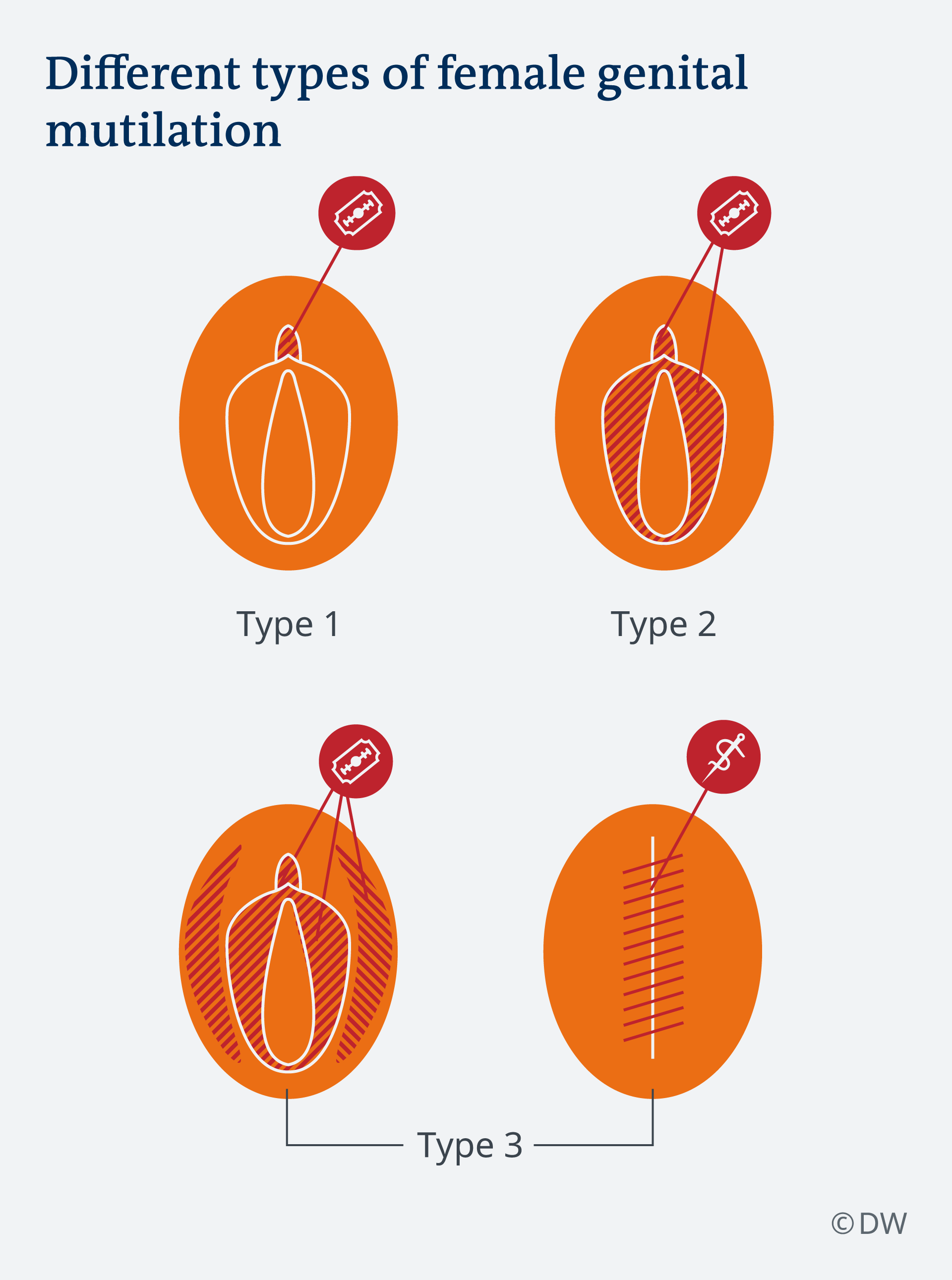
According to the WHO, there are different stages of the partial or total removal of external genitalia in FGM

"Some perpetrator doctors claim there is a medical reason for the cutting, which is nothing but a leeway for lawyers to close the case," Abdelaal said.

That is a view shared by Mona Eltahawy, an Egyptian-born activist and fierce campaigner against FGM. "There is no such thing as a medical reason to cut a girl's clitoris, clitoral tissue, labia and to sew the vagina together," she told DW.

'Rejected or ostracized'

Eltahawy said she remembered more than one conversation with "women who themselves were subject to FGM, who have sworn to me that they will cut their daughters despite whatever law is in place."

This is partially motivated by perceived duties of love and care, Eltahawy said: "They do it to their daughters and their granddaughters because they love them, because they don't want them to be rejected or ostracized — they want them to survive."

Eltahawy said another reason for the prevalence is that "FGM is part of a systemic patriarchy and systemic misogyny as it is interwoven with the obsession of keeping a girl's virginity until they get married."

For that reason, Eltahawy said, it is not simply up to individual mothers to pledge not to permit their daughters to bu subjected to FGM.

Thirty percent of respondents to the Tadwein study said they would not allow a son or hypothetical son to marry a noncircumcised woman.


A success story in cutting FGM rates

The German-Iraqi NGO WADI has been successfully working since 2004 with women in the Kurdish areas in northern Iraq to fight the practice.

Back then, the region used to be among the places with the world's highest prevalence of FGM.

"We've been working with women only, and the success is immense," Arvid Vormann, project coordinator at WADI, told DW.

The organization's approach is to send teams of two female social workers into villages. "Depending on the varying levels of openness, we literally started by explaining that FGM is outdated," Vormann said.

In the beginning it was tougher, and social workers were often attacked for opposing cutting.

In 2011, all forms of FGM were officially banned in Iraq, though enforcement remains as low as in Egypt.

For women, the NGO's long-term commitment has paid off as mindsets have changed: Mothers don't have their daughters cut, and men embrace women who are not circumcised. Also, WADI-trained midwives have to vow that they won't cut baby girls.

By 2020, Iraq's Kurdish region was considered FGM-free.

"But our work doesn't end here, as many women who live with FGM still need advice," Vormann said DW. WADI's social workers now focus on helping circumcised women with psychological support and hands-on information, such as using lubricants to reduce friction during intercourse.

Including men in the conversation

Activists say Egypt will need a broader-society effort to lower the high rate of FGM.

"It's a crime against women, and it's a crime happening to women — and we're still holding women accountable to fix it," Abdelaal said.

She said men would need to join the conversation. "We are living in a male-dominated society after all," she said.

But men will also need to listen. "FGM will not end in Egypt until and unless we are finally over this taboo of women's autonomy, over their bodies of sexual openness," Eltahawy said. "And that will require a sexual revolution in which we say I own my body and it is my right to experience pleasure."

Fahmy fears that an end to FGM will not occur within the next generation.

"FGM is closely linked to education," Fahmy said. "And, while education levels among girls are increasing, progress would need to be 15 times faster to end FGM by 2030."

Edited by: Sonia Phalnikar

WWW LINKS
https://www.theatlantic.com/international/archive/2015/04/female-genital-mutilation-cutting-anthropologist/389640/

Simone de Beauvoir and 'The Second Sex'

A new exhibition in Bonn revisits Simone de Beauvoir's "The Second Sex." The French existentialist philosopher's book is more relevant today than ever, says German feminist Alice Schwarzer.


Simone de Beauvoir at her desk in 1945

Simone de Beauvoir's most famous book, "The Second Sex" ("Le deuxieme sexe"), is just shy of 1,000 pages long.

Published in 1949, it has been translated into more than 40 languages over the years and is considered a standard work of modern feminism. In it, de Beauvoir analyzes the situation of women in the Western world and deals with taboo subjects including sexual initiation, lesbian love and abortion.

Bonn's Bundeskunsthalle Museum has devoted an exhibition to the work. The show illuminates its genesis in post-war Paris and questions why to this day, "The Second Sex" has hardly lost any of its powerful effect.

De Beauvoir's theses were groundbreaking, says Bundeskunsthalle artistic director Eva Kraus, adding it took a lot of courage to defend them without caving. "She still deserves a great deal of respect for that, which made her a role model at the time, and she remains one to this day — for me, too," says Kraus.

De Beauvoir: 'This world is a man's world'

"One is not born, but rather becomes, a woman" — that is perhaps the most famous quote from "The Second Sex."

De Beauvoir's analysis brought the category of "gender" into focus for the first time, all the while consistently distinguishing between biological sex and cultural or social conditioning.

"This world is a man's world, my youth was fed with myths invented by men, and I by no means reacted to them as if I were a boy," she later wrote in her four-volume autobiography.

The first volume of "The Second Sex," entitled "Les faits et les mythes" ("Facts and Myths"), appeared in June 1949 and sold 22,000 copies in its first week. The publication triggered a heated debate.

De Beauvoir's ideas provoked numerous — for the most part male — critics. Albert Camus, a fellow French philosopher, felt men were being ridiculed. Alfred Kinsey, a US sexologist, accused de Beauvoir of a lack of scientifically relevant data. The Vatican, the Soviet Union and Spain placed the work on an index of banned books.


Paris, 1972: Simone de Beauvoir at a protest for the right to abortion

Still worth reading 70 years on

"Simone de Beauvoir is more relevant today than ever," said Alice Schwarzer, de Beauvoir's friend and founder of the German feminist magazine Emma.

Speaking at the exhibition opening, Schwarzer added she was shocked by the amount of propaganda girls and young women are subjected to on social networks today regarding body politics. "If she were here today, that would be unparalleled material for de Beauvoir," Schwarzer said. But it's not just the image of women in the media that makes de Beauvoir's feminist classic still worth reading 70 years after publication.

Various social issues have brought the work back into focus, including the right to abortion, for which de Beauvoir demonstrated, and which is still the subject of heated debate in Germany today.

Other facts and figures make it clear that women and mothers have been involuntarily forced back into old role models during the coronavirus pandemic. Women bear the burden of the pandemic: What would Simone de Beauvoir have said about that?

Women in a patriarchy

What would she have said about attempts to belittle women who hold senior offices against all odds?

A documentary on Angela Merkel recently showed how Germany's former chancellor held her own in the male-dominated political arena.

Germany's new foreign minister, Annalena Baerbock, was thought by many not to be competent or experienced enough. In the current crisis following Russia's invasion of Ukraine, she has demonstrated aplomb as she appealed to the world community at the UN General Assembly in New York and promoted a resolution against Russia.


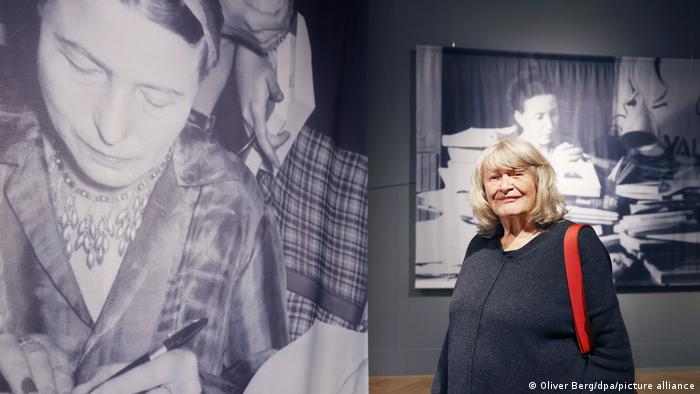
Alice Schwarzer in the museum in Bonn

De Beauvoir always had to stand her ground, too, according to Alice Schwarzer: "She had acquired a brusque manner. You have to know that she was under fire for decades." She was very much attacked and defamed as a woman, Schwarzer said, adding that no one analyzed being a woman and being a man in a patriarchal world as comprehensively and as consistently as she did.

De Beauvoir's kind of radicalism is 'rare these days'

"I always admired de Beauvoir for being too radical when in doubt rather than the opposite," Schwarzer said. But her kind of radicalism has become rare these days, she argued.

For the German feminist and journalist, progress is not automatic, one must always fight for its preservation and further development.

The exhibition "Simone de Beauvoir and 'The Second Sex'" runs from March 4 to October 16, 2022 at Bundeskunsthalle in Bonn.

This article was originally written in German.

The Second Sex (uberty.org)  PDF

https://www.marxists.org/reference/subject/ethics/de-beauvoir/2nd-sex/...

by Simone de Beauvoir (1949) Introduction Woman as Other. FOR a long time I have hesitated to write a book on woman. The subject is irritating, especially to women; and it is not new. Enough ink has been spilled in quarrelling over feminism, and perhaps we should say no more about it.


What does Simone de Beauvoir mean by the other? – Colors ...

https://colors-newyork.com/what-does-simone-de-beauvoir-mean-by-the-other

What does Simone de Beauvoir mean by the other? De Beauvoir’s primary thesis is that men fundamentally oppress women by characterizing them, on every level, as the Other, defined exclusively in opposition to men. Man occupies the role of the self, or subject; woman is the object, the other. This distinction is the basis of all de Beauvoir’s later arguments. 


Simone de Beauvoir and The Problem of The Other’s ...

https://uwspace.uwaterloo.ca/bitstream/handle/10012/7563/O'Brien_… · PDF file

In an interview with Jessica Benjamin and Margaret Simons in 1979, Simone de Beauvoir identified the problem that had preoccupied her across her lifetime, that is, “her” problem, as the problem of the “the consciousness of the other.”2 In making this claim, she echoed words she had written almost fifty

  • Author: Nulli Secundus
  • Title:


  • Ukraine's Roma activists working to help at-risk community

    Once they worked to ensure equal rights for Ukraine's Roma minority. Now Roma activists are helping locate food supplies, organizing border crossings and raising funds for the war effort.

    Roma activist Tetiana uses every spare moment to spread the news
     of what's really happening in Ukraine

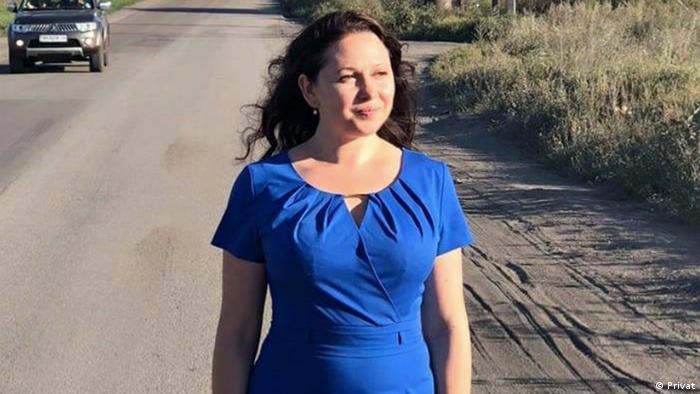
    Just a few days ago, Tetiana* was planning her wedding and looking forward to starting a new job. But then the Russian bombs began to fly, and everything changed.

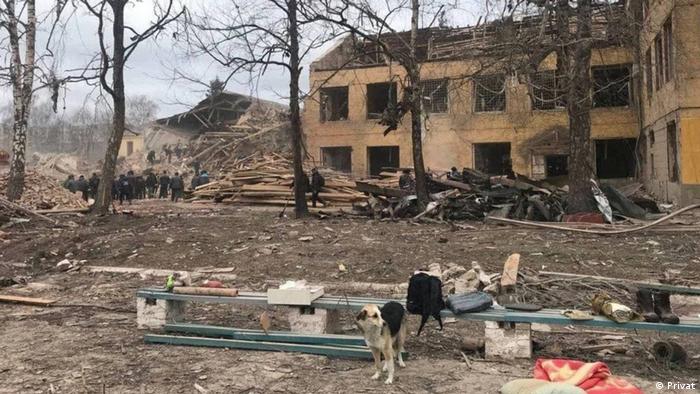
    "On February 24, at 5 a.m., the first air raid sirens woke me up," said the Roma human rights activist from northeastern Ukraine. "Since then, most of the messages I get only ask one thing: Are you still alive?"

    Her friends begged her to leave the country, offering support, an apartment and even another job. But Tetiana won't leave. Her future mother-in-law, 82 years old, can barely make it down to the cellar, let alone to the border. And her fiance can't leave the country, either. Due to martial law in Ukraine, men aged 18 to 60 have to stay and remain available for military conscription.

    Tetiana said she feels paralyzed and overwhelmed by what is happening. One day last week, five air raid sirens went off, two of them in the middle of the night. She now uses every spare moment to try and spread the news of what's really happening on the ground in Ukraine.

    Natalia, another Roma activist who is also still in the country, recently released a video calling on the world to do more to help Ukraine.

    On social media, Tetiana also tries to analyze which places might be safe enough to, for instance, go out and get food supplies.

    But there is danger everywhere. One recent night, she noticed strange lights in the distance and contacted the local territorial defense group. They explained that it was likely a group of Russian saboteurs.

    "They mark civilian houses in order to attack them," she said. "But leaving the house is just as dangerous. A family from my hometown tried to flee to another part of Ukraine. But they were stopped by Russian troops and killed." DW has been unable to substantiate any of these incidents.


    The city of Okhtyrka has come under heavy fire from the Russian military

    Tetiana lives in Okhtyrka, a city between Kharkiv and Kyiv that is likely to be used by the Russian military on its way to the center of the country. It has come under heavy fire, and the Ukrainian ambassador to the US recently said the Russian military had detonated a vacuum, or thermobaric, bomb near .

    Russia has denied the charge, and the use of such a weapon has yet to be officially confirmed by external sources.

    'Crime against humanity'


    "What they [the Russians] are doing to our people is a crime against humanity," said Tetiana.

    The International Criminal Court said this week it would open an investigation into alleged war crimes committed by Russia.

    Before the war began, Tetiana was working as an advocate for vulnerable groups in Ukrainian society like the Roma people, and she said they shouldn't be forgotten now

    "The Roma were a disadvantaged group even before the war," she said. "We can't even imagine how they are suffering right now. There are reports of Roma being denied access to neighboring countries at various borders."

    Official statistics suggest there are around 50,000 Roma living in Ukraine. However, organizations working with local Roma in Ukraine suggest the number could be far higher, up to around 300,000.

    Germany's Society for Threatened Peoples, which advocates for minority rights around the world, has called Roma "the forgotten people," pointing out that many living in Ukraine were never eligible for citizenship.

    Despite this, local Roma are now fighting alongside their fellow Ukrainians, said Romani Rose, chairman of the Central Council of German Sinti and Roma. Meanwhile, Roma women and children were fleeing eastern parts of the country alongside their Ukrainian counterparts.

    Roma networking


    Zola, another Ukrainian human rights activist, was in Berlin visiting her son when the Russian invasion took her by surprise.

    "No one really believed this would happen," she said, adding that nobody in Ukraine had been preparing for war. "Now Kyiv is being bombed hourly."

    Since she arrived in the German capital, Zola has been organizing aid and connecting people to the various ongoing Roma-organized campaigns .

    The European Roma Grassroots Organizations Network has published a statement condemning war crimes against the Ukrainian people, and called on Russia to stop hostilities. Members of the Roma community and allies can sign the statement.

    TernYpe, the international Roma youth network, has established a digital noticeboard on the Padlet application to keep people informed. Roma journalists are also collaborating to bring their stories and other related reports to a central website, Nevimos. And the European Roma Institute for Arts and Culture is supporting its Ukrainian partner, the Youth Agency for the Advocacy of Roma Culture, as it tries to raise funds.

    All this international support makes Zola proud, as a Ukrainian and as a Roma woman.


    Human rights activist Zola has been organizing aid from Berlin

    "Many Roma [in Ukraine] have opened their houses and taken people in," she said. "Many have joined the army and they're fighting for our country. The Ukrainian people are united today like they have never been before."

    Zola hopes Ukraine will survive as a nation, and that in the end it will become a member of the European Union.

    "I'm absolutely convinced that Ukrainians are Europeans," she said. "They proved that in 2014 during the Maidan revolution and they continue to fight for democracy and freedom today."

    *Tetiana and Zola requested their surnames not be published due to concerns for their safety.

    This article was originally published in German
    Ukrainians have won the information war: historian Margaret MacMillan

    While Russian troops continue to assault Ukrainian cities amid stiff resistance from locals, Kyiv seems to have won the battle of narratives, the Canadian author says.


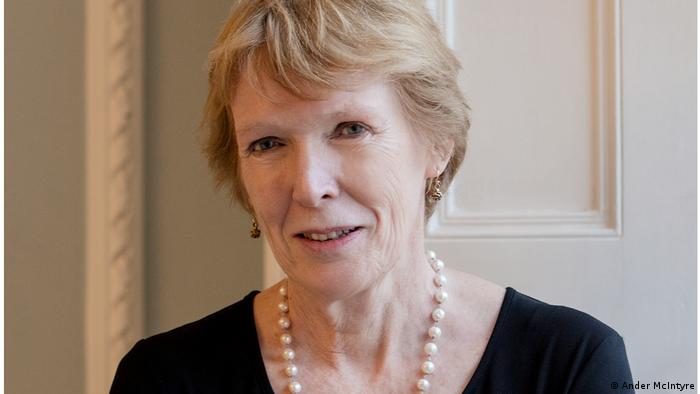
    Canadian historian and author Margaret MacMillan has written numerous books, including those that focus on wars and their repercussions. Among them are "Paris 1919: Six Months That Changed the World" (2001) — for which she became the first woman to win the Samuel Johnson Prize — and "The War That Ended Peace: The Road to 1914" (2013).

    In 2020, she published "War: How Conflict Shaped Us," which topped major bestseller lists and was one of The New York Times' 10 Best Books of the Year.

    In "War," MacMillan explores how and why human beings organize and wage war, and the political, economic and cultural changes to society — both negative and positive — brought on by war.

    In an interview with DW, MacMillan, who is the Engelsberg Chair in History and International Affairs at the London School of Economics IDEAS, shares her views on Russian President Vladimir Putin's motivations for waging war against Ukraine; social media as a new propaganda tool; and why nuclear energy still matters — despite its risks.

    DW: Why is war often initiated by specific individuals, such as in this case Vladimir Putin?

    Margaret MacMillan: I've never agreed with the biological explanation that we have something in our biology that makes us want to fight because random violence, if we fight each other, that's not war. You know, two men fight outside of a bar. That's not war. That's just violence.

    I think war is highly organized. I define war quite narrowly as organized violence against another organized group. I think people fight or go to war because they want something. Greed, as you can see with Putin: he wants Ukraine. They also go to war because they're afraid. So, the Ukrainians have gone to war because they have no choice. And then you get ideology coming in, often overlapping.


    MacMillan's book is an in-depth look into the whys and how's
     of war and its diverse effects on society

    I think Putin is certainly motivated by some weird form of Russian nationalism. People have fought in the past for religion or ideologies, revolutionary ideologies, whatever. But often it does take someone to say, "Yes, we're going to war." How you go to war and when you go to war is affected by your society.

    And so in democracies, the prime minister can't just say, we're going to war. There are controls. The American president cannot declare war. It has to get through Congress. And in a democracy, it would be very foolish if you were prime minister or president to take the country to war if it's unpopular. And we've seen what happens when that happens. But in an autocracy like Russia, where Putin has, I wouldn't say total control, but he has control over all the institutions of state: he controls the intelligence services, he controls the military power and the Duma is a rubber stamp. I mean, it amounts to nothing, and it is his decision, I think.

    I really do think this is Putin's war. Just as I think the Second World War in Europe was Hitler's war.

    How important a role does rhetoric and dialogue play in averting crises such as these?

    I suppose it can if the other side is prepared to issue the threats, but it needs to issue — and in this case, the West didn't. I think they were still trying to find a diplomatic solution. And so that procession of leaders from [French President] Emmanuel Macron to Liz Truss, the British foreign secretary, going to Moscow to try and persuade Putin to look for a peaceful solution. Who knows if they had said very clearly, "If you do this…?" But the problem is democracies never quite know what they're going to do until the moment comes.

    What do you make of the new "battle of the narratives" on social media?

    There's always been a battle of the narratives. Propaganda has always been important in war. If you look at the columns, the Romans put up. Or the coins they stamped with emperors' heads. These were to show the might of Rome.

    Napoleon [Bonaparte] was very conscious of the power of propaganda. All those pictures he had of himself on horseback riding across the Alps, for example, on battlefields. These were widely distributed, and they were a way of marking his power and intimidating his enemies.

    So, I think in various ways, propaganda, trying to use information to undermine the enemy or to win over people, has always been part of war. But it's the means of propaganda, they change as technology changes. In World War I, the two sides dropped leaflets on each other by airplane, or they fired them out of shells because that was the way of reaching the other side. In World War II, they used broadcast to reach the other side. And now social media has become the vehicle for trying to undermine the enemy and trying to rally your own people.

    And so far, I think the Ukrainians have won the information war hands down. And the narrative is believed, and I think it's being believed even in Russia. They've been so skillful at, for example, using captured soldiers to speak to their mothers. Or using Facebook to show the Russian families that their sons are OK. The Russian narrative is getting crazier and crazier, if I may say so.

    I mean, the government of Ukraine are drug addicts? That Russia invaded to stop Ukraine getting nuclear weapons? I mean, Ukraine gave up nuclear weapons voluntarily in the 1990s. It seems to me as not being very effective, is it?

    CULTURAL BACKLASH AGAINST RUSSIA'S INVASION OF UKRAINE
    Cannes bans Russian delegates
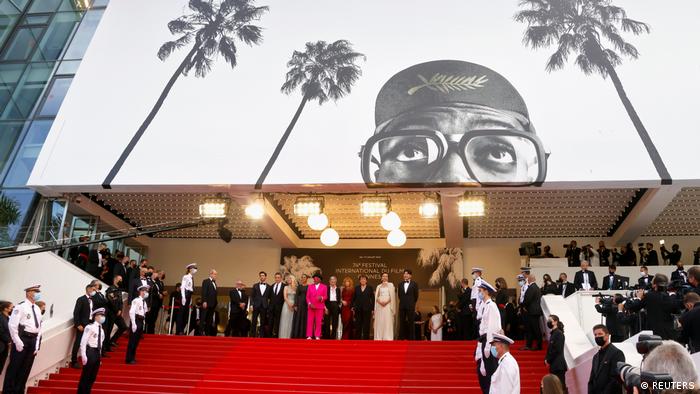
    The Cannes Film Festival announced on March 1 that it would "not welcome official Russian delegations" or people linked to the country's government. A number of film festivals are reacting similarly, including Glasgow and Stockholm. Locarno has announced it would not join a boycott, whereas Venice will offer free screenings of a film about the 2014 conflict in the Donbas region.

    How much of an impact can pressure from cultural actors have on states waging war?

    Very little while the war is going on. They can put pressure on states who are following policies that the outside world disapproves of. There was a sports boycott of South Africa during apartheid, which actually did affect South Africans, particularly those who are crazy about sports, which is a lot of South Africans. It may make those who're doing the boycotting feel that it's something; it's a gesture. But is it going to make the Russian leadership think again? I think, highly unlikely.

    The world woke up last Friday to the grim reality of Russia attacking the Zaporizhzhia nuclear plant. It may be too soon to ask, but is there any lesson here for us?

    I hope it won't turn people against nuclear power because when this war is over, we're still going to have to worry about climate change. And this is something we need to think very seriously about. And how we try and strengthen the International Atomic Energy Agency, which now governs nuclear power plants, and it has actually asked to go in and look at this power plant.

    We're going to have to seriously consider whether we continue to build nuclear power plants, and ways of protecting them when war breaks out. But in my view, we have to think about nuclear power because we cannot go on relying on fossil fuel.

    This interview was conducted by Brenda Haas

    Opinion: Want to empower women? Call out hate speech online

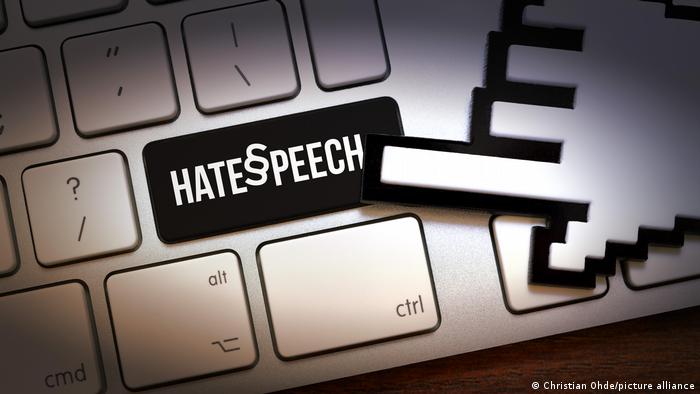
    On International Women's Day, people are protesting against misogyny and violence against women. Hate speech targeting women online threatens our existence — and cannot be tolerated, says DW's Wafaa Albadry.


    Online aggression has taken various forms, including vitriolic messages

     and comments threatening assault and rape

    This is my mantra: "I'm a brave woman; I can do it all”. Yet still, I'm a little hesitant when it comes to using the internet. I can't count how many times I was attacked online, be it for my work, for my moral stances, or even for just my presence.

    Vitriolic messages and comments — with sexual connotations — have been used to intimidate me, including threats to beat me up or rape me. I tried to report it and talk openly about it online, but I was shamed for it and silenced. 

    So I retreated and went offline to protect myself, as well as my time and energy chasing after these attackers. But this also resulted in my withdrawal and fear from the internet world.

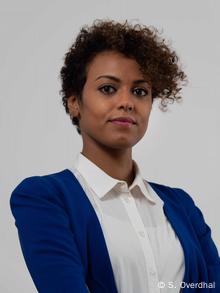
    portraite of Wafaa Albadry

    DW's Wafaa Walbadry

    When I spoke about it with other women, I realized I wasn't alone: Cyber violence, in various forms, had affected almost all the women I know. And even when the hate stops, long-lasting emotional effects often remain. 

    Annalena Baerbock, Germany's first female foreign minister, was a target of sexist hate speech when she was a chancellor candidate last year. A strong woman, former Chancellor Angela Merkel, was also subjected to hate speech online. Green Party co-leader Ricarda Lang was body shamed and threatened online with rape.

    Endless examples can be found all over Europe, from journalists to artists and other women who are simply active online. And it is not a "first-world problem," it is a global phenomenon that is alarming: those who commit such acts are targeting women's existence in the public sphere. It is part of sidelining women from daily discourse — a discourse that is led primarily by men.

    Hate speech vs. freedom of speech

    Germany has some of the world's toughest data privacy laws — and, oftentimes, this allows trolls to go unchecked. Online aggressors remain anonymous to escape accountability and to feel protected from legal ramifications for their attacks.

    This was reinforced when Germany's top court overturned an anti-hate speech law that, if it was evident that an alleged crime was committed, allowed user data of major social media platforms to be passed on to the police for an investigation.

    Now we need to prevent such a setback from spiraling. Online platforms need to use their technology to develop tools that better prevent hate speech. Lawmakers and law enforcement need to treat cases with sensitivity, as well as impose — and enforce — criminal punishments that deter such behavior.

    I believe that hate speech cannot be protected under the guise of freedom of speech. I believe that hate speech is a weapon used to target society's most vulnerable. And if it is tolerated, it empowers those who want to hurt others — and carry on unchallenged. We as a society need to take a stand against hate speech: both men and women, law enforcement and social media platforms. 

    I'm a strong woman, but I cannot — nor can any other woman — do it all alone. No woman should.

    Digital Protest: Women fighting for

    their rights using the power of social

    media

    Women’s rights, protecting the environment, or fighting hate speech: Women worldwide are politically active online. They face online and offline abuse.

    Four women, four continents, countless causes: The political activists have one thing in common: They are using online tools to lead a new wave of feminist and pro-democracy protests online. The digital sphere is a space for women a space to speak up and be heard.


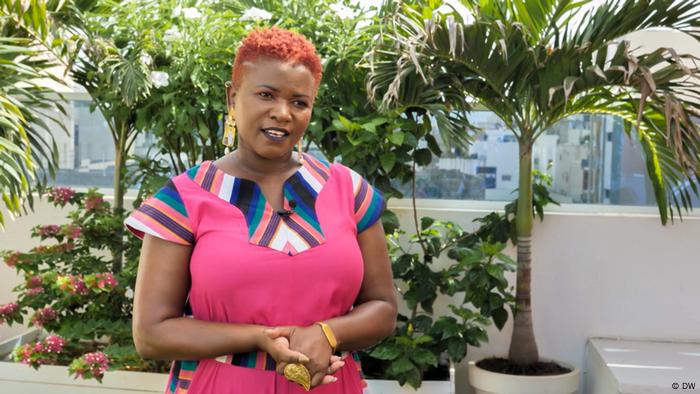
    Rosebell Kagumire, a political activist from Uganda

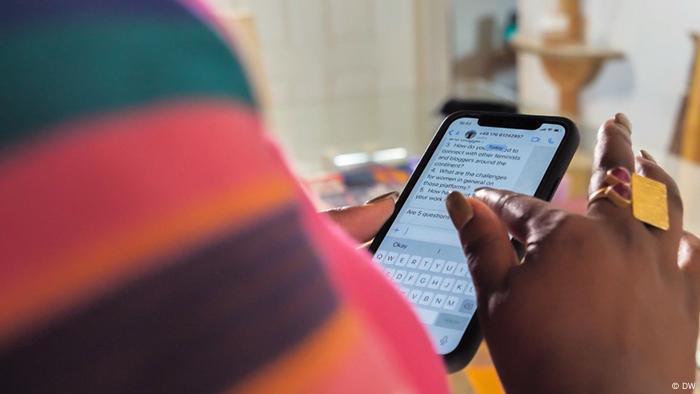
    Rosebell Kagumire from Uganda runs the website "AfricanFeminism.com", which gives a voice to women across the African continent. To her, social media and the internet are tools for sharing her vision of a better world and for connecting with like-minded women.


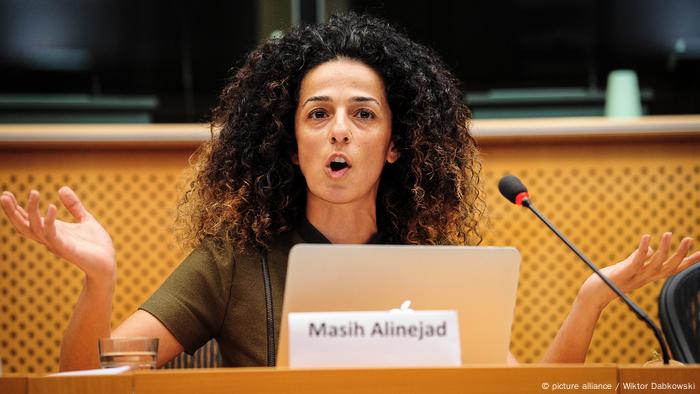
    Iranian activist Masih Alinejad

    Using catchy hashtags in one way to raise awareness for campaigns. In Latin America, #NiUnaMenos – not even one less – became the slogan for the fight against femicides. Iranian activist Masih Alinejad, who lives in exile, created the hashtag #Whitewednesdays: As a sign of protest against compulsory veiling laws, women post photos and videos of themselves without a veil or wearing white on Wednesdays.


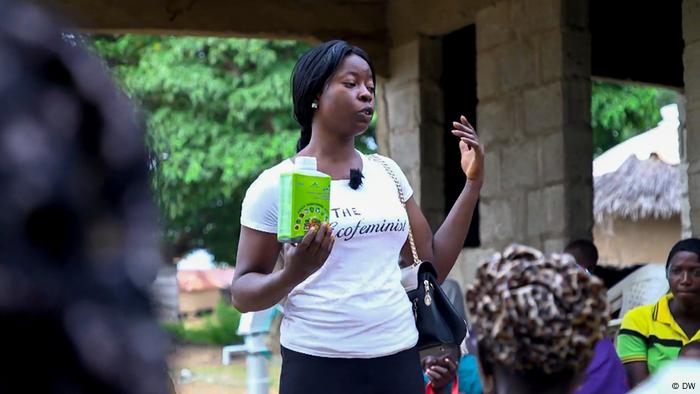
    Nigerian climate activist Adenike Oladosu

    With #ActOnLakeChad, Nigerian climate activist Adenike Oladosu calls for determination and real action to stop climate change. These are just three examples of women around the world using digital tools and platforms to raise their voice and connect with other activists.


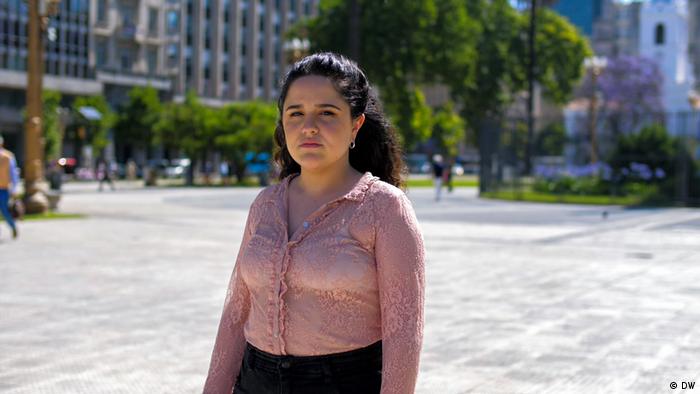
    Ofelia Fernández, an Argentinian politician

    But not all their online followers are fans. The young Argentinian politician Ofelia Fernández is often targeted with emails and messages on social media containing death threats, rape threats or hateful abuse. And for fear of abduction by the Iranian regime, activist Masih Alinejad needs to have personal security with her at all times – even in the US.

    Being a woman, being active online and speaking out – that's often all it takes for activist women to be bombarded with online abuse, threats, or sexual harassment. Gender plays an important role in who is targeted by abuse: In a study in the US from 2021, 33% of women under 35 years said they had sexually harassed online before. For men in the same age group, it was just 11%.

    The four women in this series won't stop speaking out and protesting, even if it has often pushed them to their personal limit.

    Despite all difficulties: Social media is connecting women around the world so they can support one another in the push for change.