Tuesday, March 08, 2022

RECESSION
Brits could lose £1000 of household income in ‘worst real incomes squeeze since 1970s’

Real household incomes across Britain could fall by 4% for working age people in the financial year 2022 to 2023. The real incomes drop would represent a fall of £1,000 per household.

Luke Ridley
DIGITAL PRODUCER
PUBLISHED Tuesday 08 March 2022 - 

Households in Britain could be facing the sharpest decline in real incomes since the 1970s, a think-tank has warned.

Real household incomes across Britain could fall by 4% for working age people in the financial year 2022 to 2023, marking the biggest squeeze since the mid-1970s, according to estimates in the Resolution Foundation’s Living Standards Outlook for 2022.

The real incomes drop would represent a fall of £1,000 per household for non-pensioners – a scale of decline which would normally be associated with recessions – according to researchers.

The fall would have been worse without the £350 boost to incomes the UK Government’s energy rebates package will give households, the Foundation said.

Inflation is predicted to hit around 8% this spring – and the think-tank’s report said “high inflation will make falling real household incomes the defining economic feature of 2022”.

The Foundation said that even before the conflict in Ukraine, the outlook for living standards this coming financial year was “bleak”, with soaring energy bills this April disproportionately affecting families on low and middle incomes.


UK cost-of-living crisis: Brits told how to cut hundreds off energy bills with thermostat move


The report said: “The crisis in Ukraine has increased both the scale of price rises but also the degree of uncertainty about their levels and duration. So far, the conflict has substantially increased the price of oil and natural gas.”

The document warned: “The UK’s post-Covid economic recovery is well under way, but a deep living standards downturn is just getting going.”

Inflation could peak at 8.3% this spring – or even exceed the 8.4% rate in April 1991 that was the highest since 1982 – the Foundation said.

Incomes growth in 2023 to 2024 is also expected to be weak, it said.

Without a considerable improvement in the outlook for productivity and wages, the typical household income in 2025 to 2026 could be lower than it was in 2021 to 2022, it added.

This suggests that during first half of the 2020s, the pandemic may actually have been “as good as it gets in terms of household incomes”, the Foundation said.

The outlook suggests there will be “no rapid rebound from the period of high inflation”, the report added.

The Foundation also said the way benefits are uprated means putting poorer households though a “living standards rollercoaster”.

Most working age benefits and the state pension are due to rise by 3.1% in April – a time when inflation could have hit 8%.

Over the course of the year, this will mean a real-terms cut in the value of benefits of over £10 billion – more than the amount the Government spent on pandemic-related temporary benefit increases in 2020-21 – the Foundation said.

High inflation this year would drive a much bigger increase in benefits next year, the Foundation said.

It said that while benefit levels should end the “rollercoaster roughly where they began it in real terms”, this approach risks worsening the income shock to families this year.

The Foundation called for Chancellor Rishi Sunak to address the issue in his upcoming spring statement and increase benefits by 8.1% this year. The increase could be reduced next year, it said.

Poverty levels and weak pay growth are issues that also need to be addressed, the Foundation said.

It warned that the unwinding of pandemic support combined with benefit cuts could leave the proportion of children living in absolute poverty higher in 2026/27 than it was at the start of the decade.

Adam Corlett, principal economist at the Resolution Foundation, said: “Britain has stepped out of a global pandemic and straight into a cost of living crisis.

“The tragic conflict in Ukraine is likely to further drive up the price of energy and other goods, and worsen the squeeze on incomes that families across Britain are facing. Inflation may even exceed the peak seen during the early 1990s, and household incomes are set for falls not seen outside of recessions.

“For millions of low and middle-income families, this inflation-driven squeeze will be made worse by a living standards rollercoaster. Working-age benefits and the state pension are due to be uprated by just 3.1% next month, at a time when inflation could be as high as 8%.

“The immediate priority should be for the Chancellor to revisit benefits uprating in his upcoming spring statement.”

Torsten Bell, chief executive of the Resolution Foundation, said: “While the economic fallout from the war will feel trivial compared to the suffering experienced by millions of Ukrainians, it will still have a significant impact in Britain.

“Rising gas and oil prices are likely to lift inflation to its highest level in generations and send energy bills soaring again this autumn. This will cause a painful squeeze on family incomes, and should prompt the Chancellor to announce fresh support in his upcoming spring statement.”

Imran Hussain, director of policy and campaigns at Action for Children, said: “The Government needs a clear plan to reduce child poverty and it should start by increasing benefits, particularly the child element of Universal Credit.”

A Government spokesperson said: “We recognise the pressures people are facing with the cost of living, which is why we’re providing support worth around £20 billion this financial year and next to help. This includes putting an average of £1,000 more per year into the pockets of working families via changes to Universal Credit, freezing fuel duties to keep costs down and helping households with their energy bills through our £9.1 billion Energy Bills Rebate.

“We have also boosted the minimum wage by more than £1,000 a year for full-time workers and our £500 million Household Support Fund is helping the most vulnerable with essential costs.”


Households ‘could be facing worst real incomes squeeze since 1970s’

8 March 2022, 00:04
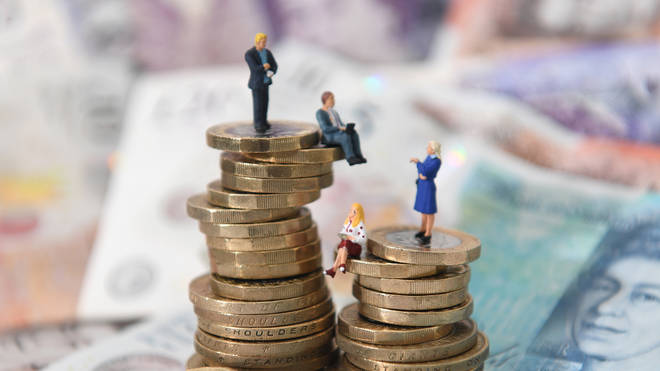
Models of people on coins
Household incomes. Picture: PA

Non-pensioner households could see real incomes fall by typically £1,000 in 2022/23 compared with previous year, the Resolution Foundation estimates.

Households in Britain could be facing the sharpest decline in real incomes since the 1970s, a think-tank has warned.

Real household incomes across Britain could fall by 4% for working age people in the financial year 2022 to 2023, marking the biggest squeeze since the mid-1970s, according to estimates in the Resolution Foundation’s Living Standards Outlook for 2022.

The real incomes drop would represent a fall of £1,000 per household for non-pensioners – a scale of decline which would normally be associated with recessions – according to researchers.

The fall would have been worse without the £350 boost to incomes the UK Government’s energy rebates package will give households, the Foundation said.

Inflation is predicted to hit around 8% this spring – and the think-tank’s report said “high inflation will make falling real household incomes the defining economic feature of 2022”.

The crisis in Ukraine has increased both the scale of price rises, but also the degree of uncertainty about their levels and duration

The Resolution Foundation

The Foundation said that even before the conflict in Ukraine, the outlook for living standards this coming financial year was “bleak”, with soaring energy bills this April disproportionately affecting families on low and middle incomes.

The report said: “The crisis in Ukraine has increased both the scale of price rises but also the degree of uncertainty about their levels and duration. So far, the conflict has substantially increased the price of oil and natural gas.”

The document warned: “The UK’s post-Covid economic recovery is well under way, but a deep living standards downturn is just getting going.”

Inflation could peak at 8.3% this spring – or even exceed the 8.4% rate in April 1991 that was the highest since 1982 – the Foundation said.

Incomes growth in 2023 to 2024 is also expected to be weak, it said.

Without a considerable improvement in the outlook for productivity and wages, the typical household income in 2025 to 2026 could be lower than it was in 2021 to 2022, it added.
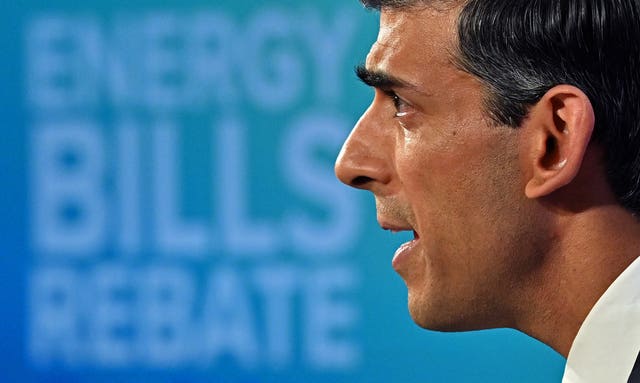
Ofgem announcement
The Foundation called for Chancellor Rishi Sunak to address household incomes in his upcoming spring statement (Justin Tallis/PA)

This suggests that during first half of the 2020s, the pandemic may actually have been “as good as it gets in terms of household incomes”, the Foundation said.

The outlook suggests there will be “no rapid rebound from the period of high inflation”, the report added.

The Foundation also said the way benefits are uprated means putting poorer households though a “living standards rollercoaster”.

Most working age benefits and the state pension are due to rise by 3.1% in April – a time when inflation could have hit 8%.

Over the course of the year, this will mean a real-terms cut in the value of benefits of over £10 billion – more than the amount the Government spent on pandemic-related temporary benefit increases in 2020-21 – the Foundation said.

High inflation this year would drive a much bigger increase in benefits next year, the Foundation said.

It said that while benefit levels should end the “rollercoaster roughly where they began it in real terms”, this approach risks worsening the income shock to families this year.

Britain has stepped out of a global pandemic and straight into a cost of living crisis

Adam Corlett, Resolution Foundation

The Foundation called for Chancellor Rishi Sunak to address the issue in his upcoming spring statement and increase benefits by 8.1% this year. The increase could be reduced next year, it said.

Poverty levels and weak pay growth are issues that also need to be addressed, the Foundation said.

It warned that the unwinding of pandemic support combined with benefit cuts could leave the proportion of children living in absolute poverty higher in 2026/27 than it was at the start of the decade.

Adam Corlett, principal economist at the Resolution Foundation, said: “Britain has stepped out of a global pandemic and straight into a cost of living crisis.

“The tragic conflict in Ukraine is likely to further drive up the price of energy and other goods, and worsen the squeeze on incomes that families across Britain are facing. Inflation may even exceed the peak seen during the early 1990s, and household incomes are set for falls not seen outside of recessions.

“For millions of low and middle-income families, this inflation-driven squeeze will be made worse by a living standards rollercoaster. Working-age benefits and the state pension are due to be uprated by just 3.1% next month, at a time when inflation could be as high as 8%.

“The immediate priority should be for the Chancellor to revisit benefits uprating in his upcoming spring statement.”

Torsten Bell, chief executive of the Resolution Foundation, said: “While the economic fallout from the war will feel trivial compared to the suffering experienced by millions of Ukrainians, it will still have a significant impact in Britain.

“Rising gas and oil prices are likely to lift inflation to its highest level in generations and send energy bills soaring again this autumn. This will cause a painful squeeze on family incomes, and should prompt the Chancellor to announce fresh support in his upcoming spring statement.”

Imran Hussain, director of policy and campaigns at Action for Children, said: “The Government needs a clear plan to reduce child poverty and it should start by increasing benefits, particularly the child element of Universal Credit.”

A Government spokesperson said: “We recognise the pressures people are facing with the cost of living, which is why we’re providing support worth around £20 billion this financial year and next to help. This includes putting an average of £1,000 more per year into the pockets of working families via changes to Universal Credit, freezing fuel duties to keep costs down and helping households with their energy bills through our £9.1 billion Energy Bills Rebate.

“We have also boosted the minimum wage by more than £1,000 a year for full-time workers and our £500 million Household Support Fund is helping the most vulnerable with essential costs.”

By Press Association

China’s Russia problem
by Philip S Golub, 7 March 2022
LE MONDE DIPLOMATIQUE

cc Michel Temer

On 2 March, the United Nations General Assembly (UNGA) passed a non-binding resolution ‘[deploring] in the strongest terms the Russian Federation’s aggression against Ukraine’ and deciding that ‘the Russian Federation shall immediately, completely, and unconditionally withdraw all its military forces from the territory of Ukraine within its internationally recognised borders.’ 141 countries endorsed the resolution, five voted against and 35 abstained. Most observers have emphasised Russia’s international isolation, but insufficient attention has been paid to the Global South, significant parts of which abstained from the vote: Angola, Burundi, Mali, Mozambique, Namibia, Senegal, South Africa, South Sudan, Tanzania and Uganda in Africa; China, India, Pakistan, Sri Lanka, Bangladesh, Vietnam, Laos, Mongolia, Kazakhstan and Kyrgyzstan in Asia (Turkmenistan and Uzbekistan did not vote). In the Middle East, Algeria, Iran and Iraq also abstained. A number of Latin America countries voted the resolution but nonetheless critiqued the sanctions imposed on Russia (Brazil and Mexico).

Abstention is not synonymous with support for Vladimir Putin and positions are evolving as the trail of death and destruction wrought by the Russian war machine spreads. But the voting pattern shows that the picture painted by Western media and governments of a world united against lawless authoritarianism is not accurate. (1) Together, the abstaining countries account for around half of the world population, and their choices cannot be simply ascribed to a shared authoritarian ethos (just as the choice of autocrats such as Recep Tayyip Erdoğan, who voted the resolution but has been seeking to overturn the 1923 Lausanne Treaty that defines Turkey’s borders from the Black Sea to the Aegean, cannot be ascribed to respect for democratic norms and adherence to international law).
Together, the abstaining countries account for around half of the world population, and their choices cannot be simply ascribed to a shared authoritarian ethos

National motives are diverse. Countries such as India or South Africa have longstanding economic and institutional ties to Russia and, like Uganda and other countries of the Global South, uphold traditional policies of non-alignment. Others such as the sub-Saharan African francophone states, who have gradually become detached from Europe, are seeking to ‘appease a public opinion in which anti-French discourse in particular and anti-Western discourse in general is on the rise’. (2) Poisoned relations with France and recently forged security ties with Russia explain Mali’s vote. Iran, which has strong reasons to uphold the UN charter’s prohibition on wars of aggression, does not want to compromise a relationship that serves in part to counterbalance US power in the Middle East and the Gulf. Cuba also abstained, despite deep ties to Russia, due to its own powerful reasons to uphold the charter’s clauses on non-aggression.

Notwithstanding differences, there are two interrelated themes in abstainer discourses: the first is a shared assumption that the US and Europe bear some responsibility in the current conflagration for having promoted NATO expansion and neglected Russian security concerns; the second, the idea that the world no longer revolves exclusively around the ‘West’ (the Euro-Atlantic system, the Anglosphere and US Treaty Alliance partners in East Asia). Both readings are at the core of current Chinese diplomacy, which has given Russia de facto – though increasingly lukewarm – support while refraining from endorsing the invasion (the PRC has not recognised the Russian Federation’s 2014 annexation of Crimea). The Chinese case is of great import.

During the first days of fighting, the PRC blamed the United States, describing it as the ‘culprit’ of the crisis for having promoted NATO expansion eastwards, in line with the 4 February joint statement of Presidents Xi Jinping and Vladimir Putin during the Beijing Olympics that ‘both sides oppose further enlargement of NATO and call on the North Atlantic Alliance to abandon its ideologised cold war approaches.’ As fighting escalated, Beijing’s discourse became more nuanced, with official expressions of ‘extreme concern’ over civilian casualties and offers of mediation to achieve a ceasefire between Ukraine and Russia (2 March). On 3 March, the Chinese ambassador to the UN, Zhang Jun, expressed serious disquiet, saying, ‘The situation has evolved to a point which China does not wish to see…it is not in the interest of any party’. (3) The PRC has yet to distance itself clearly from Russia, keeping its markets open and offering indispensable oxygen for a Russian economy stumbling under the weight of stringent sanctions. But, as Japanese observers note, ‘concerns are growing (in Beijing) that if China allows itself to be dragged further to the “Putin Theatre”, its national interests will be undermined’. (4)
The PRC is unlikely to abandon Moscow, whose deepening dependency will give Beijing long-term leverage over a weakened Russia. Nor can it condone a war that threatens its global projects

Putin’s war of conquest risks destabilising China’s patient efforts to transform ‘the global governance architecture and ‘rewrite the rules’ (5) through the construction since 2013 of Sino-Centric transcontinental economic linkages across Eurasia (the Belt and Road Initiative, BRI), Southeast Asia, Oceania and Africa (21st Century Maritime Silk Road), and the creation of new international institutions of economic governance (the New Development Bank, headquartered in Shanghai and co-founded with Brazil, Russia, India and South Africa; and the Asian Infrastructure Investment Bank (AIIB), also headquartered in China). Until the war, China viewed Russia, whose intellectual and political elites include an influential fraction of ‘Eurasianists’ who look more to the East than the West, (6) as a useful, necessary but subordinate component of these global rebalancing efforts. Useful, because China relies on Russian energy (coal, oil and gas) and agricultural exports as well as the procurement of some military technologies; necessary because Russia is a major actor in key areas of the BRI; subordinate because the relationship is characterised by deep asymmetries, China being the greater of the two powers by far.

Rather than leading to the long-range ‘redistribution of power in the world’ (7) sought by Beijing, the war has solidified and remobilised the US-centred alliance systems, spurred western remilitarisation, and highlighted the structural financial and economic power of the core Western capitalist states. Unless the war escalates dramatically, the PRC is unlikely to abandon Moscow, whose deepening dependency will give Beijing long-term leverage over a weakened Russia. Nor can it condone a war that threatens its global projects, and that undermines its already contested case for a possible forcible unification with democratic Taiwan.

China will thus be looking very carefully at the outcomes of the Ukraine war, which could weaken its international position, while strengthening its rivals. In theory, one would therefore expect Beijing to begin exerting greater pressure on Moscow to negotiate, but China may currently have limited influence on Russian decision-making. In the meantime, the Chinese government announced on 5 March a 7.1% increase of the defence budget, to 1.45 trillion yuan ($230bn) in 2022 (against 1.1 trillion yuan in 2018) ‘to safeguard national sovereignty and territorial integrity amid severe external threats and an unstable security environment.’


Philip S Golub

Philip S Golub is professor of international relations at the American University of Paris. He is the author of East Asia’s Reemergence, Polity Press, Cambridge, 2016.


(1) See, for instance, Martin Wolf, ‘Putin’s war against liberal democracy’, Financial Times, 2 March, 2022.


(2) Christophe Châtelot, ‘Guerre en Ukraine : l’abstention calculée de nombreux pays africains à l’ONU’, Le Monde, 4 March 2022


(3) Cited in Katsuji Nakazawa, ‘Ukraine Crisis Throws China’s Top 7 Leaders into Disarray’, Nikkei Asia, 3 March 2022.


(4) Ibid.


(5) See Philip Golub, ‘China Rewrites the Global Rules’, Le Monde diplomatique English Edition, February 2016.


(6) For a thorough discussion of Eurasianism see Marlene Laruelle, Russian Eurasianism: An Ideology of Empire, Woodrow Wilson Press/The John Hopkins University Press, Washington, D.C., 2008.


(7) ‘Joint Statement of the Russian Federation and the People’s Republic of China on the International Relations Entering a New Era and the Global Sustainable Development’, 4 February, 2022.


UN vote on Russia invasion shows a changing Africa

Despite Russia’s growing engagement across Africa, the UN vote shows there is lower tolerance now from that continent for such an aggressive invasion of Ukraine.

EXPERT COMMENT
7 MARCH 2022 

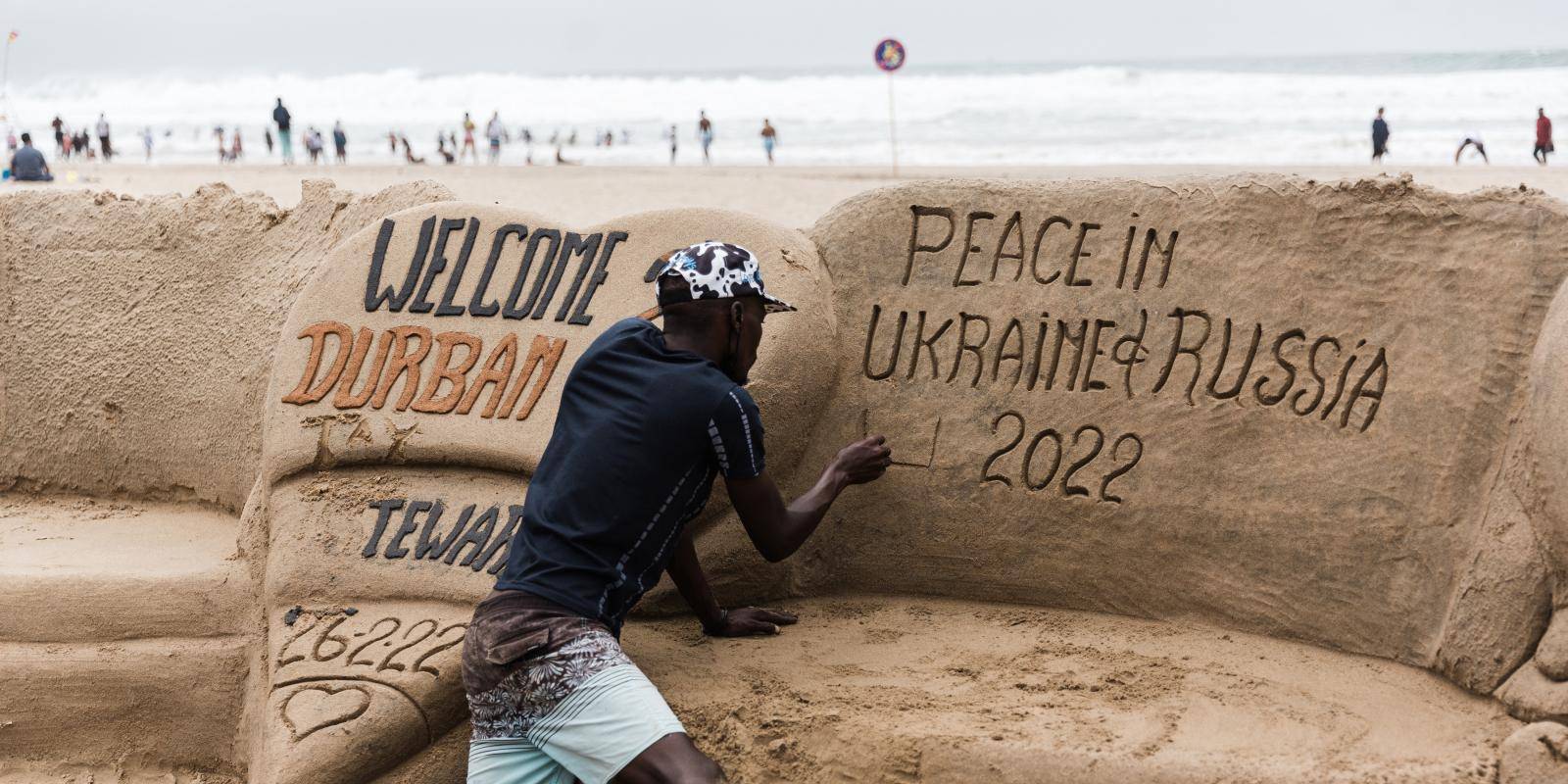
South African sand sculptor Sithembiso Buthelezi puts the final touches on a message for peace between Ukraine and Russia on the North beach in Durban. Photo by RAJESH JANTILAL/AFP via Getty Images.


Aanu Adeoye
Mo Ibrahim Foundation Academy Fellow, Russia-Eurasia Programme

Email Aanu

Africa’s diplomatic response to Ukraine has been closely watched, as the invasion is pitting Russia – and Belarus – against not just Ukraine but also its allies, from as close as Poland and as far as Australia. And the United Nations (UN) has become the stage to platform every member nation’s position.

Africa’s three non-permanent members on the UN Security Council – Ghana, Kenya, and Gabon – had already condemned Russia’s actions in the lead-up to the invasion, with Kenya’s strongly-worded rebuke focusing on the inviolability of borders and the need for every sovereign nation to control its own fate.

The UN General Assembly vote of 141-5 highlights Russia’s isolation because so many countries from around the world have registered their displeasure with Russia’s assault on Ukraine. And this vote goes much further than the similar one following the annexation of Crimea in 2014 when only 100 members supported the resolution.

By abstaining, South Africa ignores the power imbalance between the warring parties and Russia’s clear aggression in its invasion of Ukraine

Of the 35 total abstentions this time, 17 were from Africa – compared to 2014 when 26 did – but a few others such as Ethiopia and Cameroon simply walked out instead of making their positions officially known. And a few African countries – such as Mauritania, Kenya, Lesotho, and Mauritius – moved from abstaining in the past to voting in favour.

Russian ties with African countries growing closer


Those events of 2014 and the sanctions which resulted precipitated Moscow’s decision to seek out new international partners, and so Russia cast its eye on Africa. Since then, most of Russia’s efforts in Africa have focused on security and defensive alliances, supplying weapons to buyers with no strings attached and presenting itself as a bulwark against armed insurgents.

Among Russia’s foreign policy elite, 2022 has even been dubbed the ‘Year of Africa’ with the second Russia-Africa summit slated for St. Petersburg later in the year. And Russian ties with certain countries in Africa have become much closer since this pivot.

Following two coups which toppled both a democratically-elected government and its successor, Mali became isolated from its traditional allies in West Africa and a diplomatic rupture with France led to the withdrawal of the latter’s troops from the country. But Russia stood by Mali, voting against a UN Security Council measure seeking to support ECOWAS sanctions on Mali, and it is now probably Mali’s closest foreign ally.

As it did in 2014, Mali abstained this time along with the Central African Republic (CAR) which had voted in favour of the 2014 resolution but – eight years and a full-on invasion later – its unequivocal support then has turned to neutrality now as a sign of its new relationship with Russia and the enormous influence wielded by Moscow’s emissaries there.

Meanwhile Eritrea, a hermit nation in East Africa, was one of the five countries supporting Russia’s position while Nigeria voted for the resolution, not necessarily in support of Ukraine but in support of the spirit of respecting international law and that the fairly peaceful resolution of its own territorial dispute with Cameroon over Bakassi should serve as a model.

Although South Africa’s abstention was all but certain, its vote was closely watched as it was joined by the five other Nation Liberation Movement nations in southern Africa, whose default position is non-alignment. Explaining its abstention, South Africa said the resolution does not ‘create an environment conducive for diplomacy’ and called for dialogue to address ‘security concerns’ of the parties involved.

When Russian tanks first rolled into Ukraine, South Africa had urged Russia to withdraw in an initial condemnation which should be seen within the context of its foreign minister Naledi Pandor seeking to launch her country’s bid for membership of the UN Human Rights Council for the 2023-25 cycle.

But those remarks split the ruling African National Congress (ANC) and Pretoria forced the ministry to fall back in line. Since then, South Africa has been rather ambiguous in its statements about the conflict. If South Africa felt so strongly about the failures of the resolution as it was written, it should have voted against.

By abstaining, South Africa ignores the power imbalance between the warring parties and Russia’s clear aggression in its invasion of Ukraine, and its blanket call for dialogue can be interpreted as a tacit endorsement of Russia’s actions.

Most of Russia’s efforts in Africa have focused on security and defensive alliances, supplying weapons to buyers with no strings attached and presenting itself as a bulwark against armed insurgents

Another indication of South Africa’s true position beyond its abstention is that the Ukrainian ambassador to Pretoria failed to secure a meeting with South Africa’s foreign ministry officials in the days leading to the invasion. This was despite South Africa being the only sub-Saharan African country to maintain a resident ambassador in Kyiev.
South Africa’s preference for non-alignment

South Africa’s abstention appears at odds with its official position on other interventions. It is a vocal critic of the Israeli occupation of Palestine – often noting that power imbalance – and it opposed the NATO intervention in Libya. As a nation whose troops are ever rarely deployed to other sovereign nations outside of multi-party delegations, South Africa’s rather convoluted position on Ukraine is intriguing.

Two factors may explain what South Africa is trying to achieve. As a member of the BRICS alliance, South Africa – and the other members – see themselves as the world’s rising powers providing an alternative to the traditional dominant powers and, of the five BRICS members, only Brazil voted in favour of the UN resolution.

South Africa also has positive memories of warm relations forged during the Soviet era used its own fight against apartheid. Jacob Zuma’s presidency from 2009 to 2018 was the pinnacle of the relationship when interpersonal ties in both governments formed a strong basis for cooperation. Although Zuma’s exit has cooled those relations and improperly awarded contracts have been rescinded, South Africa still sees itself as a partner Russia can work with.

By choosing to remain neutral, South Africa is allowing memories of the ‘good old days’ to trump its support for human rights and the primacy of self-determination – values which it so often trumpets. And as the UN vote shows, it could find itself increasingly out of step with a continent clearly becoming less comfortable with full-scale multi-pronged assaults on an entire nation.
What would a U.S. ban on Russian oil mean for the world?

A Russian state flag flies on the top of a diesel plant in the Irkutsk Oil Company-owned Yarakta Oil Field in Irkutsk Region


By Noah Browning, Simon Jessop and Balazs Koranyi
Mon., March 7, 2022

LONDON (Reuters) - The possibility that the United States might ban Russian oil imports has triggered a surge in Brent crude to almost $140 a barrel, its highest level since 2008.

Russia is the world's top exporter of crude and oil products combined, at around 7 million barrels per day (bpd ) or 7% of global supply. Such a ban would be unprecedented, turbocharging already sky-high prices and risking inflationary shock.

Here are some of the likely consequences of a ban:

RECORD PRICES

Western governments have not directly sanctioned Russia's energy sector but some customers are already shunning its oil to avoid becoming entangled in legal troubles later.

JP Morgan predicts oil could hit a record $185 a barrel by the end of 2022 if disruption to Russian exports lasts that long, although along with most analysts polled by Reuters the bank expects a yearly average price below $100.

The last time oil prices were above $100 was in 2014 and levels reached on Monday were not far shy of a peak of more than $147 hit in July 2008. That is a steep climb from two years ago, when a coronavirus-driven demand slump saw a barrel of West Texas crude at below $0 as sellers had to pay to get rid of it.

"A prolonged war which causes widespread disruption to commodity supplies could see Brent moving above the $150 a barrel mark," Giovanni Staunovo, commodity analyst at UBS, said.

INFLATIONARY SHOCK


With natural gas prices hitting all-time highs, soaring energy costs are expected to push inflation above 7% on both sides of the Atlantic in the coming months and eat deep into households’ purchasing power.

As a rule of thumb, every 10% rise in the oil price in euro terms increases euro zone inflation by 0.1 to 0.2 percentage point. Since Jan 1, Brent crude is up around 80% in euros. In the U.S., every $10 per barrel rise in oil prices increases inflation by 0.2 percentage point.

In addition to being a major supplier of oil and gas, Russia is also the world's largest grains and fertilisers exporter and a top producer of palladium, nickel, coal and steel. The bid to exclude its economy from the trading system will hit a wide range of industries and add to global food security fears.

HIT TO GROWTH

A ban on Russian oil would further slow the nascent global recovery from the coronavirus pandemic.

Preliminary calculations by the European Central Bank (ECB) suggest that war could cut euro zone growth by 0.3 to 0.4 percentage points this year in a baseline scenario and 1 percentage point in case of a severe shock.

In the coming months, there is a high risk of stagflation, or little to minimal growth coupled with high inflation. However, further, euro zone growth is likely to remain robust, even if commodity prices prove a drag.

In the U.S., the Fed estimates that every $10 per barrel rise in oil prices cuts growth by 0.1 percentage point, though private forecasters see a more muted impact.

In Russia, the damage is likely to be large and immediate. JPMorgan estimates that its economy will contract by 12.5% from peak to trough.

CENTRAL BANK IMPACT


For the U.S. Federal Reserve, the inflationary impact has already proved too great and its Chair Jerome Powell has said that interest rates need to rise this month, piling pressure on borrowers.

For the ECB, the urgency of policy action is less acute as the labour market still enjoys spare capacity and there is little home-grown inflation.

"No one can seriously expect the ECB to start normalising monetary policy at such a moment of high uncertainty," ING economist Carsten Brzeski said.

SUBSTITUTES?

With fossil fuel demand rebounding from the pandemic but supply around the world still tight, policymakers will be under pressure to ramp up supply despite pledges to back green energy.

"There will be a dial back on green initiatives in the short term in an attempt to reverse the contraction we've seen in fossil fuel supplies," Susannah Streeter, senior investment and markets analyst at Hargreaves Lansdown, said.

Talks to unleash Iran from international sanctions are in advanced stages and high oil prices are set to galvanize investment in U.S. shale, but supply may not be set to come online soon enough to replace Russian output.

"The potential supply impacts are so large that there isn’t a quick way to substitute in the medium term, meaning the only mitigant will be price inflation of these inputs and the products that depend on them," said Alex Collins, senior corporate analyst at BlueBay Asset Management.

THE LONG VIEW

The Russian-Western impasse could invigorate Moscow's relationship with Beijing but the energy infrastructure between the two countries is scant.

"Although Russia's Pivot to the East has accelerated gas cooperation with China via gas infrastructure ... all these developments are still in their infancy compared to the mature markets in Europe," said Kaho Yu, principal Asia analyst at risk consultancy Verisk Maplecroft.

Renewables could get a boost in the medium- to long-run as countries seek to wean themselves off Russian energy.

"We should take the subsidies we now devote to natural gas, coal, and petroleum and put them into renewable energy generation, electric mobility and EV charging infrastructure, heat pumps, building efficiency upgrades," said Wolfgang Ketter, professor at the Rotterdam School of Management at Erasmus University in the Netherlands.

"Anything that will lead to long term energy security by reducing fossil fuel dependency."

(Additional reporting by Bozorgmehr Sharafedin; Editing by Alexander Smith)

Oil prices spike and what a Russian crude ban could mean for the markets


Published by
World Pipelines

Oil prices surged yesterday morning to highs not experienced since 2008 as bans on Russian crude seem more likely, and delays in a US-Iran deal raise questions about supply relief. The US is staring down the barrel of a supply crisis, with gasoline prices already soaring nationwide, and the Biden administration appears open to exploring alternative sources such as Venezuela, where sanctions have kept crude imports off the market for years.

To date, the West’s financial sanctions against Russia have not proved effective in de-escalating the conflict in Ukraine. Expanding sanctions to include physical commodities, including Russian oil exports, is definitely on the table. The impact of a US unilateral ban would be minimal, only impacting about 100 000 bpd of crude exports from Russia. If the US can encourage Europe to participate in the embargo, the continent would be blocking about 3.8 million bpd monthly average of Russian crude imports.

The EU agreeing to an outright ban on Russian oil is unlikely given its member’s dependence on the fuel. The daily operations at many European refineries rely on a Russian crude diet, mainly imports of Urals. Italy, the Netherlands, France, Romania, and Poland are some of the largest importers of Russian crudes, and many of these countries have continued to receive deliveries that were fixed before the invasion of Ukraine, fulfilling already completed transactions, as the time lag between orders and loadings is usually in 10 or 25-day intervals.

An outright export ban on Russian crude from Western countries could wipe out as much as 4 million bpd, and participation from China and India would take even more barrels off the market.

In addition to Russian barrels at risk of upstream disruption, regional producers Kazakhstan and Azerbaijan, which send a large portion of their exports to the global market via Russian pipelines and ports, are also in jeopardy. Kazakhstan sends significant volumes of its light-sweet CPC blend that it produces at the Tengiz, Karachaganak and Kashagan via Russia, but a small portion goes directly to China and would not be affected. Azerbaijan sends its BTC blend produced offshore in the landlocked Caspian via the Baku-Novorossiysk pipeline, and there are few alternatives for rerouting. In total, the FSU countries export about 6 million bpd from Russian ports and pipelines.


We should be preparing for a Russian gas shut-off


Published by
World Pipelines

In the previous weeks, long-held policy positions fell like dominoes in Berlin. Having already blocked his country’s Nord Stream 2 pipeline from Russia, Olaf Scholz committed to two new LNG shipping terminals and a review of Germany’s anti-nuclear power policy. He is decoupling his economy from Russian gas.

We should be preparing for a Russian gas shut-off

Germany is not just the EU’s power broker and largest economy. It’s also the bloc’s biggest user of Russian gas. For that reason, it has often made it harder to wrest the continent free of its Russian addiction. The EU has made the right noises in the past – the last occasion was Russia’s annexation of Crimea in 2014 – but Nord Stream 2 forged ahead regardless and Russian gas imports went up.

On 27 February, that situation appeared to have changed decisively and the EU may now be freer to pursue its dream of energy independence from Russia. This may be possible short-term and long-term, but over the next two or three winters, it looks exceptionally hard. Europe should still try, and should be supported by allies in the UK, US and far beyond. This is both a short and long-term priority that perfectly aligns security with broader policies.

As well as the Scholz speech, Germany and others softened their opposition to cutting Russia’s access to the SWIFT financial communications system. But they exempted energy, in order to maintain oil and gas flows and European ‘energy security’. It is a strange definition of security that entails sending US$350 billion/yr to the enemy at the gates.

This stubborn thread of energy interdependence is a geostrategic problem. If it can be solved by the West, then Putin will likely be made to think again. Since 2014, he has eradicated fiscal deficits and built a war chest of more than US$600 billion in currency reserves. The most recent sanctions on the Central Bank of the Russian Federation, combined with the plummeting rouble, will knock large chunks off that fund. The central bank’s capacity to perform market interventions will be limited, Russians will suffer high inflation and Putin will struggle to finance an expensive war. His oil and gas revenues are becoming increasingly important to him, so they should be slashed wherever possible.

China may help by laundering Putin’s roubles, but whether it wants to is currently a great unknown. Any help would likely come with very significant geopolitical strings attached. But it might also give Putin enough wriggle room to squeeze European gas supplies even further. When a SWIFT ban was touted in 2014, Russia’s then-Prime Minister Dmitry Medvedev said it would be an ‘act of war’.

Europe therefore has to plan for the end of Russia gas supply in the short term, whether it likes it or not. It can either do it voluntarily or risk Russia doing so as a counter-sanction, perhaps with Chinese support.

In either case, could Europe cope? A lot depends on timeframes and united political will. If Europe and its allies believe this is a true emergency, then the ‘art of the possible’ comes into play. If vaccines can be created in months having previously taken many years, one can imagine that energy systems can also be re-engineered remarkably quickly. Arguably, now is the time to show Russia – and Xi Jinping regarding Taiwan – that the liberal democratic world will move mountains when red lines are crossed.

In the short and long terms, Europe can limit its exposure to Russian gas. It’s the bit in the middle, the next two or three winters, where difficulties lie.

For the short term (i.e. this year), the immediate question has been whether the 2021-22 winter would be harsh. Unlike invaders of the past, Putin hopes for cold, wet weather so that Europeans stay in and turn up the heat. That hasn’t gone his way so far and high energy prices have added an incentive to turn thermostats down. European gas storage is currently around 29% of capacity, which is the lowest it’s been in March in a decade, but it looks like we’ll squeak through to April, when storage usually starts refilling again.

The longer term (2025 and on) will be very achievable too, especially if Germany sticks to its new course. If Germany chooses to reverse its policy against nuclear, as it should, then Europe will find it far easier to build energy security. According to Aurora Energy Research, the next few years of ambitious growth in European renewables will just be filling the hole left by nuclear and coal stations being shut down. Spain, Sweden and the Netherlands all showed massive jumps in renewable capacity since 2019, and others can do similar over the longer term. But only if Europe sticks with nuclear can these go towards replacing Russian gas.

So far, it’s all very achievable. However, the medium term of 2022 - 2024 is much, much harder. The 2022 - 2023 winter will follow two years of low gas reserves, so it will start from a low base. Domestic production is almost maxed out. A little might come from smaller European producers, and the Dutch might relax regulatory limits at their Groningen field. But British and other sources are unlikely to rise as it takes many years to commission new fields.

Fracking is a possibility, although in Britain this would spend huge political capital for not much gas. European countries might be more successful in persuading their communities. There is certainly a hypocrisy in importing shale from America while condemning it at home. Yet ramping up production before 2025 seems unlikely. Again, it comes down to the political art of the possible.

There will also be local challenges. Not all natural gas is the same – it is regulated and treated in different ways in different countries. And the European gas system is built for east-to-west transit, so reversing flows to run from Western Europe, where most LNG terminals are found, presents some challenges. But it seems manageable in a two-year timeframe under political pressure. This is made much easier by the EU’s security of gas supply regulations in 2010, which forces cross-border pipelines to be able to operate in both directions. So ‘reverse flows’ (west to east) can carry more gas, but there are still problems.

Generally, any step that moves the long-term aim of decarbonisation a bit nearer without undermining energy stability will help to resolve this immediate crisis and ensure that future Putins (or Xis) have less leverage. Natural gas is fiendishly useful, but alternatives are available. It provides stability on electricity grids, but we can and should redesign markets to incentivise flexibility providers such as sustainably sourced biomass, hydropower, batteries and hydrogen, as back-ups to massive deployment of wind and solar. Gas also provides most of our heating, but we can switch to electricity or hydrogen.

Making these moves sooner rather than later is a move towards energy security, and the process is already underway – Putin is giving us a reason to speed up.

An exiled oligarch who spent almost a decade in a Russian prison predicts the Ukraine war will end Putin's regime

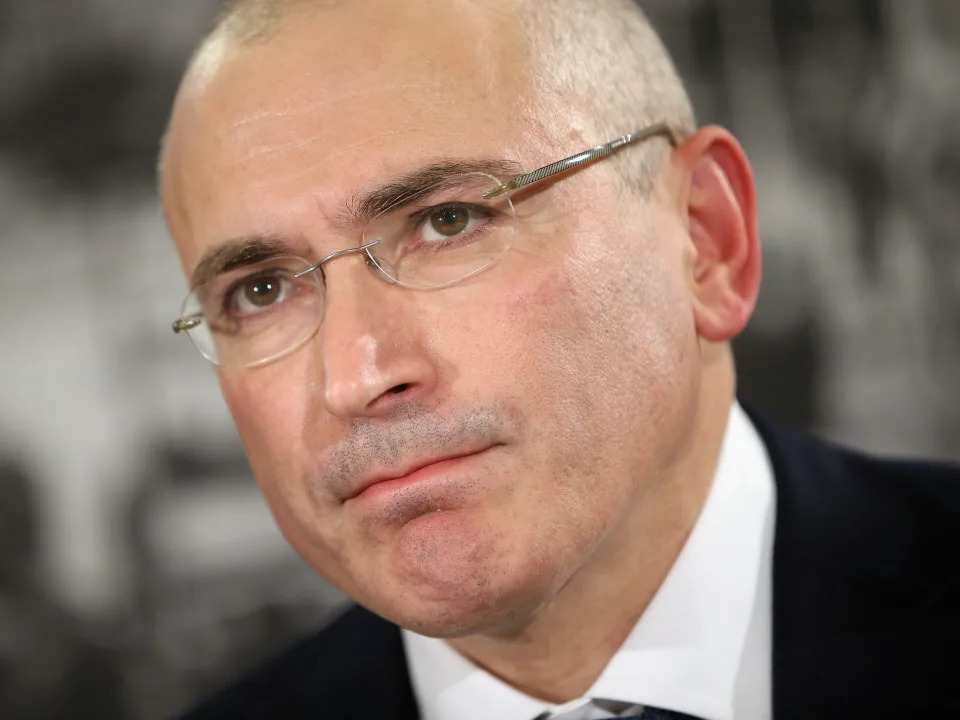
Mikhail Khodorkovsky, the former Yukos oil company chairman who was charged with embezzlement and tax evasion, speaks to the media at his first press conference since his release from a Russian prison.
Mikhail Khodorkovsky, the former Yukos oil company chairman who was charged with embezzlement and tax evasion, speaks to the media after his release from a Russian prison.Sean Gallup/Getty Images
  • Mikhail Khodorkovsky was once Russia's richest man, before spending almost a decade in prison.

  • He told CNN that the Ukraine war has "significantly reduced" Putin's ability to stay in power.

  • "We are no longer thinking in terms of him being around another decade," he said in the interview.

Mikhail Khodorkovsky — an exiled oligarch who was once the richest man in Russia — said on Friday that Vladimir Putin's invasion of Ukraine has "significantly reduced" the longtime president's chances of remaining in power.

"I'm convinced that Putin hasn't got much time left. Maybe a year, maybe three," he told CNN during an interview, adding later, "Today we are no longer thinking in terms of him being around another decade as we thought a week ago."

Khodorkovsky is the former CEO of the Russian oil giant Yukos, a position that temporarily made him Russia's richest man in 2003 with a reported net worth of $15 billion. In 2001, he founded Open Russia, a diplomacy initiative that was later shut down by Russian authorities.

After being charged with fraud and tax evasion, Khodorkovsky was sentenced to nine years in prison in 2005. He was later pardoned by Putin and released a year early in 2013.

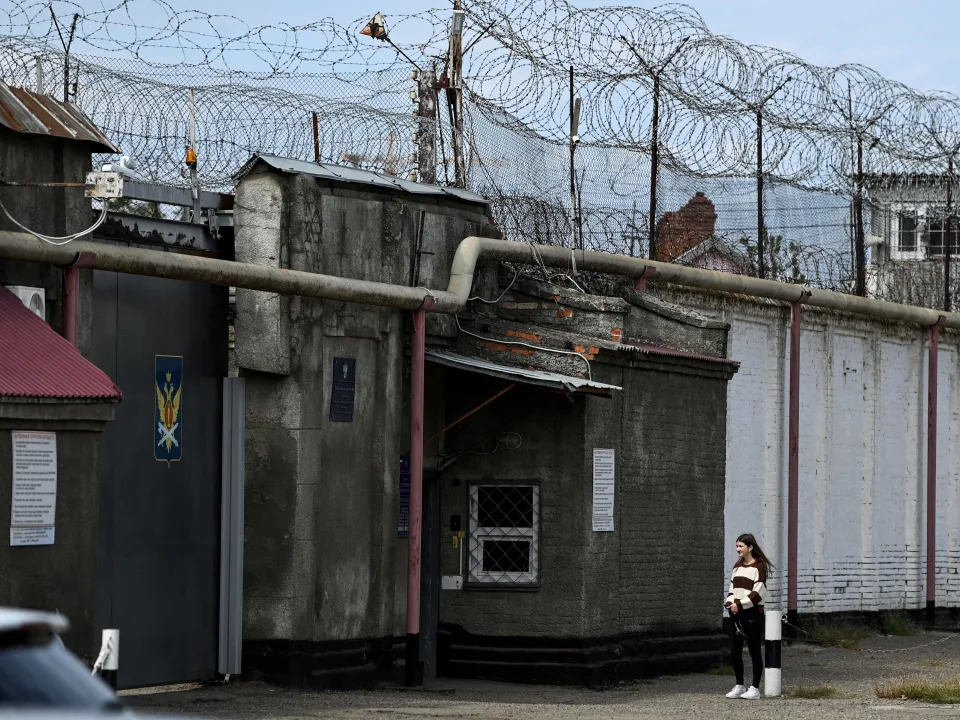
Detention Centre no. 1, where Andrei Pivovarov - former head of the exiled Kremlin critic Mikhail Khodorkovsky's pro-democracy group Open Russia — is being held after his arrest last year.
Detention Center No. 1, where Andrei Pivovarov — the former head of the exiled Kremlin critic Mikhail Khodorkovsky's pro-democracy group Open Russia — is being held after his 2021 arrest.KIRILL KUDRYAVTSEV/AFP via Getty Images

Khodorkovsky said his imprisonment was politically motivated. Putin's former prime minister testified that the Kremlin ordered Khodorkovsky's arrest due to his funding of the opposition party, according to a 2010 Reuters report.

Now the exiled businessman lives in London and is known as one of Putin's most outspoken critics. In his interview with CNN, Khodorkovsky said Putin is his "personal enemy" but also "the enemy of humankind." A handful of Russian billionaires have spoken out over the past week to similarly denounce the invasion of Ukraine.

His prediction that Russia's attack on Ukraine will eventually end Putin's rule has been echoed by experts at the Kennan Institute, a Russian research center in the US.

"The attack on Ukraine was not just an absolute crime," Mikhail Minakov, the institute's senior advisor on Ukraine, wrote in a blog post last week. "It was an irreparable mistake that put into motion the end-game for Putin's regime in Russia."


Over a million livestock lost to drought in eastern Ethiopia

People migrating with animals to less affected regions, living on food aid

Addis Getachew |08.03.2022


JIGJIGA, Ethiopia

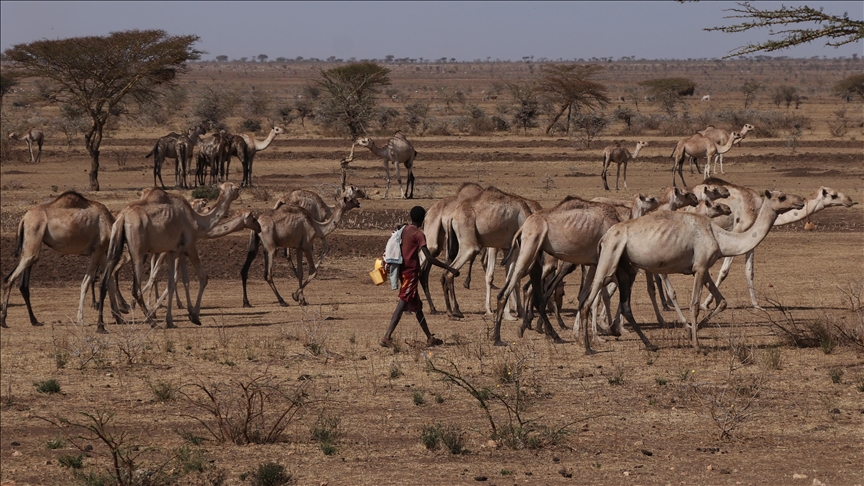
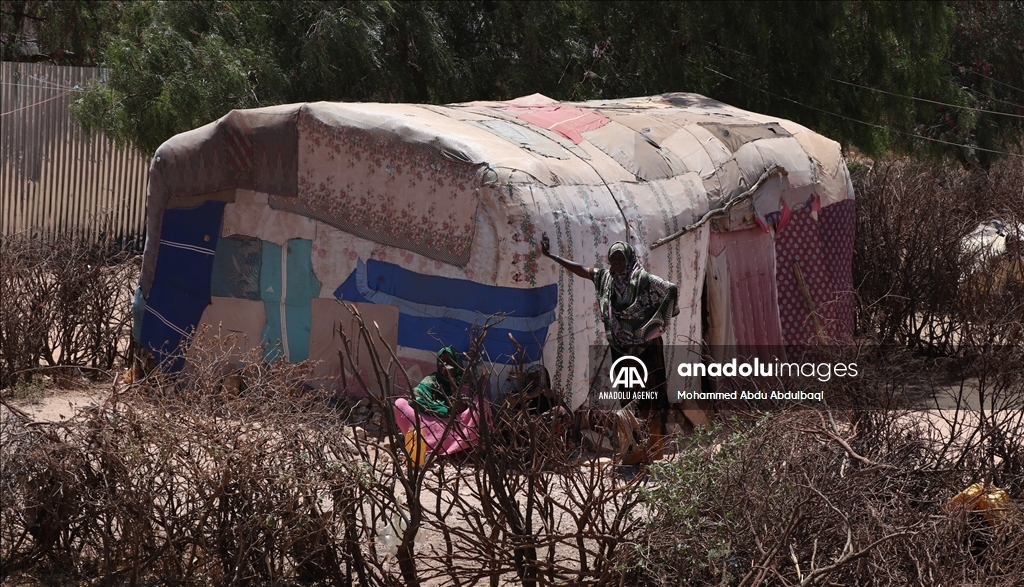
The decomposing remains of livestock that dot vast stretches of land bear witness to the extent of drought in Ethiopia's easternmost province.

The Somali Regional State is the largest province of Ethiopia in terms of land area.

In its worst affected zones, villagers are trying to migrate their livestock westwards to fertile lands.

Abdikadir Umer, a herder, told Anadolu Agency: “I lost more than 100 goats to the drought.


PHOTOS

Drought-affected Ethiopians wait for food aid

"I rented a truck to transport my goats. I left behind all of my children, 10 of them. I don't know what will happen to them, but I hope food aid will reach them in time to save their lives.”

Num’a Mohammed is a mother of 10 children. She set out from the village of Kebri Dehar with her children and 200 goats.

“I lost 100 goats on the way,” she said as she waited in queue to get food aid.

Government response

Abdulkerim Aden Hassen is a government official involved in distributing food aid at Gerbi Kebele, a locality where the drought-affected pastoralists have gathered with their livestock after making a nearly 400-kilometer (248.5-mile) journey.

They lost too many of their livestock along the arduous journey. A few of them hired trucks to transport their livestock.

“We are giving food to 800 families," Abdulkerim told Anadolu Agency.

"It is the first consignment of food aid made available by the regional Disaster Risk Management Bureau,” he added.

The displaced people have been received by villagers in the less affected zone of Fafen with open arms. The migrants are temporarily dwelling at the homes of the residents, who also proved welcoming in sharing food with their guests.

“Somalis have this way of sharing and they don’t consider the migrants as strangers as they are the same people having the same culture, speak the same language and have the same religion,” Abdulkerim said.

“But as the permanent residents are sharing from what meager resources they have, at some point they will run dry, and so the provision of food aid by the government was deemed necessary to save lives,” he said.

According to him, the number of beneficiaries will be much higher in the coming weeks as officials are reaching out to far-flung localities that have also been affected by drought.

The Somali Regional State's government has set aside $1.5 billion to help the people affected by drought.

Tough challenges

Sadiiq Abdelqadir Khaliif, the deputy head of the regional Disaster Risk Management Bureau, told Anadolu Agency that in spite of the timely drought response by the regional government, there remain tough challenges -- the topmost being the depleting livestock which is the main stay of the vast majority of the people in the region.

"So far, our pastoralist communities have lost more than one million heads of livestock to the drought due to no rains for three years," he said, adding that the dry season is expected to extend as regular rains are forecast to either delay or get scanty during the April-June season.

Blaming the extended drought to climate change, he said: “…we are not even in the pick of the drought.”

A report released by the World Food Programme warns that an estimated 13 million people across Ethiopia, Kenya, and Somalia are facing severe hunger due to the driest conditions recorded since 1981.

More than 100 Workers remain Trapped in Chernobyl - Tensions are Rising

World » UKRAINE | March 8, 2022, Tuesday 
Bulgaria: More than 100 Workers remain Trapped in Chernobyl - Tensions are RisingWikimedia Commons


More than 100 workers remain stranded at the Chernobyl nuclear power plant. They have been unable to leave the plant for 12 days after Russian troops took control of it on the first day of the invasion, the BBC reports.

About 200 Ukrainian guards who were in charge of security during the Russian attack also remain blocked.

Chernobyl is said to be calm and workers are still on duty, but BBC sources say conditions are harsh and food and medicine are limited.

There are grounds for concern that stress could affect workers' ability to perform their duties at the nuclear power plant.

Russian troops are currently controlling the 32-kilometer zone around the plant.

A relative of one of the workers told the BBC that the Russian side is willing to allow those blocked at the plant to exchange shifts, but not to guarantee them a safe return home.

/OFFNews

Follow Novinite.com on Twitter and Facebook

LA REVUE GAUCHE - Left Comment: Search results for CHERNOBYL 

Pentagon: Russia hires Syrians for the Invasion of Ukraine

 March 8, 2022, Tuesday // 09:01


Bulgaria: Pentagon: Russia hires Syrians for the Invasion of Ukraine


Russia is hiring Syrians and other foreign fighters to take part in the invasion of Ukraine, AFP reported, citing the Pentagon. According to the Wall Street Journal, there is information that Moscow has been gathering fighters in recent days, whom it hopes to help capture Kyiv.

According to sources, some of the fighters who took part in the fighting in Syria are already in Russia and are preparing to join the attack on Ukraine, but it is not clear at the moment what the number of these fighters is.

Moscow joined the Syrian civil war in 2015 on the side of the regime of President Bashar al-Assad.

Pentagon spokesman John Kirby commented on the information, saying it was “interesting how (the Russian president) is in a position to rely on foreign fighters.”

According to the United States, Russia has sent more than 150,000 troops to take part in the invasion of Ukraine.

Kirby also said the Pentagon did not know exactly who had sided with the Russian cause.

The issue was also touched upon during a meeting of the UN Security Council on Monday, with the Chinese representative saying, without directly mentioning Russia that the situation could only get worse with the sending of “mercenaries”.

The UN could not confirm the information that Moscow is hiring foreign fighters.

/BNR

Follow Novinite.com on Twitter and Facebook

Write to us at editors@novinite.com

A UK study has found COVID-19 can cause the brain to shrink.

COVID-19 can cause the brain to shrink, reduce grey matter in the regions that control emotion and memory, and damage areas that control the sense of smell, an Oxford University study has found.

The scientists said that the effects were even seen in people who had not been hospitalised with COVID, and whether the impact could be partially reversed or if they would persist in the long term needed further investigation.

“There is strong evidence for brain-related abnormalities in COVID-19,” the researchers said in their study, which was released on Monday.

Even in mild cases, participants in the research showed “a worsening of executive function” responsible for focus and organising, and on an average brain sizes shrank between 0.2 and 2 per cent.

The peer-reviewed study, published in the Nature journal, investigated brain changes in 785 participants aged 51 to 81 whose brains were scanned twice, including 401 people who caught COVID between their two scans.

The second scan was done on average 141 days after the first scan.

The study was conducted when the Alpha variant was dominant in Britain and is unlikely to include anyone infected with the Delta variant.

Studies have found some people who had COVID suffered from “brain fog” or mental cloudiness that included impairment to attention, concentration, speed of information processing and memory.

The researchers did not say if vaccination against COVID had any impact on the condition, but the UK Health Security Agency said last month that a review of 15 studies found that vaccinated people were about half as likely to develop symptoms of long COVID compared with the unvaccinated.
-Reuters
WHY AMERICANS ARE DUMB
Half of US adults exposed to harmful lead levels as kids
BY DREW COSTLEY

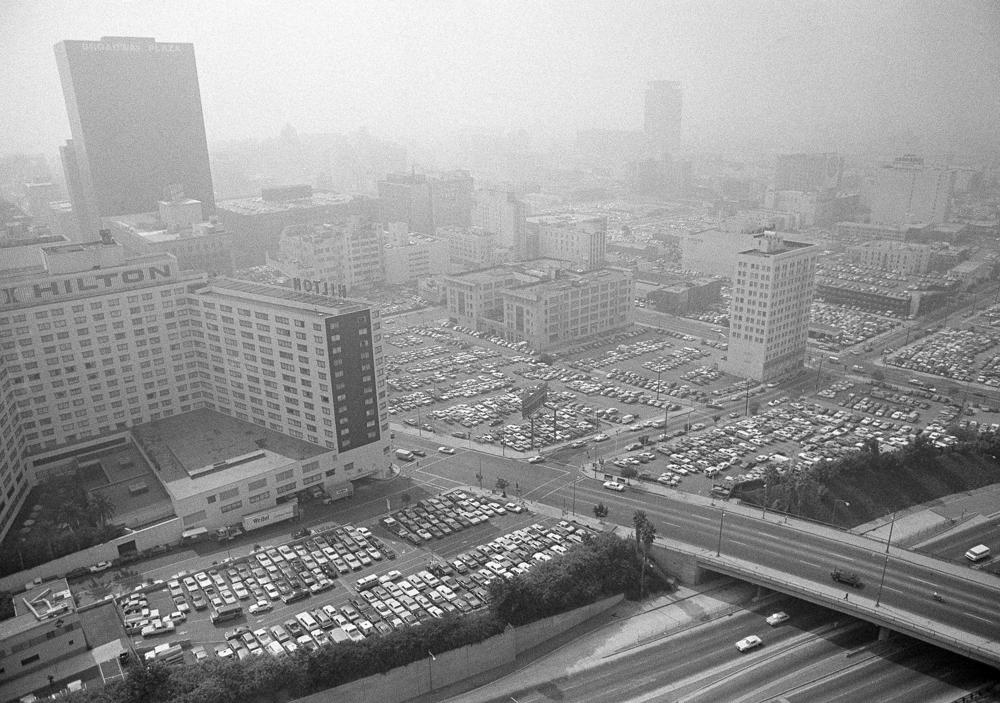
This Sept. 13, 1979, file photo shows motorists as downtown parking lots fill up in Los Angeles. Over 170 million of people born in the United States who were adults in 2015 were exposed to harmful levels of lead as children, according to a study published in the Proceedings of the National Academy of Sciences on Monday, March 7, 2022. The researchers looked only at lead exposure caused by leaded gasoline, the dominant form of lead exposure from the 1940s to the late 1980s, according to data from the U.S. Geological Survey. (AP Photo/Wally Fong, File)

Over 170 million U.S.-born people who were adults in 2015 were exposed to harmful levels of lead as children, a new study estimates.

Researchers used blood-lead level, census and leaded gasoline consumption data to examine how widespread early childhood lead exposure was in the country between 1940 and 2015.

In a paper published in the Proceedings of the National Academy of Sciences on Monday, they estimated that half the U.S. adult population in 2015 had been exposed to lead levels surpassing five micrograms per deciliter — the Centers for Disease Control and Prevention threshold for harmful lead exposure at the time.

The scientists from Florida State University and Duke University also found that 90% of children born in the U.S. between 1950 and 1981 had blood-lead levels higher than the CDC threshold. And the researchers found significant impact on cognitive development: on average, early childhood exposure to lead resulted in a 2.6-point drop in IQ.

The researchers only examined lead exposure caused by leaded gasoline, the dominant form of exposure from the 1940s to the late 1980s, according to data from the U.S. Geological Survey. Leaded gasoline for on-road vehicles was phased out starting in the 1970s, then finally banned in 1996.

Study lead author Michael McFarland, an associate professor of sociology at Florida State University, said the findings were “infuriating” because it was long known that lead exposure was harmful, based on anecdotal evidence of lead’s health impacts throughout history.

Though the U.S. has implemented tougher regulations to protect Americans from lead poisoning in recent decades, the public health impacts of exposure could last for several decades, experts told the Associated Press.

“Childhood lead exposure is not just here and now. It’s going to impact your lifelong health,” said Abheet Solomon, a senior program manager at the United Nations Children’s Fund.

Early childhood lead exposure is known to have many impacts on cognitive development, but it also increases risk for developing hypertension and heart disease, experts said.

“I think the connection to IQ is larger than we thought and it’s startlingly large,” said Ted Schwaba, a researcher at University of Texas-Austin who studies personality psychology and was not part of the new study.

Schwaba said the study’s use of an average to represent the cognitive impacts of lead exposure could result in an overestimation of impacts on some people and underestimation in others.

Previous research on the relationship between lead exposure and IQ found a similar impact, though over a shorter study period.

Bruce Lanphear, a health sciences professor at Simon Fraser University in Vancouver who has researched lead exposure and IQ, said his 2005 study found the initial exposure to lead was the most harmful when it comes to loss of cognitive ability as measured by IQ.

“The more tragic part is that we keep making the same ... mistakes again,” Lanphear said. “First it was lead, then it was air pollution. ... Now it’s PFAS chemicals and phthalates (chemicals used to make plastics more durable). And it keeps going on and on.

“And we can’t stop long enough to ask ourselves should we be regulating chemicals differently,” he said.

___

Follow Drew Costley on Twitter: @drewcostley.
___

The Associated Press Health and Science Department receives support from the Howard Hughes Medical Institute’s Department of Science Education. The AP is solely responsible for all content.

Lead from gasoline blunted the IQ of about half the U.S. population, study says

Leaded gas was banned in 1996, but exposure to the toxin cost people born before then several IQ points on average, researchers estimated.

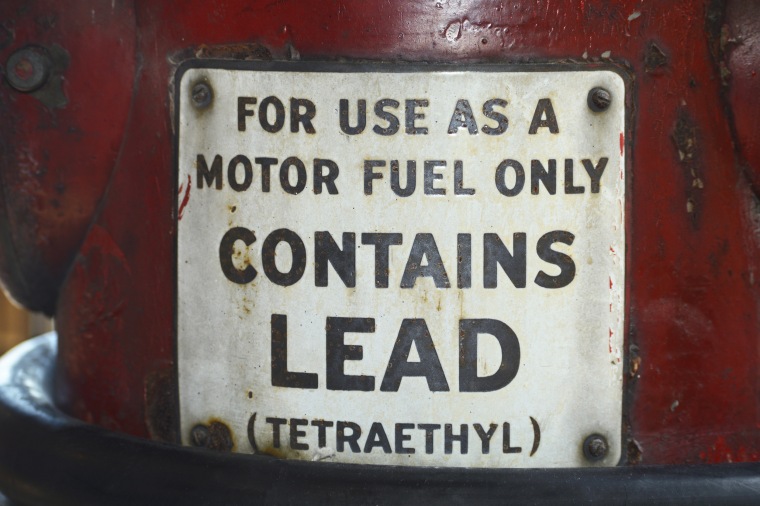
A sign on a vintage gasoline pump advises that the gas contains lead at an antique shop in Nashville on Sept. 3, 2019.
Robert Alexander / Getty Images file

March 7, 2022, 
By Elizabeth Chuck

Exposure to leaded gasoline lowered the IQ of about half the population of the United States, a new study estimates.

The peer-reviewed study, published Monday in the journal Proceedings of the National Academy of Sciences, focuses on people born before 1996 — the year the U.S. banned gas containing lead.

Overall, the researchers from Florida State University and Duke University found, childhood lead exposure cost America an estimated 824 million points, or 2.6 points per person on average.

Certain cohorts were more affected than others. For people born in the 1960s and the 1970s, when leaded gas consumption was skyrocketing, the IQ loss was estimated to be up to 6 points and for some, more than 7 points. Exposure to it came primarily from inhaling auto exhaust.

The team behind the study used gas consumption data, population estimates and other data to calculate that as of 2015, more than 170 million Americans had had blood lead levels above 5 micrograms per deciliter in their early childhood years.

Lead is a neurotoxin, and no amount of it is safe. Currently, 3.5 micrograms per deciliter is the reference value for blood lead levels to be considered high; the acceptable amount was once higher.

Principal study author Michael McFarland, an associate professor of sociology at Florida State University and a faculty member of the university’s Center for Demography and Population Health, called the number of people affected by lead exposure “staggering.”

“This is important because we often think about lead as an issue for children, and of course it is,” he said. “But what we really wanted to know is what happens to those children who were exposed?”

In many cases, McFarland said, a 2 to 3 point IQ difference is nominal, unless an individual is on the lower side of IQ distribution.

“If you’re more toward cognitive impairment, a couple points can mean a lot,” he said.

But on a population basis, shifting the average IQ down even a small amount could have large consequences, said Sung Kyun Park, an associate professor of epidemiology and environmental health sciences at the University of Michigan School of Public Health. The entire bell curve shifts, he explained, with more of the population at what was once the extreme low end of IQ scores.

Lead used to be added to gasoline to help engines run more smoothly until other, safer additives replaced it. In addition to being linked to lower IQs, it has also been associated with heart and kidney disease.

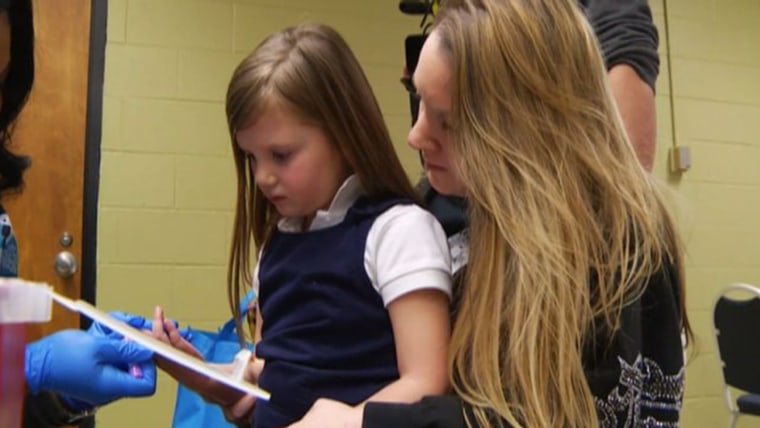
Flint Children Tested For Lead 
JAN. 27, 2016  01:08

Lead can be inhaled or ingested, with children particularly susceptible to its poisonous effects. Children’s blood lead levels have been dramatically lowered in the U.S. in recent decades, but lead exposure still happens, and Black children are exposed more often than white children. Monday’s study, too, estimated that most Black adults under age 45 experienced “considerably higher” levels of blood lead levels in early life than their white counterparts.

The racial disparities are generally due to environmental contamination and infrastructure issues that affect drinking water in low-income and minority neighborhoods, with the water crisis in Flint, Michigan, one of the most egregious examples in recent years.

And while children are the most vulnerable to getting very ill from lead, the toxin’s damage can show up years later, Park said. Lead exposure is believed to put people at risk for chronic and age-related diseases, including cardiovascular disease and dementia.

“Lead is a never-ending story,” he said.

There are medical interventions available for children who have recently been exposed to high amounts of lead, but those wouldn’t work for adults born before 1996. Still, the study findings should not be a major cause for concern, McFarland said.

“There are a host of things that go into IQ,” he said. “This is one that is obviously negative, but if you also have a nurturing home environment, that helped your IQ.”