Thursday, June 09, 2022

World health experts now say COVID 'lab leak' theory needs further investigation

Group isn't ruling out that the pandemic was caused by a

laboratory accident

This transmission electron microscope image shows SARS-CoV-2, the virus that causes COVID-19. A World Health Organization expert panel says more research is needed to determine where it came from. (NIAID)

An expert group drafted by the World Health Organization to help investigate the origins of the coronavirus pandemic says further research is needed to determine how COVID-19 first began, including a more detailed analysis of the possibility it was a laboratory accident.

That stance marks a sharp reversal of the United Nations agency's initial assessment of the pandemic's origins. WHO concluded last year that it was "extremely unlikely" COVID-19 might have spilled into humans from a lab. Many scientists suspect the coronavirus jumped into people from bats, possibly via another animal.

In a report released Thursday, WHO's expert group said that "key pieces of data" to explain how the pandemic began were still missing. The scientists said the group would "remain open to any and all scientific evidence that becomes available in the future to allow for comprehensive testing of all reasonable hypotheses."

Identifying a disease's source in animals typically takes years; it took about 15 years for scientists to find the species of bats that were the natural reservoir for SARS, a relative of COVID-19.

WHO's expert group also noted that since lab accidents in the past have triggered some outbreaks, the highly politicized theory could not be discounted.

Letters sent to China

Former U.S. president Donald Trump speculated repeatedly — without evidence — that COVID-19 was started in a Chinese lab. He also accused WHO of "colluding" with China to cover up the initial outbreak, citing the health agency's continued public praise of the country.

The expert group said WHO director general Tedros Adhanom Ghebreyesus sent two letters to senior Chinese government officials in February requesting information, including details about the earliest human cases of COVID-19 in the city of Wuhan. It's unclear whether the Chinese responded.

The experts said no studies were provided to WHO that assessed the possibility of COVID-19 resulting from a laboratory leak. They said their understanding of how the coronavirus emerged was limited by several factors, including that not all research presented by Chinese scientists has been published.

Jamie Metzl, who sits on an unrelated WHO advisory group, has suggested that the Group of Seven industrialized nations set up their own COVID origins probe, saying WHO lacks the political authority, scientific expertise and independence to conduct such a critical evaluation.

Security personnel keep watch outside the Wuhan Institute of Virology in China during a visit by a WHO team tasked with investigating the origins of COVID-19, in February 2021. (Thomas Peter/Reuters)

Metzl welcomed WHO's call for a further investigation of the lab leak possibility but said it was insufficient.

"Tragically, the Chinese government is still refusing to share essential raw data and will not allow the necessary, full audit of the Wuhan labs," he said. "Gaining access to this information is critical to both understanding how this pandemic began and preventing future pandemics."

WHO's expert scientists said numerous avenues of research were needed, including studies evaluating the role of wild animals, which are thought to be COVID-19's natural reservoir, and environmental studies in places where the virus might have first spread, like the Huanan seafood market in Wuhan.

Previous report said lab accident unlikely 

In March 2021, WHO released a report about COVID-19's origins following a highly choreographed visit by international scientists to China. The report concluded that the disease most likely jumped into humans from bats and that there was no evidence to suggest there was a connection to a laboratory.

Yet after considerable criticism, including from some of the scientists on WHO's team, agency chief Tedros acknowledged that it was "premature" to rule out a lab leak and said he asked China to be more transparent in sharing information.

An expert panel says WHO director general Tedros Adhanom Ghebreyesus sent two letters to senior Chinese government officials in February requesting information, including details about the earliest human cases of COVID-19 in the city of Wuhan, but it's unclear whether he received a response. (Salvatore Di Nolfi/Keystone/The Associated Press)

In its new report, WHO said the experts were given access to data that included unpublished blood samples from more than 40,000 people in Wuhan in 2019. The samples were tested for COVID-19 antibodies. None were found, suggesting the virus was not spreading widely before it was first identified in late December of that year.

WHO's experts called for numerous studies to be done, including testing wild animals to find which species might host COVID-19. They also said the "cold chain" supply theory should be probed, a scientifically questionable theory advanced by China, arguing that traces of COVID-19 on frozen packaging — rather than any domestic source — were causing outbreaks.

To investigate whether COVID-19 might have been the result of a lab accident, WHO's experts said research should be conducted "with the staff in the laboratories tasked with managing and implementing biosafety and biosecurity," noting that would provide more information about how viruses related to COVID-19 were managed.

China has previously called the suggestion that COVID-19 began in a laboratory "baseless" and countered that the virus might have originated in U.S. facilities, which were also known to be researching coronaviruses in animals.

The Chinese government has said it supports the search for the pandemic's origins but that other countries should be the focus.

Scientists connected to WHO lamented in August 2021 that the search for the pandemic's origins had stalled and that the window of opportunity was "closing fast." They warned that collecting data that was now at least two years old was increasingly difficult.

SEE https://plawiuk.blogspot.com/2022/06/washington-post-promotes-trumps-other.html

Edmonton police chief's salary made public

Author of the article:Kellen Taniguchi
Publishing date:Jun 08, 2022 • 17 hours ago • 1 minute read • 8 Comments
Edmonton Police Service Chief Dale McFee. 
PHOTO BY LARRY WONG /Postmedia, file

The Edmonton Police Commission released police Chief Dale McFee’s 2022 salary on Wednesday after a request for it to be made public was made earlier this year.
Advertisement 2

In a Wednesday statement, the police commission said the head of the Edmonton Police Service (EPS) is being paid $340,000 this year.


The commission said it currently does not have a policy in place to release the chief’s yearly salary to the public — something it is looking to change.

“This practice does not align with the goals of transparency and governance the commission has set out for itself. Internal policies will be changed to ensure there is an annual process by which the chief of police’s salary is made public going forward,” said the police commission’s statement.

The statement also listed salaries for some police chiefs in other jurisdictions across Canada as comparisons.

McFee is making more than his counterpart in Calgary, who made between $244,677 and $299,250 in 2021 and more than Winnipeg’s chief of police, who earned $291,834 per annum in 2021.

The Vancouver police chief topped the list provided by the Edmonton Police Commission at $378,368.

McFee’s 2022 salary isn’t far behind the chiefs in Toronto and Ottawa, with Toronto’s chief being paid $356,600 in 2021 and Ottawa’s earning slightly more at $359,133 in 2020.


The commission also listed $327,220 as the salary for the Peel Regional Police chief’s salary in 2021 and $354,343 as the 2021 salary for the chief of the Ontario Provincial Police.

The Edmonton Police Commission has uploaded a copy of chief McFee’s contract online, with appropriate redactions, which is available to the public.

The salary reveal comes a day after city council voted to set the Edmonton police base funding at $407 million for 2023. However, council also voted to bring back a police funding formula.

PROVINCE DEFUNDS POLICE

The $407 million was determined in part to account for lower than projected revenue from photo radar fines.
Bank of Canada sounds alarm on economic risk of high household debt amid soaring inflation


Mackenzie Gray
Producer, CTV National News
Updated June 9, 2022 

With interest rates set to keep rising, the Bank of Canada is sounding the alarm on the risk record high house prices and an increasing number of households with high mortgage debt could have on the Canadian economy.

“In Canada, elevated levels of household debt and high house prices remain two key interconnected vulnerabilities,” the bank said in its annual Financial System Review.

Despite house prices increasing 53% nationally between April 2020 and April 2022, the bank is concerned that recent homebuyers lack the equity in their home to withstand a “significant price correction” and would “face more financial strain when they renew their mortgages at higher rates.”

Last week, the Bank of Canada signalled it is willing to hike its key interest rates above the previous target of 3%, which would put those with variable rate mortgages and home equity lines of credit under additional stress.

The bank says many of the recent homebuyers “financially stretched” themselves to purchase a property at record prices due to a “fear of missing out” on the continued increase of house prices across the Canadian housing market.


SPECULATORS

The bank blamed the massive run-up in house prices on strong demand relative to supply and an increase in the number of investors snapping up properties.

Investors accounted for 22% of property purchases with mortgages in the fourth quarter of 2021, up from 19% in 2019, according to the bank.

Those investors are taking out existing equity in other properties they own to make new purchases, which the bank says “highlights the feedback loop between rapid gains in the house prices and the strong demand for housing that investors generate.”


House prices remain at all-time highs across Canada but the bank warns that it’s too soon to tell if the recent decrease in resale activity and prices are “temporary or is the start of a deeper, lasting decline.”


If investor demand dries up for Canadian housing, the bank warns that would “amplify the downward pressure on prices” and could “lead to an abrupt price correction in the future.”


Typical mortgage payment could be 30% higher in 5 years, Bank of Canada warns

Bank says those who took out a home loan in 2020 or 2021

 should brace for higher rates at renewal

The Bank of Canada says anyone who got a mortgage recently should expect to see higher rates when they renew. (Bloomberg)

High house prices and debt loads associated with them are a major vulnerability to Canada's economy, the Bank of Canada said Thursday, warning buyers who bought during the pandemic that the impact of even slightly higher mortgage rates could be dramatic.

In its Financial System Review, the central bank said that while the country's financial system is strong and weathered the pandemic well, the economy remains vulnerable because of elevated debt levels tied to the country's increasingly expensive housing market.

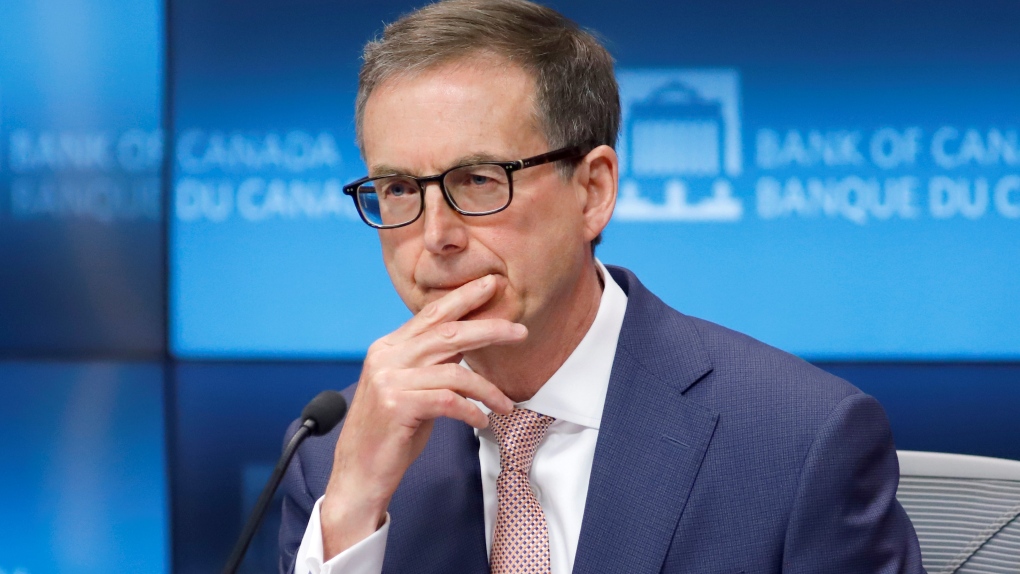
"Even as the average household is in better financial shape, more Canadians have stretched to buy a house during the pandemic," Bank of Canada Governor Tiff Macklem said Thursday. "And these households are more exposed to higher interest rates and the potential for housing prices to decline."

The bank said that assessing risks related to high household debt levels has become more complex, but overall "the vulnerability has increased."

Roughly two thirds of Canadians are home owners, and about half of them own their homes outright while the remaining have some sort of mortgage debt attached to it.

Raising lending rates slowed housing market

Home prices increased by about 50 per cent, on average, during the pandemic, as low rates allowed buyers to qualify for larger loans while still keeping the ongoing payments relatively affordable.

After slashing its benchmark interest rate at the outset of the pandemic, in March of 2022 the bank began to raise its benchmark lending rate from 0.25 per cent at the start of the year to 1.5 per cent today, and the impact on the housing market has been almost immediate, with sales volumes slowing, along with average selling prices.

"Given the unsustainable strength of housing activity, moderation in housing would be healthy," Macklem said. "But high household debt and elevated house prices are vulnerabilities."

As part of its analysis of how resilient the financial system is in the face of various shocks, the bank examined what the impact of higher rates and lower selling prices might look like.

As part of that, the bank crunched the numbers on what might happen to the mortgages of recent home owners when their loans come up for renewal in five years.

The bank makes the assumption that in 2025 and 2026, variable rate loans will cost 4.4 per cent in five years, while fixed rate loans will be slightly higher at 4.5 per cent. Both scenarios are roughly two percentage points higher than what's available on the market today.

Mortgage costs could go up 30%

Under that scenario, the 1.4 million Canadians who got a mortgage in 2020 or 2021 would see their median monthly cost go up by $420, or 30 per cent upon renewal.

The impact on fixed-rate borrowers would be slightly less, as they'd see their payments go from $1,260 on average to $1,560 a month for an increase of 24 per cent.

But variable rate borrowers are even more vulnerable, under the bank's thought exercise, as their typical monthly payments go from $1.650 a month right now to $2,370 when they renew. That's an increase of 44 per cent.

"If those in highly indebted households lose their jobs, they would likely need to reduce their spending sharply to continue servicing their mortgage," Macklem said.

"This is not what we expect to happen … But it is a vulnerability to watch closely and manage carefully," Macklem said.

Higher inflation, global tensions

complicating financial system risks: 

Bank of Canada

Stephanie Hughes - NATIONAL POST

The Bank of Canada warned that threats to the financial system have grown more complicated in recent months as the country grapples with tightening monetary policy, rampant global inflation and geopolitical tensions. However, the biggest vulnerability remains higher household indebtedness, the central bank highlighted in its latest Financial System Review .


A person walks past the Bank of Canada building in Ottawa.


Policymakers said they are facing a “delicate balancing act,” as surging inflation will force them to raise interest rates over the months ahead, even though Russia’s invasion of Ukraine has rocked global stability and the pandemic continues to hinder economic growth.

“Failure to balance these competing objectives could lead to a further global repricing of risk and a sharp tightening of global financial conditions, potentially triggering risks associated with high leverage,” the report said.

High household indebtedness from bigger mortgage volumes and soaring house prices are interwoven issues the central bank said are receiving extra attention, especially as rising interest rates put more strain on the carrying costs of all that debt. As households renew their mortgages , they could find themselves with less disposable income, and potentially tied to less valuable assets if housing markets correct.


© Mark Blinch/Reuters files
As households renew their mortgages, they could find themselves with less disposable income, and potentially tied to less valuable assets if housing markets correct.

But Bank of Canada governor Tiff Macklem argued in a Thursday morning press conference that households were in strong enough shape to shoulder a more aggressive rate hike path.

“We think the economy can handle higher interest rates, we think the economy needs higher interest rates,” Macklem said. “The likelihood that we may need to go to the top of that two to three per cent neutral range, or possibly somewhat above it, to bring inflation back to target has increased.

“When we indicate that we’re prepared to move more forcefully if needed, what we’re indicating is we may need to take more … interest rate steps to get inflation back to target, or we may need to move more quickly. (We) may need to take a larger step.”

In April, Macklem suggested he had not ruled out an interest rate hike larger than the 50-basis point increases the bank has put in place during the past two rate announcements.

Housing has been a concern for years, but now financial markets are emerging as a significant threat to financial stability. The Bank of Canada said that while the Canadian financial system remained resilient throughout the pandemic, global inflationary pressures and the war in Ukraine brought higher volatility in commodity markets and significant market repricing as investors moved away from riskier assets.


The central bank added that tighter global financial conditions would put this resilience to the test, and would more clearly expose system vulnerabilities moving forward. As China pursues a COVID-zero strategy, new outbreaks of COVID-19 are another concern the central bank said it is watching.

Countries emerging from the pandemic have lifted restrictions, bringing robust demand for goods and services, straining supply chains. These factors working in tandem pulled inflation up to multi-decade highs. As the central bank tightens its policy to put a lid on inflation, corporate bond yields hit multi-year highs and borrowing costs for homeowners are soaring.

Policymakers said they are paying particular attention to the greater number of Canadian households carrying a much larger mortgage debt, noting that the number of new mortgages with a loan-to-value ratio of 75 per cent or more has risen 40 per cent in recent quarters. Canadians are taking on larger mortgages compared to their income, with the share of mortgage originations with a loan-to-income ratio above 450 per cent surpassing 25 per cent since the start of the pandemic.

“Higher interest rates at the time of mortgage renewal will significantly reduce the financial flexibility of some households, particularly the most indebted,” the report said, while adding that rising borrowing costs will erode homeowners’ purchasing power if wages cannot keep pace.

Assuming variable- and fixed-rate mortgages originating in 2020 and 2021 renew at 4.4 per cent and 4.5 per cent in 2025 and 2026, the central bank estimated that households that took out a mortgage during the pandemic could see a median 30-per-cent boost in monthly mortgage payments once they renew.

Despite household net worth increasing $230,000 on average, the report noted that indebted Canadians may not be able to tap into home equity if the housing market corrects and these wealth gains are wiped out. The lower purchasing power could present a drag on consumption in the economy at a time when the economy is getting back on its feet following the pandemic.

The central bank noted that high house prices and household debt could weigh on projected economic growth, and the probability of negative growth projected for the first quarter of 2024 is nearly two times greater than if these vulnerabilities were not there. An economic disruption lowering household income and spending would hit consumption and weaken housing market activity.

According to Bank of Canada data, home prices have risen over 50 per cent on average during the pandemic with investors disproportionately driving up home prices last year, bringing the risks of a housing correction up with it. Canadian markets are already seeing this moderation take hold as resale activity slowed in March and April. The report noted this could be an “echo effect” as demand was pulled forward, seeing homeowners lock in mortgages before rates rose — or could be “the beginning of the end of the pandemic upswing.”

Macklem said the housing market is still being supported by strong fundamentals, such as solid employment and wage growth, as well as rebounding immigration, though he said he would not be surprised to see markets moderate given the pandemic-fuelled run-up in home values.

Most major Canadian housing markets saw higher price exuberance in the first quarter, according to the central bank’s house price exuberance indicator. According to this metric, the Greater Vancouver Area, Hamilton, the Greater Toronto Area, Ottawa, and Montreal are among the most exuberant markets across the country.

Another potential risk the Bank of Canada flagged is a sudden spike in demand for liquidity from asset managers outpacing supply, which poses stronger risks of large price swings and even potential freezes in fixed-income markets. It was an issue the central bank flagged in last year’s report, though a tightening monetary environment this year has reduced liquidity even further.

In an increasingly digital world, the central bank has grown more wary of cyber threats, particularly as the ongoing Russian invasion into Ukraine gives rise to more state-sponsored cyber attacks, which could run the risk of targeting Canadian financial institutions, especially as they grow more sophisticated. The report added that a successful attack could have far-reaching impacts on the broader financial system since financial infrastructure is so inter-connected, causing households and firms to lose access to funds and the ability to move money electronically.

To combat these risks, financial institutions and authorities are investing in cybersecurity improvements to keep pace with sophisticated attacks.

• Email: shughes@postmedia.com | Twitter: StephHughes95


CBSA officers caught giving preferential treatment, associating with criminals, documents reveal

The border agency says it concluded 92 'founded' 

investigations last year

Canada Border Services Agency workers can stop travellers for questioning, take blood and breath samples and search, detain and arrest people without warrants. Some even carry firearms. (Evan Mitsui/CBC)

Canadian border officers have been reprimanded for hundreds of acts of misconduct over the past two years — including preferential treatment and criminal association — according to documents obtained by CBC News.

Details of the cases — all of which were deemed founded — were released under access to information law and cover the period Jan. 1, 2020 to Jan. 1, 2022.

The Canada Border Services Agency (CBSA) said that, during the last fiscal year, it concluded 92 founded investigations. Of those, 12 saw border officers verbally reprimanded, 42 led to written reprimands and 38 ended in suspensions.

That figure is substantially lower than the number for 2020 — the first year to see a reduction in travel due to the pandemic. In 2020, the CBSA reported 215 founded cases resulting in nine dismissals, 82 suspensions, 52 written reprimands and 27 verbal reprimands. (The figures don't say what happened in the remaining cases.)

A CBSA spokesperson said the agency considers a complaint "founded" if "aspects" of it are found to be "valid."

While details of these cases — including names and locations — are redacted in the documents released to CBC News, they describe some troubling behaviour at land and air crossings.

In one case, an officer was found to have failed to properly process travellers and vehicle plates — a key component of the job — for three years.

In another, an officer accessed the CBSA's computer system to remove flags from someone's file. Flags are indicators related to an individual's criminal or travel history that are meant to warn CBSA officers that a particular traveller warrants a closer look.

One founded investigation report said only that the officer in question posed "a security risk" and could "harm the agency's reputation."

Ties to Hells Angels

The documents also describe multiple founded cases of criminal association — including one involving an officer who "provided [a] false name when stopped by police while having dinner with [a] cocaine smuggler" and another involving an officer with ties to the Hells Angels.

A handful of cases involved officers engaging in sexual harassment — sexually assaulting a colleague while off duty in one case, spraying insect repellant on a colleague's crotch and sending sexually explicit messages or photographs in others.

Other investigated cases involved interpersonal grievances, such as employees spreading rumours about each other.

The president of the Customs and Immigration Union said he believes the CBSA's approach to discipline sometimes goes too far. (Darryl Dyck/The Canadian Press)

Allegations typically are reviewed by CBSA management through the disciplinary process. If the allegations are serious enough, a senior investigator from the agency's security and professional standards directorate launches a formal investigation.

"The CBSA has a responsibility to address misconduct in the workplace and takes this obligation seriously. CBSA management addresses allegations of misconduct," said CBSA spokesperson Patrick Mahaffy.

"Discipline is managed case by case, and discipline is rendered based on the severity of the allegations and takes into account mitigating and aggravating factors."

Union chief says environment at CBSA 'cold, clinical'

But Mark Weber, president of the Customs and Immigration Union, said he believes the CBSA goes too far in its approach to discipline.

"The serious things are absolutely investigated, and many things that shouldn't go to a formal investigation are also investigated," he said. "Discipline is not supposed to be punitive. It's supposed to be corrective."

While Weber acknowledged some of the founded cases are serious, he called the agency's approach to discipline "extreme."

"Everything is very cold, clinical," he said.

"Over the years, what we have noticed is that the agency has become very formal. Things that used to be dealt with between a manager and an employee with a conversation …'You could have done this differently and it would have gone better' … everything at the CBSA has been centralized and become an official email, an official fact-finding that often happens weeks or months after the event."

The CBSA remains the only public safety agency in Canada without an independent oversight body for public complaints.

While the National Security and Intelligence Review Agency keeps an eye on CBSA's national security activities, members of the public have to take their complaints about the CBSA's services directly to the agency, which deals with them internally.

Last month, the federal government announced plans to reintroduce legislation to allow travellers and immigration detainees to complain to an independent body if they feel they've been mistreated by Canada's border agency.

"Ultimately, this legislation is about strengthening our law enforcement agencies by strengthening accountability, transparency … and it will lead to a safer country for everyone," said Public Safety Minister Marco Mendicino, whose portfolio includes the CBSA.

New complaints commission in the works 

Bill C-20 (previous versions died on the order paper) would replace the Civilian Review and Complaints Commission — the watchdog agency that fields public complaints about the RCMP — with a Public Complaints and Review Commission that would handle complaints about both the RCMP and the CBSA.

Weber said he worries C-20 will put even more pressure on a strained employer-employee relationship at the CBSA.

"We have an employer who is already very heavy-handed in terms of discipline," he said. "Our members are regularly placed on leave without pay, sometimes for a year or more, pending the outcome of investigations."

Public Safety Minister Marco Mendicino introduced a bill last month to allow people to complain to an independent body if they feel they've been mistreated by the CBSA. (Sean Kilpatrick/The Canadian Press)

If the bill passes, the new Public Complaints and Review Commission would be able to carry out reviews of any CBSA activities that don't involve matters of national security, either on the commission's own initiative or at the request of the minister.

Weber said he'd like to see the new body take on managerial misconduct as well.

He said that if a complaint "points to a systemic issue," the commission should tackle that issue "rather than everything being directed to the one person that the traveller interacts with."

He said CBSA officers are often stuck "working on mandatory overtime" and sometimes process "hundreds of people" a day.

"Depending on what happens in that circumstance, that might be the reason for the complaints," he said.

Bill C-20 is still awaiting second reading in the House of Commons.

Manitoba

'No longer anonymous': Woman who filed sex assault complaint against grand chief speaks out

Disappointed by Assembly of Manitoba Chiefs response, Shauna Fontaine identifies herself

Shauna Fontaine identified herself on Wednesday as the woman who has filed a complaint against Assembly of Manitoba Chiefs Grand Chief Arlen Dumas. (Walther Bernal/CBC)

The woman behind a sexual assault complaint against Assembly of Manitoba Chiefs Grand Chief Arlen Dumas is speaking out for the first time after a letter of support signed by 200 people emerged this week.

Shauna Fontaine told CBC News on Wednesday that she is the one who filed the complaint against Dumas with the Winnipeg Police Service almost three months ago.

Neither police nor AMC have confirmed this to CBC News.

Police will not confirm complaints unless an incident number is provided, and even then will not confirm any of the individuals involved.

Fontaine said she was motivated to reveal her identity after the letter and AMC's response to it.

As someone who has worked in advocacy roles for victims of gender-based violence, Fontaine suggested one reason she hasn't told many people in her circle until now that she was the one to file the complaint is because she has felt a sense of shame and embarrassment.

"You're not believed when you do come forward, and there's a lot of victim blaming and shaming," said Fontaine.

"It's never the victim's fault. It was never my fault. It was really only at the hand of the perpetrator."

Arlen Dumas was suspended as grand chief of the Assembly of Manitoba Chiefs in March, after an allegation he harassed and sexually assaulted a colleague. (Jeff Stapleton/CBC)

Dumas was suspended by AMC in mid-March after a woman who worked for the organization — now known to be Fontaine — accused him of harassment and sexual assault. AMC hired a third-party organization to investigate the allegations.

Dumas has not been charged and none of the allegations have been tested in court. 

CBC News has requested comment from Dumas several times since March but has not received a response.

Among the 200 signatories on the letter out this week are lawyers, doctors, sitting federal and provincial politicians and advocates for missing and murdered Indigenous women and girls, including Sandra DeLaronde, who led the charge to create the letter. DeLaronde is the project lead of the MMIWG2S Implementation Committee in Manitoba, which is made up of survivors, family members, knowledge keepers, Indigenous organizations and governments.

The letter calls on AMC to reconsider how the organization's response to the allegations is having an impact. DeLaronde and signatories said they want an independent inquiry and trauma-informed process that focuses on victims.

"We were trying to support the victims, but also provide that support to AMC as well," said DeLaronde.

Sandra DeLaronde, an advocate for missing and murdered Indigenous women and girls, accused AMC of 'hiding behind a legal process rather than a human process' by not accepting the invitation of trauma-informed support. (Jaison Empson/CBC)

The letter suggests other women have come forward with allegations on or about May 31. AMC has disputed this claim.

In response to the open letter, the organization stated its appreciation for the invitation of support but declined, citing concerns that support could inhibit the current investigation. The organization also stated it did not want to compromise the confidentiality of the complainant.

DeLaronde questioned that response on Wednesday, given that Fontaine has now revealed herself publicly.

"I think it's a false flag, and I think they're hiding behind a legal process rather than a human process," DeLaronde said.

Fontaine echoed DeLaronde. She said she came forward publicly because she was disappointed by AMC's response to the letter.

I am a real person, I am a human being. I am an employee of the Assembly of Manitoba Chiefs and this has impacted me in a very negative way.- Shauna Fontaine

"They weren't willing to accept the invitation to participate in a trauma-informed practice that moved away from their HR investigation that they claim is objective," said Fontaine. 

"My name is no longer anonymous. I am a real person, I am a human being. I am an employee of the Assembly of Manitoba Chiefs and this has impacted me in a very negative way."

Fontaine, who is on a temporary leave for the duration of the AMC investigation, says she feels unsupported by AMC.

CBC News requested comment from AMC now that Fontaine has revealed her identity.

She said there are not enough supports for Indigenous women who have experienced sexualized violence, and that she remains on a waitlist herself.

The open letter sent to the AMC was posted on social media by DeLaronde on Monday, and originally had 14 signatories. That has since grown to include three more pages of names. (Sandra DeLaronde/Facebook)

In recent months, Fontaine says some community advocates have reached out. Loved ones have also been by her side.

"I do have a few family members who were aware and have been quite close and offering their love and their care, including two of my own children who have been sitting by and been really wonderful," said Fontaine.

The woman behind a sexual assault complaint against the leader of the Assembly of Manitoba Chiefs isn't happy with the way the group is handling the investigation. Shauna Fontaine came forward after more than 200 people signed a letter to the Assembly of Manitoba Chiefs. They want an independent commission of inquiry to look into the allegations against suspended Grand Chief Arlen Dumas.

With files from Stephanie Cram and Darren Bernhardt