Tuesday, February 20, 2024

 Indonesia presidential election

K-Pop not Islam
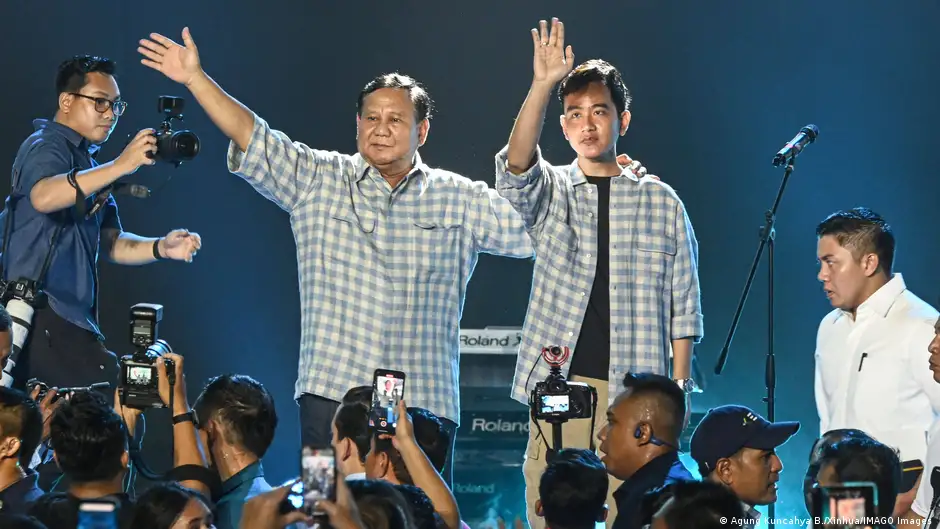

Ex-son-in-law of Indonesian dictator Suharto and a former general, Prabowo Subianto (here, left) is linked to accusations of various human rights violations during the 1980s and 1990s that have never been properly investigated
 (image: Agung Kuncahya B./Xinhua/IMAGO Images)

This year's Valentine's Day saw a presidential election in Indonesia, the world's third-largest democracy. Conservative-Islamic morals and panic-mongering tactics took a back seat on social media channels filled with music, cat videos…and elderly presidential hopefuls dancing


By Bettina David
·

More than 200 million people were entitled to vote and the ballots counted so far leave no doubt: Prabowo Subianto has won the election, capturing well over 50 percent of the vote. He's the ex-son-in-law of Indonesian dictator Suharto and, in his role as former general, is linked to accusations of various human rights violations during the 1980s and 1990s that have never been properly investigated.

This was Prabowo's third run at the presidential post. Twice, in 2014 and 2019, he lost to incumbent Joko "Jokowi" Widodo after bitterly fought campaigns. On those occasions, lurid populism, smear campaigns and deliberately placed fake news resulted in a polarisation of identity politics along confessional lines, which aroused fears among many.

Potential apocalyptic scenarios were suggested: Jokowi's buzzers – as political social media influencers are known in Indonesia – styled Jokowi as the defender of a secular, multi-religious Indonesian nation state, and evoked the spectre of an Islamist caliphate should Prabowo, supported by conservative and radical Islamic forces, be victorious.
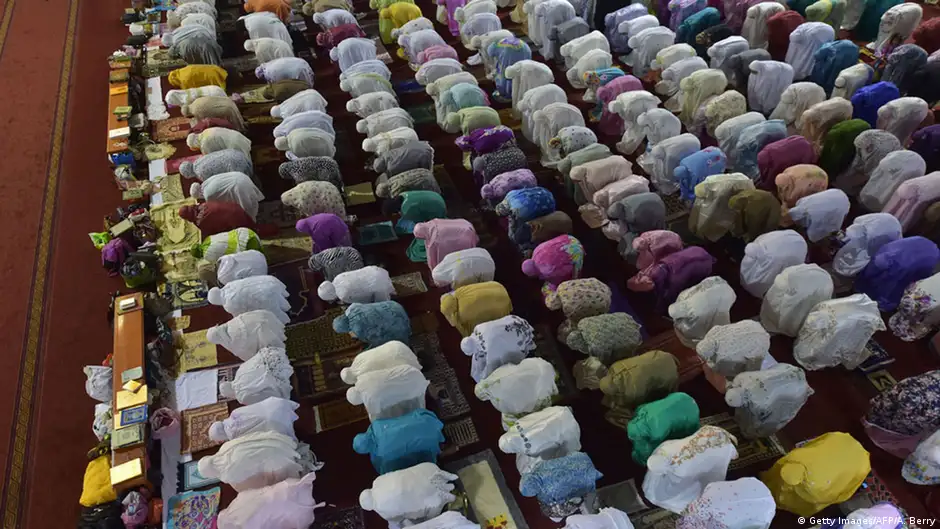

"Indonesia's youth is not only more consciously Islamic than previous generations – the now-mainstream headscarf is just the most obvious indication of this," writes Bettina David. "Indonesia is also home to the largest K-Pop fan community" (image: Getty Images/AFP/A. Berry)


Opposition unlikely to attract votes

For his supporters, the fact that Prabowo, an open secret, has little knowledge of religion and barely knows how to conduct daily prayers, was not worth a mention. Instead, they accused Jokowi of lacking in Islamic piety, even going as far as to suggest he had a Christian background. They posited the danger of de-Islamisation and moral and economic sell-out to the godless West.

Many were surprised that Jokowi, after his 2019 re-election, appointed his arch-rival Prabowo of all people to the post of defence minister. But in Indonesia there is a saying: "In politics there are no eternal enemies, just eternal power interests". The strategic integration of former opponents into one's own sphere of power is in line with Javanese pragmatism, which comes with its own positive associations.

Now, five years later, Prabowo stood for a third time, this time in the role of trusted continuator of Jokowi's politics – together with Jokowi's oldest son Gibran Rakabuming Raka as vice-presidential running mate. Opinion polls show that up to 75 percent of the population are happy with Jokowi's government; his policy of investment promotion and large-scale infrastructure projects is also popular with many voters. Opposition or the prospect of fundamental change was unlikely to attract votes at present.

Dance clips replace fake news

The contrast with the two last election campaigns could not be greater. On this occasion, we didn't hear words such as "kafir" (infidel), "Sharia", "Communist", "Caliphate", previously used to demagogically emotionalise the electorate and incite groups against each other. Even hardliners were reluctant to provoke, maintaining a low profile after both the Indonesian branch of the Islamist party Hizb ut-Tahrir and the radical FPI (Islamic Defenders Front) were banned under Jokowi.

The societal polarisation of recent years appeared forgotten, Islam and the populist exploitation of religious identity played a negligible role in the election campaigns of all three candidates. Rather than fake news and smear campaigns we were treated to entertaining dance videos on TikTok. Seventy-two-year-old Prabowo, once notorious for his authoritarian leadership style and irascibility, was presented as a cute dancing grandpa.

Instead of playing the aggressively populist opposition card, the two other presidential hopefuls, Anies Baswedan, former governor of Jakarta and ex-education minister and Ganjar Pranowo, who was governor of Central Java until September 2023, also adopted an upbeat approach on social media and the campaign trail. Ganjar and his running mate presented themselves as men of the people, appeared in Top Gun jackets and even got the popular rock band Slank to appear at a special campaign concert.


Moderate and cosmopolitan

On this occasion, Anies Baswedan managed to secure the support of the Islamist party PKS and other religious hardliners previously in Prabowo's camp. Back in 2017 and with their support, Baswedan won the governorship of Jakarta under massive instrumentalisation of a blasphemy case against his predecessor Basuki "Ahok" Tjahaja Purnama, a Chinese-heritage Christian.

But now he too was purporting to be moderate, pluralist and cosmopolitan. His vice-candidate Muhaimin Iskandar came from the moderate, traditionalist milieu of the Islamic mass organisation NU (Nahdlatul Ulama), primarily based in rural East Java – which is certainly an affront to Baswedan's supporters from the Prosperous Justice Party or PKS, originally inspired by the Muslim Brotherhood.

With more than 40 million members and supporters, the NU is Indonesia's largest Islamic organisation. Most of its leading figures came out in support of Prabowo. But Anies Baswedan, who earned his doctorate in the US and was rector of the liberal Islamic Paramadina University, finds his voters not only in the PKS, but also among the urban, Western-orientated educated class. His rhetoric eloquence is lauded on the one hand; but on the other, many people see him as intellectually detached with a tone that is too academic and lecturing.

Social media election campaign for millennials and Gen Z

Millennials and Gen Z make up more than half of the electorate. Indonesia's youth is not only more consciously Islamic than previous generations – the now-mainstream headscarf is just the most obvious indication of this. Indonesia is also home to the largest K-Pop fan community. In keeping with the east Asian penchant for all things cute, Prabowo enchanted his fans with "joged gemoy“, "cute dancing“, and together with his vice-presential candidate, Jokowi's son, appeared on election posters in the form of cuddly, chubby-cheeked comic avatars.  

Baswedan launched an account "Anies Bubble“ on X and Instagram and used it to appeal specifically to Gen Z tastes by dialling down the intellectualism and channelling the style of K-Pop idols. This helped him achieve clear popularity gains and he overtook Ganjar Pranowo in the polls. As well as videos of their election campaign appearances, all three candidates filled their social media channels with music and dance clips, images of cats, loving family snapshots and moving scenes with ordinary people on the street – all ways to reach voters' hearts.  

Instagram, TikTok and X proved to be the perfect media for an election campaign based primarily on emotional personalisation. After all, political parties in Indonesia – apart from the PKS – don't really represent clear political-ideological directions. For the most part, they're little more than vehicles for the nomination of presidential candidates.

Ever-changing alliances and coalitions are guided by strategic considerations. The focus is on oligarchic negotiation and distribution of power, as well as the maintenance of patronage networks. This in turn deprives parties of the chance to hone their ideological profile. As a result, party loyalty within the electorate is weak: candidates' personalities are what matters most.

Unbothered by a dark past

Indonesian political scientist Robertus Robet describes it as a paradox: on the one hand, politicians in Indonesia are generally viewed with a very critical and even openly cynical eye. In the wake of so many scandals they're seen as corrupt and only interested in their own advantage and power gain.

On the other, Robet continues, there's also a genuine fan cult at work here, an idealisation of candidates and presidents who are loved as father figures beyond all reproach. This aligns with social media, where the focus isn't so much on political content but on which candidate is the most likeable in the moment.

Democracy and human rights activists were hoping for great things from Jokowi, yet they say the country's democracy has been significantly undermined by his two terms in office. Jokowi's presidency oversaw the partial disempowerment of the anti-corruption authority and a restrictive new penal code.

His son Gibran was only able to enter the race after the minimum legal age to do so was lowered – with the involvement of the Supreme Constitutional Court judge, who is Jokowi's brother-in-law. Within 10 years, the former furniture entrepreneur managed to establish a new family dynasty within Indonesia's oligarchy.  

There were protests, staged among others by students and prestigious universities. The exhaustive documentary film "Dirty Vote" on the deliberate undermining of election-related democratic institutions was published on YouTube just a few days before the vote. But most Indonesians seemed unbothered by all of this, just as they appear to have forgotten about Prabowo's dark past. As a TikTok video showing the avuncular ex-general bouncing about exhorted viewers: Jogetin aja – "just dance over it". 


Bettina David

© Qantara.de 2024

Translated from the German by Nina Coon

Anger and grief as Russians in Armenia and Georgia mourn Navalny’s death

Image by Arzu Geybullayeva

This article was first published on OC Media. An edited version is republished here under a content partnership agreement. 

Hundreds of protesters gathered in Armenia and Georgia following the news that Alexey Navalny, 47, well-known Russian opposition figure and Putin's long term critic died in prison under suspicious circumstances on February 16, 2024.

In December 2020, Navalany was poisoned with what was later confirmed by German doctors to be a military-grade nerve agent from the Novichok family of chemical weapons. The opposition politician survived the poisoning and, after receiving treatment in Germany, decided to return to Russia, despite knowing he would be arrested if not on the spot, then at a later time. On January 17, 2021, Navalny was arrested after landing at Moscow’s Sheremetyevo airport. At the time of his death, he was serving a 19-year prison sentence in a maximum-security prison north of the Arctic Circle, nicknamed the “Polar Wolf” prison and notorious for its ill-reputation over the treatment of prisoners serving time there.

As such, when the Russian Penitentiary Service announced Navalny's death, claiming the opposition politician died of thromboembolism or a dislodged blood cot, questions over the actual cause of death and Kremlin's involvement in it spread quickly.

That his family and team have not been able to retrieve the body of Navalny puts authorities under the spotlight over suspicions that they are trying to cover up the real reason behind his death. According to Kira Yarmysh, Navalny’s spokesperson:

In a separate interview with TV Rain, Yarmush said: “There’s no doubt that this murder was planned. We don’t currently have any information except for the colony’s official confirmation of his death.”

When Navalny's mother showed up at the morgue on February 19, she and the team of lawyers accompanying her were prevented from seeing Navalny's body:

On February 20, Yarmush wrote, “The investigators told the lawyers and Alexey's mother that they would not give them the body. The body will be under some sort of ‘chemical examination’ for another 14 days.”

Meanwhile, scores of Russians continue to express their grief at home, even at the cost of being arrested.

At the time of writing this story, at least 396 people have been detained at events across 39 Russian cities since Navalny's death, according to the Russian human rights group OVD-Info.

For Russians living abroad, including in Armenia and Georgia, it has been easier to demonstrate their anger.

In the Georgian capital, Tbilisi, as well as in the city of Batumi and in Armenia's capital, Yerevan, Russians chanted Navalny’s name, anti-war and anti-Putin slogans.

“I’m angry; I’m mostly angry, then sad,” one demonstrator named Nikolay told the news outlet OC Media, adding that he was grateful that in Armenia, he was able to express his feelings openly.

“We expected it, but the feelings are still anger, rage, grief,” said another demonstrator, Mikhail Yershov.

In Tbilisi, a demonstration was held outside the Russian Interests Section at the Swiss Embassy. Georgia severed diplomatic relations with Russia after the 2008 August War. Navalny was among many Russians who supported the invasion at the time, however he publicly apologized for it five years later.

Memorial to Alexei Navalny in Tbilisi near the Russian Interests Section at the Swiss Embassy. People have been coming for the third day to lay flowers in memory of the politician after the news of Navalny’s death in the colony. Activists assembled an installation in the shape of a heart made of flowersç Video: TV Rain

One protester who asked to remain anonymous told OC Media that Navalny’s death came as a shock to her.

“What brought me [here]? It’s shock because everything has its limits […] he was killed, like Boris Nemtsov,” she said, adding she was worried for the fate of other political prisoners in Russia.

Boris Nemtsov was a liberal politician and ardent critic of Vladimir Putin who was gunned down in the street near the Kremlin in Moscow in 2015.

Despite the growing rift between Armenia and Russia, Armenian authorities have so far remained silent, as have those in Azerbaijan.

In Azerbaijan, there was just one memorial reported:

Hüseyn Javid was a renowned Azerbaijani poet and playwright of the early 20th century who was a victim of Stalin's repressions in 1937, and who died in Siberia as a result.

On February 20, ambassadors of the United Kingdom and the United States also paid tribute to Navalny by the same statue:

In Georgia, President Salome Zourabichvili was quick to speak out, calling Navalny’s death a “tragedy for all democracy and human rights defenders.”

Mamuka Mdinaradze, the ruling Georgian Dream party's parliamentary leader, said Navalny was Putin's latest victim when asked a question by a journalist before moving to complain about Georgia's own politics, including the opposition United Nation Movement's time in power before 2012, when prisoner deaths weren't unheard of.

The speaker of parliament, Shalva Papuashvili, preferred not to comment when asked a similar question.

Opposition leaders in Georgia were more outspoken.

The United National Movement, in a statement, praised Navalny for returning back to Russia “to fight against Putin’s dictatorship and murderous regime” despite the danger to his life.

The party’s founder and Georgia's former president, Mikheil Saakashvili, who is currently serving a prison sentence for abuse of power, wrote, “Navalny is gone. Am I the next one on Putin’s death row?”

The leader of the opposition Droa Party, Elene Khoshtaria, wrote on X that “Navalny’s death was a testament to the true, brutal, callous nature of Russia and Putin.”

Giorgi Gakharia, former Prime Minister and now leader of the For Georgia party, expressed condolences to Navalny’s family and friends on X, adding the opposition politician's death was “a poignant symbol of Russia’s enduring modernized totalitarianism.”


INTERVIEW: AI Expert Warns of ‘Digital Colonization’ in Africa

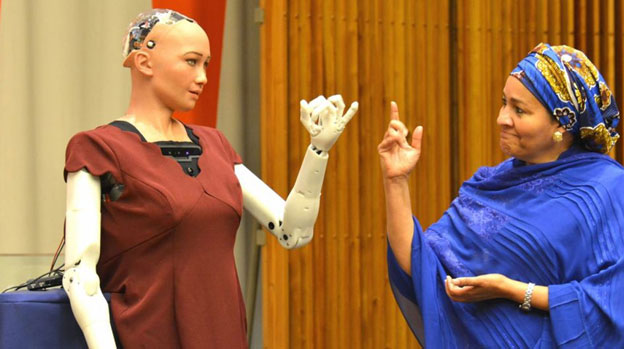
UN Deputy Secretary-General Amina Mohammed interacts with Sophia the robot at the “The Future of Everything – Sustainable Development in the Age of Rapid Technological Change” meeting. Credit: United Nations/Kensuke Matsue

UNITED NATIONS, Feb 20 2024 (IPS) - Artificial intelligence (AI) is ripe to help resolve certain major problems in Africa, from farming to the health sector, but Senegalese expert Seydina Moussa Ndiaye is warning of a new “colonization” of the continent by this new technology if foreign companies continue to feed on African data without involving local actors.

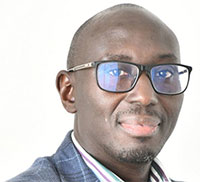
One of 38 members of the new UN advisory body on machine learning, Mr. Ndiaye spoke with UN News about the landscape ahead, building on his experience in helping to drive Senegal’s digital transformation in higher education, serving as an expert to the African Union in drafting the Pan-African Strategy on AI and in contributing to the Global Partnership on Artificial Intelligence (GPAI).

AI expert Seydina NDiaye is one of the 38 experts of the UN High-Level Advisory Body on Artificial Intelligence. Credit: Courtesy Seydina Ndiaye

How could AI help Africa?

There are several African countries that are beginning to have a dedicated strategy for artificial intelligence. However, there is a pan-African strategy that will soon be published, with a continental vision of AI development.

More and more, young people launching startups are interested in this, and they have a real thirst for knowledge in the field of AI. This growing interest can be accelerated with international help.

However, there is a wall in some areas, and AI can in fact be used to solve certain problems, including in agriculture. In the health sector, AI could solve a lot of problems, especially the problem of a lack of personnel.

The other element that is also very important is the development of cultural identity. Africa has been seen as a continent with a cultural identity that has not been able to impose itself across the world. With the development of AI, we could use this channel so that African cultural identities are better known and better valued.

Are there bad sides of AI threatening Africa?

The biggest threat is colonization. We may end up with large multinationals in AI that will impose their solutions throughout the continent, leaving no room for creating local solutions.

Most of the data currently generated in Africa is owned by multinationals whose infrastructure is developed outside the continent, where most African AI experts also operate. It’s a loss of African talent.

The other important element to consider is in the context of the fourth industrial revolution. The power of AI combined with advances in biotechnology or technology could be used, and Africa could be the place where all these new solutions are actually being tested.

If it’s not supervised, we could end up with tests that would take place on humans with chips or even integrated biotechnology elements that we improve. These are technologies that we don’t really master well.

In regulatory terms, there are certain aspects that have not been considered. The very framework for the application of ideas and existing regulations is not effective.

In concrete terms, and when you don’t control these things, it could happen without anyone knowing. We could have Africa being used as a guinea pig to test new solutions, and this could be a great, great threat for the continent.

Do you think that the UN’s new AI advisory group is going to be a platform that will allow you to put these problems on the table?

Yes, absolutely. We’ve started our work, and it’s really very open. These are high-level people who understand international issues well, and there are no taboo subjects.

It’s important that the voice of Africa is represented in the group. International scientific cooperation will be strengthened and not limited to the major powers. At the international level, it includes everyone and also helps the least developed countries.

Currently, there is a real gap, and if this is not resolved, we risk increasing inequalities.

Source: Africa Renewal published by the UN Department of Global Communications.

IPS UN Bureau