TURKIYE'S MERCENARIES IN SYRIA
Syrian rebels surround key city Hama on 'three sides', war monitor says
Islamist-led Syrian rebels surrounded the key city of Hama "from three sides" on Wednesday as they continued their offensive on government-held territory. This marks the latest win for the rebels after last week's takeover of the country's second city Aleppo, which in more than a decade of war had never completely fallen out of government hands.
Issued on: 04/12/2024 -
By: NEWS WIRES

'Spread very thin'
Human Rights Watch on Wednesday warned that the fighting "raises concerns that civilians face a real risk of serious abuses at the hands of opposition armed groups and the Syrian government".
Rights groups including HRW have since the start of the war documented violations of human rights on both sides, including what could amount to "crimes against humanity" by Syrian government forces.
Until last week the war in Syria had been mostly dormant for several years, but analysts have said violence was bound to flare up as it was never truly resolved.
"Many policymakers thought, well, Assad won, there is no war," said Rim Turkmani, director of the Syria Conflict Research Programme at the London School of Economics.
But "we've been worrying about this for years, that the fact that there is no intense violence doesn't mean that the conflict is over," she told AFP.
While the rebels may have advanced swiftly, it does not mean they will have the capacity to hold onto the territory they have captured.
Spearheading the rebel alliance is HTS, which is rooted in Syria's Al-Qaeda branch.
"It's very well organised, very ideologically driven," Turkmani said.
"However, they spread very quickly and very thin. And I think very quickly they're going to realise it's beyond their capacity to maintain these areas and, most importantly, to govern them."
(AFP)
Who is Abu Mohammed al-Golani, the leader of Syria's surprise insurgency?
Middle East
Abu Mohammed al-Golani, who is leading the Hayat Tahrir al-Sham (HTS) militant group's surprise advance in Syria, has spent a dozen years polishing his public image to win over international governments and Syrian religious and ethnic minorities, including distancing himself from al-Qaida.
Issued on: 04/12/2024
Islamist-led Syrian rebels surrounded the key city of Hama "from three sides" on Wednesday as they continued their offensive on government-held territory. This marks the latest win for the rebels after last week's takeover of the country's second city Aleppo, which in more than a decade of war had never completely fallen out of government hands.
Issued on: 04/12/2024 -
By: NEWS WIRES
An anti-government fighter covers his ears as a multi-barrel rocket launcher fires against regime forces in the northern outskirts of Syria's west-central city of Hama, December 4, 2024.
© Bakr Al Kassem, AFP
Syrian rebels on Wednesday encircled the key central city of Hama "from three sides", a war monitor said, despite a counteroffensive launched by government forces to retain control of the city.
Hama is strategically located in central Syria and, for the army, it is crucial to safeguarding the capital and seat of power Damascus.
The fighting around Hama follows a lightning offensive by Islamist-led rebels who in a matter of days wrested swathes of territory, most significantly Syria's second city Aleppo, from President Bashar al-Assad's grasp.
The rebels "have surrounded Hama city from three sides, and are now present at a distance of three to four kilometres (1.9 to 2.5 miles) from it," the Syrian Observatory for Human Rights said.
The Britain-based Observatory, which relies on a network of sources in Syria, said the government forces were "left with only one exit towards Homs to the south".
Key to the rebels' successes since the start of the offensive last week was the takeover of Aleppo, which in more than a decade of war had never entirely fallen out of government hands.
The head of the Islamist rebel group Hayat Tahrir al-Sham (HTS), Abu Mohammad al-Jolani, on Wednesday visited Aleppo's landmark citadel.
Images posted on the rebels' Telegram channel showed Jolani waving to supporters from an open-top car as he visited the historic fortress.
In Hama, 36-year-old delivery driver Wassim said the sounds were "really terrifying" and the continuous bombing was clearly audible.
"I'll stay home because I have nowhere else to flee to," he said.
'Fierce battles'
While the advancing rebels found little resistance earlier in their offensive, the fighting around Hama has been especially fierce.
Assad ordered a 50 percent raise in career soldiers' pay, state news agency SANA reported, as he seeks to bolster his forces for the counteroffensive.
A military source cited by SANA had earlier reported "fierce battles" against the rebels in northern Hama province since morning, adding that "joint Syrian-Russian warplanes" were part of the effort.
The Observatory said government forces brought "large military convoys to Hama" and its outskirts in the past 24 hours.
"Dozens of trucks" loaded with tanks, weapons, ammunition and soldiers headed towards the city, it said.
It said "regime forces and pro-government fighters led by Russian and Iranian officers were able to repel" an attack northwest of Hama.
It said the fighting was close to an area mainly populated by Alawites, followers of the same offshoot of Shiite Islam as the president.
German news agency DPA announced the killing of award-winning Syrian photographer Anas Alkharboutli in an air strike near Hama.
'Close contact'
The rebels launched their offensive on November 27, the same day a ceasefire took effect in the war between Israel and Hezbollah in neighbouring Lebanon.
Both Hezbollah and Russia have been key backers of Assad's government, but have been more recently mired in their own respective conflicts.
Russia, Iran and Turkey are in "close contact" over the conflict in Syria, Moscow said Wednesday.
Watch moreDomino effect? Assad's allies stretched thin as Syrian rebels pounce
While Russia and Iran both back Assad, Turkey has backed the opposition.
The United Nations on Wednesday said 115,000 people have been "newly displaced across Idlib and northern Aleppo" by the fighting.
Turkey meanwhile warned that it may be too soon to expect large-scale returns to Aleppo from among the three million Syrian refugees currently on its soil.
"To those who say they wish to go back now we say, 'wait, it's not safe for the moment'," said Turkish Interior Minister Ali Yerlikaya.
The Observatory says the violence has killed 704 people, mostly combatants but also 110 civilians.
Syrian rebels on Wednesday encircled the key central city of Hama "from three sides", a war monitor said, despite a counteroffensive launched by government forces to retain control of the city.
Hama is strategically located in central Syria and, for the army, it is crucial to safeguarding the capital and seat of power Damascus.
The fighting around Hama follows a lightning offensive by Islamist-led rebels who in a matter of days wrested swathes of territory, most significantly Syria's second city Aleppo, from President Bashar al-Assad's grasp.
The rebels "have surrounded Hama city from three sides, and are now present at a distance of three to four kilometres (1.9 to 2.5 miles) from it," the Syrian Observatory for Human Rights said.
The Britain-based Observatory, which relies on a network of sources in Syria, said the government forces were "left with only one exit towards Homs to the south".
Key to the rebels' successes since the start of the offensive last week was the takeover of Aleppo, which in more than a decade of war had never entirely fallen out of government hands.
The head of the Islamist rebel group Hayat Tahrir al-Sham (HTS), Abu Mohammad al-Jolani, on Wednesday visited Aleppo's landmark citadel.
Images posted on the rebels' Telegram channel showed Jolani waving to supporters from an open-top car as he visited the historic fortress.
In Hama, 36-year-old delivery driver Wassim said the sounds were "really terrifying" and the continuous bombing was clearly audible.
"I'll stay home because I have nowhere else to flee to," he said.
'Fierce battles'
While the advancing rebels found little resistance earlier in their offensive, the fighting around Hama has been especially fierce.
Assad ordered a 50 percent raise in career soldiers' pay, state news agency SANA reported, as he seeks to bolster his forces for the counteroffensive.
A military source cited by SANA had earlier reported "fierce battles" against the rebels in northern Hama province since morning, adding that "joint Syrian-Russian warplanes" were part of the effort.
The Observatory said government forces brought "large military convoys to Hama" and its outskirts in the past 24 hours.
"Dozens of trucks" loaded with tanks, weapons, ammunition and soldiers headed towards the city, it said.
It said "regime forces and pro-government fighters led by Russian and Iranian officers were able to repel" an attack northwest of Hama.
It said the fighting was close to an area mainly populated by Alawites, followers of the same offshoot of Shiite Islam as the president.
German news agency DPA announced the killing of award-winning Syrian photographer Anas Alkharboutli in an air strike near Hama.
'Close contact'
The rebels launched their offensive on November 27, the same day a ceasefire took effect in the war between Israel and Hezbollah in neighbouring Lebanon.
Both Hezbollah and Russia have been key backers of Assad's government, but have been more recently mired in their own respective conflicts.
Russia, Iran and Turkey are in "close contact" over the conflict in Syria, Moscow said Wednesday.
Watch moreDomino effect? Assad's allies stretched thin as Syrian rebels pounce
While Russia and Iran both back Assad, Turkey has backed the opposition.
The United Nations on Wednesday said 115,000 people have been "newly displaced across Idlib and northern Aleppo" by the fighting.
Turkey meanwhile warned that it may be too soon to expect large-scale returns to Aleppo from among the three million Syrian refugees currently on its soil.
"To those who say they wish to go back now we say, 'wait, it's not safe for the moment'," said Turkish Interior Minister Ali Yerlikaya.
The Observatory says the violence has killed 704 people, mostly combatants but also 110 civilians.
'Spread very thin'
Human Rights Watch on Wednesday warned that the fighting "raises concerns that civilians face a real risk of serious abuses at the hands of opposition armed groups and the Syrian government".
Rights groups including HRW have since the start of the war documented violations of human rights on both sides, including what could amount to "crimes against humanity" by Syrian government forces.
Until last week the war in Syria had been mostly dormant for several years, but analysts have said violence was bound to flare up as it was never truly resolved.
"Many policymakers thought, well, Assad won, there is no war," said Rim Turkmani, director of the Syria Conflict Research Programme at the London School of Economics.
But "we've been worrying about this for years, that the fact that there is no intense violence doesn't mean that the conflict is over," she told AFP.
While the rebels may have advanced swiftly, it does not mean they will have the capacity to hold onto the territory they have captured.
Spearheading the rebel alliance is HTS, which is rooted in Syria's Al-Qaeda branch.
"It's very well organised, very ideologically driven," Turkmani said.
"However, they spread very quickly and very thin. And I think very quickly they're going to realise it's beyond their capacity to maintain these areas and, most importantly, to govern them."
(AFP)
Russia withdraws naval assets from Tartus port, amid rebel advance in Syria
MEMO
December 4, 2024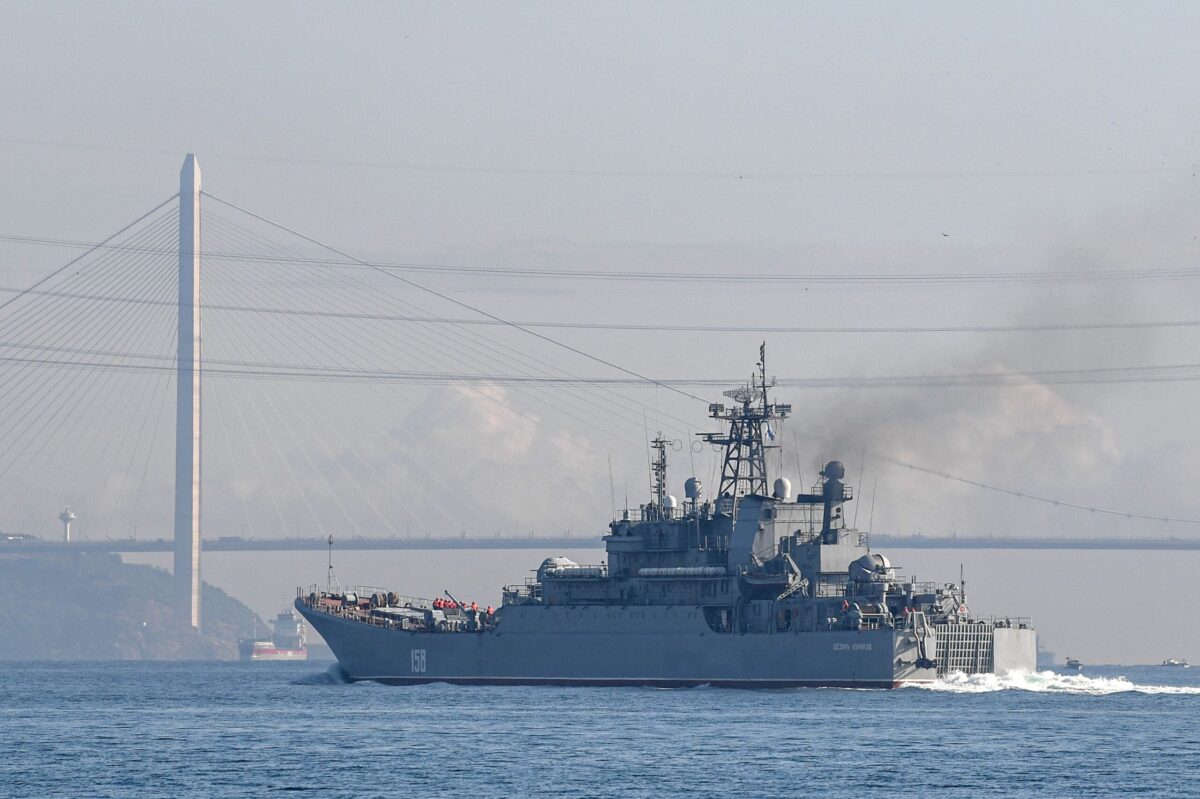
Russian ship on September 26 2019 [OZAN KOSE/AFP via Getty Images]

Russia is withdrawing its naval assets from its strategic base in Syria’s port city of Tartus, as the Syrian opposition groups continue to further advance throughout the north-west and centre of the country.
According to open-source intelligence analysts and the outlet, Naval News, a Russian vessel – the auxiliary Yelena, a Project 160 Altay class oiler – stationed at the Tartus base was seen departing the port early on Monday this week, with satellite imagery later showing that Russia had removed another auxiliary vessel, three frigates, and a submarine from the facility.
The visual intelligence revealed that the move amounted to Russia having removed all of its vessels that it had stationed at Tartus, with the fleet reportedly likely having departed on Monday 2 December and expected to return to Russia at the Baltic Sea via the Mediterranean. Such details remain unverified, however.
By assisting the Syrian regime under Bashar Al-Assad in pushing back opposition forces and helping regime forces recapture much of the country’s territory, Damascus leased the naval facility in Tartus to Russia for the next 49 years, free of charge and with Moscow’s complete sovereign jurisdiction.
While some Russian military bloggers are reported to cite the move as being related to training exercises in the eastern Mediterranean this week, the Russian Ministry of Defence has apparently denied that claim.
Although the reason for the move has not yet been confirmed or commented on in any official capacity, it is thought to most likely be due to the rapid advance of Syrian rebels throughout the north-west, west and centre of the country, having captured the major city of Aleppo and currently on the verge of seizing the major city of Hama – less than a hundred kilometres away from Tartus.
MEMO
December 4, 2024
Russian ship on September 26 2019 [OZAN KOSE/AFP via Getty Images]
Russia is withdrawing its naval assets from its strategic base in Syria’s port city of Tartus, as the Syrian opposition groups continue to further advance throughout the north-west and centre of the country.
According to open-source intelligence analysts and the outlet, Naval News, a Russian vessel – the auxiliary Yelena, a Project 160 Altay class oiler – stationed at the Tartus base was seen departing the port early on Monday this week, with satellite imagery later showing that Russia had removed another auxiliary vessel, three frigates, and a submarine from the facility.
The visual intelligence revealed that the move amounted to Russia having removed all of its vessels that it had stationed at Tartus, with the fleet reportedly likely having departed on Monday 2 December and expected to return to Russia at the Baltic Sea via the Mediterranean. Such details remain unverified, however.
By assisting the Syrian regime under Bashar Al-Assad in pushing back opposition forces and helping regime forces recapture much of the country’s territory, Damascus leased the naval facility in Tartus to Russia for the next 49 years, free of charge and with Moscow’s complete sovereign jurisdiction.
While some Russian military bloggers are reported to cite the move as being related to training exercises in the eastern Mediterranean this week, the Russian Ministry of Defence has apparently denied that claim.
Although the reason for the move has not yet been confirmed or commented on in any official capacity, it is thought to most likely be due to the rapid advance of Syrian rebels throughout the north-west, west and centre of the country, having captured the major city of Aleppo and currently on the verge of seizing the major city of Hama – less than a hundred kilometres away from Tartus.
Russia strongly backs Syria leadership, says rebels are getting outside help
MEMO
December 4, 2024

Armed groups, opposing Syria’s Bashar al-Assad regime, capture tanks and military vehicles belonging to the regime forces on the Idlib-Hama road, in Hama, Syria on December 4, 2024 [Kasim Rammah/Anadolu Agency]
Russia said on Wednesday that it strongly backs the actions of the Syrian leadership to counter an offensive by what it said were terrorist groups receiving support, including drones and training, from outside the country, Reuters reports.
The rebels have staged their biggest advance in years over the past week, first seizing Aleppo and now battling government forces and allied militia near Hama, another major city.
“We strongly condemn this attack […] There is no doubt that they would not have dared to commit such an audacious act without the instigation and comprehensive support of external forces that seek to provoke a new round of armed confrontation in Syria, unfurl a the spiral of violence,” Russian Foreign Ministry spokeswoman, Maria Zakharova, told reporters.
Russia is a key ally of Syrian President, Bashar Al-Assad, and has provided him with military support since 2015 in the country’s civil war. It has intensified air strikes on rebel targets in response to the latest offensive, according to military sources.
“We express solidarity with the leadership of Syria,” Zakharova said. “We strongly support the efforts of the Syrian authorities to counter terrorist groups and restore constitutional order.”
Zakharova said, without providing evidence, that the rebels – including some from former Soviet countries – had received drones from Ukraine and training in how to operate them.
Ukraine’s Foreign Ministry said it “categorically” rejected that accusation.
It said in a statement on the Telegram messaging app that Ukraine, unlike Russia, unconditionally adhered to international law and that Russia and Iran were responsible for the deteriorating security situation in Syria.
MEMO
December 4, 2024
Armed groups, opposing Syria’s Bashar al-Assad regime, capture tanks and military vehicles belonging to the regime forces on the Idlib-Hama road, in Hama, Syria on December 4, 2024 [Kasim Rammah/Anadolu Agency]
Russia said on Wednesday that it strongly backs the actions of the Syrian leadership to counter an offensive by what it said were terrorist groups receiving support, including drones and training, from outside the country, Reuters reports.
The rebels have staged their biggest advance in years over the past week, first seizing Aleppo and now battling government forces and allied militia near Hama, another major city.
“We strongly condemn this attack […] There is no doubt that they would not have dared to commit such an audacious act without the instigation and comprehensive support of external forces that seek to provoke a new round of armed confrontation in Syria, unfurl a the spiral of violence,” Russian Foreign Ministry spokeswoman, Maria Zakharova, told reporters.
Russia is a key ally of Syrian President, Bashar Al-Assad, and has provided him with military support since 2015 in the country’s civil war. It has intensified air strikes on rebel targets in response to the latest offensive, according to military sources.
“We express solidarity with the leadership of Syria,” Zakharova said. “We strongly support the efforts of the Syrian authorities to counter terrorist groups and restore constitutional order.”
Zakharova said, without providing evidence, that the rebels – including some from former Soviet countries – had received drones from Ukraine and training in how to operate them.
Ukraine’s Foreign Ministry said it “categorically” rejected that accusation.
It said in a statement on the Telegram messaging app that Ukraine, unlike Russia, unconditionally adhered to international law and that Russia and Iran were responsible for the deteriorating security situation in Syria.
Ukrainian intelligence coordinating with Syrian rebels against 'mutual enemy', says opposition figure
Ukraine, Russia and the Syrian regime have all made claims about Kyiv's role in aiding rebel groups in the Syrian conflict, especially with drone manufacture
The New Arab Staff
04 December, 2024

The sweeping week-long offensive has seen rebel groups capture swathes of northwestern Syria [Getty]
A Syrian opposition figure has said that Ukraine and rebels in Syria who have taken large swathes of the country’s northwest have been coordinating.
Speaking to The New York Times, Mouaz Moustafa, who heads the US-based 'Syrian Emergency Task Force' humanitarian organisation said that both Ukraine and the rebels wanted to work together to deal a blow to mutual enemy Russia.
"Two nations are fighting for their country to be free of tyranny and outside occupation," he told the newspaper. "It’s natural for them to coordinate."
While Ukrainian officials have not commented on the Syrian rebel offensive, the head of Ukraine’s military intelligence agency, Kyrylo Budanov, had said his forces would seek to attack Russian forces anywhere in the world.
Russia intervened in the Syrian conflict in 2015 to help prop up President Bashar al-Assad’s regime as it began to lose large parts of the country to opposition groups.
Moscow has maintained a military presence in war-torn Syria ever since.
Russia also launched an invasion of Ukraine in February 2022.
Other Russian officials and Damascus have previously accused Budanov of having contacts with the Islamist Hayat Tahrir al-Sham (HTS) group, the main force in the rebel offensive.

On Tuesday, the Russian ambassador to the UN lambasted Ukraine for supporting the opposition groups and called out the UN for not condemning what he called "terrorist attacks" in Syria.
Vassily Nebenzia told the Security Council that the rebels "have not only not concealed the fact that they are supported by Ukraine, but they are also openly flaunting this."
"Ukrainian military instructors from the GUR [Ukraine intelligence] are present…training HTS fighters for combat operations," including against Russian troops in Syria, said Nebenzia.
This training allegedly includes GUR specialists helping rebels in opposition-controlled Idlib manufacture drones themselves.
They allegedly included "kamikaze" drones which Ukrainian forces have used against invading Russian forces since 2022.
Recently, the Syrian opposition groups have been using a drone dubbed "Shaheen," for precision attacks against regime forces. It has come out as a vital weapon in the war.
Russia's propaganda tactics
The New Arab's senior news editor Paul McLoughlin, a Syria specialist, says that while Ukraine had incentives to link up with Syrian rebel groups to attack Russian forces, it was still difficult to verify whether any of these claims are true.
"It is possible that there are Ukrainian assets operating inside Syria due to the [Russian] Hmeimim base, as it’s a way of hitting Russia outside of Ukraine," McLoughlin said.
He believes Russia has been using the claims of Kyiv aiding rebel groups to portray them as colluding with extremist groups within the opposition.
While there was no confirmation yet on media reports claiming the Syrian opposition reached out to Ukraine for help on how to make and use drones, McLoughlin believes it is more likely that drone capabilities are being provided by Turkey.
"Turkey played a big role in providing drones which Ukraine used during the counterattack against Russia, and they were key to Ukrainian successes," he said.
"Ultimately both sides have incentives to promote the idea of Ukrainian intelligence operating inside Syria - Ukraine to show it is capable of hitting Moscow well beyond its borders and Russia to claim a nexus between Kyiv and extremists elements within the Syrian rebel camp."
The sweeping offensive which began on 27 November has seen rebel groups capture Aleppo, Syria’s largest city by population.
They’re now closing in on another major city, Hama, a significant move as it sits on a strategically important road linking the north to Homs and Damascus in the south, as well as the Syrian coast, which is a regime stronghold.
Hundreds have been killed in clashes and Russian and Syrian regime airstrikes.
Ukraine, Russia and the Syrian regime have all made claims about Kyiv's role in aiding rebel groups in the Syrian conflict, especially with drone manufacture
The New Arab Staff
04 December, 2024

The sweeping week-long offensive has seen rebel groups capture swathes of northwestern Syria [Getty]
A Syrian opposition figure has said that Ukraine and rebels in Syria who have taken large swathes of the country’s northwest have been coordinating.
Speaking to The New York Times, Mouaz Moustafa, who heads the US-based 'Syrian Emergency Task Force' humanitarian organisation said that both Ukraine and the rebels wanted to work together to deal a blow to mutual enemy Russia.
"Two nations are fighting for their country to be free of tyranny and outside occupation," he told the newspaper. "It’s natural for them to coordinate."
While Ukrainian officials have not commented on the Syrian rebel offensive, the head of Ukraine’s military intelligence agency, Kyrylo Budanov, had said his forces would seek to attack Russian forces anywhere in the world.
Russia intervened in the Syrian conflict in 2015 to help prop up President Bashar al-Assad’s regime as it began to lose large parts of the country to opposition groups.
Moscow has maintained a military presence in war-torn Syria ever since.
Russia also launched an invasion of Ukraine in February 2022.
Other Russian officials and Damascus have previously accused Budanov of having contacts with the Islamist Hayat Tahrir al-Sham (HTS) group, the main force in the rebel offensive.
On Tuesday, the Russian ambassador to the UN lambasted Ukraine for supporting the opposition groups and called out the UN for not condemning what he called "terrorist attacks" in Syria.
Vassily Nebenzia told the Security Council that the rebels "have not only not concealed the fact that they are supported by Ukraine, but they are also openly flaunting this."
"Ukrainian military instructors from the GUR [Ukraine intelligence] are present…training HTS fighters for combat operations," including against Russian troops in Syria, said Nebenzia.
This training allegedly includes GUR specialists helping rebels in opposition-controlled Idlib manufacture drones themselves.
They allegedly included "kamikaze" drones which Ukrainian forces have used against invading Russian forces since 2022.
Recently, the Syrian opposition groups have been using a drone dubbed "Shaheen," for precision attacks against regime forces. It has come out as a vital weapon in the war.
Russia's propaganda tactics
The New Arab's senior news editor Paul McLoughlin, a Syria specialist, says that while Ukraine had incentives to link up with Syrian rebel groups to attack Russian forces, it was still difficult to verify whether any of these claims are true.
"It is possible that there are Ukrainian assets operating inside Syria due to the [Russian] Hmeimim base, as it’s a way of hitting Russia outside of Ukraine," McLoughlin said.
He believes Russia has been using the claims of Kyiv aiding rebel groups to portray them as colluding with extremist groups within the opposition.
While there was no confirmation yet on media reports claiming the Syrian opposition reached out to Ukraine for help on how to make and use drones, McLoughlin believes it is more likely that drone capabilities are being provided by Turkey.
"Turkey played a big role in providing drones which Ukraine used during the counterattack against Russia, and they were key to Ukrainian successes," he said.
"Ultimately both sides have incentives to promote the idea of Ukrainian intelligence operating inside Syria - Ukraine to show it is capable of hitting Moscow well beyond its borders and Russia to claim a nexus between Kyiv and extremists elements within the Syrian rebel camp."
The sweeping offensive which began on 27 November has seen rebel groups capture Aleppo, Syria’s largest city by population.
They’re now closing in on another major city, Hama, a significant move as it sits on a strategically important road linking the north to Homs and Damascus in the south, as well as the Syrian coast, which is a regime stronghold.
Hundreds have been killed in clashes and Russian and Syrian regime airstrikes.
Who is Abu Mohammed al-Golani, the leader of Syria's surprise insurgency?
Middle East
Abu Mohammed al-Golani, who is leading the Hayat Tahrir al-Sham (HTS) militant group's surprise advance in Syria, has spent a dozen years polishing his public image to win over international governments and Syrian religious and ethnic minorities, including distancing himself from al-Qaida.
Issued on: 04/12/2024
By: NEWS WIRES
 File photo: This undated photo released by a militant group in 2016 shows Abu Mohammed al-Golani, leader of Syria's al-Qaida affiliate, second from right, discussing battlefield details with commanders in Aleppo, Syria. AP
Over the past dozen years, Syrian militant leader Abu Mohammed al-Golani has worked to remake his public image and the insurgency he commands, renouncing longtime ties to al-Qaida and consolidating power before emerging from the shadows.
Now al-Golani, 42, seeks to seize the moment yet again, leading his fighters in a stunning offensive that has put them in control of Syria’s largest city, reigniting the country's long civil war and raising new questions about President Bashar Assad’s hold on power.
The surge and al-Golani's place at the head of it are evidence of a remarkable transformation. Al-Golani's success on the battlefield follows years of maneuvering among extremist organizations while eliminating competitors and former allies.
Along the way he moved to distance himself from al-Qaida, polishing his image and his extremist group's de-facto “salvation government” in an attempt to win over international governments and the country’s religious and ethnic minorities.
Putting himself forward as a champion of pluralism and tolerance, al-Golani's rebranding efforts sought to broaden his group's public support and legitimacy.
Still, it had been years since Syria’s opposition forces, based in the country's northwest, made any substantial military progress against Assad. The Syrian president's government, with backing from Iran and Russia, has maintained its control of about 70 percent of the country in a stalemate that had left al-Golani and his jihadi group Hayat Tahrir al-Sham, or HTS, out of the spotlight.
But the rebels' descent on Aleppo and nearby towns, alongside a coalition of Turkish-backed armed groups dubbed the Syrian National Army, has shaken up Syria’s tense detente and left the war-torn country’s neighbors in Jordan, Iraq, and Lebanon worried about this flareup spilling over.
Watch more Domino effect? Assad's allies stretched thin as Syrian rebels pounce
Al-Golani’s ties to al-Qaida stretch back to 2003 when he joined extremists battling U.S. troops in Iraq. The native of Syria was detained several times by the U.S. military, but remained in Iraq. During that time, al-Qaida usurped likeminded groups and formed the extremist Islamic State of Iraq, led by Abu Bakr al-Baghdadi.
In 2011, a popular uprising against Syria's Assad triggered a brutal government crackdown and led to all-out war. Al-Golani's prominence grew when al-Baghdadi sent him to Syria to establish a branch of al-Qaida called the Nusra Front. The United States labeled the new group as a terrorist organization. That designation still remains in place and the U.S. government has put a $10 million bounty on him.
As Syria's civil war intensified in 2013, so did al-Golani’s ambitions. He defied al-Baghdadi’s calls to dissolve the Nusra Front and merge it with al-Qaida's operation in Iraq, to form the Islamic State of Iraq and Syria, or ISIS.
Al-Golani nonetheless pledged his allegiance to al-Qaida, which later disassociated itself from ISIS. The Nusra Front battled ISIS and eliminated much of its competition among the Syrian armed opposition to Assad. In his first interview in 2014, al-Golani kept his face covered, telling a reporter for Qatari network Al-Jazeera that he rejected political talks in Geneva to end the conflict. He said his goal was to see Syria ruled under Islamic law and made clear that there was no room for the country's Alawite, Shiite, Druze, and Christian minorities.
In 2016, al-Golani revealed his face to the public for the first time in a video message that announced his group was renaming itself Jabhat Fateh al-Sham and cutting its ties to al-Qaida.
Watch more Syrian rebels aiming for 'conservative Islamist proto-state', analyst says
“This new organization has no affiliation to any external entity,” he said in the video, filmed wearing military garb and a turban.
The move paved the way for al-Golani to assert full control over fracturing militant groups. A year later, his alliance rebranded again as HTS as the groups merged, consolidating al-Golani’s power in northwest Syria’s Idlib province.
Afterward HTS clashed with independent Islamist militants who opposed the merger, further emboldening al-Golani and his group as the leading power in northwestern Syria, able to rule with an iron fist.
With his power consolidated, al-Golani set in motion a transformation that few could have imagined. Replacing his military garb with shirt and trousers, he began calling for religious tolerance and pluralism. He appealed to the Druze community in Idlib, which the Nusra Front had previously targeted, and visited the families of Kurds who were killed by Turkish-backed militias.
In 2021, al-Golani had his first interview with an American journalist on PBS. Wearing a blazer, with his short hair gelled back, the now more soft-spoken HTS leader said that his group posed no threat to the West and that sanctions imposed against it were unjust.
“Yes, we have criticized Western policies,” he said. “But to wage a war against the United States or Europe from Syria, that’s not true. We didn’t say we wanted to fight.”
(AP)
File photo: This undated photo released by a militant group in 2016 shows Abu Mohammed al-Golani, leader of Syria's al-Qaida affiliate, second from right, discussing battlefield details with commanders in Aleppo, Syria. APOver the past dozen years, Syrian militant leader Abu Mohammed al-Golani has worked to remake his public image and the insurgency he commands, renouncing longtime ties to al-Qaida and consolidating power before emerging from the shadows.
Now al-Golani, 42, seeks to seize the moment yet again, leading his fighters in a stunning offensive that has put them in control of Syria’s largest city, reigniting the country's long civil war and raising new questions about President Bashar Assad’s hold on power.
The surge and al-Golani's place at the head of it are evidence of a remarkable transformation. Al-Golani's success on the battlefield follows years of maneuvering among extremist organizations while eliminating competitors and former allies.
Along the way he moved to distance himself from al-Qaida, polishing his image and his extremist group's de-facto “salvation government” in an attempt to win over international governments and the country’s religious and ethnic minorities.
Putting himself forward as a champion of pluralism and tolerance, al-Golani's rebranding efforts sought to broaden his group's public support and legitimacy.
Still, it had been years since Syria’s opposition forces, based in the country's northwest, made any substantial military progress against Assad. The Syrian president's government, with backing from Iran and Russia, has maintained its control of about 70 percent of the country in a stalemate that had left al-Golani and his jihadi group Hayat Tahrir al-Sham, or HTS, out of the spotlight.
But the rebels' descent on Aleppo and nearby towns, alongside a coalition of Turkish-backed armed groups dubbed the Syrian National Army, has shaken up Syria’s tense detente and left the war-torn country’s neighbors in Jordan, Iraq, and Lebanon worried about this flareup spilling over.
Watch more Domino effect? Assad's allies stretched thin as Syrian rebels pounce
Al-Golani’s ties to al-Qaida stretch back to 2003 when he joined extremists battling U.S. troops in Iraq. The native of Syria was detained several times by the U.S. military, but remained in Iraq. During that time, al-Qaida usurped likeminded groups and formed the extremist Islamic State of Iraq, led by Abu Bakr al-Baghdadi.
In 2011, a popular uprising against Syria's Assad triggered a brutal government crackdown and led to all-out war. Al-Golani's prominence grew when al-Baghdadi sent him to Syria to establish a branch of al-Qaida called the Nusra Front. The United States labeled the new group as a terrorist organization. That designation still remains in place and the U.S. government has put a $10 million bounty on him.
As Syria's civil war intensified in 2013, so did al-Golani’s ambitions. He defied al-Baghdadi’s calls to dissolve the Nusra Front and merge it with al-Qaida's operation in Iraq, to form the Islamic State of Iraq and Syria, or ISIS.
Al-Golani nonetheless pledged his allegiance to al-Qaida, which later disassociated itself from ISIS. The Nusra Front battled ISIS and eliminated much of its competition among the Syrian armed opposition to Assad. In his first interview in 2014, al-Golani kept his face covered, telling a reporter for Qatari network Al-Jazeera that he rejected political talks in Geneva to end the conflict. He said his goal was to see Syria ruled under Islamic law and made clear that there was no room for the country's Alawite, Shiite, Druze, and Christian minorities.
In 2016, al-Golani revealed his face to the public for the first time in a video message that announced his group was renaming itself Jabhat Fateh al-Sham and cutting its ties to al-Qaida.
Watch more Syrian rebels aiming for 'conservative Islamist proto-state', analyst says
“This new organization has no affiliation to any external entity,” he said in the video, filmed wearing military garb and a turban.
The move paved the way for al-Golani to assert full control over fracturing militant groups. A year later, his alliance rebranded again as HTS as the groups merged, consolidating al-Golani’s power in northwest Syria’s Idlib province.
Afterward HTS clashed with independent Islamist militants who opposed the merger, further emboldening al-Golani and his group as the leading power in northwestern Syria, able to rule with an iron fist.
With his power consolidated, al-Golani set in motion a transformation that few could have imagined. Replacing his military garb with shirt and trousers, he began calling for religious tolerance and pluralism. He appealed to the Druze community in Idlib, which the Nusra Front had previously targeted, and visited the families of Kurds who were killed by Turkish-backed militias.
In 2021, al-Golani had his first interview with an American journalist on PBS. Wearing a blazer, with his short hair gelled back, the now more soft-spoken HTS leader said that his group posed no threat to the West and that sanctions imposed against it were unjust.
“Yes, we have criticized Western policies,” he said. “But to wage a war against the United States or Europe from Syria, that’s not true. We didn’t say we wanted to fight.”
(AP)
Opinion
Rebel roulette: Turkey's gamble on Syrian opposition offensive
Erdogan has turned the tables on Assad's Syrian regime after years of frustration. But Turkey's gambit doesn't come without risk, argues Benjamin Fève.
Benjamin Fève
03 Dec, 2024
THE NEW ARAB

The capture of Aleppo and the opposition's territorial advances, if sustained, will give Turkey significant leverage in shaping Syria's future during negotiations, writes Benjamin Fève [photo credit: Getty Images]
The recent northwestern Syria rebel offensive, launched on November 27 2024, is poised to significantly reshape the dynamics of the Syrian conflict, representing a high-risk, high-reward situation for Turkey.
The offensive, spearheaded by Hayat Tahrir al-Sham (HTS) and allied rebel groups, has shattered the fragile status quo that had for years prevailed in and around Syria’s Idlib province and characterised by a tense ceasefire between Syrian regime forces and opposition groups.
In just days, opposition forces seized control of Aleppo, Syria's largest city, and made substantial territorial gains across northwestern Syria, reaching the countryside of Hama.
The rebels' offensive also capitalised on the Assad regime's current vulnerabilities, stemming from the regime’s rundown army and the weakened state of its key military backers.
Russia, deeply embroiled in its ongoing war in Ukraine, and Hezbollah, stretched thin after its war with Israel, are less capable of providing robust support to Damascus.
Related
Our dream of an Assad-free Syria has returned with rebel advance
Voices
Leila al-Shami
While Turkey has not officially claimed involvement, the scale and success of the operation strongly suggest Ankara's tacit approval and support. This operation offers Turkey a major victory on several fronts — if the opposition effectively consolidates its gains.
The capture of Aleppo and the opposition's territorial advances, if sustained, will give Turkey significant leverage in shaping Syria's future during negotiations. This dramatic shift in power dynamics effectively nullifies prior agreements between Turkey and Russia which established de-escalation zones, joint patrols, and a buffer zone around Idlib.
Paramount among Ankara’s frustrations are the stalled normalisation talks with Damascus, often initiated by Ankara, that have previously collapsed due to irreconcilable differences.
Turkey has demanded Damascus's cooperation against the Kurdish PKK/YPG groups and sought Syrian help facilitating the return of more than 3 million Syrian refugees.
For its part, Damascus has insisted on Turkey’s full withdrawal from northern Syria and an end to its support for opposition groups. The failure to resolve these impasses now appears to have prompted Ankara to take matters into its own hands.
Syrian war games
Amid the unfolding chaos, Turkish-backed opposition groups seized the opportunity to expel Kurdish fighters from their remaining strongholds in northwestern Syria, particularly the Tal Rifaat pocket north of Aleppo, through Operation Dawn of Freedom launched on November 30.
This development marks a major military victory for Turkey, as it further restricts the operational area of Kurdish militants and strengthens Ankara's security buffer along its southern border and areas under its de facto control in Syria.
Perhaps more significantly, gaining influence over Aleppo and its surroundings offers Turkey a key advantage in addressing the return of Syrian refugees.
In recent months, amid escalating anti-refugee rhetoric and domestic political power struggles crystallising around the Syrian presence, Turkish President Recep Erdogan has faced mounting pressure to act in that regard. With millions of Syrian refugees currently residing in Turkey — many of them originally from Aleppo — the prospect of their voluntary return to Aleppo’s familiar urban centre would be much easier achieved than attempting forced resettlement in the Turkish-controlled "safe zones" elsewhere in Syria’s northern countryside.
Moreover, the longstanding economic ties between the Alepine and Turkish business community, along with Aleppo's historical role as an economic hub, provide a practical foundation for reintegration, making this scenario both economically feasible and socially advantageous for refugees.
However, Turkey's apparent triumph comes with significant caveats and risks. Extending influence over newly captured territories, particularly a major urban centre like Aleppo, will require Ankara to commit substantial economic and political capital.
Turkey's experience in managing other areas under its de facto control in northern Syria has been fraught with challenges, including local discontent and occasional violent resistance.
Maintaining stability and providing basic services in these areas has a cost, and expanding this model to Aleppo and its environs would likely prove even more demanding. Additionally, Turkey would need to provide ongoing military and security support, including continuous rearmament of rebel groups controlling Aleppo.
Furthermore, the sustainability of these gains remains uncertain. The Syrian regime and its allies, particularly Russia and Iran, are unlikely to accept the loss of Aleppo without a robust response.
A determined counteroffensive, leveraging superior air power and heavy weaponry, could potentially reverse the rebels' gains, especially if Turkey does not pursue a more direct involvement. The possibility of an alliance between the Assad regime and Kurdish forces against Turkey and the opposition presents another concerning scenario for Ankara.
Related
Syria's rebel offensive: Why now and what could happen next?
Analysis
Shelly Kittleson
Perhaps the most pressing risk for Turkey, should the opposition crumble, is the potential for renewed refugee flows.
If the Syrian regime and its allies succeed in reclaiming the lost areas, it is almost certain they would impose collective punishment against the population in Idlib and push to retake the entire province. In such a scenario, Turkey could face an unprecedented wave of displaced Syrians seeking refuge across its borders, creating significant humanitarian and logistical challenges.
While Erdogan’s gambit seems to have strengthened his hand in the short term, many more cards are yet to be played in these Syrian stakes.

Benjamin Fève is a Research Analyst at Badil | The Alternative Policy Institute, a Beirut-based think-tank. Previously, he worked at The Syria Report, the main source of economic and political information about Syria.
Award-winning Syria journalist killed in regime air strike
MEMO
December 4, 2024

In this file picture, Syrian photojournalist Anas Alkharboutli posing during a photoshoot in the northern Syrian village of Ariha on November 10, 2024
Rebel roulette: Turkey's gamble on Syrian opposition offensive
Erdogan has turned the tables on Assad's Syrian regime after years of frustration. But Turkey's gambit doesn't come without risk, argues Benjamin Fève.
Benjamin Fève
03 Dec, 2024
THE NEW ARAB

The capture of Aleppo and the opposition's territorial advances, if sustained, will give Turkey significant leverage in shaping Syria's future during negotiations, writes Benjamin Fève [photo credit: Getty Images]
The recent northwestern Syria rebel offensive, launched on November 27 2024, is poised to significantly reshape the dynamics of the Syrian conflict, representing a high-risk, high-reward situation for Turkey.
The offensive, spearheaded by Hayat Tahrir al-Sham (HTS) and allied rebel groups, has shattered the fragile status quo that had for years prevailed in and around Syria’s Idlib province and characterised by a tense ceasefire between Syrian regime forces and opposition groups.
In just days, opposition forces seized control of Aleppo, Syria's largest city, and made substantial territorial gains across northwestern Syria, reaching the countryside of Hama.
The rebels' offensive also capitalised on the Assad regime's current vulnerabilities, stemming from the regime’s rundown army and the weakened state of its key military backers.
Russia, deeply embroiled in its ongoing war in Ukraine, and Hezbollah, stretched thin after its war with Israel, are less capable of providing robust support to Damascus.
Related
Our dream of an Assad-free Syria has returned with rebel advance
Voices
Leila al-Shami
While Turkey has not officially claimed involvement, the scale and success of the operation strongly suggest Ankara's tacit approval and support. This operation offers Turkey a major victory on several fronts — if the opposition effectively consolidates its gains.
The capture of Aleppo and the opposition's territorial advances, if sustained, will give Turkey significant leverage in shaping Syria's future during negotiations. This dramatic shift in power dynamics effectively nullifies prior agreements between Turkey and Russia which established de-escalation zones, joint patrols, and a buffer zone around Idlib.
Paramount among Ankara’s frustrations are the stalled normalisation talks with Damascus, often initiated by Ankara, that have previously collapsed due to irreconcilable differences.
Turkey has demanded Damascus's cooperation against the Kurdish PKK/YPG groups and sought Syrian help facilitating the return of more than 3 million Syrian refugees.
For its part, Damascus has insisted on Turkey’s full withdrawal from northern Syria and an end to its support for opposition groups. The failure to resolve these impasses now appears to have prompted Ankara to take matters into its own hands.
Syrian war games
Amid the unfolding chaos, Turkish-backed opposition groups seized the opportunity to expel Kurdish fighters from their remaining strongholds in northwestern Syria, particularly the Tal Rifaat pocket north of Aleppo, through Operation Dawn of Freedom launched on November 30.
This development marks a major military victory for Turkey, as it further restricts the operational area of Kurdish militants and strengthens Ankara's security buffer along its southern border and areas under its de facto control in Syria.
Perhaps more significantly, gaining influence over Aleppo and its surroundings offers Turkey a key advantage in addressing the return of Syrian refugees.
In recent months, amid escalating anti-refugee rhetoric and domestic political power struggles crystallising around the Syrian presence, Turkish President Recep Erdogan has faced mounting pressure to act in that regard. With millions of Syrian refugees currently residing in Turkey — many of them originally from Aleppo — the prospect of their voluntary return to Aleppo’s familiar urban centre would be much easier achieved than attempting forced resettlement in the Turkish-controlled "safe zones" elsewhere in Syria’s northern countryside.
Moreover, the longstanding economic ties between the Alepine and Turkish business community, along with Aleppo's historical role as an economic hub, provide a practical foundation for reintegration, making this scenario both economically feasible and socially advantageous for refugees.
However, Turkey's apparent triumph comes with significant caveats and risks. Extending influence over newly captured territories, particularly a major urban centre like Aleppo, will require Ankara to commit substantial economic and political capital.
Turkey's experience in managing other areas under its de facto control in northern Syria has been fraught with challenges, including local discontent and occasional violent resistance.
Maintaining stability and providing basic services in these areas has a cost, and expanding this model to Aleppo and its environs would likely prove even more demanding. Additionally, Turkey would need to provide ongoing military and security support, including continuous rearmament of rebel groups controlling Aleppo.
Furthermore, the sustainability of these gains remains uncertain. The Syrian regime and its allies, particularly Russia and Iran, are unlikely to accept the loss of Aleppo without a robust response.
A determined counteroffensive, leveraging superior air power and heavy weaponry, could potentially reverse the rebels' gains, especially if Turkey does not pursue a more direct involvement. The possibility of an alliance between the Assad regime and Kurdish forces against Turkey and the opposition presents another concerning scenario for Ankara.
Related
Syria's rebel offensive: Why now and what could happen next?
Analysis
Shelly Kittleson
Perhaps the most pressing risk for Turkey, should the opposition crumble, is the potential for renewed refugee flows.
If the Syrian regime and its allies succeed in reclaiming the lost areas, it is almost certain they would impose collective punishment against the population in Idlib and push to retake the entire province. In such a scenario, Turkey could face an unprecedented wave of displaced Syrians seeking refuge across its borders, creating significant humanitarian and logistical challenges.
While Erdogan’s gambit seems to have strengthened his hand in the short term, many more cards are yet to be played in these Syrian stakes.
Benjamin Fève is a Research Analyst at Badil | The Alternative Policy Institute, a Beirut-based think-tank. Previously, he worked at The Syria Report, the main source of economic and political information about Syria.
Syria's rebel offensive: Why now and what could happen next?

Analysis: The lightning offensive by an alliance of rebels, which saw them seize control of Aleppo, is a dramatic and unexpected shift in Syria's conflict.
Shelly Kittleson
02 December, 2024
Analysis: The lightning offensive by an alliance of rebels, which saw them seize control of Aleppo, is a dramatic and unexpected shift in Syria's conflict.
Shelly Kittleson
02 December, 2024
THE NEW ARAB
Erbil - In 2015, Russia came to the rescue of Syrian government forces when it entered the war against opposition forces, employing an onslaught of airstrikes, advisors, and arms.
Should it choose not to - or prove unable to - this time around, bogged down as it is with its own war on Ukraine, regional dynamics may shift significantly.
The frontline in northern Syria meanwhile continues to do just that by the hour.
An offensive launched on 27 November by armed opposition forces led by Hayat Tahrir al-Sham (HTS), long the strongest and most well-organised group in the Idlib province, shocked both long-time close observers of the war-fragmented country and those living in it due to the lightning advances and - for the most part - minimal resistance from Syrian government forces and its allies, including Iran-linked factions.
After rapidly taking terrain in the western part of the Aleppo province that had been fought over for months or years in the past, the Syrian opposition forces pushed into the city of Aleppo itself and took districts that they had never had under their control before.
Among the towns and areas taken in recent days were ones subjected to relentless bombing and chemical attacks when the Syrian government and allied forces were trying to retake them from armed opposition groups. Now, these same areas seemed to have almost been simply handed over to the latter.
On 1 December, an HTS-led body called the Military Operations Management announced the “return of Idlib province to its people, after we finished liberating” the “entire Aleppo and Idlib governorates”.
The operation is still ongoing, though the momentum has slowed, and reinforcements have reportedly arrived to shore up Syrian government forces in the city of Hama and elsewhere.
White Helmets board member Ammar Selmo, who was previously head of the civil defence organisation’s Aleppo office and was involved in rescuing those in the city itself prior to the 2016 takeover by Syrian government forces of opposition-held areas, told The New Arab on 1 December that “all Syrians are living a dream these days”.
The White Helmets operate solely in opposition-held areas and have offices in Turkey.
“Since the beginning of the year until Nov. 27, some 300 people were killed” in attacks occurring virtually “every day, and thousands injured, while infrastructure was also destroyed, as well as their livelihoods” through destroying their farms in an area that survives predominantly from agricultural activities.
“Something needed to be done to deter” such attacks, he stressed.
 After rapidly taking terrain in the western part of the Aleppo province that had been fought over for months or years in the past, Syrian opposition forces captured the city of Aleppo itself. [Getty]
Deterring Russian and regime attacks
“I think it is a combination of very legitimate political and humanitarian need” that led to the offensive, Syria analyst Gregory Waters told The New Arab, alongside an attempt to “reshape the dynamics on the ground”.
He added that “HTS has been wanting to do something for a while”, as “they are always looking to do something to change dynamics in their favour in the northwest, and that is why we had their attempts to get more involved in Afrin and north Aleppo two years ago”.
In terms of why conditions were ripe now, he noted that the 7 October Hamas attack on Israel changed "how a lot of actors in the region perceived this presumed stability or frozenness" of whatever conflict they are part of.
"So, I think, especially with HTS, they are keen for a way to make a change, and when you combine that with the regime’s really rapid adoption of Russian drones - which increased the violence they were able to inflict on Idlib, on both HTS military and civilians in Idlib over the last year - I think that also really spurred them to do something,” he added.
“I think you got a sense for several years that HTS had the advantage in terms of drone technology, and then all of a sudden the regime gets this massive influx of high-quality Russian FPV and suicide drones, and they’re hitting them [with] a dozen drone strikes per day - and something has to change. And they [had] lost the ability to do effective deterrence against them,” he noted.
“And so I think you combine all these things - I think that there is a very legitimate part of needing to deter Russian and regime attacks against Idlib.”
The idea, Waters continued, is to “go and take a bunch of land they were using to launch drone attacks” to halt or at least curb similar attacks and reduce the number of people being killed despite a ceasefire officially being in place.
Moreover, it’s also a way to tell Syrian government and allied forces that “you can’t just sit there and attack us in this semi-ceasefire, every day, for a year without consequences,” as well as “an attempt to change the facts on the ground in a way that forces regional actors on both sides - both Turkey and Russia - to accept a new reality. Kind of mirroring off how Israel has just used pure force to force the US to constantly change their stance, their red lines, when it comes to Gaza and [the] West Bank and Lebanon,” Waters said.
Related
Syria Insight: Assad keeps his head down amid Gaza, Lebanon wars
Syria Insight
Paul McLoughlin
How Turkey and Russia could respond next
“As far as what might happen next, I think a lot depends on the two regional actors Turkey and Russia. Russia seems to have not gotten involved very much at all in the defence of the regime for the first time since 2015, and because of that we’re seeing HTS and their allies being able to continue to expand,” Waters told The New Arab.
“I think if we continue to see the Russians uninvolved, we could see the opposition continue to hold a lot of this territory.”
The reason for this, he said, is “because these regime units - I mean, all of their fighting, all their training, for the past ten years has been built around the idea of intense Russian air support and also Russian command, Russian officers helping organise all their operations. And all that is gone. I think they are struggling to organise themselves across a wide front”.
But “I think it is not clear yet where Turkey stands on this - and more importantly, what Turkey will do, if anything. If they are going to get involved militarily to defend the territories taken thus far, or diplomatically to push the Russians and the regime to accept what has happened thus far”.
For the time being, Waters added, “there is quite a bit to be optimistic about in terms of the opposition holding what it has taken. But we will have to see what the Russians do, if they do get involved, if they have any red lines of their own that trigger a response because they are really not bombing right now - anything close to what we saw them do” in the past.
IDPs returning but administration to be a test
White Helmets board member Selmo told The New Arab that the destruction and killings of civilians in opposition-held areas since the beginning of the year had been carried out through “about 500 attacks, especially by suicide drones – which are very accurate, and very dangerous - most of which originating from the areas the operation targeted first: Saraqeb and western Aleppo”.
Selmo said that, paradoxically, the “regime media played an important role” in the gains by opposition forces, since they “demoralised [government] soldiers claiming that Israel was supporting the opposition forces with weapons".
This, he said, “frightened the soldiers” after their having seen what Israel had done in the past year.
 Thousands of displaced Syrians have reportedly returned to their homes following the rebel offensive. [Getty]
Several phone numbers were circulated on social media on 2 December calling for members of the Syrian military to defect and offering assistance, saying that “your leadership has abandoned you”. Flyers had also been dropped in some areas in previous days via drones calling for the same.
In any case, he added to The New Arab in a jubilant voice, “so many people will now be able to go back to their homes” in the areas retaken.
Selmo estimated that thousands had already returned to “my city alone, Safira”.
Settling into more measured tones, Selmo said that the gains will also be a “test for the armed groups”, with which he said he did not have any particular affinity but in whom he had seen “significant improvement over the past five years” in terms of being able to govern a diverse group of civilians.
The coming weeks and months will in any case be a test of “their ability to manage cities and deal with people fairly”, he said.
He added that some members of shadowy pro-government forces from his area had contacted him before the opposition forces arrived, asking him for an opinion on what to do.
Selmo told The New Arab that there could be court cases against them in future but that he had told them that, for now, the best thing was simply to stay unarmed in their homes and that no one would hurt them.
And many pro-government supporters have done just that, he added.
“This point is important,” he stressed. “Many people used to leave their homes when forces from the other side entered their areas. This time, so very many stayed.”
Shelly Kittleson is a journalist specialising in the Middle East and Afghanistan. Her work has been published in several international, US, and Italian media outlets.
Follow her on X: @shellykittleson
Erbil - In 2015, Russia came to the rescue of Syrian government forces when it entered the war against opposition forces, employing an onslaught of airstrikes, advisors, and arms.
Should it choose not to - or prove unable to - this time around, bogged down as it is with its own war on Ukraine, regional dynamics may shift significantly.
The frontline in northern Syria meanwhile continues to do just that by the hour.
An offensive launched on 27 November by armed opposition forces led by Hayat Tahrir al-Sham (HTS), long the strongest and most well-organised group in the Idlib province, shocked both long-time close observers of the war-fragmented country and those living in it due to the lightning advances and - for the most part - minimal resistance from Syrian government forces and its allies, including Iran-linked factions.
After rapidly taking terrain in the western part of the Aleppo province that had been fought over for months or years in the past, the Syrian opposition forces pushed into the city of Aleppo itself and took districts that they had never had under their control before.
Among the towns and areas taken in recent days were ones subjected to relentless bombing and chemical attacks when the Syrian government and allied forces were trying to retake them from armed opposition groups. Now, these same areas seemed to have almost been simply handed over to the latter.
On 1 December, an HTS-led body called the Military Operations Management announced the “return of Idlib province to its people, after we finished liberating” the “entire Aleppo and Idlib governorates”.
The operation is still ongoing, though the momentum has slowed, and reinforcements have reportedly arrived to shore up Syrian government forces in the city of Hama and elsewhere.
White Helmets board member Ammar Selmo, who was previously head of the civil defence organisation’s Aleppo office and was involved in rescuing those in the city itself prior to the 2016 takeover by Syrian government forces of opposition-held areas, told The New Arab on 1 December that “all Syrians are living a dream these days”.
The White Helmets operate solely in opposition-held areas and have offices in Turkey.
“Since the beginning of the year until Nov. 27, some 300 people were killed” in attacks occurring virtually “every day, and thousands injured, while infrastructure was also destroyed, as well as their livelihoods” through destroying their farms in an area that survives predominantly from agricultural activities.
“Something needed to be done to deter” such attacks, he stressed.
After rapidly taking terrain in the western part of the Aleppo province that had been fought over for months or years in the past, Syrian opposition forces captured the city of Aleppo itself. [Getty]Deterring Russian and regime attacks
“I think it is a combination of very legitimate political and humanitarian need” that led to the offensive, Syria analyst Gregory Waters told The New Arab, alongside an attempt to “reshape the dynamics on the ground”.
He added that “HTS has been wanting to do something for a while”, as “they are always looking to do something to change dynamics in their favour in the northwest, and that is why we had their attempts to get more involved in Afrin and north Aleppo two years ago”.
In terms of why conditions were ripe now, he noted that the 7 October Hamas attack on Israel changed "how a lot of actors in the region perceived this presumed stability or frozenness" of whatever conflict they are part of.
"So, I think, especially with HTS, they are keen for a way to make a change, and when you combine that with the regime’s really rapid adoption of Russian drones - which increased the violence they were able to inflict on Idlib, on both HTS military and civilians in Idlib over the last year - I think that also really spurred them to do something,” he added.
“I think you got a sense for several years that HTS had the advantage in terms of drone technology, and then all of a sudden the regime gets this massive influx of high-quality Russian FPV and suicide drones, and they’re hitting them [with] a dozen drone strikes per day - and something has to change. And they [had] lost the ability to do effective deterrence against them,” he noted.
“And so I think you combine all these things - I think that there is a very legitimate part of needing to deter Russian and regime attacks against Idlib.”
The idea, Waters continued, is to “go and take a bunch of land they were using to launch drone attacks” to halt or at least curb similar attacks and reduce the number of people being killed despite a ceasefire officially being in place.
Moreover, it’s also a way to tell Syrian government and allied forces that “you can’t just sit there and attack us in this semi-ceasefire, every day, for a year without consequences,” as well as “an attempt to change the facts on the ground in a way that forces regional actors on both sides - both Turkey and Russia - to accept a new reality. Kind of mirroring off how Israel has just used pure force to force the US to constantly change their stance, their red lines, when it comes to Gaza and [the] West Bank and Lebanon,” Waters said.
Related
Syria Insight: Assad keeps his head down amid Gaza, Lebanon wars
Syria Insight
Paul McLoughlin
How Turkey and Russia could respond next
“As far as what might happen next, I think a lot depends on the two regional actors Turkey and Russia. Russia seems to have not gotten involved very much at all in the defence of the regime for the first time since 2015, and because of that we’re seeing HTS and their allies being able to continue to expand,” Waters told The New Arab.
“I think if we continue to see the Russians uninvolved, we could see the opposition continue to hold a lot of this territory.”
The reason for this, he said, is “because these regime units - I mean, all of their fighting, all their training, for the past ten years has been built around the idea of intense Russian air support and also Russian command, Russian officers helping organise all their operations. And all that is gone. I think they are struggling to organise themselves across a wide front”.
But “I think it is not clear yet where Turkey stands on this - and more importantly, what Turkey will do, if anything. If they are going to get involved militarily to defend the territories taken thus far, or diplomatically to push the Russians and the regime to accept what has happened thus far”.
For the time being, Waters added, “there is quite a bit to be optimistic about in terms of the opposition holding what it has taken. But we will have to see what the Russians do, if they do get involved, if they have any red lines of their own that trigger a response because they are really not bombing right now - anything close to what we saw them do” in the past.
IDPs returning but administration to be a test
White Helmets board member Selmo told The New Arab that the destruction and killings of civilians in opposition-held areas since the beginning of the year had been carried out through “about 500 attacks, especially by suicide drones – which are very accurate, and very dangerous - most of which originating from the areas the operation targeted first: Saraqeb and western Aleppo”.
Selmo said that, paradoxically, the “regime media played an important role” in the gains by opposition forces, since they “demoralised [government] soldiers claiming that Israel was supporting the opposition forces with weapons".
This, he said, “frightened the soldiers” after their having seen what Israel had done in the past year.
Thousands of displaced Syrians have reportedly returned to their homes following the rebel offensive. [Getty]Several phone numbers were circulated on social media on 2 December calling for members of the Syrian military to defect and offering assistance, saying that “your leadership has abandoned you”. Flyers had also been dropped in some areas in previous days via drones calling for the same.
In any case, he added to The New Arab in a jubilant voice, “so many people will now be able to go back to their homes” in the areas retaken.
Selmo estimated that thousands had already returned to “my city alone, Safira”.
Settling into more measured tones, Selmo said that the gains will also be a “test for the armed groups”, with which he said he did not have any particular affinity but in whom he had seen “significant improvement over the past five years” in terms of being able to govern a diverse group of civilians.
The coming weeks and months will in any case be a test of “their ability to manage cities and deal with people fairly”, he said.
He added that some members of shadowy pro-government forces from his area had contacted him before the opposition forces arrived, asking him for an opinion on what to do.
Selmo told The New Arab that there could be court cases against them in future but that he had told them that, for now, the best thing was simply to stay unarmed in their homes and that no one would hurt them.
And many pro-government supporters have done just that, he added.
“This point is important,” he stressed. “Many people used to leave their homes when forces from the other side entered their areas. This time, so very many stayed.”
Shelly Kittleson is a journalist specialising in the Middle East and Afghanistan. Her work has been published in several international, US, and Italian media outlets.
Follow her on X: @shellykittleson
Award-winning Syria journalist killed in regime air strike
MEMO
December 4, 2024
In this file picture, Syrian photojournalist Anas Alkharboutli posing during a photoshoot in the northern Syrian village of Ariha on November 10, 2024
[OMAR HAJ KADOUR/AFP via Getty Images]
Award-winning Syrian journalist, Anas Alkharboutli, was killed in an air strike by the Bashar Al-Assad regime in western Syria on Wednesday, Anadolu Agency reports.
The attack that killed Alkharboutli was conducted by a regime’s Su-22 warplane in the district of Morik in Hama province at 9.22 a.m. local time (0622GMT).
Alkharboutli, who was born in Kafr Batna, a town in the Eastern Ghouta region of the capital, Damascus, where he began studying energy engineering.
After security forces arrested fellow students at Damascus University in 2011, he paused his studies and began working as a photojournalist in 2014 to document the brutal siege and attacks on Eastern Ghouta by regime forces and their allies.
Eastern Ghouta has a grim history, notably when the Syrian regime carried out a chemical weapons attack on 21 August, 2013, killing over 1,400 civilians in the opposition-controlled area.
In 2018, the region again drew international attention due to relentless assaults by Syrian regime forces and Iranian-backed groups, supported by Russian air strikes.
Thousands of civilians were killed, and humanitarian aid was blocked during the siege. In April 2018, opposition forces were ultimately forced to evacuate Eastern Ghouta under intense military pressure.
In 2016, Alkharboutli was wounded by shrapnel in his foot while covering the shelling by regime forces in his home town, located in the Damascus countryside.
He won the 2020 Young Reporter of the Year Prize at the Bayeux Calvados-Normandy Award for war correspondents.
Alkharboutli won the prize for his work covering the latest military campaign in Idlib and documenting the actions of the Syrian regime, Russia, and Iran as they targeted hospitals, residential areas and public markets.
His photographs, showing people fleeing their homes and taking refuge in farms and camps, were shared by the Ghouta Media Centre.
Alkharboutli received third prize in the Story Sports category of the 2021 Istanbul Photo Awards for his series “Syria: Sport and Fun Instead of War and Fear”. This was part of the seventh round of Anadolu Agency‘s international news photography contest.
Having previously provided news and visual services to Anadolu during the siege of Eastern Ghouta and attacks on the region, he left the region in forced evacuations in 2018.
After his forced displacement, Alkharboutli worked as a photojournalist for German news agency, DPA.
Award-winning Syrian journalist, Anas Alkharboutli, was killed in an air strike by the Bashar Al-Assad regime in western Syria on Wednesday, Anadolu Agency reports.
The attack that killed Alkharboutli was conducted by a regime’s Su-22 warplane in the district of Morik in Hama province at 9.22 a.m. local time (0622GMT).
Alkharboutli, who was born in Kafr Batna, a town in the Eastern Ghouta region of the capital, Damascus, where he began studying energy engineering.
After security forces arrested fellow students at Damascus University in 2011, he paused his studies and began working as a photojournalist in 2014 to document the brutal siege and attacks on Eastern Ghouta by regime forces and their allies.
Eastern Ghouta has a grim history, notably when the Syrian regime carried out a chemical weapons attack on 21 August, 2013, killing over 1,400 civilians in the opposition-controlled area.
In 2018, the region again drew international attention due to relentless assaults by Syrian regime forces and Iranian-backed groups, supported by Russian air strikes.
Thousands of civilians were killed, and humanitarian aid was blocked during the siege. In April 2018, opposition forces were ultimately forced to evacuate Eastern Ghouta under intense military pressure.
In 2016, Alkharboutli was wounded by shrapnel in his foot while covering the shelling by regime forces in his home town, located in the Damascus countryside.
He won the 2020 Young Reporter of the Year Prize at the Bayeux Calvados-Normandy Award for war correspondents.
Alkharboutli won the prize for his work covering the latest military campaign in Idlib and documenting the actions of the Syrian regime, Russia, and Iran as they targeted hospitals, residential areas and public markets.
His photographs, showing people fleeing their homes and taking refuge in farms and camps, were shared by the Ghouta Media Centre.
Alkharboutli received third prize in the Story Sports category of the 2021 Istanbul Photo Awards for his series “Syria: Sport and Fun Instead of War and Fear”. This was part of the seventh round of Anadolu Agency‘s international news photography contest.
Having previously provided news and visual services to Anadolu during the siege of Eastern Ghouta and attacks on the region, he left the region in forced evacuations in 2018.
After his forced displacement, Alkharboutli worked as a photojournalist for German news agency, DPA.
By AFP
December 3, 2024

Thousands of Kurds join the exodus of civilians from the Aleppo region of northern Syria after its seizure by Islamist-led rebels. - Copyright AFP Wakil KOHSAR
Aya Iskandarani
Islamist-led rebels advanced on Syria’s fourth-largest city Hama Tuesday, buoyed by their lightning capture of swathes of the north in an offensive that ended four years of relative calm.
The sudden flare-up in the more than decade-old civil war in Syria just as a fragile ceasefire took effect in neighbouring Lebanon drew appeals for de-escalation from across the international community.
Islamist group Hayat Tahrir al-Sham (HTS) and its allies met much tougher resistance in the countryside north of Hama than they did in the Aleppo region on Friday and Saturday, a Britain-based war monitor said.
The Syrian Observatory for Human Rights reported the heaviest fighting with government forces so far as the offensive entered its seventh day.
“Clashes have erupted in the northern Hama countryside, where rebel factions managed to seize several cities and towns in the last few hours,” the Observatory said.
“Syrian and Russian air forces carried out dozens of strikes on the area.”
Syrian state media reported that the two air forces had bombed the rebels in their Idlib stronghold as well as their vanguard in Hama province.
Russia is a key ally of President Bashar al-Assad. Its 2015 intervention in the Syrian civil war turned the tide in his government’s favour but since 2022 the Ukraine war has tied down much of its military resources.
– ‘Threat’ to popular base –
Hama was a bastion of opposition to the Assad government early in the civil war.
For many of the city’s residents, the scars of a 1982 massacre by the army, aimed at crushing the banned Muslim Brotherhood, have yet to heal.
But its capture by the rebels would “pose a threat to the regime’s popular base”, Observatory director Rami Abdel Rahman said.
The countryside west of the city is home to many Alawites, followers of the same offshoot of Shiite Islam as the president and his security chiefs.
An AFP journalist in the northern Hama countryside saw dozens of Syrian army tanks and military vehicles abandoned by the side of the road leading to Hama.
“We want to advance on Hama after combing” towns that have been captured, a rebel fighter who identified himself as Abu al-Huda al-Sourani told AFP.
The United Nations says nearly 50,000 people have been displaced by the fighting since it began last Wednesday. Hundreds of people have been killed, most of them combatants, according to the Observatory.
– UN alarm –
The mounting exodus of civilians just as winter takes hold has triggered international alarm.
UN chief Antonio Guterres said he was “alarmed” by the violence and called for an immediate halt to the fighting.
The European Union called on “all sides to de-escalate”.
Speaking to reporters Monday, US State Department spokesman Matthew Miller said: “We want to see all countries use their influence — use their leverage — to push for de-escalation, protection of civilians and ultimately, a political process forward.”
Assad is no longer the pariah in the Arab world that he was at the height of the civil war.
Egypt, Jordan and the Gulf Arab states have all expressed concern over his government’s losses. At a summit in Cairo last year, Arab leaders agreed to reinstate Syria’s membership of the Arab League, marking the start of a slow rehabilitation.
HTS is rooted in Al-Qaeda’s former Syria branch and has faced accusations of human rights abuses including torture.
– Civilian exodus –
One anxious resident of Syria’s second city Aleppo, who declined to be identified, spoke of panic as the rebels overran it on Friday and Saturday.
“There were terrible traffic jams — it took people 13 to 15 hours to reach Homs,” he said.
Normally, it would take just a couple of hours to reach Syria’s third city, which lies between Hama and Damascus, he added.
A convoy of Kurds joined the exodus on Monday as Turkish-backed fighters seized areas east of Aleppo from Kurdish-led Syrian Democratic Forces, who control much of the northeast, an AFP photographer witnessed.
But others remained trapped inside the rebel-controlled city.
Nazih Yristian, 60, who lives in Aleppo’s Armenian neighbourhood, said he and his wife had tried to flee but the main road out had been cut. Since then, the couple have cloistered themselves at home, he said.
“No one attacked us so far, but we want to leave until things calm down. We have been displaced a lot and we will be displaced again.”
Russian President Vladimir Putin and Iranian counterpart Masoud Pezeshkian pledged “unconditional support” for their ally on Monday, according to the Kremlin.
But Assad’s key allies have been distracted by the wars in Ukraine, and in Gaza and Lebanon respectively.
Neighbouring Iraq too has expressed support and on Tuesday a pro-Iran group within the security forces called on the government to go further and send combat troops.
A spokesman for Kataeb Hezbollah, part of the Iran-backed “axis of resistance”, said the group had not yet decided to deploy its own fighters but urged Baghdad to act.
“We believe the Iraqi government should take the initiative to send regular military forces in coordination with the Syrian government, as these groups pose a threat to Iraq’s national security and the region,” the spokesman said.


