Thursday, December 12, 2024

No Iranian drone 'mothership' off the United States launching drones, Pentagon says

Republican Congressman Jeff Van Drew suggested that the drones were being launched from an Iranian "mothership" that was stationed off the East Coast.

 REUTERSDECEMBER 11, 2024

(Illustrative) The non-existent Iranian "mothership" that Republican Congressman Jeff Van Drew suggested exist.(photo credit: Canva, IRANIAN ARMY/WANA/REUTERS, SHUTTERSTOCK)


The Pentagon said on Wednesday that there was no evidence that drones that had been spotted over New Jersey were from a foreign entity or adversary and dismissed a claim by a US lawmaker that they were being launched from an Iranian "mothership."

Earlier in the day, Republican Congressman Jeff Van Drew suggested that the drones were being launched from an Iranian "mothership" that was stationed off the East Coast.

"What we’ve uncovered is alarming—drones flying in from the direction of the ocean, possibly linked to a missing Iranian mothership," he said on X, formerly known as Twitter.

The Pentagon said there was no Iranian mothership.

"There is no truth to that. There is no Iranian ship off the coast of the United States, and there's no so-called 'mothership' launching drones towards the United States," Pentagon spokesperson Sabrina Singh told reporters.
Republican US Rep. Jefferson (Jeff) Van Drew of New Jersey
 (credit: US HOUSE OF REPRESENTATIVES)

Source of the drones unknown

Singh said that the drones spotted were not from the US military either, and the issue was being investigated by local law enforcement.

Singh added that the military had not shot down any drones since they did not pose a threat to any military installations.
In an interview with Fox News, Republican Congressman Jeff Van Drew claimed that the drones were being launched from an Iranian "mothership" that was stationed off the US East Coast.

At his weekly press conference, House Democratic Leader Hakeem Jeffries was asked about the lack of information about the drones.

"We need a greater degree of transparency from law enforcement authorities, and we will make sure that happens in the days and weeks to come," Jeffries said.


Homeland Security shares new details of mysterious New Jersey drone flights, lawmaker says


By Bruce Shipkowski - Associated Press - Wednesday, December 11, 2024

The large mysterious drones reported flying over parts of New Jersey in recent weeks appear to avoid detection by traditional methods, like helicopters and radio, according to a state lawmaker briefed Wednesday by the Department of Homeland Security.

In a post on the social media platform X, Assemblywoman Dawn Fantasia described the drones as up to 6 feet in diameter and sometimes traveling with their lights switched off.

The Morris County Republican was among several state and local lawmakers who met with state police and Homeland Security officials to discuss the spate of sightings that range from the New York City area through New Jersey, eastward into parts of Pennsylvania, including over Philadelphia.

The devices do not appear to be being flown by hobbyists, Ms. Fantasia wrote.

Dozens of mysterious nighttime flights started last month and have raised growing concern among residents and officials. Part of the worry stems from the flying objects initially being spotted near the Picatinny Arsenal, a U.S. military research and manufacturing facility; and over President-elect Donald Trump’s golf course in Bedminster.

Drones are legal in New Jersey for recreational and commercial use, but they are subject to local and Federal Aviation Administration regulations and flight restrictions. Operators must be FAA certified.

Most, but not all, of the drones spotted in New Jersey were larger than those typically used by hobbyists.

The number of sightings has increased in recent days, though officials say many of the objects seen may have been planes rather than drones. It’s also possible that a single drone has been reported more than once.

Gov. Phil Murphy and law enforcement officials have stressed that the drones don’t appear to threaten public safety. The FBI has been investigating and has asked residents to share any videos, photos or other information they may have.

Many municipal lawmakers have called for more restrictions on who is entitled to fly the unmanned devices. At least one state lawmaker proposed a temporary ban on drone flights in the state.

“This is something we’re taking deadly seriously. I don’t blame people for being frustrated,” Mr. Murphy said earlier this week.

A spokesman for the Democratic governor said he did not attend Wednesday’s meeting.

Republican Assemblyman Erik Peterson, whose district includes parts of the state where the drones have been reported, said he also attended Wednesday’s meeting at a state police facility in West Trenton. The session lasted for about 90 minutes.


Mr. Peterson said DHS officials were generous with their time, but appeared dismissive of some concerns, saying not all the sightings reported have been confirmed to involve drones.

So who or what is behind the flying objects? Where are they coming from? What are they doing? “My understanding is they have no clue,” Mr. Peterson said.

A message seeking comment was left with the Department of Homeland Security.

Most of the drones have been spotted along coastal areas and some were recently reported flying over a large reservoir in Clinton. Sightings also have been reported in neighboring states.

James Edwards, of Succasunna, New Jersey, said he has seen a few drones flying over his neighborhood since last month.

“It raises concern mainly because there’s so much that’s unknown,” Mr. Edwards said Wednesday. “There are lots of people spouting off about various conspiracies that they believe are in play here, but that only adds fuel to the fire unnecessarily. We need to wait and see what is really happening here, not let fear of the unknown overtake us.”



Judge blocks Onion’s purchase of Alex Jones’ conspiracy site

Dietrich Knauth
Dec 12, 2024, updated Dec 12, 2024


A US bankruptcy judge has stopped parody news site the Onion from buying conspiracy theorist Alex Jones’ Infowars website, ruling that a bankruptcy auction did not result in the best possible bids.

Judge Christopher Lopez rejected Jones’ claims that the auction was plagued by “collusion”, at the end of a two-day hearing in Houston.

But he said the court-appointed bankruptcy trustee who ran the auction made “a good-faith error” by quickly asking for final offers for Infowars instead of encouraging more back-and-forth bidding between the Onion and a company affiliated with Jones’ supplement-selling businesses, which was the runner-up.

“This should have been opened back up, and it should have been opened back up for everybody,” Lopez said.

“It’s clear the trustee left the potential for a lot of money on the table.”

Lopez said neither of the two offers for Infowars were enough money given the scope of Jones’ debts. He told the trustee to work to resolve some of the disputes between the creditors before a new attempt to sell Infowars.

The Onion was named the winning bidder for Infowars in a November auction. Jones and First American United Companies, the Jones-affiliated company, had argued the sale process was tainted because the Onion received too much credit for having the support of families that won large court verdicts against Jones.

Jones declared bankruptcy in 2022 and was forced to liquidate his assets to pay $US1.3 billion ($A2 billion) in legal judgments to the families of 20 students and six staff members who were fatally shot in the 2012 massacre at Sandy Hook Elementary School in Newtown, Connecticut.

Courts in Connecticut and Texas have ruled Jones defamed the families by making repeated false claims the mass shooting was staged as part of a government plot to take guns away from Americans.

The Onion has said it plans to relaunch Infowars in 2025 as a parody site filled with “noticeably less hateful disinformation” than before.

Jones’ lawyer Ben Broocks told Lopez at a hearing on Monday (US time) that the Onion only put up half as much cash as the $US3.5 million offer from First American United Companies, but boosted its bid with “smoke and mirrors” calculations.

The Connecticut-based Sandy Hook families, who are Jones’ largest creditors, augmented the Onion’s bid by agreeing to forgo some repayment from the Infowars sale so that other creditors could receive more money.

Christopher Murray, a court appointee trustee charged with selling Jones’ assets, testified on Tuesday that the auction was fair, and First American United Companies complained about the process only after learning that its bid was not chosen.

-AAP


US sanctions aim to deprive Chinese people of right to development


Xinhua, December 12, 2024

Recent sanctions the United States has levied against high-tech Chinese companies are a blatant attempt to suppress these enterprises in the name of human rights, Chinese foreign ministry spokesperson Mao Ning said on Wednesday, noting that the move has again revealed the United States' true intention of depriving the Chinese people of their right to development.

Mao made the remarks at a regular press briefing in response to the U.S. Commerce Department's addition of two high-tech Chinese companies to its "Entity List" for "human rights violations."

"Protecting human rights is just a pretext they are using to advance their objective. Such schemes will not succeed," Mao said.

She noted that if the United States truly cares about human rights, it should address its own human rights deficit first, rather than politicizing and weaponizing human rights issues to harm the interests and meddle in the internal affairs of other countries.

Follow China.org.cn on Twitter and Facebook to join the conver
Activists across Asia mark Human Rights Day amid ‘shrinking’ civic space

Police stop another demonstration in Cambodia while NGO workers in Laos remember a high-profile disappearance.

By Radio Free Asia2024.12.10


Undated photo of Tibetan political prisoners. (RFA)

Across Asia on Tuesday, activists and others marked International Human Rights Day by remembering those in the region who have recently been imprisoned, killed, disappeared or forced to flee their homeland.

“On Human Rights Day, we face a harsh truth. Human rights are under assault,” U.N. Secretary-General Antonio Guterres said in a statement.

“International law is willfully ignored,” he said. “Authoritarianism is on the march while civic space is shrinking.”

But he added that “all human rights” -– including equality for women, standing up for democracy, press freedoms and workers’ rights and promoting a healthy and sustainable environment –- should still be considered “indivisible.”

Cambodia

In Phnom Penh, some 50 police and other security personnel stopped 20 youth activists from marching from Phnom Penh’s night market to the Royal Palace to light candles and incense.

The activists were attempting to protest the country’s growing numbers of prisoners of conscience, including the 10 environmental activists who in June were given sentences of between six and eight years on charges criticized by international observers as politically motivated.

Activists mark International Human Rights Day around the globe In Toronto, the protestors included Tibetans, Uyghurs and Chinese from Hong Kong and Taiwan, among others.

Police in Cambodia have cracked down on political demonstrations in recent years. In some cases, permits to march through the streets are denied by municipal officials.

In August, the government positioned police throughout the country to head off planned protests against an economic cooperation agreement with Vietnam and Laos.

On Tuesday, no violence was reported after police blocked the poster-carrying youth activists. Instead, the activists agreed to gather in front of the night market.

“As a sister of a jailed youth activist who is the victim of injustice, today I was treated unfairly by authorities,” said Long Soklin, younger sister of Long Kunthea, one of the environmental activists sentenced in June.

“I’m so disappointed and saddened that injustice in Cambodia is on the rise,” she said.

Laos

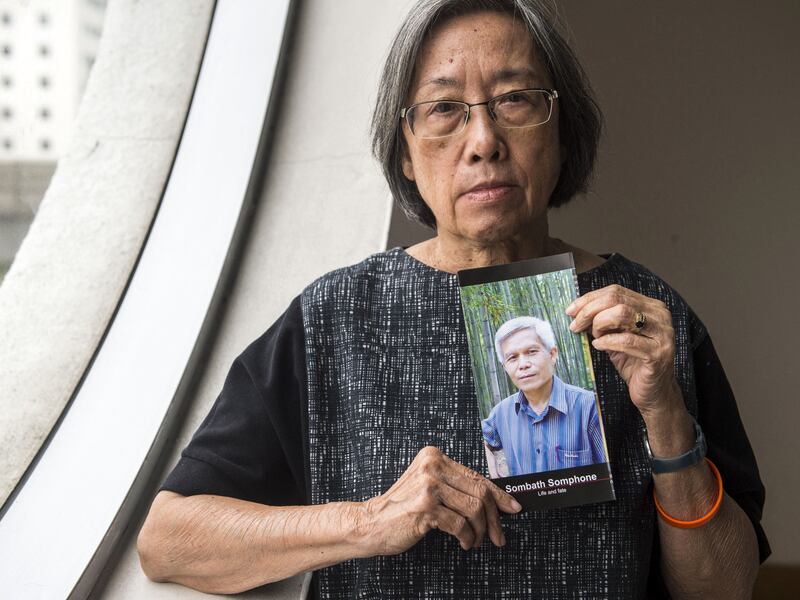
This coming Sunday marks the 12th anniversary of when activist Sombath Somphone was stopped at a police checkpoint near Vientiane, forced into a truck and driven away. He’s not been seen since.

Before his abduction, Sombath had become well-known for challenging massive land deals that had left thousands of rural Lao villagers homeless with little compensation. The deals -– negotiated by the government –- had sparked rare protests in Laos, where political speech is tightly controlled.

Shui-Meng Ng holds a picture of her missing Laos husband Sombath Somphone, an environmental campaigner, in Bangkok, Dec. 12, 2018. (Romeo Gacad/AFP)

Police have promised to investigate Sombath’s Dec. 15, 2012, disappearance, which was captured on closed circuit video. But there has never been any credible technical examination of the footage.

Volker Turk, the U.N. High Commissioner for Human Rights, made an in-person request to Lao government officials to investigate this case during a two-day visit to Laos in June. The government has made no statements on the case.

“The Lao government has no intent to investigate this case seriously,” said Phil Robertson, the director of Asian Human Rights and Labor Advocates.

Not only have police denied involvement, they have also tried to shift the blame to Sombath, implying that there was something personal or business-related behind the disappearance, Robertson said.

“But everyone knows Sombath was last seen with Lao police at a checkpoint in Vientiane prefecture,” he said.

Although memory of the case is slowly fading in Laos, social workers and NGO officials worry they could be the next target, according to an NGO worker who requested anonymity for security reasons.

“No one wants to mention it because they think it won’t help or change anything for the better,” the worker said. “NGOs know for sure that this issue cannot be solved. They do not talk about it now.”

Vietnam

Four out of the five lawyers who defended a Buddhist organization in Vietnam in 2022 –- and who were later summoned for police questioning after publicly discussing the case –- have now fled the country.

Attorney Trinh Vinh Phuc is the latest defense lawyer for the Peng Lei Buddhist House Church to leave Vietnam. He and his wife arrived in North Carolina on Dec. 4.Attorney Trinh Vinh Phuc in North Carolina on Dec. 9, 2024.

Six members of the Buddhist church were sentenced in July 2022 to a combined 23 years and six months in prison on charges of “abusing democratic freedoms.”

Vietnam maintains strict laws on religious activity that require groups to be supervised by government-controlled management boards. The Peng Lei Buddhist House Church is an independent Buddhist community.

Phuc and four colleagues -– attorneys Dang Dinh Manh, Nguyen Van Mieng, Dao Kim Lan and Ngo Thi Hoang Anh –- defended the church.

In February 2023, the attorneys sent a petition to Vietnam’s leaders, accusing prosecuting agencies in Duc Hoa district and Long An province of serious wrongdoings. Authorities in turn alleged that the lawyers themselves had shown “signs of abusing democratic freedoms.”

By April 2023, all five lawyers had received police summons, following allegations from the Ministry of Public Security that said they had disseminated information online about the case.

The public discussion of the case could be a violation of Vietnam’s Article 331 – a statute in the penal code widely criticized by international communities as being vague, and routinely used to attack those defending of human rights.

In June 2023, Manh, Mieng and Lan fled to the U.S. to seek asylum after the police sent out notices to search for them.

Phuc told RFA on Monday that leaving his home country and ending his 30 years of legal practice was a tough decision.

“The intense pressure from Long An Provincial Police over the past two years and my desire to protect my honor and dignity” left him with no choice, he said.

Attorneys in Vietnam who are involved in sensitive cases –- particularly those related to police power -– face difficulties and dangers, as well as the risk of being prosecuted, arrested and imprisoned, he said.

Myanmar

Democracy activists in Myanmar on Monday and Tuesday called for international attention to ensure redress for people who are facing human rights violations under the military junta.

“In Myanmar, we are currently witnessing incidents of this terrorist military regime burning down our entire villages, atrocities against innocent people, human rights violations and airstrikes,” said Aung Myo Kyaw, an official with the Assistance Association for Political Victims. “These are all happening across the country.”

U.N. human rights experts said in a statement on Dec. 2 that 6,000 civilians have died from torture and executions and in prison in Myanmar since the military took power in a 2021 coup d’etat.

Aung Myo Min, the Minister for Human Rights of the shadow National Unity Government -- made up of former civilian leaders -- called for a united effort to develop human rights in the future of Myanmar in a statement on Tuesday.

“We respectfully appeal to continue to fight to eliminate fear, to fight injustice, and at the same time, to build a new state, a new country, and a new environment where human rights are promoted in the future in Myanmar.”

Tibet

China is systematically wiping out the names and details of Tibetan political prisoners from its official database, making it difficult for governments and human rights organizations to track prisoners and advocate for their release, human rights analysts told RFA.

“Just this year, more than 40 Tibetan dissidents have either been imprisoned or their whereabouts are not known,” said Phurbu Dolma, researcher at Dharamsala, India-based Tibetan Centre for Human Rights and Democracy .

Among those erased from the official records are four monks from Tengdro Monastery in Tinri County of the Tibetan Autonomous Region who were secretly imprisoned in July 2021: Choegyal Wangpo (who was given 20 years’ prison sentence), Lobsang Jinpa (19 years’ sentence), Norbu Dhondup (7 years’ sentence), and Ngawang Yeshi (5 years’ sentence).

Additionally, there have been a series of recent crackdowns on the use of Tibetan language, including the forced closure of Ragya Sherig Norling Educational Institution and other learning centers, as well as a ban on the use of Tibetan language on social media.

The Chinese government has shuttered monastery schools that teach Tibetan and has also forced monks and nuns aged 18 and below to be sent to state-run boarding schools where the medium of instruction is Mandarin.

“This year’s theme for International Human Rights Day is ‘Our Rights, Our Future, Right Now,’ which is highly relevant to the rights situation inside Tibet amid China’s deliberate attempts at erasing Tibetan language and identity,” says Dukten Kyi, who heads the Central Tibetan Administration’s human rights desk.

RFA Khmer, RFA Vietnamese, RFA Lao, RFA Burmese and RFA Tibetan contributed to this report. Translated by Anna Vu, Sovannarith Keo and Aung Naing. Edited by Matt Reed and Malcolm Foster.
India
Is the fastest-growing big economy losing steam?

Soutik Biswas
India correspondent•@soutikBBC

Getty Images
Between July and September, India's economy slumped to a seven-quarter low of 5.4%


Is the world's fastest-growing big economy losing steam?

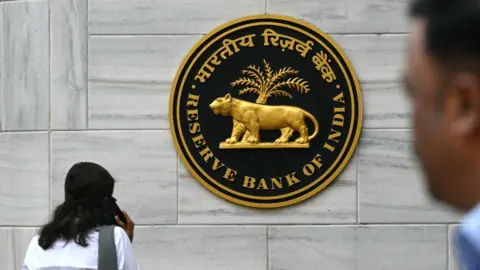
The latest GDP numbers paint a sobering picture. Between July and September, India's economy slumped to a seven-quarter low of 5.4%, well below the Reserve Bank of India (RBI) forecast of 7%.

While it is still robust compared with developed nations, the figure signals a slowdown.

Economists attribute this to several factors. Consumer demand has weakened, private investment has been sluggish for years and government spending - an essential driver in recent years - has been pulled back. India's goods exports have long struggled, with their share standing at a mere 2% in 2023.

Fast-moving consumer goods (FMCG) companies report tepid sales, while salary bills at publicly traded firms, a proxy for urban wages, shrank last quarter. Even the previously bullish RBI has revised its growth forecast to 6.6% for the financial year 2024-2025.

"All hell seems to have broken loose after the latest GDP numbers," says economist Rajeshwari Sengupta. "But this has been building up for a while. There's a clear slowdown and a serious demand problem."

Finance Minister Nirmala Sitharaman paints a brighter picture. She said last week that the decline was "not systemic" but a result of reducing government spending during an election-focused quarter. She expected third-quarter growth to offset the recent decline. India will probably remain the fastest-growing major economy despite challenges like stagnant wages affecting domestic consumption, slowing global demand and climate disruptions in agriculture, Sitharaman said.


Getty Images
India's inflation surged to 6.2% in October, mainly driven by high vegetable prices


Some – including a senior minister in the federal government, economists and a former member of RBI's monetary policy group – argue that the central bank's focus on curbing inflation has led to excessively restrictive interest rates, potentially stifling growth.

High rates make borrowing more expensive for businesses and consumers, and potentially reduce investments and dampen consumption, both key drivers of economic growth. The RBI has kept interest rates unchanged for nearly two years, primarily because of rising inflation.

India's inflation surged to 6.2% in October, breaching the central bank's target ceiling (4%) and reaching a 14-month high, according to official data. It was mainly driven by food prices, comprising half of the consumer price basket – vegetable prices, for example, rose to more than 40% in October. There are also growing signs that food price hikes are now influencing other everyday costs, or core inflation.

But high interest rates alone may not fully explain the slowing growth. "Lowering rates won't spur growth unless consumption demand is strong. Investors borrow and invest only when demand exists, and that's not the case now," says Himanshu (he uses only one name), a development economist at Delhi's Jawaharlal Nehru University.

However, RBI's outgoing governor, Shaktikanta Das, believes India's "growth story remains intact", adding the "balance between inflation and growth is well poised".

Economists point out that despite record-high retail credit and rising unsecured loans - indicating people borrowing to finance consumption even amidst high rates - urban demand is weakening. Rural demand is a brighter spot, benefiting from a good monsoon and higher food prices.


AFP
India's central bank has kept interest rates unchanged for nearly two years, citing inflation risks


Ms Sengupta, an associate professor at Mumbai-based Indira Gandhi Institute of Development Research, told the BBC that the ongoing crisis was borne out by the fact that India's economy was operating on a "two-speed trajectory", driven by diverging performances in its "old economy and new economy".

The old economy comprising the vast informal sector, including medium and small scale industries, agriculture and traditional corporate sector, are still waiting for long-pending reforms.

In contrast, the new economy, defined by the boom in services exports post-Covid, experienced robust growth in 2022-23. Outsourcing 2.0 has been a key driver, with India emerging as the world's largest hub for global capability centres (GCCs), which do high-end offshore services work.

According to Deloitte, a consulting firm, over 50% of the world's GCCs are now based in India. These centres focus on R&D, engineering design and consulting services, generating $46bn (£36bn) in revenue and employing up to 2 million highly skilled workers.

"This influx of GCCs fuelled urban consumption by supporting demand for luxury goods, real estate and SUVs. For 2-2.5 years post-pandemic, this drove a surge in urban spending. With GCCs largely established and consumption patterns shifting, the urban spending lift is fading," says Ms Sengupta.

So the old economy appears to lack a growth catalyst while the new economy slows. Private investment is crucial, but without strong consumption demand, firms will not invest. Without investment to create jobs and boost incomes, consumption demand cannot recover. "It's a vicious cycle," says Ms Sengupta.

There are other confusing signals as well. India's average tariffs have risen from 5% in 2013-14 to 17% now, higher than Asian peers trading with the US. In a world of global value chains, where exporters rely on imports from multiple countries, high tariffs make goods more expensive for companies to trade, making it harder for them to compete in global markets.
Advertisement

Getty Images
Car sales have dropped by 14% in November - another signal of weakening demand


Then there is what economist Arvind Subramanian calls a "new twist in the tale".

Even as calls grow to lower interest rates and boost liquidity, the central bank is propping up a falling rupee by selling dollars, which tightens liquidity. Since October, the RBI has spent $50bn from its forex reserves to shield the rupee.

Buyers must pay in rupees to purchase dollars, which reduces liquidity in the market. Maintaining a strong rupee through interventions reduces competitiveness by making Indian goods more expensive in global markets, leading to lower demand for exports.

"Why is the central bank shoring up the rupee? The policy is bad for the economy and exports. Possibly they are doing it because of optics. They don't want to show India's currency is weak," Mr Subramanian, a former economic adviser to the government, told the BBC.

Critics warn that the "hyping up the narrative" of India as the fastest-growing economy is hindering essential reforms to boost investment, exports and job creation. "We are still a poor country. Our per capita GDP is less than $3,000, while the US is at $86,000. If you say we are growing faster than them, it makes no sense at all," says Ms. Sengupta.

In other words, India requires a significantly higher and sustained growth rate to generate more jobs and raise incomes.

Boosting growth and consumption will not be easy in the short term. Lacking private investment, Himanshu suggests raising wages through government-run employment schemes to increase incomes and spur consumption. Others like Ms Sengupta advocate for reducing tariffs and attracting export investments moving away from China to countries like Vietnam.

The government remains upbeat over the India story: banks are strong, forex reserves are robust, finances stable and extreme poverty has declined. Chief economic adviser V Anantha Nageswaran says the latest GDP figure should not be over-interpreted. "We should not throw the baby out with the bathwater, as the underlying growth story remains intact," he said at a recent meeting.

Clearly the pace of growth could do with some picking up. That is why scepticism lingers. "There's no nation as ambitious for so long without taking [adequate] steps to fulfill that ambition," says Ms Sengupta. "Meanwhile, the headlines talk of India's age and decade - I'm waiting for that to materialise."
Brexit ‘delivered the opposite of what it promised’, Angela Rayner admits

That might just be the sound of the penny dropping for the Labour government, after Angela Rayner took a swipe at Brexit.


 by Tom
2024-12-08 


Has the Deputy Prime Minister just opened the door for closer ties with the EU? Angela Rayner told the BBC on Sunday that the promises made by Brexit backers haven’t just failed to materialise, but that ‘the opposite has happened’ entirely.

ALSO READ: Brexit now putting UK’s tap water ‘at risk’ – report

Will Labour act to realign the UK with the EU?


Labour have endured a turbulent start to their premiership, but there is hope within the party that the turnaround has already begun. This week, Prime Minister Keir Starmer released a set of target ‘milestones’, for which the British public could hold him accountable for.

‘Reset’ seems to be the operative word for Sir Keir, who is looking to restore the positivity and optimism that helped Labour sweep to a comprehensive victory in the recent General Election. Starmer is also on a mission to iron-out Britain’s relationship with the EU.

Brexit left something of a sour taste across the continent, and under the last government, relations became unquestionably frosty. The PM is yet to commit to a full-scale realignment with the trading bloc, and for now, he’s choosing to pursue ‘individual agreements’ with EU nations.

Angela Rayner pulls no punches in Brexit evaluation

Whether this is the correct approach or not remains to be seen. However, Angela Rayner seems more bullish than most in her assessment of the situation. She has openly criticised the end result of Brexit, claiming that people are now experiencing the opposite of what was promised.

“We did inherit a bad situation. For example, when we left the European Union people were promised more money into the NHS, your living standards will be better and the opposite has happened.”

“I know people are impatient for change, but I also know people will give us an opportunity to prove ourselves, and we will be judged on that. This is why Keir Starmer has set out the clear guidelines on what people should expect us to deliver.” | Angela Rayner
Australia moves to ban billionaires from buying elections

"The Australian electoral system should not work on the basis that the only people that can get in to Parliament are people who are sponsored by billionaires"


 by Jack Peat
2024-12-10 


Australia’s ruling party has proposed moves to ban billionaires from buying elections.

Following Elon Musk’s sizeable donations in the US election and rumours that he is considering a substantial donation to Reform UK in Britain, Australia’s Labor Party has announced plans to cap donations to prevent a similar picture from unfolding there.

While no draft legislation has been made public, the government has sketched out a plan to limit donor spending to $20,000 per candidate per year and introduce a cap on campaign spending for the first time.

It’s a move that Don Farrell, the special minister for state, said will keep big money out of politics.

“The Australian electoral system should not work on the basis that the only people that can get in to Parliament are people who are sponsored by billionaires”, he announced.


Musk, the world’s richest man, has also been rubbing shoulders with the right-wing Italian prime minister, Giorgia Meloni, who has provoked controversy over moves to set up asylum centres in Albania.

Posting on X, Micah Erfan noted: “Y’all do realize that the fact a random unelected private citizen is able to book 1 on 1 meetings with world leaders is a serious condemnation of the amount of poltical power we’ve allowed a small group of oligarchs to accumulate in our society.”


THE NUCLEAR FALLOUT OF TRUMP'S POSSUBLE DETENTE WITH PUTIN


Recommended for you

National University of "Kyiv-Mohyla Academy"

1h


Somali migrants  recount ordeal of 16 days helpless, drifting at sea


December 10, 2024 
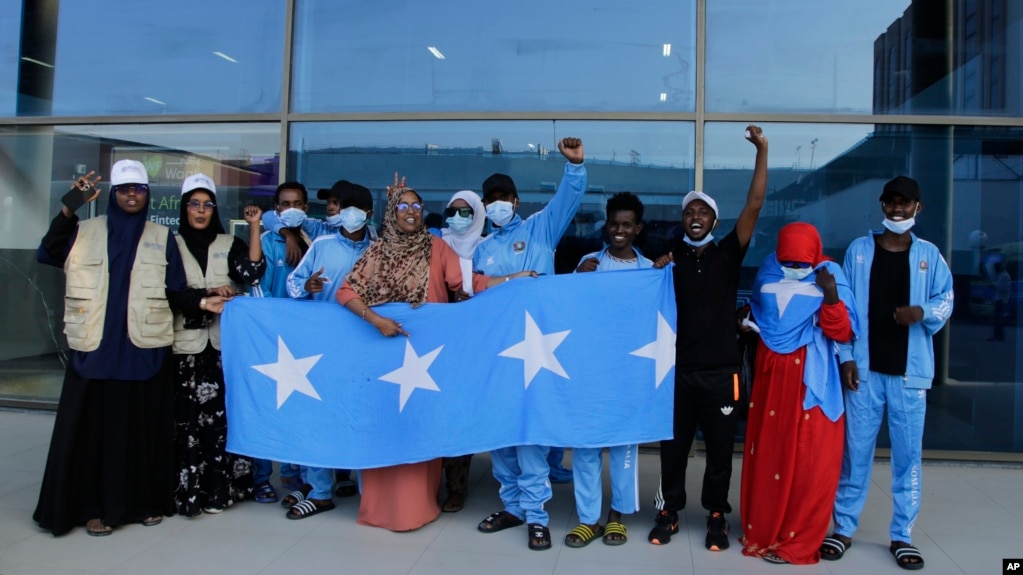
Survivors of a boat tragedy that killed more than two dozen Somali migrants off the coast of Madagascar arrive at Aden Adde International Airport in Mogadishu, Somalia, on Dec. 7, 2024.

In the early evening of November 11, after four days at sea, the passengers of two boats carrying 75 Somali migrants spotted distant lights and a hill. They could hear the muezzin calling for the Maghreb, Muslim evening prayers. Their destination, Mayotte, a French island in the Indian Ocean, was finally in sight.

The lead skipper confirmed what they saw and heard — they were close to shore. However, he expressed a concern. He said he feared that gangsters on the beach might attack them. He decided to stop the boats and informed the passengers they would spend the night at sea and go ashore in the morning, according to a Swahili-speaking migrant who served as the interpreter.

Little did the migrants know their journey, so close to a successful ending, was about to descend into unspeakable horror.

The skippers, who were also human traffickers, had been with the passengers since November 7, when they set off in the two boats from a mothership anchored off Kenya’s southern coast, near Mombasa.

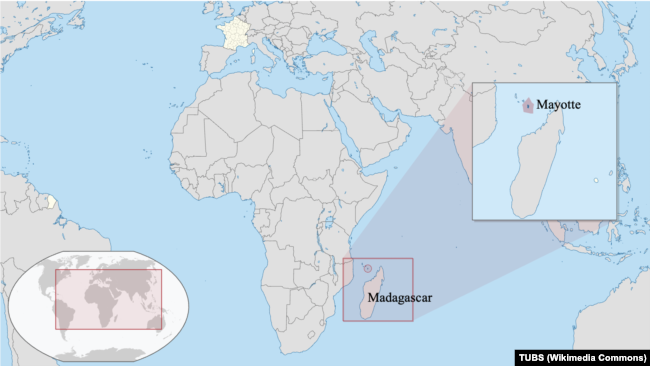
The skippers’ role was to take Somalis on the final leg of their journey to Mayotte, the French island off the northwest coast of Madagascar that has recently become a magnet for asylum seekers hoping to reach Europe.

Map of Madagascar and the French island of Mayotte

However, the skippers were not happy with their compensation. The smuggler told the interpreter that he had been contracted to transport 40 people, but now there were 75. “The money I was given is not enough,” he complained, according to boat passenger Luul Osman Mohamed, who overheard the conversation. The smuggler wanted the passengers to hand over more.

Soon after, the smuggler briefly turned the boat’s engine on, revved it in the water, and then shut it off again, perhaps as a tease or a warning to the passengers. The other boat did the same.

“Sometimes they moved farther out to sea, and other times they came closer to shore,” Luul told VOA’s Horn of Africa Service. But after two rounds of this, she said, “the engine on the other second boat broke down. Then, our engine failed too.”

That night, the migrants and the two smugglers spent the night adrift on the two boats, just off the coast.

One boat carried 37 people, mostly women and two children — a 2-year-old boy and an 8-year-old girl — while the second boat carried 38 passengers.

November 12

Early the next morning, two men rendezvoused with the ships in a boat, seemingly responding to phone calls made by the smugglers. The first smuggler announced that he would leave with the men to repair his boat's engine. He never returned.

The passengers and the second smuggler remained stranded. The two boats drifted aimlessly in the open sea under the scorching sun, with no shelter to protect them. Desperate to cool off, the passengers resorted to splashing seawater on themselves.

November 13

The waves rocked the boats back and forth, but the passengers managed to sleep peacefully. One challenge, however, was that they couldn’t communicate with the second smuggler, as he spoke a language they didn’t understand. This became a minor issue compared to what lay ahead.

The next morning, fishermen arrived and communicated with the second smuggler. Together, they managed to repair the engine on the second boat.

They agreed the boat with the working engine would tow the other one, and it seemed to work at first. As the engine roared to life, they began moving — only in the wrong direction, further out to sea. For some reason, the skipper steered toward Comoros instead of Mayotte.

They continued for three to five hours, Luul recalls, until the only working engine failed once again.

“After taking us deep into the sea, he took the navigation system with him and left on the fishing boat,” Luul said. The second skipper disappeared and never returned.

“When the smugglers were with us, we felt calm. They were with us, and whatever happened to them, we knew would happen to us,” said Anas Ibrahim Abdi, 21. Now, with both smugglers gone, the migrants were at the mercy of the sea and the elements.

November 14

The 75 migrants drifted in the ocean. They had run out of the dates, fried chicken and bread they had received from the mothership a week earlier. The boats and the migrants were stranded in no-man’s sea, not knowing where to go — or how.

Passengers tied the two boats together, to stay connected, says Luul. But when strong waves battered the vessels, they untied the ropes, fearing that if one boat were to sink, the other would go down, too.

About six men who knew how to swim came over to the women’s boat, just in case there was an accident.

Anas, who was in the first boat, moved the other way. “My energy was low, I was sick. Because lots of people come on board, it was not balanced, so I moved to the other boat,” he says.

For three days, the passengers tried to make the boats move, without success. During these days the first death occurred — a young man who was a diabetic.

“We read Fatiha for him. He died in an evening,” Anas said.

This image contains sensitive content which some people may find offensive or disturbing.Click to reveal
Bodies of migrants who died in a boat tragedy are seen on the shore of the Madagascar coast in the Indian Ocean on Nov. 23, 2024.

Sometimes, the waves would bring the passengers close to land, only to drag them back to sea. After 10 days adrift, another passenger, a woman named Fatima, passed away.

“It was hot, she was hungry. She was sitting at the front. Her brother was with her. She was shocked for about two days before she died,” Luul said.

The following day, another passenger died — the 2-year-old boy.

“We had milk for him. When we mix milk with sea water he refuses. When he sucks milk from his mother she faints, she finds it hard to breathe because she has not eaten. Later we started to mix milk with her urine... That kept him alive for two days,” says Luul.

Days later the boy’s mother died, too.

As one passenger after another died from hunger and thirst, others suffered hallucinations. Luul says her friend Fathi was one of them. “She was saying this is Lido beach, let us get off the boat, let us take Bajaj [rickshaw],” she says. “She was ripping off her clothes.”

At times, a swarm of fish hit the boats. Inventive passengers used their sarongs to catch a few, giving them some welcome nutrition.

“We were also eating green grass, salty, that was brought by the waves from the beach,” Luul said.

The only other protein came from a bird that came hovering over a body on the boat. It was caught and eaten too.

November 23

On the first boat, 17 people died, 14 of them women. Ten others died on the second boat. One boy, realizing the boat was going nowhere, jumped into the water, confident in his ability to swim. He was seen swimming away, but moments later, the waves carried him in the opposite direction. He was never seen again.

The last three days, as everyone lost energy, the boats moved swiftly, carried by strong winds. Rain gave the drifting migrants some desperately needed water, but most were losing hope of survival.

Then, after a dark night with no moon, Anas recalls, “At dawn, there was light, we saw the mountain and then a coastline.”

Madagascar. After 16 days at sea, the migrants had finally reached land. The migrants were able to guide the boats close to shore and staggered onto the beach.

Nearby fisherman shied away at first, Anas said. Then they saw the bodies in the boats.

“They were moved. They gave us water, rice and fruits,” Luul said.

The fishermen made a phone call. Another boat came. They tied their boat to the migrants’ and pulled them onto the beach.

“They were good people, they helped us, they changed our clothes, they gave us warm water to get our energy,” Luul said.

The migrants were transferred to authorities in Madagascar.

Survivors of a boat tragedy that killed 28 Somali migrants off the coast of Madagascar arrive at Aden Adde International Airport in Mogadishu, Somalia, on Dec. 7, 2024.

Luul, the 31-year-old mother of five, was the only person from her family on the boat. She says she survived because “everyone has their time to die” — and this wasn’t hers, although she felt it was close.

“I was thirsty, I was hungry; my voice has changed, the last day my throat was not opening, it was swollen. I had lots of spots, and from sitting on the boat. I was weak,” she said.

Out of the 75 passengers, 47 survived the grim journey. The Somali Ministry of Foreign Affairs said on the social media platform X that it chartered a plane for the survivors, including Luul and Anas, and brought them back to Mogadishu on Saturday.

This story originated in VOA’s Horn of Africa Service.
2023;  Four years after Trump's tariff war, SC farmers able to profit again — from soybeans


By Macon Atkinson Report for America corps member matkinson@postandcourier.com
Oct 13, 2023


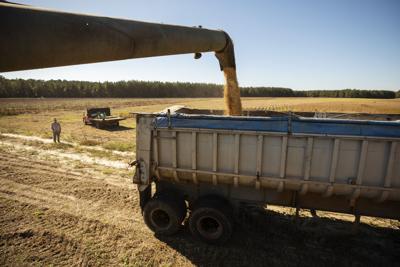
Soybeans are transferred from a combine to the bed of a truck on Rizer Farms in Lodge on Nov. 17, 2020. File/StaffBy Lauren Petracca lpetracca@postandcourier.com

EDGEFIELD — From his 1,500-acre farm, Joe Derrick is powering the world's economy.

Derrick grows soybeans along with more than 2,600 other farmers in South Carolina. The bean, no larger than a penny, wields significant influence in the global market: its total U.S. export value was $34.37 billion in 2022. In South Carolina, soybeans on average bring in about eight times as much money as peaches, according to the National Agricultural Statistics Service.

This year, South Carolina farmers like Derrick are turning back to soybeans as a cash crop after former President Donald Trump’s 2018 trade war with China and foreign tariffs crushed soybean profits for farmers.

An agreement between the U.S. and China brought a truce to the trade war in 2020. China agreed to purchase $200 billion in American goods, including purchases specifically for agricultural products. In the seasons that followed, as prices have fluctuated for other South Carolina crops like cotton, farmers have planted nearly a third of the state's acreage in soybeans.

Amid the renewed surge in profits, the normally-unheard-from South Carolina Soybean Board is rolling out a new video campaign to educate consumers on the role that row crop farmers play behind the scenes.

"If you live in a city, you may not know what farmers do on a regular basis," said Mary Catherine Cromley, a soybean promotion marketing specialist. "You may just think corporate farms. We wanted to bring the farmer to the table a little bit more."

South Carolina grows a diverse array of crops, but soybeans have long been an agricultural state superpower. From 2008 to 2013, soybeans were the second- or third-highest value field crop in the state, averaging over $100 million, according to research from Clemson University. Grown for oil and protein, it is one of the most important world crops with current global production at about 176.6 million tons.

South Carolina is able to sustain high soybean demand because of the state's animal agriculture, Cromley said. Soybean meal, or what's left after the oil is taken and the soybean is crushed, is often used for livestock food. Soybeans are also used in human food as protein substitutes and in soy sauce, breakfast cereals and bars.

Soybeans are also a good crop for farmers to add to their field rotation as they improve soil health, Derrick said. On his fourth-generation family farm in the Edgefield County town of Johnston (pop. 2,044), Derrick, a soybean board member, is planting 400 acres of soybeans this year. He has seen favorable results from his initial harvest after taking several years off.

"We've probably got the best looking soybean crop that we've had in a long time," he said.

Derrick is not the only farmer investing in soybeans this year. Soybean acreage planted in South Carolina in 2023 was 395,000 acres, up 12 percent from 2019 when production declined in the wake of the trade war. The USDA Crop Production Report released in September shows South Carolina farmers expect to produce 13.7 million bushels this year, up 18 percent from 11.6 million bushels in 2019.

Farmer Johnny Watts has planted 2,400 acres of soybeans this year and expects to harvest 1,100 bushels on his 6,000-acre family farm in Sumter County.

The trade war was "rough," Watts said. He and other farmers had barely recovered from historic flooding that wrecked South Carolina in 2015 before tariffs hit their profit margins.

"There was definitely some head-scratching and pencil sharpening," Watts said.

Prices plunged when China placed a 25 percent tariff on American-grown soybeans in retaliation for U.S. trade actions under Trump. Today in 2023, soybeans are going for about $13.30 a bushel. In August 2018 during the bean war, that price was $8.94.


By Hannah Alani halani@postandcourier.com

Exports to China were nearly halved in the years that followed, dealing a serious blow to farmers who were supplying the U.S.' largest foreign consumer. Annual trade losses were estimated at $9.4 billion nationwide, according to USDA data.

Tariffs in the U.S. and China were still in place when President Joe Biden took office despite the 2020 agreement. China had only purchased 57 percent of the U.S. exports it had committed to by the end of 2021.

But USDA data shows soybean sales to China have bounced back to nearly pre-2018 levels, and as demand resumed, South Carolina farmers have once again found themselves at the good center of an international economy.

The new advertising from the nonpolitical, nonpartisan South Carolina Soybean Board, seen on local TV during dinnertime, is intended to help farmers pool resources for research, promotion and education, Cromley said. The videos feature sweeping footage of rolling crop fields and interviews with farmers and Soybean Board members across the state about everything from pest control to sustainable farming measures.

While people generally know about produce farmers in their community, they might not be as familiar with row crop farmers who don't typically sell directly to the general public, Cromley said.

"We think that our farmers who may not have that direct consumer-facing role are also pretty important as well," she said.

The advertisements started in late August and will run through early November with longer features in Charleston set to run on WCSC-TV's "Palmetto Life" show over the next few months. The local board worked with the federal Soybean Board on the series and will only be billed for a portion of it, Cromley said.

Derrick said the promotion was a good idea.

"Until people realize really what farming is all about — what it takes in input and as far as all our costs and everything — I think it's a good idea to put it out for people to realize what farmers really do," Derrick said.

Derrick, who spoke personally and not for the board, said he plans to vote for Trump again in 2024 despite the tariffs' financial impact. While he wishes Trump would "stop tweeting," Trump was good for the farmer, he said.

Watts voted for Trump in the previous two elections but is still deciding who he'll vote for in 2024.

"We need something different in Washington, D.C.," he said. "I'm not sure what that difference is yet."

The trade war was "difficult but necessary," and Watts said farmers overall felt valued and supported during Trump's presidency. The Trump administration rolled out $28 billion to farmers to offset tariff losses, and a National Foundation for American Policy analysis found Trump-era spending on farmers was higher than the budgets of several government agencies.

"The importance of agriculture was recognized," Watts said.

About Report for America: Report for America is a national service program that places talented emerging journalists in local newsrooms to report on under-covered topics and communities across the United States and its territories. By creating a new, sustainable model for journalism, Report for America provides people with the information they need to improve their communities, hold powerful institutions accountable, and restore trust in the media. Report for America is an initiative of The GroundTruth Project, an award-winning nonprofit journalism organization dedicated to rebuilding journalism from the ground up.

More informationIn
land Port Dillon contributes to almost $10 billion economic impact in Pee Dee
South Carolina farmers face Helene's damage after months of drought and falling prices
Soybean, corn tariffs and mass deportations could cost SC farmers who backed Trump


Macon Atkinson
Politics Reporter/Report for America corps member
Macon Atkinson is a politics reporter covering the 2024 presidential primaries with a focus on rural communities and issues. Macon is a 2023-2024 Report for America corps member. She previously covered city government and public safety for local newspapers in the Carolinas and Texas.