Wednesday, January 15, 2025

SOCIAL CREDIT*

Source: Scheerpost

*ALBERTA HAS THE ONLY PROVINCIAL GOVERNMENT OWNED BANK IN CANADA BROUGHT IN BY THE SOCIAL CREDIT GOVERNMENT IN THE 1930'S

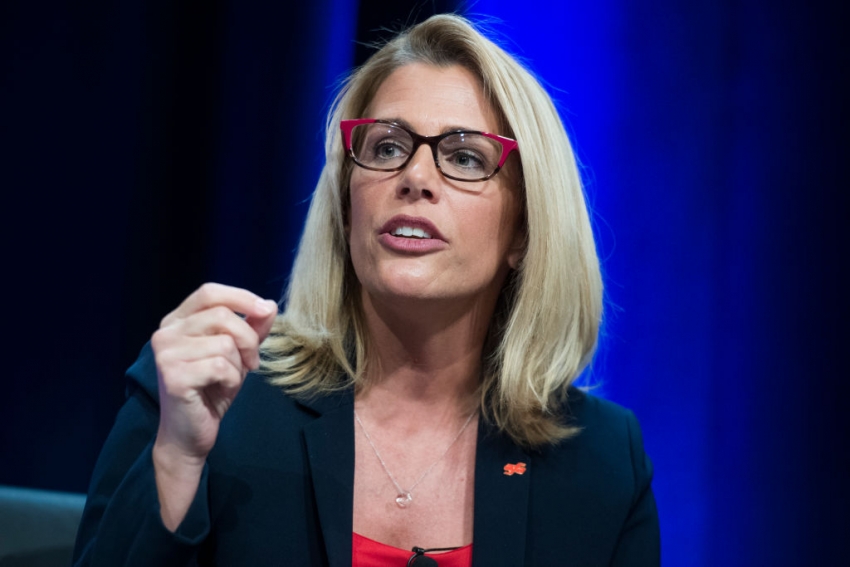
North Dakota is staunchly conservative, having voted Republican in every presidential election since Lyndon Johnson in 1964. So how is it that the state boasts the only state-owned bank in the nation? Has it secretly gone socialist?

No. The Bank of North Dakota (BND) operates on the same principles as any capitalist bank, except that its profits and benefits serve the North Dakota public rather than private investors and executives. The BND provides a unique, innovative model, in which public ownership is leveraged to enhance the workings of the private sector. It invests in and supports private enterprise — local businesses, agriculture, and economic development – the core activities of a capitalist system where private property and enterprise are central. Across the country, small businesses are now failing at increasingly high rates, but that’s not true in North Dakota, which was rated by Forbes Magazine the best state in which to start a business in 2024. 

The BND was founded in 1919, when North Dakota farmers rose up against the powerful out-of-state banking-railroad-granary cartel that was unfairly foreclosing on their farms. They formed the Non-Partisan League, won an election, and founded the state’s own bank and granary, both of which are still active today.

The BND operates within the private financial market, working alongside private banks rather than replacing them. It provides loans and other banking services, primarily to other banks, local governments, and state agencies, which then lend to or invest in private sector enterprises. It operates with a profit motive, with profits either retained as capital to increase the bank’s loan capacity or returned to the state’s general fund, supporting public projects, education, and infrastructure.

According to the BND website, more than $1 billion had been transferred to the state’s general fund and special programs through 2018, most of it in the previous decade. That is a substantial sum for a state with a population that is only about one-fifteenth the size of Los Angeles County.  

The BND actually beats private banks at their own game, generating a larger return on equity (ROE) for its public citizen-owners than even the largest Wall Street banks return to their private investors. 

Why So Profitable? The BND Model

For nearly a century, the BND maintained a low profile. But in 2014, it was featured in the Wall Street Journal, which reported that the Bank of North Dakota “is more profitable than Goldman Sachs Group Inc., has a better credit rating than J.P. Morgan Chase & Co. (JPM) and hasn’t seen profit growth drop since 2003.” The article credited this success to the shale oil boom; but North Dakota was already reporting record profits in the spring of 2009, when every other state was in the red and the oil boom had not yet hit. 

The average return on equity (ROE) of the BND from 2000 through 2023 (its latest annual report) was 19.51%. (ROE = net profit divided by shareholder equity.) Compare JPMorgan Chase (JPM), by far the largest bank in the country, with 2.4 trillion in deposits. Its average ROE from 2000-23 was 11.38% over the same period. For a detailed breakdown, see here

Note that these respective returns are for shareholder/owners. The BND has only one shareholder, the state itself. State pension funds can buy stocks, but state general funds typically do not invest in them. Their money is held in banks as deposits, which pay a lower return than bank stock. The California Pooled Money Investment Account (PMIA), for example, held an average $166 billion in California state funds in fiscal year 2023-24, in a variety of investments including federal bills, bonds, notes and securities; time deposits and CDs; and corporate bonds and commercial paper. It yielded only 3.927% during that fiscal year. A state-owned bank on the BND model could have generated a five times higher return for the state. 

How could the BND have outperformed JPM, the nation’s largest bank? Most important, it has substantially lower costs and risks than private commercial banks. It has no exorbitantly-paid executives; pays no bonuses, fees, or commissions; has no private shareholders; and has low borrowing costs. It engages in old-fashioned conservative banking and does not speculate in derivatives, so it has no losses or risk from derivative trades gone wrong. 

The BND does not need to advertise or compete for depositors. It has a massive, captive deposit base in the state itself, which must deposit all of its revenues in the BND by law.  Most state agencies also must deposit there. The BND takes some token individual deposits, but it does not compete with local banks for commercial deposits or loans. Municipal government deposits are generally reserved for local community banks, which are able to use those funds to back loans because the BND provides letters of credit guaranteeing them. The BND also has a massive capital base, with a sizable capital fund totaling $1.059 billion in 2023, along with deposits of $8.7 billion.

Among other costs avoided by the BND are those for fines, penalties and settlements arising from government and civil lawsuits. Since the year 2000, JPM has paid more than $40 billion in total fines and settlements to regulators, enforcement agencies and lawsuits related to anti-​competitive practices, securities abuses and other violations; and it is still facing several hundred open legal cases.

The State’s Deposits Are Safer in Its Own Bank

The BND is not only more profitable but is safer than JPM. In fact federal data show that JPM is the most systemically risky bank in the country. The BND, by contrast, has also been called the nation’s safest bank. Its stock cannot be short-sold, since it is not publicly traded; the bank cannot go bankrupt, because all of the state’s revenues are deposited in it by law; and it will not suffer a run, since the state would not “run” on itself. 

Compare JP Morgan Chase, which has over $1 trillion in uninsured deposits, the type most likely to be withdrawn in a crisis. In 2023, the FDIC insurance fund had a balance of only $116.1 billion – only 5% of JPM’s total deposits of $2.38 trillion. JPM also had major counterparty risk in the derivatives market, with $61 trillion in total derivatives or $628 billion in netted derivatives. That’s five times those of Credit Suisse, a SIFI (Systemically Important Financial Institution) which went insolvent in 2023. 

Not just the Bank of North Dakota but North Dakota’s local banks are very safe, aided by the BND with liquidity, capitalization, regulation, loan guarantees, and other banker’s bank services. No local North Dakota banks have been in trouble during this century, but if they were to suffer a bank run, the BND would be there to help. According to its former CEO Eric Hardmeyer, the BND has a pre-approved fed funds line set up with every bank in the state; and if that is insufficient for liquidity, the BND can simply buy loans from a troubled local bank as needed. 

Today state governments typically deposit their revenues in giant Wall Street banks designated as SIFIs, including JPM; but those banks are riskier than they appear. They “insure” their capital with interconnected derivatives backed by collateral that has been “rehypothecated” (pledged or re-used several times over). The Financial Stability Board in Basel has declared that practice to be risky, “as highlighted during the 2007-09 global financial crisis.” The five largest Wall Street depository banks hold $223 trillion in derivatives — called a “ticking time bomb” by the Bank for International Settlements — and they have a combined half trillion dollars in commercial real estate loans, also very risky in the current financial environment.

Under the Dodd Frank Act of 2010, a SIFI that goes bankrupt will not be bailed out by the government but will be recapitalized through “bail ins,” meaning the banks are to “bail in” or extract capital from their creditors. That includes their “secured” and “collateralized” depositors, including state and local governments. Under the Bankruptcy Act of 2005 and Uniform Commercial Code Secs. 8 and 9, derivative and repo claims have seniority over all others and could easily wipe out all of the capital of a SIFI, including the “collateralized” deposits of state and local governments. The details are complicated, but the threat is real and imminent. See fuller discussions here and here, David Rodgers Webb’s The Great Taking, and Chris Martenson’s series drilling down into the obscure legalese of the enabling legislation, concluding here.    

Even if the SIFIs remain solvent, they are not using state deposits and investments for the benefit of the state from which they come, and often they are betting against the public interest. The BND, on the other hand, is mandated to use its revenues for the benefit of the North Dakota public. Other states would do well to follow North Dakota’s lead. 

Advantages of a State-owned Bank for the Public, Local Government and Local Banks

Like private banks, a publicly-owned bank has the ability to create money in the form of bank credit on its books, and it has access to very low interest rates. But the business model of private banks requires them to take advantage of these low rates to extract as much debt service as the market will bear for the benefit of the bank’s private investors. A public bank can pass low rates on to local residents and businesses. It can also recapture the interest on local government projects, making them substantially cheaper than when funded through the bond market. 

The BND’s profits belong to the citizens and are generated without taxation, lowering tax rates.On Oct. 2, 2024, Truth in Accounting’s annual Financial State of the States report rated North Dakota  in fiscal health, with a budget surplus per taxpayer of $55,600.

The BND also serves North Dakota’s local banks. It acts as a mini-Fed for the state, providing correspondent banking services to virtually every financial institution in North Dakota. It provides secured and unsecured federal fund lines, check-clearing, cash management and automated clearing house services for local banks. It participates in their loans and guarantees them, so the banks are willing to take on more risk, and they have been able to keep loans on their books rather than selling them to investors to meet capital requirements.  As a result, North Dakota banks were able to avoid the 2008-09 subprime and securitization debacles and the 2023 wave of bank bankruptcies.  

By partnering with the BND, local banks can also take on local projects that might be too large for their own resources or in which Wall Street has no interest, projects that might otherwise go to out-of-state banks or remain unfunded. Due to this amicable partnership, the North Dakota Bankers’ Association endorses the BND as a partner rather than a competitor of the state’s private banks. 

Serving the State as a Rainy Day Fund and for Disaster Relief

Unlike the Federal Reserve, which is not authorized to lend directly to state and local governments except in very limited circumstances, North Dakota’s “mini-Fed” can help directly with local government funding. Having a cheap and ready credit line with the state’s own bank reduces the need for wasteful rainy-day funds invested at minimal interest in out-of-state banks. 

The BND has also demonstrated the power of a state-owned bank to leverage state funds into new credit-dollars for disaster relief. Its emergency capabilities were demonstrated, for example, when record flooding and fires devastated Grand Forks, North Dakota, in 1997. Floodwaters covered virtually the entire city and took weeks to fully recede. Property losses topped $3.5 billion. The response of the state-owned bank was immediate and comprehensive. It quickly established nearly $70 million in credit lines – to the city, the state National Guard, the state Division of Emergency Management, the University of North Dakota in Grand Forks, and for individuals, businesses and farms. It also launched a Grand Forks disaster relief loan program and allocated $5 million to help other areas affected by the spring floods. Local financial institutions matched these funds, making a total of more than $70 million available.

The BND coordinated with the U.S. Department of Education to ensure forbearance on student loans; worked closely with the Federal Housing Administration and Veterans Administration to gain forbearance on federally backed home loans; established a center where people could apply for federal/state housing assistance; and worked with the North Dakota Community Foundation to coordinate a disaster relief fund, for which the bank served as the deposit base. The bank also reduced interest rates on existing Family Farm and Farm Operating programs. Remarkably, no lives were lost, and the city was quickly rebuilt and restored. 

More recently during the COVID crisis, North Dakota distributed unemployment benefits through community banks coordinated by the BND 10 times faster than the slowest state, and North Dakota’s small businesses secured more Paycheck Protection Program funds per worker than any other state. 

Progress and Challenges

In the past 15 years, groups across the country have worked diligently to establish publicly-owned banks in their states and communities. A big push came in 2011 with the Occupy Wall Street movement, demonstrating that even the dry subject of banking can incite large groups of people to take action in times of economic crisis. Many people moved their individual deposits out of big Wall Street banks into local community banks, but what about the large public deposits held by state and local governments? No community bank was large enough for their needs. The Bank of North Dakota demonstrated the feasibility of another alternative: the state or city could form its own bank.

Although more than 50 public bank bills and resolutions have been filed since 2010, the only new bank to emerge is the Territorial Bank of American Samoa, founded in 2016. Lobbying in opposition by big private banks has deterred politicians, who are reluctant to rock the boat when times are good and no immediate need is perceived. However, times are not so good today for the majority of the population, and they could soon get worse even for the wealthy. 

To muster the political will to take action, politicians need a business plan in which the benefits of establishing their own banks clearly outweigh the costs; and public bank advocates today face hurdles that the BND avoided by being grandfathered in before the relevant agency rules were instigated. 

One hurdle is that states today typically require uninsured public funds to be backed by pledged collateral (i.e. surety bonds or letters of credit) exceeding 100 percent of the value of the deposits. California, for example, has state tax revenues exceeding $80 billion. As a single deposit in a bank, only $250,000 of that sum would be covered by FDIC insurance, leaving the balance uninsured; so the state insures that balance with a collateral requirement that is 110% of uninsured deposits. The result is to tie up more liquidity than the deposits provide.

Wall Street banks purport to have the necessary collateral to meet this requirement, but as noted earlier, they relend or “rehypothecate” it several times over. That means even some “secured” claimants will be left out in the event of the bank’s insolvency. Public banking advocates argue that the requirement is unnecessary and unfairly burdensome for state-owned banks. The deposits of the BND, which was chartered as “the State of North Dakota doing business as the Bank of North Dakota,” are backed by the state itself.

Another hurdle is that most state constitutions prohibit the state from “lending its credit” to private parties. This has been construed as prohibiting the state from owning a bank, but legal memoranda have refuted that interpretation.  

Besides a profitable business plan, politicians need a push from their constituents to take action, and most people haven’t heard of public banks and don’t understand the concept. Wider public exposure and education are necessary. Even many politicians are unaware of how banking actually works. Chartered depository banks have the power to create money as deposits when they make loans, expanding the local money supply and increasing the capacity for local productivity. Over 95% of our money supply today is created by banks in this way. This vast power to create money as credit is one that properly belongs in the public domain.   Times are changing, and public banking momentum continues to grow. By making banking a public utility, with expandable credit issued by banks that are owned by the people, the financial system can be made to serve the people and local enterprise without draining their resources away. Credit flow can be released so that industry and free markets can thrive, and the economy can move closer to reaching its full potential.


Source: Global Voices

Since the eruption of the Syrian civil war in 2011, millions of Syrians have fled their country, seeking refuge in neighboring countries and beyond. Thirteen years on, a significant number of these 13.5 million refugees are identified by the UN as displaced persons in need of humanitarian assistance, particularly those who fled to Turkey, Jordan, Lebanon, and Europe

While the prospect of going back to Syria after the fall of President Bashar al-Assad’s regime seems hopeful for many, it is tempered by deep concerns about the fear of instability and economic collapse, the difficulties of rebuilding their lives, and the challenges they face in leaving behind the new lives they have established in exile.

While the situation in Syria remains uncertain, the lives of refugees in host countries have evolved over the past 13 years. In some contexts, like in Lebanon, economic pressures are forcing their children to forgo schooling and enter the labor market. Meanwhile, many of the refugees who fled have integrated into their respective societies, established new businesses, and built families. Leaving behind these lives is not an easy decision, and, for many, the thought of uprooting their families again is overwhelming.

Turkey: A new life amid uncertainty

Turkey has been the largest host country for Syrian refugees, with over 3.7 million Syrians currently residing there. Many refugees have integrated into Turkish society, with several opening small businesses and contributing to the local economy. However, the economic challenges in Turkey — especially during periods of inflation and political instability — have made life difficult for many Syrians. Despite this, Turkey remains a relatively stable environment compared to Syria, and some refugees worry that returning home could mean giving up the hard-earned security they have achieved in Turkey.

For many Syrians in Turkey, the fear of losing their livelihoods is a major deterrent to returning. Owning businesses in Turkey has allowed many refugees to gain financial independence, but starting over in a war-torn country is a risk few are willing to take. Furthermore, the ongoing tensions between the Turkish government and the refugee population add another layer of uncertainty for those who are considering returning to Syria.

Jordan: Struggling with workforce gaps

Zaatari Refugee Camp in Jordan. U.S. Department of State, Public domain, via Wikimedia Commons.

Jordan has hosted approximately 1.3 million Syrians, the majority of whom live in cities and refugee camps such as Zaatari. For years, refugees have faced limited opportunities for employment, but, in recent years, many Syrians have established themselves within the Jordanian workforce, working in sectors like construction, agriculture, and retail. Some have even opened their own businesses, creating new economic opportunities.

Many of the industries that Syrians have contributed to in Jordan are already facing workforce shortages, and the impact of losing skilled labor could be detrimental to both Jordan and Syria. Moreover, Syrians who have lived in Jordan for years face a complex dilemma: they want to help rebuild Syria, but may be fearful of the lack of economic opportunities back home. The culture of food and commerce in Jordan has also influenced many refugees’ way of life, and some worry that returning to Syria would force them to readjust to a society that is not ready to cater to their tastes and needs.

Lebanon: The strain on local communities

Lebanon, with its proximity to Syria, hosts over 1.5 million Syrian refugees, facing immense strain from hosting so many displaced people. The situation for the Syrian refugees has been so difficult that some Syrian families needed their children to also work, instead of going to school. As workers, Syrians are mainly engaged in agriculture, personal and domestic services, and, on a smaller scale, construction, according to the International Labour Organization. However, Lebanon’s own political and economic instability complicates the prospects for refugees seeking to return to Syria.

In a post on Facebook, Aljazeera Mubasher reported on Lebanon’s prime minister Najib Mikati statements, saying “The pressure on our resources is very great, which exacerbates the current economic problems and creates fierce competition for jobs and services.”

For those who have established businesses or found steady employment in Lebanon, the decision to return is fraught with uncertainty. Syria’s devastated economy offers few opportunities, and for many refugees, the fear of having to restart their businesses from scratch outweighs the hope of returning to a peaceful Syria. The gap in Lebanon’s workforce is another challenge: many industries rely on Syrian labor, and a mass return could create labor shortages, further exacerbating Lebanon’s economic struggles already in crises.

Germany: Integration and new opportunities

Germany has taken in approximately one million refugees from Syria, and many of them have integrated successfully into the country’s labor market. Refugees who initially arrived with little more than the clothes on their backs have since found work in fields ranging from healthcare to engineering. Many Syrians in Germany have also benefited from the country’s comprehensive integration programs, which have helped them learn the language, gain vocational skills, and find stable employment.

Today, Syrian refugees have become one of the main components on which Germany, the largest European economy relies. However, immediately after the announcement of the fall of the Bashar al-Assad’s regime in Syria on December 8, 2024, 12 European countries, including Germany, Austria, Belgium, and others, announced putting asylum applications for Syrians on hold. Many European politicians have been calling for the repatriation of Syrians causing fear among Syrians about their future in Europe.

The Austrian government went further, to offer a sum of EUR 1,000, which it called a “return bonus,” to be paid to every refugee who voluntarily wishes to return to their country, Syria. The conservative Chancellor Karl Nehammer stated that the security situation in Syria after the fall of the regime will help in assessing the legal status of Syrian refugees on Austrian territory. In a post on X, Nehammer addressed a message to Syrian refugees in which he said, “Their country now needs its citizens to rebuild it.”

All European countries have signed the Geneva Convention, which includes provisions to protect refugees and prohibit their forced deportation to places where their life or freedom would be at risk. Those granted asylum are generally protected from return under the principle of non-refoulement.

On the other hand, Europeans fear the consequences of Syrian professionals returning to their country. The head of the German Hospital Association, Gerald Gass, warned of the repercussions of the return of Syrian doctors “who played a fundamental role in preserving health care, especially in hospitals in small cities.” On December 13, German Chancellor Olaf Scholz confirmed that “integrated” Syrian refugees in Germany are “welcome.”

The complex decision to return

Syrian Refugees Crisis and flow into neighboring countries and Europe. ERCC – Emergency Response Coordination Centre. Sources: ECHO, ESRI, UNHCR, IOM and national authorities, Public domain, via Wikimedia Commons

The decision of Syrian refugees to return to Syria after the fall of the Assad regime is a deeply personal and complex one. While many long for the day they can go home, the uncertainty of Syria’s future, the challenges of rebuilding the country, and the fear of political instability weigh heavily on their minds.

For those who have established businesses and lives in host countries, returning to Syria is not simply a matter of patriotism — it is a question of survival, economic security, and social integration. Also, Syria, after Assad, needs its young citizens. According to an ILO assessment of the impact of Syrian refugees in Lebanon and their employment profile, more than half of Syrian refugees are below the age of 24.

We Care For Each Other, We Fight For Each Other

Movement scholar Erica Chenoweth moderates an exchange among Kate Hess Pace of Hoosier Action, Ginny Goldman of Organizing Resilience, and Anna Duncan of the National Domestic Workers Alliance on the role, promise, and challenges of mutual aid in their varied organizing projects.

January 13, 2025
Source: Convergence


Mutual aid has many names and many faces, a deep history–and the potential to be a cornerstone strategy as we face compounding crises and advancing authoritarianism. It can sustain people by meeting urgent needs, build relationships and capacity, and seed the vision of a better world that people must have before they take action.

To explore this potential, the capacity-building group Future Currents conducted in-depth interviews with more than 50 organizations that were experimenting with weaving mutual aid into their ongoing power-building practice. They grounded the exploration in the experiences of the first years of the COVID-19 pandemic, and shared their findings in the October 2024 report Building Power Through Mutual Aid: Lessons from the Field. (Future Currents helps movement organizations think through and plan for complex challenges.)

This conversation brings together three organizational leaders who participated in the Future Currents project. Kate Hess Pace is executive director of Hoosier Action, an organization with mutual aid at its core. It works close to the ground in rural southern Indiana, an area that Pace describes as “fully extracted” and abandoned. Pace’s family roots in southern Indiana stretch back 150 years.

Anna Duncan is the senior organizing director for the National Domestic Workers Alliance (NDWA), which organizes to build leadership and improve working conditions for housecleaners, nannies and homecare workers. NDWA has 70 local affiliates in 20 states. In 2020, it organized a large-scale cash assistance program for domestic workers impacted by the COVID-19 pandemic.

Ginny Goldman co-founded Organizing Resilience (OR), an organization led by survivors of climate disasters from across the country. OR supports rapid-response efforts, networks power-building groups that deal with climate shock, and campaigns to overhaul federal disaster response. Goldman’s work there is informed by her experience at the Texas Organizing Project, a base-building organization she co-founded in 2009. “All of my political and organizing work has been done at the backdrop of climate disasters under a very right-wing government, which I’m sorry to say is all of our futures,” she says.

Political scientist Erica Chenoweth moderated the conversation. Chenoweth, a prolific author, directs the Nonviolent Action Lab at Harvard; they study how people can effectively resist authoritarianism and push for systemic democratic change. The 2021 report “Pro-Democracy Organizing Against Autocracy in the United States” that they co-wrote with Zoe Marks spurred Future Currents’ curiosity about mutual aid as a strategy.

Chenoweth opened the panel with a look at some of the history and expressions of mutual aid and guided the panelists as they teased apart some of the knotty questions around mutual aid as a strategy. How do you distinguish mutual aid from service provision, and help turn recipients into participants? How can organizers make the work political but not partisan, so it builds some of the bridges civil society in the US so desperately needs? Mutual aid by definition exists in spaces the government has vacated or spurned. How do organizers help feed the desire and build the skills to contest for power?


How do you distinguish mutual aid from service provision, and help turn recipients into participants?

Erica Chenoweth: The Future Currents report defined mutual aid as “an all-encompassing term for projects that provide direct and collective aid to people as a form of solidarity, often with an expressly political framework and the goal of long-term social change.” There are a number of other words people use to describe what we’re calling “mutual aid.” In their book Practical Radicals, Deepak Bhargava and Stephanie Luce called this “collective care.” The Uruguayan writer Eduardo Galeano referred to it simply as “solidarity work,” in contrast to charity work.

Others have even referred to this more broadly as part of a category you might call “alternative institutions,” or institutions that people build from the grassroots in order to address issues that are arising for their communities that aren’t being addressed by other existing formal institutions.

There are different types of social conditions in which mutual aid becomes incredibly important, especially around collective hardships that are being suffered and endured by groups of people or communities. This has included things as diverse as support for families of people who were disappeared under the Pinochet regime in Chile and toy drives for needy children, and everything in between.

Sometimes these social conditions are intensely political, even though they look apolitical. For example, during the South African anti-apartheid movement, the provision of low-cost food and essential supplies was organized during boycotts of white-owned businesses. It was understood that communities participating in the boycott would not be able to otherwise provide for their families, which could really reduce morale among those participating.

Strike funds, bail funds, and hardship funds are all examples of economic mutual aid, as was the pooling of resources by free or formerly enslaved African Americans to purchase the freedom of enslaved people in the United States.

Mutual aid comes into play around safety and survival. This would be rapid response, rapid mobilization of humanitarian supplies to areas affected by disasters or political violence. Legal assistance that can be quickly mobilized to support people who’ve been wrongly imprisoned or wrongly detained, and monitoring, witnessing and unarmed bodyguards are other kinds of mutual aid.

There are forms of mutual aid related to health and well-being. For example, during the AIDS crisis there was provision of and distribution of safer sex supplies and an entire campaign around informing the public about the importance of this.

The Black Panther Party famously built the free breakfast program that was then kind of adopted by the federal government to expand its provision of free breakfast in schools, in part to undermine the Black Panther Party’s power and appeal, which was growing as a result of its provision of free food.

Disability activists, environmental activists, and many others have found mutual aid programs very important. During the COVID pandemic neighborhoods organized distributions of personal protective equipment, creating it themselves, sewing masks and the like, doing check-ins on vulnerable populations, doing medication and grocery runs, and many more things.

So we have just a very broad range of conditions under which this type of activity has taken place. One of the big questions for us as a panel is how communities have done mutual aid work, and what were the ultimate outcomes of that, particularly when it comes to building capacity for longer-term political transformation? So let me bring you all in now.
Hoosier Action: Church, bomb shelter and vanguard

Kate Hess Pace: Hoosier Action organizes in 13 counties and we don’t organize in any town bigger than 50,000. Now we have about seven chapters across the region that include Care Not Cuffs, for formerly incarcerated people and people in long-term recovery. We have a moms chapter, we have a clergy chapter, we have a chapter that’s mostly young people, a housing chapter.

Our base has a pretty wide ideological span, from Republican to never voted before to fairly progressive. Layering in mutual aid has allowed us to really knit together an organization.


As we’ve seen our institutions collapse and be replaced by dollar stores and liquor stores, there aren’t buildings that you can walk into, and be seen, and have values formation and meaning-making.

We live in a place that doesn’t really have the conditions for democracy. We don’t have an active press. We don’t have a lot of nonprofits and civic institutions. There’s a high level of poverty and not a lot of experience of political work, invitations to be a part of change. But we knew that we didn’t want to tilt into service provision, and wanted to really stay in the lane of what it means to change people’s circumstances over the long term.

We decided to be a truly place-based organization so we could be able to go deep with our leadership. We have this three-pillar framework. We’re a secular organization, but the first pillar we call “church.”

As we’ve seen our institutions collapse and be replaced by dollar stores and liquor stores, there aren’t buildings that you can walk into, and be seen, and have values formation and meaning-making. Because we do live in a place where land and property are quite cheap, we bought two buildings in an effort to have something that felt more material for people that they could help shape and build.

Our moms regularly do art projects in the building where they sit and talk about their experiences together. We have moms that are deep, deep in QAnon conspiracy and moms that are pretty attached to the Democratic Party, but sitting together and painting a pumpkin and talking about what it means to be a mom has really built relationships.

We’ve been pretty deep in the overdose crisis for a while, so our Care Not Cuffs team built a memorial garden that has publicly recognized lives lost to both overdose and suicide in our community. They did an event that was almost like a church service that opened it up.

And that also has created more legibility for people here who don’t have any experience of political work, but do have that experience of collective stewardship often in religious institutions.


We have moms that are deep, deep in QAnon conspiracy and moms that are pretty attached to the Democratic Party, but sitting together and painting a pumpkin and talking about what it means to be a mom has really built relationships.

The second pillar is what we call “bomb shelter.” So many of our people are deeply suffering and have immediate needs, and we have a large list of all of the resources that are available in our community and where they can go. We do regular medical debt workshops where we’re helping people figure out how to negotiate their bills.

And through all of our bomb shelter work, we’re trying to politicize about who decided and why this is the way it is. Also in that category, we do lots of know-your-rights training. The moms chapter has a lot of moms with kids with disabilities so we’ve done trainings on your rights if your kid has an IEP. We’ve done tenants’ rights trainings. They have very few rights here, but they do have some.

We don’t have a lot of ability right now to go upstream on environmental policy, but it’s really about preparing for what’s coming and dealing with what is happening with the climate right now. Our local governments were not responding to the hottest summer on record, so we organized 14 congregations to open as cooling centers through the summer. Now we have 14 clergy advocating to get more participation from local government.

The third pillar, which we call “vanguard,” is a little bit more in the traditional organizing model. It’s really a commitment to training our people to be leaders in the community and to have more of a fleshed-out context about why our part of the country has been fully extracted and had pretty significant economic devastation in the last several years.
National Domestic Workers Alliance: Centering political education

Anna Duncan: NDWA as an alliance has been around since 2007. Our bread-and-butter work has been legislative and budget campaigns at the municipal, state, and federal levels aimed at winning domestic worker bills of rights, addressing the historical exclusion of domestic workers from public services and key labor protections, and winning greater government investment in care, so all families that need care can actually access it and care workers can be paid fair wages.

Organizing with care is in our DNA. We’ve always recognized that we’re not going to be able to organize the population that we organize if we aren’t thinking about people’s needs as whole people. Most of our members have kids, so we always have to have childcare at events. A lot of them care for aging family members as well, so how do we incorporate other members of their family, making sure that we’re providing interpretation and translation, thinking about how folks are able to travel to things?

A big percentage of our base is undocumented. An overwhelming majority is women of color. So we need to respond to all of those different things in order for folks to show up and fight for their rights at work.

During COVID we had to do a pretty big shift at the national level to scale up and invest a lot more in mutual aid and direct support. In Spring 2020 we realized how many of our folks were losing all of their employment. They were providing essential care services, but they were not being given PPE; they were having to pay out of pocket to keep themselves and their clients safe. So we launched what we called the Coronavirus Care Fund, which was a national fund to distribute direct cash assistance to domestic workers who were out of work or otherwise facing financial hardship because of the pandemic.

We thought we would do something that would meet the needs of our existing members. Then we realized what the scale of need was, and also that there was an opportunity here for us to be able to reach and engage new domestic workers who were not already members. We ended up distributing cash assistance to about 50,000 domestic workers across the country, raising $30 million to distribute and having to build up a pretty robust infrastructure to do that distribution.

From the beginning we saw this also as an organizing strategy. People were not going to be able to join the campaigns that we were involved in if they were fighting eviction, or if they and their families were living in their car because they had already been evicted. So there was this need to be providing that support to get folks’ heads above water.


People were not going to be able to join the campaigns that we were involved in if they were fighting eviction, or if they and their families were living in their car because they had already been evicted.

And then we needed to also be doing the political education, talking to folks about the fact that we were providing this assistance because the federal government was not providing it to undocumented folks or because of the exclusion of domestic workers from unemployment benefits in many states.

We saw a huge increase in our membership, nationally and across all of our local organizations, but that was not without challenges.

All of us who’ve done mutual aid as part of organizing know that it’s a very different conversation when you’re bringing a member in because they are ready to fight, they are facing an injustice at work and they want to take action. It’s a different conversation than the one you have with somebody who’s coming in first for the direct assistance. That’s been a big learning for us on the importance of building in that political education from the beginning.
Organizing Resilience: Shifts in power when the power’s out

Ginny Goldman: The impetus to move ahead with Organizing Resilience came in 2021 when we were still under COVID rules and there was a lot of mutual aid and care and relief. Then winter storm Yuri hit and we couldn’t keep the lights on in the fossil fuel capital of the country and people were dying because they were trying to take care of themselves in very dangerous ways, like having barbecues in their living rooms to keep warm.

So naturally people swing into action and start taking each other into their homes. Folks are out passing out water, because the electricity was shut down so people couldn’t drink their water in apartment complexes; slum landlords already were not taking care of things. People’s pipes were frozen, and plumbers were out there. The union folks were helping people fix their pipes so it wouldn’t flood.

And yet you turn on the radio and you hear [Lt. Governor] Dan Patrick, [Governor] Greg Abbott, and “Cancun Cruz” [US Senator Ted Cruz] blaming the blackout on frozen wind turbines and the Green New Deal.

So the premise behind Organizing Resilience is pretty simple. Power is up for grabs during these climate shock moments. It is not neutral. It is not static. Power is either going to shift in our direction or it’s going to shift against us. So we have to prepare. Mutual aid is key. It’s not enough.


Power is up for grabs during these climate shock moments. It is not neutral. It is not static.

How do we use collective care to build power? We really have to wrestle with it and get better at it because I think we’re great at collective care.

Organizing Resilience is bringing people together from these places that are bearing the brunt of climate, and asking, “What are the patterns that unfold that we all need to understand and wrestle with around this climate-driven future?”

It is just unacceptable 20 years post Katrina to be operating as if these aren’t huge, important windows when power is shifting. We need to prepare. So we’re testing out things. What does cash assistance look like as an organizing tool, for example? What big systems can be redesigned in the aftermath of disasters?

When it’s not peak storm season, what does cash assistance look like? How do you get money out? How do you get people into your organization? After a hurricane, people love to go get their chainsaws out and cut out a tree. They feel so powerful getting a tree off someone’s house. How do we then talk to people about how to get in on the green economy? We can design jobs programs in advance, rather than figuring them out in the moment.
More than service

Erica Chenoweth: Kate, could you talk a little bit more about what you see as the difference between mutual aid and direct service provision, and maybe tell us what’s mutual about mutual aid in your context?

Kate Hess Pace: Many of our really important partners are in the lane of immediate support and help, often without any context or political framework or an invitation to be a part of changing things long-term. And there’s such a level of need here that it’s just a road we can’t walk down.

Mutual aid is more about community care. How do we get a little bit more of a floor underneath you? And often that’s actually something like: we’re going to train you to call your debt-holders, and we’re going to work with you on that. We’re all going to open our mail together and pull out these bills we haven’t wanted to look at. That is both about “let’s bring up your financial status” a little bit, but also “let’s move you out of that stigmatizing shame” which exists across our base, with the people coming out of incarceration too.

Because that is one of the barriers to them actually participating in real leadership: not seeing themselves as equal and valid participants in our democracy. I really want all of our mutual aid to be approaching people with that perspective.
From sharing tools to building for the future

Erica Chenoweth: Ginny, could you talk a little bit about those key moments of opportunity where people are improvising and organizing and understanding it, but not necessarily through a vehicle that could be containing that capacity for a longer-term power-building opportunity?

Ginny Goldman: Thank you for asking that, because I think that is the crux of the matter.

We are not doing anything that people haven’t done for each other for years and years and years. We need to stabilize some of these best practices. There are lots of tools that can just be pre-built and people can share them. And then it’s some of the scenario-planning work about “What’s your dream? Where do you want all these folks to go after the fact?”

And I’ll tell you, it’s not just go vote. It is go fight, right? We got to care for people and fight for people, care for people and fight for people. That’s what will heal us personally and collectively.

We also need to think about the new ways that we’re going to construct our organizations. We’re maintaining manyof the models that work, but we’re also running the risk that we’ll lose ground after the disaster or the crisis—orseeing the disaster response workget co-opted and taken up by the Right. TheProud Boys were out in Appalachia after Helene. They’re out talking to folks. They’re helping people and giving people political homes.

We can do that too, and we do do that. But we have to be clear-eyed about where we want this to go for the longer term, so that it becomes more seamless, less chaotic, and part of the climate-driven future organizing models that we’re building.
Bridging red and blue

Erica Chenoweth: The National Domestic Workers Alliance isn’t a national organization, but certainly has a variety of complicated terrain in which you’re operating across the country in different states and localities.

Anna, you were talking about political education as one of the ways in which you’ve been able to link the provision of mutual aid to these broader concerns. Can you talk about what you’ve learned about what works and what doesn’t among red constituents versus blue constituents?

Anna Duncan: Addressing the growing mistrust of government and institutions more broadly is important. Being able to respond with a real analysis of the ways the neoliberal state is failing us and has totally eroded the social safety net, and saying that we as a movement can actually change this. We are institutions ourselves. We have the power to take back the government agencies and institutions to do what government should be doing, which is showing up and providing what people need in times of crisis.

What does this look like for us in red states? Care is a very universal issue. NDWA, through our sister organization Care in Action, does a lot of voter engagement work, and we consistently hear from people that care is a priority. The inability to find child care, the inability to care for elderly and disabled family members and lack of access to paid leave are important across parties.

We’ve had some major campaign successes in North Carolina, in a very difficult state politically. During COVID we won temporary funding increases from the state for both home care workers and childcare workers, to be able fend off what was a real impending crisis.

In order to make some real inroads across party lines, we do need to be talking to folks about how this is the pain point and we actually have the solution if we are able to organize and really wield the power necessary to win these policies.

Erica Chenoweth: That really helpfully segues into one of the other expected benefits of mutual aid as part of a broader toolkit of power building: it addresses one of the weaker areas of American civil society right now, which is the ability to bridge across differences.

The United States has a vibrant and incredibly deep civil society, but over the last 50 to 60 years it’s moved from a relatively good balance between bridged civil society, where people came together across differences to address problems of mutual concern or even just to engage in recreation with one another, to a highly bonded civil society where people basically self-select into civil society formations where they’re easily identifying with one another. Healthy civil society needs both, but American civil society tilts much more toward the bonded type than the bridge type at this moment.


How do you keep a project political without making it partisan?

That can have implications for the way people think of different projects; sometimes basic mutual aid projects are seen as more aligned with partisan interests. But how do you keep a project political without making it partisan?

Kate Hess Pace: We have spent several years figuring out how build an independent political orientation. Where we live, people tip between hating government and hating corporations. We can pull them towards hating corporations, and sometimes position government as the solution and partner in the fight against these broader forces that are decimating our community.

Right now, the only way we participate in elections is through town halls in places where there’s no town halls. We just had one in Austin, Indiana. It’s a town of 4,000 and we had 200 people there. We had Libertarian, Republican and Democrat leaders, and we had our leaders in the room. A lot of our leaders got there through our mutual aid work.

The other thing that we’ve learned is that we have to be Indiana-forward. So much of our politics has become nationalized and our leaders see that it’s completely irrelevant to their lives, like two teams arguing on the TV. So that’s a lot of our work, really localizing and making it about them. We do throw both parties under the bus and try to make the politics about you and us and our communities and what we need.

Ginny Goldman: Well, we should throw both parties under the bus at times, but let’s not throw the government there. This is one thing that worries me when people talk about mutual aid, that we can do it better than the government.

You can—for a small period of time for a small number of people—and we can model what it would look like if we ran the government. We could shut down FEMA and rebuild something that actually works, right? But we should be clear-eyed that we are contesting to govern and that these are experiments and tests that are prefiguring that.

We know a lot more than we think around how to make this political and not partisan. When you tell folks in rural North Carolina that Wall Street execs and real estate developers from New York City are coming in to take your land, that is political, that is not partisan.

Anna Duncan: Both of those comments really resonate with me. And we’re all bracing for another round of crises. We’re anticipating a big fight around trying to prevent cuts to Medicaid, cuts to other critical services. People are going to lose their care. Care workers are going to lose their jobs. Our members are bracing for mass deportations. We’re going to need to figure out how to do all the things again—fighting those defensive fights, filling the gaps where there is immediate need.

To the point about how we’re doing work that’s political and nonpartisan: there are a lot of people who are going to be suffering in this crisis who are not yet in our movements and who really need to be in our movements. We need to be the ones who are there talking to them, making meaning of the economic suffering of this moment, making meaning of who is actually to blame for that suffering, and being able to work together to fight for those long-term solutions that are actually going to make all of our lives and communities better. We can’t lose sight of our vision and the power-building to be able to implement it.

Anna Duncan is an organizer and strategist based in Durham, NC with two decades of experience in labor, immigration, and housing movements. She is the Senior Organizing Director at the National Domestic Workers Alliance (NDWA) where she oversees local and state organizing strategies and campaigns and leads capacity building for NDWA’s affiliate organizations. She previously led NDWA’s We Belong Together campaign focused on gender and immigrant justice, and got her start as an organizer fighting for affordable housing and against displacement in her hometown of Washington, D.C.


Sara Nelson Explains How Unions Can Fight Trump

Sara Nelson, international president of the Association of Flight Attendants-CWA ‪@AFACWA‬, AFL-CIO,


January 14, 2025
Source: The Real News Network

Donald Trump will once again be inaugurated as president in just a week’s time, and the lessons of workers’ victories from his past administration provides an important roadmap to the fight ahead. In 2019, flight attendants organized to end a government shutdown that threw airports around the country into chaos. Sara Nelson, international president of the Association of Flight Attendants-CWA ‪@AFACWA‬, AFL-CIO, joins The Real News for a look back at the 2019 shutdown fight and how unions can give workers the tools they need to fight back over the next four years.


Musk Aims to Lead the Far-Right International
January 13, 202
Source:  TRUTH OUT


Fascist rally. Image by DT Rocks, Creative Commons 4.0


Elon Musk spent more than a quarter billion dollars to back Trump and other MAGA Republican candidates. He did so not simply because he has a lot to gain from Trump’s presidency, which he does, but also because of his own ideological proclivities.

Musk is a right-wing extremist and not content to limit his meddling to U.S. politics. In fact, he is clearly on a personal mission to advance the cause of the far right across the western world. Hence his foray into European politics.

Ahead of next month’s federal election in Germany, Musk took to his social platform x on December 20 to proclaim that “only the AfD can save Germany” while describing chancellor Olaf Scholz as an “incompetent fool,” urging him in turn to resign, and president Frank-Walter Steinmeier as an “anti-democratic tyrant.” He doubled down a few days later on his full throated support for the far-right party Alternative for Germany (AfD) in an op-ed for the prominent German newspaper Die Welt, calling it “the last spark of hope” for the country. He went on to say that AfD “can lead the country into a future where economic prosperity, cultural integrity and technological innovations are not just wishes, but reality.” Incidentally, Musk, like all good imperialist investors, feels that his business investment in Germany gives him the right to intervene in any way he can into the country’s political condition.

Not content to limit his meddling to German politics, Musk has tried to stir up division and hatred in British politics by targeting Prime Minister Keir Starmer and top officials. He has accused the government of “releasing convicted pedophiles” and sided with jailed far-right activist Tommy Robinson and Nigel Farage’s Reform UK party though he has called for Farage to be replaced as leader because he “doesn’t have what it takes” to lead the party. Apparently, even Nigel Farage isn’t sufficiently far right enough for Musk.

Europe’s leaders have denounced Musk’s meddling and support for far-right movements, but can they stop him? Musk is using the social media platform to communicate directly with hundreds of millions, bypassing traditional media channels. The billionaire owner of x has more than 200 million followers. Spreading lies and misinformation is easy and fast. MIT researchers have found that fake news spread 10 times faster than real news on social media. And it will become even easier and faster to do so after Mark Zukerberg’s decision to cancel fact-checking on his social media platforms, a move that Elon Musk lost no time in applauding.

On Thursday, Jan. 9, Musk held a livestream chat on his x platform with AfD leader Alice Weidel that lasted more than an hour. Musk’s purpose for holding this discussion was to show people that Weidel is a very reasonable leader even though her party has been put under observation by Germany’s domestic intelligence agency for suspected extremism. Indeed, a German court found in May 2024 that there is sufficient evidence to designate the AfD as a potentially extremist party that poses a threat to democracy and the dignity of certain groups and should therefore be kept under surveillance.

Musk has rejected the claim that the AfD is a right-wing extremist party, with the ridiculous argument that it can’t be so since its leader has a same-sex partner from Sri Lanka–even though the party isn’t only engulfed in racist anti-immigrant hysteria but has vowed to restrict LGBTQ+ rights. Yet Weidel used the opportunity afforded to her by Musk to argue that the AfD shouldn’t be seen as a neo-Nazi party because it holds libertarian views on the economy (which is music to Musk’s ears as he is all for deregulation and lower taxes for corporations and the rich) and Hitler was a communist. Naturally, Musk agreed with Weidel that Hitler was indeed a communist. And also with the equally ludicrous and utterly disgusting comment that left groups who support the Palestinian cause are Nazis and antisemites.

In an age of lies and misinformation, the notion that Hitler was a communist stands out as the high point of ideological perversion. Hitler hated communism and socialism and worked toward the annihilation of the communist movement not only in Germany but across Europe. Upon banning all existing political parties and making the National Socialist German Workers’ Party (NSDAP) the only political party in Germany, Hitler had thousands of communists and social democrats arrested and imprisoned. The Dachau concentration camp was constructed specifically to hold the Nazis’ chief political enemies–the communists.

With Musk having become the first individual on x to have over 200 million followers, it is not difficult to imagine younger generations start believing that Hitler was a communist. Or in any other lies that Musk spreads, such as that the European Union tried to stop him from having a conversation with Alice Weidel.

Yet, it is Musk himself who is an enemy of free speech. He casts himself as a champion but has used his platform to target perceived enemies and to ban free speech. He has even sought to silence his critics with bogus lawsuits. Indeed, as the Guardian aptly put it, “Elon Musk has become the world’s biggest hypocrite on free speech.”

Thanks to Musk’s interference in German politics, there has been an enormous increase on Weidel’s average x posts in the last two weeks, which seems to suggest that Musk’s contributions could translate into more votes for the AfD. Far-right parties are making significant strides across Europe. In 2024, the political pendulum in Europe swung even further right as the far right made huge strides in France, Portugal, Belgium, and Austria while seven EU member states—Croatia, the Czech Republic, Finland, Hungary, Italy, the Netherlands and Slovakia–already have hard-right parties in government.

As far as the AfD is concerned, it won a German state election in 2024, making it the first far-right party to do so since 1945. However, Musk would like to see Germany’s far-right party victorious in the snap election set for Feb. 23 after the collapse of chancellor Olaf Scholz’s coalition government.

There can be no denying that Musk “is throwing grenades into Europe’s political mainstream.” The continent needs radical change. The European Union (EU) has failed on many fronts because of the rule-by-bureaucrats in Brussels. It lacks a unifying vision and the promises of a “social Europe” has given way to neoliberal policies that have been at the core of the creeping ascent of far-right movements and parties in the European political landscape. The surge of the far right and extreme nationalism have echoes of the 1930s. But Musk is on the wrong side of history. His plan is to see Europe’s descent into a deep political crisis so the reactionary forces can eventually take over—just like they did in the 1930s. The question is: Can he be stopped before it’s too late?


CJ Polychroniou  is a political scientist/political economist, author, and journalist who has taught and worked in numerous universities and research centers in Europe and the United States. Currently, his main research interests are in U.S. politics and the political economy of the United States, European economic integration, globalization, climate change and environmental economics, and the deconstruction of neoliberalism’s politico-economic project. He has published scores of books and over one thousand articles which have appeared in a variety of journals, magazines, newspapers and popular news websites. His latest books are Optimism Over Despair: Noam Chomsky On Capitalism, Empire, and Social Change (2017); Climate Crisis and the Global Green New Deal: The Political Economy of Saving the Planet (with Noam Chomsky and Robert Pollin as primary authors, 2020); The Precipice: Neoliberalism, the Pandemic, and the Urgent Need for Radical Change (an anthology of interviews with Noam Chomsky, 2021); and Economics and the Left: Interviews with Progressive Economists (2021).

Take Trump and Musk’s Threats Very Seriously!

January 14, 2025
Source: Originally published by Z. Feel free to share widely.


While Trump multiplies his warmongering declarations against Panama, Greenland, Canada or the Palestinians, chancelleries and the international media limit themselves to talking about the…tactical maneuvers of the new American president. And worse, part of the international left continues to celebrate Trump the peacemaker (!), the one who will put an end to the ongoing conflicts in Ukraine and Palestine. And at the same time, while Elon Musk is multiplying initiatives of all kinds in favor of the extreme hard right, neo-fascist or not, all over the world, the Western media and governments are content to talk about his…populism while wondering “who does Elon Musk think he is”…

Clearly, there’s nothing new under the sun of our liberal do-gooders and other free-market enthusiasts: all these reactions are strongly reminiscent of the reactions of most Western media and governments to Mussolini and Hitler in the ’20s and ’30s. The same blindness to the impending catastrophe, and worse, the same miraculous conversion to the ultra-radical solutions proposed by these charismatic “populists” and “sovereigntists”. As when, for example, the international business press, which mocked Argentina’s new president only a year ago, is now showering him with rave reviews, even presenting him as a model for Western leaders! And all this at a time when many of our neoliberal rulers are discovering themselves to be…libertarians overnight!

So far be it from us to think that Trump or Musk don’t mean exactly what they say. Or that they’ll “mellow out” once they’re in charge and faced with the “complexity” of the problems of our time. All this wishful thinking, currently offered as “analyses” of the situation by our experts and other “political scientists”, is the same, sometimes word for word (!), as that uttered by our leaders and our media in the ’30s. And they do nothing but sow confusion, leaving those from below helpless and powerless in the face of the catastrophe brewing against them…

Yes, Musk and Trump are fully aware of what they promise to do, because their projects and actions correspond to their desires and above all to very material realities. Musk’s – and to a certain extent Trump’s – predilection for the far right and neo-fascists can be explained by the fact that the precondition for the triumph of his libertarianism (which abhors even the European Union’s too timid limits on capitalist greed) is to crush any union movement and atomize workers. In fact, neither Trump nor Musk make any secret of their desire to crush workers. For example, last August, during their “debate” broadcast live on X, they had fun celebrating the cases of workers who had been fired by Musk as soon as they went on strike. And it was exactly against their stance in favor of criminalizing the right to strike, that the powerful auto workers’ union (UAW) filed a complaint against them accusing them of “attempting to intimidate and threaten” workers. As union leader Shawn Fain put it, “Both Trump and Musk want working-class people to sit down and shut up, and they laugh about it openly. It’s disgusting, illegal and totally predictable from these two clowns.”…

So, to break up the workers’ movement, nothing is more experienced, more determined and more organized than the far-right, which is also on the rise. Here, we can’t just talk about elective affinities. In fact, we’re already witnessing a convergence that could very well soon lead to the junction of the extreme hard right around the world with the new-look libertarians represented by Musk, Milei and perhaps Trump himself, if he completes his abandonment of neoliberalism. Such a development would be catastrophic for humanity, however, as it would give wings to a far-right that is even more aggressive and openly nostalgic for its fascist ancestors, just as it is becoming the leading political force almost everywhere in Europe and the world.

In fact, it has to be said that this junction of libertarians with the far right and other nostalgic fascists is greatly facilitated by the abandonment by the new-style libertarians Musk, Milei and their friends of both the visceral anti-statism and the defense of individual rights that characterized traditional libertarianism. And so we see Musk and his libertarian acolytes around the world not only embracing, but even championing, the traditional racist, reactionary and obscurantist theories and prejudices of the neo-fascist hard right! (1) The result is that an ever-growing part of the global far right is now abandoning its traditional statism to embrace Musk-style libertarianism, while the latter is abandoning its traditional defense of individual rights to adopt the violently anti-socialist, warmongering, conspiracy-mongering, racist, misogynist, anti-LGBT, anti-migrant, anti-youth, anti-ecological, and climate-negationist theories and behaviors of the hard and neo-fascist far right. It is on this solid foundation of converging, if not common, “values” and interests that the global far right could merge with the triumphant libertarianism of Musk and Milei,(2) now closely followed by Trump. A fusion that would then give birth to a monster whose destructive power could well surpass anything known in the last century…

Here, then, is the answer to a question that seems to be much on the minds of the media and fascism experts of late: Yes, Musk is indeed a fascist, albeit a new kind of fascism. Just as his illustrious ancestor Henry Ford was a pure-blooded fascist: he too was a carmaker, a great innovator of capitalism in his time, a billionaire and an emblematic figure of triumphant American capitalism. This Henry Ford who shares with Elon Musk the same admiration for two very sulphurous German politicians: the first for Adolphe Hitler and the second for the neo-fascist AFD President Alice Weidel. That Henry Ford whose portrait still hung above Hitler’s armchair in his office, because Ford had “discovered” and financed Hitler before anyone else, and his radical anti-Semitism (four volumes of writings in his own hand!) had inspired and guided him like no other. By the way, Musk is currently only following the example of Nazi Henry Ford when he breaks strikes and attacks workers’ unions. The only difference between the two is that Ford had his own army of 3,000 strike-breakers, whereas Musk has none (yet?) and relies on private militias…

Our conclusion can only be provisional, as we’re still at the very beginning of this nightmarish story. However, we can already say that we must not repeat the mistake made by our ancestors in the ’30s, and that we must take Trump’s and Musk’s words and threats very seriously, and urgently prepare to block them. Moreover, the national defense needs currently invoked by Trump, when he does not rule out the use of force to attack Panama, Greenland or Canada, is imperceptibly reminiscent of the need for “lebensraum” (living space) that Hitler invoked in his time, when he set Europe and the whole world on fire…

Notes

1. Trump and Musk’s predilection for the very, very hard right-wing and downright neo-fascist is also illustrated by the choice of guests at Trump’s January 20 inauguration ceremony in Washington. For example, there will be only one French guest, who obviously is not be President Macron, or even Marine Le Pen, obviously considered too moderate. The only guest is…Eric Zemmour! Quite a program…

2. See also The Fascist Threat Becomes Clearer With Milei’s Call for a Brown International: https://znetwork.org/znetarticle/the-fascist-threat-becomes-clearer-with-mileis-call-for-a-brown-international/


ZNetwork is funded solely through the generosity of its readers.  Donate


Giorgos Mitralias
Giorgos (Yorgos) Mitralias is a journalist, one of the founders and leaders of the Greek Committee Against the Debt, and a member of the international CADTM network.