It’s possible that I shall make an ass of myself. But in that case one can always get out of it with a little dialectic. I have, of course, so worded my proposition as to be right either way (K.Marx, Letter to F.Engels on the Indian Mutiny)
Nova Scotia bill proposes lifting uranium exploration ban
Wednesday, 19 February 2025
Legislation has been introduced in the parliament of Nova Scotia calling for the end of a ban on uranium exploration and mining in the Canadian province. However, if passed, it would only allow government research on uranium resources within the province.
The province's legislative chamber (Image: Nova Scotia Legislature)
Repealing the legislated prohibition on uranium exploration and mining would allow for research to better understand opportunities for developing this resource, the provincial government said. "Having accurate data on the amount and location of uranium is the first step. It will also help protect Nova Scotians from health and safety risks. The repeal allows government research only. All industry activity regarding uranium will continue to be prohibited through an existing ministerial order that will remain in place under the Mineral Resources Act."
Canada is the world's third-largest uranium producer, and while uranium is on Canada's critical mineral list, it has not been on Nova Scotia's because of the prohibition. While uranium exploration is regulated provincially, mining and processing are regulated by the federal government through the Canadian Nuclear Safety Commission.
According to World Nuclear Association, all of Canada's uranium is currently mined in northern Saskatchewan. While exploration has concentrated on northern Saskatchewan, new prospects extend to Labrador and Nova Scotia as well as Quebec, Nunavut Territory in the far north, and the Elliott Lake area in Ontario where uranium has been mined in the past.
However, three provinces, none of which are familiar with uranium mining, have banned uranium mining and exploration: Nova Scotia (since 1981), British Columbia (1980-87 and from 2008) and Quebec (since 2013).
"Canada is one of 31 countries that signed a declaration to triple nuclear energy by 2050 - it is a key tool in the fight against climate change," Rushton said. "We can create jobs, make our economy more resilient to future Trump threats and join the global fight against climate change."
Repealing the uranium exploration ban was one of five pieces of legislation proposed in the bill. The others included: amending the Petroleum Resources Act to create the potential for hydraulic fracturing to access onshore natural gas; amending the Public Utilities Act to extend Efficiency Nova Scotia's demand-side management plan by one year while key changes to the electricity system are put in place; repealing and replacing the Agrologist Act to better address the agriculture industry's needs; and modernising the Agricultural Weed Control Act to better protect against noxious weeds.
"Legislation introduced today, 18 February, will lift blanket bans and pave the way for dialogue to ensure natural resource development can happen safely, unlocking a path toward job creation, boosting the economy and making Nova Scotia more self-sufficient," the government said.
"The world is demanding critical minerals and other natural resources in the transition to net-zero by 2050. Nova Scotia can be a safe, responsible and ethical source of those materials and we need to remove barriers to explore all our options," said Tory Rushton, Minister of Natural Resources. "If we're going to use natural resources here, we should be having the conversations about extracting them here and keeping all the jobs and economic benefits for Nova Scotians.
Kazakhstan, Jordan team up for uranium studies
Wednesday, 19 February 2025
Kazakhstan's national atomic company Kazatomprom has signed a memorandum of understanding and cooperation with Jordan Uranium Mining Company.
The signing of the document (Image: Kazatomprom)
The document - signed during an official visit of Kazakh President Kassym-Jomart Tokayev to Jordan - focuses on the joint study of uranium exploration and mining projects in Jordan in order to assess their potential for further development.
This initiative, Kazatomprom said, is aimed at refining geological characteristics and resources estimates of the deposits considering the heap leaching mining technology. Significant emphasis will be placed on environmental sustainability and economic feasibility of the project when evaluating the potential for its implementation, it added.
"Implementation of joint projects opens up promising opportunities for Jordan's nuclear industry, including new labour market opportunities, infrastructure development, and engagement of local contractors," Kazatomprom noted. "For Kazakhstan, the world's leading uranium producer, entering a new market could be a significant step toward expanding its global presence, strengthening strategic positions, and enhancing bilateral economic ties with Jordan."
It added: "Knowledge exchange, adoption of new technologies, and collaborative efforts to improve industry standards will establish a strong and sustainable foundation for the development of the uranium sector in both countries."
Kazatomprom CEO Meirzhan Yussupov said: "Partnership with Jordan Uranium Mining Company (JUMCO) opens new avenues for international cooperation and strengthens Kazakhstan's position in the global uranium industry, supporting our strategic goals to expand and efficiently utilise our resource base. Furthermore, potential development of projects beyond Kazakhstan presents a unique opportunity to gain global expertise and contribute to the sustainable development of our nations."
"This memorandum aims to develop joint uranium mining projects in Jordan and sets the potential stage for JUMCO to accelerate its pace toward commercial production of uranium in Jordan through cooperation with Kazatomprom," said JUMCO General Manager Mohammad Al-Shannag. "Indeed, it will pave the ground for JUMCO to facilitate knowledge exchange, share experience and marketing techniques with Kazatomprom, a world leader in uranium production."
JUMCO is the commercial arm of the Jordanian Atomic Energy Commission and was established in 2013 to carry out radioactive elements exploration and development in Jordan. Its exploration and development efforts have been focused on the Central Jordan Uranium Project, where a pilot plant began operation in early 2021. JUMCO later that year said the plant was fully operational.
According to the 2022 edition of the OECD Nuclear Energy Agency and International Atomic Energy Agency joint report on uranium resources, production and demand - known as the 'Red Book' - Jordan has 62,000 tU as inferred resources. The total includes 33,300 tU JORC-compliant in central Jordan, and an estimated 28,700 tU in the Hasa-Qatrana area. Some 100,000 tU is estimated in phosphate deposits as a possible by-product.
Texas partnership evaluates SMR use for water desalination
Wednesday, 19 February 2025
Natura Resources has entered into a memorandum of understanding with Texas Tech University and Abilene Christian University to evaluate integrating Natura's molten salt small modular reactor technology with water desalination systems.
An MSR-100 reactor facility (Image: Natura Resources)
The goal of this collaboration, which includes the Texas Produced Water Consortium (TxPWC) at Texas Tech, "is to provide a sustainable solution for water scarcity by purifying produced water from oil and gas operations, making it available for agricultural and other beneficial uses", Natura said. Natura announced in July last year that it had joined the consortium to evaluate the deployment of Natura's molten salt reactor technology to meet energy and water needs in the Permian Basin in a partnership dubbed Fortifying the Future.
TxPWC was established by the Texas legislature in 2021 to focus on the potential for beneficial uses of treated produced water outside the oil and gas industry of the Permian basin (produced water is water that is produced as a byproduct of oil and gas extraction, and is typically salty or brackish as well as containing hydrocarbon residues). With administrative oversight from Texas Tech University, in coordination with the Government Agency Advisory Council and the Stakeholder Advisory Council, the consortium is specifically tasked with providing the legislature and state agencies with guidance and recommendations on policies that could encourage a system of beneficial use that is both environmentally safe and economically viable.
"Natura Resources' MSR technology represents a significant advancement in clean energy innovation, equipping Texas with the tools to meet its energy and water needs for decades to come," said Natura founder and CEO Doug Robison. "Our partnership with Texas Tech University and Abilene Christian University exemplifies our collaborative approach to addressing critical challenges and driving technological advancements. This collaboration will pave the way for the commercial development and deployment of MSR technology in Texas and beyond."
"This partnership will address critical challenges we face as a state," said Texas Tech President Lawrence Schovanec. "By working with Natura and Abilene Christian University, we're securing crucial water resources and driving innovation in energy. By creating greater access to water, energy and jobs, we will contribute to a stronger future for our communities. Texas Tech is proud to be part of this collaborative effort."
Senator Charles Perry, Chair of the Texas Senate Committee on Water, Agriculture, and Rural Affairs, said: "Natura's advanced nuclear technology offers a promising solution to our state's water and energy challenges. By integrating desalination with energy production, we can ensure a sustainable future for Texas."
In September last year, the US Nuclear Regulatory Commission (NRC) issued a licence to Abilene Christian University for the construction of a molten salt research reactor on its campus in Abilene, Texas, marking the first construction permit for a liquid-fueled advanced reactor and only the second for any advanced reactor issued by the NRC.
Abilene Christian University's molten salt research reactor (MSRR) will be the first deployment of the Natura MSR-1, a 1 MWt, graphite-moderated, fluoride salt flowing fluid (fuel dissolved in the salt) research reactor. The MSRR will be used for on-campus nuclear research and training opportunities for faculty, staff and students in advanced nuclear technologies. The reactor will significantly expand the university's salt reactor research and development infrastructure, supporting US molten salt reactor design, development, deployment and market penetration.
Natura is partnering with Texas A&M University to deploy the MSR-100 - a 100 MWe system for commercial applications - at the RELLIS Campus. This initiative is part of a broader project known as the Energy Proving Ground, which involves multiple nuclear reactor companies. The project aims to bring commercial-ready small modular reactors to the site, providing a reliable source of clean energy for the Electric Reliability Council of Texas.
Czech Republic sees Korean links beyond Dukovany units
Wednesday, 19 February 2025
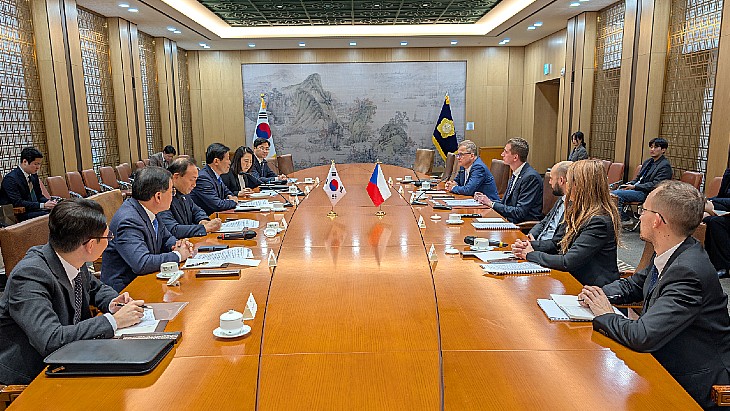
Minister of Industry and Trade Lukáš Vlček has said that the Czech Republic and South Korea are looking at further investments and trade relations in addition to the proposed new capacity at the Dukovany nuclear power plant.
(Image: Czech Ministry of Trade and Industry)
The minister met with the acting President and Prime Minister of South Korea, Choi Sang-mok, in Seoul on Tuesday and said: "We discussed, in addition to the completion of Dukovany and the involvement of Czech industry, further cooperation between our countries, not only in terms of further investments and deepening trade relations, but also, for example, in the field of research, development and innovation."
He also held a meeting with the South Korean opposition, who "confirmed to me at the meeting that it fully supports the project for new nuclear sources and that they are ready to develop trade and cultural relations between the Czech Republic and South Korea".
"The selection of KHNP (Korea Hydro & Nuclear Power) as the preferred supplier for the new nuclear units in Dukovany opens up new possibilities for Czech-Korean economic and technological cooperation. In Korea, we confirmed that it is our priority to ensure that this cooperation goes beyond the field of nuclear energy and includes research, development, small modular reactors, hydrogen technologies, electromobility, battery systems, semiconductors or education," said Vlček.
Background
The Czech Republic currently gets about one-third of its electricity from the four VVER-440 units at Dukovany, which began operating between 1985 and 1987, and the two VVER-1000 units in operation at Temelín, which came into operation in 2000 and 2002.
In October 2023, Westinghouse, EDF and KHNP submitted binding bids for a fifth unit at the Dukovany nuclear power plant, and non-binding offers for up to three more units - another one at Dukovany and two at the Temelin nuclear power plant. Westinghouse was proposing its AP1000, EDF was proposing its EPR1200 reactor, KHNP was proposing its APR1000. But in February the Czech government announced it was changing the tender to be binding offers for four new units, with Westinghouse not included because it "did not meet the necessary conditions".
Prime Minister Petr Fiala explained at the time that the decision to switch to binding offers for all four units was the result of the original tender suggesting that contracting for four units, rather than having separate processes, could have a 25% benefit in terms of costs.
In July, he announced KHNP as the preferred bidder, with contract negotiations to begin with the aim of signing contracts for the initial unit by the end of March 2025 - the target for test operation of the first new unit is 2036 with commercial operation in 2038. He said the winning tender "based on the evaluation of experts, offered better conditions in most of the evaluated criteria, including the price". The KHNP bid was for a cost of around CZK200 billion (USD8.6 billion) per unit, if two units were contracted.
Last month Westinghouse and KHNP and KEPCO reached an agreement on their long-running intellectual property dispute and to collaborate on the deployment of new nuclear reactors around the world.
Bolivia's first nuclear research reactor hosts IAEA mission
Wednesday, 19 February 2025
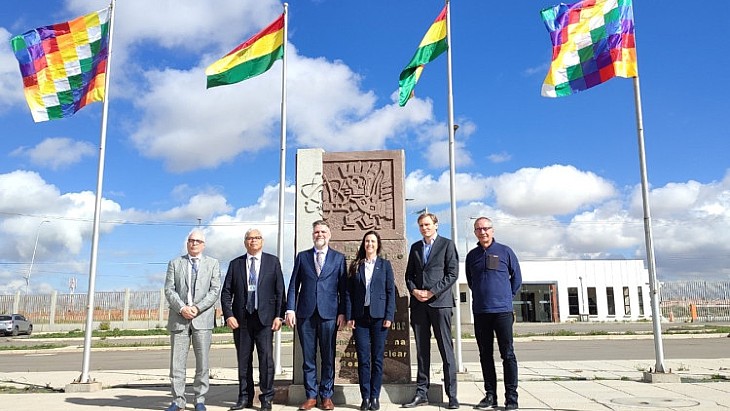
A team of International Atomic Energy Agency experts has visited the RB-01 research reactor under construction in Bolivia to verify agency safety standards are being followed, and to recommend further measures.
(Image: ABEN)
The seven-day Integrated Safety Assessment Mission for Research Reactor was requested by Bolivia's Nuclear Energy Agency (ABEN) as the construction phase nears completion and the project prepares to move on to commissioning. The experts taking part were from Bulgaria, Canada, France and the Netherlands, as well as one International Atomic Energy Agency (IAEA) official.
The Russian pool-type 200 kW pressurised water research reactor is a central part of the Centre for Research and Development in Nuclear Technology, which is being built in El Alto at an altitude of 4000 metres. It is scheduled to start up in 2025, and become the world's highest altitude research reactor.
Review team leader Joseph Christensen, Senior Nuclear Safety Officer at the IAEA, said: "ABEN has made significant progress in construction and is building an effective organisation to begin commissioning, which will contribute to ensuring safety. The review team encourages ABEN to continue keeping safety as the top priority as they proceed toward commissioning."
Recommendations for improvements included strengthening the on-the-job training of future operating staff of the reactor; formalising the safety committee to provide independent review and assessment of activities important to safety in the areas of commissioning and operation; strengthening the supervision of construction and commissioning of the facility by ABEN; updating the radiation protection programme, and establishing operational limits and conditions specific for commissioning.
Hortensia Jiménez Rivera, ABEN director general, said that the decision to implement the Bolivian Nuclear Programme had been taken "with a clear understanding that the development of nuclear technology is only possible through a strict commitment to the safety culture. This ensures the successful implementation of the programme, allowing the population to benefit from its broad applications in health, industry, agriculture, the environment, water resources, mining, science and technology. In addition, the implementation of Bolivia’s first nuclear research reactor represents a turning point in the country’s scientific and technological development".
The Cyclotron Preclinical Radiopharmacy Complex at the El Alto centre is already up and running, and will produce a line of pharmaceuticals to provide the necessary supplies for the network of Bolivian nuclear medicine centres, intended to allow Bolivians to get quicker and higher quality diagnosis and treatment without having to travel abroad. The Multipurpose Irradiation Centre has also been completed.
Rosatom announced the signing of the contract with the ABEN in September 2017 for the construction of the El Alto nuclear research and technology complex. Construction of the facility began in July 2021 and the research reactor vessel was delivered and installed in its design position in 2023.
Japan aims for increased use of nuclear in latest energy plan
Tuesday, 18 February 2025
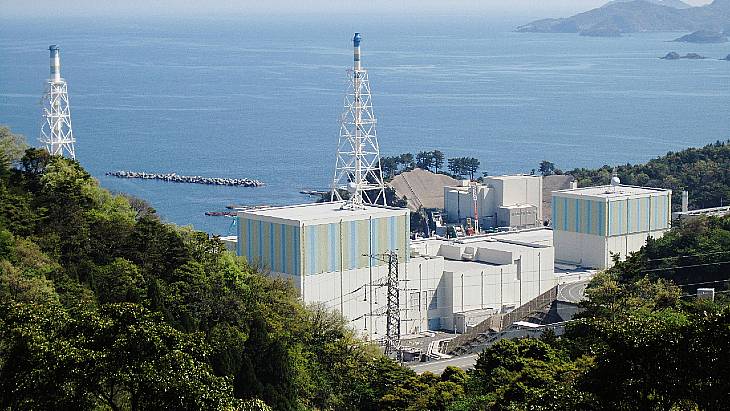
Japan is to "make maximum use of nuclear power", with about 20% of the country's total electricity generation in fiscal 2040 coming from nuclear, according to the government's latest Basic Energy Plan. Previous plans have called for a reduction on its dependence on nuclear power.
In December, Shimane 2 became the latest Japanese reactor to be restarted (Image: Qurren/CreativeCommons)
The Japanese government revises its energy plan about every three years. The plan is formulated based on the Basic Energy Policy Law enacted in June 2002. The latest plan, like its predecessors, recognises the necessity of energy security for the country, which is poor in fossil fuel resources. The policy includes commitments to "clean energy" initiatives but places emphasis on ensuring stable and secure energy supplies. The Advisory Committee for Natural Resources and Energy started discussions on the 7th Basic Energy Plan in May 2024 and presented the draft version of the plan in December. It has since gone through a public comment procedure and other processes.
Adopted on Tuesday by the cabinet, the 7th Basic Energy Plan calls for nuclear electricity generation to increase from 8.5% in fiscal 2023 to about 20% in fiscal 2040. Renewable energy's share of total electricity production, meanwhile, is expected to increase from 22.9% to 40%-50%, with fossil fuels' share dropping from almost 69% to 30%-40%.
Prior to the March 2011 accident at the Fukushima Daiichi plant, Japan's 54 reactors had provided around 30% of the country's electricity. However, within 14 months of the accident, the country's nuclear generation had been brought to a standstill pending regulatory change.
Since then, 14 reactors have gradually resumed operation. The country's policy since 2014 has been to reduce its dependence on nuclear power as much as possible.
To achieve a 20% share for nuclear by fiscal 2040, the majority of Japan's 36 operable nuclear reactors - including those currently under construction - will have to be operational.
"At present, in the Kyushu and Kansai areas where nuclear power plants are being restarted, the proportion of decarbonised energy sources is high, and electricity prices are up to 30% lower than in other areas," the plan notes. "In addition, the benefits of restarting nuclear power plants are being passed on to consumers in the form of lower electricity prices, etc."
In February 2023, Japan's Cabinet approved a policy to allow new nuclear power reactors to be constructed and the operation of existing reactors to be extended from 40 to 60 years.
"Before 2040, more than 3 million kW of existing reactors will reach 60 years of operation, and after that, the supply capacity of existing reactors as decarbonised power sources will be significantly lost," the plan says. "In order to secure the decarbonised power sources necessary for economic growth and improvement of the people's lives in 2040 and beyond, it is necessary to take into account the fact that a fairly long lead time of about 10 to 20 years is necessary.
"In order to utilise nuclear power as a decarbonised power source, we will work on the development and installation of next-generation innovative reactors that incorporate new safety mechanisms, aiming to improve the safety of nuclear power."
The government said it will proceed with the "concrete implementation of next-generation innovative reactors" on the sites of operators who have decided to decommission nuclear power plants, "only if they contribute to the maintenance and development of local industries and employment and can obtain the understanding of the local community".
It added: "In addition, we will continue to work on technological development toward the practical application of other next-generation innovative reactors, such as fast reactors, high-temperature gas reactors, and fusion energy."
Kärnfull Next progresses with Swedish SMR project
Tuesday, 18 February 2025
Small modular reactor project development company Kärnfull Next has secured land rights for the project to build a power plant based on SMRs in the municipality of Valdemarsvik in Östergötland county in southeastern Sweden.
Illustration of a multi-unit SMR campus (Image: Instance/MIT)
In June last year, Kärnfull Next announced it had entered into an exclusive partnership agreement with landowner Latona Group for the exploration rights for nuclear power on the site. The company noted that the property includes areas that were identified as suitable for nuclear power in studies going back as far as the 1970s. With more than 1300 hectares in total, it said the site was appealing for co-location with 2030s energy-intensive industries, such as AI data centres.
The SMR campus in Valdemarsvik is initially planned to host between four and six small light water reactors, adding between 10-15 TWh of electricity generation per year. It would be part of Kärnfull Next's Re:Firm South SMR programme, aiming to expand carbon-free and dispatchable energy production across southern Sweden.
Kärnfull Next said it has now signed a new cooperation agreement with Latona Group, securing permanent land rights for the project.
"This is a crucial step in our strategy to establish new nuclear power in southern Sweden, said Kärnfull Next Chief Strategy Officer John Ahlberg. "Our collaboration with Latona provides the stability needed to proceed with topics such as permitting and detailed project planning."
The Valdemarsvik project will now advance in close dialogue with the municipality, regional stakeholders, and strategic partners, including global construction giant Samsung C&T, Kärnfull Next said. The company signed a memorandum of understanding with the South Korean construction firm in December to advance the deployment of SMRs in Sweden.
"The goal is to ensure the efficient development of the SMR park, covering technical, economic, societal and regulatory aspects," Kärnfull Next said.
"Our vision is to combine advanced nuclear technology with sustainable energy supply and local engagement," Ahlberg said. "By maintaining an open and transparent dialogue with all stakeholders, we create the foundation for a robust and future-proof energy project."
In March 2022, Kärnfull Next signed a memorandum of understanding with GE Hitachi Nuclear Energy on the deployment of its BWRX-300 in Sweden.
Kärnfull Next has been conducting site selection and feasibility studies in several municipalities in Sweden since 2022. By establishing multiple SMR parks as part of the same programme, the company expects to achieve economies of scale in terms of technology selection, construction partners, power purchase agreements and financing partners.
Trump Administration Cuts Spark Chaos at Nuclear Agency
The Trump administration's firings at the National Nuclear Security Administration (NNSA) and other federal agencies have created chaos and may compromise the nation's nuclear security and other essential services.
Reductions in force, particularly among probationary employees and contractors, risk "neutralizing" critical agencies, rendering them ineffective, and disrupting workflow.
While the administration claims the cuts will increase efficiency, the actual savings are minimal compared to the overall federal budget, and the cuts may be intended to weaken agencies to further a deregulatory agenda.
Before cutting the ranks of U. S. government employees who safeguard the nation's nuclear material and respond to nuclear accidents, it would seem wise to ask them exactly what tasks they are assigned and how they accomplish them. Apparently, that was not a consideration when the Trump administration through its U. S. Department of Government Efficiency Service (currently run by billionaire Elon Musk) began firing personnel at the National Nuclear Security Agency (NNSA).
What is happening at the NNSA is a window into why merely downsizing an organization does not necessarily increase its efficiency. On its website the NNSA explains that it has the following missions:To ensure the United States maintains a safe, secure, and reliable nuclear stockpile.
To prevent terrorists from acquiring nuclear or radioactive material that could be used in an attack on the United States, its interests, or allies.
To provide effective nuclear propulsion plants to the U. S. Navy.
To prepare for nuclear and radiological incidents and accidents through planning, training, and exercises and respond to nuclear and radiological incidents and accidents worldwide.
This is not an exhaustive list, and it seems like pretty important stuff for which a careful evaluation of required staffing would be crucial, both the number of employees needed and the expertise of those employees. For now it's not clear who was fired. Even some of the employees who believe they were fired are unsure they are no longer employees as the firings were "paused." That's how chaotic the process has been.
And, that's just one small agency within a government that does a lot of other pretty important stuff that we expect government to do. Other agencies respond to public health emergencies such as pandemics. Yet others respond to emergencies such as hurricanes and floods. Most people are familiar with the Federal Emergency Management Agency which coordinates responses among many agencies in such instances. Some agencies perform routine tasks such as making sure recipients of Social Security payments receive them. One wonders what kind of reaction we might see from the public if the effectiveness of these employees in the Social Security Administration were to be disrupted.
How personnel reductions might impair the effectiveness of any group is informed by a general rule of thumb used by the U. S. Army regarding the effectiveness of fighting units after taking losses: "[A]n enemy combat unit is considered suppressed after suffering 3% personnel casualties or material losses, neutralized by 10% losses, and destroyed upon sustaining 30% losses." The percentages are this small because as losses mount, they include critical personnel without whom the entire unit cannot function effectively. These might include communications and intelligence personnel.
It's worth considering more broadly how the administration says it is planning to cut the federal work force in order to understand how this might alter the effectiveness of that work force. (I will not speak to the legality of these firings as this would require a piece all to itself.)
In the U. S. government, oftentimes critical work is done by contractors. (The proliferation of contractors in the U. S. government is in part a consequence of earlier attempts to appear to reduce the size of the government by keeping the number of direct government employees down—often referred to as reducing "head count"—which then necessitated hiring contractors to do the work previously done by federal employees—sometimes at higher cost.) It easier to fire contractors than to fire federal employees protected by civil service laws and regulations. But firing contractors often takes key people from teams that are a mix of direct federal employees and contractors. I know a federal contractor who fits this description and who was terminated.
A second category targeted by this so-called efficiency drive are probationary employees. Those employees do not enjoy civil service protections until they reach the end of their probation period, usually within one or two years of starting a job. This makes them easy to fire. However, the same problem discussed above regarding contractors applies to probationary employees. Federal employees (and, in fact, employees everywhere in large organizations public and private) rarely do their jobs alone.
They are connected to a large web of other employees with whom they must interact and coordinate. Plucking probationary employees from the web does not take into account how those employees fit into the work flow of an agency nor the distribution of such employees among agencies. For example, about a quarter of all probationary employees are believed to work for the Veterans Health Administration (VHA). This would imply that 13 percent of the VHA work force is set to be fired. That seems like a number that would "neutralize" the VHA, that is, make the VHA ineffective or at least very much less effective.
Of those 3 million civilian federal workers, 775,000 are civilian defense employees. Since the Trump administration wants to increase defense spending, it is probably safe to assume these jobs are staying. That leaves about 2.25 million other jobs that may be subject to cuts. We don't know how many of the 220,000 probationary employees work in defense, but cutting all of this class of employees comes perilously close to the 10 percent cut which the military would say could cause a group to become "neutralized." How much of the U. S. government the public would tolerate being "neutralized" is not clear, assuming that means the affected agencies are no longer capable of carrying out their mission.
Could agencies re-organize to provide the same services they do now with fewer personnel? It might be possible in some cases. But that would take time, planning and probably some upfront additional investment. The Trump administration seems uninterested in this approach.
Worth noting is what the firing of federal civilian employees might save. Last year those employees were paid about $350 billion in total. The federal budget was $6.5 trillion. Compensation to federal employees then works out to be 5.4 percent of the entire budget. If the Trump administration were to fire half of the total work force it might reduce the federal budget by 2.7 percent (if the firings were equal among all levels of pay) or about $175 billion. But, of course, firings are currently concentrated at the lowest level of pay (probationary employees) and that means an even smaller reduction would be achieved. The trillions of promised reductions in federal spending cannot come from firing employees.
The real money in the federal budget is found in Social Security (21 percent), Medicare (15 percent), national defense (14 percent) and other health care which almost certainly includes Medicaid (13 percent). It is difficult to imagine that major cuts in these would be popular with the public or in Congress.
Given all this, it is worth asking whether the cuts in federal personnel are really about efficiency. On these facts, either the authors of the cuts don't understand what they are doing OR they intend to "neutralize" government agencies so that those agencies are no longer effective. That certainly fits with the deregulatory agenda of the Trump administration. But will it sit well with the public when the routine services, emergency help, public health programs and environmental protections they count on are no longer effective or in some cases even available?
UPDATE Feb. 16 at 9:57 a.m.: Federal firings have now hit USDA laboratories across the country crucial to tracking the bird flu that is devastating poultry flocks and spreading fast through cattle. Those expecting this administration to bring down food prices should take note.
Last Energy, a US start-up, has formally entered the nuclear site licensing process to build four micro-nuclear plants in South Wales.
This project is the first privately financed nuclear project to undergo site licensing in the UK since the 1970s.
The proposed microreactors aim to supply energy to approximately 244,000 UK homes and generate 100 local jobs.
A US start-up has formally entered the running to build four micro-nuclear plants in South Wales without a dime from the taxpayer.
Washington-based Last Energy on Monday announced confirmation from the Office for Nuclear Regulation (ONR) that it had entered the nuclear site licensing process for the plans.
Last Energy’s proposals are the first privately financed project to be admitted into site licensing in the UK in a sector that has traditionally relied on subsidies. The South Wales nuclear site is also the first to undergo licensing since the Torness Power Station in the 1970s.
The company estimates the project will create 100 local jobs and produce the equivalent energy consumed by around 244,000 UK homes each year. It intends to bring the micro modular nuclear units into service on a vacant site in Bridgend County, which formerly housed the coal-fired Llynfi Power Station.
Prime Minister Sir Keir Starmer announced a series of policy reforms earlier in February aimed at streamlinging nuclear planning.
“We are pleased to officially enter site licensing with ONR, as we continue to make tangible progress toward the delivery of our first microreactor in Wales,” said Michael Jenner, CEO of Last Energy UK.
“This is another critical milestone necessary to unlock nuclear power at scale in the UK, which will help meet growing energy demand and alleviate grid restraints.
“We appreciate ONR’s efforts during early engagement, which has allowed us to accelerate through the process swiftly.”
Last Energy first obtained control of the South Wales site in October and accepted a grid connection offer from National Grid in January.
China has significantly increased its nuclear energy capacity in the last decade, positioning it to become the world's largest nuclear energy producer.
China is actively developing and deploying advanced nuclear technologies, such as small modular reactors and thorium-fueled reactors, outpacing Western development in these areas.
The cost and time required to build nuclear reactors in China are substantially lower than in the United States, giving China a competitive edge in both domestic and international markets.
China has lapped the rest of the world in terms of nuclear energy deployment, and now it has its gaze set on dominating the nuclear export sector as well. Though the United States has been the biggest nuclear power generator in the world for decades, the American market has significantly slowed in recent decades, with much of its ageing fleet facing terminal decline. Over the same period, China has doubled down on nuclear energy buildout, adding a staggering 34 gigawatts of capacity over the last ten years. As a result, China is now set to overtake the United States (and France) to become the world’s single biggest producer of nuclear energy within the next ten years.
At the same time that China has been rapidly building out its nuclear power capacity, it has also been experimenting with many novel technologies. China has busily rolled out small modular reactors and high-temperature gas-cooled units while similar U.S. designs have languished in regulation limbo. And Beijing has even more ambitious nuclear energy prototypes in mind, including reactor models fueled by thorium instead of uranium.
All of this is to say that the Chinese nuclear sector has definitively cornered global expertise on nuclear technologies and development. Though U.S. scientists have developed similar prototypes in theory, and often before Chinese markets began to consider them, China actually managed to build them and now boast a wealth of experiential knowledge that the West cannot seem to keep pace with.
While the West is aware that it is losing the nuclear energy race, there’s little that the United States or European Union countries can do to close the gap. China is able to build nuclear reactors in a fraction of the time and at a fraction of the cost compared to its Western would-be competitors. “The country’s reactor developers are state-owned enterprises, and receive preferential loans with low interest rates,” the Huffington Post recently reported. “That’s a stark contrast from U.S. and European projects, which can overrun their budgets by billions of dollars each time a regulatory delay holds them up, sending interest on their loans soaring.”
The United States’ newest nuclear reactor, Georgia's Plant Vogtle, finally fully came online on April 29, 2024, seven years late and $17 billion over budget. This makes it, by some accounts, the most expensive infrastructure project of any kind in U.S. history at a whopping $35 billion. And now that Vogtle is finally finished, there are currently zero nuclear reactors under construction in the United States.
Moreover, electricity provided by Plant Vogtle is estimated to cost the “astoundingly high” sum of $170–$180/MWh. This, too, is a huge issue for the nuclear sector in the United States, where different energy sources have to be cost competitive. In China, where the electricity market is not divvied up in the same way, nuclear plants can “count on steady electricity rates from industrial buyers to help pay off the cost of a multibillion-dollar investment in new reactors” according to the Huffington Post.
Now, Chinese nuclear power is ready to make a mark on international energy markets as well. Beijing is rapidly expanding its presence in emerging markets from Asia to Africa by financing and building nuclear reactors in countries that desperately need reliable and carbon-neutral energy buildout. While Russia currently dominates global nuclear supply chains, China may be on track to overtake that superlative as well.
“We continue to advance comprehensive cooperation with ‘old friends’ such as Russia and France, expand in-depth cooperation with ‘new partners’ such as other key European countries,” Lu Tiezhong, a China National Nuclear Company (CNNC) official, told the Chinese nationalist propaganda outlet the Global Times last year. “We plan to establish a research and development center in Eastern Europe, seize the opportunity of accelerated global innovation resource flow and reshuffling, continuously increase the participation of international scientific and technological talents in CNNC’s scientific research tasks and engineering implementation, coordinate with international development strategies, expand international influence, open up international markets and help CNNC’s full industry chain ‘go global.’”
The Trump administration has declared a national energy emergency to support fossil fuels, but it is also backing nuclear power, unlike other clean energy sources.
Energy Secretary Chris Wright is prioritizing nuclear energy, including advanced nuclear power and small modular reactors, aiming to launch an American nuclear renaissance.
Trump's policies are expected to boost domestic uranium production and reclassify uranium as a critical mineral, reducing reliance on foreign sources.
President Trump has doubled down on his pledges to allow for more fossil fuel production and reign in green funding since he came into office last month. He signed executive orders to allow for new oil and gas exploration and boost output, as well as restrict new renewable energy projects and halt a great deal of green funding. He declared a national energy emergency on 20th January, under the National Emergencies Act, largely in a bid to support fossil fuels and condemn renewable energy sources. However, perhaps surprisingly, his condemnation of clean energy does not appear to extend to nuclear power, which is expected to flourish under the Trump administration.
Chris Wright, the Energy Secretary appointed by Trump, sees commercial nuclear energy as a key power source in the future of U.S. energy. Upon taking office, he listed his priorities, which included advanced nuclear power, fossil fuels, geothermal, and hydropower. Wright’s first Secretarial Order states, “The long-awaited American nuclear renaissance must launch during President Trump’s administration. As global energy demand continues to grow, America must lead the commercialisation of affordable and abundant nuclear energy. As such, the Department will work diligently and creatively to enable the rapid deployment and export of next-generation nuclear technology.” It also says, “The Department must also prioritise true technological breakthroughs – such as nuclear fusion.”
Maria Korsnick, President and CEO of the Nuclear Energy Institute, responded by saying, “We applaud the Senate’s confirmation of Chris Wright as Secretary of Energy. In this new role, Secretary Wright will play a pivotal role in furthering our nation’s energy and national security goals through prioritizing reliable, 24/7/365 energy generation, like clean nuclear energy. We look forward to working with Secretary Wright to continue our progress toward building the resilient, reliable, and affordable energy grid of the future.”
Some expect Trump to back smaller-scale nuclear projects that are faster and cheaper to get up and running. During his presidential campaign in October, Trump pointed out in an interview with podcaster Joe Rogan that large-scale nuclear builds like Vogtle “get too big, and too complex and too expensive.”
During his first term in office, Trump signed an executive order promoting the use of small modular reactors (SMRs) for national defence and space exploration. SMRs are viewed by many as the future of nuclear power as they can be developed cheaper and faster than conventional reactors and can be joined together to produce more power. Further, several non-traditional nuclear energy companies, including start-ups, without the capabilities to build large reactors are developing SMRs. The licensing process for SMRs is expected to be more streamlined than large-scale projects, allowing for faster deployment of nuclear energy across the U.S. This would help achieve Trump’s aim of providing more energy to data centres to support the rollout of complex technologies, such as artificial intelligence.
Trump has also emphasised his support for national energy production and goods manufacturing. He recently requested that uranium be reclassified as a critical mineral, after the U.S. Geological Survey (USGS) dropped the nuclear metal from its critical minerals list in 2022 when it deemed uranium a “fuel mineral”, meaning it no longer qualified. In his “Unleashing American Energy”, Trump asks for uranium to be put back on the list, a move that would help unlock federal funding and fast-track permitting for domestic uranium projects.
The U.S. began producing its first high-assay low-enriched uranium (HALEU) in 2023. The Biden administration supported the development of uranium projects following the Russian invasion of Ukraine and subsequent sanctions on Russian energy. Previously, the U.S. depended heavily on Russia for its HALEU, as the only commercial producer of the fuel. Centrus Energy Corp produced the first 20 kg of domestic HALEU as part of the U.S. Department of Energy’s (DoE) HALEU Demonstration project at an enrichment facility in Piketon, Ohio. Speaking about this achievement, Centrus President and CEO Daniel Poneman stated, “This critical milestone is essential to meeting the Department’s near-term HALEU needs while laying the groundwork for the full restoration of America’s lost domestic uranium enrichment capacity.”
The U.S. continues to import most of its uranium from Canada, Australia, Russia, Kazakhstan, and Uzbekistan because it is cheaper and more abundant. U.S. companies pay a combined $1 billion a year to Russia's state-owned nuclear agency, Rosatom, importing around 14 percent of U.S. uranium and 28 percent of U.S. enrichment services. However, with sanctions on Russian energy and the potential introduction of tariffs on Canadian products, Trump is expected to support the expansion of a domestic uranium industry.
Experience from President Trump’s first term in office, as well as decisions made in the first month of his second term, suggest that, unlike other clean energy sources, nuclear power might thrive under the Trump administration. In addition to fossil fuels, Trump has voiced his support for nuclear power and has appointed an Energy Secretary who favours the power source, suggesting that the sector may grow significantly as several states continue to back clean energy projects.
By Felicity Bradstock for Oilprice.com
Climate Action Momentum Stalls After U.S. Policy Reversal
The United States' withdrawal from the Paris Agreement has raised concerns about a leadership vacuum and its potential negative impact on global climate progress.
Many countries missed the deadline for submitting their updated national decarbonization plans (NDCs), further complicating efforts to address climate change.
The US was a major contributor to the Green Climate Fund, and its withdrawal threatens funding for climate change mitigation projects in developing countries.
Since President Trump decided to withdraw the United States from the Paris Climate Agreement, there has been rising concern that the U.S. absence from the global accord will create a leadership vacuum, which could threaten climate progress. This has encouraged other member states to double down on their commitment to the agreement and private donors to offer funding for global climate efforts. Nevertheless, greater action must be taken to ensure that the U.S. withdrawal does not have a knock-on effect on global climate progress.
Under the 2015 Paris Climate Agreement, member states must submit detailed plans, known as nationally determined contributions (NDCs), with clear decarbonisation targets, every five years. The deadline for this round of NDCs was 10th February, to be nine months ahead of the Brazil COP30 climate summit in November. However, almost all member states have missed the recent deadline, with just 10 countries submitting their NDCs. Brazil, the United Arab Emirates, and the U.K. were among the countries to submit their new plans on time.
As one of his last acts as President of the U.S., Joe Biden also submitted a new NDC, although this is not expected to be followed by President Trump as he withdraws the U.S. from the Paris Agreement. However, it may be used as a benchmark for state governments and the private sector to follow. The U.S. remains the world's second-biggest greenhouse gas emitter, which means not following Biden’s NDCs would be extremely detrimental to global decarbonisation efforts. Meanwhile, China, India, and the European Union were just some of the members to miss the NDC deadline.
In terms of the knock-on effect of Trump’s climate decisions on the rest of the world, heavy polluters, such as China, Russia, Saudi Arabia, and several petrostates may feel an ease in pressure to rapidly decarbonise. These countries are expected to provide less ambitious NDCs under the Trump administration than the Biden administration, with the change in the U.S. government being partially blamed for delays in the submission of NDCs from other member states.
Li Shuo, the director of the China climate hub at the Asia Society Policy Institute, explained, “The U.S. backsliding is definitely not good news for China’s climate ambition and global climate action… But China is at the very forefront of the low-carbon economy, which is already yielding a lot of benefits. And China wants to project stability and predictability, on the international stage.”
Although China is the world’s biggest carbon emitter, still heavily reliant on fossil fuels including coal, it could see the U.S. withdrawal from the climate pact as an opportunity to take a more leading role in the global green transition.
When it comes to climate funding, the U.S. was one of the largest contributors to the Green Climate Fund(GCF), which provides financial aid to developing countries for climate change mitigation and green transition projects. In December, under the Biden administration, the U.S. pledged $3 billion to the GCF. Trump’s withdrawal from the Paris Agreement and general climate funding will leave a significant funding void, which will likely result in slower climate action in many developing countries, unless other member states step in.
“If pledges are not fully realized, our ability to support the climate ambitions of developing countries will be constrained,” the GCF said. The U.S. funding cut could also diminish the sense of shared responsibility among nations contributing to the fund, creating a leadership vacuum.
In response to the U.S. U-turn on climate action under Trump, several other member states have doubled down on their commitment to fighting climate change at a global level. Simon Stiell, the Executive Secretary of The United Nations Framework Convention on Climate Change (UNFCCC), stated, “A country may step back, but others are already stepping into their place to seize the opportunity, and to reap the massive rewards: stronger economic growth, more jobs, less pollution and far lower health costs, more secure and affordable energy.”
Following news of the U.S. withdrawal, Stiell encouraged countries to prepare stronger NDCs ahead of COP30. “The call is for greater ambition, for these plans to be economy-wide. These will be the most comprehensive climate plans ever developed, the third generation of NDCs. We'll be able to give better commentary as we synthesize that toward the end of the year,” said Stiell.
Although many countries remain committed to the Paris Agreement objectives, the accord lacks enforceability, meaning that individual countries and regions must define their own goal and take climate action in line with these targets to drive a global green transition. Whether member states will develop more ambitious NDCs or water them down in the wake of the U.S. withdrawal from the agreement is yet to be seen but will likely become clearer by COP30 in November.
By Felicity Bradstock for Oilprice.com
ECOCIDE
US Army Corps seeks to fast-track 600 projects through environmental review
The fast-tracking of these projects could trigger legal fights, with environmental groups warning they are flouting federal laws.
The Army Corps of Engineers has identified over 600 energy and other infrastructure projects that could be fast-tracked under President Donald Trump’s National Energy Emergency declaration, according to data posted on its website.
Among the projects on the list were Enbridge’s Line 5 oil pipeline under Lake Michigan, several natural gas power plants, and liqufied natural gas export terminals proposed by Cheniere and Venture Global.
The Army Corps posted the list – without sending a public notice – last week, marking the projects as eligible for emergency permitting treatment.
Trump had ordered the Army Corps to issue permits enabling the filling of wetlands and dredging or building in waterways as part of the “National Energy Emergency” he declared in a day-one executive order.
The Army Corps was not immediately available for comment.
The fast-tracking of these projects could trigger legal fights, with environmental groups warning they are flouting federal laws.
“This end-run around the normal environmental review process is not only harmful for our waters, but is illegal under the Corps’ own emergency permitting regulations,” said David Bookbinder, Director of Law and Policy at The Environmental Integrity Project.
Companies with projects awaiting key permits applauded the move to “streamline” the review process.
“We are very encouraged to see this action to expedite review for responsible critical mineral development projects,” said Jon Cherry, CEO of Perpetua Resources, which is developing a US antimony and gold mine in Idaho with financial support from the Pentagon and US Export-Import Bank.
The Biden administration had issued the mine a permit, but it still needs a wetlands permit, which Cherry said he expects to receive by July.
West Virginia has the largest number of projects on the list at 141. There 60 in Pennsylvania, 57 in Texas, 42 in Florida, 41 in Ohio, according to the Environmental Integrity Project, which is tracking the permits.
Officials at Enbridge, Venture Global and Cheniere were not immediately available to comment.
(By Valerie Volcovici and Ernest Scheyder; Editing by Chizu Nomiyama)
DRILL BABY DRILL
Trump Administration Approves Two Major Oil & Gas Export Projects
The Trump administration has signed off on permitting approvals for two major oil and gas export projects on the U.S. Gulf Coast: the Texas GulfLink offshore oil loading terminal, and the Commonwealth LNG plant in Louisiana. Both projects had been awaiting approval for years under the Biden administration.
Texas GulfLink (TGL) is one of several proposed deepwater oil loading terminals on the Gulf Coast, all designed to carry vast quantities of U.S. crude to buyers overseas, primarily in East Asia. America's Gulf Coast seaports are too shallow to accommodate fully laden VLCCs, so to load an export cargo in Texas, the world's biggest tankers have to take on several smaller parcels from smaller tankers via reverse lightering. This adds to the cost of VLCC export and reduces competitiveness on long-haul trades to Asia - though VLCCs aren't needed for transatlantic deliveries to Europe, the destination that currently dominates the Gulf export trade, according to competing firm Enterprise Products Partners.
If built, TGL would be located about 30 miles off the coast of Brazos County, Texas. Sponsor Sentinel Midstream says that it is the "only proposed offshore crude oil export terminal whose design complies with all current safe maneuvering guidelines for VLCCs at a [single point mooring]." Like Enterprise Products Partners' Sea Port Oil Terminal (SPOT), TGL would facilitate more oil sales to Asian buyers, supporting U.S. jobs in E&P.
"Today, we are unleashing the full power of American energy," said U.S. Transportation Secretary Sean P. Duffy in announcing the Maritime Administration's approval for the TGL project. "With this approval, we are increasing our energy revenue and unlocking our vast oil resources—not just for domestic security, but to dominate the global market."
The approval does not necessarily mean that TGL will be constructed immediately. The commercial picture for VLCC loading has changed, according to Enterprise Products Partners CEO Jim Teague; SPOT, which is pursuing the same client base, may be suspended soon if it cannot secure more customer interest in a cooling market for Texas-to-Asia oil shipping.
Last week, the Department of Energy approved a gas export license for the 9.5 mtpa Commonwealth LNG plant in Louisiana, the first project licensed under the new administration. The Biden White House had frozen approvals for new LNG plants pending a review of greenhouse gas impacts, but Trump revoked the freeze on his first day in office. Commonwealth has been waiting for its export license longer than any other project.
"Today's actions demonstrate that President Trump is prioritizing the American energy industry, and we are both pleased and grateful to have achieved these important regulatory objectives," said Commonwealth CEO Farhad Ahrabi in a statement.

_16456.jpg)
_70008.jpg)
_79089.jpg)