It’s possible that I shall make an ass of myself. But in that case one can always get out of it with a little dialectic. I have, of course, so worded my proposition as to be right either way (K.Marx, Letter to F.Engels on the Indian Mutiny)
Wednesday, February 19, 2025
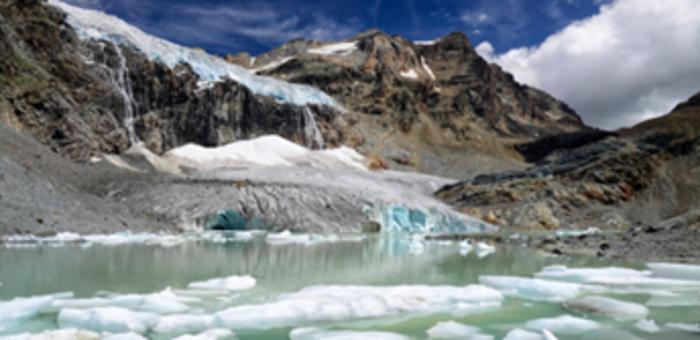
Melting glaciers accelerate sea level rise and put drinking water supply at risk
Last decade, the loss of ice in the more populated regions, such as Europe, increased at ever-faster rates
All relatively small glaciers combined (because those of Antarctica and Greenland are not included) lost approximately 5% of their volume between 2000 and 2023. This amounts to a loss of 273 billion tonnes of ice, which is more than double that of the Antarctica Ice Sheet. In Central Europe, think of the Alps, even 39% of the ice mass was lost.
Intensifying loss Unsurprisingly, the amount of meltwater coming down varies per year. But the pattern that is becoming visible the researchers call shocking. Between 2012 and 2023, much more ice was lost (36% more meltwater) compared to the decade before.
It is not only about rising sea levels, says Bert Wouters. “We will directly notice the melting of these glaciers. Because they are located where many people live, it will affect drinking water supplies, in particular in South America and Asia. And the risk of flooding after the melt season also poses a danger.”
Combining global melt data Bert Wouters is Associate Professor of Geoscience and Remote Sensing at TU Delft and ensured that the data from many studies together produced a solid estimate. “From the accessible glaciers, we have lots of field measurements. From all those other glaciers, we have data from satellites. The methods and thus the meltwater estimates were often varying. It was a big challenge to make it scientifically unified.”
The team of researchers, part of the Glacier Mass Balance Intercomparison Exercise (Glambie), succeeded. This resulted in an annual time series of glacier mass changes for all glacier regions globally from 2000 to 2023.
Community estimate of global glacier mass changes from 2000 to 2023
Article Publication Date
20-Feb-2025
Global retreat of glaciers has strongly accelerated
International researchers with the participation of Graz University of Technology present a global assessment of ice loss since the beginning of the millennium. In a global comparison, the glaciers in the Alps and Pyrenees are melting the fastest.
There are currently around 275,000 glaciers worldwide, in which huge quantities of fresh water are stored. But this reservoir is increasingly shrinking. Since the turn of the millennium, glaciers around the world – i.e. ice masses on land excluding the Greenland and Antarctic ice sheets – have lost around 273 billion tonnes of ice per year. This corresponds to about five and a half times the volume of Lake Constance. Overall, the world’s glaciers have lost around five per cent of their total volume since the year 2000. This is the conclusion reached by an international research team of which Tobias Bolch from the Institute of Geodesy at Graz University of Technology (TU Graz) is a member. The team published the corresponding, comprehensive study today in the scientific journal Nature. It is striking that ice loss has accelerated significantly in recent years. In the second half of the period under investigation (2012 to 2023), it was 36 per cent higher than in the period from 2000 to 2011.
For their study, the researchers collected, homogenised and evaluated glacier data from different sources, including field measurements directly on glaciers as well as radar, laser and gravimetric data from numerous satellite missions. “We compiled 233 estimates of regional glacier mass changes from about 450 data contributors organised in 35 research teams,” explains Michael Zemp, who led the study. Tobias Bolch adds: “The data from ESA Earth observation satellites, as well as from other international space organisations, is particularly important for our research. By analysing this data – measurements of elevation changes are particularly valuable here – we were able to determine the condition of glaciers worldwide.” The result is a unique time series of annual glacier mass changes in the years from 2000 to 2023 for all glacier regions of the world. Due to the large amount of precise data, this study is much more reliable than previous studies of global glacier changes, which were based on less accurate or incomplete data.
18 millimetres sea level rise
The loss of ice from the glaciers since 2000 has led to a rise in sea level of 18 millimetres. This makes the melting of glaciers the second strongest driver of sea level rise after ocean warming, well ahead of the mass loss of the Greenland and Antarctic ice sheets.
Strong regional differences
However, not all glacier regions are affected to the same extent. While the glaciers of the Antarctic and sub-Antarctic islands have only lost 1.5 per cent of their mass, they have shrunk the most in the Alps and the Pyrenees, at around 39 per cent. “Due to their low altitude, they are particularly affected by the higher temperatures,” explains Tobias Bolch. “Additionally, the Alpine and Pyrenean glaciers are comparatively small, which is also a disadvantage. Glaciers generally have a cooling effect on the microclimate of their surroundings. However, this effect is only weakl for small glaciers, which is another reason why the glaciers in the Alps and Pyrenees are shrinking the most.”
Declining meltwater supply in Alpine streams
Valuable freshwater supplies are being lost with the ice from the glaciers. Paradoxically, this is not yet noticeable in many of the world’s glacier-fed rivers; the water volumes from glacier melt have actually increased in most cases. However, these outflows will peak in the future and then decline steadily. “In the European Alps, we have already exceeded this peak discharge. Hence our glaciers will supply the rivers with less and less water,” says Tobias Bolch. “This is becoming a problem especially during longer dry periods. Glacier tributaries are then particularly important as continuous water suppliers. This stabilising effect is increasingly being lost.”
The study on the development of glaciers was carried out as part of the ESA-supported research initiative “Glacier Mass Balance Intercomparison Exercise (GlaMBIE)”. GlaMBIE is coordinated by the World Glacier Monitoring Service (WGMS) hosted at the University of Zurich in collaboration with the University of Edinburgh and the company Earthwave.
Publication: Community estimate of global glacier mass changes from 2000 to 2023
Authors: The GlaMBIE Team (Michael Zemp, Livia Jakob, Inés Dussaillant, Samuel U. Nussbaumer, Noel Gourmelen, Sophie Dubber, Geruo A, Sahra Abdullah, Liss Marie Andreassen, Etienne Berthier, Atanu Bhattacharya, Alejandro Blazquez,, Laura F. Boehm Vock, Tobias Bolch, Jason Box, Matthias H. Braun, Fanny Brun, Eric Cicero, William Colgan, Nicolas Eckert, Daniel Farinotti, Caitlyn Florentine, Dana Floricioiu, Alex Gardner, Christopher Harig, Javed Hassan, Romain Hugonnet, Matthias Huss, Tómas Jóhannesson, Chia-Chun Angela Liang, Chang-Qing Ke, Shfaqat Abbas Khan, Owen King, Marin Kneib, Lukas Krieger, Fabien Maussion, Enrico Mattea, Robert McNabb, Brian Menounos, Evan Miles, Geir Moholdt, Johan Nilsson, Finnur Pálsson, Julia Pfeffer, Livia Piermattei, Stephen Plummer, Andreas Richter, Ingo Sasgen, Lilian Schuster, Thorsten Seehaus, Xiaoyi Shen, Christian Sommer, Tyler Sutterley, Désirée Treichler, Isabella Velicogna, Bert Wouters, Harry Zekollari, Whyjay Zheng)
This image, recorded by the Sentinel-2 satellite on 6 October 2017, shows the melting Scott (left), Sheridan (middle), and Childs (right) glaciers feeding lakes and rivers in their forefields.
Separate from the continental ice sheets in Greenland and Antarctica, glaciers covered an area of 705,221 km2 and contained 121,728 billion tons of ice globally in 2000. Since then, glaciers have lost about 5% of their ice globally, and regionally between 2% on the Antarctic and Subantarctic Islands and 39% in Central Europe. Annually, glaciers lost 273 billion tons – 273,000,000,000,000 kg – of ice, with an increase of 36% from the first (2000−2011) to the second (2012−2023) half of the period. Glacier mass loss is about 18% larger than the loss from the Greenland Ice Sheet and more than twice that from the Antarctic Ice Sheet.
Worldwide research community effort
For the new study, an international research team under the coordination of the World Glacier Monitoring Service (WGMS), hosted at the University of Zurich (UZH) in Switzerland, carried out the so-called Glacier Mass Balance Intercomparison Exercise (GlaMBIE). The research community collected, homogenized, combined, and analyzed glacier mass changes from different field and satellite observation methods. The team then compared and combined the results from the different methods into an annual time series of glacier mass changes for all glacier regions in the world from 2000 to 2023.
The researchers compiled 233 estimates of regional glacier mass changes from about 450 data contributors organized in 35 research teams. “By combining the advantages of the different observation methods, GlaMBIE provides not only new insights into regional trends and year-to-year variability. We could also identify differences among observation methods, which is an opportunity to better understand and improve future estimates,” says Michael Zemp, UZH professor at the Department of Geography, who led the study.
Sinking regional freshwater resources, rising global sea levels
From 2000 to 2023, the global glacier mass loss totals 6,542 billion tons. This loss contributed 18 mm to global sea-level rise at an annual rate of 273 billion tons or 0.75 millimeters yearly. With this, glaciers are currently the second-largest contributor to global sea-level rise, after the warming of the ocean and before the contributions from the Greenland Ice Sheet, changes in land water storage, and the Antarctic Ice Sheet.
In addition, glacier melt results in the loss of regional freshwater resources. “To put this in perspective, the 273 billion tonnes of ice lost in one single year amounts to what the entire global population consumes in 30 years, assuming three litres per person and day,” states Zemp.
“Glaciers are vital freshwater resources, especially for local communities in Central Asia and Central Andes, where glaciers dominate runoff during warm and dry seasons”, says UZH glaciologist Inés Dussaillant, who was involved in the GlaMBIE analyses. “But when it comes to sea-level rise, the Arctic and Antarctic regions with their much larger glacier areas are the key players. Almost one quarter of the glacier contribution to sea-level rise originates from Alaska,” she adds.
Limiting negative effects through climate protection
The present study marks an important milestone for the International Year of Glaciers’ Preservation in 2025 and the Decade of Action for Cryospheric Sciences (2025−2034) declared by the United Nations. GlaMBIE provides a new observational baseline for future studies, allowing improved projections of freshwater resources and sea-level rise.
“Our observations and recent modelling studies indicate that glacier mass loss will continue and possibly accelerate until the end of this century”, says UZH glaciologist and GlaMBIE project manager Samuel Nussbaumer. “This underpins Intergovernmental Panel on Climate Change’s call for urgent and concrete actions to reduce greenhouse gas emissions and associated warming to limit the impact of glacier wastage on local geohazards, regional freshwater availability, and global sea-level rise”, he concludes.
A fleet of satellites has been used to monitor glaciers worldwide using optical, radar, laser and gravity measurements. From top: CryoSat, Terra, ICESat, and the twin GRACE spacecraft, above a map of elevation change for the Vatnajökull ice cap on Iceland.
Credit
ESA, NASA, and Planetary Visions
This image, recorded by the Sentinel-2 satellite on 12 September 2017, shows the blue glaciers on the reddish-brown Franz Josef Land archipelago north of the 80th parallel in the Arctic Ocean (black). The glaciers (blue) are covered with little or no snow (white), indicating a significant mass loss.
The successful development of sustainable georesources for the energy transition is a key challenge for humankind in the 21st century. Hydrogen gas (H2) has great potential to replace current fossil fuels while simultaneously eliminating the associated emission of CO2 and other pollutants. However, a major obstacle is that H2 must be produced first. Current synthetic hydrogen production is at best based on renewable energies but it can also be polluting if fossil energy is used.
The solution may be found in nature, since various geological processes can generate hydrogen. Yet, until now it has remained unclear where we should be looking for potentially large-scale natural H2 accumulations.
A team of researchers led by Dr Frank Zwaan, a scientist in the Geodynamic Modelling section at GFZ Helmholtz Centre for Geosciences, present an answer to this question: using plate tectonic modelling, they found that mountain ranges in which originally deep mantle rocks are found near the surface represent potential natural hydrogen hotspots. Such mountain ranges may not only be ideal geological environments for large-scale natural H2 generation, but also for forming large-scale H2 accumulations that can be drilled for H2 production. The results of this research have now been published in the journal Science Advances. Also part of the team are Prof. Sascha Brune and Dr Anne Glerum of GFZ’s Geodynamic Modelling section. The other team members are based at Tufts University (Dr Dylan Vasey) and New Mexico Tech (Dr John Naliboff) in the USA, as well as at the University of Strasbourg (Prof. Gianreto Manatschal) and Lavoisier H2 Geoconsult (Dr Eric. C. Gaucher) in France.
Natural H2 potential in tectonic environments
Natural hydrogen can be generated in several ways, for instance by bacterial transformation of organic material or splitting of water molecules driven by decay of radioactive elements in the Earth’s continental crust. As a result, the occurrence of natural H2 is reported in many places worldwide. The general viability of natural hydrogen as an energy source has already been proven in Mali, where limited volumes of H2 originating from iron-rich sedimentary layers are produced through boreholes in the subsurface.
However, the most promising mechanism for large-scale natural hydrogen generation is a geological process in which mantle rocks react with water. The minerals in the mantle rocks change their composition and form new minerals of the so-called serpentine group, as well as H2 gas. This process is called serpentinization. Mantle rocks are normally situated at great depth, below the Earth’s crust. In order for these rocks to come in contact with water and serpentinize, they must be tectonically exhumed, i.e. being brought near the Earth’s surface. There are two main plate tectonic environments in which mantle rocks are exhumed and serpentinized over the course of millions of years: (1) ocean basins that open as continents break apart during rifting, allowing the mantle to rise as the overlying continental crust is thinned and eventually split (for example in the Atlantic Ocean), and (2) subsequent basin closure and mountain building as continents move back together and collide, allowing mantle rocks to be pushed up towards the surface (for example in the Pyrenees and Alps).
Numerical modelling helps constraining regions with natural H2 resources
A thorough understanding of how such tectonic environments evolve is key to properly assess their natural hydrogen potential. Using a state-of-the-art numerical plate tectonic modelling approach, calibrated with data from natural examples, the GFZ-led research team simulated the full plate tectonic evolution from initial rifting to continental break-up, followed by basin closure and mountain building. In these simulations, the researchers were able to determine for the first time where, when, and how much mantle rocks are exhumed in mountains, and when these rocks may be in contact with water at favorable temperatures, to allow for efficient serpentinization and natural hydrogen generation.
It turns out that conditions for serpentinization and thus natural H2 generation are considerably better in mountain ranges than in rift basins. Due to the comparably colder environment in mountain ranges, larger volumes of exhumed mantle rocks are found at favorable serpentinization temperatures of 200-350°C, and at the same time plenty of water circulation along large faults within the mountains can allow for their serpentinization potential to be realized. As a result, the annual hydrogen generation capacity in mountain ranges can be up to 20 times greater than in rift environments. In addition, suitable reservoir rocks (for example sandstones) required for the accumulation of economically viable natural H2 volumes are readily available in mountain ranges, but are likely absent during serpentinization and hydrogen generation in the deeper parts of rift basins.
Natural hydrogen exploration (and more) in mountain ranges
The results of this now published research provide a strong impulse to intensify the exploration for natural H2 in mountain ranges. In fact, various exploration efforts are already underway in places such as the Pyrenees, European Alps, and Balkans, where researchers have previously found indications of ongoing natural hydrogen generation.
“Crucial to the success of these efforts will be the development of novel concepts and exploration strategies. Of particular importance is how the formation of economic natural H2 accumulations is controlled by the tectonic history of a given exploration site. In particular, we will need to determine the timing of the key geological processes involved, because if H2 reservoirs are to form during mountain building, there must have been rifting, i.e. stretching, beforehand. So insights gained from plate tectonic simulations such as those performed in this study will be of great value”, says Frank Zwaan, lead author of the study.
Sascha Brune, head of the Geodynamic Modelling Section at GFZ, continues: “This new research advances our understanding of suitable environments for natural hydrogen generation. Given the economic opportunities associated with natural H2, now is the time to go further and also investigate migration pathways of hydrogen and deep, hydrogen-consuming microbial ecosystems to better understand where potential H2 reservoirs can actually form.”
Zwaan adds: “Overall, we may be at a turning point for natural H2 exploration. As such, we could be witnessing the birth of a new natural hydrogen industry.”
Sketch of mountain building with exhumed mantle.
Credit
CC BY-NC-SA 3.0 USGS / ESEU edited by Frank Zwaan, GFZ
Professor Kazunari Domen was recognized as “Clarivate Citation Laureate 2024” for his pioneering breakthroughs in photocatalysis, especially photocatalytic water splitting. He spearheaded novel photocatalytic materials, transformative synthesis, modification strategies and advanced characterization techniques. Leveraging his originated materials and technologies, he demonstrated the world’s first scalable 100-square-metre solar hydrogen plant, operable under natural sunlight – a monumental milestone in the field. His groundbreaking contributions, highlighted in this article, would enlighten researchers to shape a more sustainable future.
Harnessing solar energy to produce hydrogen from water – the photocatalytic water splitting reaction, is a promising approach for the carbon-neutrality future. This process utilizes semiconductor materials to harvest sunlight for the splitting of water into hydrogen fuel with oxygen gas generated as by-product. The solar hydrogen, as a carbon-free energy source, holds immense potential for decarbonizing industries, addressing global energy demands and mitigating environmental challenges. However, realizing practical and economical implementation demands substantial innovative technologies to overcome challenges, in particular achieving efficient solar energy harvesting ability, enhancing charge utilization, ameliorating surface reaction kinetics as well as overcoming barriers for large-scale deployment.
Professor Kazunari Domen, over 40 years of his research career, has established a new paradigm in the field of photocatalytic water splitting, bringing closer to the realization of a carbon-neutral hydrogen economy powered by sunlight and water. His research contributions emphasize the development of innovative materials and techniques that significantly advance the efficiency and scalability of solar hydrogen production, as highlighted in the article published in Chinese Journal of Catalysis (https://doi.org/10.1016/S1872-2067(24)60152-X). This article underscores the pivotal contributions by Professor Domen in shaping the future of artificial photosynthesis, providing a strategic blueprint for achieving a sustainable energy goal.
Central to the achievements by Professor Domen is the exploration of novel photocatalytic materials, capable of capturing visible light and driving water-splitting reactions efficiently. The state-of-the-art materials including oxides, (oxy)nitrides, and oxysulfides, have redefined the possibilities in photocatalytic research and ushered the beginning of the new era in the field. Leaping forward, the team led by Professor Domen introduced new modification strategies, such as cocatalyst engineering, surface modification and construction of Z-scheme system, to achieve evolutionary performance improvement. Another hallmark of Professor Domen’s research is the utilization of advanced characterization techniques, for instance the transient absorption spectroscopy and the interfacial sum-frequency generation spectroscopy, to unravel the underlying mechanisms behind photocatalytic processes. These insights have guided the strategic design of high-performance systems, seamlessly integrating core scientific principles with practical engineering solutions.
The legacy of Professor Domen lies not only in the groundbreaking development of technologies, but also the ability to translate these innovations into scalable solutions. His team revolutionizes cost-effective device fabrication techniques, culminating in the successful development of the first real-world hydrogen production panel system through photocatalytic overall water splitting under natural sunlight. The 100-square-metre panel stands as the largest solar hydrogen production unit to date. Besides marking a significant milestone, his work demonstrates the feasibility of large-scale solar-driven hydrogen production, paving the way for a clean energy future.
###
About the Journal
Chinese Journal of Catalysis is co-sponsored by Dalian Institute of Chemical Physics, Chinese Academy of Sciences and Chinese Chemical Society, and it is currently published by Elsevier group. This monthly journal publishes in English timely contributions of original and rigorously reviewed manuscripts covering all areas of catalysis. The journal publishes Reviews, Accounts, Communications, Articles, Highlights, Perspectives, and Viewpoints of highly scientific values that help understanding and defining of new concepts in both fundamental issues and practical applications of catalysis. Chinese Journal of Catalysis ranks among the top one journals in Applied Chemistry with a current SCI impact factor of 15.7. The Editors-in-Chief are Profs. Can Li and Tao Zhang.
Humanity can farm more food from the seas to help feed the planet while shrinking mariculture's negative impacts on biodiversity, according to new research led by the University of Michigan.
There is a catch, though: We need to be strategic about it.
"We can achieve this sustainable mariculture development," said Deqiang Ma, who led the study as a postdoctoral researcher at the U-M School for Environment and Sustainability. "With strategic planning, we can achieve the goal of conserving marine species while meeting the global demand for the expansion of mariculture."
Mariculture is the branch of aquaculture that farms saltwater seafood. In 2020, it accounted for about a fifth of the food farmed from fisheries, which is an important source of protein for billions of people worldwide.
Demand for seafood is going up and mariculture production is growing rapidly to help meet that, Ma said. To predict the impact of that growth, Ma and an international team of researchers developed a model to assess mariculture's effects on the populations of more than 20,000 species of marine fauna.
The model allowed the team to establish a baseline for mariculture's current impacts and forecast how those would change by 2050 under a range of scenarios, depending on, for instance, what was farmed where. The model also looked at two different climate scenarios, known as RCP 4.5 and 8.5, assuming different levels of warming and greenhouse gas emissions.
The best-case scenario—building the most farm capacity in the areas with the lowest environmental impact—produced exciting numbers for both bivalve shellfish and "true" fish, or finfish.
"Bivalve production could increase by 2.36-fold and finfish could increase by 1.82-fold compared to current production—projections of what is needed to meet global demand—but the global mariculture impacts would decrease by up to 30.5% under the best-case scenario," Ma said.
On the flipside, the worst-case scenario was also striking. If new farms are built in the areas that would have the most detrimental impact on biodiversity, it would be over four times worse than building them at random sites.
This underscores the importance of strategic planning, said U-M senior study author Neil Carter, and of working with experts from a variety of fields who can assess a wide range of considerations.
"It is critically important to leverage the growing insights across disciplines, whether it's climate change science or economics or marine production," said Carter, associate professor of environment and sustainability. "All these different facets had to come together from other sources in order to make these forecasts."
The team included researchers from the University of Washington, the University of Freiburg in Germany, Hokkaido University in Japan and the University of California, Santa Barbara.
The scope of the analysis and the collaboration required to perform it can create challenges for projects like this, said study co-author Benjamin Halpern, a professor at UCSB.
"But I've done this kind of work a lot in my career, and the payoffs can be enormous," said Halpern, who is also the director of the National Center for Ecological Analysis and Synthesis. "The cross-disciplinary nature of the questions that can be addressed and the ability to look at them for every patch of ocean in the world makes the research much more relevant and impactful to society and the scientific community."
Ma and Carter stressed that the paper is a first step toward building mariculture's most sustainable future. Scientifically speaking, the model can be refined by including more and newer data moving forward.
The research also showed there isn't a one-size-fits-all solution to grow mariculture sustainably. From a research standpoint, the opportunities for farm development are different in the South Pacific than they are along the coast of France.
And the decisions made to work toward the world's best-case scenario can still have drawbacks. Developing mariculture had a negative impact on important and iconic marine mammals—including whales, seals and sea lions—in all the scenarios analyzed by the team.
But understanding these limitations and trade-offs helps researchers and policymakers better anticipate the impacts of important decisions before they are made.
"With these insights, we can see that it's not a foregone conclusion that the expansion of an industry is always going to have a proportionally negative impact on the environment," Carter said. "So the next part of this is getting policymakers and communities to interact with each other to figure out how we can actually implement some of these ideas to reduce those impacts and to prioritize marine biodiversity."
The project was funded by the U-M School for Environment and Sustainability and the U-M Institute for Global Change Biology.