Thursday, February 20, 2025

'Systemic collapse': How to 'prepare for the worst' if Trump triggers a 'global crisis'


February 18, 2025
ALTERNET

According to the Washington Post, as many as 200,000 federal workers may be fired because of efforts by the Trump Administration and the Elon Musk-led Department of Government Efficiency (DOGE) to greatly downsize the United States' federal government. And the criticism of their efforts is coming not only from Democrats, but also, from voices on the right.

Former Rep. Charlie Dent (R-Pennsylvania), during a February 17 appearance on MSNBC, slammed Trump and DOGE for carrying out mass government layoffs in a "haphazard" way. And the next morning, MSNBC's Joe Scarborough (a Never Trump conservative and ex-GOP congressman) argued that while government "waste" needs to be reduced and the U.S. needs to balance its federal budget, the Trump Administration and DOGE are recklessly jeopardizing "food safety" and "air safety."

The Guardian's George Monbiot also fears that Trump's second term could trigger some type of major crisis.

In a February 18 opinion column, Monbiot lays out a variety of frightening scenarios and offers some tips for surviving a worst-case scenario.

"Though we might find it hard to imagine," Monbiot warns, "we cannot now rule it out: the possibility of systemic collapse in the United States. The degradation of federal government by Donald Trump and Elon Musk could trigger a series of converging and compounding crises, leading to social, financial and industrial failure…. A financial crisis in the U.S. would immediately become a global crisis."

Monbiot continues, "But the hazards extend much further. Musk, calling for a 'wholesale removal of regulations,' sends his child soldiers to attack government departments stabilizing the entire U.S. system. Regulations, though endlessly maligned by corporate and oligarchic propaganda, are all that protect us from multiple disasters. In its initial impacts, deregulation is class war, hitting the poorest and the middle classes at the behest of the rich. As the effects proliferate, it becomes an assault on everyone's wellbeing."

The columnist warns that undermining regulatory government agencies could make everything from a pandemic to "future climate disasters" worse.

"As Trump rips down environmental protections and trashes federal responsiveness," Monbiot explains, "the impacts will spiral. They could include non-linear shocks to either the insurance sector or homeowners, escalating into U.S.-wide economic and social crisis. If, or when, another pandemic strikes, which could involve a pathogen more transmissible and even more deadly than COVID-19 — which has so far killed 1.2 million people in the U.S. — it will hit a nation whose defenses have been stood down."

Monbiot urges Americans — as well as residents of the U.K., where The Guardian is published — by doing a lot of networking.

"So, though there is no substitute for effective government, we must seek to create our own backup systems," the Guardian columnist advises. "Start with this principle: don't face your fears alone. Make friends, meet your neighbors, set up support networks, help those who are struggling. Since the dawn of humankind, those with robust social networks have been more resilient than those without. Yes, we also — and urgently — need national and global action, brokered by governments. But it's beginning to look as if no one has our backs. Prepare for the worst."


George Monbiot's full Guardian column is available at this link.


'Bloodbath by design': Trump’s Russia negotiators criticized for 'almost no experience'


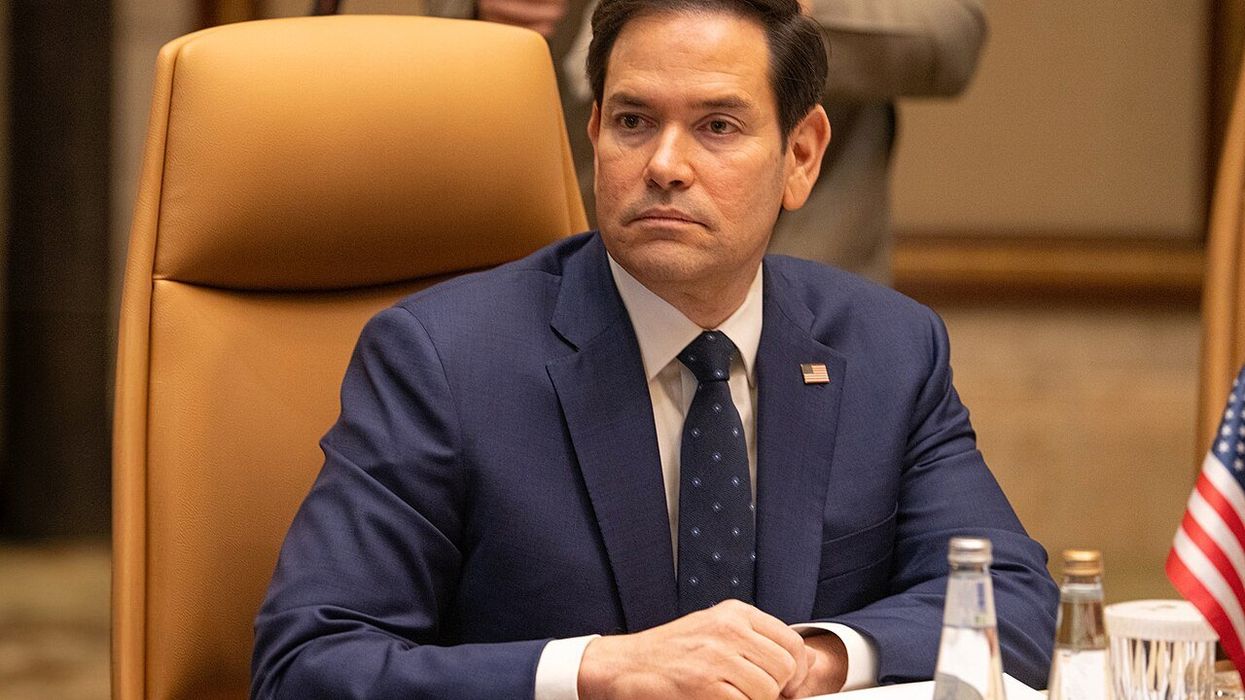
Secretary of State Marco Rubio at Diriyah Palace in Riyadh, Saudi Arabia 
on February 18, 2025 (Wikimedia Commons)

David Badash
THE NEW CIVIL RIGHTS MOVEMENT
February 18, 2025


After a week of disastrous messaging by U.S. Secretary of Defense Pete Hegseth, resulting in a 180-degree turn and leaving European leaders and some Americans wondering what U.S. foreign policy is, the Trump administration is once again under fire as critics charge the team he has assembled to start discussions with Russia over its illegal war against Ukraine does not match the “heavyweights” Russia is sending.

The U.S. is already in the hot seat as Ukrainian President Volodymyr Zelenskyy — who has made clear his country will accept no peace deal if they are not part of the negotiations — appears to have been frozen out of the initial talks, which were held Tuesday in Saudi Arabia.


European officials attending the Munich Security Conference last week, “stressed the need for Ukraine to be part of peace talks to end the war. Vice President JD Vance met with Zelenskyy in Munich Friday, telling him the U.S. wants a ‘durable, lasting peace,’ while Zelensky asked for ‘security guarantees,'” CBS News reported.

“Zelenskyy told the conference of world leaders that Ukraine would not accept a deal made ‘behind our backs without our involvement,’ and called for the creation of ‘armed forces of Europe’ amid the possibility of a changing relationship between Europe and the U.S.”

Early Tuesday afternoon the Associated Press, calling it “an extraordinary about-face in U.S. foreign policy,” reported: “Russia and US agree to work toward ending Ukraine war in a remarkable diplomatic shift.”

CNN reported that the “United States and Russia agreed on four principles following talks that lasted more than four hours in Saudi Arabia, US Secretary of State Marco Rubio said Tuesday, including appointing a high-level team to help ‘negotiate and work through the end of the conflict in Ukraine’ in a way that’s ‘acceptable to all the parties engaged.’ Ukrainian President Volodymyr Zelensky, who was not invited to the talks, said Ukraine will not ‘give in to Russia’s ultimatums’ and earlier said he would refuse to sign any agreement negotiated without Kyiv’s involvement.”

Russian Foreign Minister Sergey Lavrov, who reportedly was part of Tuesday’s talks, described them as “useful.”

The talks are expected to continue after this initial meeting. Trump administration officials at the talks in Saudi Arabia included U.S. Secretary of State Marco Rubio, National Security Advisor Michael Waltz, and Middle East envoy Steve Witkoff.

Foreign policy expert and historian Sławomir Dębski, a former Russia foreign policy analyst, over the weekend described Russia’s team.

He named, “Yury Ushakov, the Kremlin’s chief foreign policy adviser, who has worked in diplomacy for over half a century,” “Sergey Naryshkin, Ushakov’s top spy, who served alongside Putin in the Soviet KGB,” and “Kirill Dmitriev, a financier educated at Stanford and Harvard, who has ties to the Kremlin chief’s family and, according to the publication, could play a key role as an unofficial ‘backchannel’ to Trump’s negotiators.”

“A rumour says that Vladymir Medinsky is to join the Russian team in Riyadh,” Dębski added. “He is a former Minister of Culture. Now he is Putin’s key adviser on ideological aspects of Russian aggression on Ukraine.”

Bloomberg News on Friday reported that Russian President Vladimir Putin “is assembling a heavyweight team with decades of experience in high-stakes negotiations to face off against US President Donald Trump’s representatives for a deal to end Russia’s war in Ukraine.”

“That Putin is opting to rely mostly on highly skilled and experienced negotiators to represent Russia in any talks is hardly a surprise,” Bloomberg added. “The personnel choices underscore just how determined the Russian leader is to secure a favorable outcome in any negotiations and potentially how little his demands in relation to Ukraine have changed in the three years since he ordered the full-scale invasion.”

Yale University Professor Timothy Snyder, a historian and expert on the Soviet Union and the Holocaust, is the author of the popular bestseller, “On Tyranny: Twenty Lessons from the Twentieth Century.”

Responding to Dębski’s post, Snyder warned: “The American team has almost no experience in high-level international negotiation, no regional expertise on Ukraine and Russia, and no relevant foreign language knowledge. Not true of the Russians, to put it mildly. Looks like a bloodbath by design.”

Brad Bowman, senior director of the Center on Military and Political Power at the Foundation for Defense of Democracies, blasted the Trump administration.

“It was a mistake for the Trump administration to negotiate with the Taliban without the Afghan government at the table. It is a mistake to negotiate with Putin without including Kyiv,” he wrote. “When the topic is the future of Ukraine, Kyiv has a right to be at the table, especially in light of the sacrifice and bravery of Ukrainians in defending their homes against Putin’s unprovoked invasion. Putin understands that the United States and Europe are more powerful together. That’s why he wants to divide us. We should not help him.”

Donald Trump Has Launched a War Against the Working Class


The next four years will be filled with battles as resistance springs up amid the administration’s assault on workers.

February 16, 2025

Protesters gather at a rally organized by the American Federation of Government Employees against the “Department of Government Efficiency” purges and resignation offers made to the federal civilian workforce, outside the U.S. Capitol in Washington, D.C., on February 11, 2025.ALLISON ROBBERT / AFP via Getty Images

The Trump administration has wasted no time attacking worker rights and bestowing even more power to employers through a barrage of anti-worker executive orders since Trump’s second term began.

Within his first two weeks in office, Trump rapidly targeted LGBTQIA+ workers and undid civil rights protections. He fired two Democratic commissioners on the five-person Equal Employment Opportunity Commission (EEOC). He terminated Chair Charlotte Burrows, whose term was supposed to last until July 2028, and Vice Chair Jocelyn Samuels, whose term was supposed to last until July 2026. He also fired EEOC General Counsel Karla Gilbride, whose four-year term wasn’t supposed to end until 2027.

These moves leave only the commission without a quorum, which means that the organization taxed with enforcing federal laws against job discrimination is effectively powerless.

The 60-year executive order granting the Department of Labor the necessary tools to protect the civil rights of federal contract workers was rolled back and the department was ordered to stop ongoing investigations into civil rights violations. The president also fired more than a dozen inspectors at government agencies, including the Department of Labor.

The “Gender Ideology Extremism and Restoring Biological Truth to the Federal Government” executive order is a clear attack on trans people, including in the workplace. The move directs agencies like the Department of Labor and the EEOC to rescind its updated workplace harassment policies, which include protections for trans and gender-nonconforming people.

Related Story

As Trump Attacks Federal Labor Protections, How Can States Protect Workers?
From limits on heat exposure to overtime rules, states can fill in some gaps as Trump dismantles federal protections. By Casey Quinlan , Truthout February 9, 2025


The administration also signed an order barring transgender people from serving in the military, a move that could eject nearly 15,000 people over their identity; rescinded a Biden administration executive order that directed employers to strengthen protections for LGBTQ people; instructed federal workers to delete their pronouns from email signatures; and removed documents connected to LGBTQ protections from the EEOC website.

Gutting the Federal Workforce


The president has instituted a federal hiring freeze, mandated a return to the office for nearly every remote federal worker, and reclassified thousands of federal employees in order to make them easier to fire. He also sent out a government-wide email inviting federal workers to quit their jobs as part of a “deferred resignation program” that would pay them through September.

A group of unions (the American Federation of Government Employees (AFGE); AFGE Local 3707; the American Federation of State, County and Municipal Employees (AFSCME); and the National Association of Government Employees) are suing Trump over that program.

“We are filing this lawsuit to stop the purge of qualified professionals from the federal government workforce. Not only are these actions illegal and a scam, but they are eroding the health and well-being of our communities,” said AFSCME President Lee Saunders in a statement. “These workers do everything from making sure families receive their Medicare, Medicaid and Social Security benefits on time to protecting our drinking water and the food we eat to overseeing our national security. If this chaos goes unchecked, it will have devastating impacts on working people.”

“A climate of fear makes our workplaces and communities less safe. Mass deportation policies threaten civil liberties, encourage racial profiling, separate families and cause massive economic and emotional hardship.”

The Wall Street Journal reports that the administration is on the verge of implementing an executive order that would fire thousands of federal health workers and Trump has moved to dismantle the U.S. Agency for International Development, which employs 10,000 people.

He’s also submitted regulations to weaken federal worker protections, signed an executive order to reduce the size of the federal workforce, and fired a Democratic member of the federal employee appeals board.

The Economic Policy Institute’s Senior Policy Analyst Margaret Poydock told Truthout that these moves are “aimed at gutting the federal workforce and politicizing the career civil service.”

NLRB Immobilized


Labor advocates had anticipated Trump would revamp the National Labor Relations Board (NLRB) to suit his administration’s corporate agenda, but how it would unfold when he took office had remained unclear.

He fired NLRB General Counsel Jennifer Abruzzo right away, which was expected. However rather than going through the usual steps of appointing a partisan majority, he also fired Democratic board member Gwynne Wilcox, the first Black woman to serve on the board. The move is unprecedented in addition to being against the law, and Wilcox said she is “pursuing all legal avenues to challenge [her] removal.” On February 1, Trump fired Abruzzo’s successor, Acting General Counsel Jessica Rutter.

The firings reduced the board to just two members, which means that, like the EEOC, the board lacks a quorum and cannot issue any decisions or regulations. This allows companies to ignore labor law by dragging out cases in which a board ruling is needed.

Employers are already using the development to their advantage. After Whole Foods workers voted to unionize in Philadelphia, the company asked the NLRB to overturn the victory. “In the absence of a Board quorum, the Regional Director lacks statutory authority to investigate objections or certify the results, or otherwise engage in representation case procedures, including investigating objections or conducting the objections process,” reads the filing.

At Slate, Mark Joseph Stern points out that the goal of these firings may extend beyond impeding another federal agency.

A depleted NLRB sets the stage for Trump to terminate the 1935 precedent Humphrey’s Executor, a decision that allowed Congress to protect independent agencies from partisan interference and prohibited the president from removing members of such agencies. The GOP-controlled Supreme Court has essentially been circling the decision in recent years, expanding the president’s power to fire regulators, but so far that precedent has only applied to multimember commissions.

“If the Supreme Court does scrap Humphrey’s, it will probably unleash a spate of firings across other independent agencies,” writes Stern.

Jack Goldsmith, who ran the Justice Department’s Office of Legal Counsel in the Bush administration, told The New York Times that the Trump administration might have made the moves in hopes of igniting legal challenges.

“On one level, this seems designed to invite courts to push back because much of it is illegal and the overall message is a boundless view of executive power,” said Goldsmith. “But really, they are clearly setting up test cases.”

Destroying the NLRB has been a long-time goal of billionaire and Trump adviser Elon Musk. In January 2024, Musk’s SpaceX company launched a lawsuit against the board after it accused the GOP megadonor of illegally firing workers. In November 2024, SpaceX and Amazon entered the Fifth Circuit Court of Appeals to argue that the NLRB is unconstitutional.

Crackdown on Immigrant Workers


In addition to heightening Immigration and Customs Enforcement (ICE) raids, the Trump administration has also taken legislative steps to punish immigrants. In January, Trump signed the Laken Riley Act, which found bipartisan support in the House weeks before he took office and in the Senate just hours after Joe Biden left. Framed by lawmakers as a bill aimed at protecting people from violence, the bill allows states to weaponize the law against the most vulnerable members of communities. With its passage, enforcement officers are allowed to indefinitely detain immigrants without bail, just for being accused of nonviolent, low-level crimes.

“A climate of fear makes our workplaces and communities less safe. Mass deportation policies threaten civil liberties, encourage racial profiling, separate families and cause massive economic and emotional hardship for millions of working people across the country,” read a statement from the AFL-CIO from a recent Senate Judiciary Subcommittee hearing. “The terror instilled by raids and targeting means that fewer people report crimes, visit a doctor, or send their kids to school — all of which undermines the health, wellbeing and safety of our communities.”
Fighting Back

As seen during the first Trump administration, many opponents will attempt to counter his political agenda in courts and in the halls of Congress. However, myriad legal challenges did not stop Trump from retaking power, and many perceive the Democratic response to the administration’s overreach as inadequate.

Some of the most crucial battles will take place in the workplace and on the streets.


Recent examples of this disconnect include the Democrats’ failure to extend former NLRB Chair Lauren McFerran’s term, their insistence on launching task forces as opposed to actual plans and Democratic House Minority Leader Hakeem Jeffries’s claim that the party lacks the leverage to stop Trump.

The work of progressive lawmakers and the work of attorneys will no doubt be important in the coming years, but some of the most crucial battles will take place in the workplace and on the streets. Direct action and coordinated pressure are already having an impact.

In Chicago, the immigrant rights movement launched education campaigns to counter the imminent ICE raids.

“The city’s vast networks of workers’ centers, unions, and community organizations have spent months preparing, disbursing flyers and cards, and sending the message to residents: Don’t talk to ICE,” Sarah Lazare and Rebecca Burns explained in an In These Times article. “The two-hour training at Arise Chicago’s offices yesterday night was the organization’s sixth in-house training that month, and just one of numerous actions taking place across the city to defend immigrant residents.”

Trump’s “border czar” Tom Homan has openly complained that such education is impeding ICE from deporting people. “Sanctuary cities are making it very difficult,” he recently told CNN. ​“For instance, Chicago … they’ve been educated on how to defy ICE, how to hide from ICE.”

After labor reporter Kim Kelly revealed that Elon Musk’s “Department of Government Efficiency” (DOGE) was planning to access the internal systems of the Department of Labor, hundreds of workers showed up outside the Frances Perkins Building to protest the move. “This is about our health,” AFL-CIO President Liz Shuler told the crowd. “This is about our safety. This is about our jobs,” she declared. “Mine workers, construction workers, laborers, nurses — all are protected by DOL [Department of Labor]. And because of the people in this building, we can stand up.”

On the same day, a coalition of unions filed a lawsuit aimed at blocking Musk’s team from accessing Department of Labor files.

In response to the backlash, Musk’s ​“kickoff meeting” at the Department of Labor was reportedly moved from an in-person event to a virtual one, proof that any form of backlash can potentially impede the administration’s designs.

A recent Washington Post article details how some federal employees are engaging in workplace resistance to fight back, which includes workers creating an encrypted chat to shield the administration from sensitive data and marking emails from Trump as spam — “just to piss them off.”

“The 2.3 million civilian federal workers have found themselves on the front lines of Trump’s war against the bureaucracy, and, in ways cosmetic and substantive, some are mounting a defense,” the article explains.

The last couple weeks have been a whirlwind, but the Trump administration is just starting to implement its policy agenda. The next four years will be filled with battles for the working class and it remains to be seen what form those will take.

This article is licensed under Creative Commons (CC BY-NC-ND 4.0), and you are free to share and republish under the terms of the license.


Michael Arria is the U.S. correspondent for Mondoweiss. Follow him on Twitter: @michaelarria.
'Utter incompetence': Federal agency rehires crucial workers after 'accidentally' firing them — again


February 19, 2025
ALTERNET

The latest workers to come in the crosshairs as the Trump administration moves to cut the federal government through mass firings and funding freezes are workers at the Department of Agriculture. NBC News reported Tuesday that the agency fired “several” employees over the weekend and is now trying to rehire them.

The fired employees have been working on the H5N1 avian flu outbreak, or bird flu.

"Although several positions supporting [bird flu efforts] were notified of their terminations over the weekend, we are working to swiftly rectify the situation and rescind those letters," a USDA spokesperson told NBC News in a statement.

“They need to be more cautious,” Rep. Don Bacon (R-Neb.), who is part of the Agriculture Committee, told NBC News of the Department of Government Accountability, which is the group carrying out the firings. “There’s an old saying, ‘Measure twice, cut once.’ Well, they are measuring once and having to cut twice. Some of this stuff they’re going to have to return back. I just wish they’d make a better decision up front.”

“You don’t accidentally fire someone,” CNN commentator and former South Carolina Rep. Bakari Sellers posted on X. “You don’t accidentally fire [people] working on bird flu or [people] who oversee our nuclear arsenal. What you are seeing is incompetence, utter incompetence. This isn’t DEI or wokeness, this is stupidity for the sake of being l stupid. Now please make your excuses below…”

Last week, the Trump administration fired people working at the National Nuclear Security Administration, sparking national security concerns. They quickly reversed the firings.

“Understand USDA is now fast tracking to rehire front line employees working on bird flu outbreaks. They were ‘accidentally’ fired by the administration. Translation: Nice job [Elon] Musk! You and your friends will still get your tax breaks, but higher egg prices for everyone else,” Sen. Amy Klobuchar (D-Minn.) posted on Bluesky.

Musk has been working with Trump on the cuts, although his official role is unclear.

“Egg prices are SKYROCKETING because the government can't contain bird flu. Then Musk and Trump FIRED the top bird flu experts -- because they had no idea what vital work they did. Now they're scrambling to undo their massive mistake,” lawyer Tristan Snell posted on X.

The USDA said over the weekend that egg prices have reached record highs’; a dozen eggs now costs $7.44. And according to the USDA, 23 million birds have been affected by bird flu.

“If bird flu escalates into a pandemic, with this kind of leadership, we are going to be toast,” scientist Dr. Lucky Tran posted on Bluesky.

'They don’t have a clue': Ex-senator says Trump’s botched firings prove he’s 'incompetent'


WHY NOT LAYOFFS INSTEAD?! 
THAT'S LEGAL!
FIRING IS OF COURSE HIS 'BRAND'

February 19, 2025
ALTERNET


Less than a month into his second term, President Donald Trump has already had to scramble to undo some of his mass firings of federal workers at critical agencies.

On Tuesday, NBC News reported that the U.S. Department of Agriculture (USDA) is now attempting to undo the administration's decision to fire multiple USDA officials working on the federal government's response to the H5N1 avian flu outbreak. The agency stated that it considered the fired Food Safety and Inspection Service frontline staff "public safety" employees, and that it "continues to prioritize the response to highly pathogenic avian influenza." The ongoing bird flu crisis has been a major contributor in the price of eggs skyrocketing to new record highs.

During a recent segment on MSNBC, former Sen. Doug Jones (D-Ala.) slammed the administration's abrupt reversal of its mass firings, calling it "a level of incompetence that we've never seen before in government."

"When Donald Trump first came in in 2017, he at least had people surrounding him that ... understood government, understood the workings of government and what people in civil service do. These guys don't. They don't have a clue," Jones said. "They think that just by cutting individuals they're somehow cutting waste and abuse, and they're not ... They're cutting out so many programs that are vital to so many Americans across this country. Whether it is NIH grants, whether its defense contracts, you name it. It is really, truly an incompetent level of government."

The reversed mass firings at the USDA come just one day after the Trump administration fired Department of Energy employees who manage the United States' stockpile of nuclear weapons – including some who build nuclear warheads. White House officials have reportedly been attempting to reach out to the fired workers to rehire them, but because their government email accounts were disabled, the administration has lost the ability to contact some of them.

Trump has deputized centabillionaire Elon Musk and his "Department of Government Efficiency," or DOGE (which is not yet an official federal agency authorized by Congress) to go into federal agencies and make sweeping changes to both headcount and how money is spent. Administration officials have since argued in court that Musk is not the administrator of DOGE, but who supposedly runs the initiative is currently unknown. Jones asserted that it isn't Trump calling the shots, but Musk himself.

"To say that Elon Musk is not running the United States right now is really a fallacy," Jones said. "Donald Trump is just basically a yes man right now for everything that Elon Musk is doing."

Watch the video of Jones' comments below, or by clicking this link.


Op-Ed

We Are About to Learn What a Post-Truth Approach to Public Health Feels Like

Trump and Musk are slashing global vaccination efforts, funding for medical research and access to health information.

February 15, 2025

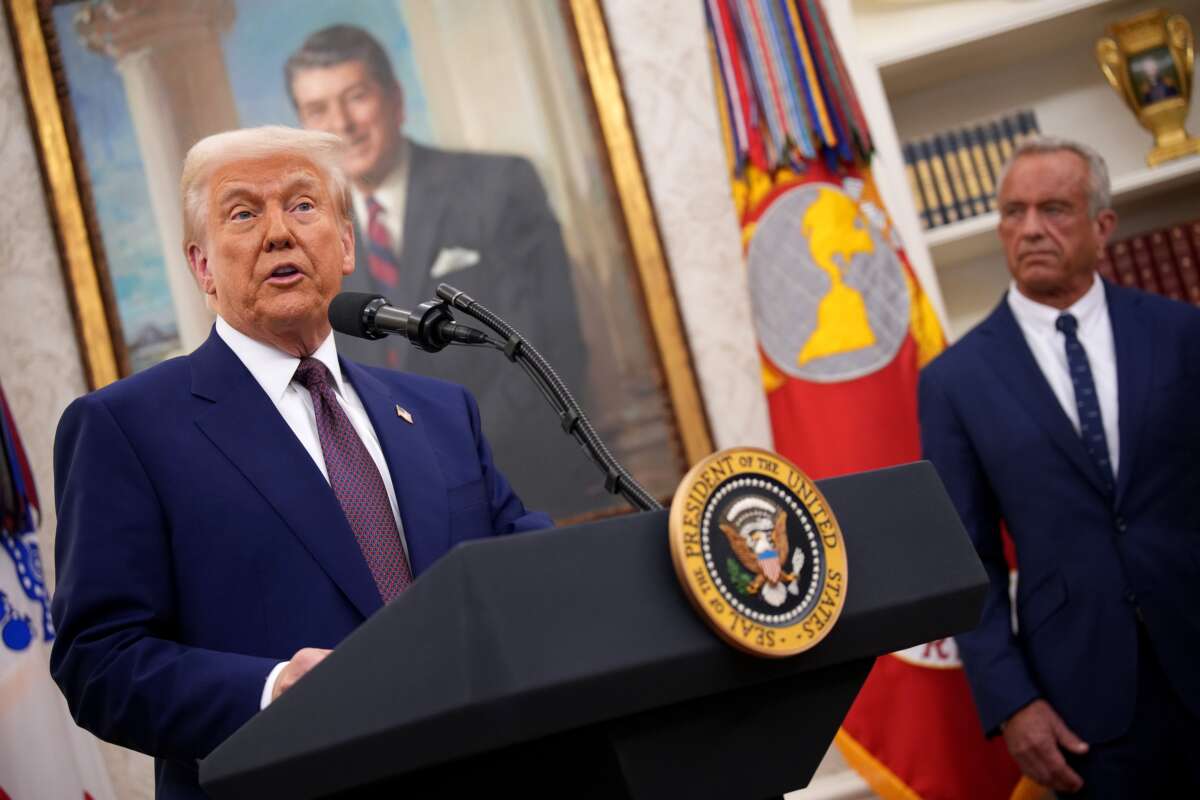
Donald Trump speaks alongside Robert F. Kennedy Jr. before Kennedy is sworn in as secretary of Health and Human Services in the Oval Office at the White House on February 13, 2025, in Washington, D.C.Andrew Harnik / Getty Images


Truthout is an indispensable resource for activists, movement leaders and workers everywhere. Please make this work possible with a quick donation.

Remember “alternative facts”? It’s been eight years since Kellyanne Conway, a senior adviser to President Donald Trump, uttered those words during a “Meet the Press” interview. The patently Orwellian phrase set off a firestorm of coverage: According to Conway, White House Press Secretary Sean Spicer wasn’t lying when he said Trump had drawn “the largest audience to ever witness an inauguration,” despite clear evidence to the contrary. Spicer’s facts weren’t false, Conway said, just “alternative.”

Two months before that interview, in November 2016, Oxford Dictionaries declared “post-truth” the word of the year. Trump’s first presidential campaign and the global ascendancy of the far right had sparked a pervading interest in fake news, disinformation and the political utility of truth-telling in a world shaped by algorithmic forces. Pundits grappled with the realization that social media’s prime role in disseminating news now meant that quick reactions — the stronger the better — would take precedence over thoughtful engagement.

If Trump had a first term marked by “alternative facts,” his second has demonstrated an outright hostility to anything resembling truth at all: Yes, there are the classic Trump lies (like his ludicrous claim that diversity, equity and inclusion [DEI] programs are making planes fall out of the sky), but there’s also his administration’s brazen purge of health and climate data — an assault on foundational scientific knowledge that archivists have scrambled to preserve.

Trump has also ordered $4 billion in cuts to National Institutes of Health (NIH) grants used to fund critical research at universities, cancer centers and hospitals. A federal judge temporarily blocked Trump’s order on Tuesday, but medical researchers have warned that, if implemented, the cuts could hamstring efforts to cure cancer and chronic health conditions, rendering scientific breakthroughs unobtainable.

And then Trump has made ridiculous statements like this: “We identified and stopped $50 million being sent to Gaza to buy condoms for Hamas,” he told reporters last month during a signing ceremony for the Laken Riley Act.

Related Story

Sanders Slams RFK Jr.’s Vaccine Lies as Senate GOP Advances Nomination
“I cannot in good conscience vote for someone who denies and will dilute our public health protections,” Sanders said. By Sharon Zhang , Truthout February 4, 2025


The baseless claim, first promoted by Elon Musk and his “Department of Government Efficiency” (DOGE), seems in fact to be referencing an $83.5 million payment to support HIV prevention and treatment efforts in the East African country of Mozambique, whose Gaza province is unrelated to the Gaza Strip in the Middle East. The nongovernmental organization that received the funds, the Elizabeth Glaser Pediatric AIDS Foundation, said none of the money was used to acquire condoms. This is a far cry from the eye-catching headlines about rash government spending on “explosive condoms” for Hamas. But even the use of government funds to purchase contraceptives is not particularly notable; the U.S. Agency for International Development has worked on global HIV prevention efforts for decades.

On Tuesday, Musk finally walked back the White House’s claim, telling reporters, “Some of the things that I say will be incorrect.” It’s a chilling acknowledgement — no more lip service will be paid to the pursuit of truth, just expect and accept a steady stream of falsities from those in power. While Musk tacked on a note that DOGE’s incorrect statements “should be corrected,” he knows it doesn’t matter. The $50 million condom claim already went viral across social media and conservative news networks; now that it’s lodged in the brains of countless Trump supporters, it’s unlikely that a belated press briefing will change anyone’s mind.

Plus, Musk then added, “I’m not sure we should be sending $50 million worth of condoms to anywhere.” Again, we didn’t. And yet this flippant ignorance is also part of the new anti-truth paradigm, a weaponized, intentional “I’m just asking questions” attitude, crafted to obfuscate simple facts. Musk could, of course, choose to learn the details of global HIV prevention, why the U.S. does it, how public health efforts in Mozambique have a ripple effect on all of us. But why would he?

The same ideological current runs through Trump’s gutting of medical research. The slashed NIH funds for researchers’ overhead costs boastfully disregards even considering why those costs might be necessary. And the impact on public health could be devastating.

Take HIV prevention, for instance. U.S. health officials first became aware of AIDS in 1981, but it took four more years for then-President Ronald Reagan to speak about it publicly. By 1990, HIV was a leading cause of death for young people in the U.S.; more than 40 million people have died from HIV globally.

But today, for many in the U.S., the HIV/AIDS epidemic now feels like it’s in the rearview mirror. That’s thanks in large part to concerted efforts from activist groups like the AIDS Coalition to Unleash Power (ACT UP), which fought to expand the approval and availability of life-saving drugs. New HIV infections have declined since 1984 by an estimated 76 percent. ACT UP’s efforts set the government’s public health agenda, pushing for vital change from agencies like the Centers for Disease Control and Prevention (CDC) and NIH. It is because of these efforts that we have federal funding for HIV prevention and treatment in the first place — the same funding now being cut or placed on pause.

But the epidemic is not over, certainly not globally, and also not in the U.S. “Especially here in New York City where the HIV epidemic really started, there’s been a lot of investment to get that last little bit to end the epidemic in recent years,” Jason Zucker, an adult and pediatric infectious disease physician at Columbia University Irving Medical Center, told me. “If we want to end the epidemic, it’s going to be really hard. You have to increase your efforts to increase testing and identify every person living with HIV, so you can try to spend additional time and effort linking them to care and getting them on treatment, because undetectable equals untransmittable.”

The second Trump presidency has made that battle all the more difficult. I spoke with Zucker before Trump announced the cuts to NIH funding, but after he had ordered a freeze on the disbursement of all federal funds. While that freeze was also temporarily halted by a federal judge, courts ruled Trump has been defying the judge’s order. And as part of Trump’s ban on diversity, equity and inclusion programs and “gender ideology,” his administration has continued to scour grants for any mention of words that could be loosely construed as relating to DEI — which in practice has spanned a range of topics, even flagging words like “diversity” and “women” for review. Zucker noted that Trump’s multipronged attacks “will really impact our ability to bring the epidemic to a close like had been planned.”

Public health, we know, is not a priority of the Trump administration. Five years ago, the Trump administration failed to respond to the emergence of COVID-19 in a timely or effective manner. The global pandemic sparked a new wave of vaccine denialism and a crumbling of trust in our government’s health agencies — trust that won’t be restored with Robert F. Kennedy Jr., a noted vaccine skeptic and conspiracy theorist, at the helm of the Health and Human Services Department. The CDC botched its public health guidance, first under Trump, and then continued to sow confusion under President Joe Biden’s administration, shifting the onus of responsibility for public health from the state to individuals.

Trump’s attacks on medical research, federal funding, and access to health and climate data are the logical outgrowth of the post-truth seeds first planted in 2016 and watered during the COVID-19 pandemic. And while the media focus has been on the consequences for scientific research, Zucker emphasized to me that the biggest impacts will be on treatment.

“The whole point of research is to give us better methods of caring for people,” Zucker said. “I say that as someone who’s primarily a researcher: My work doesn’t matter if I translate that into providing better care.”


This article is licensed under Creative Commons (CC BY-NC-ND 4.0), and you are free to share and republish under the terms of the license.


Schuyler Mitchell is a writer, editor and fact-checker from North Carolina, currently based in Brooklyn. Her work has appeared in The Intercept, The Baffler, Labor Notes, Los Angeles Magazine, and elsewhere. Find her on X: @schuy_ler

Scientists warn of increased mpox transmission


International researchers warn that the ongoing mpox outbreak in the Democratic Republic of the Congo (DRC) has the potential to spread across borders more rapidly. The mpox virus has mutated, and the new variant, clade 1b, has become more infectious.


Technical University of Denmark


Genetic analyses of clade 1b, first detected in September 2023 in Kamituga, DRC, show that this variant has since undergone mutations making it more easily transmissible between humans. Scientists have identified three new subvariants, one of which has spread beyond Kamituga to other cities in the DRC, neighbouring countries, and even internationally to e.g. Sweden and Thailand. The new data may also suggest that clade 1b entails a high risk of miscarriage.

This new research has been published as an accelerated scientific publication in the esteemed journal Nature Medicine.

Originally, mpox was considered a zoonotic disease that primarily spread from animals to humans. However, in 2022, the world witnessed an outbreak primarily affecting men who have sex with men. The new clade 1b differs as both men and women are now contracting the virus. Additionally, an increasing number of infections are being reported among healthcare workers and children.

“It's somewhat like SARS-CoV-2 – the virus undergoes mutations as it spreads. For clade 1b, we see that one particular subvariant appears to have become better at transmitting between humans, and it has now been detected in several countries outside East Africa. In addition, the number of infected pregnant women who miscarry is high among those we have tested,” says Professor Frank Møller Aarestrup from DTU National Food Institute, who leads the GREAT-LIFE project

The GREAT-LIFE project is behind both the discovery of clade 1b and the development of a new PCR test, which enables the detection of clade 1b—undetectable by the original mpox tests.

Call for cross-border collaboration to contain mpox spread

This research indicates that the new variant is spreading rapidly, primarily through heterosexual contact in densely populated areas.

“At present, we are seeing uncontrolled transmission of clade 1b in eastern DRC and Burundi, but to a lesser extent in other parts of East Africa. While there is some international spread, we do not yet expect a large outbreak outside the epicentre in East Africa. However, this situation demands immediate attention. It is crucial to avoid close contact, particularly sexual contact, in high-risk areas,” says Frank Aarestrup.

The spread to neighbouring countries underscores the need for expanded cross-border cooperation to track disease transmission, treat patients, and disseminate health education, particularly among sex workers.

“Action is needed locally, including increased vaccination efforts and public awareness campaigns on transmission routes. Additionally, global measures could include travel advisories against visiting high-risk areas and particularly against engaging in sexual contact in affected regions,” says Frank Aarestrup.

The GREAT-LIFE project coincided with mpox outbreak in DRC

DTU National Food Institute coordinates the GREAT-LIFE project, which aims to build capacity for detecting disease outbreaks in East Africa. The project focuses on local implementation of PCR testing for viral diseases using portable equipment. This capacity-building initiative was rapidly tested when, by coincidence, the project launched alongside the emergence of the new clade 1b variant in the DRC.

The mpox outbreak meant that local researchers and healthcare personnel immediately needed the expertise and tools provided by the project. Led by Professor Frank Aarestrup, DTU National Food Institute’s contribution is to equip local researchers with the ability to conduct rapid research and deliver relevant results. As part of its capacity-building efforts, the GREAT-LIFE project has:

Key findings

As of 5 January 2025, more than 9,500 individuals have tested positive for mpox in the Democratic Republic of the Congo (DRC), with an estimated fatality rate of 3.4%. The rapid increase in cases in the South Kivu province of the DRC is particularly concerning.

In this regard, this research shows that:

  • The mpox virus has become more transmissible, leading to faster spread.
  • Transmission occurs primarily through heterosexual contact.
  • The virus spreads through sex workers in densely populated areas.
  • There is significant underreporting of cases.
  • Mpox infection likely increases the risk of miscarriage in pregnant women.

The researchers have analysed samples from 670 patients infected with mpox. Their findings indicate that 52.4% of those infected were women, while 47.6% were men. The majority of infections were transmitted through sexual contact, but three cases were recorded among healthcare personnel. Seven patients died, and eight out of 14 pregnant women suffered miscarriages.

The research focused on South Kivu province in the DRC, where clade 1b transmission began in September 2023.

About the scientific article

The article has been published in Nature Medicine under a clause allowing rapid dissemination of the findings.

Original title: Epidemiological and genomic evolution of the ongoing outbreak of clade Ib mpox virus in the eastern Democratic Republic of the Congo.

It has been authored by 16 researchers from six different countries: DRC, Rwanda, Denmark, the United Kingdom, Spain, and the Netherlands.

The research has been funded by the EU and EDCTP under the Global Health EDCTP3 grant agreement No. 101103059 (Greatlife project); the EU Horizon 2020 grant VEO 874735; DURABLE (HERA-funded network); Wildlife Conservation Network (WCN); Conservation Action Research Network (CARN); and with support from the Greatlife Mpox Consortium.

Trump & RFK Jr 's  Plan to Make America Healthy Again? Continued Exposure to Lead in Water.


No one knows how many lead pipes funnel tainted water into schools and daycares, but the GOP is derailing remediation.
February 18, 2025

Protesters march during the MTV Video and Music Awards to bring attention to the water crisis gripping the city, outside the Prudential Center in Newark, New Jersey, on August 26, 2019.Karla Ann Cote / NurPhoto via Getty Images

For decades, scientists and medical workers have warned that even low levels of lead in human blood can have a deleterious impact on health. But that has not stopped the Trump administration from threatening to end the few measures that currently attempt to limit exposure to a wide range of toxicants, including lead.

Public health advocates nationwide collectively breathed a sigh of relief when, in the fall of 2024, the Biden-Harris administration announced a rule requiring water utilities to replace nearly all lead pipes by 2034.

But following President Donald Trump’s inauguration, his GOP allies indicated their desire to upend the effort.

They have a multipronged approach: House Republicans have introduced a joint resolution to repeal the rule. They’ve also invoked something called the Congressional Review Act, which allows Trump’s administration to disregard rules that were promulgated during the final months of the previous administration.

If the Trump administration is successful, millions of people will continue to be exposed to lead and other damaging neurotoxins.

Related Story

Trump Withdraws Proposed PFAS Limitations, Giving “Green Light” to Polluters
The withdrawn proposal would limit the amount of PFAS chemical plants can dump into the water supply. By Mike Ludwig , Truthout  January 26, 2025


Children — especially those under the age of 6 — will be particularly vulnerable, and likely harmed, if the government refuses to remediate their excessive exposure.

According to the Centers for Disease Control and Prevention, children who swallow or breathe in lead are adversely impacted, with possible health complications, including Attention Deficit Hyperactivity Disorder, hearing and speech difficulties, and slowed growth and physical development.

These issues do not mysteriously vanish as kids become adolescents and then adults. In fact, lead-borne damage to a child’s central nervous system correlates with high blood pressure, anemia, headaches, cardiovascular problems and kidney disease in later life. Moreover, lead accumulates in the body over time and is stored in teeth and bones, becoming a potential source of fetal exposure during pregnancy.

We know how lead gets into our bodies. Research by environmental scientists has shown that while there are numerous sources of exposure, several particular culprits pose the greatest danger: aging and corroding lead pipes and service lines that bring tainted water into our homes, schools and workplaces; lead solder from pipe fittings; antiquated lead-containing water fixtures, sinks, faucets and bubblers; and chipping lead paint that spews dust into the air.


“The new administration says it wants to ‘make America healthy again.’ This is hard to do if you allow lead to get into children’s brains.”

Lead exposure is particularly acute in some of the U.S.’s largest cities. A study released in 2024 by the Johns Hopkins Bloomberg School of Public Health estimates that 68 percent of Chicago kids under the age of 6 live in a household with lead-tainted tap water, with a total of 2.7 million Windy City residents impacted by the poison.

Chicago is not an anomaly. Research conducted by the Environmental Defense Fund in 2024 named Cincinnati and Cleveland, Ohio; Denver, Colorado; Detroit, Michigan; Indianapolis, Indiana; Minneapolis, Minnesota; Milwaukee, Wisconsin; New York City and St. Louis, Missouri, as the cities with the most lead service lines. Moreover, a recent study in Syracuse, New York, found lead in almost all of the city’s public schools; 10 percent of the children tested showed elevated blood lead levels.

But lead is not confined to urban areas — it has also been found in rural and suburban towns of all sizes, and in all 50 states. That said, both the Environmental Protection Agency (EPA) and environmental activists know that the toxin has a disproportionate impact on low-income children of color since they typically attend the country’s most underresourced and neglected schools and live in the most dilapidated and ill-kept housing.
Removing Lead Pipes Was a Biden-Harris Goal

All told, the EPA estimates that lead pipes still service approximately 9 million homes across the U.S. Even more concerning, no one knows how many lead pipes currently funnel contaminated water into schools and daycare centers.

But before the new administration took over, remediation was beginning.

This followed the October 2024 announcement by the Biden-Harris administration that would put an end to lead’s ubiquitous presence in water delivery systems. In fact, the Lead and Copper Rule Improvements rule had bipartisan support and updated a 1991 rule, allocating $2.6 billion to identify and replace lead pipes in every part of the country; an additional $35 million in competitive grants was also made available.

The administration touted its long-term impact.

The EPA has estimated that, if successfully implemented, the Get the Lead Out Initiative would protect 900,000 babies from being born with low birth weight and prevent 1,500 premature adult deaths from heart disease. These benefits are projected to outweigh the cost by a factor of 13 due to lowered expenditures for medical care and other support services.

There are, however, gaps in the initiative: The rule excludes drinking fountains, sinks and other fixtures that carry toxins into schools, child care centers and offices from the replacement mandate.

The rule contains other gaps as well. Although lead has been banned in gasoline and paint for decades, Tom Neltner, national director of Unleaded Kids, a national organization founded in 2023 to address the cumulative impact of lead exposure, told Truthout that because lead is not only found in water and water delivery systems, additional forms of exposure need to be addressed and remediated.

For example, he says that small-engine airplanes that use pistons are additional vectors. “These planes still use leaded fuel. As they fly, they sprinkle little bits of lead onto us. Even if the amount is small, if you’re getting lead spewed on you, it can cause problems,” he explained. “Lead is also in our soil and can get into the foods we eat.” The FDA, he continued, recently put limits on the amount of lead allowed in baby food (10 parts per billion in fruits, vegetables, yogurt and meats, and 20 parts per billion in single-ingredient root vegetables and cereals).

Lead is also present in approximately 500,000 miles of phone lines crisscrossing the nation, Neltner said, “and there are lead pipes [that once enabled phone lines to function] on the bottom of our rivers and streams. Both send lead into the air and water.”


“Clean water in schools is not negotiable even if the feds refuse to provide the funding, states and localities are not off the hook.”

Then there’s our housing stock. Neltner explained that homes built before 1940 typically contain lead paint and “every time a cabinet or window is opened or closed, small amounts of dust enter the atmosphere.” Lastly, he says, electric vehicles use lead-acid batteries. “When these batteries are recycled, they release lead.” The same, he says, is true of recycled steel.

“The new administration says it wants to ‘make America healthy again,’” he adds. “This is hard to do if you allow lead to get into children’s brains.”
As Trump Pushes Back on Environmental Rules, What Can Cities and States Do?

Mandy M. Gunasekara, director of the right-wing Independent Women’s Forum Center on Energy and Conservation, and an author of Project 2025’s recommendations for environmental policy, has urged the Trump administration to eviscerate “costly, job-killing regulations” and “liberty-crushing” rules while making the EPA more “cooperative” to the business community. Defunding research into the impact of toxic chemical exposure — including lead — is high on the agenda.

Despite these threats, attorney John Rumpler, director of Environment America’s Clean Water Program, told Truthout that even if the Trump administration overturns environmental protection policies, there is still a lot that cities and states can do to ensure that people have access to clean water.

Some localities, he says, have already passed measures to require filters on all taps in schools, child care centers and public parks. “Milwaukee public schools have installed more than 3,200 water bottle-filling stations in schools to replace lead-laced fountains,” he said. Likewise, Washington, D.C. and Detroit have raised money to replace contaminated water sources.

“Of course, schools should not have to go hat in hand to funders, but they may have to,” Rumpler says. “Clean water in schools is not negotiable. It has to get done. Our preference is for the federal government to ensure that we get the lead out. Absolutely. But even if the feds refuse to provide the funding, states and localities are not off the hook.”

“Seventy-four million people voted for Trump and we have to talk to them about the things they likely care about, including access to clean, safe water for drinking, cooking and bathing,” Rumpler says. “We need to argue about the importance of funding a wide array of environmental policies, things like stopping sewage overflow and runoff so that we can all swim in the water at our beaches. These are things we should be able to agree on.” What’s more, he adds, getting the lead out of our air, soil and water supply should also be a baseline goal and entry point for organizing; not surprisingly, a recent survey by the Natural Resources Defense Council (NRDC) found that removing lead pipes was supported by nearly 90 percent of U.S. residents.

Cori Bell, senior attorney at the NRDC, agrees, but told Truthout that even during more environmentally friendly administrations, turf battles often meant that little to nothing got done to remove lead from the water consumed by the nation’s students.

“The U.S. Department of Agriculture, which is responsible for making sure there is potable water for school meal provision, the EPA and state governments all point fingers at each other” regarding who is responsible for what, Bell said.

Nonetheless, like Rumpler, she applauds the efforts of those schools that have installed filters on all water sources. She further notes that because water testing is variable — and can show different results at different times of day, at different room temperatures, and when water has been sitting in pipes for an extended period — the NRDC is taking a “filter first” approach.

“You can’t perfect testing,” Bell said. “Filters have been tested over time and offer more health protections than anything else. Adding filters and maintaining and upgrading them is also less time-consuming than figuring out which sections of pipe contain lead. Lead is a massive problem. Our goal is making sure kids are protected from it.”

A number of education unions and social justice organizations, including the National Education Association, the Waterkeeper Alliance and the Environmental Defense Fund, share these goals. They also support more robust protections to curtail the presence of chemicals in our air and water.

This may be an uphill battle since there are already clear signs of intended rollbacks.

Chelsea McDonald, manager of the Waterkeeper Alliance’s Clean Water Defense campaign, told Truthout that the Toxic Substances Control Act, first promulgated in 1976 to allow the EPA to require chemical companies to test product safety, came under fire at the first hearing of the Subcommittee on Environment of the House Committee on Energy and Commerce in January. “They discussed rolling back TSCA so chemical companies can produce more chemicals and put them out faster,” she said.

Preserving the minimal protections that currently exist, she says, has become imperative, even as activists continue to fight climate change and advocate for water safety, clean air and protection of natural resources.

Also on the agenda is community care.

Michelle Mabson is co-founder of Black Millennials for Flint (since renamed Young, Gifted and Green) and a senior staff scientist at Earthjustice. She told Truthout that in addition to advocating necessary environmental protections, environmental activists need to pay close attention to the children impacted by the lead crisis to ensure that they get the attention and early intervention services they’re eligible for. Although nothing can undo the damage caused by lead, she says that “the way we treat each person matters. We also need to support universal lead testing for every child.”

Furthermore, Mabson urges environmental justice activists to demand reparations for the people of Flint, Michigan, who continue to suffer from health problems. After the city decided to pipe river water “awash with chloride from road salt runoff” into the city in 2014, more than 10,000 people, including scores of young children, began having health problems.

Despite a $626 million settlement that was approved in 2021, Mabson reports that none of the victims have received a dime of compensation. The only beneficiaries have been the lawyers who represented the residents.

But the fact that lead pipes are still in use in all 50 states should be enough to keep a spotlight on the lead exposure in our homes, schools and workplaces.

As Cori Bell of the NRDC told Truthout, “Given how long we’ve known that lead is bad for children and adults, you’d think we’d have made more progress on getting rid of it. I don’t know what we’re waiting for.”

This article is licensed under Creative Commons (CC BY-NC-ND 4.0), and you are free to share and republish under the terms of the license.


Eleanor J. Bader is an award-winning journalist who writes about domestic social issues, movements for social change, books and art. In addition to Truthout, she writes for The Progressive, Lilith Magazine and blog, the LA Review of Books, Rain Taxi, The Indypendent and other online and print publications.