Thursday, February 20, 2025

WWIII

Netanyahu’s Quest To Attack Iran With the ‘Mother of all Bombs’


The emboldened Netanyahu cabinet is in a war path, again. It is mobilizing to attack Iran and lobbying President Trump into a plan that presumably would use the ‘Mother of All Bombs.’

 Posted on

In a press conference with US Secretary of State Marco Rubio, Israeli Prime Minister Benjamin Netanyahu vowed to “finish the job” against Iran with the support of President Trump.

Ever since his rise to power in the late 1990s, Israeli Prime Minister Benjamin Netanyahu has worked toward a war with Iran, presumably to demolish Tehran’s nuclear facilities but also to ensure its power projection in the region.

Now the emboldened Netanyahu wants to finish the job, decimate Iran’s nascent nuclear capabilities, undermine Tehran’s future and overthrow its rulers. After the misguided wars in Iraq and Afghanistan, Washington’s neoconservative empire-builders are also back, pushing still another forever war for a “paradigm shift in the Middle East.”

The Israel-Iran scenarios

Israeli Prime Minister Benjamin Netanyahu has discussed with Trump several possible levels of American backing. According to Israeli observers, there are now four viable scenarios for an Israeli attack against Iran’s nuclear facilities, as seen in the light of US-Israeli relations. Let’s name them.

In the cooperative scenario, the US and Israel cooperate in an attack against Iran’s nuclear sites, which will be followed by Trump’s ultimatum that Iran must entirely dismantle its military nuclear program.

In the clash scenario, the Trump administration would build on diplomacy to seal a nuclear deal. Yet, Israel would attack on its own and thereby undermine Trump’s efforts causing a bilateral drift between the two countries.

In the investment scenario, Saudi Arabia would offer the US hundreds of billions of dollars in investment, to avoid a destabilization in the region that could undermine Riyadh’s 2030 modernization program.

In the solo scenario, Israel attacks Israel’s nuclear facilities without direct US cooperation, but with the tacit consent of the White House. This would happen after the Trump administration’s threats and coercive diplomacy against Iran.

Ultimately, US priorities will matter the most. But these can be elusive and contradictory. Some in the Congress have called for more US military action, including direct attacks against Iran. Others have echoed the Biden Administration’s calls for restraint and de-escalation.

Here’s the problem: any escalation with Iran, whether by the US, Israel or both would likely regionalize the Gaza devastation, which is mis-aligned with Trumps’ economic and geopolitical goals in the Middle East.

Targeting Iran         

Ever since the Islamic Revolution in 1979, when President Carter froze billions of dollars in Iranian assets, Washington has sought to restore the status quo ante of the Shah that had made Iran safe to American capitalism.

In the 1980s, US intelligence and logistics played a vital role in arming Baghdad in the Iran-Iraq War, perhaps the most lethal conventional war between developing countries yet, with total casualty estimates up to 1 to 2 million. In 1988, the US launched an attack against Iran, presumably in retaliation for Iran’s laying mines in areas in the Gulf. In the mid-90s, the Clinton administration declared a total embargo on dealings with Iran.

In 2002, President Bush included Iran in his “Axis of evil” speech. Subsequently, US and Israel cooperated in training secessionist forces in Iran’s Kurdistan province. In 2007, US reportedly vetoed an Israeli plan to bomb Iranian nuclear facilities. Instead, during the next three years, the US and Israel deployed the Stuxnet virus, the world’s first offensive cyber weapon, to destroy almost a fifth of Iran’s nuclear centrifuges.

In 2015, years of challenging talks resulted in a nuclear deal (Joint Comprehensive Plan of Action, JCPOA) between Iran, the US and a set of world powers. Despite Iran’s adherence to it, the Trump administration pulled the US out of the deal in 2018. As tensions escalated, the Trump administration assassinated Iran’s most important general, Qasem Soleimani, in a deadly drone strike in January 2020.

The longstanding quest for Iran War  

While the covert war in the shadows has prevailed since the Islamic Revolution, US regime change efforts moved to a new stage during the Bush administration. Since 2003, US Army has conducted an analysis called TIRANNT (Theater Iran Near-Term) for a full-scale war with Iran. Reportedly, this plan (CONPLAN 8022) would be activated in the eventuality of a Second 9/11, on the presumption that Iran would be behind such a pivotal operation.

That may be one reason why Israeli UN ambassador Gilad Erdan and PM Netanyahu explicitly compared Hamas’s October 7 offensive to the 9/11 terror attacks, which sparked the US. global war on terror. Concurrently, many in Washington sought a pretext for a link with Iran, to legitimize a major regional conflict. In contrast, the U.S. Directorate of National Intelligence assessed that Iran had no foreknowledge of or involvement in the October 7 attacks.

For its part, Netanyahu’s government calculated that an Iran conflict could divert mounting negative public attention from atrocities in Gaza and the West Bank.

There were precedents. In 2011 Netanyahu had ordered the Mossad and IDF to prepare for an attack on Iran within 15 days. Yet, Mossad’s chief Tamir Pardo and chief of staff Benny Gantz, the opposition’s key member in Netanyahu’s war cabinet, questioned the PM’s legal authority to give such an order without the cabinet’s approval. Netanyahu had backed off.

A month after the Hamas offensive, Netanyahu’s Mossad chief David Barnea stated Iran had stepped up terror worldwide.” If Israelis or Jews are harmed, he added, Israel’s response would go to Tehran’s “highest echelon.”

Using October 7 against Iran     

In April 2024, Israel bombed Iranian embassy in Damascus in which 16 people were killed, including the targets, half a dozen high-level officers of the Islamic Revolutionary Guard Corps (IRGC).

The IRGC launched a broad retaliatory attack against Israel and the Israeli-occupied Golan Heights with successive waves of drones, cruise missiles, and ballistic missiles. Giving full public notice that its response was on the way, Tehran designed it carefully as a show of force that would not trigger a wave of escalation. It caused minimal damage in Israel. However, as Israel would later acknowledge, despite containment efforts by the US, the UK, France and Jordan, some of Iran’s ballistic missiles penetrated Israel’s defenses, hitting the Nevatim Airbase in southern Israel.

Iran’s attack targeted Israeli territory as a warning shot. It demonstrated Tehran’s ability to counteract Israel’s huge air superiority, though lacking a modern air force of its own. It also highlighted Israel’s dependency on major Western powers to protect itself and the inadequacy of that protection.

So, how would Israel respond to a conventional “existential crisis” with Iran?

In late 2023, the hypothesis was tested in a high-level US war game.  Intriguingly, initially the US participants presumed that self-restraint would prevail in this high-level war game. Yet, the simulation’s cold logic compelled them into a sequence of steps that quickly went nuclear.

“Mother of all Bombs” into nuclear facilities?

Until recently, Israel lacked “bunker buster” bombs and the capacity to mount a sustained air attack that would destroy Iran’s entire nuclear program. But perhaps not anymore.

Recently, German newspaper “Bild” revealed that the US envoy to the Middle East, Steve Witkoff, announced Washington’s intention to deliver one of the most powerful non-nuclear weapons systems to Israel, known as the “Mother of All Bombs.” Reportedly, Pentagon denies the story.

Weighing almost 10,000 kg, the GBU-43/B Massive Ordnance Air Blast (MOAB) bomb can destroy deep underground bunkers. The explosive yield is comparable to that of small tactical nuclear weapons.

In January, US military intelligence already assessed that, absent an agreement, Israel would probably strike Iran’s nuclear facilities, most likely the Fordow enrichment plant, an Iranian underground uranium enrichment facility 20 miles (32 km) from the city of Qom, in the first half of 2025.

First tested in 2003, the “Mother of All Bombs,” a 30,000-pound (14,000-kilogram) monster was used for the first time in combat in 2017 in Afghanistan by the Trump administration, despite the dire collateral damage.

Whether such use of the MOAB would spark a regional war or trigger waves of new terror and insurgencies in the Middle East is a matter of debate. But it would mean a potentially catastrophic escalation in the region and reshape geopolitical landscape in the early 21st century.

The author of The Fall of Israel (2025), Dr Dan Steinbock is the founder of Difference Group and has served at the India, China and America Institute (US), Shanghai Institute for International Studies (China) and the EU Center (Singapore). For more, see https://www.differencegroup.net/. 

The original commentary was published by Informed Comment on Feb 16, 2025.


Greenlandic Grievances With Denmark and Trump’s Annexation Plan


One of my favorite places on Earth, Greenland, has suddenly become the center of worldwide attention as US President Donald Trump reiterated his 2019 proposal that the US should do whatever it takes to acquire Greenland from Denmark.  Trump’s interest stems from Greenland’s strategic location between the US and Russia, its large untapped deposits of oil, uranium, and rare earth minerals, and its control over Arctic trade routes, particularly the Northwest Passage, which is becoming increasingly navigable as Arctic sea ice disappears.

Trump’s 2019  attempt to buy Greenland outright (or even to trade Puerto Rico for it) was widely dismissed as a joke in both Washington and Copenhagen, but Trump clearly hasn’t let go of the idea, leading House Republican Andy Ogles to introduce the “Make Greenland Great Again Act.”

This renewed geopolitical focus on Greenland is deeply personal. As a human geneticist focused on the study of small, isolated populations, I have spent years researching the relationships between genetics, environment and health in Arctic populations. My experiences in the Arctic, as well as my ability to speak Kalaallisut, has given me insight into how Greenlanders themselves view their place in the world – perspectives often missing from outside analyses.

Because of my familiarity with the region, I knew immediately that Trump’s proposal would provoke a strong reaction in Greenland, where political leaders and everyday people alike see independence, not recolonization by the US, as their future. MĂște B. Egede, the head of Greenland’s government Cabinet of Ministers, the Naalakkersuisut, was blunt: “Greenland belongs to the Greenlanders. We are not and will never be for sale.” But he also acknowledged that Greenland’s economic future must involve more international partners, saying, “We remain open to cooperation and trade with our international partners… Not everything can be through Denmark.”

Trump’s offer may have been clumsy and even offensive, but it has forced an important conversation about their future to the forefront – one that Greenlanders themselves are ready to have. While annexation is out of the question, the real debate isn’t about whether Greenland should belong to the US or Denmark, it’s about how soon it can truly belong to Greenlanders themselves.

Brief overview of Pre-colonial Greenlandic history

The human history of Greenland is as dramatic as its landscape. Several migrations of Paleo-Inuit to the island from Northern Canada and Siberia occurred over the last 6000 years.  The first permanent settlers of West Greenland, the Saqqaq culture, arrived around 2500 BC, followed by the Early and Late Dorset Cultures, who thrived in the Arctic until about 1350 AD.

For a long time, archaeologists assumed that today’s Greenlandic Inuit were direct descendants of these earlier inhabitants, but genetic evidence tells a different story. Ancient DNA studies of Saqqaq and Dorset remains show that these Paleo-Inuit peoples were genetically distinct from modern Greenlanders, having independently migrated to North America. Their genetic lineage left no detectable trace in today’s Greenlandic population, suggesting they were entirely replaced.

Meanwhile, around 986AD, a group of Norse settlers, led by Erik the Red, arrived on Greenland’s uninhabited southwestern coast, where they established settlements in Qassiarsuk and beyond.

The Norse brought their European agrarian lifestyle to land poorly suited for agriculture, attempting to sustain settlements through a mix of livestock grazing, fishing, and trade with Iceland and Norway. They endured for centuries, but their survival in Greenland was always fragile.

Everything changed around 1200 when the Thule Inuit, ancestors of today’s Greenlandic population, arrived from Alaska and Northern Canada. The Thule, unlike the Norse, were masters of arctic survival. The technologically well-adapted Inuit brought with them dogsleds, umiaqs, qajaqs and advanced harpoon technology which allowed them to hunt whales and seals, efficiently navigate sea ice, and travel long distances.

By the late 1400s, as the Little Ice Age intensified and glaciers advanced rapidly toward their settlements, the Norse settlements vanished from Greenland. Whether due to climate stress, economic isolation, starvation, conflict with the Thule Inuit, or migration back to Iceland or on to Newfoundland, their settlements disappeared completely. Meanwhile, the Thule Inuit expanded all across Greenland, forming the genetic and cultural foundation of today’s Greenlandic population.

When Danish-Norwegian missionary Hans Egede arrived in 1721, his goal was not to colonize new lands, but to reconnect with what he and others believed were still-existing Norse settlements. However, he found only Inuit inhabitants, as the Norse had vanished centuries earlier. Although Egede initially sought only to re-Christianize the Norse, his mission served as a vehicle for Denmark-Norway to reassert its longstanding claim over Greenland.

This presents an interesting question: who are the true indigenous people of Greenland? From the Western perspective, the Inuit are recognized as the indigenous population of Greenland, yet they arrived centuries after Europeans had established settlements there, in a remarkable example of reverse colonization.

Is Indigenous status simply about who was there first, or about who survived and adapted? In the case of Greenland, the Thule Inuit didn’t just survive – they thrived, while the Norse perished, only to return centuries later, hoping to reassert control over their lost territories. By the time they returned, Greenland had been fully Inuit for centuries.

Danish Colonial Rule

The arrival of Egede and subsequent Scandinavian rule disrupted the traditional Greenlandic way of life, replacing subsistence hunting and fishing with an economy geared toward resource extraction for European markets. The Nordic administration framed its policies as bringing civilization, Christianity and modernization, but in reality, it imposed economic control, suppressed Inuit culture, and asserted European dominance.

After the Napoleonic Wars, in 1814, Greenland was formally incorporated as a colony of Denmark, following the breakup of Denmark and Norway. Under the Danish trade monopoly, Greenlanders could only trade with Denmark, ensuring that profits from commercial seal hunting and fisheries flowed to Copenhagen rather than staying in Greenland. As Greenland entered the modern era, it remained financially and politically dependent on Denmark.

Danish colonial rule did not just reshape Greenland’s economy and government, it also left lasting genetic and social imprints. Over three centuries, continuous admixture between Danish men and Inuit women led to today’s Greenlandic population having roughly 25% Danish ancestry. This genetic heritage, however, is notably asymmetrical, as more than 50% of Greenlandic Y chromosomes are European, while over 99% of the mitochondrial DNA is Inuit.  This stark imbalance reflects typical colonial power dynamics, where Danish men impregnated Greenlandic women, while Greenlandic men did not return the favor. This historical pattern is still visible today, in social hierarchies, identity struggles, and the enduring divide between Danish-born residents and Indigenous Greenlanders.

Greenland remained largely isolated from broader geopolitical affairs until World War II, when Nazi Germany occupied Denmark in 1940. With Denmark unable to govern Greenland, the US signed the Defense of Greenland agreement, which led to the US setting up weather stations and military bases around the island to defend Greenland from the Nazis and to protect North America from potential Arctic attacks.

Even after the war, the Pituffik Space Base in the far North of the island remained a key part of US Arctic defense strategy to this day, underscoring Greenland’s strategic significance in global security.

When the war ended, Denmark moved aggressively to reassert control of the island, modifying the Defense of Greenland agreement, in light of Denmark and the US both being founding members of NATO. Then, in 1953, it officially changed Greenland’s status from a colony to a county of Denmark, theoretically granting Greenlanders full Danish citizenship. In practice, this policy was about deepening Greenland’s economic integration with Denmark while further disrupting traditional ways of life.

Forced Urbanization and its lasting consequences

As part of its “modernization” efforts, Denmark pursued a policy of forced urbanization.  Greenlanders were relocated en masse from small remote settlements around the island to urban centers, replacing their traditional hunting and fishing lifestyles with sedentary life in urban housing projects.

Denmark justified this as a means to provide education, literacy, healthcare, modern infrastructure, economic development and social services more efficiently, but for many Greenlanders, it was a deliberate attempt to Danify the population, to assert their power and control, and to further weaken Inuit identity and self-sufficiency. The consequences of this policy are still painfully evident today.

For example, Nuuk has one of the highest per capita homelessness rates in the Arctic, at about 1.5% of the population. The Greenland Population Health Survey (Inuuneritta II, 2013-2019) noted that “alcohol and drug abuse are one of the biggest health problems for the population in Greenland,” and researchers at Ilisimatusarfik, the University of Greenland, estimate that 20% of the population now lives in poverty. On top of that, sexually transmitted diseases are rampant – in 2020, incidence rates among women aged 18-25 were 17.1 per hundred for gonorrhea, 27.2 per hundred for chlamydia, and 1.2 per hundred for syphilis, some of the highest in the entire world. In many ways, Nuuk is surprisingly reminiscent of an inner-city ghetto. This socioeconomic decline was not an accident – it was a direct result of policies that undermined traditional economic structures and imposed dependency.

The forced urbanization of Greenland and corresponding shift away from active lifestyles and traditional diets has also led to serious health consequences, such as an alarming rise in diabetes and metabolic diseases, as seen in many other indigenous populations. Inuit people historically thrived on a high-fat, low-carbohydrate diet, largely composed of seal, whale and fish.  The sudden shift to processed foods, starch-heavy diets, and sugar-laden imports has disrupted metabolic health after millennia of adaptation to Arctic life, leading to skyrocketing rates of diabetes and obesity.

Recently Danish geneticists showed that Inuit-specific common genetic variants in the population have a significant effect on glucose metabolism, especially under high-carb diets.  This shows that natural selection had done its job, as even their genomes had become optimized for the high-fat, low carb diets they had relied on for millennia of life in the Arctic.  The recent epidemic of diabetes and metabolic disease is primarily due to the widespread importation of easily shipped and stored starch-laden foods like noodles, rice, and bread – i.e. the Western diet, which are inappropriate for them compared with a more traditional diet, because of those genetic adaptations to Arctic life.

The destruction of traditional livelihoods and economic self-sufficiency was only part of the story. Denmark also implemented policies that directly controlled Greenlandic bodies and families – leading to some of the darkest chapters in Greenland’s history.

Cultural Genocide: Adoptions and Parental Testing

In the era of decolonization after World War II, Denmark believed that the key to development in the Arctic was civilizing the population, leading them to impose Danish language and culture as the key to Greenland’s future.

In 1951, they embarked on a social experiment, sending 22 of Greenland’s best and brightest young people, 5 to 9 years old to Denmark, to be raised by Danish families and educated in Danish, intending that they would return to Greenland as the elite ruling class. Nobody explained to these kids why they were removed from their families, and their parents were only told this would be a great opportunity for the kids to have a prosperous and successful future.

After 18 months in Denmark, sixteen of them returned to Greenland (six were adopted by their Danish foster families) and were housed in an orphanage run by the Danish Red Cross. They were not allowed to speak Kalaallisut and were educated exclusively in Danish. When they met their parents, they could no longer communicate with them, as they forgot Kalaallisut, and their parents could not speak Danish. They could see their parents once in a while, but for the most part were exclusively raised around Danish elites in Nuuk.

The experiment failed, as these kids were never accepted as Greenlanders because they could not speak the language and had lost all ties to the culture. Most of them eventually returned to Denmark as a result, and authorities lost interest in the project after Greenland was granted Home Rule in 1979 and reinstated Kalaallisut as the official language.

More than half of these children went on to develop mental illness and substance abuse problems, and the majority died well before age 70. Ultimately, in 2022, the Danish government formally apologized to the six survivors of the experiment, and paid each of them 250,000 Danish kronor (~$35,000), a very meager compensation for the damage this done to their lives.

In addition to these 22 experimental adoptions, hundreds more Greenlandic children were adopted by Danish families from the 1950s to 1970s, often without the parents understanding they were giving away their children and would never see them again. Like the experimental adoptions, this was part of the intentional Danification policy. More lawsuits are in the works against the Danish state seeking similar compensation as was awarded to the experimental adoptees.

In Denmark, where some 17000 Greenlanders currently reside, there has been another ongoing controversy about the so-called “parental competence tests,” which are intended to identify households where children are not properly cared for, so that such children can be placed with foster families who can better care for them. Mostly, this is intended to protect children from abuse or neglect in dysfunctional households.

The tests are conducted in Danish and represent Danish cultural standards and norms for how to raise children. The examiners typically do not speak Kalaallisut and have no understanding of Greenlandic child-rearing culture and traditions. The tests have come under criticism because the rate of children being removed from their parents is five times higher for Greenlandic parents in Denmark than for Danes, representing a significant bias.

Despite the Danish government’s commitment to develop new culturally sensitive tests, children continue to be removed from Greenlandic families to this day, based on the Danish tests. This is yet another example of how Denmark has been breaking up Greenlandic families and continuing to promote Danification despite commitments not to do so, leading Greenland’s Minister for Children and Youth, Aqqaluaq Egede, to declare in December 2024, that “I believe we are facing a historic political confrontation. There are big problems if one of the parties in the commonwealth is not respected as human beings with rights, as a nation or as a people.”

Biological Genocide: Legally Fatherless Kids, and Forced Sterilizations

Another way that Denmark undermined the rights of Greenlandic children was through a law from 1914 that considered the children of unmarried Greenlandic women to be legally fatherless, with no right to know their father, receive support or inheritance from him, or to take his surname. While this law was changed in 1963 in West Greenland and in 1974 in the rest of the island, as of 2016 some 5000-8000 Greenlanders were “legally fatherless.”

Prior to 1914, Danish men who fathered illegitimate children with Greenlanders were obliged to pay child support, but the law was changed to protect transient male workers from Denmark who had children in Greenland, so as not to discourage them from taking temporary work on the island.

As of 2023, the Danish Institute for Human Rights has taken up the case of the legally fatherless, describing what happened to them as “serious” human rights violations.”

Meanwhile, Greenland’s population was exploding as birth rates remained historically high while mortality decreased significantly. In 1961, the total fertility rate was 6.78 children per woman, and the crude birth rate was 46.91 births per 1000 women.

Condoms were widely available but were not widely used, so Denmark decided to address this problem through a massive effort to insert IUDs in Greenlandic women. By 1969, they bragged that “after only two years of program operation, 33 percent of the Greenlandic women of reproductive age had accepted IUDs.” By the mid-1970s, half the women in Greenland had had IUDs inserted, some as young as 12 years old. As a result, by 1975, the fertility rate had dropped to 2.33 children per woman, and the crude birth rate to 17.218.

What sounds like a major public health success turns out to have been largely involuntary – with “the vast majority of women” having had IUDs inserted without requesting it or even consulting a doctor. This was often done at schools and dormitories, even in Denmark, often without the women understanding what was being done to them.

MĂște B. Egede described the IUD scandal as “direct genocide that has taken place on the part of the Danish state towards the Greenlandic population.” While Danish politicians uniformly reject this accusation, a former judge at the International Criminal Court said, “the forced insertion of spirals can possibly be characterized as being in violation of human rights – or possibly as crimes against humanity.”

From Colonial Rule to the Fight for Independence

By the 1970s, Greenlanders had had enough. In 1979, after years of political activism, Greenland won Home Rule, giving it control over domestic affairs like language, education, healthcare, and fisheries, while Denmark retained control over foreign relations, national defense, and monetary policy. Further distancing themselves from Europe, in 1985, Greenland withdrew from the European Economic Community, the precursor to the EU, over disagreements concerning hunting and fishing regulations.

Another referendum, supported by 75% of Greenlanders, led to the Self-Government Act in 2009, making Kalaallisut the only official language, giving full control over law enforcement and the judiciary to Greenlanders and indexing economic subsidies to income as resource extraction revenue increases, with a pathway to independence when they became self-sufficient economically.

The question is not if Greenland will become independent—but when and at what cost. As Vivian Motzfelt, the Minister of Foreign Affairs and Independence, said in January, “The fight for independence is Greenland’s business. Our future is ours and must be defined by us. We are aware of our rights as a self-determining people.”

Ultimately, all the political parties in Greenland today advocate for the eventual independence of the island within decades, but they disagree about the rate at which they should aspire to get there. At present, Denmark pays block grants of more than €500,000,000 per year, which is roughly half of Greenland’s budget, and to date this has been the biggest barrier to independence. To that end, Greenland has expressed interest in moving towards a “free association” with Denmark akin to the relationship between the Cook Islands and New Zealand, knowing they do not have the economic or military capability to sustain independence without close affiliations with their neighbors.

Greenland does not currently have an economy large enough to support itself at current standards of living without Danish assistance. However, as Trump pointed out, Greenland has immense natural wealth, with rare earth minerals, uranium and oil, fisheries, and enormous potential for tourism, especially after the completion of a new airport in Nuuk and another scheduled to open soon in Ilulissat, home of the world-famous ice fjord, with some of the world’s best whale watching.

There will soon be direct commercial flights from Nuuk to Newark for the first time, while until now the only ways to get to Greenland were via Copenhagen or Reykjavik. And the current ruling party, Inuit Atqatigiit hopes these new connections lead to diversification of investment sources, as they move towards economic self-sufficiency and ultimately to independence.

Ultimately, President Trump has been approaching this wrong strategically. Rather than negotiating with Denmark to “buy” Greenland – further enforcing colonial thinking, he should rather engage with the Greenlanders themselves, offering more US investment in mineral extraction and a greater military presence on the island to provide for their defense from Russia and China, something that Greenland has repeatedly expressed interest in. Trump took this approach in 2020 when he provided Greenland with a $12 million dollar aid package.

Given Greenland’s past struggles with its colonial past, it is important to acknowledge that the US relationship with its own Native American and Inuit populations has been likewise troubling.  And Trump did not help himself when, on his first day in office, he changed the name of Denali back to Mount McKinley in Alaska, showing greater respect for “American greatness” than indigenous concerns.

Trump’s interest has stimulated lots of discussions in Greenland about the economic benefits of closer ties with the US. If this is handled properly, rather than seeking to replace one colonial master with another, Greenland could become an independent partner engaged with both, and benefit from close relationships with both Europe and North America.

Joseph D. Terwilliger is Professor of Neurobiology at Columbia University Irving Medical Center, where his research focuses on natural experiments in human genetic epidemiology.  He is also active in science and sports diplomacy, having taught genetics at the Pyongyang University of Science and Technology, and accompanied Dennis Rodman on six “basketball diplomacy” trips to Asia since 2013.

Feeling Very Fine: Picasso the Printmaker at the British Museum

This is Pablo Picasso the way he is rarely seen – at least in so far as the hundred or so pieces at the British Museum’s Picasso: Printmaker have been displayed.  The viewer is treated to dazzling marked draughtsmanship that also evinces a mastery of techniques: the use of drypoint and etching, lithographs, linocuts and aquatints.

The span of the work humbles. From the early 1900s (Picasso moved to Paris in 1904, keeping an address at the Washhouse Boat in Montmartre), we find the almost shocking A Frugal Meal, where the much diminished couple sit together in strained impoverishment, their minds abstracted by distance from each other. Struck by malnutrition, we see the sagging bodies, the skeletal fingers, the piece of bread on the side of an empty plate, wine partially filling one glass. Made with a salvaged copper plate, the work also heralds Picasso’s first serious attempt at printmaking.

In 1905, the print SalomĂ© announces a serious yet teasing effort by Picasso to depict the body of the naked dancer before Herod much “like a blind man who pictures an arse by the way it feels”. The outstretched leg suggests the Moulin Rouge.

To the end, we get a sampling of the 347 Suite of etchings from 1968, where the playful, irreverent artist is in full, zesty swing.  Along the way, we find Picasso the cubist (Still Life with a Bottle of Marc [1911]), where he keeps fused company with Georges Braque, and the choice morsels from the Vollard Suite (1930-7), where the lure of classical art, animal sexuality and playful mythology is most evident.

The Minotaur is a randy villain governed by instinct, the masculine, beast hybrid that galvanises the work throughout.  He connives in the bacchanalian excesses that artist-man-Picasso also engages in. Ignobly, the Minotaur ravishes or suggests it, evident in Minotaur Caressing a Sleeping Woman (1933).

In the lubricious mix are other creatures of Greek mythology.  The intentions of the faun in Faun Uncovering a Woman (1936), with a nod to Rembrandt’s depiction of Jupiter and Antiope, are unambiguous.  Here, Picasso plays with lust, longing and discomforting moments of predatory assumption.  But then comes the masterful 1934 Blind Minotaur being led by a Little Girl in the Night, its aquatint with scraper effect producing a moving work: a sightless minotaur vulnerable, punished for its misdeeds, holding a dove, walking under a sky carpeted with stars.

This theme of visited punishment and regret is also found in The Little Artist (1954), a colour crayon transfer lithograph made after the end of Picasso’s relationship with Françoise Gilot.  Three figures dominate: the two children he shares with her, flat and downcast, and Gilot, protectively shadowing them in forbidding form.

The 347 sequence is schoolboy randy and remorselessly mocking.  The sublime Renaissance painter Raphael, who the biographer and rumour tiller Giorgio Vasari claimed expired after too much over vigorous intercourse with his lover, La Fornarina, keeps company with unmatched voyeurism, including the Pope’s leering antics.  The shift to the contemporary scene is evident in giving the French war hero and President Charles de Gaulle a noticeable member as he consults the female form.

Violence, ever present in the Picasso oeuvre, finds expression in the gladiatorial, ceremonial form of the bullfight.  Looking at the displayed prints brings Ernest Hemingway to mind, whose perspective on such a brutal spectacle in Death in the Afternoon (1932) is fine stuffing for Picasso’s moral universe.  “So far, about morals, I know only that what is moral is what you feel good after and what is immoral is what you feel bad after”.  The bullfight was “very normal” to Papa Hemingway, with its messages on life, death, mortality and immortality.  At the conclusion of the battle between bull and man, “I feel very sad but also very fine.”

Much about Picasso tends to get absorbed into the outsized man’s legacy. The lovers, the infidelities, his preoccupation with violent themes, and the “woman” question.  But this exhibition is exhilarating for offering the viewer the sources that moved Picasso while also providing offerings that do, inevitably, show the man at his throbbing, priapic best (and worst).  Two young ladies were utterly captivated by the generously erotic depictions, with one squealing in delight, “Now she does have a cunt!”

Beyond the land that is purely mired in cunt and cock, however, we see a delicious lithographic tribute to Lucas Cranach the Elder with its variations, focusing on King David’s lusty longing for the woman he sees bathing, Bathsheba.  Picasso renders the king menacing in intention, his head expansive, his harp disproportionately large.  One senses sympathy for Bathsheba at the inevitable dishonouring.

There are also reverential tributes to the masters of Spanish painting.  El Greco, VelĂĄzquez and Goya tower.  The latter links the two in terms of a shared interest in the bullfight and their subversion of conventional forms of beauty.

By the time one reaches the end, where the master offers the viewer his own reflection in Picasso, His Work and His Audience (1968) it behoves the spectator to wonder whether feeling fine is, in fact, the sentiment to entertain.  For many, it is bound to be.  Others, bothered by the desecrations, the defiling, and more besides, are bound to be troubled.  But most are unlikely to have even wanted to see Picasso in the first place.

British Museum, November 7, 2024 to March 30, 2025

Binoy Kampmark was a Commonwealth Scholar at Selwyn College, Cambridge. He lectures at RMIT University, Melbourne. Email: bkampmark@gmail.comRead other articles by Binoy.

AU CONTRAIRE

Understanding Biology ≠ Biological Essentialism


Anyone who has critiqued, or even dared to question, the ideology of the transgender movement likely has been accused of being a “biological essentialist.”

The most recent episode of this in my life came when a friend read the chapter in my new book about the trans debate and told me that I was advocating “a mistaken position of ‘biological essentialism,’ that biological sex is absolute,” and denying the “evidence of ‘gender as a spectrum.’”

It’s common in these debates for people to use the terms sex (a matter of biology) and gender (a matter of social norms) in confused and confusing ways. More on that later. Let’s start with the comment about essentialism, which many people assume to be a very bad thing, even if they don’t define it clearly.

Here’s how I have been writing about this for the past decade, since my first article on transgenderism:

There are two human sexes, along with a very small percentage of people born intersex, with what are now called DSDs (differences of sexual development). Human reproduction requires male and female gametes, sperm and ova. Gamete size (sperm are small, ova are big) is a coherent marker of one’s role in reproduction, and hence of one’s sex. When it comes to reproduction there is no third sexnor is sex on a spectrum. If that’s essentialism, then basic biology is essentialist.

Discussion of gender takes us out of biology and into the many different ways that societies have developed norms and roles for male and female, creating expectations and/or demands for behavior based on definitions of masculinity and femininity.

That all seems pretty clear to me, but not to everyone. So, let me try an analogy to age.

I am 66 years old, and I am unambiguously male. I was born in July 1958, and I do not have a DSD condition.

Neither of those statements is essentialist. They are descriptions of observable realities, using objective categories (years since my birth, and my potential role in human reproduction). I will never be younger than I am today, and I will never produce ova nor have the physiology that makes bearing a child possible. (Yes, I know that not all females can or will bear children, but at issue is the way male and female physiology determine one’s potential role.)

Essentializing age or sex involves assertions that certain activities are inappropriate or impossible for me because of my age or sex. For example, someone telling me “you can’t lift that heavy box because you are too old” would be invoking age essentialism. I may not be able to lift the box, but that would be a question of my strength, which can’t be read directly from my age. Someone telling me “you shouldn’t take care of infants because men can’t be nurturing” would be invoking sex essentialism. I may not be good with infants, but that would be a question of my temperament, which can’t be read directly from my sex.

When people make assumptions about capacities based solely on age, we call it ageism. When people make assumptions about capacities based solely on sex, we call it sexism.

Sexist claims about the alleged limitations and deficiencies of women, long used by men to keep women subordinated to male needs and desires, are so common that feminists coined the term gender to distinguish social norms from biology. Sex is a stable biological category, and gender is a social category that varies depending on time and place.

A few obvious points about this analogy: Sex is a binary, male or female, with a very small rate of anomalies described as DSDs, while age is a continuous variable with an upper limit somewhere beyond 100 (the oldest known person to date died at 122). Depending on time and place, there are various stereotypes for different ages, just as there are various stereotypes for male and female, but there is no analogous term for gender in descriptions of age that I’m aware of.

An important caveat: This analysis does not deny that the differences between young and old or male and female sometimes can be relevant.

At 66, I cannot do strenuous physical labor for as long as I could when I was 16. The physical realities of aging mean that I have less stamina. Many capacities, such as memory, change over time, though not in ways that can be predicted in every individual. But patterns can be identified. One could describe the average loss of stamina and changes in memory retrieval in people as they age, though individual capacities will vary.

As a male, there are obvious things I do not have the capacity to do, including menstruation, gestation of a fetus, and lactation to feed an infant. That is not controversial (or shouldn’t be). But what of other possible patterns of difference between male and female that are not so obvious?

The physiological differences in reproductive organs and hormones between male and female bodies are not trivial—reproduction is central to any organism—which raises a reasonable question: Given the obvious differences, could there also be discernable differences in intellectual, psychological, or moral attributes between male and female humans that are attributable to biology? That is, could male and female humans think, feel, or make judgments differently not just because of socialization but because of physiological differences? Is there a pattern in these human traits that would allow us to say that, on average, male and female humans are likely to differ in ways that are relevant to how we organize a society? These questions are about patterns and averages; there’s no reason to think that every male would differ from every female in the same ways.

Most advocates of patriarchy (that is, institutionalized male dominance) assume that those differences are significant, which conveniently leads to such conclusions as men are “natural” leaders because they have various traits and abilities (perhaps certain types of intelligence and greater assertiveness) that women lack. Feminists reject those patriarchal claims but vary on the underlying question—some reject the possibility of any differences beyond reproduction and basic physiology, while some are open to the question.

I’m open to the question, but I don’t think we have the research tools that allow us to make definitive assessments about intellectual, psychological, or moral differences between males and females. These are interesting and relevant questions but that doesn’t mean we have the capacity to answer them. Given thousands of years of institutionalized male dominance, we should be careful not to assume such differences always exist, but it is plausible that they might. It is neither sexist nor essentialist to wonder about the question.

Whatever one thinks of my analysis here, nothing I have argued is essentialist, unless acknowledging basic biology is essentialism. Accepting biology is crucial not only to bring greater clarity to the political debate but also to help us improve the treatment of people who experience gender dysphoria. A postmodern-inflected rejection of basic biology doesn’t help anyone deal successfully with that emotional distress.

Robert Jensen, an Emeritus Professor in the School of Journalism and Media at the University of Texas at Austin, is the author of It’s Debatable: Talking Authentically about Tricky Topics from Olive Branch Press. His previous book, co-written with Wes Jackson, was An Inconvenient Apocalypse: Environmental Collapse, Climate Crisis, and the Fate of Humanity. To subscribe to his mailing list, go to http://www.thirdcoastactivist.org/jensenupdates-info.htmlRead other articles by Robert.

Brazil: Experts Alarmed by Landgrabbers and Settlers as Uncontacted Man Emerges from the Forest


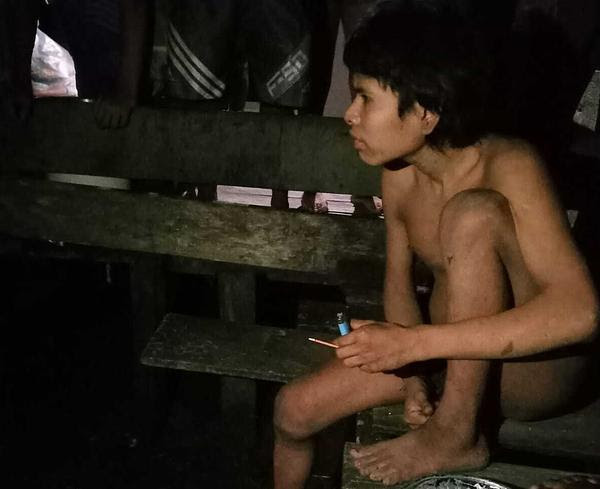
Uncontacted man among loggers

An uncontacted man from the MamoriĂĄ Grande area of Brazil who appeared at a settlement in an extractivist reserve in February 2025. © Anon

Experts working in the area where an uncontacted Indigenous man appeared last week say it reveals the acute pressures from landgrabbers and the extraction of forest produce in that part of Brazil’s Amazon.

The young man, from a group known as “Uncontacted people of MamoriĂĄ Grande,” emerged last week at a settlement occupied by locals harvesting Brazil nuts and other forest produce in the southern part of Amazonas state. He returned to the forest the following day.

Brazil’s Indigenous Affairs Agency FUNAI finally issued a Land Protection Order (a temporary protection) over the area last December, decades after local Indigenous people reported the group’s presence. The area is, however, still not officially demarcated (mapped out and protected), and some local politicians are challenging the Order.

There is mounting pressure on the forest from illegal hunting, fishing and land grabbers in the region.

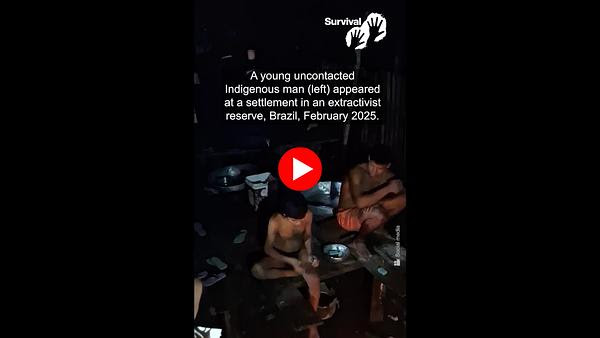
Video of uncontacted man in settlement

Video of an uncontacted man in the MamoriĂĄ Grande area of Brazil has circulated widely online.

ZĂ© Bajaga ApurinĂŁ, the Coordinator of local Indigenous organization FOCIMP (Federação das OrganizaçÔes das Comunidades do MĂ©dio Rio Purus) says: “We’ve been asking for that territory to be protected for a long time. They did the temporary protection, but that doesn’t solve it. What really solves it is demarcation. Those people have nowhere else to go. People are invading, taking the wealth that’s inside the land, cutting down wood, fishing, hunting, everything in there. And they’re suffocating, they’re under threat. We need to set up a health cordon immediately and demarcate the land urgently.”

Public prosecutor Daniel Luis Dalberto works on uncontacted peoples’ issues. He was in the area last week and told Brazilian news site A Publica: “I have seen with my own eyes the risks [to] which these peoples are subjected. The risk of genocide or extermination is very high.”

Carlos Travassos is the former head of FUNAI’s uncontacted and recently-contacted peoples unit, and was also previously chief of the FUNAI base in the area. He told A Publica: “[Some parts of this region] are not legally protected and have been the target of land speculation, such as land grabbing. Funai’s Land Protection Order was very important. This is the end of the ‘arc of deforestation’, the most deforested region of the Amazon. It’s a region with a lot of land pressure.”

Survival previously publicized the vulnerable nature of the territory and the people in it, which until recently lacked even the most basic protection.

Survival International Director Caroline Pearce said today: “This alarming development shows how vital it is that this territory, like all uncontacted Indigenous peoples’ territories, is properly demarcated and protected as a matter of urgency. The government has taken years just to issue a temporary Land Protection Order, but the Indigenous people’s presence in this area has been known for decades, and land grabbing is now rampant.”

Note: Survival Brasil’s researcher Priscilla Oliveira was in the area with FUNAI shortly before the young man appeared, and is available to interview.

Survival International, founded in 1969 after an article by Norman Lewis in the UK's Sunday Times highlighted the massacres, land thefts and genocide taking place in Brazilian Amazonia, is the only international organization supporting tribal peoples worldwide. Contact Survival International at: info@survival-international.orgRead other articles by Survival International, or visit Survival International's website.