Saturday, March 08, 2025

What's Next for Carbon Capture Technology?


By Felicity Bradstock - Mar 07, 2025,


CCS projects are receiving significant investments, but facing increasing criticism over their effectiveness and high costs.

There is a debate about whether these funds would be better spent on proven renewable energy technologies.

While some countries are making progress with large-scale CCS projects, others are facing delays and skepticism regarding the technology's viability.


Carbon capture and storage (CCS) were the words on everyone’s lips a couple of years ago, as most big oil majors began to invest heavily in the technology to support decarbonisation efforts. However, as the first large-scale projects get off the ground, greater criticism has emerged around the technology. Governments and private companies worldwide view CCS as a clear means of decarbonising hard-to-abate industries, but many scientists and industry experts are worried that the expensive technology will not be as effective as everyone had hoped.

The carbon capture and sequestration market is forecast to grow at a CAGR of 16 percent between 2024 and 2031. This growth will be driven by an increase in investments from both the public and private sectors. Sectoral growth is expected to be seen primarily in North America and Europe. Three trends that are expected to contribute to growth are advancements in direct air capture (DAC) technology, an increased focus on carbon utilisation (converting CO2 into chemicals or fuels), and the development of large-scale carbon storage hubs.

Several countries worldwide are starting to see progress in their CCS projects. In Norway, Northern Lights, a large-scale transport and storage CCS project, commenced operations in September 2024. The facility is owned in equal shares by the oil majors TotalEnergies, Equinor, and Shell. Phase 1 installations can store up to 1.5 million tons of CO2 a year. This facility contributes to TotalEnergy's target of developing a CO2 storage capacity of over 10 million tons by the end of the decade.

The project was approved by the Norwegian government in 2020 and was supported by the EU. The aim is to transport captured carbon to bury at approximately 2,600 metres below the seabed in the Northern North Sea. The project will support the decarbonisation of European industrial operations.

In October, Norway’s government earmarked $197.3 million of its budget to complete the CCS Longship project. The Ministry of Energy plans to complete the project in 2026. The facility will capture carbon emitted from the Brevik cement factory. “With Longship, Europe’s first full-scale value chain for CO2 management will be in operation in 2025. It is inspiring to now see the results from Norway’s long-term commitment to CO2 management,” stated Norway’s Minister of Energy Terje Aasland.


ADVERTISING


Meanwhile, the U.K. government announced an investment of $28.4 billion over 25 years to support the first CCS projects in the country in October, with three-quarters of the funding to come from consumers. The U.K. Department for Energy Security and Net Zero has reduced its ambitions for how much carbon the programme will capture and store. In December 2024, it stated that its aim to capture and store 20 to 30 million tonnes of CO2 a year by 2030 was no longer achievable and it has not yet set any revised targets.

While the U.K. is following in the footsteps of several of its European neighbours by investing in large-scale CCS projects, some are not so optimistic about the investment. U.K. politicians are concerned about the government’s plan to spend billions of pounds on an “unproven” clean technology aimed at decarbonising the economy at the cost of the consumers. In February, the government’s House of Commons' Public Accounts Committee stated concerns that the government had not effectively assessed the financial impact on households and businesses.

The chair of the Public Accounts Committee Geoffrey Clifton-Brown stated, “It is an unproven technology, certainly in this country. And we are concerned this policy is going to have a very significant effect on consumers’ and industry's electricity bills.” This is a widely agreed-upon opinion in the scientific community, with a broad consensus that the high cost of developing largely unproven CCS projects could be better spent on deploying more renewable energy capacity. For this reason, many environmental organisations have criticised governments and companies for investing in CCS projects rather than cutting the problem at the source by investing more heavily in a shift away from fossil fuels to green alternatives.

However, the U.K. Energy Minister Ed Miliband said that while the technology is novel, it is critical for tackling climate change. Meanwhile, Stuart Jenkins, a research fellow at the University of Oxford, stressed that while there are no commercially operational CCS projects in the U.K. at present, there are 45 commercial facilities already operating globally capturing around 50 million tonnes of CO2. In addition, there is a pipeline of around another 700 projects globally, according to the International Energy Agency.

It is still uncertain what direction the world will take when it comes to CCS technology. While some believe money may be better invested in proven renewable energy projects to cut carbon at the source, others view the development of the world’s CCS capacity as key to cutting emissions in the mid-term. As more commercial-scale CCS projects come online over the next decade, it will paint a better picture of the industry’s outlook.


By Felicity Bradstock for Oilprice.com


Metal for bullets risks bigger shortage after near-300% surge

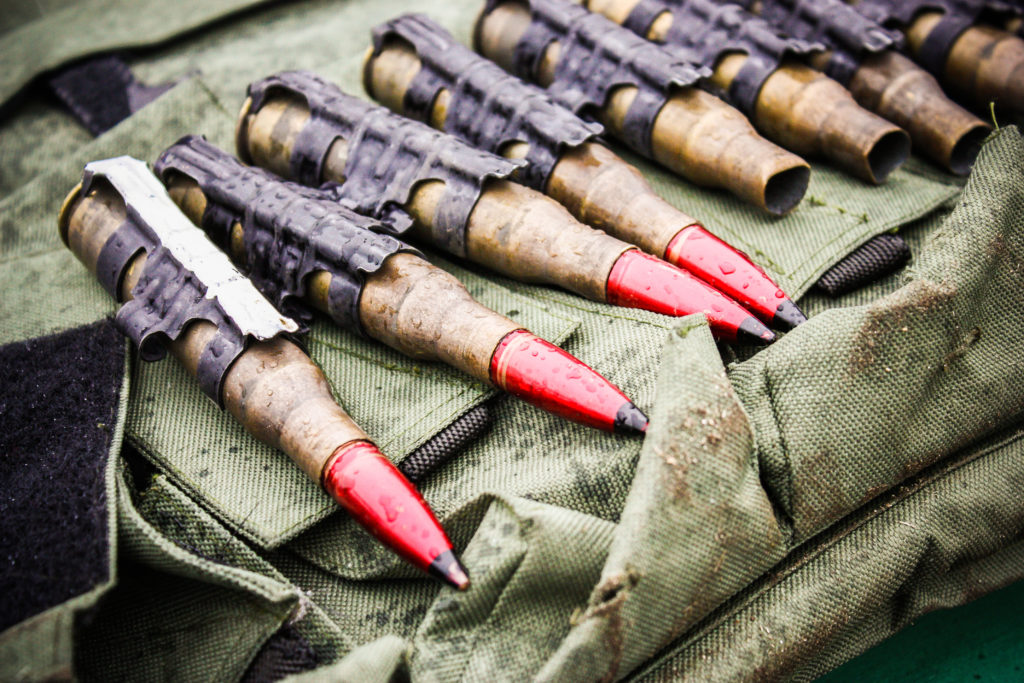
Antimony is used in military applications such as ammunition, infrared missiles, nuclear weapons and night vision goggles. Stock Image

A global shortage of antimony — widely used in munitions — could worsen as the US and Europe replenish stockpiles of bullets and bombs used in Ukraine, according to the company building one of the niche metal’s few new sources of supplies.

Larvotto Resources Ltd. is due to start a mine in Australia next year, offering a rare new stream of output from a Western nation in an antimony industry dominated by China and Russia. Prices of the metal are nearly four times higher than a year ago, after Beijing tightened exports of critical materials, triggering a scramble for supplies across high-tech and defense industries.

Antimony-lead alloys are used in bullet cores, explosives and shrapnel weapons. Ukraine’s Western military backers have drawn on ageing inventory that will now need replaced, Larvotto’s managing director Ron Heeks said in an interview.

“The antimony and lead from these munitions would normally be recycled into new weapons, but those have gone to the front line in Ukraine,” Heeks said.

Military applications remain a small segment of antimony’s demand, which is dominated by flame retardants, lead-acid batteries and the chemicals industry. Excluding the batteries, the world needs about 120,000 tons a year and it’s only producing about 80,000 tons, Heeks said.

China in December slapped a ban on US-bound exports of antimony, gallium and germanium, flexing its strong grip on strategic materials. While US President Donald Trump is pursuing an end to the Ukraine war, his America-first foreign policy is spurring European nations to ramp up defense spending — including on munitions.

China, Russia and Tajikistan produce about 87% of the world’s mined antimony supply, according to Mandalay Resources Corp., which operates a mine in Australia that counts for just 2%, and where output is declining.

The Biden administration last November gave initial approval to a proposed mine in Idaho that was part-funded by the Defense Department to generate domestic supplies. Larvotto’s Grovehill project will be Australia’s biggest antimony mine, supplying as much as 7% of global demand, according to the company.

(By Paul-Alain Hunt)


US steel CEOs urge Trump to resist metal tariff exemptions

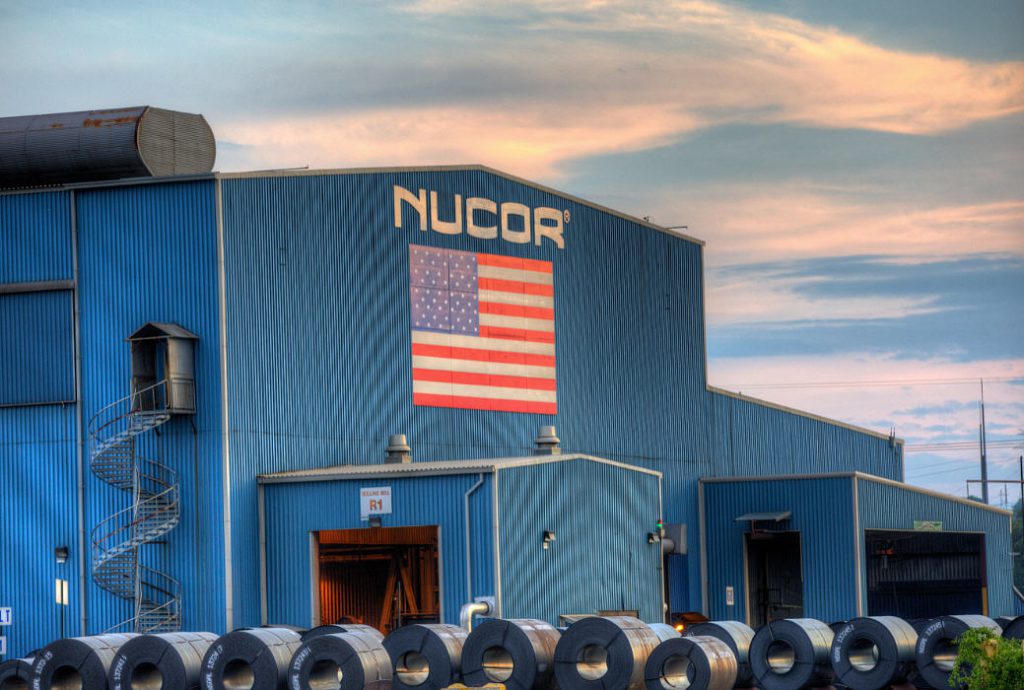
Nucor Steel Gallatin – Image courtesy of Nucor

The CEOs of the three largest American steelmakers are urging US President Donald Trump to resist giving any tariff exemptions on imports of the alloy.

Nine US steel industry executives sent a letter to Trump on March 7, just days before the US is expected to implement a 25% tariff on all steel imports. The letter said prior exemptions given to nations allowed for increased import volumes that damped the original impact of Trump’s duties during his first administration.

The CEOs, which include Nucor Corp.’s Leon Topalian, United States Steel Corp.’s David Burritt and Cleveland-Cliffs Inc.’s Lourenco Goncalves, argued that avoiding exemptions was a matter of national security.

“Millions of tons of product-specific exclusions were granted, even for products readily available from domestic suppliers. The result was a weakened US steel industry exposed again to the global steel oversupply crisis,” the letter said. “We urge you to resist any requests for exceptions or exclusions and to continue standing strong on behalf of American steel.”

The letter comes as companies and countries have been lobbying the White House to exempt key trading allies from duties, arguing such levies would raise prices on US consumers. The US steel industry is coming off its worst year since Trump’s first term in office as lackluster construction demand, inflation and high borrowing costs created a triple-whammy on earnings. Imports rose in 2024, but remained below 2021 and 2022 levels, according to Commerce Department data. 

The looming threat of tariffs has caused US prices to surge in recent weeks, making it more than 20% more expensive than imported steel. As recently as January, a ton of steel was selling for less than $700 a ton. But by the end of February, domestic producers were said to be quoting customers prices as high as $1,000 — levels not seen since the beginning of last year.

(By Joe Deaux)


Cleveland-Cliffs Announces “Buy American” Automotive Incentive Program for Employees

CLEVELAND--()--Cleveland-Cliffs Inc. (NYSE: CLF) today announced a company-wide “Buy American” incentive for its nearly 30,000 employees. During the calendar year 2025, any Cleveland-Cliffs employee who purchases or leases a new American-built vehicle with substantial Cliffs’ steel content will receive a $1,000 cash bonus in connection with the purchase.

Lourenco Goncalves, Cliffs’ Chairman, President and CEO said: “We are pleased to do our part to support President Trump’s long-term vision of bringing manufacturing back to the United States. In order to be a global superpower and Make America Great Again, companies need to produce things in America and people need to buy things that are made in America. This incentive is a small token of our appreciation for the Administration’s “America-First” agenda and serves as recognition that our employees, as American consumers, will help power the resurgence of domestic manufacturing. We hope that other companies will follow suit and do their part to incentivize consumption of American-made products.”

U.S. Senator Bernie Moreno said, “For decades, workers in states like Ohio were devastated by elites in Washington who shipped their jobs overseas while importing cheap foreign products instead of manufacturing here in America. But thanks to President Trump and bold leadership from industry leaders like Cleveland-Cliffs, American manufacturing is poised to see a boom like never before. I applaud Cleveland-Cliffs’ bold leadership in fighting for American workers and am proud to join Lourenco in this historic announcement.”

Vehicles produced in a plant outside of the United States, or that use a significant amount of imported flat-rolled steel, will not qualify for the incentive. Further guidance regarding vehicle eligibility will be communicated directly to employees.

Cleveland-Cliffs will hold a joint press conference today at its Cleveland Works plant in Cleveland, Ohio, featuring Chairman, President, and CEO Lourenco Goncalves and U.S. Senator Bernie Moreno.

The event will be broadcast live on the Company’s YouTube channel. A replay will be available after the event on Cleveland-Cliffs’ channel.


Biotech company BPH plans to extract critical minerals, gold from seaweed

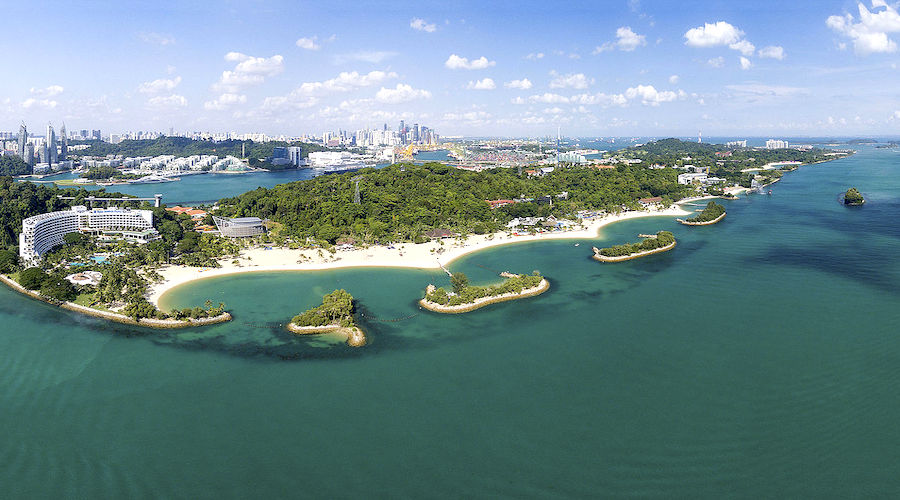
BPH is cultivating seaweed from Sentosa island, off Singapore’s southern coast. (Image by Chensiyuan – Own work, CC BY-SA 4.0)

Biotechnology company BPH Global (ASX: BP8) has found gold and copper concentrations in seaweed, as part of an ongoing research program to potentially extract precious and base metals from seawater.

The firm’s hypothesis is that seaweed can absorb higher mineral concentrations from polluted waters compared to pristine waters, acting like a sponge for these minerals. This would mean seaweed can act as a “natural miner” as it can absorb valuable metals from seawater. 

The latest assays, conducted by Temasek Innovation Holdings (TPIH) in Singapore in collaboration with Gaia Mariculture, revealed gold concentrations of up to 14.85 milligrams per kilogram (mg/kg) and copper concentrations of up to 10.88 mg/kg in seaweed cultivated in clean, filtered seawater from the island of Sentosa.

“The presence of gold and copper, in addition to the previously identified cobalt and silver, marks another exciting milestone in our research,” managing director Matthew Leonard said in a statement. “These results further support our view that seaweed has the potential to act like a sponge for base and precious metals in seawater. We look forward to investigating this further in Phase 2 of the R&D programme.”

Phase 1 of BPH Global’s research focused on cultivating Sesuvium portulacastrum seaweed in a controlled laboratory environment using water free from industrial or urban pollution. Initial assays confirmed significant levels of silver and cobalt, prompting additional testing for gold and copper.

Building on these findings, Phase 2 will shift research to brackish, polluted waters in Johor, Malaysia, to explore whether mineral absorption increases in less pristine conditions.

BPH Global is among a growing number of companies investigating seaweed’s potential for mineral extraction. Blue Evolution, a California-based regenerative ocean farming company that merged with Blu3 last year, is developing seaweed farms to extract critical minerals, including rare earth elements, recognized as strategic resources by the US government.

Mali partially lifts suspension on issuance of mining permits


Reuters | March 7, 2025 | 


Mali-based Loulo-Gounkoto complex. (Reference image by Barrick Gold.)

Mali will partially lift a 2022 suspension on the issuance of mining permits on March 15, the mines ministry said in a statement on Friday.


The military-led West African country, one of Africa’s top gold producers, suspended the allocation of mining titles throughout its territory in November 2022. At the time it said the move was an effort to improve the procedure.

In 2023, Mali signed a new mining code into law that raises taxes and seeks to hand over big stakes in assets to the state.

The suspension will be partially lifted following “major work to clean up the mining register,” the ministry said in a statement.

Mali’s mining administration will now receive applications to renew search and exploitation permits, applications to transition from search to exploitation, and applications to transfer exploitation permits.

The allocation of new mining permits, as well as the transfer of search permits, remain suspended.

(Reporting by Tiemoko Diallo, writing by Sofia Christensen, editing by Deepa Babington)
Column: Congo’s export ban not enough to clear the cobalt glut

Reuters | March 7, 2025 | 


Credit: Missouri Cobalt.


The Democratic Republic of Congo’s four-month suspension of cobalt exports is a sign that even the world’s largest producer is now feeling the pain of historically low prices.


The news has given the cobalt market a fillip and the impact is already rippling through the supply chain with one Congolese operator, Eurasian Resources Group (ERG), declaring force majeure on deliveries of the electric vehicle battery metal.

But will it be enough to address the underlying problems of a structurally over-supplied market?

History suggests not.

The Congolese government appears to understand that an export ban offers only temporary relief and that something more drastic may be needed.


CME cobalt price
Feeling the pain

The cobalt price was languishing at multi-year lows of $10 per lb prior to the Congo’s surprise decision to suspend all exports.

In most commodity markets such rock-bottom pricing would have already caused a major supply response.

But the impact in cobalt has been limited. Sure, artisanal production in the Congo has dwindled and new projects such as MMG’s Kinsevere cobalt plant, also in the Congo, have been deferred.


Yet global supply still increased from 238,000 metric tons in 2023 to 290,000 tons in 2024, according to the US Geological Survey

The problem is that 98% of the world’s cobalt comes as a by-product to either nickel or copper, meaning the metal has no independent floor price or self-correcting supply mechanism.

Production has continued booming because of surging nickel output in Indonesia, the world’s second largest cobalt producer, and rising copper output in the Congo itself.

China’s CMOC Group reported a 55% year-on-year increase in copper output from its Congo operations last year. Along with the copper came an extra 60,000 tons of cobalt, flooding an already over-supplied market.

Global stocks of cobalt have mushroomed to the equivalent of 233 days worth of consumption, according to consultancy Benchmark Minerals.
Stemming the flood

The cobalt price has reacted positively to news of the export suspension, the most-active CME contract jumping to $15 per lb in the space of a week.

But a ban on exports is only a short-term panacea, likely leading to a build-up in stocks of intermediate product cobalt hydroxide in the Congo.

This is what happened in 2022-2023, when the Congo government suspended exports of both copper and cobalt from CMOC in a protracted tax dispute with the Chinese company.

CMOC didn’t stop producing during the near year-long export halt and simply accumulated ever more inventory at its production sites.

The impact showed up in China’s copper imports from the Congo. After slowing significantly in the first part of 2023 imports accelerated sharply in the second half as the stockpiled metal was exported.

A four-month suspension of cobalt exports is likely to generate the same outcome – a short-term booster followed by renewed price weakness as exports rebound.

The Congo government needs another solution. Options include extending the export ban beyond four months or introducing an export quota system.

But as long as the likes of CMOC and Glencore keep producing copper, which they will given that metal’s high price, they will continue generating by-product cobalt units.

Maybe the Congo could even introduce production quotas, but that would represent a double-hit to the country’s tax revenues.
Electric dreams fade

The Congo’s other problem is that the global cobalt glut is not just about over-supply. It’s also down to weaker-than-expected demand from the key electric vehicle (EV) battery sector.

The EV market continues to grow but cobalt usage is not growing in tandem because car-makers are shifting their battery chemistry to low- or no-cobalt formulas.

They are doing so because of the metal’s notorious price volatility and for fear of reputational damage arising from Congo’s artisanal production, which is associated with atrocious working conditions and child labour.

The current sharp rise in the cobalt price may be good news for the Congo government but in the longer term it will simply reinforce the view that cobalt is not the metal around which to bet the future of the energy transition.
Wanna buy some cobalt?

The EV sector may be losing its appetite for cobalt but that doesn’t mean there aren’t other potential buyers of the Congo’s production.

Cobalt is also a critical metal for the defense sector, where it is used in the form of super-alloys for the aviation and aerospace industries.


Both the United States and the European Union have made no secret of their desire to reduce China’s dominance of the cobalt supply chain, a vice-like grip that results from the country’s investment in Congo’s production sector.

The West is struggling to build out its own cobalt supply chain precisely because Chinese companies like CMOC are producing so much.

The Congo government has already mooted a Ukraine-style minerals deal with Western countries as it struggles to fend off the M23 rebel group, which is expanding its control of the country’s eastern province of Kivu.

Negotiating a long-term supply deal with the West might be the country’s best hope of finding a home for its excess production.

A four-month export ban is not going to do the trick.

(The opinions expressed here are those of the author, Andy Home, a columnist for Reuters.)

(Editing by David Evans)
Mine waste could be transformed into a ‘net-zero, multi-billion dollar opportunity’ – study


Amanda Stutt | March 7, 2025 | 
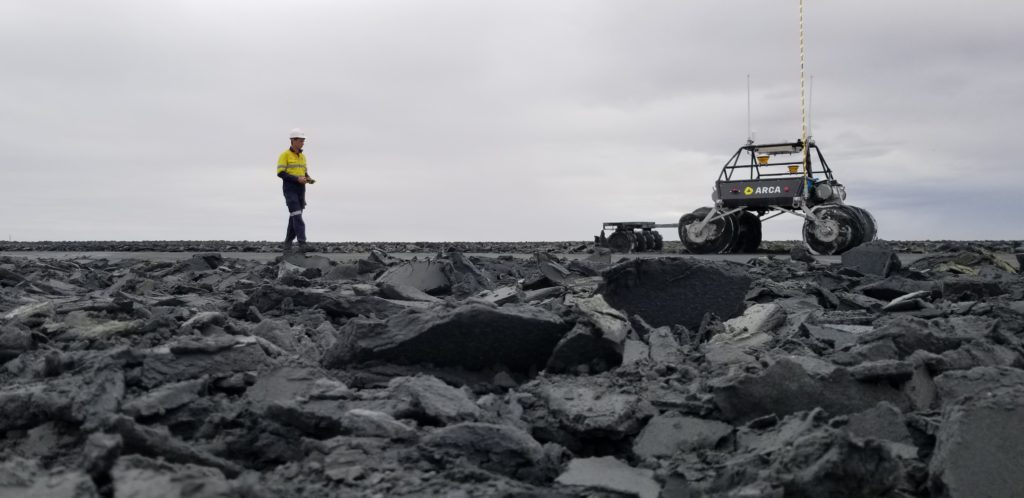
Arca scientist working on ultramafic mine tailings at a mine site in Australia.
 Photo credit: Arca Climate Technologies.

A multibillion–dollar opportunity awaits that could strengthen mining’s role in delivering the energy transition, according to a new report authored by Arca Climate Technologies, non-profit consultancy The Climate Agency and Will MacNamara, a former mining correspondent for the Financial Times.


The whitepaper, Beyond Extraction: Transforming Mine Waste Into A Net-Zero, Multi-Billion Dollar Opportunity, theoretically connects the surging demand for carbon removal credits with unique advantages of mine waste mineralization, compared to other carbon removal methods.

Arca is one of the first companies commercializing mineralization for the capture and storage of atmospheric CO2 that is supported by scientific research and technology development.

The company was named last year as one of Canada’s most investable cleantech ventures in 2022 and in the same year won a $1 million award from XPRIZE and the Musk Foundation in a carbon removal competition.

The carbon credit market has grown tenfold over the past two years and is forecasted by McKinsey to be worth up to $1.2 trillion by 2050.
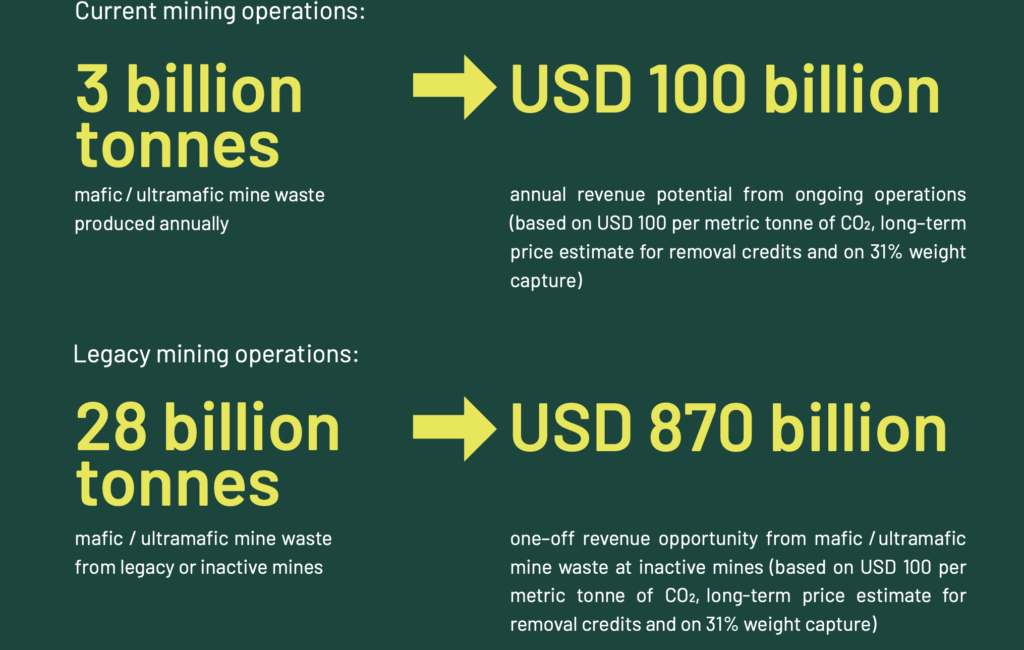
Source: Beyond Extraction: Transforming Mine Waste Into A Net-Zero, Multi-Billion Dollar Opportunity

The paper asserts that carbon removal credits, which have become the gold standard in carbon markets, are the route for mining companies to realize this revenue.

The authors note that mafic / ultramafic rocks – hosting nickel, diamond, chromium, and many other mined ores – are a key feedstock for the carbon removal underpinning these credits.

“Companies that mine these ores sit on one of the great untapped resources for a low–carbon economy,” the report reads. “Tailings storage facilities around the world already contain mafic / ultramafic rock at a scale that can meaningfully remove carbon dioxide from the atmosphere.

“This untapped resource will only grow over the next decade as miners extract more ore to supply the energy transition,” the authors write, adding that carbon mineralization technology partners can help mining companies capitalize on the opportunity, deploying new methods for carbon removal grounded in decades of academic research.”

Some of these technologies are already deployed on operational mine sites and independently certified. In 2023, Arca launched an 18 month a pilot project for air-to-rock carbon mineralization using mine tailings at a nickel mine in Australia to test the company’s methodology to capture and permanently store atmospheric carbon dioxide, and demonstrate the technologies can integrate safely at an operating mine.

With specific components in place, the report states that a growing waste stream can become a “carbon sink”, which can, in turn, become a revenue stream.

“Indeed, mineralization of mine waste is one of the most permanent, scalable and valuable paths to remove carbon from the atmosphere.”

The carbon removal opportunity stands to take this role much further, the authors note, adding that by providing built infrastructure, leaning into its industrial and geological expertise, and repurposing vast tailings facilities, mining is better positioned than other heavy–industrial sectors to deliver the billions of tonnes of carbon removal that scientific consensus demands.

“Carbon removal is going to have to be operating at the scale the oil and gas industry operates today. It represents transformative business opportunities as well as new sources of revenue,” Greg Dipple, Arca’s Head of Science, said in the report.

Read the full report here.


Royal Caribbean Joins Methane Abatement in Maritime Innovation Initiative

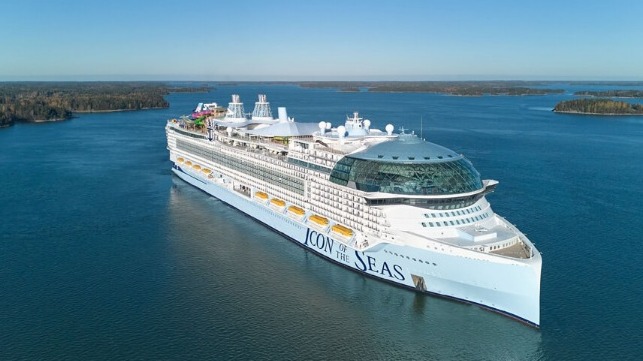
Icon of the Seas

Published Mar 7, 2025 8:26 PM by The Maritime Executive


[By Methane Abatement in Maritime Innovation Initiative]

Methane Abatement in Maritime Innovation Initiative (MAMII) announced Royal Caribbean Group, a vacation industry leader with a global fleet, has become the latest member to join the cross-sectoral methane abatement initiative. The company is expected to provide valuable insights and support MAMII's ongoing efforts to develop and implement effective methane emission reduction strategies across the maritime industry.

Addressing methane emissions is a key priority for the sector; as transitional fuels such as liquefied natural gas (LNG) are increasingly adopted, leaders are focused on the reduction of methane emissions to reduce the environmental impact of the value chain. Established in 2022, and led by Safetytech Accelerator, MAMII unites industry leaders, technology innovators, and maritime stakeholders to develop technologies that monitor, measure, and mitigate methane emissions from LNG-powered ships.

Royal Caribbean Group joins a growing roster of members including BP, CMA CGM, GTT, Lloyd’s Register, Capital Gas, MSC, NYK Lines, and Shell, reflecting the initiative’s broad industry engagement.

Steve Price, Programme Director at Safetytech Accelerator, commented:

“Methane abatement is an urgent challenge as we work to reduce the maritime sector's environmental impact. Methane’s significant contribution to climate warming makes this an issue we cannot overlook. With Royal Caribbean Group on board, we gain a partner that shares our determination to drive innovation and collaboration in addressing this critical issue.”

"We are excited to join industry leaders and collaborate on the MAMII initiative, which we believe will play a critical role in information sharing and tool development needed to manage methane emissions,” said Palle Laursen, executive vice president and head of marine, Royal Caribbean Group. “We are committed to industry collaboration and partnerships like this are key to achieve Destination Net Zero, our decarbonization strategy to reach net zero emissions by 2050.”

MAMII recently published a report examining the scale of methane slip in LNG-fueled vessels and the technologies available to tackle it. The report, available here, serves as a call to action for industry leaders to join the effort in combating methane emissions.
 

The products and services herein described in this press release are not endorsed by The Maritime Executive.


Concordia Damen to Build Innovative RoRo Pontoon

Concordia Damen

Published Mar 7, 2025 9:03 PM by The Maritime Executive


[By Concordia Damen]

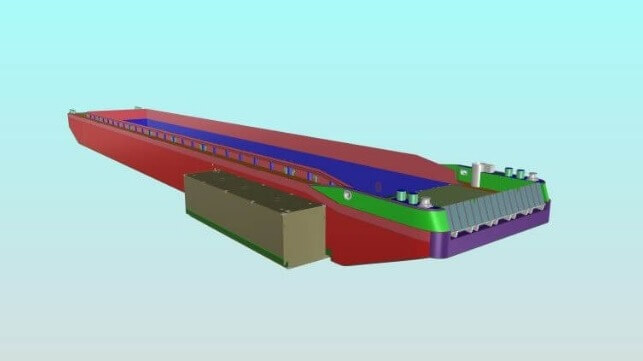
Concordia Damen is proud to announce that it has been awarded a contract by ‘Koninklijke Van der Wees Transporten’ for the construction and delivery of an innovative RoRo pontoon, to be named Lastdrager 29. In addition, the Werkendam-based shipyard will build two coupling pontoons for Van der Wees. This project marks another milestone in the long-standing collaboration between Concordia Damen and Van der Wees, following the successful delivery of the Pieter van der Wees five years ago.

The Lastdrager 29 is specifically developed to meet the unique transport challenges faced by Van der Wees, which has designed the RoRo Pontoon together with Shipbuilding Solutions. Equipped with a (removable) drive-in function, the pontoon enables the seamless loading and unloading of high and heavy cargo, supporting a load capacity of up to 600 tons. Its optimized dimensions ensure efficient navigation through Europe’s inland waterways, even in challenging conditions.

Royal Van der Wees Group stated: “Concordia Damen Shipbuilding is a reliable partner with whom we have successfully collaborated before. Five years ago, Concordia Damen built the Pieter van der Wees for us, and we look forward to working together again.”

Characteristics 

Drawing on years of operational experience, this new pontoon incorporates several interesting features, including: 

  • Spud poles and mooring winches for enhanced positioning and stability. 
  • Ballast systems to ensure optimal trim and weight distribution. 
  • Wave protection and beach landing capabilities, allowing for operations in varying water levels and terrains. 
  • Two coupling pontoons (12.19 x 2.94 x 3.06 m), providing increased buoyancy for complex transport operations where complete roll-on and roll-off control is paramount

Together with the ‘Nicolaas van der Wees’, Royal Van der Wees Group’s shallow draft (1m), 2x 500 HP Pusher Tug, the Lastdrager 29 will offer efficient solutions for transporting heavy cargo, even under challenging conditions, such as low water levels, narrow locks, low bridges, and tight river passages.

“We are pleased and thankful to continue our collaboration with Koninklijke Van der Wees Transporten on this innovative project,” says Chris Kornet, Managing Director at Concordia Damen. “The Lastdrager 29 reflects our commitment to delivering high-quality, specialized vessels that meet the evolving needs of inland waterway transport.”

The project is set to begin this month, with delivery expected by the end of 2025. 
 

The products and services herein described in this press release are not endorsed by The Maritime Executive.


Costa Concordia's Infamous Captain Could Work at the Vatican on Parole

Costa Concordia

Published Mar 6, 2025 7:50 PM by The Maritime Executive


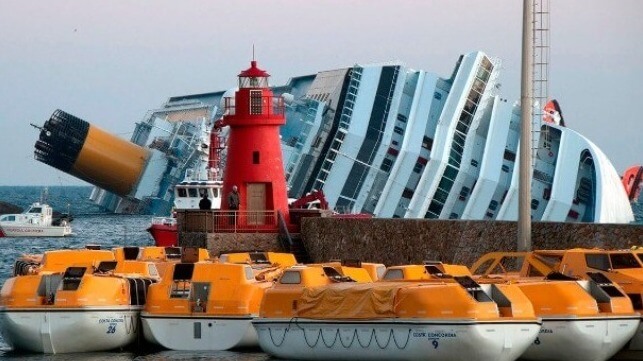
Capt. Francesco Schettino, former captain of the lost cruise ship Costa Concordia, may soon be eligible for partial parole, and would have a day job waiting for him outside of prison.

On January 13, 2012, the giant cruise ship Costa Concordia hit a rock and capsized just off the island of Giglio, Tuscany. 32 people were killed in the casualty, and the wreck removal cost about $2 billion, making it the largest project of its kind in history - and Italy's worst maritime disaster since the Second World War.  

On that day, Schettino navigated Costa Concordia closer to shore in a "salute" for a retired cruise line commodore, resulting in the grounding and partial sinking. He was accused of manslaughter, and in 2015 he was convicted and sentenced to 16 years in prison. 

Schettino’s legal representatives say that the collision itself did not cause the fatalities, and blamed a failed backup generator and flooded compartments for failed evacuations; they also denied allegations that he abandoned ship early, or that he had navigated close to shore in order to impress a female dancer who was on the bridge. The captain never admitted fault for the sinking, but blamed issues with the vessel, miscommunication on the bridge and other issues.

Nine years after his conviction, Schettino is up for parole, and a board will announce its decision on his case on April 8. If granted "semi-freedom," he would be allowed to work during the day at the Fabbrica di San Pietro, a Vatican institution charged with preserving St. Peter's Basilica. Sponsored by the prisoner support group Second Chance, his role would be in digitalizing historical documents. He would join other inmates from Rome's prisons who work at the Vatican under the organization's auspices. 

Some of the families of the victims of the Costa Concordia disaster have opposed his petition for semi-release. Giovanni Girolamo, father of a crewmember who died in the sinking, told La Nazione that Schettino "must not be released, but given 32 life sentences," equal to the number of the victims.