Saturday, March 29, 2025


This changes everything: The threat of Trumpism for South Africa


Published 

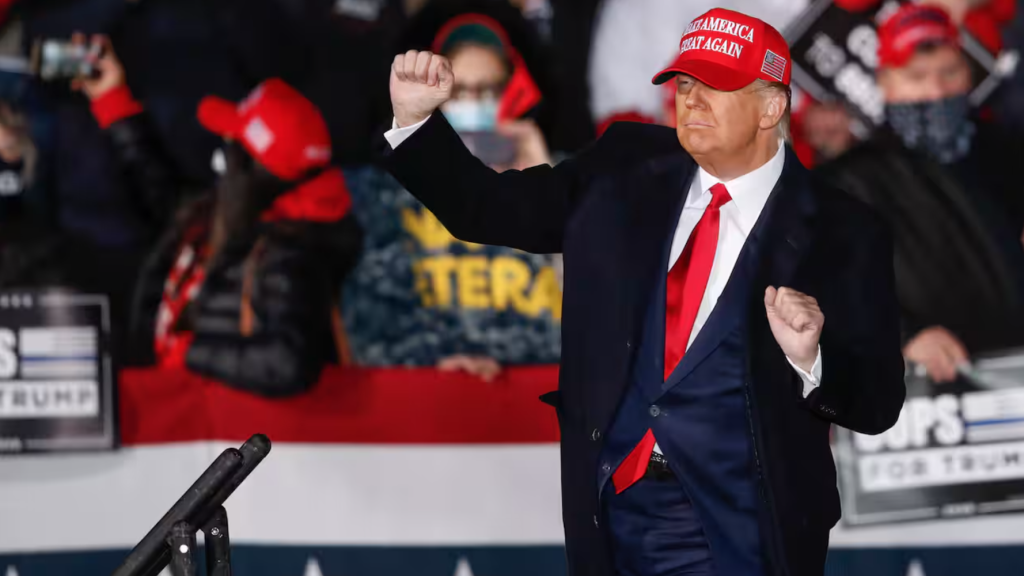
US President Donald Trump dances on stage after speaking at a campaign rally at the Southern Wisconsin Regional Airport in Janesville. Source: AAP

First published at Amandla!.

In just a few weeks, the second coming of Trump has started to reconfigure the international political architecture that emerged after the Second World War. This has profound implications for countries both in the global North and South. That neofascists have come to power in the US, the most powerful country in the world, makes the chaotic and threatening global situation even more alarming.

Already, South Africa has felt the impact of Trump’s MAGA (Make America Great Again) foreign policy. Most recently, the South African ambassador, Ebrahim Rasool, has been expelled. One of the first of Trump’s many executive orders after his inauguration was directed at South Africa. All financial assistance to South Africa was stopped, with significant impact for vital health programmes, including HIV/AIDS. In the same executive order, the US Department of State and the Department of Homeland Security were instructed to prioritise the resettlement of Afrikaner refugees facing the expropriation of their land. Apparently, about 70,000 have applied.

South Africans were able to experience first-hand the lies and myths which are the bedrock of Trumpism. For calling out Israel’s genocide, the South African government is subject to Trump’s punitive actions. And no doubt more is to follow.

All the while, the South African government is trying to diplomatically tiptoe around these setbacks in a vain attempt to retain friendly relations with the US. President Ramaphosa told Parliament recently that South Africa will send envoys to the United States to smooth out relations between the two countries. But that seems farfetched unless the South African government is prepared to completely capitulate to the US view of the world.

Trumpism 2.0

We need to understand the nature of Trumpism 2.0. Those in power in the US must be understood not as blustering buffoons, or vacillating deal makers, or isolationists intent on withdrawing the US from international affairs. Trump and his acolytes are part of an extreme right-wing force with a mass base amongst, mostly but not only, white Americans. They must be called out for what they are: neofascists.

Fascism was a phenomenon which arose in Europe, particularly after the First World War, in the midst of the deepest economic crisis experienced by capitalism. Leon Trotsky, the Russian revolutionary, was one of the first to understand the threats fascism posed for the workers’ movement. He saw fascism as a specific response of the ruling class when capitalism faced a deep crisis and could no longer maintain control through bourgeois democracy alone. Unlike traditional military dictatorships, fascism mobilised the enraged petty bourgeoisie (middle class) and lumpenproletariat (the marginalised and unorganised) into mass movements to smash the organised working class.

Neofascism (different from fascism) thrives in times of economic crisis, much like its 20th-century predecessor. However, today’s variant is shaped by the crises generated by the failures of neoliberalism: rising inequality and climate catastrophe.

Unlike traditional dictatorships, which were openly authoritarian, neofascist regimes mobilise far-right nationalism, xenophobia, racism, and corporate-driven policies while maintaining the appearance of democratic institutions.

Trump’s return will accelerate these crises by rejecting environmental protections, intensifying fossil fuel-based reindustrialisation, reinforcing racial and ethnic scapegoating, and undermining democratic rule. This will further destabilise the Global South, including South Africa. Trump’s leadership will further embolden this global trend, aligning the US with other neofascist regimes such as those in Russia, India, and Israel.

South Africa’s vulnerabilities

It is likely that Trump’s actions against South Africa are just the start of ‘sanctioning’ South Africa, and we are economically and politically vulnerable. Tariffs, which are not just Trump’s favourite word but his preferred tactic to browbeat allies and foes alike, will be smacked on South Africa’s exports to the US. It is also likely that South Africa will lose duty-free access to the US under the African Growth and Opportunities Act (AGOA).

The US is an important export market for South Africa, accounting for about 9% of the country’s total exports in 2022. Unlike with China, South Africa’s biggest trading partner, a much greater amount of manufacturing goods are exported to the US, which gives the US market a strategic value beyond export volumes. Should the Trump administration impose tariffs on South African goods, it will have severe economic impacts, not least on employment.

The real danger facing South Africa isn’t just Trump’s tariff policies — those are merely symptoms. The greater threat lies in South Africa’s dependence on the United States for finance. The US is a major source of Foreign Direct Investment (FDI) in South Africa, particularly in finance, manufacturing, and mining, and American companies like Ford, General Electric, and Coca-Cola.

More significantly, South Africa has a growing debt burden, a significant amount of which is denominated in US dollars. In the third quarter of 2024, South Africa’s total external debt of approximately $176.3 billion was owed to a diverse group of international creditors, including foreign governments, international financial institutions, and private lenders.

Recently, the servicing of this debt has become expensive as the result of US-based credit agencies having downgraded South Africa’s credit rating to junk status and because of rand depreciation against the dollar.

In this context, the US government can quite easily provoke a financial crisis by encouraging investors to take their capital out of the country. More threateningly, it could cut South Africa off from international credit exchanges, which are vital for facilitating trade flows.

Confronting Trumpism

This in no way implies that South Africa must lie down and accept Trump’s bullying. The current situation is an urgent wake-up call to abandon neoliberal economic policies that have made the economy so dependent and vulnerable to global capital.

We ought to take a leaf out of the book of JD Vance, now US Vice President and a key ideologue of MAGA’s neofascist playbook. In outlining the basis of US foreign policy, he articulated the critical role of reindustrialisation:

The most important part of American foreign policy is actually the strength of our domestic economy and the strength of our domestic population. If there is something that should worry all of us…It’s that China, because of the stupidity of Washington leaders over the past generation, is now arguably the most powerful industrial economy in the world. If we’re going to lose a war, it will be because we have allowed our primary rival to become arguably our most powerful industrial competitor.

Likewise, the reindustrialisation of the South African economy is the most important strategic response that needs to be engineered if South Africa is going to survive in an ascendant right-wing nationalist and protectionist world.

Reindustrialisation through meeting needs

Our reindustrialisation strategy must be directed at meeting the unmet basic needs of the vast majority of South Africans. Millions of South Africans lack the most basic of things to live a dignified life. Five million people are living in informal settlements without the provision of basic services, and there is a housing backlog of four million households. The government talks about making South Africa a construction site. It must not be a construction site for infrastructure to service business and attract foreign investors. It must be a construction site for a mass housing programme directed at housing the poor and the homeless. This would stimulate downstream industries (bricks, mortar, glass, tiles, furniture etc.) All these industries can be localised if correct trade policies are implemented.

Combined with this, a mass expansion of public transport for passengers and freight would see thousands of new railway lines, trains and buses built. The resultant demand for steel would be able to rescue our ailing steel industry, with important knock-ons for both upstream and downstream industries.

In turn, this would require the expansion of electricity generation. If this is progressively supplied by publicly owned renewable energy plants, a viable electrical industry can be established. Millions of jobs would be created, necessitating the expansion of food production. Through land reform and agrarian transformation, economic life would be invigorated in South Africa’s rural areas, providing political sustainability to this ambitious revitalisation plan.

But first, we must abandon neoliberal policies. Austerity, trade and financial liberalisation and high-interest rate policies, which currently shape South Africa’s macro-economic policies, would have to be reversed. So would the corporatisation and privatisation of state-owned enterprises and public services.

The resources to carry out such a programme can be mobilised from the inevitable widening of the tax base as more people are employed. Other interventions would include heavily taxing the financial sector, redirecting public funds (such as those under the control of the Public Investment Corporation), curbing capital outflow (illicit and licit), and the implementation of prescribed assets (requiring financial institutions to invest a proportion of assets in designated sectors).

Overcoming corruption and restoring the legitimacy of the public sector will require a thoroughgoing process of democratisation and popular control over public enterprises. None of this will happen without the organisation and mobilisation of a very broad mass movement, that can act as a counter-power to capital and the neoliberal state.


South Africa Must Face Trump’s Aggression


March 28, 2025
Facebook

The return of Donald Trump to the White House has resulted in a new phase of hostility toward South Africa, exposing once again the deep contradictions in Washington’s claims to uphold democracy and international law. His administration has escalated its punitive measures against countries that refuse to submit to U.S. dominance, targeting South Africa with diplomatic and economic retaliation for its independent foreign policy. The recent expulsion of South African Ambassador Ebrahim Rasool from Washington was a clear signal of this aggression—an attempt to isolate South Africa for its role in holding Israel accountable at the International Court of Justice (ICJ).

Trump’s attacks on South Africa are not isolated acts of aggression but part of a broader strategy of coercion against Global South nations. His administration has cut funding for HIV treatment and research in South Africa and reinforced far-right narratives by offering refugee status to white South Africans, legitimising the widely debunked “white genocide” conspiracy theory. These measures mirror his open hostility to other countries that have defied U.S. interests, such as Cuba, Venezuela, Bolivia, and left-led governments in Colombia and Mexico.

Cuba faces renewed sanctions and has been re-designated as a “state sponsor of terrorism,” further restricting its access to international markets. Venezuela has been hit with a 25% tariff on all trade with any country that purchases its oil, a move intended to cripple its economy and pressure it into neoliberal economic realignment. Colombia, now under the left-wing government of Gustavo Petro, has faced economic and diplomatic pressure from the U.S. for its independent stance on Latin American integration and peace negotiations with armed groups. Bolivia, which successfully resisted a U.S.-backed coup in 2019, has also been met with diplomatic hostility, particularly due to its deepening relations with China and BRICS.

Trump’s hostility toward South Africa is not just an external matter; it is reinforced by local elites aligned with U.S. and Western interests. The Brenthurst Foundation, backed by South African mining capital, plays a key role in shaping pro-Western policy discourse and undermining independent foreign policy. Funded by the Oppenheimer family, it has openly lobbied against South Africa’s ties with BRICS and African regionalism, while pushing for austerity and neoliberal restructuring. Its influence extends into mainstream media, which has been instrumental in portraying South Africa’s ICJ case against Israel as reckless and self-destructive. This internal alignment with U.S. imperial policy creates a second front against South African sovereignty, where political pressure from Washington is reinforced by local capital and media interests.

Beyond direct sanctions and financial coercion, the U.S. has also deployed trade and investment as tools of economic warfare against South Africa. The review of South Africa’s eligibility for the African Growth and Opportunity Act (AGOA) began under pressure from U.S. lawmakers and corporate interests during Biden’s presidency, particularly in response to South Africa’s non-aligned position on the Russia-Ukraine war. The United States Trade Representative (USTR), in consultation with Congress, conducted the review process, with figures like Senator Chris Coons advocating for South Africa’s suspension. Under Trump’s return to office, this pressure has escalated into an outright threat of expulsion. AGOA has long been framed as a goodwill trade initiative, but its true function is to enforce economic dependence on the U.S. by selectively granting market access to African economies that align with Washington’s strategic interests. South Africa’s removal from AGOA would not only disrupt key industries, such as automotive exports, but would also serve as a warning to other African nations that dare to assert an independent foreign policy.

Mexico, under President Claudia Sheinbaum, has also found itself at odds with Trump’s administration. Sheinbaum has continued the policies of her predecessor, Andrés Manuel López Obrador, in resisting U.S. pressure on migration and economic policy. Her administration has opposed Trump’s harsh anti-migrant measures and has maintained Mexico’s commitment to economic development in Central America as a long-term solution to forced migration. In response, Trump has escalated threats of tariffs on Mexican exports and intensified criticism of Mexico’s nationalisation of lithium reserves, a key resource in the global energy transition.

Trump’s aggression extends beyond Latin America and Africa. His administration has intensified economic warfare against Iran, imposing further sanctions that target its ability to trade in global markets. His hostility toward Nicaragua—a long-time U.S. target for regime change—has included efforts to isolate it diplomatically and further restrict economic access. These actions fit a well-established pattern: economic strangulation, political pressure, and diplomatic isolation for any state that refuses to comply with Washington’s directives. South Africa, due to its independent foreign policy and its challenge to Israel at the ICJ, is the latest target.

One of the most significant yet underreported tools of U.S. aggression against South Africa is financial warfare. The dominance of the U.S. dollar in global transactions allows Washington to cut off access to banking systems, restrict trade, and pressure international financial institutions into compliance. This was seen in 2023 when South Africa faced threats of secondary sanctions due to its non-aligned position on the Russia-Ukraine war, and again in 2025 with heightened scrutiny over its trade with Iran. Washington does not need to impose outright sanctions; it can simply create enough uncertainty to scare off investors and financial institutions. This economic pressure is a direct attack on South Africa’s ability to determine its own future and reinforces the need for alternatives such as the BRICS-led de-dollarisation strategy.

The withdrawal of HIV and TB research funding in South Africa is part of a broader strategy of using aid as a weapon. For years, the Global South has been told that Western aid is essential for development. However, aid from the U.S. and its allies is never neutral; it is an instrument of political control. This weaponisation of aid reflects what Nontobeko Hlela and Varsha Gandikota Nellutla call “subjugation by design” in their recent Mail & Guardian analysis. They point out that South Africa still relies on PEPFAR for 17% of its HIV response, making it vulnerable to sudden funding cuts like Trump’s 83% reduction in USAid funding. Under Trump’s second term, the use of aid as leverage has intensified, with funding cuts and economic pressure increasingly deployed as punitive measures against nations that challenge U.S. hegemony.

The role of Western media in shaping narratives that justify these punitive measures cannot be overlooked. This is reinforced by a growing alliance between sections of the white right in South Africa and conservative forces in the United States, which has amplified disinformation campaigns about land reform and governance in South Africa. Much of white-dominated media in South Africa is hysterically pro-West, and some has received U.S. funding, further entrenching its alignment with Washington’s geopolitical interests. In 2022, it was revealed that a number of editors were attending regular briefings at the U.S. consulate in Cape Town known as ‘On the Rocks and Off the Record’.

South Africa’s current standoff with Washington is not just about foreign policy—it is about defending the very principles of the anti-apartheid struggle. The U.S. government, which supported apartheid for decades and only removed the ANC from its terrorist list in 2008, has no moral standing to lecture South Africa on democracy or human rights. The attempt to isolate and punish South Africa today mirrors the Reagan administration’s support for the apartheid regime in the 1980s. Just as it resisted the economic and diplomatic attacks of the apartheid era, South Africa must reclaim its tradition of principled resistance against imperialism, aligning with the Global South to build a new international order rooted in justice, not coercion.

By strengthening its ties across the Global South, prioritising cooperation with democratic progressive governments, South Africa can resist the coercive tactics of Washington and its allies. The shift towards multipolarity is inevitable, and South Africa must take bold steps to shape the future rather than being dictated to by Washington.

Dr Imraan Buccus is a post doctoral fellow at the Durban University of Technology (DUT) and senior research fellow at Auwal socio-economic studies research institute (ASRI)


Bloco de Esquerda (Left Bloc, Portugal): Europe in the Trump-Putin axis trap


Published 
Trump Putin Europe

First published in Portuguese at Esquerda.net. Translated to English by Adam Novak for Europe Solidaire Sans Frontières.

1. Only one law, that of force

Donald Trump’s second election to the White House triggered significant changes in the global order. Awareness of the decline or dissolution of various international institutions emerging from post-World War II agreements quickly became widespread. The United Nations, frequently paralysed in the past by vetoes from the USA, Russia or China in the Security Council, is today openly despised. The United States of America and its Israeli arm or the Russian Federation and its current North Korean arm make repeated threats to the very existence of the UN. These are exactly the same States responsible for continuous violations of the Charter norms that prohibit the offensive use of force. Agencies such as the World Health Organisation or UNESCO are under fire from the international far-right. The World Trade Organisation, rammed by new customs protections, is in an induced coma by the USA, under protest... from China. Only the International Monetary Fund, an organic extension of Washington, police of the dollar as a standard currency and overseer of indebted economies, has remained unscathed so far, even if disguised as a UN agency.

2. NATO withdrawal, European orphanhood

Western European governments and public opinion reacted in shock to the collaboration between Trump and Putin. In relatively little time, Trump buried Article 5 of the North Atlantic Treaty, disengaging the USA from military action in case of aggression against any of its members. It became evident that NATO was never a protection. Trump chose Saudi Arabia as the diplomatic seat of his partnership with Putin: this eternal vassal of the USA also crosses paths with Russia in BRICS, in addition to seeking to safeguard hydrocarbon production and definitively bury the Paris agreements. Beyond the partition of Ukraine, the White House and the Kremlin announce a kind of Treaty of Tordesillas in the Arctic.

European elites feel orphaned. More than the so-called international regulation (to whose destruction they directly contributed a few months ago, by disregarding the warrants against Netanyahu issued by the ICC), they miss the shadow of the United States’ nuclear umbrella.

3. United Nations Charter - dead letter

European elites mourn this moment as the agony of a certain multilateralism, based on the promise of International Law, the United Nations Charter and numerous multilateral conventions. It is true that this order was always tied to the 1945 Bretton Woods agreements, linked to the dollar and the IMF. But, at the same time, with all the limitations and cynicism imposed by the Cold War, the United Nations is the fruit of negotiation between the victorious allies against Nazi-fascism. Sponsored by the USA and the Soviet Union (much later also by China), the United Nations Charter aims to be a democratic and peaceful “world constitution”, encompassing human rights and gender and ethnic equality, as well as the equality of States. These principles for a democratic order still merit the support of peoples fighting for their self-determination and democratic affirmation.

4. From the violation of international law to its abolition

The violation of the Charter by the powers has diminished the United Nations throughout its history, as a guarantor of these democratic principles. The doctrine of “preventive wars”, on the pretext of the existence (real or fictitious) of weapons of mass destruction or supposed threats to their sphere of influence, led the USA, with the most powerful army in the world, to the record of Charter violations (Korea, Vietnam, Grenada, Yugoslavia, Libya, Syria, Afghanistan...). The invasion and devastation of Iraq was the culmination of this barbarism, with long-term consequences. However, nothing has disturbed the international scene more than the continued extermination and colonisation of Palestine by the State of Israel, under the permanent blessing of the White House. Without neglecting other invading or occupying States, Russia (of “real socialism” and real capitalism) comes right after the United States, with the invasions of Hungary, Czechoslovakia, Afghanistan, Chechnya, Georgia, Crimea and Ukraine.

The imperialist order subjugated the principles of the UN and liberals cannot, in the face of historical facts, mourn the end of an order of International Law that never existed. However, this observation does not allow for the trivialisation of the imperial discretion assumed under Trump’s mandate and with his rapprochement with Moscow.

5. NATO: Instrument of North American domination, always

The continuity of NATO (even in “brain death”, as Macron says) allows the USA to sell weapons to European countries, maintain bases on the continent and counter Chinese penetration. The last few weeks make it clear, even for the classes and political sectors that still deny it, that this is an imperialist relationship without counterpart, a process of extortion over the European Union and that also subordinates countries outside the EU (Great Britain, Norway). We reiterate that NATO was never a defensive alliance but a mere instrument of United States domination. Portugal should end its presence in this militarist machine, as the Bloc has always advocated.

6. Arms race: Trump’s order that Europe wants to fulfil

In most equipment indicators, the current military capability of European states is more than sufficient to support Ukraine’s territorial defence; in the remaining indicators, this capability would take several years to acquire. Ukraine is therefore a simple pretext for an industrial promotion policy focused on weapons as a response to the economic stagnation of European capitalism.

Harassed by the far-right, the political bloc around Ursula von der Leyen - from conservatives to European greens - pretends not to understand the NATO trap and flees forward under the slogan of European “rearmament”. The German agreement, between conservatives and greens, is especially revealing. Prevented from making 500 billion euros in loans for Germany’s own armament due to the German Constitution’s rule that limits public debt to a very low level and without having a majority to change it, the CDU and SPD resorted to the Greens, whose yielding is hardly surprising, given the intense militarism manifested in the previous government, where they held the foreign affairs portfolio. Conservatives (in Portugal, PSD and CDS), liberals (IL), social democrats (PS) and greens (Livre) constitute a vast front in Europe for the militarist drift, joined by Chega, despite the opposition to Orban’s rearmament plan and the far-right Patriots, to whose group they belong. The European plan, designed even before Donald Trump’s election, wants minimum military expenditure targets from member states, totalling a package of 800 billion euros of investment, a value close to that calculated to fund the European Union’s carbon neutrality. This armament plan is conceived as subtracting funds from European cohesion funds but the bulk of the burden falls on member states, which should go into debt for this purpose, even if they exceed the deficit and debt limits provided for in the treaties. Military spending should reach 3% of Gross Domestic Product, subsequently rising to the 5% of GDP benchmark, as Trump ordered. In fact, the biggest escalation in military spending will be Germany’s, which aims to be a nuclear power in the short term, while adapting its effective force to conventional wars. France will also have a strong impulse. To finance these purposes, Merz and Macron have already warned that cuts in the Social State will be necessary.

7. European vulnerability is not in armament

The European countries that are NATO members, as a whole, already add up to a military expenditure 3.5 times higher than Russia’s and which is only surpassed by the United States of America. As the war in Ukraine, the COVID-19 pandemic and successive episodes of external electoral interference have proven, European vulnerability is not in armament but in the enormous dependence on third parties in strategic sectors.

In the invasion of Ukraine, dependence on Russian gas delayed and discredited sanctions capable of deterring war. The breaking of supply chains during the pandemic revealed the dangers of dependency in areas such as medicine (the vast majority of active substances in European medicines are produced in India and China). To the episodes of Russian and Chinese interference during electoral periods and their support for the far-right in various member states through Telegram and Tik Tok platforms, was now added the explicit interference of prominent members of the US government, such as Vice President Vance and Elon Musk, the latter also owner of the social network X, both present at the tail end of the AfD German campaign.

The major investments that the European Union needs are in its energy and digital autonomy, in food and medicines. Retreating in the digital transition and disinvesting in innovation and cohesion is a risk to Europe’s security.

8. History repeats itself

Between 2021 and 2024, defence spending in the EU increased by more than 30%. Defence spending without NATO was 326 billion euros, according to the European Council (some think tanks mention 440 billion).

A few days after the invasion of Ukraine, the President of the European Commission said that Europe had advanced more in terms of security and defence in six days than in the last two decades: an unprecedented increase in European military spending, with money coming directly from the community budget.

In 2023, EU member states issued 33,700 licences for arms exports, representing 1/4 of global exports. France alone grew 47% in exports and became the second largest exporter in the world, surpassing Russia.

In recent years, the EU has launched several defence projects:

  • European Defense Industrial Development Program (EDIDP)
  • Preparatory Action on Defense Research (PADR)
  • European Defense Fund (EDF)
  • European Defense Industry Reinforcement through Common Procurement Act (EDIRPH)
  • Action Support of Ammunition Production (ASAP)
  • European Defense Industry Strategy (EDIS)
  • European Defense Industry Program (EDIP)

The European Peace Support Fund itself, which is outside the European budget, was used to buy weapons for countries at war (Ukraine, Rwanda, Niger)

A 2025 study by the Stockholm International Peace Research Institute (SIPRI) indicates that two-thirds of the weapons purchased by European countries now come from the USA. Weapons imported from the United States more than doubled between 2020 and 2024. Despite calls to reduce dependence on the USA and to strengthen the European industry, European countries rushed to buy North American armament. For the first time in two decades, North American weapons flowed more to the EU than to the Middle East. All this in the period when the EU invested without precedent and most called for the strengthening of European capabilities.

In the week following Von Der Leyen’s announcement, multinational war corporations saw their stock market capitalisation increase by 35 billion euros. It’s clear who benefits from this remilitarisation.

There are North American military bases throughout European territory. There are North American nuclear warheads on European territory. But about this, not a word about “European autonomy”. On the contrary: Polish President Andrzej Duda appealed to Trump to transfer North American nuclear warheads installed in Western Europe to Poland and Eastern Europe. What’s on the table is a new model of European integration that combines market constitutionalism with a political identity based on military force.

9. Non-aligned cooperation

The Left Bloc opposes the increase in armament expenditure and the militarist drift that this foreshadows. The Left Bloc advocates policies of voluntary cooperation between democratic European states for security and defence purposes. This vision distances us from the perspective of any European army, which the elites themselves reject, such is the risk that would imply the simple installation of a military command that no democracy controls, or in which governments that may be led by the far-right in the near future predominate.

10. West in turbulence and variable geometries

The geometry of alliances in formation is unprecedented. At the recent London Summit, England, Norway, Canada and Turkey received eleven EU countries: France, Germany, Spain, Italy, Czech Republic, Romania, Denmark, Netherlands, Poland, Finland and Sweden. This ad hoc “defence community” is not piloted by NATO, nor by the EU - although both follow it closely. It is predictable that this variable geometry of alliances will develop in the face of Russian pressure and the distancing of the USA, which affirm contempt for the self-determination of the people of Greenland (whose territory they intend to buy from Denmark) or disrespect for Canadian independence, suggesting an annexation. Turkey’s presence at the London Summit, without Greek presence, also indicates a greater autonomy from the USA.

11. “Multipolar” globalisation, the regime of powers

Under the slogan of the “multipolar world”, imperial powers seek to consolidate a regime of spheres of influence, in unstable articulation with secondary and regional imperialisms. This regime of powers is very similar to that which accompanied the rise of fascism until World War II. History does not repeat itself, but it teaches. We must prevent the escalation of terror. Instead, Europe chooses the military path to stand shoulder to shoulder in the global dispute.

The regime of powers privileges bilateral bargaining - Trumpist “transactionalism” - to the detriment of rules set in multilateral agreements. The European Union itself is already part of this regime. It maintains the association agreement with Israel and finances Netanyahu’s genocidal regime, while ensuring commercial exchanges that include production in illegally occupied territories. It finances the war in Congo through the trade agreement with Rwanda, from whom it buys resources looted in Congo with weapons purchased in euros. And it continues to acquire from Morocco the resources of Western Sahara (despite the sentence of the Court of Justice of the European Union that considered the agreements null), while legitimising the illegal occupation in exchange for the Moroccan signature on agreements to deport migrants.

The regime of powers privileges the liquidity of the transaction over any commitment to the general interest, to human rights and to ecosystems, accentuates the risk of war on the peripheries of areas of influence, while referring open conflict between powers to an exceptional status, even due to the existential risks involved. The regime of powers is the global coalition for carbon, in line with neofascist denialism, pushing the EU and the world to abandon even timid intentions about energy transition.

12. European responsibilities in the Ukrainian misfortune

The war in Ukraine has long been at an impasse. Well before Trumpism called the shots, the front lines moved little, always with a high number of dead on both sides. The EU, which rightly helped Ukraine resist the barbaric invasion, never wanted to confront Russia with cease-fire talks. It parroted Biden’s discourse on “Moscow’s defeat” and collaborated in a strategy of prolonging the war aimed at wearing down Russia. This European diplomatic passivity left the exit in Trump’s hands, through looting. The partition of Ukraine and its minerals will follow the layout of the trenches, benefiting the invader and plundering the invaded, for which collaborative rulers should be installed in Kyiv. Zelensky is pressured to capitulate, withdraw from negotiations or sign blindly and leave the scene. Already the will of the Ukrainian people, that counts for nothing.

The “defence community” promoted in London promises to install and supply forces in Ukrainian territory free from Russian occupation. The Left Bloc rejects any Portuguese participation in the mission to stabilise the partition and looting of Ukraine between Trump and Putin, even if labelled as a peacekeeping force.

13. Ukraine must be compensated

Trump wants the EU in negotiations with Russia after the ceasefire, to lift sanctions on oligarchs and normalise Russian trade in Europe, also including the return of frozen and seized assets to the Russian Federation. Trump wants to prevent 160 billion euros currently frozen from being handed over to Ukraine for infrastructure reconstruction. On his side, he has the financial system, fearful that confidence in the euro will be shaken by the confiscation of Russian money. The delivery of that money to Ukraine, as proposed by Nobel Prize winner in Economics, Joseph Stiglitz, would be the most effective way to condition Putin.

14. Only a just peace can last

The Left Bloc has always agreed with sending defensive weapons for Ukraine’s legitimate resistance. Similarly, we continue to defend the integrity of Ukrainian territory of 2022, negotiations for a ceasefire and the withdrawal of Russian troops. A just and lasting peace must be based on Ukraine’s neutrality and the forgiveness of its debt, as well as on the recognition of its national diversity and the right of populations who inhabited Donbass at the time of the Russian invasion to pronounce on their future. In the face of the Trump-Putin deal, the EU must take an independent position.

15. The right to self-determination has no double standard

The principle of self-determination of nations is fundamental in International Law, the first aspiration of all peoples. This understanding is well present in Portugal, as we experienced the decolonisation of African countries after an unjust war of occupation and solidarity for the independence of Timor. In this sense, the Left Bloc does not classify conflicts for self-determination as “proxy wars”, regardless of the intervention of international actors alien to oppressed peoples. Therefore, except for the great historical differences, we use the same criterion in Ukraine or in Palestine or in stateless nations in Spanish territory, in the Sahara, in Kurdistan.

16. Palestine, flag of humanity against barbarism

With the cover of the USA and most European countries, Israel promotes genocide in Gaza, the invasion of the West Bank and aggressions on neighbouring countries. Trump and Netanyahu, with their regional allies, seek to surround and neutralise Iran. These factors lead to increased instability in the Middle East, precisely one of the peripheries of the powers.

The Left Bloc allies itself with international campaigns for boycott, divestment and sanctions against Israeli apartheid and defends an agreement that guarantees peace in Palestine, the end of occupation and compliance with UN resolutions. The demilitarisation of other conflicts is expected, namely the one occurring in Syria, under the auspices of countries of the global south, in respect for the self-determination of peoples.

17. Internationalism disobeys all empires

It is necessary to conclude that 21st century imperialism alters its dynamics and correlation of forces. US imperialism is still the most aggressive and constitutes a superpower that other imperialist powers seek to combine with the existence of world poles. This process advances, sometimes through conflict, sometimes through cooperation between powers and through transnational capitalist integration. There are several imperialisms in the global system and none of them will have a progressive role because all act according to the interests of their capitalist elites. Recognising this reality is vital in elaborating an internationalist proposal capable of offering a future to humanity and conceiving a democratic order of peoples.

The National Board of the Left Bloc approved this resolution on March 23.


For revolutionaries, the period must be defined by the international fight against the far right

Published \
US far right

First published at Tempest.

The defining characteristic of mass politics in the present period is the stunning and terrifying growth of the international far right. Since socialist strategy must adjust itself to the character of mass politics in the period in which it operates, it follows that during this period, socialists must build internationally around a struggle against the ascension of this monster.

In this article, I will substantiate the claim that the rise of the far right is the defining characteristic of the present period. I will then try to articulate an international strategy for combating this ascension and highlight its strategically indispensable role for socialists in the current period.

The new authoritarianism and the polycrisis

The second election of Donald Trump as president of the United States marked a moment of transition, when the new authoritarianism in ascendance took a clearer form. Yet, this storm had been slowly taking shape for close to three decades, in some ways appearing like a grotesque reflection of the rejuvenation the anti-capitalist Left has experienced in that same period, since the current round of post-Soviet politics began to take shape around the anti-globalization movement of the late 1990s. Indeed, as Miguel Urbán has illustrated, asserting national cultural sovereignty against Americanizing globalization was key to far-right ideology and activities in this period. Both the new Left of this period and the insurgent far right spring from the same source: the slow moving crisis of the capitalist system.

The new authoritarianism is an uneven tendency moving in the direction of a divorce between capitalism and liberal democracy. It is moving in this direction under the pressures of what Adam Tooze has referred to as the “polycrisis,” the co-existence of multiple and overlapping crises (environmental, economic, or biological) that converge to create a total crisis for the system. The new authoritarianism is not a coherent and uniform ideology across different countries; instead, it is a general tendency moving unevenly in the direction of the aforementioned divorce, with some loosely shared characteristics.

Included under the broad umbrella of this new authoritarianism would be the now-dominant Trumpist wing of the Republican party, Fratelli d’Italia in Italy, VOX in Spain, the National Rally in France, Fidesz in Hungary, Alternative for Germany (AfD), and Reform in Britain. It would also include street fighting movements such as the Proud Boys, the international movement of “Active Clubs,” and even the spontaneous right-wing violence that we saw during the summer of 2024 in the UK.

It’s useful to outline some of the key features of the new authoritarianism using a comparison to traditional fascism as a sounding board to draw out its distinctive character:

  1. Both the new authoritarianism and traditional fascism are rooted in the middle classes, the petty bourgeoisie (small business owners, landlords, professionals, managers), who experience very real suffering as a consequence of the crisis of the system, but lack a material interest in developing the analytical tools to adequately problematize it. Capitalism has given them certain benefits that the crisis has put under threat. They simultaneously want to defend capitalism and find a resolution to the crisis, a contradiction which sends them toward conspiracy thinking to explain why capitalism is not working for them as it should be. The result is that they grow suspicious of those both above and below: the large capitalists who squeeze them in the crisis, and the migrants and oppressed peoples that are easily scapegoated. Being unable to conceive of a crisis that is internal to the system, this class seeks out causes that lie essentially outside of its normal functioning.
  2. Both of these movements are attempts by the system to rechannel discontent it generates among this class as a means of defending or saving itself. In traditional fascism, the pain of World War I and subsequent economic crisis were rechanneled toward scapegoating Jewish people and socialists who had “stabbed the nation in the back” when the home front collapsed and working class gains threatened the smooth functioning of capitalism. Fascism was the tool to beat back the threat the working class posed to capitalism. In the context of the new authoritarianism, the pain felt due to the collapse of 2008, its aftermath, and weak recovery, has been redirected against migrants, racial, sexual and gender minorities, and the Left, spun into a story of weak wills, and the nefarious intentions of a demonic cabal of pedophile elites, all resulting in national decline. In both cases, the middle class is used to preserve the system by rechanneling discontent the system has generated.
  3. While traditional fascism openly advocated for the outright abolition of democracy, the new authoritarianism at least pays lip service to respecting its forms. At bare minimum it has no choice but to operate within its structures for the present moment, even while doing its best to undermine these from within. Yet the overall tendency, as highlighted by the contrast between Trump’s first and second terms, is to carve out increasingly more space to dismantle democratic institutions.
  4. The ideological non-uniformity within the new authoritarianism highlights another of its key features: while the movement as a whole cannot be correctly characterized as out-and-out fascistic, self-identified fascists play a central role among its cadre, many of whom have roots in the more traditional fascist organizations of the past. This means that in many of the parties and organizations of the new authoritarians, there exist forces committed to deepening the organization’s politics in a more radical and violent direction. The strangeness of the present period results in seemingly contradictory circumstances, where someone who almost certainly still holds overtly fascist sympathies, such as Giorgia Meloni in Italy, sits at the head of a bourgeois state in the name of the new authoritarian ideology.
  5. The lack of ideological homogeneity across the new authoritarianism highlights another key feature: its historical open-endedness. It would be a mistake to see the contemporary far right as something static, with a definite character and moving toward a definite end. The process of development of the new authoritarianism will depend on a number of factors, such as the rate at which the economic and environmental crises deepen, the sharpness of the class struggle, and the ability of the revolutionary Left to pose an alternative.
  6. The new authoritarianism also distinguishes itself from classical fascism in the institutional division between the parliamentary and street fighting movements. The notable exception is Indian Prime Minister Narenda Modi’s BJP, which has an explicit street fighting wing, the Rashtriya Swayamsevak Sangh. Yet, this street fascism interacts with the heterogeneity and open-endedness of the new authoritarianism, since there is no hermetic seal between the activities of the parliamentary and street fighting organizations, or between the parliamentary groups and the “spontaneous” right-wing street violence. The activities of one impacts the other.
    An example that highlighted this well was the racist pogrom in the UK in the summer of 2024, where years of anti-immigrant rhetoric from both far-right and mainstream parties suddenly erupted into mass street violence. In the U.S., while Trumpism does not have explicit formal connections to a street fighting movement, the U.S. has a history of extra-state right wing vigilante violence for him to draw on that runs from the KKK to the militia movement and groups like the Proud Boys and Oathkeepers. The way that these forces can be called upon for violent anti-democratic purposes was highlighted by the “beer gut putsch” of January 6, 2021, and the mass pardoning of those who were involved in this half-baked coup attempt. While Trump is currently primarily depending on the power of the executive to dismantle as many of the democratic aspects of the bourgeois state as he can, this will likely create resistance at some point, and he is keeping these forces in reserve to move into action should extra-state violence become necessary. The international expansion of the right-wing “Active Clubs,” which combine physical fitness with white supremacy, is further evidence of the growing tendency toward street violence. The future of the relationship between right-wing street violence and the parliamentary institutions remains unclear, but what is clear is that we are seeing an uptick in this type of violence across the world, and that there is a clear connection between this violence and the rhetoric and activities of the electoral side of the movement. Given the contemporary far-right’s open-endedness, it could very well move toward formal unification of these two sides. We see evidence of this potential in Fratelli d’Italia and Alternative for Germany (AfD) in Germany quietly fostering street-fighting forces through their youth organizations.

The far right defines the period

World politics still exists in the shadow of the crisis of 2008. This crisis was the turning point in which the hegemony the capitalist class had constructed around neoliberalism definitively broke, creating a void in which new voices, both left and right, could get a hearing.

As is almost always the case, this discontent first expressed itself spontaneously in movements like the Arab Spring, Occupy in the U.S., and 15M in the Spanish state. These movements demanded fundamental changes in the way that the system operated, expressing a spontaneous anti-capitalism. These movements were also inheritors of the post-Cold War anarchist-inspired philosophies around organization. They prioritized horizontality at the expense of effectiveness, and their rejection of politics created a void that demanded to be filled.

This void was filled by a new and resurgent radical social democracy in the form of groups like Syriza in Greece, Podemos in the Spanish state, Die Linke in Germany, Momentum in the UK, and in the U.S., the social democratic insurgency in the Democratic Party embodied in the figure of Bernie Sanders. While socialists were obligated to work alongside, and even within, these organizations in order to engage with the radicalization, any clear-eyed revolutionary could predict the trajectory of these organizations in advance. By pursuing a strategy of “socialism from above,” they cut themselves off from the only source that could materially challenge the system, the self-conscious working class, and were disciplined by capital in a slow and pathetic march back toward breaking their liberatory commitments and becoming part of the bourgeois status quo.

This is not to say that the far right was stagnant during this time, but it was still not playing the central role in terms of determining the character of the period as far as it decided the strategy of revolutionaries. In 2010, the Sweden Democrats secured 20 seats in parliament and in Hungary, Viktor Orbán won the head of governmentGolden Dawn entered the Greek parliament in 2012, and UKIP gained 27.5 percent of the vote during the European Parliament elections of 2014, while the National Front became the largest French section in the same body. Poland’s Law and Justice Party won both the presidency and parliament in 2015, and the English Defense League marched through the streets in the UK. Yet despite these far-right advancements, the period was defined by a rejuvenated and youthful social democracy making some gains against a bourgeois mainstream that was trying to maintain its own increasingly unsteady hegemony.

Orbán’s election in 2010 was an important moment in the ascendance of the new authoritarianism. Before his election, Orbán had hired private lawyers to draw up a plan for rapidly destroying Hungarian democracy by dismantling the system of checks and balances that prevented power from being permanently captured by a single faction. Orbán in effect was writing the playbook for what the new authoritarians should do when they take the reins of a bourgeois state. There is in fact a direct connection between Orbán and “Project 2025,” the 900 page document from the ultra-right Heritage Foundation that is informing the blitzkrieg policies of the current Trump White House. The document outlined a plan for an American far-right presidency to attack the “deep state,” dismantling the state apparatus and replacing it where necessary with far-right loyalists. Simultaneously, the plan called for the strengthening of state intervention on social issues such as abortion and the rights of trans people, dismantling democracy, and moving toward something that could roughly be called a national-Christian state.

This document was written with the consultation of the Danube Institute, Orbán’s English language think tank, which entered into a formal partnership with the Heritage Foundation in order to develop it.

The second half of the last decade was defined by the self-immolation of the new social democratic movements, either through taking power of the bourgeois state and going back on their word (as with Syriza) or entering bourgeois governmental coalitions (as with Podemos) and betraying their principles, or by depending on such a top-heavy conception of electoralism that they inevitably hollowed out their base (as with the DSA). The far right began to claim more of a leading role in this period, with the passing of Brexit, the first election of Trump in 2016, and AfD entering German federal parliament for the first time in 2017, securing 94 seats and becoming the third-largest party in the country. Central to this growth was the Syrian civil war and the following small rise in migration, which was leveraged by the right to create a useful scapegoat. This period also saw a growth in far-right street movements, from the 3 PercentersOath Keepers, and Proud Boys in the U.S., and Generation Identity, the Reichsbürgers, and Patriotic Europeans Against the Islamisation of the West in Europe.

The end of the decade saw enormous social explosions around the world. 2019 was a year of revolts in Algeria, Bolivia, Chile, Lebanon, Sudan, France, Ecuador, Egypt, Hong Kong, and more. Without a revolutionary socialist perspective or the organization necessary to become a powerful social weapon, these movements either stopped at political revolution, or more often collapsed in upon themselves. Yet, these movements were evidence of the energy still in reserve for large sections of the popular classes impacted by the crisis.

The pandemic changed everything. The already-shaky hegemony of the ruling class took an enormous hit as a consequence of the pandemic and the consequent economic impact. The Left took the leading role first, with a global movement for Black lives triggered by the brutal police murder of George Floyd in Minneapolis in late May of 2020. Tens of millions of people of all backgrounds took to the streets in the U.S., first rioting, burning down police stations and cars in rage, and then morphing into a sustained protest movement that lasted for months. But with a lack of organization to channel this energy and the unwillingness of the largest left-wing organization at the time, the DSA, preferring a focus on the 2020 elections to meaningful engagement with the popular struggle, these movements slowly lost their leading role, ceding it back to the center. By attacking the movement, the center attempted to regain its stability by using arguments that enabled the right wing, saying that the movement brought chaos and crime in its wake. “Law and order” against crime and immigration became the rallying cry of center and far right alike, and the Left had no organizational means to launch a counter-attack. The movements following the October 7, 2023 Hamas uprising in Gaza only reinforced this tendency, with centrists and the far right rallying in defense of the Zionist state against the movements for justice in Palestine.

In the wake of the pandemic, and after more than a decade of economic crisis, conspiracy thinking exploded, running the gambit from QAnon theories filled with anti-semitic tropes of “globalists” plotting to destroy western civilization from within, to vaccine skepticism, and the theory of the “great replacement,” in which “elites” (often code for Jews), plotted to destroy the native white populations of the West through mass immigration. With the radical Left too weak to intervene and the center offering nothing outside of the failing neoliberal norm, the far right has been able to insert itself into the cracking structure of bourgeois hegemony and carve out a space for itself by appearing as an alternative to the system in crisis.

And thus, we find ourselves in a situation in which bourgeois hegemony is failing and the right is offering an alternative vision for a world order. In 2022, Le Pen’s rebranded National Rally obtained 41.5 percent of the vote in the second round, and the Sweden Democrats became the second largest party in the Riksdag, while fascist-rooted Fratelli d’Italia led a right-wing coalition to victory in October. In 2024, Austria’s Freedom Party won the general election, and far-right parties made enormous gains in the European Parliament elections, with seven EU states, Croatia, the Czech Republic, Finland, Hungary, Italy, the Netherlands, and Slovakia all having far-right parties in their governments. The success of NR in the European Parliament elections prompted French president Emmanuel Macron to dissolve the National Assembly and call for snap elections, which saw the left-wing New Popular Front fend off the National Rally, which obtained 142 seats. The snap elections have led to a situation of profound uncertainty in France, with no obvious landing point. In the UK, far-right anti-immigrant pogroms swept the country at the end of July and the beginning of August. Now in 2025, the German Federal elections of February 23 left the AfD in second place with 20 percent of the vote, and Reform in Britain has increased its paid membership to 170,000, with its polling numbers surging, in one poll even surpassing Labour in popularity.

The new Left that emerged after 2008 has declined significantly during the period following the pandemic. Podemos has become a shell of its former self, and Die Linke saw their representation shrink to only four seats after the 2024 European parliamentary elections. The NPA (New Anticapitalist Party) split in 2021, highlighting the historic mistake of dissolving the LCR (Revolutionary Communist League). After circling the wagons around the old “left-wing of the possible” politics of Michael Harrington, the DSA has entered a collapse in membership that it is unlikely to ever recover from.

Though Die Linke, based upon its principled stand in support of migrants, did increase its margin to almost 9 percent in the recent elections, it’s unclear to what extent this success and the influx of young members will be able to shake up the reformist structures that had ossified. Though it could be a strategically important place for socialists to engage while a window remains open, if the membership is not able to break with the reformist and institutionalist tendencies that have been guiding the organization, this success could very well prove to be ephemeral.

It is worth stating here that the dynamics of the period do not in any way rule out temporary restorations of bourgeois hegemony, nor brief moments of wind being blown back into the sails of reformist movements. It’s fully possible to imagine Trump’s overreach resulting in the restoration of the Democratic party in 2028, for example. Yet, as there is no solution to the polycrisis within the framework of capitalism, the overall dynamic will be for the far-right to grow in strength. Temporary restorations and reformist upsurges will not alter the fundamental character and trajectory of the period.

Most significant in 2024 was the election of Donald Trump to the presidency of the U.S. for the second time, which represented something of a watershed moment in the ascendance of the new far right. Trump came to power on an anti-system platform, promising to put America first in order to resurrect the dying American dream. His actions since he took office bear out the fact that his second term is indeed motivated by “Project 2025,” with a rapid assault on democratic institutions and the most marginalized members of U.S. society.

Trump and his team are further developing the playbook for how new authoritarians should operate when they come to power at the head of a bourgeois democratic state. They are opening a new period in which the character of the new authoritarianism has become clearer, and in which the far right will play a central role, while the Left is not only on the back foot but often finds itself without legs to stand on at all.

The international fight against the far right must define the period for the Left

If engagement with the new left-wing forces defined the previous political cycle for revolutionary socialists, the fight against the new authoritarians must define it today.

Revolutionary socialists must look with sobriety on the reality that the period of work inside mass social democratic organizations has passed. We are operating in a period when class consciousness has grown significantly compared to the time before 2008, but when the collapse of faith in democratic institutions has far surpassed this growth. In this period, the far right is taking advantage of this collapse of faith to push an alternative vision for the world, and the center of left-wing activity has moved from the electoral arena to the disparate grassroots social movements.

What are revolutionaries to do faced with such a situation? While neither the analysis of the new authoritarianism nor the strategy we develop to fight it will be identical as during the period of classical fascism, the analysis and strategies revolutionaries have developed in the past to fight off the far right can also help to inform how we can organize ourselves today to beat back this new monster.

Although its exact form will certainly have to be altered for the present period, the strategy of the united front remains the key tool revolutionaries have at their disposal today to combat the rise of the far right.

The strategy of the united front was initially developed when the revolutionary wave that shook the world following World War I began to recede in an unstable capitalist restoration around 1921. In its third and fourth congresses of 1921 and 1922, the Communist International, at that time shaped by the thought of Lenin and Trotsky, articulated this strategy as a way of dealing with the reassertion of bourgeois hegemony, where revolutionaries were operating, as a matter of definition, from a place of relative weakness.

The strategy sought to break communist parties out of this situation by reaching out and forming alliances with the organized working class positioned to the right of the communists in order to win influence among these layers, winning concrete reforms together while remaining critical of their leadership. This also familiarized the class with the experience of working in unison in an organized and coordinated way, something that would be an absolutely essential feature of any successful revolutionary attempt. This strategy was summarized in the slogan “march separately, strike together.”

The strategy took on new significance when the shaky bourgeois restoration began to succumb to the rise of fascism. Already in 1923, Clara Zetkin was arguing for the application of the united front tactic against fascism. Unfortunately, with Lenin’s health causing him to slowly fall from leadership of the working-class movement, the Comintern led by Zinoviev took on an ultra-left line, refusing to unite in action with the social democrats, enabling the rise of fascism in Italy in 1924, and in Germany nine years later in 1933.

Realizing their mistake, but learning the wrong lessons, the Stalinist Comintern then pivoted to the strategy of the “Popular Front,” which sought to unite, not the working class, but all the parties, including the bourgeois parties, who were opposed to the rise of fascism. This meant in practice that the revolutionaries had to sacrifice their independence, and the program of the Popular Front became the program of moderate bourgeois reform. Offering nothing to the toiling workers and peasants, the Popular Front constructed in Spain collapsed under fascism. This failure should remind us of the limits of such an approach in a period when a “New Popular Front” has arisen as an electoral bloc in France attempting to curb the rise of the new authoritarianism of the National Rally.

The united front today

Much of what defined the united front strategy against fascism is applicable today in the struggle against the new authoritarians. If the Left’s weakness and rise of the far right are indeed the defining features of the current period, then united front work has once again become essential.

We saw an excellent example of what this looked like with the experience of Golden Dawn in Greece, where an anti-fascist organization, KEERFA (United Movement Against Racism and the Fascist Threat), operating on the principles of united front work, completely smashed the ascendent fascist party. KEERFA built a large coalition of working class organizations, from unions to revolutionary groups, that shared a basic common interest in keeping Golden Dawn from growing.

These must be mass organizations operating openly, that, while taking security seriously, do not prioritize a paranoid security culture above openness and effectiveness.

A new united front strategy answers questions about the specific role of revolutionary organization today. If we accept, as Tempest contends, that re-building the vanguard of the working class through movement work is an essential part of meaningful left strategy today, then it has often left a question about what role remains for the revolutionary organization. In this period of growing reaction, it is clear that outside of the propagandistic role of the revolutionary organization, its activist role must be in leveraging its embeddedness in specific struggles to build the anti-authoritarian fronts that unite those struggles, bring them closer in action to revolutionary politics, and work to smash the threat of the right.

The question is how to break out of the fractured enclaves of the Left and to do mass politics in an era when the new social democracy is in retreat and the far right is in ascendance. The process of building the united front is also the process of finding a way to continue to relate to the broader radicalizing layers of society, and to increase the standing and influence of revolutionary politics inside of the class. If elements of the class are indeed moving away from the new social democracy of the last decade, then it is essential to find a way to relate these elements and pull them toward our politics. The united front is the type of tool that can do this.

Revolutionaries must seek to build large coalitions of working class organizations, from grassroots social movements, to unions, to other socialist organizations. It must organize counter-protests against right-wing demonstrations and seek to undermine right-wing activity wherever it can, making it very unappealing to appear in public as a supporter of the far-right wing. The strategy must involve creating fissures within the far-right movement in order to isolate its most radical elements. By attacking and bringing into the light the realities of the most extreme wing of the new authoritarianism, we can try to force the more moderate wing to maintain its distance under the threat of social backlash.

This movement must be international because what happens in one city, or one country, does not just have an impact on the politics of that location. As ironic as it may be to internationally organize for general global disintegration, the international far right is doing just that. This was highlighted by a recent far-right rally in Madrid, where far-right leaders gathered under the banner “Make Europe Great Again.” The meeting was attended by Santiago Abascal of VOX, Marine le Pen, Viktor Orban, and Matteo Salvini, where they hailed Trump’s victory and spoke with excitement about the chances for AfD in the upcoming German elections.

Through the international application of the strategy of the united front, the working class can win concrete victories against the international far right, while simultaneously facilitating the process of large sections of class learning to work with one another in unity. From there, the Left can begin to play a larger role in shaping the form and content of international politics. But for the coming period, the united front must be at the core of all we do.

Thomas Hummel is a member of the Tempest Collective living in New York City.