Sunday, April 06, 2025

With bills having gone up, it’s time to take UK energy back into public ownership

4 April, 2025 
Left Foot Forward

The obscene profits of the energy industry show the sector is broken
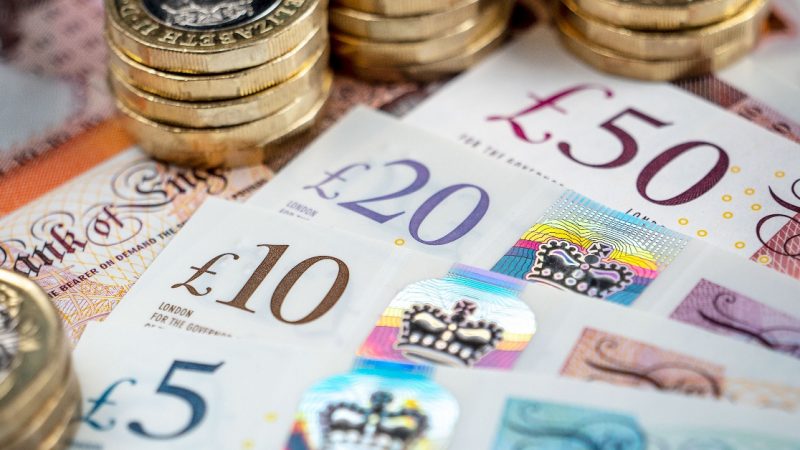


This week the UK household energy bill has risen to an average of £1,849 a year, an increase an increase of £111 since the previous quarter. In October 2020, the average household bill was £1,042 though it hit £2,500 in April 2023. The energy price cap, set by Ofgem, limits the amount suppliers can charge households for each unit of energy and daily standing charges, but it doesn’t cap the total bill.

Just six energy companies control over 90% of the UK energy market, and in the absence of effective competition people are routinely fleeced. Between 2020 and April 2025, 20 energy companies dominating the UK energy industry reported operating profits of over £514bn, which fuels inflation, poverty, misery, premature death and industrial stagnation. Since the pandemic electricity and gas supply companies have increased their profit margins by 363%, electricity generation companies have increased their profit margins by 198%. The industry still receives public subsidies.

Record profits by BP. Shell, British Gas and the National Grid are a reminder that energy sector regulation has failed. The real profits are likely to be much higher than the numbers shown in company accounts because it is not uncommon for energy producers to inflate costs through intragroup transactions and shift profits to low/no tax jurisdictions. Energy companies speculate on the price of their own output to push up prices. BP alone employs more than 3,000 traders to do that. Shell has a trading division but does not reveal details. Energy producers make billions from such speculation, and none of that is subject to any periodic windfall tax on oil and gas companies. Banks also profit from energy price speculation through trading in futures and other derivatives. This is distinct from profits made by energy suppliers and retailers but can hike market prices which form the basis of customer bills.

The UK has the fourth highest electricity price in the world for households. With average real wage unchanged since 2008, the social consequences are stark. Some 6.1m households are in fuel poverty, compared to 4.5m in 2021, and struggle to heat their homes to keep warm and healthy. Some 128,000 Britons a year, including 110,000 pensioners, die in fuel poverty. High energy bills reduce disposable incomes for purchase of other essentials. Some 7m Britons are unable to pay utility bills. Some 3m people are malnourished or at risk of malnutrition. Due to lack of nutrition, UK children are getting shorter and experiencing more ill health than their European counterparts.

For industrial electricity, British businesses pay the highest electricity price in the developed world, more than twice the EU average, 2.6 times that of Korea and four times more than the US. Energy cost in China has less than a quarter of the UK cost. Profiteering by energy companies has handicapped industries such as steel, shipbuilding and engineering and they increasingly struggle to compete. The future of electric vehicles, manufacturing and AI looks precarious.

The UK produces around 34% of its electricity from gas and governments blame the Russia-Ukraine war for higher energy price. This is just another way the state shields the energy sector. In June 2022, the UK ceased importing oil, gas and coal from Russia though scarcity can escalate market prices. Around 50% of gas used in the UK is home produced. The UK gas prices are below the median for industrialised countries, 17% lower than France and 10% less than Germany but they have lower energy costs. The real problem is unchecked profiteering and ineffective regulators.
Ofgem Facilitates Profiteering

One of its non-executive directors resigned and said that the regulator “gave too much benefit to companies at the expense of consumers”.

The main culprit is the Ofgem’s “marginal cost pricing” system which determines consumer prices showers excess profits on companies. Marginal cost is the cost incurred in bringing one additional unit of gas/electricity to the market. When applied correctly, it can lead to efficient use of resource allocation. But there are problems with Ofgem’s assumptions. Energy supply is not a market in the classical economic sense. People must buy energy. They are captive customers who have to pay whatever the prevailing price is. There are no effective substitutes. In a competitive market (where there are many buyers and sellers and everyone is a price taker), firms compete and that drives costs to marginal levels i.e. the cheapest option and sets a price that enables suppliers/producers to recover all costs associated with production. The firms unable to produce goods/services at that level will not be able to sell and will go out of business.

Energy is produced from various sources (such as gas, oil, nuclear, wind, sea, hydro, solar, biomass, etc.) and all elements are mixed and transmitted by the generating stations. The customers cannot distinguish how much of their energy is from gas, oil, coal, wind, nuclear or solar, etc. as electricity from one source is as good as any other. However, each input source has a different cost structure. For example, currently gas costs the most and nuclear, hydro and renewables cost considerably less.

The Ofgem cap does not calculate ‘cost’ based on each variety of input. It is not based on average cost or weighted average of all inputs either. One of the Ofgem’s objectives is to ensure profit for each supplier at each stage i.e. generation, transmission, distribution and retail. This means that the Ofgem cap has to be set at the most expensive price/cost per unit. Otherwise the marginal producer (the most expensive producer) cannot make a profit. This is reverse of what happens in competitive markets where the most expensive supplier is driven out of business.

This is a boon for companies providing oil, nuclear, renewables, solar and hydro and other forms of inputs because they are paid the price of energy generated by the use of gas, which currently is the most expensive input. The cost incurred by domestic producers of gas is considerably less than the wholesale market price, but that does not enter into Ofgem calculus, and consumers bear the brunt.

Ofgem guarantees profits to household energy suppliers. The current rate is 2.4% of the Earnings before Interest and Taxation (EBIT) though most make more than that. There are no limits on the profits made by producers, wholesalers and transmitters of energy though governments may claw some of that back through windfall taxes. In 2022-23, the UK government levied puny £2.6bn windfall tax on oil and gas companies, rising to £3.6bn in 2023-24. The bills received by customers do not show the wholesale cost of energy, network costs, operating costs, various levies, distribution and billing costs, profit or anything else even though companies and Ofgem have full details. The lack of information stifles debate and continues to facilitate exploitation.

A handful of companies control the UK energy industry and their obscene profits show that the sector is broken. Their profiteering is a major cause of inflation, poverty and economic stagnation. The price of energy affects cost of every other sector and makes its uncompetitive. No government can develop an effective industrial strategy without ending profiteering in the energy sector. In countries such as France, Germany, the Netherlands and Denmark industrial strategy is built around public ownership on energy. This gives the state additional levers for protecting the people, controlling business costs and inflation, and promoting industry. Successive UK governments have opposed public ownership of energy but are content to let foreign state-owned companies to control the energy sector. For example, between 2020 and 2025 EDF (Électricité de France) owned by the French state made £91bn operating profit in the UK, which subsidises French households and industry. Indeed, the UK remains obsessed with privatisation. Nearly half of all the UK’s offshore wind capacity is owned by state-owned or majority state-owned foreign entities. Vast export of profits lubricates foreign economies and prevents the development of suitable technologies at home.

The UK must bring energy infrastructure back into public ownership to protect people and rejuvenate the economy.

Prem Sikka is an Emeritus Professor of Accounting at the University of Essex and the University of Sheffield, a Labour member of the House of Lords, and Contributing Editor at Left Foot Forward.


Energy industry profits hit half a trillion pounds while bills soar – and Labour members show their frustration

Energy companies have pocketed over £500 billion in profits since the energy crisis started according to an updated analysis of company reports.

Researchers working for the End Fuel Poverty Coalition examined the declared profits of firms ranging from energy producers, such as Equinor and Shell, through to the firms that control our energy grid, such as National Grid and UK Power Networks, as well as suppliers, such as British Gas.

As energy prices are set to increase by 6.4% this week for households across the country, the analysis shows that almost half of the total profits since 2020 (£207bn) are generated by firms with extensive involvement in the gas industry.

The cost of every unit of gas used will surge by over 10% from 1st April, meaning the cost of gas is now double what it was in winter 2020/21. The cost of gas affects not only households’ ability to keep warm, but also sets electricity prices up to 40% of the time under energy market rules.

Also profiting are the firms and business units responsible for electricity and gas transmission and distribution. These are the “network costs” consumers pay for maintaining the pipes and wires of the energy system and are usually paid for through standing charges on energy bills.

Earlier this year, Citizens Advice found that these firms had made an estimated £4bn in extra profits after a “misjudgement” by regulator Ofgem. Previous research also found that the same firms underspent on vital grid improvements by almost £1bn.

Simon Francis, coordinator of the End Fuel Poverty Coalition, commented: “As energy prices remain at levels way above the 2020 benchmark, the energy industry is taking us for April fools. We need politicians and regulators to act to bring down energy bills now.

“This means radical reform of the electricity pricing markets, investment in homegrown renewables and taking on the vested interests of an energy industry which makes billions of pounds of profits every year at consumers’ expense.

“In addition, we need to see steps taken immediately to help households reduce energy consumption in a safe way, by improving energy efficiency of buildings. This is why MPs need to push the Chancellor to commit the full £13.2bn funding needed for the Warm Homes Plan through the Comprehensive Spending Review.”

Maria Carvalho, from Medact which represents frontline health workers, commented: “The record-breaking profits of energy giants come at an unbearable cost to public health. Cold homes cause illness and drive patients into already overwhelmed NHS services, while energy debt traps families in a cycle of financial and mental distress. 

“Every pound pocketed by these corporations is a pound that could have kept someone warm, well, and out of hospital. The government must act now to rein in energy profiteering and invest in a fair, sustainable energy system that protects health rather than harming it.”

Jonathan Bean from Fuel Poverty Action added: “Without radical reforms, millions of us will continue to suffer and die in energy starvation due to inflated energy pricing. We are not getting the benefit of our increasing supply of cheap renewable energy.”

Warm This Winter spokesperson Caroline Simpson said: “Frankly this is shameful. It’s incomprehensible in so many ways and plain wrong that a mere 20 companies have made so much money out of people’s misery. The industry can spare a few of their many billions to bring down bills, pay for energy-efficient homes and switch from oil and gas to save the planet.

“Now more than ever, we need to give everyone in the UK the peace of mind that comes with having energy security from homegrown solar and wind so we’re not at the mercy of either profiteering oil and gas companies or hostile countries.”

Labour backbench MP Zarah Sultana tweeted: “Since 2020, energy giants have made £514,000,000,000 in profit while bills soar. Meanwhile, UK billionaires hoard £795,000,000,000 as 4.5 million children live in poverty. If the government wanted to tackle poverty & lower bills, it would tax billionaires and nationalise energy.”

She added: “Energy bills up 6.4% — while network providers raked in £4 billion in “excess” profits over four years. Water bills up 26% — while firms paid £78 billion in dividends since privatisation & racked up £64 billion in debt. End this scam. Bring water and energy into public ownership.”

Ian Byrne MP agreed, tweeting: “‘Energy giants rake half a trillion in profits while households’ bills go through the roof. This rip-off cannot continue. We need state ownership of energy and water.” Former Shadow Justice Secretary Richard Burgon MP agreed.

Two-thirds of Labour members want a change of course

As rising utility bills intensify the cost of living crisis and drive more people into poverty, while record profits are made by the energy companies,  pressure is mounting on the Government to deliver the ‘change’ it promised last July. A new survey by Survation found that two-thirds of Labour members felt the Party was heading in the wrong direction.

In a league table of Cabinet favourites, Ed Miliband and Angela Rayner came top, while Keir Starmer himself came third from bottom, ahead of Work and Pensions Secretary Liz Kendall and austerity Chancellor Rachel Reeves, who had a -41% rating.

“Starmer’s project is failing,” noted Momentum. “We need real Labour values to fix the crises in Britain, not more austerity.”

Image: https://milestonemagazine.com/3-global-businesses-that-have-thrived-during-the-pandemic/ Licence:Attribution-ShareAlike 3.0 Unported CC BY-SA 3.0 Deed


How X has become a powerful right-wing propaganda tool


5 April, 2025 
Left Foot Forward


When Musk is branded a ‘loser’ on his own platform, it's a rare moment that reminds progressives we can occasionally turn white rich men’s own weapons on themselves.


In a delicious shot of karma, Democrats celebrated a rare victory this week when the election for a vacant Wisconsin Supreme Court seat turned into a resounding rebuke of Elon Musk. Susan Crawford, the Democrat-backed candidate, triumphed over Musk’s millions of dollars in support for Brad Schiel, a Trump-endorsed judge. Musk spent a staggering $25 million backing Schiel, only to see his efforts crushed by Crawford’s win.

On the same day Trump declared ‘Liberation Day’ to herald his long-awaited trade tariffs, Democrats seized the moment, framing the outcome as a direct referendum on Musk. The party’s official X account posted an image of Musk donning a cheesehead, accompanied by the word ‘loser.’

This rare moment of liberal triumph provided a welcome respite from the toxic cesspool that X has become, a platform where hate and misinformation thrive, forcing progressives to grapple with the uncomfortable choice of either leaving or enduring the moral dilemma of staying.

The right loves to drone on about free speech, they never stop talking about it. But, as Right-Wing Watch readers know all too well, it only matters when it’s speech they agree with, not when it’s progressive speech.

“The most elementary observation about the principle of free speech is that if you only believe in it for speech you agree with, then you don’t believe in free speech. “Of course you have freedom: the freedom to agree with me” is the stance of a dictator,” Nathan J. Robinson, political commentator and editor of Current Affairs, bluntly put it.

X has become a glaring example of this hypocrisy. During the 2024 presidential election, progressive accounts and Kamala Harris fundraisers saw their reach throttled, while journalists critical of Elon Musk were banned from the platform. Meanwhile, far-right extremists and pro-MAGA memes were amplified, all while Musk touted himself as a ‘free speech absolutist.’

X’s regression

Since the world’s richest man bought the platform in 2022, it’s become murkier and murkier. First, it was reports of the obnoxious ‘long hours at a high intensity’, bullying of his staff and the sacking of employees responsible for monitoring disinformation.

Then came the rebranding from Twitter to X, a move that itself symbolised a hyper-masculine, egotistical shift, more focused on power and dominance than progress or inclusivity, or even basic decency. There was also the blue-tick fiasco, with identity verification being something you could buy, and in 2023, the platform began sharing ad revenue with its ‘premium’ users. Creating toxic content, like attacking trans people, became an increasingly viable way to drive up engagement and an income.

Those high-attention tweets go straight to the top of the For You feed, driven by a “black box algorithm designed to keep you scrolling,” as Rose Wang, COO of X’s more progressive rival Bluesky, put it.

Racist misinformation and the far-right riots

Within the intense, profit-driven world of social media algorithms, which prioritise engagement over everything, in Britain, social platforms have become the third most common source of people’s news, behind news websites and national TV news.


This is deeply concerning, especially when much of the news people engage with is misinformation, a reality that was laid bare in its full, troubling form last summer.

Following the far-right riots in August, ‘keyboard warrior’ Wayne O’Rourke, was convicted for inciting racial hatred on social media. O’Rourke, with his 90,000 followers, was earning £1,400 a month from posting on X.

The braggart Laurence Fox, who was among several prominent accounts that shared misinformation after the Southport attacks that helped prompt the far-right riots, declared he earns a similar amount as O’Rouke on X. Fox thanked the ‘woke morons’ for feeding his family by engaging with his content. This is the same man who, just this week, was charged with a sexual offence after allegedly sharing an intimate image of TV star Narinder Kaur without her consent on X.

The controversial influencer and self-styled misogynist Andrew Tate and the anti-Islam activist Tommy Robinson, who alongside right-wing political commentator Katie Hopkins had their X accounts reinstated in November 2023, were also among those who shared fake reports about the Southport attack from a website being run out of Pakistan.

Hopkins had been banned from X in 2020 and Robinson in 2018, both for breaking Twitter’s rules on hateful conduct.

In November 2022, Musk announced a ‘general amnesty’ to suspended accounts that had ‘not broken the law or engaged in egregious spam.’

Research by BBC Monitoring found that of 1,100 reinstated accounts it examined, nearly 190 were promoting hate and violence

.

And of course, there was the reversing of the ban on Trump’s account, which the platform shut down after the attack on the US Capitol in January 2021, which many claim Trump encouraged.

Nick Lowles, chief executive of anti-hate campaigners Hope Not Hate, criticised X’s move.

“Reinstating Tommy Robinson and Katie Hopkins means Elon Musk is allowing hateful content and misinformation to take place on his watch on X/Twitter,” he said.

The group said it would be writing to X to “make it clear the danger that their content poses.”

But things only got worse within the toxic, hyper-masculine environment of X.

Trump’s win

By the time US voters took to the polling stations in November 2024, critics said X had effectively become an unofficial house platform for the MAGA wing of the Republican Party. Musk was accused of ‘fanboying’ Trump and spreading misinformation among his 200 million followers, his influence amplified by X’s algorithm.

For example, the conspiracy theory that Democrats were importing illegal immigrants and granting them an amnesty to broaden their voter base in future elections was also allowed to circulate on X and amplified by Musk himself.

And the stats are frightening. Analysis by CAP Action shows 60 of the top 100 political X accounts with the most post views in the first three months of 2025 were Conservative. Neutral or mainstream outlets like the AP and CNN accounted for just 11, while progressive accounts made up 29. In total, Conservative posts racked up 131.4 billion views, while progressive posts were seen only 8.6 billion times.

And it’s even more stomach-churning when it comes to Elon Musk’s own account. According to CAP’s data, Musk has posted 10,315 times this year. Those posts have received over 91 billion views, more than all the other top political accounts combined.

Eric Coffin-Gould, senior director of analytics at CAP Action, explains how Musk averages the third-highest views per post of any Twitter account in our database, behind Donald Trump and Barack Obama.

“The difference is he posts a lot. So far in 2025, Elon is averaging 97 posts per day and an additional 30 retweets. That’s more than double what he was spewing out this time last year. And each of these posts is getting insane engagement and views, almost definitely inflated either by bots or by tweaks he made to the algorithm,” said Coffin-Gould.

The X exodus

On November 6, 2024, just a day after the US presidential election, X saw its largest exodus of users since Elon Musk took control in 2022.

The same month, major brands, advertisers and high-profile figures followed suit. IBM, Disney and Paramount halted ad spending over concerns about antisemitism and hate speech.

In response to advertisers boycotting the platform, its owner crudely told them to “go fuck yourself.” Charming.

The Guardian announced it would cease posting on its official editorial X accounts, citing the ‘benefits of being on X are now outweighed by the negatives and that resources could be better used promoting our journalism elsewhere.’

“The US presidential election campaign served only to underline what we have considered for a long time: that X is a toxic media platform and that its owner, Elon Musk, has been able to use its influence to shape political discourse,” the newspaper stated on its website.

In just two months, X lost around 2.7 million active users in the US, while its rival platform Bluesky gained nearly 2.5 million in the same period.

But the trouble is not everyone is leaving X. As of early 2025, the platform had approximately 650 million users. It is projected that if X maintains its current pace of feature development and global expansion, it could surpass 700 million monthly average users by late 2025.

And until everyone leaves, including those who have hundreds of thousands of users, the world’s richest man won’t back down. The Tesla exodus, which has seen sales slump in Europe, with Elon Musk’s ‘toxic influence’ on the brand being blamed as among the reasons why, suggests that it is possible to hit billionaires where it hurts the most – in their wallets. But buying a car is wholly different from tweeting a post so I’m not anticipating any transformation of X anytime soon

How long can Musk’s ‘free speech’ hypocrisy go unchecked?

In Britain, at least rules are tightening on online content. In the wake of the far-right riots, the telecoms watchdog, Ofcom, confirmed that the Online Safety Act 2023 would take effect, aiming to minimise online risks and hold service providers accountable for keeping children and young people safe.

It’s a necessary first step, but the real battle is just beginning.

Unbelievably, this week, reports surfaced that US State Department officials confronted Ofcom over concerns the law might infringe on free speech, something the US right has long championed. In a meeting in London, US officials reportedly warned the new legislation could stifle expression. Ofcom countered that the law only targeted illegal content and material harmful to children.

When asked about the meeting, a state department spokesperson said: “As Vice-President Vance has said, we are concerned about freedom of expression in the United Kingdom. It is important that the UK respect and protect freedom of expression.”

Vance has complained of “infringements on free speech” in the UK, while Musk has repeatedly claimed that some prison sentences handed down to people who incited the riots on X were a breach of free speech.

The hypocrisy is staggering. Musk, a megaphone for far-right rhetoric, criticises the UK’s safeguards as a threat to free speech while allowing X to spread harmful disinformation and falsehoods. To make matters worse, US officials, closely linked to Musk, are now attempting to influence British policy.

Perhaps the most effective solution is an outright ban on platforms like X, which fuel hate, disinformation, and political manipulation.

In January, after Musk made a bizarre rant about safeguarding minister Jess Phillips, Darlington MP Lola McEvoy suggested Keir Starmer should consider banning X altogether.

Banning things though sits uneasily with liberal ideology.

From day one of his presidency, Trump has been taking an axe to free speech, dismissing military officers who supported DEI, and educational officials who suggested that teachers needed to be conscious of the needs of LGBTQ+ children. To tread the same path would be unthinkable.

And then, when Musk is branded a ‘loser’ on his own platform, it’s a rare moment that reminds progressives we can occasionally turn white rich men’s own weapons on themselves.


Gabrielle Pickard-Whitehead is author of Right-Wing Watch
Right-Wing Media Watch 

Pro-Brexit press gloats over Trump’s 10% trade tariffs on UK

Yesterday
Left Foot Forward

Talk about rewriting history with a side of hindsight.


For nine long years, the pro-Brexit press have been lusting for a Brexit ‘success’ story. And here it is – Britain being ‘sacrificed’ by Trump with a mere 10% levy on the goods it imports to the US, while the EU will face 20%.

‘Trump just proved Brexit was the best decision Britain ever made,’ raved the Telegraph.

‘Brexit Britain escapes worst of Trump tariffs pain,’ gushed the Express’s front page.

‘Trump’s tariffs are a real Brexit win,’ trumpeted the Spectator.

But come on, this is hardly the ‘victory’ they make it out to be. The UK has spent weeks working on a trade deal with the US to avoid the same punishing tariffs imposed on other countries like China and Canada.

A Downing Street source told the BBC: “We don’t want any tariffs at all, but a lower levy than others vindicates our approach. It matters because the difference between 10% and 20% is thousands of jobs.

“We will keep negotiating, keep cool and keep calm. Tomorrow we will continue with that work.”

Granted, the UK may be facing less of a hit than the EU, but let’s not pretend this is some brilliant Brexit triumph. If Britain were still part of the EU, Trump might have been more inclined to show some mercy to the US’s ‘special relationship’ partner. In fact, the Trump administration’s apparent ‘generosity’ might have been more about sending a message that breaking free from the EU has its rewards, thereby using us as the poster child for the merits of leaving the union, which Trump has a deep disdain for.

Who knows, when you’re dealing with a man who has the mindset and temperament of a three-year-old child, it’s hard to tell.

Meanwhile, Tories are using the trade war ‘win’ to bash Labour for opposing Brexit.

“The silver lining is that Brexit – which Labour ministers voted against no less than 48 times – means that we face far lower tariffs than the EU: a Brexit dividend that will have protected thousands of British jobs and businesses,” said shadow trade secretary Andrew Griffith.

Really? ‘Avoiding Trump’s trade war’ wasn’t emblazoned on the side of buses in 2016, was it? Talk about rewriting history with a side of hindsight.

No mention either of the strange position Northern Ireland finds itself in, which is, in trade terms, still part of the EU. Or the possibility that Europe might look to protect itself from the UK being a staging post for American goods to enter the Union.

Jack Daniels and Harley Davidsons from Boston to Rotterdam via London anyone?

There is still a lot of water to flow under this particular bridge which the Tories should be having a long hard think about. Sadly, it’s a long time since they did much by way of thinking, long or short, hard or soft.

And let’s not forget, a 10% levy will still hit Britain hard. This move marks a break from decades of American policy embracing free trade and will not be without consequences. The government’s own forecaster estimates that a worse-case scenario trade war could reduce UK economic growth by 1% and wipe out the £9.9bn of economic headroom Chancellor Rachel Reeves’s gave herself at last week’s Spring Statement.

And in all the triumphant rhetoric, there’s a conspicuous silence on the damage Brexit has already done. Studies that suggest UK goods exports are 30% lower than they would have been if we had not left the single market and customs union. Meanwhile, the knock-on effects of Brexit are being felt across industries, from difficulties in hiring workers to disruption in trade. And let’s not forget that Brexit has cost the UK £27bn in lost goods exports, with smaller businesses bearing the brunt.

If Trump’s ‘special deal’ with Britain, which will still leave us worse off, is the shining example of Brexit’s success, then we’re in real trouble. 

Gabrielle Pickard-Whitehead is author of Right-Wing Watch


Brexiteers ridiculed for claiming Trump tariffs are a “Brexit success”


3 April, 2025

They are celebrating the fact that the UK faces lower tariffs than the EU, while Brexit is costing the UK economy more.


Right-wing commentators and media outlets are attempting to spin the fact that Donald Trump has imposed 10% tariffs on UK goods, instead of the 20% tariff on EU goods, as a “Brexit benefit”.

While Brexiteers promised that the UK would be able to negotiate a new trade deal with the US after leaving the EU, nine years later there isn’t one in place, and yesterday Trump slapped extra taxes on UK goods.

Anti-Brexit campaigner and co-founder of pro-EU advocacy group Our Future Our Choice, Femi Oluwole, explained precisely why the tariffs are not a “Brexit success”.

The Office for Budget Responsibility (OBR) estimated that Brexit will reduce the UK’s GDP in the long-run by around 4% (over £100 billion) per year compared to remaining in the EU.

Former BBC broadcaster Andrew Neil, who is now a Daily Mail Columnist, said on X: “Trump’s new tariffs are something of victory for Keir Starmer’s diplomacy. Britain gets off lightly with a 10% tariff on UK exports to America, the minimum new tariff on all exports into the US v 20% on the European Union. Bloody Brexit.”

Oluwole replied: “This is embarrassing Andy.

“Just say you can’t count. A 20% tariff would have cost us 0.8% GDP.

“So at BEST, Brexit saved us 0.4% GDP in US trade, at the expense of a 4% GDP loss from EU trade.”

Olivia Barber is a reporter at Left Foot Forward
UK

Woke-bashing of the week – Daily Mail claims ‘tens of thousands’ quit National Trust for ‘anti-woke’ rival

Today
Right-Wing Watch

The right’s ongoing fixation on the National Trust reared its head again this week.


The right’s ongoing fixation on the National Trust reared its head again this week.

‘Thousands quit National Trust amid competition from ‘anti-woke’ rival’ headlined the Daily Mail.

According to the report, the National Trust lost 89,000 members last year, while its rival, Historic Houses boasts 85,000 members and is reportedly gaining 10,000 more each year.

Historic Houses is a not-for-profit association. For an annual membership of £68, members can access 303 venues across the UK, more, according to the Daily Mail, than the National Trust and English Heritage combined.

While this may sound like a commendable and legitimate alternative, the Mail uses the rise of Historic Houses to attack the National Trust, claiming that its decline is due to its ‘woke’ culture. The article suggests that “lovers of stately homes” are now turning to this “less political” option.

The newspaper goes on to list what it calls the National Trust’s “long history of woke rows,” such as its 2023 calendar where Christmas and Easter were excluded, while other religious festivals were included. This is presented as further proof of the Trust’s so-called woke agenda.

The same narrative was echoed in the Telegraph, which gleefully reported:

“With the National Trust losing 89,000 members last year, a lesser-known rival “without the woke attitude” is growing in popularity…”

However, such sensationalist reporting overlooks the likely factors behind the Trust’s membership decline, namely, the ongoing cost-of-living crisis, which has forced many people to cut back on non-essential spending.

In fact, in 2023, while membership numbers dropped by 89,000 to 2.62 million, visitor numbers at Trust sites actually increased by 5 percent. More people are opting to pay for day passes instead of committing to memberships, with non-member visitors rising by 12 percent compared to the previous year.

Hilary McGrady, the trust’s director general, said: “It’s really heartening that people still want to spend time in and support amazing cultural and natural places, whether that’s immersing themselves in art or wandering through our gardens and woodlands.

“We know the cost of living crisis is still biting and we’ll keep doing more to give everyone a great day out.”

But such logical facts are far less sensational than the narrative the right-wing media prefers. After all, the push for the ‘anti-woke’ Restore Trust group to infiltrate the National Trust’s council failed on multiple occasions. Now, it seems the focus has shifted to Historic Houses. One to keep our eye on given the right-wing media’s strange obsession with the National Trust.


Young females more likely to experience higher social anxiety due to excessive smartphone use than other genders


European Psychiatric Association


Sunday 6th April 08:00 CEST - A new study presented today at the European Psychiatric Association Congress 2025 reveals that gender plays a significant role in excessive and problematic (psychological or behavioural dependence)1 smartphone use, with young females more likely to experience higher social anxiety than other genders. In the study, it was also found that gender was significantly linked to the amount of time spent using smartphones and the fear of being judged negatively by others online.  

The researchers set out to investigate problematic smartphone use, mental well-being, emotional regulation and social anxiety differences between genders, so that a stronger understanding can be built of the smartphone addiction process. The study involved 400 young adults (average age 25.9): 104 men, 293 women and three of another gender.  

Key findings from the study include: 

  • Gender accounts for significant differences in the mediating factors (time of use per day, Mental Health Continuum Scale (MHC), Assessing Emotions Scale (AES), Fear of Negative Perception Questionnaire (FNPQ)), that affect problematic smartphone use 

  • Young females experience higher fear of negative perception online  

  • Gender is significantly related to the time spent with smartphones, with higher use in young females than other genders 

Dr. Csibi Sándor, George Emil Palade University of Medicine, Romania, and Lead Investigator, said: “These results point to serious differences between genders in that females are much more likely to suffer mental ill health at the hands of a smartphone. Our study also reveals the influence of social interactivity, low emotional understanding and variations in perceived social support that could be caused by problematic smartphone use. It is important that these areas are further researched so we can work to build our understanding of these behaviour differences between genders and what methods need to be put in place to support these individuals.”  

Co-author Ms. Neha Pirwani, Eotvos Lorand University, Hungary, added: “Our findings add to previous studies showing that females can face increased suffering and therefore need additional attention, guidance and help compared with other genders, to identify problematic smartphone use and what this may lead to. Our continued work to further understand the causes and effects of this is key to addressing these issues amongst the younger generation.” 

Professor Geert Dom, EPA President, said: “Nearly 100% of Generation Z own and use a smartphone.2 There is already evidence from a variety of cross-sectional, longitudinal and empirical studies implicating smartphone and social media use being factors in the increase in mental distress, self-injurious behaviour and suicidality among this age group.3,4,5 This is an area that must be given further attention so that any detrimental areas can be addressed quickly.” 

The European Congress of Psychiatry takes place from 5-8 April 2025 in Madrid, Spain, and represents Europe’s largest congress dedicated to psychiatry, with around 1,500 attendees: epa-congress.org

+++ 

Full abstract: 

Gender differences regarding problematic smartphone use, mediating by mental well-being, emotional regulation, and social anxiety in young adult sample [EPA2025-LB-4869] 

Csibi Sándor*1, Neha Pirwani2, Mónika Csibi3, Attila Szabo2 

1 Faculty of Psychology, Department of Sciences and Letters, George Emil Palade University of Medicine, Pharmacy, Science, and Technology, Targu Mures, Romania, 2 Institute of Health Promotion and Sport Sciences, Faculty of Education and Psychology, ELTE Eötvös Loránd University, Budapest, 3 Institute of Special Education, Faculty of Pedagogy, Eszterházy Károly Catholic University, Eger, Hungary  

Introduction: Research underlay various results concerning the differences focusing on gender in smartphone use and mental issues. Some find no difference, but assessing mental factors reveals the influence of social interactivity, low emotional understanding, and perceived social support variations according to problematic smartphone use. 

Objectives: Our research aims to investigate problematic smartphone use, mental well-being, emotional regulation, and social anxiety as a function of gender to explore specific ways of functioning in the addiction process. 

Methods: The study participants were 400 young adults, of whom 104 were men (26%), 293 were women (73.2%), and three individuals (0.8%) were of another gender. The mean age of the participants was 25.9 years (SD 10.9). Registered  

answers refer to demographic data (gender, age, smartphone usage habits) as well as psychological measures: a Smartphone Application-Based Addiction Scale (SABAS), a Mental Health Continuum Scale (MHC), an Assessing  

Emotions Scale (AES), and Fear of Negative Perception Questionnaire (FNPQ). 

Results: The results showed that gender showed significant differences in the mediating factors that affect problematic smartphone use. In the mediation model, gender relates significantly related to time spent with smartphones (p=.001) and  fear of negative perception (p=.001). The statistical mediation model highlighted the gender-depending significant role of the mediating factors (time of use per day, MHC, AES, FNPQ) in problematic smartphone use. 

Conclusions: Our research highlights gender differences in excessive smartphone use, such as higher social anxiety, which is a higher predisposing factor in women than in men. Gender is a significant indirect determinant of problematic smartphone use. 

Disclosure of Interest: None Declared

Disclaimer: AAAS and Eure


Climate and health litigation mounting in Australia as exposure to heatwaves grows


Macquarie University
Professor Paul Beggs 

image: 

Climate concerns: Professor Paul Beggs leads the research revealing Australia as a hotspot for climate and health litigation, with courts increasingly examining evidence of health impacts. Photo: [Credit Jesse Taylor]

view more 

Credit: Credit Jesse Taylor


Australia’s exposure to extreme heat continues to grow while the country has emerged as a global hotspot for climate change litigation, according to the latest MJA–Lancet Countdown report.

Released today, the report reveals Australia has experienced a 37 per cent increase in excess heat factor over the past 20 years.

Lead author and Director of the Lancet Countdown Centre in Oceania, Professor Paul Beggs from Macquarie University, says these findings underscore the importance of long-term tracking of climate hazards and exposures in Australia.

“The frequency of health-damaging heat has increased substantially since the 1970s," says Professor Beggs.

The report presents a comprehensive assessment of the connections between health and climate change in Australia across five domains: health hazards and impacts; adaptation planning; mitigation actions; economics and finance; and public and political engagement.

Rising litigation

For the first time, the report measures health and climate change litigation, with Australia having the second-highest number of climate change cases globally.

“Health was raised as an issue in eleven Australian climate cases between 2014 and 2023,” says Professor Beggs.

“Courts have closely examined detailed evidence about how climate change directly and indirectly affects people's health, especially for vulnerable groups.”

 Key deficiencies identified in Australia’s response to climate and health threats include a 17 per cent drop in the number of volunteer firefighters in just seven years, undermining Australia's capacity to respond to bushfires.

Continued dominance of fossil fuels in Australia’s energy supply also contribute to climate risks.

Greenhouse gas emissions from Australia’s health care sector rose in 2021 to their highest level since 2010, likely due in part to shifts in patterns of care in response to COVID-19.

Good news on progress

 Areas of progress identified include the Australian Government’s completion of the first National Climate Risk Assessment, which included health and social support as one of eleven priority risks.

"This past year Australia has taken a crucial step forward in understanding how risks are connected across sectors," says Professor Hilary Bambrick, one of the authors of the report and Director of the National Centre for Epidemiology and Population Health at The Australian National University.

"This Assessment should facilitate more considered and coordinated planning and response to increasingly dangerous climate change to better protect human health and wellbeing."

Renewable energy now provides almost 40 per cent of Australia’s electricity, with growth in both large-scale and small-scale generation and storage.

"Electricity generation from renewables keeps accelerating, fossil fuel generation is shrinking, but ensuring reliability of electricity supply demands even greater investment in renewables and storage," says Professor Stefan Trueck, another report author and Director of Macquarie University's Centre for Transforming Energy Markets.

The sale of electric vehicles reached an all-time high in 2023 of 98,436, accounting for 8.47 per cent of all new vehicle sales.

While Australia had a reprieve from major catastrophic climate events in 2023, New Zealand experienced Cyclone Gabrielle and unprecedented floods.
Professor Alistair Woodward, another author on the report and Professor of Epidemiology and Biostatistics at the University of Auckland says: “A strength of the Countdown report is that it includes views from both sides of the Tasman.

“Australia and New Zealand differ geographically, but both are being squeezed by climate change, and we can learn from each other’s policy and health system responses.”

Pivotal Period

The report states that the next five years are pivotal for reducing greenhouse gas emissions and transitioning to renewable energy.

Scientific research on health and climate change in Australia has grown dramatically, with 525 publications in 2023, marking a 29 per cent increase from 2022.

The MJA–Lancet Countdown, established in 2017, is an annual assessment tracking progress on health and climate change in Australia.

The 2024 report represents the work of 25 experts from 15 institutions across Australia, New Zealand, the United Kingdom and the USA, in a multidisciplinary collaboration across the fields of climate science, public health, energy policy, economics, and environmental research.

In future reports, the authors plan to introduce indicators on Aboriginal and Torres Strait Islander health and climate change, and mental health impacts of climate change.

France, Algeria continue talks in effort to repair fractured ties

France and Algeria resume diplomatic talks on Sunday in a sign of a possible thawing of tensions following months of vociferous exchanges that have jeopardised Paris’ economic interests in its former colony. Relations deteriorated when Macron backed a plan for autonomy for the Western Sahara region under Moroccan sovereignty.


Issued on: 06/04/2025
By: FRANCE 24
Video by: FRANCE 24

02:17
France's Minister for Foreign Affairs Jean-Noël Barrot is photographed on April 2, 2025. © Dimitar Dilkoff, AFP


France and Algeria resume diplomatic dialogue on Sunday after months of bickering that have hurt Paris' economic interests in its former colony, seen mutual accusations of humiliation and stalled vital security cooperation.

Ties between Paris and Algiers have been complicated for decades, but took a turn for the worse last July when Macron angered Algeria by recognising a plan for autonomy for the Western Sahara region under Moroccan sovereignty.

French officials say Algiers is adopting a policy that aims to wipe France's economic presence from the country, with trade falling by as much as 30% since the summer.

11:19© France 24

A poor relationship has major security, economic and social repercussions: trade is extensive and some 10% of France's 68 million population has links to Algeria, according to French officials.

"It is in the interest of France and the French people to beable to get results in terms of migration, judicial, security and economic cooperation," Foreign Minister Jean-Noel Barrot told lawmakers on April 1.

Read moreFrance's Macron 'sole point of reference' for mending ties, says Algerian president

Barrot arrives in Algiers on Sunday for a day of talks. That comes after a call between President Emmanuel Macron and his Algerian counterpart Abdelmadjid Tebboune on March 31, during which the two agreed to a broad roadmap to calm tensions.

French officials say Algiers has put obstacles to administrative authorisations and new financing for French firms operating in the country. Nowhere has it been felt more than in wheat imports.

Traders say the diplomatic rift led Algerian grains agency OAIC to tacitly exclude French wheat and firms in its import tenders since October. OAIC has said it treats all suppliers fairly, applying technical requirements.

France has only shipped one wheat vessel to Algeria in the 2024/25 season, a single cargo of 30,000 tons wheat in July.

That compares with several million tons annually in recent years.

"People are talking about it but they're waiting to see what impact this has on the ground," a French grain trader said of Barrot's trip.

"We could definitely do with another buyer for our wheat."
Author arrested

Beyond business, the relationship has also soured to the point where security cooperation, including over Islamist militancy, stopped. The detention by Algiers in November of 80-year-old Franco-Algerian author Boualem Sansal also worsened the relationship.

He has since been sentenced to five years in prison. Paris hopes he will be given a presidential pardon, diplomats say. With Macron's government under pressure to toughen immigration policies, the spat has fed into domestic politics in both countries.

01:12© France 24

Interior Minister Bruno Retailleau has called for a 1968 pact between the two countries that makes it easier for Algerians to settle in France to be reviewed, after Algiers refused to take back some of its citizens who were ordered to leave France under the "OQTF" (obligation to leave French territory) deportation regime.

The relationship between the two countries is scarred by the trauma of the 1954-1962 war in which the North African country, which had a large settler population and was treated as an integral part of France under colonial rule, won independence.

About 400,000 Algerian civilians and fighters were killed, as well as about 35,000 French and as many as 30,000 Muslim "harkis" who fought in the French army against Algerian insurgents.

Macron has over the years pushed for more transparency regarding France's past with Algeria while also saying that Algeria's "politico-military system" had rewritten the history of its colonisation by France based on "a hatred of France".

"President Macron recognised the Moroccan character of Western Sahara, a move Algeria views as a betrayal. With no sign Macron will ever reverse this decision, the Algerians will not be making it easy for French firms to do new business in their country," said Jalel Harchaoui, associate fellow at the Royal United Services Institute.

(FRANCE 24 with Reuters)
Turkey's main opposition calls for elections by November amid unrest


The head of Turkey's main opposition party has demanded that elections be held "at the latest in November" following the country's most widespread unrest in a decade. The protests came on the heels of last month's arrest of President Recep Tayyip Erdogan's main rival for the presidential post.


Issued on: 06/04/2025
By: FRANCE 24

Ozgur Ozel, leader of Turkey's main opposition Republican People's Party (CHP), gives a speech during an extraordinary congress of the party in Ankara on April 6, 2025. 
© Adem Altan, AFP


The leader of Turkey's main opposition party on Sunday called for expected elections to be held "at the latest in November" following the country's most widespread unrest in a decade.

Addressing President Recep Tayyip Erdogan, CHP party leader Ozgur Ozel said: "In November at the latest, you will come to confront our candidate," referring to the CHP's presidential candidate Ekrem Imamoglu whose detention sparked the protests.

"We will defy you, we want our candidate at our sides," Ozel added. "We invite you to once again appeal to the will of the people."

Call for weekly protests around country, instead of nightly in capital

3:02© France 24


Ozel hailed the demonstrations triggered by last month's arrest of Imamoglu, Istanbul's popular opposition mayor who is widely considered Erdogan's greatest political threat, as "the greatest motion of censure in history".

In the days following Imamoglu's arrest, the CHP drew tens of thousands of people into the streets of Istanbul and many other cities to denounce a "coup d'etat".

In response Turkey has clamped down on the protests, with authorities detaining nearly 2,000 people including several hundred students, journalists and young people.

(FRANCE 24 with AFP)