It’s possible that I shall make an ass of myself. But in that case one can always get out of it with a little dialectic. I have, of course, so worded my proposition as to be right either way (K.Marx, Letter to F.Engels on the Indian Mutiny)
Tuesday, April 29, 2025
Finnish Coast Guard Reports Dangerous Incident with Shadow Fleet Tanker
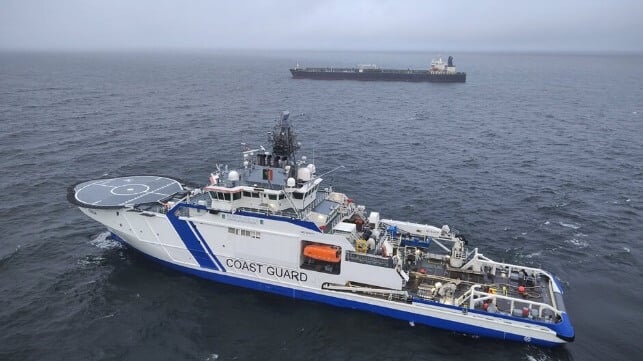
Finland detained a shadow fleet tanker in 2024 suspected of damaging undersea cables (Finnish Police)
Finland joined its neighbor Estonia in reporting a continuing increase in the number of suspicious vessels sailing in the Gulf of Finland and the waterways of the Baltic to and from Russia. The Finnish Coast Guard recounted an incident where a laden tanker had to be warned off the course it was on heading toward a shoal, the second in just months involving a shadow tanker.
In its weekly update, the Finnish Board Guard reports that an unnamed shadow fleet tanker carrying crude oil was nearing a dangerous shoal near the Kalbadagrund lighthouse east of Helsinki near Emäsalo on the Gulf of Finland. They determined the vessel was within about 10 minutes of reaching the shoal with the danger of “serious marine environmental damage” if the vessel had continued on its course.
The Maritime Traffic Center was able to reach the vessel by radio and warn it about the dangers. The vessel corrected its course. The Coast Guard says a similar dangerous situation took place in February in the same location. Again, another tanker belonging to the shadow fleet was on a dangerous course.
“During the past week, several ships belonging to the so-called shadow fleet, whose flag state has been unclear, were again spotted in the Gulf of Finland,” says the Board Guard in its weekly summary. They noted that during the past week, “anomalies were detected” and investigated with the AIS signal from vessels registered in Panama and Liberia. “The Gulf of Finland Coast Guard continues to monitor the phenomenon,” they report.
Estonia’s Foreign Minster Margus Tsahkna yesterday, April 28, also said his country was continuing to detect shadow fleet vessels sailing under flags of convenience. He said Estonia was the first country to start inspecting the vessels in June 2024 of the Russian shadow fleet. Since then, Tsahkna said his country has requested insurance documents from more than 500 ships and that it would continue to conduct Port State inspections of passing vessels.
One of these inspections resulted in the detention of a shadow fleet tanker, the Kiwala, due to suspicions it was operating as a stateless vessel without insurance. Estonia detected 23 deficiencies due to documentation and another 17 technical issues saying 29 of the issues were grounds for the detention. After two weeks the vessel was able to demonstrate technical compliance and departed Estonia bound for Russia. However, according to Estonia’s Transport Administration, the vessel’s flag registration was only extended till May 7 by Djibouti, providing it time to transition. Djibouti reportedly canceled the registration at the beginning of 2025 due to “illegal activities.” The European Union, United Kingdom, Canada, and Switzerland all had previously sanctioned the tanker.
Finland and Estonia each said they would continue to monitor vessels transiting the Baltic. Tsahkna also called for cooperation among the Baltic states to protect the marine environment from the continuing danger coming from the shadow fleet.
Port of Los Angles Foresees “Precipitous Drop” in Next Week's Cargo Volumes
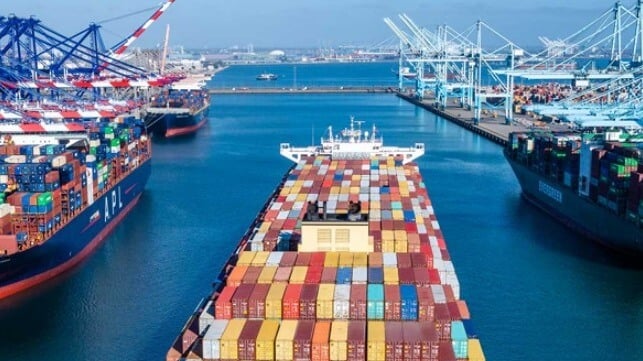
Port of LA expects to begin seeing the drop in volumes due to the impact of the tariffs (Port of LA file photo)
Speaking on CNBC’s Squawk Box program this morning (April 29), the Port of Los Angeles’ Executive Director Gene Seroka forecasted a “precipitous drop” in volumes coming to the port as the impact of the Trump tariffs begins to materialize. Seroka was the latest in a series of warnings coming from across the shipping industry of the expected sudden drop in imports and the potential impact on U.S. consumers and the economy.
Seroka who at the beginning of April forecasted the port would see a 10 percent decline in volumes in the second half of the year, said on CNBC that volumes would be down by more than a third next week compared to 2024. He said the port’s planning tool shows a 35 percent decline next week noting that approximately 45 percent of the port’s volume is made up of shipments from China.
Today, the Port of Los Angeles is reporting that there are only six containerships on berth, down from 14 last Friday, April 25. While the report shows 44 vessels inbound between Asia but still outside the 40 nautical mile zone, the port also reflects that 20 sailings have been blanked by the carriers during May. That represents 253,500 TEU of capacity that has been canceled for the month while an additional 10 sailings (117,500 TEU of capacity) have already been canceled for June.
Seroka told CNBC that the cancellations in May represent approximately a quarter of the usual number of ships arriving in the port. It will have direct repercussions on the jobs of the longshoremen and others working in the port as well as the trucking and warehousing industries.
The concerns are starting to ripple across the U.S. economy. The Conference Board reported today that consumer confidence plunged to a five-year low reaching levels not seen since the pandemic in May 2020. The report shows that the consumer confidence index fell 7.9 points in April to 86 with growing concerns over the job market and a looming recession.
Seroka forecasted that consumers would begin to see the impact of the slowdown in imports with reduced choices on the shelves of retail stores. Other economists have been more dire in their outlook suggesting that Americans would soon begin to experience shortages and empty shelves rivaling the peak of the pandemic.
Retailers appeared to rush shipments in March in an effort to build inventory. The Port of Los Angeles reported that March volumes were up nearly 5 percent for the month. During the first quarter, it said volumes were up better than 5 percent. This led Seroka to forecast on CNBC today that retailers have about five to seven weeks of full inventory left on their shelves.
The March trade deficit report from the Commerce Department supported the position that retailers rushed imports through the ports last month. The U.S. trade deficit for goods widened to a record high ($162 billion) in March with imports in total soaring to over $340 billion. The goods trade gap increased to just under 10 percent or an increase of more than $16 billion creating the imbalance despite a more than $2 billion increase in exports.
Seroka forecast that the volumes coming out of China, except for a few commodities, would remain “light at best” until “some accord or framework can be reached with China.”
Lull in Houthi Attacks on Shipping as Air War Pressure Builds
Data captured by the United Kingdom Maritime Trade Operations in Dubai suggests that Houthi attacks on shipping have largely ceased, the last incident recorded being an attempted attack on a ship by suspected pirates on April 15. The Houthis claim to have attacked the USS Harry S. Truman (CVN-75) in the Red Sea, but the US Navy doesn’t appear to have noticed. Occasional Houthi ballistic missile attacks on Israel have however continued. The only safe conclusion to draw at present is that the Houthi missile and drone capability is degraded, but that a resumption of attacks on shipping could still resume.
The conventional expert wisdom is that an air campaign against the Houthis will not dent their tenacious will to fight, the Houthis being stubbornly resistant to casualties and damage inflicted. Such impressions are reinforced by the large crowds that the Houthis are able to mobilize for political demonstrations, such as occurred in Sana’a on April 18.
But Houthi attempts to characterize the American strikes as an indiscriminate assault on civilians, copying the Hamas narrative in Gaza, have largely fallen on deaf ears. One of the largest civilian death counts occurred on April 20, when the Furwa Market in Old Sanaa was struck not by CENTCOM but by a defective Houthi anti-aircraft missile. An attempt to label a strike on a weapons store in a building under construction in Saada as an attack on a cancer clinic was disproven by the Houthis’ own images of the scene.
A spokesperson for the Houthi Health Ministry reported on April 19 that 198 people had been killed since March, without indicating how many were civilians. There clearly was a large death toll following US attacks on port infrastructure both in Hodeida and the Ras Isa fuel terminal around April 24, but elsewhere attacks appear to have been relatively well calibrated and precise. On April 28, the Houthis claimed that 68 African migrants being held in a detention center were killed by an American airstrike.
On balance, the American airstrikes are causing neither an upsurge of support for the Houthi leadership, nor yet a revolt. Their Yemeni opponents think pressure is building on the Houthis, but that a tipping point has not yet been reached. On April 24, the head of Yemen’s Presidential Leadership Council, Rashad al-Alimi, was still speaking of ‘promising signs of a shift in the balance of power’ and ‘growing unity among anti-Houthi factions’.
This appraisal appears to be shared by CENTCOM campaign planners. For the moment, strikes are focused on the Houthi leadership, missile and drone infrastructure, sources of revenue and on technical cadres. Strike data from ISW and compiled by @VleckieHond do not yet show a focus on Houthi front line positions, particularly in the Marib and around Hodeida, where government forces would need to break through if they were to recapture key territory taken over by the Houthis.
I plan to update this map every few days with newly located strikes. For now downloads of the source file will only be considered through requests over DMs
But in the meantime, cumulative damage continues to be inflicted. While this pressure on the Houthis continues and builds, CENTCOM gives no indication of any intent to scale back its assault, despite attrition of munitions stocks and MQ-9 Reapers.
Hence the campaign is settling in as a battle of wills, and the Houthis appear to have the weaker hand. Notwithstanding their reputation for resilience, the Houthis have in the past succumbed to pressure - but only when threatened by a loss of territory to their Yemeni opponents. As for Houthi political obduracy, it should be remembered that the Royalist faction under Imam Muhammad al-Badr in Yemen’s civil war of the 1960s came from the Shi’a stronghold in Saada which is now the Houthi heartland - and in those days they accepted military support both from the British and the occasional paradrop of weapons from the Israelis. If the threat to shipping is to be definitively brought to an end, reflected in the risk assessments and responses of the maritime community, then a significant political change in Houthi thinking will still be necessary.
Report: USS Truman Lost Fighter While Maneuvering to Avoid Houthi Attack
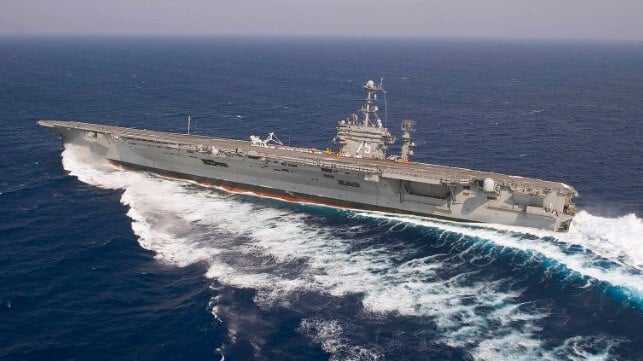
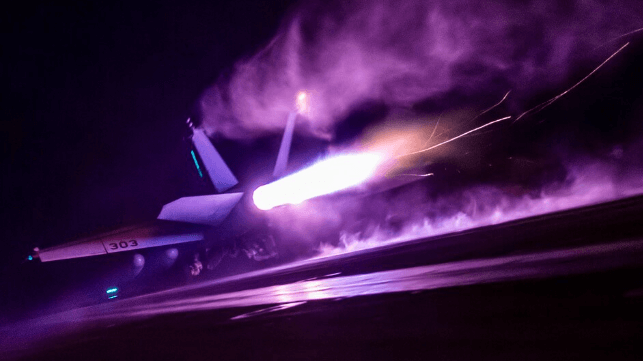
File image: USS Harry S. Truman slides into a hard port turn at full power during sea trials, 2012 (USN file image)
The crew of the carrier USS Harry S. Truman lost a strike fighter over the side while repositioning it belowdecks, the Navy confirmed Monday. Two officials told Politico that at the time of the casualty, the carrier maneuvering to avoid a Houthi attack; separately, CNN reports that Truman was making a hard turn to dodge Houthi fire. Nimitz-class carriers are capable of (and tested for) hard maneuvering at high speed. The Navy has not officially confirmed these accounts.
Truman is on an extended deployment in the Red Sea, and her crew is running an around-the-clock bombing campaign against Houthi targets in Yemen. They have worked continuously to keep strike sorties moving since March 15, launching and recovering fighters day and night.
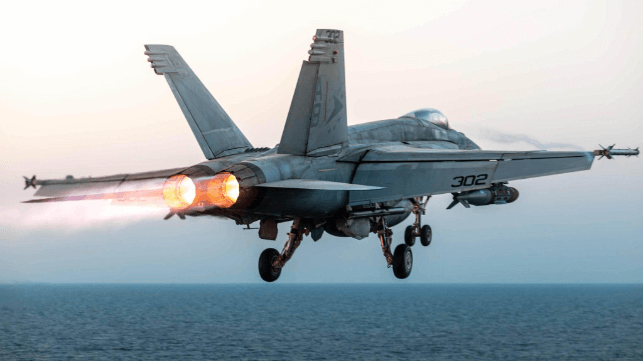
On Monday, an F/A-18E Super Hornet of fighter squadron VFA 136 was under tow in the hangar bay, attached to a tow tractor. The crew lost control of the aircraft, and the aircraft and tractor went over the side. The sailors involved in the evolution took cover and got out of the way before it went over, and only one individual sustained a minor injury.
The Truman and her air wing remain fully mission capable, the Navy confirmed. In addition, the Truman Carrier Strike Group is operating alongside sister ship USS Carl Vinson and Vinson's escorts, forming a powerful dual carrier task force.
One Super Hornet costs about $70 million, or roughly three percent of the $2.3 billion cost overrun on carrier USS Gerald R. Ford. An investigation into the cause of the casualty is under way.
Since March 15, the Truman and Vinson strike groups - aided by shore-based elements - have launched 800 separate airstrikes on Houthi positions in Yemen. The frequency of Houthi attacks has declined under the weight of U.S. bombardment of the group's storehouses, workshops and launch positions, but the group remains capable of launching missiles and drones at a slower pace.
Truman has had two other mishaps this deployment: she collided with a merchant ship on February 12, damaging her hull above the waterline; and her escort USS Gettysburg accidentally shot down an F/A-18 fighter in a friendly-fire incident in December.
Three Product Tankers Sanctioned by U.S. for Deliveries to Houthis
U.S. sanctioned vessels for delivering petroleum products to the Houthi-controlled ports (file photo)
The United States is continuing its pressure campaign against the Houthis in Yemen and Iran as the sponsors of the militants with a new round of sanctions. The Department of the Treasury and the Office of Foreign Assets Control sanctioned three product tankers and their shipping companies for offloading products in Yemen after the expiration of U.S. licenses at the beginning of April.
The U.S. previously had authorized the offloading of refined petroleum products in Yemen as part of humanitarian aid, but the licenses ended as of April 4, 2025, after the Trump administration on March 4, re-designated the Houthis as a Foreign Terrorist Organization. The U.S. is linking the products to Iran’s oil sanctions evasion and says the Houthis are profiting from the shipment of goods through ports they control in Yemen. In particular, the U.S. is citing the discharge of refined petroleum products.
Treasury highlights that the Houthis control the Red Sea ports of Hudaydah, Ras Isa, and Al-Salif, and assets the group is funneling millions of dollars derived from port revenue and the seizure of refined petroleum products imported through these ports to fund the attack campaign against U.S. interests and those of our allies in the region. Deputy Treasury Secretary Michael Faulkender says the group sells refined petroleum products delivered through these ports at exorbitant prices on Yemen’s black market, which enables Houthi operatives to purchase military materials, creates an artificial shortage of essential goods for average Yemenis, and fuels rampant corruption among Houthi leaders.
One of the product tankers that was listed is the San Marino-flagged Tulip BZ (25,926 dwt) which was built in 1993 and is now owned by interests in Lebanon. The U.S. says the vessel finished discharging its cargo in Ras Isa on April 10 and that in the past it has been used to transport petroleum products for Iran. Previously as the Gas Line (operating between 2012 and 2021), the U.S. says the vessel transported products for the Iranian Islamic Revolutionary Guards Corps. The Marshall Islands-registered Zaas Shipping & Trading Co, which facilitated the delivery of liquid petroleum gas (LPG) to Ras Isa is also being listed.
The second vessel, the product tanker Maisan (73,741 dwt), registered in Panama, completed offloading gas oil in Ras Isa on April 8. The vessel, built in 2005, is managed by the Mauritius-registered Bagsak Shipping and according to the U.S. has also been linked since February 2023 with the export of Russian crude oil and petroleum products. The U.S. says the Maisan was previously managed by a company that was one of the top players in the shadow tanker fleet involved in the export of Russian crude oil and petroleum products defying Western sanctions.
The White Whale (37,263 dwt) was built in 2001 and is also linked to ownership interests in Lebanon. The U.S. reports the vessel finished offloading gas oil in Ras Isa on April 17. It is managed by the Marshall Islands-registered Great Success Shipping Company.
Treasury is also reporting that two other previously sanctioned vessels are still delivering products to the Houthis. It identified an LPG tanker now named Clipper (29,458 dwt) for a recent shipment of Butane and propane to Yemen. The ship is now showing a false flag of Guyana according to the Equasis database and unknown management. The U.S. says in December 2022 the vessel then known as Queen Luca was listed for its ties to Iran’s Islamic Revolutionary Guard Corps-Qods Force.
The Akoya Gas, an LPG tanker built in 1997, registered in Tanzania in mid-April was at a berth in Yemen. The U.S. says it was blocked in September 2022 when it was operating as Gas Allure for its involvement in Iranian petrochemical and petroleum sales.
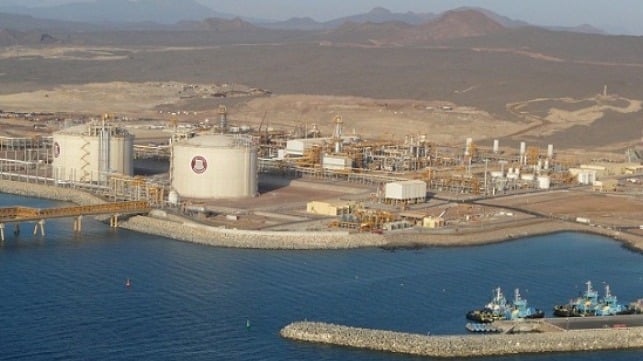
U.S. Central Command announced on April 17 that it had attacked the Houthi-operated fuel port at Ras Isa. The port handled fuel imports critical for the Houthis' military operations while commercial operations also made it a major source of tax revenue for the Houthis. CENTCOM reported yesterday, April 27, that since the bombing operation began on March 15, U.S. forces have carried out more than 800 strikes on Houthi targets greatly degrading their capabilities.
U.S. Forces Have Carried Out More Than 800 Strikes on Houthis
On Sunday, U.S. Central Command said that its multiweek campaign of airstrikes against Yemen's Houthi militant group is having an effect, and the number of Houthi missile and drone attacks on U.S. Navy warships is beginning to come down.
Since the operation began on March 15, U.S. forces have carried out more than 800 strikes on Houthi targets, CENTCOM said, killing hundreds of the group's fighters and multiple members of its leadership. The casualties include "senior Houthi and UAV officials," and the command said that it is using intelligence to reduce civilian harm.
CENTCOM declined to divulge the specifics of past or future targets for reasons of operational security. It has had serious issues with leaks in the recent past: at the outset of the campaign, a group of senior U.S. leaders accidentally gave a reporter the details of imminent strike force launch times, target sequencing and time on target - sensitive advance information about when U.S. pilots would be arriving over Yemen.
CENTCOM has declined to discuss any details of the time or location of its strikes, but it has released a list of the types of installations it is targeting. The target list includes command centers, air defense systems, weapons factories, and weapons storage locations. The command is prioritizing the advanced weapons that the Houthis have used against shipping - anti-ship ballistic missiles, cruise missiles, UAVs and drone boats.
The destruction of the Houthi-operated fuel port at Ras Isa will begin to have a broader effect on the group, too, the command said. The port handled fuel imports critical for the Houthis' military operations; its commercial traffic also made it a major source of tax revenue for its Houthi overseers.
Two carriers remain on station in the Red Sea to carry out ongoing strikes, supported by B-2 strategic bombers operating out of Diego Garcia. "We will continue to increase the pressure and further disintegrate Houthi capabilities as long as they continue to impede freedom of navigation," CENTCOM said.
The Houthis still retain the ability to launch attacks on shipping and continue to target U.S. warships. However, the militant group now operates at a much reduced tempo, the command said. The number of ballistic missile launches has dropped by nearly 70 percent, and suicide drone attacks are down by 55 percent. The fact that the Houthis retain an ability to launch attacks suggests continued Iranian support. "The Houthis can only continue to attack our forces with the backing of the Iranian regime," CENTCOM concluded.
NTSB: Not Following Maintenance Recommendations Led to Cruise Ship Fire
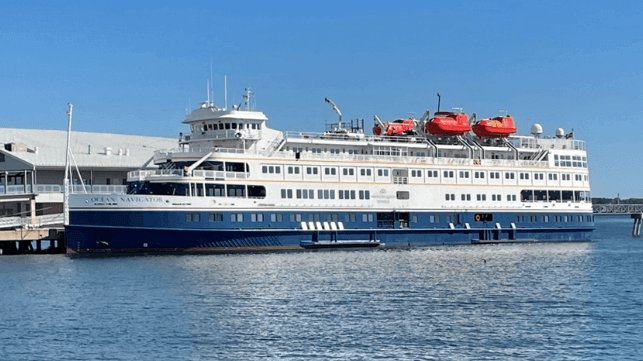
Small cruise ship Ocean Navigator docked in Portland after the fire (NTSB)
An explosion and fire aboard the coastal cruise ship Ocean Navigator in October 2023 was likely caused by not following maintenance recommendations and infrequent changes of lube oil and oil filters concluded the National Transportation Safety Board. One crewmember was seriously injured in an explosion and fire in the engine room of the ship when one of its auxiliary engines failed and parts were ejected during an explosion followed by a fire.
The Ocean Navigator, which was built in 2001 as a modern version of an American coastal cruise ship, was operating at the time for Hornblower’s American Queen Voyages and had just docked in Portland, Maine on its next to last scheduled cruise when the explosion occurred. Earlier in the year, AQY announced it would be removing the ship and her sister ship from service at the conclusion of the Canadian cruise season.
Engineers reported that the machinery was working properly as they navigated into the port and docked around 0630. There was a total of 210 people aboard, 128 passengers and 82 crewmembers. After shutting down the propulsion system, the third engineer and a motorman were assigned to troubleshoot a high exhaust temperature issue in the no. 1 auxiliary engine while the vessel was using its no. 2 auxiliary engine to provide electric power for the ship.
The third engineer reported smelling oil and found a small lube oil leak from a crankcase cover door on the running no. 2 auxiliary engine. He went to tighten a bolt, but before he could there was an explosion and fire along with low lube oil pressure and oil filter plugged alarms. Both the engineer's and motorman’s overalls were on fire with the motorman more seriously injured.
NTSB commends the quick response of the crew in sealing the engine room by closing watertight doors, shutting off ventilation fans, closing dampers, and activating quick-closing fuel valves to effectively starve the fire of fuel and oxygen. They prevented the spread of the fire and the fire self self-extinguished.
The captain saw thick smoke coming from the funnel and immediately returned to the bridge. The passengers were mustered and evacuated without injury. Local fire crews responded but found the situation controlled.
Fire damage to the no. 2 auxiliary (NTSB report)
The subsequent investigation found that the no. 2 engine was damaged beyond repair. The engine block had cracked, and investigators found a 10-inch high and 16-inch wide hole and reported one of the connecting rods had been ejected. There was damage to the no. 1 auxiliary engine from the fire as well as the turbocharger, piping, cables, and electrical wires and lighting in the engine room. The NTSB reports the cost of the casualty at $2.4 million.
The NTSB investigators concluded that the engine failure was caused by debris in the engine’s lube oil system—possibly due to the crew exceeding manufacturer-recommended intervals for changing the lube oil and oil filter elements—which caused catastrophic mechanical damage to the engine and subsequent fire from the ignition of atomize lube oil released through the engine’s ruptured crankcase.
The crew had last changed the entire quantity of lube oil for the no. 2 auxiliary engine in September 2022—about 13 months before the engine failure—but the engine had operated more than 5,000 hours with this lube oil in the engine, five times longer than the manufacturer’s recommendation. Additionally, since the last change of the lube oil filter elements in May 2023, the engine had run over 3,000 hours. The engine manufacturer’s recommendation is to replace filter elements at every oil change or after the filter elements had been used for 1,000 hours.
“Manufacturers provide maintenance recommendations and intervals (schedules) to ensure equipment operates safely, optimally, and reliably throughout its service life,” the NTSB writes in its report. “By regularly reviewing equipment manufacturer manuals and guidance, operators can ensure conformance with recommended maintenance plans and mitigate the risk of equipment malfunction or failure.”
The analysis of the lube oil in the no. 2 engine identified abnormally high levels of aluminum and iron. It had increased significantly since the last in-service sample was taken in September. There was also an increase in lead and tin.
The vessel was sold during the bankruptcy of American Queen Voyages and Hornblower. The subsequent survey for the repairs showed that the engine block, crankshaft, several main bearings, connecting rod bearings, and the no. 14 fuel injector were all damaged during the explosion and fire with the plunger of the no. 14 fuel injector broken off, pistons and pins and other components from the nos. 13 and 14 cylinders “totally destroyed.” They also observed “heavy local wear” in main bearings and signs of cavitation that were not typical and also suggested oil quality or other lube oil issues.
NTSB concluded that debris in the system would have caused scratching or scoring of the inner layer of the bearings as the debris circulated. The wear would have permitted more lube oil to flow out the sides of the bearings, reducing pressure, and generating excessive heat. The lack of changing out the filter elements made the filter less effective or it could have clogged and a bypass value would have permitted more debris into the system.
These factors they believe contributed to the failures and catastrophic mechanical damage to the engine. The hot oil spewing out started the fire.
Repairs were made to the ship and it returned to service under its new owners in April 2025. The complete report is available online.
Cruise Ship Boom Fuels New Records for Port Canaveral
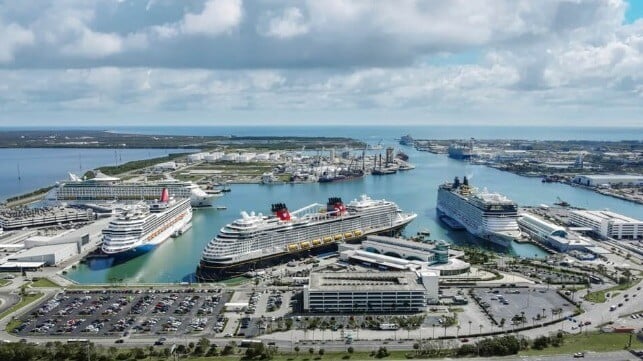
Six cruise ships docked in the port as it experienced its busiest month ever in March 2025 (Port Canaveral)
The continuing strong growth in the cruise ship industry has helped Florida’s Port Canaveral to set new records in its current fiscal year. The port had its busiest month ever in March with a 16 percent year-over-year increase in passenger volumes coming after a record winter season and new, larger ships scheduled to homeport at the Central Florida port.
“It wasn’t long ago when we exceeded 500,000 guests in a single month. Now, with numbers like this approaching nearly a million, it’s not just remarkable, it demonstrates the strong demand for sailings from our Port. We’ve been predicting it, and we were ready for it,” stated Capt. John Murray, Port Canaveral CEO.
In March 2025, the port handled 925,994 passengers coming and going from the cruise ships. That was up 16 percent compared to a year earlier and was the second record month in the port’s nearly completed winter season. The Orlando Sentinel highlights another record in December 2024 when Port Canaveral handled 837,900 passengers.
Port officials reported to its board of directors that for the six-month period in FY 2025 they have already handled 4.42 million passengers and they are projecting the port will reach 8.4 million passengers for the full year. That is up from 7.6 million last year and in FY 2019, Port Canaveral hosted nearly 4.6 million revenue cruise passengers.
The strong passenger counts were driven by a record 16 cruise ships sailing from the port during the peak winter months. The port says that cruise ships are now operating more than 1,000 trips annually from Port Canaveral, with many being the shorter 3- and 4-day trips to the Bahamas. The port however slipped back into second place in the passenger counts after briefly topping PortMiami as the cruise industry restarted after the pandemic.
The port also reported that it was ahead of forecast for each of the first six months in the current fiscal year. That has also helped it to generate a record of just over $23 million in operating revenue in March. For the first six months of the year, the port achieved over $111 million in operating revenue.
Port Canaveral reports it has grown in popularity as a homeport, particularly for cruise guests who prefer to drive to their port. Also with its proximity to the Central Florida theme parks and attractions, the port highlights that just over a quarter of the passengers stay in the local area for pre- or post-cruise stays fueling the hotels, restaurants, and tourism industry.
Murray highlights that the port is investing millions of dollars to make sailing from the Central Florida region even more accessible and convenient. Its projects include expanded terminals, updated parking facilities, and updated technology that allows guests to get to and from their cruise faster than ever. Previously he also highlighted their early planning which made Port Canaveral the first in North America to homeport an LNG-fueled cruise ship.
While several of the ships move to other markets during the summer months, the port is preparing this weekend to welcome the new Norwegian Aqua, and this summer it will become homeport to Star of the Seas, which will be the largest cruise ship in the world. Carnivale Cruise Line recently announced it would position its newest ship, Carnival Festivale in the port in 2027 and MSC also announced that its new giant, MSC World Atlantic will be positioned in the port. MSC, Princess Cruises, Celebrity Cruises, and Norwegian Cruise Line will all deploy newer ships to Port Canaveral this winter.
Near term, the port is looking to expand one of its existing cruise terminals. It is also working on plans to build one or more new terminals to accommodate additional growth in the cruise business while also balancing with the needs of the cargo business and its operations to support the space industry.
China Floats Second Large
Domestically-Built Cruise Ship
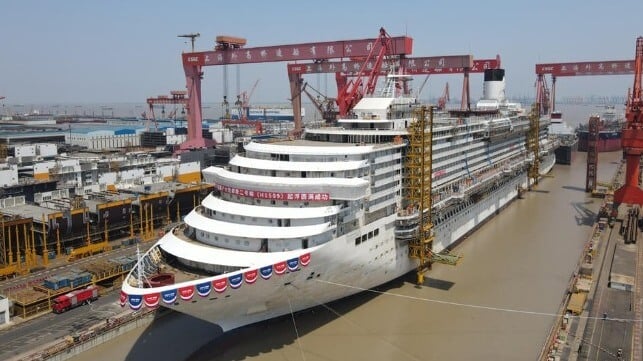
Adora Flora City was floated as China continues to develop its cruise ship construction skills (Adora Cruises)
China’s Shanghai Waigaoqiao Shipbuilding Co., part of CSSC, marked the floatout of its second, large domestically-built cruise ship. It comes as Chian continues to invest in the sector and looks to become a competitor in the market dominated by a few European shipbuilders.
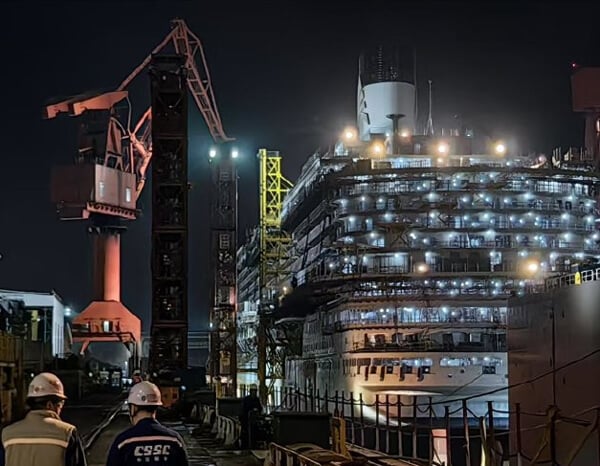
The second ship which was named Adora Flora City for its ties to Guangzhou, the southern city near Hong Kong, was floated overnight between April 27 and 28. According to the shipyard officials, it demonstrates China’s increasing proficiency and improved efficiency in cruise ship construction as the vessel is nearly 70 percent completed. Steel cutting began in August 2022 and the ship which is larger than the first cruise ship reached this point a month earlier in construction. Also, this project is being supervised by domestic Chinese teams where the first project was in cooperation with Italy’s Fincantieri and RINA class society. RINA continues to participate while emphasizing China’s large investments in developing the sector.
The new ship will operate under the colloquial name of Aida Huacheng and is due to enter service at the end of 2026 from Guangzhou. It is based on the same design as Adora Magic City (Aida Modu) which was introduced at the start of 2024. Both ships are based on a Fincantieri design for Carnival Corporation, although the new ship has been lengthened 17.4 meters (57 feet) to an overall length of 341 meters (1,18 feet). It will be 141,900 gross tons with a total passenger capacity of 5,232 passengers.
Adora Cruises, which is owned by CSSC, highlights that the interior design is being adapted to be “more beautiful, more technological, more Chinese.” The interior décor will be a combination of Art Nouveau style, the Maritime Silk Road, and Lingnan cultural elements. They are emphasizing the ship will provide a “more Chinese” cruise experience versus the first ship which more closely followed the Carnival designs or the Adora Mediterranea, which was acquired from Costa Cruises.
Among the changes the main atrium is doubled in size, the fitness area is being optimized, new suites are added, and there are upgrades to the dining and shopping areas. A new outdoor multifunctional space is also being created to host entertainment performances, leisure and healing activities, social interaction, and the coffee culture of its namesake city.
The construction timeline calls for the cruise ship to start sea trials in May 2026.
Adora was conceived as a partnership between CSSC and Carnival Corporation but Carnival later sold shares to become a minority investor. The brand launched focused on the domestic Chinese market with the acquired cruise ship. Adora reports so far it has carried over 620,000 passengers. It looks to expand its operations with the new ship and increase the number of foreign passengers.
China highlights its developing efficiency and skills in cruise ship construction. It looks to compete for future projects against Fincantieri, Chantiers de l’Atlantique, and the Meyer yards in Germany and Finland, which are the leaders in building nearly all large cruise ships.
Navantia Accelerates Investments in Harland & Wolff and UK Shipbuilding
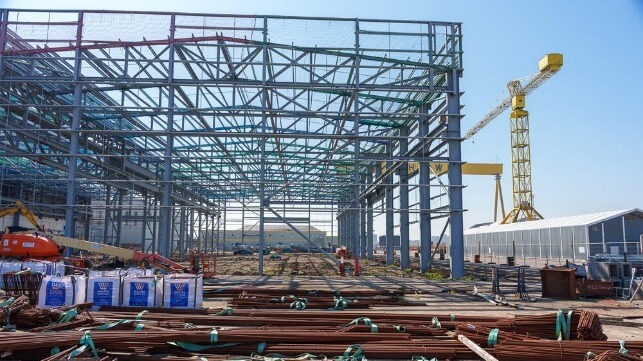
Investments are underway at the famed shipyard in Belfast with the iconic gantry crane in the background (Navantia UK)
Three months after completing the acquisition of the bankrupt Harland & Wolff shipyard in Belfast and the other yards of the group, Spain’s Navantia outlined its plans for increased investment to create what it is calling one of the “UK’s most advanced shipyards.” The investments that are intended to improve productivity, provide faster delivery, and more sustainable manufacturing processes as designed to position the UK group as the UK and European governments are increasing defense spending.
Navantia partnered with Harland & Wolff in 2023 to win a UK contract to build three naval support ships for the Royal Navy Auxiliary. As part of that program, the companies committed to an investment of £77 million ($100 million) to modernize the yards and increase capabilities for the Fleet Solid Support (FSS) contract. The Spanish group stepped in in late 2024 to save the UK shipyard group from liquidation and maintain the FSS program reporting that it would increase the planned investment in the yards.
“The modernization program will significantly enhance the Belfast yard’s ability to build the FSS vessels and support future programs,” said Navantia UK detailing its plans. “The investment is designed to deliver a comprehensive regeneration of UK shipbuilding capabilities, leveraging the opportunity presented by the FSS program.”
Assembly work and outfitting for the three FSS vessels is slated to take place at the yard in Belfast. The Appledore shipyard is producing the bow sections for the vessels. Work on the upgrades had begun in 2024, but was suspended due to the group’s financial troubles. Navantia UK reports that work resumed in March.
According to the group, the modernization focuses on maximizing productivity, creating jobs, and implementing sustainable manufacturing. Phase one focuses on enhancing capabilities for building vessel hulls, with improvements to delivery systems, stockyard management, and cutting technologies. It includes a comprehensive upgrade both for infrastructure development and advanced equipment installation. It will feature new lifting cranes, robotic plasma cutting systems, and automated quality control processes. A fully mechanized panel line for flat panel units will be installed, while the Belfast shipyard’s iconic Samson and Goliath gantry cranes will continue to play a vital role in operations.
The investment program extends beyond Belfast, with significant upgrades at the Appledore shipyard in Devon. The company has already committed to purchasing an advanced plasma cutter with expanded bed dimensions and sophisticated bevel-cutting capabilities, replacing machinery that has served the facility for more than 20 years.
Navantia UK’s investment strategy also encompasses the Scottish facilities at Arnish and Methil, which specialize in the energy industries. At Arnish, investment has begun including on skills development infrastructure, featuring a new welfare facility, dedicated training center establishment, office space improvements, and enhanced security and parking provisions.
Juan de la Cueva, CEO of Navantia UK, called the investments a “watershed moment” for UK shipbuilding. He said it was part of a long-term commitment to UK shipbuilding. Harland & Wolff they said will be transformed into a cutting-edge facility capable of delivering the highest quality vessels. The Belfast yard was once an industry leader but entered a long decline delivering its last new build in 2009 and saved from a prior bankruptcy in 2019. Similarly, the Appledore shipyard went into receivership in 2003 and finally closed in 2019 before being acquired by Harland & Wolff Group in 2020. The group acquired the two smaller yards in Scotland in 2021.
UK and Eni to Start Construction of Liverpool Bay Carbon Storage Project
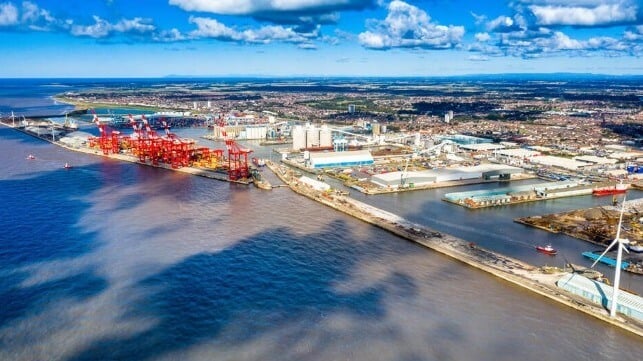
Carbon storage will be under Liverpool Bay to support the industrials operations in the region (Peel Ports)
The Liverpool Bay CCS project which is a key element of the UK’s HyNet Cluster designed to support industry in the North West of England and North Wales cleared its financial hurdles and will move into construction. The project is a partnership between Italian energy major Eni and the UK Government to support what is being called one of the world’s most advanced CCS clusters.
The UK Secretary of State for Energy Security and Net Zero, Ed Miliband, and Eni CEO, Claudio Descalzi, announced that they have reached the financial close for the project. The UK Government had previously announced its funding allocation of £21.7 billion ($29 billion) to be invested over 25 years across the first two CCS Clusters in the country. Eni will be the operator of the CO2 transport and storage system of the HyNet Industrial Cluster.
UK Secretary of State for Energy Security and Net Zero, Ed Miliband called this the “launch of a whole new clean energy industry for our country,” citing the job creation and support for the industrial sectors of the UK. He said it would kickstart growth and support the UK’s industrial competitiveness for the long term.
The Liverpool Bay CCS project will operate as the backbone of the HyNet Cluster to transport carbon dioxide from capture plants across the North West of England and North Wales through new and repurposed infrastructure to permanent storage in Eni’s depleted natural gas reservoirs, located under the seabed in Liverpool Bay. The project foresees the repurposing of part of the offshore platforms as well as 149 km of onshore and offshore pipelines, and the construction of 35 km of new pipelines to connect industrial emitters to the Liverpool Bay CCS network.
It is designed to support industrial operations including companies involved in cement manufacturing, and energy from waste plants, as well as supporting the growth of low-carbon hydrogen production in the region. The HyNet Consortium aims to become one of the first low-carbon clusters in the world.
The project will have a storage capacity of 4.5 million tonnes of CO2?per year in the first phase, and the potential to increase to 10 million tonnes of CO2?per year in the 2030s. It will be used to address the needs of industries that currently do not have efficient and effective solutions for their carbon emissions.
Construction of the project is expected to commence this year, ready for planned start-up in 2028, in line with industrial emitters in the HyNet Cluster.
Kpler Closes Spire Maritime Acquisition as UK Proceeds with Investigation
Kpler looks to enhance its information with Spire's real-time satellite feed (file photo)
The on-again-off-again acquisition of the maritime business from Spire Global by Kpler closed on Friday, April 25, the agreed date in a settlement between the two sides, but not without a new wrinkle to the contentious combination. The UK Competition and Markets Authority (CMA) confirmed it has opened an investigation into the proposed business combination requiring the companies to be independently operated.
Kpler confirmed in the closing announcement that it is working closely with the relevant regulatory authorities and in particular with the UK Competition and Markets Authority “in light of their review of the transaction.” Both sides had to enter into a compliance statement with CMA promising to operate the business units separately, not sharing technology or confidential business data. In addition to not moving forward with an integration, they committed to ensure that sufficient resources are made available for the development of both businesses, on the basis of their respective pre-merger business plans and maintain their current product offerings.
Despite the latest glitch, Kpler called the closing a “strategic move that bolsters Kpler's capabilities in maritime data and analytics.” Mark Cunningham, CEO of Kpler, said "The addition of this high-quality data will unlock greater value for our customers and partners by providing increasingly comprehensive and timely insights into global trade flows. It's about helping them navigate complexity, uncover opportunities, and make better decisions every day."
Spire reported the completion of the sale for approximately $233.5 million, before adjustments, plus a $7.5 million agreement for services over a twelve-month period, post-close. Spire reports it used the proceeds of the sale to retire all outstanding debt and that the remaining proceeds will be used to invest in near-term growth opportunities. It followed the terms first announced for the deal in November 2024.
Spire Global reported in February it had filed a lawsuit against Kpler for a failure to close the acquisition of its maritime group while also warning shareholders of potential debt problems if the deal is not completed. At the time, it said it believed all the conditions to closing contained in the purchase agreement had been satisfied, but that Kpler had not moved forward with the closing. Three weeks ago, Spire reported an agreement had been reached to resolve the litigation and mutually release claims, if the closing occurred by April 25.
In the CMA filing, it came out that Kpler had communicated with the regulator on February 25, March 11, March 12, March 24, March 31, and April 10, requesting that the CMA consent to derogations to the Initial Enforcement Order. CMA agreed on April 16 to permit Kpler to have a level of oversight of the acquired company while requiring that they be kept independent and Spire’s business continue as a going concern so as not to prejudice the investigation. CMA reports it is continuing to consider if the combination may be expected to result in a substantial lessening of competition in any market or markets in the United Kingdom.
Spire Maritime built its niche with real-time capabilities by designing, building, and deploying nanosatellites, each the size of a wine bottle, in a constant earth orbit collecting data from all the ships. Kpler said when the deal was announced it would expand its data reach, offering comprehensive visibility across open oceans. Management said the acquisition would further strengthen Kpler’s commitment to delivering superior real-time data and analytics to its clients, supporting informed, data-driven decision-making across the global supply chain.
Kpler in 2023 acquired MarineTraffic a portal for AIS data, mapping, and visualization along with FleetMon, a vessel database. Access to Spire Global’s proprietary satellites and analytics would enhance the portfolio.
Under the terms of the agreement, Spire Global retains its satellite network, technology, and infrastructure. It said it would focus its business on its customers in aviation, weather, and the space services sectors.