Tuesday, May 20, 2025

Actors’ union sues Fortnite over AI Darth Vader


By AFP
May 19, 2025


The makers of the popular Fortnite game have created an AI version of Darth Vader, using the voice of late actor James Earl Jones that allows players to interact with the Sith Lord - Copyright GETTY IMAGES NORTH AMERICA/AFP/File Kent Nishimura

An actors’ union is suing the makers of the Fortnite video game over the use of AI to create an interactive Darth Vader, it said Monday.

Fortnite announced last week it had got permission from the family of James Earl Jones to make a chatty “Star Wars” villain based on the late actor’s voice work in the smash hit space opera series.

Using AI models, developer Epic Games introduced the Emperor’s consigliere into Battle Royale, a player-versus-player version of Fortnite in which squads form to defeat other contestants online.

Users were quick to adopt the Sith Lord on their missions, posting clips of their interactions with one of cinema’s most famous bad guys.

Many delighted in the character’s apparent wit, laughing as he tells them off for poor technique, or suggesting that they are cheating.

“The empire has no need for fast food,” he chides one player who asks what his McDonald’s order would be.

“If I were forced to endure such a culinary experience, I would take a Chicken Selects Meal with large fries and a Coca-Cola drink.”

But actors’ union SAG-AFTRA was not amused, claiming the use of AI in video games puts performers out of work.

“We celebrate the right of our members and their estates to control the use of their digital replicas and welcome the use of new technologies,” a statement said Monday.

“However, we must protect our right to bargain terms and conditions around uses of voice that replace the work of our members, including those who previously did the work of matching Darth Vader’s iconic rhythm and tone in video games.”

The union, which says it represents around 160,000 people, says Epic’s subsidiary did not talk to its negotiators over how AI would be used in the game.

SAG-AFTRA said it had filed a claim for unfair labor practice with the National Labor Relations Board, a federal agency that protects workers’ rights to organize and to negotiate.

Epic Games did not immediately respond to AFP’s queries, but a statement released last week cited Jones’s family saying they were pleased with the project.

“We hope that this collaboration with Fortnite will allow both longtime fans of Darth Vader and newer generations to share in the enjoyment of this iconic character,” the family said.

Performers have become concerned about the use of artificial intelligence in films, TV and video games.

Improving technology makes it increasingly possible to digitally recreate the audio and visual likeness of an actor.

The strikes that crippled Hollywood in 2023 stemmed in part from fears that studios would seek to use digital models to replace human performers and creators.

Video game actors began their own strike against major players in the sector in July 2024.
US probes Mexican ship’s deadly New York bridge collision


By AFP
May 18, 2025


The Mexican Navy training ship that hit the Brooklyn Bridge seen with its masts broken - Copyright AFP Ana FERNÁNDEZ

US safety officials launched a probe Sunday after a 150-foot tall Mexican sailing ship crashed into New York’s iconic Brooklyn Bridge, snapping its masts and killing two crew members.

Numerous sailors were positioned among the navy vessel Cuauhtemoc’s rigging at the time, video of the incident showed.

New York Mayor Eric Adams said early Sunday that 277 people had been on board the vessel and that two people had died from their injuries, without specifying where they were located on the vessel.

Nineteen others sustained injuries, he said, two of whom were in critical condition.

The white-hulled ship was moored Sunday along banks of the East River, its mangled masts contrasting against colorful decorations for its US departure.

The National Transportation Safety Board (NTSB) said on social media that it was “launching a go-team” to conduct an initial probe of the crash.

Nearby the ship, Aldo Ordonez told AFP that his sister, 24-year-old cadet Alejandra Ordonez, had been standing among the sails when the ship struck the Brooklyn Bridge.

His sister was temporarily left hanging from a sail, he said, but sustained only minor injuries and slept with others on the boat.

Aldo Ordonez arrived Sunday morning from Mexico City after seeing the accident on television.

Crew members were expected to fly home to Mexico later Sunday, he said.

Mexican President Claudia Sheinbaum wrote on X that she was “deeply saddened” by the two crew members’ deaths.

The ship lost power at around 8:20 pm (0020 GMT Sunday) while the captain was maneuvering the vessel, forcing it to head for a bridge abutment on the Brooklyn side, New York police chief of special operations Wilson Aramboles told a press conference.

There was “panic on the ship,” Brooklyn resident Nick Corso, 23, who was standing near the water, told AFP.

He had been poised to take a photo, but when he realized what was happening he switched to video.

“Lots of screaming, some sailors hanging from the masts, looked like panic happening on the ship,” he said.

The Mexican Navy said in its statement that no one had fallen into the water, and that no rescue operation had been launched.

The ship had been departing New York at the time and flags fluttered in its rigging, while an enormous Mexican flag waved off its stern.

The Cuauhtemoc, built in 1982, was sailing to Iceland when it crashed into the Brooklyn Bridge, the world’s longest suspension bridge when it opened in 1883.

The incident is the second deadly ship crash into a US bridge in little over a year, after a fully laden cargo vessel smashed into a bridge in Baltimore, Maryland in March 2024, causing it to collapse and killing six road workers.


Leveraging One-Cloud: The Key To Smart And Secure Maritime Operations

Bassnet cloud

Published May 19, 2025 12:56 PM by BASSnet


In the modern shipping industry, operational resilience goes beyond seaworthy vessels and capable crews. It’s about the digital backbone powering every function of a fleet—from safety and compliance, to maintenance, procurement, crewing, and more.
 

Martin Bjornebye, VP of Research & Development at BASS Software

The industry continues its shift toward cloud-based solutions with one goal in mind: to be future-ready.

One of the biggest shifts can be seen in one-cloud ERP platforms—solutions that unify core ship management functions in a single, web-based environment. With secure browser access, real-time collaboration, and built-in intelligence, these modern systems are setting a new standard in efficiency, agility, and scalability.

One-cloud web solutions that advance ship management 

The maritime industry is moving away from the high costs and rigidity of outdated, on-premise systems. These legacy systems are no match for the flexibility and reliability of full SaaS platforms. A unified ERP in the cloud means no more data silos, lower infrastructure costs, and global access.

A key player leading the transformation to one-cloud is BASSnet Web 3.0. BASSnet has long embraced the cloud. The new powerful BASSnet Web 3.0 builds on a strong SaaS foundation of many years to elevate ship management with a reimagined user experience and modernized capabilities. 

We’ve seized the opportunity to reinvent core functionality—delivering richer features, greater user-friendliness, and a future-ready performance. Our native cloud solution comes with an intuitive browser interface and full service management. It also delivers advanced features such as audit trails for traceability, AI capabilities, and robust cybersecurity–core elements for future-ready maritime operations. 

With a browser-based frontend and web-service backend, solutions such as BASSnet Web eliminate reliance on legacy hardware and software. This makes the platform lightweight, intuitive, and accessible from anywhere with an internet connection.

Cybersecurity and compliance built-in

Cybersecurity is a critical driver. As maritime systems face rising digital threats, security is a top priority. Maritime cloud systems offer significant value if they use advanced protections, including encryption, multi-factor authentication, and access control, aligned with global frameworks such as NIST2.* 

It’s also valuable for cloud ship management software to be supported by ISAE 3402 attestation for operational and control excellence (e.g. BASSnet Cloud is ISAE-attested). 

*BASSnet is also currently pursuing ISO 27001 certification. 


Smarter operations with AI

AI is no longer theoretical in maritime ERP—it’s actionable. By embedding artificial intelligence into cloud solutions, shipping companies can access predictive insights for maintenance, smarter procurement decisions, and crewing optimization. 

These data-driven tools can power real-time business intelligence and analytics and reduce manual workloads to reduce costs, increase safety, and drive efficiency at scale.

Business benefits of advanced one-cloud web solutions

One-cloud leads to reduced infrastructure costs, real-time collaboration, and scalability for growing fleets. Teams can gain global access from ship or shore, with granular access control to reduce data exposure risks.

In addition, with detailed audit trails, valuable business intelligence, and structured access controls, web solutions can give companies transparency and control while reducing risk. Significantly, solutions such as BASSnet Web are continuously enhancing their rich functionality with cutting-edge tech for smarter, smoother, and more scalable ship management. 

These capabilities are becoming increasingly essential for competitive fleet performance and efficient ship management.

The future of ship management is web-based 

The shift to cloud-based solutions can be more than a technical upgrade—it can be a strategic realignment.

From AI and cybersecurity to intuitive web-based simplicity, the most modernized one-cloud solutions are reshaping how shipping companies manage operations. Platforms such as BASSnet Web are not only streamlining workflows and adding powerful next-generation functionality, but also providing the future-proof infrastructure to benefit shipping companies’ business bottom line as they navigate complex vessel operations.

Look no further for the future of ship management; it’s here—intuitive, intelligent, and powered strategically by one-cloud technology. Now’s the time to make the smart switch. 

For BASSnet, the cloud has always been more than a platform—it’s a springboard to reimagine features with smarter tech, stronger performance, and a more intuitive user experience. Learn more about the benefits of BASSnet Web 3.0 to take your fleet management to a higher level.


This article is sponsored by BASSnet.
 

The opinions expressed herein are the author's and not necessarily those of The Maritime Executive.


MSC Cruises Adds to Cruise Ship Boom Ordering Two More Mega Ships

MSC large cruise ship
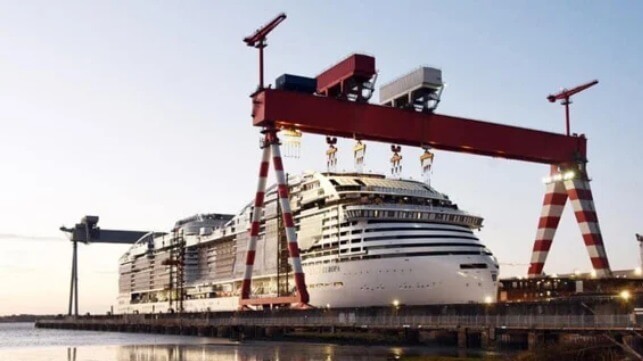
MSC Cruises ordered two additional mega cruise ships bringing the World Class to six ships (Chantiers de l'Atlantique)

Published May 19, 2025 2:27 PM by The Maritime Executive


The cruise industry continues its rush to ultra-large ships with MSC Cruises reporting the order of two additional 217,000 gross ton mega cruise ships from Chantiers de l’Atlantique in France. The line, which currently has 23 cruise ships in operation and two under construction, will add two additional ships to its World Class due for delivery in 2029 and 2030, each with a capacity for over 6,700 passengers.

News of the order was highlighted by France’s Minister for Industry and Energy, Marc Ferracci, who said the order represents an investment of nearly €3.5 billion ($3.93 billion) and more than 20 million hours of work. It was reported that MSC has supported €5.6 billion ($6.3 billion) in investments related to the recently delivered second ship of the class, MSC World America, and the third and fourth ships, which have been named MSC World Asia and MSC World Atlantic.

The ships add to an overall cruise ship order book that currently stands at 69 cruise ships with an estimated value of more than $55 billion, according to Seatrade Cruise. MSC was the second cruise company after Royal Caribbean International to surpass the 200,000 gross ton threshold. Carnival Cruise Line recently announced the first details for its Project Ace, which will build three 230,000 gross ton cruise ships, while Norwegian Cruise Line finalized its order for four 226,000 gross ton cruise ships.

The industry continues to increase the size of its ships both to realize economies of scale and to create space for new amenities. Today, May 19, Meyer Turku reported the world’s largest cruise ship, Star of the Seas (250,800 gross tons) for Royal Caribbean International began sea trials ahead of her delivery this summer. Royal Caribbean has two more ships of the Icon class on order, options for two more, and in France, one Oasis class ship is also on order. Disney Cruise Line also joins the mega ship group with the introduction of Disney Adventure (208,000 gross tons) in December.

Construction work for the new MSC ships will begin in 2027, which would coincide with the delivery of the MSC World Atlantic for which the yard cut first steel in March. She will be positioned in Port Canaveral, Florida for the winter of 2027-2028 to operate Caribbean cruises. She will be following the MSC World Asia, which is due in late 2026 and will start operations in the Mediterranean.

MSC has invested approximately €18 billion ($20 billion) in 25 years building 19 cruise ships in France, including the November 2022 launch of the new class with the MSC World Europa. The companies highlight that the World class ships are among the most energy-efficient cruise ships using the latest-generation of LNG-fueled engines that are also equipped to use biofuels or synthetic renewable fuels. They also have shore power connections, advanced wastewater treatment systems, and a comprehensive onboard waste management and recycling system.

The World class, which measures 1,092 feet (333 meters) in length, is also highlighted for the broad range of amenities. It has 19 food outlets, 18 bars and lounges, dedicated areas for children and families, and one of the tallest dry slides at sea. It also combines a large open-air World Promenade with a three-level interior galleria with shops, lounges, bars, and restaurants.

Having entered the cruise segment 37 years ago, and initially with a rag-tag second-hand fleet, MSC has grown to be one of the largest global operators. In addition to the 23 cruise ships in the broader contemporary segment, the group launched an ultra-luxury brand, Explora Journeys, for which it is building six deluxe cruise ships. It is also an investor in passenger ferries in Italy, in addition to the larger commercial shipping segment of containerships and more recently car carriers.


Netherlands, Norway and Denmark Each Revise Offshore Wind Farm Tenders

offshore wind farm
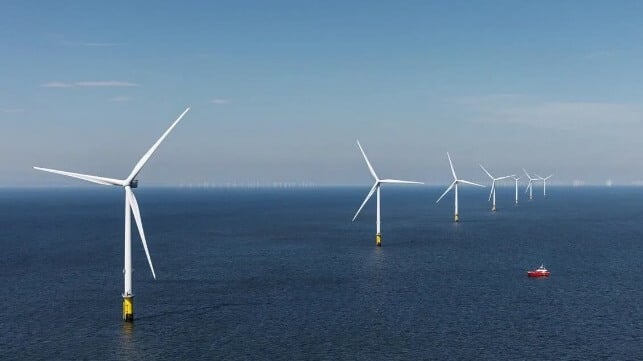
Denmark, Netherlands, and Norway all revised terms for offshore wind farm tenders (Orsted)

Published May 19, 2025 4:25 PM by The Maritime Executive


With the ongoing challenges in the offshore wind energy sector impacting the economics and development of sites, the Netherlands, Norway, and Denmark have each announced revised approaches for their upcoming tenders to deal with as the Dutch termed it, the “deteriorating market conditions.”

European governments have been exploring different approaches and the levels of subsidies required to support the development of the sector. Denmark in January shelved plans for a tender while its parliament was exploring the model, as did Norway. Last week, the Netherlands’ Ministry of Climate Policy and Green Growth announced it was also revising its terms and that it would only be proceeding with one scaled-down site and deferring two others. 

The Netherlands had originally planned to offer three sites in September, ranging between 1 and 2 GW of capacity. The Dutch government’s plans to proceed with the auctions on a “zero-subsidy” model ran into trouble. Major developers including Ørsted said they would not be participating in the upcoming round because they believed the sites would not be financially viable. 

Calling wind energy “indispensable” in the country’s current and future energy plan, the ministry said it was taking steps to make the auction more attractive to allow developers to proceed at a realistic price. Rules and criteria are being relaxed with the government simplifying the requirements for developers. They will also be providing a provision that the winning bidder will have the ability to revoke the permit in the first two years if market conditions are too bad.

The Netherlands will proceed with a single auction in September for a reduced size from 2 GW to 1 GW for the one project, Nederwiek Wind Farm Site I-A.  They said this would lower the risk for the developer. The planned sites at Ijmuiden Ver Gamma A and Gamma B, each of which would be 1 GW, will be deferred with tenders planned for a later date.

Longer-term the government is looking to the release of a new action plan for the offshore wind energy industry. Among the steps being considered for the period starting from 2027 are financial support instruments. They cite the possibility of establishing minimum and maximum price guarantees.

Denmark reports that it has decided to proceed with a new auction in September for 3 GW of capacity. The government is committing up to $8.32 billion over the 20-year life of the projects in subsidies.

Norway is also restarting the bidding for its Utsira Nord area, accepting applications from developers till September 15. It had previously stopped this site, which will require floating wind turbines. It will offer three leases, each with a capacity of up to 500 MW, and the terms were established to recognize the early development stage of the floating wind technology.

Norway will give the selected bidders two years to mature the projects after selection. It is also committing to up to $3.36 billion in subsidies to support the development and operation of the large-scale floating wind farms. 

Governments are looking for new means to encourage offshore wind development despite the rising costs and supply chain problems. Earlier this month, the UK incurred a setback in its plans when Ørsted announced it had decided to discontinue the Hornsea 4 project (2.4 GW) in its current form. It cited several adverse developments relating to the continued increase of supply chain costs, higher interest rates, and an increase in the risk to construct and operate Hornsea 4 on the planned timeline for a project of its scale.


Hyundai Mipo and Trafigura Finalize Details for Ammonia Carriers

ammonia carrier design
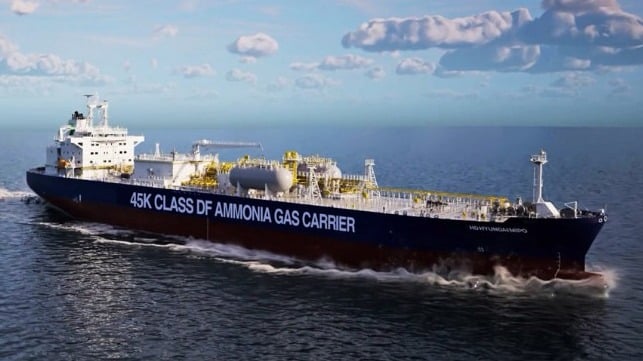
Engines were selected as the design was finalized for the ammonia carriers (Hyundai Mipo)

Published May 19, 2025 5:36 PM by The Maritime Executive


The details for some of the first large ammonia carriers that will also be fueled by ammonia have been finalized setting the groundwork for the emerging sector. The four medium-sized liquified gas carriers will be among the first to be launched in a forward-looking effort by commodities trader Trafigura.

The order for the four vessels was announced in April 2024 as Trafigura proceeds to develop the opportunities with alternative fuels. The company highlighted its testing of LNG, methanol. LPG and biofuels, highlighting that it organizes over 5,000 voyages annually with around 400 ships under management.

HD Hyundai Mipo reports that a final agreement has been reached on the dual-fuel propulsion engines for the vessels. The vessels will be capable of operating on ammonia when delivered starting in 2027. Work is expected to begin on construction in the second half of 2026, with the four ships delivered to the owner by 2028.

The yard highlights that the specifications of the vessels have also evolved as the designs were finalized. The ships will have an overall length of 623 feet (190 meters) and a beam of 98 feet (30 meters). They will be built at the company's Ulsan, South Korea yard.

The ships will have a transport capacity of 45,000 cubic meters of liquefied gas. This will include the potential to transport ammonia as well as LPG and vinyl Chloride Monomer.

Ammonia, the shipyard highlights, can be stored in pressurized tanks (approximately 8 bar) or low-temperature tanks (-33 degrees C) without cryogenic technology, and when liquefied, it has a storage density 1.7 times higher than that of liquefied hydrogen (-253 degrees C) in the same volume, making it suitable for large-scale, long-distance transportation and storage of hydrogen.

The shipyard highlights that it received the first order for ammonia carriers in 2023. Last year, it highlighted receiving an AiP (Approval in Principle) basic design certificate for the gas carrier concept from DNV and had developed an “ammonia leak prevention system” to block even the smallest amount of ammonia from leaking outside the containment system. It also received design approvals for an ammonia fuel cell-based carbon-free electric propulsion system, an ammonia-propelled petrochemical product carrier, and an ammonia-propelled container feeder ship.

Trafigura highlights its effort to develop new markets to lead the shipping industry toward decarbonization. It said it was committed to helping to develop the low-carbon fuels and vessels required to decarbonize global shipping.


Final Construction Permits Issued for First Gulf Coast LNG Bunker Port

Galveston LNG
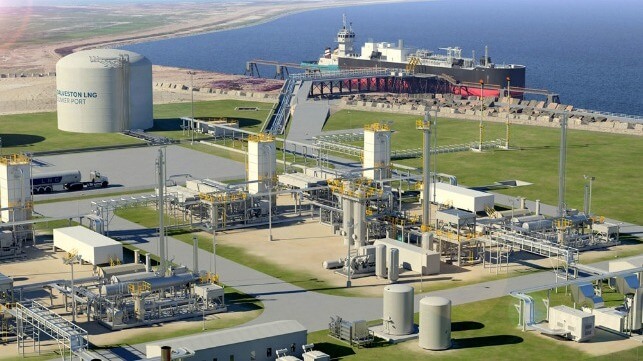
LNG terminal is expected to be operational in 2027 (Galveston LNG)

Published May 19, 2025 8:27 PM by The Maritime Executive


The Galveston LNG Bunker Port is now fully permitted for construction to start after receiving authorization from the U.S. Army Corps of Engineers and a recommendation from the U.S. Coast Guard. The project, which is being developed as the first LNG bunker port on the Gulf Coast, is advancing to a financial investment decision from partners Pilot LNG and Seapath Group, a Libra Group subsidiary.

To be located on the Texas City Ship Channel in the Texas City industrial area, and will supply LNG by fuel barge to the rapidly expanding fleet of LNG-fueled vessels in the greater Houston-Galveston region. According to the partners, the bunker hub will be optimally located to serve major ports, including Port Houston, the Port of Galveston, and the Port of Texas City. 

The plan calls for the terminal to be developed in two phases. The first would involve a 140-acre site and will target an initial capacity of 360,000 gallons per day. The companies are targeting the second half of 2027 for the initial product deliveries. A second phase would require an additional eight to 12 months and provide a total capacity of 720,000 gallons per day. It will be supported by two 3-million-gallon storage tanks.

“After several years of challenging and complex work bringing together the engineering, permitting, and third party supplies for gas and power to the project, we are now comfortably ahead in the marketplace to be the first dedicated LNG marine fuels supplier in the U.S. Gulf,” said Josh Lubarsky, President of Seapath Group. “We have made a significant financial commitment to this project and, over the course of the last several years, have positioned GLBP to be the foremost clean fuel supply hub in the Galveston Bay/Gulf region.”

The project, which is expected to cost more than $300 million, had received the necessary authorization from Texas earlier this year. Currently, LNG is being supplied by JAX LNG located in Jacksonville, Florida. It has a capacity of 360,000 gallons per day and is supplying LNG to the ports in South Florida as well.


UECC Sees Huge Emissions Reduction in 2024 with High-Impact LBM Fuel

United European Car Carriers
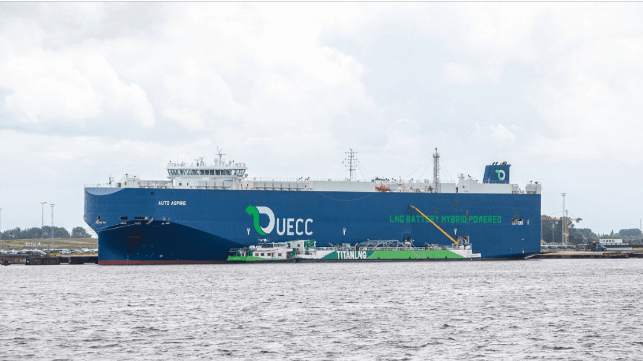
UECC’s multi-fuel LNG battery hybrid PCTC Auto Aspire being refuelled with LBM at the Port of Zeebrugge. Photo: Titan Clean Fuels

Published May 19, 2025 9:53 PM by The Maritime Executive


[By: United European Car Carriers]

United European Car Carriers (UECC) achieved a massive reduction in well-to-wake CO2 emissions in 2024 mainly through bunkering high-impact liquefied biomethane (LBM) on LNG-fuelled vessels under its Sail for Change initiative supported by major European vehicle manufacturers.

The company’s latest annual environmental data shows its emissions fell by more than 107,000 tonnes of CO2 last year, a significant 70% increase on a reduction of over 63,000 tonnes achieved in 2023. And UECC aims to boost emissions cuts by a further 50% this year to nearly 155,000 tonnes towards its goal of a 187,000-tonne reduction in 2030 as the leading European sustainable short sea RoRo carrier ramps up the use of alternative fuels across its eco-friendly fleet to cut regulatory costs for customers.

Meeting low-carbon logistics demand
“We continue to make major strides towards realising our sustainability ambitions, supported by pioneering investments in green fuels and sustainable technologies, as well as energy efficiency measures in operations,” says UECC’s CEO Glenn Edvardsen.

“These efforts have enabled us to provide our customers with progressively sustainable ship transport amid increasing demand for low-carbon logistics due to the imperative of decarbonisation, driven by expanding green regulation with carbon pricing and increasing penalties for pollutive operations. “By taking a leading role, UECC has positioned itself ahead of the market and is firmly on track with GHG intensity reductions exceeding regulations, enabling it to run a compliance surplus in relation to FuelEU Maritime, while also cutting costs significantly under the EU Emissions Trading System (EU ETS).”

UECC’s environmental performance has been enhanced by wider adoption of alternative fuels - including biofuels, low-carbon LNG and LBM, or bioLNG - that last year accounted for around 42% of fuel consumption on its 16-vessel fleet of owned and chartered/operated pure car and truck carriers (PCTCs), up from 34% in 2023.

The company has set a revised target of 58% for alternative use by 2030 due to the relatively high impact of bioLNG in cutting emissions versus other alternative fuels, allowing carbon-neutral cargo transport for customers.

BioLNG fuelling sustainability drive
UECC’s Senior Manager of Business Planning & Sustainability, Masanori Nagashima, says bioLNG is now seen by the company as the key fuel to achieve its target of a 45% reduction in carbon intensity by 2030 versus a 2014 baseline and net zero by 2040 - ahead of the 2050 deadline set by both the IMO and EU.

The fuel is being bunkered on UECC’s dual and multi-fuel LNG PCTCs - three of which have battery hybrid capability - under Sail for Change that was launched by UECC last year and currently has participation by automotive giants including Toyota, Ford and JLR. The company also has on order two multi-fuel LNG battery hybrid newbuild PCTCs due for delivery in 2028 that could be enlisted into the programme.

Nagashima points out bioLNG is extremely beneficial in cutting emissions due to the use of manure- based feedstock that can deliver a high impact in terms of well-to-wake emissions as required by FuelEU, taking into account extraction and processing as well as consumption.

“While this means there is increasing competition for the fuel in shipping, our first-mover role in procuring bioLNG puts us in an advantageous position to secure future volumes of the fuel through building relationships with suppliers,” he says.

UECC has earlier secured a bunkering deal with Dutch supplier Titan Clean Fuels to deliver a minimum of 12,000 tonnes of ISCC-EU certified mass-balanced LBM this year under the Sail for Change programme.

Commercialising compliance surplus
The overall carbon intensity of the UECC fleet, using the same gCO2e/MJ (grams of CO2 equivalent per megajoule) metric as FuelEU, is calculated at 68 gCO2e/MJ to achieve an interim target of a 25% carbon intensity reduction in 2025, though the company is expected to achieve 57 gCO2e/MJ this year based on its supply plan, according to Nagashima.

This is significantly below the current FuelEU threshold of 89.3 gCO2e/MJ - a 2% reduction from the baseline of 91.16 gCO2e/MJ - and still lower than the threshold of 77.9 gCO2e/MJ from 2035 that is a 14.5% reduction versus the baseline figure.

“The low carbon intensity of our fleet means all of our vessels are expected to gain a C rating or above with the IMO’s Carbon Intensity Indicator (CII). It also gives us a significant compliance surplus under FuelEU that can be monetised through the regulation’s pooling mechanism, allowing a great commercial opportunity to offset regulatory costs for customers and eliminate FuelEU surcharges,” Nagashima explains.

“UECC will continue to accelerate its progress in improving decarbonisation of its fleet by further optimising our fuel mix strategy going forward to incorporate more high-impact fuels as these become viable,” he concludes.

The products and services herein described in this press release are not endorsed by The Maritime Executive.


Port of Oakland April Container Volume Drops 14.7% vs. March

Port of Oakland

Published May 19, 2025 10:08 PM by The Maritime Executive


[By: Port of Oakland]

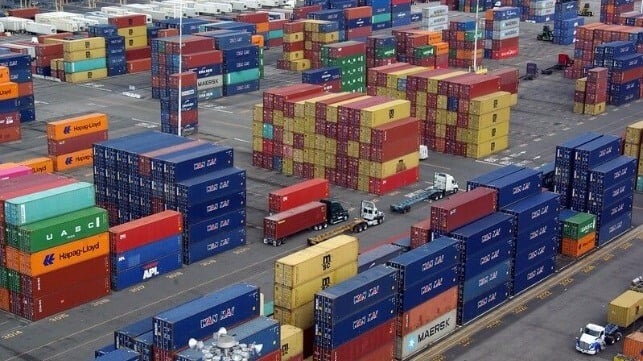
The Port of Oakland handled 185,499 TEUs (twenty-foot containers) in April, marking a 14.7% decrease in overall cargo volume from March 2025. The slowdown is driven by market uncertainty as well as softening demand in exports — both influenced by recent shifts in U.S. trade policy.

Despite the dip for the month of April, total volume for the first four months of 2025 reached 787,028 TEUs handled, which still registered 4.3% growth overall compared to the same period last year.

“Container volume remained stable during the first four months of 2025; however, uncertainty and high tariff impacted our China volume. We anticipate similar volume in May with a strong recovery in June,” said Port of Oakland Maritime Director Bryan Brandes. “The Port remains focused on service reliability, and close coordination with our partners and customers, as market dynamics continue to evolve.”

Imports
Full imports totaled 78,965 TEUs in April 2025. Although imports for April 2025 were still 4.8% higher compared to April 2024, they declined 10.2% from March.

The March 2025 uptick of 9.1% over February, which brought full imports to their highest monthly total of the year at 87,896 TEUs, was driven by market anticipation of new tariffs to be announced by the administration. With 45% of Oakland’s imports sourced from China, the formal announcement and implementation of new duties in early April are expected to affect inbound flows starting more significantly in May.

Exports
Full exports dipped 4.2% year over year, with the Port processing 64,723 TEUs in April 2025, compared to 67,566 TEUs in April 2024. Loaded exports saw a 15% decrease from March 2025’s 76,157 TEUs. The decrease in exports was caused by market uncertainty.

Although only 7% of Oakland’s exports go to China, market uncertainty abroad—including concerns about retaliatory tariffs and shifting demand—appear to be influencing booking behavior, particularly for agricultural and food products. Despite the overall decline in volume, key segments – especially refrigerated commodities — remain resilient. Oakland’s cold chain capacity continues to hold a competitive advantage during the spring export season.

Empty container volume in both directions declined. Empty imports dropped 11.7% year-over-year in April 2025 and 22% from the previous month. The Port processed 14,438 TEUs in April 2025, in contrast to 16,351 TEUs in April 2024 and 18,542 TEUs in March 2025. Empty exports decreased by 6.8%. The Port handled 27,374 TEUs in April 2025, compared to 29,375 TEUs in April 2024. This decrease in volume reflects the strategic repositioning of equipment to efficiently balance cargo flows.

Link to Port of Oakland container volume data: https://www.oaklandseaport.com/performance/facts-figures/

The products and services herein described in this press release are not endorsed by The Maritime Executive.


U.S. Moves to Finalize Chinese-Built Ship Fees

Chinese-built ships
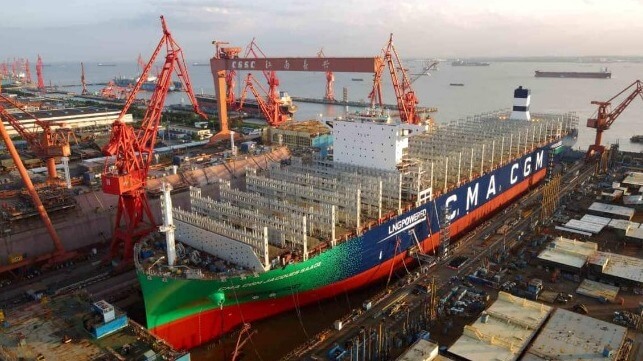
CMA CGM predicts shipping companies will adapt to avoid the U.S. fees on Chinese-built ships (CSSC file photo)

Published May 19, 2025 12:56 PM by The Maritime Executive


The U.S. Trade Representative’s office is conducting its public hearings today, May 19, as it also closes the comment period for the proposed fees on Chinese-built ships and other elements, including port cranes. As it moves to finalize the structure, the shipping industry continues to oppose the proposed fees, while individual companies report they have strategies to avoid the fees.

The plan for how to penalize China for its unfair trade practices in shipbuilding was released in mid-April after USTR, acting on a complaint from five U.S. unions, found that the Chinese government was unfairly subsidizing its shipbuilders. It said China had aggressively moved to dominate global shipbuilding to the detriment of the U.S. and others. 

The April proposal was a revision that restructured some of the elements the shipping industry had found onerous, lowering the costs, but continues to improve fees on Chinese shipping companies and Chinese-built ships calling at U.S. ports. It added a universal fee on all foreign-built car and vehicle carriers and imposes fees and regulations to shift a portion of U.S. LNG exports onto U.S.-built ships.

Well-known industry analyst Lars Jensen, CEO of Vespucci Maritime, commenting on the likely outcome of the current hearings and comment period, concludes, “We might expect fewer revisions this time around.” He, however, warns that shippers should expect carriers will attempt to pass on costs in the form of new surcharges.

The lobbying group, the World Shipping Council, has continued its strong opposition submitting comments in this round over its continued serious concerns. It asserts that a “tax on all foreign vessels far exceeds the authority of the USTR.” They have called the proposed fee regime “a step in the wrong direction” to rebuild the U.S. merchant marine, noting the fees are retroactive and potentially disrupting long-term investment planning among carriers.

The WSC’s opposition centers on the fees based on net tonnage, which it says disproportionately penalize larger, more efficient vessels and U.S. ports that made significant investments to expand their capacity. It calls the universal fee on all foreign-built car carriers an “arbitrary action,” asserting that it will do little to encourage U.S. maritime investment. It asserts the calculations are incorrect in the proposal and calls for a per vehicle fee that applies credit for exported vehicles on the same vessel.

Jansen, however, called the second-round proposal “more manageable from a container shipping perspective.” He, too, however, notes it still contains “problematic elements,” such as the fees on car carriers. 

Shipping lines, however, have already begun to plan for steps to avoid the U.S. fees on Chinese-built ships. CMA CGM’s finance director on Friday told reporters that all shipping firms, including China’s COSCO, “would adapt.”

CMA CGM notes that less than half its fleet of approximately 670 ships is Chinese-built. It said it would reorganize its operations to ensure that it does not pay the U.S. port fees.

If the second round only undergoes smaller modifications, Jansen notes it would come into effect in mid-October or 180 days after adoption.