Tuesday, May 20, 2025

A symptom of Buddhism’s ongoing commercialization

Photo by Jan Kopřiva on Unsplash


The Conversation
May 12, 2025

Almost 2,000 years ago in modern-day Uttar Pradesh, India, someone deposited a cache of gems inside a reliquary (a container for holy relics), along with some bone fragments and ash. The gems were precious, but the bones and ash even more so, for according to an inscription on the reliquary, they belonged to Siddhartha Gautama, the Buddha.

The Piprahwa gems were placed along with the Buddha’s bodily relics (śarīra) as an offering inside a stūpa (A Buddhist funerary structure that contains relics and acts as a place of pilgrimage). Such an offering is not only supposed to generate “merit” (puṇya) and hopefully a good rebirth for the devotee, but is also an act of devotion and gratitude to the Buddha.

In 1898, a British land owner, William Claxton Peppé, ordered the excavation of that same stūpa on his land in colonial India and discovered the reliquary. The bodily relics were sent to the Buddhist king of Thailand, many of the gems went to the former Imperial Museum in Calcutta and Peppé was permitted to keep the rest.

This latter portion was due to be put up for auction at Sotheby’s Hong Kong this month, just days before the Buddhist holy day of Vesak – and it has generated controversy. Not only has the sale been described as perpetuating colonial violence, but the Indian government demanded that auction house Sotheby’s halt the sale or it would seek legal action. Sotheby’s has complied, for now.

Peppé’s great-grandson, Chris Peppé, explained in an article for Sotheby’s: “From the time we received the Piprahwa gem relics, my cousins and I have sought to make them available for viewing by the public (ideally a Buddhist public) to see at no cost to the institution borrowing them.” This has resulted in the gems being displayed in museums around the world. The cousins also set up The Piprahwa Project website, which allows people to access all the research materials that they have gathered.

Chris Peppé has said that he hopes that the sale will help people see to see the gems and connect with those that left them and the Buddha himself. His great-grandfather, he says, ordered the excavation to provide work for his tenant farmers.

As a Buddhist and the grandson of an Anglo-Indian man myself, my past straddles this colonial divide more than most. Putting aside the ethical issues around excavating a sacred site in the first place, and the uncomfortable tie-in to other instances of colonial looting by the British in India, the truly extraordinary thing is that these gems were put up for sale at all.

If they really were mixed together with the bodily relics of the Buddha, then these gems were in physical contact with them and intended to be paired with them for posterity. That means that, in a Buddhist context, there is no essential difference between the gems and the actual remains of the Buddha.

The Sri Lankan historical chronicle The Mahāvaṃsa (written in the 5th or 6th-century AD) states that “if we behold the relics we behold the Conqueror”, aka Buddha. As art historians Conan Cheong and Ashley Thompson write in their recent journal paper on the topic: “At the very least, we can affirm that for many Buddhists, historically and today, these ‘gems’ are śarīra of the Buddha and as such are imbued with the Buddha’s living presence.”

Buddha in the west


Speaking to the Guardian after the auction was postponed Peppé said: “In light of the Indian government’s sudden interest in the gems, 25% of auction proceeds will be donated to the displaying of the main Kolkata collection of the Piprahwa gems for Buddhists and the larger public to enjoy. Another 25% will be donated to Buddhist institutions.” With regards to his and his two relatives’ right to sell the gems, he added: “Legally, the ownership is unchallenged.”

As an expert in Buddhist philosophy, I believe that to put a price on something that possesses such a sacred status for millions of people worldwide is both disrespectful and morally objectionable.

The sale is also not something I could ever imagine happening regarding objects linked with any other religious figure. If a piece of intact clothing, for example, was found to have been worn by Jesus, would this be put up for sale? Of course, it would be massively valuable, but any financial considerations would surely be outweighed by its religious importance for the world’s billions of Christians. Why should it be any different with Buddhist relics?

Another phenomenon inadvertently revealed by the fact of the sale is the ongoing commercialisation of Buddhism in the west. To many westerners, the Buddha and Buddhism are increasingly viewed as commodities to be bought and sold.

Cheaply made Buddha statues and Buddha-faced plant pots adorn the shelves of garden centres and are then used to decorate living rooms and gardens. Clothes, lamps, beach towels and even shoes embellished with images of the Buddha can be purchased easily. The Buddha is frequently regarded as an ornament or fashion item rather than a sacred figure in a manner that, again, is rarely done with any other religiously significant person
.

Buddhas are common garden decorations in the west – but it’s hard to imagine a Jesus-themed equivalent.
MANY ITALIAN / PORTUGESE CATHOLICS DO HAVE JESUS ICONS AND ALTER DECORATIONS IN THEIR YARDS IN MY HOOD


From all this, selling actual Buddhist relics is not a large step. As with the commodification of other religions in the west such as Hinduism and Islam, commercialisation always simultaneously involves decontextualisation. It is an example of what philosopher Sophia Rose Arjana in her book Buying Buddha, Selling Rumi (2020) terms “the religious marketplace”.

As she writes: “Religions associated with the east – Hindu, Buddhism, Islam – are also commodified. Their symbols are marketed by entrepreneurs and corporations and then consumed by everyone from non-religious spiritualists to ambivalent mystical seekers.”

Religious traditions, practices, images and artefacts must be stripped of their native contexts and sacred meaning. Through this auction, the Piprahwa gems are considered ancient jewels to be admired ascetically rather than religious relics.

Given their importance to global history and our human story, the Buddha and Buddhism are worthy of a lot more respect than they are currently afforded. While Buddhism teaches that everything is impermanent, we are lucky enough to still possess treasures such as the Piprahwa gems, and we should value them – and learn from them – while we can.

Lee Clarke, Lecturer in Philosophy, Nottingham Trent University

This article is republished from The Conversation under a Creative Commons license. Read the original article.


'I alone am the way': Expert explains whether Trump's MAGA is a true cult

May 18, 2025 
ALTERNET

When President Donald Trump met with his Cabinet the day after reaching the 100-day milestone last month, members took turns excessively praising him — prompting many commentators to describe his apparent need for constant approval as “cult-like” behavior.

However, in a Sunday article for Salon, journalist and podcast host Jonathan Hirsch offered a different take, drawing on his own childhood experience growing up in a cult.

Hirsch recalled growing up in a Northern California commune devoted to Franklin Jones, a self-proclaimed divine guru who led the group Adidam and claimed, “I alone am the way.” Immersed in the cult from childhood — his parents were even part of Jones’ inner circle. The author experienced its teachings and inner workings firsthand.

READ MORE: There will be a reckoning as the sleeping giant awakens from this nightmare

He said he heard Trump use the same words, "I alone," which reminded him of the years he "spent as a child under the specter of an authoritarian spiritual figure."

"As a child, I was led to believe that one man — in our case, an ordinary-looking guy from Jamaica, Queens, New York, exactly the same neighborhood where Donald Trump was born and raised — was in fact … God. The startling parallel between these two men, and that phrase in particular, remains intensely resonant for me," Hirsch wrote.

He argued that the word "cult” now means "so many things that I’m no longer sure it means anything at all."

"And no modern public figure is more often described as a cult leader than our duly elected president. A few months into his chaotic second term, the question of whether or not the movement that he has started is effectively a cult has become a live one once again. To appreciate how we got here, we need to understand the word itself, and how it caught fire in popular culture," the author wrote.

Hirsch argued that while Trump craves loyalty and thrives on the devotion of his supporters, his Make America Great Again (MAGA) movement has not fully crossed into cult territory. He added that a true cult is led by a narcissistic leader who demands total control, but the public still retains some power.

"For now, we still have a choice," he said.
'Getting witchier': Right-wing Christians getting new inspiration from a surprising source

But Casey Means,  "is aligned with" the Christian Right "against an enemy they hate far more than Satan: feminists."


Alex Henderson
May 19, 2025
 | ALTERNET


On May 7, President Donald Trump nominated 37-year-old Casey Means — an ally of Health and Human Services Secretary Robert F. Kennedy Jr. and supporter of his Make American Health Again (MAHA) movement — for U.S. surgeon general. Means is known for her new age-like views and shares some of his more controversial opinions, including being a promoter of raw milk.

Neither Means nor RFK Jr. are known for having a longtime association with far-right evangelical Christian fundamentalism. Kennedy was a Democrat until 2023, and Means' father Grady Means was an assistant to the late Nelson Rockefeller — who epitomized the moderate northeastern Rockefeller wing of the GOP during his years as governor or New York State and later, vice president under President Gerald Ford.

But Salon's Amanda Marcotte, in an article published on May 19, explains why RFK Jr. and Casey Means have become useful to the evangelical Christian Right agenda.

"At first blush," Marcotte explains, "Casey Means seems like the last person Christian conservatives would want as the surgeon general. Donald Trump's new pick for the nation's top doctor, though she does not have a medical license, favors the occult-speak popular in the 'wellness' influencer world where she makes her money. As Kiera Butler and Anna Merlan at Mother Jones documented, Means veers 'in a more new age direction' in her 'medical' writing."

But Casey Means, Marcotte emphasizes, "is aligned with" the Christian Right "against an enemy they hate far more than Satan: feminists."

"Along with her shrines-and-moons talk, Means also wrote that she had shed 'my identity as a feminist,' giving up on wanting 'equality in a relationship' to instead embrace 'a completely different and greater power: the divine feminine," Marcotte observes. "It's woo-woo, but ultimately no different than the message promoted by conservative Christians: that a woman's role is as a man's helpmeet, not his equal."

Means and RFK Jr., according to Marcotte, have become unlikely but useful allies of the Christian Right and Trump's MAGA movement. And the Salon journalist points out that the Christian Right has been "getting witchier" in recent years because of "the rise of charismatic Christianity."

"Casey and her brother, Calley Means, are tight with Health and Human Services (HHS) Secretary Robert Kennedy, which is why she got the surgeon general nod and her brother got a position as a 'special government employee' assisting Kennedy," Marcotte observes. "Kennedy has exploited the false perception that he's a liberal Democrat to bamboozle some people into thinking far-right health policies, such as slashing Medicaid, are 'moderate' positions. Like the Means siblings, he's also using his appeal to people outside the Religious Right as a way to launder Christian Right views."

Marcotte continues, "Last week, Kennedy ordered the Food and Drug Administration (FDA) to 'review' the legality of Mifepristone, a drug used to abort pregnancies. He said this was necessary due to 'new data,' which is actually a non-reviewed 'study' by a Christian Right organization falsely claiming abortion pills are dangerous — a 'study' that was immediately debunked by experts. Kennedy has a long history of embracing fake science while ignoring real science, but this is his first foray into doing it to cape for a cause that's primarily, if not exclusively, associated with the Religious Right."

Amanda Marcotte's full article for Salon is available at this link.
'Magic' and conspiracy theories: GOP bills banning 'weather manipulation' advance in red state

Photo by Max LaRochelle on Unsplash

May 19, 2025 | 

Two bills to ban weather modification in Louisiana have quietly moved their way through the state legislature this session, as a cohort of other states have moved to do the same with technology that purports to encourage rain or alter temperature.

Senate Bill 46, sponsored by Sen. “Big Mike” Fesi, R-Houma, and House Bill 608, by Rep. Kim Coates, R-Ponchatoula, would ban the intentional release of chemicals into the atmosphere to alter the weather or climate. Coates’ measure includes a $200,000 fine for any violation.

Weather modification is a wide-reaching term and often marbled with deep veins of misinformation. Human efforts and theories that attempt to alter precipitation or temperature are real but largely new areas of scientific study. The concept of weather modification has produced solid science along with skepticism and conspiracy theories in the decades since studies began.

The Louisiana bills specifically reference cloud seeding, or attempts to encourage rainfall with aerosols sprayed into the air. They also cover solar radiation modification, which tries to deflect sunlight away from Earth to curb increasing temperatures and associated climate change.

Cloud seeding experiments are exceedingly rare along the Gulf Coast, and solar radiation modification exists only as a theoretical concept. Robert Rauber, an atmospheric scientist and professor emeritus at the University of Illinois, said cloud seeding simply doesn’t have widespread use in Louisiana, where rain is relatively abundant.

“The Gulf Coast doesn’t need rain,” Rauber said, unlike the mountainous or desert states where cloud seeding is a more attractive option. “The reason why they cloud seed out west is to increase water supplies.”

Rauber has participated in a variety of cloud seeding experiments in mountainous regions of the western United States and said the types of clouds along the Gulf Coast aren’t really conducive for seeding.

“It’s never been proven to work” at scale with the puffy, cumulus clouds more common in the South, said Rauber. “These clouds form wherever the heck they want … you can’t target an area very effectively.”

Cloud seeding can’t alter the paths or intensity of hurricanes either, said Rauber. He cited failed experiments in the 1940s when scientists seeded hurricanes with dry ice to see if they could weaken their intensity. Although researchers learned valuable information on how hurricanes formed and traveled, they were not able to change their path or intensity.

One business has conducted cloud seeding experiments along the Gulf Coast, according to Rauber, who stressed that the science is shaky.

Rainmaker Technology Corp., a geoengineering company based in El Segundo, California, has conducted experiments along the Gulf Coast as recently as March, according to National Oceanic and Atmospheric Administration records. The company claims to use charged water particles to promote rain instead of aerosols.

“It’s magic as far as I’m concerned because I have not seen any scientific research done in a proper way that shows that any of that is effective,” Rauber said. Misinformation and unproven methods that Rainmaker Technology and other companies promote adds to public fear and conspiracy theories surrounding weather modification, the professor said.

Rainmaker Technology did not respond to calls for comment.

Cloud seeding with silver iodide has been practiced for more than 70 years, and the scientific consensus is that the amount used is relatively effective, with the right clouds, and environmentally safe. Sprayed into clouds as an aerosol, silver iodide freezes and gives moisture-heavy clouds something to grab onto, coaxing its water molecules to condense and fall from the sky as rain.

James Diaz, a medical toxicologist and professor emeritus at the LSU Health Sciences Center School of Public Health in New Orleans, said silver can prompt reactions when ingested in large doses and lab experiments suggest the heavy metal could be harmful to aquatic life in large amounts over time, but he said the amounts used for cloud seeding do not alarm him.

“These toxicities are unlikely after cloud seeding,” Diaz said.

It’s a similar story with iodide. Large amounts over long periods of time can do environmental and health harm, but Diaz said the amounts needed for cloud seeding aren’t worrying.

“We should be more concerned about petrochemicals and pesticides,” he said.

Fesi’s bill doesn’t apply to firefighting aerosols or pesticides used for agriculture. Coates said in an interview she intends to amend her bill so that it would not apply to pollutants emitted from the burning of fossil fuels.

Fesi mentioned in his floor speech that sulfur dioxide is among the chemicals he believes are being sprayed into the atmosphere. There is no evidence that cloud seeding uses sulfur dioxide. The burning of fossil fuels, namely coal and oil at power plants and industrial facilities, is one of the largest sources of sulfur dioxide, according to the U.S. Environmental Protection Agency.

Coates and Fesi clarified in interviews their bills will not regulate industrial emissions.

Coates said she considers her bill to be part of the wider push in Republican-led states to ban weather modification, adding she believes the issue to have bipartisan appeal. Florida recently approved legislation similar to what’s under consideration in Louisiana, and Tennessee approved a ban on weather modification in 2024.

“I just decided that I wanted to bring the bill because I don’t feel like anyone in Louisiana gave someone the right to do research in the air above us,” Coates said. “That’s our air above us, and we haven’t given anybody permission, anybody the right to spray or do any modification above us.”

When asked about the lack of widespread weather modification experiments in Louisiana, Coates said her bill is more precautionary.

“Why mess with Mother Nature?” she added.

Coates’ bill advanced from the House Committee on Natural Resources and Environment with unanimous support and awaits debate in the full House.

Fesi testified on the Senate floor April 28 during debate over his bill that he believes “certain agencies within the federal government are doing cloud seeding and geoengineering.” In an interview Friday, the senator was asked what evidence he had to support his claims.

“Look up in our sky,” Fesi answered.

In an interview, Fesi later said he sees “just tons and tons of cloud seeding” above his backyard and described it as “all of the stripes across the skies.”

Neither bill specifically discusses banning contrails, short for condensation trails. The thin, white cloud streaks that stretch behind airplanes are created as warm exhaust from jet engines meet the icy cold atmosphere, similarly to how warm breath briefly creates a fog in cold air. Unsubstantiated contrail theories attempt to connect weather modification and contrails, alleging jets are spraying chemicals for reasons ranging from weather alterations to population control.

Sen. Regina Barrow, D-Baton Rouge, was the only lawmaker to question Fesi’s claims on the Senate floor. He responded that “32 different agencies collect money for geoengineering of our weather.” Pressed by Barrow for details, Fesi shared a widely debunked conspiracy theory that the federal government is spraying aerosols to block sunlight, and that the materials – namely aluminum oxide – have been found in agricultural fields from contrail chemical spraying.

No evidence exists of a government program that conducts or collects money for cloud seeding or solar radiation modification experiments.

With no one else challenging his statements, Fesi’s bill advanced from the Senate on a 27-12 party line vote, with Republicans prevailing. The measure awaits committee consideration in the House of Representatives.

Louisiana Illuminator is part of States Newsroom, a nonprofit news network supported by grants and a coalition of donors as a 501c(3) public charity. Louisiana Illuminator maintains editorial independence. Contact Editor Greg LaRose for questions: info@lailluminator.com.
'Weird': Far-right reporter with White House press room credentials asks 'insane' question


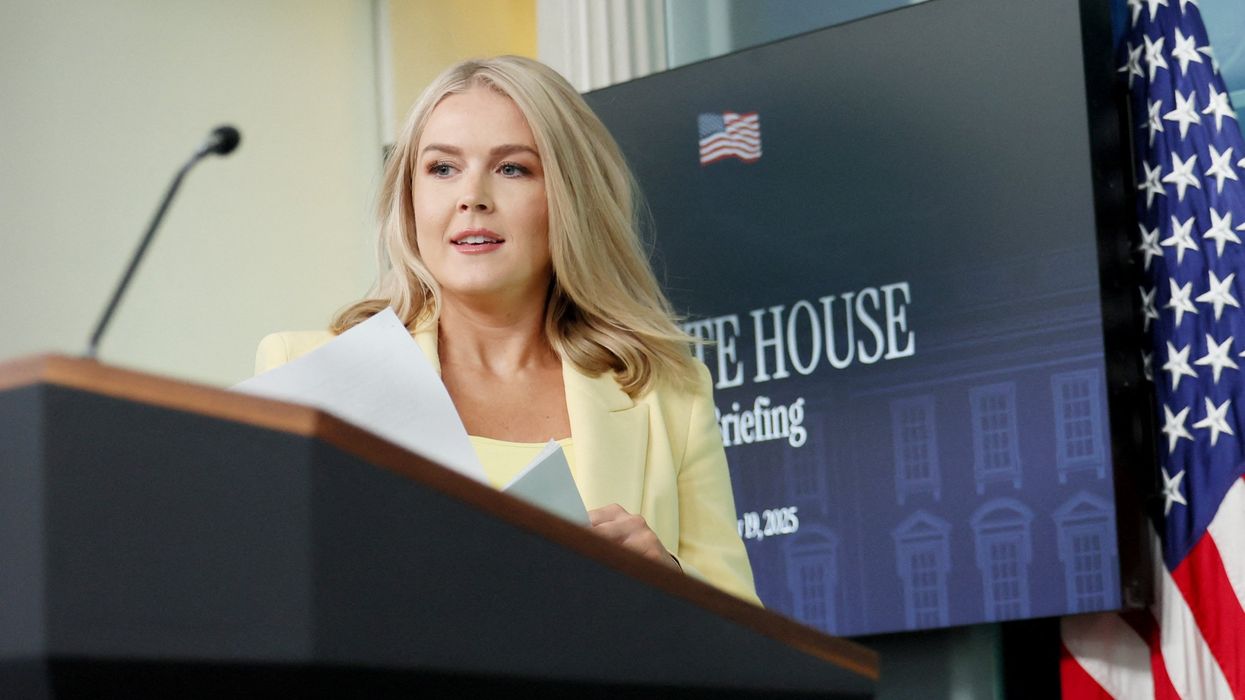
White House press secretary Karoline Leavitt enters the room to give remarks to members of the news media in the briefing room at the White House in Washington, D.C., U.S., May 19, 2025. REUTERS/Leah Millis

May 19, 2025 
ALTERMNET

During a White House press briefing on Monday, a journalist from the far-right website ZeroHudge, seated in the newly designated "new media" section, posed an unusual question to Press Secretary Karoline Leavitt regarding the Department of Justice's handling of documents related to the Jeffrey Epstein case.

Cosgrove referenced the conspiracy theory known as the "Clinton body count," which suggests that numerous individuals connected to the Clintons have died under suspicious circumstances. He specifically mentioned the death of Mark Middleton, a former Bill Clinton aide, who was found dead on a Clinton Foundation property. Cosgrove then inquired when the Justice Department would release additional files pertaining to Epstein's case, particularly those that might reveal connections to intelligence agencies or blackmail activities.

Leavitt responded by directing him to the Department of Justice for a timeline.

Social media users — including journalists and political commentators — expressed surprise at the question, noting that individuals with a history of promoting conspiracy theories now have access to the White House press room.

Political analyst Mehdi Hasan wrote on the social platform X while reacting to Cosgrove's question: "Difficult to summarize just how abnormal and weird and insane this is. There is no ‘Imagine if Biden…’ or ‘Imagine if Obama…’ equivalent scenario you can even come up with."

HuffPost's White House correspondent S.V. Date wrote: "White House press secretary Karoline Leavitt invites conspiracy theorist Zerohedge to the 'new media' seat and their 'reporter' asks about the Clinton "body count" and Jeffrey Epstein's ties to intel agencies, including Israel's. Congrats, America. Good job."

User Kathy Young wrote: "So this 'journalist's' actual purpose there was not to ask questions of the press secretary, it was to peddle an insane conspiracy theory and zing the Washington Post."

Political podcaster Tim Miller said: "This is too insane to capture in a tweet. The guy doesn't stop rambling. It's like they pulled an addled random with a bullhorn from Lafayette Square and brought them into the briefing room with a sheaf of printed out WorldNetDaily articles."

Journalist Brian Frydenborg wrote: "The White House Press room under Trump 2.0: a farce."

Political commentator Rachel Bitecofer wrote: "Back to the beginning of when Republicans started to go crazy with 'the Clintons are mass murderers' stuff from the 90s."

"We are witnessing the North Koreaization of the American media in real time," wrote a user.

"I feel bad for the real journalists in the room," wrote another.

"The 'new media' correspondent in the White House today is conspiracy theorist and @zerohedge correspondent Liam @cosgrove_iv. Leavitt's job is pure entertainment, not news," remarked an X account.
'No precedent': Experts warn Trump is 'destroying the American presidency'


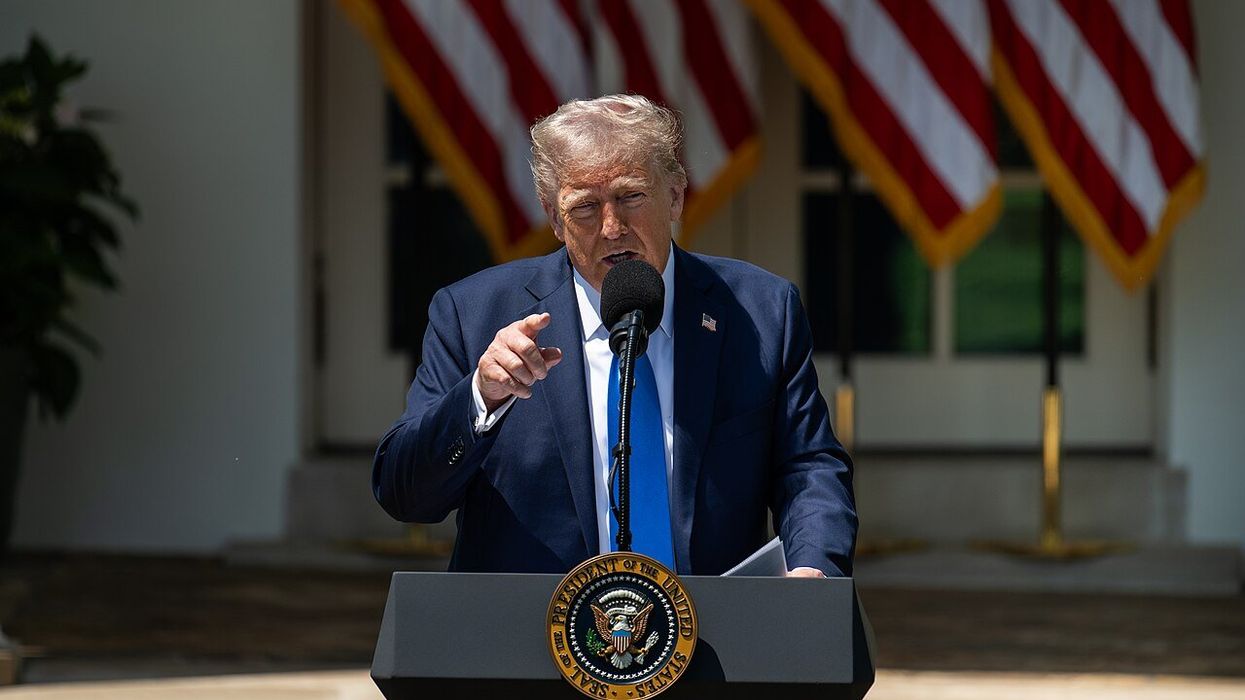
President Donald Trump in the White House Rose Garden on May 1, 2025 

May 20, 2025 
ALTERNET

Donald Trump is now four months into his second presidency, and some of his critics are commenting that Joe Biden's presidency now seems like a lifetime ago.

Trump's cheerleaders in right-wing media are applauding his "record of achievement," claiming that he has accomplished a great deal in a short period of time. But the New York Times' Thomas B. Edsall has a very different view.

In his May 20 column, Edsall argues that some of the damage Trump has inflicted on the United States during the last four months will take years to repair.

"One thing stands out amid all the chaos, corruption and disorder: the wanton destructiveness of the Trump presidency," Edsall laments. "The targets of Trump's assaults include the law, higher education, medical research, ethical standards, America’s foreign alliances, free speech, the civil service, religion, the media and much more…. Some of the damage Trump has inflicted can be repaired by future administrations, but repairing relations with American allies, the restoration of lost government expertise and a return to productive research may take years — even with a new and determined president and Congress."

Edsall adds, "Let’s look at just one target of the (Trump) Administration's vendetta: medical research. Trump's attacks include cancellation of thousands of grants, cuts in the share of grants going to universities and hospitals; and proposed cuts of 40 percent or more in the budgets of the National Institutes of Health, the Centers for Disease Control and Prevention and the National Science Foundation."

Several interviewees cited examples of long-lasting "damage" Trump is inflicting.

Retired Judge J. Michael Luttig, a Never Trump conservative, told Edsall, "I even believe he is destroying the American presidency, though I would not say that is intentional and deliberate."

Princeton University history professor Sean Wilentz told Edsall, "The gutting of expertise and experience going on right now under the blatantly false pretext of eliminating fraud and waste is catastrophic and may never be completely repaired…. There is no precedent, not even close, unless you consider Jefferson Davis an American president. "

Andrew Rudalevige, a political scientist at Bowdoin College in Brunswick, Maine, told Edsall, "The damage caused to governmental expertise and simple competence could be long-lasting. Firing probationary workers en masse may reduce the government employment head count, slightly, but it also purged those most likely to bring the freshest view and most up-to-date skills to government service, while souring them on that service."

Mara Rudman of the University of Virginia's Miller Center told Edsall, "The most lasting impact of this term will be felt in the damage done to the reputation of the United States as a safe harbor where the rule of law is king, and where the Constitution is as sacred a national document as any country has developed. Through his utter disregard for the law, Trump has shown both how precious and how fragile are the rules that undergird our institutions, our economic and national security, and the foundation for our democracy."

GOP Cuts to Medicaid 'Will Kill People,' Advocate Warns and New Research Bolsters

A working paper from the National Bureau of Economic Research found that Medicaid expansion saved over 27,000 lives since 2010.


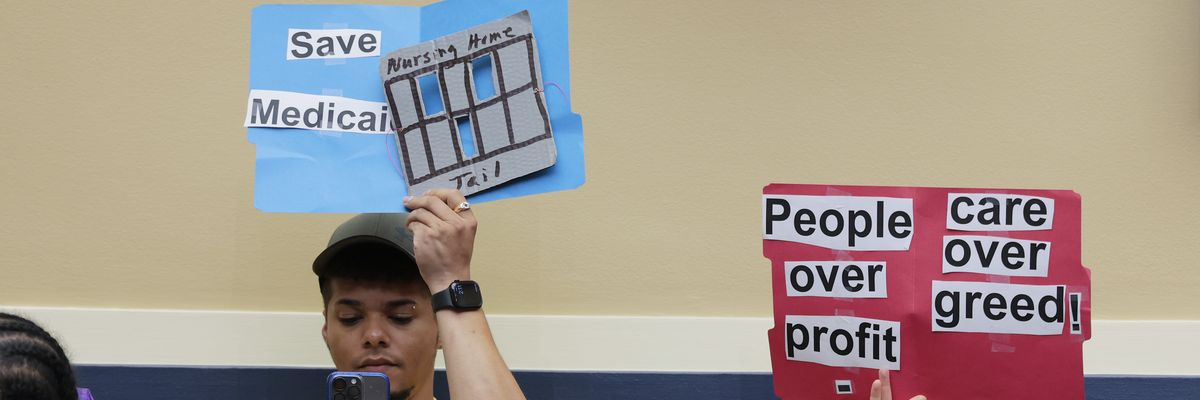
Protesters hold up signs inside of a markup meeting with the House Committee on Energy and Commerce on Capitol Hill on May 13, 2025 in Washington, D.C.
(Photo: Anna Moneymaker/Getty Images)

Eloise Goldsmith
May 16, 2025
COMMON DREAMS

Critics who say extensive cuts to Medicaid being pushed by the Trump administration and House Republicans will result in the deaths of people were bolstered Friday by new reporting on a recent study detailing how the key health program for the nation's poor saves live.

As Republicans in Congress pressed ahead this week with a plan that would cause at least 8 million Americans to lose Medicaid as part of a sweeping tax and spending bill desired by U.S. President Donald Trump, a recently published working paper from the National Bureau of Economic Research, first reported on by The New York Times, shows that Medicaid expansion saved over 27,000 lives since 2010.

A provision in the 2010 Affordable Care Act, which went into effect in 2014, allowed states to expand eligibility for Medicaid to all low-income adults regardless of disability or parenthood status. The change is part of the reason that enrollment in the program rose roughly 50% between 2010 and 2021, according to the authors of the study.

The study, which used a dataset of 37 million low-income American adults, found that expansions increased Medicaid enrollment by 12 percentage points. The study estimates that people who enrolled in Medicaid were 21% less likely to die compared to those not enrolled.

"These expansions appear to be cost-effective, with direct budgetary costs of $5.4 million per life saved and $179,000 per life-year," according to a summary of the working paper.

The researchers told the Times that the timing of the release of the working paper was not connected to Congress' current conversation around Medicaid, though they told the outlet that the debate made their findings especially relevant.

The Times described the research as "the most definitive study yet" on Medicaid's health effects and health economists not involved with the research described it as the most persuasive proof so far that Medicaid and other types of health insurance save lives.

Meanwhile, on Friday, efforts to pass the GOP megabill hit a stumbling block when a handful of Republican so-called "fiscal hawks" voted with Democrats on the U.S. House Budget Committee to block the reconciliation package from advancing through a key committee vote. The Republican hardliners voted no because they want more cuts to Medicaid.

After the vote, Rep. Pramila Jayapal (D-Wash.), a panel member, vowed that Democrats would "keep fighting to protect Medicaid and the American people."

In response to the House Budget Committee vote, Alex Lawson, executive director of the advocacy group Social Security Works said on Friday: "Make no mistake, Republicans still plan to bring it to the House floor next week."

Lawson blasted the proposed Medicaid cuts, writing that "their plan will kill people."

"The ripple effect of these cuts will hit every single person in this country," he added. "Unless you are a billionaire, your standard of living and your health care will get worse if this despicable plan becomes law."
Medicare Advantage insurers accused of paying ‘kickbacks’ for primo customers

Image via Shutterstock.
May 19, 2025 

When people call large insurance brokerages seeking free assistance in choosing Medicare Advantage plans, they’re often offered assurances such as this one from eHealth: “Your benefit advisors will find plans that match your needs — no matter the carrier.”

About a third of enrollees do seek help in making complex decisions about whether to enroll in original Medicare or select among private-sector alternatives, called Medicare Advantage.

Now a blockbuster lawsuit filed May 1 by the federal Department of Justice alleges that insurers Aetna, Elevance Health (formerly Anthem), and Humana paid “hundreds of millions of dollars in kickbacks” to large insurance brokerages — eHealth, GoHealth, and SelectQuote. The payments, made from 2016 to at least 2021, were incentives to steer patients into the insurer’s Medicare Advantage plans, the lawsuit alleges, while also discouraging enrollment of potentially more costly disabled beneficiaries.

Policy experts say the lawsuit will add fuel to long-running concerns about whether Medicare enrollees are being encouraged to select the coverage that is best for them — or the one that makes the most money for the broker.

Medicare Advantage plans, which may include benefits not covered by the original government program, such as vision care or fitness club memberships, already cover more than half of those enrolled in the federal health insurance program for seniors and people with disabilities. The private plans have strong support among Republican lawmakers, but some research shows they cost taxpayers more than traditional Medicare per enrollee.

The plans have also drawn attention for requiring patients to get prior authorization, a process that involves gaining approval for higher-cost care, such as elective surgeries, nursing home stays, or chemotherapy, something rarely required in original Medicare. Medicare Advantage plans are under the microscope for aggressive marketing and sales efforts, as outlined in a recent report from Sen. Ron Wyden (D-Ore.). During the last year of the Biden administration, regulators put in place a rule that reined in some broker payments, although parts of that rule are on hold pending a separate court case filed in Texas by regulation opponents.

The May DOJ case filed in the U.S. District Court for the District of Massachusetts alleges insurers labeled payments as “marketing” or “sponsorship” fees to get around rules that set caps on broker commissions. These payments from insurers, according to the lawsuit, added incentives — often more than $200 per enrollee — for brokers to direct Medicare beneficiaries toward their coverage “regardless of the quality or suitability of the insurers’ plans.” The case joins the DOJ in a previously filed whistleblower lawsuit brought by a then-employee of eHealth.

“In order to influence the market, the Defendant Insurers understood that they needed to make greater, illicit payments in addition to the permitted (but capped) commissions,” the lawsuit alleges.

In one example cited, the lawsuit says insurer Anthem paid broker GoHealth “more than $230 million in kickbacks” from 2017 to at least 2021 in exchange for the brokerage to hit specified sales targets in payments often referred to as “marketing development funds.”

Insurers and brokers named in the case pushed back. Aetna, Humana, Elevance, eHealth, and SelectQuote each sent emailed statements to KFF Health News disputing the allegations and saying they would fight them in court. EHealth spokesperson Will Shanley, for example, wrote that the brokerage “strongly believes the claims are meritless and remains committed to vigorously defending itself.” GoHealth posted online a response denying the allegations.

The DOJ lawsuit is likely to add to the debate over the role of the private sector in Medicare with vivid details often drawn from internal emails among key insurance and brokerage employees. The case alleges that brokers knew that Aetna, for example, saw the payments as a “shortcut” to increase sales, “instead of attracting beneficiaries through policy improvements or other legitimate avenues,” the lawsuit said.

One eHealth executive in a 2021 instant message exchange with a colleague that is cited in the lawsuit allegedly said incentives were needed because the plans themselves fell short: “More money will drive more sales [be]cause your product is dog sh[*]t.”

The DOJ case focuses on large insurance brokerages, which often rely on national marketing efforts to gain customers, rather than mom-and-pop insurance offices.

The filing, which alleges violations under the federal False Claims Act, outlines some of the problems consumers could face because of those payments, including being enrolled or switched into plans without their express permission, and getting coverage that didn’t meet their needs.

A cancer patient, for example, was switched from the original Medicare program into a private-sector managed-care plan by a large brokerage firm, according to the lawsuit, only to get hit with $17,000 in ongoing treatment costs that would have been covered without the change. Another person calling for free advice later discovered she had been enrolled without permission into a plan with a different insurer than she had previously chosen.

Meanwhile, people with disabilities looking to enroll in private-sector Medicare Advantage plans had their calls ignored or rerouted by systems designed to weed out disabled people, especially if they were under age 65, the lawsuit alleges. That’s because the insurers knew that disabled beneficiaries usually cost more to cover than those without medical problems, the case alleges. Medicare plans are not allowed to discriminate against people with disabilities.

Still, private insurers are allowed to offer commissions to brokers — or not.

Congress and regulators, however, concerned about insurers’ potential financial influence over beneficiaries’ choice of plans, set maximum commissions and limited payments for other things, such as administrative costs, to a vaguer standard: their fair market value. (Under the Biden-era rule that’s on hold, administrative fees would have been capped at $100 per enrollment.) On commissions, the national cap in 2021 — the final year cited in the lawsuit — was $539 per enrollment for the initial year, with higher amounts in some states, including California and New Jersey, the lawsuit said.

The allowed commission rates have risen to a maximum in the low $600s per person in most states this year. Those amounts are higher than what brokers earn if a client enrolls in original Medicare and buys a supplemental drug plan, for which the commission is capped at $109 for the initial year.

Some policy experts say that pay structure alone — aside from any of the allegations in the lawsuit — creates an uneven playing field between the private-sector plans and the original program.

“It’s not my intent to paint all agents and brokers with the same brushstroke, but there are significant financial incentives to steer people toward Medicare Advantage in general,” said David Lipschutz, co-director of law and policy at the Center for Medicare Advocacy.

While brokers can be helpful in sorting out complexities, other options are available. Lipschutz suggested that consumers seek information from their federally funded State Health Insurance Assistance Program, which can advise beneficiaries about Medicare options, are not affiliated with insurers, and don’t receive commissions.

While encouraged that the Trump administration filed the case under investigations that began under the Biden administration, policy experts say Congress and insurers need to do more.

“What we see in this lawsuit highlights the terrible incentives that desperately need Congress to reform,” said Brian Connell, a vice president at the Leukemia & Lymphoma Society, an advocacy group.

Right now, however, Congress is embroiled in budget battles amid calls by the Trump administration to drastically cut federal spending.

“It doesn’t seem like it’s high in the queue,” said Zachary Baron, director of the Center for Health Policy and the Law at Georgetown University’s O’Neill Institute. Some members of Congress may push for more changes to Medicare Advantage, Baron said, “but the real question is whether there will be bipartisan interest.”

The large amounts of money that the lawsuit alleges were involved, though, might add legislative momentum.

“This is money not being spent on care, money not going to providers of health care services,” Lipschutz said. “In my mind, it’s a lot of wasted payment. It’s pretty staggering.”

'A smoking gun': Economist says Walmart feud reveals truth behind Trump's economic plan


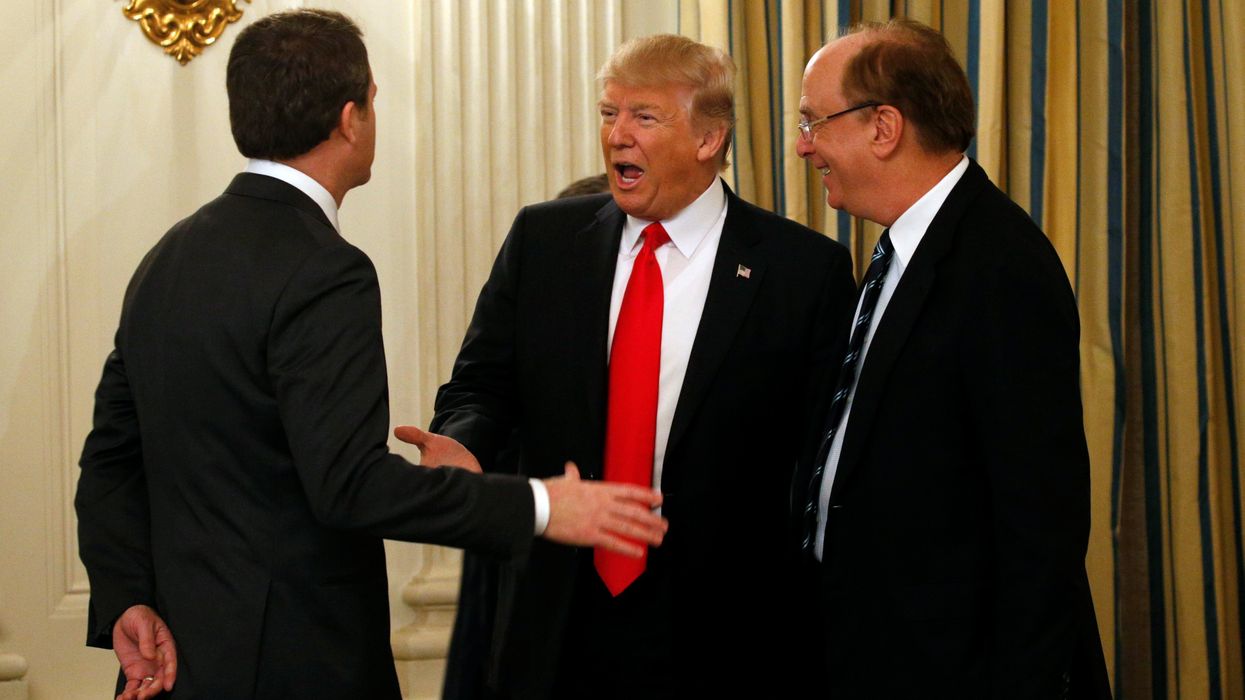
U.S. President Donald Trump talks with Wal-Mart CEO Doug McMillon (L) and BlackRock CEO Larry Fink (R) as he hosts a strategy and policy forum with chief executives of major U.S. companies at the White House in Washington, U.S. February 3, 2017. REUTERS/Kevin Lamarque

May 20, 2025 
ALTERNET

MAGA America is about to catch the worst of what President Donald Trump’s tariff are bringing, and Trump knew all along his tariffs would bring it, says The New Republic’s ‘Daily Blast’ podcast host Greg Sargent and Groundwork Collaborative Executive Director Lindsay Owens.

Retail giant Walmart recently warned shoppers it will have to hike store prices due to Trump’s tariffs, despite Trump promising his voters that other nations would pay the costs.

Trump did not appreciate the pushback from Walmart and blasted the retailer on Truth Social, promising that shoppers would react harshly if the company did not “eat” the costs of his self-imposed levies.

“This was a smoking gun that Trump is clear about who pays the price for these tariffs,” Owens said, adding that the Truth Social post amounts to an admission.


Trump’s threat that Walmart shoppers would be watching how the chain reacts may also have been an act of transference because voters will be more likely watching the White House. People know how tariffs work, said Owens.

“The American people are crystal clear on this,” she said. “We know from polling that two thirds of Americans expect tariffs to increase their prices. Eighty percent of Americans are clocking the tariffs. This is something they are aware of. He’s in real trouble here, and now he’s screaming from the bully pulpit that corporations should help him (mitigate) his own policy.”

Unfortunately for Trump, the top issues plaguing Trump’s predecessor are still on the minds of Americans in Trump’s second term, in no small part thanks to the enormous megaphone Trump blasted in the months leading up to the November election last year.

“The No. 1 issue is still high prices,” Owens said. “It was a problem for Biden. Trump is very aware of that. He exploited it … and ran on bringing prices down and one of the first policies he’s implemented is basically a giant price hike on people. And now he’s reeling from the consequences.”

The fact that a massive retail chain like Walmart is publicly acknowledging the impending problem means other, smaller retailers will inevitably have to raise prices even higher, she added.

“If any company had the power to demand importers keep prices down it would be Walmart,” Owens said. “The fact that they can’t negotiate away the tariff’s higher costs means smaller companies will suffer even higher hikes.”

And this, Owens said, means there will be no escaping the reality of what’s coming. Particularly for MAGA America.

“This absolutely is going have a substantial impact. Just based on the geography of the U.S. and Trump’s voters it makes perfect sense why he was reeling so quickly,” Owens said. “He knows exactly who this hurts and who is likely to hear that news and be quite worried.”

Hear the full Daily Blast podcast here.
'Insanity': Observers Blast Reported Trump Administration Plan to Move Palestinians to Libya

"American-led ethnic cleansing should be flatly unacceptable," said one professor.


Palestinians in Gaza move with their belongings as they flee the northern cities of Jabalia and Beit Lahia towards Gaza City amid continuous Israeli strikes in the besieged Palestinian territory on May 17, 2025.
(Photo: Bashar Taleb/AFP via Getty Images)


Eloise Goldsmith
May 17, 2025
COMMON DREAMS

A plan reportedly under consideration by the Trump administration to send up to one million Gazans to the divided country of Libya was met with criticism on Friday and Saturday, with several observers calling it part of a plan to carry out ethnic cleansing.

On Friday, NBC Newsreported that the Trump administration has broached the plan with Libya's leadership, though no final agreement has been reached. NBC News' reporting relied on several unnamed sources "with knowledge of the effort."

"This is absolutely categorically an ethnic cleansing and sending people to Libya of all places is unconscionable," wrote investigative journalist James Stout on Bluesky on Friday, in response to the reporting.

An unnamed spokesperson for the Trump administration told NBC News after publication that "these reports are untrue."

As part of the plan, the Trump administration may unfreeze billions of dollars of funds originally meant for Libya that the U.S. froze over ten years ago, the outlet reported.

"A decade and change after U.S. military intervention in Libya under Obama, a direct appeal from the Trump administration to make it a destination for a 21st century Trail of Tears," remarked Olúfẹ́mi O. Táíwò, the Georgetown University assistant professor and philosopher, referencing the forced displacement of indigenous people in the United States in the 19th Century.

Gregg Carlstrom, a Middle East correspondent for the The Economist, called the NBC News' reporting "insanity."

"Skeptical that there's a serious 'plan' here (rather than just spitballing). But the underlying premise is correct: the Trump administration has spent months approaching various countries to see if it could bribe them into helping out with the ethnic cleansing of Gaza," Carlstrom wrote in a post on X on Saturday.

NBC News also reported that the Trump administration has discussed multiple locations for resettling Palestinians in Gaza, and that the administration is considering Syria as a potential location.

In February, Trump floated a plan to "take over" Gaza and mused about permanently displacing Palestinians in Gaza. International law prohibits the forced deportation and transfer of civilians.

Israel has carried out a brutal military campaign on the Gaza Strip following a Hamas attack on Israel on October 7, 2023.

Observers pointed out that Libya is itself experiencing instability.

"This would be an expensive nightmare to practically implement, Libya is an active war zone with a current [population] of only 7 million and in no shape to absorb refugees, and American-led ethnic cleansing should be flatly unacceptable," wrote David Burbach, an associate professor at the U.S. Naval War College on Bluesky on Friday

In 2011, a U.S.-backed intervention toppled Libya's then leader, Muammar Gaddafi, which was followed by a six-year civil war between rival political factions. Currently, eastern Libya is controlled by Khalifa Hifter and a United Nations-recognized government lead by Abdul Hamid Dbeibah is in control in the west. While the humanitarian situation in the country has eased in recent years, largely due to a cease-fire implemented in 2020, the country still experiences outbreaks of violence.

The spokesperson for the Trump administration also highlighted instability in Libya in their response to NBC News. "The situation on the ground is untenable for such a plan. Such a plan was not discussed and makes no sense."