Tuesday, May 20, 2025


Free Trade Has Hurt Global Labor Conditions. Trump’s Tariffs Won’t Help Them.


Corporations are likely to respond to the tariffs by further exploiting overseas workers to keep the profits flowing.

May 19, 2025


Cargo is loaded onto a lone container ship while the normally bustling berths sit empty due to a 35 percent plunge in volume following Trump's tariffs at the Port of Los Angeles on May 9, 2025, in Los Angeles, California.
Gina Ferazzi / Los Angeles Times via Getty Images


President Donald Trump is hardly an avatar for underconsumption. With a net worth of roughly $5 billion, the business mogul, crypto salesman and former reality TV star boasts a sprawling portfolio of lavish properties, private jets and luxury cars. But amid the tumultuous rollout of his sweeping tariff policy, Trump has had an unexpected message for U.S. consumers: buy less.

“Maybe the children will have two dolls instead of 30 dolls, you know? And maybe the two dolls will cost a couple of bucks more than they would normally,” Trump said at an April cabinet meeting, referencing the potential impact of his tariffs on the global supply chain. Treasury Secretary Scott Bessent echoed the president’s sentiment on Fox News this month, telling host Laura Ingraham that he’d reassure a little girl that fewer dolls was a price worth paying for her family’s “economic freedom.”

Many news outlets were quick to highlight the undeniable Grinchiness of a sitting president putting Barbie in his crosshairs. And with roughly 80 percent of the U.S. toy supply coming from China, the industry is slated to suffer major casualties in Trump’s trade war.
 
There was a bit of truth, however, to Trump’s “let them eat cake” moment: Americans, on average, buy too much stuff. The U.S. is the most wasteful country in the world, producing 12 percent of the world’s trash despite representing just 4 percent of the global population. More than 11 million tons of textile waste end up in landfills each year. One-click shopping and same-day delivery have fueled a clutter crisis. Such consumption habits harm not only the environment, but also human rights: Americans’ unfettered access to cheap goods is often made possible by the exploitation of workers in the Global South.

After receiving backlash for the economic incoherence of its trade policy, the Trump administration has coyly pitched tariffs as both a remedy to the overconsumption problem and a boon for working families: Things might cost more in the meantime, sure, but isn’t it good if we all buy less? The long game, according to Trump, is that the high international import taxes will encourage companies to reshore their operations, hire U.S. workers, and jumpstart a domestic manufacturing renaissance. Goods might still be more expensive after that — but at least then they’ll be U.S.-made.

But, unsurprisingly, this lofty vision has little ground in reality. Experts I spoke with all said that Trump’s tariffs are unlikely to create substantial gains for U.S. workers, nor will they remedy structural inequities in the global supply chain. In fact, evidence suggests they’ll disproportionately hurt low-income and working class families in the U.S., while worsening labor conditions for low-wage workers abroad.

“It’s a real myth that all these industries are going to come back to the U.S.,” said Sanchita Saxena, a faculty fellow at UC Berkeley’s Institute for Research on Labor and Employment who has studied human rights issues in global supply chains for more than 20 years. “The reality is these companies have seen the financial benefits of being able to cut costs the way they have for decades.” Even if Trump-imposed tariffs make production costs higher in one country, Saxena said companies will likely move operations to other countries where labor costs are still cheaper than in the U.S.

Still, Trump’s elimination of the de minimis exemption on Chinese imports could spark a change in U.S. consumption habits, particularly when it comes to fast fashion. For decades, this loophole has permitted shipments of low-cost goods below a certain total value threshold – including Chinese-manufactured garments, which make up a third of the world’s supply – to enter the U.S. tax-free. This has enabled “ultra-fast fashion” giants like Shein and Temu to sell mass quantities of extremely cheap goods to predominantly U.S.-based consumers. With exploitative business models that aim to meet every consumer need by placing small batches of rapid-turnaround orders to suppliers, Shein and Temu have come under scrutiny in recent years for child labor, forced labor and environmental degradation. Trump has taken aim at this exemption, too, and has raised tariffs on small packages from China to 30 percent – though rather than making an economic argument, the administration has claimed without evidence that China’s government is using the provision to smuggle fentanyl into the United States. With the de minimis loophole closing, a $5 bikini might become a thing of the past, and influencers in recent weeks have urged their U.S. audiences to see the change as an opportunity to buy less and with more intention.

But Saxena and Shelly Heald Han, executive vice president of the Fair Labor Association, both said that the chaotic and sudden implementation of Trump’s tariffs could degrade labor conditions, including by encouraging the types of rush orders that Shein and Temu are known for. Saxena noted that the fluctuating nature of the tariffs creates a sense of economic instability similar to the conditions created by the COVID-19 pandemic in 2020. What we saw then, and Saxena told me she expects to see now, is brands responding to that uncertainty by squeezing their suppliers in the Global South — cancelling orders, asking for severe discounts, or not placing them at all. This could result in factories laying off workers or slashing their already-low wages. “If you suddenly have a situation where there’s massive unemployment, the social and economic impact of that is huge,” Saxena said.

“Factories often may close, and they may close precipitously so that workers don’t have a chance to find other jobs. The factory owners may not pay the workers the severance that they’re owed,” said Han. On the flip side, Han noted that some companies have responded to the uncertainty by placing rush orders, which could force employees to work exorbitant hours beyond their normal workload.

In other words, wealthy corporations will respond to the tariffs by doing what they always do: prioritize profit. As Nicole Aschoff wrote in Jacobin in 2019, “The vast majority of gains from protectionism go to companies because they have the power to organize work and production. There is no mandate to channel profit gains from tariffs toward workers through the creation of new jobs or wage gains.” While Trump’s new “buy less” rhetoric may nod to a leftist critique of consumption, his economic policies are wholly uninterested in addressing the sustainability and human rights issues at the core of the global capitalist economy.

“The leaders of industry have never wanted to pay American workers so much that they could compensate for overproduction,” said Elizabeth McKillen, a labor historian at the University of Maine. “I think that so long as you still have capital, it’s going to be interested in moving plants where business is cheaper.” That’s not likely to be the United States.

Trump has frequently defended his policies by pointing to President William McKinley, who implemented high tariffs at the end of the 19th century. But McKillen emphasized that Trump’s framing lacks context. “This was an era of enormous poverty for most people, and yet what he takes out of that frame is that the McKinley tariffs made the country rich,” said McKillen. “Of course, they only did for a select few — and that was the robber baron class.”

Nevertheless, Trump has cloaked his tariffs in economically populist rhetoric, railing against the North American Free Trade Agreement (NAFTA) for causing a collapse in domestic manufacturing and casting the Democratic Party as anti-working class. Indeed, the bipartisan era of neoliberal globalization has been detrimental to the labor movement. As historian Erik Loomis wrote in Dissent in 2017, free trade agreements like NAFTA allowed corporations “to move around the globe in a never-ending search for cheaper labor.”

But Trump, of course, is not truly pro-worker. Shortly after taking office, he illegally fired officials on the National Labor Relations Board, the federal agency tasked with safeguarding workers’ right to unionize. Now, Republicans are advancing a draft of a tax bill that would cut taxes for the rich and raise them on working people. McKillen noted that tariffs also amount to tax on the poor, because a disproportionate amount of low-income families’ income goes to buying basic products.

Still, tariffs need not be inherently negative — if done correctly. As Aschoff notes in her Jacobin piece, titled “We Need a Socialist Trade Policy,” unlike Trump, who focuses on trade through the lens of U.S. supremacy and foreign adversaries, Sen. Bernie Sanders of Vermont “places the blame squarely on footloose multinational corporations and their ability to shop around for bargain-basement production costs.” He has called for the overhaul of global free trade agreements and the elimination of certain tax breaks and grants to companies that outsource jobs. Selective, targeted tariffs could be used to encourage higher labor standards in certain countries or foster the growth of specific sectors such as the semiconductor industry.

“It’s in the interest of American labor to raise labor standards throughout the world,” said McKillen. “It was one of the goals that the labor movement actually had from the time it came of age in the late-19th century: workers of the world unite.”
Netanyahu Praises Smotrich After Minister Vows “Conquering, Cleansing” of Gaza


Smotrich said that the level of destruction in Gaza will be unprecedented globally.

May 19, 2025


Israeli Finance Minister Bezalel Smotrich delivers a speech during a Sukkoth gathering near the Gaza Strip, where far-right activists and members of the Israeli Knesset are hold an event titled 'Preparing to Resettle Gaza,' on October 21, 2024, in Be'eri, Israel.
Ilia Yefimovich / picture alliance via Getty Images


Israeli Prime Minister Benjamin Netanyahu has praised a top Israeli minister after he vowed that Israel will carry out the “conquering” and “cleansing” of the Gaza Strip, as the military escalates its genocide in order to implement its permanent occupation plan.

In a statement on Monday, Finance Minister Bezalel Smotrich said that Israel’s goal is “destroying everything that’s left of the Gaza Strip,” with the military working to completely level already destroyed infrastructure.

“We are conquering, cleansing, and remaining in Gaza until Hamas is destroyed,” Smotrich went on, per a translation by Israeli outlet Haaretz. This is effectively an admission that Israeli officials intend to carry out ethnic cleansing.

On social media on Monday, Netanyahu praised that statement, saying that Smotrich was “speaking the truth” — even as international experts warn that Israel’s ethnic cleansing campaign violates a deluge of international human rights laws.

Similarly to Smotrich, Netanyahu pledged that Israel’s goal is to “take control of all” of Gaza. “We will not give up. But in order to succeed, we must act in a way that cannot be stopped,” he said.

Related Story

Israel Just Launched Its Expanded Ground Invasion to Permanently “Conquer” Gaza
A resident says the army is firing deadly missiles into crowded neighborhoods without warning or evacuation notice.
By Qassam Muaddi & Tareq S. Hajjaj , Mondoweiss May 18, 20
25

The statements were made in response to criticism from some Israelis over the government’s announcement on Sunday that it will allow “minimal” humanitarian aid into Gaza after nearly three months of Israel’s total aid blockade.

The blockade has had horrific effects on Palestinians in the Strip, with human rights advocates warning that famine is imminent or already ongoing across the entire area. Further, the Israeli military has killed hundreds of Palestinians in the last few days alone in its escalated campaign and ground assault.

Netanyahu reassured far right coalition partners that the small trickle of aid was a tactic to quiet criticisms from foreign allies and pave the way for Israel’s total forced displacement plan, known as “Gideon’s Chariots.”

“Our best friends in the world — senators I know as strong supporters of Israel — have warned that they cannot support us if images of mass starvation emerge,” he said. “We must avoid famine, both for practical reasons and diplomatic ones. Without international backing, we won’t be able to complete the mission of victory.”

Smotrich had a similar message. “Truth be told, until the last of the hostages returns, we should also not let water into the Gaza Strip. But the reality is that if we do that, the world will force us to halt the war immediately, and to lose,” Smotrich said, per Drop Site. “We are disassembling Gaza, and leaving it as piles of rubble, with total destruction [which has] no precedent globally.”

Earlier this month, following Israeli officials’ approval of Gideon’s Chariots, Smotrich had said that Israel must “stop being afraid of the word ‘occupation,’” vowing to escalate Israeli acts that have already been deemed illegal.


First Nations Worry Canada’s Push to Be an “Energy Superpower” Will Harm Them

Canada’s new prime minister is pushing to accelerate energy projects in a bid to decrease dependence on the US.
May 20, 2025

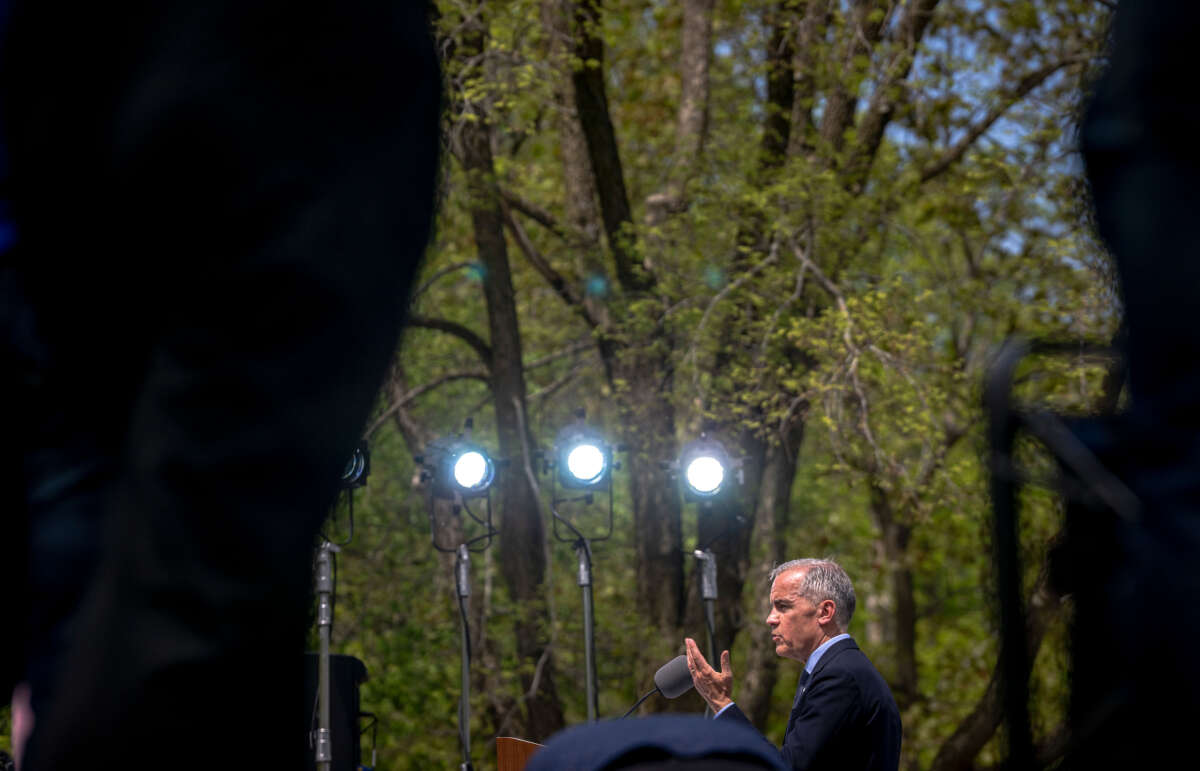
Canadian Prime Minister Mark Carney delivers a press conference at Rideau Hall after his cabinet's swearing-in ceremony on May 13, 2025, in Ottawa, Canada.
Andrej Ivanov / Getty Images

In his first news conference after winning the Canadian elections last month, Prime Minister Mark Carney laid out his incoming government’s plans to tackle a “once-in-a-lifetime crisis” with the United States.

U.S. President Donald Trump’s steep tariffs on Canadian goods and repeated threats to annex Canada helped propel Carney’s Liberal Party to victory in the April 28 vote.

Now, Carney told reporters in Ottawa on May 2, the country would be embarking on “the biggest transformation” of its economy since World War II.

“We will work with provinces, territories and Indigenous groups to identify projects that are in the national interest — projects that will connect Canada, deepen our ties with the world, and grow our economy for generations,” the prime minister said.

“We’ll make the Canadian government a catalyst for these projects, not an impediment.”

Related Story

Canada’s Battle Against First Nations Shows Slide Toward Authoritarianism
Canadian Prime Minister Justin Trudeau continues Canada’s bloody colonial legacy.
By Samir Gandesha , TruthoutFebruary 1, 2020


Indeed, a central component of the Liberal Party’s 2025 election platform was a promise to streamline — and speed up — the process of getting major energy projects built in Canada, including oil and gas pipelines.

Amid a wave of anti-Trump Canadian nationalism, the plan has been widely welcomed.

Recent polls show a majority of people in Canada support moving away from the U.S. in favor of more economic independence. Many Canadians, including those who have historically been opposed to fossil fuel projects, also have expressed a new willingness to back pipelines.

Yet, as a Carney-led government moves to turn the country — home to one of the world’s largest oil deposits — into an “energy superpower,” experts say Canada’s obligations to Indigenous peoples must not be overlooked.

Under Canada’s constitution, Indigenous communities must be consulted and accommodated on any project that could impact their lands, waters and way of life.

Some have questioned how Carney’s push to speed things up will affect Indigenous rights — or be squared with Canada’s commitment to upholding the United Nations Declaration on the Rights of Indigenous Peoples (UNDRIP).


“To make Canada into an ’energy superpower,’ that requires more extraction, that requires more Indigenous rights violations … and massive contributions to the climate chaos that we’re already experiencing.”

“This notion of the ‘energy superpower’ kind of deeply unsettled me,” said Willo Prince, education coordinator at Indigenous Climate Action, an Indigenous-led group working to combat the climate crisis.

“To make Canada into an ’energy superpower,’ that requires more extraction, that requires more Indigenous rights violations … and massive contributions to the climate chaos that we’re already experiencing,” Prince told Truthout in an interview.
UNDRIP and the Duty to Consult

Indigenous rights are inherent, but they were made constitutional in Canada through the Constitution Act of 1982. Article 35 of the act states that, “the existing aboriginal and treaty rights of the aboriginal peoples of Canada are hereby recognised and affirmed.”

Since then, Canadian courts have laid out what this means in practice.

Notably, they have upheld that the Crown — the government — has what’s called a “duty to consult [and] accommodate” Indigenous people when considering an action that may negatively affect their rights.

“The duty to consult exists on what the courts have said is a spectrum,” explained Bruce McIvor, a partner at First Peoples Law, a law firm in the province of British Columbia specializing in Indigenous rights.

“Where the Crown is expected to decide it falls on that spectrum is a combination of how strong of a claim does the First Nation have, and how serious is the potential effect,” McIvor told Truthout in an interview. “The stronger the claim [and] the more serious the potential effect, the more onerous the Crown’s obligations are within the duty to consult.”

Canada has also endorsed UNDRIP, the UN treaty that stipulates that states must get the “free, prior and informed consent” of Indigenous people before moving ahead with any decisions that could affect them.

In 2021, Canada passed the United Nations Declaration on the Rights of Indigenous Peoples Act to provide a framework for UNDRIP’s implementation in the country.
“Just a Footnote”

But despite these commitments, for decades, Indigenous leaders have said Canada’s approach to consultation has been flawed and failed to meet its obligations.

Many have accused governments at the federal and provincial levels of conducting a box-checking exercise — rather than meaningful consultation — and ultimately moving forward with projects despite community opposition.

In some cases, Indigenous leaders have also accused project proponents of seeking to divide and conquer their communities.

In one recent case involving a pipeline set to cut through traditional Wet’suwet’en territory in northern British Columbia, the company and government said they had the support of First Nations band councils along the proposed route.

Band councils are elected bodies that were created by the Canadian government to govern and oversee issues on First Nation reserves.

But in the case of the Wet’suwet’en, the community’s hereditary chiefs — who, under Wet’suwet’en law, are the titleholders to the land — said they weren’t consulted on the Coastal GasLink pipeline. They have stood firmly against the project.

According to Prince at Indigenous Climate Action, Canada most often treats Indigenous consultation as “just a footnote” in its push to build. “It’s an afterthought. It’s a consideration that comes after the conversation is done,” Prince said.

At the same time, Indigenous communities in Canada are disproportionately affected by resource development projects, Prince noted. They bear the brunt of the environmental impacts and other outcomes of such projects, such as displacement, health problems and heightened risks of violence.

“What we need to be focusing on is community well-being [and] place-based initiatives that respect Indigenous sovereignty,” said Prince, who is Carrier Dakelh from Nak’azdli Whut’en, a First Nation in British Columbia. “These conversations need to be returned to the people who are being displaced and dispossessed by these projects.”
“One Window” Decision-Making

Carney — a former central banker and UN special envoy on climate action and finance who has never held political office before — has promised that Indigenous rights will be respected and that First Nation, Metis and Inuit communities will be able to participate in project development.

More concretely, in the Liberal platform, the party vowed to set up what it dubbed a “one window” decision-making system to quickly advance projects deemed to be in the “national interest.”

The Liberals plan to create a Major Federal Project Office to coordinate the process, and they will require the office to make final decisions on projects within two years.

The party did not say how the term “national interest” would be defined exactly, nor did it lay out which projects might fall under that umbrella.

But Carney said during the election campaign that he is open to “getting pipelines built across this country so that we can displace imports of foreign oil.”

Similar initiatives have been seen at the provincial level in British Columbia and Ontario — Canada’s most populous province — in response to frayed Canada-U.S. relations.

The British Columbian government has proposed legislation that would allow it to fast-track infrastructure projects while Ontario Premier Doug Ford is pushing a bill that would create “special economic zones” where major projects can be approved quickly and without having to meet regulations.

Both proposals have been met with pushback from Indigenous communities who say they will trample over their rights.

The British Columbia bill gives the government “the power to override consultation with First Nations, environmental protections, and due process, all under the pretense of efficiency and expediency,” Chief Don Tom of Tsartlip First Nation said.
“Shouldn’t Be Seen as a Transaction”

Back at the federal level, the Carney-led Liberals have said the goal of their changes is to shift “the focus of project review from ‘why’ to ‘how.’”

“This will enable businesses to navigate regulations more quickly and with fewer redundancies. This office will uphold rigour when it comes to environmental protection and Indigenous consultation and participation,” the party’s platform reads.

Yet the pledge to shift the focus of project reviews “from ‘why’ to ‘how’” has raised questions.

“You automatically undermine, I think, the spirit of the duty to consult if you’re starting point is, ‘How do we get to yes?’” said Leah Levac, an associate professor of political science at the University of Guelph who studies public policy.

Levac said Canadians should be asking, “What is at stake when we speed things up?”

“The reason these projects take a long time — although it tends to be wrapped in a blanket argument of red tape and bureaucratic barriers — actually also has to do with some fairly substantive commitments,” she told Truthout in an interview.

McIvor said reviews can take a long time for a variety of reasons, including unrealistic timelines set by governments or project proponents; governmental delays; or a lack of funding and other barriers that prevent meaningful Indigenous consultation from taking place.

“The general principle in the law is that consultation takes as long as it takes. If more time is legitimately required, the Crown needs to provide that time. It can set timelines but they have to be reasonable and they have to be flexible,” he explained.

McIvor said that ultimately, if Canada wants to speed things up, it needs to change its overall approach.

“Government should be coming to the table with Indigenous people asking, ‘How can we get your consent to this project? What do we need to do?’ Without any pre-formed ideas or conclusions,” he said.

“It shouldn’t be seen as a transaction,” McIvor added, stressing that Indigenous people are looking for a relationship based on respect.

“That means they need to be involved in a meaningful way, not just in the initial decision on greenlighting a project, but importantly, on the operation of the project on a go-forward basis.”


This article is licensed under Creative Commons (CC BY-NC-ND 4.0), and you are free to share and republish under the terms of the license.

Jillian Kestler-D’Amours
Jillian Kestler-D’Amours is a journalist based in Toronto, Canada. Her work focuses primarily on human rights and social justice issues and Canadian foreign policy.
'Despicable': Critics outraged after Ashli Babbitt's family awarded $5 million from Trump

Jan 6. insurrectionists in Washington. mage via Gallagher Photography/Shutterstock

May 19, 2025 
ALTERNET

The Trump administration has reportedly agreed to pay nearly $5 million to settle a wrongful death lawsuit filed by the family of Ashli Babbitt, a supporter of President Donald Trump who was fatally shot when she attempted to break into the Speaker of House's corridor during the Jan. 6. insurrection.

Babbitt, a 35-year-old Air Force veteran, was shot by a Capitol Police officer while attempting to climb through a barricaded door near the House Speaker's Lobby on Jan 6. 2021.

The Washington Post reported Monday that the settlement resolves the lawsuit filed by her family in early 2024, which initially sought $30 million in damages. The agreement avoids a trial that was scheduled for July 2026.

Approximately one-third of the settlement amount will go to Babbitt's attorneys, including the conservative group Judicial Watch and Virginia lawyer Richard Driscoll, per the report.

The settlement does not include an admission of wrongdoing by the government.

The decision has been met with widespread criticism on social media, with many users expressing concerns that it constitutes an unnecessary expenditure of taxpayer funds.

Dan Cluchey, a former White House speechwriter, wrote on the social platform X: "Donald Trump is giving *your* tax dollars away to the family of an insurrectionist who stormed the Capitol to overturn an election at the behest of Donald Trump."

"You can’t have Medicaid but a criminal’s family can have $5 million," said lobbyist Lisa Kirbie.

"Giving our tax dollars to insurrectionists, solely because they were Trump supporters. Absolutely despicable," wrote a user.

"American tax dollars going to an insurrectionist," said another.

Political commentator Shea Jordon Smith wrote: "Ashli Babbitt — the insurrectionist who stormed the Capitol on January 6 — has a family that’s about to get $5 million in so-called 'wrongful death' money from the Trump administration. Thirty million dollars[sic] — for revolting while white."
'Not one peep from Trump': Tornado-ravaged city’s mayor pleads for federal assistance


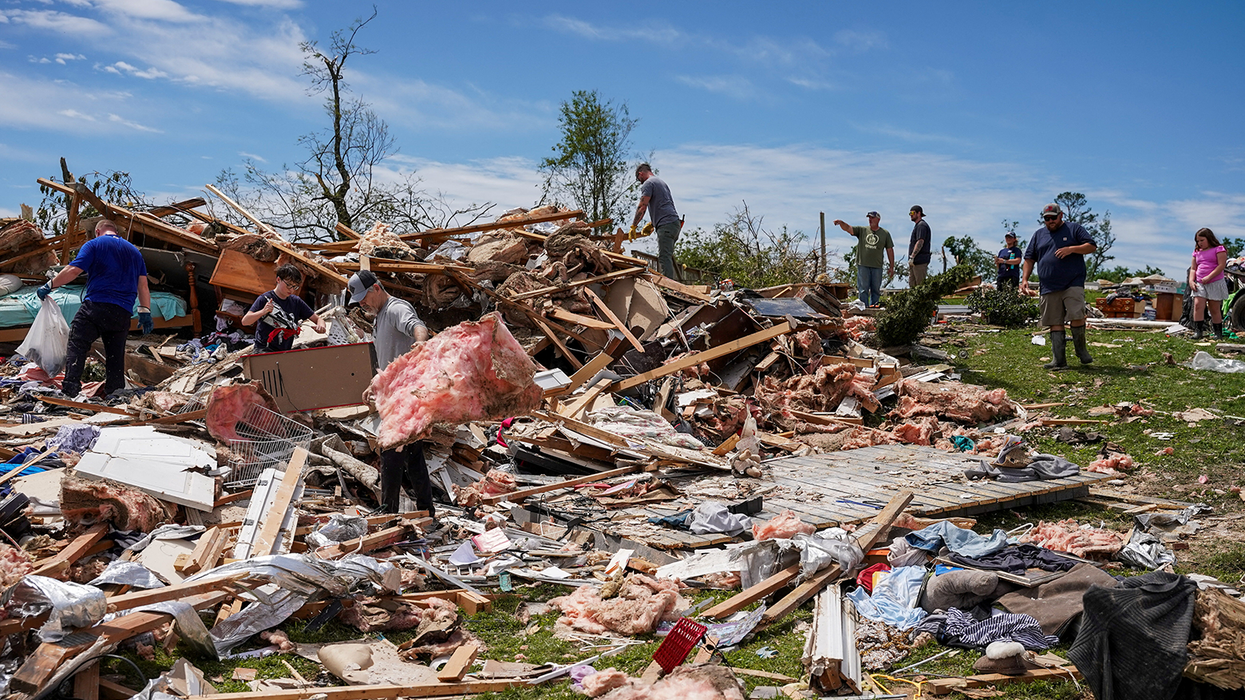
People clean up the debris from a destroyed home in the Sunshine Hills neighborhood after a series of tornadoes hit Laurel County, in London, Kentucky, U.S. May 18, 2025. REUTERS/Seth Herald
May 19, 2025
NEW AMERICAN CIVIL RIGHTS MOVEMENT


At least 28 people across three states were killed when tornadoes struck Kentucky, Missouri, and Virginia on Friday, with a governor and a mayor calling them among the worst they’ve ever seen. Unseen, however, has been any acknowledgment or support from President Donald Trump or, according to some reports, the Federal Emergency Management Agency (FEMA).

“What we need right now is federal assistance,” declared St. Louis, Missouri Mayor Cara Spencer on MSNBC (video below) on Monday, “we need federal assistance.”

“This is where FEMA and the federal government has got to come in and help communities,” Mayor Spencer urged. “Our city cannot shoulder this alone. The State of Missouri cannot shoulder this alone. We need partners at the national level, at the federal level to step up and help.”

Spencer explained, “this is what the federal government is for. We need your help, we need the help of the broader community.”

“FEMA has not been on the ground—we do not have confirmed assistance from FEMA at this point,” Spencer said. “I do want to say, however, every other level of government has been on the ground with us, helping in every capacity possible. But when you have a disaster of this scale, eight miles of just pure destruction, this tornado didn’t just touch down and leave, this tornado ripped through our community for a full eight miles in the city of St. Louis, and this is an area that has needed help, that we need investment, you know, our North St. Louis has been neglected for a long time, and we need the help of our partners here.”

At a news conference, Spencer had called it “one of the worst storms,” ABC News reported. She said that “the devastation is truly heartbreaking—and let’s not forget people have lost their lives. We are continuing to make sure that we are identifying all those that are injured, in addition to the massive amount of property damage that has taken a huge toll.”

Tornadoes were reported in three more states, bringing the total to six states and 26 tornadoes.

“Over 462,000 customers were without power across multiple states, stretching from Michigan to Tennessee.”

As of publication time, NCRM was unable to find anything from President Donald Trump on his Truth Social page about the tornadoes’ death and destruction. It does not appear he has offered support or guidance, nor has he suggested he will visit the areas.

“You can not only see the destruction, you can feel it,” Kentucky Democratic Governor Andy Beshear told reporters on Saturday as he toured his state, according to ABC. “Beshear, who declared a state of emergency ahead of the storms, said he’s been governor for at least 13 federally declared disasters related to weather and this storm was one of the worst in terms of loss of life and damage.”

Homeland Security Secretary Kristi Noem in a social media post made no mention of FEMA, but said that she had spoken to Missouri Governor Mike Kehoe, Kentucky Governor Andy Beshear, and Illinois Governor JB Pritzker, “to offer federal resources and action for the deadly tornadoes and storms impacting Missouri, Kentucky, and Illinois.”

She suggested that the federal government would take a back seat to local efforts.

“We discussed how while emergency management is best led by local authorities, we reinforced that DHS stands ready to take immediate action to offer resources and support,” Noem wrote on Saturday. “Local emergency managers should swiftly notify people in the affected areas to take action to protect themselves and their belongings. DHS stands ready to help when a state needs, requests, and declares an emergency.”

Fred Wellman, an Army combat veteran and host of the “On Democracy” podcast from the St. Louis area, on Saturday wrote: “Yesterday my hometown was hit with massive tornadoes. We weren’t expecting them in places that have never been hit before and have no idea who will help us. FEMA is all but dead and our state is run by Republicans that hate the city. This is the canary in the coal mine.”

On his Substack he noted: “A tornado went through my town yesterday, and no one in this entire country is going to help us….and the ones that should are fine with that.”

Monday morning he added, “here we are two days later and not one peep from Trump or even a response from FEMA at all. 5 dead, 5,000 homes damaged, $1.6B in damage and not even a s—– Truth social post or email from FEMA.”

Watch the video below or at this link.

Trump cuts to aid leave food destined for desperate millions rotting in storage

REUTERS/Lauren Owens Lambert
May 18, 2025 

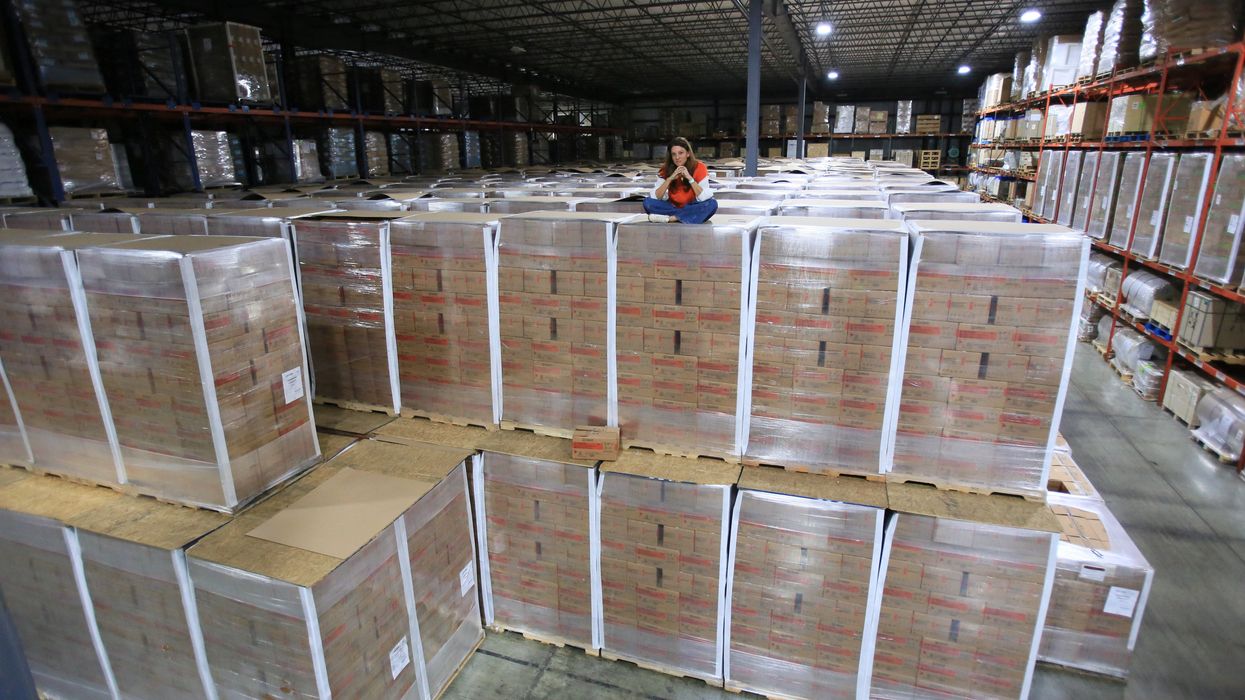
More than a million people in some of the world's most impoverished countries could be fed for three months and hundreds of thousands of children's lives could be saved if $98 million in ready-made meals and other rations were able to leave four warehouses run by the U.S. foreign aid agency dismantled by the Trump administration.

But instead, there is no end in sight to the food languishing in the facilities—or to the starvation of millions of people in Gaza, Sudan, South Sudan, and other parts of the Global South facing high levels of hunger and malnutrition.

Some of the 66,000 tonnes of food, including grains, high-energy biscuits, and vegetable oil, are slated to expire as soon as July, when they will likely be turned into animal feed, incinerated, or otherwise destroyed, Reuters reported Thursday.

The warehouses are located in Houston, South Africa, Djibouti, and Dubai, and are run by the U.S. Agency for International Development's (USAID) Bureau for Humanitarian Assistance. Many of the staff who help run the warehouses are scheduled to be fired on July 1 in the first of two rounds of cuts that will effect nearly all of USAID.

Contracts with suppliers, shipping companies, and contractors have been canceled since USAID was taken over by the Trump administration's so-called Department of Government Efficiency, with the White House saying the agency—with a relatively small budget of just $40 billion—was responsible for "significant waste."

Since DOGE, run by tech billionaire Elon Musk, targeted USAID in one of its first full-scale attacks on a federal entity, the agency is being run by Secretary of State Marco Rubio. The State Department's Office of Foreign Assistance has not yet approved a proposal to give the stranded food stocks to aid organizations for distribution, two former USAID staffers told Reuters.

That office is being led by Jeremy Lewin, a 28-year-old former DOGE employee who is overseeing the complete decommissioning of USAID, which has provided humanitarian assistance in conflict zones and the Global South for more than six decades.

Max Hoffman, a foreign policy adviser to Sen. Bernie Sanders (I-Vt.), said the massive waste of life-saving food rations was the result of President Donald Trump and Musk deploying "some idiot 20 year old staggering around USAID turning things off without the faintest idea of the consequences."

Some of the rations were intended for Gaza, where half a million Palestinians are currently facing starvation and the rest of the population of 2.3 million people are suffering from acute levels of food insecurity due to Israel's total blockade on humanitarian aid which was reimposed in March after a brief cease-fire. Thousands of children have been hospitalized with acute malnutrition since the beginning of the year, but Israel's U.S.-backed assault on Gaza has left health providers with extremely limited means to treat them.

The entire population of Gaza could be fed for a month and a half with the food rations that are on the verge of rotting in the four warehouses, Reuters reported.

Nearly 500 tonnes of high-energy biscuits in Dubai are among the stocks that will expire in July, a former USAID official told the outlet. They could feed at least 27,000 acutely malnourished children for a month.

The food aid was also scheduled to go to Sudan, where famine has been confirmed in at least 10 areas as the country faces the third year of a civil war.

Action Against Hunger is one of many aid groups that have had to scale back operations after losing significant funding due to U.S. cuts; the group said last month that its suspension of work in the Democratic Republic of Congo had already directly led to the deaths of at least six children.

In addition to USAID's warehouses full of soon-to-be-expired food, the U.S.-based company Edesia, which makes the peanut-based Plumpy'Nut, told Reuters that USAID's cuts to transportation contracts had forced the company to open an additional warehouse. A $13 million stockpile of 5,000 tonnes of Plumpy'Nut, which is used to prevent severe malnutrition in children, is in the warehouse now—but could be used to feed more than 484,000 children.

"The dismantling of USAID and cuts to humanitarian aid has been devastating and unacceptable," said Oxfam America.

'Urgent' matter for US economy: Alarm raised about Trump's 'path to financial crisis'


(REUTERS)


May 19, 2025
ALTERNET

Moody's Analytics delivered some bad news for the U.S. economy on Friday, May 16 when it downgraded the United States' credit rating. Moody's cited the country's growing national debt, which is up to $36 trillion, as the reason.

Some supporters of President Donald Trump economic policies are claiming that the downgrade is no big deal. But economist Rebecca Patterson, in an op-ed published by the New York Times on May 19, lays out some reasons why the downgrade should not be taken lightly.

"That means America's debt is officially no longer considered pristine by any of the main companies that rate it," explains Patterson, formerly of JPMorgan Chase. "Moody’s cited successive bipartisan failures to reverse the growing U.S. budget deficit, which it estimated could increase to 9 percent of the gross domestic product within the coming decade, from the 6.4 percent it hit last year. It has previously reached those levels only during times of global crisis: World War 2, the 2008 financial crisis and the COVID pandemic."

Patterson continues, "It's easy to downplay these fears after decades of handwringing that have come to naught. In 1988 — 37 years ago — when U.S. federal debt was less than half what it is today, measured as a percentage of GDP, the Federal Reserve chairman, Alan Greenspan, warned of the country's fiscal situation."

In 2025, Patterson warns, "dynamics" are "changing in ways that finally make Mr. Greenspan’s warnings urgent."

"Some investors are questioning how much exposure they want in U.S. financial assets," Patterson observes. "Politicians clinging to increasingly thin majorities in Congress are more willing to encourage voters with spending or tax cuts than they are to tackle the problem. The combination will lead to investors demanding higher interest rates to buy U.S. debt, which slows economic growth by raising borrowing costs for households and businesses."

The economist continues, "It also eats into the cash available for the government itself, worsening the underlying budget math. Wash, rinse, repeat."

According to Patterson, the United States' "growing debt burden" also "risks making bond buyers nervous and thus, America’s debt more expensive to maintain."

"Sadly, it seems unlikely the Moody’s rating downgrade will be the catalyst for Congress to change its current policy path," Patterson argues. "But lawmakers should know that the potential for America to shift from a gradual, albeit unsustainable path to a sudden financial crisis is surely increasing."

Rebecca Patterson's full New York Times op-ed is available at this link (subscription required).
'Everybody loses': Robert Reich warns Trump’s 'trade war' will bring 'the end of the American hegemony'


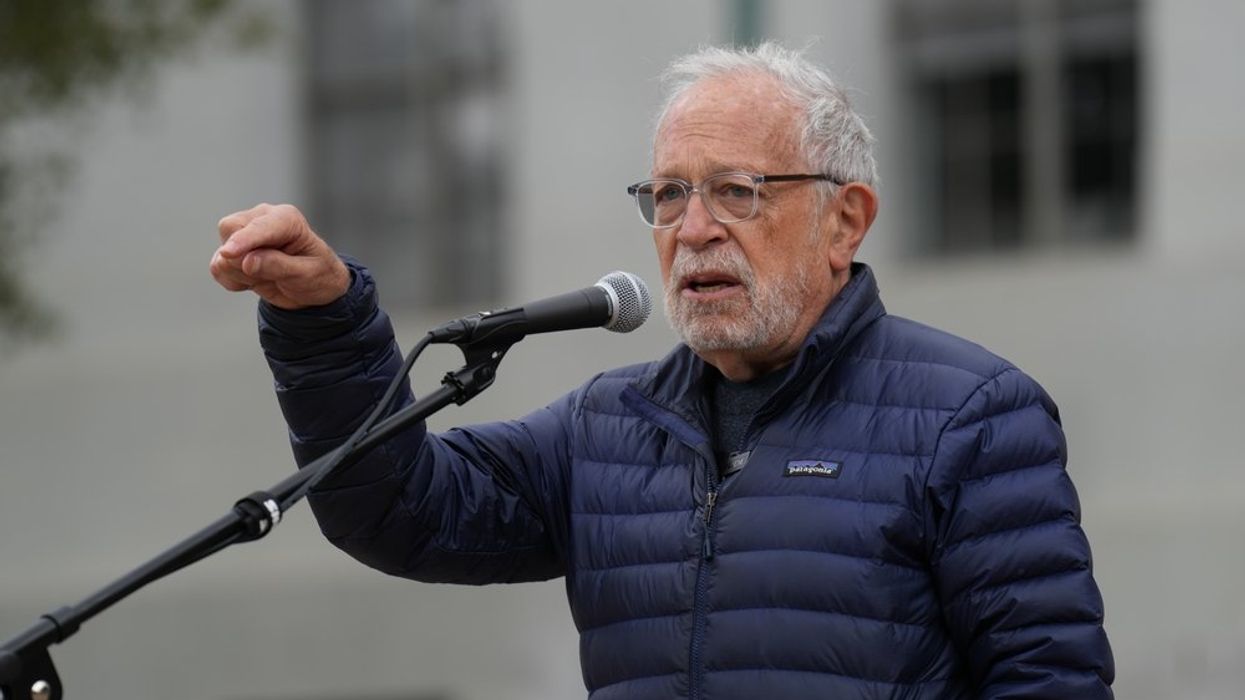
Economist Robert Reich on April 17, 2025 (Phil Pasquini/Shutterstock.com)

May 19, 2025 
ALTERNET


Liberal economist Robert Reich has been a scathing critic of President Donald Trump's steep new tariffs, warning that a wide variety of goods imported into the United States will soar in price in the weeks and months ahead.

During an appearance on CNBC's "The Bottom Line," posted on May 19, Reich warned that higher prices won't be the only negative result of Trump's tariffs. The U.S. dollar, according to Reich, may cease to be the reserve currency — which would significantly decrease American influence in the world and bring about "the end of the American hegemony."

Reich told host Lindsey Jacobson, "Having the dollar be the reserve currency helps all of us Americans here because we get, in a sense, a free ride. We get the benefits of the rest of the global economy investing in us."

Trump's tariffs, Reich observed, are creating "chaos" — which is something that businesses dread.

"The problem with chaos is that nobody dares makes any investments," Reich explained. "In fact, a lot of global investors are pulling their money out of the United States right now because of the uncertainty. Uncertainty is the enemy of investment. Uncertainty is the enemy of economic growth. Uncertainty is the enemy of, really, what you want in an economy. And the problem, in a nutshell, is that the president doesn't seem to know what he wants."

Reich described Trump's tariffs as a throwback to the protectionist Smoot-Hawley Tariff Act of 1930, signed into law by Republican President Herbert Hoover.

Many economists believe that Smoot-Hawley, which followed the Wall Street meltdown of 1929, made the Great Depression even worse. And Hoover suffered a humiliating defeat when, in the 1932 presidential election, Democratic nominee Franklin Delano Roosevelt won the popular vote by 17 percent and picked up 472 electoral votes.

Reich, who served as labor secretary in the Clinton Administration during the 1990s, warned that low-income Americans will be hit especially hard by Trump's tariffs.

Reich told Jacobsen, "Every consumer, effectively, is poorer. It is a regressive tax in the sense that consumers who have lower incomes. They have to pay a larger portion of their incomes in the form of this tariff tax…. Everybody loses. Nobody wins from a trade war."

Watch the full video at this CNBC link.
'We have to act': Robert De Niro calls Trump a 'global' threat in Cannes acceptance speech


Robert De Niro arrives on stage during the opening ceremony and the screening the film "Partir un jour" (Leave One Day) Out of competition at the 78th Cannes Film Festival in Cannes, France, May 13, 2025. REUTERS/Sarah Meyssonnier
May 13, 2025
ALTERNET


While speaking at the Cannes Film Festival in France, legendary actor Robert De Niro loudly urged the international community to take a stand against President Donald Trump.

The Guardian reported Tuesday that De Niro launched into a tirade against the 47th U.S. president while accepting an honorary Palme d'Or — Cannes' highest honor – from actor Leonardo di Caprio on the opening day of festivities, which coincided with De Niro's iconic role in the film "Taxi Driver" winning top honors at Cannes 49 years ago. He particularly honed in on the Trump administration's defunding of federal support for arts and humanities-related projects, arguing that the arts served as a crucial obstacle to far-right authoritarian leaders around the world.

“In my country, we are fighting like hell for the democracy we once took for granted,” De Niro said. “That affects all of us here, because art is the crucible that brings people together, like tonight. Art looks for truth. Art embraces diversity. That’s why art is a threat.”

“That’s why we are a threat to autocrats and fascists. America’s philistine president ha[s] had himself appointed head of one of our premier cultural institutions [the Kennedy Center]," he continued while the crowd applauded. "He has cut funding and support to the arts, humanities and education.”

The actor also criticized Trump's proposal to put a 100% tariff on films made outside of the United States, and used that as a pivot point to argue that Trump wasn't just a threat to Americans but the international arts community as a whole.

“You can’t put a price on creativity,” De Niro said, “but apparently you can put a tariff on it. Of course, this is unacceptable. All of these attacks are unacceptable. And this isn’t just an American problem, it’s a global one. Like a film, we can’t just all sit back and watch. We have to act, and we have to act now.”

"It’s time for everyone who cares about liberty to organise,” he added, “to protest, and when there are elections, vote. Vote. Tonight, and for the next 11 days, we show our strength and commitment by celebrating art in this glorious festival. Liberté, Égalité, Fraternité.”

Click here to read the Guardian's full report.
'Unpredictable': US homebuilders slam 'price swings' from Trump's 'volatile' policies


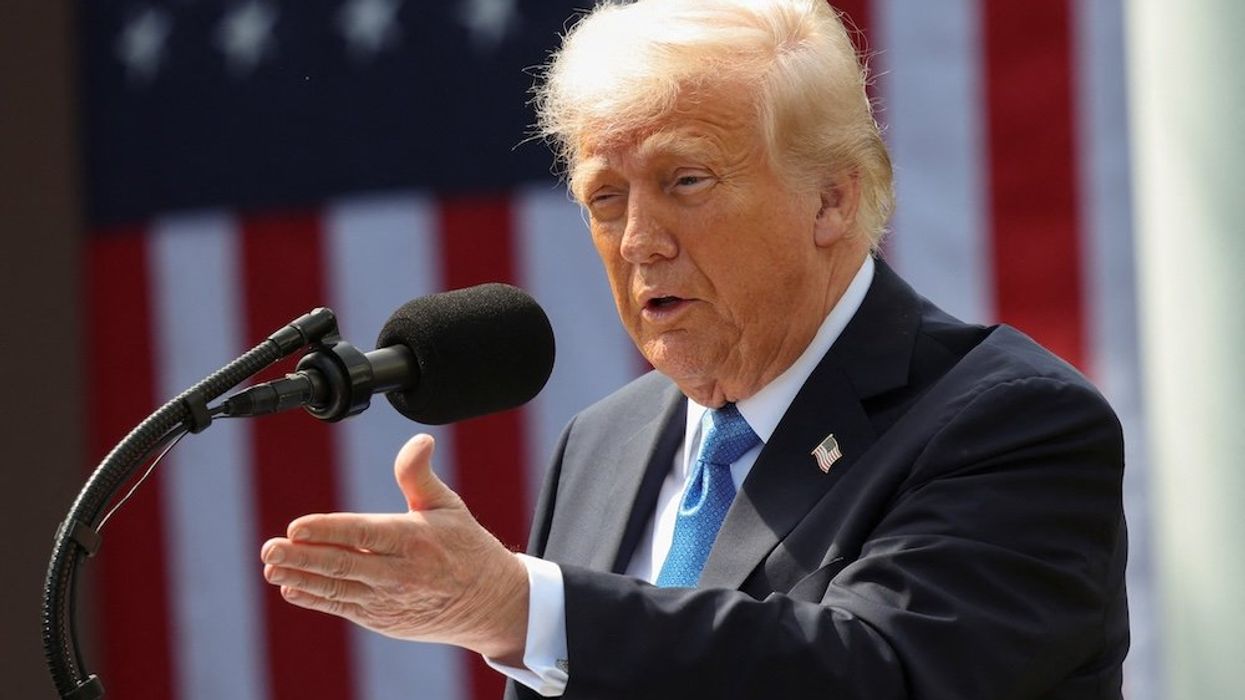
U.S. President Donald Trump speaks as he holds a signing ceremony for the Take it Down Act, in the Rose Garden of the White House in Washington, D.C., U.S., May 19, 2025. REUTERS/Kevin Lamarque

May 19, 2025
 ALTERNET


Tariff threats took a toll on the U.S. housing market, reports Newsweek, with builder confidence in the U.S. housing market tumbling in May to its lowest level since November 2023.

The numbers from the National Association of Home Builders (NAHB) reveal developers and construction investors are having to deal with a sluggish selling season and rising economic pressures. The NAHB/Wells Fargo Housing Market Index (HMI) dropped six points to 34, mirroring the November 2023 reading—only slightly above December 2022's bottom of 31.

When asked to rate current sales conditions, sales expectations for the next six months, and prospective buyer traffic, NAHB reported sales dropping eight points to 37, future sales dipping to 42, and buyer traffic grinding down to 23, far below the reading of 50, indicating poor conditions for builders.

Analysts say the numbers, collected when President Donald Trump was threatening world markets with 145 percent tariffs, undermines the president’s decision to use tariffs to give the U.S. market an alleged advantage.

"Builders face the usual challenges of volatile commodity prices, but add in the unpredictable impact of tariffs, and it gets even tougher,” said Kevin Thompson, CEO of 9i Capital Group. “Price swings on materials make it hard to maintain stable margins, adding pressure to an already tight market."

Similarly, Drew Powers, founder of Illinois-based Powers Financial Group, told Newsweek: "Uncertainty around tariffs and the unknown construction costs are certainly playing into homebuyer and builder sentiment.”

Further aggravating the issue, Powers said, are sky-high housing prices and interest rates.

“A lot of people are choosing to stay on the sidelines, waiting for the housing market to soften and interest rates to tick down, with the hopes they can find a home and mortgage that is more affordable."

While builders await the effects of the temporary tariff suspension and potential tax reforms, confidence levels remain vulnerable to broader economic shifts.

"Builders buy in bulk and rely on stable margins. When input costs are unpredictable, it's nearly impossible to price homes accurately," Thompson said. "This affects both the affordability for buyers and the profitability for builders, creating a ripple effect throughout the market."

Any sustained progress in trade negotiations or monetary policy adjustments could help boost sentiment in the months ahead. Until then, developers are likely to continue leaning on price cuts and incentives to attract hesitant buyers.