Wednesday, June 04, 2025


What Future For Gaza’s Children Under Airstrikes And Aid Embargo? – Analysis
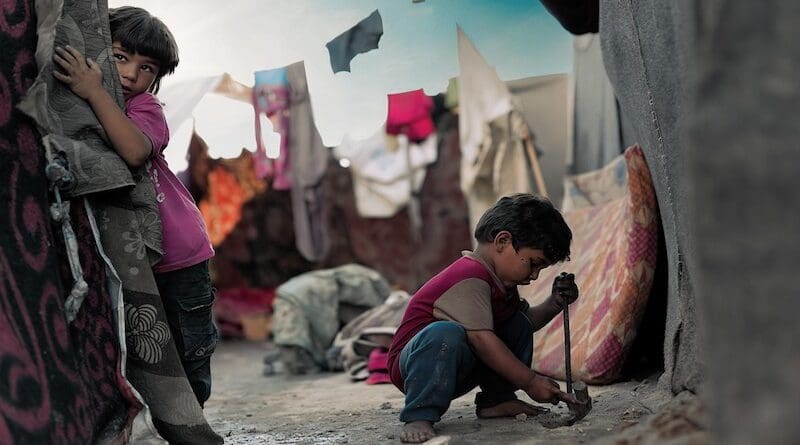

children boy girl palestine palestinian Gaza


By 

By Jumana Khamis


“Where is the world?” That was the chilling closing caption shared by 11-year-old Yaqeen Hammad in one of the final videos she posted on social media, just days before she was killed on May 23 by an Israeli airstrike on Deir Al-Balah in Gaza.

Yaqeen’s story has been thrown into particular focus this week as the world marks International Day of Innocent Children Victims of Aggression on June 4, a reminder not only of those lost but of the futures stolen.

As Gaza’s youngest social media influencer, Yaqeen was known for the uplifting videos she created and her work alongside her brother at Ouena, a local nonprofit organization dedicated to humanitarian relief and development.

Yaqeen’s followers will remember her for her infectious optimism and volunteer work with displaced families. Just days before she died, she posted survival tips to help others endure life under siege.

Now she has become a haunting symbol of the toll the war between Israel and Hamas is taking on young people.


More than 50,000 children have been killed or injured since the latest conflict began, according to the UN Children’s Fund, UNICEF. Thousands more have been orphaned or displaced by the ongoing violence.

Israeli authorities launched military operations in Gaza in retaliation for the Oct. 7, 2023, Hamas-led attacks on southern Israel, during which 1,200 people were killed, the majority of them civilians, and about 250 were taken hostage, many of them non-Israelis.

Despite repeated international efforts to broker a ceasefire agreement between Israel and Hamas, the ruling authority in Gaza, the continuing conflict has devastated the Palestinian enclave, creating one of the worst humanitarian disasters in the world.

For those children who survive long enough to see an enduring ceasefire, what kind of future awaits them?

“We are losing a generation before our eyes, condemning patients to die from hunger, disease and despair — deaths that could have been prevented,” American trauma surgeon Dr. Feroze Sidhwa told the UN Security Council on May 28.

He delivered a searing account of what he witnessed during two volunteer missions in Gaza, the first in 2024, the second in March and April this year, at Nasser Medical Complex in Khan Younis. Sidhwa said he has worked in several conflict zones, including Haiti and Ukraine, but nothing compared to what he witnessed in Gaza.

“I operated in hospitals without sterility, electricity or anesthetics,” he told council members. “Children died, not because their injuries were unsurvivable but because we lacked blood, antibiotics and the most basic supplies.”

He stressed that during his five weeks in Gaza he had not treated a single combatant.

“Most of my patients were preteen children, their bodies shattered by explosions and torn by flying metal,” he said, describing six-year-old patients with bullets in their brains, and pregnant women whose pelvises had been shattered by airstrikes.

“Civilians are now dying not just from constant airstrikes, but from acute malnutrition, sepsis, exposure and despair,” he added, noting that in the time between his two visits he had observed a sharp decline in the general health of patients, many of whom were too weak to heal as a result of hunger.

According to the Integrated Food Security Phase Classification, almost 71,000 cases of acute malnutrition, including 14,100 severe cases, are expected in Gaza between April 2025 and March 2026. As of May 29 this year, about 470,000 people in Gaza were facing imminent famine, the UN said, and the entire population was suffering from severe food insecurity. One in five children under the age of 5 years old is severely malnourished, and more than 92 percent of infants and pregnant or breastfeeding women are not receiving adequate nutrition.

Despite global pressure on Israeli authorities to allow more humanitarian aid into Gaza, access for relief workers remains limited. The UN Relief and Works Agency said deliveries are sporadic and some areas are unreachable as a result of fighting.

The day after Yaqeen was killed, Gaza was struck by another tragedy. On May 24, an Israeli airstrike hit the home of Dr. Alaa Al-Najjar, a pediatrician in Khan Younis who had long devoted her life to saving children, while she was on duty treating the wounded at Nasser Medical Complex.

Nine of her 10 children were killed in the blast. The youngest was just 7 months old, the eldest only 12. Her husband Hamdi, also a doctor, and their 11-year-old son, Adam, were pulled from the rubble with critical injuries. Hamdi died in hospital on May 31.

The Israel Defense Force said in response to initial reports of the strike that “an aircraft struck several suspects identified by IDF forces as operating in a building near troops in the Khan Younis area, a dangerous combat zone that had been evacuated of civilians in advance for their protection. The claim of harm to uninvolved individuals is being reviewed.”

Two days later, another child’s face captured the attention of the world. Ward Jalal Al-Sheikh Khalil, 7, emerged from the flames alone when Fahmi Al-Jarjawi School in Gaza City, a shelter for displaced families, was hit by an Israeli airstrike on May 26.

Her mother and two siblings were killed and her father is fighting for his life. In a now-viral video, Ward whispers through tears: “There was a shooting and all my siblings died.”

The Israeli military and Shin Bet, the country’s internal security service, issued a statement about the bombing of the school, in which they claimed the strike had targeted a compound used by Hamas and Islamic Jihad.

“The command and control center was used by the terrorists to plan and gather intelligence in order to execute terrorist attacks against Israeli civilians and IDF troops,” the army said. “Numerous steps were taken to mitigate the risk of harming civilians.”

Illustrations of a little girl surrounded by flames, inspired by Ward’s escape from the school, quickly spread across social media, capturing the sense of grief and outrage over the suffering of children in Gaza.

“In a 72-hour period this weekend, images from two horrific attacks provide yet more evidence of the unconscionable cost of this ruthless war on children in the Gaza Strip,” UNICEF’s regional director, Edouard Beigbeder, said on May 27.

“On Friday, we saw videos of the bodies of burnt, dismembered children from the Al-Najjar family being pulled from the rubble of their home in Khan Younis. Of 10 siblings under 12 years old, only one reportedly survived, with critical injuries.

“Early Monday, we saw images of a small child trapped in a burning school in Gaza City. That attack, in the early hours of the morning, reportedly killed at least 31 people, including 18 children.

“These children — lives that should never be reduced to numbers — are now part of a long, harrowing list of unimaginable horrors: the grave violations against children, the blockade of aid, the starvation, the constant forced displacement, and the destruction of hospitals, water systems, schools and homes. In essence, the destruction of life itself in the Gaza Strip.”

Beyond the physical destruction, an invisible crisis is escalating. According to the War Child Alliance, nearly half of children in Gaza now exhibit suicidal thoughts as a result of the sheer weight of grief, trauma and loss. Aid workers report children as young as 5 years old asking why they survived when their siblings, parents or even entire families did not.

During his address to the UN Security Council, Dr. Sidhwa described the despair he witnessed among young patients during his time in Gaza, and asked: “I wonder if any member of this council has ever met a 5-year-old who no longer wants to live — let alone imagined a society in which so many young children feel that way.

“What astonishes me is not that some children in Gaza have lost the will to live, but that any still cling to hope.”

Mental health professionals warn that many children in the territory display symptoms of complex trauma, including persistent nightmares, bed-wetting, social withdrawal, and panic attacks triggered by the sound of planes or ambulances.

But with even the most immediate, basic means of survival out of reach for many in Gaza, mental health support remains a more distant concern, leaving an entire generation to navigate profound psychological scars alone.

“How many more dead girls and boys will it take?” asked Beigbeder, the UNICEF chief. “What level of horror must be livestreamed before the international community fully steps up, uses its influence, and takes bold, decisive action to force the end of this ruthless killing of children?”


Arab News

Arab News is Saudi Arabia's first English-language newspaper. It was founded in 1975 by Hisham and Mohammed Ali Hafiz. Today, it is one of 29 publications produced by Saudi Research & Publishing Company (SRPC), a subsidiary of Saudi Research & Marketing Group (SRMG).

 

Exclusive: Israel to join high-profile Brussels meeting despite cooling EU relations

Israel Gaza
Copyright Copyright 2025 The Associated Press. All rights reserved.

By Maïa de La Baume
Published on 

Israel will participate in a meeting with the EU’s southern neighbours in Brussels this month regardless of the bloc’s hardening stance over its actions in Gaza, according to several Israeli and EU officials.

The EU’s 27 foreign ministers are scheduled to meet their Israeli counterparts on 23 June for an EU-Southern Neighbourhood ministerial meeting which is aimed at deepening the bloc’s cooperation with Israel as well as nine other southern partners including Algeria, Palestine, Egypt, Jordan, Lebanon, Libya, Morocco, Syria and Tunisia.

“The objective is for Israeli representatives to be present at the meeting,” a senior Israeli official told Euronews, adding that the participation of Gideon Saar, Israel’s foreign affairs minister “is still to be confirmed”.

But the meeting comes at a time of unprecedented cooling of relations between the EU and Israel following the country’s blockage of food from entering into Gaza and after Palestinian health officials and witnesses alleged recent shootings by Israeli soldiers of Palestinians headed for humanitarian aid sites. The Israeli army has said it fired “near a few individual suspects” who left the designated route, approached its forces and ignored warning shots.

The meeting also comes after the EU's foreign policy chief Kaja Kallas stated in late May that the bloc would examine if Israel has violated its human rights obligations under Article 2 of the EU-Israel Association Agreement, which defines the trading and diplomatic relations between both sides.

No timeline has been fixed for the review, which will be conducted by the EU's external action service (EEAS). Israeli foreign ministry spokesperson Oren Marmorstein has "completely" rejected the direction taken in Kallas' statement, saying it reflected "a total misunderstanding of the complex reality Israel is facing".

The Netherlands, which tabled the move and is considered a firm ally of Israel, said that Israel's “humanitarian blockade” on Gaza, where a limited quantity of critical supplies entered for the first time in more than eleven weeks on Monday, is in "violation of international humanitarian law" and therefore of Article 2.

An EU official said that the 23 June meeting involving Israel will not be a forum to discuss the ongoing war in Gaza but a routine gathering conducted under the EU’s Southern Neighbourhood partnership, which is meant to strengthen existing cooperation with 10 southern neighbours on a wide range of issues, including governance, climate change, economic development, energy and migration. In addition, the EU is Israel’s biggest trade partner, with the trading relationship valued at more than €45 billion each year.

The EU’s Southern Neighbourhood partnership derives from the 1995 Barcelona Declaration which committed to turn the Mediterranean into “an area of dialogue, exchange and cooperation, guaranteeing peace, stability and prosperity”, according to an official Commission document. In 2020, trade between the EU and the region represented  €149.4 billion and the bloc’s imports were worth €58.0 billion.

In 2021, the EU 27 agreed to strengthen their partnership with the Southern Neighbourhood following the COVID-19 pandemic and meet their counterparts every year. Their cooperation is based on “good governance, human rights and fundamental freedoms promotion and protection, democratic institutions and the rule of law", according to 2021 European Council summit conclusions.

One of the last EU-Southern Neighbourhood ministerial meetings took place in 2022 in Barcelona, where participants discussed regional cooperation as well as the war in Ukraine.


Amazon outlines job initiatives in Europe's low-employment areas

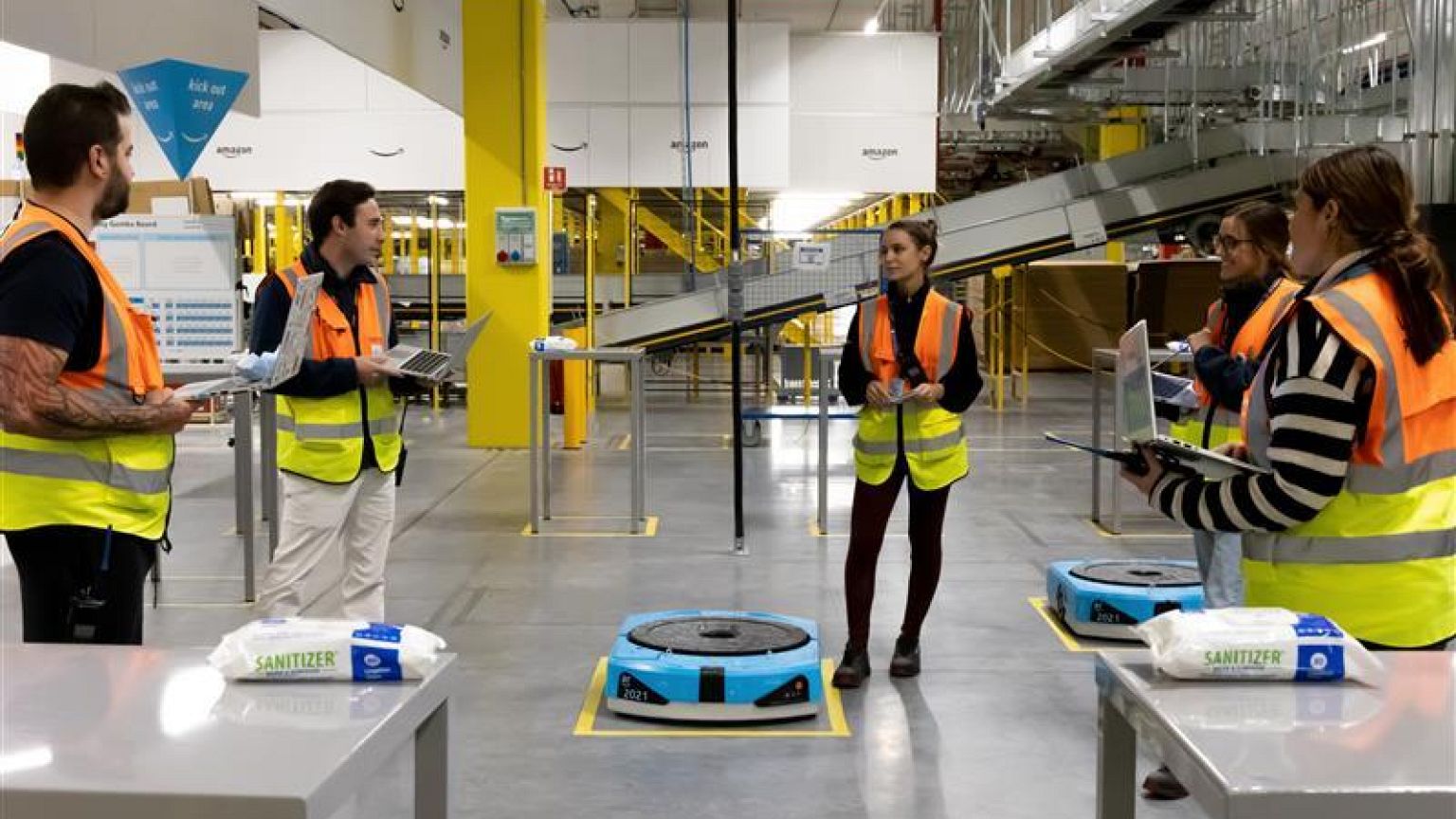
Worker in a fulfilment centre
Copyright Amazon

By Hannah Brown
Published on 

Amazon has outlined to Euronews how it is planning to boost job initiatives in Europe's low-employment areas as it also releases its latest impact report.

In 2024, Amazon contributed over €41 billion to Europe's GDP, and over €29 billion to the EU27, according to their latest impact report, released on June 4. 

To put that in perspective, €41 billion is just a little bit more than the entire GDP of Latvia. 

"Our economic impact in Europe goes far beyond the numbers," explains Mariangela Marseglia, VP of Amazon Stores EU. 

"We're creating opportunities where they're needed most, supporting local economies, and helping to revitalize communities across the continent.”

And whilst the impact may “go beyond the numbers”, let’s take a closer look at the stats. 

“Building pathways for people”

In the EU, Amazon directly employs 150,000 people and the impact on communities outside of traditional employment hubs has created an interesting ripple effect on the local economies. 

In France's Hauts-de-France region, where unemployment sits at 8.7% - well above the national average of 7.3% - Amazon has created over 6,000 jobs in the past decade. 

This region has previously suffered from the deindustrialisation that has plagued many communities in Europe, with the loss of mining, steelmaking and wool industries. 

The retail giant’s fulfillment centre at Lauwin-Planque employs over 2,600 permanent staff, with 84% living within a 30-minute drive. Eleven years after opening, 71% of locals report the site has had a positive or very positive impact, with 94% highlighting job creation as a key benefit.

This is echoed across the EU as over 90,000 of Amazon’s employees are based in areas with higher than average unemployment rates, according to a report from Eurostat.

Research from Ipsos further revealed that 81% of residents near an Amazon logistics facility report increased job opportunities since the company’s arrival and over half say financial improvements have led them to consider major life decisions like purchasing property or starting a family.

While zero-hour contracts are banned in several EU countries, in the European countries that do allow them, Amazon confirmed this is not an employment method they practice. 

Continued investment

In 2024, Amazon invested more than €55 billion in infrastructure and its workforce across Europe (€38bn in the EU27), bringing its total investment since 2010 to €320 billion.

Although most people know Amazon for its e-commerce platform, a huge part of its business also comes from Amazon Web Services (AWS) and its cloud computing offerings. 

Future investments from the company seem centred around AWS and will drive employment in diverse skill sets. 

Some €8.8 billion is planned in the Frankfurt region through 2026, supporting 15,200 full-time equivalent jobs and contributing an estimated €15.4 billion to Germany’s GDP. Moreover, £8 billion (€9.5 bn) will be invested in the UK before the end of 2028, supporting 14,000 jobs annually and contributing £14 billion (€16.6 bn) to the UK’s total GDP.

A further €6 billion is being invested in France to develop cloud infrastructure until 2031. Predictions estimate this will contribute €16.8 billion to France’s GDP and will support an average of 5,271 full-time jobs annually.

In Spain, a €15.7 billion injection will support 17,500 jobs annually and contribute an estimated €21.6 billion to Spain’s gross domestic product (GDP) through to 2033.

SEX ED

200-year-old condom featuring erotic etching goes on display at Amsterdam's Rijksmuseum

200-year-old condom featuring erotic etching goes on display at Dutch museum
Copyright Kelly Schenk/Rijksmuseum via AP


By David Mouriquand
Published on 

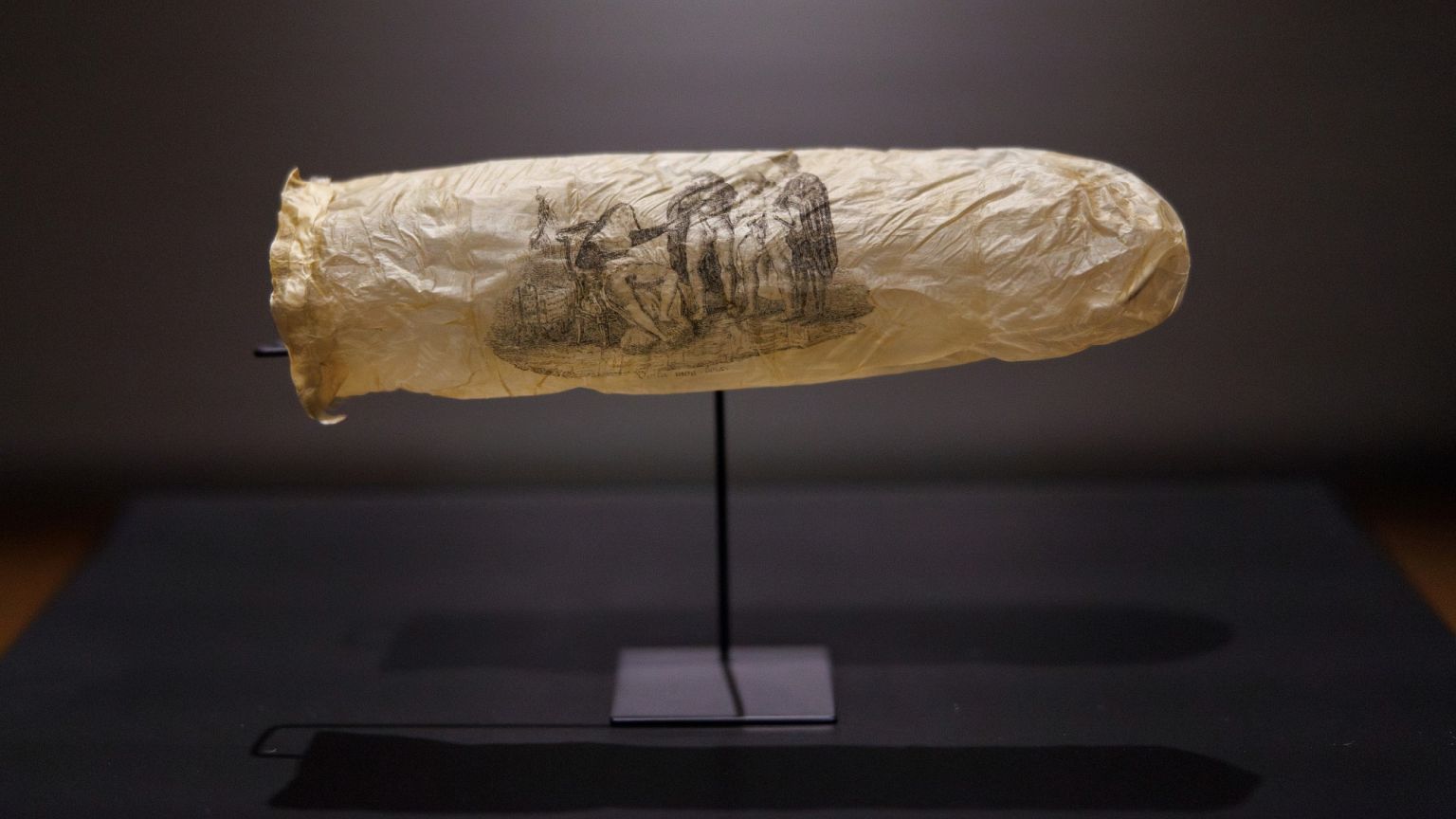
The Rijksmuseum exhibition “Safe Sex?” includes an ancient contraceptive featuring an erotic etching of a nun and three erect clergymen.

The Netherlands' national museum has a new object on display: a 200-year-old condom, emblazoned with erotic art depicting a partially undressed nun pointing at the erect genitals of three clergymen.

The 19th-century “luxury souvenir”, bought for €1,000 at an auction in Haarlem last November, is the first contraceptive sheath to be added to the Rijksmuseum’s art collection. It goes on display this week as part of an exhibition called “Safe Sex?” about 19th century sex work. 

The condom - part of the "Safe Sex?" exhibition at the Rijksmuseum
Kelly Schenk/Rijksmuseum

Presumed to be made out of a sheep’s appendix circa 1830 (vulcanised rubber was invented nine years later to make them safer and more widely available), the ancient prophylactic reportedly comes from an upmarket brothel in France - most likely in Paris.  

As well as the phallus-indicating sister of Christ, the condom features the phrase “Voila, mon choix” (“There, that’s my choice”). 

So, a nun judging a cock-off? Almost...


Condom with print, circa 1830, which has gone on display at Amsterdam's Rijksmuseum
Kelly Schenk/Rijksmuseum

The Rijksmuseum said in a statement that the playful item “depicts both the playful and the serious side of sexual health” and that the French etching is a reference to the Pierre-Auguste Renoir painting “The Judgment of Paris,” which depicts the Trojan prince Paris judging a beauty contest between three goddesses.

Visitors of the Rijksmuseum have until end of the November to take the plunge and see the condom of yore in the “Safe Sex?” exhibition.


Russia nationalises World of Tanks game developer

Russia nationalises World of Tanks game developer
What started as a campaign by the Kremlin to increase its sovereign control over the internet has turned into a land grab of successful business. The state has nationalised World of Tanks, one of Russia’s most successful online games. / bne IntelliNews
By bne Moscow bureau June 4, 2025

Russia has completed the nationalisation of the World of Tanks game developer Lesta Games, one of Russia’s most successful online games, with the Tagansky District Court of Moscow ordering the seizure of the Russian assets of the company on the extremism charges, according to The Bell.

The grounds for the seizure were the designation of Wargaming founder Viktor Kisly and Lesta owner Malik Khatazhaev as an "extremist organisation" following a case launched by the Prosecutor General’s Office.

The tech savvy Russians are a world power in the gaming world, which has existed without much government interference over the last two decades. But following  the invasion of Ukraine over three years ago the sector has been shaken to its foundation with a tsunami of M&A  deals and well connected players have made bids for some of Russia’s most attractive online properties. Russian search engine giant Yandex has already been broken up and sold, with e-commerce giant Ozon.ru next in the firing line, according to bne IntelliNews sources in Russia. Kremlin-connected VK has been pouring money into acquisitions, while e-commerce market leader Wildberries was in a very weird merger with an outdoor billboard company called Russ that is ten times smaller than it and brings nothing to the party.

Now it is World of Tanks’ turn. The message is clear:  leaving Russia is a clear condemnation of Putin’s war. While Khatazhaev has not gone as far as Yandex’s founder Arkady Volozh, who openly called the Ukraine "special military operation" (SVO) a barbaric war and was forced to leave Russia as a result, his implicit criticism is enough to get your assets nationalised.

As followed by bne IntelliNews, Lesta Games, which now manages the Russian versions of both games, was spun off from Wargaming in 2022 after Kislyi withdrew from Russia and Belarus amid the full-scale military invasion of Ukraine.

In 2022, Lesta had taken over the Russian part of Wargaming's business, the developer of the World of Tanks. The case centres on a 2023 fundraiser organised by Wargaming for a Ukrainian charity. Despite actively demonstrating loyalty and supporting troops in the SVO, Russian Lesta failed to prove it had no involvement.

After the war began in 2022, Wargaming, which developed World of Tanks and World of Warships, decided to split its business and carve out the part operating in Russia and Belarus. It was sold to a new owner, Malik Khatazhaev, the founder of Lesta Games.

Previously, Lesta was a special effects studio that collaborated with Wargaming and was eventually fully acquired by the partner. By 2022, Khatazhaev had led Wargaming’s Russian office for many years.

The main accusation against Lesta was a fundraiser for a Ukrainian foundation that Wargaming organised in World of Tanks in 2023, after the sale and business separation. The campaign was not held in the Russian version of the game.

According to two unnamed gaming market sources cited by The Bell, Lesta was targeted because the company remained linked to Wargaming even after their formal split.

In 2024 Lesta posted RUB35bn ($390mn) in revenue (a 40% increase from the previous year) and RUB16bn in net profit. World of Tanks has 60mn registered accounts and an estimated monthly active user base of 6.5mn. Russian Forbes ranked Lesta 10th among the most valuable Runet companies and valued it at $1.5bn, twice the valuation of state-controlled VK internet major.

Previously Kommersant daily named investment fund Gem Capital, linked to former Gazprom executive Alexander Paliy, as one contender for Lesta. The daily claimed Gem Capital had tried to buy Lesta from Khatazhaev in late 2024, but he refused.

The article was later removed from the site, and Gem Capital denied any interest, according to The Bell. VK was also named by The Bell’s sources as a possible interested party.

However, Wargaming and the founder Kisly retained the right to revoke Lesta’s game licences in the event of a hostile takeover. In that case, the games could lose access to app stores and Steam, the world’s largest game distribution platform.

Amid a large-scale redistribution of wealth in Russian elites following the full-scale military invasion of Ukraine, a number of major assets privatised in the 1990s have been de-facto renationalised by the state.

The analysts surveyed by The Bell now warn that the “extremism” cases might become a more common legal tool for nationalisation of assets in Russia.


Russia’s Gazprom has quietly shelved Turkey gas hub plan, says report

Russia’s Gazprom has quietly shelved Turkey gas hub plan, says report
The TurkStream and Blue Stream pipelines run under the Black Sea from Russia to Turkey. / Gazprom, TurkStream\\\\\\Feedly
By bne IntelliNews June 3, 2025

Russia’s Gazprom has quietly shelved plans to develop a gas distribution hub in Turkey, Bloomberg reported on June 3.

With Turkey connected to Russia’s TurkStream and Blue Stream trans-Black Sea pipelines, Gazprom looked at the country as an option for restoring lost gas volumes piped to Europe. European countries made up Russia’s largest gas export market prior to the Febuary 2022 Kremlin invasion of Ukraine and the consequent shunning by most of Europe of Russian gas shipments available by pipeline. However, Bloomberg reported that after months of mulling options, Gazprom concluded that the Turkey plan was not viable. Work on it has largely come to a halt, unnamed people familiar with the matter, cited by the news service, said.

Russian President Vladimir Putin as recently as last October publicly endorsed the potential of the Turkey hub plan. But a difficulty with the project, as explained by the reported statements of the sources, is that Turkey lacks spare export-pipeline capacity into bordering gateways to southern Europe, Greece and Bulgaria. At the same time Ankara stands unwilling to let Gazprom market any hub gas jointly, meaning Russian influence over the hub would be limited, the people said.

The European Union, meanwhile, is pushing ahead with a proposal to entirely boycott Russian gas imports by the end of 2027—though there are projections that in 2025 the European Union is set to spend more on Russian gas and raw materials, at more than $20bn, than on Ukrainian military aid.

Turkey is ambitious to create a gas hub that would re-export gas from countries including Russia, Azerbaijan and Turkmenistan and boast its own price index. Even Iranian gas could one day flow through such a hub should the US allow presently sanctioned Iran to be brought in from the cold, while liquefied natural gas (LNG) cargoes from Qatar, the US, Algeria, Nigeria and other providers could undergo regasification for piping through the hub. Bringing gas up to Turkey via a pipeline laid from Qatar to the country, via Syria, is, however, a distant, and quite possibly infeasible prospect.

Turkey itself is oil and gas poor.

The 17th EU sanctions package adopted against Russia on May 20 includes the bloc’s most extensive effort yet to curb Russia's energy revenues, with a particular focus on the so-called "shadow fleet" of vessels used by Moscow to circumvent existing sanctions.


Russian environmental attacks in Ukraine caused €85 billion in damage, Kyiv estimates

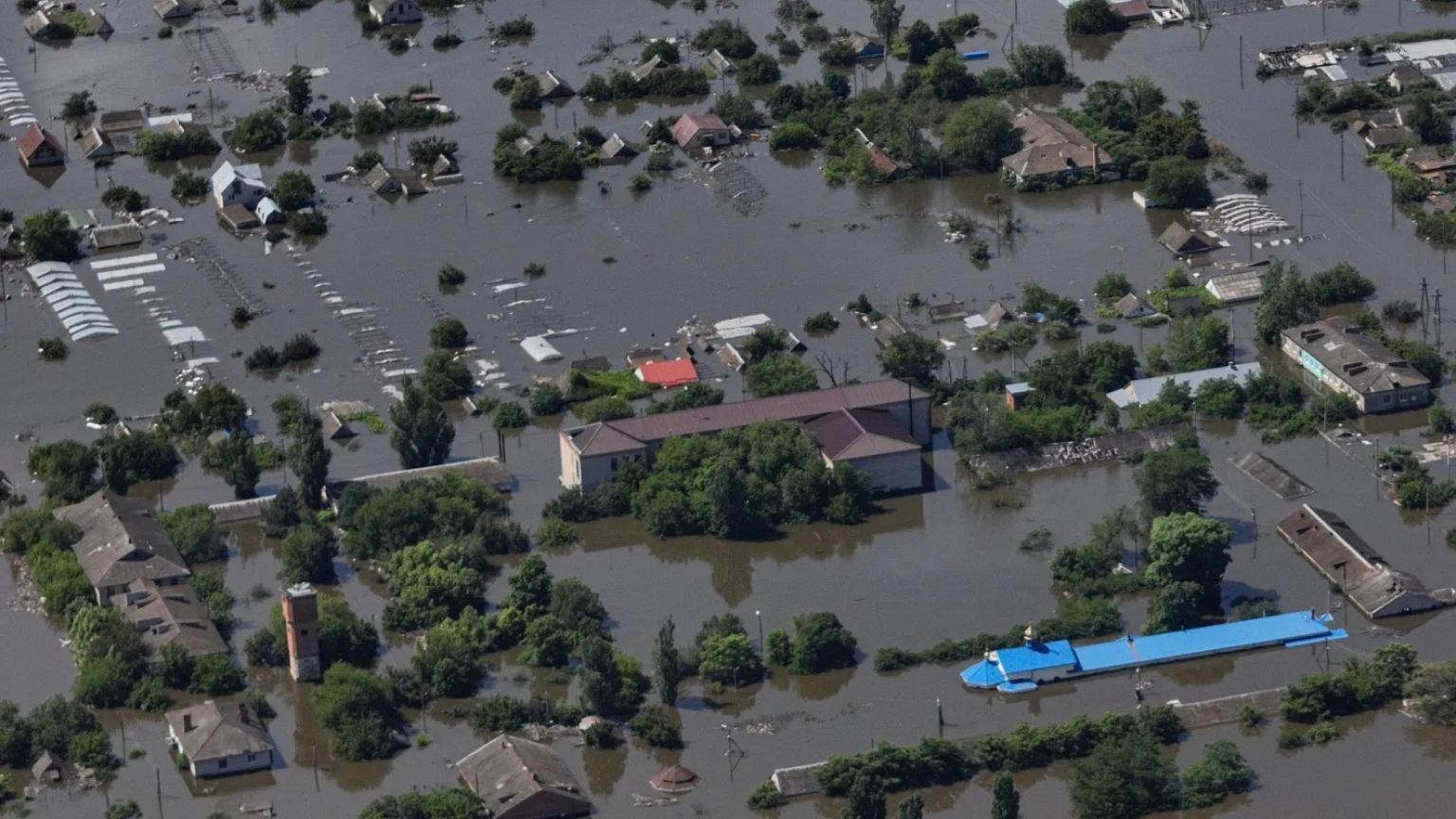
Houses are seen underwater in the flooded village of Dnipryany, in Russian-occupied Ukraine, Wednesday, June 7, 2023, after the collapse of Kakhovka Dam
Copyright AP Photo

By Sasha Vakulina
Published on 

Since the beginning of Russia’s full-scale invasion, Ukrainian authorities have registered over 8,000 cases of destruction to Ukraine's environment caused by Moscow’s war. The full toll of Russia’s environmental war crimes is likely much higher, Kyiv warns.

Since the beginning of Russia’s full-scale invasion, Ukraine’s Ministry of Environmental Protection had to change its focus from managing the country’s natural resources and addressing climate change to tracking each case of the environment being deliberately attacked. 

From February 2022 until today, Kyiv has registered and documented over 8,000 cases of Russia’s crimes against Ukraine’s environment, the country’s minister told Euronews.

“We call it crimes against the environment because there is pollution of water resources, destruction of water infrastructure, water supply infrastructure and soil pollution, soil mining and forest fires. All this is a result of Russia’s war”, Svitlana Grynchuk said. 

Grynchuk told Euronews that Kyiv’s estimates of these 8,000 cases "in monetary terms to (amount to) more than €85 billion" — a figure that does not include the damage to the territories Russia currently occupies and therefore Ukraine cannot access. 

These losses also do not yet include the most recent attack on the Chernobyl nuclear power plant and the damage to its safety confinement, Grynchuk noted. 

“More than 45 countries have contributed throughout this period since the Chernobyl disaster. And only in 2017 we completed the construction of the new safe confinement for more than €1 billion, which was recently damaged in a Russian attack,” she explained.

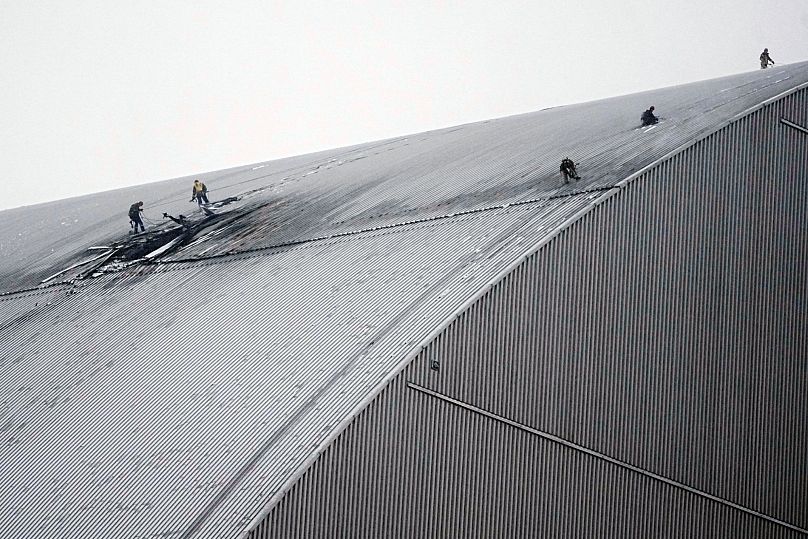
A Russian drone hit the confinement over the fourth nuclear reactor at the Chernobyl Nuclear Power Plant on February 14 2025. The drone exploded upon impact with the sarcophagus, causing a fire that took approximately three weeks to extinguish.

Grynchuk pointed out that while it is possible to rebuild and restore civilian infrastructure, resuscitating the environment will be much more difficult, as "some ecosystems and some natural objects will not return to the pre-war original state."


The containment vessel that protects the remains of reactor number four at the Chernobyl nuclear power plant after a drone attack, Ukraine, Friday, Feb. 14, 2025. AP P

Environmental concerns in wartime

Dealing with daily Russian missile and drone attacks for three and a half years, Ukraine has been primarily focusing on air defence systems to protect civilians. Meanwhile, the civilians have been trying to protect the environment, Grynchuk said. 

“You will not find a single Ukrainian who will tell you that it is not a priority now, because it is exactly during Russia’s war that we felt how important the natural resources are”, she pointed out.

This issue is of particular importance to those who have lost access to essential services, such as water. 

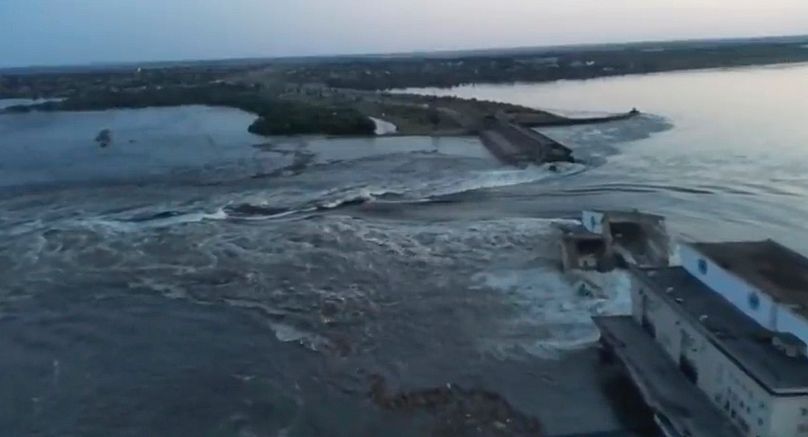
Millions of Ukrainians lost access to water supply when Russian forces destroyed the Kakhovka dam in the Kherson region on 6 June 2023. Its reservoir supplied water to cool the Zaporizhzhia nuclear power plant — the largest nuclear facility in Europe — and provided water for irrigation in southern Ukraine.

Kyiv attempted to restore the water supply to the people and industrial sites, but many consequences still remain unresolved, Grynchuk said.

“First of all, these are complex and expensive projects, and these are projects in regions that are constantly under attack,” she noted.


This image made from video provided by Ukraine's Presidential Office shows the damaged Kakhovka dam near Kherson, Ukraine, Tuesday, June 6, 2023.AP Photo

Ukraine‘s environmental EU aspirations

If it were not challenging enough to try to restore environmental losses under constant attacks, Kyiv also has to do so according to EU norms and regulations. 

Ukraine is set to undergo a key environmental and climate screening with Brussels on 16 June, when Kyiv will have to demonstrate its alignment with EU legislation. 

“This is the largest and most extensive screening process in terms of volume and duration, because it affects every sector of Ukraine's economy. This includes agriculture, infrastructure, healthcare, and education,” Grynchuk said.

Brussels previously stated that Ukraine is making steady progress towards the EU, particularly by demonstrating the highest screening rate in the history of enlargement. Grynchuk says environmental and climate protection aspects and sectors must be ready for European integration.

To demonstrate its commitment, Ukraine ensured that its recent minerals deal with the US aligns with Kyiv’s efforts to join the EU.

“The agreement clearly states that its implementation should take into account the principles and ambitions of Ukraine to join the European Union and should not contradict the rules and regulations that we have to follow”, Grynchuk said, explaining that the US deal will ultimately bring benefits for the EU as well.

“The supply chains of certain materials are highly dependent on imports from other countries. This is the same problem for both Europe and the US," she pointed out.

"That is why it is very important to replace elements in these supply chains with raw materials and elements that are produced in the European Union, in Ukraine, in friendly countries, in civilised countries."

"This is primarily a matter of national security for the European Union and Ukraine, as well as for the United States,” Grynchuk concluded.