It’s possible that I shall make an ass of myself. But in that case one can always get out of it with a little dialectic. I have, of course, so worded my proposition as to be right either way (K.Marx, Letter to F.Engels on the Indian Mutiny)
Thursday, July 03, 2025
Chile lithium expansion cleared by little-known nuclear agency
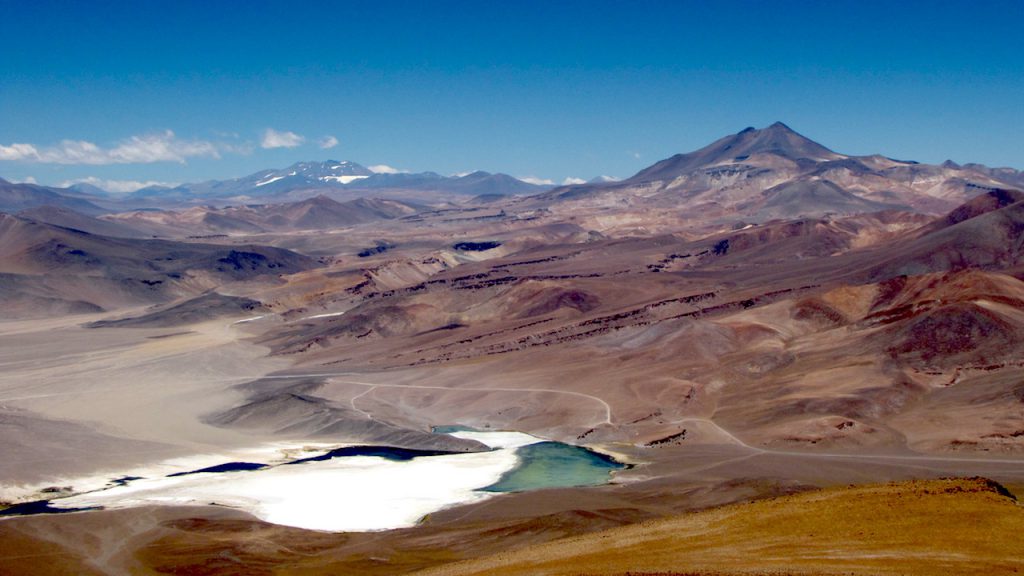
Lithium-rich Salar de Atacama in northern Chile. (Image courtesy of Sergejf |Flickr.)
A little-known nuclear agency signed off on a proposal that clears the way for a major lithium expansion over the coming decades in Chile, the nation with the biggest reserves.
The Chilean Nuclear Energy Commission, or CCHEN by its Spanish initials, approved a request by Codelco for extraction at the Atacama salt flat operation — currently controlled by SQM — from 2031 to 2060.
To be sure, that time-frame is a long way off in a market currently characterized by strong demand and even stronger supply. But it allows a partnership between Codelco and SQM to continue ramping up supply of the battery metal from about 200,000 metric tons of lithium carbonate equivalent a year to as much as 330,000 tons. The venture is betting on low expenses to keep expanding as higher cost producers cut back.
Under the partnership arrangement, SQM would relinquish a majority stake in its prized assets to Codelco in exchange for three more decades of operations. The planned tie-up is encountering growing political opposition in Chile as its approval process gets caught up in the country’s election cycle. CCHEN’s clearance is one less obstacle to nailing down the transaction during the current administration.
CCHEN authorizes lithium quotas and exports in a throwback to a 1979 decision to declare lithium “strategic” because it was thought to be a key element in nuclear processes.
(By James Attwood)
Lupaka Gold skyrockets on arbitration win against Peru
Shares of Lupaka Gold (TSXV: LPK, FRA: LQP) skyrocketed to a three-year high on Wednesday after the Canadian miner won $65 million in its international arbitration case against Peru, five years after launching the case.
In a press release, the company confirmed it has the final award from the International Centre for Settlement of Investment Disputes (ICSID) in the arbitration it initiated against the Peruvian government in 2020.
Shares of Lukapa Gold gained as much as three-fold from C$0.08 to C$0.24 on the news, for its highest since June 2022. As of 1:40 p.m. ET, the stock traded at C$0.14 for an intraday gain of 167% and a market capitalization of C$4.1 million.
Blocked gold project
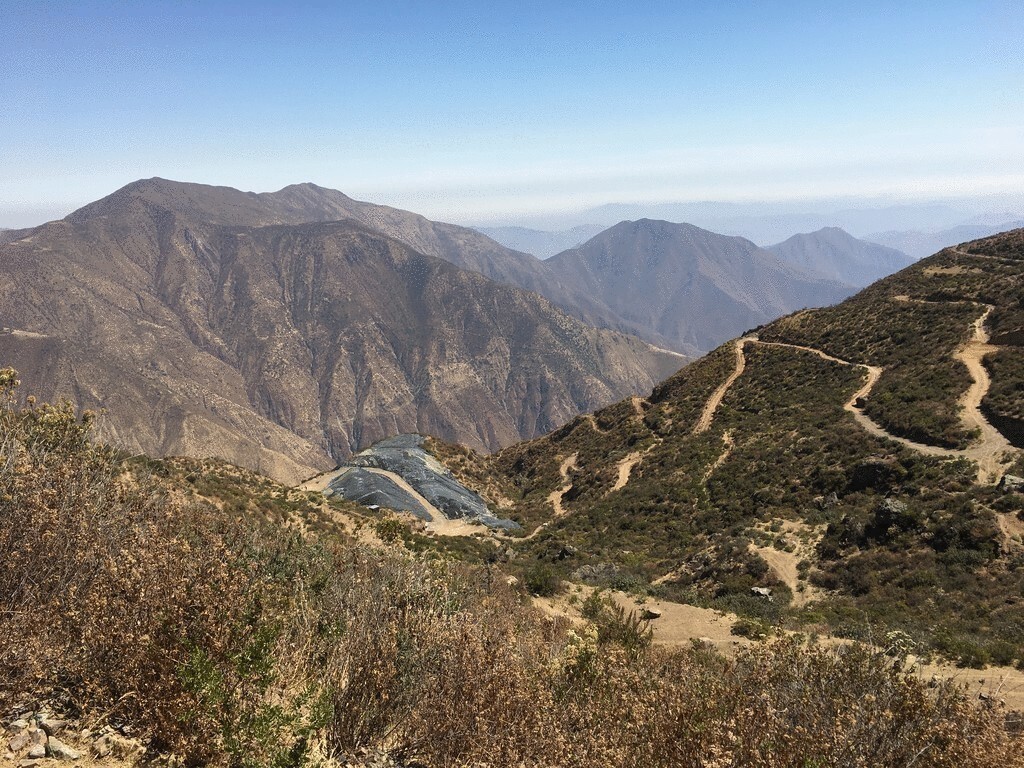
The dispute stems from a protest by the community of Parán in October 2018 that blockaded access to Lupaka’s Invicta gold development project, located 120 kilometres north of the capital city Lima.
The blockade, which the company considered to be illegal, severely impacted its ore processing operations and limited cash flow generation. A year later, Lupaka lost the project due to its inability to pay back its lender.
Before the situation started, Lupaka had completed 3,000 metres of underground workings, agreements from the community of Lacsanga and a 29-kilometre access road sufficient to handle 40-tonne ore trucks. The project was forecast to produce 185,000 oz. of gold equivalent over a six-year life.
In the arbitration launched in November 2020, the British Columbia-based gold miner alleged that the Peruvian government had supported this protest, thus breaching its free trade agreement with Canada. In its claim, it was seeking compensation of more than $100 million.
Lupaka’s CEO Gordon Ellis said while receipt of the final award is “exceptionally good news” and a key step in arbitration proceedings against Peru, it “does not necessarily mean that the company will recover the amounts awarded in the immediate future.”
“We may have a few more hoops to jump through prior to the company actually receiving any cash,” he added.
Gold helps Canada’s stocks benchmark outshine the S&P 500
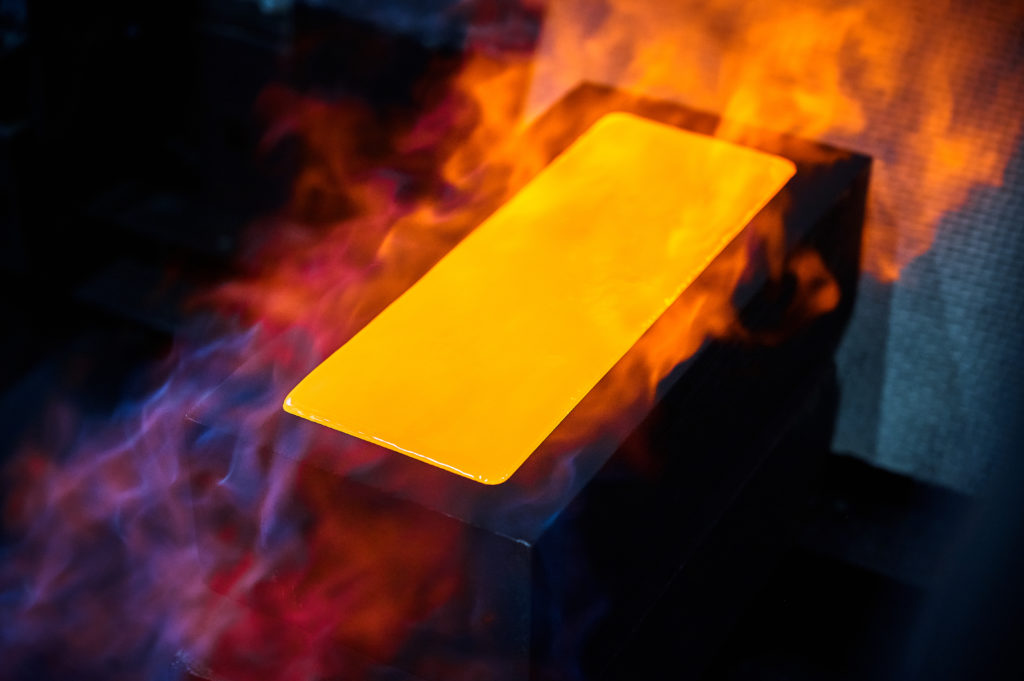
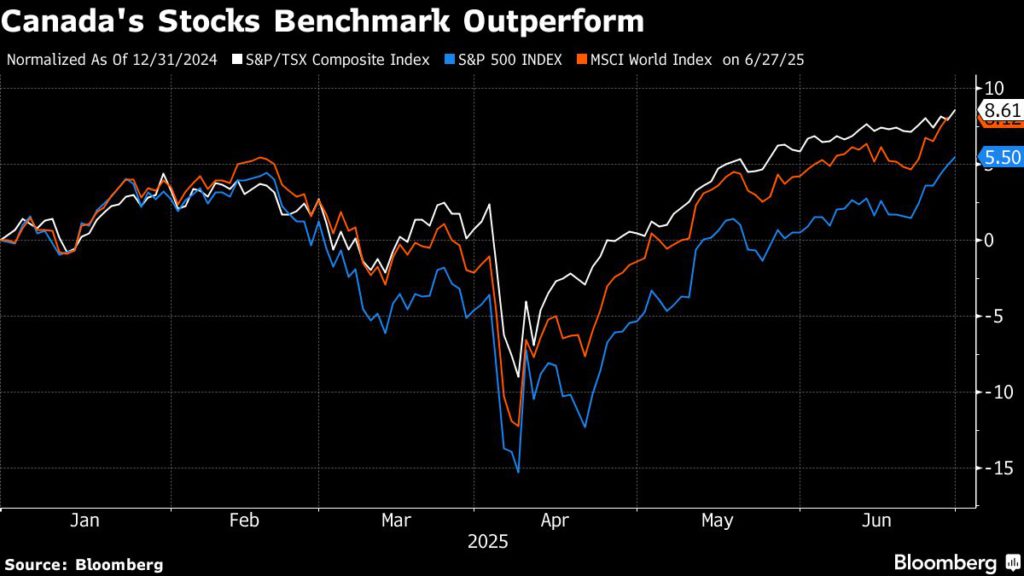
Despite ongoing trade tensions and a weakening economy, Canada’s main stocks benchmark outshone its US counterpart in the first half thanks to a record-breaking gold rally.
The S&P/TSX Composite Index climbed 8.6% for the year to June 30, higher than the S&P 500’s 5.5% advance over the same period. In US-dollar terms, the Toronto index was up 15%, mirroring the gains of other gold-heavy world indexes.
“No doubt that it’s been driven by gold,” said Sadiq Adatia, chief investment officer at BMO Asset Management Inc. Investors rushed into gold and precious metals miners to hedge some of the risks caused by US President Donald Trump’s tariff threats as well as geopolitical tensions and conflicts in the Middle East. That rush benefited the Toronto stocks gauge.
“You need to have things that can bulletproof your portfolio, and gold is the one that does that the best,” Adatia said.
Gold and silver stocks drove half of the gains in the S&P/TSX Composite Index through June 18, an “exceptional” run that was “driven by heightened uncertainty surrounding US tariffs and their potential impact on economic growth,” Bank of Nova Scotia analyst Simon Fitzgerald-Carrier wrote in a note published that day.
Four of the 10 biggest gainers through the first half of the year were precious metals stocks, including Agnico Eagle Mines Ltd. and Wheaton Precious Metals Corp. Moreover, most of the top 10 performing stocks in the index are precious metals miners, led by Lundin Gold Inc.’s nearly 135% climb.
The question now is whether the gold-led rally will fade, after prices for the metal declined at the end of June as both geopolitical and trade risks waned.
“I don’t think gold is going to have the same run in the second half that it had in the first half because a lot of the ambiguity and the uncertainty that we were facing earlier on has subsided,” BMO’s Adatia said.
Revenue forecasts for S&P/TSX members have slipped “notably” since April, and the index’s large exposure to the “struggling energy sector is disproportionately weighing on overall forecasts,” Bloomberg Intelligence strategist Gillian Wolff wrote in a June 11 note.
Still, Lesley Marks, chief investment officer of equities with Mackenzie Investments, points to growth opportunities for Canadian stocks beyond the gold story. Global investors are putting money into the TSX because of its heavy weighting toward materials, energy and financials, she said.
And Canada’s new Prime Minister Mark Carney is “championing a very pro-investment, pro-growth and economically focused” mandate, Marks said.
She added that the S&P/TSX Composite is trading at a 17x price-to-earnings ratio, much lower than the S&P 500’s 24x valuation.
“I think that there is a fundamental story around Canadian stocks because of policy changes from our government, but also a valuation story,” Marks said.
(By Stephanie Hughes and Geoffrey Morgan)
ATMY reports “massive”antimony bearing stibnite mineralization at Bald Hill project in NB
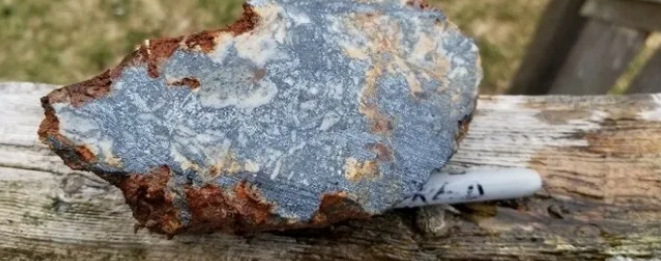
Mineralization at Bald Hill project in New Brunswick, Canada. Image: Antimony Resources.
Antimony Resources (CSE: ATMY) (FSE: K8J0) reported Wednesday that the first assays have been received from drilling at its Bald Hill antimony project, including sections of “massive antimony stibnite and stibnite bearing breccia-filling” intersected.
The Bald Hill project is located in Canada’s New Brunswick province.
The company reported drilling 4.17% Sb over 7.40 meters including three zones which returned 28.8% Sb, 21.9% Sb, and 17.9% Sb, respectively.
Ten additional drillholes have been completed to date and sections of massive antimony stibnite and stibnite bearing breccia-filling have been intersected in the drill holes, the company said.
The antimony bearing mineralization has been outlined in surface outcroppings over a distance of at least 300 meters to the southeast beyond the original drilling.
Stibnite is commonly mined for its antimony content. The recent cancellation of antimony exports by China, combined with a substantial price increase, have driven efforts to locate and extract this critical metal in Canada and the US.
Assays are pending and are expected for the next set of drill holes in two to three weeks, the company said.
Drill holes BH-25-01 and BH-25-02 did not reach the target before the holes were abandoned. It was determined that the drilling did not reach the target mineralization, it added.
Additional drilling and information gathered by prospecting and mapping the newly discovered surface occurrences indicated that these drillholes had ended short of the mineralized zone.
“I am very pleased with the assays returned for drillholes BH-25-03 and BH-25-04,” Antimony Resources CEO Jim Atkinson said in a news release. “The shortfall of the first two drillholes was disappointing but we have better identified the location of the mineralization with each successive drill hole and the surface mapping and have retargeted the area of drillholes 1 and 2 with additional drill holes to intersect the Zone.
“The results obtained in these first samples have increased our confidence in the validity of the previous drilling results and will assist in establishing the drill hole density we will need for a Resource,” Atkinson said.
By market close in Toronto, Antimony Resources’ stock had been traded 1,640,408 times, closing the day down 21%. Average daily trading volume is 173,350. The company has a C$6 million ($4.4m) market capitalization.
Rio Tinto-backed aluminum firm to invest $1.1 billion in Canada smelter
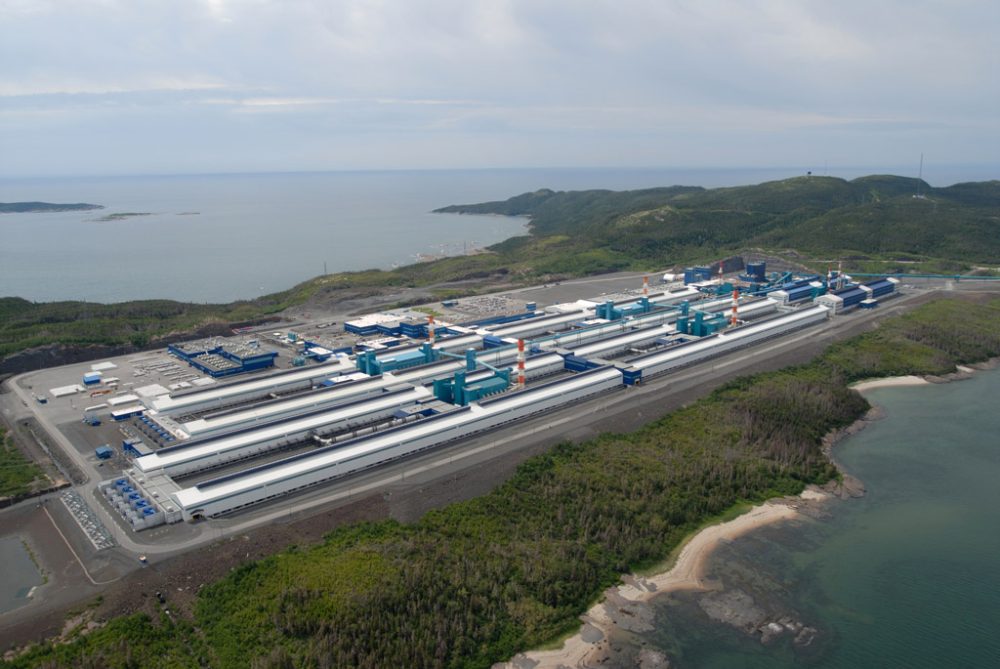
Aluminerie Alouette, an aluminum maker that’s partially owned by Rio Tinto Plc, is planning to commit as much as C$1.5 billion ($1.1 billion) to modernizing its facilities in northern Quebec, according to people familiar with the matter.
The company has secured a new electricity supply deal with Hydro-Quebec, the power utility owned by the Quebec government, the people said, speaking on condition they not be identified because the matter is still private.
A spokesperson for Aluminerie Alouette declined to comment on the details, but said an official announcement will come Friday.
The company’s investment will be welcome news for an industry that’s facing the pressures of US President Donald Trump’s trade war. The White House has put 50% tariffs on imports of foreign aluminum, a move that will hurt US businesses that use the metal. In one example, beer and alcohol maker Constellation Brands Inc. said Wednesday that it expects aluminum tariffs to cost the company about $20 million over the remainder of its fiscal year.
Canada is the largest exporter of the metal to the US, which doesn’t have enough aluminum smelting capacity meet its own needs.
“The United States needs Quebec to meet its demand, especially since we produce 70% of all aluminum in North America,” Quebec Economy Minister Christine Frechette said in a post on X Monday. “Our priority remains to protect our economy and our workers.”
Aluminerie Alouette is a consortium made up of Rio Tinto, which owns 40%, and other companies including AMAG Austria Metall AG and Norway’s Hydro Aluminium, according to the company’s website. Its smelter in Sept-Îles, Quebec, employs about 900 people and has annual capacity of 630,000 metric tons of primary aluminum.
(By Mathieu Dion)
Pakistan dangles rare earths to woo Trump, avoid tariffs
Pakistan is courting the United States with a bold pitch that includes rare earths, bitcoin mining potential and political flattery, in a bid to avoid looming tariffs of up to 29% and secure deeper ties with Washington.
Hoping to attract foreign investment and burdened by a spiralling economic crisis, Pakistan is reviving long-standing claims about its untapped mineral wealth, estimated by officials to be worth between $8 trillion and an eye-popping $50 trillion. The country is highlighting its vast reserves of copper, gold, lithium and antimony, a metal used in batteries and flame retardants.
“Pakistan has been quite smart about getting the administration’s attention, capitalizing on its broader global interests in crypto and critical minerals and pitching its own offerings,” Michael Kugelman, a senior fellow at the Asia Pacific Foundation of Canada, told the Financial Times.
The rare earth play is just one part of Islamabad’s broader diplomatic campaign, which also includes offering backing for US President Donald Trump’s long-shot bid for the Nobel Peace Prize. At stake is Pakistan’s access to the US market, its largest export destination, just as new tariffs loom.
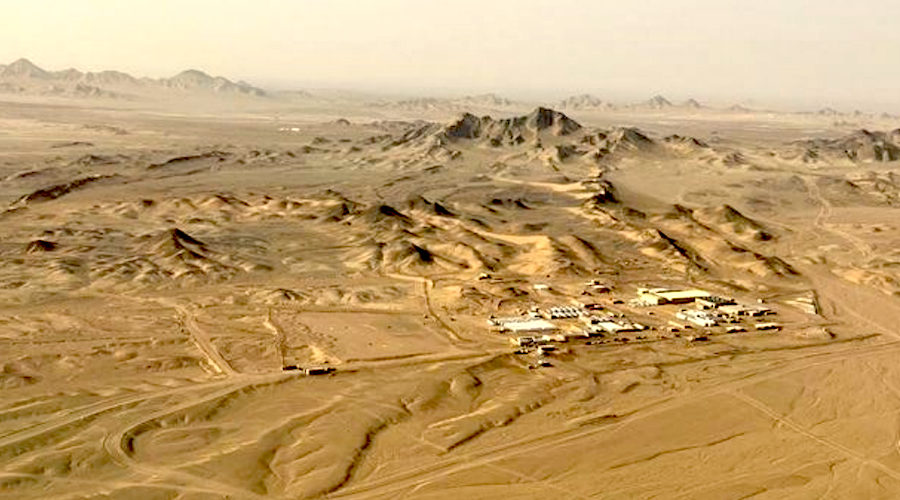
Much of the mineral focus centres on Balochistan, a resource-rich province that covers nearly 43% of Pakistan’s territory. The region is home to Barrick Mining’s (TSX:ABX)(NYSE:B) massive Reko Diq copper-gold project. It also hosts large quantities of lithium, chromite, coal and rare earths.
Chinese presence
China, Pakistan’s closest ally, has already sunk nearly $60 billion into infrastructure and mining under the China-Pakistan Economic Corridor (CPEC), most of it concentrated in Balochistan. Chinese companies have led earlier phases of Reko Diq and other projects, but their operations have increasingly come under attack by Baloch separatist groups, who accuse foreign powers of plundering local resources.
Pakistan’s negotiators arrived in Washington on Monday for talks with US Trade Representative Jamieson Greer. Pakistani officials say any agreement could include commitments to purchase US-origin cotton and soybeans, along with a “strategic and investment” partnership in the mining sector. The White House has not made any official comment. Islamabad had hoped an agreement could be reached as early as this week.
A potential deal with the US, could reshape the balance of power in the region. Washington’s involvement might offer Pakistan a counterweight to China, but it also risks provoking Beijing, which views the CPEC as a cornerstone of its Belt and Road strategy.
Mineral smuggling from Congo to Rwanda at ‘unprecedented levels’, UN says
UN forces sent to Congo’s mining hub. Stock image.
Mineral smuggling from eastern Democratic Republic of Congo into neighboring Rwanda has reached “unprecedented levels” amid the occupation of a large swath of the region by Rwanda-backed M23 rebels, according to a United Nations experts report.
The illegal trade has “jeopardized” tin, tantalum and tungsten exports from the region, according to a copy of the report due to be released this week by the UN Security Council and seen by Bloomberg.
“Once in Rwanda, the looted minerals were mixed with local production, effectively laundering them into the downstream supply chain under the guise of Rwandan origin,” according to the report. “This posed a serious threat to the integrity and credibility of mineral traceability.”
Last year Rwanda and Congo accounted for around 60% of world production of tantalum, a mineral used in electronics, according to the US Geological Survey.
In a US-backed peace deal signed last week in Washington, Rwanda and Congo agreed to stop their fighting and support for proxy rebel groups like the M23. The two sides also committed to exploring joint economic opportunities with potential US investment.
But the UN experts document how Rwanda has already expanded its economic interests in Congo through the M23 occupation.
Rwanda’s goal is to “control the territory of the DRC and its natural resources,” according to the report, which covers a yearlong period through April 20.
The country’s army played a “critical role” in M23’s expansion and occupation of new territories, which culminated this year with the taking of eastern Congo’s two main cities, according to the report.
“Its use of advanced military equipment, including jamming systems, short-range air defense systems and armed drones constitutes a violation” of UN sanctions, the experts said.
M23 and Rwandan soldiers have carried out “a systematic campaign of repression in occupied areas, including extrajudicial killings, arbitrary arrests, torture, enforced disappearances, and night raids on hospitals,” they said.
At least 6,000 Rwandan troops were in Congo at the beginning of the year working with the M23, according to the report. Between 1,000 and 1,500 remained as of late April, with “several thousand” troops positioned in Rwanda along the border. Rwanda has denied backing the M23 and said its army has taken “defensive measures.”
A spokesperson for Rwanda’s government, Yolande Makolo, said the group of experts “misrepresents Rwanda’s longstanding security concerns” in the region.
M23 re-launched a rebellion in 2021 to protect the rights of eastern Congo’s Tutsi population and to fight a rebel group known as the FDLR that has links to the perpetrators of the 1994 genocide of Rwanda’s Tutsis.
Congo has committed to “neutralize” the FDLR as part of the US-backed peace deal. The UN experts report shows Congo’s army has been working with the FDLR to fight the M23.
Rwanda remains fully committed to the implementation of the peace deal, Makolo said, “including the neutralization of the FDLR, which will enable the lifting of Rwanda’s defensive measures, the safe return of refugees to their home areas, and much-needed stability in our region.”
Mineral smuggling is rampant throughout Congo’s east and the gold trade in particular is supporting a multitude of armed groups, Congolese politicians, and neighboring countries, according to the report.
Gold smuggled from Congo’s northeastern Ituri province “significantly inflated Uganda’s gold refining and export figures,” the experts said. “A large part of the gold refined and exported in Uganda was thus ineligible for trade” under the UN Group of Experts’ due diligence guidelines for responsible mineral exports.
Uganda exported nearly $3.5 billion worth of gold in 2024 according to central bank data estimates.
Ugandan army spokesman Felix Kulayigye said the accusations were “redundant” and “people who have been stealing Congolese resources have been known for centuries.”
Rwandan authorities also inflated domestic production figures of tin, tungsten and tantalum in order to disguise its exporting of smuggled minerals from Congo, according to the report.
“The Rwanda Development Board declared annual domestic production of 8,000 to 9,000 tons” of tantalum, tin and tungsten ores, which was “contradicted by data from the National Institute of Statistics of Rwanda, independent geological studies,” and an industry group monitoring the mineral supply chain from the region, the experts said.
Makolo said that unlike eastern DRC, Rwanda “operates a regulated and formalized mining sector, with investment in mineral processing and other infrastructure that allows for commercial refining of minerals and appropriate certification.”
(By Simon Marks and Michael J. Kavanagh)
Baltic Shipyard says robot welding to speed up construction
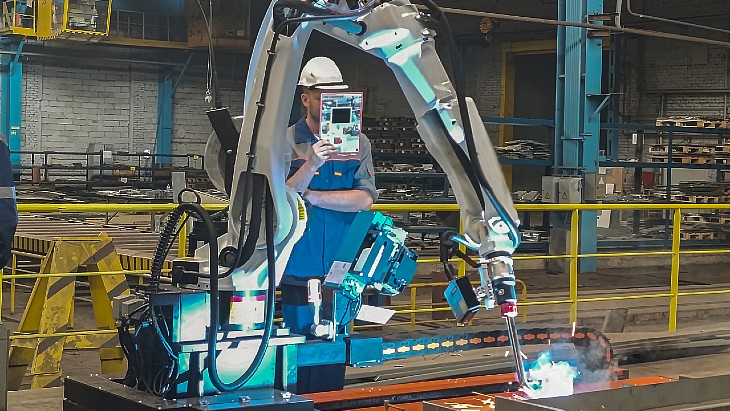
Russia's Baltic Shipyard has demonstrated the use of a collaborative robot and a welding robot with machine vision, which it says will be an important part of the plant's modernisation programme.
(Image: Baltic Shipyard)
Collaborative robots are controlled by welders alongside them who set the work task and monitor progress and are seen as being especially effective in welding in hard-to-reach places during the shipbuilding process.
The welding robots with machine vision, the Baltic Plant says, "independently scan the workpiece, create a three-dimensional model of it, determine the optimal welding lines, trajectory, metal thickness and the necessary parameters of the weld. Unlike traditional systems, this robot does not require manual programming or graphic modelling - operators only monitor the process and make adjustments if necessary."
Alexander Konovalov, Director General of the Baltic Plant, said: "The introduction of new robotic systems is a logical planned stage of the enterprise modernisation programme. We are preserving the golden hands of our welders, but we are giving them fundamentally new tools for their work."
The shipyard, which includes nuclear-powered icebreakers among its workload, said the new technologies could "significantly optimise production processes, reduce the workload on personnel, improve the accuracy and quality of welding work, as well as reduce the time for training new welders and increase overall labour productivity".
It said they promise to help speed up the construction of ships, with plans to test the welding robots in "key production areas".
Ships trigger high and unexpected emissions of the greenhouse gas methane
A Chalmers-led study shows that ship passages can trigger clear pulses of high methane fluxes from the water to the atmosphere. The emissions are caused by pressure changes and mixing of the water mass. The researchers observed twenty times higher methane emissions in the fairway compared to nearby undisturbed areas. Despite the fact that methane is a greenhouse gas that is 27 times as powerful as carbon dioxide, these emissions are often overlooked with today's measurement methods.
Credit: Chalmers University of Technology | Amanda Nylund
Ship traffic in shallow areas, such as ports, can trigger large methane emissions by just moving through the water. The researchers in a study, led by Chalmers University of Technology in Sweden, observed twenty times higher methane emissions in the shipping lane compared to nearby undisturbed areas. Despite the fact that methane is a greenhouse gas that is 27 times as powerful as carbon dioxide, these emissions are often overlooked with today's measurement methods.
"Our measurements show that ship passages trigger clear pulses of high methane fluxes from the water to the atmosphere. This is caused by pressure changes and mixing of the water mass. Even if the pulses are short, the total amount during a day is significant," says Amanda Nylund, researcher at Chalmers University of Technology and the Swedish Meteorological and Hydrological Institute, SMHI.
Methane is a potent greenhouse gas and the concern about methane emissions from the few ships that run on liquefied natural gas (LNG) is a very hot topic. In the current study, the measured methane emissions are completely decoupled from the ships' choice of fuel. This means that all ships can cause emissions and thus shipping's contribution to emissions of greenhouse gases has previously been underestimated. The researchers point out that even though methane is found naturally in the sediments, the activity of the ships cause an extensive release into the atmosphere.
The study focuses on shallow marine areas where the sediments are oxygen-free and rich in organic matter. In such environments, methane is formed, and at high production levels, the gas can leak or bubble up into the water above. When a ship passes, the pressure at the seafloor changes and methane bubbles make their way out of the sediments more easily. In combination with the mixing that takes place in the wake of ships, the methane can quickly rise to the surface and escape out into the atmosphere.
The phenomenon was discovered by chance
The article, published in Nature Communications Earth & Environment, is unique in its kind and the result of a broad research collaboration. The phenomenon of the extensive methane emissions in shallow waters was first discovered by chance, in connection with other measurements in the Neva Bay in the Baltic Sea.
"The discovery of the hitherto unknown impact of ships is important for improving global estimates of methane emissions, not least considering that nine of the world's ten largest ports are located in waters with similar conditions as Neva Bay," says Johan Mellqvist, Professor of Optical Remote Sensing, Chalmers, whose group made the unexpected discovery that forms the basis for the new results.
Two of the largest ship types, cruise and container ships, triggered the most frequent and largest measured methane releases, but slightly smaller ropax vessels (combined freight and passenger ferries) also account for large methane releases. The larger (compared to ropax and container) vessel type, bulk carriers, accounted for lower emissions. This means that it is more complicated than the size of the ships controlling methane emissions.
"A possible explanation for the high emissions of ropax vessels is that they have double propellers," says Rickard Bensow, Professor of Hydrodynamics, Chalmers, and responsible for the study's modelling of ship traffic.
Will investigate discharges in large shallow ports
The authors of the current study now emphasise the need to rethink how and where methane measurements are carried out, especially in coastal waters where natural and human factors interact. They place particular focus on further investigating large ports in river deltas.
"The next step is to estimate how large these effects can be globally. Major ports in China, Singapore, and South Korea, as well as European ports such as Rotterdam, Antwerp, and river systems in Germany, have similar conditions to the Neva Bay. It is very likely that we underestimate methane emissions there as well," says Ida-Maja Hassellöv, Professor of Maritime Environmental Science, Chalmers, who will lead the follow-up project that will start this autumn.
More about the research:
Read the scientific article Coastal methane emissions triggered by ship passages in the journal Nature Communications Earth & Environment. It is written by Amanda T. Nylund, Johan Mellqvist, Vladimir Conde, Kent Salo, Rickard Bensow, Lars Arneborg, Jukka-Pekka Jalkanen, Anders Tengberg and Ida-Maja Hassellöv. The researchers are active at Chalmers University of Technology and SMHI, Sweden, and the Finnish Meteorological Institute, Finland.
Earlier this week, the Netherlands' national coast guard agency temporarily lost service on its shoreside VHF radio systems, and for half a day it was forced to rely on phones for communications with vessel traffic.
VHF marine radio is the international standard for ship-to-ship communications and search and rescue, and is essential to any SAR agency's work. Early Tuesday morning, the Kustwacht's shoreside stations lost the ability to receive any marine radio channels. This left them unable to send or receive any calls by normal marine radio channels, or to send VHF navigation messages like weather alerts. The system outage affected the entire Dutch area of responsibility for search and rescue. (The Kustwacht's cutters and rescue boats still had uninterrupted ability to receive VHF distress calls over the radio, like any other vessels.)
"We cannot hear VHF channel 16," Kustwacht Nederland said in a social media post on Tuesday morning.
However, the Royal Netherlands Sea Rescue Society (KNRM) retained the ability to make and receive VHF calls. Five rescue stations filled in for the Kustwacht and listened in on Channel 16 for any distress calls, which (if any had occurred) they would have relayed to a coast guard operations center by phone.
At about 1330 hours Tuesday, the agency announced that the issue was resolved. VHF message transmission for routine traffic - nav messages, weather alerts and other messaging - was also restored.
"The failure was caused by a problem with a 'routing protocol'. This is a component in the network that ensures that data (messages) follow the correct path," the Kustwacht said. "We will continue to investigate the cause and to prevent this in the future."