Saturday, July 05, 2025

Bolivian congress brawls over China, Russia lithium deals


By Reuters
 July 4, 2025


A small group of Bolivians protest at the doors of the Legislative Assembly building during a protest against Bolivia's lithium contracts with Russian and Chinese companies, in La Paz, Bolivia February 13, 2025. REUTERS/Claudia Morales/File Photo Purchase Licensing Rights, opens new tab

LA PAZ, July 3 (Reuters) - Bolivia's energy minister was doused with water and pelted with garbage on Thursday as chaos erupted in congress during a debate on controversial lithium contracts with Chinese and Russian firms that could bring in investments worth some $2 billion.

It was the latest outburst of growing tension over Bolivia's efforts to fast-track foreign investment to exploit its lithium reserves, which are among the largest in the world.

Opposition lawmakers and others loyal to former President Evo Morales disrupted the lower house session that targeted Energy Minister Alejandro Gallardo as he tried to defend the pending contracts.

"They are trying to swindle us," said opposition lawmaker Daniel Rojas, one of those opposing the contracts they say are unfavorable to the state, and demanding that profits for Bolivia be secured before the lithium is sold.

Thursday's session devolved into scuffles, with lawmakers pushing, shouting and throwing stacks of paper at congressional leaders.

Video images showed an opposition lawmaker, Maria Salazar, tussling with another member, while a lawmaker later tore away an umbrella from a chamber leader using it to try and bat away the barrage.

Legislators and civic leaders from the mineral-rich Potosi region, home to Bolivia's vast lithium deposits, joined the protest.

"We warn (President) Luis Arce, (and) the leader of the lower house, if you continue insisting on this illegal and unconstitutional process, you will be met with a mobilized population," said opposition lawmaker Lissa Claros.

Protesters said they feared the deals would not benefit local communities and would cause environmental damage.

"We want conditions so that the local people ... can have a dignified life," said Alberto Perez Ramos, president of the Potosi Civic Committee (COMCIPO).

"The government isn't interested in that; the government is only interested in its own pockets."

Reporting by Sergio Limachi, Daniel Ramos and Monica Machicao, Additional reporting and writing by Kylie Madry, Editing by Clarence Fernandez

Our Standards: The Thomson Reuters Trust Principles.


Guinea bauxite exports up 36% on Chinese demand

Bauxite cargo in Guinea. (Image by Sayd224, Wikimedia Commons).

Guinea’s exports of bauxite, a feedstock for aluminum, jumped 36% to a record 99.8 million metric tons in the first half of 2025, driven by robust Chinese demand that offset declines from a regulatory crackdown, official data showed on Friday.

Bauxite exports jumped from 73.4 million tons in the same period last year, with Chinese-controlled firms commanding over 60% of shipments from the West African nation’s expanding port network.

China’s aluminum production climbed 4.0% to 18.59 million tons in the first five months of 2025 as increased infrastructure spending and a manufacturing rebound boosted appetite for the critical raw material used in aluminum production, data from its National Bureau of Statistics showed.

China accounts for about 60% of global production of aluminum, used in transport, packaging and construction.

Guinea’s surging bauxite shipments to China coincide with the planned launch of the massive Simandou iron ore project, majority-owned by Chinese firms – deepening resource export dependence on Beijing as Western governments have not made as much headway in the country.

China’s CHALCO exported 8.9 million tons of bauxite from Guinea, while CDM-CHINE shipped 4.1 million tons and SPIC contributed 1.8 million tons.

Market leader SMB, backed by Chinese investors, dominated with 31.2 million tons – nearly one-third of total exports.


The surge came despite Guinea’s military government implementing stricter mining regulations that forced several companies to halt operations entirely. GAC, KIMBO, and SBG recorded zero exports throughout the period, while Kambia Bauxite Mining remained dormant.

The crackdown’s impact was evident in the data variations. While established Chinese firms maintained steady shipments, smaller operators struggled.

Port diversification also supported export growth, with nine active facilities handling exports. Dapilon/Katougouma led with 30% of shipments, followed by Kokaya at 25%, reducing bottlenecks at the traditional Kamsar hub.

Strong first-half performance positions Guinea, the world’s second-largest bauxite producer, for annual exports potentially exceeding 199 million tons, cementing its status as the world’s largest bauxite supplier despite ongoing regulatory restructuring.

“Guinea’s first-half shipments represent 24% of 2024’s global supply – quite remarkable by all standards,” said Theo Acheampong at Critical Minerals Africa Group. While China’s dominance on Guinean bauxite is already established, “what would be interesting is Guinea building its own processing capacity to retain more in-country value.”

Guinea has pressured bauxite producers to refine locally after decades of exporting the raw material, leading to disputes with some companies who have had their licenses revoked after they were not able to meet the refinery construction timelines set by the government.

(By Maxwell Akalaare Adombila; Editing by Pratima Desai, Sharon Singleton and Aurora Ellis)


Newmont to fire at least 10% of staff at Suriname’s Merian mine

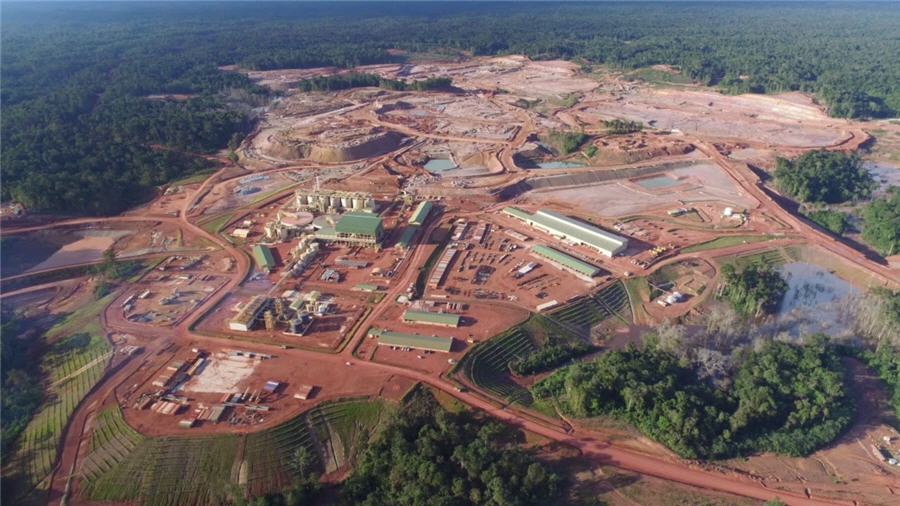
Merian mine. Credit: Newmont

Newmont, the world’s largest listed gold miner, announced on Friday that it would lay off 10% to 15% of its workforce at its Merian mine in Suriname, citing production declines.

“Since 2021, gold production at Merian has declined 48% while operating costs have fallen by 50%, challenges that have put pressure on the long-term sustainability of operation,” Newmont said in a press release.

According to the company, some 1,550 people currently work at the Merian site.

(By Ank Kuipers and Brendan O’Boyle; Editing by Sarah Morland)


Malaysia puts anti-dumping duties on some China, South Korea, Vietnam iron, steel

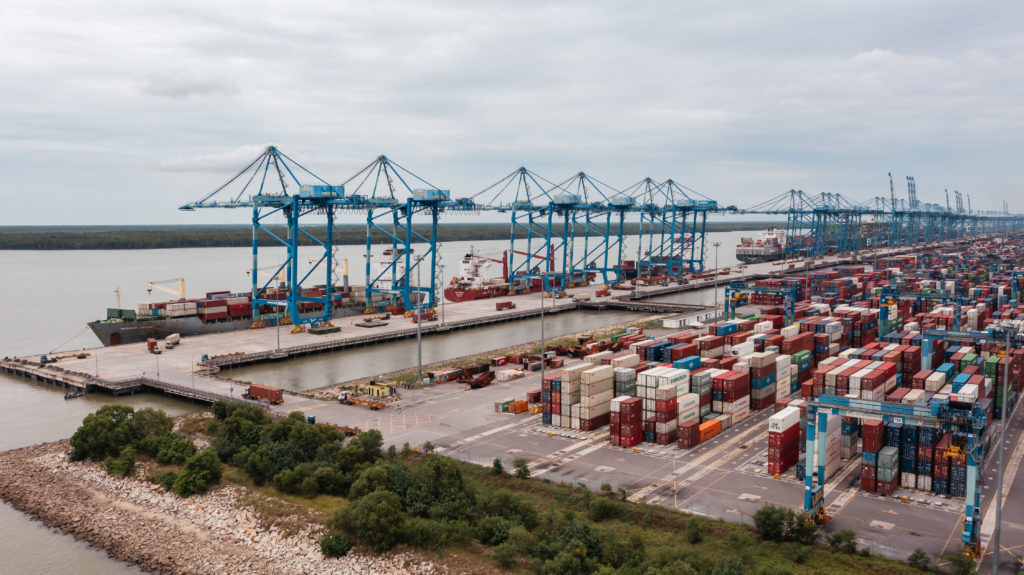
Klang, Malaysia. Stock image.

Malaysia said on Saturday it has imposed provisional anti-dumping duties ranging from 3.86% to 57.90% on certain iron and steel imports from China, South Korea and Vietnam.

The duties on imports of galvanized iron coils or sheets or galvanized steel coils or sheets were imposed based on a preliminary determination made in an anti-dumping duty investigation initiated on February 6, the investment, trade and industry ministry said in a statement.

“The government finds that there is sufficient evidence that the importation of the subject goods… is being dumped and that the investigation should be continued,” it said.

The provisional duties be in effect from Monday for up to 120 days with a final determination to be made by November 3, the ministry said.

(By Rozanna Latiff; Editing by William Mallard)


US couple could face trial over gold bars missing from 18th Century sunken ship

Sinking ship. AI-generated stock image.

An elderly American couple could stand trial in France for their alleged roles in the sale of gold bars plundered from a trading ship that sank off the coast of Brittany nearly 300 years ago.

According to Agence France-Presse, French prosecutors have moved to charge 80‑year‑old novelist Eleonor “Gay” Courter and her 82‑year‑old husband Philip, alleging that they had facilitated the sale of gold ingots stolen by a French diver over a 23-year period.

The charges come after investigators discovered that the elderly couple held possession of at least 23 stolen gold bars and sold 18 of them online—through a California auction house and eBay—fetching a total of $192,000.

Stolen gold resurfaces

The gold ingots are believed to originate from the Prince de Conty, a French East India Company vessel that sank during a storm. Its wreck was located in 1974, and official salvages in the 1980s recovered Chinese porcelain, tea chests and three gold bars, before operations halted in 1985.

More than three decades later, in 2018, France’s marine archaeology authority became suspicious when five ingots with striking resemblance to those from the Prince de Conty surfaced at a US auction. Local authorities later seized the gold and returned it to France in 2022.

The Courters claimed that the gold they had sold online was legally gifted to them in the 1980s by their French friends—Annette and the late Gérard Pesty—who said the ingots were recovered by Yves Gladu, an underwater potographer turned treasure hunter and Annette’s brother‑in‑law.

In 2022, after being taken to custody, Gladu admitted to taking 16 gold bars from the wreck during about 40 dives between 1976 and 1999, but denied ever having given any of them to the Courters.

The same year, authorities also detained the Courters in England after tracing them via online listings and a 1999 Antiques Roadshow appearance by Annette Pesty showing the gold bars. The couple was later released on bail; they declined extradition and returned to the US following a Zoom hearing before a French magistrate.

In their defense, the Courters say they were unaware of any wrongdoing, believing the gold was properly obtained under different US rules. Their French attorney, Grégory Lévy, told AFP they had no criminal intent and did not personally profit from the sale.

Prosecutors have now referred the matter to a criminal court, setting the stage for a landmark trial that could stretch legal definitions across jurisdictions.

BAN DEEP SEA MINING

Japan to test mine seabed mud for rare earths


Aerial view of Japan’s Pacific coast. (Stock Image)

Japan will begin test mining rare earth rich mud from the deep seabed near Minamitori Island in 2026, aiming to secure a domestic supply of critical minerals amid tightening global exports.

The government-backed project, led by Shoichi Ishii of the Cabinet Office’s ocean innovation platform and using pipes deployed by a Japan Agency for Marine-Earth Science and Technology (JAMSTEC) vessel, marks the world’s first attempt to extract and refine rare earths from abyssal mud.

The project will collect mud at depths of 5,000–6,000 m near Minamitori Island, with trial operations set to begin in January 2026, as reported by Reuters.

If successful, the system could process up to 350 tonnes of mud per day by January 2027, enabling separation of elements such as dysprosium, neodymium, gadolinium and terbium for use in EV motors and high-tech devices.

In 2024, researchers from the University of Tokyo and the Nippon Foundation had already identified over 200 million tonnes of manganese nodules rich in battery metals in the Pacific Ocean, highlighting vast resource potential at depths around 5,500 meters.

A separate survey by the University of Tokyo and the Nippon Foundation estimated the seabed nodules contain approximately 610,000 tonnes of cobalt—enough for 75 years of Japan’s consumption—and 740,000 tonnes of nickel, covering 11 years of domestic demand.

Complex operation

Analysts caution that deep sea mining at such extreme depths poses technical and environmental challenges, with BMO Capital Markets’ Colin Hamilton noting the complexity and urging further impact studies before buyers commit to seafloor-sourced materials.

Several major banks, including Credit Suisse, Lloyds and NatWest, have already introduced policies restricting financing for deep sea exploration until comprehensive environmental assessments are completed.

Meanwhile, the International Seabed Authority (ISA) is finalizing regulations by 2025, potentially paving the way for regulated commercial operations in international waters.

Since 2014, the ISA has been under increasing pressure to develop a mining code. The organization will continue its general meetings at the end of this month, with the full Assembly in Kingston, Jamaica, scheduled from July 21 to 25

Torngat Metals’ rare earths project revival aims to create ‘a new industry in Canada’ CEO says

Amanda Stutt | July 4, 2025 |


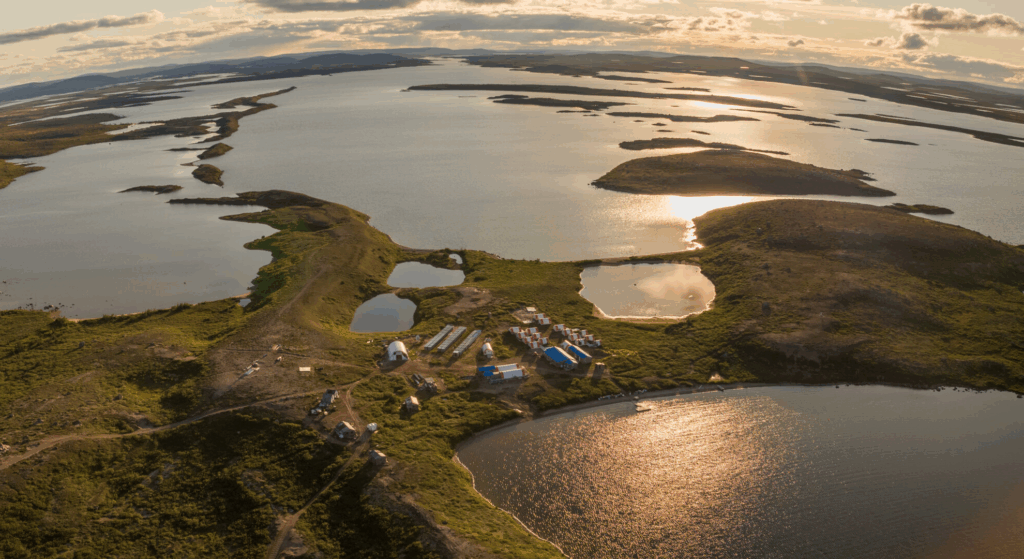
Strange Lake camp in Nunavik. Image from Torngat Metals.


When Torngat Metals secured C$165 million ($120m) in government funding last month for pre-construction work at its Strange Lake rare earth project straddling northern Quebec and Labrador, it set the new company on a strong trajectory.


Export Development Canada (EDC) is supplying a C$110 million bridge loan while the Canada Infrastructure Bank is offering a C$55 million infrastructure loan, both firsts for the institutions.

Production of rare earths, which are essential components of industrial technologies, is dominated by China. There are no rare earth mines in Canada and only one in the United States — MP Materials’ Mountain Pass in California.

Strange Lake stands out among North American rare earth projects for its heavy rare earth content, particularly dysprosium and terbium—elements critical to permanent magnets used in electric vehicles, wind turbines and defence technologies.

With more than half of Strange Lake’s output to be classed as heavy rare earths, this would make it the largest heavy rare earth producer in North America and one of the largest outside China.

An initial study by Quest Rare Minerals pegged indicated resources at Strange Lake’s main B-zone deposit at 278.1 million tonnes at 0.93% total rare earth oxides (TREO); 1.92% zirconium oxide and 0.18% niobium pentoxide. Inferred resources were 214.4 million tonnes of 0.85% TREO, 1.71% zirconium oxide and 0.14% niobium pentoxide.

CEO Yves Leduc is new to the mining industry, but is a veteran of the manufacturing industry, and he recognized the need to build separation and refining capabilities – domestic and accessible – as crucial to the project’s success.

Paramount to Torngat’s plan is to build a rare earth separation plant at Sept-Îles, Quebec, producing finished oxides domestically rather than exporting concentrates.

“I don’t know how the importance of the announcement has sunk in – this is the first time EDC did something like that, issuing financing more than a year before permits,” Leduc told MINING.com in an interview.

“We’re right now in development and execution mode. It’s not an exploration company anymore. The deposit is confirmed. I’m from the manufacturing world – and half the project is building the separation plant.”

“When you start adding everything up and it’s the deepest, densest deposit of heavy rare earth outside China, it has the potential of being a true mine-to-magnet value chain inside Canada, which is not going to be seen outside China for decades,” Leduc said.

“The mandate is a lot more than economic or financial– It’s about creating a new industry in Canada that’s so vital to the energy transition that it will actually create a lever, a strategic lever in the geopolitical arena for Canada and Quebec that is unseen before.”

“And so Canada suddenly has a Trump card, no pun intended – that is powerful.”

Leduc said the company is prioritizing environmental, social and governance metrics, and community outreach has begun. Torngat is also opening up shareholder opportunities to Indigenous communities.

“It has to be so that we do it impeccably right, that we develop the North in ways unseen before, that we respect the environment by investing in protecting the environment in ways nobody has before,” he said.


Strange Lake project on US radar

Leduc said that while the Canadian government, both provincial and federal, is aware of the importance of the project, awareness about the strategy – to establish domestic supply – has been higher in the US than it was in Canada.

China’s dominance of the critical mineral industry is seen as a key point of leverage for Beijing in its trade war with US President Donald Trump.

China’s decision in April to suspend exports of a wide range of rare earths and related magnets upended the supply chains central to automakers, aerospace manufacturers, semiconductor companies and military contractors around the world.

“It’s a crisis of national proportions in the US, and I think here it’s an opportunity that’s equally intense,” Leduc said. “In the US., it’s more than known. Torngat is seen as the solution in the heavy rare earth shortage crisis.”

A US investor is Cerberus Capital, one of the top private equity firms in the US, which has $80 billion in assets under management, and set up a $2 billion fund called the Supply Chain Fund internally, focused on addressing American vulnerabilities from a supply chain point of view in several different industries.

“Under the umbrella of social acceptability, usually we talk about the environment, Indigenous communities. But these days, social acceptability also involves answering ‘why do you have American capital here?’ And my answer is I should be proud of having American capital,” Leduc said. “Without the Americans, no one would have dared finance Torngat two years ago.”

“I think there’s going to be a commonality of interest very soon because we all have the same goal here – to make those rare earth oxides available to the market as soon as possible.”

Torngat is using the EDC funding to complete its pre-feasibility study, and plans to file its environmental assessment to the federal ministry at the end of the year.

The C$2 billion capex project aims to produce roughly 15,000 tonnes per year of rare earth oxides. Torngat aims to begin construction in late 2026 and to start operations by 2028.


Northern Dynasty in talks to settle EPA litigation, shares hit 5-year high


The Pebble mine has endured a decade-long fight spanning three US administrations. Credit: Northern Dynasty Metals

Northern Dynasty Minerals (TSX: NDM; NYSE-A: NAK) says it is in talks with the Environmental Protection Agency (EPA) regarding a potential settlement of ongoing litigation concerning the company’s flagship Pebble project in Alaska. Its shares soared on the update.

In March, the Canadian mine developer filed two separate actions in federal courts to challenge the EPA’s role in blocking the proposed Pebble mine, which, once built, would be the largest copper, gold and molybdenum extraction site in North America.

In January 2023, the EPA dealt a fatal blow to the project by prohibiting Northern Dynasty’s Alaskan subsidiary from storing mine waste in the Bristol Bay watershed, where some of the world’s largest sockeye salmon fisheries reside. The agency argued that the mine waste could permanently destroy more than 2,000 acres of wetlands protected by the Clean Water Act.

Northern Dynasty, meanwhile, had claimed that the EPA veto contradicts the environmental impact statement published by the United States Army Corps of Engineers (USACE) in July 2020.

In a press release issued Friday, Northern Dynasty’s president and CEO Ron Thiessen said the discussion with the EPA presents “the fastest path forward” to withdraw the Pebble project veto, adding that the agency has “asked for additional information to assist in finalizing that decision.”

The latest news sent Northern Dynasty Minerals’ shares soaring. The stock rose nearly 25% in Friday’s morning session to C$2.42 apiece, its highest over a tumultuous five-year period for its project. The company’s market capitalization is roughly C$1.25 billion ($920 million).

EPA ‘reconsidering’

Thiessen said that a decision to withdraw the EPA veto would help the US to secure a domestic supply of metals like copper, which is in high demand globally for its use in electrification, and rhenium, a key component in military applications. The project also holds substantial amounts of gold, molybdenum and silver.

According to a 2023 economic study, the Pebble mine would produce 6.4 billion lb. of copper, 7.4 million oz. of gold, 300 million lb. of molybdenum, 37 million oz. of silver and 200,000 kg of rhenium over 20 years.

The EPA, in a July 3 filing, confirmed that it is “open to reconsideration” and welcomes further submissions by Northern Dynasty that may be used to reverse its decision. The parties “currently expect to reach agreement within the next two weeks about what that submission would entail,” the EPA stated.

In a recent interview with The Northern Miner, Thiessen said that “there’s a good chance that the veto can get removed in the near term, maybe sometime this summer.”

The veto’s removal would set the stage for the US Army Corps of Engineers, which has its own approvals process, to revisit its refusal. The corps had said the EPA veto blocked its path.


Harnessing Data to Shape a Fleetwide Decarbonization Path

Shipowners and charterers can leverage ship data to develop emissions compliance strategies

Accelleron

Published Jul 3, 2025 12:30 PM by Accelleron


Knowledge is power. At a time of uncertainty over fuels, technologies, and emissions regulations, knowledge of your ship’s engine is particularly powerful. Armed with good data—rigorously analyzed and supported with deep technical insight—companies can both optimize short-term emissions compliance and build long-term decarbonization strategies that reduce operational costs.

When planning a route towards fleet decarbonization, nothing should come before understanding and optimizing the baseline efficiency of your vessel. Without this, the impact of future investments, business decisions and operational measures cannot be properly assessed. Nor will any choices deliver their full potential benefit.

A recent case study conducted by Accelleron shows the impact that a focus on efficiency can have in a scenario of growing compliance costs. With a 10% efficiency advantage, a 37,000 DWT chemical tanker on purely intra-EU voyages would save €72,000 in EU emissions costs (on top of the cost of fuel) in 2025. By 2030, that number rises to €183,000 a year.

Optimizing engine performance

Accelleron’s understanding of marine engines is based a century of experience building and servicing market-leading turbochargers – operation-critical components deployed across all types of marine engine. That experience is combined with extensive digital capabilities to deliver unique engine insight.

In early 2024, Korea Marine Transport Company Ship Management (KMTC) reported that it had saved US$540,000 in fuel costs in a single year after using Accelleron’s state-of-the-art digital engine optimization module on twelve Panamax vessels.

Accelleron’s engine optimization solution delivers recommendations based on thermodynamic insights that aim to bring engines back to operating performance achieved at “new” condition. The solution can be applied to any engine and turbocharger make. KMTC operators used Accelleron’s digital advisory to save fuel, and they were also able to benchmark engines and vessels through Accelleron’s web portal, giving them a fleetwide efficiency overview.

The argument for efficiency is clear. In an era of carbon pricing, fuel savings does not just mean money saved on fuel. It also means avoiding exposure to compliance costs. And those savings can be used to invest in additional efficiency enhancements or clean fuels that further reduce emissions and the cost of compliance.

Reducing compliance burden

A good digital solution should not only track your fleet performance and emissions; it should also simplify compliance. The emissions function in Accelleron’s engine optimization module, for example, now allows for calculation and reporting of well-to-wake (WtW) emissions. Combined with the platform’s existing capabilities for tank-to-wake emissions reporting—which is used to report on emissions for the EU ETS as well as the IMO’s Data Collection System—the complete WtW function enables ship operators to fully account for different types and sources of fuels. This is an essential part of any reporting solution for FuelEU Maritime, which came into effect at the start of this year, and for the forthcoming IMO mid-term measures, which will likely include both a fuel standard and a levy on fuels.

With full insight of a vessel’s baseline efficiency and actual performance—particularly fuel use and emissions—operators can benefit from several other cost reduction measures that digital solutions afford. For example, they can monitor hull and propeller fouling, and get recommendations for the best time to schedule hull cleaning. Digital tools also support voyage report validation, CII forecasts, and emissions reporting for a variety of regulators.

Enhancing commercial operations

Accelleron’s 2024 acquisition of True North Marine means we can take those benefits even further, adding AI-assisted route optimization that allows operators to plan the entire voyage with fuel consumption, efficiency and emissions in mind. In addition, combining a data-informed, end-to-end chartering consultancy with Accelleron’s deep technical expertise, we offer a complete solution to leveraging data not only in operations but across commercial processes.

As an example, Accelleron’s Emissions Desk can provide operators with an annual forecast for the next year, providing the tools they need to plan and budget for fuel, emissions, and operating costs. With these reports, operators can calculate compliance balances and penalties in advance, to make informed decisions on EU allowance purchasing, or the pooling, borrowing, or banking of FuelEU Maritime surpluses.

When you layer mid-term forecasting of compliance costs on top of deep technical insights into vessel performance, you have the basis for long-term business and investment planning. But to translate this into the most effective decisions, human expertise is still essential.

Accelleron’s team of maritime experts, former sea captains, naval architects, seafarers, leverage the data to provide actionable insights tailored to maximize efficiency, enhance performance, reduce emissions and increase profitability, across fleet operations.

This is data-enabled decision-making for a new phase of accelerated maritime decarbonization.

This article is sponsored by Accelleron. To learn more, click here.

The opinions expressed herein are the author's and not necessarily those of The Maritime Executive.

Sowing the Wind

Europe's offshore wind megaprojects require a greatly expanded grid.

Wind
iStock / Charlie Chesvick

Published Jul 3, 2025 9:33 PM by Erik Kravets

(Article originally published in May/June 2025 edition.)

Wind as power is an old idea.

The ancient Egyptians sailed up and down the Nile with ships and barges. Later, windmills were used to grind grain or pump water to irrigate fields. Today, 18 percent of European electrical demand is satisfied by wind-spun blades powering turbines, each with magnets that dance around coils to create current.

I also have a history with wind power. In 2016, I wondered if offshore wind was here to stay, noting that it needed expensive oil to be economically viable: "With prices [per barrel of oil] now at just above $30, it would not be a stretch to assume that the environment for wind energy has shifted too."

But don't worry. In 2025, oil sits at just above $60 per barrel. Meanwhile, the global levelized cost per megawatt hour for offshore wind energy has fallen from $150 (or 15 cents per kilowatt hour (kwh)) in 2016 to $74 (or 7.4 cents per kwh) in 2023, according to BloombergNEF. That's as cheap as coal.

FADENRISS & OTHER CHALLENGES

A decade ago, pioneers like Senvion, with its 4,000 employees, were going bankrupt as orderbooks evaporated. The reason: Germany had slashed its offshore wind buildout goal by 25 percent – from 20 to 15 gigawatts – triggering what became melodramatically called the Fadenriss (literally "thread-ripping").

Projects like BARD Offshore 1 hemorrhaged money – €3 billion to build out just 400 megawatts – while Dutch, Norwegian and Danish competitors captured German market share with lower bids and more efficient operations.

Germans were reduced to chartering in foreign jack-up ships and floating cranes, working as subcontractors on projects they once would have led. (By the way, BARD's facility in Cuxhaven, Germany, still exists, but it's owned and operated by Titan Group, a Chinese company listed on the Shenzhen Stock Exchange.)

All of this was part of offshore wind's rough road to becoming a European and, in many ways, global endeavor. In 2021, I quoted Giles Dickson: "Offshore wind is no longer just about the North Sea. It's rapidly becoming a pan-European affair." My take was broader.

I anticipated that the changes would mean "more countries participating in the developing of offshore wind," and that there would be less reliance on subsidized, government-backed national champions. In other words, "the best companies will try to win bids everywhere" with "no guarantee … that German companies will be among them."

Amidst all of this, Russia invaded Ukraine in February of 2022. Europe's energy sector, which relied on Russian pipeline gas, underwent a rapid rearrangement. Sanctions against Russia meant that the cheapest, easiest source of fuel was unavailable.

Governments scrambled to keep their citizens warm and their industries running. To substitute Russian pipeline gas with American and Qatari liquefied natural gas (LNG), Europe began building 19 new regasification terminals, growing its capacity to import LNG from 160 to 350 billion cubic meters by 2030 – that's more gas than all of Europe actually uses.

In "Terminal Trouble," in the September/October 2024 edition of The Maritime Executive, I described this capacity glut and suggested it might lead to unprofitable and difficult choices later on.

NEW MEGAPROJECTS

But Europe hadn't fixed its reliance on foreign suppliers. Something fundamental still had to change. Renewable energy had previously been a speculative gamble on a green future. Now, it had the pedigree of being a geopolitical, strategic alternative to fossil fuel.

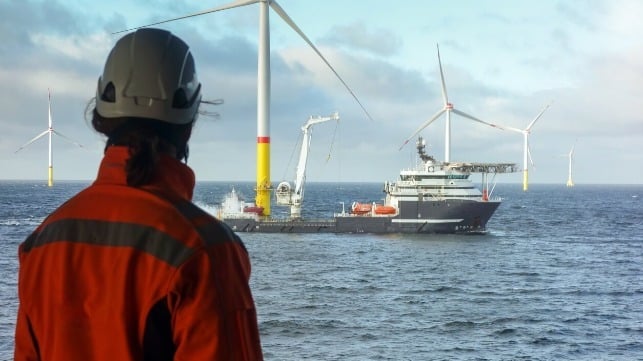
To this end, in 2023, countries along the North Sea pledged to install 120 GW of offshore wind capacity by 2030 – enough to make the 5 GW dip from the "thread-ripping" seem like a rounding error. In seven years, installed capacity would triple vis-à-vis the 34 GW currently in play. The E.U. is also fast-tracking a North Sea Wind Power Hub with a 70-150 GW capacity, which would grow to 180 GW by 2045 – "big, if true," as they say.

Such megaprojects will require a change in approach to grid infrastructure, though. It isn't enough to simply install a lot of new wind turbines: Their output needs to reach land. That will cost about €400 billion, according to the European Network of Transmission System Operators for Electricity (ENTSOE) – an incredible sum of money that does not even account for the upgrades that are already needed for the land-side power grid.

Electricity customers have struggled to absorb the grid expansion costs that have gone toward the 2.5 GW per year of new offshore capacity that were added, on average, during the past decade. Asking them to pay, until 2030, for 17.2 GW per year of new capacity seems tough.

Also, given the state of the European offshore sector, spiking demand for jack-up ships, floating cranes, barges, tugboats and dynamic positioning vessels by almost seven times without correspondingly increasing their supply is a recipe for price inflation.

If the public funding floodgates open again, as in the early 2010s, timing the market will become more important than ever for survival. Fortunes will be made and lost. Imagine multiple offshore wind park projects all bidding to charter one available jack-up ship, bidding up day rates; shipyards for specialized vessels booked years out; companies poaching each other's sailors and officers with generous salaries and bonuses.

So let's consider what it would mean to build nearly seven times more wind power than originally bargained for: more turbines, more foundations, more blades. Ports would need to build out terminals and reinforce piers to handle high-and-heavy cargo. Even more ships would be needed, most of which will still take years to launch. And the human capital: thousands of engineers, electricians, welders, sailors. Realistically, this equipment, these people are not in place yet, nor can they be in such a short timeframe.

EXPANDED GRIDS

A sober look at where we are right now gives few reasons for confidence.

Announced in January 2025, the European Commission will disburse €1.25 billion in CEF (Connecting Europe Facility for Energy) grants across 41 cross-border energy projects, 36 of which are studies.

"These are key projects to deliver affordable electricity for European companies and households," said Vasiliki Klonari, Director of Energy System Integration at WindEurope, a lobbying organization which advocates on behalf of the wind energy industry. "So far Europe only has one hybrid offshore wind farm. We need many more to build an integrated offshore grid."

But "the biggest investments are required to optimize and expand the national electricity grids," WindEurope noted. And indeed, there is no current path forward for the required buildout since the E.U., the European Investment Bank and the Member States have yet to develop a grid funding plan, even with so much at stake.

"If you aspire to the highest place, it is no dishonor to stop at the second, or even the third place," said Roman orator Cicero. And indeed, the 17.2 GW per year goal for offshore wind is far removed from the humbler 2.5 GW per year reality.

"STOP-AND-GO" POLICIES

This isn't about Europe's inability to build out its wind power. In fact, Europe is winning the overall wind race – which makes sense, given that it's directing immense public funding and interest toward that goal.

And this dysfunction isn't uniquely European. The U.S. installed just 4.2 GW of new wind energy capacity in 2024, according to the World Wind Energy Association. That was its worst performance in a decade with blame going to the Trump Administration for its renewable energy policy flip-flops.

It's true on both continents: stop-and-go doesn't just delay individual projects, it structurally harms industrial ecosystems that can take years to build up. And that is why Europe dominates a technology it cannot scale in its moment of need. Money can't fix a problem like that.

But if the money comes, few in shipping will complain.

The opinions expressed herein are the author's and not necessarily those of The Maritime Executive.