Wednesday, July 16, 2025


Metal Shark Delivers 1st of Two Advanced New Fireboats to Tampa Fire Rescue

Metal Shark

Published Jul 15, 2025 8:22 PM by The Maritime Executive


[By: Metal Shark]

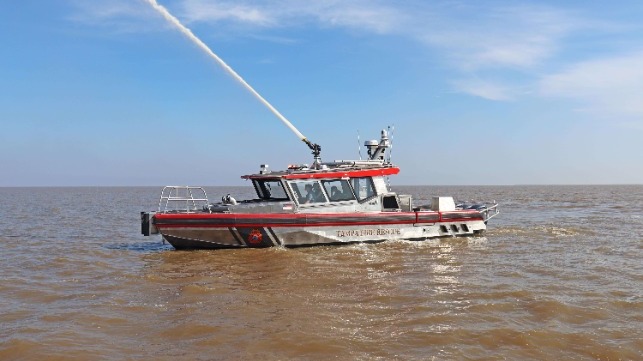
Boat builder Metal Shark has announced the delivery of a new 40’ x 12’ welded aluminum monohull pilothouse fireboat to Tampa Fire Rescue. Designed in-house by Metal Shark and built at the company’s Jeanerette, Louisiana production facility, the new vessel is the first of two next-generation 38 Defiant NXT fireboats being built for the Department.

Powered by triple 300 hp Yamaha outboards with HelmMaster controls and joystick operational capability, the new 38 Defiant NXT combines proven high-speed performance with exceptional maneuverability. The vessel is purpose-built to enable Tampa Fire Rescue to deliver faster response and increased capability across a wide range of critical missions.

Tampa Fire Rescue is charged with the responsibility of primary fire suppression in and about Port Tampa Bay and the surrounding industrialized area, the 42-mile Tampa shipping channel, and all waters of Tampa Bay from downtown Tampa to the barrier island of Egmont Key. Search and rescue missions, including emergency medical response are also within the scope of the Department’s mission.

“Our Defiant NXT firefighting vessels are specifically designed to meet the complex mission challenges faced by Tampa Fire Rescue and many other departments across the nation,” said Dean Jones, Metal Shark VP of Sales for LE, Fire/Rescue and Specialty Markets. “The 38 Defiant NXT is right-sized, versatile, crew-friendly, and designed for safe and efficient mission execution, making it the perfect platform for Tampa Fire Rescue. Our fireboat specialists worked closely with the Tampa Fire Rescue team to design and outfit this vessel to meet the demanding and specific needs of their personnel.”

The Department’s new vessel features Metal Shark’s NXT EMS response cabin equipped with three SHOXS shock-mitigating seats, an EMS bench, dedicated officer/communications and firefighting control stations, and comprehensive gear storage for EMS, fire suppression, dive, and rescue operations. Equipped with a Honeywell CBRNE (chemical, biological, radiological, nuclear, and high-yield explosive) detection system and an HDT cabin filtration and pressurization package, the vessel is fully prepared for HAZMAT and CBRNE response missions at the Port or at sea.

Firefighting capabilities are anchored by a Darley fire pump drawing from a fully flooded Seachest and delivering 1,500 GPM via NFPA piping and electronically controlled valves to a remote-operated monitor. This configuration enables long-range throw for ship-to-ship and ship-to-shore operations. Additional features include dual 2.5” handline discharges, a 5” Storz hydrant discharge for supplying land-based apparatus, and a 40-gallon quick-fill foam injection system for AFFF firefighting capability.

For search and rescue (SAR), dive, and emergency medical missions, the vessel offers a urethane-sheathedclosed-cell foam collar by Wing, bow push knees, port and starboard full-height hinged dive doors, a dedicated dive/rescue ladder, SCBA and dive tank storage, and Metal Shark’s exclusive full EMS-size bow access hatch. A generator-powered HVAC system ensures cabin climate control, while advanced Raymarine electronics, FLIR thermal imaging system with dedicated Nauticomp LCD display, long-range search lighting, and a full emergency lighting package support safe and effective operations around the clock.

“The delivery of this advanced new fireboat represents a significant capability boost for Tampa Fire Rescue,” said Metal Shark CEO Chris Allard. “We are proud to support Tampa and departments across the country with purpose-built vessels designed to meet the evolving challenges faced by first responders on the water.” Metal Shark is delivering new fireboats to over a dozen fire departments nationwide in an 18-month span as part of its ongoing expansion in the fireboat market.

The new Tampa Fire Rescue 38 Defiant NXT will be joined by a second sister vessel in 2026, further strengthening Tampa’s ability to respond rapidly to a wide range of emergencies on the water.

The products and services herein described in this press release are not endorsed by The Maritime Executive.
 

Underwater Rudder Crack Repair in South Africa

Hydrex
650-mm crack in the rudder of vehicle carrier in South Africa.

Published Jul 15, 2025 8:59 PM by The Maritime Executive


[By: Hydrex]

We were contacted by the representative of a 200-meter vehicle carrier to perform a crack repair during the ship’s stop in Durban, South Africa. The operation was carried out swiftly during the Easter weekend in April.

We perform repairs on any type of rudder at anchorage or while the vessel is berthed, without interrupting cargo operations. In most cases these repairs are permanent and do not require follow up. In some cases, the repairs are temporary and subject to further action when the ship is next in drydock. This was the case with the operation in Durban.

A team of Hydrex diver/welders traveled from our headquarters in Antwerp to Durban where they met up with our local support base. We have a large global network with state-of-the-art equipment at the ready. This allows us to mobilize for smaller operations like this almost immediate.

After arriving on-site, our team set up their equipment while the team leader discussed the scope of work with the superintendent of the ship. The divers then started the underwater operation by cleaning the area around the crack. This allowed them to make a detailed inspection of the affected area.

With the measurements taken during this inspection, a complete assessment of the damage could be made. This allowed us to create the best possible repair plan for the problem.

The crack was found to be 650-mm in length, covering the weld seam of the starboard side rudder cover plate. The crack was curved over the left top corner of the inspection plate.

To prevent the crack from spreading, crack arrests were drilled at its extremities. Next our diver/technicians ground out the crack in a v-shape over its entire length. They also ground the surrounding area. Then a root pass was made in the crack. It was then filled with full penetration welding.

As a result of this repair the owner of the vessel did not have to go off schedule for an emergency visit to drydock, but could make arrangements for a follow up repair at a more convenient time and location.

The products and services herein described in this press release are not endorsed by The Maritime Executive.


Vigor and Saronic Partner Up on Ship Repair for Unmanned Vessels

Marauder
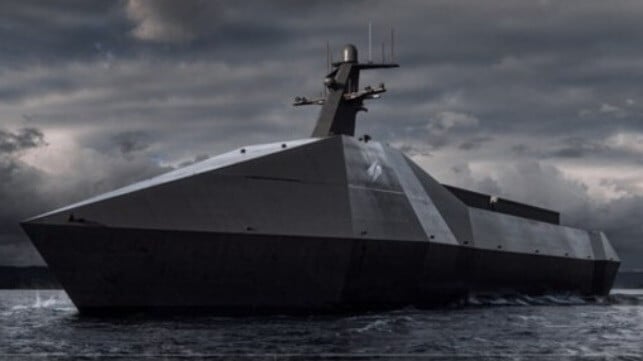
Saronic's Marauder is a 150-foot-long contender for the MUSV program (Saronic)

Published Jul 14, 2025 10:51 PM by The Maritime Executive


On Monday, Vigor Marine Group announced that it will be marketing its construction and ship repair capabilities in a new segment: autonomous vessels. The yard has signed an agreement with unmanned vessel developer Saronic Technologies to create autonomous capabilities for defense and commercial customers. Vigor serves both, providing ship repair for merchant vessels, the Navy, Military Sealift Command and the Coast Guard (among many other customers). 

In the announcement, Vigor highlighted its experience in small vessel fabrication, as well as its repair presence on the West and East Coasts for vessel sustainment. Saronic brings maritime autonomy and platform design experience, as well as expertise in high-rate production for rapid delivery at scale. 

Together, the two partners will provide "full lifecycle" industrial and operational support for autonomous vessels in commercial and defense applications, and they will work together to market their joint capabilities. 
 
“Combining Saronic’s technical leadership in autonomous maritime systems and scaled production with Vigor’s strategically located infrastructure and experience in maintenance, repair, and overhaul (MRO) and lifecycle sustainment creates new opportunities to accelerate capability delivery," said Saronic CEO Dino Mavrookas. 

The announcement follows shortly after Congress provided a massive infusion of funding for Navy autonomous vessel acquisition programs, both for small and midsize vessels. 

Backed with $600 million in venture capital financing, Saronic recently bought aluminum boatbuilder Gulf Craft, and it will be using its yard to produce unmanned warships, starting with a 150-foot unmanned vessel design called the Maurader - marketed as a contender for the Navy's MUSV program, which now has $2.1 billion in funding for development and acquisition. Saronic has a long-term plan to build a "next-generation" greenfield shipyard, dubbed "Port Alpha," but the Gulf Craft site gives it room to build and deliver hulls immediately. 

The Shrimp Factory Whistleblower

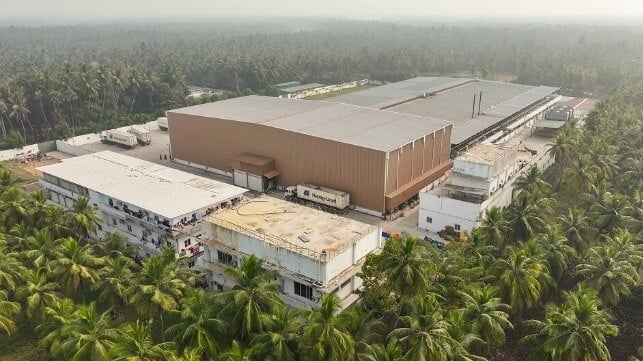
The Choice Canning shrimp processing plant in Amalapuram, India (Ben Blankenship / Outlaw Ocean Project)

Published Jul 15, 2025 5:44 PM by Marcella Boehler


On October 29 2023, a 45-year-old American named Joshua Farinella flew into the city of Amalapuram near India’s eastern coast to start his new job as the general manager at a shrimp processing plant owned by a company called Choice Canning. Farinella, who is softly spoken with a shaved head, neatly trimmed beard and full sleeve of tattoos, was excited about the prospect of living abroad for the first time.

True, this would be a high-pressure job, and he would miss Christa, his wife, but he had negotiated a salary of $300,000 a year, more than double what he’d earned at another seafood company in the United States. He joked that he was now the best paid shrimp worker who did not own his own company. He figured that if he could stick it out for two or three years he would be set up for life: he looked forward to upgrading his camper van, paying off his car loan and setting aside some money for his stepdaughter’s university education.

Farinella’s dream quickly turned into a nightmare. He soon discovered that the plant’s largely female employees were effectively trapped on the compound, routinely underpaid, and forced to live in inhumane, unsanitary conditions. The managers were also misleading auditors and processing shrimp with banned antibiotics. It soon dawned on him that he’d been hired as an American face to “whitewash” a forced-labor factory. Over several months, Farinella meticulously gathered evidence that he brought to the Outlaw Ocean team. The results of that investigation are the subject of the fifth episode of the Outlaw Ocean Podcast, Season 2.

In recent years, India has exploded as the dominant source of shrimp for much of the world, with support from its government through subsidies and loosened foreign investment restrictions. In 2021, India exported more than $5 billion of shrimp globally and was responsible for nearly a quarter of the world’s shrimp exports. Choice Canning is one of the largest Indian suppliers in the market, with corporate offices in two big Indian cities, Kochi and Chennai, as well as in Jersey City, N.J.

Choice Canning categorically denied Farinella’s claims and said that the company never underpaid workers, prevented them from leaving without permission, or maintained subpar living conditions.

On any given day, there might be more than 650 workers at the plant, typically hired by third-party contractors. Hundreds of the workers lived locally in Andhra Pradesh and went home at the end of each day. The rest were migrant workers recruited from impoverished corners of the country who lived at the plant. A security guard was usually posted outside near the building’s front door. Soon, Farinella found migrant workers living on the compound in deplorable conditions — like shared beds with bedbug-infested mattresses — as well as downright dangerous conditions, like a secret dorm above the plants’ ammonia compressors. He also realized there are hundreds more people living on site than the paperwork accounts for, and they cannot freely leave.

At 3 a.m. on November 11, 2023, a manager sent Farinella a WhatsApp message informing him that a woman had been found running through the plant’s water treatment facility. “She was searching for a way out of here,” the manager wrote. “Her contractor is not allowing her to go home.” The woman made it as far as the main gate but was turned back by guards.

Forbidding workers to leave their plants when they choose to is a violation of the Indian constitution and also likely violates the country’s penal code, according to the Corporate Accountability Lab, an advocacy and research group. When Farinella arrived at the plant several hours later, he tried to get an answer about what had been going on—and was told by an HR manager that it had all been a misunderstanding. The woman had not wanted to leave after all. An alarm bell went off in Farinella’s mind.

On January 3, 2024, news outlets in India reported that a group of about 70 workers, many of them women, marched to a police station in the Andhra Pradesh province to demand that action be taken against a labor contractor at their workplace, the nearby Choice Canning shrimp factory.

The workers alleged that the plant’s labor contractor stole approximately $2,600 in wages, equivalent to about two years of an average worker's salary. They also demanded a manager be charged for abusive language under Indian legislation that seeks to prevent hate crimes against members of underprivileged castes - many of the workers were from India’s lowest caste, called Dalits or “untouchables.” Local media reported Choice Canning had properly paid the contractor, who then withheld payment. Following police intervention, the contractor repaid roughly $1,600 to the group.

Farinella was concerned when he found workers sleeping on the floor, but he said he and others struggled to get authorization for the necessary changes. A few weeks later he discovered during a recorded conversation with two labor contractors for Choice Canning that 150 workers had not had a day off in a year.  It was also hard, he said, to tell how long employees spent working. A human-resources executive admitted candidly in a Zoom meeting recorded by Farinella how she would need to adjust attendance records and timecards for an audit.

Processing seafood is a race against the clock to prevent spoilage, so the Choice Canning plant in Amalapuram runs more or less 24/7. There’s also not a lot of automation in shrimp processing, so this means that the factory relies on an enormous amount of labour to deliver 40 shipping containers full of packaged shrimp — every single day.

The story about conditions at the shrimp plant in India come against a broader backdrop. The same week that the whistleblower documents were published, the Corporate Accountability Lab, which is an advocacy group of lawyers and researchers, released a report detailing severe cases of captive and forced labor as well as environmental concerns often tied to wastewater at a variety of other shrimp plants in India.

After leaving his job at Choice Canning, Farinella returned to the U.S. and filed whistleblower complaints to several federal agencies. These complaints also allege a variety of food safety violations, including that the company knowingly and illegally exported shrimp that had tested positive for antibiotics to major American brands in violation of federal law.

Marcella Boehler is global publishing editor at The Outlaw Ocean Project, a non-profit journalism organization based in Washington D.C. that produces investigative stories about human rights, environment and labor concerns on the two thirds of the planet covered by water. Season Two of The Outlaw Ocean Project's podcast series may be found here

The opinions expressed herein are the author's and not necessarily those of The Maritime Executive.

From Keels to Coatings and Beyond

The role of the modern shipyard is multifaceted and constantly evolving

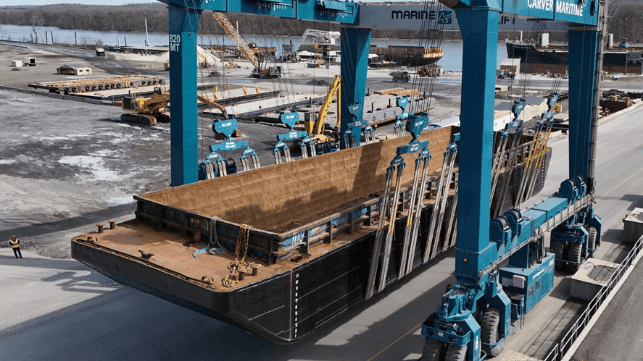
Carver travelift
Courtesy Carver Maritime

Published Jul 15, 2025 7:10 PM by Sean Hogue


(Article originally published in May/June 2025 edition.)


According to a recent report from UNCTAD, global maritime trade is projected to grow an average of nearly three percent a year through 2029.

The shipbuilding and repair market is projected to grow even faster, from $260 billion in 2024 to $279 billion in 2025 or just over seven percent. This growth can be attributed to rising population, economic expansion in emerging markets and increasing demand for all things – 80 percent of which are carried by sea.

Commercial vessels must be drydocked once every five years while passenger vessels need to go twice in that same period (with a maximum interval of 36 months between overhauls), thereby providing a steady flow of business to repair yards.

Considering growth in the global cruise market, which is projected to increase by 26 percent by 2029 to $53.5 billion in revenue, and you can see that drydock space will come at a premium.

More ships, more shipping, more shipyards.

MODERN SHIPYARD OPERATIONS

To win the work, yards must stay competitive. Modern facilities, larger docks and faster turnaround times are all key considerations in selecting a yard.

This type of forward planning and progressive practice is exemplified at BLRT Repair Yards, based in Tallinn, Estonia with additional yards in Lithuania, Finland and Norway. Boasting the largest floating dock in the Baltics and one of the largest in Northern Europe, and a total of seven docks across all locations, BLRT has the capacity required.

"What sets us apart is our ability to combine craftsmanship, modern technology and forward-thinking project management," says BLRT CEO Andrejus Babachinas.

Technology such as robotic welding, automated surface preparation and AI-assisted inspection technologies where feasible give the company an edge. Using digital twin and predictive maintenance techniques, the company is able to better optimize planning and operations with the ultimate goal of shifting to a proactive maintenance approach.

The use of energy-efficient coatings and application technology, installation of hybrid propulsion systems and recommendations for improved hydrodynamics work hand-in-hand with clients sustainability and environmental goals.

"At BLRT Repair Yards, we believe that maintaining a vessel's reliability and extending its life is more than just a service – it's a partnership," Babachinas says. "Every ship we work on represents a commitment to safety, efficiency and sustainability. We see it as breathing new life into vessels, ensuring they are stronger, safer and ready for the seas ahead."

SUPPORTING THE GREAT LAKES

An important sector of the U.S. market is the Great Lakes fleet.

The five Great Lakes, their connecting channels and the St. Lawrence River form one of the longest deep draft navigation systems in the world – the St. Lawrence Seaway. Moving over 32 million metric tons of cargo each year, the Seaway plays a vital role in North American shipping.

Located on the shores of Erie, Pennsylvania, on the site of the former Bethlehem Steel Shipyard, Donjon Shipbuilding & Repair operates the largest shipyard of its kind on the Great Lakes.

Equipped with a 1,250 foot drydock, it's one of only two drydocks on the Great Lakes capable of handling 1,000-foot Great Lakes Self-Unloading vessels, giving it a unique capacity to build, repair, refit and re-power ships.

Located on 44 acres, the Erie facility has more than 200,000 square feet of production area, including fully enclosed fabrication and assembly buildings, as well as 4,000 feet of pier space.

From its beginnings in 1964 as a marine salvage provider, Donjon has continued a measured expansion over time into dredging, decommissioning and recycling, and heavylift support services.

This integrated skill set allows Donjon to add value to any number of operations including the response to the Francis Scott Key bridge removal following its collapse after being struck by the containership Dali in March 2024. The company was able to respond with almost all of its substantial fleet, led by the 1,000-ton capacity derrick barge, Chesapeake 1000.

MAINTAINING MILITARY MIGHT

Since its inception in 1917, the shipyard facility located offshore Mobile, Alabama, on Pinto Island – now home to Alabama Shipyard (ASY) – has played a vital role in serving the U.S. Navy.

During World War II, it produced twenty Liberty Ships in support of the war effort and over 100 T2 tankers – known as "navy oilers" – used to transport fuel oil, diesel fuel, gasoline and sometimes black crude. Many of these ships returned for years afterwards as the yard provided ongoing maintenance and repair support.

That legacy of support and service continues today with a fresh restructuring aimed at partnering more closely with the U.S. Navy while taking advantage of progressive new American shipbuilding initiatives.

Backed by the private equity-supported United Submarine Alliance Qualified Opportunity Fund (USA Fund), the land upon which ASY sits was sold to the newly created Mobile Naval Yard, LLC. ASY subsequently leased back 70 acres of the original 356-acre site, resulting in a right-sized footprint for its operations.

Additional capital will be invested in infrastructure upgrades and improvements across the whole site, allowing for enhanced support of the Maritime Industrial Base (MIB). These improvements will enhance the yards' capabilities, allowing ASY and other future tenants to more effectively support the MIB and contribute to the restoration of America's shipbuilding and repair capacity.

MULTIPURPOSE FACILITY

The Port of Coeymans, located south of Albany on the Hudson River, is New York's premier industrial waterfront terminal.

Owned and operated privately by Carver Companies, the owner and staff are dedicated to providing customers with top-flight service from a prime location for all shipping, processing, warehousing and transportation needs.

Capable of handling vessels up to 750 feet in length, the dock is heavylift-rated up to 4,000 pounds per square foot. This allows the terminal to undertake a variety of projects as the site is equipped to handle modularization of power plants and bridges as well as small manufacturing, marine construction, aggregates and disaster-recovery projects.

Strategically located at the port, Carver Companies offers comprehensive vessel repair, maintenance and fabrication services inclusive of tugboats, barges, offshore supply vessels and much more. The facility features a Marine Travelift capable of hauling vessels up to 820 metric tons and 60 feet in beam for drydock and topside repair services. With more than two acres of outdoor storage and an indoor bay spanning 100'x300'x88', projects are ensured to stay on track regardless of weather conditions.

Who says shipyards are just for ships?

MULTI-CAPABLE YARD

Shipyards are land- and resource-intensive, requiring dock space, drydocks, travel lifts, heavy equipment and workshops. If you find yourself sailing in the Caribbean, then Astivik Shipyard has these resources at the ready.

With facilities spread over seven hectares, it's equipped with three floating drydocks, a 220-ton slipway drydock with three docking positions (one of which specially equipped with airbags for barges), more than 300 meters of pier for alongside works, rolling equipment such as cranes, forklifts and telehandlers plus 2,155 square meters of covered workshops.

Founded in 1972 in Cartagena, Colombia, Astivik has evolved into one of the leading shipyards in the Caribbean. Key milestones include expanding into construction and maintenance for the national market in the 1980s, launching Colombia's first domestically designed floating dock in 2004 and increasing lifting capacity to 4,000 tons by 2011 with the addition of multiple docks.

In 2016, the strategy shifted toward the export of services, and by 2024 nearly 80 percent of revenue came from international clients.

Thanks to an exemption under the Jones Act, U.S.-flagged vessels can receive repair and maintenance services in Cartagena without incurring any taxes upon returning to the U.S. This makes Astivik and Cartagena a strategic and cost-effective choice.

With over 50 years in operation, the yard stands proud as a premier facility in the Caribbean.

SHIPPING'S SUPPORT STRUCTURES

Ship repair yards play a crucial role in maintaining and modernizing the global fleet of ships. They're shipping's support structures, providing essential maintenance, repair and alteration services for a wide range of vessels, ensuring they remain operational and compliant with regulations.

With an ever-expanding fleet, modernization is the name of the game. Yards are adapting to become bigger, faster and more efficient by adopting the latest technologies to shorten stays and increase regulatory compliance.

Modern vessel owners require their vendors to handle increasingly sophisticated ships and equipment, moving them through quickly while being stewards of the environment. Modern shipyards are rising to the challenge, offering full support from keels to coatings and beyond.

Master mariner SEAN HOGUE is a frequent contributor to The Maritime Executive.

The opinions expressed herein are the author's and not necessarily those of The Maritime Executive.

Marine Group Boat Works Announces New Ownership of San Diego Shipyard

Marine Group Boat Works
Entrepreneurs back President Todd Roberts in business buyout, name him CEO, in preparation for new era of growth for legacy shipyard

Published Jul 15, 2025 8:12 PM by The Maritime Executive


[By: Marine Group Boat Works]

Marine Group Boat Works (MGBW), a San Diego-based boatbuilding and repair company, has been purchased for an undisclosed amount by Co-Founder and President Todd Roberts, who has joined forces with entrepreneurs Chip Besse, a MGBW customer with successful investments in multiple industries, and Skye Callantine, principal of investment firm Vigeo Investments. Besse will serve as Chairman of the board while Roberts will continue to actively lead the company in his new role as CEO, with a greater focus on growth and expansion plans made possible by the new partners’ substantial investment.

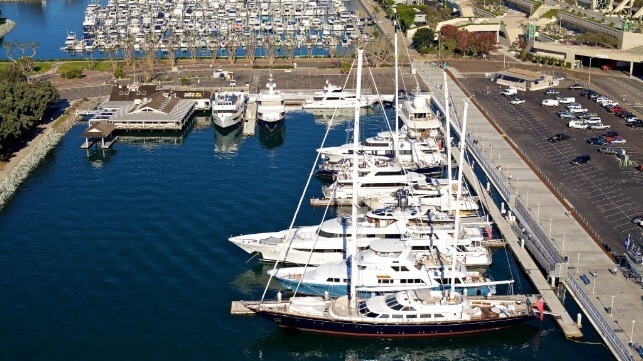
The acquisition included the purchase of MGBW’s two waterfront facilities and their assets – a shipyard on San Diego Bay in Chula Vista, Calif., and a boatyard in San Jose del Cabo, Mexico. The deal also included Marine Group Global Services, the technical services arm of MGBW that provides specialized consulting and marine services worldwide. MGBW will continue to operate and manage Fifth Avenue Landing, a superyacht marina in downtown San Diego, under the Global Services division.

With roots dating back to the 1970s, the company started off as a small Chula Vista boatyard operation and was successfully relaunched 25 years ago as MGBW, a new state-of-the-art superyacht facility founded by Roberts and members of the Engel family. The company had been approached by several other potential buyers over the years, but they were never the right fit. Roberts and the Engels were committed to maintaining the integrity of the brand and protecting the legacy built over the last half-century. For them to consider a sale, they wanted MGBW to be allowed to grow and reach its potential, and not just be swallowed up by a larger firm that didn’t share their vision or commitment to the environment and their people. 

“Chip and Skye are young, visionary and willing to take risks when they see opportunity. But they are also extremely selective. They only partner with companies with very healthy financials, a strong company structure and even stronger management team,” said Roberts. “My team and I have a bold vision for expanding the MGBW brand and pursuing new market segments, and our new partners share our vision. This investment represents an incredible opportunity for us to make our vision a reality. With the resources that they bring to the table, the sky is really the limit for us now.” 

All 250 team members across both facilities will continue with the company, and more are expected to be added to support MGBW’s growth plans. The entire management team will also remain in place, ensuring continuity and a seamless transition.

Some of the immediate changes people will see include a complete brand refresh; new improvements to the aesthetics, security and functionality of the Chula Vista shipyard entrance (adjacent to the new Gaylord Pacific Resort); greater engagement with the superyacht industry; expansion of its Navy repair capabilities; and growth of MGBW’s construction division in support of the revival of California boatbuilding and U.S. manufacturing.  

Company History & Evolution
The Engel family, starting with brothers Art, Herb and David, have operated multiple companies on the San Diego waterfront since 1977. In the early years, the shipyard in Chula Vista was originally Southwest Marine and mostly served the tuna fleet and engaged in Naval ship repair. It quickly outgrew the site and expanded into a larger San Diego facility near the Coronado Bridge while rebranding the original Chula Vista yard to South Bay Boatyard. Southwest Marine expanded to five other locations nationwide. In 1997, the Engels sold Southwest Marine and all of its shipyard facilities, except for the boatyard in Chula Vista.

In 2000, Todd Roberts, a 27-year-old California Maritime grad, was hired as vice president and tasked with shutting down what was then a financially struggling boatyard. However, he had a vision for turning the business around that included pursuing a new market with strong growth potential – large privately owned superyachts. Roberts convinced the Engels to invest $6.5 million to redevelop the facility and upgrade its equipment.

In 2006, under Roberts leadership, MGBW was founded to pursue Robert’s new vision. It has now become the largest superyacht refit facility on the West Coast. In 2010, the company opened a second multi-million-dollar boatyard and drydock storage facility in Los Cabos, Mexico. In 2024, Marine Group Global Services was launched, offering maritime consultation and a variety of ship agent and crew services that do not fit the core capabilities of a shipyard.

Following the sale of MGBW, the Engel family will continue to have a business presence on the San Diego working waterfront, maintaining ownership in its other local companies, Flagship Cruises & EventsCoronado Ferry Landing and the Fifth Avenue Landing marina (managed by MGBW).  

“This year marks my 25th anniversary with the company and talk about a full-circle moment,” said Roberts. “I was originally supposed to close this place down. Instead, the Engel family took a chance on a young guy with big ideas, and together we built something special. We have come a long way, but I’d like to think we’re also just getting started. I’m incredibly grateful for the opportunity to continue the Engels’ legacy and hope to make them proud for many years to come.”

The products and services herein described in this press release are not endorsed by The Maritime Executive.



 NEWFOUNDLAND

MSC Baltic III Response Shows Significant Progress

MSC Baltic III
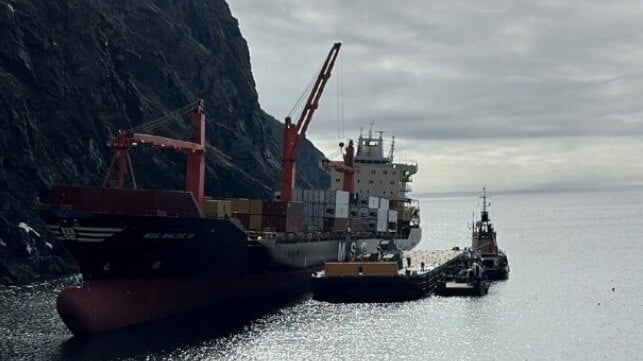
Deck operations early in the salvage process (CCG)

Published Jul 15, 2025 4:34 PM by The Maritime Executive


After months of effort, salvors have removed the majority of the bunker fuel aboard the stricken boxship MSC Baltic III, substantially reducing the risk of pollution. 

Taking advantage of calmer summer weather along the coast of Newfoundland, the salvage response team has been bringing a barge alongside to receive cargo containers from MSC Baltic III's deck. The same barge has taken on more than 1,000 tonnes of heavy fuel oil from the vessel's bunker tanks and carried it to the Port of Corner Brook for safe disposal. The ship had an etimated 1,600 tonnes of fuel oil aboard when it grounded, and the pollution prevention effort has reduced environmental risk for Newfoundland's pristine coastline. 

MSC Baltic III ran aground in heavy weather on Newfoundland's west coast on February 15, coming to rest on a shallow rock shelf exposed to wave action. The crew were evacuated in a high-risk helicopter maneuver, and all were retrieved safely. 

The salvage response has been exceptionally challenging, hindered by the remote location, significant site access difficulties, and the continuous stormy weather of the North Atlantic in winter. Salvors persisted, and about 200 of the vessel's cargo containers have been lightered off, including some that were in extremely damaged condition. The operation to mitigate pollution risk from the cargo and fuel oil continues. 

The vessel itself remains wedged firmly on the rock, its hull seriously damaged from its time aground. A refloat attempt is considered impossible in its current condition; for now, salvors hope that the good weather will hold long enough to complete the lightering process before hurricane season raises risk again. 

Local residents are watching closely as well, since ocean industries are central to the region's economy. "Our biggest concern, of course, is pollution ," said Wade Park, the mayor of Lark Harbour, speaking to Radio Canada. "We want to make sure there's no pollution, there's no danger. Fishing is the backbone of our community. Contaminated waters would be disastrous for us."


With Korean Support, Amogy Takes Ammonia Propulsion Tech Ashore

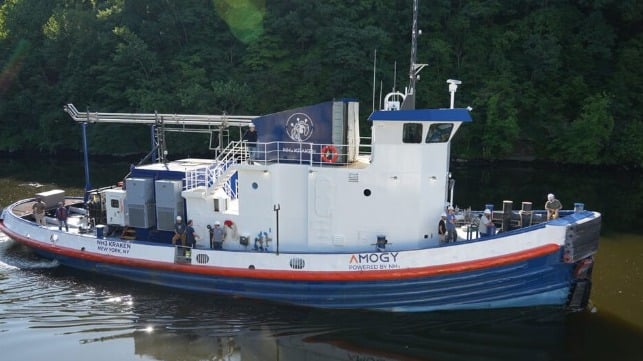
Amogy's ammonia-powered demonstration tug (Amogy)

Published Jul 15, 2025 7:59 PM by The Maritime Executive


One of South Korea's policy banks has made a significant investment in clean power company Amogy, which is designing a system to run hydrogen fuel cells with an ammonia fuel source. 

Ammonia is one of the most promising available fuel options for low-emission propulsion, but it generally requires a small amount of carbon-based fuel to initiate combustion. Burning ammonia also produces NOx, which must be abated before the exhaust stream is released to the atmosphere. 

Amogy's technology takes a different route. Instead of an internal combustion engine as the primary energy generating device on board, it substitutes hydrogen fuel cells. Since these can't run on straight ammonia, Amogy has developed compact equipment that can break down ammonia into its constitutent elements - nitrogen and hydrogen. The nitrogen gas gets released back to the atmosphere, while the hydrogen goes into the fuel cell to generate power. There is no combustion involved, so there are no onboard emissions. (Lifecycle emissions still depend upon the source of the ammonia, whether from green energy or from natural gas.)

Amogy is still a few years out from developing a system large enough for a merchant ship, but it has a test-scale platform on a tugboat and is working on a terrestrial powerplant version as well. It has been successful in raising funds to support its R&D process, and its latest round came to $23 million - led by a tech-focused arm of Korea Development Bank (KDB), the policy bank that supports South Korea's major shipyards and shipowners. The funds will be used to "drive market entry in Asia and scale stationary power applications alongside maritime innovation," Amogy said. 

Korea has a well-developed interest in  green propulsion technology, which it hopes to leverage as a competitive edge in a tough shipbuilding market. But clean ammonia for ships could just as easily be used on shore, where it is just as needed for decarbonization objectives. Amogy noted that Korea's Clean Hydrogen Portfolio Standard (CHPS) and Distributed Energy Act (DEA) will lift the use of hydrogen and ammonia, and that these two closely-related feedstocks will supply two percent of the country’s electricity by 2030 and seven percent by 2035.

"We’ve long recognized the strong demand for ammonia-to-power technology in the shipping industry, but we also see much broader opportunities to use ammonia as a clean fuel – especially with the growing demand for the ‘clean power’ globally. We’re ready to meet that market demand," said Seonghoon Woo, co-founder and CEO at Amogy. “Support for a hydrogen-based economy is especially strong in Asia, and as the most cost-effective hydrogen carrier, ammonia is quickly evolving into the leading zero-carbon fuel solution for these markets."


Is Australia Doing Enough to Ensure Confidence in the AUKUS Sub Deal?

Promises need to shift to performance, judged against a published timeline.

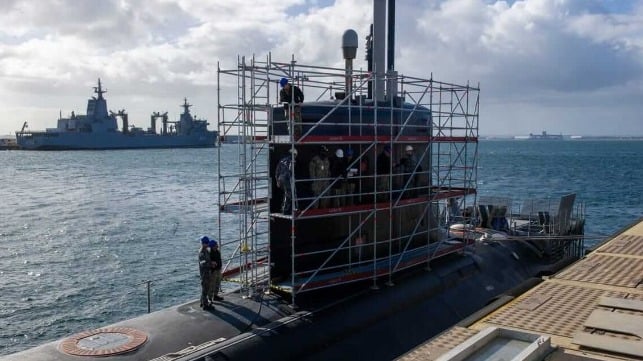
US Navy and Royal Australian Navy sailors attached to the submarine tender USS Emory S. Land performing maintenance aboard Virginia-class fast-attack submarine USS Hawaii at HMAS Stirling, Western Australia, in August 2024 (Mario E. Reyes Villatoro/US Navy Photo)
Crew of the sub tender USS Emory S. Land performing maintenance aboard Virginia-class fast-attack submarine USS Hawaii at HMAS Stirling, Western Australia (USN)

Published Jul 15, 2025 9:00 PM by The Lowy Interpreter


[By Jennifer Parker]

At an estimated $368 billion cost, a Pentagon review underway and talk of the United States seeking a guaranteed commitment in the event of conflict, Australia’s push for nuclear-powered submarines under AUKUS is never far from the headlines. But the idea that Canberra is hostage to American whim is off the mark and lacks self-awareness. Australia must consider how our AUKUS partners view us.

Are our actions instilling confidence in this critical deal? Our real test is proving we can hold up our end: expedite infrastructure, build confidence and show allies and voters alike that Submarine Rotational Force-West (SRF-West) will be ready in 2027, less than two years away.

Since the AUKUS announcement in September 2021, significant progress has been made. Within 18 months, the three partners agreed on an optimal pathway and concluded a binding treaty, no small feat. Training is well underway, with Australian submariners reportedly progressing through the US system, and Australian shipbuilders working at Pearl Harbor to build the skills needed to maintain and eventually construct nuclear-powered submarines at home. And perhaps most remarkably, despite persistent headlines of doubt, the latest Lowy Institute Poll shows more Australians support the acquisition of nuclear-powered submarines than oppose it, a striking shift for a country long defined by its anti-nuclear stance.

Yet for all this progress, a looming infrastructure crunch threatens to derail momentum. The Australian government must now lean in, decisively, to ensure the foundations are in place to sustain what has been achieved.

Worries are growing in Canberra, and Washington, that upgrades at HMAS Stirling and the new Henderson defense precinct are drifting off-schedule. Addressing the Lowy Institute, CSIS president John Hamre warned that many in Washington feel “the Albanese government supports AUKUS but isn’t really leaning in”, a perception he said is “more widely felt … than people realize”. Days later, former US Navy secretary and current Austal chair Richard Spencer drove the point home highlighting that policy alone won’t build submarines: “it has to move from politics to military to construction,” Spencer said. “We need to start moving dirt”.

These worries are hard to verify because Canberra still hasn’t published a real schedule for HMAS Stirling or the new Henderson precinct. The December 2024 Naval Shipbuilding and Sustainment Plan and the March 2025 AUKUS Submarine Industry Strategy trumpet job numbers but stay silent on real infrastructure deliverables. Even the Parliamentary Standing Committee on Public Works, which examined the Stirling upgrade in June 2024, seems to only address the scope. Publicly available detail on Stirling timelines amounts to a single line: “major construction is expected to start in 2025”. With no dated milestones, assurances that we are “investing in both sites” look aspirational, and the perception gap widens.

With no published timelines, even loyal supporters are left wondering whether Canberra can meet its AUKUS obligations, first hosting SRF-West, then taking delivery of an Australian-flagged Virginia-class boat in 2032. Our credibility problem is hardly new: the public and industry still recall years of slipped schedules and blown budgets in naval shipbuilding and infrastructure.

The 2020 Force Structure Plan flagged the need for a second dry-dock in Western Australia, an urgency only amplified by AUKUS, yet five years and two governments later we still lack a start date. Dry-docks are neither cheap nor quick to build, but they are essential if we hope to maintain nuclear-powered submarines on home soil. Meanwhile, the promised east-coast submarine base has vanished from the agenda. Although not critical to the AUKUS pathway, submarine access to both the Indian and Pacific Oceans is central to any credible Australian maritime strategy.

Shipbuilding and sustainment are hardly healthier. Both Australian Navy replenishment ships have been idle since 2024 with engine and shaft failures, and an ANAO audit says the landing helicopter docks suffer “ongoing deficiencies” and “critical failures” thanks to poor contract management. The first 1,640-tonne Arafura offshore-patrol vessel took three-and-a-half years to move from launch (December 2021) to commissioning (June 2025), an extraordinary pause for such a simple platform. Steel for the Hunter-class frigates was cut in 2024, yet the lead ship is not due until 2032 because Canberra will not expedite the program. Meanwhile, the Collins-class submarine life-of-type extension looks increasingly unlikely to proceed as originally scoped, if it proceeds at all.

Every shortfall has its own back-story, too complex to detail in this space, but the record is clear: our patchy performance on naval infrastructure, shipbuilding and sustainment has bred a reputation for delay and indecision. Rather than continually seeking reassurance that Washington and London will meet their AUKUS commitments, Canberra should confront the tougher question: do we inspire confidence, or are we becoming the weak link in the trilateral partnership?

The government’s refusal to lift defense spending, insisting we are “doing enough” despite allied doubts, erodes the very confidence we need to build. Any military planner can see the ADF’s ambitions are kneecapped by a budget that falls well short of our stated strategy.

Much has been achieved since AUKUS was unveiled, but we are now on the critical path: without timely upgrades at HMAS Stirling and Henderson, the first phase stalls. From the outside it is impossible to judge progress, and partners are openly skeptical, hardly surprising given Australia’s patchy record on recent naval projects. Repeating that we are “doing enough” no longer cuts it. If Canberra wants to shore up confidence, it should publish a detailed schedule for the Stirling and Henderson works. Transparency, not talking points, will keep AUKUS on track.

Jennifer Parker is an expert associate at the National Security College, Australian National University, an adjunct fellow at the University of New South Wales and Nancy Bentley Associate Fellow in Indo-Pacific Maritime Affairs at the Council on Geostrategy. Jennifer has over 20 years experience in the Australian Department of Defence working in a broad range of operational and capability areas. 

This article appears courtesy of The Lowy Interpreter and may be found in its original form here

The opinions expressed herein are the author's and not necessarily those of The Maritime Executive.


Hawai'i Awards Contract to Sink the Historic Sailing Tanker Falls of Clyde

Falls of Clyde
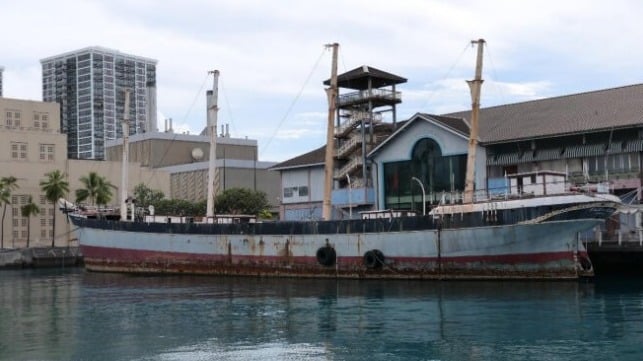
Falls of Clyde circa 2023 (courtesy Save Falls of Clyde)

Published Jul 15, 2025 10:57 PM by The Maritime Executive


The famed sailing ship Falls of Clyde will finally leave Honolulu Harbor following the award of a $5 million contract for its removal, with ocean sinking having been settled as the ideal method of disposal.

The Hawaii Department of Transportation (HDOT) is announcing that after nearly two decades at Honolulu Harbor, the fate of Falls of Clyde has been sealed. Having received numerous proposals on how to remove the vessel, it has settled on ocean disposal at a deep-water site at least 12 miles due south of Honolulu Harbor. Ocean disposal was one of the methods recommended in a Final Environmental Assessment issued in June last year, with the two others being dismantling and third-party acquisition. Florida-based maritime technical consulting firm Shipwright LLC was awarded the contract for its removal.

The 146-year-old vessel has been docked at Honolulu Harbor since 2008 and is currently berthed at Pier 7, where it once served as a museum ship as part of the Hawai‘i Maritime Center. The vessel was impounded in 2016 when its permit was revoked and the owner failed to remove it from the harbor. Since then it has remained in the custody of the department.

HDOT has been wanting to remove the vessel from the harbor since it was delisted from the Hawaii Register of Historic Places in November 2023. Besides, due to significant deterioration, the ship has lost most of the qualities of historic significance that originally led to its listing in the National Register of Historic Places in 1989. The ship was placed on the list because of its national significance as the oldest surviving American tanker and the only surviving sailing oil tanker left afloat, not only in the U.S. but the world.

Following the award of the contract, Shipwright has already assembled a project team with extensive experience with salvage, remediation, wreck assessments, dead ship tows, derelict vessel removal and fragile hulls. Starting next week, the team will begin debris removal and will restore the watertight integrity of the ship’s subdivision bulkheads.

The next task will be hull strength remediation to prepare the vessel to be safely towed out of the harbor in the event of a storm threat or other emergency. From next month through November, additional structural reinforcement work will be performed before the vessel is towed and disposed of in late November.

As part of the project, HDOT has ensured the Falls of Clyde will not be sunk with any treasures after working with a maritime archaeologist to catalog and safely remove all historical items from the vessel and storing the artifacts in a secured facility.

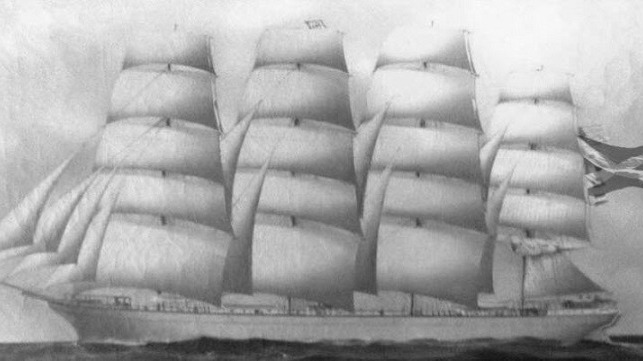
Built in Glasgow, Scotland, Falls of Clyde is the world’s only surviving iron-hulled, four-masted, fully rigged ship. The ship was constructed during a shipbuilding boom inspired in part by increased trade with the U.S., and it made several voyages to American ports while under the British flag. In 1898 the ship first changed ownership when it was purchased by Captain William Matson (of the Matson Navigation Company) and registered in the Republic of Hawai‘i.

From 1899 to 1907, the ship was re-rigged as a bark for sail with fewer crew and made over sixty voyages between Hawai‘i and San Francisco carrying passengers, sugar and general cargo. It was sold on to San Francisco-based Associated Oil Company, which installed large steel tanks in the hull to allow it to carry 750,000 gallons. For decades, the ship would bring kerosene to Hawai‘i and molasses back from Hawai‘i to California.

Falls of Clyde's removal and disposal is part of ongoing initiatives focused on the removal of inoperable vessels from its commercial ports to protect maritime facilities, improve port efficiency and support commerce. This emanates from the fact that more than 90 percent of imported goods enter the state through Honolulu Harbor.