Sunday, August 31, 2025

‘Every pound of public investment should back British jobs’
SOCIAL DEMOCRATIC PROTECTIONISM


© Michael715/Shutterstock.com

If new transport infrastructure was made in Britain, Greater Manchester could spark new jobs, back industry and set a model for our regions.

When we talk about building a stronger economy, we often focus on numbers like growth, productivity, or inflation. But for most people, what really matters is whether investment creates good jobs, keeps industries alive, and gives communities confidence in the future. That is why how we spend public money is so important.

In Greater Manchester, we are investing in the Bee Network and the next generation of trams. These new vehicles will allow us to expand services, connect more communities, and introduce modern technology.

But we need to ask ourselves an important question: where will these trams be built, and who will benefit?

Build new trams with British Steel

I believe the answer should be clear. Our new trams must be built in Britain using British Steel. This is not just about local pride, although I know people in Greater Manchester would feel proud of it. It is about creating skilled jobs, supporting local businesses, and making sure the money we invest circulates in our local economy.

Public spending already covers billions of pounds of infrastructure, vehicles, and transport projects every year. Too often, these contracts are awarded to overseas companies. That means the work, the jobs, and the skills go abroad, while our communities miss out. We can change that.

Greater Manchester has real influence through its purchasing power. By insisting that new trams are made in the UK, we could create work for local engineers, steelworkers, and designers. We could strengthen supply chains, give companies confidence to invest, and support the industries of the future.

The case for building in Britain has never been stronger

Building trams in Britain could create hundreds of jobs directly in manufacturing, while supporting thousands more in related industries such as design, engineering, and logistics. Local factories would see more work, apprentices could be trained, and the skills we need for the next generation of transport projects would be retained in our region. This is how investment turns into opportunity for communities.

The case for building in Britain has never been stronger. The pandemic showed how fragile global supply chains are. Rising energy costs and international uncertainty have reminded us that resilience matters. If we want a strong, secure economy, we need the capacity to make things ourselves.

Modern British manufacturing is not about nostalgia. It includes the manufacture of advanced steel, engineering, and green transport technology. These industries will grow if there is demand. Public procurement can provide that demand. By committing to building trams in Britain, we will give businesses the certainty they need to expand, hire and innovate.

This is what Labour should be about: using the tools of government to deliver for working people. We should not accept a system where taxpayers pay for transport projects while jobs, profits, and benefits go abroad. Every pound invested should strengthen communities, industries, and pride in British work.

This is the kind of investment that changes lives

Transport is about more than timetables and tickets. It is about shaping our economy and giving communities opportunities to thrive. Choosing to build our trams in Britain would be a simple but powerful step toward a stronger, fairer economy where workers and industry benefit side by side.

Imagine apprentices in Greater Manchester learning to weld and construct, engineers designing next-generation vehicles, and local suppliers providing essential components. This is the kind of investment that changes lives, strengthens communities, and ensures the region does not miss out on the economic opportunities that public spending can create.

Other regions have shown what is possible when procurement is used strategically. Local supply chains are revitalised, jobs are created, and skills are passed down to the next generation. Greater Manchester can do the same. We have the people, the expertise, and the ambition to make it happen.

This is also about pride. British-made trams would be a visible sign of what public investment can achieve. They would show that we value our workers, our skills, and our industries. They would signal to the world that Britain can still produce high-quality, high-tech vehicles that meet modern needs while supporting communities at home.

We now have the chance to make a real difference. By choosing to build our trams in Britain, we could create skilled jobs, keep supply chains local, and rebuild our industrial foundations. Greater Manchester could show how public investment can deliver for people, not just move vehicles from place to place.

This is the kind of bold, practical action that Labour should champion. It connects investment with opportunity, transport with industry, and public money with public benefit. It is a way to deliver lasting change for communities while strengthening the economy and ensuring Britain remains a place where people can build a career, support a family, and be proud of what we make.

Choosing British-made trams is not a small decision. It is a choice about the kind of future we want for Greater Manchester and for the UK. We can either let public investment slip away overseas or we can use it to create opportunities at home. I know which choice I want to make, and I believe the people of Greater Manchester want the same.

By backing British manufacturing, we can show that public money matters, that local jobs matter, and that Greater Manchester is ready to lead the way in building a stronger, fairer, and more resilient economy.

The Progressive Case for Tariffs


 August 28, 2025

Sara Steffens is the worker power director at the Congressional Progressive Caucus Center.

UK

Labour ‘must examine people working in rail industry after Hull dispute’ – Aslef


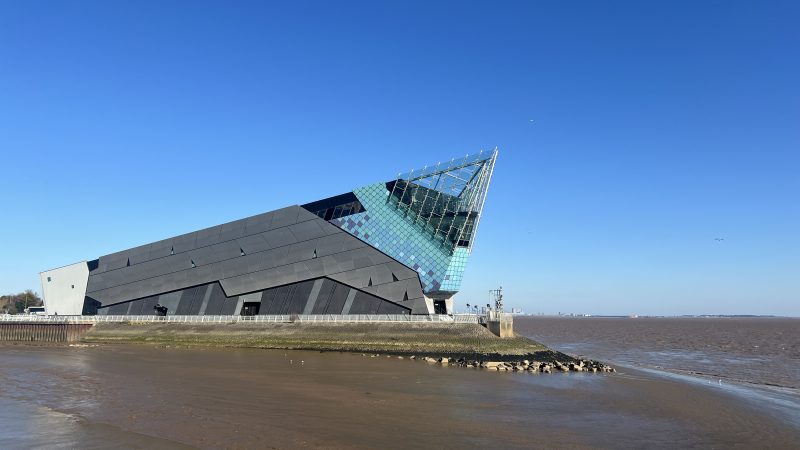
Photo: The Deep, in Hull.

Labour should “take a look” at people operating within the rail industry, the general secretary of Aslef has said, ahead of a solidarity rally over an industrial dispute with Hull Trains.

Trade union activists will join Aslef at the rally at Hull Paragon station today, as the union continues to battle Hull Trains over the dismissal of one of its members.

The union claims the driver was unfairly dismissed after raising fears of fatigue at a safety meeting. In solidarity, the general secretaries of 30 trade unions – including several affiliated with Labour – have written to Hull Trains warning that sacking the driver damaged the safety culture on Britain’s railways.

In the letter, Fire Brigades Union general secretary Steve Wright said: “We want to make it really clear. The FBU will stand by all workers in struggle, as that solidarity is fundamental to what makes our unions powerful.”

Speaking to LabourList, Aslef general secretary Mick Whelan said that railways will be less safe if drivers can’t come forward with personal issues without fear of dismissal.

“If they get away with this in Hull Trains, the culture that we spent 23 years applying, trying to get people to come forward if they’ve got family issues, or had a traumatic event, or have got a medical issue, people just won’t come report anymore, and we’ll have a less safe railway.”

He said: “The government should have a look at people operating within the industry.”

He added the press had been briefed that the driver was asleep at the wheel, but this was “untrue”.

According to the union, when the company downloaded the black box it discovered the driver had driven perfectly and correctly throughout his journeys.

“It is interesting that I’m more than willing to have an open debate with anybody from Hull Trains, with the press – or anybody else present – to make our case, yet they keep hiding,” Whelan said.

In the latest ballot, drivers for Hull Trains voted to continue strike action by 17 members to 15. There have been, to date, 72 days of strike action at Hull trains.

A spokesperson for Hull Trains, said: “Hull Trains follows highly regulated industry standard agreements and procedures for safety. We have stringent safety reporting processes and provide extensive ongoing training and health and wellbeing support for our colleagues which has secured industry recognition.

“The company has made a number of proposals for a resolution of this matter with Aslef. We remain committed to open dialogue to resolve this situation and avoid further disruption to our customers.”

“Something wicked this way comes”: finding my Jenny Greenteeth

AUGUST 27, 2025

By David Renton

My novel, The Story of Jenny Greenteeth, is published today. The editors of Labour Hub have been kind enough to offer me this chance to explain why I wrote it. Around five years ago, during the early days of Covid, I was asleep at home when I dreamed of drowning. On waking, I was capable of summoning only the most meagre scraps of this encounter which were as follows: my face had been below the water’s surface with my feet far beneath me, I gasped for air, the water invaded my lungs and I could not breathe. That memory excited me. It felt authentic, real, and I wrote it down at the first chance.

When I thought about the dream, two obvious contenders presented themselves as explanations for why I’d reacted so strongly. At the age of one or thereabouts, but at any event before I was verbal, my parents took me sailing on their 30-foot, two-sail, yacht. At some point in the day, I fell into the water, whether from the boat itself or from the small rubber dinghy on which they liked to row to land while they left the yacht anchored to the sea floor. All I know is that my father plucked me out of the water. To this day, I still have stitching on the little finger of my right hand. My mother told me that my scar dates back to my rescue. Was I replaying this incident in my head; did I remember the event itself, or only being told about it? 

Here is the other possibility – when I was about 25 years old, I was walking one late December evening through Hackney on my way back to the room I rented. My partner suggested that we strip our clothes off and dive in the nearest canal. I, who’d drunk less than her, was horrified and objected, raising the cold, the dirt of the water, the risk of infection. Ever since, it has been one of those moments we tease each other about, a symbol of her recklessness or my caution, or possibly those values in reverse (that’s the thing about long-term relationships, you get to see all of the person you love, and their different reactions to similar opportunities). On the birth of our children, I wrote a love poem in which that moment became the fulcrum around which our relationship has turned. Maybe, as I dreamed, I was imagining what would have happened if I had indeed jumped into the water with her?

Within moments of waking from the dream, the conviction had settled on me that this incident meant enough so that I could write a novel exploring what exactly had been going on – either in the dream itself or in my enthusiasm at its memory. And there were other figures I’d be thinking about too – a wronged woman from the distant past, her accusers. Alongside them, I’ve long been mulling questions with which the book engages: the violence of the oppressed and its necessity; whether and when it’s right to forgive.

Quite a few novels, I suspect, have similar origins. Dracula, for example, is said to have begun at Bram Stoker’s waking from a dream; in his case, of being menaced by three inhuman women, plus a man who asserted his control, not of the women but over Stoker himself. That scene makes it into his novel’s early pages, just as mine is my story’s inciting incident.

My Jenny Greenteeth is a monster, a metaphor perhaps but of a wild and unchained sort, neither parable nor allegory. Readers who remember London in 2013, in the aftermath of the student protests and the London riots, will I hope find the atmosphere familiar. Tell me if the monsters frighten you, as they scare me. Let me know if you side with the book’s protagonist as she tries to make a principled way through a world not of her choosing. This is gentle, horror fiction, comrades. Urban horror, folk horror, but horror all the same. Read it if you believe that sometimes fiction can tell the truth about or world and its never quite closed-off possibilities.

David Renton is a barrister and the author of Against the Law: Why Justice Requires Fewer Laws and a Smaller State, which was published by Repeater in 2022 and of Horatio Bottomley and the Far Right Before Fascism, which was published by Routledge in November 2022. He blogs here.

\

 UK

Alarming increase in housing insecurity for older people: new report

AUGUST 27, 2025

new report by Crisis shines a light on a growing and devastating issue: older people in Britain are being swept into the housing and homelessness crisis.

What should be a time of security and dignity is instead becoming a daily battle to keep a roof overhead, pay rent, heat homes, and afford food. For too many, the dream of a peaceful retirement has been replaced by the fear of homelessness.

A Growing Crisis

Crisis’ research reveals that older people are now facing housing insecurity at alarming rates. Households unable to save, people experiencing poor health and Black, Asian, and other minoritised ethnic communities are especially vulnerable.

Homelessness among older people has risen sharply over the past five years. In the last two years, England saw a 35% increase in the number of households aged 55 and over forced into temporary accommodation. With an ageing population, the situation is only set to worsen unless urgent action is taken.

The Human Cost

As housing and living costs spiral, many older people are being pushed into desperate measures to cope: turning off heating and hot water, cutting back on food and electricity, relying on food banks and avoiding social outings to save money, leading to isolation and loneliness.

For some, debt becomes the only way to survive, with credit cards and loans filling the gaps. Others delay retirement because they simply can’t afford to stop working. The numbers of over-65s who are working has doubled in the last twenty years.

Caring for loved ones also becomes harder, while barriers like digital exclusion and age discrimination make finding work more difficult.

Over two-fifths of respondents surveyed said they suffered from increased stress about rising housing costs. Perhaps most worryingly, nearly half of older people on low incomes told Crisis they would have nowhere to go if they lost their home. In some heart-breaking cases, people have resorted to sleeping in sheds or living in unsafe conditions, with devastating effects on both physical and mental health.

Why This Is Happening

This crisis is the result of years of chronic undersupply of social housing, rising rents and an inadequate welfare system. What was once a safety net for older generations has eroded, leaving many exposed and vulnerable.

Without intervention, homelessness could become a grim reality for an increasing number of older people across Britain.

What Needs to Change

Crisis is calling for urgent action to prevent this crisis from becoming entrenched:

  • Significant investment in social housing to ensure safe, genuinely affordable homes
  • Affordable private renting, with stronger protections for tenants
  • Housing benefit that truly covers the lowest third of rents across Great Britain

Anything less will mean more older people suffering needlessly in poverty, instability, and homelessness.

“‘I didn’t expect to be living the way I am’: Older people’s experiences of housing precarity and homelessness” can be accessed here.


UK 

Local activists fight Green Belt developers


AUGUST 28, 2025

Kent villagers are organising against an ill-conceived plan that would destroy local amenities and increase pollution, reports Dave Mitchelmore.

Two villages adjacent to Maidstone are facing housing developments on three sites that would eat into Green Belt land and make existing traffic congestion and pollution levels even more intolerable.

Wateringbury and East Malling lie a stone’s throw from the western section of the M20 in Kent. This proximity, coupled with the lack of an up to date Local Plan for Tonbridge and Malling Borough Council, (TMBC), renders these semi-rural villages susceptible to the relentless drive to build new homes, irrespective of the suitability of such developments for the area.

The vulnerability to these developments that the villages face has local and national features. TMBC’s local plan expired more than five years ago and the Council therefore does not have an adopted strategy for meeting housing needs, meaning that developers are able to propose new residential schemes within sustainable locations and expect to receive a positive outcome.

In December 2024, the Government revised the National Planning Policy Framework which included changes to the Metropolitan Green Belt. One change was to introduce a Grey Belt Policy, which allows residential development of Green Belt sites that are within a sustainable location and would not undermine the purposes of the wider Green Belt. The three sites under threat lie either within or adjacent to the Metropolitan Green Belt.

The so called ‘Golden Rules’ surrounding this policy demand that submitted developments must prove 50% of homes would be ‘affordable’, clearly a very loaded stipulation. As TMBC can demonstrate only 3.1 years of a five-year housing land supply there is clearly an ‘un-met housing need’.

Faced with this situation, opponents of one of the latest proposed developments in East Malling, on land currently an orchard, rejoiced when a full meeting of TMBC rejected an application to build 52 homes on the site in April this year. Unfortunately, Esquire, the builder, have sought to appeal the decision and in August word came that another development is proposed within the village boundary.

Wateringbury, which is directly adjacent to East Malling, would lose the wonderful amenity of a glorious view of the Medway Valley should this application to build be successful. This loss of amenity would also be felt by neighbouring villages. The proposed development would occupy a site currently consisting  of fields where horses and ponies are stabled.

 Dozens of residents in both villages are currently working together to oppose these proposals. The villages are linked by a crossroads which already experiences urban levels of pollution and traffic congestion. This is set only to significantly deteriorate if the developers get their way.

East Malling has a long tradition of opposing these developments, with some stalwart support from individual councillors. This is not the case in Wateringbury, but the threat of this development has galvanised the village into action via word of mouth and, you’ve guessed it, WhatsApp. Three meetings have been held with over 60 residents signed up to the Protect Our Medway Valley group (POMV). At the time of writing, the tenant has finally been served with an application for planning permission after six months of shadow boxing between Croudace, the developers, and POMV.      

We have approached Tom Tugenhat, the local MP and local councillors, but clearly our strength lies in pinpointing where proposals clash with local and national policies, doing our homework and organising opposition to these developments that not only would further blight the West Kent countryside but also avoid tackling the underlying housing crisis that Labour is emphatically failing to address.

Dave Mitchelmore is Convenor of Protect Our Medway Valley and a resident of Wateringbury. 

Image: Wateringbury. https://www.flickr.com/photos/adambowie/36653935146/in/photostream/ Author: Adam Bowie. Licence: Attribution-NonCommercial-ShareAlike 2.0 Generic CC BY-NC-SA 2.0 Deed

UK

Migrants are not the problem – this is just another distraction

AUGUST 29, 2025

The current situation is largely the creation of successive governments, argues Nadine Finch.

The growth of activity by and support for the far right is at a level that has not been witnessed in Britain since the 1970s and 1980s. Its primary targets are migrants and their communities. This time the fascist regalia and narrative are not so much in evidence, but the racist ideology is just as clear. The flying of flags from lampposts and the drawing of the St George’s flags on roads and pavements are also all too reminiscent of the no-go Loyalist areas in Northern Ireland. But both the Northern Ireland Assembly and the Northern Ireland Human Rights Commission have recognised the adverse effects of the use of flags and symbols to intimidate and denigrate communities seen to be different.

Here the Prime Minister rarely makes statements without being framed by Union Jacks and the Government’s social media repeatedly portrays asylum seekers as illegal entrants. It also does nothing to call out the hate directed at them. The added irony is that it is the Government itself that is continuing to place asylum seekers in hotels run by contractors who make millions by providing sub-standard accommodation.  

Over the summer, Farage ramped up anti-immigrant falsehoods. The Government has sought to appease him by implicitly accepting them and issuing a raft of responses that are not capable of solving the largely economic and social basis for the growing support for populist racist views. It agrees that asylum seekers should not be housed in hotels, but does not provide alternative accommodation, which would meet the needs of traumatised individuals and stop the profiteering by private accommodation providers. It also agrees that applications and appeals should be determined within a reasonable time, but does not provide funding for this to be achieved in a manner that will meet the requirements of international law.

In the context of the ‘asylum hotels’, prior to 1999 asylum seekers were provided with a percentage of income support and were dispersed to available public and private accommodation. But that Labour Government then created a separate asylum support scheme with its own costly bureaucracy and increasingly entered into expensive contracts with private accommodation providers, all too willing to be paid well for accommodation they had not been able to persuade others to rent at such a profit. This eventually led to three private contractors entering into even more profitable contracts with the Government to use hotels standing empty, as a result of Covid and the economic downturn.

Yes, there is an increase in the numbers of asylum seekers arriving here who require accommodation whilst their claims are determined. But they are not illegal entrants. That is just the terminology created by the previous Government and happily adopted by the current Government. Compliance with international law, in the form of the Refugee Convention, requires the UK to determine claims from individual refugees, who have arrived on its territory. In the past, they were granted temporary admission for this purpose. This was not leave to enter and remain but provided limited legal status during asylum proceedings.

And yes, 88% of asylum seekers do now arrive in small boats. They do so as the so-called safe routes are not open to the majority of those fleeing persecution and deprive individual asylum seekers of any agency to seek protection for themselves and their families. Covid, the closure of certain routes due to the war in Ukraine, increased penalties on those operating ferries and aircraft, hostility to migrants in large parts of Europe, existing family and community in Britain and, most importantly, the persecution they are fleeing have forced women, men and children into small boats to make the dangerous crossing from France and Belgium.  The majority are fleeing persecution in well-publicised war zones and/or repressive regimes in Afghanistan, Eritrea, Syria, Iran and Sudan.

The Government is obliged by the Refugee Convention to determine their applications. The ability to return adult asylum seekers to EU states they may have passed through, or have a connection with, ended when the UK left the EU. The bilateral agreements the Government is now boasting about are extremely limited and still to be proved effective.

The last Government virtually brought decision-making in asylum cases to a halt in order to emphasise its one solution: giving asylum seekers a one-way ticket to Rwanda for their applications to be resolved there.  Since taking office, the Government has done little to address a major obstacle to swift decision making; that of the Immigration Service within the Home Office. It is said to have a reputation within the Civil Service itself for seeing its major task as being to reduce the number of asylum seekers and migrants being permitted to remain here and having failed to build an internal culture of excellence and expertise based on compliance with international law.

Concern about this is also widespread amongst the legal profession and UNHCR has tried to raise standards within the Service for decades. Many working in the sector have experienced ‘the culture of disbelief’ that persists and are aware that the Home Office management has consistently adopted a fire-fighting approach, moving asylum case workers to ad hoc teams; working at one time on settlement for EU citizens and more recently on processing deportations. This de-skills case workers and destroys morale.

Targets for deportation, anti-migrant rhetoric by the Government and instructions to speed up processing applications for asylum seekers may then blend together into a form of negative case-hardening against all applicants. Lack of expertise and increased targets for decisions can also lead to mistakes. In the year from June 2024 to June 2025, the number of asylum applications allowed by the Home Office decreased from 58% to 48%. The conditions in the countries from which asylum seekers were fleeing did not decrease at a similar rate. For example, discrimination and repression by the Taliban in Afghanistan against women and political opponents appears to be increasing. Yet the numbers of applications allowed from Afghan asylum seekers, decreased from 96% to 40% in that year.

It is not possible to quantify the effect of all of the factors referred to above, as no data on the quality of decisions has been released by the Home Office for 2024/5. But statistics do show that in 2023/4 only 52% of decisions passed Home Office internal quality checks.

In terms of asylum appeals, the Rwanda effect and the efforts of the current Government to ramp up the number of decisions has led to the number of appeals to the First Tier Immigration and Asylum Chamber rocketing from 7,173 at the start of 2023 to 34,814 at the end of 2024.

In November 2024, Lady Chief Justice Carr, told the House of Commons Justice Select Committee that the key issues facing the judiciary and the courts were increasing backlogs, chronic underfunding, staffing shortages and a lack of capacity affecting both courts and tribunals. She also noted that there had been an increase in 82% in cases being appealed to the First Tier Tribunal of the Immigration and Asylum Chamber.

She went on to explain that some 150 new fee-paid First Tier Tribunal Judges were being recruited and should be in post by the autumn of 2025.They will join existing salaried and fee-paid judges. Fee paid judges sit for a certain number of days per year, but usually also remain in practice as barristers and solicitors. This gives the Tribunal the flexibility to respond to the ebb and flow of arrivals of asylum seekers in response to invasions, civil unrest and persecution and their consequent appeals.

The ceiling of sitting days can be increased very quickly but this, of course, is dependent on the Treasury releasing its steel grip on the supply of financial resources to the Ministry of Justice. It also depends on the Government refraining from populist faux-solutions and assessing with competence the money and staff needed to respond to the current flood of appeals.

But in another example of soundbite government, it announced over the Bank Holiday weekend that there would be a new system of independent adjudicators. There was no explanation about why they would be replacing the salaried and fee-paid judges that had already been recruited. There was no confirmation that they would be sufficiently trained and experienced to reach decisions on complicated cases in accordance with international law.  There has been no consultation with the Tribunal judiciary or any indication about how legislation would be amended to make the soundbite a reality.

It is also unclear how the creation of independent adjudicators outside the existing Tribunal system will affect the role of the Upper Tribunal of the Immigration and Asylum Chamber, which operates at a High Court level. It has a number of very important roles in addition to the core one of hearing appeals from the First Tier. One of these is the issuing of country guidance decisions.

One of the most challenging of tasks for both Home Office case workers and immigration judges is assessing the subjective fear of an individual asylum seeker in the context of the current conditions in their country of origin. The Immigration Service does have its own guidance on countries from which asylum seekers arrive. But this is over-reliant on desk research of other sources, which also rely on desk research, and largely ignores the opinions of academic and legal experts, who are often deemed to be ‘hired guns’ favouring applicants. This leads to many appeals against Home Office decisions.

To combat this trend and assist immigration judges, the Upper Tribunal created a system in which experienced Upper Tribunal Judges selected test cases where they reviewed a wide range of documentary and expert evidence in order to issue Country Guidance Decisions for other immigration judges.

By this and other means, the judiciary has worked hard to combat the high level of errors made by the Immigration Service, which is apparent from the fact that since 2019/2020, just under 50% of appeals have been allowed. At the same time, many judges have to ensure that appellants, who can longer access a legal representative due to a shortage of legal aid provision, have a fair chance of understanding the proceedings and presenting their case.  

Choices made to restrict funding to legal aid and the Tribunal system and the failure to address the endemic inadequacies within the Immigration Service have real-world consequences. These affect not only asylum seekers and their communities but the cohesion of the society around them by feeding the lies and prejudices of those seeking to exploit racism and economic and social deprivation.

Nadine Finch is a former Upper Tribunal Immigration Judge.

Image: c/o Labour Hub