Thursday, September 11, 2025


Rystad Energy New Definitive Study On Marine LNG Well-To-Tank Emissions
Rystad Energy

Published Sep 10, 2025 5:07 PM by The Maritime Executive


[By: Rystad Energy]

Independent research and energy intelligence firm Rystad Energy has published the results of a landmark study on the greenhouse gas (GHG) emissions from the LNG bunker supply chain, commissioned by SEA-LNG. This is the most accurate and up-to-date certified data on LNG as a marine fuel designed to help guide the International Maritime Organization’s (IMO’s) Net-Zero Framework and future fuel policy.

The implications for policy makers developing regulations to decarbonise shipping resulting from this study are:

  1. Regulations should incentivise participants in the LNG bunker supply chain to continue to reduce GHG emissions, particularly in relation to natural gas production and liquefaction.
  2. Policy makers should introduce a process to regularly update WtT default emissions factors used in regulation, in particular those relating to methane emissions.
  3. This report highlights that the EU WtT default of 18.5 gCO2e/MJ (in FuelEU Maritime) is too conservative and a lower number is justified.
  4. The study analyses the emissions originating from the five key fuel lifecycle stages: upstream, transportation & processing, liquefaction, shipping, and distribution & bunkering operations. It was conducted in line with the IMO WtT lifecycle analysis guidelines, the Intergovernmental Panel on Climate Change’s (IPCC) AR5 GHG definitions, and is based on asset-specific 2024 data.

The study finds that the global well-to-tank emissions intensity for LNG bunkering fuel in 2024 is 13.9g CO2e/MJ (LHV). Carbon dioxide dominates global WtT emissions, responsible for 84% of emissions. Carbon dioxide emissions were most prevalent in the liquefaction stage, responsible for 99% of the stage’s 5.9 g CO2e/MJ.  

Methane emissions were responsible for 16% of total WtT emissions, equivalent to 2.2 g CO2e/MJ. They were most prevalent in upstream gas production lifecycle stage, responsible for 38% of total emissions from that stage.

On a global basis, upstream gas production and liquefaction were responsible for the majority of bunker supply chain emissions at 30% and 43% respectively. Consequently, these two stages should be the focus for most future decarbonisation efforts. From the upstream perspective, methane mitigation is best poised to deliver the greatest emissions reduction benefits. Improvements in liquefaction emissions have been observed over recent years, tied to greater utilisation of more efficient technologies. It is likely this trend will continue when coupled with key electrification projects using renewable energy such as hydro and solar power.

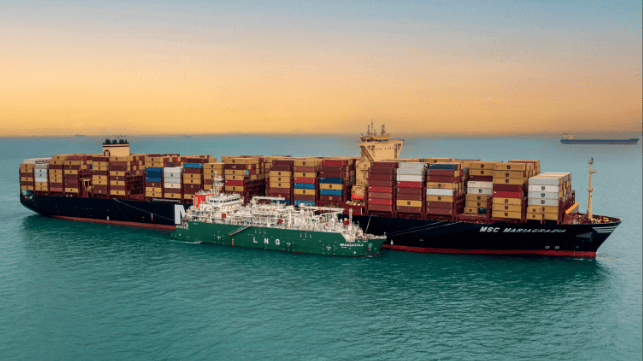
With around 95% of vessels still powered by oil-based marine fuels, LNG represents the leading alternative and already accounts for nearly 20% of the vessel orderbook. As the industry transitions toward net-zero and prepares for a rapidly expanding fleet of LNG-fuelled vessels, understanding the real-world lifecycle emissions of LNG is critical to shaping effective regulation and guiding future investment decisions.

Results also show wide variation between regions and cargoes, reflecting differences in gas sources, liquefaction technologies, and shipping distances. In some cases, emissions intensities differed by as much as 6.6 g CO2e/MJ, highlighting that a single global average does not capture the full picture and risks leading to poorly informed regulatory choices.

Patrick King, Vice President Emissions Research, Rystad Energy commented: “Our analysis is based on asset-level data that ties specific gas fields to liquefaction facilities. This approach, supported by satellite-detected methane plume data and reported asset information, gives a more accurate picture of the LNG actually used for bunkering, rather than relying on outdated or overly broad averages.”

Steve Esau, Chief Operating Officer of SEA-LNG, said: “Policymakers must create regulations that reflect the true carbon intensity of marine fuels, rewarding reductions across the supply chain. Marine regulators should incentivise participants in the LNG bunker supply chain to continue to reduce GHG emissions.”

Peter Keller, Chairman of SEA-LNG, concluded: “This landmark report sets the high standards the IMO should demand on such a key topic as alternative fuel emissions and performance within the Net-Zero Framework. Decisions must be based on real and recent data or risk undermining the significant progress already made along the practical and realistic LNG pathway to decarbonisation.”

Download the full Rystad Energy LNG well-to-tank emissions analysis here.

The products and services herein described in this press release are not endorsed by The Maritime Executive.

 

HITRON Catches its 1,000th Smuggling Boat, Using Force Without Fatalities

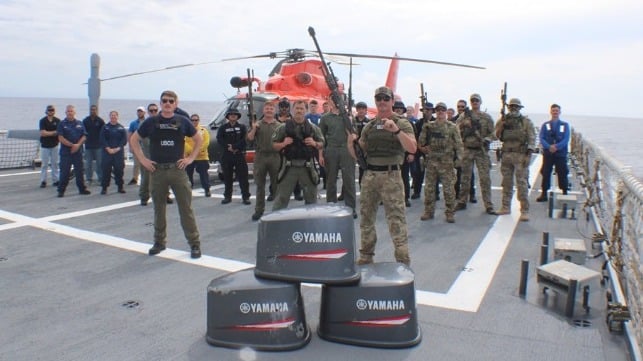
HITRON sharpshooters and damaged outboard engine covers aboard USCGC Midgett (USCG)
HITRON sharpshooters and bullet-holed outboard engine covers aboard USCGC Midgett (USCG)

Published Sep 10, 2025 3:28 PM by The Maritime Executive


The U.S. Coast Guard's Helicopter Interdiction Tactical Squadron (HITRON) has completed its 1,000th drug-running interdiction, racking up yet another disabled go-fast boat. 

On August 25, a HITRON team aboard USCGC Midgett was operating about 375 nautical miles southwest of Acapulco, in the Eastern Pacific transit zone. A trafficking vessel was spotted and refused to heave to for boarding, so the team disabled the boat for law enforcement boarding. Midgett's crew recovered more than 3,600 pounds of cocaine from the vessel.

HITRON was commissioned in 2000 with a mission to stop suspect go-fast vessels and slow the flow of cocaine into the U.S. Its tactics are unique: its sharpshooters operate from helicopters deployed aboard Coast Guard cutters in U.S. Southern Command, and they give pursuit when a smuggling boat is in range. If radio hails and warning shots do not bring the suspect boat to a halt, the HITRON team uses .50-caliber rifles to shoot out the boat's outboards. This compels the smuggling vessel to stop, generally in safety; loss of life is accidental, vanishingly rare, and investigated when it occurs.

An example of a HITRON interdiction earlier this year (USCG file)

HITRON hit its 500th interdiction mark in 2017, having stopped a combined 422,000 kilograms of cocaine with a wholesale value estimated in the range of $17 billion (at the time). Over the past 12 months alone, HITRON squadrons have added another $3.3 billion to the existing tally. 

After each vessel is interdicted and the suspects arrested, the suspect boat may be destroyed as a hazard to navigation, often using kinetic means. 

The only hard drug interdicted at sea off Latin America is cocaine, much of which is bound for high-priced European markets via ports in the Caribbean and Central America. The remainder makes its way to North America, predominantly overland via Central America, Mexico and the U.S. southern border. 

Cocaine accounted for about 30,000 fatal drug overdoses in the U.S. in 2023, the most recent year for data from the National Institutes for Health. Fentanyl, typically manufactured within Mexico and smuggled in by land, accounted for about 74,000 deaths. 


U.S. Coast Guard Buys 10 More Fast Response Cutters From Bollinger

FRCs

Published Sep 10, 2025 11:02 PM by The Maritime Executive


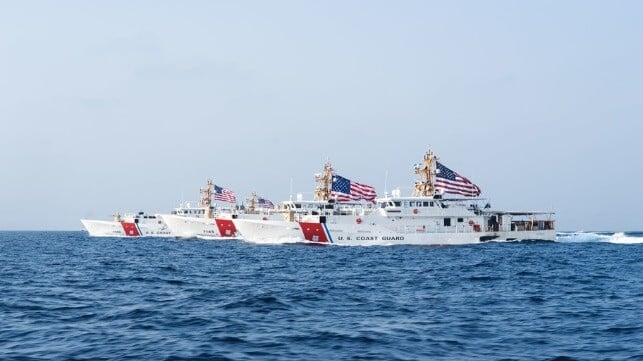
The United States Coast Guard announced Tuesday that it will award $507 million to Bollinger to begin construction of 10 more Fast Response Cutters, which are the backbone of its nearshore patrol fleet and a versatile stand-in for overseas missions. The agreement is part of the service's newly-invigorated shipbuilding plan, bolstered by historic new funding from the One Big Beautiful Bill Act. 

The Act handed the Coast Guard nearly $25 billion for procurement and repairs, including $1 billion for FRCs. The congressionally-authorized order brings the total Fast Response Cutter fleet under contract from 67 vessels to 77, expanding on one of America's most successful shipbuilding programs. Since the first hull joined the fleet in 2012 to replace the service's aging 110-foot Island-class patrol vessels, FRCs have grown in number and voyaged the seas; they are now homeported around the world, from Florida to Alaska to Guam and Bahrain. 

Currently, 59 Sentinel-class Fast Response Cutters are actively deployed alongside larger assets. Though small compared to a medium-endurance cutter (WMEC), the FRCs are much bigger than the predecessor Island-class cutters, and have been tested on much longer oceangoing deployments than typically assigned to vessels of this size. Capable of achieving maximum speeds between 28 and 30 knots, the cutter can also transit up to 2,500 nautical miles at 12 knots.

The vessels' elevated bow and fin stabilizers improve their handling characteristics beyond what might be expected for a 350-ton hull, enabling small boat deployment in waves of up to six feet in height. And with a 22-person roster and a lieutenant in command, they are lean and efficient to crew, a major virtue for a resource-constrained Coast Guard.  


New Coast Guard Cyber Rules Take Hold Across U.S. Maritime Industry

cyber digits
iStock / JuSun

Published Sep 10, 2025 10:11 PM by Kevin G. Gallagher


In July 2025, new U.S. Coast Guard cybersecurity regulations went into effect. These regulations follow high-profile incidents, such as a 2021 Russian ransomware attack that shut down a major U.S. pipeline for days, causing fuel shortages and disrupting critical supply chains. The Russian pipeline attack demonstrated the severe consequences of a cyber incident and the growing risks posed by foreign adversaries such as China, Russia, and Iran. In response, the Coast Guard has issued regulations that now require vessels and facilities to adopt cybersecurity measures to protect the maritime sector against evolving threats.

The new cybersecurity regulations require every covered vessel and facility to create a Coast Guard–approved cybersecurity plan. The cybersecurity plan must be submitted to the Coast Guard, kept up to date, and integrated into the vessel or facility’s existing security framework. Owners and operators must also appoint a designated Cybersecurity Officer to oversee the plan, ensure compliance, and remain accessible to the Coast Guard 24/7.

The plan will ensure that the vessel or facility limits access to critical systems, protects data, and monitors for intrusions. Cybersecurity plans must implement specific cybersecurity measures such as: automatic account lockouts, strong passwords, multifactor authentication, and encryption of data. (No more leaving passwords on a sticky note).

The regulations also require personnel training and drills. All personnel with access to computer systems must now receive cybersecurity training. This means that any seafarer with regular access to a computer must be trained to recognize cybersecurity threats, detect incidents, and report them to the Cybersecurity Officer. Every covered vessel and facility must run cybersecurity drills twice a year, and a full exercise at least once every 18 months to test overall readiness. The drills focus on detecting, responding to, and mitigating cyber incidents.

Vessel and facility operators also must conduct regular assessments and testing to identify vulnerabilities, fix problems, and prepare for cyber incidents. Every covered vessel and facility must maintain an incident response plan, report cyber incidents, and keep records of training, drills, and testing. They must also undergo “penetration testing” where cybersecurity professionals attempt to exploit vulnerabilities to identify weaknesses. This penetration testing must be completed at least once every five years as a part of each cybersecurity plan renewal.

The new regulations apply only to U.S.-flagged vessels, marine facilities, and Outer Continental Shelf (OCS) facilities, but do not apply to foreign-flagged vessels. Covered vessels include oceangoing cargo ships and tankers, offshore supply vessels that service rigs and platforms, and passenger vessels certificated to carry more than 150 passengers, such as ferries or coastal cruise ships. Towing vessels longer than eight meters that move tank barges or other covered barges are also included. There are also less-obvious cases which would be covered by the regulations, such as a U.S.-flagged passenger vessel carrying more than 12 passengers on an international voyage (for example, a small fishing or dive trip from Florida to the Bahamas).

By contrast, smaller inland vessels such as harbor tugs, crane barges, dredges, and other workboats are generally not included unless they fall within a defined category. Generally speaking, if a vessel does not have significant tonnage, carry a large number of passengers, handle hazardous cargo, or operate abroad, it falls outside the scope of these new regulations. 

The regulations also extend to shoreside facilities as well. Covered facilities include container terminals, petroleum and chemical transfer facilities, major cruise ship terminals, and barge fleeting areas that handle hazardous materials in bulk. Facilities that receive large passenger vessels or SOLAS-class ships are also included. Smaller marinas, yacht clubs, and local boatyards are generally not covered by these cybersecurity requirements unless they serve these larger, regulated vessels.

While the regulations went into effect on July 16, 2025, there is a multi-year phase-in period for these new cybersecurity requirements. The key dates are:

  • Reporting: Effective July 16, 2025, all covered vessels and facilities must report all cyber incidents occurring on or after that date to the National Response Center.
  • Training: Personnel training must be in place by January 12, 2026, with annual refresher training required after that
  • Cybersecurity Plans: Every covered vessel, facility, and OCS facility must submit a Coast Guard–approved cybersecurity plan (or an amendment to an existing security plan) no later than July 16, 2027
  • Assessments and Testing: A first cybersecurity assessment must be conducted no later than July 16, 2027, and then annually. Penetration testing is tied to the renewal of the cybersecurity plan (every five years).

In practical terms, operators are already required to report all cyber incidents to the National Response Center, and will need to have their training programs running by early 2026. They will have until mid-2027 to complete their first cybersecurity assessments and submit their plans for approval. From then forward, they will be on a cycle of annual audits, exercises, and five-year plan renewals.

The implementation of these cybersecurity regulations will have ripple effects across the maritime industry. The new regulations will raise operating costs for vessels and facilities by requiring compliance with mandates such as hiring and training cybersecurity officers, developing cybersecurity plans, adopting enhanced security measures, conducting regular drills, and performing ongoing assessments and reporting. In the near term, it is possible that insurance costs may rise initially as the threat of cyberattacks is still increasing, and the industry is still adjusting.

In the long run, these mandatory cybersecurity regulations may reduce the likelihood of severe cyber incidents, making losses less frequent and more predictable for insurers. This predictability may eventually stabilize or reduce premiums over time. The ultimate impact of these regulations on the broader maritime industry remains to be seen, but these new regulations have pushed cybersecurity to the forefront of maritime operations.

Kevin G. Gallagher is a litigation associate at Hamilton, Miller & Birthisel, and focuses his practice on admiralty and maritime claims, commercial litigation, insurance claims and products liability.

The opinions expressed herein are the author's and not necessarily those of The Maritime Executive

WAIT, WHAT?!

DOJ Tells Court to Reject Challenge to Empire Wind’s Licensing

offshore wind farm
DOJ defended licensing in the pending court case challenging permits for Empire Wind (file photo)

Published Sep 10, 2025 3:34 PM by The Maritime Executive


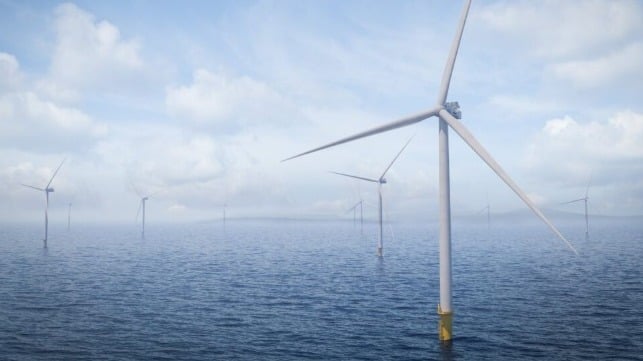
The U.S. Department of Justice filed a motion in an ongoing case challenging the licensing for the construction of the Empire Wind offshore energy project, citing the lack of merit in the opposition’s claims and defending the licensing process. The filing contradicts some of the positions the Trump administration has taken to challenge other offshore wind projects.

The filing was made on September 5 in the U.S. District Court for the District of Columbia in a case filed by local opponents of offshore wind that call their group Save Long Beach Island. The group has repeatedly filed claims in court seeking injunctions against the permits issued for the wind farm projects. The current case against the U.S. Department of Commerce is seeking emergency injunctive relief to enjoin the construction of Empire Wind, which is underway, as well as the effective dates of the project’s Record of Decision and the National Marine Fisheries Service’s Letter of Authorization.

In the past, the Trump administration has cited concerns over the regulatory approvals for offshore wind projects and claimed the Biden administration rushed projects through the approval process. In April, the Bureau of Ocean Energy Management stopped offshore activity for Empire Wind, citing some of these same concerns, but a month later reversed its order and permitted the project’s offshore work to resume.

Save Long Beach Island, in its case, argues against the approval under the Marine Mammal Protection Act, after having twice before made similar claims in a New Jersey court. DOJ responds citing the history of the approval noting that notices were first published in 2022, and after conducting a review and public comments, a proposed rule for Empire Wind was released in 2023. It was finalized in February 2024 and modified in January 2025.

The response from the DOJ cites the significant delay in filing the court case and the lack of responses in the public comment period as evidence that disproves any allegation of an emergency. It points out that the plaintiffs have had numerous occasions to challenge the permitting, in addition to the two prior cases. Citing that construction has been underway for well over a year, it also says disproves claims that the orders would “preserve a status quo,” or prevent irreparable harm.

“The public interest would undoubtedly be harmed by Plaintiffs’ unwarranted interference with government-issued permits and approvals,” DOJ concludes in its motion. “The public is best served when the government is permitted to use the expertise of its federal agencies to decide issues within their areas of specialization, such as the complex scientific and environmental matters at issue here. Plaintiffs attempt to improperly influence this process by asking the court to grant “emergency” relief on the basis of their layman opinions. Allowing such an outcome would harm the public interest by unnecessarily disrupting years of work and analysis that Federal Defendants conducted in connection with issuing the challenged Project approvals.”

While DOJ defends the review process and licensing for Empire Wind, it has recently told other courts that it would be moving to revoke licenses for other projects, including Maryland’s offshore wind project being developed by US Wind and Massachusetts’ SouthCoast Wind being developed by Ocean Wind North America, a joint venture between EDP Renewables and Engie. It is also targeting New England Wind, which is being developed by Avangrid, a subsidiary of Spain’s Iberdrola.

Interior Secretary Doug Burgum, Bloomberg reports, announced on September 10 during an energy conference in Milan that the U.S. is currently reviewing five offshore wind projects. This came after the administration issued a stop work order on the 80 percent installed Revolution Wind project being built by Ørsted. 

“Right now, under this administration, there is not a future” for offshore wind projects, Bloomberg reports Burgum said at the conference. “I think the fact that subsidies have been either cut back or limited means that it’s likely that there won’t be future offshore wind built in America.”

Ørsted completed the U.S.’s first commercial-scale offshore wind project called South Fork Wind in 2024. Several others are under development, including Empire Wind and Vineyard Wind 1. While several developers have said they remain committed to their projects, many others have deferred or written down the value of the projects, citing the uncertainties under the Trump administration.


Davie Unveils Plans for $1B "Icebreaker Factory" in Galveston

Davie Defense
Illustration courtesy Davie Defense

Published Sep 10, 2025 7:35 PM by The Maritime Executive


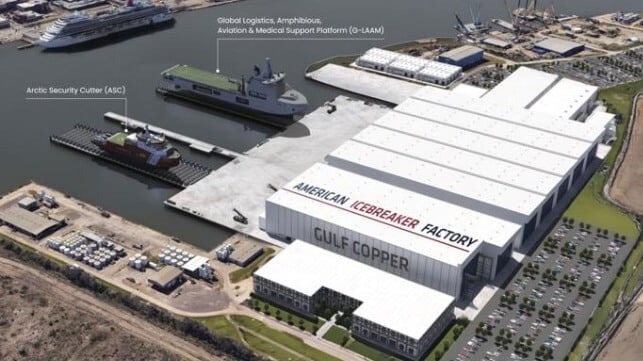
An American affiliate of Canadian shipbuilder Davie has released its first detailed plans for a proposed "American Icebreaker Factory" at the Gulf Copper yard in Galveston, Texas. The budget for construction is in the range of $1 billion, according to Davie, and the facility would be purpose-built for delivering on the Trump administration's icebreaker procurement priorities. 

The renderings appear to show at least half a dozen new assembly bays, along with a new apron of reclaimed land along the waterfront. Four existing finger piers at the Gulf Copper facility appear to be removed in the rendering, replaced by two shiplifts.

Davie also owns Finland's Mantyluoto Shipyard and Helsinki Shipyard; the latter is a leader in medium icebreaker construction, and built a substantial share of Russia's non-nuclear icebreaking fleet. Under Davie's ownership, Helsinki is providing its expertise in design and construction for Canada's heavy icebreaker acquisition programs, as well as Davie's pitch for the U.S. Coast Guard. 

Thanks to the One Big Beautiful Bill Act, the Coast Guard has an unprecedented budget for shipbuilding, including $3.5 billion for medium icebreakers. The caveat is that the service needs to spend it fast: the Coast Guard has been soliciting information from U.S. and foreign shipyards for an "Arctic Security Cutter" that could deliver within three years of an order signing, in time for the first vessel to enter service during President Donald Trump's current term. Since no American yard has delivered a full size icebreaker in a generation, and the only icebreaker program under contract is years behind schedule, all of the options reportedly under consideration involve foreign construction - or at minimum, foreign partnership.

"Recapitalization of the nation’s icebreaker fleet and closing the shipbuilding gap with China are now clear national priorities," Kai Skvarla, CEO of Davie Defense.

Davie Defense has plans to refit the leased Gulf Copper yard in Galveston, and (if it secures a Coast Guard contract) could support as many as 2,000 people at the site and more than 7,000 statewide. If that occurs, the  economic impact across Texas is estimated at $9 billion.


Cruise Passenger Jumps Overboard to Avoid Debts and Cash Duties

Rhapsody of the Seas (BVI4092 / CC BY 2.0)

Published Sep 10, 2025 5:59 PM by The Maritime Executive


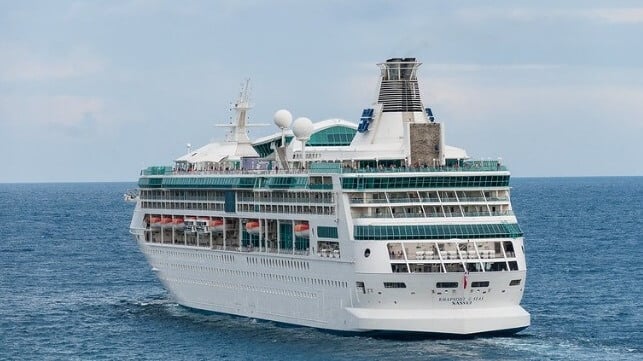
According to officials in San Juan, Puerto Rico, a passenger from the cruise ship Rhapsody of the Seas jumped over the side during disembarkation - not because he wanted to end his life, but because he wanted to escape his gambling debts. 

Jey Gonzalez-Diaz (aka Jeremy Diaz) was caught by Customs and Border Protection officers near the Port of San Juan, where Rhapsody of the Seas was unloading passengers. He has been charged with trying to avoid reporting currency while entering the U.S., by intentionally jumping over the side.

The suspect was rescued by jet-skiiers and brought to safety,then arrested. The officers who searched him found nearly $15,000 in cash on his person, along with five different ID documents - one apparently belonging to his brother - and two mobile phones. He allegedly told officers at the scene that he was trying to get past customs so that he wouldn't have to declare the cash and pay duties on it. 

Royal Caribbean, operator of Rhapsody of the Seas, reportedly told CBP that Gonzalez-Diaz owed  nearly $17,000 for his onboard activities, almost all of it for casino expenditures. The cruise line declined to comment further. 

Gonzalez-Diaz has been released on bail. If convicted, he could face a fine of up to $250,000 and five years in prison.

Top image: Rhapsody of the Seas (BVI4092 / CC BY 2.0)

CMA CGM Boxship Slices Into Pier at Port in Estonia

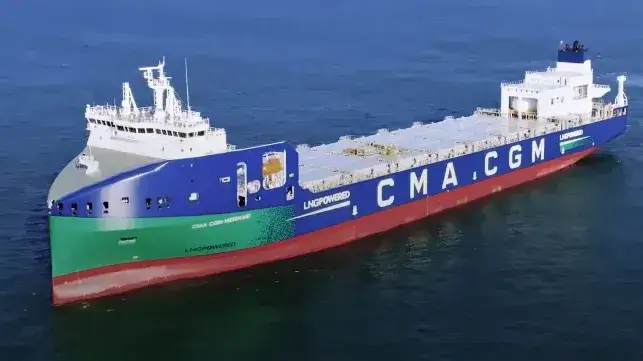
CMA CGM Mermaid
Courtesy CMA CGM

Published Sep 10, 2025 9:48 PM by The Maritime Executive


A large boxship has run into a quay at the small port of Muuga, Estonia, causing damage and cutting a chunk out of the wharf. 

At about 1150 hours UTC on September 8, during an arrival from Kotka, CMA CGM Mermaid allided with the quay at Muuga's container terminal. Images obtained by local media show significant local damage to the quay, which the ship's  plumb bow sliced into by several meters. An adjacent bulker, the Belasitza, was also damaged at the bow. The extent of any damage to the boxship was not immediately disclosed. 

As of the morning of September 11, CMA CGM Mermaid was still moored alongside the quay wall at Muuga. 

CMA CGM Mermaid is a novel new house-forward container feeder with a capacity of 2,000 TEU, one in a series of 10 sister ships designed by Chantiers de l'Atlantique and HHI. Delivered just last year, the vessel is designed for CO2 savings of up to 20 percent. Like many modern boxships built for lower speed and higher efficiency, she has a sharp, plumb bow, a design feature that tends to ease penetration of waves.


Port of Long Beach Resumes Operations After Container Collapse

container collapse Port of Long Beach
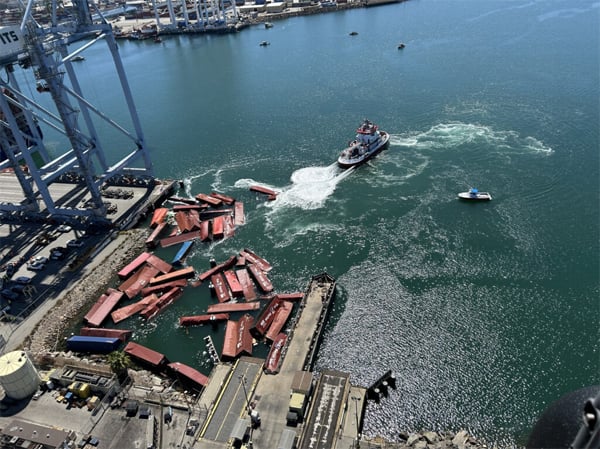
The floating containers have been retrieved where they are doing sonar searches for debris below the surface (USCG)

Published Sep 10, 2025 4:38 PM by The Maritime Executive


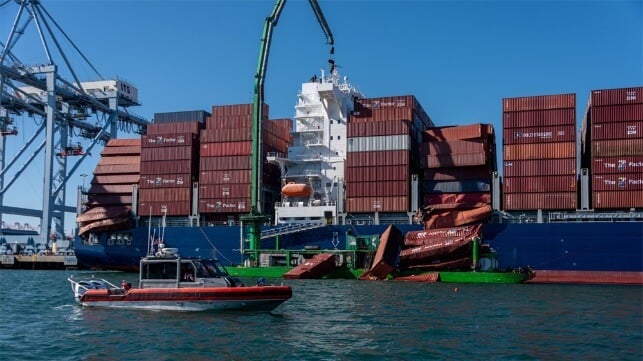
The Port of Long Beach, California, is reporting that all its terminals have resumed operations a day after the dramatic container collapse on a berthed vessel. Pier G, where the vessel Mississippi is berthed, is open and operating except for the immediate area around the vessel.

In a statement issued on Wednesday, a day after the collapse, the Port of Long Beach now reports that there was one minor injury tied to the incident. They avoided a worse situation, especially with the emissions barge that was alongside and attached to the containership when some of the containers collapsed onto the barge. The U.S. Coast Guard reports the barge sustained damage. Other containers collapsed onto the dock alongside the ship.

Additional videos have been released showing the sequence of events. After the first collapse, it appears the area around the vessel had been roped off for safety before the subsequent collapse. The situation continued with additional boxes that had been hanging from the ship also giving way and falling overboard. 


The Unified Command for the incident, which consists of federal, state, and local agencies, is working to ensure the recovery of the cargo containers. The Coast Guard raised the estimated number of 75 containers from the 67 it reported yesterday. 

Sonar surveys are being conducted to locate approximately 25 to 30 containers submerged in the harbor to ensure the safe navigation of ship traffic. The Coast Guard is maintaining a 500-yard safety zone, and a salvage plan is being developed and will be implemented as soon as possible.

The port has clarified that the manifest shows shoes, apparel, furniture, and electronics as the cargo. The vessel operates one of Zim’s express services, making only four port calls: Vietnam, China, and California. TV reports from the port showed images of a chair floating in the water as well as packages of slippers washing ashore.

The Long Beach Fire Department used one of its fireboats with high-powered nozzles to corral and direct the containers. They were seen pushing them toward a berth area as well as harbor boats that were being used to nudge the boxes toward the dock. The port said in its statement on Wednesday that the fallen containers had been recovered.


Floating containers were moved into a secure location away from vessel traffic (Port of Long Beach)


Speculation is mounting on the cause of the incident. It is unclear if the ship, which had arrived earlier in the morning, had begun container handling.  The published schedule reflected a planned departure later today for the return to Vietnam.

The Mississippi, registered in Portugal, was built in 2024. It had undergone five port state inspections, the last in April 2025 in Shanghai. It was cited for deficiencies, including with its Voyage Data Recorder and the crew’s safety drill, but did not receive a detention. 

Operations are continuing at the port to stabilize the containers aboard the vessel, including several that are continuing to be suspended over the side of the ship as well as the collapsed stacks. The U.S. Coast Guard reports it will be leading an investigation into the incident as will the National Transportation Safety Board.


Deal Finalized to Save Oregon’s Only International Container Terminal

Portland Oregon container terminal
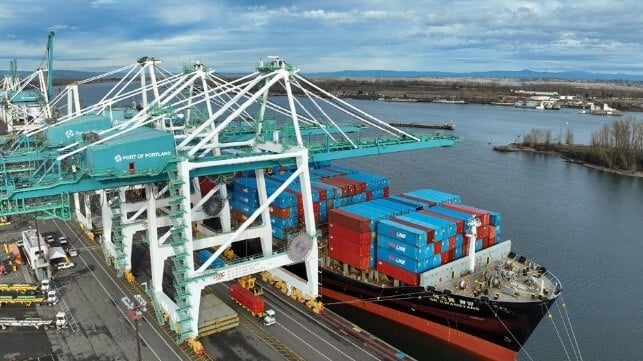
Despite an inland location, Portland looks to grow container operations (Port of Portland)

Published Sep 10, 2025 6:53 PM by The Maritime Executive


After more than 15 months of effort, the Port of Portland (Oregon) has completed a long-term agreement for the operation of Terminal 6, which is the state’s only active international container terminal. The port had announced in early 2024 that it planned to close the terminal due to mounting financial losses and the collapse of negotiations for a private operator.

"Scores of businesses throughout Oregon rely on Terminal 6 to ship their goods," said Governor Tina Kotek, who played a critical role by providing interim financing and state support to keep the terminal operating. "Oregon communities will be better off because we came together and worked toward this shared goal."

While it is located more than 100 miles from the ocean, the port plays a vital role in the state’s agricultural and seafood sectors. Without the port, they would have had to truck goods through other ports, raising costs. However, in 20214, with high fixed operating costs, loss of a rail service partner, BNSF, that had provided a connection to Seattle and Tacoma, and collapse of negotiations for a potential private operator, the port authority said it had no choice but to begin winding down the operation. It was pointed out that the Columbia River is shallow, limiting the size of vessels that can reach the port. In addition, it is a relatively small consumer market.

“The Port of Portland is the gateway connecting our farms, small businesses, and manufacturers to global markets,” noted Representative Shelly Boshart Davis.

The Port has been rebuilding container service since 2018 and was working to secure a private operating partner, highlighting that Terminal 6 is an important piece of Oregon’s economic infrastructure. California-based Harbor Industrial, which had been providing stevedoring services, reached a tentative agreement last December to become the operator.

The company will lease the 200-acre facility from the port authority for an initial seven-year term. It also has four options to extend the lease for a total of 20 years. Harbor has agreed to purchase seven new cranes for the terminal and will pay the port rent based on the amount of cargo it moves through the port. It will take over both the container and breakbulk operations at Terminal 6 as of December 31.

In June, Oregon legislators also approved $20 million recommended by Governor Tina Kotek for necessary capital improvements at the terminal. 

The port and Harbor Industrial report they are committed to maintaining the significant benefits of shipping goods through Oregon ports. The port released a long-term plan that calls for doubling the size of the operation, and together they said they look forward to continued operations and growth of the container terminal.


Croatia Marks Opening of New Rijeka Terminal as a Gateway for the Region

containership arriving in Croatia
The first vessel arrived to official mark the commercial operating of the new terminal (APM)

Published Sep 10, 2025 6:07 PM by The Maritime Executive


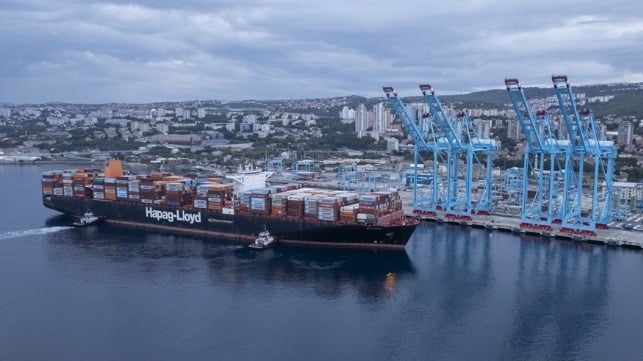
Officials gathered in the Port of Rijeka, Croatia, to mark the arrival of the first commercial container vessel as the port transitioned from trial operations. Rijeka Gateway, they reported, represents the largest private investment in logistics in Croatia, and it becomes the most modern and technologically advanced container terminal in the region. 

The concession for the new terminal was awarded in November 2021, creating a joint venture between Maersk’s APM Terminals and ENNA Group. Croatia’s Deputy Prime Minister and Minister of the Sea, Transport and Infrastructure, Oleg Butkovi?, highlights that it was the largest agreement in the history of the Port of Rijeka.

Maersk committed to a €380 million ($445 million) investment for the operations, which have been under construction for the past two years. It includes a 400-meter (1,300-foot) quay, which was in part financed with a World Bank loan, along with construction of access and internal roads, a new intermodal terminal, and rail interface. The terminal will have an initial annual capacity of 650,000 TEU, and they are also making investments in hinterland and terminal equipment.

“This terminal is more than just infrastructure. It is a symbol of Rijeka as a modern, sustainable, and technologically advanced port that creates value and drives both the local and national economy,” said Peter Corfitsen, CEO of Rijeka Gateway.

Emphasizing its role as a regional center, the Rijeka Gateway Terminal is being included in the new Gemini Cooperation between Maersk and Hapag-Lloyd. It becomes part of the route linking ports in East Asia with locations in the Mediterranean and Adriatic Sea.

The first commercial vessel to berth at Rijeka Gateway was Al Jasrah (157,374 dwt). Built in 2016, the vessel is registered in Liberia and operated by Hapag-Lloyd. It has a capacity of approximately 15,000 TEU. It was arriving from Port Said, Egypt.

After a planned expansion, the port will grow to 680 meters (2,230 feet) of quay and a capacity of over one million TEU. The terminal is equipped with four remotely operated ship-to-shore cranes (STS), 15 rubber-tired gantry cranes (RTG), two rail-mounted gantry cranes (RMG), and 28 terminal tractors. All systems are integrated into a single control center, and terminal operations will be managed with cutting-edge technology, full automation, and renewable energy, making Rijeka Gateway the first terminal of its kind in the Adriatic region.


Philippines protests China nature reserve plan for Scarborough Shoal

Manila (AFP) – The Philippines on Thursday protested Beijing's plan for a "nature reserve" on the disputed Scarborough Shoal, with a top official calling it a pretext for "eventual occupation" of the South China Sea site.


Issued on: 11/09/2025 -RFI

China Coast Guard vessels (top L) are seen anchored inside the lagoon of the Chinese-controlled Scarborough Shoal © Ted ALJIBE / AFP/File

China revealed plans a day earlier for a reserve to maintain "diversity, stability, and sustainability of the natural ecosystem of Huangyan Island", Beijing's name for the contested chain of reefs.

Chinese state media said the reserve would cover an area of 3,523.67 hectares (8,707 acres), with its "primary focus" being the coral reef ecosystem.

"The Philippines strongly protests the recent approval by the State Council of China of the establishment of the so-called 'Huangyan Island National Nature Reserve,'" the foreign affairs department said in a statement.

"The Philippines will be issuing a formal diplomatic protest against this illegitimate and unlawful action by China," it said, adding it held sovereignty over the area in question.

Philippine National Security Adviser Eduardo Ano said the mooted reserve was "less about protecting the environment and more about justifying (China's) control over... part of the territory of the Philippines".

"It is a clear pretext towards eventual occupation," he said in a separate statement.

Retired rear admiral Rommel Jude Ong, now a professor at Manila's Ateneo School of Government, said China reclaiming land and building permanent structures was "a possibility we cannot discount".

Sustained Philippine patrols in the area "might provide initial deterrence", he told AFP.

But China's foreign ministry pushed back Thursday, saying the area had never been part of Philippine territory and rejecting what it called "groundless accusations or so-called protests" from Manila.

"We urge the Philippines to immediately cease its infringements, provocations, and wanton hype, so as to avoid adding complicating factors to the maritime situation," spokesman Lin Jian said at a daily press briefing.

Scarborough Shoal lies 240 kilometres (150 miles) west of the Philippines' main island of Luzon and nearly 900 kilometres from Hainan, the nearest major Chinese land mass.

Last month, a Chinese navy vessel collided with one from its own coast guard while chasing a Philippine patrol boat near Scarborough, with Manila releasing dramatic video footage of the confrontation.

China claims almost the entirety of the South China Sea, through which more than 60 percent of global maritime trade passes, despite a 2016 court ruling that said its claims had no basis in international law.

© 2025 AFP
Cuba suffers fifth nationwide blackout in a year as crisis deepens

CUBA NEEDS ALLY CHINA'S RENEWABLES

Cubans were left in the dark Wednesday after the island endured its fifth nationwide power outage in a year, the latest blow in the country’s worst economic crisis in decades, triggered by the shutdown of its largest thermoelectric plant.


Issued on: 11/09/2025 -
By: FRANCE 24

Cubans walk on a street during a blackout in Havana on September 10, 2025. © Yamil Lage, AFP

Cubans were in despair Wednesday after their cash-strapped communist country plunged into its fifth nationwide power blackout in a year.

"A total disconnection of the SEN electricity system has occurred, which may be associated with an unexpected shutdown" of the Antonio Guiteras thermoelectric power plant, the energy ministry said on its X account.

It added that it was investigating the outage, which happened at around 9:15am (13:15GMT).

Cuba is already in the throes of its worst economic crisis in three decades.


In recent years it has been plagued by hours-long daily blackouts, recurring electricity system breakdowns and an acute shortage of fuel to keep producing power.

The recent installation of 30 solar parks, with Chinese funding and expertise, has not yet alleviated the situation.

"Yet again, we're going backward. Yet again, a lost day! Anguish and sadness, and for some, despair," said Alina Gutierrez, a 62-year-old housewife, who learned of the new outage while shopping at a fruit and vegetable market in central Havana.

She rushed home to stockpile water – electricity is used to pump water into apartments in Havana – while "waiting to see how long this will last".

The Antonio Guiteras plant is the biggest of the communist-run island's eight decrepit oil-fired power plants, some of which are more than 40 years old.

On Sunday, five of the nation's 15 provinces were left in the dark for several hours due to a breakdown of the grid.

In October 2024, the island was plunged into darkness for several days following a shutdown of the Antonio Guiteras plant.

The blackouts have led to rare anti-government protests.

Cuba has attempted to plug the hole in its generating capacity with floating electric plants rented from a Turkish company.

It also uses generators fueled by crude oil, while struggling to find enough petrol for the island's cars, tractors and ambulances.

(FRANCE 24 with AFP)