Sunday, September 14, 2025

European aid flotilla sails to Gaza with four MEPs aboard

People carry Palestinian flags as they bid farewell to the Italian fleet of the Global Sumud Flotilla departing from the port of Siracusa, Italy
Copyright Sebastiano Diamante/Lapresse

By Vincenzo Genovese
Published on 

Ships setting sail from Italy have joined others from Greece, Spain and Tunisia, to deliver humanitarian aid into the Gaza strip.

18 boats carrying aid set sail on Saturday from Sicily towards Gaza under the "Global Sumud Flotilla" banner, with four MEPs also on board. 

They are set to join boats from Greece and Tunisia, some of which left Barcelona at the end of August, before heading together to the Gaza Strip.

According to the flotilla’s spokesperson, 34 boats in total joined the mission with around 600 people on board carrying around 500 tons of humanitarian aid.

The goal is to deliver aid to Palestinians in the biggest attempt so far to break the Israeli blockade of Gaza. But this could prove very complicated, as Israel’s authorities are in full control of Gaza’s shores and waters off the strip.


A similar action, carried out by a single boat last June, ended with the ship being intercepted by Israeli authorities and its crew detained in Israel for “illegal entry” before being repatriated. 

Activists will be designated as terrorists, imprisoned, and denied special privileges such as television, radio, and choice of food, Israel’s National Security Minister Itamar Ben-Gvir told the press at the beginning of September, touting a plan aimed at halting the flotilla.

In the days before the departure, two of the Flotilla's vessels were allegedly targets of drone attacks in unclear circumstances. Both attacks were claimed to take place in Tunisian waters.  

The MEPs aboard include Italians Annalisa Corrado (Socialists and democrats) and Benedetta Scuderi (Greens/EFA),  France's Emma Fourreau (The Left), and Ireland's Lynn Boylan (The Left), who is also chair of the Parliament’s Delegation for Relations with Palestine. She is on the legal monitoring boat that is accompanying the Flotilla to document any possible breaches of human rights or international law.

Benedetta Scuderi and Annalisa Corrado told Euronews that, though they are scared, this wouldn't stop them.

“I think it's normal to be afraid of facing the Israeli government, which sets no limits in its destructive actions, acts contrary to international law, and has already stated it wants to treat us as terrorists. [...] But we will not be intimidated,” said Scuderi.

“Of course I am scared. However, this is a mission worth making oneself available for, even if the consequences may be heavy or difficult to manage. I cannot even imagine the fear Palestinian children feel under the bombs or when being amputated of  their limbs without anesthesia.”

Both MEPs hope to increase international pressure on Israel and urge the European Union to act more boldly. “The association agreements with Israel should be suspended, the State of Palestine should be recognized, and humanitarian aid should have full access [into the Gaza Strip],” said Corrado.

Scuderi asked the EU to “break any trade and military deal with Israel” and to sanction the Israeli government. She considered Ursula von der Leyen’s pledge to sanction extremist ministers and the country's violent settlers as “insufficient”, but hoped it might result in concrete actions. 

Spain’s Foreign Affairs Minister José Manuel Albares said that Spanish citizens on board the vessels will enjoy consular and diplomatic protection.

A similar statement was released by the Italian Foreign Affairs Minister, Antonio Tajani, during a parliamentary debate in Rome. “Our embassy in Tel Aviv has been activated and has raised awareness with the Israeli authorities about respecting the rights of all Italian citizens on board the Flotilla,” he said. Two Italian MPs are also aboard the flotilla.


‘Not just a sea journey’: Former JI senator details risks of humanitarian mission to Gaza

Pakistan one of 44 countries represented on flotilla looking to break Israeli blockade of Gaza.


Mariam Sarah Javid | Mikail Ahmed Shaikh 
Published September 6, 2025
DAWN


Despite almost two years of what has now been dubbed a “genocide” in the Gaza Strip, Israel continues to bomb, starve and torture more than a million Palestinians in the besieged enclave.

After blocking aid from entering Gaza, Israel established the Gaza Humanitarian Foundation (GHF) in collaboration with the United States, which set up food distribution sites, luring starving civilians and then allowing them to be shot by Israeli forces. The GHF sites have been slammed by humanitarian organisations as ‘killing fields’.

Attempting to break the blockade and put pressure on Israel to end its onslaught is a fleet of boats with participants from over 44 countries, including Pakistan. The movement, known as the Global Sumud Flotilla (GSF), will embark on its journey to Gaza in the early morning hours of Sunday, September 7.

The GSF is made up of four coalitions: the Sumud Nausantara, Maghreb Sumud Flotilla, Freedom Flotilla Coalition and Global March to Gaza.

A five-member Pakistan delegation led by former Jamaat-i-Islami (JI) senator Mushtaq Ahmed Khan will set sail from Tunisia aboard the Sumud Nausantara, which also includes participants from Malaysia, Indonesia, Bangladesh, the Maldives and the Philippines.

“This is not just a sea journey, it’s not an adventure, but rather it is a task that is extremely dangerous,” the former senator Khan said while speaking to Dawn.com.

“There are three things we are trying to achieve through this humanitarian mission to Gaza: To end the genocide, to establish a humanitarian corridor and to end the blockade and siege.”

Stressing the legality of this mission, Khan detailed that after the ships leave Tunisian waters, they will sail to Gaza through international waters.

“When governments have failed, international rights bodies such as the UN have failed, world order has failed, the people have risen and taken it upon themselves to transport aid to Gaza,” he said.

On the training given to participants, the former senator said that the volunteers have been instructed on how to behave during the journey, to remain peaceful, what to do in case of an emergency or an attack by Israeli forces and what role each individual has on board.

“Given that this is a very dangerous undertaking, we received two days of training,” he explained.

“We were taught about the salient features of a nonviolent movement, as well as how to maintain discipline on the boat and what to do in the event of an emergency — be it interception or attack.”

Dawn.com was told that before boarding, every member of the flotilla has to record an ‘SOS’ video, which is to be uploaded to social media in the event of their detention by Israeli forces.

Former senator Khan also mentioned some of the aid the delegation will be carrying, including “baby formula for the infants that are starving to death … food and water for the malnourished civilians in Gaza … [and] medicine for them”.

The flotilla, departing from North Africa, is in touch with the vessels that departed Spain earlier this week, according to the former senator.

Some of the participants in the journey are notable rights activists, such as Nelson Mandela’s grandson Nkosi Zwelivelile and Greta Thunberg. Lawyers and journalists are also in the mix of volunteers.

The flotillas were originally supposed to head to Gaza on September 5; however, weather conditions forced the boats sailing from Barcelona to divert to Menorca.

“Unfortunately, they ran into a storm, so they might be delayed in getting to Tunis. They should arrive in Tunis by September 5 and need to refuel and perform any necessary repairs, but we expect to collectively leave on September 6.”

Since the conversation with the former senator, the departure date for the vessels has changed once again and they are now expected to head to Gaza on September 7. The ex-senator also confirmed this in a voice note sent to Dawn.com.

Meanwhile, a new development has emerged. Israeli National Security Minister Itamar Ben-Gvir has branded the Global Sumud Flotilla volunteers as “terrorists” and threatened to seize their boats should they head to Gaza.

The coalition, in a statement posted to X on Thursday, slammed the Israeli minister and urged the UN and world governments to take note and guarantee safe passage to the besieged enclave.

“The Global Sumud Flotilla strongly condemns threats by Israeli National Security Minister Itamar Ben-Gvir in an attempt to intimidate our participants and falsely brand them as ‘terrorists’. Such threats are not only baseless and unjust but constitute a blatant violation of international humanitarian law and the Geneva Conventions.”

When asked about what they will do if Israeli forces intercept and board their flotilla, the former senator asserted that the participants will remain ‘non-violent’.

“We are not an army or a military force; we are civilians looking to confront and break the siege. In case the Israeli forces attack, we have been told to embody peaceful resistance, stand against oppression and break the blockade peacefully. To put our lives in danger while establishing a humanitarian corridor.”

In earlier comments made to Dawn.com, Khan had highlighted three possible outcomes of the journey to Gaza.

“There are three options. One is that we reach Gaza successfully and are able to break the blockade and show the world what is taking place there,” Khan said. “Another possibility is that they (Israel) could arrest and deport us. The third is that we are attacked by Israel and killed.“

As has been witnessed in the Freedom Flotilla’s previous attempts, the journey to reach Gaza’s shores is far from easy. Those aboard the Handala and then later the Madleen were detained and deported after Israel intercepted the vessels.

Obstacles did show for the Pakistan delegation in the path to answer the GSF’s humanitarian call, as procuring visas proved difficult for Khan’s delegation.

In social media posts, the former senator had appealed to authorities to facilitate visas for his delegation. Fortunately, the four other members were able to receive their visas on time and arrived in Tunis on Thursday.

The senator, who clarified that, as a lawmaker, he has a special passport and does not require a visa, added that the Pakistani government offered no assistance.

“The Pakistani government has not provided any aid to us,” Khan noted. “[Malaysian Prime Minister] Anwar Ibrahim is patronising the Sumud Nausantara, which we are a part of.

“If Anwar Ibrahim can do this, why can’t the Pakistani government?” the ex-senator asked.

Khan noted that he entered an agreement with the government six months ago, under which Islamabad would send an aid flotilla to the Gaza Strip. The agreement was reached after a Palestinian solidarity sit-in ended with force at the hands of the authorities.

“[Interior minister] Mohsin Naqvi said this on record,” Khan recalled. “One of the conditions of ending my sit-in was sending the flotilla.

“I said that if funding is difficult, then I will pay for it out of my own pocket. I will sail on it with my family. But give me state ownership. The government did not fulfil even one part of the agreement.”

When asked, the ex-senator said that he is paying to board the ship and perform the journey.

“People travelling on the Global Sumud Flotilla have to pay beforehand, including travel expenses and the cost of the boat,” he stated. “I am paying for my work here.

“We made a payment for the aid supplies, but those are provided by the GSF central body.”

Reiterating the three possible outcomes mentioned earlier, the former senator who is acting as a coordinator aboard the flotilla said that he and his delegation are prepared, come what may.

Header image: Activists from 44 countries, including Pakistan, depart on the Global Sumud Flotilla, a humanitarian expedition to Gaza, from the port of Barcelona, Spain on August 31, 2025. Reuters/File

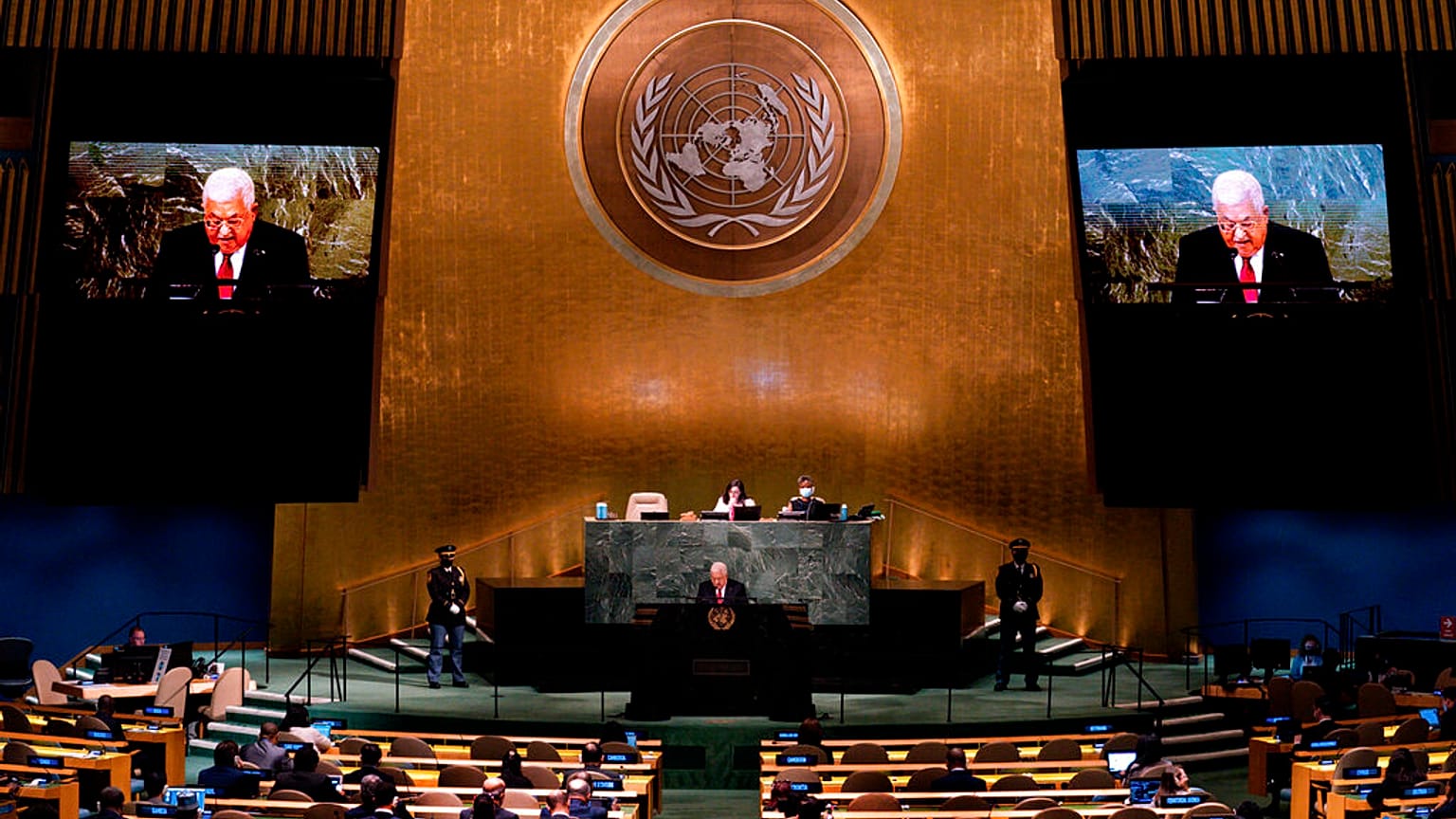



UN General Assembly votes to back two-state solution for Israel and Palestine


Copyright AP Photo/Julia Nikhinson


By Evelyn Ann-Marie Dom with AP
Published on 13/09/2025 - 


The resolution supports the recognition of an independent Palestinian state and envisions a two-state solution. It condemns the attack by Hamas on southern Israel on Oct. 7. It also condemns Israel's siege and starvation in Gaza, which produced a humanitarian catastrophe.

The United Nations General Assembly overwhemingly backed a nonbinding solution on Friday supporting a two-state solution for Israel and Palestine, hours after Prime Minister Benjamin Netanyahu rejected the idea of a Palestinian state.

Out of the 193-member world body, 142 countries voted in favour on the New York Declaration, 10 against and 12 abstained.

The resolution, presented by France and Saudi Arabia, envisions the Palestinian Authority (PA) governing and in control of all Palestinian territory, with a transitional administrative committee immediately established after a ceasefire in Gaza.

“Hamas must end its rule in Gaza and hand over its weapons to the Palestinian Authority,” the declaration says, adding that it must also free all hostages.

It also suggests the deployment of a UN-backed mission to protect Palestinian civilians and provide safety guarantees for both Palestinian and Israel civilians, support the peaceful transfer of governing to the PA and monitor the ceasefire and a future peace agreement.

The seven-page document condemns “the attacks committed by Hamas against civilians” in southern Israel on Oct 7 in 2023, when Hamas-led militants killed roughly 1,200 people, many of them civilians, and took 250 hostages. Of those, 50 are still being held, including about 20 who are believed to be alive.

It also condemns Israel's attacks on civilians and civilian infrastructure in Gaza and its "siege and starvation, which has produced a devastating humanitarian catastrophe and protection crisis." Following Oct 7, a subsequent Israeli offensive has to date killed more than 64,000 Palestinians, mostly women and children, according to the Gaza Health Ministry whose figure does not distinguish between fighters and civilians. The figures are repeatedly cited by international institutions, such as the UN.

Large swathes of Gaza have been levelled and most of the territory's more than 2 million people have been displaced. The UN has declared famine is now occurring in the Gaza governorate, and expects it will expand to Deir al Balah and Khan Younis by the end of this month.
A Palestinian state as an 'essential and indispensable component' for two-state solution

Finally, the declaration calls on countries to recognise the state of Palestine, in what it calls an "essential and indispensable component" in achieving a two-state solution.

Without naming, but in clear reference to Israel, the document reads “illegal unilateral actions are posing an existential threat to the realisation of the independent state of Palestine.”

Earlier this month, Belgium announced it would join the United Kingdom and France in recognising a Palestinian state and the United Nations General Assembly annual gathering later this month. The Palestinians say they hope at least 10 more countries will recognise the state of Palestine, adding to the more than 145 countries that already do.

The Palestinian UN ambassador, Riyah Mansour, said the majority support for the resolution indicates "the yearning of almost everyone, the international community, to open the door for the option of peace.”

Without naming Israel, he said, “We invite a party that is still pushing the option of war and destruction, and attempts to eliminate the Palestinian people and steal their land, to listen to the sound of reason, to the sound of the logic of dealing with this issue peacefully, and for the overwhelming message that has resonated in this General Assembly today.”

Israel rejected the resolution on Friday, claiming it only benefits Hamas.

“This one-sided declaration will not be remembered as a step toward peace, only as another hollow gesture that weakens this assembly’s credibility,” Israel's UN Ambassador Danny Danon said.

During a visit to an Israeli settlement in the occupied-West Bank, PM Netanyahu confirmed he did not want a Palestinian state, "this place belongs to us," he stated.

Israel's closest ally, the United States, mirrored its opposition, with US Mission counselor Morgan Ortagus calling it a "misguided and ill-timed publicity stunt that undermines serious diplomatic efforts to end the conflict."
Israel hostages forum says Qatar air strikes show Netanyahu is an obstacle to ending Gaza war


Israeli Prime Minister Benjamin Netanyahu on Saturday claimed that killing Hamas's leadership in Qatar, which Israel tried and failed to do in an unprecedented air strike on the US ally on Tuesday, would remove the main obstacle to ending the war in Gaza. But Israel's own Hostages and Missing Families Forum said the attack was yet another example of Netanyahu sabotaging prospective peace deals.


Issued on: 13/09/2025 
By:FRANCE 24

Israeli Prime Minister Benjamin Netanyahu speaks during a press conference at the Prime Minister's office in Jerusalem, August 10, 2025. © Abir Sultan, Reuters

Israeli Prime Minister Benjamin Netanyahu claimed on Saturday that getting rid of Hamas chiefs living in Qatar would remove the main obstacle to releasing all hostages and ending the war in Gaza.

Israel targeted the Hamas leadership in Doha in air strikes that were condemned by US ally Qatar, which has served as one of the venues for ceasefire talks.

The leaders had gathered in Doha to discuss a new ceasefire proposal put forward by US President Donald Trump's administration.

Hamas has said five of its members, including a son of its exiled Gaza chief Khalil al-Hayya, were killed in the attack, but its senior leaders and members of its negotiating team survived. Qatar has said a member of its internal security forces was also killed.


"The Hamas terrorist chiefs living in Qatar don't care about the people in Gaza. They blocked all ceasefire attempts in order to endlessly drag out the war," Netanyahu said in a post on X.
Israel strikes Qatar, but 'true scandal is that world is powerless': Lebanese PM


TÊTE À TÊTE © FRANCE 24
12:53


For the main Israeli group campaigning for the release of hostages held in Gaza, though, Netanyahu's decision to launch an attack on Hamas's leadership and negotiating team showed that it was the prime minister himself who was proving the greatest obstacle to freeing the captives.

"The targeted operation in Qatar proved beyond any doubt that there is one obstacle to returning the ... hostages and ending the war: Prime Minister Netanyahu. Every time a deal approaches, Netanyahu sabotages it," the Hostages and Missing Families Forum said in a statement after the premier accused Hamas leaders of derailing efforts to end the war.

Hamas has described the Doha attack as an attempt by Israel to derail the ceasefire negotiations, and said it would not change the group's terms for ending the war in Gaza.

Israel has demanded Hamas free all remaining hostages held in Gaza and disarm. Hamas says it will not free all hostages without an agreement that would end the war, and will not give up its weapons until Palestinians have an independent state.

(FRANCE 24 with Reuters and AFP)


Australia to invest US$8 bn in nuclear sub shipyard facility

Australia is investing Aus$12 billion (US$8 billion) over the next 10 years to transform a shipyard in Western Australia into a nuclear submarine service facility. The project is part of a major military overhaul aimed at strengthening Australia’s defences amid a growing threat from China.


Issued on: 14/09/2025 -
By: FRANCE 24

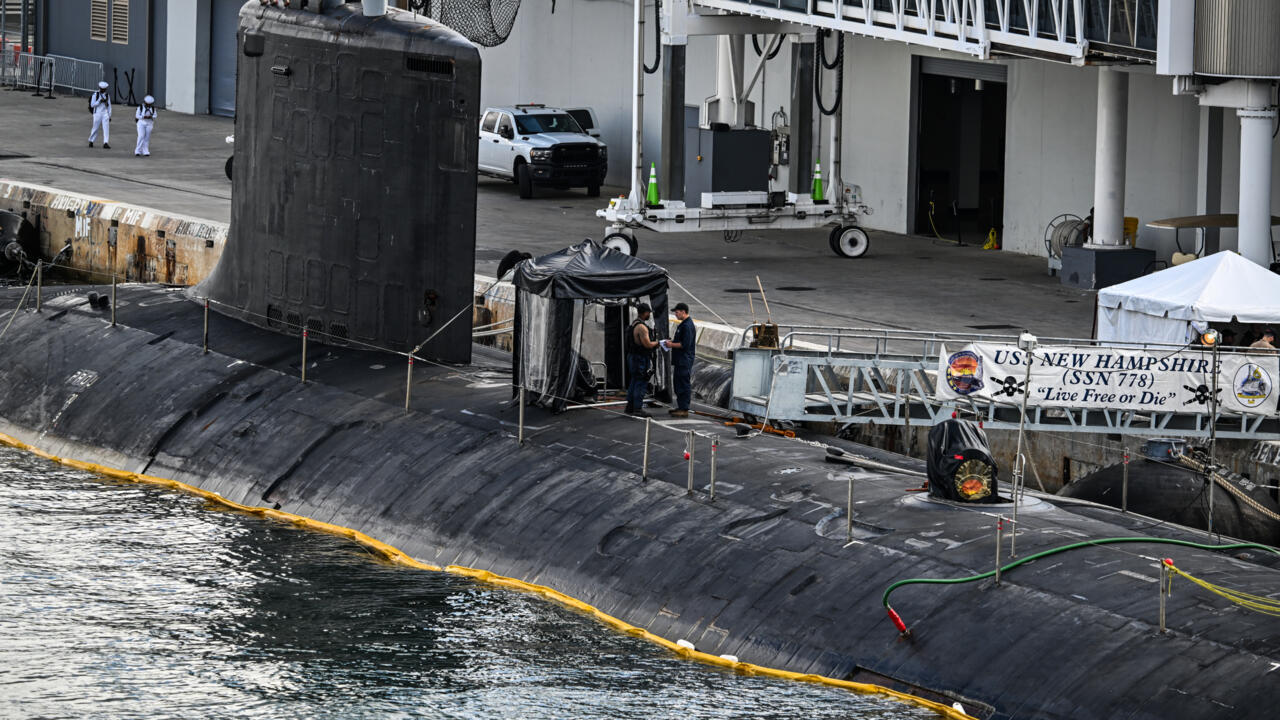
Australia aims to acquire at least three US Virginia-class submarines within 15 years and eventually to manufacture its own subs. © Chandan Khanna, AFP

Australia will spend an initial Aus$12 billion (US$8 billion) to upgrade shipyard facilities for a future fleet of nuclear-powered submarines, the government said Sunday.

The investment is to be spent over a decade to transform a shipbuilding and maintenance precinct in Perth, Western Australia, Defence Minister Richard Marles said.

The government is ploughing money into Perth's Henderson Defence Precinct after signing the 2021 AUKUS pact with Britain and the United States to arm its navy with nuclear-powered submarines.

Read moreAustralia to build biggest navy since World War II amid Pacific arms race

The shipyard development is part of a major military restructure to improve Australia's long-range strike capabilities in the face of China's expanding military strength across the Pacific.

Australia, which has no infrastructure to service nuclear-powered submarines, aims to acquire at least three US Virginia-class submarines within 15 years and eventually to manufacture its own subs.

"Henderson is very much an AUKUS project. It is where we will do sustainment and maintenance of our future submarines," Marles told a news conference.

"I have got no doubt this decision will be welcomed in the United States, as it will be welcomed in the United Kingdom, because it is another step down the AUKUS path," the minister said.

But the decision was based on Australia's own assessment of the "strategic landscape" it faces and the defence force it needs "to meet that moment", he said.

The investment will help equip Henderson with high-security dry docks to maintain nuclear-powered submarines, as well as facilities to build landing craft and eventually Japanese Mogami-class frigates, Marles said.

The United States is also expected to use the shipyard for maintenance of its own nuclear-powered submarines.

Total costs to develop the Henderson Defence Precinct could eventually reach an estimated Aus$25 billion, the minister said.
'Positivity' on defence pact

The shipyard expansion is the latest in a string of high-profile Australian defence upgrades.


Australia is in the midst of a major military restructure, equipping its navy with long-range strike capabilities and stealth submarines. © Colin Murty, pool, AFP


Australia announced in August it would equip its navy with 11 Mogami-class frigates built by Japan's Mitsubishi Heavy Industries.

Australia will pay Aus$10 billion over the next 10 years to acquire the stealth frigates as it aims to expand its fleet of major warships from 11 to 26 over the next decade.

The first three Mogami-class frigates will be built overseas, but Australia hopes to produce the rest in Western Australia.

Last week, the Australian government said it would deploy a Aus$1.7 billion fleet of "Ghost Shark" underwater attack drones, with the first expected to enter service in January.

Questions have been raised about the AUKUS submarine programme, which lies at the heart of Australia's defence strategy and could cost up to US$235 billion over 30 years, according to government forecasts.

US President Donald Trump's administration has put AUKUS under review to ensure it aligns with his "America First agenda", with some critics saying the United States does not produce enough nuclear-powered submarines to supply Australia as well as its own navy.

But Canberra is confident in the pact's future.

The Washington Post said US Secretary of State Marco Rubio had privately reassured Marles two weeks ago that AUKUS would proceed.

Marles declined to discuss the report.

But he told Australian public broadcaster ABC that in all his discussions with the Trump administration "there has been an enormous sense of positivity about the role that AUKUS can play for the United States".

The government said it had made additional defence spending commitments since May 2022 amounting to Aus$70 billion over the next decade, after including the latest shipyard investment.

(FRANCE 24 with AFP)


Saturday, September 13, 2025

WWIII


Poland briefly deploys planes in airspace due to threat of drone strikes in nearby parts of Ukraine

The RCB Alert was sent to recipients in the counties of: Chełm, Chełmski, Krasnostawski, Łęczyński, Świdnicki, Włodawski (Lublin Province).
Copyright Copyright 2025 The Associated Press. All rights reserved

By Katarzyna-Maria Skiba
Published on 

Polish and alied aircraft were deployed in a “preventive” operation in Poland's airspace Saturday because of a threat of drone strikes in neighbouring areas of Ukraine. An alert was issued, which lasted around two hours before being cancelled.

Polish and allied aircraft were briefly deployed in a “preventive” operation in Poland's airspace on Saturday afternoon due to a threat of drone strikes in neighbouring parts of Ukraine, authorities have said. An alert was issued, which lasted around two hours before being cancelled.

The airport in the eastern city of Lublin was closed at the time of the alert.

The incident came after Russian drones crossed into Polish airspace on Wednesday, which NATO fighter jets then shot down as concerns mount over Russia's ongoing invasion of Ukraine, which began in February 2022.

Warnings were issued warnings for five counties in the Lublin Voivodeship. The warnings, which were published in a post on X, read: "Threat of attack from the air. Use extreme caution. Follow the instructions of services. Expect further announcements."

"Due to the threat from Russian drones operating over Ukraine near the border with Poland, preventive air operations - Polish and allied - have begun in our airspace. Ground-based air defence systems have reached a state of highest readiness," wrote Prime Minister Donald Tusk in a post of his own.

Tusk later followed up with a post saying "Threat level canceled. Thank you to all involved in the operation in the air and on the ground. We remain vigilant."


Romania says a drone breached its airspace during Russian strikes on Ukraine


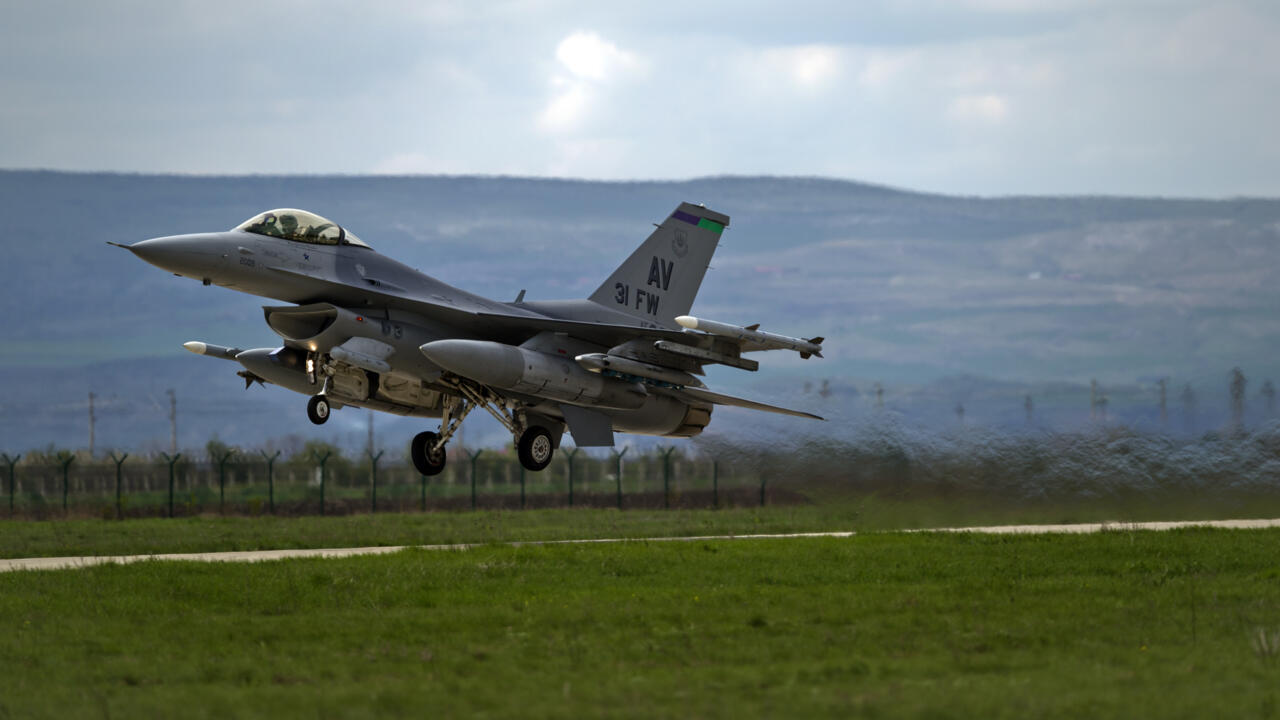
Romania scrambled two F-16 fighter jets on Saturday after detecting a drone that had breached its airspace during a Russian attack on neighbouring Ukraine, the country's defence ministry said. The statement stressed that the drone had not flown over populated areas and had not posed a risk to the population's safety.


Issued on: 13/09/2025 -
By: FRANCE 24
Video by: Camille KNIGHT


Romania scrambled two F-16 fighter jets late on Saturday to monitor the situation following strikes on Ukraine, a defence ministry statement said. © Vadim Ghirda, AP
01:30


Romania's defence ministry said Saturday that the country's airspace had been breached by a drone during a Russian attack on infrastructure in neighbouring Ukraine.

The incident came after Poland denounced the intrusion of Russian drones into its airspace this week, calling on Moscow to avoid further "provocations".

NATO member Romania has had several drone fragments crash on its soil since Moscow invaded Ukraine, especially as Russia has stepped up attacks on Ukrainian ports.

The country scrambled two F-16 fighter jets late on Saturday to monitor the situation following strikes on Ukraine, said a defence ministry statement.

The jets "detected a drone in national airspace" and tracked it until "it disappeared from the radar" near the village of Chilia Veche, it added.

The drone "did not fly over populated areas and did not pose an imminent threat to the safety of the population", said the statement.

Teams were ready to be deployed "to begin searching for possible debris from the aerial vehicle".

Ukrainian President Volodymyr Zelensky warned that Russia was deliberately expanding its drone operations and that the West needed to respond with tougher sanctions and closer defence cooperation.

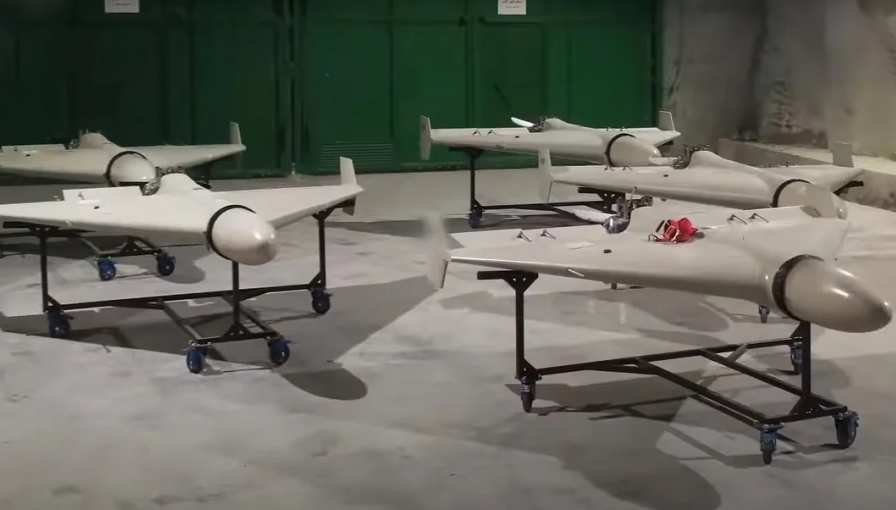
“Do not wait for dozens of ‘shaheds’ and ballistic missiles before finally making decisions,” he warned, referring to the Iranian-designed Shahed drones Russia is using.

In Washington, US President Donald Trump said he was ready to impose major sanctions on Russia—just as soon as all NATO nations did the same thing and stopped buying Russian oil.

In February, Romania's upper house of parliament adopted a law that makes it possible for the country to shoot down drones breaching its airspace.

NATO announced plans to beef up the defence of Europe's eastern flank on Friday, after Poland shot down drones that had violated its airspace, the first known shots fired by a member of the Western alliance during Russia's war in Ukraine.

(FRANCE 24 with AFP and Reuters)


COMMENT: 

What were Russian drones doing in Poland?

COMMENT: What were Russian drones doing in Poland?
More than a dozen Russian drones entered Polish airspace on September 10, a Nato member, forcing the Polish airforce to scramble jets to shoot them down for the first time since WWII. Why were they there? / bne IntelliNews
By Ben Aris in Berlin September 11, 2025

With no clear explanation from Moscow, theories have proliferated over how and why more than a dozen Russian drones crossed into Poland on September 10—and what this means for European security.

“There is no satisfactory answer to this right now,” The Bell reported, but there are three primary theories currently under discussion.

The Russian Ministry of Defence, via state-controlled media, denied any intention to strike targets in Poland, stating that “no targets were planned for destruction on Polish territory.”

The ministry also offered to consult with Poland’s military leadership and insisted that the range of the drones used did not exceed 700 km—implying that some of the devices would not have reached their crash sites if launched from Russian territory.

“The Kremlin has essentially not commented on the incident,” The Bell noted, underscoring the lack of official narrative beyond the defence ministry’s remarks.

An alternative theory, circulated by Russian pro-war military bloggers (milbloggers), suggest that the incursion could have been a Ukrainian false-flag operation. As bne IntelliNews reported, more than one-in-three Poles believe the drones originated in Ukraine, not Russia.

“In theory, it is possible that Ukrainian special services could have assembled airworthy Gerberas from the thousands that fell on its territory,” The Bell said, though it added that this scenario was unlikely.

“The Ukrainian leadership is unlikely to anger its allies by repeating the plot of the sabotage on the Nord Stream explosions.”

A third version follows from statements from Minsk. Belarusian officials argue that the drones entered its airspace due to interference from one side’s electronic warfare systems and were subsequently shot down by Belarusian air defences.

“Some Western experts do not rule out the possibility of successful electronic warfare against relatively simple drones,” The Bell wrote.

Yet the interpretation gaining traction among Nato members is that Moscow is testing the alliance’s eastern flank. Polish Foreign Minister Radoslaw Sikorski has accused Russia of deliberate aggression, claiming the drones were “deliberately aimed” at Polish territory. “Russian aggression has gone beyond Ukraine,” Sikorski said.

This reading is echoed by Russian milbloggers, some of whom suggest the drone incident may have been a “stress test” of Nato air defences. “This version is given weight by the fact that all the drones discovered in Poland turned out to be pure air defence decoys without combat capabilities or self-destructors,” The Bell reported.

Tensions may escalate further as Belarus and Russia prepares to launch their annual Zapad large scale military exercises on September 12, their first joint strategic military exercises with Russia since the start of the war.

“[Ukrainian President Volodymyr] Zelenskiy did not rule out that the attack was part of a "training mission".

If it was a test, then Poland failed, the FT admits. The slow-moving drones flew over half the country before they were challenged. F-35 fighters from the Netherlands had to be scrambled as well to intercept them. The Polish air force failed to bring all the drones down on its own.


Lukewarm support for Polish UN vote condemning Russian drone incursion

Lukewarm support for Polish UN vote condemning Russian drone incursion
Only 46 out of 193 UN member states signed a joint UN declaration denouncing Russia’s alleged drone incursion into Poland/ bne IntelliNews
By Ben Aris in Berlin September 14, 2025

Only 46 out of 193 UN member states signed a joint UN declaration on September 12, denouncing Russia’s alleged involvement in a drone incursion into Polish airspace two days earlier, as the Global South support for Western-backed Ukraine in its war with Russia wanes.

In addition to Poland, which called for a vote in the UN for the first time ever, those that signed the declaration included almost exclusively Global North countries: Austria, Belgium, Hungary, the UK, Germany, Greece, Georgia, Italy, Spain, Norway, the US, Ukraine, and France. Amongst the non-Western supporters were South Korea and Japan, both close US allies. These countries insist that Russia violated Poland’s airspace 19 times and escalated the conflict.

Polish Secretary of State Marcin Bosacki presented a joint statement ahead of a Security Council meeting requested by Warsaw. “For the first time in its history, Poland has decided to request the convening of an emergency meeting of the UN Security Council,” he said.

The drone incursion was “yet another flagrant violation of international law and the Charter of the United Nations committed by the Russian Federation while attacking the territory of Ukraine.” In response to the incursion, Polish Prime Minister Donald Tusk triggered Article 4 of the Nato treaty, which calls for consultations amongst members when a country feels their national security is under threat.

However, most of the Global South countries, who are becoming increasingly allied with the Russo-China axis, either abstained or voted against the motion.

In a joint statement, the 46 nations including the US called on September 10 for stronger international action at the UN after Russian drones violated Polish airspace, in what they described as a “destabilizing escalation” threatening regional stability.

Shifting geopolitical sands

The low number of votes stands in stark contrast to earlier UN votes to condemn Russia’s invasion of Ukraine over three years ago, when the overwhelming majority supported the motion. In a series of UN votes to condemn Russia’s invasion, typically around 140 nations supported the motion, with a mere handful voting against.

In the meantime, Russian President Vladimir Putin and Chinese President Xi Jinping have worked hard to rally the Global South to their flag and the election of US President Donald Trump, who has introduced aggressive trade policies, has only catalysed the process.

The growing Global South unity and its increasingly active opposition to the Western alliance was on show at the recent SCO summit where in addition to the Putin-Xi bromance, Prime Minister Narendra Modi surprised by attending the event, his first visit to China in seven years, and gladhanded with the other leaders, including with Xi. 

India and China are attempting to reset their prickly relations after years of military tension on their mutual border in response to Indian anger after the Trump administration doubled tariffs to 50% in August as punishment for continuing to import Russian crude.

The success of the SCO summit in China comes on the heels of a slew of Global South summits, including the G20, BRICS, ASEAN and Eurasian Economic Union, which are becoming increasingly geopolitical in nature and largely exclude Western leaders. The only EU leader that made it to Tianjin in China for the SCO summit was Slovak Prime Minister Robert Fico, who has been calling for the end of the war in Ukraine and lifting of sanctions on Russia.

Incursion, not attack

Although the drone attack on Poland was intentional, it did not cross the required threshold to invoke the famous Article 5 that could trigger a collective military response and start WWIII, Ukrainska Pravda reports.

There have been several Russian missile and drone incursions into Poland’s airspace since the war started, including two missiles that came down in a Polish village in November 2022 killing two people. However, this was the first time Poland scrambled its jets and shot down Russian ordnance over its own land. Previously the governments of the affected states insisted that these incursions were accidental, "unintentional" violations of Nato's airspace and therefore could not be considered attacks against the Alliance that would trigger Article 5.

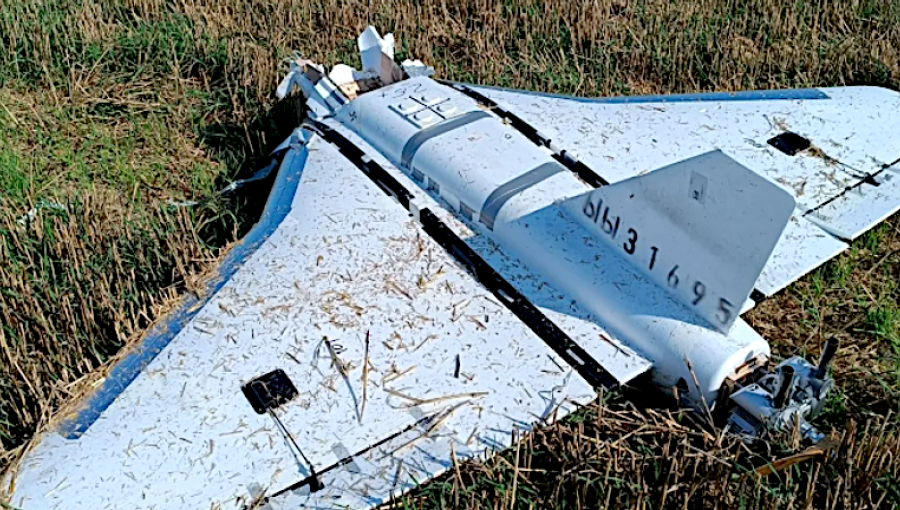
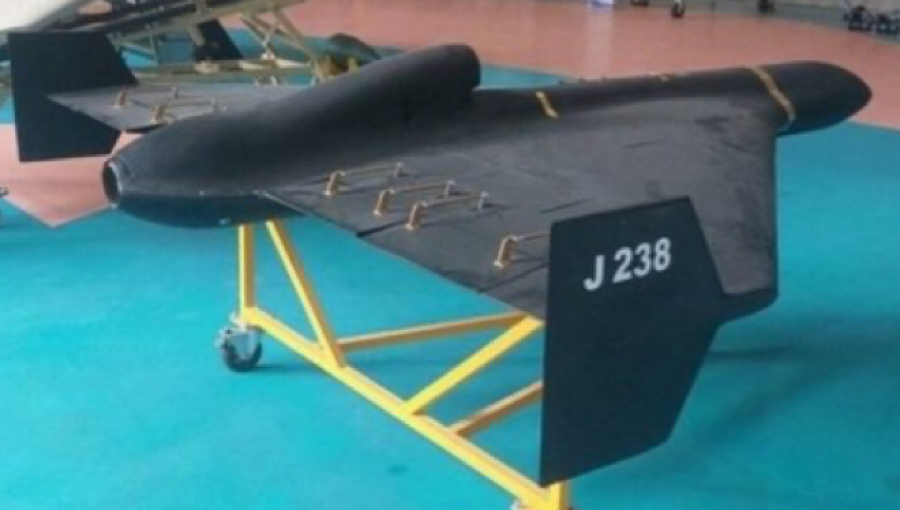
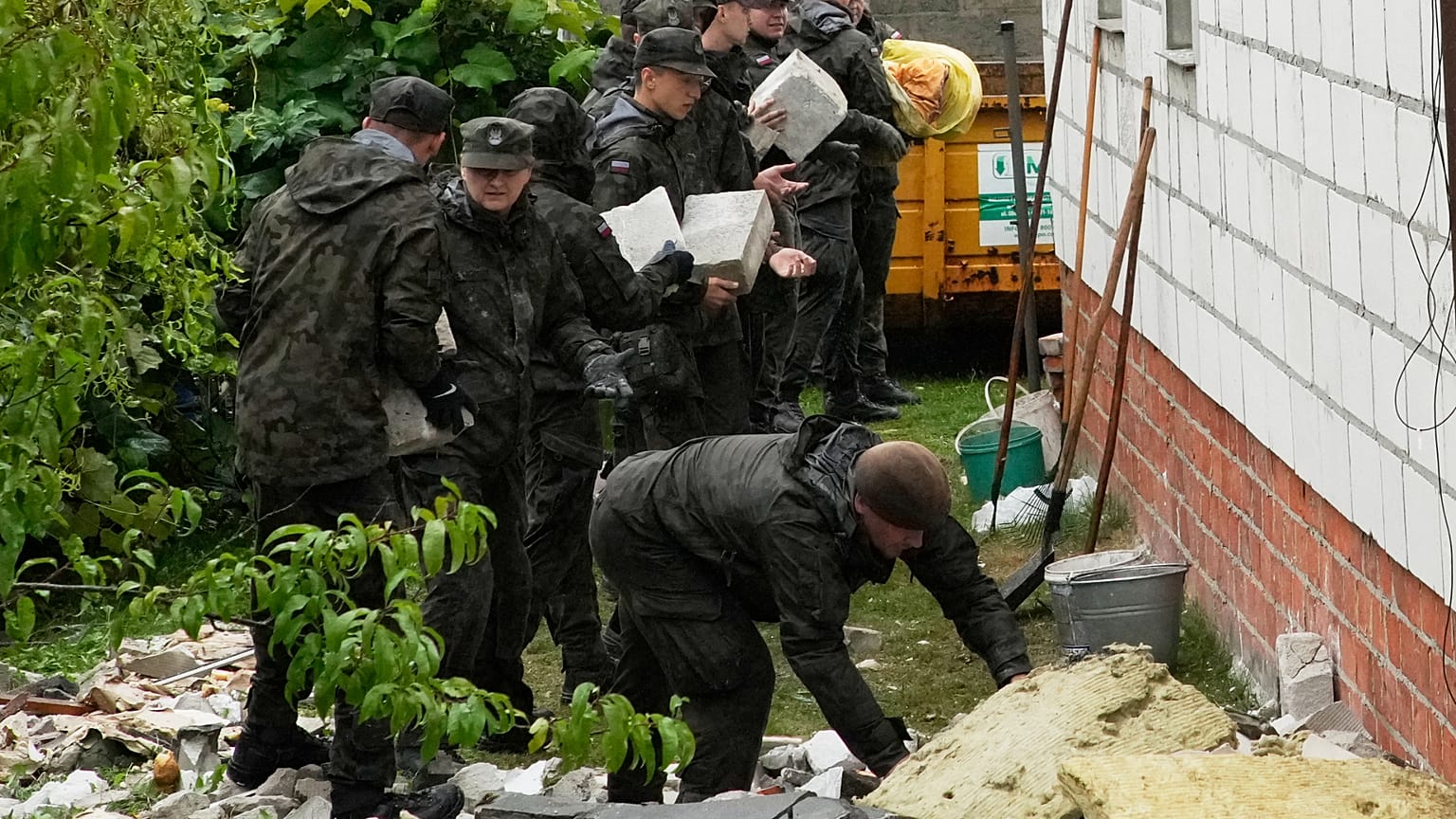
Poland is collecting the drone debris, and they appear to be, based on reports so far, the cheap plywood and polystyrene foam Gerbera drones largely used for reconnaissance that did not carry an explosive payload, not the tougher Geran-2 drone, an Iranian-designed Shahed-136 loitering munition, that usually carries an explosive payload and is widely used in Ukraine.

"The drones were not carrying explosives," said government spokesperson Adam Szlapka on September 10, Deutsche Welle reports.

“When 19-20 drones cross the border simultaneously, that cannot be a coincidence. This was the deliberate targeting of military assets towards Poland,” Ukrainska Pravda said. “The barrier here was that the drone attack on Poland did not reach the threshold required for collective defence. For this to happen, all Nato members must agree that an "armed attack" has indeed taken place.”

However, the Russian drones might have been targeting the airport in Rzeszów, which is vital for the West’s military supplies to Ukraine, German media claimed on September 11.

Ukrainska Pravda speculates that the incursion had several purposes: to test Nato’s defences just as the Russo-Belarusian quadrennial Zapad-2025 military exercises get underway; underscore Russian President Vladimir Putin’s propaganda message of “helpless Nato” to his own population; and sow confusion and distrust amongst both Nato allies and Poland’s population. The incursion was accompanied by a convincing disinformation campaign that led one in three Poles to believe the drones originated in Ukraine and was a false flag operation by Kyiv to garner more support.

The use of reconnaissance drones without a deadly payload should ensure that Nato Article 5 would not be triggered, but as Ukrainian President Volodymyr Zelenskiy pointed out, the incursion is another incremental escalation by the Kremlin. It also had the additional benefit of dealing a severe blow to confidence in Nato’s air defences as Nato had to scramble additional jets from neighbouring countries to meet the threat as Warsaw was unable to stop the attack on its own.

Nato General Secretary Mark Rutte said in a statement: “Last night, numerous drones from Russia violated Polish airspace. Our air defences were activated and successfully ensured the defence of NATO territory, as they are designed to do. Several Allies were involved alongside Poland. This included Polish F16s, Dutch F35s, Italian AWACS, NATO Multi Role Tanker Transport, and German Patriots. I commend the pilots and all who contributed to this quick and skillful response.”

Organisations monitoring public discourse in Poland report that they are seeing a visible boost to Russia-friendly narratives in Polish social media such as "Nato won’t protect you" and "This is Ukraine's fault," Ukrainska Pravda reports.

One of the positive side effects of the attack has been to unite Polish Prime Minister Donald Tusk and the new Polish president Karol Nawrocki, who have been at each other’s throats, paralysing Polish politics.

"We — the president, myself and my ministers — are absolutely determined to act like one fist, without differences of opinion," Tusk told the Sejm, the parliament of Poland. "We must pass this test in unity. There can be no gap into which the enemy, our eastern neighbour, can put its paws," he stressed.

US backs Poland, but Trump quibbles

The US said at the United Nations Security Council meeting that it would defend "every inch of Nato territory" following a Russian drone incursion into Poland—marking the first known instance of a Nato country shooting down Russian drones during the full-scale invasion of Ukraine.

"The United States stands by our Nato allies in the face of these alarming airspace violations," said acting US Ambassador to the UN Dorothy Shea, addressing the 15-member Security Council.

Her remarks clashed with Trump’s own comment that he believed the incursion could have been a “mistake” – a remark that earned him a sharp rebuke from Warsaw, which claims to have evidence of Russian ill intent.

"We know, and I repeat, we know that it was not a mistake," said Bosacki during the UN session, displaying photos of the wreckage and pointing to Russian markings on the drone. "Poland will not be intimidated."

Russian Ambassador to the UN Vassily Nebenzia rejected the accusations and said Russian forces had been targeting Ukraine at the time with no intention of striking Polish territory. “There were no targets marked on Polish territory,” he said. “The maximum range of the drones used in this strike did not exceed 700 kilometers, which makes it physically impossible for them to have reached Polish territory,” apparently ignoring the documented Russian drone wreckage that is scattered all across the country, presented by Poland at the session.

Russia’s $0.5bn anti-drone defence market second only to US

Russia’s $0.5bn anti-drone defence market second only to US
Russia's drone production business is now worth $500mn a year and second only to that of the US. / bne IntelliNews
By bne IntelliNews September 12, 2025

Russia ranked second globally in the anti-drone systems market in 2024, according to RBC business portal citing estimates of SK Capital, part of the state development bank VEB.RF.

As followed by bne IntelliNewsdrone warfare plays a central role in Russia's full-scale military invasion of Ukraine. Russian oil refineries and other key industrial infrastructure have been a frequent target of Ukrainian drone attacks. 

Previous reports suggested that up to 80% of Russia’s civilian industrial enterprises have installed anti-drone protection systems as of spring 2025, with the market projected to reach RUB30bn-RUB90bn ($318mn-$953mn) in 2025.

SK Capital estimates that Russia's anti-drone systems market revenue reached RUB42bn ($460mn) in 2024, placing the country second worldwide with a 23% market share. The US was the leader with 35% share ($700mn), followed by China at 8% ($160mn). 

The estimates are based on interviews, available reports, and industry expert sources. The study cited by RBC is presented as Russia's first comprehensive report on this sector. Anti-drone systems encompass devices, technologies, and processes designed to counter unmanned aerial vehicles (UAVs).

The authors of the study stressed that this is largely a classified market, valued at $2bn globally in 2024 using a consensus of available international reports.

Key global players include defence contractors (L3Harris Technologies, RTX Corporation, Thales), electronics and sensor firms (Rohde & Schwarz, Robin Radar, QinetiQ), and defence tech start-ups (Dedrone, Anduril, Blue Halo, Epirus, DroneShield).

The study does not list Russian market players due to confidentiality risks. Most Russian players specialise in radio jamming and GPS spoofing, combining domestic innovation with imported Chinese components.

Top 10 Russian anti-drone solution suppliers account for 45–50% of the domestic market, comprising roughly 130 companies. Participants range from defence enterprises to private security, IT integrators, and civilian drone manufacturers, with half being new entrants, according to RBC.

This month reports suggested that Russian businesses seeks tax breaks for drone attack-related costs, as the drone defences in the ongoing full-scale military invasion of Ukraine become a daily preoccupation in the real sector. In the meantime Russian insurers have reported over RUB10bn ($110mn) in claims related to drone attacks in 2024, with leading firms like SOGAZ and AlfaStrakhovanie experiencing significant increases in both the number and value of claims.

The study by SK Capital sees frequent Ukrainian drone attacks as creating a reactive, rather than strategically planned, demand for drone defence solutions, with buyers often lacking expertise to assess threats or select appropriate solutions. 

Additional challenges include outdated regulations, lack of civilian deployment standards, absence of insurance frameworks, and uneven regional procurement capabilities.

SK Capital forecasts average annual growth of 23% for Russia’s anti-drone market, reaching RUB146bn ($1.58bn) by 2030. In 2025 alone, the market could double or triple due to state mandates requiring critical infrastructure operators to procure UAV defences. 

Until now, 90% of the market relied on EW solutions, but demand is shifting toward multisensor and standardised platforms due to rising threats from FPV and loitering drones, according to the study.

Notably, SK Capital believes Russia can not only strengthen its domestic market but also become a global exporter of “unconventional solutions” for drone defence due to operational insights gained during mass drone attacks on military and civilian targets.

However, MarketsandMarkets forecasts the highest growth in the market from 2025–2030 in Asia (China, India, Japan, South Korea) driven by border defence and commercial drone applications. MarketsandMarkets valued the global anti-drone market at $3.75bn (RUB346.7bn) in 2024 and is expected to grow by 26.5% annually, reaching $14.51bn by 2031.