It’s possible that I shall make an ass of myself. But in that case one can always get out of it with a little dialectic. I have, of course, so worded my proposition as to be right either way (K.Marx, Letter to F.Engels on the Indian Mutiny)
Monday, November 10, 2025
Codelco-SQM lithium deal clears last major hurdle after China greenlight
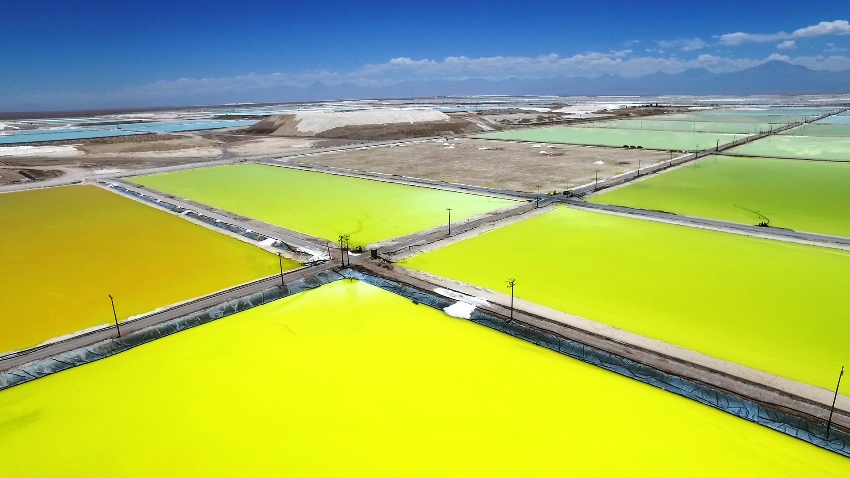
Lithium brine ponds in northern Chile. (Image courtesy of SQM)
A planned tie-up between Chilean state copper giant Codelco and local producer SQM to produce lithium has won approval from China’s antitrust regulator, the entity said on Monday, paving the way for the joint venture to go into effect.
China’s green light was the last major remaining condition for the companies to close a deal, first announced nearly two years ago, to produce lithium in Chile’s Atacama salt flat as part of a government push to widen state control of the industry and expand output.
The agreement required multiple government regulators to sign off because the companies operate in global markets. Chile is the world’s second-largest producer of lithium, a critical component for electric vehicles and battery storage.
Beijing’s terms
China required Codelco and SQM to agree to provide minimum supply to Chinese customers on fair terms, at prices that do not exceed a certain percentage of the benchmark market price. Its statement marked the details as confidential.
The Chinese regulator also asked Codelco and SQM to refrain from sharing sensitive information with other lithium players, and to abide by certain corporate governance practices.
“In the event of a major supply change, both sides should make reasonable and best efforts to continue the supply of lithium carbonate products to Chinese customers… they should not turn down, restrict or delay supply to Chinese clients,” China’s State Administration for Market Regulation said in a statement.
It added that its decision was based on feedback from government bodies, industry associations, rivals and downstream consumers.
In a regulatory filing, SQM said the conditions were in line with the company’s existing commercial practices in China.
Deal close by year-end
Codelco in a separate statement said the partnership can go into effect following approval from Chile’s comptroller’s office, which is widely seen as a formality. A Codelco source said that is expected by the end of the year.
Competition regulators in Chile, the European Union, Brazil, Japan, South Korea and Saudi Arabia have already signed off on the deal.
The joint venture faced pushback from legislators and China’s Tianqi, a major investor in SQM. Tianqi did not immediately reply to a request for comment.
(By Amy Lv, Daina Beth Solomon, Fabian Cambero, Ethan Wang, Xiuhao Chen and Joe Cash; Editing by Jacqueline Wong, Kate Mayberry and Jan Harvey)
London bullion vaults see historic inflows after silver squeeze
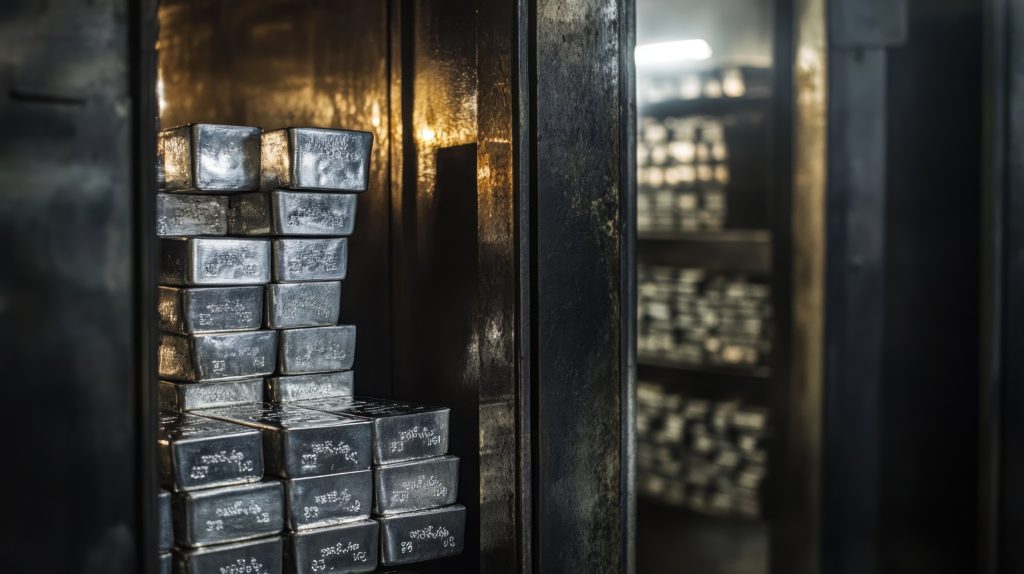
Silver held in London vaults swelled by the largest amount in at least nine years, easing an extreme squeeze that sent prices soaring over metal stored in Shanghai and New York.
Vaults underpinning the London market added nearly 54 million troy ounces of silver in October, an amount weighing more than 100 of the UK capital’s iconic double-decker buses. It was drawn to London by a historic arbitrage opportunity caused by market tightness, pulling stocks out of warehouses elsewhere.
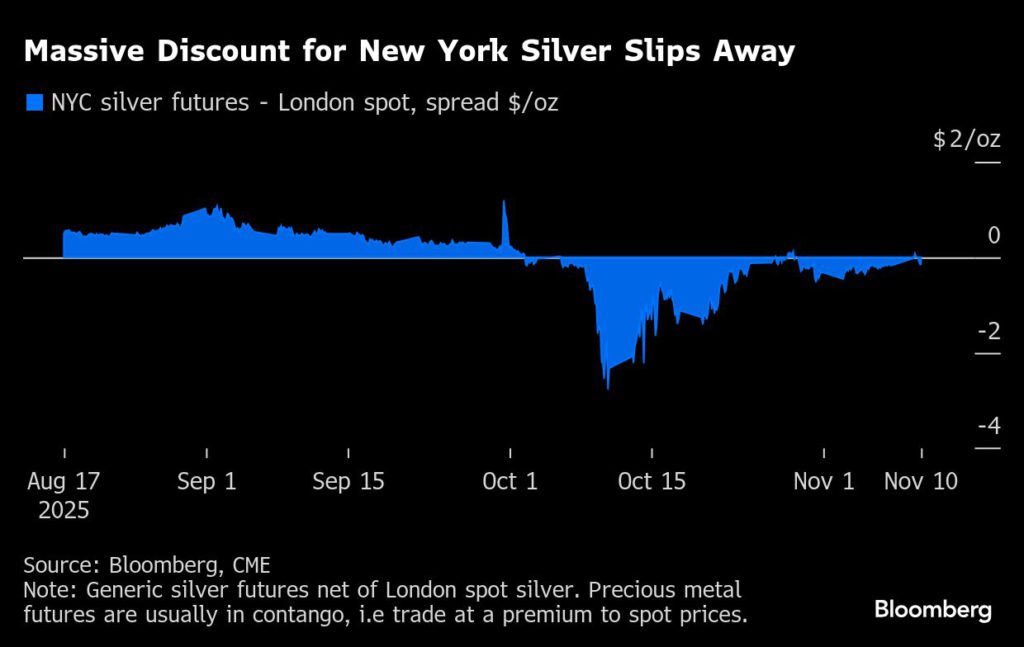
Silver inventories in London hit an all-time low earlier this year after tariff fears sparked a massive outflow of the metal to New York. When a spike in Indian demand, as well as a wave of buying for silver-backed exchange-traded funds, hit the market in early October, there wasn’t enough silver left to meet demand, sending the benchmark spot price soaring as much as $3 an ounce over other markets.
That created an attractive arbitrage opportunity for traders who could quickly withdraw metals from vaults in the US and China and fly it to London.
The massive increase in London vault holdings “certainly suggests that the arbitrage has worked by pulling metal across the pond,” Rhona O’Connell, head of market analysis at StoneX Financial Ltd., wrote in a note.
The latest inflow of metal has eased tightness in the London market, with spot prices now trading just below New York futures. Approximately 48 million ounces of metal was withdrawn from Comex vaults in October, while nearly 17 million ounces of on-warrant silver stocks were taken from the Shanghai Futures Exchange.
Silver-backed exchange traded funds, most of which store the majority of their metal in London, also saw net outflows of about 15 million ounces in October, according to data compiled by Bloomberg.
All that has injected a flood of silver back into a market that was extremely tight just a month ago. TD Securities commodity strategist Daniel Ghali, who had warned of demand outstripping supply earlier this year, now estimates there are nearly 200 million ounces of silver freely available to buy or borrow.
More silver entered the market than can be explained by outflows from New York, Shanghai and ETF outflows, Ghali wrote, indicating that some of the repletion came from private vaults or recycled scrap.
“This marks the end of this #silversqueeze chapter,” he said.
Still, the cost of borrowing silver in London remains elevated at an annualized rate of roughly 5% for a one-month loan — even though it’s well below rates of over 30% at the peak of the squeeze in October.
The period of tightness accelerated proposals by the London Bullion Market Association to publish silver inventory levels every week, chief executive Ruth Crowell said at a recent conference. Inventories of both metals in the London market are currently published monthly.
“With the onset of the Indian wedding seasons imminent, which is always a strong tool for silver demand, it is perfectly possible that this market will remain tight for the time being,” O’Connell said.
The Santa Rita nickel mine in Brazil. (Image courtesy of Atlantic Nickel.)
Sibanye-Stillwater (JSE: SSW, NYSE: SBSW) has agreed to pay $215 million to settle a dispute with Appian Capital Advisory over its cancelled purchase of two of the firm’s Brazilian assets.
In October 2021, Sibanye announced the proposed acquisition of Atlantic Nickel and Mineração Vale Verde from Appian for a combined total of $1 billion. However, it abruptly walked away from the deal just three months later, citing a dislocation in a pit wall at Atlantic Nickel’s Santa Rita mine.
Appian did not accept the withdrawal, and in February 2022, it took legal action against Sibanye in the High Court of London seeking damages in excess of $1.2 billion, which comprises the $1 billion cash consideration of the deal and $218 million in estimated royalties.
The settlement comes just before a trial to determine damages was due to begin. In late 2024, a UK court determined that Sibanye had unlawfully abandoned the deal and was liable to compensate the seller. The South African miner said earlier this year that Appian could have recovered more than $720 million from a judgment.
‘Positive’ outcome
In a press release, Sibanye CEO Richard Stewart said the board and management are “convinced that the settlement of this protracted legal dispute is in the best interests” of the company.
“This positive outcome allows us to close this matter on appropriate terms and focus our full attention on managing our funds and driving continued growth across our portfolio,” Appian CEO Michael Scherb also said in a statement.
BMO Capital Markets views the settlement as a slight “positive” for Sibanye. “They are able to comfortably pay this settlement out of current treasury, but it also removes any overhang for Sibanye-Stillwater, allowing them to focus on consistent operational delivery and growth,” the bank wrote in a note on Monday.
Investors also reacted positively to the news, with Sibanye’s US-listed shares opening Monday’s session 6.5% higher. Its current market capitalization stands at nearly $12 billion.
Battery metals push
In attempting to buy the Appian assets, Sibanye was looking to diversify its mining portfolio by increasing its exposure to battery metals, on top of its gold and PGM mines in South Africa and the US. The company currently has a lithium project in Finland and owns a nickel plant in France.
The Santa Rita mine has been one of the largest open-pit nickel sulphide mines that is nearing depletion, after which it will transition to underground. Mineração Vale Verde’s Serrote copper mine in Alagoas, eastern Brazil, is expected to produce about 20,000 tonnes copper-equivalent annually over 14 years.
The Appian transaction is not the only major battery metals deal that Sibanye has U-turned on. Earlier this year, the miner scrapped its planned investment in the Rhyolite Ridge lithium-boron project in Nevada, also announced in 2021, citing a weak market environment.
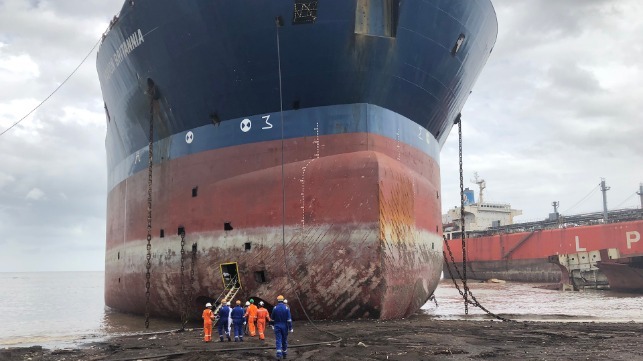
Note: This article responds to Dr Nikos Mikelis, Chair of BIMCO’s Ship Recycling Alliance, and his piece “Recycling Ships under Two Conventions: Misconceptions about Basel and the HKC” (TME, 29 October 2025), offering a corrective to his interpretation of the Basel Convention and its relationship with the Hong Kong Convention.
The long-running debate over whether the Basel Convention on the Control of Transboundary Movements of Hazardous Wastes and Their Disposal, 1989 (BC), and the Hong Kong International Convention for the Safe and Environmentally Sound Recycling of Ships, 2009 (HKC), are in conflict has divided policymakers, shipowners, and environmental advocates for years. It is often claimed that Basel’s strict export controls on hazardous waste contradict the HKC’s effort to establish a workable global framework for ship recycling. Yet this view misunderstands the concept of “conflict” in international law. The tension between the two regimes is not legal—it is economic and political.
Relying upon a recently adopted IMO Circular (HKSRC.2/Circ.1, 1 November 2024), proponents of the shipping and ship recycling alliance argue that States should apply the regime of whichever Convention they are party to, and that those party to both may notify under Article 11 of the Basel Convention to apply the HKC instead. Although non-binding, this guidance arguably misapplies Article 30 of the Vienna Convention on the Law of Treaties (VCLT) by incorrectly invoking the long established lex specialis and lex posterior principles to imply that the HKC can override or displace the Basel Convention.
Under the VCLT, a true conflict of law arises only when two treaties govern the same subject matter and impose mutually exclusive obligations, such that fulfilling one would necessarily violate the other. As the International Court of Justice and the International Law Commission have repeatedly affirmed, practical or financial difficulty in applying two treaties does not amount to a legal conflict. A conflict under Article 30 of the VCLT exists only where it is impossible to comply with both obligations simultaneously.
Article 30; the so-called “conflict clause”; states that when two treaties concern the same subject matter, the earlier one applies only insofar as it is compatible with the later. The ILC’s 1966 Commentary clarifies that Article 30 operates only where both cannot be applied at the same time. Overlap does not necessarily mean inconsistency. As Sir Ian Sinclair explained, the lex posterior rule presupposes an actual conflict of obligations; mere overlap or differing impact on States does not suffice. Likewise, Anthony Aust notes in Modern Treaty Law and Practice (4th ed., 2023) that economic difficulty or political inconvenience in performing a treaty does not constitute incompatibility under Article 30.
The ICJ’s 2012 judgment in Belgium v. Senegal confirmed that there is no conflict where both norms can be applied without one violating the other. WTO panels in EC–Hormones (1998) and EC–Biotech (2006) similarly found that environmental and trade treaties pursue similar objectives but regulate distinct subject matters. The ILC’s 2006 Fragmentation of International Law report encapsulated this principle: two norms are incompatible only where it is impossible to comply with both simultaneously.
Article 30 must be read alongside Article 59 (termination when a later treaty replaces an earlier one) and Article 103 of the UN Charter (which gives Charter obligations supremacy). Article 30 applies only to overlapping treaties that remain in force, and only when the conditions of identical subject matter and legal incompatibility are met. The decisive test is whether both treaties can be implemented concurrently without resulting in any illegality; if so, none of these provisions is applicable (Southern Bluefin Tuna (New Zealand v Japan; Australia v Japan), Arbitral Tribunal, Award on Jurisdiction and Admissibility, 2000).
The above frameworks clarify the Basel–HKC relationship. The BC was designed to prevent the dumping of hazardous waste from developed to developing countries across all industries, including ship recycling. It imposes prior informed consent (PIC) requirements and mandates environmentally sound disposal of hazardous waste. An end-of-life ship may fall under its scope only if it is declared waste and contains hazardous substances such as asbestos or PCBs.
The HKC, negotiated under the International Maritime Organization (IMO), focuses instead on regulating the process of ship recycling. It sets safety and environmental standards for ship design, preparation, and dismantling, requiring inventories of hazardous materials and authorization of recycling facilities. Basel governs export control; the HKC governs recycling operations—sequential, not overlapping, stages in a ship’s end-of-life cycle.
Legally, there is no contradiction. A flag State that is party to both treaties can comply with Basel by observing the Basel PIC procedure during export, while also ensuring that the receiving facility meets HKC’s IRRC (International Ready for Recycling Certificate) certification. Both treaties can operate together without leading to an illegal consequence - in other words simultaneous application is absolutely possible.
The real tension arises in practice: developing countries face capacity and cost barriers to implementing Basel’s strict procedures. In such a classic situation the duty under international law is harmonious interpretation (de Vries-Zou, 2020) not circumvention.
For major ship-recycling nations such as Bangladesh, India, and Pakistan, Basel’s administrative and technical demands—designed with developed-country capacities in mind—are difficult to meet. These nations often lack advanced treatment, storage, and disposal facilities (TSDFs). The HKC, by contrast, offers a more flexible and economically viable model. The disparity between the two systems is thus economic and institutional, not legal. As the ILC stressed in 2006, “differences in stringency or burden do not equate to incompatibility of norms.”
Claims that Basel is unaware about Flag State Jurisdictional concept and fails to bind flag States are unfounded. A State Party remains bound by its treaty obligations regardless of whether it acts as a flag, port, or recycling State. A flag State that is party to Basel cannot lawfully permit the export of an end-of-life ship to a yard that does not comply with Basel’s PIC requirements. If a State is bound by a treaty domestically, it cannot act inconsistently with that treaty when operating abroad.
Recognizing the potential rigidity of Basel’s system for any specific industry, Article 11 of the BC introduces a degree of flexibility by allowing “bilateral, multilateral or regional agreements” that deviate from its rules, provided they guarantee an equivalent level of environmental protection as envisioned in BC. This provision assumes that the importing State has adequate waste management and disposal facilities. In practice, few major ship-recycling States meet this standard—Bangladesh and Pakistan, in particular, lack any operational TSDFs suited for ship recycling industry. As such, invoking Article 11 to circumvent Basel’s PIC procedure would currently fail the equivalence test and thus be legally invalid.
The interpretation advanced by a proponent of the Ship Recycling Alliance, relying on IMO Circular HKSRC.2/Circ.1, appears difficult to reconcile with Article 30 of the VCLT , as it does not establish the existence of a genuine legal conflict between the Basel and HKC. Moreover, its approach seems difficult to reconcile with Article 11 of the BC , which permits alternative arrangements only where they provide an equivalent level of environmental protection—a standard that the current HKC arguably does not yet fulfil.
By incorporating robust due diligence provisions and establishing a Basel-compliant waste management chain, the shipping and ship recycling industries could, in the future, credibly invoke Article 11 and claim equivalence. This could bridge the regulatory gap between the two frameworks. However, such an approach would require substantive reform of the HKC itself. The argument advanced by the shipping & ship recycling industry to create an industry-specific exception through voluntary guidelines appears difficult to justify under existing binding international law.
In reality, there is no legal conflict between the BC and the HKC. Article 30 of the VCLT simply does not apply because both treaties can legally operate in parallel without generating any illegal consequence. The friction between them is economic, not legal—a product of uneven capacity and resources, not contradictory legal obligations. The lex posterior principle, often cited to justify prioritizing the HKC, cannot apply in the absence of an actual clash of legal obligations.
So, what the industry faces currently is a policy challenge, not a legal one. The path forward lies in strengthening the HKC so it aligns more closely with Basel’s environmental safeguards—by embedding due diligence, clarifying downstream waste responsibilities, and building capacity in recycling nations. These reforms would allow States to invoke Article 11 of the BC legitimately, bridging the regulatory gap without compromising environmental protection.
The real question, therefore, is not which treaty should dominate, but how both can they function in harmony—coherently, efficiently, and true to their original purposes. With a thoughtful approach, what was once seen as a legal impasse could evolve into a powerful platform for global cooperation—where trade, environmental protection, and maritime governance reinforce rather than restrain one another.
Author’s Biography: Dr. Ishtiaque Ahmed is a Professor and Chair of the Department of Law at North South University, Bangladesh. A former Merchant Marine Engineering Officer, he holds a Doctor of the Science of Law (J.S.D.) from the University of Maine School of Law, USA, where he specialized in International Ship recycling laws and policy. He contributed to the drafting of Bangladesh’s Ship Recycling Rule 2025 (proposed) and revising Bangladesh Ship Recycling Act 2018 as the sole Legal Consultant. Dr. Ahmed is also a qualified Barrister of England, an active member of Chartered Institute of Arbitrators (MCIArb) in England and an Advocate in Bangladesh Supreme Court. His expertise lies at the intersection of maritime law, environmental regulation, and sustainable ship recycling practices. He can be reached at ishtiaque.ahmed@northsouth.edu.
The opinions expressed herein are the author's and not necessarily those of The Maritime Executive.
The Hong Kong Convention Is Here, But Compliance Alone Will Not Save It
Three months after the Hong Kong Convention (HKC) came into force, the ship recycling industry looks much the same. The yards remain busy, the paperwork continues to grow, and the sweeping reform promised by the Convention has yet to take shape.
This slow start is no surprise. The industry had more than a decade to prepare. Many shipowners, some had already aligned with the European Union Ship Recycling Regulation (EU SRR), which set stricter standards and effectively pushed global compliance years in advance.
Since 2020, most trading vessels have carried an approved and regularly updated Inventory of Hazardous Materials (IHM). The discipline of maintaining one is now routine, so the HKC’s arrival has been more of a formalization than a transformation.
The real driver of progress has not been regulation but finance. Banks and investors, through Environmental, Social, and Governance (ESG) conditions, began requiring HKC-level standards as a prerequisite for lending. The industry did not wait for the IMO. The finance sector enforced compliance long before the Convention did.
That top-down pressure has raised awareness but not necessarily changed behavior. Compliance has become the expected minimum, not a marker of excellence.
The HKC does, however, change the landscape for shipowners. While it provides a long-awaited global framework for safe and sustainable recycling, ambiguity remains, particularly where end-of-life vessels are still treated as hazardous waste under the Basel Convention. In such cases, owners must meet both HKC and Basel obligations, creating overlapping legal and logistical challenges.
Relying on intermediaries is no longer enough. Shipowners must now take ownership of compliance, ensuring IHMs and recycling plans are accurate, auditable, and aligned with both frameworks. Outsourcing risk will no longer cut it. Compliance now demands active engagement, transparency, and informed decisions from the first voyage to the final one.
Across the vessel inspections Idwal has conducted since enforcement began, the change is subtle but clear. Owners are asking tougher questions, seeking verification that paperwork reflects reality. It is a small but positive sign that the Convention is beginning to influence conduct, not just administration.
Yet a new bottleneck is forming. Only a limited number of yards hold HKC certification, and many are already at capacity. Achieving and maintaining certification requires heavy investment and time, creating a two-tier market between compliant and non-compliant facilities. Owners with aging fleets should plan early as those who don’t may find compliant slots gone when they need them most.
The success of the HKC will depend less on its text and more on how it is enforced. Under the EU SRR, port state control made the difference. European authorities detained ships for IHM deficiencies, and similar action should now follow as HKC enforcement matures. Without random checks, firm penalties, and transparency, the Convention risks becoming a paper exercise. The industry does not need more certification. It needs accountability.
Passing an audit is not proof of compliance. True conformity requires independent verification, randomized inspections, and evidence that documentation matches the vessel’s physical state. From Idwal’s global inspection data, discrepancies between declared and observed hazardous materials remain common. That gap between paper and practice can only be closed by impartial, third-party inspection. Without it, the HKC’s promise of safe and sustainable recycling will remain unfulfilled.
Technology can help. Data-driven vessel inspection tools and shared verification frameworks bring transparency at scale and give owners the insight they need to demonstrate compliance with confidence. These tools should no longer be optional, they should define the standard.
The Hong Kong Convention has taken more than a decade to reach this point. Its credibility will depend on whether the industry treats compliance as a living standard rather than a filing exercise. Independent verification and transparent oversight are the only paths to meaningful progress.
Ensuring that HKC compliance is meaningful, and not just a matter of paperwork, requires independent verification, rigorous inspections, and ongoing oversight. Conducting inspections at multiple stages of a vessel’s lifecycle is essential to maintaining consistent compliance. Randomized inspections are particularly effective in ensuring that standards are upheld continuously, not just for scheduled audits, a challenge familiar across many areas of maritime regulation.
Tracking and analyzing deficiencies across fleets also provides valuable insight into recurring compliance issues, enabling shipowners and managers to take proactive corrective action. Integrating independent inspection and audit throughout the vessel’s operational life, not just at the end, ensures that documentation aligns with physical evidence, including IHMs, hazardous material plans, and supporting records.
Digital, data-driven reporting enhances this process by allowing for transparent tracking of findings, trend analysis, and risk-based decision-making. Alongside these technical measures, owners and managers must establish robust compliance management systems and provide ongoing training to crews and shore-based teams to sustain regulatory awareness.
By combining independent verification, data-led oversight, and strong management practices, shipowners and managers can ensure that HKC compliance is credible, auditable, and effective.
Three months in, the world has enough declarations. What it needs now is verification.
And what about the effect market conditions will have on physical recycling? Well, if recycling market rates remain low, the trend of shipowners selling or life extending older vessels rather than recycling them is likely to continue. Instead of heading straight for dismantling, some older ships may find renewed trade in domestic or regional trades, giving owners a chance to extend operational life and generate additional income before final disposal or generate a sale income above recycling rates.
Strategically, this environment underscores the need for fleet-level oversight, proactive condition monitoring, and data-driven decision-making.
Stephen Grist is Technical Manager at Idwal.
The opinions expressed herein are the author's and not necessarily those of The Maritime Executive.
Dark Fleet Bunkering Highlights Sanctions System's Weakness
The activities of two oilers which regularly refuel Russian dark fleet tankers in the Baltic are showing the imperfections and weaknesses of sanctions as a foreign policy tool.
Two bunker tankers, the Rina (9835 GT, IMO 9152820) and Zircone (5045 GT, IMO 9010929), have been operating for years in the Baltic, and in particular in the Danish Straits, a sea channel through which about 200 vessels pass daily. They operate primarily from the ports of Riga in Latvia, and Klaip?da and Paldiski in Estonia. The two bunker tankers formed part of a fleet of seven vessels, which being efficient and effective, have established a strong position for their owners in the highly competitive bunkering market.
The Rina and Zircone still ply their trade, much as they have always done. Their pattern of activity has changed little over the last 10 years, notwithstanding the increasing isolation of Russia post its invasion of Ukraine in 2022.
A large percentage of the Rina and Zircone's customers at sea remain Russian-owned tankers on their way to and from the Russian oil export terminals at Primorsk and Ust-Luga. The difference since the invasion of Ukraine is that most of these tankers are now members of Russian-controlled dark fleet, sailing under fast-changing flags of convenience and switching names frequently.
In 2025, the Rina was seen on March 11 bunkering the tanker Blue (IMO 9236353), then flying the flag of Antigua & Barbuda and apparently Turkish-owned. On October 30, Blue was bunkered by Zircone off Gotland.
In 2024, the tanker Rainbow (IMO 9302126), and also then flying the flag of Antigua & Barbuda, was refueled by Zircone off Gotland on August 17, and when plying between Primorsk and Libya was refueled by Rina on December 14.
Neither the Blue or the Rainbow were sanctioned when they were bunkered on these occasions. But like many other customers, they were sanctioned later, and their well-advertised series of visits to Primorsk and Ust-Luga should have raised compliance red flags.
An investigation found that between June 2024 and March 2025, Rina and Zircone bunkered 286 ships. Of these, more than 160 were tankers which had called at Primorsk and Ust-Luga either before or after the bunkering rendezvous.
Since the operations of the Rina and Zircone began to attract publicity, their ownership has changed and has finally settled on a company registered in Dubai, namely FB Trade DWC-LLC (Commercial Registration 11119), though they are still operating in the Baltic. FB Trade is now also believed to be operating the 10,321 GT tanker Onyx 2 (IMO 9169782, flagged in the Comoros Islands). Onyx 2 appears to be conducting bunkering operations in the Gulf of Oman out of Khor Fakkan, off which there is a thriving STS transshipment hub frequented by both Russian and Iranian dark fleet tankers.
This saga illustrates the inherent weakness of the sanctions system: Estonia and Latvia are amongst the most active nations seeking to curb Russian aggression, but have not been able to curtail activities based in their ports which should perhaps have raised red flags. Nor have Denmark or Sweden, also closely committed to increasing pressure on Russia, been able to clamp down on dark fleet-associated activities in their home waters. In the Gulf, countries bordering what used to be called the Pirate Coast are in general disinclined to intervene.
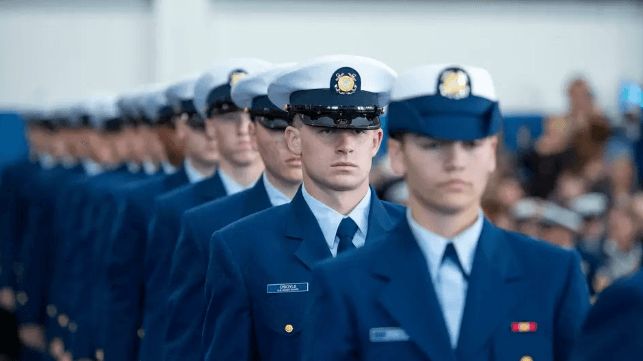
Over the last two fiscal years, the U.S. Coast Guard has witnessed a recruitment turnaround, and 2025 has been its best year in more than three decades.
For FY2025, the USCG not only managed to exceed recruitment targets by 21 percent - enlisting 5,204 active-duty service members against a target of 4,300 - it also achieved the highest accession numbers since 1991. It was the second year in a row the agency had achieved targets after enlisting 4,422 new service members in FY24.
Apart from active-duty servicemembers, the agency is also hailing success in accession of commissioned officers and reserves. During FY25, the USCG attracted 371 new commissioned officers, managing to achieve 101 percent of the overall goal and the third largest officer target achieved in its recorded history. In terms of reserves, the agency gained 777 reservists, representing 104 percent of the target of 750. It was the third year in a row that the agency has met its recruiting goals for the reserve force.
A critical factor that made the USCG achieve the unprecedented success in its hiring efforts during the year was the opening of seven new recruiting offices across seven states. Also instrumental is the agency’s Force Design 2028, approved by Homeland Security Secretary Kristi Noem in June, which is designed to drive transformational changes throughout the agency.
Under Force Design 2028, the USCG aims to grow its military workforce by at least 15,000 members by the end of FY28 to restore readiness, operate a growing fleet, and deploy new capabilities to meet increasing and evolving threats. The agency also intends to fix the mismatched balance across grade levels and specialties by moving away from the “outdated and ineffective” pyramid workforce structure that has existed for five decades.
“The Coast Guard far exceeded our recruiting goals in FY25, showing that more Americans want to serve in the Coast Guard than ever before,” said Adm. Kevin Lunday, acting commandant of the Coast Guard. “Thanks to our recruiters for their great success. We aren’t just growing – we are bringing in the best talent from across the United States and building the workforce of the future.”
With a workforce of 56,000, the USCG is responsible for protecting and defending more than 100,000 miles of U.S. coastline and inland waterways and safeguarding an economic region covering 4.5 million square miles. Apart from protecting the marine transportation system, regulating and safeguarding ports and waterways, the agency has the task of drug interdiction, search and rescue and responding to natural and human-made disasters.
EUNAVFOR Corrals Pirate Action Group in Indian Ocean
Spanish forces liberate Hellas Aphrodite from pirates, Nov. 7 (EUNAVFOR)
After days of pursuit, forces with EUNAVFOR and the Indian Navy have caught up with a pirate-occupied dhow in the Indian Ocean, containing the risk its operators posed to shipping.
"The Pirate Action Group (PAG) linked to recent incidents is being monitored closely by the Indian Navy and EUNAVFOR Operation ATALANTA and there is currently no threat from this group to merchant vessels," the EU's Maritime Security Centre Indian Ocean (MSCIO) said in a statement Sunday. "Vessels are advised to maintain general awareness."
According to maritime security consultancy Vanguard Tech, the pirates are still holding the dhow's crew of fishermen and have threatened to harm them. While the suspects pose no further risk to merchant shipping, they have refused to surrender, and the situation is ongoing.
The pirate group had been menacing shipping in the region for at least a week, and it came within reach of capturing foreign-flag seafarers as hostages just hours before EUNAVFOR responders arrived.
The product tanker Hellas Aphrodite was boarded November 6 at a position about 560 nautical miles southeast of Eyl, Somalia. The pirates approached and opened fire with small arms, then boarded. The master ordered the crew to hide in the citadel, where they remained while the pirates boarded.
Spanish frigate ESPS Victoria was operating in the region and responded, arriving November 7. After an "early show of force," the pirate action group abandoned the tanker and fled.
Pirates operating from the same dhow are suspected of making an approach to the LNG carrier Al Thumama on November 7, but the vessel was able to prevent the attackers from boarding, according to EOS Risk Group. Several other vessels may also have been approached by the same pirates earlier in the month, including fishing vessel Intertuna Tres, bulker Spar Apus and product tanker Stolt Sagaland.
In hijacking a dhow and pursuing targets on the high seas, the pirate action group used tactics familiar from the peak of Somali piracy in the early 2010s, when marauders ranged as far as the western coastal waters of India. Pirate activity in the region died down rapidly after 2012, when Western navies intervened and shipowners ramped up the use of armed guards, but has rebounded somewhat since Yemen's Houthi militia began launching large-scale attacks on shipping last year.
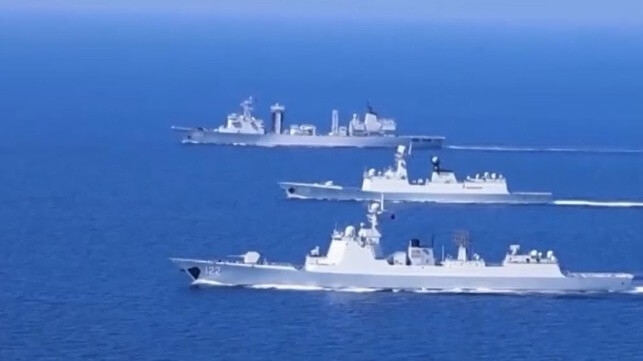
The PLA Navy (PLAN)'s 48th Naval Escort Group has taken over responsibility for maintaining the Chinese naval presence in the Red Sea and Gulf of Aden, at the commencement of what is likely to be a 10-month tour of duty based at the Project 141 Overseas Support Base at Doraleh in Djibouti. The 48th set off from Qingdao, in China's Shandong Province, home of the North Sea Fleet, on October 11.
The new flotilla consists of Type 052DL guided-missile destroyer Tangshan (F122), Type 054A guided-missile frigate Daqing (F576) and Type 903A replenishment ship Taihu (K889).
The first duty of the new presence was to escort the Panamanian-registered bulker Nasco Gem (IMO 9404986) through the Gulf of Aden and into Djibouti; the vessel had sset out from the Chinese port of Lianyungang in Jiangsu Province, with a stop in Singapore. The Nasco Gem is owned by YDM Shipping Co and managed by NASCO, both based in China.
The PLA's military website falsely identified the ship escorted as the Nasco Diamond (IMO 9467861), a bulk carrier who set out for the last time from Kolonodale in Indonesia, heading for Lianyungang, but which sank en route off Japan's southern islands on November 10, 2010. The Nasco Diamond's master had complained before departure that his 55,000 tonne cargo of nickel ore was too wet, and liquefacation was subsequently found to be the cause of the ship's foundering. The Nasco Gem which the PLAN escorted last week was a sister ship of the Nasco Diamond, and remains under the same management.
The relieved PLAN's 47th Naval Escort Group, consisting of the Type 052D guided-missile destroyer Baotou (F113), Type 054A guided-missile frigate Honghe (F523) and the Type 903A replenishment ship Gaoyouhu (K904), is now on its way back to the East Sea Fleet main base at Ningbo, Zhejiang Province, with no doubt some port calls on the way.
UK Offshore Industry Imposes 275-Pound Weight Limit on Workers
The limit stems from the rated capacity of a rescue helicopter's winch system (File image courtesy HM Coastguard)
After extensive talks between offshore energy companies and HM Coastguard, the industry standards association Offshore Energy UK has announced that it will impose a strict maximum weight limit for offshore platform workers in the UK North Sea, effective November 2026.
The issue, according to OEUK, is in the challenge of extracting survivors of a helicopter crash or a platform disaster from the water. When a rescue helicopter arrives on scene for a hoist, the winch has to be able to handle the weight of the rescue swimmer, a litter and the survivor all at the same time; this leaves only 124.7 kilos (275 pounds) available for the survivor, including any clothing.
About five percent of UK offshore workers weigh more than this maximum safe load limit. If any of these individuals should need a rescue, they would exceed the safe load for the standard rescue helicopter winches used by response agencies in the North Sea region, including the UK, the Netherlands and Norway. "Anyone above this weight may not be guaranteed rescue in an emergency," said OEUK. "This limitation, combined with other offshore safety risks, makes it vital that installations ensure every worker can be safely evacuated or rescued if required."
The regulation would require about 2,500 people to lose weight in order to comply. An additional 2,500 people may need "some additional support and weight management," OEUK health and safety manager Graham Skinner told BBC. He added that average weight has been on the rise for some time, and affects the industry's safety planning across the board.
"We’ve worked together for the last two and a half years as an industry to find solutions across things like lifeboats, stretchers, helicopter rescue, and we’ve really discovered a weight limit is the only solution available to us," Skinner said, emphasizing that workers affected by the limit will have lots of support and a full year to come into compliance.
Some workers have expressed concern that the weight limit policy will push out large and muscular workers along with those with lower levels of fitness.
"The biggest concerns we have had are from individuals that are naturally larger built and in some cases are extremely fit but are above that actual weight limit," said John Boland, regional officer at industrial union Unite, speaking to Shetland Times. "Those are discussions we need to have, how we can support those individuals as well."
The rollout period will begin with months of awareness-raising efforts within the industry, followed by a "transition phase" starting February 1. During the transition period, OEUK's medical examiners will issue limited-duration medical certificates for workers who are near to or over the 124-kilo mark. Effective November 1, 2026, no more certificates will be issued to workers weighing more than the limit.
Two Chinese Fishing Vessels Capsize off South Korea, Leaving 12 Missing
A dozen fishermen are missing after two Chinese vessels capsized off the coast of South Korea over the weekend, prompting a large-scale search effort.
The first vessel - identified only as the "A" - capsized at about 0650 hours Sunday morning at a position about 70 nautical miles from Gageo. Out of the 11 people on board, six crewmembers were rescued by a good Samaritan vessel and were in good health.
The Korea Coast Guard dispatched rescue assets and retrieved two more crewmembers from the water, but they were in a state of cardiac arrest and did not survive the ordeal. Three more individuals remain unaccounted for, and search efforts continued Monday, assisted by the China Coast Guard. Given the nationality of the vessel, and its location in international waters, the Korea Coast Guard says that the Chinese government will be undertaking the casualty investigation once search efforts have concluded.
The second capsizing occurred Monday at a position about 80 nautical miles southwest of Gunsan, in the same general region as the first casualty. Unlike the first, this incident was inside the Korean side of the mutually-agreed Chinese-Korean fisheries boundary line, according to Chosun. Two crewmembers were rescued by good Samaritans, but nine more remain missing, and a large-scale search is under way with four vessels participating.
According to the AP, the Korea Coast Guard believes that the second capsized vessel may have been engaged in fishing for hairtail and croaker at the time of the capsizing.