Monday, December 29, 2025

Should We Smoke Salmon Using Traditional Techniques, Or Should We Simply Add The Flavor?


By 


Smoking food is an ancient method of preservation, but it also gives the food a distinctive and highly valued flavour. And – it’s tradition.

 Groceries

The EU has previously recommended replacing traditional smoking methods with the use of smoke flavouring.

Traditional smoking, however, has a drawback: it can lead to the formation of harmful substances such as polycyclic aromatic hydrocarbons (PAHs). As a consequence, the EU has previously recommended replacing traditional smoking methods with the use of smoke flavouring.

“According to this recommendation, smoke flavourings were thought to be a safer and more environmentally friendly alternative to traditional smoking,” said Lene Waldenstrøm, an assistant professor at the Norwegian University of Science and Technology (NTNU’s) Department of Biotechnology and Food Science.

Consumers are sceptical

Despite the EU recommendation, many consumers remain sceptical about the use of smoke flavouring.

“There’s been quite a lot of debate in Norway about the use of smoke flavouring. Some producers have chosen to avoid this method for the simple reason that they know people are sceptical,” Waldenstrøm said.

She has extensive experience from the food and beverage industry, and has recently completed a PhD on the subject. Among other issues, she looked at consumers’ attitudes towards smoke flavouring in three scientific articles.The taste is not the problem

Firstly, the researchers had people taste various  smoked salmon products – some smoked the traditional way, others processed with smoke flavouring. The taste – specifically whether it is perceived as good – has previously been found to be crucial for whether people accept a food product or a new production method.

“We used various methods both for product optimization and for measuring the sensory aspects, including acceptance, appearance, taste, smell and texture. In addition, the salmon samples assessed by the participating consumers were anonymized. In other words, the consumers were not informed which samples had been smoked the traditional way and which had been produced using smoke flavouring. This is called blind tasting. In the end, we used smoke flavouring to develop a smoked salmon product that did not differ much from the traditional one. Consumers liked the product and accepted it in much the same way as traditionally smoked salmon,” explained Waldenstrøm.

The results indicated that salty, smoky, and what consumers perceive as natural flavours were important for how much they liked the product.

However, that was not enough.

Only 15 per cent were open to smoke flavouring

“A digital survey showed that only 15 per cent of Norwegian consumers were positively inclined toward salmon with smoke flavouring,” said Waldenstrøm.

Many consumers perceive smoke flavouring as unnatural and a break from tradition. They also believe that it affects the quality of the fish and can pose health challenges.

Interestingly, consumers’ attitudes towards smoke flavouring vary depending on the type of product being eaten. Consumers are much more willing to accept the use of smoke flavouring in the production of everyday foods, such as ham, bacon and sausages, than in traditional foods like smoked salmon.

This is an area where more research is needed.

Who says yes, who says no?

This time, they asked more than 1000 Norwegian consumers what they really thought about the use of smoke flavouring. The researchers also looked at other factors that influence food choices.

“In this major survey, 44 per cent of the respondents were negative, 36 per cent neutral and 20 per cent positive towards the use of smoke flavouring,” said Waldenstrøm.

So, who thinks it is okay to use smoke flavouring? Not necessarily the people who know the most about food, but rather people who are generally more positive toward the use of new technology in the food industry, such as processing food with smoke flavouring.

 Groceries

“The positive and neutral respondents were significantly less engaged and interested in food, and they were generally less sceptical toward the use of new food technologies than the respondents who were negative toward the use of smoke flavouring,” added Waldenstrøm.

Overall, the negative respondents were worried about the degree of processing and reduced natural quality.

Among the consumers who were negative toward smoke flavouring, the researchers identified two subgroups comprising different characteristics:

  • Food enthusiasts who value tradition and natural quality. They tend to be outgoing, adventurous and friendly.
  • Elderly, often retired people living in rural areas.

Slightly different groups of people, but with the same negative attitude toward smoke flavouring.

Why is this significant?

Why is it important to know these things? Well, if we lift our gaze from the smoked salmon on our plates, we might see things from a more global perspective.

“Before we reach the year 2050, there will be ten billion people living on the planet. The UN’s Food and Agriculture Organization states that there is an urgent need to achieve sustainable food production and fair distribution of food,” said Waldenstrøm.

It is therefore important to find out which new production methods people are willing to accept and, ultimately, are actually willing to eat. If there is to be enough food for everyone, we will most likely need to change our eating habits and the raw produce we use, adopt new methods and process food differently than we do today.

“It is therefore important to understand why people make the food choices they do. Consumers are influenced by a number of factors, not just taste, availability and how healthy the food is. Other factors are related to psychology, how the food is perceived, culture, and the context in which the food is served.

Smoke flavouring recommendation withdrawn

So, what have we actually found out about smoke flavouring? Well, as is the nature of research, we keep discovering new things.

The European Food Safety Authority (EFSA) has now withdrawn its approval of all previously approved smoke flavourings from the entire EU market. This comes after scientific studies found that the artificial flavourings could also pose a health risk.

New developments and further studies of both traditionally smoked and smoke-flavoured products are now needed to determine what should be recommended in the future.

October 1993 Events Put An End To Moscow Patriarchate’s Hopes To Become A Force Independent Of The Russian State – Book Review


December 29, 2025 
By Paul Goble

At present, when the Moscow Patriarchate is slavishly obedient in all things to the Kremlin, it is difficult to remember that at the end of Soviet times and the beginning of the post-Soviet period, many in the Russian Orthodox Church hoped and believed that their denomination could be an independent actor.

But those hopes and beliefs were dashed, Kseniya Luchenko argues by what happened in October 1993 when Yeltsin used force to crush his opponents in the Supreme Soviet despite efforts by the Moscow Patriarchate to mediate between them (novayagazeta.ru/articles/2025/12/27/dve-tserkvi-dva-litsa-i-dve-very).

In a new book, Good Intentions. The Russian church and the Powers from Gorbachev to Putin (in Russian), the former employee of the patriarchate who now writes about religion in Russia as an independent journalist says the October 1993 events forced Patriarch Aleksii II and Metropolitan Kirill “to accept the reality that the ROC could not become an independent force.”

Indeed, she says, they were compelled to acknowledge that “their moral authority and influence on society was insufficient to be a source of power;” and as a result, they made the final and fateful “choice in favor of ‘a symphony with the state,’” one in which the state and not the church was in charge.

Luchenko provides details about other key events and especially about the key personalities in the ROC MP, in particular Kirill and Putin’s favorite churchman Metropolitan Tikhon who has played a key role in supporting Putin’s own vision about an uninterrupted history of Russia and the way in which Russian civilization differs from all others.

Despite all that has happened, the author of the book says there is still some hope for the future because while the MP hierarchy has accepted its role as handmaiden to the Kremlin, many priests and the faithful have not and continue to distance themselves both from Putin and the patriarch.

Priests of this second living church don’t read the pro-war prayers they are supposed to and do support those of their parishioners and others who oppose the war. Such people are in a weak position compared to the pro-Kremlin hierarchs, but their existence means that dreams of Father Aleksandr Men of 35 years ago for an independent Orthodoxy may yet be realized.
Why Africa’s Outbreak Warnings Still Arrive Too Late

A Tanzanian scientist analysing seeds in a laboratory at the Tree Nursery and Seed Centre in Morogoro, Tanzania. Researchers have found that plant health is being ‘critically neglected’.
 Copyright: Luis Tato/FAO


By Paul Adepoju

Health experts and researchers are calling for better cross-sectoral integration of surveillance systems across Africa, arguing that fragmented data collection continues to delay outbreak detection and response despite growing awareness of the problem.

The challenge is no longer a lack of data on potential health threats but the persistence of silos that prevent information from moving between sectors, according to findings from the One Health Horizon Scanning exercise.

The study, led by the agricultural research organisation CABI (the parent organisation of SciDev.Net), gathered insights from more than 400 stakeholders across governments, research institutions, NGOs and international organisations.

When asked to identify priorities for the future of One Health in Africa, respondents placed integrated surveillance systems—mechanisms that unite human, livestock, agricultural and ecosystem expertise—above all else.

“Surveillance should not be done only at a central level,” Yahaya Ali Ahmed, team leader of the Antimicrobial Resistance Unit at the World Health Organization (WHO) Regional Office for Africa, told SciDev.Net.

“We need to ensure surveillance at all levels of the health system, including the peripheral level.”

Ahmed explained that WHO’s work with the Food and Agriculture Organization, UN Environment Programme and World Organisation for Animal Health through the regional Quadripartite focuses on helping countries develop national action plans grounded in the One Health approach, with regular monitoring to identify major gaps.

The foundation of effective surveillance, he said, is “a functional, multisectoral collaboration” at country level, with joint plans, shared terms of reference, and transparency between sectors.

Raji Tajudeen, Africa CDC’s acting deputy director general, put it more bluntly: “Every outbreak begins and ends in the community.”

Community health workers, he argued, must be adequately trained, sufficiently numerous and properly integrated into health systems, not treated as temporary volunteers attached to short-term interventions.

Reflecting on COVID-19, Tajudeen described how Africa CDC invested in understanding which variants were circulating so countries could make informed decisions about vaccines.

That work required deploying epidemiologists, data scientists, behavioural scientists and communication experts to support member states. Surveillance, in this framing, is inseparable from capacity to interpret and act.
Detection delays

But even the strongest regional coordination faces the same constraint: surveillance systems still struggle to reach the places where outbreaks begin.

In Nigeria’s Lassa fever belt, the consequences of delayed detection play out regularly.

Médecins Sans Frontières (Doctors Without Borders/MSF) has repeatedly documented how patients arrive at treatment centres late, often when disease severity limits options.

“Patients come quite late,” said Temmy Sunyoto, MSF’s senior operational research advisor, pointing to the combined effect of delayed detection and limited access to diagnostics.

Sunyoto says health workers face heightened risk because patients often present with non-specific symptoms and are initially treated for common illnesses without appropriate protective equipment.

For Sunyoto, the lesson is practical. Diagnostic tools must be usable where patients are seen.

“User friendliness matters,” she told SciDev.Net.

“Otherwise, the tool will not work at the periphery.”

If a test requires long waiting times or cumbersome procedures, it will not function at overstretched, remote facilities, she explained.
Progress and friction

Nigeria’s surveillance architecture shows both progress and persistent friction. The Nigeria Centre for Disease Control and Prevention (NCDC) has built extensive capacity to detect and respond to infectious threats. During outbreaks, technical working groups bring together multiple government agencies.

Jide Idris, NCDC director general, described monitoring how data on mpox is tracked, analysed and discussed through multisectoral platforms, with regular meetings aimed at preparedness and coordination.

This machinery works best once an outbreak is already visible. NCDC officials describe constant emergency operations meetings and multiple technical working groups managing overlapping outbreaks. “We are geared towards multiple responses,” Idris said.

However, the delays in diagnosis present a deeper challenge: surveillance does not fail only when data is missing. It fails when information cannot travel quickly enough to change what happens next. Environmental drivers compound the problem.

The One Health Horizon Scanning brief identifies climate change and environmental degradation as central drivers of future outbreaks. Yet environmental data remains weakly integrated into systems designed primarily around human and animal health.
Buy vitamins and supplements


“We know the role of climate change,” Tajudeen said. “We know the role of human beings encroaching spaces where we were not known to find ourselves before, bringing us very close to the animal ecospace.”
Blind spots

Despite this awareness, blind spots persist.

A separate One Health Hub evidence brief on plant health states plainly that plant-related issues are “critically neglected in research, policy, and funding”, even though they shape food security, livelihoods and health resilience across Africa. The brief notes that within the Quadripartite Joint Plan of Action, agriculture appears only marginally, reinforcing silos rather than dismantling them.

The research landscape mirrors this neglect. A bibliometric bibliometric analysis conducted by CABI shows that while One Health research output has grown rapidly, it remains dominated by zoonoses and antimicrobial resistance.

Topics such as pesticides, mycotoxins, land use change and ecosystem health are vastly underrepresented.

For African countries, where food systems and environmental pressures directly affect health risk, this imbalance has real consequences.

The experience of Kenya, cited by WHO officials as one of the countries actively promoting cross-sectoral surveillance, reflects both the difficulty of integration and the effort required to overcome it.

The country is working to educate communities and policymakers and to promote information sharing across human, animal and environmental sectors.

Initiatives focus on building coordination platforms and training a workforce capable of operating across disciplines, recognising that One Health cannot be switched on during emergencies alone.

However, financing remains a persistent constraint. Ahmed acknowledged that funding for antimicrobial resistance (AMR) is still low, reporting is inconsistent, and basic infection prevention measures remain absent in some facilities.

In such contexts, he says, AMR and integrated surveillance risk being sidelined when acute outbreaks demand immediate attention. This tension between urgency and continuity sits at the core of the One Health challenge.

The One Health Horizon Scanning brief does not argue for ideal systems but for workable ones.

Its recommendations focus on anchoring investment in shared priorities such as surveillance and governance, enabling regional customisation, promoting inclusive participation, bridging sectoral silos, and investing in intergenerational capacity building.
Community-based surveillance

The International Federation of Red Cross and Red Crescent Societies describes community-based surveillance as “a key step to improving the early detection and assessment of disease outbreaks”, framing it as a bridge between communities and formal systems rather than a substitute for them.

At the International Livestock Research Institute, scientists working within the CGIAR AMR Hub stress that healthy animals and safe food systems depend on acknowledging how antimicrobial use, environment and livelihoods intersect, rather than treating them as separate domains.

Africa CDC has argued that surveillance must be embedded within broader health security and system strengthening agendas. Before Africa CDC, Tajudeen reflected, decisions affecting local communities were often taken far from where impacts were felt.

Public health researchers and policy analyses say COVID-19 demonstrated what regional coordinationcould achieve, from pooled procurement to cross-border workforce deployment, and from engaging transport and finance to bringing environmental considerations into response planning.

On the ground, progress is visible but uneven. Reflecting on the Lassa fever response, Sunyoto acknowledged improvements in coordination and leadership but stressed that translating scientific advances into routine practice is slow.

“The progress is slower than we would like,” she said.

For the community health worker who notices an unusual pattern, integration determines whether that observation becomes shared intelligence or remains a footnote, Ahmed tells Scidev.Net.

For the livestock officer who reports animal deaths, it determines whether action follows before livelihoods are lost. For the environmental health officer watching floodwaters rise, it determines whether climate signals are treated as health warnings or background noise.

Ahmed argues that “without good surveillance systems and strong laboratories, detection is difficult”. But for Tajudeen, integration determines whether those early signals become shared intelligence or remain isolated observations.


The article was supported by the One Health Hub is managed by CABI with funding from UK International Development; however, the views expressed do not necessarily reflect the UK government’s official policies.

Paul Adepoju

Paul Adepoju who, is one of SciDev.Net correspondents, is an academician, journalist, author, geneticist, local content creator and media entrepreneur. He teaches genetics and histopathology at Nigeria's Babcock University and he covers health and tech in Africa for CNN, Quartz and several other media outlets. He's also the founder of healthnews.africa.
Buy vitamins and supplements

Bangladesh's first female prime minister Khaleda Zia dies aged 80

Bangladesh’s former prime minister and opposition leader Khaleda Zia has died at the age of 80, her party said Tuesday, just months before elections many expected would return her to power. Her death ends a turbulent political career marked by imprisonment, ill health and a dramatic comeback attempt following the fall of her longtime rival Sheikh Hasina.


Issued on: 30/12/2025 
By: FRANCE 24

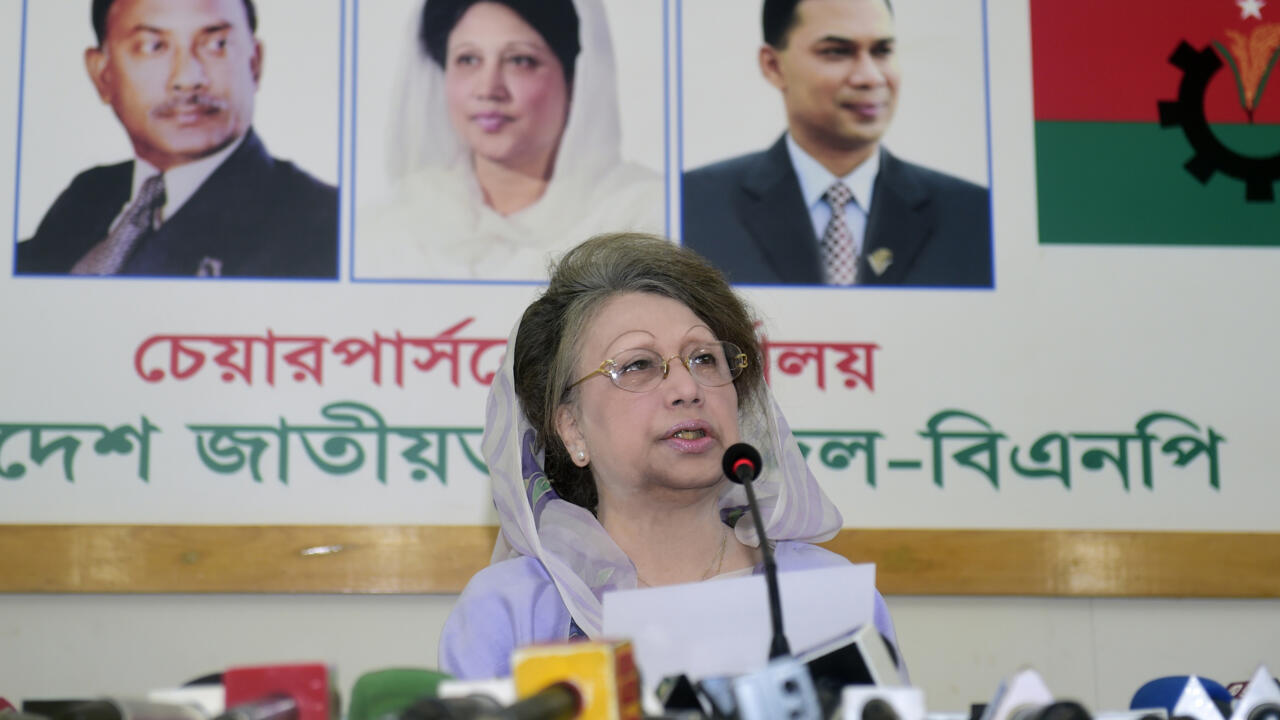
Khaleda Zia speaks during a press conference in Dhaka in March 2015. © Munir Uz Zaman, AFP

Bangladesh's former prime minister Khaleda Zia, who many believed would sweep elections next year to lead her country once again, died on Tuesday aged 80, her Bangladesh Nationalist Party said.

"The BNP Chairperson and former prime minister, the national leader Begum Khaleda Zia, passed away today at 6:00 am (0000 GMT), just after the Fajr (dawn) prayer," the party said in a statement.

"We pray for the forgiveness of her soul and request everyone to offer prayers for her departed soul," it added.

Despite years of ill health and imprisonment, Zia vowed in November to campaign in elections set for February 2026 -- the first vote since a mass uprising toppled her arch-rival Sheikh Hasina last year.

The BNP is widely seen as a frontrunner.

But in late November she was rushed to hospital, where, despite the best efforts of medics, her condition declined from a raft of health issues.

Nevertheless, hours before her death, party workers had on Monday submitted nomination papers on her behalf for three constituencies for the polls.

During her final days, interim leader Muhammad Yunus called for the nation to pray for Zia, calling her a "source of utmost inspiration for the nation".

BNP's media chief Moudud Alamgir Pavel also confirmed Zia's death to AFP.

Zia was jailed for corruption in 2018 under Hasina's government, which also blocked her from travelling abroad for medical treatment.

She was released last year, shortly after Hasina was forced from power.

There had been plans earlier this month to fly her on a special air ambulance to London, but her condition was not stable enough.

Her son, political heavyweight Tarique Rahman, only returned to Bangladesh after 17 years in self-imposed exile on Thursday, where he was welcomed back by huge crowds of joyous supporters.

READ MORE'Symbol of hope': Exiled Bangladesh opposition leader and PM hopeful Rahman returns ahead of polls

Rahman will lead the party through the February 12 general election, and is expected to be put forward as prime minister if his party wins a majority.

Bangladesh's Prothom Alo newspaper, who said that Zia had "earned the epithet of the 'uncompromising leader'", reported that Rahman and other family members were by her side at the time of her death.

"The lives of politicians are marked by rises and falls," the newspaper wrote on Tuesday.

"Lawsuits, arrests, imprisonment, persecution, and attacks by adversaries are far from uncommon. Khaleda Zia endured such ordeals at their most extreme."

(FRANCE 24 with AFP)


The rise and fall of Bangladesh's first woman PM Khaleda Zia

DW
30/12/2025

Bangladesh's first female prime minister, Khaleda Zia, who was once praised for restoring democracy and empowering millions of women, has died at the age of 80.


Khaleda Zia first came to power in 1991 (File photo: 2018)Image: Munir Uz Zaman/AFP/Getty Images

Khaleda Zia, who served as prime minister of Bangladesh for three terms, died on Tuesday morning at the age of 80.

Zia and her Bangladesh Nationalist Party (BNP) were once hailed for playing a crucial role in transitioning the South Asian nation from military rule to democracy.

She served as prime minister of Bangladesh between 1991 and 1996, and between 2001 and 2006. She was the first woman to serve as prime minister of Bangladesh.

Zia had been sentenced to several years behind bars prior her death for alleged involvement in corruption charges that her party said were politically motivated.
Rise to politics

Zia entered politics after her husband, former president Ziaur Rahman, was assassinated in May 1981 during a military coup. Rahman had fought for Bangladesh's independence war from Pakistan in 1971, and formed the BNP party a few years prior his assassination.

Zia, who was a housewife at the time with no experience in politics, soon became one of the country's top leaders for her civilian political resistance against the then military regime.

Zia established a solid political alliance by including political parties from both the left and the right with her center-right party. She successfully forced the military regime to give up power by leading nationwide movements for democracy.

On February 27,1991, Zia's party won 140 of the 300 directly-elected seats during the national election and became the country's first female prime minister.
Empowering women

Zia helped increase literacy rates among girls and boosted job opportunities for women by providing free education and scholarships. She introduced daily free meals for students at schools across the country with help from foreign donors. During her tenures, those efforts have seen millions of girls enrolled in primary and secondary schools.

Zia also contributed to expanding the country's export-oriented garment industry.

"Now as Prime Minister, Mrs. Zia, in contrast with Benazir Bhutto when she first became Prime Minister of Pakistan, is aggressively promoting education and vocational training, especially of girls, and expanding small-scale, no-collateral lending to increase the self-sufficiency of women," journalist Barbara Crossette wrote in the New York Times in November 1993.

US Forbes magazine, which included Zia as one of the 100 world's most powerful women for several years during her leadership between 2001 and 2006, wrote, "Once a shy and withdrawn housewife, Zia has revitalized the education sector, particularly for young girls."

Laila Noor Islam, a professor at Dhaka University, told DW Zia will be remembered for changing the social and political landscape of Bangladesh.

"People will remember her for introducing the parliamentary system of democracy in her country, for creating export-oriented readymade garment factories where hundreds of thousands of women got jobs, for introducing free primary education for all, and developing the caretaker government system for conducting free and fair national elections," she said.

Archrival Sheikh Hasina


Soon upon entering politics, Zia became the archrival of Sheikh Hasina, the top leader of the center-left Awami League (AL) party and in power since 2008.

They are often called "the Battling Begums" – "begum" refers to a Muslim woman of high rank – for their longs-standing rivalry, which split the country's political arena into two, one led by Hasina's AL, the other by Zia's BNP.

"When I hear the name Khaleda Zia, what comes to mind is "Hasina's rival." Zia and Hasina have had such a long and bitter rivalry, and it's been amplified by the fact that they've dominated Bangladeshi politics for so long," Michael Kugelman, a South Asia expert at the Washington-based Woodrow Wilson Center for Scholars, told DW.

"And given that their respective families comprise the country's two political dynasties, the rivalry also is embedded in the core political history of Bangladesh," he added.

Corruption allegations

Zia was convicted in a graft case in February 2018 and later in a separate corruption case. The politician was accused of misusing her power by embezzling some $250,000 (€240,000) in donations meant for an orphanage trust.

The BNP maintains the cases were fabricated to keep Zia out of politics, allegations denied by Hasina's government.

Over the past decade, more than 180,000 legal cases have also been filed against nearly four million BNP members, according to the party's count. The data shows that more than 600 party members have been abducted, and around 3,000 were victims of extrajudicial killings at the hands of authorities during the same period.

In 2020, her prison sentence was converted to house arrest before she was released again in 2024 after the fall of her rival Sheikh Hasina's government.

Political downfall

Zia, an advocate of democracy, slowly lost her ground by failing to form solid political resistance against the Hasina government.

"Khaleda Zia has made a lot of mistakes in the last decade. Boycotting elections led to missed opportunities. More importantly, she opted to play the role of a disruptive and confrontational opposition without seeking a middle ground, and this led to a lot of burned bridges," Kugelman said.

"It also led to her party resorting to violence at times, which didn't help its cause. Additionally, her decision to align herself with Islamist political parties [at times], especially those with hardline elements cost her and her party support from those that uphold the idea of a secular and moderate Bangladesh," he added.

Asif Nazrul, a professor at Dhaka University, believes Zia's downfall should also be attributed to her unwillingness to gain the confidence of India and foreign diplomats who could have pushed Hasina to conduct a fair and inclusive national election.

"Zia's decision not to meet Indian President Pranab Mukherjee in Dhaka in 2013, and refusing the offer of Sheikh Hasina regarding election-time government in the same year, have heavily cost her political career," Nazrul told DW.

"She has failed to win the heart of Dhaka-based elite intellectuals and western diplomats," he added. "Her failure to stop the people in BNP and its allies in harboring separatists fighting the Indian government in the past also made her weaker over time."

But Zia's fight for democracy will be remembered for years to come, said Nazrul.

"Zia could have flown to other countries during political uncertainties in 2006 and 2007, and during her trial in the last years,” Nazrul said. "She was aged and very ill, and despite knowing the likelihood of her suffering, she did not bow to the Hasina government and took any chance of leaving the country."


Arafatul Islam Multimedia journalist focusing on Bangladeshi politics, human rights and migration.
Over 3,000 migrants died in 2025 trying to reach Spain: aid group

More than 3,000 migrants died while trying to reach Spain this year, a report released by a Spanish migration rights group said on Monday, a sharp decline from 2024 as the number of attempted crossings fell.


Issued on: 29/12/2025 - RFI

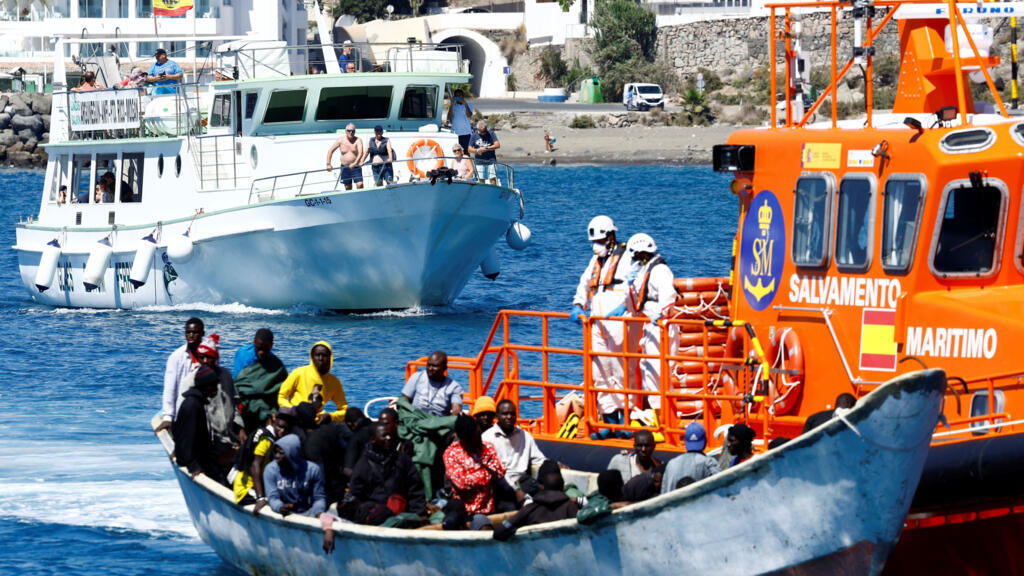
Migrants wait to disembark from a fiber boat in the port of Arguineguin, on the island of Gran Canaria, Spain, 27 September, 2024. REUTERS - Borja Suarez

Caminando Fronteras (Walking Borders) said most of the 3,090 deaths recorded until 15 December took place on the Atlantic migration route from Africa to Spain's Canary Islands, considered one of the world's most dangerous.

While there has been a "significant" decrease in migrant arrivals in the Canaries, "a new, more distant and more dangerous" route to the archipelago has emerged with departures from Guinea, it said.

The group compiles its figures from families of migrants and official statistics of those rescued. It included 437 children and 192 women among the dead.

Caminando Fronteras also noted there had been a rise in the number of boats leaving from Algeria, mainly to the holiday islands of Ibiza and Formentera in the Mediterranean.

Record number of deaths

Traditionally used by Algerians, the route is seeing a surge of migrants from Somalia, Sudan, and South Sudan in 2025, the group said.

The number of deaths on this route had doubled this year to 1,037 when compared to 2024, it added.

At least 10,457 migrants died or disappeared while trying to reach Spain by sea in 2024, according to Caminando Fronteras, the highest number recorded since it began tracking data in 2007.

Spain's interior ministry says 35,935 migrants reached Spain until 15 December this year, a 40-percent decrease from the same period last year.

Nearly half of them came through the Atlantic migration route from the coast of West Africa to the Canary Islands.

(with AFP)


Hardt, Michael. Multitude: war and democracy in the Age of Empire /. Michael Hardt and Antonio Negri. p. cm. Sequel to: Empire. Includes index. ISBN 1-59420 ...

Empire / Michael Hardt and Antonio Negri. p. cm. Includes bibliographical ... 4.3 The Multitude against Empire. 393. Notes. 415. Index. 473. Page 11. PREFACE

KENYA

'It’s about stopping harmful tourism': the fight against Maasai Mara luxury hotel

In Kenya's Maasai Mara, local people say a new luxury safari hotel is threatening the ecosystem – and the livelihoods of those for whom tourism was supposed to bring opportunity.


Issued on: 28/12/2025 - RFI

The Great Migration from Tanzania to Kenya's Maasai Mara has become a major draw for tourists. Penny Robartes

By:Anne Macharia in Nairobi

At dawn, when the mist is still clinging to the grass, Nasieku Kipeke's hands are already moving through beads. Red, blue, white... she threads them with the same rhythm her mother taught her.

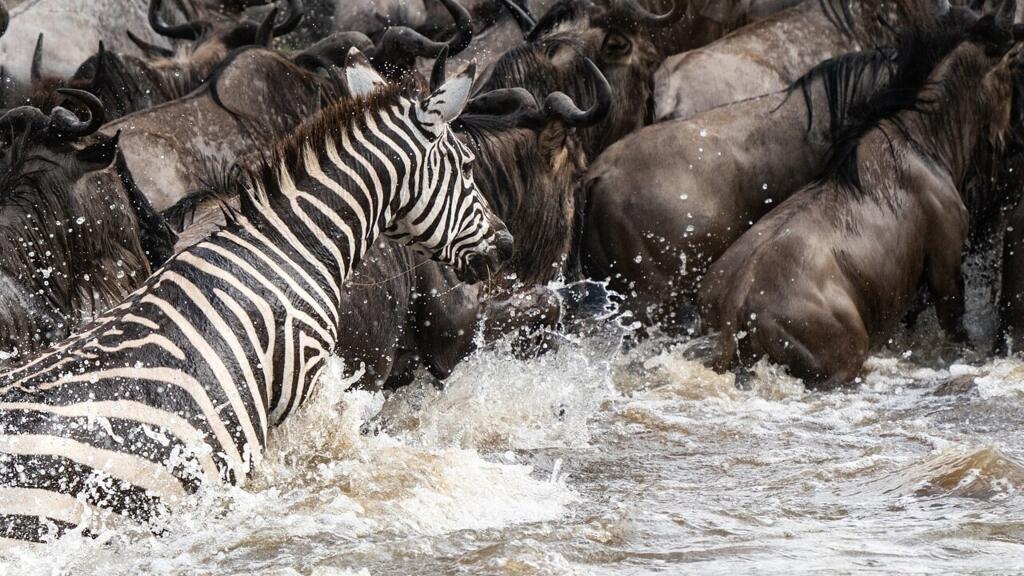
The beaded bracelets she makes will end up in the hands of tourists who come to the Maasai Mara to witness the Great Migration – the epic annual journey made by 2 million zebras, wildebeest and gazelles from Tanzania to Kenya, following the path of the seasonal rains.

The money Nasieku earns from her beads pays for her children's porridge and books and, when she can manage it, clinic visits – which she often puts off.

But this morning, her fingers are slow. Word has spread about the new luxury hotel rising near Sand River, one of the most important wildlife corridors in the reserve. For her, the development feels like a storm cloud settling over land she depends on but has no power to protect.

“When they block the animals, they block us,” she says in a low voice. “We survive because the world comes to see what lives here.”

'Climate whiplash': East Africa caught between floods and drought


Opportunities out of reach

Down the road, 20-year-old Lemayian leans on a crooked fence post. His ambition is to be a wildlife guide – one who can speak about lions, migration cycles and Maasai history in the same breath.

But jobs are thin on the ground now. Conservancies are tightening rules. The land for grazing is shrinking.

"They tell us tourism will give us opportunities. But sometimes I feel like the opportunity is fenced away from us, something we can see but not reach."

For people like Lemayian, the pace of development can be a double-edged sword, promising prosperity while encroaching on and eventually closing off spaces that his family has depended on for generations.

Ole Nkaputie, a herder in his seventies, drives his cattle toward a water point. Each step is deliberate, steady, shaped by a lifetime of reading the land. To him, the world-famous Maasai Mara National Reserve is not a tourist attraction – it's memory, livelihood, identity.

“The animals move like we move,” he says, as he watches his cows drink. “When you block their path, you block ours too.”

He remembers when people would assemble under a tree to debate the changes, when the elders spoke and everyone had their say.
'Fear cannot guide us'

Dr. Meitamei Ole Dapash is a conservationist. His small office is cluttered with maps of wildlife routes and folders full of petitions and legal papers. The weight of responsibility hangs heavily over him.

“This isn’t about stopping tourism,” he says, tapping a map where the Sand River flows. “It’s about stopping harmful tourism – development that ignores the people and the wildlife it claims to celebrate.”

It was Dapash who took the fight to court, challenging the construction of the Ritz-Carlton luxury Masai Mara Safari Camp on the grounds of poor community consultation and suspect environmental review.

He has put himself squarely in the crosshairs of powerful interests. The threats have followed – late-night calls, anonymous warnings, intimidation.

"But fear cannot guide us," he says. "If we lose this land, what will my grandchildren inherit? Photographs of animals that used to roam here?"

When he speaks with communities, he listens more than talks. Women like Nasieku speak of incomes drying up with bad tourist seasons. Young people like Lemayian ask who will hire them when the land they depend on is parcelled off. Elders like Nkaputie warn of a day when cultural erosion will creep in, long before anyone notices it happening.

He walks one afternoon with a group of women to the edge of the river. A herd of zebra hesitates nearby, unsure of the new noise. One woman sucks her teeth in frustration. “This place was for the animals,” she says. “Now it is for the rich.”

UN ambassadors condemn Israel's recognition of Somaliland


UN ambassadors criticised Israel during an emergency Security Council meeting on Monday, condemning its unilateral recognition of Somaliland as a violation of sovereignty and international law. Several delegates called the move morally reprehensible and rejected any proposal to relocate Palestinians from Gaza to Somaliland. The US was the only member state to defend Israel's recognition of the breakaway region.


Issued on: 30/12/2025 -
By: FRANCE 24

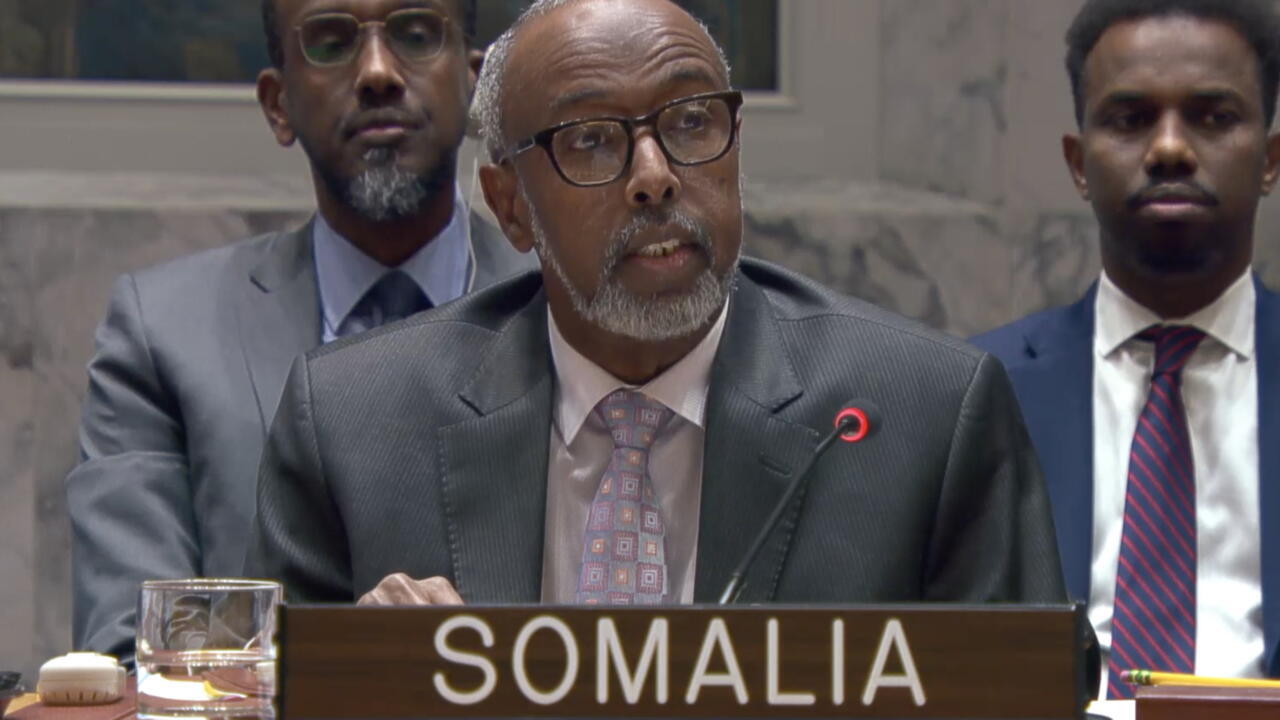
Somalia’s UN Ambassador Abukar Dahir Osman during a UN Security Council meeting on December 29, 2025 at the UN Headquarters in New York City. © France 24

Israel defended on Monday its formal recognition of the self-declared Republic of Somaliland, but several countries at the United Nations questioned whether the move aimed to relocate Palestinians from Gaza or to establish military bases.

Israel became the first country to recognise Somaliland as an independent and sovereign state on Friday.

The 22-member Arab League, a regional organisation of Arab states in the Middle East and parts of Africa, rejects "any measures arising from this illegitimate recognition aimed at facilitating forced displacement of the Palestinian people or exploiting northern Somali ports to establish military bases," Arab League UN Ambassador Maged Abdelfattah Abdelaziz told the UN Security Council.

"Against the backdrop of Israel's previous references to Somaliland of the Federal Republic of Somalia as a destination for the deportation of Palestinian people, especially from Gaza, its unlawful recognition of Somaliland region of Somalia is deeply troubling," Pakistan's Deputy UN Ambassador Muhammad Usman Iqbal Jadoon told the council.


Israel's UN mission did not immediately respond to a request for comment on the remarks or address any of them in its statement at the council meeting. In March, the foreign ministers of Somalia and Somaliland said they had not received any proposal to resettle Palestinians from Gaza.

US President Donald Trump's peace plan for Gaza states: "No one will be forced to leave Gaza, and those who wish to leave will be free to do so and free to return."

Israel's coalition government, the most right-wing and religiously conservative in its history, includes far-right politicians who advocate the annexation of both Gaza and the West Bank and encouraging Palestinians to leave their homeland.

Somalia’s UN Ambassador Abukar Dahir Osman said council members Algeria, Guyana, Sierra Leone and Somalia "unequivocally reject any steps aimed at advancing this objective, including any attempt by Israel to relocate the Palestinian population from Gaza to the northwestern region of Somalia."

Somaliland vs Palestinian state


Somaliland has enjoyed effective autonomy - and relative peace and stability - since 1991 when Somalia descended into civil war, but the breakaway region has failed to receive recognition from any other country.

"It is not a hostile step toward Somalia, nor does it preclude future dialogue between the parties. Recognition is not an act of defiance. It is an opportunity,” Israel’s Deputy UN Ambassador Jonathan Miller told the council.

In September, several Western states, including France, Britain, Canada and Australia announced they would recognise a Palestinian state, joining more than three-quarters of the 193 UN members who already do so.

Deputy US Ambassador to the UN Tammy Bruce said: "This council’s persistent double standards and misdirection of focus distract from its mission of maintaining international peace and security."

Slovenia's UN Ambassador Samuel Zbogar disputed her argument, saying: "Palestine is not part of any state. It is illegally occupied territory ... Palestine is also an observer state in this organisation."

He added: "Somaliland, on the other hand, is a part of a UN member state and recognising it goes against ... the UN Charter."

Israel said last week that it would seek immediate cooperation with Somaliland in agriculture, health, technology and the economy. The former British protectorate hopes Israeli recognition will encourage other nations to follow suit, increasing its diplomatic heft and access to global markets.


INTERVIEW

Israel's recognition of Somaliland ‘is not an isolated initiative': expert

For the first time, the secessionist state of Somaliland has been officially recognised by another state, namely Israel. It's a blow for the President of the Federal Republic of Somalia, Hassan Sheikh Mohamud, who managed to organise local elections despite growing pressure from the Islamist group al-Shabaab. RFI spoke to Matt Bryden, a strategic advisor at the Sahan Research centre in Nairobi, about the state of play and what's behind Israel's recognition of Somaliland.


Issued on: 29/12/2025 - RFI

People walk next to a destroyed house and the wreckage of a car following a deadly explosion provoked by Al-Shabaab militants on the outskirts of Mogadishu, 16 February 2022. AFP - HASSAN ALI ELMI

Al-Shabaab ("The Youth") rose to prominence in Somalia in the early 2000s and aims to establish a "Greater Somalia", joining ethnic Somalis across East Africa under strict Islamic rule.

It has allegedly become one of al-Qaeda’s strongest and most successful affiliates.

A joint United Nations and African Union peacekeeping force known as the African Union Transitional Mission to Somalia (ATMIS), along with the United States and several East African nations, have been actively trying to combat the movement, but it has proven resilient against numerous counterinsurgency campaigns.


RFI: Why have Shabaab militants been able to regain the ground they lost over the past three years?


Matt Bryden: Three years ago, the offensive against the Shabaab was led by clan militias that wanted to free themselves from Al-Shabaab. They received support from the federal government and from the Americans. But clan militias can only fight on their own clan territory. Once they had liberated their own areas, they could not advance any further. So the offensive was really a series of small, local operations by different clan militias, not a coherent, coordinated campaign.

RFI: And today, have these clan militias allied themselves with the Shabaab against the government?

MB: No. Most of them are still opposed to the Shabaab, especially in the areas where they fought them. But they are not necessarily allied with the government either. That is another major problem for the federal government: it is not just fighting the Shabaab, but also some of the provinces and regions of Somalia, which are themselves fighting Al-Shabaab. In reality, the government in Mogadishu controls at most 15 per cent of Somalia’s territory – and that's a generous estimate.

RFI: Still, these are the first elections without attacks. Isn’t that a success for President Hassan Sheikh Mohamud?

MB: Absolutely. There were voters at some polling stations, that’s true. But Somalia is a clan-based society. Members of clans that support the government turned out to vote, while other clans – those that support the opposition – did not. So the election risks deepening divisions between Somalia’s clans and regions: those that back the government, who are currently a minority, and those clans and regions that oppose it.

US launches air strikes against Islamic State targets in Somalia

RFI: President Hassan Sheikh Mohammed was beaming on Thursday during the elections. But the next day, Friday, he received very bad news. For the first time, the secessionist state of Somaliland was officially recognised by another country – Israel. Did that surprise you?

MB: For Somalia, certainly. It's a very unwelcome surprise. Somaliland now risks receiving not only Israel’s recognition, but that of other countries as well. What Israel has done is clearly not an isolated initiative; it was coordinated with other states in Africa, with some Arab countries, and probably with the United States too.

RFI: You say other countries could follow. Two years ago, Ethiopia nearly recognised Somaliland’s independence, but eventually backed down under pressure from Somalia and Turkey.

MB: Yes, but Ethiopia’s move was not coordinated with other states and amounted to a declaration rather than formal recognition. This time, Israel has officially recognised Somaliland. From what I hear from diplomats in the region, Israel and other countries have been coordinating this decision for months, perhaps more than a year, so that Israel would not be alone. There are likely to be further recognitions in the weeks and months ahead.

With a new president, Somaliland seeks international recognition

RFI: The Israelis suggest that this recognition of Somaliland is in the spirit of the [2020] Abraham Accords, under which Israel normalised relations with countries including the United Arab Emirates and Morocco. Are the Americans perhaps behind this?

MB: Yes, absolutely. The Americans, especially since President Trump’s election, have signalled deep frustration with the situation in Somalia. They have spent billions of dollars on the country’s security, yet the situation is worse than before. As a result, the US has begun working directly with the regions of Jubaland and Puntland to fight Al-Shabaab and also Islamic State, which has been very active in north-eastern Puntland.

Relations with Somaliland are also deepening. The head of Africom, General Anderson, visited a few months ago. So it is fairly clear that the Americans see Somaliland as a potential partner, both to secure maritime routes in the Gulf of Aden and the Red Sea, and to combat extremist movements in the Horn of Africa.

This interview was adapted from the original in French and has been lightly edited for clarity.


Israel’s Somaliland Gambit: What’s At Risk For The Region? – Analysis


Somaliland's President Abdirahman Mohamed Abdullahi holds virtual meeting with Israel's Prime Minister Benjamin Netanyahu. Photo Credit: @Presidencysl_, X

December 29, 2025 
By Arab News

It perhaps comes as no surprise to seasoned regional observers that Israel has become the first and only UN member state to formally recognize the Republic of Somaliland as an independent and sovereign nation.

On Dec. 26, Israel’s Prime Minister Benjamin Netanyahu and Foreign Minister Gideon Sa’ar signed a joint declaration of mutual recognition alongside Somaliland’s President Abdirahman Mohamed Abdullahi.

For a region that has existed in a state of diplomatic limbo since declaring independence from Somalia in 1991, this development is, as Abdullahi described it, “a historic moment.” But beneath the surface lies a calculated and high-stakes geopolitical gamble.

While several nations, including the UK, Ethiopia, Turkiye, and the UAE, have maintained liaison offices in the capital of Hargeisa, none had been willing to cross the Rubicon of formal state recognition.

Israel’s decision to break this decades-long international consensus is a deliberate departure from the status quo.

By taking this step, Israel has positioned itself as the primary benefactor of a state that has long sought a seat at the international table. As Dya-Eddine Said Bamakhrama, the ambassador of Djibouti to Saudi Arabia, told Arab News, such a move is deeply disruptive.

“A unilateral declaration of separation is neither a purely legal nor an isolated political act. Rather, it carries profound structural consequences, foremost among them the deepening of internal divisions and rivalries among citizens of the same nation, the erosion of the social and political fabric of the state, and the opening of the door to protracted conflicts,” he said.

Critics argue that Israel has long lobbied for the further carving up of the region under various guises.

This recognition of Somaliland is seen by many in the Arab world as a continuation of a strategy aimed at weakening centralized Arab and Muslim states by encouraging peripheral secessionist movements.

In the Somali context, this path is perceived not as a humanitarian gesture, but as a method to undermine the national understandings reached within the framework of a federal Somalia.

According to Ambassador Bamakhrama, the international community has historically resisted such moves to prioritize regional stability over “separatist tendencies whose dangers and high costs history has repeatedly demonstrated.”

By ignoring this precedent, Israel is accused of using recognition as a tool to fragment regional cohesion.

In the past, Israel has often framed its support for non-state actors or separatist groups under the pretext of protecting vulnerable minorities — such as the Druze in the Levant or Maronites in Lebanon.

This “Periphery Doctrine” served a dual purpose: it created regional allies and supported Israel’s own claim of being a Jewish state by validating the idea of ethnic or religious self-determination.

However, in the case of Somaliland, the gloves are off completely. The argument here is not about protecting a religious minority, as Somaliland is a staunchly Muslim-majority territory. Instead, the rationale is nakedly geopolitical.

Israel appears to be seeking strategic depth in a region where it has historically been isolated. Netanyahu explicitly linked the move to “the spirit of the Abraham Accords,” signaling that the pimary drivers are security, maritime control, and intelligence gathering rather than the internal demographicsof the Horn of Africa.

The first major win for Israel in this maneuver is the expansion of its diplomatic orbit. It could be argued that the refusal of the federal government in Mogadishu to join the Abraham Accords was an artificial barrier.

The evidence for this claim, from the Israeli perspective, is that Somaliland — a territory with a population of nearly six million and its own functioning democratic institutions — was eager to join.

Abdullahi said Somaliland would join the Abraham Accords as a “step toward regional and global peace.” Yet, this peace comes with a clear quid pro quo — formal recognition.

Israel can now argue that the “Somaliland model” proves that many other Arab and Muslim entities are willing to normalize relations if their specific political or territorial interests are met.

This challenges the unified stance of the Arab League and the Organization of Islamic Cooperation, which maintain that normalization must be tied to the resolution of the Palestinian conflict.

The second major gain for Israel is the potential for a military presence in the Horn of Africa. Somaliland’s strategic position on the Gulf of Aden, near the Bab Al-Mandab Strait, makes it a prime location for monitoring maritime traffic.

This is a ticking time bomb given that just across the narrow sea lies Yemen, where the Houthi movement — whose slogan includes “Death to Israel” — controls significant territory.

Israel may claim that a military or intelligence presence in Somaliland will boost regional security by countering Houthi threats to shipping. However, regional neighbors fear it will likely inflame tensions.

Ambassador Bamakhrama warned that an Israeli military presence would “effectively turn the region into a powder keg.”

“Should Israel proceed with establishing a military base in a geopolitically sensitive location… such a move would be perceived in Tel Aviv as a strategic gain directed against the Arab states bordering the Red Sea — namely Egypt, Saudi Arabia, Somalia, Yemen, Sudan, and Djibouti,” he said.

The Red Sea is a “vital international maritime corridor,” and any shift in its geopolitical balance would have “repercussions extending far beyond the region,” he added.

The recognition is also a clear violation of international law and the principle of territorial integrity as enshrined in the UN Charter.

While proponents point to exceptions like South Sudan or Kosovo, those cases involved vastly different circumstances, including prolonged genocidal conflicts and extensive UN-led transitions.

In contrast, the African Union has been firm that Somaliland remains an integral part of Somalia.

The backlash has been swift and severe. The Arab League, the Gulf Cooperation Council, and the OIC have all decried the move. Even US President Donald Trump, despite his role in the original Abraham Accords, has not endorsed Israel’s decision.

When asked whether Washington would follow suit, Trump replied with a blunt “no,” adding, “Does anyone know what Somaliland is, really?”

This lack of support from Washington highlights the isolation of Israel’s position. The OIC and the foreign ministers of 21 countries have issued a joint statement warning of “serious repercussions” and rejecting any potential link between this recognition and reported plans to displace Palestinians from Gaza to the African region.

Israel’s recognition of Somaliland appears to be a calculated gamble to trade diplomatic norms for strategic advantage.

While Hargeisa celebrates a long-awaited milestone, the rest of the world sees a dangerous precedent that threatens to destabilize one of the world’s most volatile corridors.

As Ambassador Bamakhrama says, the establishment of such ties “would render (Israel) the first and only state to break with the international consensus” — a move that prioritizes “narrow strategic calculations” over the stability of the international system.


Why the Zaporizhzhia nuclear plant is a sticking point in Ukraine peace talks

Control over the Zaporizhzhia nuclear power plant in east Ukraine has remained one of the main sticking points in peace negotiations since Russia took control of it in March 2022. Zaporizhzhia's proximity to the front lines has sparked international fears for the safety and stability of the nuclear plant, which is Europe's largest.


Issued on: 29/12/2025
By: FRANCE 24

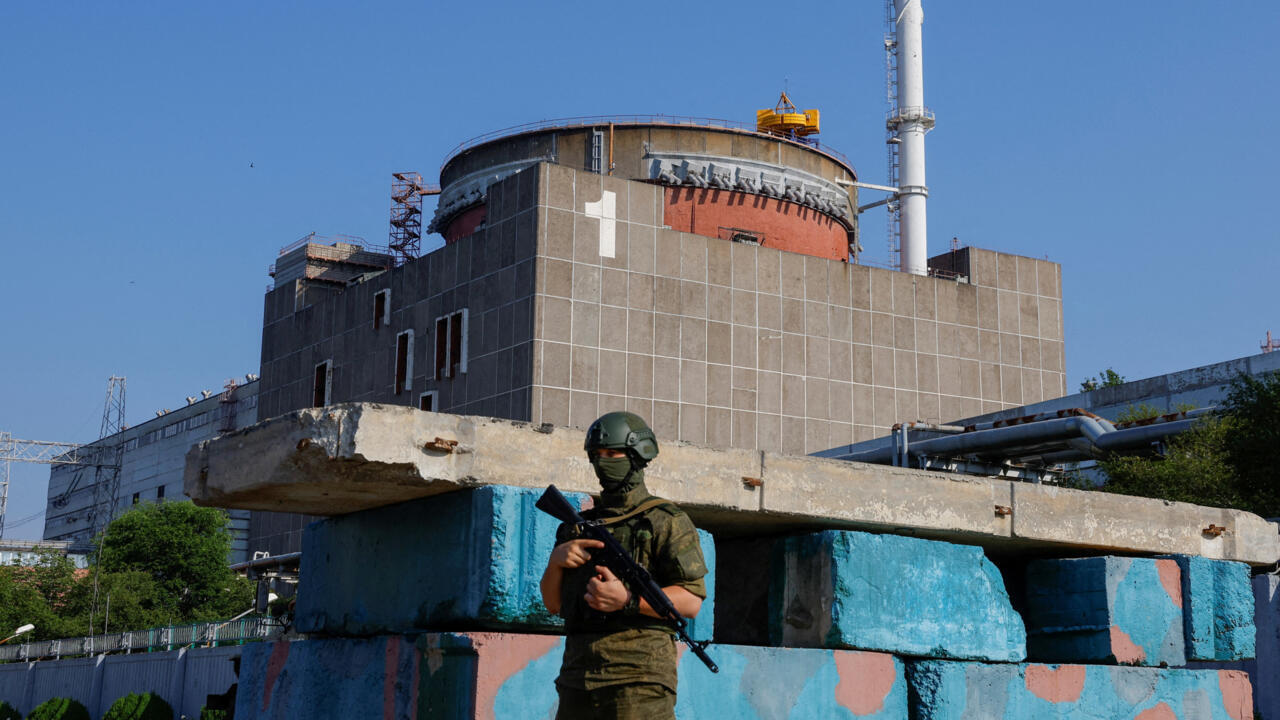
A Russian service member stands guard at a checkpoint near the Zaporizhzhia Nuclear Power Plant on June 15, 2023 © Alexander Ermochenko, Reuters file photo

The Zaporizhzhia nuclear power plant is one of the main sticking points in the US peace plan to end the war between Russia and Ukraine. The issue is one of 20 points laid out by Ukrainian President Volodymyr Zelensky in a framework peace plan that he discussed with his US counterpart Donald Trump in Florida on Sunday.

Here are some of the outstanding issues regarding the facility.

What plans are being discussed ?


Russia took control of the plant, which lies close to the front ​lines, in March 2022 and announced plans to connect it to its power grid.

Almost all countries agree that it belongs to Ukraine, but Russia says it is owned by Russia ‍and a unit of Russia's state-owned Rosatom nuclear corporation runs the plant.

Zelensky stated in December that the US had proposed joint trilateral operation of the nuclear power plant with an American chief manager.

Zelensky said the Ukrainian proposal envisages Ukrainian-American use of the plant, with the US itself determining how ​to use 50% of the energy produced.

Russia has considered joint Russian-US use of the plant, according to the Kommersant newspaper.

After his talks with Zelensky on ​Sunday, Trump said negotiators had made progress on deciding the fate of the plant, which can "start up almost immediately". The US president said "it's a big step" that Russia had not bombed the facility.

What is the current status ?

The plant is located in Enerhodar on the banks of the Dnipro River and the Kakhovka Reservoir, 550 km (342 miles) southeast of the capital Kyiv.

The Zaporizhzhia nuclear power plant has six Soviet-designed reactors with a total capacity of 5.7 gigawatts, according to an International Atomic Energy Agency (IAEA) database.

It is not currently producing electricity but relies on external power to keep the nuclear material cool and avoid a meltdown.

Ukraine: What is blocking the peace deal negotiations?

The plant's equipment is powered by electricity supplied from Ukraine. Over the past four years these supplies have been interrupted at least 11 times due to breaks in power lines, forcing the plant to switch to emergency diesel generators.

Both Russia and Ukraine accuse each other of striking the nuclear plant and of severing power lines ‍leading to it.

IAEA Director General Rafael Grossi says fighting a war around a nuclear plant has put nuclear safety and security in constant jeopardy.

The Russian head of the station said on Monday the facility could restart power generation by mid-2027 if the war concluded soon.

Why does Russia want the Zaporizhzhia plant ?

Russia has been preparing to restart the station but says that doing so will depend on the situation in the area. Rosatom chief Alexei Likhachev has not ruled out the supply of electricity produced there to parts of Ukraine.

Oleksandr Kharchenko, director of the Energy Research Centre in Kyiv, said Moscow intended to use the plant to cover a significant energy deficit in ‌Russia's south.

In December, Russia's Federal Service for Environmental, Technological and Nuclear Supervision issued a license for the operation of reactor No. 1, a key step towards restarting the reactor.

Ukraine's energy ministry called the move illegal and irresponsible, risking a nuclear accident.

Why does Ukraine need the plant ?

Russia has been pummelling Ukraine's energy infrastructure throughout the war. In ‍recent months, Russia has sharply increased the scale and intensity of its attacks, plunging entire regions into darkness.

Analysts say Ukraine's generation capacity deficit is about 4 gigawatts, or the equivalent of four Zaporizhzhia reactors.

Kharchenko says it would take Ukraine five to seven years to build the generating capacity to compensate for the loss of the Zaporizhzhia plant.

Kharchenko said that if Kyiv regained control of the plant, it would take at least two to three years to understand what condition it was in and another three years to restore the equipment and return it to full operation.

Both Ukrainian state nuclear operator Energoatom and Kharchenko said Ukraine did not know the real condition of the nuclear power plant today.

What about cooling the fuel ?

In the long term, there is the unresolved problem of the lack of water resources to cool the reactors after the vast Kakhovka hydro-electric dam was blown up in 2023, destroying the reservoir that supplied water ‍to the plant.

Besides reactors, there are spent fuel pools at each reactor site used to cool down used nuclear fuel. Without water supply to the pools, the water evaporates and temperatures increase, risking fire.

An emission of hydrogen from a spent fuel ‌pool caused an explosion in Japan's Fukushima ​nuclear disaster in 2011.

Energoatom said the level of the Zaporizhzhia power plant cooling pond had dropped by more than 15%, or 3 metres, since the destruction of the dam, and continued to fall.

Ukrainian officials previously said the available water reserves may be sufficient to operate one or, at most, two nuclear reactors.

(FRANCE 24 with Reuters)
Fungus Turns Bark Beetles’ Defenses Against Them

December 30, 2025 
By Eurasia Review


Spruce bark is rich in phenolic compounds that protect trees from pathogenic fungi. A research team at the Max Planck Institute for Chemical Ecology in Jena investigated how these plant defenses function within the food web, particularly in spruce bark beetles (Ips typographus), which ingest the compounds through their diet. Could the beetles use substances from the spruce’s defenses to protect themselves against pathogenic fungi?
Beetles convert plant defenses into even more toxic forms

Using state-of-the-art analytical methods such as mass spectrometry and nuclear magnetic resonance (NMR), the team investigated which chemical compounds spruce trees produce for defense and how these compounds are metabolized by bark beetles. The team demonstrated that bark beetles infesting spruce trees utilize the trees’ defensive substances found in the phloem, particularly phenolic glycosides such as stilbenes and flavonoids, to bolster their defense against pathogens. They convert these compounds into more toxic aglycones, which are sugar-free and have increased antimicrobial activity. These aglycones serve as an effective defense against fungi. “We did not expect the beetles to be able to convert the spruce’s defenses into more toxic derivatives in such a targeted way,” said the lead author Ruo Sun from the Department of Biochemistry.
The fungus neutralizes the beetles’ defenses via specific detoxification pathways

Then, the scientists investigated how the beetle defense substances affected the fungus Beauveria bassiana. “Although this fungus has not been effective in controlling bark beetles in the past, we found strains that had naturally infected and killed them. We therefore wanted to investigate more closely how they were able to successfully infect the beetles,” Ruo Sun explains.

Further analyses and enzyme assays revealed that the fungus employs a two-step detoxification process. First, there is glycosylation, which involves the re-addition of a sugar to the aglycones. Second, there is methylation, which involves the binding of a methyl group to the sugar. The resulting methylglycoside derivatives are not toxic to Beauveria bassiana. Interestingly, methylglycosylation increases fungal infestation, particularly in beetles that had previously consumed plant tissue with a high phenol content. Additionally, methylglycosides are resistant to beetle enzymes that would restore the compounds’ toxicity through hydrolysis.

The scientists tested the function of the detoxification pathway in Beauveria bassiana by knocking out the genes responsible for methylglycosylation. Further experiments revealed that fungi lacking these genes, and thus the detoxification pathway, were far less effective at infesting bark beetles.


An evolutionary balancing act with potential application

The study clearly shows that a tree’s chemical defenses can undergo multiple transformations and retransformations throughout the food chain – with far-reaching consequences for the evolutionary arms race between hosts, pests, and pathogens. “We have demonstrated that a bark beetle can co-opt a tree’s defensive compounds to make defenses against its own enemies. However, since one of the enemies, the fungus Beauveria bassiana, has developed the ability to detoxify these antimicrobial defenses, it can successfully infect the bark beetles and thus actually help the tree in its battle against bark beetles,” summarizes the study’s leader Jonathan Gershenzon.

These findings could lead to the development of more effective biological control agents against bark beetles. “Now that we know which strains of the fungus tolerate the bark beetle’s antimicrobial phenolic compounds, we can use these strains to combat bark beetles more efficiently,” says Ruo Sun, pointing out the potential applications. The study emphasizes the importance of checking for resistance or detoxification strategies developed by the pest against its host when using biological pesticides.

In further experiments, the research team wants to determine how widespread the methylglycosylation detoxification pathway is in different strains of the fungus Beauveria bassiana and in other bark beetle pathogens. They also want to understand how this pathway interacts with other characteristics of pathogens that influence its effectiveness.