Thursday, January 01, 2026

Turkey Seeks Agreement With Syria on Offshore Energy E&P

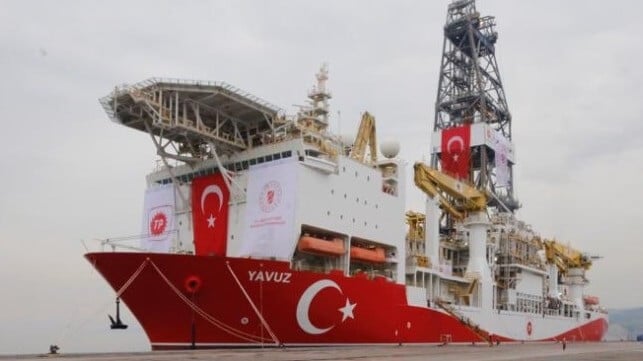
Turkish drillship Yavuz (TPAO file image)

Published Dec 31, 2025 5:05 PM by The Maritime Executive


Turkey is planning to reach an agreement with the new government of Syria on maritime cooperation and offshore E&P, the nation's minister of energy said in an interview this week. 

The deal would allow Turkey's oil and gas companies to begin exploring for energy resources off Syria's coast, and the two governments hope to conclude an agreement sometime next year, energy minister Alparslan Bayraktar told GDH. The specific deal would expand upon a current framework agreement, and would likely bear fruit further down the line, he said. 

Turkey's state energy firm TPAO owns two seismic ships and six drillships - four active vessels (Fatih, Yavuz, Kanuni and Abdülhamid Han) and two recently-bought vessels that are slated for restoration (West Dorado and West Draco). Its activities have recently focused on productive Black Sea exploration wells, but Turkey also has a strong interest in waters off the coast of Northern Cyprus, hotly contested with the Cypriot government in Nicosia. Agreements to drill in Syrian waters would expand on those opportunities, and further anchor Turkish presence in the region. Any future revenue would bolster the new Syrian government's resources in its efforts to stabilize and rebuild the nation's economy, ravaged by years of civil war. 

The Eastern Mediterranean holds some of the world's most promising offshore resources for natural gas, and recent drilling campaigns are producing results. This week, Chevron, Shell and NewMed Energy took a decision to begin ordering production equipment for the Aphrodite field in Cypriot waters, which could produce up to 800 million cubic feet of gas per day. The partners anticipate a final investment decision on the field in 2027. The long-delayed announcement brings Cyprus' offshore-gas ambitions closer to realization, putting it in the same club as Egypt and Israel, which have already tapped massive reservoirs of their own.

Cyprus, Greece and Israel Quietly Strengthen Their Mediterranean Alliance

ANTI-TURKIYE COALITION

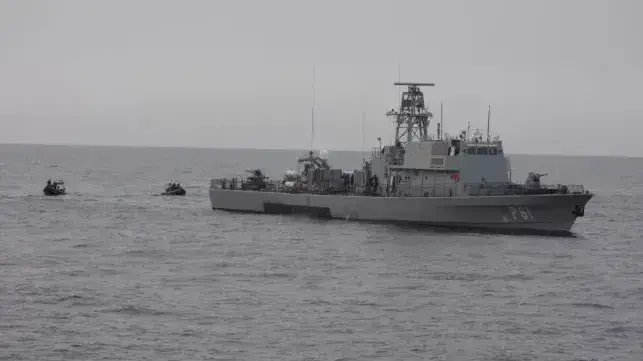
Israeli-built Cypriot Offshore Patrol Vessel Commodore Andreas Ioannides (P61) participating in Exercise Noble Dina 2025 (Credit: Cypriot Ministry of Defence press release)
Israeli-built Cypriot Offshore Patrol Vessel Commodore Andreas Ioannides (P61) participating in Exercise Noble Dina 2025 (Cypriot Ministry of Defence)

Published Dec 31, 2025 6:45 PM by The Maritime Executive


Attracting little publicity, Cyprus, Greece and Israel have deepened their military cooperation, signing a trilateral agreement in Cyprus last week that builds on a multiyear partnership between the three nations.

Last week’s agreement, signed at technical level by military staff, covers joint air and naval exercises, training and intelligence cooperation. Greece is expected to take part once again in the Israeli-led naval Exercise Noble Dina in the Mediterranean in the spring.

Exercise Noble Dina is an annual Israeli-led multinational exercise which normally takes place off the coasts of Greece and/or Cyprus. The exercise last year, from March 19 to April 3, practiced tactical maneuvering, commercial vessel escort duties, anti-submarine warfare, air-sea cooperation exercises and search and rescue operations.

The technical agreement comes shortly after a broader agreement signed by Benjamin Netanyahu, Cypriot President Nikos Christodoulides and Greek Prime Minister Kyriakos Mitsotakis at a meeting in Jerusalem on December 22. This agreement covered further Greek purchases of multi-layer air defense for its Achilles Shield program and artillery systems to strengthen the defenses of Greek islands close to the Turkish coast, as well as maritime security cooperation and energy interconnector projects covering both gas and electricity.

Greek-Israeli military cooperation has been a key factor in Israeli preparedness to counter the threat from Iran.  When in 2020 Israel set up its Iran Command, known initially as the Third Circle Directorate, to plan operations against Iran, new long-range attack techniques needed to be developed. Greece provided the strategic depth for training to be conducted both discreetly and at long range. In June 2022, for example, Israeli aircraft flew to Gibraltar and back, refuelling in Greek airspace, before attacking notional enemy targets in Cyprus.

A key ingredient of the cooperation, hinted at in last week’s announcement, will be intelligence cooperation. Cyprus has long been a key location from which to keep an eye on the Levant and adjacent sea areas. Cyprus is in the process of enhancing the facilities of its Mari naval base between Limassol and Larnaca.

Military cooperation provides defense in depth for all three partners in the arrangement.  It also adds to deterrence as far as the relationship with Turkey is concerned. Greece and Cyprus have long-running issues with Turkey, with Turkish forces still stationed in Northern Cyprus. But Turkey, once cooperative with Israel, has become increasingly hostile as the war in Gaza has progressed.  Deterrence of this nature inevitably draws a response, which may explain why Turkey has resumed its quest to acquire F-35s – not a NATO-inspired move to deal with the threat from Russia, with whom its gets along quite amiably, but to balance those in Israeli hands and which Greece will take delivery of in 2028.


Ocean Infinity Launches New Search for Lost Flight MH370

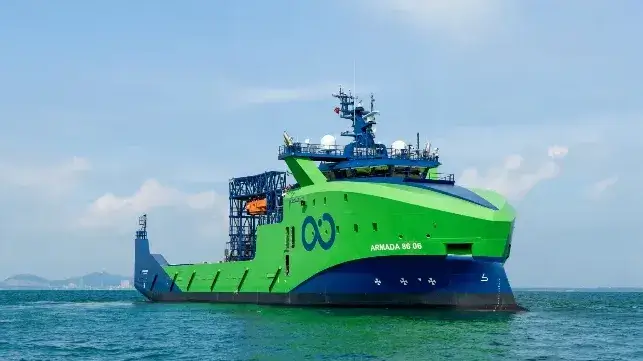
Sister ship Armada 86 06 (file image courtesy Ocean Infinity)

Published Dec 31, 2025 7:26 PM by The Maritime Executive


Ocean Infinity has launched its search for the lost Flight MH370, the aircraft that  disappeared over the Indian Ocean in 2014. MH370's fate remains unknown, and the company believes that its advanced search technology could find the wreckage at last and perhaps yield new clues into the aircraft's loss. 

AIS tracking provided by Pole Star Global shows that the Ocean Infinity ship Armada 86 05 is on station and searching at a position about 1,100 nautical miles west of Perth. As of Wednesday, the ship was driving a tight search pattern of about 15-20 nm per north-to-south leg. Water depth in the area is about 1,100-4,000 meters; high-resolution charting shows rough terrain in the area, with a mix of abyssal plain, valleys and seamounts.

The search will last up to 55 days and could cover up to 25,000 square kilometers, investigator Richard Godfrey told The Guardian. It was arranged through a service agreement with the Malaysian government, using a deal structure that displays confidence. If Ocean Infinity does not find the wreck, it will receive no compensation. If it does find the wreck, it will be paid $70 million, plus the advertising rights that would go with solving a high profile, needle-in-a-haystack search. The company is already well-known for finding the wreck of Sir Ernest Shackleton's famed ship Endurance, the wrecked ore carrier Stellar Daisy and the lost Argentinian submarine ARA San Juan, among other discoveries in the deep ocean. 

Multiple previous searches for MH370 have come up empty-handed, including Ocean Infinity's own previous effort in 2018, which covered an 80,000 square kilometer swath of ocean. The current search area has been examined before, but technology has changed in the intervening years, and the company's fleet of acoustic-mapping AUVs from Kongsberg can provide detailed imaging of the bottom - as well as magnetometer detection for metal debris and laser scanning for detailed imaging at closer range. 

The task is daunting. The missing plane was flying out of sight of radar coverage for hours, and the only electronic positioning data available is a series of hourly pings received by an Inmarsat satellite. These pings ended about seven hours after it took off, somewhere over the southern Indian Ocean, on about the timeframe when the aircraft would have run out of fuel. The long hourly interval between pings and the one-dimensional data yielded by the satellite ping means that the priority search zone is vast - a large arc of about 120,000 square kilometers in total, in a region exposed to powerful Southern Ocean weather systems. It is clear that the plane went down, as multiple pieces of floating debris have been recovered on far-flung foreign shores, but the main wreck site remains hidden. 

The operational concept and technology for the search are wholly new. Ocean Infinity's Armada 86 class vessels are lean-crewed, autonomy-capable survey ships built with high levels of automation in mind. They are much smaller than conventional survey vessels, consume less fuel and require fewer people at sea. The ships are built with two moonpools and over-the-stern launch and recovery capability for AUVs and ROVs, augmented with remote-control systems for piloting the submersible equipment from shore. 


Hydropower Can Give Fish Decompression Sickness. New Tech May Help.

Fish
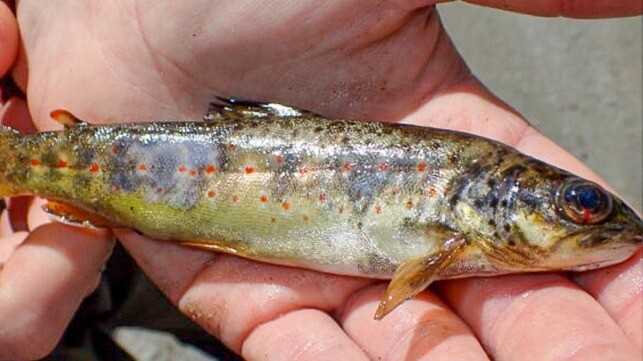
This small trout was found in the Otra River, below one of Norway's largest power stations. It had signs of decompression: protruding eyes, bleeding, infection and damaged fins. Photo: Ulrich Pulg, NORCE

Published Jan 1, 2026 1:46 PM by Gemini News


[By Sølvi Normannsen]

Hundreds of Norwegian hydropower plants threaten fish and bottom-dwelling animals by exposing them to water that is oversaturated with air. The danger increases with wilder, wetter weather and more flooding. The solution may be to use sound in a new way.

Professor Ole Gunnar Dahlhaug and postdoctoral fellow Wolf Ludwig Kuhn at NTNU have three goals: To understand the problem of gas supersaturation at hydropower plants, to solve it, and to help correct mistakes made during Norway’s more than 100 years of hydropower production.

Hydropower: Only partially sustainable

“Hydropower is known as clean and green, but it turns out that it is neither completely clean nor completely sustainable. We have to try to solve this problem,” says Ole Gunnar Dahlhaug.

The problem is that many hydropower plants can threaten fish and bottom-dwelling animals that live in rivers, reservoirs or fjords downstream. When the water discharged from the hydropower plant contains too much dissolved air, fish can get gas bladder disease, which is related to decompression sickness in humans.

Gas bladder disease

Gas bladder disease results when harmful, deadly air bubbles form inside the body. That’s what happened to  the small trout that was found in the river Otra below one of Norway’s largest power stations a few years ago. It had all the signs of gas bladder disease: protruding eyes, bleeding, infection and wear and tear on the fins.

Supersaturation can occur when air is sucked in through the intake tunnels on the upper side of hydropower plants. The pressure becomes so high that the air dissolves in the water on the journey down to the turbines. When discharged from the lower side of the power plant, the water looks like skimmed milk due to huge amount of gas bubbles. Gas supersaturation can also occur during floods and high water flow.

Wetter climate increases the risk

In some areas, life along long stretches of rivers downstream of power plants has almost been eliminated, such as in Otra, which is regulated by Brokke Power Plant in Agder. Calculations made by the research institute NORCE LFI (Laboratory for Freshwater Ecology and Inland Fisheries) show that many of Norway’s 1,800 power plants can be affected by the supersaturation problem. Almost 30 per cent are in the high-risk class.  The greatest risk of harm comes from the largest facilities that discharge to rivers. There are roughly 200 of these in Norway.

“We know that climate change means more flooding, so we believe that the problem will only get worse. That’s why we should take it more seriously,”  Dahlhaug said.

Patent on sound that dissolves air

Eliminating this risk has been the goal of the DeGas project led by Dahlhaug for the past five years. Here, mechanical engineers from NTNU’s Department of Energy and Process Engineering have joined forces with biologists from the Norwegian Institute for Nature Research (NINA) and SINTEF researchers.

Kuhn and Dahlhaug have now applied for a patent for a new technology, along with Bjørn Winther Solemslie from NINA and Ulrich Puig from Norce.
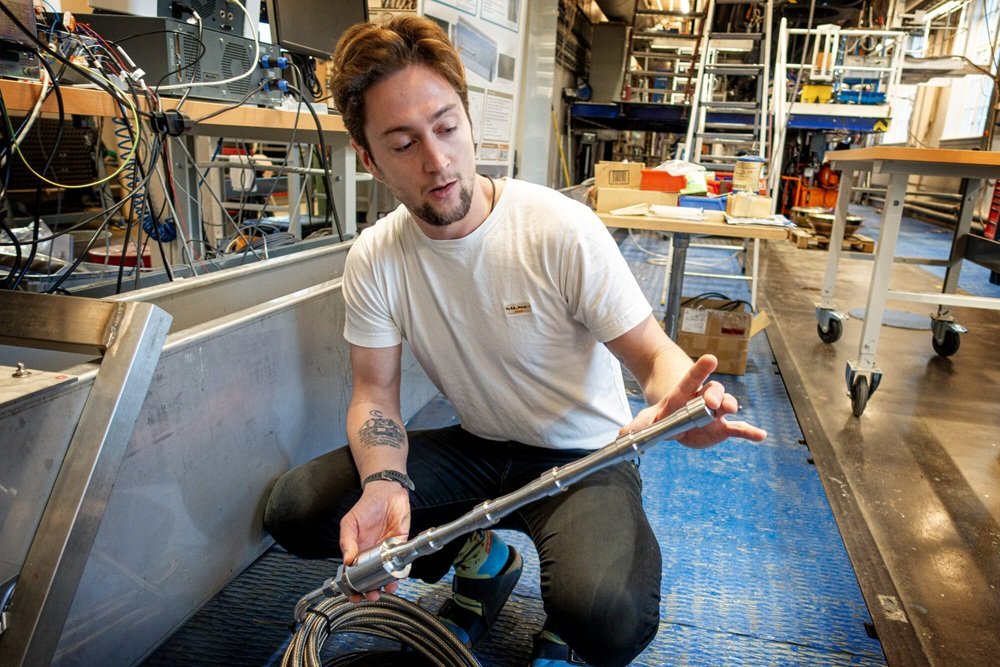
In his doctoral work, Wolf Ludwig Kuhn has shown that the method of new use of ultrasound reduces the gas saturation in the river water immediately. The photo shows the acoustic transducer. Photo: Sølvi W. Normannsen

With the help of an acoustic transducer, which is a cylindrical device that can shoot sound waves through water, the researchers have managed to remove dissolved air in river water.

The device uses power ultrasound. The pressure waves from the device cause the water to evaporate locally, and the air molecules move into the zones where the water has evaporated. There they form bubbles. The bubbles grow larger as they rise to the surface and eventually dissolve.

Proven efficacy in hydropower plants

So far, the tests show that the method works. The researchers started in a specially built, 20-metre-long and 36-centimetre-deep trench in the hydropower laboratory at NTNU.

In the first experiments, the water flow was 4 liters per second. Now they have increased the speed to 600 liters per second by testing the equipment at a small power plant outside Trondheim. The largest power plants can have a flow rate of as much as one million liters of water per second. “The next step is 2000 liters, and gradually we will increase to 100,000 liters per second,” said Kuhn.

More testing and a market

The researchers believe the method is effective, and relatively cheap to install and operate. At least two things must be in place before this can become a commercial spin-off from NTNU: More testing and a market that will use the technology.

“The market will not be there until the authorities introduce requirements and the facts are put on the table, so that we know what is actually happening around Norwegian hydropower plants,” says Dahlhaug.

It has been almost 60 years since researchers first uncovered problems at large run-of-river power plants with dams in the USA and Canada. Authorities address the problem, but not in Norway. The height differences here are greater here, which makes Norwegian power plants more vulnerable. Nevertheless, decompression sick animals have been allowed to continue to float under the radar of owners and regulatory authorities.

Far above the limit values

The higher the air saturation, the higher the mortality rate. Insects, larvae and other small animals float up and die when the water is at 110 percent saturation. This is also the tolerance limit for fish, but it also depends on how long the fish are exposed.

North American and Chinese power plants have measured maximum values of 150-160 percent air saturation. A study from NORCE LFI shows that there can be an oversaturation of close to 230 percent at some Norwegian power plants.

“We consequently have a bigger problem here, because we should not be above 100 per cent,” says Ole Gunnar Dahlhaug.

9 tonnes of fish died in one weekend

At present, there are no requirements for power companies to monitor or limit gas supersaturation. Research has shown that the problem may affect many more power plants than previously thought. Several thousand new dams are being planned in the world. The NTNU researchers believe that more people should know about the problems.

“A report from a new power plant in Brazil shows that they killed 9 tons of fish during a test weekend. They did not know that they had such challenges. This shows that we must be aware and adapt the power plants in the planning phase,” Kuhn said.

Must make demands on hydropower owners

The NTNU researchers join the ranks of researchers who believe that politicians and  the Norwegian Water Resources and Energy Directorate (NVE)  should demand that the power plant owners initiate monitoring.  This will illuminate which power plants have problems.

“A single year is enough to get the facts on the table,” says Kuhn, while Dahlhaug adds that the measure will cost vanishingly little for the power companies.

More animals deaths than seen

With Norway’s increasingly wilder and wetter weather, are there increasing numbers of dead fish and bottom-dwelling animals? Dahlhaug says no one is currently studying this issue or trying to tally up possible mortality.

“There is no research or counts, but NORCE, among others, assumes that there are probably more than we realize, in paart because fish or animals that float to the surface due to too much gas will quickly be picked up and eaten by other animals. And there are probably very few of us who will be able to see the small animals that are left on the bottom, or insects that float up and past us because they have gas bubbles in them,” he said.

This article appears courtesy of Gemini News and may be found in its original form here


The opinions expressed herein are the author's and not necessarily those of The Maritime Executive.
 

Video: Taiwan Rescues Crew from Tug Sent to Rescue Grounded Bulker

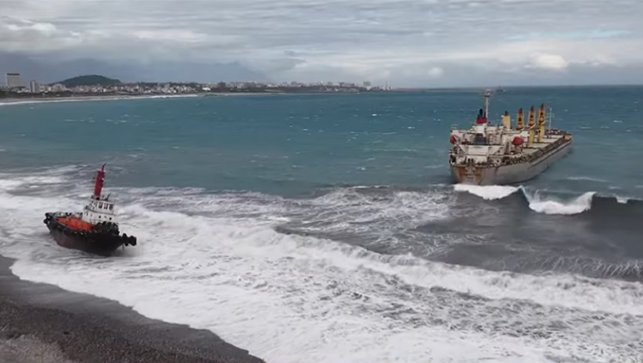
grounded bulker and tug off Taiwan
Taiwan had to airlift the crew from a tug sent to assist a grounded bulker (Taiwan TV)

Published Jan 1, 2026 2:02 PM by The Maritime Executive


It became a compound series of problems as a bulker grounded as it was preparing to arrive at a port in Taiwan, and then the tug sent to rescue the grounded vessel also experienced problems requiring its own rescue. Bad weather forced Taiwan’s Air Service Corps into action after a crewmember was injured aboard the tug and required hospitalization.

The bulker CSE Prosperity Express (28,350 dwt) was arriving at Taiwan’s Hualien port on the eastern shore of the island on the morning of January 1 after a trip from Thailand. According to the reports, the ship was holding near the entrance to the port, waiting for a pilot, and being buffeted by strong northeasterly monsoon winds when it lost power and was driven toward shore. 

The vessel, built in 2006 and operated by China Steel, is 169 meters (554 feet) and registered in Panama. It has a crew of 17 aboard, 12 from Taiwan and five from the Philippines. Unable to maneuver, it called for aid, and the Hualien Port Authority dispatched a tug.


Taiwangang 13205, with a crew of five aboard, was working to aid the bulker when it became entangled in the ship’s lines. Disabled, it was driven onto the shoreline. 

The Coast Guard and local rescue services were dispatched, but due to the weather and high surf, they determined it was impossible to reach the tug to assist the crew. That’s when the Air Service Corps was called out, and they sent a helicopter, which did an aerial survey. The helicopter airlifted the five crewmembers from the grounded tug and transferred them to waiting ambulances. One crewmember had suffered a severe head laceration and was losing consciousness.

The Taiwan authorities report the bulker and its crew are in no immediate danger. They have dispatched a larger tug from the Keelung Port, which was expected to reach the bulker later in the evening.


NTSB: Towing Vessel Hit USCG Dock After Captain Fell Asleep at the Helm

towboat at dock
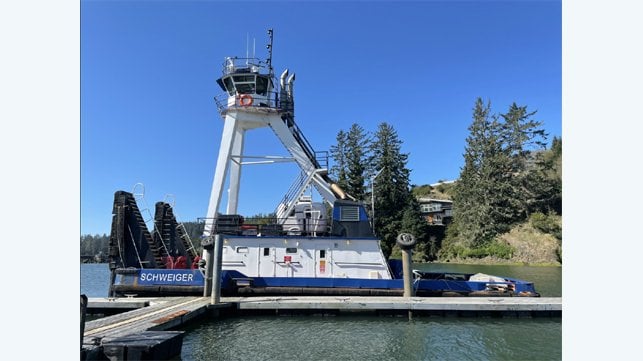
Towboat veering from the river channel and hit a USCG dock (NTSB photo)

Published Dec 31, 2025 2:30 PM by The Maritime Executive


An investigation by the National Transportation Safety Board found that a towing vessel operating on the Columbia River in Washington State veered from the channel and hit a U.S. Coast Guard dock after the captain in charge of the vessel fell asleep. They note that the individual, the night before self self-medicated with ivermectin, a prescription medication normally used to treat parasitic infections, and was later diagnosed with an acute COVID-19 coronavirus infection.

The towing vessel Schweiger was underway on the Columbia River with the master and deckhand aboard. They had been moving a barge and returned to port midday on September 11, 2024. The 60-foot vessel built in 1979 was primarily used to push barges for marine construction projects in the Pacific Northwest.

The vessel was underway returning to the Port of Ilwaco when, at around 12:35 p.m., it veered to port and exited the marked channel. About a minute later, it struck a USCG dock’s wave barrier at a speed of 7 knots and kept going. It broke through the barrier and struck a floating dock and its associated piling, as well as the fuel and electrical systems of the U.S. Coast Guard Station Cape Disappointment near the mouth of the Columbia River.

The towing vessel was not damaged, and luckily, it avoided two 47-foot USCG lifeboats and a smaller patrol boat that were moored on the dock. However, it caused an estimated $750,000 of infrastructure damage.

The master who was driving the towing vessel admitted to investigators that he fell asleep while at the helm. The deckhand was in the galley at the time, and both were just over six hours into their shift. The captain stated that the impact woke him, and he was able to maneuver the vessel away. 

Test results showed that he was negative for alcohol and other drugs, but he told the investigators he had not felt well the night before. He took “several 2-milligram tablets of ivermectin provided by a friend,” and felt alright in the morning. Later the same day after the allision, the captain checked into an urgent care facility because he was experiencing flu-like symptoms. He was diagnosed with COVID-19 coronavirus and a partial collapse of the airspaces of the lung.

“Given his illness and the prescribed and unprescribed medication he took, it cannot be ruled out that he may have suffered a sudden medical incapacitation, which resulted in him becoming incapacitated prior to the contact,” writes the NTSB. It, however, also warns against taking unprescribed medications, which a mariner might not be familiar with or aware of the potential adverse side effects that could impact the ability to perform assigned duties.


Russia Asks Trump Administration to Stop Chasing Sanctioned Tanker

Russian flag
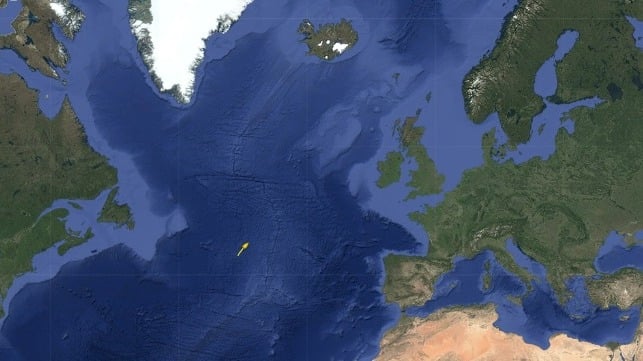
Bella 1 reactivated her AIS transponder on January 1, declaring Russian registration, an unknown destination, and a course for the GIUK Gap (Pole Star Global)

Published Jan 1, 2026 2:22 PM by The Maritime Executive


The sanctioned tanker Bella 1 has been formally registered with the Russian flag and renamed, complicating American efforts to "pursue" and potentially seize the giant VLCC in a low-speed chase across the Atlantic. Russia has asked the Trump administration to give up the chase, according to the New York Times.

As of New Year's Day, Bella 1's Equasis record has yet to change, but she is back to broadcasting her position and ship's particulars on AIS. The crew has set up her transponder to broadcast her name as Marinera, flag state as Russia and her MMSI as 273276460, a new number coded for Russian registration. As of Thursday, the vessel was in the North Atlantic and making eight knots towards the GIUK Gap, broadcasting "for orders" as her destination. 

Changing flag state mid-voyage is legally possible using a loophole for change in ownership or registration. This criterion is easily met: flag-hopping "shadow fleet" tankers may change their shell company ownership structure or their vessel registration multiple times per year.

In addition to the flag and name change, Russia's government has quietly asked the White House to call off the pursuit of the tanker, the New York Times reports. Russia is a longtime ally of Venezuelan dictator Nicolas Maduro, and continues to provide the Maduro regime with the cargoes of naphtha needed to dilute and export Venezuela's extra-heavy crude. Though Russia has commercial and military links with the designated-terrorist Maduro regime, the White House has cultivated close ties with Moscow and broadly aligned its European diplomacy with Russian foreign policy objectives; whether Washington will continue its own "blockade" enforcement action or accede to Russia's interests in the Bella 1 case remains to be seen. U.S. and Russian officials did not respond to Reuters' requests for comment. 

Separately, the U.S. has also announced sanctions on four anonymous shipowners for operating in the Venezuelan energy sector, and has blacklisted four related oil tankers. The vessels include the Nord Star, Rosalind (Lunar Tide), Della and Valiant. 

“President Trump has been clear: We will not allow the illegitimate Maduro regime to profit from exporting oil while it floods the United States with deadly drugs,” said Secretary of the Treasury Scott Bessent. “The Treasury Department will continue to implement President Trump’s campaign of pressure on Maduro’s regime.” 


River Cruise Passengers Celebrate NYE Stranded on the Danube

river cruise ship
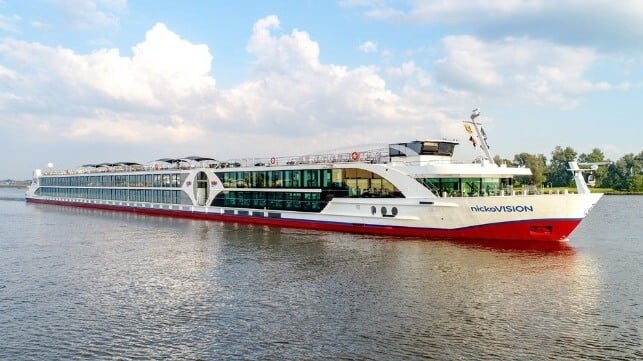
Nicko Vision is stuck on the Danube forcing passengers to celebrate New Years' Eve waiting rescue (Nicko)

Published Jan 1, 2026 3:41 PM by The Maritime Executive


A group of nearly 200 passengers on a luxury river cruise were forced to make the best of it and celebrate New Year’s Eve while they were stranded on the Danube. Local authorities said they were in no danger, but due to low water levels, which are continuing to fall, there was no way to release the cruise ship Nicko Vision from the gravel bottom of the river.

The ship, which is 135 meters (443 feet) in length, was making its way along the Danube during a cruise that began on December 26 in Passau, Germany. Passengers speaking to the media said they had already encountered problems forcing them to leave the ship and go by bus to Budapest. However, they had been able to rejoin the cruise ship and were proceeding to Bratislava, where they were due to spend New Year’s Eve.

Overnight between Tuesday and Wednesday, the cruise ship registered in Switzerland, however, came to an abrupt stop in the river. Local authorities said the water level is about 23 centimeters (9 inches) below normal levels and continuing to fall. The low water levels may have also displaced a navigational marker in the river.


No one was injured during the grounding, and the authorities set a river tug in an attempt to free the stranded cruise ship during the day on Wednesday. When it became clear the ship was not going to be freed, the passengers and crew made the best of it and had a gala party stuck on the river.

On New Year’s Day, the decision was made to evacuate the passengers from the ship, but low water levels made it impossible to risk moving another cruise ship alongside. The authorities placed a barge in the river and evacuated 211 passengers who were then transferred to another river cruise ship, Viva Two of Scilla Cruises, to continue their journey. Reports indicate that the 46 crewmembers have remained aboard the stranded Nicko Vision

Authorities said that with the public holiday, it was difficult to find more resources to address the situation. They are planning to make a new attempt to free the cruise ship, but warned that with falling water levels, it might be stuck for some time to come.


Finland Arrests Two Crewmembers and Seizes Cargo from Suspect Freighter

Finland seizes cargo ship
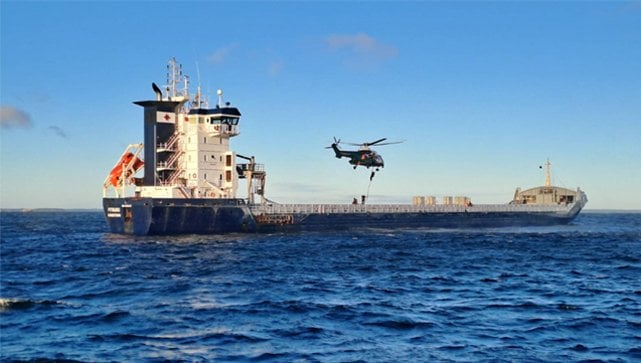
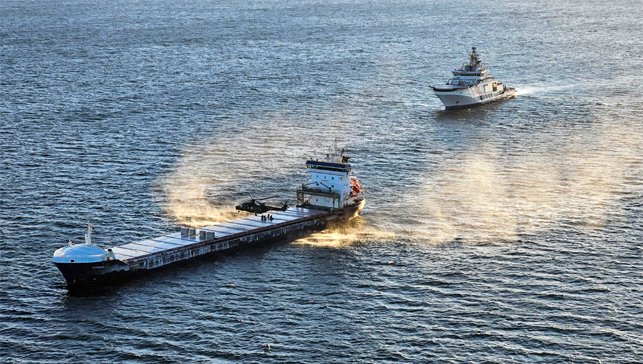
Finnish authorities seized the ship and have launched multiple investigations (Finish Border Guard)

Published Jan 1, 2026 12:07 PM by The Maritime Executive


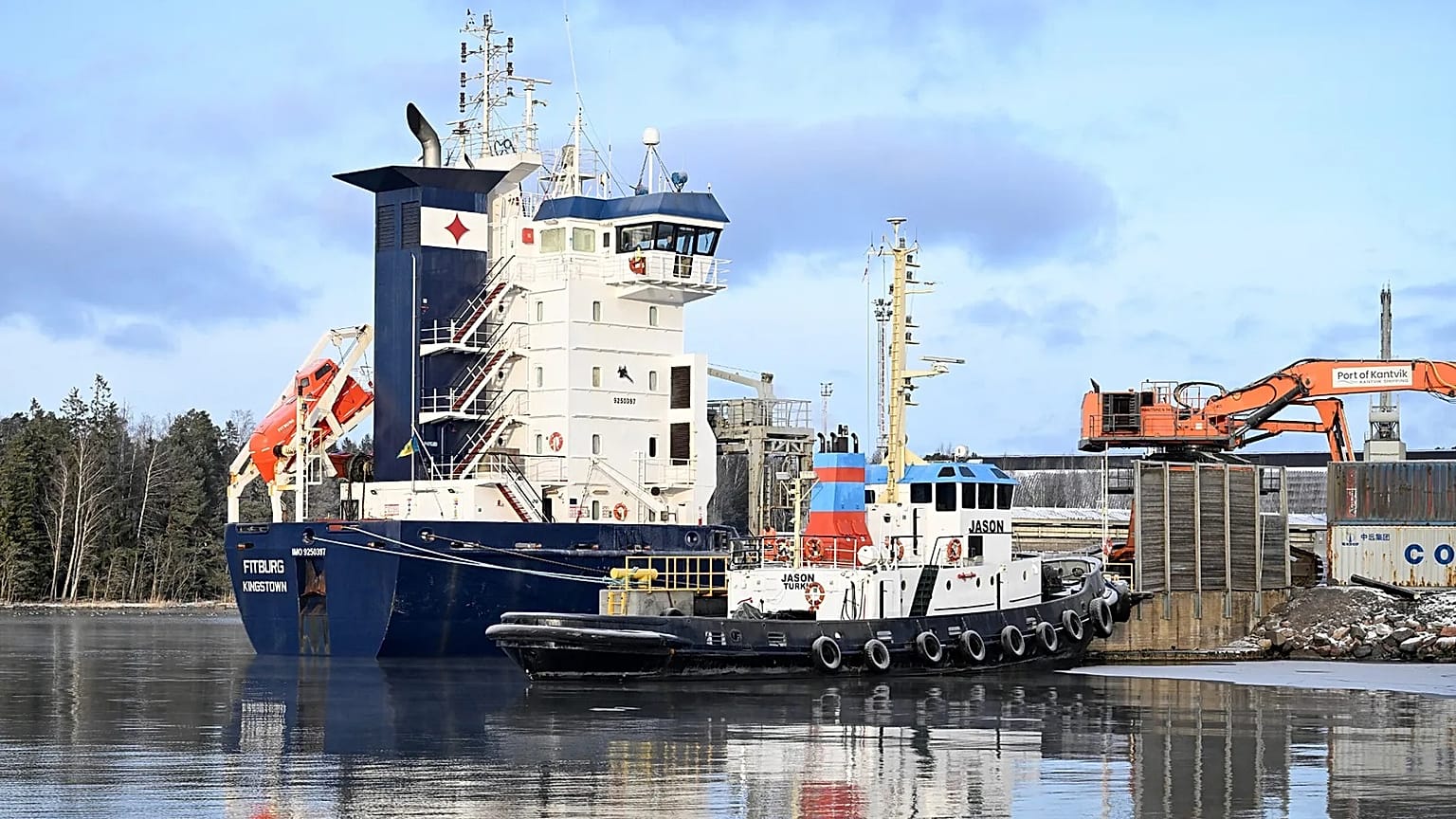
Finland has unleashed a gamut of inspections and is searching for multiple violations aboard the cargo ship Fitburg, which was detained on Wednesday, December 31, over a suspicion of damaging undersea cables.  The authorities are saying it is still in the early stages of the investigation, but they have arrested and detained crewmembers and are reporting the vessel’s cargo is suspected of violating European Union sanctions.

The Finnish Border Guard quickly identified the Fitburg as the prime suspect after telecom company Elisa reported damage to one of its undersea cables connecting Finland and Estonia. A Swedish telecom company, Arelion, later reported that it was also experiencing an outage on one of its telecom cables. 

Initially, three vessels were identified, but the Finnish authorities focused on Fitburg, a 9,800 dwt vessel managed by a Turkish company and registered in St. Vincent and the Grenadines after the vessel was observed sailing from the Estonian EEZ into Finnish waters with its anchor chain down. It was instructed to stop and raise its anchor and then told to move into a Finnish port for an inspection.

Finnish troops were observed fast roping onto the deck of the vessel, and later, under judicial orders, the ship was instructed to move into the port of Kantvik, approximately 20 miles west of Helsinki. Prosecutors obtained court orders to detain the ship on suspicion of “aggravated criminal damage” and attempting to damage telecom cables.

The Helsinki Police have arrested two individuals from the crew of the ship, and two others have been placed under travel bans. The police declined to provide additional information, but confirmed there are 14 crewmembers from Russia, Georgia, Kazakhstan, and Azerbaijan aboard. They are reported to be cooperating with the investigation, and formal interviews started on January 1.


Shortly after the vessel docked, Finnish Customs boarded the ship and informed the captain that the ship’s cargo had been seized, subject to an inspection. They said it was being checked for sanctions violations.

The ship had departed Saint Petersburg, Russia, and Customs says it has confirmed it was loaded with structural steel, which is under sanctions from the European Union. Customs is continuing a legal investigation and reports it will have a determination by next week on the European Union’s sanctions as they may apply to the cargo.

Finnish Transport also announced that it was commencing a Port State Control Inspection of the vessel. They are checking for compliance with international regulations.

The authorities have also initiated a subsea crime scene investigation. The Border Guard and the Defense Forces are working with the police, and they are coordinating with the Estonian authorities. The cable damage happened in Estonia’s EEZ.

Media reports said the police were seen removing material from the ship late on Wednesday. They are also inspecting the ship’s anchor.

The situation is eerily similar to the investigation that began on Christmas Day 2024, when the shadow fleet tanker Eagle S was also accused of dragging its anchor during a storm in the Baltic. Cables were damaged, and Finland ultimately prosecuted the captain and two crewmembers, charging them with negligence and failing to properly operate their vessel. The ship was held for months before it was released, and the three crewmembers were left off by the Helsinki court, which said the incident happened outside Finland’s area of jurisdiction. The case has been appealed.


Ship seized in Finland suspected of cable damage was carrying sanctioned Russian steel

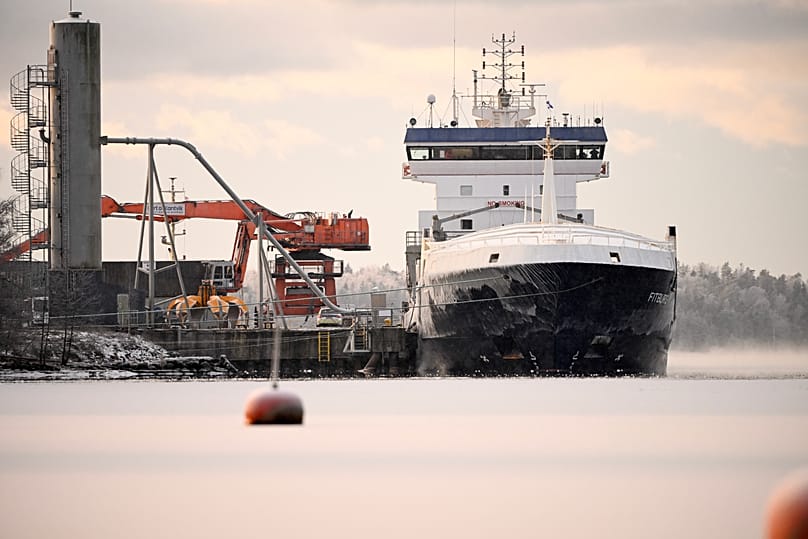
Seized vessel Fitburg in the harbor of Kirkkonummi, 1 January, 2026
Copyright AP Photo


By Gavin Blackburn
Published on 

Countries in the Baltic Sea region have been on high alert following a string of incidents which saw undersea power cables, telecoms links and gas pipelines damaged.

A vessel seized in Finland suspected of damaging an undersea telecommunications cable between Helsinki and Tallinn was transporting Russian steel subject to European Union sanctions, Finnish customs officials said on Thursday.

On Wednesday, Finnish police detained the Fitburg, a 132-metre-long cargo ship en route from St Petersburg in Russia to the Israeli port of Haifa.

Its 14 crew members were also detained following suspicion the ship's anchor had damaged the telecoms cable in the Gulf of Finland.

"Preliminary information indicated that the cargo consisted of steel products originating in Russia, which are subject to extensive sanctions imposed on Russia," Finnish Customs said in a statement.


The agency had carried out an inspection of the ship's cargo late on Wednesday.

Seized vessel Fitburg in the harbor of Kirkkonummi, 1 January, 2026 AP Photo

"According to the assessment of experts at Finnish Customs, the structural steel in question falls under the EU's sectoral sanctions," it said.

"Import of such sanctioned goods into the EU is prohibited under EU sanctions regulations."

Finnish Customs said it was still investigating "the applicability of EU sanctions legislation to this case."

The steel remained impounded pending clarification, it said, and Finnish Customs has opened a preliminary inquiry "with a view to launching a pre-trial investigation into a potential sanctions violation."

Finnish police said on Wednesday they were investigating the damaged cable incident as "aggravated criminal damage, attempted aggravated criminal damage, and aggravated interference with telecommunications."

'Hybrid war'

The Fitburg is flagged from St Vincent and Grenadines and its 14 crew members - from Russia, Georgia, Azerbaijan and Kazakhstan - were detained and are to be questioned by Finnish police.

Two of the crew members were placed under arrest on Thursday and two others were placed under a travel ban, police said, refusing to disclose their nationalities or roles in the crew.

Energy and communications infrastructure, including underwater cables and pipelines, have been damaged in the Baltic Sea in recent years.

Since Russia's full-scale invasion of Ukraine in February 2022, many experts and political leaders have viewed the suspected cable sabotage as part of a "hybrid war" carried out by Russia against Western countries.

EU foreign affairs chief Kaja Kallas said Thursday that Europe "remains vigilant" as its critical infrastructure was "at high risk of sabotage".

"The EU will continue to fortify its critical infrastructure, including by investing in new cables, strengthening surveillance, ensuring more repair capacity, and moving against Moscow's shadow fleet, which also acts as a launchpad for hybrid attacks," she wrote on X.

The cable damaged Wednesday is owned by Finnish telecoms group Elisa and located in Estonia's exclusive economic zone. Elisa said its services were rerouted and the damage did not impact customers.

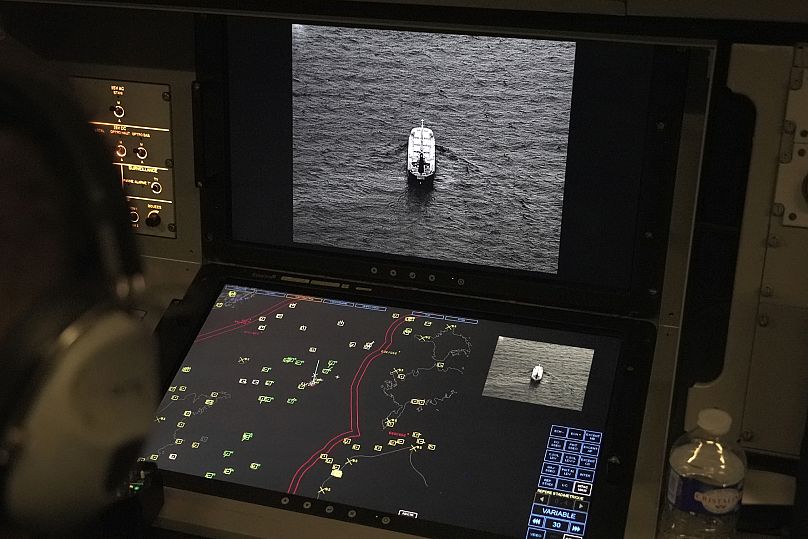
Crew members aboard a French Navy Atlantique 2 surveillance plane as part of the NATO Baltic Sentry exercise, 23 January, 2025
Crew members aboard a French Navy Atlantique 2 surveillance plane as part of the NATO Baltic Sentry exercise, 23 January, 2025 AP Photo

Similar incidents

In December 2024, Finnish authorities boarded the Russian-linked oil tanker Eagle S which investigators said had damaged a power cables and telecommunications links in the Baltic Sea by dragging its anchor along the seabed.

That case was dismissed by a Finnish court in October after prosecutors failed to prove intent.

There are eight NATO countries bordering the Baltic Sea, which also borders Russia, and they have been on high alert following a string of incidents which saw undersea power cables, telecoms links and gas pipelines damaged.

Those incidents have generally been regarded as deliberate acts of sabotage suspected of being linked to Russia and have prompted NATO to boost its presence in the region with patrol frigates, aircraft and naval drones.