Saturday, January 03, 2026


Hong Kong Court Sentences Oil Tanker Captain to Jail for Poor Seamanship

jail
Hong Kong court sentenced the oil tanker captain to 14 months in jail for failing to avoid fatal collision

Published Jan 2, 2026 4:18 PM by The Maritime Executive


A court in Hong Kong sentenced the master of a Chinese-registered oil tanker to 14 months in jail after he pleaded guilty to one count of endangering the safety of others at sea. The judge said the captain’s actions were “obviously too slow,” and it resulted in a collision with the fishing boat off Hong Kong that killed one person, while six others were rescued from the sea.

The oil tanker was transiting into Hong Kong waters around 0400 on November 17, 2024. According to the reports, the captain admitted he had chosen to take a shortcut into Hong Kong waters. Further, despite regulations, he failed to assign a dedicated lookout. He cited concerns for crew fatigue.

The tanker had been able to visually and on radar see fishing boats operating in the area as it was approaching Hong Kong. The reports said the captain, Lin Shou-wen, age 53, told the court he had spotted the red light of the fishing boat on the starboard side of the tanker. He used a laser pointer in an attempt to get the attention of the fishing boat crew, but failed to slow the tanker or adjust course. He could not see if there was anyone on the deck of the fishing boat.

He only reacted when the fishing boat was about 50 meters (164 feet) from the tanker. The court said he belatedly tried to reverse the tanker and switched on additional lights. It was too late, and they collided.

The fishing boat immediately sank, throwing seven people into the water. Six crewmembers were recovered, but the captain was missing. His body was recovered nine days later.

The court said the captain of the tanker did not sound an alarm until after the collision and failed to follow the required maritime regulations. The tanker, however, had remained on the scene and assisted in the search and recovery of the fishermen.

The court said that the captain should have taken prompt and decisive action to avoid the fishing boat. 


Friday, January 02, 2026

UK

Labour’s animal welfare strategy – will it deliver?

JANUARY 2, 2026

Labour’s new animal welfare strategy has been widely welcomed by campaigners and organisations, but as always with this Government, the devil will be in the detail, reports Kevin Flack.

Firstly, the good news – it is to be steered through Parliament by Baroness Sue Hayman who has a genuine commitment in this area. Sadly the implementation won’t be down just to her but very much in the hands of the Government’s business managers who have a raft of legislation planned and, for those measures that cost money, the Treasury.

Defra (the Department for Environment, Food and Rural Affairs) describes the strategy as “a new integrated approach to bring about a generational step change and deliver sustainable and embedded improvements to animal welfare.” It says it will “work closely with relevant stakeholders – particularly industry bodies, businesses, enforcement bodies and animal welfare organisations – to deliver and embed lasting improvements that will have the greatest impact on animal welfare.” You can read the full document here.

Hunting has long been Labour’s animal welfare talisman, seen by the Tories and Reform as waging a class war on the countryside despite the scientific welfare reasons for introducing the ban. Regrettably, there were too many loopholes in the 2004 Hunting Act and hunters continued to ‘accidentally’ kill live quarry by using real fox scent when out ‘trailhunting.’  This ‘false alibi’, to coin the phrase of animal campaigner Jordi Casamitjana, is exposed in his definitive report on the issue.

I worked supporting the hunting ban under the Blair Government and I can honestly say we didn’t spot just how many ways the organised hunting fraternity could get round the ban. Naïve or what?

The new strategy includes a complete ban on this trailhunting, allowing hunts across the country to follow the New Forest Foxhounds in changing their pack to draghounds which follow the ‘clean boot’ of a runner, rather than the scent of a fox used in trailhunting. This has proved to be very popular, including with a local running club which now provide the ‘quarry’ for the chase. As draghounds are not trained to follow a fox’s scent, wild animals are not killed ‘accidentally’ by them.

This is to be welcomed wholeheartedly, and allows the pageantry of the hunt and the chance of working hounds at work to continue, for those who see it as an important part of their heritage. In fact, it is not an urban versus rural issue – the latest YouGov poll showed a 56% to 29% overall support for the ban on trailhunting with the figures only changing to 56-35 in rural areas.

The Labour Animal Welfare Society (LAWS) has highlighted these other planned improvements:

  • Companion animals (pets)
    • Reforming dog breeding to improve health and welfare and help end puppy farming.
    • Consulting on a ban on electric shock collars for cats and dogs.
    • Considering new licensing for domestic rescue and rehoming organisations.
  • Farmed animals
    • Moving away from confinement systems including colony cages for laying hens and pig farrowing crates, with reforms expected to be taken forward via consultation.
    • Tackling welfare concerns linked to carbon dioxide stunning of pigs.
    • Introducing humane slaughter requirements for farmed fish.
    • Promoting slow-growing meat chicken breeds.
  • Wild animals
    • Committing to ban snare traps.
    • Proposing a close season for hares to reduce shooting during the breeding season (this last point has, in fact, long been championed by Conservative anti-hunt campaigners).

There will also be a working group on the fur industry. LAWS, not an organisation known to compromise on animal welfare, has described these proposals as “making a historic difference for animals.”

However…

Now for the downside. Most of these measures are to be put out to consultation with Defra setting the target of the end of 2030 for delivery of the whole strategy.

I assume you’ve spotted what I have. At present the likelihood of Labour still being in Government by 2030 seems remote. And over the next five years a lot can happen to delay consultations and investigations, replace committed Government Ministers and indeed to change Defra’s priorities – floods and other ‘natural’ disasters caused by climate change being just one example.

One unexplained omission is the manifesto promise to ban imports from trophy hunting. This also falls under Defra’s remit (rather than Trade) and was a commitment under the last Tory Government going back to Michael Gove’s time at Defra. Eduado Goncalves, the key campaigner in this field, is reported as saying, “The delay is baffling. The government could simply announce a moratorium on trophy import licences, as a growing number of European and other countries have done.” It’s a real wasted opportunity.

On the issue of keeping wild animals in captivity, the Government states, “We will work with the sector to support owners in understanding how to care for the needs of their kept wild animals, continuing to improve animal welfare in zoos and aquariums and the welfare of privately kept primates.”

Good luck with that. As with any area of animal neglect, abuse or cruelty, it needs both legislation and, importantly, the resources to implement it. Indeed, legislation is useless without the funding for enforcement bodies such as the National Wildlife Crime Agency.

Demands from British farmers that all imported meat should come from farms with welfare standards at least as high as the UK’s are extremely reasonable. Remember the outcry about chlorinated chicken from the USA?

It would be churlish not to welcome the publication of this strategy. Or to question Sue Hayman’s determination to implement it – as she says, we have a duty to protect defenceless animals and the reforms “feel seismic”. It bodes well for those of us who try to read the political runes, that the strategy was announced in a quiet news cycle over the holiday season so it received some serious  publicity. So let those of us who are concerned about pets, farm or wild animals respond when consultations are published and get the best possible outcome.

If the Labour Government wished, it could become a genuine world leader in animal welfare legislation – it is down to all of us, inside and outside the party, to ensure it does.

Kevin Flack is a member of the Labour Party in a rural constituency and longtime animal welfare campaigner.

Image: Farrowing Full Stall  https://commons.wikimedia.org/wiki/File:2.1_FarrowingFullStall_%284098887317%29.jpg Source: 2.1 FarrowingFullStall. Author: Mercy For Animals MFA from Los Angeles, USA, licensed under the Creative Commons Attribution 2.0 Generic license.

 UK

Labour’s worst year yet, continued

JANUARY 1, 2026

Mike Phipps concludes his look at a disastrous year for the Party.

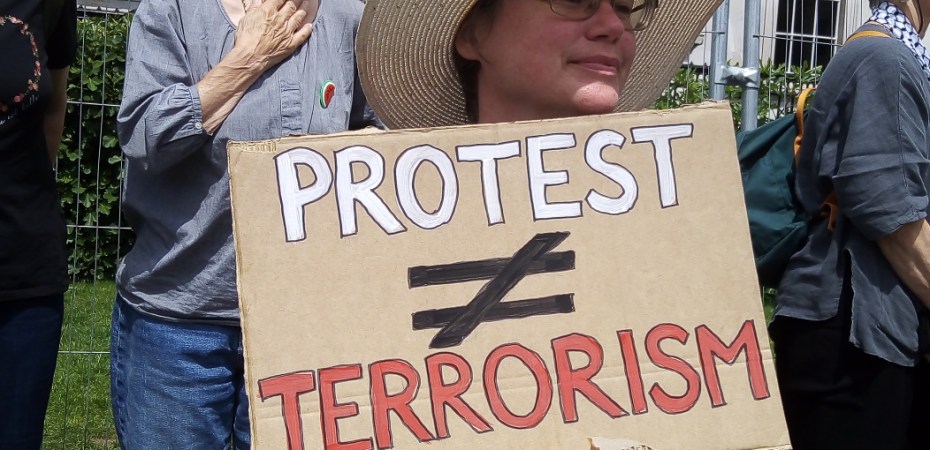
In July, Parliament votes to classify direct action group Palestine Action as “terrorist”, with very few Labour rebels voting against. Over the rest of the year, hundreds of peaceful protesters will be arrested for expressing support for Palestine Action, including two days before Christmas, Greta Thunberg. Members of the group, held on remand with no bail ahead of distant trial dates, start a hunger strike that reaches life-threatening stages.

Following the vote, Zarah Sultana MP, already suspended from the Paty, resigns from Labour to build a new party with Jeremy Corbyn. The Labour apparatus responds with authoritarian measures, withdrawing the whip from four MPs after they voted against disability benefit cuts and removing the ‘trade envoy’ roles of three more. A day later Diane Abbott is suspended for elaborating on her earlier comments about racism that saw her suspended and then reinstated ahead of the 2024 general election.

August 11th

On one day in August522 are arrested for peacefully protesting in support of Palestine Action, half of those over 60. Labour peer Lord Hain describes the ban as intellectually bankrupt, politically unprincipled and morally wrong.

September opens with left winger Zack Polanski winning the Green Party leadership by a landslide, leading to a rapid spurt in membership, including many disillusioned former Labour members.

Deputy leader Angela Rayner is forced to resign after breaking the ministerial code over non-payment of stamp duty on the purchase of a house. Starmer carries out a major reshuffle and is also forced to sack Peter Mandelson as the UK’s ambassador to the US, after he faced mounting scrutiny over his relationship with Jeffrey Epstein – this, after having defended him in Parliament 24 hours on from being informed that Mandelson had continued to express support for Epstein even after his first conviction. Backbench MPs, notably Clive Lewis, openly question Starmer’s fitness for office and ability to survive.

In a further scandal affecting close allies of the Prime Minister, Paul Ovenden resigns as Director of Strategy at Number 10 over revelations, first published by the Mail, that in 2017 he made derogatory, sexually explicit comments about Diane Abbott in a private email.

At the end of the month, Labour’s Conference votes to call Israel’s bombardment of Palestine a genocide and calls for an arms embargo. It also supports for a wealth tax.

In OctoberLucy Powell, sacked earlier in the year from Keir Starmer’s Cabinet, wins Labour’s Deputy leadership against the establishment candidate Bridget Philippson.  Due to a combination of national policy failings and the local Party bureaucracy imposing their own candidate, Labour lose the Caerphilly byelection to Plaid Cymru. Labour Hub comments: “Caerphilly showed that voters were able to find a way forward to advance progressive, anti-austerity policies and to oppose Reform without settling for a Labour leadership which borrows their rhetoric and accepts many of their premises.”

Starmer in serious trouble

The contest for the next Leader of the Labour Party effectively opens in November when supporters of Keir Starmer clumsily brief the media that he will fight a challenge to his leadership. Health Secretary Wes Streeting takes to the airways to deny an interest and condemns briefings from Number Ten. Energy Secretary Ed Miliband says whoever did it should be sacked, while Starmer says he is satisfied it was nobody in Number Ten and that his divisive and much disliked Chief of Staff Morgan McSweeney is safe in his job.

To the shock of many Labour MPs and the glee of the far right Nigel Farage and Tommy Robinson, the Government announces a new clampdown on asylum seekers. Lord Alf Dubs describes the proposals as  “shabby” and Bell Ribeiro-Addy agrees: “The government’s latest asylum proposals seem calculated to do nothing but inflict more misery and uncertainty on people seeking safety in this country. This is not opposing the politics of hatred and division, this is holding the door open for them.”

The four Labour MPs who had the Party whip withdrawn in July for being “persistent rebels” have it restored.

Labour’s Budget finally abolishes the two-child benefit cap and includes a few other things welcomed by the left, such as freezing rail fares and reducing energy bills. But a new round of private finance initiatives for the NHS, the freezing of housing benefit, the absence of a wealth tax and the subsequent retreat on workers’ rights indicate that the Budget is more about shoring up the Government’s dwindling authority than a radical shift in direction.

In yet another unpopular erosion of basic civil liberties, Labour announces a reduction in trial by jury in December. But in perhaps the best news for the left all year, Andrea Egan beats the incumbent to become the new General Secretary of Unison, Britain’s largest trade union. The win is likely to have profound implications for the union’s loyalty to the Starmer leadership.

Labour rounds off the year with a record month of adverse by-election results. One commentator says: “Never before has Labour done as bad as this. Not even during the bleakest moments of the Corbyn years when the party was assailed by the media, and its coalition split by Brexit… Can their support drop even further?” It is also Labour’s worst ever quarter for by-election results.  Small wonder that when asked in a poll if they would have a better chance of winning the next election if Keir Starmer is replaced, Labour voters say yes, by an overwhelming three to one margin.

It’s clear that much of the public has had enough of the Government’s authoritarianism and its failure to deal with the cost of living crisis, a failure Starmer himself alluded to in his Christmas message.

Party members are fed up with the factional stitching up of selection processes, which has unseated scores of decent councillors. And backbench MPs are increasingly fearful that sticking with the current leadership could cost them their seats at the next general election. As we enter a new year that will take us to the midway point of Labour’s five year term, two questions arise: is it too late for the Government change course? And can Keir Starmer survive?

Mike Phipps’ book Don’t Stop Thinking About Tomorrow: The Labour Party after Jeremy Corbyn (OR Books, 2022) can be ordered here.

Image: c/o Labour Hub.


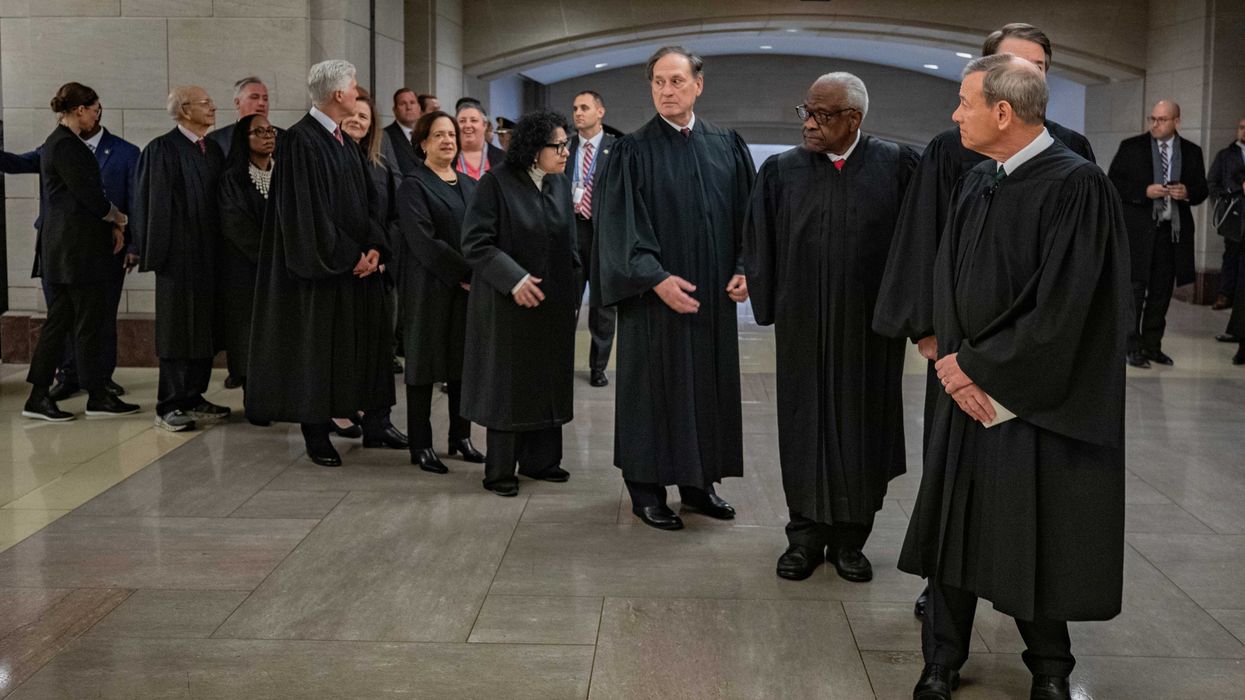
U.S. Supreme Court advances 'kooky theory' devoid of 'constitutional grounding': legal expert


U.S. Supreme Court on January 20, 2025 

January 02, 2026
ALTERNET

Within in the MAGA movement, a far-right legal doctrine known as the Unitary Executive Theory has become increasingly prominent. The theory claims that U.S. presidents have sole authority over the federal government's executive branch, and its critics argue that it ignores the checks and balances in the U.S. Constitution.

One of those critics is Simon Lazarus, who was a domestic policy adviser for President Jimmy Carter in the late 1970s but has spent most of his career working for Washington, D.C. law firms.

In an article published by The New Republic on January 2, Lazarus is highly critical of the Unitary Executive Theory and the U.S. Supreme Court — which, he argues, is helping to advance an idea that has no "grounding" in the U.S. Constitution.

The High Court recently heard oral arguments in Trump v. Slaughter, President Donald Trump's legal battle with former Federal Trade Commission (FTC) official Rebecca Slaughter (who he fired). Trump and his lawyers believe that under the Unitary Executive Theory, the president had a right to fire Slaughter. But Slaughter's allies are countering that the executive branch, under the Constitution, doesn't have nearly as much power as he says it does.

"The right-wing justices' emergent disarray seemed to reflect their awareness of pitfalls lurking in and around their hitherto unquestioned unitary executive gospel — including logical, legal, and most of all, real-world consequences that menace the economy, the nation, and the Court itself," Lazarus argues. "With these threats suddenly hoving into view, the conservative justices were flailing to figure out credible strategies to head it off. Obviously, the gritted-teeth dogmatism of the conservative justices is the engine that has driven this kooky theory forward, despite its evident lack of grounding in constitutional text and history."

Lazarus adds, "But liberals also deserve blame. They have stood by while conservative presidential absolutists have framed the debate with labels, shibboleths, and catch-phrases that, while misleading or outright false, have tilted the playing field rightward."

Liberals, the former Carter Administration official says, need to do a much better job exposing the constitutional flaws in the Unitary Executive Theory.

"Liberal leaders cannot save invaluable institutional structures their predecessors built, if they fail to galvanize an irresistible fervor for their preservation, as those predecessors did," Lazarus writes. "And with the flaws of unitary executive theory being so apparent to its proponents on the Roberts Court, it would be foolish to not pillory this dogma, now that its edifice is buckling."


Read Simon Lazarus' full article for The New Republic at this link.
Trump official admits 7 straight month job losses in key sector


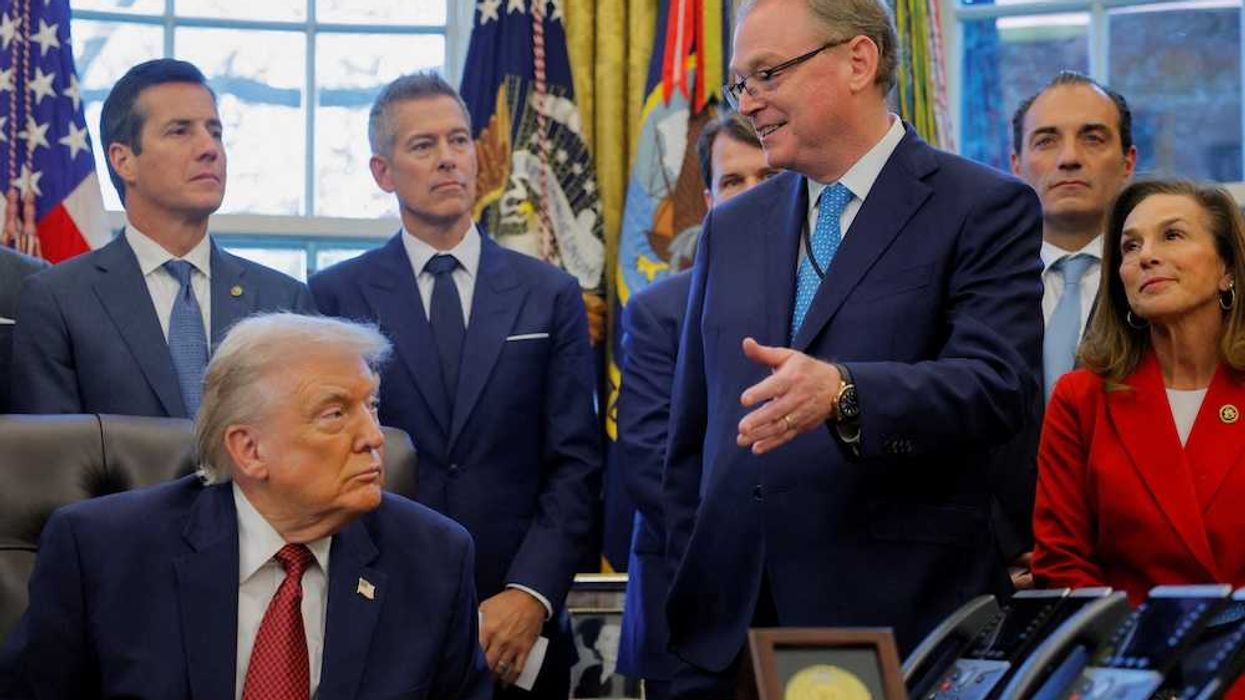
National Economic Council Director Kevin Hassett speaks as Ford CEO Jim Farley, Stellantis CEO Antonio Filosa, U.S. Rep Lisa McClain (R-MI), U.S. Transportation Secretary Sean Duffy and U.S. President Donald Trump listen during the announcement of new fuel economy standards, in the Oval Office at the White House in Washington, D.C., U.S., December 3, 2025. REUTERS/Brian Snyder

January 02, 2026
ALTERNET

When President Donald Trump first imposed his "Liberation Day" tariffs in spring of 2025, he aimed to incentivize companies to make products in the United States and bolster hiring in the manufacturing sector. However, one administration official is now admitting the president's key economic policy has had the opposite effect.

During a recent interview on CNBC, Kevin Hassett – who is the director of the National Economic Council favored to be appointed as the next Federal Reserve chairman – admitted to host Carl Quintanilla that the U.S. economy had seen seven straight months of losses in the manufacturing sector according to figures released from November of 2025. However, Hassett maintained that the trend would reverse in 2026.

"We've been tracking groundbreakings of all these factories that have come forward from both the trade deals, like the drug companies on-shoring production for national security reasons, and we're up to around 30 groundbreakings since September," he said. "All those are going to create a lot of jobs moving into next year."

Financial journalist and commentator Brian Allen was skeptical of Hassett's claims, writing on X: "Under Donald Trump, America has now seen seven straight months of manufacturing job losses. Seven."

"While he sells 'America First' slogans, working Americans keep getting pink slips," he wrote. "This isn’t leadership. It’s economic erosion dressed up as patriotism."

The data also doesn't support the administration's bullish outlook on manufacturing jobs. According to a CNN report from late December, "industries that rely on manual labor are cutting jobs, not adding them." The network cited figures from the Bureau of Labor Statistics finding that traditional blue-collar industries have been steadily shedding employees throughout the bulk of last year.

"You can’t say the economy is doing really well if these jobs aren’t growing alongside it," Fundstrat Global Advisors economic strategist Hardika Singh told CNN.

Watch the clip of Hassett's remarks below:


Zohran Mamdani’s 2026 Mayoral Inauguration Block Party in New York City


By Markos Papadatos
MUSIC EDITOR
DIGITAL JOURNAL
January 2, 2026


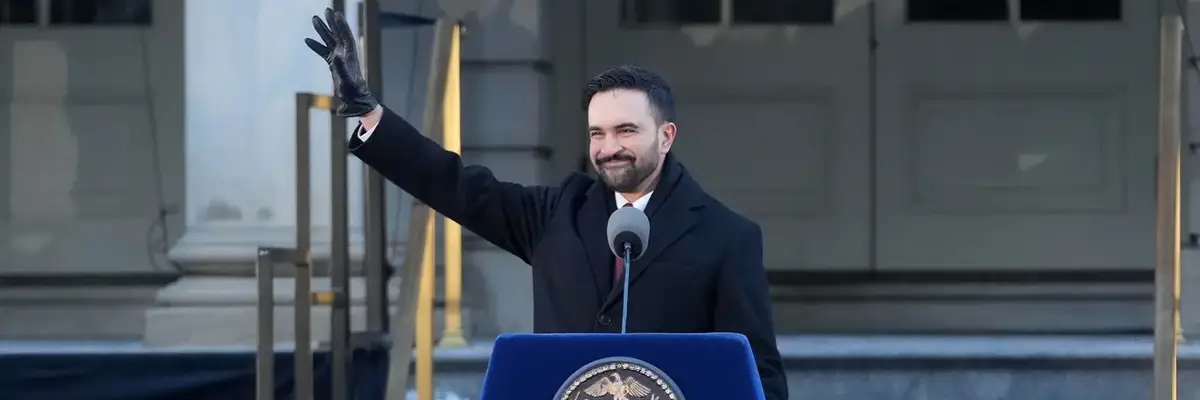
Zohran Mamdani was born in Uganda to a family of Indian origin before moving to the United States at age seven - Copyright AFP TIMOTHY A.CLARY

On January 1, 2026, NYC Mayor Zohran Mamdani hosted a massive Block Party and Inaugural event near New York’s City Hall.

He arrived there with his wife, Rama Duwaji, in a yellow taxicab.

On the night prior, Mamdani took his oath of office on the Quaran, which was administered by New York Attorney General Letitia “Tish” James in a defunct old City Hall subway station, as his wife looked on.

Mamdani was sworn in as the 112th mayor of New York City, and he is the first-ever Muslim and Asian American mayor to hold this position.

Mamdani is a member of the Democratic Socialist party, and he previously served as a New York State Assemble member, where he represented Astoria.

At 34 years old, Mamdani is New York City’s youngest mayor in generations (since Hugh J. Grant was inaugurated at age 30 on January 1st, 1889).

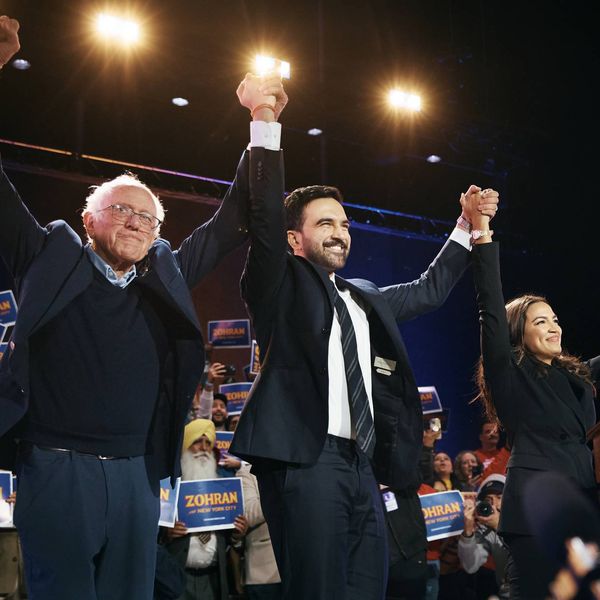
Despite the freezing temperatures, this inauguration block party was well-attended with New York Governor Kathy Hochul, Rep. Alexandria Ocasio Cortez (AOC), Senator Chuck Schumer, Senator Bernie Sanders, New York Attorney General Letitia James.

Due to the heavy cold, most of these politicians were bundled up in gloves, coats, and navy-blue airline-style blankets.

Former New York City Mayors Bill de Blasio and Eric Adams were also in the crowd, along with Former Republican mayoral candidate Curtis Sliwa.

Alexandria Ocasio-Cortez made the opening remarks, while Bernie Sanders conducted the ceremonial swearing in. “Thank you to the man whose leadership I seek most to emulate, who I am so grateful to be sworn in by today, Senator Bernie Sanders,” Mamdani said.

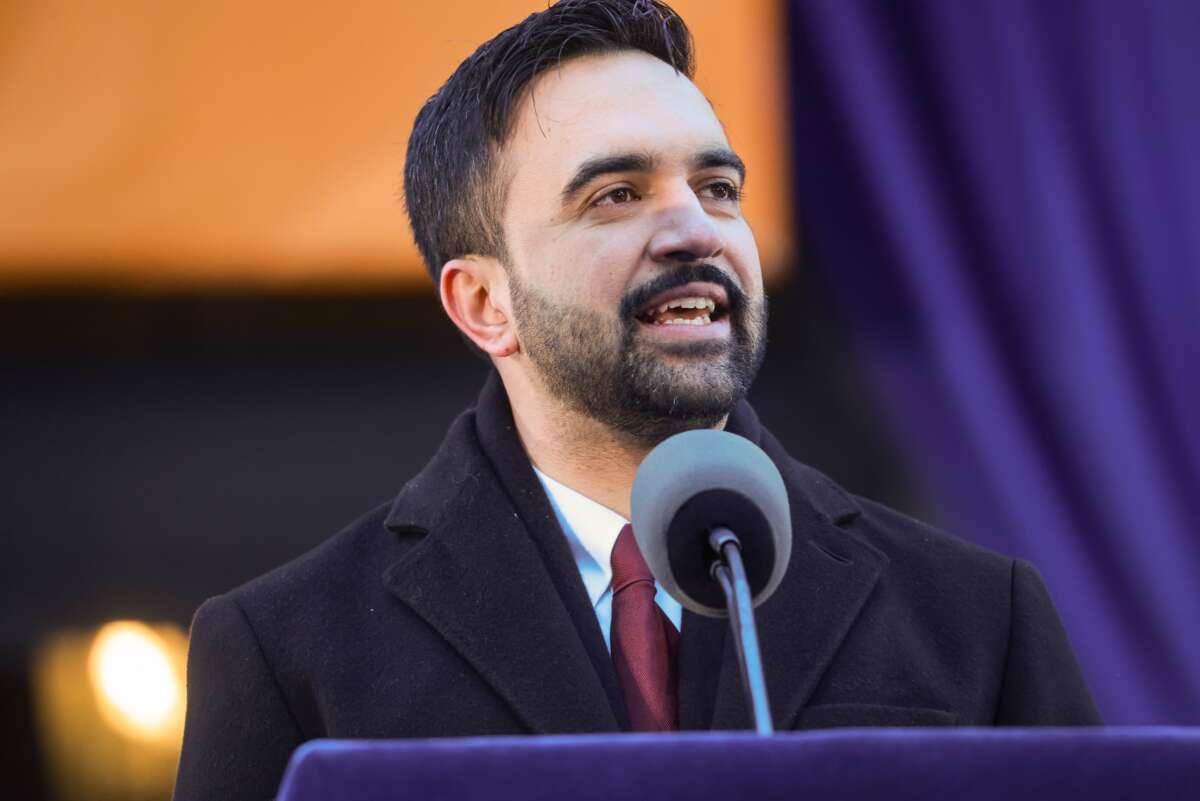
“My fellow New Yorkers, today begins a new era,” Mamdani said in his inauguration speech. “I stand before you moved by the privilege of taking this sacred oath, humbled by the faith that you have placed in me, and honored to serve as Mayor of New York City, but I do not stand alone,” the leftist mayor explained.

“I stand alongside you, the tens of thousands gathered here in Lower Manhattan, warmed against the January chill by the resurgent flame of hope,” he said.

“I promise you this: If you are a New Yorker, I am your mayor. Regardless of whether we agree, I will protect you, celebrate with you, mourn alongside you, and never for a second, hide from you,” Mamdani elaborated.

Mamdani went on to thank his parents, “Mama and Baba” for raising him, as well as for teaching him how to be in this world and for bringing him to this city.
New Yorkers have taken note of Mamdani’s enthusiastic support of his wife, Rama Duwaji.— © AFP

“Thank you to my family, from Kampala to Delhi, and thank you to my wife, Rama, for being my best friend, and for always showing me the beauty in everyday things,” Mamdani acknowledged.

“Most of all, thank you to the people of New York,” Mamdani underscored.

“Beginning today, we will govern expansively and audaciously,” he noted. “We may not always succeed but never will we be accused of lacking the courage to try.”

Mamdani reiterated several of the promises he made during his mayoral campaign sch as freezing the rent for rent-stabilized apartments and vowed to make “buses fast and free.”

Following his inaugural address speech, confetti drizzled and fell over City Hall.

Besides the cold temperatures, only downside was that there was no access to public restrooms or food concession stands or music as supporters of Mamdani gathered in the barricade pens to celebrate this historic moment.

Please Note: This journalist attended the 2026 Zohran Mamdani NYC Inauguration Block Party in-person.


Written ByMarkos Papadatos
Markos Papadatos is Digital Journal's Editor-at-Large for Music News. Papadatos is a Greek-American journalist and educator that has authored over 24,000 original articles over the past 19 years. He has interviewed some of the biggest names in music, entertainment, lifestyle, magic, and sports. He is an 18-time "Best of Long Island" winner, where for three consecutive years (2020, 2021, and 2022), he was honored as the "Best Long Island Personality" in Arts & Entertainment, an honor that has gone to Billy Joel six times.


Zohran Mamdani and the Long Muslim Thread in the American Story

America is not a Christian nation, nor a nation for whites, nor a nation for the rich alone. It is a nation built on principles shared by all who live in it, and Islam has always been part of that inheritance.


Sen. Bernie Sanders (I-Vt.) swears in Zohran Mamdani as New York City mayor as Mamdani’s wife Rama Duwaji looks on at City Hall on Thursday January 1, 2026 in New York, New York.
(Photo by Spencer Platt/Getty Images)
Common Dreams


“If there is no struggle, there is no progress.” —Frederick Douglass


America’s story has always been a story of struggle—for liberty, for justice, for recognition. On a cold January afternoon outside City Hall, Zohran Mamdani stepped into that struggle. Raising his right hand, he took the oath of office as mayor of New York City—the first Muslim ever to hold the city’s highest office—embodying Douglass’ truth: Progress demands courage, perseverance, and the relentless pursuit of inclusion.


‘Welcome to a New Era for NYC’: Zohran Mamdani Sworn In as New York City Mayor


The headlines captured the surface: a 25-minute inaugural address, roughly 4,000 spectators, a private swearing in just after midnight at the Old City Hall subway station, appearances by Rep. Alexandria Ocasio-Cortez (D-N.Y.) and Sen. Bernie Sanders (I-Vt.). But the moment ran far deeper. Mamdani’s inauguration was not only a municipal milestone; it was the latest chapter in a debate as old as the republic itself: where Muslims belong in the American story—and whether they ever truly have.

That question stretches back to July 30, 1788, when North Carolina ratified the Constitution. Anti-federalist William Lancaster warned that by rejecting religious tests for office, the new nation might allow Muslims to govern. “Papists may occupy that chair,” he cautioned, “and Mahometans may take it. I see nothing against it.” A warning, then. A prophecy, now.

When Mamdani declared, “New York belongs to all who live in it,” he answered a question first posed in fear in 1788, tested in war, dramatized by Muhammad Ali, and deferred for generations.

There were no Muslim candidates in 1788. But there were Muslims in America—thousands of enslaved Africans whose presence exposed the republic’s deepest contradiction. Between 5 and 20% of enslaved Africans were Muslim, many literate in Arabic, bearing names like Fatima, Ali, Hassan, and Said. Their faith was violently suppressed, yet fragments endured—in memory, language, and resistance.

Even the founding generation reflected this tension. Thomas Jefferson studied the Quran and treated Islam as a serious intellectual tradition, even as he owned enslaved Muslims. Islam existed in theory, in human reality, and yet was denied civic recognition.

That tension carried forward into the nation’s greatest moral reckoning: the Civil War.

Muslims fought for the Union. Mohammed Kahn enlisted in the 43rd New York Infantry. Nicholas Said—born Mohammed Ali ben Said in Nigeria, raised Muslim, later converted to Christianity—served as a sergeant in the 55th Massachusetts Colored Regiment and as a Union clerk. Captain Moses Osman held a high-ranking post in the 104th Illinois Infantry. Union rosters show names like Ali, Hassan, and Said, hinting at a wider Muslim presence than history often acknowledges.

Yet rifles were not the only weapons. Islam entered the moral imagination through words and witness. Sen. Charles Sumner, nearly beaten on the Senate floor, quoted the Quran to condemn slavery. Ayuba Suleiman Diallo—Job ben Solomon—had already unsettled transatlantic assumptions through literacy, eloquence, and dignity. His story endured into the Civil War, republished in 1864 to reinforce the war’s moral purpose. Overseas, Hussein Pasha of Tunisia urged the US to abolish slavery “in the name of humanity,” showing Muslim advocacy was part of a global ethical conversation.

Muslims remained largely invisible in America’s public self-understanding—until the 20th century produced a figure too large to ignore.

Muhammad Ali, still the most recognizable man on Earth decades after his gold medal at the 1960 Rome Olympics, transformed boxing and American consciousness alike. He was named “Athlete of the Century” by Sports Illustrated, GQ, and the BBC; “Kentuckian of the Century” by his home state; and became a global icon through speed, grace, and audacious charm.

Ali’s significance extended far beyond the ring. By insisting on the name Muhammad Ali instead of Cassius Clay, he forced America to confront the legacy of slavery embedded in naming itself. His embrace of Islam was unapologetic and public. His refusal to be drafted into the Vietnam War cost him his title and livelihood, yet anticipated the anti-war movement. His fights in Kinshasa, Manila, and Kuala Lumpur shifted attention from superpower dominance toward global conscience.

Ali’s humanitarian work was relentless: delivering over 232 million meals, medical supplies to children in Jakarta, orphans in Liberia, street children in Morocco. At home, he visited soup kitchens, hospitals, advocated for children’s protections, and taught tolerance in schools through his book Healing. For this, he was honored as a United Nations Messenger of Peace, cited by Amnesty International, and recognized by President Jimmy Carter as “Mr. International Friendship.”

Ali showed the nation something fundamental: that Islam is American. That Muslims have always belonged to the moral and civic fabric of this country. That a nation built on life, liberty, and the pursuit of happiness, on religious tolerance, on care for the poor, is naturally aligned with Islam. Mamdani is American not in spite of his faith, but because Islam is American.

It is against this long arc—from slavery to abolition, civil rights, global conscience, and the moral courage of Muhammad Ali—that Zohran Mamdani’s inauguration comes into focus.

Mamdani’s life traces modern routes of migration and belonging. Born in Kampala, Uganda to parents with roots in South Asia, he was raised in New York City. Yet his rise fulfills an older constitutional promise. In his inaugural address, he thanked his parents—“Mama and Baba”—acknowledged family “from Kampala to Delhi,” and recalled taking his oath of American citizenship on Pearl Street.

When Mamdani declared, “New York belongs to all who live in it,” he answered a question first posed in fear in 1788, tested in war, dramatized by Muhammad Ali, and deferred for generations. He named mosques alongside churches, synagogues, temples, gurdwaras, and mandirs, making visible what history had long rendered partial. When he spoke of halal cart vendors, Palestinian New Yorkers, Black homeowners, and immigrant families bound together by labor and hope, he articulated a civic vision rooted in lived American reality.

Notably, Mamdani did not frame his Muslim identity as something to defend. It simply existed. “Where else,” he asked, “could a Muslim kid like me grow up eating bagels and lox every Sunday?” Hybridity was not an exception. It was inheritance.

Yet it is equally important to recognize that Mamdani’s historic victory does not make him infallible, nor should it. The fact that he is the first Muslim mayor of New York City is not a personal achievement alone—it reflects the barriers that Muslims, like many others, have historically faced in participating fully in American democracy. Discrimination, racial and religious bias, and systemic obstacles made this moment possible only now, not because of any failing on his part. He will, like all mayors before him, make mistakes. He will face limits, criticism, and flaws—because he is human. To hold him to an impossible standard would be to misunderstand both history and democracy.

There is, too, something unmistakably American about Mamdani’s politics. By invoking La Guardia, Dinkins, and de Blasio; by embracing democratic socialism without apology; by grounding his agenda in labor, affordability, and collective responsibility, he situates himself firmly in an American tradition—one that echoes the abolitionists, the New Deal, and the moral courage of Ali.

And as Malcolm X reminds us, this is the guiding principle for American civic life: “I believe in the brotherhood of man, all men, but I don’t believe in forcing anyone to accept it.”

This is what makes the moment historic. Not that a Muslim has finally entered American politics, but that an old constitutional anxiety—once voiced as a warning—has become an ordinary fact of civic life. Islam, Mamdani, and the ideals of this nation converge in a single, undeniable truth: America is not a Christian nation, nor a nation for whites, nor a nation for the rich alone. It is a nation built on principles shared by all who live in it, and Islam has always been part of that inheritance.

The work, as Mamdani said, has only just begun. But the story his inauguration tells—that Muslims were enslaved at the nation’s birth, debated at its founding, fought in its wars, shaped its abolitionist conscience, transformed its civil rights culture, and now govern its greatest city—is no longer hypothetical.

It stands, unmistakably, on the steps of City Hall.

‘We Will Govern Expansively and Audaciously’: Zohran Mamdani’s Inaugural Address

To those who insist that the era of big government is over, hear me when I say this—no longer will City Hall hesitate to use its power to improve New Yorkers’ lives.


Zohran Mamdani addresses New Yorkers as he is inaugurated on January 1, 2026.
(Photo via NYC.gov)

Zohran Mamdani
Jan 02, 2026
Common Dreams


New York City Mayor Zohran Mamdani prepared these remarks to deliver at his inauguration on January 1, 2026.


My fellow New Yorkers—today begins a new era.


I stand before you moved by the privilege of taking this sacred oath, humbled by the faith that you have placed in me, and honored to serve as either your 111th or 112th Mayor of New York City. But I do not stand alone.

I stand alongside you, the tens of thousands gathered here in Lower Manhattan, warmed against the January chill by the resurgent flame of hope.

Seldom do we hold such an opportunity to transform and reinvent. Rarer still is it the people themselves whose hands are the ones upon the levers of change.

I stand alongside countless more New Yorkers watching from cramped kitchens in Flushing and barbershops in East New York, from cell phones propped against the dashboards of parked taxi cabs at LaGuardia, from hospitals in Mott Haven and libraries in El Barrio that have too long known only neglect.

I stand alongside construction workers in steel-toed boots and halal cart vendors whose knees ache from working all day.

I stand alongside neighbors who carry a plate of food to the elderly couple down the hall, those in a rush who still lift strangers’ strollers up subway stairs, and every person who makes the choice day after day, even when it feels impossible, to call our city home.

I stand alongside over 1 million New Yorkers who voted for this day nearly two months ago—and I stand just as resolutely alongside those who did not. I know there are some who view this administration with distrust or disdain, or who see politics as permanently broken. And while only action can change minds, I promise you this: If you are a New Yorker, I am your Mayor. Regardless of whether we agree, I will protect you, celebrate with you, mourn alongside you, and never, not for a second, hide from you.

I thank the labor and movement leaders here today, the activists and elected officials who will return to fighting for New Yorkers the second this ceremony concludes, and the performers who have gifted us with their talent.

Thank you to Governor Hochul for joining us. And thank you to Mayor Adams—Dorothy’s son, a son of Brownsville who rose from washing dishes to the highest position in our city—for being here as well. He and I have had our share of disagreements, but I will always be touched that he chose me as the mayoral candidate that he would most want to be trapped with on an elevator.

Thank you to the two titans who, as an Assemblymember, I’ve had the privilege of being represented by in Congress—Nydia Velázquez and our incredible opening speaker Alexandria Ocasio-Cortez. You have paved the way for this moment.

Thank you to the man whose leadership I seek most to emulate, who I am so grateful to be sworn in by today—Senator Bernie Sanders.

Thank you to my teams—from the Assembly, to the campaign, to the transition and now, the team I am so excited to lead from City Hall.

In so doing, we will provide our own answer to that age-old question—who does New York belong to? Well, my friends, we can look to Madiba and the South African Freedom Charter: New York “belongs to all who live in it.”

Thank you to my parents, Mama and Baba, for raising me, for teaching me how to be in this world, and for having brought me to this city. Thank you to my family—from Kampala to Delhi. And thank you to my wife Rama for being my best friend, and for always showing me the beauty in everyday things.

Most of all—thank you to the people of New York.

A moment like this comes rarely. Seldom do we hold such an opportunity to transform and reinvent. Rarer still is it the people themselves whose hands are the ones upon the levers of change.

And yet we know that too often in our past, moments of great possibility have been promptly surrendered to small imagination and smaller ambition. What was promised was never pursued, what could have changed remained the same. For the New Yorkers most eager to see our city remade, the weight has only grown heavier, the wait has only grown longer.

In writing this address, I have been told that this is the occasion to reset expectations, that I should use this opportunity to encourage the people of New York to ask for little and expect even less. I will do no such thing. The only expectation I seek to reset is that of small expectations.

Beginning today, we will govern expansively and audaciously. We may not always succeed. But never will we be accused of lacking the courage to try.

To those who insist that the era of big government is over, hear me when I say this—no longer will City Hall hesitate to use its power to improve New Yorkers’ lives.

For too long, we have turned to the private sector for greatness, while accepting mediocrity from those who serve the public. I cannot blame anyone who has come to question the role of government, whose faith in democracy has been eroded by decades of apathy. We will restore that trust by walking a different path—one where government is no longer solely the final recourse for those struggling, one where excellence is no longer the exception.

We expect greatness from the cooks wielding a thousand spices, from those who stride out onto Broadway stages, from our starting point guard at Madison Square Garden. Let us demand the same from those who work in government. In a city where the mere names of our streets are associated with the innovation of the industries that call them home, we will make the words “City Hall” synonymous with both resolve and results.

As we embark upon this work, let us advance a new answer to the question asked of every generation: Who does New York belong to?

For much of our history, the response from City Hall has been simple: It belongs only to the wealthy and well-connected, those who never strain to capture the attention of those in power.

Here, where the language of the New Deal was born, we will return the vast resources of this city to the workers who call it home.

Working people have reckoned with the consequences. Crowded classrooms and public housing developments where the elevators sit out of order; roads littered with potholes and buses that arrive half an hour late, if at all; wages that do not rise and corporations that rip off consumers and employees alike.

And still—there have been brief, fleeting moments where the equation changed.

Twelve years ago, Bill de Blasio stood where I stand now as he promised to “put an end to economic and social inequalities” that divided our city into two.

In 1990, David Dinkins swore the same oath I swore today, vowing to celebrate the “gorgeous mosaic” that is New York, where every one of us is deserving of a decent life.

And nearly six decades before him, Fiorella La Guardia took office with the goal of building a city that was “far greater and more beautiful” for the hungry and the poor.

Some of these Mayors achieved more success than others. But they were unified by a shared belief that New York could belong to more than just a privileged few. It could belong to those who operate our subways and rake our parks, those who feed us biryani and beef patties, picanha and pastrami on rye. And they knew that this belief could be made true if only government dared to work hardest for those who work hardest.

Over the years to come, my administration will resurrect that legacy. City Hall will deliver an agenda of safety, affordability, and abundance—where government looks and lives like the people it represents, never flinches in the fight against corporate greed, and refuses to cower before challenges that others have deemed too complicated.

In so doing, we will provide our own answer to that age-old question—who does New York belong to? Well, my friends, we can look to Madiba and the South African Freedom Charter: New York “belongs to all who live in it.”

Together, we will tell a new story of our city.

This will not be a tale of one city, governed only by the 1%. Nor will it be a tale of two cities, the rich versus the poor.

It will be a tale of 8 and a half million cities, each of them a New Yorker with hopes and fears, each a universe, each of them woven together.

The authors of this story will speak Pashto and Mandarin, Yiddish and Creole. They will pray in mosques, at shul, at church, at Gurdwaras and Mandirs and temples—and many will not pray at all.

They will be Russian Jewish immigrants in Brighton Beach, Italians in Rossville, and Irish families in Woodhaven—many of whom came here with nothing but a dream of a better life, a dream which has withered away. They will be young people in cramped Marble Hill apartments where the walls shake when the subway passes. They will be Black homeowners in St. Albans whose homes represent a physical testament to triumph over decades of lesser-paid labor and redlining. They will be Palestinian New Yorkers in Bay Ridge, who will no longer have to contend with a politics that speaks of universalism and then makes them the exception.

From today onwards, we will understand victory very simply: something with the power to transform lives, and something that demands effort from each of us, every single day.

Few of these 8 and a half million will fit into neat and easy boxes. Some will be voters from Hillside Avenue or Fordham Road who supported President Trump a year before they voted for me, tired of being failed by their party’s establishment. The majority will not use the language that we often expect from those who wield influence. I welcome the change. For too long, those fluent in the good grammar of civility have deployed decorum to mask agendas of cruelty.

Many of these people have been betrayed by the established order. But in our administration, their needs will be met. Their hopes and dreams and interests will be reflected transparently in government. They will shape our future.

And if for too long these communities have existed as distinct from one another, we will draw this city closer together. We will replace the frigidity of rugged individualism with the warmth of collectivism. If our campaign demonstrated that the people of New York yearn for solidarity, then let this government foster it. Because no matter what you eat, what language you speak, how you pray, or where you come from—the words that most define us are the two we all share: New Yorkers.

And it will be New Yorkers who reform a long-broken property tax system. New Yorkers who will create a new Department of Community Safety that will tackle the mental health crisis and let the police focus on the job they signed up to do. New Yorkers who will take on the bad landlords who mistreat their tenants and free small business owners from the shackles of bloated bureaucracy. And I am proud to be one of those New Yorkers.

When we won the primary last June, there were many who said that these aspirations and those who held them had come out of nowhere. Yet one man’s nowhere is another man’s somewhere. This movement came out of 8 and a half million somewheres—taxi cab depots and Amazon warehouses, DSA meetings and curbside domino games. The powers that be had looked away from these places for quite some time—if they’d known about them at all—so they dismissed them as nowhere. But in our city, where every corner of these five boroughs holds power, there is no nowhere and there is no no one. There is only New York, and there are only New Yorkers.

8 and a half million New Yorkers will speak this new era into existence. It will be loud. It will be different. It will feel like the New York we love.

No matter how long you have called this city home, that love has shaped your life. I know that it has shaped mine.

This is the city where I set landspeed records on my razor scooter at the age of 12. Quickest four blocks of my life.

The city where I ate powdered donuts at halftime during AYSO soccer games and realized I probably wouldn’t be going pro, devoured too-big slices at Koronet Pizza, played cricket with my friends at Ferry Point Park, and took the 1 train to the BX10 only to still show up late to Bronx Science.

The city where I have gone on hunger strike just outside these gates, sat claustrophobic on a stalled N train just after Atlantic Avenue, and waited in quiet terror for my father to emerge from 26 Federal Plaza.

The city where I took a beautiful woman named Rama to McCarren Park on our first date and swore a different oath to become an American citizen on Pearl Street.

So, standing together with the wind of purpose at our backs, we will do something that New Yorkers do better than anyone else: We will set an example for the world.

To live in New York, to love New York, is to know that we are the stewards of something without equal in our world. Where else can you hear the sound of the steelpan, savor the smell of sancocho, and pay $9 for coffee on the same block? Where else could a Muslim kid like me grow up eating bagels and lox every Sunday?

That love will be our guide as we pursue our agenda. Here, where the language of the New Deal was born, we will return the vast resources of this city to the workers who call it home. Not only will we make it possible for every New Yorker to afford a life they love once again—we will overcome the isolation that too many feel, and connect the people of this city to one another.

The cost of childcare will no longer discourage young adults from starting a family—because we will deliver universal childcare for the many by taxing the wealthiest few.

Those in rent-stabilized homes will no longer dread the latest rent hike—because we will freeze the rent.

Getting on a bus without worrying about a fare hike or whether you’ll be late to your destination will no longer be deemed a small miracle—because we will make buses fast and free.

These policies are not simply about the costs we make free, but the lives we fill with freedom. For too long in our city, freedom has belonged only to those who can afford to buy it. Our City Hall will change that.

These promises carried our movement to City Hall, and they will carry us from the rallying cries of a campaign to the realities of a new era in politics.

Two Sundays ago, as snow softly fell, I spent 12 hours at the Museum of the Moving Image in Astoria, listening to New Yorkers from every borough as they told me about the city that is theirs.

We discussed construction hours on the Van Wyck Expressway and EBT eligibility, affordable housing for artists and ICE raids. I spoke to a man named TJ who said that one day a few years ago, his heart broke as he realized he would never get ahead here, no matter how hard he worked. I spoke to a Pakistani Auntie named Samina, who told me that this movement had fostered something too rare: softness in people’s hearts. As she said in Urdu: logon ke dil badalgyehe.

142 New Yorkers out of 8 and a half million. And yet—if anything united each person sitting across from me, it was the shared recognition that this moment demands a new politics, and a new approach to power.

We will deliver nothing less as we work each day to make this city belong to more of its people than it did the day before.

Here is what I want you to expect from the administration that this morning moved into the building behind me.

We will transform the culture of City Hall from one of “no” to one of “how?”

We will answer to all New Yorkers, not to any billionaire or oligarch who thinks they can buy our democracy.

We will govern without shame and insecurity, making no apology for what we believe. I was elected as a democratic socialist and I will govern as a democratic socialist. I will not abandon my principles for fear of being deemed radical. As the great senator from Vermont once said: “What’s radical is a system which gives so much to so few and denies so many people the basic necessities of life.”

We will strive each day to ensure that no New Yorker is priced out of any one of those basic necessities.

And throughout it all we will, in the words of Jason Terrance Phillips, better known as Jadakiss or J to the Muah, be “outside”—because this is a government of New York, by New York, and for New York.

Before I end, I want to ask you, if you are able, whether you are here today or anywhere watching, to stand.

I ask you to stand with us now, and every day that follows. City Hall will not be able to deliver on our own. And while we will encourage New Yorkers to demand more from those with the great privilege of serving them, we will encourage you to demand more of yourselves as well.

The movement we began over a year ago did not end with our victory on Election Night. It will not end this afternoon. It lives on with every battle we will fight, together; every blizzard and flood we withstand, together; every moment of fiscal challenge we overcome with ambition, not austerity, together; every way we pursue change in working peoples’ interests, rather than at their expense, together.

No longer will we treat victory as an invitation to turn off the news. From today onwards, we will understand victory very simply: something with the power to transform lives, and something that demands effort from each of us, every single day.

What we achieve together will reach across the five boroughs and it will resonate far beyond. There are many who will be watching. They want to know if the left can govern. They want to know if the struggles that afflict them can be solved. They want to know if it is right to hope again.

So, standing together with the wind of purpose at our backs, we will do something that New Yorkers do better than anyone else: We will set an example for the world. If what Sinatra said is true, let us prove that anyone can make it in New York—and anywhere else too. Let us prove that when a city belongs to the people, there is no need too small to be met, no person too sick to be made healthy, no one too alone to feel like New York is their home.

The work continues, the work endures, the work, my friends, has only just begun.


Mamdani Revokes Executive Order Banning Divestment From Israel on First Day

Mamdani also signed a number of executive orders aimed at increasing the housing stock and protecting renters.
January 2, 2026
New York Mayor Zohran Mamdani speaks at his ceremonial inauguration as mayor at City Hall on Thursday, January 1, 2026, in New York, NY.Spencer Platt / Getty Images

On his first day in office, New York City Mayor Zohran Mamdani revoked all of the executive orders issued by former Mayor Eric Adams after his indictment in 2024 — including measures that sought to crack down on pro-Palestine protests and advocacy.

In December, Adams signed an order that prohibited city agencies from actions like boycotting or divesting from Israel, which the office labelled as actions that “discriminate against the State of Israel.”

At the same time, Adams signed an order seeking to bar protests outside of places of worship after protesters had targeted institutions, including synagogues, that were holding illegal sales of Palestinian land in the occupied West Bank.

Mamdani’s action on Thursday also revoked an Adams order from June that adopted the International Holocaust Remembrance Alliance’s (IHRA) definition of antisemitism. This definition has been highly criticized for defining criticism of Israel as antisemitism, which advocates for Palestinian rights and civil society groups have said is crafted to quash dissent on pro-Israel policies.

However, Mamdani pledged to keep the Office to Combat Antisemitism, which Adams created in May. “That is an issue that we take very seriously and as part of the commitment that we’ve made to Jewish New Yorkers: to not only protect them, but to celebrate and cherish them,” Mamdani told reporters after signing his first executive orders.

Israel’s foreign ministry criticized Mamdani, saying that his revocations were “antisemitic gasoline on an open fire.” Mamdani said that he issued his order to have “a fresh start for the incoming administration.”

Mamdani’s revocation order, meanwhile, was praised by civil liberties advocates in the city.

“Both of those orders appeared to be last-ditch attempts to suppress viewpoints that [Eric Adams] and his benefactors disagreed with, especially since one of them was issued just in the last few weeks,” said Donna Lieberman, executive director of the New York Civil Liberties Union, per The New York Times.

Lieberman said that Adams’s orders were designed to “have a chilling effect” on protected speech. “The right to free speech does not depend on your viewpoint, and that is true for speech about Israel or Gaza, it is true about political activism about that conflict, and it is true about any other political issue that we face,” she said.

Mamdani also signed a number of executive orders aimed at increasing the housing stock and protecting renters. He issued orders to “revitalize” the Mayor’s Office to Protect Tenants, appointing tenant organizer Cea Weaver to head the office, and announced his administration was intervening in the bankruptcy proceedings of a housing group that has received thousands of reports of violations from tenants.

In his first speech as mayor, Mamdani once again emphasized his commitment to governing everyone in New York City.

“We will answer to all New Yorkers, not to any billionaire or oligarch who thinks they can buy our democracy,” said Mamdani.

“We will govern without shame and insecurity, making no apology for what we believe,” he went on. “I was elected as a democratic socialist and I will govern as a democratic socialist. I will not abandon my principles for fear of being deemed radical.”
Once Again, the New York Times Sells Israel’s Genocide in Gaza as Law Enforcement

Israel is expelling 37 aid groups – a likely death sentence for 100,000s of Palestinians. But the Times speaks only of 'new rules' in Gaza, and 'suspensions' for those who 'resist registration'


by Jonathan Cook | Jan 2, 2026 | 


MSF photo used with permission


This is another masterclass from the New York Times in how to sell genocide as law enforcement.

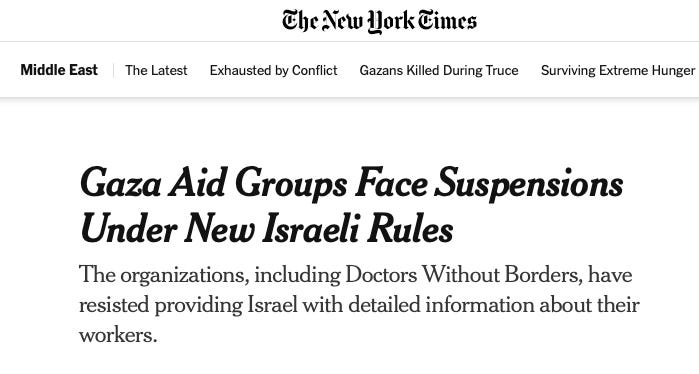
According to today’s headline, “new Israeli rules” mean “suspensions” of aid groups from Gaza – that is, the forced expulsion of 37 humanitarian organizations from Palestinian territory illegally occupied by Israel.

These aid groups organize most of the field hospitals currently operating in Gaza and set up after Israel destroyed the enclave’s proper hospitals. The groups also run emergency shelters, water and sanitation services, and treatment centers for children with acute malnutrition.

Israel’s “registration rules” are a death sentence for a homeless, destitute Palestinian population left vulnerable to starvation, floods, winter cold and disease by Israel’s two-year destruction of their homeland.


Who is to blame? Apparently groups like Doctors Without Borders, Medical Aid for Palestinians and CARE. Why? Because they are “resisting” Israel’s “rules” to “provide detailed information” on their staff in Gaza – information Israel has used time and again to kill those aid workers.

As Doctors Without Borders point out, “we support one in five hospital beds and one in three births” in Gaza. Israel, it added, was “cutting off life-saving medical assistance for hundreds of thousands of people”.

Another organization affected by the new “rules”, the Norwegian Refugee Council, noted that Israel had killed hundreds of aid workers in the past two years. “For us, it is a safety concern for our staff. And acknowledging who they are – it puts them at risk.”

The New York Times wants you to forget who is the criminal here.

It is Israel that’s illegally occupying Gaza and other Palestinian territories – and has been for decades.

It is Israel that has bombed Gaza into the Stone Age.

It is Israel that has ethnically cleansed Gaza’s people from their lands, driving them into ever smaller concentration camps on those ruins, surrounded by Israel’s “yellow line”.

It is Israel that has starved the people of Gaza for months on end by blocking all aid.

It is Israel that’s killed at least 600 aid workers, 1,700 medical staff and 250 journalists in Gaza over the past two years.

It is Israel that has eradicated all Gaza’s hospitals and health care facilities, leaving its maimed and starved population vulnerable to infection and disease.

And it is Israel now expelling aid organizations vital to keep this homeless, bombed, maimed, starved, orphaned, traumatized population alive.

Criminals don’t get to set the “rules” – because the rules they set will, by definition, serve their criminal agenda.

Israel has not hidden that agenda. It wants to eradicate Gaza and its population. It has destroyed the people of Gaza’s homes and the infrastructure they need to survive – from hospitals and schools to sanitation services. It has blocked aid and food, and is now driving out the emergency aid organizations that served as a sticking plaster to keep this population just barely alive.

Israel’s goal is to make life so desperate, so impossible, that the rest of the world will consent to the expulsion of the Palestinian people from Gaza on “humanitarian” grounds.

The New York Times, like the rest of the media, are using language to persuade you that none of this is happening.

Before, the crimes were justified as a “war” – one to eradicate Hamas.

Now, during a supposed “ceasefire” in which Israel keeps killing Palestinians, the crimes are justified as a new, different way of ordering affairs in Gaza, again supposedly needed to root out Hamas. The aid organizations are apparently the ones causing difficulties by “resisting”, by flouting the “rules”.

This is the language of genocide laundering, of genocide denial. It has a long and ugly history.

The Nazis and their media termed the rounding up of Jewish populations from the ghettos they had been forced into as “evacuations”. Those sent to death camps were “resettled”. And the gas chambers were where “detainees” received “special treatment”.

This terminology of good administration – of rules, of order, of suspensions, of resettlement – is needed to numb us to the barbarous reality of the horrors unfolding minute by minute in Gaza. To echo this anesthetizing language, as the New York Times does time and again, is more than just a crime against journalism. It is a crime against our common humanity.

Without the assistance of media like the New York Times, the genocide would have been simply impossible.


Reprinted from Jonathan Cook’s Substack.


Jonathan Cook is the author of three books on the Israeli-Palestinian conflict, and a winner of the Martha Gellhorn Special Prize for Journalism. His website and blog can be found at www.jonathan-cook.net.