It’s possible that I shall make an ass of myself. But in that case one can always get out of it with a little dialectic. I have, of course, so worded my proposition as to be right either way (K.Marx, Letter to F.Engels on the Indian Mutiny)
Monday, January 05, 2026
Latvia Investigates New Cable Damage Incident in the Baltic
Latvia police have been interivewing a ship docked in Liepaja after reports of offshore cable damage (Latvia Port Authority)
Latvian authorities confirmed they are investigating damage to a subsea optical cable that happened at the end of last week in the Baltic. The authorities suspect a vessel might have been involved.
Countries along the Baltic, along with NATO, have remained on high after for more than a year after possible sabotage efforts by vessels sailing in the Baltic. After several incidents of anchor dragging and damage to cables were confirmed, patrols have been increased. Latvia launched its investigation after a similar incident last week in the Estonian EEZ led to Finland detaining a vessel.
Latvia’s Prime Minister Evika Silina announced the latest investigation, which began after a privately-owned company reported an outage on one of its cables in the Latvian EEZ. The police confirmed that they were notified of an outage on Friday, January 2. The cable located near the Latvian port of Liepaja, reportedly, connects to Sventoji, Lithuania.
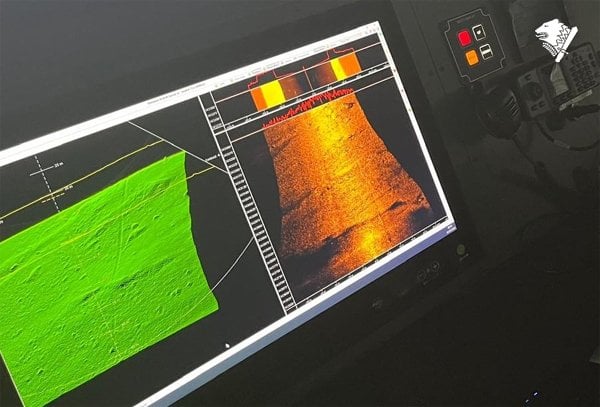
Latvian police boarded an unidentified vessel on Sunday and began interviewing the crew and inspecting the ship. The reports said Latvia’s monitoring operations had identified that the vessel first moved across an inactive cable and then changed course to move over the now-damaged optical cable. The Ship had proceeded into Liepaja, where it remains docked.
After interviewing the crew and reviewing information, the police said on Monday that they had no indications of a connection between the specific ship and the damage to the optical cable. The crew was cooperating with the investigation, and according to media reports, neither the crew nor the ship has been detained.
The Latvian police said the investigation into the cause of the cable damage remains underway. Media reports said that two other vessels had also been identified in the area of the cable, and those ships were now also docked in Latvia.
Friday’s incident follows reports on December 31 that two cables were damaged that run between Estonia and Finland. Estonian officials said in prior days, four other cables were also damaged, but in those cases, they suspected strong winter weather that had crossed the region in late December.
Finland Identifies Anchor Dragline in Investigation into Cable Damage
Finland has been detaining the Fitburg since December 31 and now says it identifed a dragline from the vessel's anchor (Finnish Border Guard)
The Helsinki Police provided an update on the ongoing investigation into the damage to a subsea telecommunications cable connecting Estonia and Finland. The police reported finding a dragline for an anchor while also cautioning that the investigation is expected to take weeks.
Finland and Estonia are jointly investigating the damage that happened in the Estonian EEZ near the border with the Finnish zone on December 31. Separately, Estonia is also investigating damage to a Swedish-owned cable that also runs to Finland, which was damaged around the same time as the cable owned by Elisa, a Finnish telecom company.
The police report they found a dragline on the seabed that runs for at least 10 kilometers (more than 6 miles). They said they have reason to believe that the Turkish-owned vessel named Fitburg had dragged its anchor on the seabed before. Teams have also been examining the vessel and its anchor for signs of damage.
The Director General of the investigation from the Central Crime Police, Risto Lohi, said they are “assessing intent and the information that influences.” To that end, the reports said they have seized the crew’s phones, and materials have been taken from the ship. The vessel remains detained in Kantvik, Finland.
Finland identified a dragline running more than six miles around the damaged subsea cable (Finnish Border Guard)
The authorities in Finland also reported that they have now formalized the arrest of two crewmembers from the vessel Fitburg. A Russian citizen from the crew of the Fitburg has been arrested on suspicion of the sabotage incident and has been banned from traveling from Finland. A second individual, an Azerbaijani citizen, was also placed under arrest on Sunday and was also banned from leaving Finland. A third crewmember has also been banned from leaving Finland.
Under Finnish law, while the crewmembers remain under suspicion and have not been charged with a crime, the arrests and detention are reviewed on a weekly basis. They are being investigated on suspicion of aggravated damage and attempted aggravated damage. The police said the investigation will continue for weeks, looking at the ship and the conditions underwater.
The vessel’s owners have retained the same lawyer who represented the tanker Eagle S and the three crewmembers who were charged earlier this year with a similar case of damage when the shadow tanker dragged its anchor on December 24, 2024. The owners of the Fitburg said they cannot comment as they have not yet been able to speak with the crew due to the confiscation of the crew’s phones.
This week, the Finnish Customs Authority is also expected to have additional information on the cargo aboard the Fitburg, which has also been seized. They were reviewing the sanction regulations with the EU. Customs reported the vessel was carrying a load of structural steel from Russia, which it believes is a sanctions' violation.
Melting Ice Opens Up New Areas of the Canadian Arctic
As climate change continue to affect the Arctic, long-frozen waters of the Canadian high north have become navigable for the first time. The region includes waters around Queen Elizabeth Islands and western Tuvaijuittuq, which historically have been inaccessible due to thick ice all year round, but in a recent expedition, the Canadian icebreaker CCGS Amundsen was able to enter and explore.
The expedition happened back in September, led by researchers from Fisheries and Oceans Canada (DFO) and the University of Manitoba. With the success recorded in exploring waters around Queen Elizabeth Islands, DFO called the voyage the first comprehensive oceanographic research expedition in the area.
“We were finding really deteriorated and heavily melted ice. The thickest ice we found was around seven meters. The lost ice has increased the area of open water, making the region more navigable,” David Babb, a researcher at the University of Manitoba who participated in the expedition told CBC.
Partly, climate change has contributed to weakening of the multi-year ice in Canada’s high north, scientists say. Babb added that the region is seeing more seasonal ice, including the waters around the Queen Elizabeth Islands, considered among the last permanent sea ice areas in the world.
The once-impenetrable sea ice is now giving way to passage by ice-breakers. According to Babb, this gives scientists an opportunity to learn more about the under-studied parts of the Arctic. However, northern indigenous communities face the greatest exposure to melting ice, which risks destabilizing their food security.
Receding ice in the Arctic also poses geopolitical risks for Canada, especially with the rising presence of Russia and China in the region. Russia has begun to use the Arctic waters of the Northern Sea Route (NSR) as a way to evade western sanctions on its energy industry, particularly its LNG exports. A recent report by the Bellona Environmental Transparency Center estimated that 100 sanctioned ships sailed along NSR in 2025, nearly a third of cargo ships using the route during the year. This is a sharp rise from 2024 when seven oil tankers and six LNG tankers classified as shadow ships used the route. The rise of dark fleet along the Arctic shipping route exacerbates risk of accidents and oil spill. Environmental catastrophes could be highly devastating to the fragile Arctic ecosystems, coupled with the fact that rescue operations in the region tend to be slow.
Top Army general slams Trump’s active effort to politicize US military
President Donald Trump and Defense Secretary Pete Hegseth are vowing to end "woke" culture in the U.S. Armed Forces, and Hegseth continues saying that a "warrior ethos" needs to prevail at the Pentagon. But not all veterans appreciate their rhetoric.
During an interview with The Guardian published on January 5, retired U.S. Army Gen. Paul D. Eaton argued that Trump and Hegseth are doing the military a major disservice by politicizing it.
Eaton told The Guardian, "There is an active effort to politicize the (U.S.) Armed Forces. Once you infect the body, the cure may be very difficult and painful for presidents downstream…. As the phrase goes, reputation is built a drop at a time and emptied in buckets."
Eaton, who is now 75 and spent 37 years in active-duty service, even compares Trump's politicization of the military to dictator Josef Stalin in the Soviet Union.
Eaton told The Guardian, "Stalin killed a lot of the best and brightest of the military leadership, and then inserted political commissars into the units. The doubt that swept the armed forces of the Soviet Union is reminiscent of today — they are not killing these men and women, but they are removing them from positions of authority with similar impact."
Eaton is highly critical of Trump's use of the military and federalized National Guard troops in major U.S. cities, and he fears some type of confrontation between National Guard troops and local police.
The retired U.S. Army general told The Guardian, "What could go wrong? You can very easily see an escalation in which both sides think they are right, obeying orders that they believe were given legally…. There are going to be people getting hurt who really don't need to get hurt."
Read retired U.S. Army Gen. Paul D. Eaton's interview with The Guardian at this link.
Economist Paul Krugman: Trump determined to 'expand his territory'
Economist Paul Krugman at the Banorte Ixe Plenary Session 2013 on November 6, 2023 (Tanya Lara/Shutterstock.com)
Early Saturday morning, January 3, Americans woke up to a major foreign policy bombshell: U.S. forces, on orders from President Donald Trump, had captured leftist Venezuelan President Nicolás Maduro and transported him to New York City — where he is being held in a federal detention center and is facing drug charges. Venezuelan Vice President Delcy Rodríguez is now in charge in the troubled South American country, which has land borders with Columbia, Brazil and Guyana.
Critics of Trump's Venezuela policy range from Senate Minority Leader Chuck Schumer (D-New York) to conservative/libertarian Rep. Thomas Massie (R-Kentucky) and outgoing MAGA Rep. Marjorie Taylor Greene (R-Georgia). And some of the U.S. president's detractors are comparing the capturing of Maduro to the "regime change" that the George W. Bush Administration orchestrated with the overthrow of Iraqi dictator Saddam Hussein during the 2000s.
But liberal economist Paul Krugman, in a Substack column posted on January 5, argues that Trump's Venezuela policy isn't "regime change" in the old neocon sense, but rather, is motivated by a thirst for profits.
"For Americans of a certain age," Krugman explains, "the snatch-and-grab abduction of Nicolás Maduro, Venezuela's president, brings back memories of the 2003 invasion of Iraq, in some ways with good reason. Almost everyone now sees Iraq as a cautionary tale about the lies of the powerful: We were taken to war on false pretenses…. But in other ways, the Trump/Venezuela story is very different from the Bush/Iraq story. Two days after the abduction, it's clear that Trump wasn't seeking regime change, at least not in any fundamental way. He's more like a mob boss trying to expand his territory, believing that if he knocks off a rival boss, he can bully the guy's former capos into giving him a cut of their take."
Krugman stresses that if Trump "wanted regime change" in Venezuela, he "would be supporting" opposition leader María Corina Machado but instead, "sneeringly dismissed" her.
"So, why did Trump have Maduro abducted?," Krugman writes. "There were surely multiple motivations. Fantasies of dominance and control and dreams of oil-soaked riches played their part. So did ego. The snatch gave Trump an opportunity to strut, and assuage his Obama envy: : Trump's minions set up a 'war room' at Mar-a-Lago that looks as if it was designed to let him emulate the famous photo of (President Barack) Obama and his officials tracking the killing of Osama bin Laden…. In any case, it's important to understand that the confrontation with Venezuela has nothing to do with the national interest. It's all about Trump's self-aggrandizing delusions. And it will accomplish nothing except to make America look even less trustworthy and weaker than it did before."
Paul Krugman's full Substack article is available at this link.
Golf experts debunk the Trump administration’s rationale for seizing public courses
President Donald Trump on his Bedminster, New Jersey golf course on July 28, 2022 (Image: Shutterstock)
President Donald Trump's administration seized control of the public golf courses in Washington, D.C. under what one expert is calling dubious circumstances.
Garrett Morrison, of Fried Egg Golf, a ten-year old newsletter for golf aficionados, explained that there were three reasons Trump's Department of the Interior gave when accusing the National Links Trust (NLT) of violating the 50-year lease with the government to manage and renovate the three courses across the District of Columbia.
"It’s worth assessing them one by one," Morrison wrote.
The first was the accusation that the NLT is in breach of contract because they didn't perform the renovations that it said it would by the timeline it gave.
The addendum to the lease "Exhibit D" gives the timeline that the Interior Department was referencing. It claimed it would finalize renovations of Rock Creek by 2022, Langston by 2024 and East Potomac by 2027.
"I disagree with the DOI’s description of the Rock Creek renovation, which the NLT planned, permitted and broke ground on before the termination letter halted construction," wrote Morrison. "But it’s true that the projects at all three courses have taken longer than Exhibit D suggested they might."
The problem, however, Morrison continued, is that the Interior is leaving out that the contract says, “[T]imeframes are general and subject to change due to compliance timeframes or other circumstances.”
The U.S. found that acceptable enough to sign off on the lease under those circumstances.
While Morrison agrees the schedule "was overly ambitious," he wondered if the NLT thought the close relationship with the Park Service would help the permitting and compliance process. It hasn't. It still takes considerable time to have any change by the NLT be approved by the National Park Service.
"At Rock Creek, for instance, the NLT had to justify its tree-removal program literally one tree at a time," Morrison revealed, citing a recent post by the NLT with examples.
That said, so far $8.5 million of upgrades have been done with a little less than half going to Rock Creek's navigating the "permitting quagmire." There have been smaller projects at the other courses.
"Doing as much as the NLT has done in the past five years is highly unusual in big-city American municipal golf," Morrison believed.
The second accusation said that the NLT didn't respond to the "default" notice with a “reasonable and credible cure proposal.” However, Morrison explained, that the default notice didn't give any information on what needed to be cured.
The Interior Department admits the NLT participated in “multiple in-person meetings, teleconferences, and written submissions during the [45-day] cure period.” It also cited $1 million to mobilize construction at Rock Creek after the notice.
Finally, the government claims the NLT owes them $8.8 million. The Washington Post reported last month that the NLT’s agreement with the NPS let's their rent to be offset by the renovations being performed.
"The numbers roughly line up: the DOI is pointing to an $8.8-million discrepancy, and the NLT has spent about $8.5 million on capital-improvement projects," wrote Morrison. "To me, the claim that the NLT is millions of dollars behind on rent doesn’t appear to hold any water."
Morrison closed by saying he expects these issues will make their way to the legal debate that is likely to unfold in the coming months.
Trump Is Making US Imperial Decline the Whole World’s Problem Trump and crew have decided to actively intensify the ongoing climate disaster. And if that isn’t the definition of a once great imperial power going down (and attempting to take the rest of us with it), what is? The “Drill, Baby, Drill” motif float shows a depiction of US President Donald Trump with reference to the use of fossil fuels and the rejection of environmentally friendly energy production for the Rose Monday parade on March 3, 2025 in Rhineland-Palatinate, Mainz-Mombach, Germany. (Photo by Andreas Arnold/picture alliance via Getty Images)
As 2026 begins, what a strange planet we find ourselves on. The two great empires of my youth, the Soviet Union (now Russia) and my own country, are clearly experiencing some version of imperial decline, even if Vladimir Putin is acting otherwise in Ukraine (as is Donald Trump in his own strange fashion in the Caribbean Sea and Venezuela).
No less curiously, the country visibly on the rise, China, is distinctly not acting like a typical imperial power of history (at least the history I’ve known). In a world where the United States still has 750 or so military bases around the world, China, as far as I can tell, has at most just one (in Djibouti, Africa). While its economy has become significant globally (imperially significant, you might say), unlike essentially every imperial power from the Portuguese and Spanish in the 15th and 16th centuries on, it has no colonies and only the most minimal military presence abroad, though it does continue to build up its military power (and its nuclear arsenal) at home.
Of course, it’s worth remembering that we are distinctly on a different planet than the one any of those older powers inhabited. And even if America’s great man (my joke!), President Donald J. Trump, doesn’t seem to know it, China’s leader, Xi Jinping, certainly does.
Vladimir Putin’s version of imperial aggression is, at present, aimed at Ukraine in a war that will in the—and yes, I can hardly avoid the word!—end undoubtedly prove a disaster, not just for Ukraine but for Russia and the rest of the planet, too. Meanwhile, Donald Trump’s version of imperial aggression, which is likely (again, in the end) to prove disastrous, is for the time being (and, with him, you always have to add a qualifier) aimed at the Caribbean Sea, the Eastern Pacific Ocean, and Venezuela (which he now seems intent on turning into an oil colony), even as he prepares to build his own “golden fleet,” including “Trump-class” (old-fashioned) battleships. On the other hand, China’s major “aggression” (and indeed, that word does have to be put in quotation marks!) is aimed—setting aside the island of Taiwan (which it claims not as a colony but as a part of China itself)—at the conquest of the future global green economy.
In essence, Donald Trump and crew have been doing their best to dismantle or get rid of anything in this country that might effectively impede climate change and the future broiling of Planet Earth.
Or put another way, to give credit where it’s due, despite the fact that China continues to open coal plants in an unnerving fashion, its great-power desires are at least aimed at something—in fact, the thing—that truly matters on this distinctly beleaguered planet of ours. It is intent on becoming the Earth’s global powerhouse when it comes to the sale of green energy and the ways to produce it. Consider that its imperial target, one unlike any other in history (though perhaps a comparison could be made to the industrialization of what became imperial Great Britain in the 19th century). Moreover, it’s already selling and delivering green energy production units to countries globally, while far outpacing anyplace else on this planet in producing electric vehicles (EVs). At War With the World
Last year, China installed more wind turbines and solar panels than any other country, indeed more than the rest of the planet combined. And as the New York Timesreported earlier in 2025, “Not only does China already dominate global manufacturing of solar panels, wind turbines, batteries, EVs, and many other clean energy industries, but with each passing month it is widening its technological lead.”
While Donald Trump’s America is putting so much of its energy (so to speak) and money into coal, oil, and natural gas production, China’s government has been giving hundreds of billions of dollars in subsidies to wind, solar, and electric car manufacturers. And it is now hard at work spreading the products for producing wind and solar power globally. As the Times also reported, “Chinese firms are building wind turbines in Brazil and electric vehicles in Indonesia. In northern Kenya, Chinese developers have erected Africa’s biggest wind farm. And across the continent, in countries rich with minerals needed for clean energy technologies, such as Zambia, Chinese financing for all sorts of projects has left some governments deeply in debt to Chinese banks.”
And of course, China is unequaled in the production of electric vehicles. There are now at least 129 brands selling such vehicles in China, and they are exporting more than one-fifth of their products globally, while Chinese companies continue to out-innovate those elsewhere on this planet.
In this distinctly post-modern age, there should be a term for such wars and the way—in addition to the hell on Earth they have created since time immemorial—they are now helping produce an environmental hell through the release of greenhouse gases in vast quantities into the atmosphere.
On the other hand, Vladimir Putin, who once joked that global warming might be good for Russians because they could then “spend less on fur coats,” at least now acknowledges its reality. Nonetheless, he only recently signed a decree that would allow his country, already heating up 2.5 times faster than the global average, to increase its emissions of greenhouse gases 20% by 2035. And of course the United States is now led by a president who all too bluntly ran for office the second time around on the campaign slogan “drill, baby, drill” and is making policy based on “ending the green new scam.”
Only recently, in fact, his administration “paused” the leases on and halted the building of five major wind projects under construction off the East Coast of the United States, supposedly due to “national security risks.” In essence, Donald Trump and crew have been doing their best to dismantle or get rid of anything in this country that might effectively impede climate change and the future broiling of Planet Earth. That is, in fact, the definition of his America, which is also the definition of decline on a scale that once would have been unimaginable. And remember, I’m talking about the same president who, last fall, told delegates from nations around the world at the United Nations that climate change was “the greatest con job ever perpetrated on the world,” while insisting that, “If you don’t get away from this green scam, your country is going to fail.”
In the bluntest terms, the greatest imperial power of the past century, the United States, is now in the Trumpian process of sending itself into a steep imperial decline on a distinctly beleaguered planet itself undoubtedly in decline. And part of the reason for that, Trump aside for a moment, is that we humans just can’t seem to stop making war on ourselves. After all, in addition to killing and wounding staggering numbers of us and doing untold damage to (even destroying) whole regions of the planet, wars also release stunning amounts of carbon dioxide into the atmosphere, as do what still pass for “peacetime” armies. In fact, the US military, even when not at war, still releases more greenhouse gases than whole countries like Sweden or Norway. As it happens, it may be the single largest institutional emitter of such gases on planet Earth.
And worse yet, at such an increasingly dangerous moment in history, there are at least three significant wars underway on this planet of ours. In this distinctly post-modern age, there should be a term for such wars and the way—in addition to the hell on Earth they have created since time immemorial—they are now helping produce an environmental hell through the release of greenhouse gases in vast quantities into the atmosphere. There is, of course, the never-ending war in Ukraine, the one (in partial—but only partial—remission) in the Middle East, and the brutal ongoing one in Africa. I’m thinking of Sudan, of course. (And don’t forget the more minor but still brutal one underway in the Congo.)
And when it comes to one conflict for which we have some figures on greenhouse gas emissions, the Guardian reported that, in the first 15 months of Israel’s war in Gaza, those emissions were “greater than the annual planet-warming emissions of a hundred individual countries.” It similarly reported that “the climate cost of the first two years of Russia’s war on Ukraine was greater than the annual greenhouse gas emissions generated individually by 175 countries.” A Long-Term Definition of Suicidal on Planet Earth
So, at a time (and what a time!) when we’re experiencing one record hot year after another, ever fiercer forest fires, ever more horrific floods, ever more severe droughts, and so on (and on and on)—at a moment, in other words, when it increasingly seems as if humanity is ever more at war with this planet, the old form of imperial power, the one involving wars, colonies around the world, and global military bases, seems increasingly passé, even if the leaders of neither the US, nor Russia seem capable of recognizing that reality.
And in that context, those two imperial powers of the last century aren’t simply following the pathways of other imperial powers whose time was up. Yes, they are both distinctly heading downhill, but both of them, in an eerily purposeful fashion, seem (in climate-change terms) to be intent on taking down much of the rest of the planet with them. And none more purposefully (or so it seems) than Donald Trump’s America, which is distinctly focused on ensuring that, at least in the United States, wind power projects will be cancelled, solar energy projects avoided or wiped out, and ever larger areas from Alaska to more than a billion acres of ocean waters opened to the production of yet more fossil fuels. If you need a long-term definition of “suicidal” at both a national and a planetary level, that obviously should be it.
And it’s in just such a world that China, the rising power on this planet, is neither spreading its military might globally, nor creating military bases and seizing colonies around the world. Instead, its leaders are doing their damnedest to take control of the universe of green energy and so plowing new imperial ground by potentially becoming the unparalleled green-energy power on planet Earth.
To the extent that great power global politics even matter anymore, President Trump is literally turning this world, economically and ecologically, over to China, lock, stock, and rain barrel.
Of course, it shouldn’t really be a surprise that, on a planet changing before our eyes in the most basic fashion, the meaning of the very word imperial would change or that the old war-making, colonizing version of it would be left to the history books (and to the increasingly ancient and outdated great powers whose leaders can no longer seem to imagine the actual nature of our future).
And this brings me to myself. In some ways, in my 82nd year on this planet, I just can’t believe the world I’m in, nor could I ever have guessed that it would be quite this way. Donald Trump, president of the United States… really? At a moment when it should have been all too obvious that humanity was in danger of creating an all-too-literal hell on Earth, a near majority of my compatriots elected (for a second time!) a man who not only refuses to faintly grasp what’s happening but has made a clear and conscious decision to worsen our situation by promoting the further use of fossil fuels in every imaginable way.
All too sadly, though it’s not normally used that way, the word “suicidal” seems a reasonable description of his policies. I mean, what needed to be done really shouldn’t have been all that complicated—not on a planet where the most recent years have been the hottest in human history, the last 10 the hottest decade, 2024 the hottest year ever (and unsurprisingly, when the final figures are in, 2025 will undoubtedly be right up there, too); not on a planet where Arctic ice is melting, sea levels rising, and the weather (from storms to droughts) is growing ever more extreme by the year.
And yet, obvious as all that may be, Trump and crew have decided to actively intensify the ongoing disaster. And if that isn’t the definition of a once great imperial power going down (and attempting to take the rest of us with it), what is? To the extent that great power global politics even matter anymore, President Trump is literally turning this world, economically and ecologically, over to China, lock, stock, and rain barrel.
And all of that makes me wonder: How did I—how did any of us—end up here?
Yes, we’re clearly entering a new imperial age with China potentially at the helm of a planet that, in weather (and human) terms, will be going down, down, down.
It may be hard to believe, but that’s our reality—and I must admit that I find it painful to leave such a planet to my children and grandchildren. They truly deserved better.
Tom Engelhardt Tom Engelhardt, co-founder of the American Empire Project, runs the Type Media Center's TomDispatch.com. His books include: "A Nation Unmade by War" (2018, Dispatch Books), "Shadow Government: Surveillance, Secret Wars, and a Global Security State in a Single-Superpower World" (2014, with an introduction by Glenn Greenwald), "Terminator Planet: The First History of Drone Warfare, 2001-2050"(co-authored with Nick Turse), "The United States of Fear" (2011), "The American Way of War: How Bush's Wars Became Obama's" (2010), and "The End of Victory Culture: a History of the Cold War and Beyond" (2007). Full Bio >
Bible-belt state refuses to share 'crucial' info on measles outbreaks
Outbreaks of measles and whooping cough in Oklahoma have led to calls for greater transparency from the Oklahoma State Department of Health as the state stands alone in only sharing measles cases on a statewide basis.
Infectious disease and public health experts said the timely sharing of cases with the public can help communities mitigate the spread of disease.
Dr. George Monks, a Tulsa dermatologist and former president of the Oklahoma State Medical Association, has been trying for months to get the state Health Department to share more data. He’s employed social media cajoling, open records requests and complaints to the attorney general’s public access counselor, to no avail.
“This data is crucial for Oklahoma families to make informed decisions about their health, whether it be vaccine choice or avoiding high-risk areas,” Monks said. “Withholding that county-level measles data could delay the community response, especially since it is so contagious.”
To date, Oklahoma has recorded 17 cases of measles in 2025. Nationally, the United States has had the highest number of measles cases in three decades. More than 800 of the 2,000 U.S. cases this year came in Texas back in the spring, although South Carolina is dealing with a current outbreak.
Measles is a highly contagious, airborne virus with symptoms including rashes, high fevers, coughs, runny nose and red, watery eyes. The virus spreads through the air when an infected person coughs or sneezes. It can linger for up to two hours in a room after exposure.
Monks first requested measles case data by county in March, along with agency communications with the federal Centers for Disease Control and Prevention about a measles outbreak in Oklahoma. The state Health Department provided some email correspondence with CDC, but it cited a section of the federal Health Insurance Portability and Accountability Act, or HIPAA, in declining to release county measles data. Monks shared his requests and responses with Oklahoma Watch.
In its Oct. 30 letter siding with the state Health Department, the attorney general’s office said the agency’s response was reasonable and noted its website has statistical information related to measles and potential public exposure.
“Based on the information available to me at this time, I conclude that OSDH has a good-faith legal basis to deny access to the records sought by Dr. Monks,” wrote Anthony Sykes, the attorney general's public access counselor.
Oklahoma is the only state not providing measles cases by county or on a regional level, according to researchers at Johns Hopkins University. They published a study in September in JAMA, the journal of the American Medical Association, detailing their efforts to develop the U.S. Measles Tracker.
Kansas only withholds county-level measles data if the cases are fewer than five, the researchers noted. Tennessee, Utah and Iowa provide regional case data, but not by county.
“Single measles cases often represent the leading edge of potential outbreaks, making their rapid identification crucial for public health response,” the researchers said in a supplemental paper describing their methodology. “Geographic specificity, even for small case counts, enables public health officials to implement targeted contact tracing and exposure notifications.
“Many state health departments routinely report individual measles cases in public communications, press releases, and exposure notifications, establishing precedent that individual case disclosure serves legitimate public health purposes.”
Oklahoma used to disclose county-level measles cases as recently as 2019, during the last major measles outbreak. Media reports from that outbreak show measles in Okmulgee County.
In an emailed response to questions from Oklahoma Watch, the state Health Department said its public data is sufficient to inform local communities of potential exposure to measles.
It provides overall case counts, vaccination status, age range, median age of cases and any public exposure settings identified through investigation of a measles case.
“Identified exposure locations are what pose a risk of spread to the public, and the county of residence may not always reflect the population or communities that may be at risk during a public health investigation,” the agency said.
The state Health Department didn’t directly address questions on how other states are able to report county measles data. The agency said it continues to rely on its interpretation of federal HIPAA laws and Oklahoma’s public health code in not releasing county-level measles data.
“Accordingly, OSDH has the discretion to determine the manner in which statistical communicable disease data may be released to the public to the extent that such release is in compliance with de-identification and disclosure requirements of HIPAA,” the department said in the email.
Echoes of COVID
The debate over how and when to share infection data echoes those in the first year of the COVID-19 pandemic. Oklahoma was slow to share community-level infection data. Even then, it provided county-level case information.
In those first few months of the pandemic, Oklahoma Watch requested de-identified COVID-19 data from the state Health Department, including by city and ZIP code. Officials initially denied the request based on federal and state privacy laws, although those laws include exemptions to allow de-identified data. As the pandemic escalated, state health officials eventually provided localized data for COVID infections on an online data dashboard.
The state Health Department said it used a risk-based approach to reporting COVID-19 cases to make recommendations around public gatherings and school closures.
“The only way to implement such a system was to report ZIP code-level data,” the department said. “For measles, using exact public setting location and time provides individuals the information necessary to communicate the risk to the public. Again, it’s all about risk and managing it in such a way as to balance the public’s need to know with our obligation to protect an individual’s health information.”
The state Health Department sent out potential measles exposure alerts earlier this year. The alerts included the addresses of stores and restaurants an infected person had visited.
Oklahoma public health officials withholding of county-level measles data contrasts with the state’s tracking for West Nile virus, a mosquito-borne disease. The state Health Department’s infectious disease website includes the number of cases and county of incidence for that virus.
“I don’t get it,” Monks said. “They’re citing these privacy concerns (for measles), but there’s no patient data assigned to this. It’s all just aggregate data. I don’t get how they can come down on one side and then a different side based on the infectious disease.”
The state Health Department said decisions about releasing county-level data are made based on a number of factors, including overall case count, population of the county and case investigation impact.
“For some diseases, like West Nile, it is important that the public is aware of the geographic location of the case to communicate the risk of disease to the public,” the agency said. “The majority of diseases publicly reported on our website are stratified by their respective region, rather than county-level, to help protect patient privacy, while still providing the public with a geographic distribution of disease burden.”
Monks continues to request disease data from the Health Department. He’s asked for more information about pertussis, commonly called whooping cough, and tuberculosis.
“This is a really important time to get this data out to the public,” Monks said. “In Oklahoma, this is the worst whooping cough outbreak in 70 years and the worst measles outbreak we’ve had in 35 years.”
Monks said it's a policy decision, not necessarily a public health decision, to withhold detailed data about respiratory disease outbreaks. Monks, who describes himself as a Reagan Republican, suspects some state leaders don’t want to raise the ire of the federal Health and Human Services Department under the leadership of Robert F. Kennedy Jr., a longtime vaccine skeptic.
“From the Republican standpoint, some have taken this position that this is a political football, and they really want to get away from pro-vaccinations and pro-science, especially in a primary,” Monks said.
Three leading public health and social psychology experts have warned that many countries, including the UK, are failing to apply vital lessons from the COVID-19 pandemic as influenza cases surge. In the UK, hospitals are facing mounting winter pressures.
Similarly, the U.S. has seen the number of influenza cases climb significantly in December, coming after the most severe flu season since 2018. There have been an estimated 7.5 million influenza cases and 81,000 hospitalizations (as of the end of December 2025).
The three experts have written to the British Medical Journal. They are Professors Stephen Reicher (University of St Andrews), Martin McKee (London School of Hygiene & Tropical Medicine), and Stephen Griffin (University of Leeds). The three academics argue that simple, proven measures of vaccination, isolation, and ventilation are being neglected, leaving the public vulnerable as flu spreads.
The experts call for a layered approach to infection control, combining vaccination, isolation, ventilation, masks, and hygiene.
“There are important differences in who and how flu hits,” says Professor Griffin in a statement sent to Digital Journal. “But we trivialise those differences at our peril. The lessons we learnt during COVID still apply.”
However, uptake of the flu vaccine remains poor. By late November, only 40% of under‑65s at risk had received the jab, compared to 70% of over‑65s, pregnant women, and young children.
“Vaccines aren’t perfect, but at scale they keep schools open and hospitals coping,” Griffin adds.
Both the World Health Organization and the U.S. Centers for Disease Control and Prevention (CDC) recommend yearly vaccination for nearly all people over the age of six months, especially those at high risk.
The flu jab works by injecting each individual with a tiny amount of an inactive flu virus. In response to this, the body’s immune system makes proteins called antibodies to help fight what it thinks is an infection.
Isolation is another key factor. Many workers cannot afford to stay home when sick. UK statutory sick pay remains under £120 a week, far below Germany’s eight weeks of full salary.
“Telling people to isolate is a suggestion, not a practical response, unless government support is provided,” explains McKee.
Ventilation is the third pillar. Despite calls for investment in clean air systems in schools, offices, and public buildings, little has changed.
“We hoped COVID would make clean air central to the 21st century as clean water was to the 20th. That hope has failed,” clarifies Reicher.
The experts stress that winter pressures demand more than individual responsibility. Governments must institute support measures that make it possible for people to do the right thing.
“The challenge isn’t knowing what to do,” Reicher concludes. “It’s making it possible for everyone to do it. Governments must act to support responsible behaviour, or schools will close, hospitals will be overwhelmed, and lives will be lost.”
The supporting article ‘Vaccinate, Isolate, Ventilate: will we ever learn the lessons from COVID?’ is published in the in the British Medical Journal (free to view)
OVERLOOKED MAGA MINORITY
Jan. 6 author tracks women rioters energized by Trump’s return
Supporters of Donald Trump storm the U.S. Capitol on January 6, 2021.
REUTERS/Shannon Stapleton
On Jan. 6, 2021, author and ethnographer Noelle Cook drove to Washington, D.C. On Capitol Hill, she was shocked to come upon a scene of people smashed against the walls of Congress and emergency responders taking away the body of Ashli Babbitt, the Air Force veteran who was shot dead by police as she attempted to crawl through a broken window and into the Speaker’s Lobby, outside the House chamber.
Cook had not shown up to take part in the “Stop the Steal” rally, which ended in the storming of the U.S. Capitol by rioters who believed Donald Trump’s lie that Joe Biden stole the 2020 election.
As a researcher and amateur photographer, Cook thought the rally might inspire a project.
“I had never done anything MAGA before, so I thought I would just go down and take photographs of the ‘Stop the Steal’ rally because the signs and stuff are always visually interesting,” Cook told Raw Story, of that day now five years gone.
“It was very surreal. It was almost like this sinister carnival, where there was celebratory activity, and also I heard so much violent rhetoric everywhere — people talking about hanging people.”
After Cook returned home to Maryland, she spent three weeks processing images. Then she decided to follow the first 100 women who were arrested for their actions on January 6.
Scouring court records, news reports and social media, Cook looked for patterns.
What she discovered was that many of these women, like herself, had entered middle age.
Cook immersed herself in the stories of two such women, Yvonne St. Cyr and Tammy Butry.
To Cook, the two women embraced “conspirituality,” a term scholars use to describe a quickly growing ideology that blends New Age spirituality, anti-vaccination advocacy, anti-government extremism and conspiracy theories.
A potent mix, it ultimately brought St. Cyr and Butry to the Capitol on January 6.
“I had no intention of studying QAnon or conspiracies or anything, but I kind of followed these women where they led me, which was straight into conspiracies,” Cook said.
‘They get their community online’
St. Cyr and Butry were both in the mob that forced its way into the Capitol.
St. Cyr led a crowd through the tunnels below the main corridors and chambers, coaching rioters in a collective push to open the doors.
Butry, wearing a blue Trump flag as a cape, marched around inside the Capitol, taking selfies and a swig of Jack Daniel’s, Cook writes.
The Conspiracists (image provided by Broadleaf Books)
The riot failed to stop certification of the election. Biden became president. St. Cyr would be sentenced to 30 months in prison, Butry to 20 days.
On the page, Cook examines how a combination of personal trauma and isolation during the COVID-19 pandemic made women like St. Cyr and Butry more susceptible to conspiracy theories, as they were exposed to more and more online.
“Most of these women that I talk to, middle-aged women, don't have that much opportunity to socialize anymore, and they get their community online,” Cook said.
During the pandemic, such women found themselves with little time to leave their homes, especially while caring for children or aging parents or both. Turning to Facebook groups and other online communities, they found guidance and community.
“I think conspiracies serve as a coping mechanism for many people,” Cook said.
‘Validated and vindicated’
In interviewing participants in the Jan. 6 riot, Cook said, she has “not talked to anybody personally who regrets that day.”
Noelle Cook (photo provided by Broadleaf Books)
Last January, on his first day back in office, Trump pardoned nearly 1,600 January 6th defendants. That, Cook said, provided a corroboration of many conspiracists’ beliefs.
“It's worse because Trump pardoned all of them, and so they all feel validated and vindicated,” Cook said.
“I keep getting told, ‘See, I told you, this is going to come true.’”
The same goes for Trump’s appointment of Robert F. Kennedy Jr. as Secretary of Health and Human Services. Known before entering office for campaigning against vaccines, Kennedy has used his position to roll back vaccine guidance — actions conspiracists frequently support.
“They're going to celebrate until the kids all start dying of some preventable disease,” Cook said.
Conspiracists continue to look to the Trump administration for what they see as validation of their beliefs, Cook said, particularly adherents of QAnon, the far-right movement whose premise involves Trump waging war on Satan-worshipping cannibalistic pedophiles, among supposed Democratic elites in Hollywood and the federal government.
“It's a wink and a nod all the time, and that keeps people energized,” Cook said.
“For so long as people with authority continue to stoke the fire and continue to throw out the little crumbs here and there to keep people invested, I don't know how it does change, because I feel like everyone was more emboldened and felt a lot more empowered when Trump was reelected this time.”
‘Facts don’t really matter’
Cook did not try to convince St. Cyr or Butry their beliefs were wrong. Rather, she observed and listened.
“That's the problem here with conspiracists, facts don't really matter much,” Cook said. “It’s feelings.
“What you're asking people to do [by asking them to change] is take away their daily purpose, their sense of belonging and their sense of community, which is a really hard thing to do.”
Conspiracists don’t typically change beliefs until it affects them personally, Cook said — as in the case of Erica Roach, a one-time QAnon and anti-vaccine adherent who left Trump’s MAGA movement after January 6, as Raw Story recently reported.
“There's nothing really anyone can do, I don't think, to extract people until they have a reason to see it themselves,” Cook said.
“When you're dealing with such outrageous, outlandish myths and stories and fabrications, it's really hard to convince people otherwise.”
The Conspiracists is published on Tuesday. Alexandria Jacobson is a Chicago-based investigative reporter at Raw Story, focusing on money in politics, government accountability and electoral politics. Prior to joining Raw Story in 2023, Alex reported extensively on social justice, business and tech issues for several news outlets, including ABC News, the Chicago Sun-Times and the Chicago Tribune. She can be reached at alexandria@rawstory.com. More about Alexandria Jacobson.
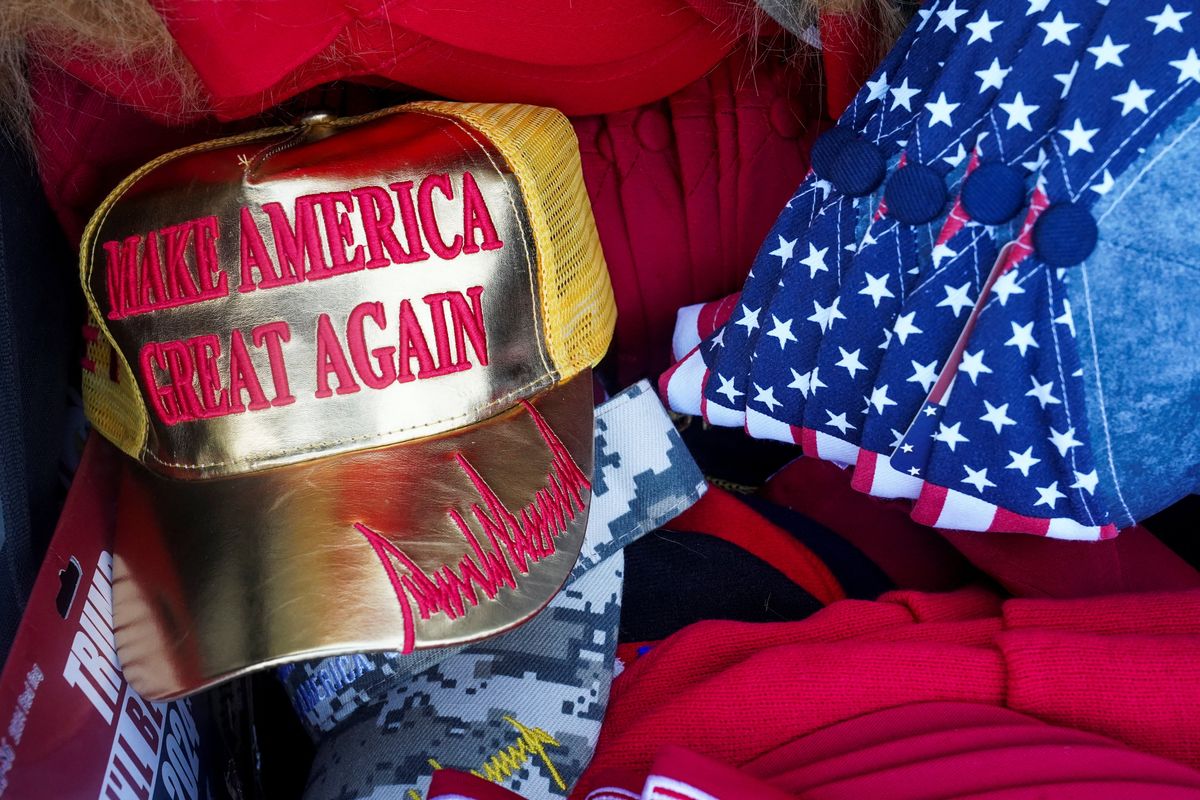
A view shows a golden MAGA hat, ahead of a Republican presidential nominee and former U.S. President Donald Trump campaign rally in Gastonia, North Carolina, U.S. November 2, 2024. REUTERS/Megan Varner
In the wake of the insurrection at the Capitol on January 6, 2021, President Donald Trump quickly took up the cause of a 35-year-old veteran named Ashli Babbitt.
“Who killed Ashli Babbitt?” he asked in a one-sentence statement on July 1, 2021.
“An innocent, wonderful, incredible woman, a military woman,” Trump said during a Fox News interview a few weeks later.
To Trump and his Make America Great Again movement, Babbitt was not an insurrectionist shot while trying to get close to the members of Congress who were certifying the election results, the sole rioter killed by police that day. She was a martyr, someone who died for her beliefs. She was a woman who had died for lack of protection.
Trump’s framing of Babbitt’s death in the months after he left office served as one of the guiding principles of his second term: the necessity of “protecting women” and an insistence on identifying and eradicating those he sees as posing a threat to them.
Who was Ashli Babbitt?
She was an Air Force veteran who had done tours in Afghanistan and Iraq. She was married and divorced and then married again. She faced criminal charges after an altercation with an ex-girlfriend of her second husband. She voted for Barack Obama. She bought a pool care business with her husband. She discovered the far-right conspiracy theory QAnon, which asserted that Trump was trying to save the country from a cabal of Satan-worshipping child molesters installed within the United States government.
Over time, Babbitt became increasingly steeped in QAnon and was primed to believe the robustly disproved conspiracy that the 2020 election had been stolen from Trump. So when Trump encouraged his followers to go to Washington to support him on January 6, 2021, she did. While the election results were being officially certified by Congress, Trump addressed a crowd that included Babbitt. And when he encouraged them to go to the Capitol, many did — Babbitt among them.
Not everyone who went to the Capitol broke into the building, but she did. With a Trump flag draped over her shoulders like a superhero’s cape, Babbitt was part of the group who tried to gain access to the Speaker’s Lobby, just outside the House chamber. Another rioter smashed glass. As Babbitt tried to crawl through, a Capitol Police officer shot her from inside the lobby.
Video footage from the day shows Babbitt falling backward into the crowd as blood pours out of her mouth. After the shooting, many rioters began to flee the Capitol grounds. Babbitt was transported to Washington Hospital Center. She was declared dead upon arrival
The officer who killed Babbitt was cleared of wrongdoing; Lt. Michael Byrd potentially saved lives by stopping the mob, lawmakers and police said.
But her death gave Trump’s Make America Great Again movement something it needed: a martyr.
Religiosity moves in
On Jan. 6, 2021, a political rally turned into an insurrection as Trump supporters stormed the Capitol in an attempt to stop the certification of electoral votes. (John Minchillo/AP Photo)
A religious frame has been present in Trump’s politics since his rallies in the leadup to the 2016 election.
Jeffrey Sharlet, a veteran journalist and professor at Dartmouth College who was an early chronicler of the rise of Trumpism and its ties to religiosity, said these rallies were shaped by the prosperity gospel, a branch of Protestantism rooted in the supposition that, effectively, God wants you to be rich.
In 2020, the religious tenor was still there — but it had shifted to a more conspiratorial approach. Trump stopped merely “winking at QAnon” and began “invoking that level of conspiratorial thinking that has been absorbed into the DNA of the movement,” Sharlet said.
Before Babbitt’s death, Sharlet said, Trump had already been working to incorporate martyrs into his rhetoric, invoking a list of names, usually people who had been killed by immigrants in the country without legal status. They would typically fall into two categories, he said: “blonde White women and promising young Black men” — think Jamiel Shaw Jr., a rising football star in the midst of college applications who was shot and killed by a gang member who was in the country illegally, orSarah Root, who was killed by an undocumented drunk driver the day after her graduation from college.
Sharlet calls Babbitt “a perfect storm”: a White woman killed on camera in footage seen by millions, a Black man — the Capitol police officer — responsible for her death.
“That changed everything,” Sharlet said. “The first real martyr who really takes hold of Trumpism is a woman, and it gives the movement a real religiosity.”
And it set the stage for Trump to ascend into a kind of religious figure himself after a would-be assassin shot him in Butler, Pennsylvania, in July 2024.
“Every martyr disappears into the cult of personality,” Sharlet said. “She was a placeholder. She keeps the cross warm until Trump gets up there and he’s the martyr. Now, he’s the martyr for us all — but it started with a certain appeal to women.”
Martyrs can’t speak
Babbitt was an active participant in the insurrection — but that didn’t mean she couldn’t be reassigned the role of someone who needed protecting.
Sharlet recalled watching videos of Trump supporters talking about Babbitt in the wake of her death: “They’re aging her backward, they’re lowering her weight, they’re lowering her height, they’re turning her into a little girl.”
It was a blueprint for what was to come, he said of Babbitt: “The blondeness is important, the smallness is important, but so is the camouflage of being a veteran.”
Her race, too, was important, Sharlet said.
“It’s about the Whiteness of things. It’s not enough for them that a woman be murdered,” he said. “She has to be a little girl. She has to be White.”
Meghan Tschanz, a former missionary who has emerged as a critic of patriarchal systems in evangelical Christianity, drew a connection between Babbitt and Laken Riley, a college student whose murder by an immigrant who was in the country illegally was highlighted by Trump. Both women’s deaths became part of a larger narrative — one designed to accomplish a political goal, not mourn the victims.
Tschanz, who lives in Athens, Georgia — where Riley was killed — stressed that criticizing the politicization of Riley’s death is in no way a dismissal of the reality and severity of her killing. Rather, she said, politicization can dilute the pain of the loss in service to a larger narrative.
“Again and again, we see women die and the response isn’t, ‘Let’s make it so women don’t die.’ It’s, ‘Let’s make it so that I can use this to further my narrative that immigrants are evil,’” she said.
Riley’s father, Jason Riley — a Trump supporter — told NBC News about the pain of watching his daughter become a political tagline after Rep. Marjorie Taylor Greene of Georgia, at the time a strong Trump ally, heckled President Joe Biden during his State of the Union speech in 2024, urging him to say Riley’s name.
“I think it's being used politically to get those votes. It makes me angry. I feel like, you know, they're just using my daughter’s name for that. And she was much better than that, and she should be raised up for the person that she is,” Jason Riley said. “She was an angel.”
It’s a dynamic also echoed in Babbitt’s death. Though Babbitt’s mother, Michelle Witthoeft, emerged as a leading advocate for the release of those who were arrested for their actions on January 6, she also has publicly grappled with the way in which her daughter’s death became something other than an acute family tragedy.
Witthoeft told The Washington Post in 2021, “Half the country loves her and half the country hates her,” she said. “It’s weird to have your child belong to the world.”
For Trump, Riley’s and Babbitt’s deaths helped reinforce the message that women’s lives are in danger and that they need to be saved — something he emphasized in his campaigns as he painted immigrants and his political opponents as threats.
“It all plays into the fears and vulnerabilities that women have to navigate, which is that women are more vulnerable to sexual and gender-based violence and women are tasked culturally with caring for the home and for their children,” said Hilary Matfess, an assistant professor at the University of Denver and the co-author of an analysis done by the Program on Extremism at George Washington University on gender and the January 6 insurrection. “So this message of scary immigrants are going to come in and destroy your communities with drugs and rape your women and children is intended to strike fear into a very specific demographic — namely, suburban White women.”
Matfess pointed to how the role of martyr cemented a view of Babbitt for Trump’s followers. She became someone who needed protecting, a figure whose memory is in need of constant, everlasting protection.
“Being put on a pedestal means you can’t move around too much,” Matfess said.
The ‘protection racket’
Michelle Witthoeft, Ashli Babbitt’s mother, participates in a demonstration in support of insurrectionists who were arrested and charged following the January 6, 2021 attack on the U.S. Capitol. (Tasos Katopodis/Getty Images)
Matfess said there is a long-standing academic notion of the “protection racket,” in which a government offers protection from an imagined threat to deflect from the threat posed by the government itself. It’s something that can be used to keep women in subservient roles — and thus effectively in need of some form of protection from others.
“The Trump administration is not saying, ‘Wow, we should really expand access to prenatal health care’ or ‘We need more resources for women that are victims of domestic violence,’ because it is not about protecting women,” she said. “It’s about protecting certain men’s ability to wield power and influence under the banner of protection.”
Babbitt’s death in some ways challenged the narrative, too — she was part of the group trying to stop the certification of the election, not sitting by.
Matfess noted the ways that the Proud Boys — the far-right, all-men neo-fascist group that have become rigorous defenders of Trump and his agenda — insist on the fact that there are in fact no Proud Girls, often suggesting that the best way women can support the politics they espouse is by staying home and reproducing.
Matfess points to early rumors from within the far right that Babbitt was part of a false flag mission — evidence that the movement had to grapple with a woman who was attacking, not asking for protection.
“There’s a lot of utility to narratives that talk of attacks against women and children, and so it becomes that once they decided it wasn’t a false flag, that she was there of her own political beliefs, it becomes a compelling narrative of a woman sacrificing herself for this movement. Whether or not the movement would have been kind to her had she lived is besides the point,” Matfess said.
“The memorialization takes away the kind of difficult questions of how this movement would deal with women who are taking on more transgressive gender roles. Once someone’s a hero, you can leave it at that.”
The aircraft carrier USS Gerald R Ford will be part of Washington's expanded military presence - Copyright AFP Jaime REINA
The U.S. government is pumping more money into AI research, especially in relation to defence, making AI central to the future strategy. U.S. Department of War (DoW), including the Department of Defense (DoD), is actively developing, testing, and fielding artificial intelligence (AI) capabilities at the edge, meaning the technology runs directly on local devices and in operational environments. The goal is to achieve a decision advantage over adversaries by processing information with greater speed and accuracy on the battlefield.
To help to understand these development, Digital Journal caught up with Sek Chai, CTO, Latent AI.
Digital Journal: With major investments in physical AI (or edge AI) infrastructure from NVIDIA, AMD, and Qualcomm, and others, what overall market evolution do you predict in the edge AI ecosystem by 2026? Which developments do you believe will have the greatest impact on real-world deployment?
Sek Chai: Investments in physical or edge AI are dwarfed by investments in hyperscalar data centres. Smart investors are now realising that $1T expenditures for massive data centres will not bring in immediate returns, if at all. Instead, investments in Edge AI are actually much more logical and less risky. New developments to enable the reliability and robustness of Edge AI will bring Edge AI to the forefront with real-world deployment.
Such a fundamental shift to Edge First approach will bring about standardisation, interoperability, and security to the Edge AI market. These issues have been key elements that are addressed with Latent AI’s product offering.
DJ: From your vantage point, is the software stack (inference runtimes, model compression tools, deployment tools, and secure update pipelines) finally maturing fast enough to enable developers to utilise new hardware in production by 2026 fully? What gaps remain?
Chai: The tools and software stack are maturing, but not fast enough. Especially in edge hardware, it is still a wild-west ecosystem with heterogeneous solutions that are not interoperable. This is where Latent AI shines, by offering a standardized AI runtime with services layers, much akin to how Java offers the necessary abstractions for software.
DJ: What structural bottlenecks inside organizations (data ownership, integrator lock-in, lack of model governance) will most limit edge AI adoption in 2026? How can these be overcome?
Chai: Enterprises fear the unknown and the uncertainty. Thus, they are not readily adopting an Edge First approach because the cloud still offers a platform that is familiar. This bottleneck is now being overcome when they realize the economic, logistical, and sustainability issues to rely solely on the cloud.
DJ: With hardware becoming more broadly available, do you expect 2026 to be the year when Department of War (DoW) can overcome integration, interoperability, and accreditation challenges in edge AI software platforms and finally move the current wave of Edge AI pilots to fielded capabilities?
Chai: DoW are already fielding AI capabilities on the edge. However, these systems cost hundreds of millions of dollars and with many years of development. Furthermore, there’s vendor-lock from integrators that sell entire platforms, from algorithms to hardware. DoW seeks to procure the best of breeds of AI algorithms, without being locked-in to any vendor. Edge AI will scale in deployment as DoW elevates the urgency with an alternative procurement strategy with interoperability in mind.
DJ: Which autonomy initiatives today are showing the clearest pathway from experimentation to fielding, and what inflection points do you expect in 2026 as these programs scale?
Chai: The battlefield is changing and there is an urgent need to build solutions that can adapt to new operational environments. These are evident in the new type of warfare currently in Ukraine, where adaptation is key to mission success. Adversaries now adjust signatures, tactics, and decoys on commercial timelines, not acquisition timelines, so static edge AI models that rely on long, centralized retraining cycles fall behind almost as soon as they are deployed.
The SecWar and DoW’s emphasis on speed, adaptability, and AI-enabled decision dominance highlights a clear pathway where adaptive AI is part of the fielding requirements.
In May, the most powerful geomagnetic storm to strike Earth in more than two decades lit up night skies in many parts of the world - Copyright AFP/File Sanka Vidanagama
Scientists from National Institute for Materials Science, Japan have confirmed that ultra-thin films of ruthenium dioxide (RuO2) belong to a newly recognised and powerful class of magnetic materials called altermagnets. These materials combine the best of two magnetic worlds: they’re stable against interference yet still allow fast, electrical readout—an ideal mix for future memory technology.
Altermagnetism is a newly discovered type of magnetism where magnetic moments (tiny magnetic fields created by electrons) align in opposite directions but follow a distinct rotated pattern.
The researchers also found that the performance of RuO2 thin films can be improved by carefully controlling how their crystal structure is oriented during fabrication.
Ruthenium dioxide has long been considered a promising candidate for altermagnetism Why altermagnetism matters
Standard ferromagnetic materials used in memory devices allow data to be written easily using external magnetic fields. However, they are vulnerable to interference from stray magnetic fields, which can cause errors and limit how densely information can be stored.
Antiferromagnetic materials offer much better resistance to external magnetic disturbances. The challenge is that their internal magnetic spins cancel each other out, making it difficult to read stored information using electrical signals.
As a result, scientists have been searching for materials that combine magnetic stability with electrical readability and, ideally, the ability to be rewritten.
Slow progress
While altermagnets promise this balance, experimental results for RuO2 have varied widely around the world. Progress has also been slowed by the difficulty of producing high-quality thin films with a consistent crystallographic orientation.
The scientists overcame these obstacles by successfully creating RuO2 thin films with a single crystallographic orientation on sapphire substrates. By carefully choosing the substrate and fine-tuning the growth conditions, they were able to control how the crystal structure formed.
Using X-ray magnetic linear dichroism, the researchers mapped the spin arrangement and magnetic order in the films, confirming that the overall magnetization (N-S poles) cancels out. The tea also detected spin-split magnetoresistance, meaning the electrical resistance changes depending on the spin direction. This effect provided electrical evidence of a spin-split electronic structure.
The experimental results matched first-principles calculations of magneto-crystalline anisotropy, confirming that the RuO2 thin films truly exhibit altermagnetism.
These findings strongly support the potential of RuO2 thin films for next-generation high-speed, high-density magnetic memory devices.
Next steps
The scientists plan to develop advanced magnetic memory technologies based on RuO2 thin films. These devices could support faster and more energy-efficient information processing by taking advantage of the natural speed and density offered by altermagnetic materials.
The synchrotron-based magnetic analysis methods established during the study are also expected to help researchers identify and study other altermagnetic materials. This approach could accelerate progress in spintronics and open new pathways for future electronic devices.
The research appears in the journal Nature Communications, titled “Evidence for single variant in altermagnetic RuO2(101) thin films.”