Wednesday, January 14, 2026

We Can Honor Renee Nicole Good’s Life by Abolishing Death-Making Institutions

Those of us who see ourselves in Renee Good can take this moment to deepen our solidarities with all who are policed.
January 13, 2026

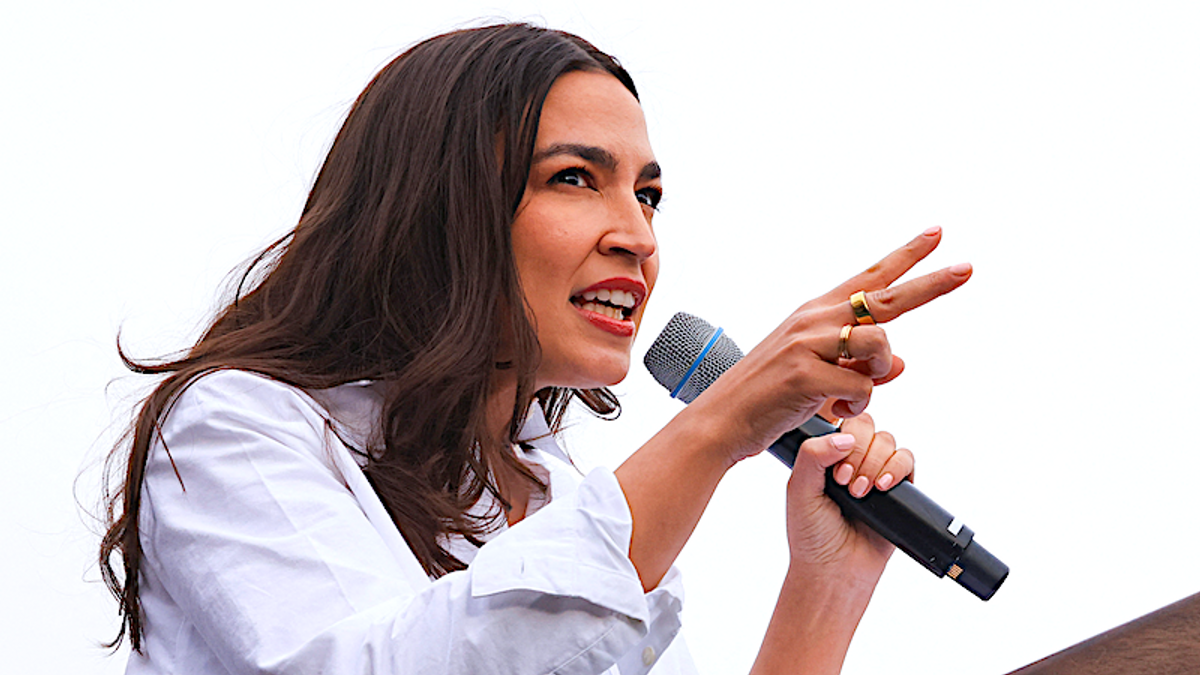
Thousands participate in a "No Wars, No Kings, No ICE" protest and march down Fifth Avenue in Manhattan against the policies of the Trump administration in New York City, New York, on January 11, 2026.
Jason Alpert-Wisnia / Hans Lucas / AFP via Getty Images

She could have been me. That was my first thought when I learned that Renee Nicole Good — a 37-year-old mother, poet, and community advocate — had been shot and killed by an Immigration and Customs Enforcement (ICE) agent. As a mother, an abolitionist organizer, and an artist, I felt that familiar twitching and burning, the despairing rage pooling under my skin, looking for an outlet.

Certainly, this is not the first time ICE has committed a tragic, outrageous murder in plain view. Last September, Silverio Villegas González, a 38-year-old father, was shot and killed by an ICE agent in a suburb of Chicago. Like Good, he had just dropped his kids off at school. Thirty-two people died in ICE custody last year alone, the highest number on record since ICE’s 2004 debut. Each stolen life is a universe of loss.

He could have been me.

So maybe I felt it all more personally — that subsonic sound of uncomfortable silence. Or, the comments that start, “Why didn’t they just…” I guess they think they can submerge the existential threat of unease under layers of themselves.

I get it. I do the opposite for the same effect. I lean in. As a white mother, I leverage privilege in solidarity like a shield, though I know I must be careful not to submit to the false promise of whiteness, to not believe I am impenetrable and disconnect from the very co-strugglers I love most dearly.

ICE’s Murder of Renee Nicole Good Was Not an Aberration — It Is the New Normal
US immigration agents have now shot 11 civilians in cars in four months. By Mike Ludwig , Truthout January 9, 2026


I got my start organizing with my co-workers in Minneapolis. We unionized the Uptown Borders bookstore, joining the United Food & Commercial Workers. Most of their members were food service and meat-processing workers, many of whom are immigrants. Sometimes the union would transport a badly injured worker to the hospital because the slaughterhouse didn’t want the state to find out if they were undocumented.

During my years in Minnesota, I also protested outside the Republican National Convention (RNC) in 2008. Thousands of us — unions, veterans’ groups, community organizations, families with kids — joined a decentralized “RNC Welcoming Committee,” demanding living wages, housing, health care, and an end to the never-ending “war for peace.” I marched while giving a piggyback ride to my fellow union member’s child. I watched military vehicles outfitted for combat line our route, and police in riot gear drag journalists along the pavement. Not so “Minnesota nice.”

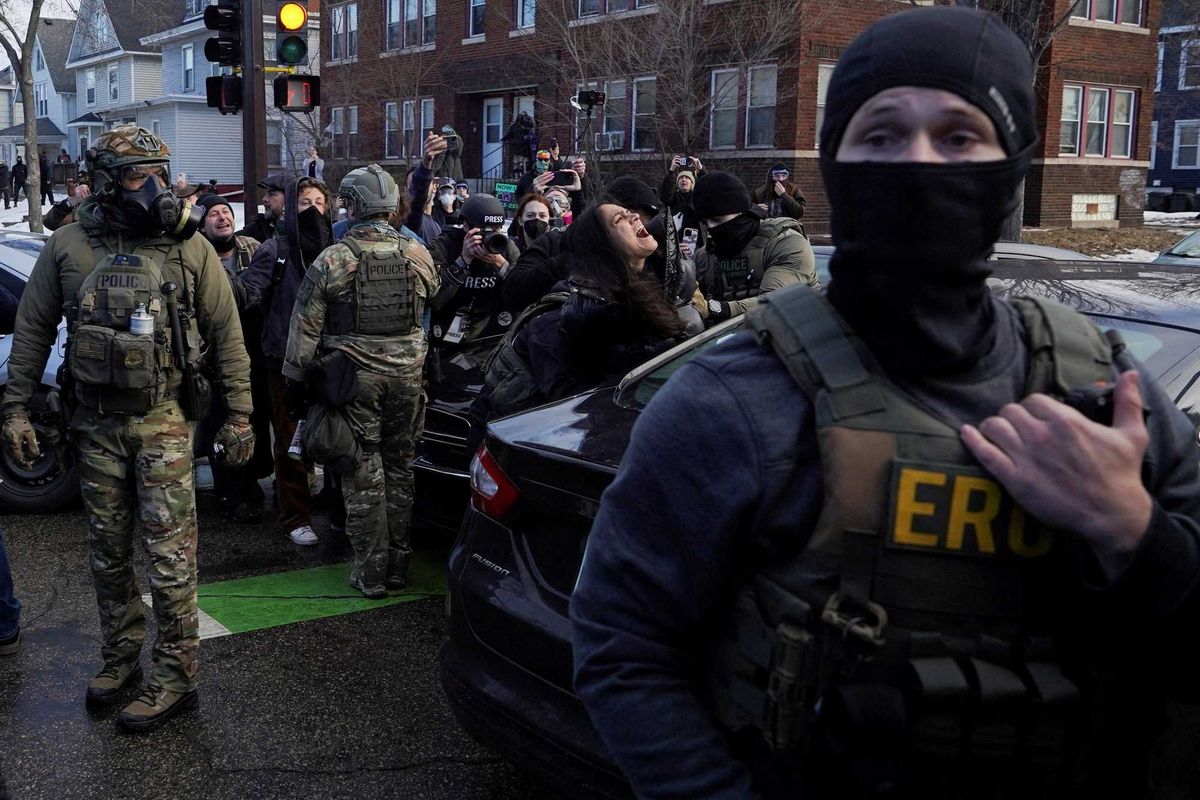
I was reminded of all of this recently while protesting at the ICE facility in Broadview, Illinois. Masked agents pointed guns and released tear gas on protesters, journalists, and legal observers alike. They hit people with their cars. The public sidewalk became a monochrome mural painted with pepper balls aimed at our bodies, stinging in our throats. It became clear that none of us may ever appear human to them, or be compliant enough.

But you cannot comply enough with those who’ve decided it’s OK to kill you. I think of the survivors I work alongside everyday — survivors of gender violence charged for acts of self-defense or accountability to the violence of their abusers. ICE may have the same standard for perfect compliance as the prosecutors in those cases: to quietly disappear or politely die.

Since 2016, I’ve worked directly with over a dozen such survivors in Chicago alone, nearly all of whom are mothers of color. Currently, I am working in support of a mother who was eight months pregnant when her partner attacked her in her own home, slamming her head into the kitchen counter and hitting her in the face as he dragged her. She reached for something to defend herself — a knife — struck him in the leg with it, and soon after, he died. The state has charged her with first-degree murder.

I do this work as an abolitionist organizer and a survivor of intimate partner violence. She could have been me too, only I hadn’t really believed that either.

Driving to Lincoln, Illinois, in July 2024, I was picking up a friend, a fellow mother and survivor who’d served a full sentence of separation from her child, total loss of body autonomy, and poor care at the Logan Correctional Center. I prepared for what we believed would be a very remote chance of ICE presence. They had not been picking people up outside Illinois Department of Corrections facilities. Corrections staff, like police, were given orders not to assist ICE.

From the sidewalk near the main gate, I watched her approach and then cross the threshold into the “free world,” carrying a copy printer box, a corrections officer still holding her arm. I was already reaching out to her when three black SUVs squealed into the curb, and three men in unmarked black uniforms rushed out. They shouted something at her bewildered face. They grabbed her and forced her into one of their vehicles and drove off. It happened in under 20 seconds. I heard myself screaming at the turned back of the corrections officer, at the already long-gone SUVs.

All that was left was that box, spilling out family photos, portraits she’d painted, legal documents, and letters between loved ones. I gathered it all up. I braced myself to tell her family. When I did, my friend’s mother crumpled into her own lap and cried. I could feel her daughter plead with me to be wrong, still looking for her mother.

When I remember that day, I also now imagine the faces of Renee Nicole Good’s children when they were told of her death, and the faces of Silverio Villegas González’s children when they were told of his death,their own bodies struck by the sense that this never should have been possible. Even in my mind’s eye, I want to look away.

It was days before we found my friend in a Kansas detention center. We organized a freedom campaign with amazing attorneys. We sent each other expensive messages of hope and solidarity. Then one day, seven months later, the steady push against an iron wall gave way. There were 642 miles and a deportation order between us, and then she was at my front door. The clenched fist that is all of me is still not fully open.

But as painful as it is, I am grateful to have even started to breach the hard border of myself, into the soft places where my body meets the bodies of my co-strugglers. I feel how precious we all are, and I know that we cannot and should not concede another life to this. We don’t need martyrs, and Renee Nicole Good and Silverio Villegas González were not offering. Nor has anyone asked us to suffer more as the way we show up in solidarity.

Abolitionist co-strugglers have been pleading with us to see what’s been there all along, in between explosive episodes of more public violence, funding cycles, and alleged reforms. They have always known that it’s not about guilt or innocence, dangerousness, or all the other claims systems make. Militarized borders and heavily gated pathways to citizenship ensure a permanently exploitable class, much like felony convictions.

So, it makes perfect sense that our solidarity reads as a threat to the ruling class, and they are reading that right. We are attacking the fundamental principle of their design, which rests on the claim that the value of my life is inversely proportional to the life of whatever enemy they present. They want us to believe premature death-making is a predetermined moral good.

But we refuse to believe that. Our well-being is bound together and we know it; we feel it when we let ourselves feel fear and grief. We know in our whole bodies that they and she and he are me. We feel one another most in our daring hope.

And that brings me back to all this loss. I was afraid to even try and speak or write anything to hold the weight of this. But I don’t want a moment of silence right now, quietly naming the dead. I can’t name each human life stolen by police or ICE or those acting in the interests of white supremacist patriarchy.


We cannot let them convince us that these systems can be “reformed,” because they are doing what they were designed to do.

In honor of those whose lives were stolen, and as a promise to their children, to their parents, and to our own futures, we cannot let them convince us that these systems can be “reformed,” because they are doing what they were designed to do. We are supposed to feel fear and disgust at those whom Donald Trump deems “garbage people.” If you are the “garbage people,” you are supposed to slip quietly away, and certainly not protest. We are supposed to accept, even begrudgingly, that incarceration, deportation, marginalization, and paywalls to basic needs are necessary. We are asked to ignore the obvious and inescapable fact of our shared humanity, to refuse care, and deny grief.

As Minneapolis Mayor Jacob Frey and Minnesota Gov. Tim Walz publicly decry the violence of ICE, we should remember that they have opposed any actual policy changes that would defund police. They’ve called instead for “reforms.” These might result in temporary improvements for some, but largely reforms defend the expansion of systems, creating shinier cages that soon lose their luster.

Instead, we must look to groups like the Black Visions collective in Minnesota, a Black queer-and-trans-led organization that has long been committed to the abolition of systems of state violence. The collective has been central to campaigns to defund police and the broader criminalization apparatus that includes ICE, in the wake of George Floyd’s 2020 murder by police.

Detractors will claim that those campaigns failed, but I am seeing the fruit of their labor spilling into the streets. The community education and collective demands that were developed then bring us to this powerful moment. Not only in Minnesota, but in Illinois, New York, California, and more, where organizers are drawing from the abolitionist principles embodied in groups like Survived & Punished that have been fighting to free survivors of gender violence from the overlapping systems of immigration and criminal legal courts.

“None of us are free unless all of us are free.” I heard Gov. JB Pritzker quoting Fannie Lou Hamer in response to ICE violence, after he allocated nearly a billion dollars to build two new prisons in Illinois. But the No New Prisons Coalition in Illinois knows these systems are entangled at the root. They have brilliantly prefigured, along with survivors inside, the absurd claim of “trauma-informed” prisons and they have developed harm reduction strategies to move us toward the demand to close these cages forever.

As Silky Shah of Detention Watch Network has written about in her incredible book, Unbuild Walls, all of these systems of forcible family separation, incarceration, and capitalism rely on the same logic of dangerousness and scarcity. Our struggles are inseparable, and when we fail to work together, we fall together too.

Shah reminds us that back in 2020, in the wake of George Floyd’s murder by police, there was support for reducing detention centers to 10,000 beds. Currently, the administration is pushing for an increase to 50,000. And, as we have learned from the entire U.S. history of jails and prisons, we build it to fill it.

Some call this a flashpoint, but I hope it’s more like an earthquake, in which tectonic plates are overcome by stress, slipping and releasing wave after wave of energy. We don’t need this moment, ignited as it is by tragic deaths and record kidnappings, to fizzle into reforms that make minor improvements for a few, while sucking even more lives under.

The demands we are converging on now are visionary and urgent, and they are also necessary, practical, and winnable: to defund ICE and police, and to close detention centers and prisons, redirecting our resources toward housing, health care, child care, schools. Preventative caregiving and restorative justice are urgent, and this is the moment we can move them over the line. We can win.


I don’t want “justice” from the shooters — they have none to give. I’d rather make a demand of the death-making institutions: die, dissolve, decay.

I hope folks in Minnesota, who are feeling that burning under their skin, or the pressure of their own silence bursting, will connect with groups doing important work. Groups like Monarca are training rapid responders in communities across the Twin Cities and also in the predominantly white and conservative region of Western Wisconsin, where I grew up.

Renee Nicole Good was a writer. Had ICE not murdered her last Wednesday, I wonder what she would have written on Thursday, and every day after. I wonder how closely she would have hugged her wife and kids. What urgent, timely demands or call to action might she have made in the eternity of poetry?

If I could speak one thing, from “the priddly brook of my soul,” as Good wrote, to someplace sacred in us, it’s that I want us each to claim a space in this moment, affirm our cellular-level solidarity. I don’t want to make meaning out of death. I don’t want “justice” from the shooters — they have none to give. I’d rather make a demand of the death-making institutions: die, dissolve, decay.

Renee Nicole Good and Silverio Villegas González and so many more should be alive. We must defame, defund, and abolish these systems. We must empty all the cages, kick dirt over made-up borders, and fund the things that help us thrive, imagine, create. Free us all.

This article is licensed under Creative Commons (CC BY-NC-ND 4.0), and you are free to share and republish under the terms of the license.

Holly Krig
Holly Krig is the director of Organizing for Moms United Against Violence and Incarceration and a cofounder of the Chicago Community Bond Fund.

Campaigners Push GoFundMe to Remove Fundraisers for ICE Agent Who Killed Renee Good

“Until each and every campaign supporting Jonathan Ross is taken down, GoFundMe will remain complicit in legitimizing ICE’s campaign of terror and violence on our communities.”


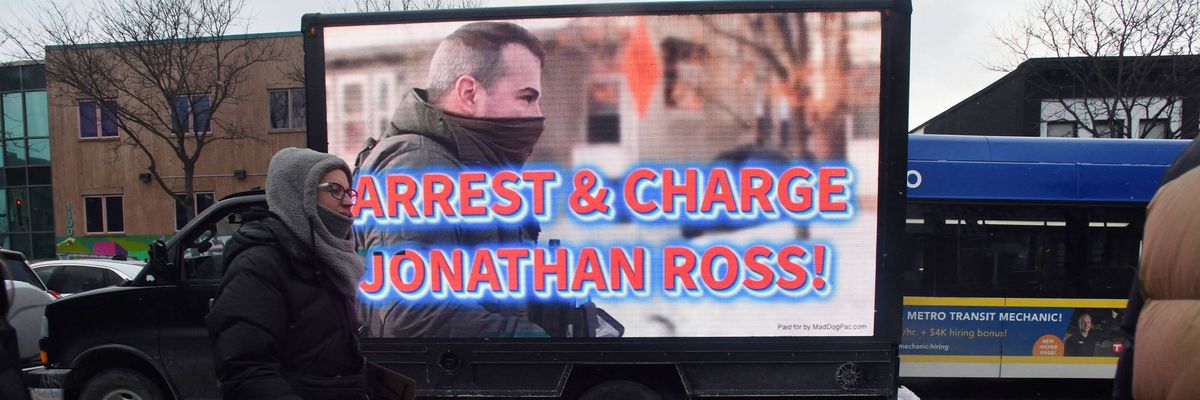
Protesters walk past a screen reading “arrest and charge Jonathan Ross,” the ICE officer who killed Renee Good, in Minneapolis, Minnesota on January 10, 2026.
(Photo by Octavio Jones/AFP via Getty Images)

Jake Johnson
Jan 13, 2026
COMMON DREAMS

The popular crowdfunding platform GoFundMe is facing mounting pressure to remove campaigns supporting Jonathan Ross, the Immigration and Customs Enforcement agent who shot and killed Renee Good last week in Minneapolis, sparking nationwide outrage and protests.

One GoFundMe campaign for Ross, a 10-year ICE veteran who has received full backing from the Trump White House, has raised nearly $600,000 as of this writing. The description of the campaign, started by a user named Clyde Emmons, states, “After seeing all the media bs about a domestic terrorist getting go fund me. I feel that the officer that was 1000 percent justified in the shooting deserves to have a go fund me.”


‘ICE Out for Good’: Weekend Rallies Nationwide After Killing of Renee Good


‘We Are Not Afraid’: Nationwide Protests Against ICE Killing of Renee Good, Fascist Trump

Trump administration officials have characterized Good, a 37-year-old mother of three, as a “domestic terrorist” and openly lied about the circumstances of her killing. President Donald Trump falsely claimed that Good “violently, willfully, and viciously ran over” Ross, despite video footage from multiple angles showing no such thing.

The top contributor to the GoFundMe campaign started by Emmons, who called Good a “stupod [sic] bitch who got what she deserved,” is Bill Ackman, who gave $10,000. The billionaire hedge fund manager wrote on social media that he “intended to similarly support the GoFundMe for Renee Good’s family” but it was closed by the time he tried to donate.

The advocacy group UltraViolet on Monday launched a petition urging GoFundMe to remove all fundraisers supporting or claiming to support Ross, noting that the platform’s policies bar fundraisers in support of individuals accused of violent crimes.

GoFundMe told The Intercept that the company is investigating Emmons’ campaign.

“Renee Good was murdered by ICE in cold blood and in plain sight. There can be no equivocation on the gross abuse of force which caused her death, nor can there be any doubt as to the contemptibility of GoFundMe campaigns to support her killer,” Nicole Regalado, vice president of campaigns at UltraViolet, said in a statement. “GoFundMe claims to be committed to helping people, and yet it continues to profit from our pain.”

“Until each and every campaign supporting Jonathan Ross is taken down,” Regalado added, “GoFundMe will remain complicit in legitimizing ICE’s campaign of terror and violence on our communities.”

State and federal investigators are currently examining Good’s killing, though the FBI has cut Minnesota officials out of the probe, intensifying concerns of a cover-up.

The New York Times reported Tuesday that federal investigators assigned to Good’s killing are “looking into her possible connections to activist groups protesting the Trump administration’s aggressive immigration enforcement, in addition to the actions of the federal agent who killed her.”

“The decision by the FBI and the Justice Department to scrutinize Ms. Good’s activities and her potential connections to local activists is in line with the White House’s strategy of deflecting blame for the shooting away from federal law enforcement and toward opponents they have described as domestic terrorists, often without providing evidence,” the Times added.
Top DOJ Officials Resign After Being Cut Off From Renee Good Killing Probe

“The Civil Rights Division exists to enforce civil rights laws that protect all Americans,” one former DOJ attorney said recently. “It doesn’t exist to enact the president’s own agenda.”


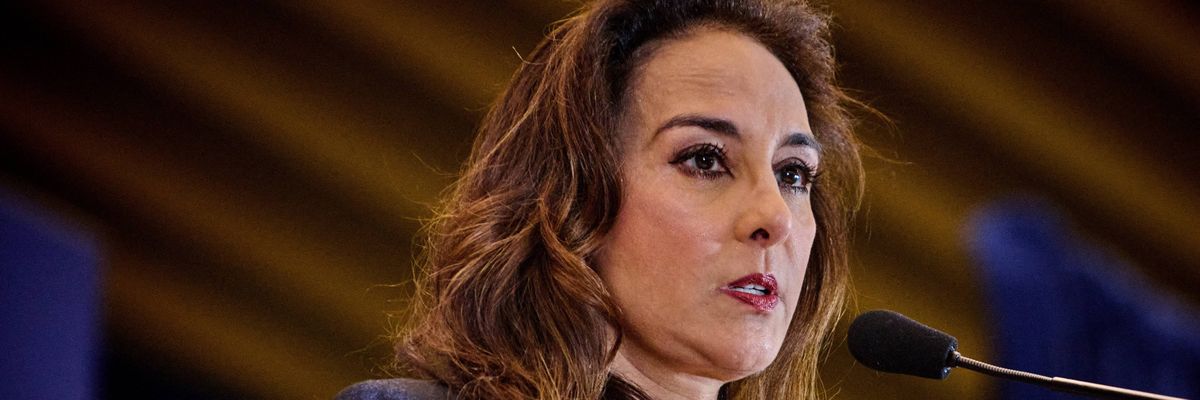
Harmeet Dhillon speaks at the National Conservative Convention in Washington DC on September 2, 2025.
(Photo by Dominic Gwinn/Middle East Images/AFP via Getty Images)

Julia Conley
Jan 13, 2026
COMMON DREAMS

President Donald Trump’s Department of Justice is seeing its latest mass resignation over its handling of the case of Renee Good, who was fatally shot by a federal immigration agent last week in Minneapolis.

Days after Harmeet Dhillon, assistant attorney general for civil rightsannounced that the agency’s Civil Rights Division would not be investigating the shooting—despite the fact that the office’s criminal unit would ordinarily probe any abuse or improper use of force by law enforcement—four top officials in the section have resigned.

As MS NOW reported Monday night, the chief of the criminal unit—listed on the DOJ website as Jim Felte—has resigned, as well as the principal deputy chief, deputy chief, and acting deputy chief. The outlet reported that other decisions by administration officials also contributed to their decision to leave.

The FBI announced late last week that it would be probing US Immigration and Customs Enforcement agent Jonathan Ross’ shooting of Good, who was killed while sitting in her car on a street in Minneapolis where ICE was operating—part of a surge of federal immigration agents who have been sent to the area in recent weeks, with the Trump administration largely targeting Somali people.

Despite video evidence showing that Good’s wheels were turned away from Ross, who was one of a number of officers who had approached her car and reportedly given her conflicting orders, the Trump administration is continuing to claim that she purposely tried to drive into the ICE agent and that Ross fired “defensive shots”—something law enforcement agents including ICE officers are trained not to do in situations involving a moving vehicle.

“It is highly unusual for the Civil Rights Division not to be involved from the outset with the FBI and US attorney’s office.”

As administration officials have aggressively pushed a narrative painting Good as a “domestic terrorist”—a designation that ordinarily would never be used by the government until a full investigation had been carried out—the FBI has blocked Minnesota authorities from conducting a probe, leading the state and the cities of Minneapolis and St. Paul to file a lawsuit Monday.

As the Washington Post reported Monday, the DOJ’s Civil Rights Division would typically work alongside the FBI “to guide investigatory strategy” on a case like Good’s. Prosecutors with the division were involved in trying the officers who killed George Floyd in MInneapolis and Tyre Nichols in Memphis.

“It is highly unusual for the Civil Rights Division not to be involved from the outset with the FBI and US attorney’s office,” Vanita Gupta, who led the division during the Obama administration, told the Post. “I cannot think of another high-profile federal agent shooting case like this when the Civil Rights Division was not involved—its prosecutors have the long-standing expertise in such cases.”

Hundreds of attorneys in the Civil Rights Division have resigned since President Donald Trump began his second term a year ago. Stacey Young, a former division attorney who left the DOJ soon after Trump was inaugurated, told NPR that the division is “not an arm of the White House.”

“The Civil Rights Division exists to enforce civil rights laws that protect all Americans,” Young said. “It doesn’t exist to enact the president’s own agenda. That’s a perversion of the separation of powers and the role of an independent Justice Department.”

Dhillon, who has said the division will work to carry out the president’s priorities, said last April that she was “fine” with the mass departure of civil rights attorneys.

“The job here is to enforce the federal civil rights laws—not woke ideology,” she said.

Dhillon’s announcement that the division would not investigate Good’s killing suggested that the DOJ views probing improper use of force cases as it has in the past as “woke ideology.”

The mass resignation at the Civil Rights Division comes a month after more than 200 former DOJ employees signed an open letter condemning “the near destruction of DOJ’s once-revered crown jewel.”

“The administration wants you to believe that career staff who fled the Division ‘were actively in resistance mode’ and ‘decided that they’d rather not do what their job requires them to do,’” said the former employeees. “That could not be further from the truth. We left because this administration turned the Division’s core mission upside down, largely abandoning its duty to protect civil rights.”

Now in the wake of Good’s killing, said one observer, the division under Dhillon’s leadership “refused to probe a murder. The people with consciences walked out.”

More prosecutors resign as DOJ orders investigation of Renee Good's widow

Travis Gettys
January 13, 2026 
ALTERNET


Leaked body cam video/X/screen grab

A half dozen federal prosecutors resigned over a Department of Justice push to investigate the widow of a woman killed by an Immigration and Customs Enforcement officer.

Six federal prosecutors in Minnesota who had been leading the sprawling fraud probe that prompted the recent immigration crackdown quit their posts Tuesday over DOJ's focus on investigating the wife of 37-year-old Renee Good rather than the ICE agent who shot and killed her, reported the New York Times.

"The stated reason for ICE agents being in Minnesota is because of the ongoing fraud claims around daycare and other services," noted British journalist James Ball, political editor for The New World. "The two prosecutors leading those investigations have now resigned in the wake of Renee Good’s shooting. Even the internal supposed logic of this deployment is falling apart."

Joseph H. Thompson, the second-ranking official at the U.S. attorney’s office who was overseeing the fraud probe that involved a number of Somali-run social service providers, was among the prosecutors who resigned in protest.

"Mr. Thompson, 47, a career prosecutor, objected to that approach, as well as to the Justice Department’s refusal to include state officials in investigating whether the shooting itself was lawful, the people familiar with his decision said," the Times reported. "The other senior career prosecutors who resigned include Harry Jacobs, Melinda Williams and Thomas Calhoun-Lopez. Mr. Jacobs had been Mr. Thompson’s deputy overseeing the fraud investigation, which began in 2022. Mr. Calhoun-Lopez was the chief of the violent and major crimes unit."

At least four other senior officials reportedly resigned from the Justice Department in protest after Harmeet Dhillon, the assistant attorney general for civil rights, decided not to investigate the ICE officer's killing of Good, who had been behind the wheel of a Honda SUV during an encounter with immigration agents last week in Minneapolis.

"Instead, the Justice Department launched an investigation to examine ties between Ms. Good and her wife, Becca, and several groups that have been monitoring and protesting the conduct of immigration agents in recent weeks," the Times reported. "Shortly after Wednesday’s fatal shooting, Kristi Noem, the secretary of homeland security, referred to Ms. Good as a 'domestic terrorist.'"

Thompson strongly objected to the DOJ's decision not to open a civil rights investigation into the shooting and was outraged by the demand to investigate Becca Good, who said in a statement after her wife's killing that they had “stopped to support our neighbors” when they got into a tense confrontation with ICE agents.

The career prosecutor initially tried to investigate the shooting in partnership with the Minnesota Bureau of Criminal Apprehension, a state agency that reviews police shootings, but senior DOJ officials overruled his decision.


Legal expert details 'next steps' after 'mass resignation' at DOJ over Minnesota demands


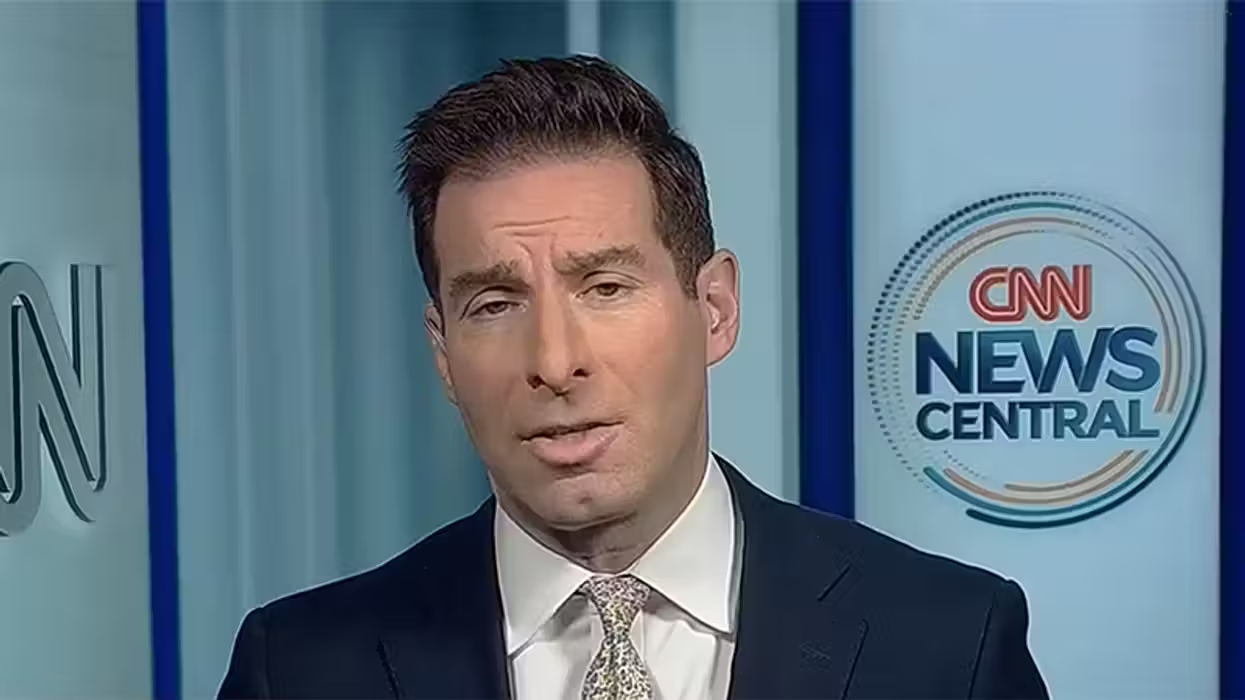
CNN legal analyst Elie Honig (Photo: Screen capture)
January 13, 2026
 ALTERNET

Legal analyst Elie Honig told CNN that after the mass resignation from the Justice Department's U.S. Attorney's Office in the Minnesota District, there could be some challenges with upcoming cases.

The New York Times confirmed on Tuesday that six prosecutors resigned, three of whom worked in the Minnesota District, after being told to target the partner of Renee Nicole Good.


Honig explained that these kinds of resignations are an example of the prosecutors "trying to tell us something" and "waving a flag" with their resignations.

"You do not see that happen. It's very rare before this administration came in, for career prosecutors, nonpartisan career prosecutors to resign in protest over something," he said. "And let me be clear about what is and is not relevant to this fatal shooting investigation: The actions and movements movements of Renee Good on that day, on that street, what she did immediately before the shooting, the way she moved her car backwards, forwards, all of that is very relevant in minute detail."

What is not relevant, however, are any of "her activities before that day, who she may have associated with [and] what her views towards ICE were." He went on to call them inappropriate to the case.

"They have nothing whatsoever to do with whether that shooting was justified justified or not," said Honig. "And so if that's the reason why these career prosecutors have resigned, then they are well supported in doing that, and I applaud them if that's the reason why."

CNN host Boris Sanchez asked what the next step is and whether the Trump administration would simply find someone else willing to "do their bidding."

Honig reiterated how rare it is for career prosecutors to resign, particularly those who've been there for a decade or more.

"These are people who've served across Republican and Democratic administrations alike," Honig said. "Many of these folks, including Mr. Thompson, served throughout the entire first Trump administration. So, it's really telling us something unusual when you see a mass resignation like this. What happens next is, somebody else gets put on the case."

The challenge, he said, is that it remains to be seen if it will be someone who is overtly partisan or who has any experience.

"The whole beauty of DOJ is that you have this very large pool of people who've been there for a long time, who have experience, who are not politically motivated, who can handle sensitive investigations like this. And when they resign, you're going to get replacements, and you may well get people who are less experienced and less impartial. And the results may show that," he closed.


Trump Vows ‘Reckoning and Retribution is Coming’ to Minnesota as ICE Brutality Mounts

The president’s declaration came as new reports documented brutality and other abuses carried out by federal immigration agents.


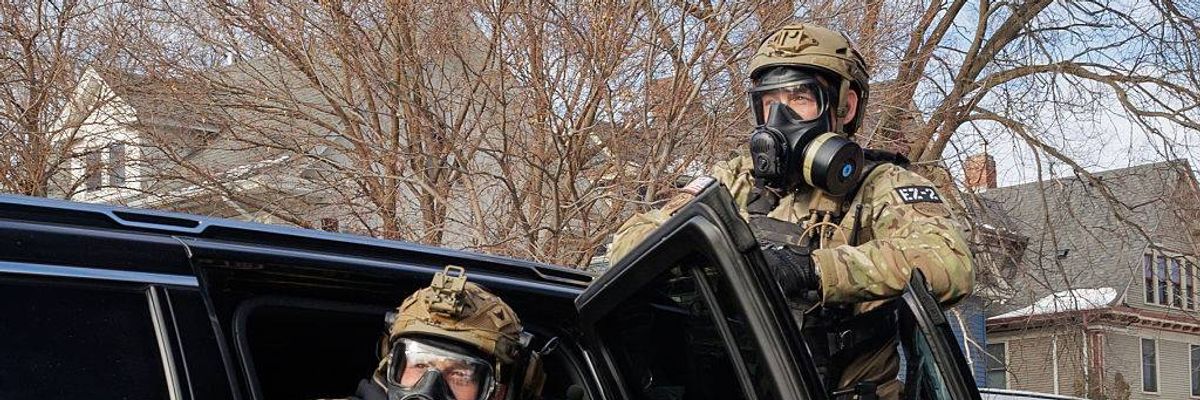
A US Customs and Border Patrol agents pulls the pin out of a canister of tear gas before tossing it towards residents in a residential neighborhood after a minor traffic accident in Minneapolis, Minnesota, on January 12, 2026.
(Photo by Madison Thorn/Anadolu via Getty Images)

Brad Reed
Jan 13, 2026
COMMON DREAMS

President Donald Trump vowed on Tuesday that “reckoning and retribution is coming” to the state of Minnesota as new reports documented the brutal actions of federal immigration agents throughout the US.

In a Truth Social post that was amplified by the official White House rapid response account on X, Trump addressed Minnesota residents and asked them if they “really want to live in a community in which their (sic) are thousands of already convicted murderers, drug dealers and addicts, rapists, violent released and escaped prisoners, dangerous people from foreign asylums and mental institutions and insane asylums, and other deadly criminals too dangerous to even mention.”

In reality, the operations being done in Minneapolis and across the US by federal immigration agents have little to do with taking violent criminals off the streets.

Recently released data flagged by Aaron Reichlin-Melnick, a senior fellow at the American Immigration Council, shows that a plurality of people detained by ICE in recent months have no prior criminal convictions.

Trump ended his message with an all-caps declaration to “FEAR NOT, GREAT PEOPLE OF MINNESOTA, THE DAY OF RECKONING & RETRIBUTION IS COMING!”

Trump’s vow of retribution came just hours after ProPublica published a lengthy investigation documenting 40 instances in which federal immigration agents across the country used “chokeholds and other moves that can block breathing,” including nearly 20 instances where agents “appeared to use chokeholds and other neck restraints that the Department of Homeland Security prohibits ‘unless deadly force is authorized.’”

The publication also identified several videos in which federal immigration agents were kneeling on the backs of people’s necks, similar to the way that former Minneapolis police officer Derek Chauvin knelt on the neck of George Floyd as he suffocated to death in 2020.

Eric Balliet, a former law enforcement official who worked at both Homeland Security Investigations and Border Patrol, told ProPublica that he has never seen immigration agents use such tactics before, even if they were arrested people suspected of serious crimes.

“I arrested dozens upon dozens of drug traffickers, human smugglers, child molesters—some of them will resist,” he said. “I don’t remember putting anybody in a chokehold. Period.”

Arnoldo Bazan, a 16-year-old US citizen who was put into a chokehold by federal immigration agents last year, told ProPublica that he “felt like I was going to pass out and die” because of it.

MPR News reported on Tuesday that immigration agents in Minneapolis have apparently been using license plate readers to identify local activists who have been observing and documenting operations in their neighborhoods.

John Boehler, a policy counsel with the ACLU of Minnesota, told MPR News that the agents’ actions appear to violate Minnesota state law, which says accessing people’s personal data in this manner can only be done if they are suspects in an active criminal investigation.

There is no reason, Boehler emphasized, that observers should be under any kind of criminal probe.

“Following or observing or reporting on federal agencies or federal activities is not a criminal activity—it’s protected First Amendment activity,” Boehler explained. “To be using those cameras, to use those license plate readers, to surveil protesters has a chilling effect on First Amendment rights, and that’s what we think the goal is.”
Joe Rogan compares Trump's ICE to Hitler's Gestapo: 'Is that what we've come to?'

David Edwards
January 13, 2026 
RAW STORY


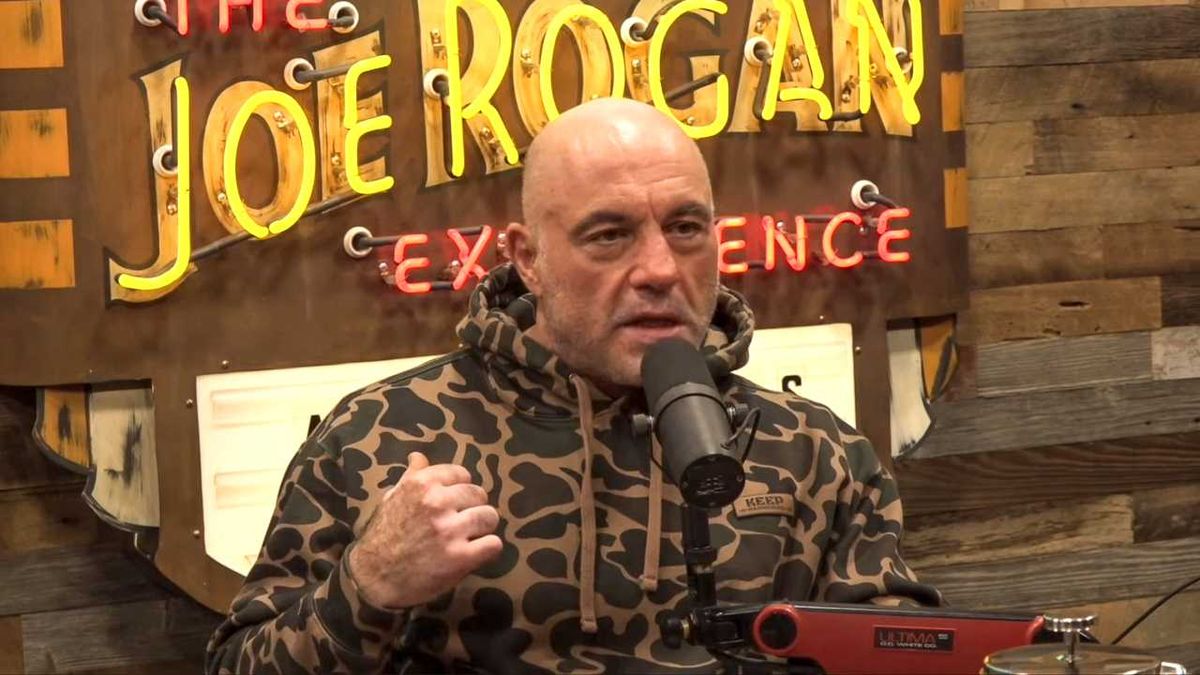
The Joje Rogan Experience/screen grab

Podcast host Joe Rogan noted that there were similarities between the Nazi Gestapo and President Donald Trump's use of Immigration and Customs Enforcement (ICE) officers.

During an interview with Sen. Rand Paul (R-KY) this week, Rogan noted that many Americans viewed ICE officers as "murderous, military people that are on the streets of our city, and they're masked up, which is also a problem."

"Because if you get arrested by a cop, you're allowed to ask the cop, what is your name and badge number?" he remarked. "If you get arrested by an ICE agent, you have no such right. They're wearing a mask. They don't have to tell you s—t. That's a problem. That's a problem on our city streets, right? Because you could also pretend to be an ICE agent."

"And we shouldn't have militarized groups of people roaming the streets, just showing up with masks on, snatching people up," he continued. "It's complicated, obviously, but it's also very ugly. To watch someone shoot a U.S. citizen, especially a woman, in the face, where it's like, I'm not that guy. I don't know what he thought."

Rogan seemed skeptical of claims that the killing of 37-year-old Renee Good in Minneapolis was necessary.

"When people say it's justifiable because the car hit him, it seemed like she was kind of turning the car away," he said. "She didn't seem mentally healthy, but does that mean she should be shot in the head? Is there no other way to handle this?"

"And then I can also see the point of view of the people to say, yeah, but you don't want militarized people in the streets just roaming around, snatching people up, many of which turn out to actually be U.S. citizens that just don't have their papers on them," he added.

"Are we really going to be the Gestapo? Where's your papers? Is that what we've come to?"


DHS responds to Joe Rogan's 'Gestapo' concerns with a 'very straightforward' reply

David Edwards
January 14, 2026
RAW STORY


Fox News/screen grab

Department of Homeland Security spokesperson Tricia McLaughlin declined to deny that Immigration and Customs Enforcement (ICE) officers were behaving as the "Gestapo" after podcast Joe Rogan raised the concern.

During a Wednesday interview on Fox News, host Dana Perino noted that Rogan compared ICE to the Nazi Gestapo on a recent podcast.

"Joe Rogan, he's got questions about what's happening," Perino said, "and it's probably echoing what many people are thinking."

"How would the department respond to that concern that he raised?" she wondered.

"Well, this answer is very straightforward," McLaughlin replied. "If Tim Walz, if Mayor Frey, would let us in their jails, we wouldn't have to be there at all."

"Because we don't have state and local law enforcement's help, we do have to have a physical presence," she continued. "And I know in the interview as well, and what Joe Rogan just mentioned is the rampant crime we found, more than $9 billion. And we believe that's just the tip of the iceberg."

"If the state and local government would help there, if they would coordinate with the FBI, if they would coordinate with Homeland Security investigations, we would, on an expedited basis, be finding that fraud."

During his Tuesday podcast, Rogan acknowledged that ICE's militarization was problematic.

"You don't want militarized people in the streets," he remarked, "just roaming around, snatching people up, many of which turn out to actually be U.S. citizens that just don't have their papers on them? Are we really going to be the Gestapo? Where's your papers? Is that what we've come to?"


'I'm disabled!' Woman screams as masked ICE agents pull her through car window

Nicole Charky-Chami
January 13, 2026 
RAW STORY


Federal agents grab a woman to drag her away from her car, days after an ICE agent fatally shot Renee Nicole Good, in Minneapolis, Minnesota, U.S., January 13, 2026. REUTERS/Tim Evans TPX IMAGES OF THE DAY

A woman who was reportedly attempting to drive to a doctor's appointment was pulled out of her vehicle by ICE agents and taken into custody during a disturbing incident captured on video Tuesday in Minneapolis.

The incident happened amid heavy clashes between masked ICE agents and protesters following the killing of Renee Nicole Good by ICE agent Jonathan Ross, near the area of 34th and Park streets in Minneapolis when a woman attempting to get out of the area was targeted as officers grabbed her and pulled her out of the window of her sedan.

The woman, whose name was not immediately known, yelled out "Get the f--- out of my car. I've been picked up by police before. I'm disabled, I'm trying to go to the doctor up there, that's why I didn't move."

The video was captured and shared by Amanda Moore, who was at the scene where protesters and agents clashed, yelling at each other while they pulled the woman from her car onto the concrete, using a knife to cut her out of her seatbelt.

"Today at 34 & Park in Minneapolis, a woman tried to drive down the street where a protest had broken out in front of a home ICE was raiding, saying she had a doctor apt to get to. ICE agents busted out her windows, cut off her seatbelt, and pulled her out before arresting her."


'Barbaric': Outrage after ICE agents drag screaming woman out of car window

Nicole Charky-Chami
January 13, 2026
RAW STORY


A woman reacts after she was dragged away from her car by federal agents who ordered her to leave the scene during an immigration raid, days after an ICE agent fatally shot Renee Nicole Good, in Minneapolis, Minnesota on Jan. 13, 2026. REUTERS/Ryan Murphy

The internet responded with outrage after a woman who was reportedly trying to drive to a doctor's appointment was pulled out of her vehicle by ICE agents and dragged into custody during a disturbing incident captured on video Tuesday in Minneapolis.

The woman, whose name was not immediately known, was driving near the area of 34th and Park streets while protesters and ICE agents were clashing in the street during an immigration raid following the killing of Renee Nicole Good by ICE agent Jonathan Ross last week.

She was attempting to drive out of the area when officers grabbed her and pulled her out of the window of her sedan. She yelled out "Get the f--- out of my car. I've been picked up by police before. I'm disabled, I'm trying to go to the doctor up there, that's why I didn't move."

Users on social media responded to the attack.

"They're telling her to go but one of them then breaks her window on the other side. wtf," cardiologist Siyab Panhwar, MD, wrote on X.

"This is all so unnecessary and our taxpayer dollars are funding this s--- show. Unbelievable," user Alejandra Gold wrote on X.

"They also could have just calmly told her to move and help clear the way[.] Instead they start screaming at her. Gets a little confusing to follow directions when masked men are screaming for you to move when you have nowhere to f---ing go. (Especially scary considered last week)," Cody Ump wrote on X.

"Why can't they calmly ask them to move? This seems very intentionally agitating. Roughing up Americans-what does this have to do with immigration enforcement? This appears to be an occupation. And if so are we in a Civil War?" An X user named Jules wrote on the platform.

"If you want to think ahead, just imagine the 2026 elections in Blue states if Trump orders ICE to make sure no illegals vote, ICE shows up at heavily D precincts and harasses, abuses, beats and arrests numerous potential voters. You think that might decrease turnout?" David Doak wrote on X.

"There has to be a better way for ICE to deal with these situations instead of multiple masked men yelling at her. This is barbaric behavior," X user Traci wrote on the platform.


47 Ways Trump Has ‘Made Life Less Affordable’ in Second Term

“Trump’s actions since taking office a year ago reveal a clear and consistent effort... to serve the interests of his billionaire and corporate backers,” said a co-author of the Economic Policy Institute report.


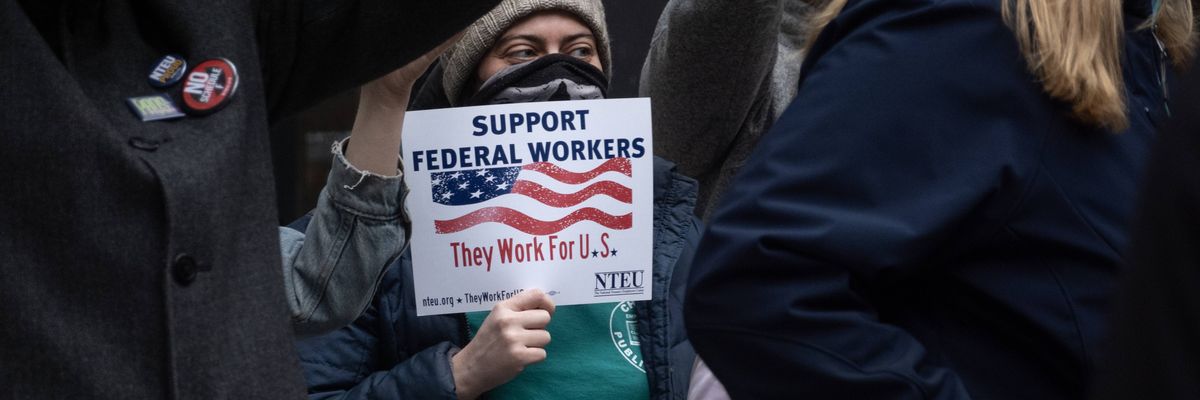
Federal employees rally in support of their jobs outside of the Kluczynski Federal Building on March 19, 2025 in Chicago, Illinois.
(Photo by Scott Olson/Getty Images)

Jessica Corbett
Jan 13, 2026
COMMON DREAMS


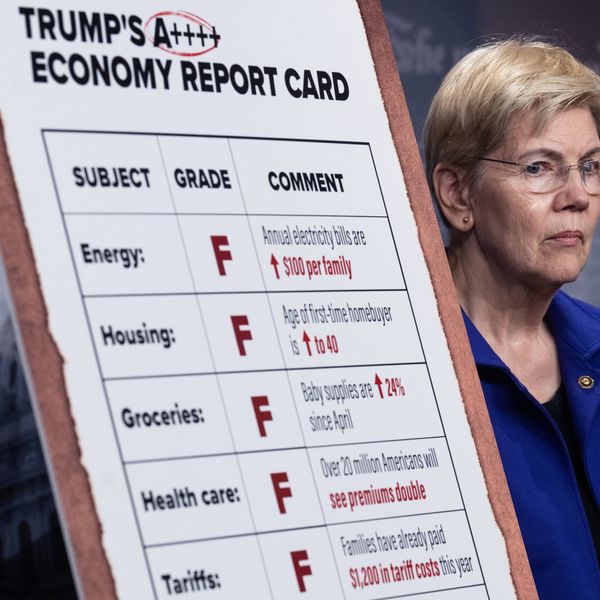
From “stripping collective bargaining rights from more than 1 million federal workers” to “denying 2 million in-home healthcare workers minimum wage and overtime pay,” President Donald Trump “has actively made life less affordable for working people.”

That’s according to a Tuesday report from the Economic Policy Institute (EPI), which cataloged 47 key ways that the 47th president made life worse for working people during the first year of his second term.


Nearly Half of Americans Say Their Financial Security Is Getting Worse Under Trump

The think tank sorted the actions into five categories: eroding workers’ wages and economic security; undermining job creation; weakening workers’ rights; enabling employer exploitation; and creating an ineffective government.

“Many of the actions outlined here have impacts across categories,” the report notes. “Trump’s attacks on union workers, for example, reduce workers’ wages, weaken workers’ rights, and promote employer exploitation of workers.”

“Every dollar denied to typical workers in wages ends up as higher income for business owners and corporate managers.”

The first section highlights that Trump (1) cut the minimum wage for nearly 400,000 federal contractors, (2) ended enforcement of protections for workers illegally classified as independent contractors, (3) slashed wages of migrant farmworkers in the H-2A program, (4) deprived in-home healthcare workers of minimum wage and overtime pay, and (5) facilitated the inclusion of cryptocurrencies among 401(k) investment options.

On the job creation front, the president (6) paused funding for projects authorized under a bipartisan infrastructure law, (7) signed the Laken Riley Act as part of his mass deportation agenda, (8) revoked an executive order that created a federal interagency working group focused on expanding apprenticeships, (9) is trying to shutter Job Corps centers operated by federal contractors, and (10) disrupted manufacturing supply chains with chaotic trade policy.


In addition to (11) attacking the union rights of over 1 million government employees, Trump (12) delayed enforcement of the silica rule for coal miners, (13) proposed limiting the scope of the Occupational Safety and Health Administration’s general duty clause, (14) fired National Labor Relations Board (NLRB) General Counsel Jennifer Abruzzo, (15) stripped work permits and temporary protections from immigrants lawfully in the country, and (16) deterred worker organizing with immigration enforcement actions.

Trump’s assault on workers’ rights has included (17) nominating Labor Secretary Lori Chavez-DeRemer, who has pursued a deregulatory agenda, (18) illegally firing Gwynne Wilcox from the NLRB, (19) ending funding to fight human trafficking and child and forced labor globally, and (20) terminating International Labor Affairs Bureau grants.

Chavez-DeRemer isn’t Trump’s only controversial pick for a key labor post. He’s also nominated (20) Jonathan Berry as solicitor of labor, (21) Crystal Carey as NLRB general counsel, (22) Scott Mayer as an NLRB board member, and (23) Daniel Aronowitz to lead the Employee Benefits Security Administration.

Trump has also (24) weakened workplace safety penalties for smaller businesses, (25) nominated Andrea Lucas as Equal Employment Opportunity Commission (EEOC) chair, (26) revoked an executive order promoting strong labor standards on projects receiving federal funds, (27) appointed Elisabeth Messenger, the former leader of an anti-union group, to head the Office of Labor-Management Standards, (28) fired EEOC Commissioners Charlotte Burrows and Jocelyn Samuels, and (29) conducted systematic worksite raids that punished workers rather than improving wages and working conditions.

The president’s various “deliberate actions to weaken the federal government” have included (30) politicizing career Senior Executive Service officials, (31) firing most staff at the National Institute for Occupational Safety and Health, (32) nominating Brittany Panuccio as an EEOC commissioner, (33) and picking Project 2025 architect Russell Vought as Office of Management and Budget director.

He has also fired (34) Federal Labor Relations Authority Chair Susan Tsui Grundmann and (35) Merit Systems Protection Board Member Cathy Harris, and (36) tried to fire Federal Reserve Governor Lisa Cook, whose case is set to be argued before the US Supreme Court next week. Trump further (37) fired Bureau of Labor Statistics (BLS) Commissioner Erika McEntarfer over accurate economic data, and is attempting to shut down (38) the Consumer Financial Protection Bureau, and (39) the Federal Mediation and Conciliation Service.

Additionally, the president (40) directed federal agencies to end the use of disparate impact liability, (41) put independent agencies under his supervision, (42) signed the so-called One Big Beautiful Bill Act that transfers wealth from working families to the ultrarich, (43) proposed a rule that would make it easier to fire federal employees for political reasons, and (44) issued an executive order on apprenticeships that does not require the government to consult with labor groups.

Finally, since returning to the White House, the Republican has (45) gutted the federal workforce, (46) directed US Attorney General Pam Bondi to challenge state laws that would regulate artificial intelligence technologies, and (47) fired 17 inspectors general.

“Trump’s actions since taking office a year ago reveal a clear and consistent effort to make life less affordable for working people in order to serve the interests of his billionaire and corporate backers,” said report co-author Celine McNicholas, EPI’s director of policy and general counsel, in a statement.

“Every dollar denied to typical workers in wages ends up as higher income for business owners and corporate managers,” McNicholas added. “This growing inequality is what is making life so unaffordable for workers and their families today.”

EPI released the report as the BLS published its consumer price index data for December, which show a 2.7% year-over-year increase in prices for everyday goods and services.

WSJ editorial slams flailing Trump as Americans 'tread financial water'


Matthew Chapman
January 13, 2026 
RAW STORY

The conservative Wall Street Journal editorial board had a dire assessment of Trump's current economy: he's effectively fiddling while it burns, rather than deliver on any of the GOP's more conservative, growth-focused policies.

"Regarding prices, the consumer-price index came in somewhat hotter than expected with an increase of 0.3% in December and 2.7% over the past 12 months. Overall inflation isn’t rising, but it also isn’t coming down. Increases last month were especially notable for categories of goods and services that Americans buy on a regular basis like shelter (0.4%), medical care (0.4%), food (0.7%) and energy bills (1%)."

The sectors that saw the most inflation disproportionately hit lower-income Americans, the board noted. Worse still, earnings aren't getting any better, the board wrote.

"Real average hourly earnings rose 0.7% during the first five months of this year, but income growth has since stalled. For production and nonsupervisory workers, real average hourly earnings have declined 0.2% since May. The reason is a bump in inflation in the summer months that erased the gains from wage increases."

"This goes a long way to explain why so many Americans feel as if they are treading financial water," wrote the board — and it makes Trump's legal bullying of the Federal Reserve to try to lower interest rates look even more counterproductive, since the Fed isn't even at its inflation target yet and doesn't have room to lower rates to what Trump wants.

Instead, the board concluded, Trump is scrambling to try to implement price controls — something that has been tried and failed in previous inflation spells — most recently controls on credit card interest.

"The President has recently been rolling out a flurry of counterproductive policies worthy of Bernie Sanders in the name of reducing prices (see the editorial nearby on credit-card interest rates). But what the President really needs is what he promised in the campaign, which is rising real wages," wrote the board. "That means further reducing inflation and letting deregulation and tax policy drive faster economic growth and productivity. That will make everything more affordable."

'Worst case scenario': Expert warns economic 'crash' risk grows by the day under Trump


Nicole Charky-Chami
January 12, 2026 
RAW STORY

An economic expert Monday warned that a looming stock market crash could be on the horizon as the Trump administration shows its penchant for chaos.

Bloomberg economics columnist Clive Crook responded to questions over why the economy has not crashed and how despite policy disruptions and predictions of "doom" from experts and economists, the stock market appears to be still doing well — yet that could change.

Crook argued that given the Trump administration's sweeping policy changes, including tariffs and a rocky political situation unfolding both in and outside the United States, that Trump's policies have not yet been vindicated.

"The fact that the markets have done incredibly well is not really an endorsement of Trump's policies," Crook said.

"Don't misunderstand me: There are aspects of Trump's policies that the financial markets do — as it were, rationally — welcome rationally regard as pro-growth. In particular, lower corporate taxes and efforts at deregulation, those are pluses in the market's mind. But there are also negatives alongside: trade policy fiscal and monetary policy."

The result has been more complicated than it might appear, he added.

"On balance, it's hard to say how those will work out," Crook said. "And the other big thing that needs to be emphasized is the hope or the prospect that AI innovation will transform growth going forward, will transform productivity. So I'm not saying there are aren't reasons to be optimistic. All I'm saying is in this bundle of conflicting information and conflicting narratives, there are negatives which persist regardless of where the markets go. And as it were the disorder and the disruption that this administration really revels in, as that continues, the risk of a crash creating the worst case scenario, then that risk grows — grows over time."

Trump’s Losing Streak Continues as Jobs Report Shows Weak 2025 Labor Market


WASHINGTON - The latest jobs report shows the United States added 50,000 jobs in December 2025, and prior months revised down by a combined 76,000 jobs. The unemployment rate remains elevated at 4.4% and is near its highest levels of the past four years. The December report caps a year of sluggish job growth, with the fewest number of jobs added outside of a recession since 2003. Hiring slowed sharply over the course of 2025 as Trump’s erratic economic policies froze the labor market.

Groundwork Collaborative’s Chief of Policy and Advocacy Alex Jacquez released the following statement:

“December’s job report confirms that Trump’s reckless trade policies and lifeless economy are costing Americans dearly. Working families face sluggish wage growth, fewer job opportunities, and never-ending price hikes on groceries, household essentials, and utilities. Despite the President’s endless attempts to deflect and distract from the bleak economic reality, workers and job seekers know their budgets feel tighter than ever thanks to Trump’s disastrous economic mismanagement.”

Job growth in 2025 fell far behind last year’s pace. Total job growth in 2025 was just 584,000, compared to 2 million jobs added in 2024 — a 71% slowdown.

Job gains remain narrowly concentrated in a small number of sectors. In December, job gains were concentrated in education and health services. Retail trade lost 25,000 jobs this holiday season, as budgets continue to be squeezed. The U.S. is shedding blue-collar jobs for the first time since the pandemic, with roughly 60,000 job losses in manufacturing, transportation and warehousing, and mining in 2025 while construction jobs stall out.

Long-term unemployment remains elevated. The number of people unemployed for six months or more remains at 1.9 million, increasing by roughly 400,000 compared to the year before. This points to rising financial strain for job seekers and growing unease among workers about job stability.

Official payroll statistics may overstate the number of jobs the economy is creating. Federal Reserve Chair Jerome Powell warned in December that headline job gains may be overstated by as many as 60,000 jobs per month. This is because the Bureau of Labor Statistics has to estimate job gains and losses at new and closing businesses that are difficult to survey directly. The lackluster jobs reports throughout 2025 may paint an overly rosy picture of the labor market.

New hiring has ground to a halt. The latest Job Openings and Labor Turnover Survey data show that job openings fell to about 7.1 million in November from nearly 7.5 million in October, while the hiring rate dropped to 3.2 percent, one of the lowest levels since April 2020, when the pandemic-induced recession was underway. According to data from Challenger, Gray & Christmas, U.S. employers sharply pulled back on hiring plans in 2025. Announced hires fell to about 508,000, down 34 percent from nearly 770,000 in 2024, the lowest annual total since 2010, signaling much weaker employer confidence in expanding their workforce.
Single moms forced to quit jobs as child care funding vanishes overnight due to Trump

Lindsey Toomer, 
Colorado Newsline
January 13, 2026 

Without access to federal child care assistance, single mother Robbie Basham would have to leave her job to care for her son full-time.

“His quality of life would go down because I wouldn’t be able to pay for what we need to live,” Basham said.

A funding freeze on federal safety-net programs that support low-income families and their children will harm all families who seek child care in the state, providers and advocates said in a press call U.S. Rep. Brittany Pettersen, a Lakewood Democrat, organized Tuesday.

The Trump administration froze $10 billion for the Child Care Development Fund, Temporary Assistance for Needy Families program, and the Social Services Block Grant programs in Colorado, Minnesota, New York, California and Illinois. The states all have Democratic governors, and the funding freeze is seen by Democrats as punishment against states disfavored by President Donald Trump.

The Administration for Children and Families, part of the U.S. Department of Health and Human Services, told the states they will not get money for the programs while the federal government conducts a “thorough review of the State’s use of funding for compliance and alignment with statutory requirements.”

Sharyl Boehm and Cheryl Gould, co-owners of the Rocky Mountain Children’s Discovery Center in Cañon City, have worked in child care for 30 years. The funding freeze will have “immediate and devastating consequences for families and educators at our facility alone,” Boehm said. She said 42 children and their families would immediately have their child care upended.

“These parents rely on child care assistance in order to work and support their families,” Boehm said. “The majority of our families in this rural area, it takes two. So both parents are working as hard as they can to pay the bills, and without child care, that doesn’t happen. It’s an impossible choice between employment and caring for their own children.”

Rocky Mountain Children’s Discovery Center has been caring for Basham’s son since he was 6 months old.

“They know about his fears, and they know how to comfort him, and they work with him in every way,” Basham said. “I will be one of the people that will not go to work because my son needs to be safe, and I know he’s safe at Rocky Mountain. ”

Parents have started posting on social media looking for anybody to care for their child, which Boehm said is “really scary” because people who are not licensed or qualified may end up providing child care. Gould said having fewer children in their center due to the funding cuts will affect their bottom line, and could also lead to employee furloughs.

These parents rely on child care assistance in order to work and support their families,” Boehm said. “The majority of our families in this rural area, it takes two. So both parents are working as hard as they can to pay the bills, and without child care, that doesn't happen. It's an impossible choice between employment and caring for their own children.
– Sharyl Boehm, co-owner of Rocky Mountain Children’s Discovery Center in Cañon City

“It really hits us in the heart to say to these families, ‘No, you can’t come because there’s no funding,’” Gould said. “
That’s just not right. Everybody knows somebody who is dependent on child care.”

Pettersen, a mother of two young children, said the $3 million being withheld for child care assistance will affect 27,000 children in Colorado, most of whom are under the age of 3. She said the federal assistance only goes to families whose income is less than $59,000 a year.

“Half of our state already lives in a child care desert, and we have one of the most expensive child care systems in the country,” Pettersen said in the virtual press call. “Colorado loses a billion dollars in revenue because of lack of access to child care, and 10,000 women have said that they would like to be in the workforce, but they can’t afford child care, and that has a huge impact on our economy.”

New burden for county staff

Colorado Attorney General Phil Weiser, a Democrat running for governor, filed a lawsuit with the other affected states that says the president does not have the authority to unilaterally freeze funding approved by Congress for the states. A judge issued a temporary order halting the funding freeze last week.

The sudden funding freeze undermines the stability of children and their families, as well as local and state economies, according to Heather Tritten, president and CEO of the Colorado Children’s Campaign, a nonprofit policy and research organization. Colorado also uses CCDF funds to train and license all of its child care providers, she said.

“While the freeze is currently paused, this action should never have occurred,” Tritten said. “Children can’t vote.
They can’t run for office, and programs that support children should never be used in political gamesmanship.”

Colorado receives about $136 million in block funding for TANF, administered through Colorado Works, every year. In 2024, a Colorado family of three received a maximum monthly TANF benefit of $585, according to the National Center for Children in Poverty. Last year, the state was allocated about $140 million in federal funds to pay for care for children in low-income families, according to the U.S. Department of Health and Human Services.

Colorado’s federal assistance for child care is administered through counties, so the funding freeze adds an additional burden for county staff, Lisa Roy, executive director of the Colorado Department of Early Childhood, said. She said state agencies are working together to monitor the impacts of the funding freeze and supplementing with state dollars where possible.

“The funding ensures children are in safe, nurturing early learning environments while enabling parents to work,” Roy said. “They can also pursue education, but most of all, maintain economic stability.”

The state anticipates its federal funding to support child care will run out by Jan. 31.

Colorado Newsline is part of States Newsroom, a nonprofit news network supported by grants and a coalition of donors as a 501c(3) public charity. Colorado Newsline maintains editorial independence. Contact Editor Quentin Young for questions: info@coloradonewsline.com.

Texas oil workers sell possessions over fears of Trump's cheap Venezuelan fuel

Tom Boggioni
January 13, 2026 
RAW STORY


As oil flooded the market, demand went down, and as a result, oil prices
 have fallen below $30 a barrel. Photograph: Sergei Karpukhin/Reuters

Workers in Texas's Permian Basin oil industry are bracing for economic hardship as Donald Trump's Venezuelan invasion threatens to flood the U.S. market with cheap oil, according to the Wall Street Journal.

The region has already experienced pain from current low oil prices. Employees have seen paychecks reduced, oil-industry support businesses have cut back operations, and local restaurants and retailers have begun layoffs.

Trump has promised Americans he can reduce oil prices to $50 per barrel following the Venezuelan intervention. Permian Basin workers, anticipating further economic decline, are already liquidating assets in preparation.

Trump's goal of pushing prices below the $60 per barrel threshold necessary for comfortable worker livelihoods is already creating visible economic strain. According to the Journal's Konrad Putzier, "Restaurants are already less crowded, barbers are idling around waiting for customers and a host of businesses linked to the oil field are feeling squeezed. On the local Facebook Marketplace, shiny Ford F-150 pickup trucks are listed for sale at bargain prices."

Element Petroleum Chief Executive Taylor Sell grimly joked, "If you want a new jet ski, right now is the best time to buy."

The region faces a compounding crisis. Beyond the threat of cheap Venezuelan oil, Trump's tariffs have increased costs for materials including chemicals and steel tubes. As new wells face delays, oil-services workers are being laid off or experiencing reduced hours.

Kyle Patterson, engineering manager at drilling-fluid company Buckeye, ios already seeing layoffs at his firm and anticipates a personal pay cut. "You can't just sit around and wait for the market to come back," he told the Journal.

Restaurant owner Nemecio Torres, a Trump voter, has experienced significant business decline. His Cancún Grill in downtown Midland saw revenue fall approximately 30 percent year-over-year. He laid off five workers and has seen his personal income reduced by more than half. Torres recently instituted happy-hour specials to attract customers.

Torres expressed disappointment with Trump's economic impact: "We thought he was going to help the economy here in West Texas."

AOC unmasks Republican scheme to hide Congressional stock deals from public

Matthew Chapman
January 13, 2026 6:44PM ET
RAW STORY

U.S. Representative Alexandria Ocasio-Cortez (D-NY) speaks during a "Fighting Oligarchy" rally with U.S. Senator Bernie Sanders (I-VT) in Denver, Colorado, U.S. March 21, 2025. REUTERS/Kevin Mohatt

House Republicans, led by Rep. Bryan Steil (R-WI), have put out what they claim is legislation to put an end to congressional stock trading — but it does nothing of the sort, Rep. Alexandria Ocasio-Cortez (D-NY) said in a lengthy thread on X dismantling the bill. In fact, she argued, it could actually make certain kinds of congressional stock trades easier and less transparent.

The main problem, she wrote, is that the only thing the bill actually prohibits is buying new stocks after taking office — not holding or selling the stocks lawmakers already have.

"This is NOT a Congressional stock trading ban. It’s leadership’s attempt to kill the existing bipartisan proposal," wrote Ocasio-Cortez. "Bill is a set of new vehicles and loopholes written by and for the wealthiest members of Congress to evade tracking of their trades. It lets them continue to own, trade, and sell stock - but with less transparency so YOU can no longer track them."

The bill, as written, Ocasio-Cortez continued, "allows members with massive holdings to continue to own individual stock and buy using their dividends," and "creates new exceptions for member's spouses and child dependents to buy ON BEHALF OF OTHER PEOPLE" — all while letting millionaire lawmakers continue to sell the stocks they already own, whenever they want.

"If anything, this bill makes it harder for public trackers of member trades to follow member investment activity," she concluded. "And they are hoping that if the public can no longer track their trades, that you will think they are no longer trading."

At the same time as Ocasio-Cortez and other Democrats criticize the Steil bill's half-measures and lack of transparency, many Senate Republicans appear opposed to any change to congressional stock trading rules altogether, putting it in doubt whether the bill could even be taken up by the Senate if it passes.

Proposals to ban members of Congress from trading stocks have cropped up for years, as the existing rules — which allow stock trading but require full public disclosure — have proven ineffective and are frequently ignored.

Earlier this week, Rep. Rob Bresnahan (R-PA), one of Congress's most notorious day traders, was exposed having purchased over $1,400 of stock in a supplier for artificial intelligence data centers, right around the same time he was pushing for tech companies to build more of these data centers in his own district. He denies any trading off non-public information, saying that his financial advisers made the purchase on his behalf without any input from him.
A startling line from this 1940s masterpiece has taken on a haunting patina under Trump
Nebraska Examiner
January 13, 2026 


Nebraska’s high school curriculum standards do not make George Orwell’s Nineteen Eighty-Four mandatory reading. The state, however, allows latitude to local districts so the novel might show up on an English class syllabus because reading the book would cover many of the bases spelled out in Nebraska’s standards for critical reading.

For those who get that chance and those who already have, one line from Orwell’s masterpiece has taken on a haunting patina as it intersects with headlines from today’s and yesterday’s news: “The party told you to reject the evidence of your eyes and ears. It was their final, most essential command.”

We call Orwell’s “doublethink,” accepting two contradictory ideas as in “War is peace. Freedom is slavery. Ignorance is strength,” cognitive dissonance, a psychological malady. Even as artificial intelligence challenges us to ferret out “slop” generated by large language models and deepfake videos, we can, for the most part, still believe what we see.

That’s why when a number of videos reveal the same thing — that a Minneapolis woman, 37-year-old Renee Nicole Good, does not appear to be trying to run over a U.S. Immigration and Customs Enforcement agent when, claiming self-defense, he shot and killed her — our vision does not square with what the feds are feeding us. That includes a view from the shooter’s perspective.

In a federal rush to judgment — calling Good, “that woman,” a “professional agitator,” part of a “sinister left-wing movement” and in the act of committing “domestic terrorism” — the president, vice president, Homeland Security secretary and White House spokeswoman painted a picture the actual pictures do not support, essentially asking us to reject what we saw and heard.

We’ve been here before. The videotaped beating of Rodney King after a traffic stop following a high-speed chase in Los Angeles in 1991 stunned us. The grainy video shot from the balcony of a nearby apartment showed LAPD officers relentlessly pounding King with nightsticks.

Four of the officers went on trial for use of excessive force. Their defense centered on King posing a threat — that his erratic behavior and aggressive demeanor before the video justified the savage beating. But the images we saw were of a man offering no resistance being pummeled 33 times with night sticks, tased twice and kicked repeatedly for over four minutes. As you know, the officers were acquitted, and the City of Angels burned for the next five days.

In May 2020 a Minneapolis police officer knelt on the neck of George Floyd for nine minutes to restrain him after his arrest for passing a counterfeit $20 bill. The “restraint” killed Floyd. At the officer’s trial, part of his defense was that the kneeling was necessary and “objectively reasonable,” even when Floyd became motionless. Our eyes and ears saw something else, thanks to an alert citizen, as did the jury that convicted the police officer, sentencing him to over 30 years in prison.

Having just passed the five-year anniversary of a violent mob storming the nation’s Capitol to undo the results of a free and fair election because of a lie, we again are asked to disbelieve what we saw and heard. The White House website, updated just last week, insists the 2020 presidential election was rigged and now places blame for the Jan. 6 insurrection on U.S. Capitol Police for escalating peaceful protests into “chaos” and on Democrats who “staged the real insurrection by certifying a fraud-ridden election.”

The site goes on to accuse then-Vice President Mike Pence of “cowardice and sabotage” as he oversaw the eventual certification of the election results, his constitutional duty.

On his first day in office, the president pardoned more than 1,500 people for their role in riots that severely damaged the Capitol and risked undoing the republic.

Meanwhile, as of this writing, the FBI is blocking local authorities in Minneapolis from access to evidence as it investigates the killing of Good. The city’s schools closed for the balance of the week according to Minnesota Public Radio News after ICE agents showed up on a high school’s property, handcuffed two staff members and tackled people at dismissal.

As you recall, Winston Smith, Orwell’s protagonist in Nineteen Eighty-Four, works in the Ministry of Truth, where he alters historical tracts and documents to align the past with the Party’s current vision. Incumbent on all of us in today’s world where political, industrial, cultural, religious and technological leaders, with and without AI, commonly mislead, misinform and lie to their advantage, we must all be our own ministers of truth, our own debunkers of doublethink.

To that end, perhaps Nebraska high school curriculum standards should make Nineteen Eighty-Four mandatory. Better yet, today’s headlines should make it required reading for us all.


George Ayoub filed nearly 5,000 columns, editorials and features in 21 years as a journalist for the Grand Island Independent. His columns also appeared in the Omaha World-Herald and Kearney Hub. His work has been recognized by the Nebraska Press Association and the Associated Press. He was awarded a national prize by Gatehouse Media for a 34-part series focusing on the impact of cancer on families of victims and survivors. He is a member of the adjunct faculty and Academic Support Staff at Hastings College. Ayoub has published two short novels, “Warm, for Christmas” and “Dust in Grissom.” In 2019 he published “Confluence,” the biography of former Omaha World-Herald publisher and CEO John Gottschalk.