Wednesday, January 28, 2026


US moves away from critical mineral price floors


Stock image.

The Trump administration is stepping back from plans to guarantee a minimum price for US critical minerals projects, a tacit acknowledgment of a lack of congressional funding and the complexity of setting market pricing, multiple sources told Reuters.

The shift, which comes as a US Senate committee is reviewing a price floor extended last year to MP Materials, marks a reversal from commitments made to industry and could set Washington apart from G7 partners discussing some form of joint price support or related measures to bolster production of critical minerals used in electric vehicles, semiconductors, defense systems and consumer electronics.

At a closed-door meeting earlier this month hosted by a Washington think tank, two senior Trump officials told US minerals executives that their projects would need to prove their financial independence without government price support, three attendees told Reuters.

“We’re not here to prop you guys up,” Audrey Robertson, assistant secretary of the US Department of Energy and head of its Office of Critical Minerals and Energy Innovation, told the executives. “Don’t come to us expecting that.”

The shift would guide future deals and does not affect MP’s price floor, which the government agreed to as part of an investment package last July.

Robertson was joined by Joshua Kroon, the deputy assistant secretary for textiles, consumer goods, materials, critical minerals and metals at the US Department of Commerce’s International Trade Administration.

Both Kroon and Robertson told the meeting that Washington is no longer in a position to offer price floors, according to the sources.

Kroon and Robertson did not respond to requests for comment.

The administration’s current stance is in contrast to a closed-door meeting held last July, where two separate officials told minerals executives that a floor price extended to MP Materials days prior was “not a one-off” and that the administration was working on price supports for other projects.

Since then, the administration has taken equity positions in Lithium Americas, Trilogy Metals, USA Rare Earth and others. None were offered price floors, sparking questions about the government’s commitment to that financial tool.

US mining and processing companies have pushed for price floors and other government backstops to help them compete with China. Industry executives argue China’s state-backed producers can slash prices to punish rivals, undercut projects and deter private investment.

The White House declined to say whether it plans to issue any new price floors, but said it will continue to pursue deregulation, tax cuts and targeted investments in the high-priority sector “while being good stewards of taxpayer dollars.”

Critics of price floors warn they could expose US taxpayers to significant financial risk by forcing the government to subsidize minerals when market prices fall, potentially locking in long-term liabilities if prices remain depressed.

Legal experts also caution that guaranteeing minimum prices could face challenges under US procurement, trade and budget laws, particularly if such support is seen as market distortion or lacks explicit congressional authorization.

Moving away from price floors does not preclude other steps Washington could take to bolster mineral projects and attempt to stabilize prices, including stockpiling, equity investments and local content stipulations.

Other countries, including Australia, have also considered price floors for critical minerals.

MP deal under spotlight

The MP Materials investment sparked concern from some administration officials and members of Congress that funding for a price floor of at least $110 per kilogram for two types of rare earths had not been authorized by Congress, two additional sources familiar with the discussions said.

The economics of mineral markets since the MP investment have shifted. USA Rare Earth said earlier this week it intends to buy those same types of rare earths for $125 per kilogram on the open market.

The MP investment, which included a guaranteed purchase agreement, fueled confusion over whether Washington would guarantee a price floor for others.

As the Trump administration considered other potential equity investments after MP, it recognized that it did not have the congressional authority to fund a price floor, the sources said.

That realization was fueled in part by an inquiry from members of the Senate Armed Services Committee, which asked Pentagon staff last year to meet to explain why MP Materials received price floor support and the administration’s strategy around minerals sector investment, according to the two sources.

A committee staffer confirmed the meeting request but declined further comment. MP Materials did not respond to a request for comment.

(By Ernest Scheyder and Jarrett Renshaw; Editing by Veronica Brown and Lisa Shumaker)


Australia’s Iluka flags impairment of minerals sands unit


Credit: Iluka Resources Ltd.

Australia’s Iluka Resources said on Thursday it expects to recognize two exceptional items, including an impairment of its mineral sands business, putting its shares on course for their largest single-day decline in two months.

The non-cash impairment charge for the segment is expected to be around A$350 million ($246.02 million) before tax and will be accounted for in its final 2025 results, Iluka added.

Shares of the critical minerals miner fell as much as 8.4% to A$5.92, set for their weakest session since late November 2025. The stock is the worst performer on the broader ASX 200 index, which was down 0.4% as of 23:23 GMT.

The impairment comes after Iluka in September disclosed the suspension of production activities at its Cataby mine and Synthetic Rutile Kiln 2 (SR2) processing facility in Western Australia.

The decision had been taken due to subdued demand for mineral sands and their associated downstream products, with lower levels of global economic activity further weighing on purchasing behaviour of their customers, the company said in its September statement.

Rio Tinto is also looking to exit its minerals sands business, with the world’s largest iron ore miner last year flagging that its titanium and borates divisions were up for sale.

Iluka added in its Thursday announcement that it would also recognize a reduction for some of its inventory as price expectations have prompted a decrease in realized value for its items.

The company is expected to include exceptional charges totalling A$565 million pre-tax in its financial statement for the year ended December 31.

In its quarterly production report, Iluka flagged that development of its Eneabba rare earths facility, which is being built via a partnership with the Australian government, has progressed, with commissioning slated for 2027.

($1 = 1.4227 Australian dollars)

(By Nikita Maria Jino; Editing by Alan Barona)


Volta Intersects High-Grade Gallium Mineralization at the Springer REE Project in Ontario, Canada

HIGHLIGHTS

  • Broad, continuous gallium mineralization confirmed in Borehole SL25-23 with 117m assayed to date:
    • 77g/t Ga2O3 over 117m (from 59.0m to 175.8m)
    • Including 120 g/t Ga2O3 over 11.1m (from 153.0m to 164.1 m)
    • Up to 211.0 g/t Ga2O3 over 1.5m (from 156.0m to 157.5m)
  • Results rank among the highest-grade gallium assays reported in North America to date, based on publicly available data
  • Gallium is on the critical mineral list for Canada, Europe, Australia and the US, and the gallium market is expected to grow significantly from US$2.5B in 2024 to US$21.5B by 2034

Volta Metals Ltd. (CSE: VLTA) (FSE: D0W) (OTC Pink: VOLMF) (“Volta” or the “Company”) is pleased to report initial gallium assay results from its Springer Rare Earth Project near Sudbury, Ontario, Canada. The newly received assays from drill hole SL25-23 confirm thick, continuous gallium mineralization over a 116.8m interval grading 77 g/t Ga2O3, including multiple high-grade zones exceeding 100 g/t Ga2O3 (Figure 1).

These initial Springer results show gallium mineralization within the high-grade range, reinforcing the project’s potential to emerge as a leading North American gallium-bearing REE system (Table 1).

Table 1. Select Ga2O3 Assays from Drill hole SL25-23

Ga2O3 g/tInterval (m)From (m)To (m)
77.3116.859.0175.8
143.37.081.088.0
332.01.082.083.0
172.73.0126.0129.0
194.91.5127.5129.0
211.01.5156.0157.5
119.811.1153.0164.1
91.322.8153.0175.8

Globally, gallium is primarily produced as a secondary by-product of aluminum and zinc refining, making primary natural gallium occurrences uncommon. Industry benchmarks generally classify gallium grades as:

  • Low grade: <35 g/t Ga2O3
  • Moderate-grade: 35-60 g/t Ga2O3
  • High grade: >60 g/t Ga2O3

The sampled interval (58.0m to 175.8m) from hole SL25-23 ended in 118.3 g/t Ga2O3, with the remainder of the hole (to 372m) currently undergoing gallium assay.

These results represent the widest and most consistent high-grade gallium intercept identified at Springer to date and demonstrates the project’s multi-commodity critical minerals potential in addition to its high-grade Rare Earth Element (“REE”) mineralization.
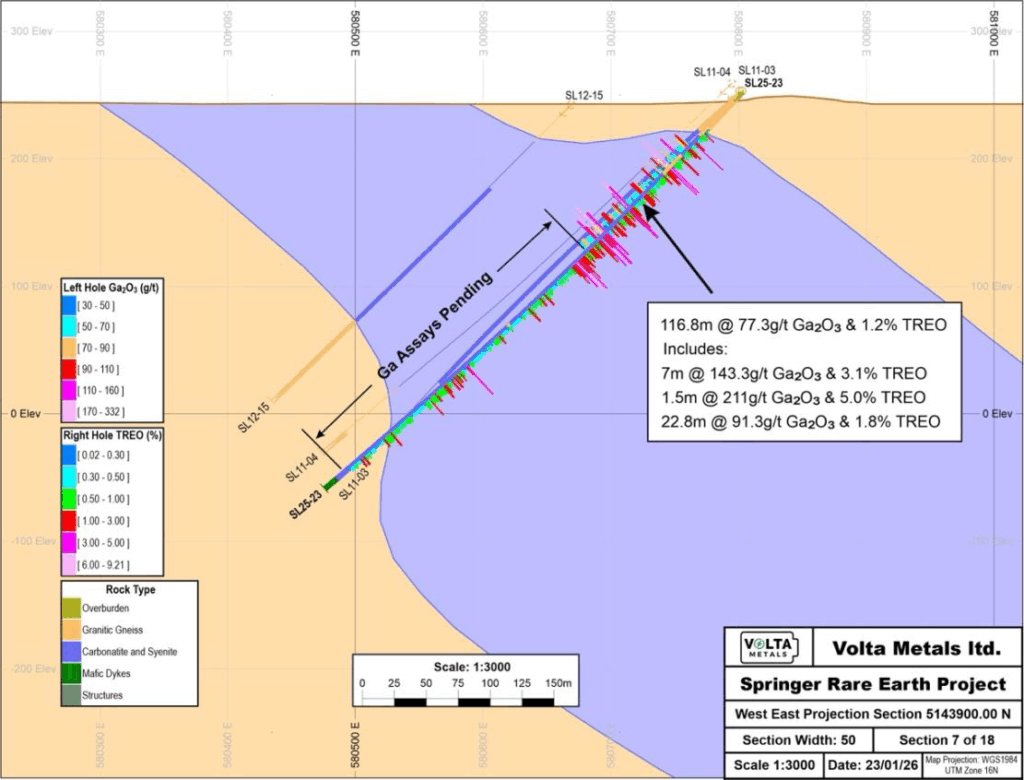
Figure 1. Ga2O3 g/t assay highlights in drill hole SL25-23.

CEO Kerem Usenmez commented, “These gallium assays further reinforce Springer’s position as one of North America’s most advanced and strategically important critical minerals projects. The presence of long, continuous intervals with consistently high gallium grades is rare in North America.

Gallium is on the critical mineral list for Canada, Europe, Australia and the US, with the gallium market expected to grow significantly from approximately US$2.5B in 2024 to US$21.5B by 2034. Subject to ongoing metallurgical testwork, Springer could produce notable by-product Ga alongside Light and Heavy Rare Earth Elements.
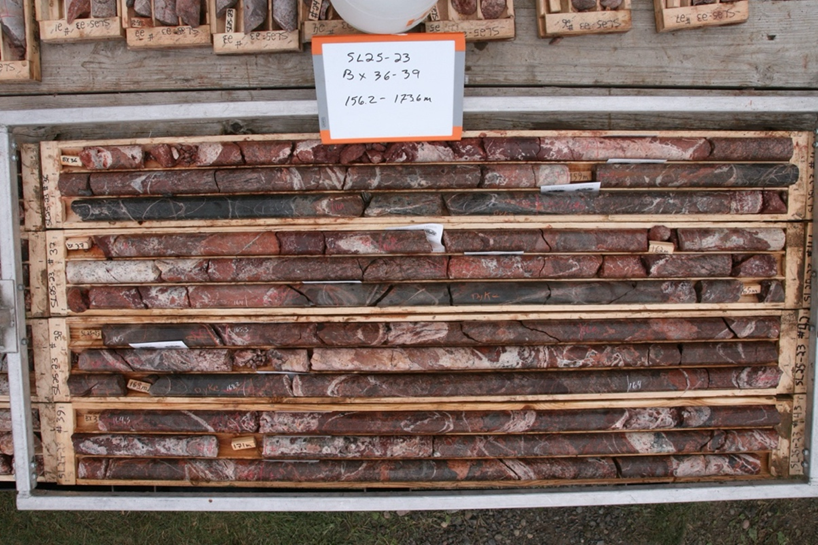
Figure 2. High-grade gallium mineralization with grades up to 211.0 g/t Ga2O3 over 1.5m (from 156.0 to 157.5m) in borehole SL25-23.

The Global Gallium Market

The gallium market is overwhelmingly dominated by China, which controls 98% of global gallium production.

Expanding Demand Across Multiple Sectors

Demand for gallium has expanded dramatically across a range of high-tech sectors, placing sustained upward pressure on prices. The global gallium market is projected to grow from approximately US$2.32 billion in 2024 to US$2.91 billion in 2025, representing a compound annual growth rate (“CAGR”) of 25.4%. More aggressive forecasts suggest the market could reach US$17.0 billion by 2032, expanding at a CAGR of 24.5%. Continued demand growth across the semiconductor, telecommunications, defense, and renewable energy sectors is expected to support ongoing price strength.

Price Increase and Market Dynamics

Gallium prices have experienced significant volatility in recent years, with a clear upward trend driven by tightening supply and accelerating demand. In December 2024, gallium price surged to US$575 per kilogram, representing a 17% increase over previous levels and the highest price since 2011. The most significant factor driving recent price increases has been China’s strategic export restrictions. Initial export controls introduced in August 2023 disrupted global supply chains and pushed prices higher. By December 2024, China had escalated these measures, announcing a comprehensive ban on gallium exports to the US, further intensifying market pressures. With China accounting for approximately 98% of global gallium production, these export restrictions have had a disproportionate impact on global supply and pricing. China’s production advantage stems from its integration of gallium recovery with its massive aluminum industry, as gallium is typically extracted from the alumina processing stream.

Gallium Applications

Semiconductor Applications and Integrated Circuits: The semiconductor industry represents the largest demand driver for gallium, with approximately 74% of gallium imported into the United States in 2023 used in integrated circuits. Gallium arsenide (GaAs) and gallium nitride (GaN) have become critical semiconductor materials across a wide range of industries, including high-tech, automotive, aerospace, healthcare, and telecommunications. Gallium nitride semiconductors are particularly valuable due to their superior power density and heat resistance properties. Traditionally used primarily in military applications, GaN is now finding increased adoption in commercial applications, including 5G networks, wireless infrastructure, power electronics, satellites, electric vehicles, and consumer electronics. As one manufacturer noted, “GaN offers higher power density, more reliable operation and improved efficiency over traditional silicon-only based solutions”.

Optoelectric Devices: Approximately 25% of gallium consumption goes toward optoelectronic devices such as laser diodes, light-emitting diodes LEDs, photodetectors, and solar cells. Continued growth in consumer electronics devices – such as mobile phones, laptops, televisions, and advanced lighting applications continues to drive demand in this segment. These applications are particularly important for fibre optic communications and high-speed data transmission technologies, both of which represent key long-term growth areas.

Renewable Energy Applications: The renewable energy sector represents an emerging but potentially significant source of future gallium demand. Thin-film solar panels rely heavily on gallium for their high efficiency, and as renewable energy adoption accelerates globally, gallium requirements are expected to grow substantially. Europe alone is projected to consume up to 26 times more gallium by 2030 compared to current levels, according to the Fraunhofer Institute*. The scale of potential demand is staggering — Austria’s planned renewable energy projects, despite serving a population of only 9 million, would require approximately 4.5 times the current global gallium production. This statistic underscores the looming supply-demand imbalance as gallium becomes increasingly integral to both energy independence and environmental commitments worldwide.

About the Springer Rare Earth Deposit

The 2012 mineral resource estimate presented for the Springer Rare Earth Project is historical in nature. Volta’s Qualified Person has not completed sufficient work to confirm the results of the historical resource. Volta does not treat this as a current mineral resource but considers it relevant as a guide to future exploration and includes it for reference purposes only. The historical resource was estimated by Tetra Tech Wardrop in 2012. The gallium was not included in this initial mineral resource estimate.

The block model and mineral resource for the Springer Rare Earth Project is classified as having both Indicated and Inferred Mineral Resources based on the number of boreholes, borehole spacing and sample data populations used in the estimation of the blocks. The mineral resource estimate for the deposit, at a 0.9% Total Rare Earth Oxide (“TREO”) cut-off, is an Indicated Resource of 4.2 Mt at 1.14% TREO, 0.02% ThO2, with approximately 6% of the TREO being made up of HREO; and an Inferred Resource of 12.7 Mt at 1.17% TREO, 0.01% ThO2, with approximately 4% of the TREO being made up of HREOs.

The 2012 mineral resource, based on 22 diamond boreholes, was estimated by Ordinary Kriging interpolation on uncapped grades for all 15 REOs and thorium dioxide. The TREO% is a sum of the 15 individual interpolations of the REOs. No recoveries have been applied to the interpolated estimates.

The 2012 mineral resource estimate categories are not compliant with the current CIM Definition Standards. No other resource estimates have been undertaken since the 2012 Tetra Tech Wardrop report. Further drilling will be required by Volta to verify the historical estimate as a current mineral resource.

QA/QC Protocol

All drilling was completed by a diamond drill rig producing NQ-size core. Volta implemented a strict QA/QC protocol in processing all rock samples collected from the diamond core samples obtained from the Springer REE property. The protocol included inserting reference materials, in this case, high-concentration and low-concentration certified rare earth elements standards, blanks, and drill core duplicates, to validate the accuracy and precision of the assay results. All collected rock core samples were cut in half by a rock saw, placed in sturdy plastic bags and zip-tied shut while under the supervision of a professional geologist. The remaining half core was returned to the core box, which is stored on the Property. Sample bags were then put in rice bags and kept secure before being sent by road transport to Activation Laboratories Ltd.’s preparation facility in North Bay, Ontario. Sample preparation (code RX1) consists of drying and crush (< 7 kg) up to 80% passing 2 mm, riffle split (250 g), and pulverize (mild steel) to 95% passing 105 µm. The samples from SL25-23 were subsequently analyzed at Saskatchewan Research Council (“SRC”) site in Saskatoon, Saskatchewan, using Code 8–REE Assay (lithium metaborate/tetraborate fusion with subsequent analysis by ICP and ICP/MS). Syenite standard SY-5 from Natural Resources Canada was inserted in the sample stream for every 20 drill core samples. Standard SY5 passed within two standard deviations for rare-earth elements (La to Lu) and Ga. The rare-earth elements assayed by SRC were similar to those previously assayed by Actlabs to further confirm the REE assays from the Springer Project.

Qualified Person

The technical content of this news release has been reviewed and approved by Dr. Julie Selway, P.Geo., who is an independent Qualified Person (“QP”) as defined in National Instrument 43-101, Standards of Disclosure for Mineral Projects. The QP and the Company have not completed sufficient work to verify the historical information on the Springer deposit, and it is considered as “historical”, particularly regarding historical exploration and government geological work.

For more information about the Company, view Volta’s website at www.voltametals.ca.

ABOUT VOLTA METALS LTD.

Volta Metals Ltd. (CSE: VLTA) (FSE: D0W) (OTC Pink: VOLMF) is a mineral exploration company focused on rare earths, gallium, lithium, cesium, and tantalum. It owns, has optioned and is currently exploring a critical minerals portfolio of rare earths, gallium, lithium, cesium, and tantalum projects in Ontario, one of the world’s most prolific and emerging hard-rock critical mineral districts. To learn more about Volta and its Springer and Aki Projects, please visit www.voltametals.ca.

ON BEHALF OF THE BOARD

For further information, contact:

Kerem Usenmez, President & CEO
Tel: 416.919.9060
Email: info@voltametals.ca
Website: www.voltametals.ca

Neither the CSE nor the Canadian Investment Regulatory Organization (CIRO) accepts responsibility for the adequacy or accuracy of this release. This news release contains forward-looking statements relating to product development, plans, strategies, and other statements that are not historical facts. Forward-looking statements are often identified by terms such as “will”, “may”, “should”, “anticipate”, “expects” and similar expressions. All statements other than statements of historical fact included in this news release are forward-looking statements that involve risks and uncertainties. Forward-looking information in this news release includes, but is not limited to, that the newly designed drill program will provide sufficient data for an updated mineral resource estimate, which is scheduled to be completed in the first quarter of 2026. There can be no assurance that such statements will prove to be accurate, and actual results and future events could differ materially from those anticipated in such statements. Important factors that could cause actual results to differ materially from the Company’s expectations include: the risks detailed from time to time in the filings made by the Company with securities regulators; the fact that Volta’s interests in its mineral properties are options only and there are no guarantee that such interest, if earned, will be certain; the future prices and demand for lithium, rare earth elements, and gallium; and delays or the inability of the Company to obtain any necessary approvals, permits and authorizations required to carry out its business plans. The reader is cautioned that assumptions used in the preparation of any forward-looking statements may prove to be incorrect. Events or circumstances may cause actual results to differ materially from those predicted, as a result of numerous known and unknown risks, uncertainties, and other factors, many of which are beyond the control of the Company. The reader is cautioned not to place undue reliance on any forward-looking statements. Such information, although considered reasonable by management at the time of preparation, may prove to be incorrect and actual results may differ materially from those anticipated. Forward-looking statements contained in this news release are expressly qualified by this cautionary statement. The forward-looking statements contained in this news release are made as of the date of this news release, and the Company disclaims any intention or obligation to update or revise any forward-looking statements, whether as a result of new information, future events, or otherwise, other than as required by law.



Chile’s Mantoverde makes workers new offer as strike continues

The Mantoverde operation in Chile is 70% owned by Capstone Copper and 30% by Misubishi Materials. Credit: Mantos Copper

Capstone Copper’s Mantoverde copper and gold mine in northern Chile said on Wednesday it presented a new contract offer to workers in a bid to end a strike that began in early January, after talks over new labor contracts broke down.

The offer, which the union says is worse than a previous proposal, includes paying out the equivalent of $17,400 per worker, the company said.

Members of Union 2 have been on strike since January 2 after formal negotiations broke down. The dispute has shown little signs of progress following the occupation of the mine’s desalination plant by a group of striking workers more than 10 days ago.

“This Wednesday, the company presented its new, finalized offer as a gesture of good faith to end the dispute,” the mining company, owned by Canada’s Capstone Copper, said in a statement.

The company said the proposal also includes a 1% wage increase, along with other benefits, and called for “the immediate restoration of control over its facilities and the end of the blockade.”

The union said in a statement that the new proposal “represents a significant step backward” from a proposal made on January 8, both in permanent conditions and the termination bonus.

It added that the proposal will be presented to union members on Thursday and a vote will be held within the next five days.

In 2025, Mantoverde produced 62,308 tons of copper sulfide concentrate and 32,807 tons of copper cathodes, accounting for about 0.4% of global copper production.

The work stoppage comes at a time when copper markets are highly sensitive to potential supply disruptions, with prices at record highs amid expectations of strong future demand.

(By Fabian Cambero; Editing by Cassandra Garrison)


Second Ford-Class Carrier Heads Out on Builder's Trials

HII
Courtesy HII

Published Jan 28, 2026 7:47 PM by The Maritime Executive


The U.S. Navy's second Ford-class carrier, USS John F. Kennedy, has headed out on builder's trials after 10 years of construction. The trials - and any additional work items identified while under way - are among the last steps before Navy acceptance, and give shipbuilder HII Newport News the opportunity to perform final checks. 

Steelcutting for USS Kennedy began in 2011 for a delivery date in 2020. However, technical problems in the Ford-class program emerged as early as 2013, ultimately leading to multibillion-dollar cost overruns and multiyear delays on first-in-class USS Gerald R. Ford. The keel-laying for Kennedy was held in 2015, six years after contract award, and Kennedy's hull was physically completed in 2019.

In 2020, the Navy awarded HII a large contract to complete needed changes to accommodate the F-35 strike fighter into USS Kennedy in a single phase, before delivery - not in a second phase after delivery. The front-loading of the work moved Kennedy's delivery date back to mid-2025. 

After further delays, Kennedy is currently on track to deliver in early 2027, 18 years after initial contract award. 

USS John F. Kennedy is the second ship named after the former president, following the Kitty Hawk-class CV-57, the last fuel oil-powered aircraft carrier delivered to the U.S. Navy. The venerable CV-57 was decommissioned in 2007 and put in long-term layup at Bremerton; last year, she made the long voyage under tow to Brownsville, Texas to undergo demolition. 

USS Zumwalt gets under way once more

Another famous ship conceived in the Oughts, the USS Zumwalt, has recently completed a new set of builder's trials at HII's other shipyard, Ingalls Shipbuilding. After three years of work, the yard has completed some deep modifications to the ship's weapons systems, enabling Zumwalt to carry the Navy's new hypersonic missile. 

Zumwalt was originally designed to accommodate two specialized cannons on her bow, which were to be used for shore bombardment. When cost growth for the class forced its reduction to a series of three hulls, the cost per round for the munitions for these cannons became prohibitively high and they were canceled. The guns have now been removed from Zumwalt, replaced by launch tubes for the Conventional Prompt Strike (CPS) missile system. 

Conventional Prompt Strike is a long range hypersonic boost-glide missile designed to evade enemy air defenses. This weapon class is proliferating among other sea services: China fields several types, Russia has its own (Zircon), and India unveiled similar missile system earlier this month. The Navy flight-tested CPS successfully in May 2025, including a cold-launch system that will eject the missile out of the tube prior to ignition, preventing damage to the ship from hot rocket exhaust.

The other two vessels in the Zumwalt-class, USS Lyndon B. Johnson and USS Michael Monsoor, will undergo the same transformation in the next several years. The future Block V Virginia-class subs will also carry CPS, with the first on schedule to deliver in 2028. 


China Launches Largest Car Carrier for HMM-Hyundai Glovis Partnership

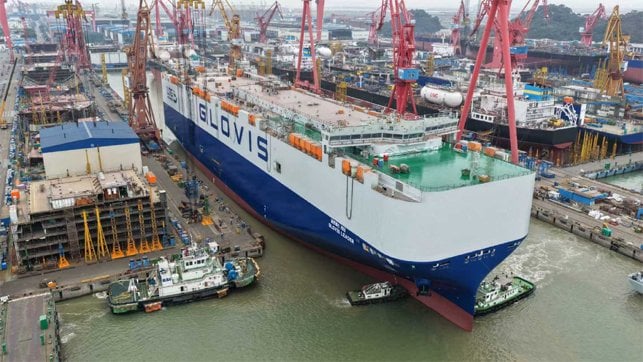
car carrier launched
The new car carrier was floated out in China on January 21 (Nansha)

Published Jan 27, 2026 7:06 PM by The Maritime Executive


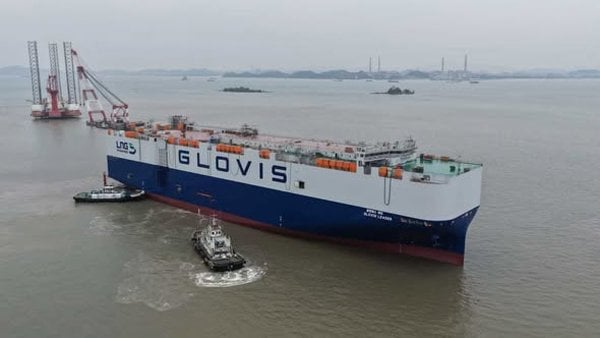
China’s Guangzhou Shipyard International last week floated out the largest car carrier in the world. The massive vessel surpasses the 10,000 unit mark, becoming the largest built in China after the yards turned out 9,500 unit vessels last year as part of the coming surge in the sector.

The new vessel is also the first vehicle carrier built for South Korea’s HMM as part of its diversification strategy. HMM entered into long-term agreements with Hyundai Glovis, which will operate the vessels.

Each of the new ships will have a capacity of 10,500 ceu, which will, for a time, give them the title of world’s largest. Wallenius Wilhelmsen, however, in  2024 reproted it was upsizing vessels in its newest class. Due to enter service starting in 2027, the last four vessels of a 12-ship class will increase capacity by 25 percent, handling approximately 11,700 vehicles, making them the largest PCTCs ever to sail.


The vessels being built for HMM-Hyundai Glovis are 230 meters (755 feet) in length with a total of 14 car decks, including five movable decks. The ships also employ dual-fuel engines from MAN that will be able to use LNG or oil.

No delivery date was announced for the new ship, which is named Glovis Leader. However, the yard said many of the ramps are already in place and that the anti-slip coating on the ramps has been completed below deck 5A.

According to the builders, the ships have been specially designed to handle diverse cargo. They can accommodate both electric vehicles and hydrogen fuel cells, plus are capable of transporting heavy trucks.

The new ships are part of a surge in orders placed a few years ago in anticipation of rapid growth in the vehicle export markets. Construction orders have slowed more recently, and now analysts are questioning the markets as the U.S. and Europe have moved to put steep tariffs on Chinese cars accusing them of price dumping strategies to dominate the new vehicle markets.


India’s First Chemical Tanker Order Advances Shipbuilding Ambitions

Indian shipyard
SDHI booked its first commercial shipbuilding order which is also India's first chemical tanker newbuild order (SDHI)

Published Jan 26, 2026 8:34 PM by The Maritime Executive


Swan Defence and Heavy Industries Limited (SDHI), located in India, confirmed that it has received its first shipbuilding order as part of the revitalization of its operations. The order, which comes from a European shipowner, is both the country’s first for a chemical tanker and aligns with India’s ambitions to develop into a leading global shipbuilder.

The order was placed by Bergen, Norway-based Rederiet Stenersen, a 50-plus year old operator of chemical/product tankers. The company currently has a fleet of 19 vessels, all equipped to operate in the harsh conditions of the North Europe trade. The order, which is valued at $227 million, is the company’s first foray into Indian shipbuilding, and they note that it was placed after a comprehensive technical and commercial evaluation. A Letter of Intent was signed in November 2025.

The order is for six tankers, each 18,000 dwt and approximately 150 meters (492 feet) in length. The first vessel is due for delivery in 33 months, and the company has an option for six additional vessels after the first group.

The vessels will be designed by Marinform AS and StoGda Ship Design & Engineering and classed by DNV. Built to Ice Class 1A standards, the tankers will feature advanced dual-fuel LNG-ready hybrid propulsion, enabling multiple operational modes supported by high levels of automation.

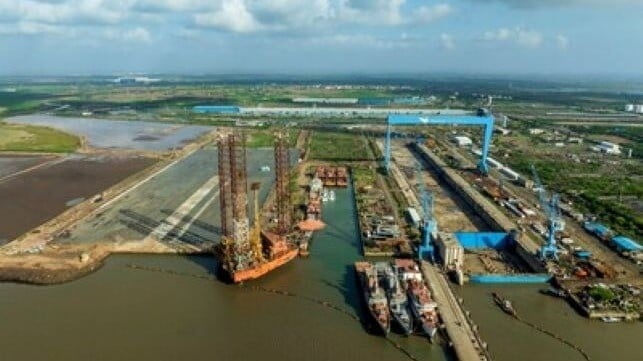
Swan Defence and Heavy Industries Limited (SDHI), formerly Reliance Naval and Engineering Limited, was acquired and restarted in 2024 after the bankruptcy of the prior owners. The company aspires to be a large, world-class builder of commercial vessels and other projects, including heavy fabrication. They note the revitalized SDHI shipyard, which is located in Pipavav, Gujarat, on India’s west coast, operates the country’s largest dry dock (662 meters by 65 meters) and has a fabrication capacity of 164,000 tonnes per year.

The company’s director, Vivek Merchant, highlighted that the order is a demonstration of India’s growing commercial shipbuilding ecosystem. The government of Prime Minister Narendra Modi is taking steps to realize the Prime Minister’s call for India to become a top 10 global shipbuilding nation by 2030 and a top five shipbuilder by 2047.

The government outlined its Shipbuilding Financial Assistance Scheme as part of the effort to support the industry and attract international interest. The program was amended just days ago to include product/chemical tankers.

The tanker order follows the announcement that CMA CGM intends to build containerships in India. The government and industry have also been courting other major companies, including Maersk and MSC.


Russia Cuts Funding to Build River-Sea Cargo Ships Citing Sanctions

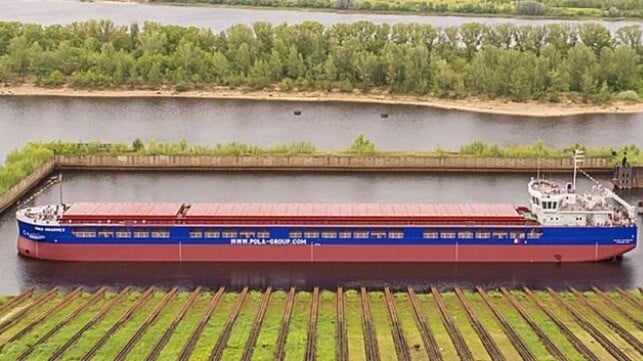
Russian river-sea dry cargo vessel
Russian fund for the program to build new river-sea dry bulk cargo ships has been cut (Krasnoye Sormovo shipyard)

Published Jan 26, 2026 5:44 PM by The Maritime Executive


Reports from Russia indicate that an ambitious program to build a new generation of river-sea cargo ships has been reduced. The Moscow Times cites the impact of high interest rates, import substitution, sanctions, and labor shortages for cuts to the government-subsidized shipbuilding program.

The contract for the construction program was awarded in June 2023 and called for 34 RSD 59 dry cargo ships as part of an effort to modernize the Volga-Donmax service. The Krasnoye Sormovo Shipyard hailed it as the largest series in the history of JSC United Shipbuilding Corporation. The government was slated to provide most of the financing for the construction in a partnership with lender GTLK.

The Russian media outlet Vedomosti reports the budget was revised in December 2025 for a total of 18 ships, with the government providing a reduced funding of approximately $300 million. The reports said the cost per ship has risen from $16.4 million to nearly $22 million.

The Western sanctions, which included elements targeting the Russian shipbuilding industry, limit the imports of Western-made equipment. Russia’s industry has been working to substitute domestically made elements.

The shipyard said it had begun work on the new ships in September 2024, after having delivered five RSD 59 vessels in a previous series. In November 2024, it reported the keel laying for sections of the new ships, but The Moscow Times says no ships were delivered in 2024, and the project is behind schedule. 

The shipyard had said it expected investments in 2025 to increase its capacity. It was targeted to be able to build up to 20 dry cargo ships per year. Delivery of the ships has been delayed to now run till 2028.

The RSD 59 class are vessels 141 meters (462 feet) in length designed to carry general and bulk cargo. This includes grain, coal, lumber, timber, scrap metal, metal products, and oversized cargo.

 The Russian government had outlined in May 2025 an ambitious program to expand commercial shipbuilding. It committed to investing more than $6 billion to expand and modernize commercial shipbuilding in Russia. Reports said it was to counter the Western sanctions.


Stonepeak Buys 25 Percent Stake in 10 of CMA CGM's Container Terminals

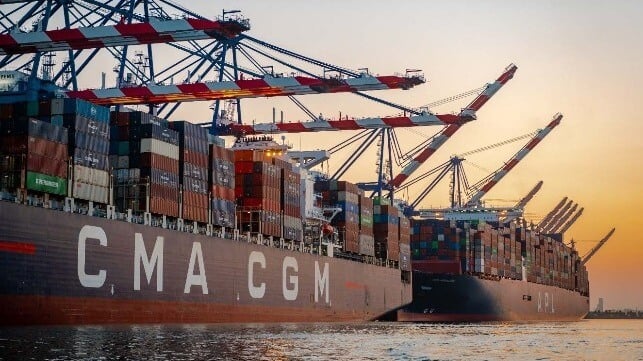
Fenix Marine Services Terminal, Port of Los Angeles (press handout image courtesy CMA CGM)

Published Jan 28, 2026 4:11 PM by The Maritime Executive


CMA CGM is launching a ports joint venture with one of the world's largest infrastructure investors. With a 25 percent investment from Stonepeak, this new JV - United Ports LLC - will buy 10 of CMA CGM's operated port terminals. In effect, it will give Stonepeak a minority stake in the French company's major seaport operations, particularly in the U.S. and Spain, while allowing CMA CGM to retain majority control. 

The covered facilities including the Fenix terminal at Port of Los Angeles and the Port Liberty terminals at the Port of New York and New Jersey. Global sites include facilities in Valencia, Guadalquivir, Algeciras and Bilbao, Spain; Nhava Sheva, India; Kaohsiung, Taiwan; Cai Mep, Vietnam; and Santos, Brazil.

The venture gives CMA CGM an infusion of $2.4 billion to invest in its businesses, including its sea, land and air logistics portfolio. It also includes an option for Stonepeak to invest up to $3.6 billion in future joint terminal projects around the world. New greenfield container terminal projects typically cost in the nine figures, so investment on this scale could propel significant expansion.

"By joining forces with a partner with strong infrastructure expertise, we strengthen our ability to invest further in our port terminals, secure access to key gateways and enhance service quality for our customers," said Rodolphe Saade, Chairman and CEO of CMA CGM Group. 

As of 2024, CMA CGM's equity share of global box terminal throughput came to about 1.4 percent, putting it in eighth place worldwide, according to data from Lloyds List Intelligence. PSA International led the list, followed by China Merchants and COSCO Shipping Ports. 


Geopolitics Has Moved From the Margins to the Engine Room of Shipping

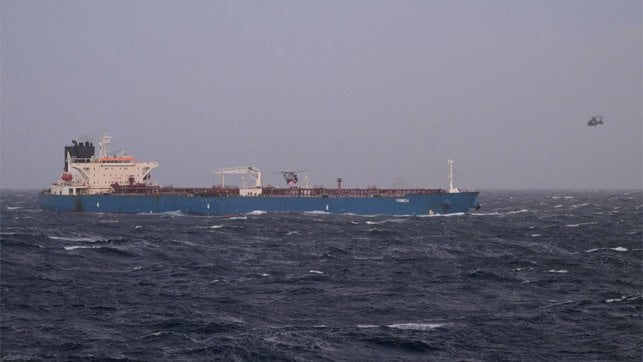
French commandos seize the shadow fleet tanker Grinch, January 2025 (French Joint Staff)

Published Jan 26, 2026 2:59 PM by Irene Rosberg


For much of its modern history, the maritime industry treated geopolitics as background noise. Today, that is no longer possible. Political instability is now shaping day-to-day operational decisions, cost structures and risk exposure across global shipping.

The most visible impact has been route disruption. Vessels diverted away from key corridors are burning more fuel and spending longer at sea, pushing operating costs sharply higher. Insurance premiums have followed the same trajectory. At the same time, investment in decarbonization is being delayed, not because the industry has lost interest, but because uncertainty has made long-term commitments harder to justify. The green transition is not off course, but it is being slowed by events well beyond the industry’s control.

Trade policy has added another layer of instability. Tariffs and restrictions have distorted cargo flows and reduced predictability in markets that depend on scale and efficiency. Sanctions, while politically necessary, have also had unintended consequences. The growth of the shadow fleet is not a marginal issue; it reflects a system struggling to enforce its own rules. Ships operating outside regulatory oversight, without proper insurance or compliance, pose a direct threat to safety at sea and to the marine environment.

The war in Ukraine has reinforced how quickly geopolitical conflict can spill into maritime operations. Beyond the immediate disruption to trade and energy routes, shipping has seen a marked increase in cyberattacks. Many systems now critical to vessel operations and port infrastructure were never designed to operate in a persistent hostile digital environment. That vulnerability is being exposed in real time.

Taken together, these pressures have produced a freight market characterized by volatility rather than cycles. Supply chains are repeatedly disrupted, delays have become routine and risk is harder to price. This is not a temporary phase; it is the operating environment the industry must now assume as normal.

In this context, resilience cannot be an abstract concept. Shipping companies need greater contractual flexibility, stronger contingency planning and a far more disciplined approach to scenario analysis. Treating geopolitics as a peripheral concern may once have been pragmatic. In today’s market, it is reckless.

Irene Rosberg is Director, Blue MBA and CEO, Blue MBA Association at the Copenhagen Business School.

The opinions expressed herein are the author's and not necessarily those of The Maritime Executive.


New Tested Technology Can Deliver Fuel Efficiency and Emissions for Fleets

National Technical University of Athens

Published Jan 27, 2026 5:04 PM by The Maritime Executive


[By: National Technical University of Athens]

Independent university testing has proved that marine fuel consumption and associated emissions could be reduced more quickly and cost-effectively than previously assumed, using existing vessels and standard fuels already in circulation.

A study conducted by the National Technical University of Athens (NTUA) has found that a fuel treatment technology developed by UK-based Fuelre4m delivered measurable efficiency improvements in large marine engines operating on conventional marine fuels.

In the most conservative fixed test condition, where shaft speed and load are deliberately held constant, fuel consumption was reduced by 3.5–6.7%, demonstrating that the fuel delivers more usable energy per unit consumed. In real-world operation, where engines are not artificially constrained and can reduce load to achieve the same work, this improvement expresses as a materially larger efficiency gain, with independent testing showing propulsion efficiency improvements of up to 21%+.

The results were achieved without engine modifications, hardware changes, or alterations to fuel specifications. According to the researchers, the efficiency gains were attributable solely to changes in fuel behaviour during combustion.

The findings have huge implications across the maritime sector, which consumes more than 200 million tonnes of fuel annually and continues to face rising pressure to reduce emissions while managing operating costs. Even incremental efficiency gains, if adopted at scale, could contribute to meaningful reductions in greenhouse gas emissions and fuel expenditure across global fleets.

The research comes as shipowners and operators assess compliance pathways under tightening international and regional emissions frameworks, including IMO decarbonisation targets. Rather than relying solely on newbuilds, alternative fuels, or long-term infrastructure investments, the study points to a near-term option applicable to vessels currently in service.

George Papalambrou, Associate Professor at the National Technical University of Athens, said: “We were surprised by how consistent the efficiency improvements were across different operating conditions.”

Rob Mortimer, CEO of Fuelre4m, commented: “Fuel remains one of the most significant cost components in maritime operations. Reducing consumption delivers immediate economic and environmental benefits. What’s notable here is that these results were achieved using existing engines and fuels, allowing operators to act now rather than waiting for future solutions.”

The products and services herein described in this press release are not endorsed by The Maritime Executive.

ALT.FUEL

Norwegian Timber Ship Will be First to Use Wartsila’s Ammonia Engine

Ammonia-powered timber carrier
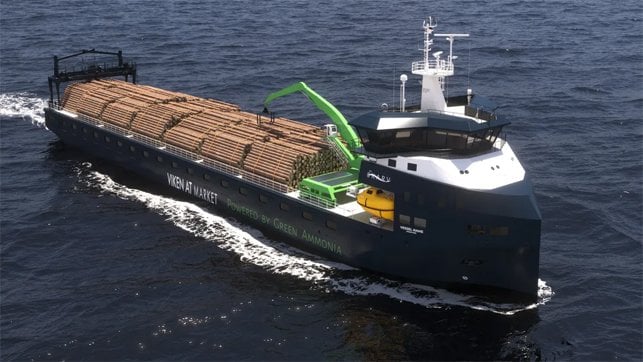
Skarv Shipping's timber carrier will be the first newbuild with Wartsila's ammonia power system (LMG Marin)

Published Jan 27, 2026 6:34 PM by The Maritime Executive


The shipping industry is making several firsts as the order for a Norwegian cargo ship was confirmed as the first to use the new Wärtsilä 25 Ammonia engine. Due to launch in 2027, the vessel will be a key step in the efforts to reduce emissions in Norwegian coastal shipping.

The new vessel is to be built in China at the Huanghao shipyard. The concept was developed by Bergen-based Skarv Shipping, with support from Grieg Shipbrokers to realize the technology and yard agreement. Arriva Shipping will take the vessel on time charter and manage the commercial ship operation for Viken AT Market, a Norwegian timber company. 

The ship will be 7,800 dwt with a length overall of 108 meters (354 feet). It will be a self-unloader and is expected to enter service in the summer of 2027.

Wärtsilä will provide its advanced Wärtsilä 25 Ammonia solution to power a new cargo vessel, making it the first newbuild to use this solution. In addition to supplying the engine, Wärtsilä will supply the complete ammonia solution, including the AmmoniaPac Fuel Gas Supply System, the Wärtsilä Ammonia Release Mitigation System (WARMS), and a selective catalytic reduction (SCR) system designed for ammonia. Wärtsilä will begin delivering the equipment for the installation in the fourth quarter of 2026.

“The Wärtsilä 25 Ammonia engine and the whole solution is the result of extensive research and testing over a number of years, in line with our commitment to decarbonizing shipping operations,” highlighted Roger Holm, President of Wärtsilä Marine & Executive Vice President at Wärtsilä Corporation.

Skarv Shipping reports that the ship is designed to sail most efficiently at low speeds, which helps ensure economically viable operations despite the higher cost of ammonia compared to traditional fuels. A 160-cubic ammonia tank, mixed with MGO (Marine Gas Oil) as pilot fuel, will provide enough fuel for a 14-day round trip from Norway to the European continent.

Currently, Viken AT Market ships approximately 1 million tons of Norwegian timber to Europe each year. It highlights that most of the current transport to customers is done with conventional diesel-powered ships. Starting in the summer of 2027, Viken AT Market highlights that it will move part of its timber transport to the new vessel that will run on electricity and ammonia, making a strong contribution to the efforts to reduce carbon emissions.


bound4blue Completes First Contracted eSail Installation for Maersk Tankers

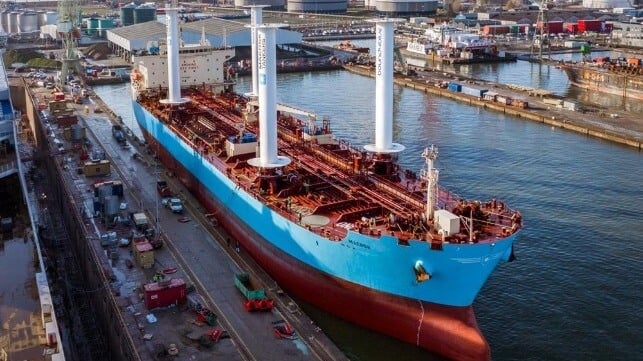
Maersk Trieste

Published Jan 26, 2026 9:45 PM by The Maritime Executive


[By bound4blue]

bound4blue and Maersk Tankers have reached a major milestone in their collaboration with the installation of eSAIL® units on board the Maersk Trieste.

Four of the 24-metre ‘plug and play’ suction sails were fitted on the vessel, completing the first stage of an agreement that will see a total of 20 units installed across five advanced medium-range (MR) tankers. The contract, agreed in December 2024, is bound4blue’s largest order to date.

bound4blue CEO and co-founder José Miguel Bermúdez heralded the development as “a watershed moment” in the further acceptance and adoption of wind power for an industry in transition.

The advantage of innovation

bound4blue’s autonomous eSAILs® work by drawing air across an aerodynamically optimised surface to generate lift up to seven times greater than conventional rigid sails of a comparable size.

With configurations tailored for individual vessels, eSAILs® can deliver double-digit percentage reductions in fuel consumption and CO? emissions, while significantly improving a vessel’s Carbon Intensity Indicator (CII) rating. The systems also unlock regulatory and cost benefits under frameworks such as FuelEU Maritime, via the Wind Reward Factor, and EEDI/EEXI.

From contract to completion

bound4blue, Maersk Tankers and system integrator Njord chose a two-step installation process for the Maersk Trieste, maximising efficiency while minimising vessel downtime.

Following preparatory ‘wind ready’ work carried out at Yiu Lian Shipyard in Shenzhen, China - including the installation of deck pedestals and electrical modifications - the vessels arrived at EDR Shipyard in Belgium. Here, the units were lifted onboard, secured to the pre-installed foundations, and connected to onboard power and data networks in a pre-commissioned ‘plug-and-play’ process. The mechanical simplicity of the design supports straightforward integration into conventional shipyard workflows, helping to minimise downtime during retrofit projects.

Tailored for tankers

“Our system was designed from day one to deliver maximum performance with minimum complexity,” comments Bermúdez, “and that’s especially important for scaling up installations within segments that present specific integration challenges, such as tankers.

“The size and efficiency of eSAILs® enable tankers to benefit from wind propulsion safely and cost-effectively, without altering operational profiles - avoiding tilting systems and retaining a normal operational air draft, and all with the simplicity of a non-ATEX solution. These latest installations demonstrate that globally leading shipowners appreciate these benefits, while sharing our vision for a more sustainable, cost effective and compliant maritime future. We’d like to thank Maersk Tankers for this unique, important and powerful partnership.”

Tangible actions

Commenting on the development, Claus Grønborg, Chief Investment Officer, Maersk Tankers, said:
“For the tanker industry, progress on emissions reduction requires concrete investments and implementation. At Maersk Tankers, we focus on deploying advanced energy-efficient technologies to reduce fuel consumption and CO? emissions. Implementing Wind-Assisted Propulsion Systems at scale enables more energy-efficient voyages for our customers, while supporting compliance with FuelEU Maritime and the EU Emissions Trading System.”

bound4blue’s DNV Type Approved technology is designed for simplicity and ease of integration on both newbuild and retrofit projects, across a wide range of ship types (including tankers, bulk carriers, Ro-Ros, cruise vessels, ferries, and gas carriers, amongst others). Installations can be undertaken to fit individual vessels and schedules, with streamlined processes enabling entire systems to be fitted in under a day, when necessary.

Wave of adoption

The Maersk Tankers project follows a series of high-profile eSAIL® contracts and installations with shipowners such as Louis Dreyfus Company, Eastern Pacific Shipping, Odfjell, Klaveness Combination Carriers, and BW Epic Kosan.

Taken together, these projects provide further proof that wind propulsion is rapidly moving from niche innovation to mainstream decarbonisation strategy - driven by tightening regulations, rising fuel costs, and growing industry confidence in the technology’s commercial benefits.

“This is more than just another installation,” concludes Bermúdez. “It’s proof that wind propulsion is ready to deliver at scale, even for complex vessel types like tankers. By partnering with a forward-thinking company like Maersk Tankers, we’re showing that practical decarbonisation solutions are already here… and ready to make a measurable impact today.”

The products and services herein described in this press release are not endorsed by The Maritime Executive.


TOTE Services Signs Up to Provide LNG Bunker-Barge Capacity in Galveston

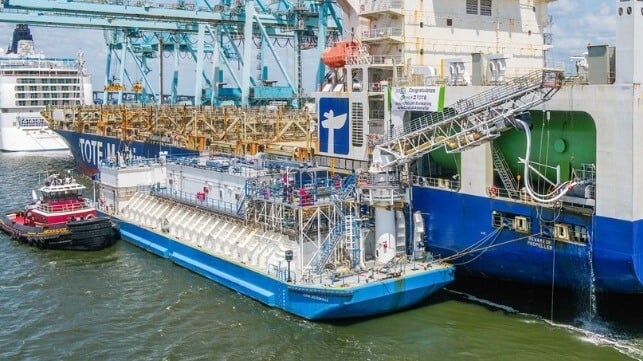
TOTE Services has extensive experience with LNG bunkering (press handout image courtesy TOTE Services)
TOTE Services has extensive experience with building and operating assets for LNG bunkering (press handout image courtesy TOTE Services)

Published Jan 27, 2026 5:42 PM by The Maritime Executive


TOTE Group is partnering up with a Texas-based bunkering company to launch LNG bunker barge services in the greater Houston / Galveston Bay area. LNG is an increasingly popular option for cruise ships, boxships and other vessel classes, and locally-produced Texan natural gas, liquefied and delivered, will give these visiting vessels the fuel they need. 

TOTE Services and Galveston LNG Bunker Port have signed a heads of agreement that outlines the construction and operation of a Jones Act-compliant bunker vessel service. Bunker barges enable refueling while the receiving vessel is moored alongside the pier at a working cargo or passenger terminal, without requiring it to shift berths to a separate refueling pier. This saves time and cost. 

In the conventional HFO/VLSFO market, both Jones Act and foreign-flag bunkering vessels operate out of the Houston area, reflecting the regulatory needs of different operators. Offshore bunkering services outside the port can be legally provided by foreign-flag product tanker tonnage, since the cargo (the bunker fuel) does not move between two U.S. points. The Vitol-chartered, Marshall Islands-flagged Lokholmen is an example of a vessel in this trade. Inshore bunkering is generally done with Jones Act tank barges and push boats or ATBs.

Galveston LNG Bunker Port says that it needs U.S.-owned, built and crewed vessels to move LNG in coastwise trade, and TOTE is well positioned to supply the tonnage. TOTE Services has conducted over 850 LNG bunkering evolutions over the years on the company's own vessels, and that experience will translate into operation of a fleet of Jones Act LNG bunker barges for GLBP. 

"The safe and reliable delivery of LNG to our customers is paramount. Securing TOTE Services as our Jones Act partner is a defining milestone for the project and the U.S. LNG bunkerin industry," said Jonathan Cook, CEO of Navergy Infrastructure Partners (formerly Pilot LNG), which is one of the two backers of GLBP. 

GLBP has secured all of its federal and state permits, and it has awarded a contract for engineering and construction. Talks with potential customers for offtake purchasing continue, and the venture says that it hopes to achieve a final investment decision this year. 

In its first phase, the small-scale bunker port would produce about 0.21 million tonnes per annum (mtpa) of LNG, the standard industry measurement of capacity. It has plans for a second phase of equivalent size, which would bring the total to 0.42 mtpa. GLBP has secured a site in Texas City and selected NV5 LNG as its EPC contractor.

A competing project by Houston-based company Stabilis - which already has two smaller liquefaction facilities - is also in the running. Stabilis holds contracts to supply Carnival's growing fleet of LNG-powered cruise ships. Stabilis says that it has booked long-term sales for more than half of its project's planned capacity. 

Correction: The original version of this article misstated the units of the capacity of the Stabilis plant; it is in fact smaller than the GLBP project. Additionally, the second-phase expansion capacity of the GLBP plant has been added to the article.