Wednesday, February 11, 2026


Coinbase CEO exits world’s top 500 rich list as crypto downward trend persists

FILE. Brian Armstrong, co-founder and CEO of Coinbase, participates in the State of Crypto Summit, New York, June 2025.
Copyright AP Photo/Richard Drew

By Quirino Mealha
Published on 

Coinbase chief Brian Armstrong has seen his net worth halve since July 2025 following a sharp correction in crypto markets and a downgrade of Coinbase stock by Wall Street analysts.

Brian Armstrong, the co-founder and CEO of the largest cryptocurrency exchange in the US, has fallen out of the Bloomberg Billionaires Index ranking of the world’s 500 wealthiest individuals.

His departure from the list comes as the crypto markets grapple with a significant downturn, pushing Bitcoin below $70,000 (€58,750), a trading level not seen since late 2024.

According to the index, Armstrong’s net worth currently stands at approximately $7.5bn (€6.9bn). This marks a substantial decline from a valuation of $17.7bn (€16.3bn) recorded last summer.

The drop in his personal wealth, which is largely derived from a roughly 14% equity piece in Coinbase, mirrors the volatility of the broader crypto sector.

Crypto asset prices have a direct impact on Coinbase’s market performance, as the company’s revenue model remains heavily reliant on transaction fees, which typically contract during periods of market stagnation.

Shares in Coinbase closed significantly lower on Tuesday, extending a six-month slide that has seen the stock lose nearly 60% of its value from its July 2025 peak.

Earlier this week, market sentiment regarding the crypto exchange appeared to sour further as analysts at JPMorgan Chase lowered their price target for the stock.

In a note to investors, the bank cited "softness in crypto prices" and a lack of growth in the stablecoin vertical as primary reasons for the revision, reducing the target by 27%.

Post-election momentum fades amid regulatory friction

The euphoria in crypto markets that followed the 2024 US election has noticeably cooled.

Despite Bitcoin reaching a record high of $126,000 (€116,000) in October 2025, investors had anticipated further regulatory clarity by now. Instead, progress has stalled.

President Trump signed the Guiding and Establishing National Innovation for US Stablecoins Act (GENIUS Act), creating a comprehensive regulatory framework for stablecoins, in July 2025.

However, there has now been a legislative gridlock over the CLARITY Act.

This legislation intends to establish clear regulatory rules for crypto assets, including jurisdictional boundaries between the Securities and Exchange Commission (SEC) and the Commodity Futures Trading Commission (CFTC).

There is a clear dispute between the Coinbase CEO and major US banks over provisions that would prevent non-bank firms from offering interest-bearing yields on stablecoins.

On Tuesday, there was a meeting at the White House between all interested parties to try and reach a consensus. This was the second session on the issue since Armstrong made his opposition public.

Despite this, the lobbying battle between crypto insiders and Wall Street bankers has still not been resolved.

While traditional lenders cite concerns over "deposit flight", the Coinbase chief has argued that such restrictions amount to regulatory capture designed to stifle competition.

With these revenue streams now in question, market confidence in exchange-based business models, which have user fees as a primary revenue source, has wavered.




Devastating wildfires in Argentina and Chile made three times more likely by climate change

FILE - Manuel Lagos pets his dog as the family home is engulfed by an encroaching wildfire in Lirquen, Chile, Jan. 18, 2026.
Copyright AP Photo/Javier Torres, File

By Isabel Debre with AP
Published on 

Record droughts and scorching temperatures stoked the wildfires that burned thousands of hectares of native forest.

Human-caused climate change had an important impact on the recent ferocious wildfires that engulfed parts of Chile and Argentina's Patagonia region, making the extremely high-risk conditions that led to widespread burning up to three times more likely than in a world without global warming, a team of researchers warned on 11 February.

The hot, dry and gusty weather that fed last month's deadly wildfires in central and southern Chile was made around 200 per cent more likely by human-made greenhouse gas emissions while the high-fire-risk conditions that fuelled the blazes still racing through southern Argentina were made 150 per cent more likely, according to World Weather Attribution, a scientific initiative that investigates extreme weather events soon after they happen.

That probability will only increase as humans continue to burn fossil fuels and blanket the planet with more heat-trapping gases, researchers added.

The blazes that tore through Chile’s Biobio and Ñuble regions in mid-January killed 23 people, destroyed over 1,000 houses and other structures and forced tens of thousands of people to flee their homes. All were caused by human activity, whether through arson or negligence.

In southern Argentina, the fires first ignited by lightning forced the evacuation of thousands of tourists and residents and burned through over 45,000 hectares of native forest, including vast swaths of the Los Alerces National Park, a UNESCO World Heritage site home to 2,600-year-old trees.

Finding human fingerprints on disasters

The study, confirming what had been widely suspected, brings the first scientific assessment of global warming's role in intensifying some of the most serious wildfire emergencies to grip Chile and Argentina in years.

It's the latest in an emerging subfield of climate science known as weather attribution, which is evolving rapidly in response to a growing thirst for public information about how climate change influences natural disasters.

The World Weather Attribution report has not yet been peer-reviewed or published in a scientific journal, but it relies on widely accepted methods, including the analysis of data and computer model simulations to compare today’s climate with past weather patterns.

“Overall, we’re confident in saying that the main driver of this increased fire risk is human-caused warming,” Clair Barnes, a research associate with World Weather Attribution, said in a briefing with reporters. “These trends are projected to continue in the future as long as we continue to burn fossil fuels.”

Hot and dry forests become a tinderbox

Record droughts and scorching temperatures created conditions conducive to wildfires in Chile and Argentina, the study found, while single-species plantations of highly flammable trees like pines helped the fires spread more easily in both areas. The invasive species have replaced native, more fire-resistant ecosystems in the region, turning shrub, brush and grass into kindling.

In Argentina's Patagonia, the town of El Bolsón recorded its highest January temperature on record – 38.4 degrees Celsius. The town of Esquel, near Los Alerces National Park, logged 11 consecutive days of maximum temperatures in January, its second-longest heat wave in 65 years. Temperatures in Chile ahead of the fires were high but not record-breaking.

The researchers estimated that seasonal rainfall from November to January, before the peak burning period, was around 25 per cent weaker in Chile and 20 per cent less intense in Argentine Patagonia than it would have been without a rise in global temperatures of at least 1.3 degrees Celsius since pre-industrial times.

“This, together with higher-than-average temperatures, led to vegetation being submitted to stress, very low humidity in the soil,” said Juan Antonio Rivera, an Argentine researcher and author of the study. “Once the wildfires began... there was sufficient fuel to extend and be sustained over time.”

Fewer resources makes an impact

Chile has increased its budget for fighting wildfires by 110 per cent in the last four years under left-wing President Gabriel Boric, improving fire forecasting and investing in new equipment.

But in Argentina, a harsh austerity program under libertarian President Javier Milei may have hobbled the country’s ability to respond to the fires, researchers said, citing budget cuts to firefighting crews, a lack of planning and deregulation of tourism activities in Patagonia’s national parks. It’s a claim echoed to news agency The Associated Press by firefighters, park rangers and officials involved in disaster relief.

Milei, like his ally US President Donald Trump, has denied that climate change is related to human presence. His office did not immediately respond to a request for comment early Wednesday (11 February).

“Unfortunately, with a government that does not understand climate change and its connection to human activities, where nature is secondary in terms of priorities, these situations get worse and wildfires end up having greater impacts than they should,” said Rivera. “The situation is still not under control.”


New Machu Picchu airport might bring 200% more visitors. Conservationists aren’t happy

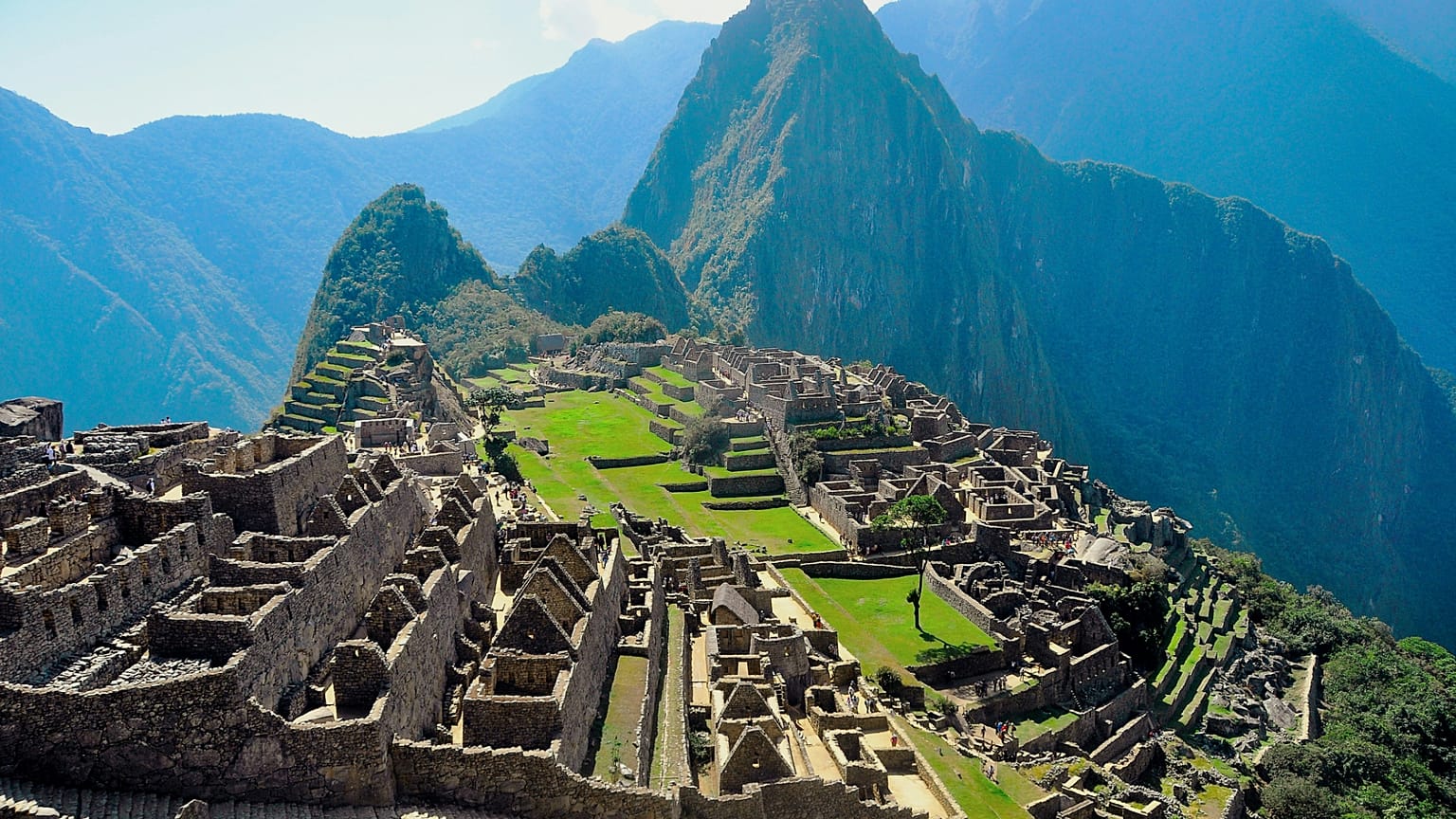
A new airport that would slash transit times to Machu Picchu has long been in the pipeline.
Copyright Victor He

By Rebecca Ann Hughes
Published on 

A new airport that would slash transit times to Machu Picchu has long been in the pipeline.

Machu Picchu is Peru’s biggest tourist attraction; it received over 1.5 million visitors in 2024.

That number is set to soar as early as next year when a new airport will make reaching the ancient Incan citadel much easier.

While it’s welcome news for visitors - the site is notoriously hard to reach - residents in the area and archaeologists have long been protesting the construction.

The long journey to Machu Picchu

Currently, travellers seeking to gaze on the remains of 15th-century Machu Picchu have a lengthy journey to undertake.

Most fly into Lima airport, in Peru’s capital, and then take a domestic flight to Cusco. It then requires a train or bus to Aguas Calientes (Machu Picchu Town), followed by a 25-minute bus ride or hike up to the citadel.

Alternatively, there’s a four-day trek through the Andes.

The drawn-out arrival is part of the experience for some travellers, given the fact that the citadel was intentionally built hidden at high altitude in an Amazonian cloud forest.

But for many, a trip that long simply isn’t practical.

A new airport planned for Machu Picchu

A new airport that would slash transit times to Machu Picchu has long been in the pipeline.

After decades of delays, funding deficits and corruption scandals, things might finally be accelerating.

Chinchero Interationnal Airport will be located on the outskirts of Chinchero, a historic Andean city, allowing travellers to avoid stops in Lima and Cusco.

It would mean saving hours of travel.

The construction site has seen little activity so far, but authorities have now announced that the airport will be completed in late 2027.

New airport threatens Incan heritage

The new airport is designed to accommodate as many as eight million travellers annually and could bring 200 per cent more visitors to the area, according to the BBC.

Proponents hail the economic boost this will bring to an underdeveloped region, from construction jobs to tourist accommodation and services.

But Indigenous communities, archaeologists and conservationists have spoken out from the beginning about the cultural and environmental risks.

Machu Picchu has already brought in daily capacity limits managed by a strict booking system because of overcrowding.

More visitors will put immense strain on the fragile ruins, archaeologists warn. Critics say planes would pass low over nearby Ollantaytambo and its archaeological park, with potentially irreversible damage to the Inca remains.

Opponents of the airport are also underlining the danger posed to the surrounding Sacred Valley.

The landscape that was once the heartland of the world’s biggest empire in the 15th century is peppered with Incan roads, structures, irrigation networks and a salt mine, many still in use.

The land required to be cleared for construction directly threatens this heritage.

“This is a built landscape; there are terraces and routes which were designed by the Incas,” Natalia Majluf, a Peruvian art historian at Cambridge University, told the Guardian in 2019. “Putting an airport here would destroy it.”

New airport will exacerbate water shortages

Agricultural traditions and the natural landscape are also at risk, conservationists say.

Since the new airport was announced, corn-growing families around Chinchero have been selling off farmland, the BBC reports.

Flight and vehicle traffic to the airport will drastically change the character of the area, while hotels and lodges will replace agricultural heritage in the vicinity.

There are fears that the construction will exacerbate water shortages by depleting the watershed of Lake Piuray, which Cusco city depends on for almost half its water supply.

Waste management systems are also already strained and recycling infrastructure is nonexistent.

Opponents of the airport now have to hope that, as has been going on for decades, construction will continue to face setbacks.


Drinking coffee and tea may protect the brain against dementia, study finds

Drinking coffee or tea daily linked to lower dementia risk, study shows
Copyright Cleared/Canva

By Marta Iraola Iribarren
Published on 

Moderate daily consumption of caffeine is associated with a lower risk of dementia and slower cognitive decline, according to a new study.

Drinking coffee or tea daily could help protect the brain’s healthy ageing, new research shows.

Moderate caffeine consumption, two to three cups of caffeinated coffee or one to two cups of tea daily, may lower the risk of dementia, slow cognitive decline, and preserve cognitive function.

“When searching for possible dementia prevention tools, we thought something as prevalent as coffee may be a promising dietary intervention,” said senior author Daniel Wang, associate scientist at Mass General Brigham Department of Medicine and assistant professor at Harvard Medical School.

The results, published in JAMA, found that moderate caffeine consumption was associated with up to an 18 percent lower risk of dementia.

The benefits were most pronounced among participants who consumed caffeine in moderate amounts.

However, higher caffeine intake did not lead to negative effects and appeared to offer similar neuroprotective benefits to moderate consumption.

Coffee and tea contain bioactive ingredients such as polyphenols and caffeine, which could act as neuroprotective factors by reducing inflammation and cellular damage while supporting cognitive health.

How was the study done?

The study looked at more than 130,000 participants who underwent dietary, dementia, and cognitive assessments. They were followed for up to 43 years, allowing researchers to examine how caffeinated coffee, tea, and decaffeinated coffee affected dementia risk and cognitive health over time.

During the follow-up period, 11,033 participants developed dementia.

In both men and women, the highest caffeine intake had an 18 percent lower risk of dementia compared with those who drank little or none.

Coffee drinkers also reported lower symptoms of subjective cognitive decline, the self-perceived experience of memory loss or confusion, at 7.8 percent versus 9.5 percent.

Previous studies have linked caffeine to improved insulin sensitivity and vascular function, which may contribute to its protective effects against cognitive decline.

The authors caution that, as an observational study, the results cannot establish direct causality. It also did not account for differences in tea or coffee types, or in how they were consumed, such as roast level, product origin, or brewing technique.

The challenge of tackling dementia

Early prevention remains key in dementia, as current treatments offer limited benefits once symptoms appear, the study said.

Focusing on prevention has led researchers to investigate the role that lifestyle factors, such as diet, play in dementia development.

Dementia typically develops along a continuum, from subjective cognitive decline to mild cognitive impairment, and eventually to clinical dementia

The researchers noted that, while the results are encouraging, it is important to remember that the effect size is small and that there are multiple ways to protect cognitive function as we age.

“Our study suggests that caffeinated coffee or tea consumption can be one piece of that puzzle,” Wang said.


Sex in space: Human reproduction beyond Earth policy must be urgently addressed, experts say

Couple wearing astronaut uniform
Copyright Credit: Pexels

By Theo Farrant
Published on 

A new international study warns that reproductive health in space is no longer a theoretical concern and that questions about fertility and pregnancy should be pressing concerns.

As commercial spaceflight edges closer to reality, astronauts spend more time orbiting Earth, and as we look to one day settle on Mars, questions about sex and reproductive health in space need to be urgently addressed, experts say.

Published in the peer-reviewed journal Reproductive Biomedicine Online, a new international report brings together experts in reproductive medicine, aerospace science and bioethics to warn that the rapid expansion of human activity in space is outpacing policies designed to protect reproductive health.

More than 50 years ago, "two scientific breakthroughs reshaped what was thought biologically and physically possible - the first Moon landing and the first proof of human fertilisation in vitro," said clinical embryologist Giles Palmer from the International IVF Initiative.

"Now, more than half a century later, we argue in this report that these once-separate revolutions are colliding in a practical and underexplored reality: space is becoming a workplace and a destination, while assisted reproductive technologies have become highly advanced, increasingly automated and widely accessible," he added.

The complications of reproduction in spaceDespite advances in assisted reproductive technologies (ART), such as IVF and ICSI, there are still no widely accepted, industry-wide standards for managing reproductive health risks in space.

Risks include inadvertent early pregnancy during missions, the effects of radiation and microgravity on fertility, and the ethical boundaries around any future reproduction-related research.

Evidence from lab studies and limited human data suggests that space - described in the report as "an increasingly routine workplace" - is nevertheless "a hostile environment" for human biology.

"Microgravity, cosmic radiation, circadian disruption, pressure differentials, and extreme temperatures found in orbit" are all factors known to interfere with healthy reproductive processes in both men and women.

Animal studies indicate that short-term radiation exposure can disrupt menstrual cycles and increase cancer risk. However, the review highlights a lack of reliable long-term data from male and female astronauts after extended missions.

Reproductive tissues are especially vulnerable to DNA damage, the study notes, and the impact of cumulative radiation exposure on male fertility during long missions remains what the authors call a "critical knowledge gap."

Could IVF work in space?

So far, no human has ever conceived or given birth in space and pregnancy is still a strict contraindication for those travelling beyond Earth.

Yet the study notes that automated fertilisation and cryopreservation technologies may "align with the operational demands of space-based reproductive research and practice".

"Developments in assisted reproductive technologies often arise from extreme or marginal conditions but quickly extend beyond them," said Palmer.

"ART is highly transferable because it addresses situations where reproduction is biologically possible yet structurally constrained by environment, health, timing, or social circumstance, constraints that already exist widely on Earth."

The authors of the report argue that ethical questions surrounding human reproduction in space can no longer be deferred.

“As human presence in space expands, reproductive health can no longer remain a policy blind spot,” said Dr Fathi Karouia, a senior author of the study and a research scientist at NASA.

"International collaboration is urgently needed to close critical knowledge gaps and establish ethical guidelines that protect both professional and private astronauts - and ultimately safeguard humanity as we move toward a sustained presence beyond Earth."

Dogs And Cats Help Spread An Invasive Flatworm Species

February 11, 2026 
By Eurasia Review


A study published in the journal PeerJ, conducted by a researcher from the Institute of Systematics, Evolution and Biodiversity (ISYEB) at the French National Museum of Natural History, in collaboration with a researcher from James Cook University in Australia, reveals that domestic animals are involved in the transport of an invasive flatworm species in France.

Terrestrial flatworms (Platyhelminthes) are invasive species that primarily spread through the transport of plants, largely driven by human activities. However, one question remained unanswered: how do these very slow-moving animals manage to colonize neighboring gardens?

By analyzing more than twelve years of reports collected through citizen science initiatives in France, the researchers uncovered a previously unsuspected role played by domestic animals. Flatworms were indeed found attached to the fur of dogs and cats.

Surprisingly, among the roughly ten flatworm species that have invaded France, only one appears to be involved: Caenoplana variegata. Its particularly sticky mucus, associated with its arthropod-predator diet, as well as its ability to reproduce without a partner, facilitate its dispersal.

Given the considerable distances traveled each year by domestic animals, this mode of transport may significantly contribute to the global spread of certain invasive flatworm species.
Planting Tree Belts On Wet Farmland Comes With An Overlooked Trade-Off

February 11, 2026 
By Eurasia Review


A research team has conducted a study to examine how shelterbelts influence bird species diversity and composition in an agricultural wetland landscape on the western coast of central Japan. They determined that shelterbelts, trees planted to protect the land from wind, in farmlands are not automatically beneficial for bird diversity.

Their research is published in the Journal of Environmental Management.

Many agri-environmental policies promote planting trees and hedgerows in farmland to enhance biodiversity. These woody features, called shelterbelts, are widely assumed to be beneficial. However, most of the evidence supporting their benefits comes from croplands and grasslands in Europe and North America. Much less is known about how these shelterbelts affect wet-farmed landscapes, such as rice paddies, that are common across Asia and support wildlife dependent on wetland habitats, which are now declining globally.

“The central question of our study is, ‘Do shelterbelts and other woody linear features benefit all farmland birds equally in agricultural wetland landscapes, or do they create trade-offs by disadvantaging species that depend on open habitats?’” said corresponding author Masumi Hisano, assistant professor at Hiroshima University’s Graduate School of Advanced Science and Engineering.

This question is important because agricultural wetlands are not only food-producing systems but also serve as surrogate wetlands for many bird species, including migratory species along major flyways. If these shelterbelts unintentionally reduce habitat suitability for grassland and wetland birds, the conservation actions could undermine the biodiversity they aim to protect.


Small tweaks, big consequences

The team focused their study on the fields around Lake Kahokugata in central Japan. The lands there consist of mostly rice paddies, but also lotus fields, cultivated croplands, and pastures. The Lake Kahokugata area experiences strong winds and storms during the winter. Shelterbelts are planted along agricultural fields there to protect croplands from wind damage.

This area is an important stopover site for migratory birds along the East Asian-Australasian Flyway. Wintering birds spend the cold months there and breeding species use the area during the summer. Almost 300 different bird species have been recorded in the area. The team conducted their bird surveys in February and March 2021 and June 2023. They used a point-count method to collect the bird data.

The bird surveys showed that in wet-farmed landscapes, shelterbelts create a clear trade-off. They support bush- and edge-associated birds, but at the same time they strongly reduce the abundance of grassland species and diversity of wetland species that require large, open spaces.

“We found that the abundance of grassland birds was more than 70 percent lower at sites next to shelterbelts compared with open sites located about one kilometre away,” said Hisano. This shows that even narrow, linear tree features can dramatically alter what birds can live in a landscape.

“A useful way to think about this is that shelterbelts act like ecological walls,” said Hisano. The shelterbelts create habitat for some species, but for others, particularly birds that nest and forage in open ground, they shrink the usable landscape and increase exposure to predators. “Our study provides clear, quantitative evidence that small-scale landscape features can have large ecological consequences, directly relevant to land-use planning and environmental management,” said Hisano.
Spatial design guides outcomes

The team explains that rather than asking whether woody vegetation is “good” or “bad,” their study shows that the spatial design and placement of trees matter. “Biodiversity-friendly farmland management must balance structural complexity with the ecological needs of open-habitat species, especially in landscapes where wetlands have already been heavily modified by humans,” said Hisano. The team considers their management-focused message to be crucial because many current agri-environmental schemes promote tree planting without considering how it reshapes entire bird communities.

Looking ahead, the team notes that future research needs to examine how different shelterbelt designs, such as width, height, spacing, and configuration, and tree species composition and diversity, affect wildlife across seasons and regions. They also want to better understand how birds respond indirectly through changes in predator activity and habitat connectivity.

“Ultimately, our goal is to help design evidence-based agri-environmental policies that work in wet-farmed landscapes worldwide. Rather than promoting a single solution, such as planting more trees everywhere, we aim to support landscape-level planning that combines open habitats and woody features in ways that sustain diverse bird communities and the ecosystem functions they provide. By doing so, agricultural wetlands can remain productive for people while continuing to serve as vital habitats for wildlife in a rapidly changing world,” said Hisano.
Half Of The World’s Coral Reefs Suffered Major Bleaching During 2014–2017 Global Heatwave

February 11, 2026
By Eurasia Review

Benefits to society from coral reefs, including fisheries, tourism, coastal protection, pharmaceutical discovery and more, are estimated at about $9.8 trillion per year. For the first time, an international team led by Smithsonian researchers estimated the extent of coral bleaching worldwide during a global marine heatwave, finding that half of the world’s reefs experienced significant damage. Another heatwave began in 2023 and is ongoing. The analysis was published in Nature Communications.

It takes two partners to make a coral: a tiny animal related to a jellyfish that secretes the hard coral structure and an even tinier algae that turn sunlight into the energy the animal partner needs to live. Bleaching occurs under heat stress, when the partnership breaks down, and the coral loses its algal symbionts—its source of energy—and turns white. Bleaching leads to reduced growth, less reproduction and even death when it is especially severe or sustained.

To obtain their estimate of the extent of reef damage from the “Third Global Coral Bleaching Event” (2014–2017), an international team from dozens of countries worldwide, led by researchers at the Smithsonian Tropical Research Institute (STRI), James Cook University in Australia and the former director of Coral Reef Watch at the U.S. National Oceanic and Atmospheric Administration (NOAA), combined satellite images of ocean water temperature from the Coral Reef Watch system with reef observations from in the water and aerial surveys around the world.

“This is the most geographically extensive analysis of coral bleaching surveys ever done,” said Sean Connolly, a senior scientist at the Smithsonian. “Nearly 200 co-authors from 143 institutions in 41 countries and territories contributed data.”

Across more than 15,000 reef surveys, 80 percent of reefs experienced moderate or greater bleaching, and 35 percent of reefs experienced moderate or greater mortality. After calibrating the relationship between heat stress and coral damage at the surveyed sites, the team used satellite-derived heat stress measures to estimate how much bleaching occurred on reefs all around the world, including those that were not surveyed. The team estimated that more than 50% of coral reefs worldwide suffered significant bleaching and 15% experienced significant mortality. Global decline of coral reefs affects many services reefs provide, like tourism and food supply.

“Levels of heat stress were so extreme during this event that Coral Reef Watch had to create new, higher bleaching alert levels that were not needed during prior events,” said first author C. Mark Eakin, former director of Coral Reef Watch and chief scientific advisor for the Netflix film Chasing Coral.

“Around half of reef locations affected by bleaching-level heat stress were exposed twice or more during the three-year event—often with devastating consequences,” said Scott Heron, professor of physics at James Cook University. “That included back-to-back events on Australia’s Great Barrier Reef. Three more bleaching events have happened there since. We are seeing that reefs don’t have time to recover properly before the next bleaching event occurs.”

In the past 30 years, Earth has lost 50% of its corals because the oceans absorb most of the heat people create when they burn fossil fuels. If the oceans did not absorb the heat, air temperatures would be around 50 degrees Celsius (122 degrees Fahrenheit). Data from around the world shows that the Earth is now in a Fourth Global Coral Bleaching Event.

“Our results show that the Third Global Coral Bleaching Event was by far the most severe and widespread coral bleaching event on record,” Connolly said. “And yet, reefs are currently experiencing an even more severe Fourth Event, which started in early 2023.”

“Local, regional and global economies rely heavily on the health of natural systems, such as coral reefs, but we often take them for granted,” said Joshua Tewksbury, the director of STRI. “It is vital that science communities come together, like this global team has done, to track how these critical systems are changing. Doing this well, and at scale, requires connecting geographies and combining technologies—from Earth observation satellites to in-the-water surveys that calibrate observations from space and show us the extent of the damage.”
China’s Cautious Calculus On Trump’s Board Of Peace – Analysis

US President Donald Trump formally launches the first charter of the Gaza “Board of Peace” in a signing ceremony during the annual 2026 World Economic Forum in Davos. Photo Credit: White House video screenshot


February 11, 2026 

Observer Research Foundation
By Antara Ghosal Singh

United States President Donald Trump launched the Board of Peace (BoP) at the World Economic Forum in Davos, Switzerland, in January 2026. This prompted a measured response from China, with the Ministry of Foreign Affairs (MOFA) spokesperson Guo Jiakun merely acknowledging that China received an invitation to join the board.

However, Chinese analysts, citing international concerns, questioned whether the so-called ‘Peace Commission’ would become a “mechanism for the US to seize power”, using it to replace the United Nations and undermine the international order based on international law. Others dismissed the initiative, calling it an imperial project, a “small clique of Trump’s cronies”, a colonial solution, and a mechanism for “plundering” and “extortion”, as well as Trump’s retirement plan. Although the discourse in Beijing may sound similar in other global capitals, China’s concerns about Trump’s Board of Peace run deeper than many would imagine.

China’s Multilateral Vision in the Shadow of Trump’s Peace Initiative

Although Chinese scholars have been particularly critical of President Trump’s Board of Peace, the fact remains that Chinese President Xi Jinping has been a pioneer in shaping global governance and multilateral diplomacy as per China’s terms. China under Xi has strongly reinforced multilateralism with Chinese characteristics and launched a series of programmes and initiatives in the past decade—from the Belt and Road Initiative to the ‘Three Major Global Initiatives’: Global Development Initiative (GDI), Global Security Initiative (GSI), and Global Civilization Initiative (GCI)—aimed at providing “Chinese solution for building a more just and equitable global governance system and injected Chinese momentum into revitalising the core position and leading role of the United Nations”. Notably, China has leveraged its growing influence in the United Nations (UN) creatively to launch, legitimise, and popularise some of its private initiatives.

For example, China claims that BRI has already received endorsement from more than 150 countries and 30-plus international organisations, including the UN. Beijing further argues that the GDI has also secured support from various countries and international organisations, with the UN among participating bodies. Similarly, GSI, under which China is taking measures on various global hotspot issues shaping the UN system—from Ukraine to Afghanistan, the Israel-Palestine conflict, and the Iran-Saudi rapprochement—is reportedly supported by the China-UN Peace and Development Fund.

President Xi recently introduced the Global Governance Initiative (GGI) and its five core concepts—sovereign equality, international rule of law, multilateralism, a people-centred approach, and taking real actions. To implement GGI, China has launched the ‘Group of Friends of Global Governance’ at the UN headquarters, comprising 43 countries, including Kazakhstan, Malaysia, the Maldives, Mongolia, and Pakistan, among others, who are mandated with collectively upholding the post-World War II international order, through a reformed and improved global governance system.

China also launched the International Organization for Mediation (IOMed) in 2025 to rival established international bodies such as the International Court of Justice (ICJ). IOMed, headquartered in Hong Kong, is designed to mediate disputes between states, between states and foreign investors, and over international commercial disputes. China asserts that IOMed is based on Article 33 of the UN Charter, which prioritises mediation as one of the first means for seeking peaceful solutions to international disputes.

Trump’s Encroachment on China’s Strategic Partners


The other concern for China is that the members of Trump’s Board are all countries with strategic ties to China through the Belt and Road Initiative (BRI). During the signing ceremony, Trump was accompanied not by the usual US allies—Britain, France, Germany, Italy, Japan, and South Korea—but by countries long aligned with China, including Pakistan, Saudi Arabia, Indonesia, Uzbekistan, Mongolia, and Kazakhstan. Pakistan forms the core of the China-Pakistan Economic Corridor (CPEC), with China investing hundreds of billions to help it build roads and ports; Saudi Arabia and China have signed numerous energy agreements, with RMB settlement for oil transactions becoming commonplace; Indonesia’s Jakarta-Bandung High-Speed Railway and nickel mines are all substantial Chinese investments. Uzbekistan is an active member of the Shanghai Cooperation Organisation (SCO), and controls key transportation routes in Central Asia; Mongolia has increasingly close ties with China in railway and mining cooperation. Chinese observers wondered why these countries are willing to align with the US despite having close ties with China, considering whether this reflects coerced cooperation, quietly shifting allegiance, or a part of their shrewd hedging strategy in major power competition. Shifting loyalties of traditional SCO allies and partners is a new reality facing China, particularly under Trump 2.0.

China’s Middle East Strategy in the Shadow of US Influence

Chinese observers further noted that the list of participants in Trump’s Board of Peace not only included the most influential core countries in the Arab world but also major Islamic powers such as Indonesia, Turkey, and Pakistan. Long influential in the Israeli-Palestinian conflict, these countries’ collective joining of the newly established US-led ‘Peace Commission’ constitutes a strong political statement.

The participating countries—including regional rivals such as Saudi Arabia and Qatar, dominant countries from different sectarian groups and aligned along different geopolitical axes such as Turkey and Egypt—demonstrate a willingness among these nations to set aside internal disputes and join the ‘Peace Committee’. For them, joining the Board does not necessarily mean they will accept all of the US’s proposals; they aim to influence the process from within, ensuring that the resulting outcome does not deviate completely from their core interests. This adds to China’s dilemma, as not joining Trump’s BoP could cost China an important leverage point in the Middle East. However, joining could pose new challenges, from being asked to deploy personnel for the international stabilisation force under Israeli coordination to having Trump directly intervening in all global hotspots from Ukraine to the South China Sea.

Overall, China’s attitude towards Trump’s BoP remains particularly cautious. First, as a permanent member of the United Nations Security Council (UNSC) with veto power, China has little rationale for participating in an organisation dominated entirely by Trump. Secondly, China under Xi has prioritised providing ‘Chinese solutions’ to global problems, seeking to offer an alternative to US-led solutions and expand its influence in global governance. China has achieved notable success, initially through BRICS and the SCO, and later via initiatives such as the BRI, GSI, and GDI.

Given the trend, China’s joining President Trump’s Board looks rather counterintuitive. However, China is unlikely to counter Trump publicly on this issue, given that doing so might impact its ongoing trade negotiations with the Trump administration. China, therefore, is taking a wait-and-watch approach, quietly biding its time and hiding its disapproval behind global scepticism around Trump’s Board of Peace.


About the author: Antara Ghosal Singh is a Fellow at the Strategic Studies Programme at the Observer Research Foundation.

Source: This article was published by the Observer Research Foundation.


Observer Research Foundation

ORF was established on 5 September 1990 as a private, not for profit, ’think tank’ to influence public policy formulation. The Foundation brought together, for the first time, leading Indian economists and policymakers to present An Agenda for Economic Reforms in India. The idea was to help develop a consensus in favour of economic reforms.