Saturday, January 18, 2025


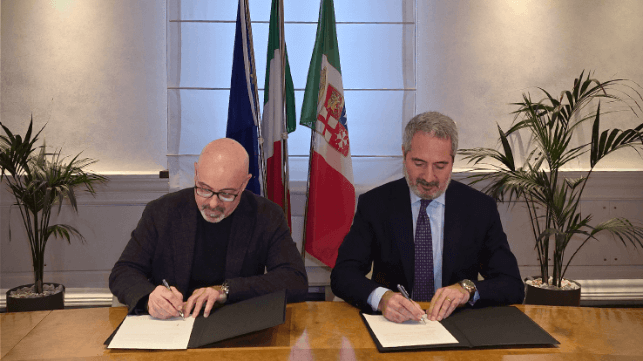
Fincantieri Completes the Acquisition of Leonardo's UAS Underwater Business

Fincantieri Group

Published Jan 17, 2025 12:48 PM by The Maritime Executive


[By: Fincantieri Group]

Fincantieri announces the closing of the acquisition of Leonardo S.p.A.'s Underwater Armaments & Systems ("UAS") business line through the purchase of the entire share capital of the newly established company WASS Submarine Systems S.r.l. ("WASS"), into which the UAS business line had been previously contributed.

The transaction reinforces Fincantieri Group's strategy focused on growth in the naval defence business and the development of the underwater domain, strengthening its position as a leading technology integrator in the dual-use sector.

As foreseen by the preliminary agreement signed with Leonardo on May 9, 2024, and in line with the terms disclosed on that date, Fincantieri has paid today 287 million euros, representing the fixed component of the acquisition price. The variable component, linked to the growth targets of the UAS business line in 2024, will be determined following the approval of UAS’s final results for the 2024 fiscal year, for a total Enterprise Value of UAS, including the fixed component paid today, of up to 415 million euros, subject to standard price adjustment mechanisms.

With this acquisition Fincantieri integrates unique expertise in underwater acoustic technologies and advanced weapons systems, consolidating its leadership in the underwater domain. These innovative capabilities open new prospects for growth in the military and civilian sectors, with a focus on critical infrastructure security and the adoption of cutting-edge industrial applications and solutions.

Pierroberto Folgiero, Chief Executive Officer and Managing Director of Fincantieri, commented: "The acquisition of WASS Submarine Systems represents a decisive step for Fincantieri in strengthening its technological leadership in the underwater domain, a crucial sector for the future of maritime security and technology. By integrating advanced expertise in acoustic and underwater weaponry systems, we have expanded our ability to develop innovative solutions for naval defence while ensuring the protection of critical underwater infrastructure, such as submarine cables and offshore energy facilities. This confirms our goal to lead the evolution of advanced ship technologies, responding to global challenges with entrepreneurship and strategic vision."

The products and services herein described in this press release are not endorsed by The Maritime Executive.
LA REVUE GAUCHE - Left Comment: Search results for PERMANENT ARMS ECONOMY


AI is Empowering Shipowners to Tackle New Safety Management Challenges

WiseStella
WiseStella's AI technology has been developed in-house by a team of data scientists, setting it apart from off-the-shelf solutions

Published Jan 18, 2025 2:35 PM by The Maritime Executive


[By: WiseStella]

The maritime industry is undergoing a digital transformation, and one of the key innovations making waves is the integration of artificial intelligence (AI) into safety management systems.

The increased documentation required following the gamut of new rules and procedures place increasing demands on seafarers but companies like WiseStella are leveraging artificial intelligence to ease the cognitive burden to enhance safety across the global fleet.

"Seafarers today are faced with an overwhelming amount of information and documentation to manage," explains Ali Demiral, Chief Technology Officer, and AI lead at WiseStella. "This cognitive load can be a significant source of stress, especially when it comes to tackling complex safety assessments. But AI-powered technology can provide seafarers and ship managers with the tools they need to navigate these new requirements with confidence."

WiseStella's AI solution, dubbed "Wise-AI," taps into the power of large language models (LLM) to analyse vast troves of historical data from past safety inspections. By identifying common issues and potential root causes, the development, which is being incorporated across WiseStella’s suite of cloud-based solutions, provides seafarers with tailored recommendations and insights, even if they're unfamiliar with the intricacies of the regulations.

"Imagine a scenario where a second engineer is tasked with completing a self-assessment, for example," Demiral illustrates. "They may come across a question about the vessel's processes, unsure of whether current practices are 'as expected' or not. With the introduction of Wise-AI, they can simply input the details, and the system will suggest potential problem areas and offer guidance on how to address them."

This proactive approach not only helps seafarers save time and reduce stress levels, but it also fosters a deeper understanding of safety protocols. By learning from the AI's insights, crew members can better anticipate and mitigate issues, enhancing the overall safety of the vessel.

But the benefits of WiseStella's AI-based learning extend beyond individual vessels. The platform also provides fleet-wide benchmarking capabilities, allowing managers to compare their vessels' performance against industry standards.

"Suddenly, fleet managers have the ability to identify areas where their vessels are excelling or falling behind, empowering them to make data-driven decisions and target their training and resources more effectively,” Demiral says.

Interestingly, WiseStella's AI technology has been developed in-house by a team of data scientists, setting it apart from off-the-shelf solutions. This custom-built approach allows the company to continuously refine and improve the algorithms, ensuring that the system's predictions become more accurate and relevant over time.

However, AI outputs are always reviewed by academics and experts before the information is presented in the WiseStella platform.

“Physical assessment of the findings with ‘human-in-the-loop’ analysis helps improve information outputs,” says Demiral, “as AI continually learns from the additional input and recommendations to provide the optimum solutions.”

"The more data we collect, the better our AI becomes at identifying patterns and providing meaningful insights," Demiral explains. "It's a continuous learning process, and we're committed to staying ahead of the curve to support our clients' evolving needs."

One of the key advantages of Wise Stella's AI-powered platform is its ability to leverage data from a variety of sources, including industry reports and published research. By aggregating and anonymizing this information, the system can provide a comprehensive view of common issues and best practices across the maritime sector.

"We're not just relying on the data we collect from our own clients," Demiral clarifies. "We also incorporate insights from various guidance published by professional bodies and organisation ensuring that our recommendations are grounded in the broader industry context. This helps us deliver more robust and reliable solutions to our users."

As the maritime industry continues to navigate the uncharted waters of new safety regulations, the integration of AI-powered tools like Wise-AI into the WiseStella platform is poised to become a crucial lifeline for seafarers. By reducing cognitive stress, enhancing safety awareness, and providing data-driven insights, these innovative solutions are paving the way for a more resilient and efficient future at sea.

"The ultimate goal is to empower our clients to proactively address safety challenges, rather than simply reacting to them," Demiral says. "With Wise-AI, we're giving seafarers the tools they need to anticipate and mitigate issues, fostering a culture of continuous improvement and safety excellence."

As the maritime industry continues to evolve, the role of AI in safety management is only set to grow. Companies like WiseStella are at the forefront of this digital transformation, leveraging cutting-edge technology to support the people who keep our global supply chains moving. By easing the burden on seafarers and providing data-driven insights, these AI-powered solutions are poised to become indispensable in the years to come.

The products and services herein described in this press release are not endorsed by The Maritime Executive.

 

Nor-Shipping Adds Finance, LNG & Seabed Minerals to 2025 Conference Program

Nor-Shipping
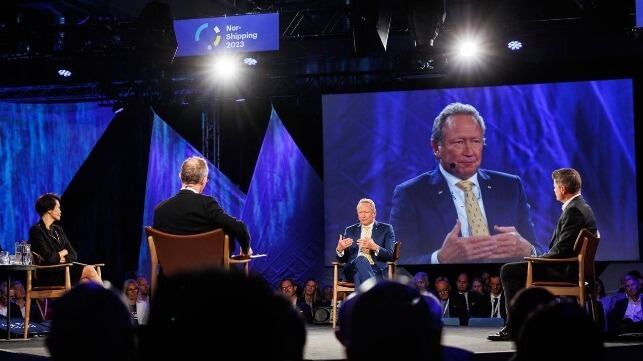
Nor-Shipping's Ocean Leadership Conference - gathering leading industry figures from across the globe

Published Jan 18, 2025 1:40 PM by The Maritime Executive


[By: Nor-Shipping]

Nor-Shipping is enhancing its conference programme for 2025 with a bold line-up of new events targeting evolving ocean business opportunities. This year’s Nor-Shipping, taking place 2-6 June in Oslo and Lillestrøm, Norway, sees the arrival of dedicated conferences focused on financing, LNG and seabed minerals. It’s a revamp that, notes Sidsel Norvik, Nor-Shipping Director “meets growing demand, while also highlighting both opportunities and challenges for future business potential.”

Something for everybody
Each of the new events has been developed in collaboration with expert industry partners and stakeholders, ensuring the most relevant interest areas are covered, by optimal quality speakers and panellists. Nor-Shipping’s first LNG Conference and Deepsea Minerals Conference take place on 4 June, while the Ocean Invest Conference will be held on 3 June. All conferences take place within the main conference arena at Lillestrøm.

Norvik explains that the new events are additions to the current programme, not replacements, as the maritime and ocean industries gathering aims to extend its reach “covering all the most exciting ocean business bases” and delivering “something for everybody.”

Must attend events
She comments: “We already offered what is widely regarded as a unique conference programme, covering a huge range of issues, segments, geographical areas and exceptionally high-quality participants. However, this industry never stands still, with new opportunities, ambitions and challenges constantly emerging, and we want to ensure we cater for that; giving decision-makers ‘must attend’ events that deliver insights and added value impossible to get elsewhere. It is essential to address both challenges and opportunities.

“We see the demand for discussion, knowledge-sharing and collaboration on each of these three new topics, and believe these events can help steer the industry towards more informed choices and sustainable business development. We’re truly excited to offer them in what, as our 60th anniversary year, promises to be an absolutely outstanding Nor-Shipping.”

Quality and quantity
Nor-Shipping’s conference line-up kicks off with the always anticipated Ocean Leadership Conference, which featured speakers such as John Kerry, Nobel laureate Joseph Stiglitz and Andrew Forrest in 2023, and includes focused activities such as The Nor-Shipping Offshore Wind Conference, the International Ship Autonomy and Sustainability Summit, the Maritime Hydrogen Conference, the Offshore Aquaculture Conference, and more. In addition, the Blue Talks, which focus on sustainable business development within the ocean space, offers 13 topical talks and panel debates right through the week.

“People naturally think of the main exhibition when Nor-Shipping is mentioned,” Norvik says, “but in our feedback forms and industry discussions it’s crystal clear that the conferences and knowledge-sharing activities we run are a very key, and growing, attraction for attendees gathering from across the world. In a way, they help ignite ideas, insights and inspiration, while the companies on the exhibiting floor provide the expertise, innovations and partnerships to fulfil that potential. When you add in our social and networking opportunities, partner events, regional focuses – including activities focusing on hotspots like Brazil, Singapore and India – you have what we see as a ‘complete’ offering for this amazing industry we serve.”

Future-proof ambitions
Speakers and further details of the individual events will be released in coming weeks and months. Full details of Nor-Shipping 2025’s conference line-up are available here.

Nor-Shipping 2025, which will focus on the main theme of #Future-Proof (a red thread running through all conference and exhibition activity), is set to be “biggest and best” Nor-Shipping to date. Despite the fact that more exhibition space than ever is available, with extended halls and facilities, over 98% of stands have been taken, more national pavilions than ever before are booked, including a large India pavilion, and record visitor numbers are expected to descend on Oslo and Lillestrøm.

“There’s a tangible sense of excitement building,” Norvik concludes. “We can’t wait to welcome the world of ocean business to Nor-Shipping 2025 this June.”

The products and services herein described in this press release are not endorsed by The Maritime Executive.
 

China Calls US Shipbuilding Report "Obvious Unilateralism and Protectionism"

China Foreign Ministry
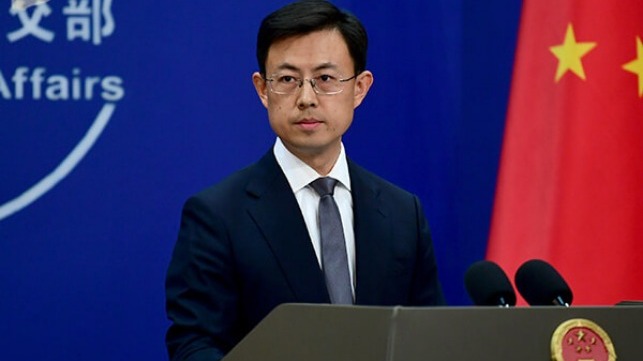
China's Foreign Ministry said it is "strongly dissatisfied" wit hthe U.S. report calling it a violation of trade rules and an "outright protectionist act" (Foreign Ministry)

Published Jan 17, 2025 12:23 PM by The Maritime Executive


Chinese officials ranging from the ministries of commerce and foreign affairs to the shipbuilding association each condemned the U.S. Trade Representative’s report on the shipbuilding industry. They used some of their harshest language saying the report contains false accusations and is irresponsible while labeling it protectionism.

The responses came to reporters’ questions about the report from U.S. Trade Representative Ambassador Katherine Tai. Released on Thursday in Washington, D.C., the report concluded that Chinese dominance in the maritime industry "is unreasonable and burdens or restricts U.S. commerce." The report cites the use of subsidies, labor practices, and technology transferred to build China’s dominance through its state-owned companies China State Shipbuilding Corporation and COSCO.

A spokesperson for China’s Ministry of Commerce responded saying, “China is strongly dissatisfied with this and firmly opposes it.” They said the investigation is full of “false accusations” and violates World Trade Organization rules. They accused the Biden administration of perusing the effort “out of political needs and the purpose of suppressing China’s development.”

“From a historical perspective, the decline of the U.S. shipbuilding industry has nothing to do with China. Long before the rise of China's shipbuilding industry, the U.S. shipbuilding industry's global market share was negligible. From a realistic perspective, the development of China's shipbuilding industry is definitely not based on so-called "non-market practices," but on a complete industrial system, well-trained engineers and industrial workers, and an open business environment,” declared the Ministry of Commerce.

The report came as the China National Shipbuilding Industry Association (CANSI) also released its annual data on global shipbuilding. According to CANSI’s calculations, China's shipbuilding completion in 2024 accounted for 55.7 percent of the global total, meaning over half of the ships delivered globally were built in China. New orders placed with China's shipbuilding industry accounted for 74.1 percent of global volume while China’s order backlog accounted for 63.1 percent of the global orderbook as of the end of 2024.

CANSI lashed out at the report saying it drew “wrong conclusions based on a faulty investigation.” They threatened that the U.S. efforts “will seriously disrupt the global shipping logistics system and international trade order.” 

The association asserts China’s shipbuilding industry has grown by “adhering to marketization and internationalization.” They said the rapid growth over the past 20 years was achieved by insisting on technological innovation while saying China is contributing to meeting the International Maritime Organization goals.

“This investigation is full of lies and distortions and is an unwarranted accusation and malicious smear on the development of China's shipbuilding industry. The China Shipbuilding Industry Association expresses its strong dissatisfaction and resolute opposition to this,” CANSI wrote in its official statement.

China’s Foreign Ministry, often a vocal critic of the United States, pointed to the response from the Ministry of Commerce. It too reiterated the investigation “seriously violates WTO rules and is an outright protectionist act. China is strongly dissatisfied with this and firmly opposes it. We have stated our position many times.”

While urging the United States to correct its errors and respect facts, China used the response as a veiled response to the incoming Trump administration by calling for adherence to the principles of market economy and fair competition. 

The U.S. Trade Representative’s report concluded that China’s unreasonable approach to the shipbuilding industry is “actionable” under U.S. trade law. Experts believe the conclusions of the report provide the Trump administration with another tool in its declared position to stop China’s threat to the U.S. through among other steps the implementation of a sweeping tariff regime.


Solvang LPG Tanker Ready to Launch New Onboard Carbon Capture Pilot

LPG carrier with carbon capture system
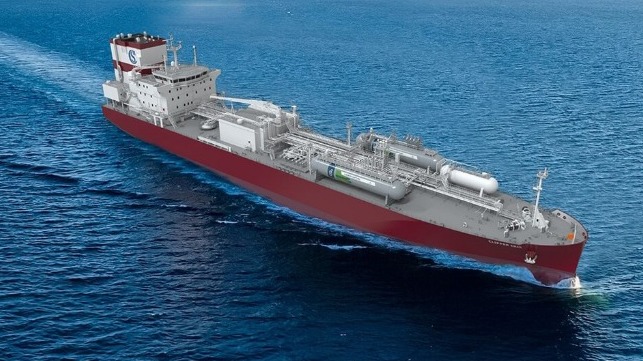
Solvang's Clipper Eris completed the installation of the CCS system developed with Wärtsilä (Solvang)

Published Jan 17, 2025 4:49 PM by The Maritime Executive


A pilot project involving Wärtsilä, MAN Energy Solutions, and the research institute SINTEF and working with Norwegian shipping company Solvang is ready to launch its pilot test for a new onboard carbon capture and storage system. According to the companies, launching the pilot testing is an important milestone in the project which began in 2021 and conducted its first tests in 2022.

“Onboard carbon capture combined with existing cleaning technology is a significant shortcut to decarbonization of the world’s deep-sea fleet. This stands out as one of the more promising solutions for future vessels,” says Edvin Endresen, CEO of Solvang.

Over the past few months, the 2019-built LPG tanker Clipper Eris has been in dry dock for a full retrofit. The vessel which is 18,000 dwt arrived in November at the Seatrium Admiralty yard in Singapore and the companies report the team was at the yard on January 16 marking the completion of the installation project.

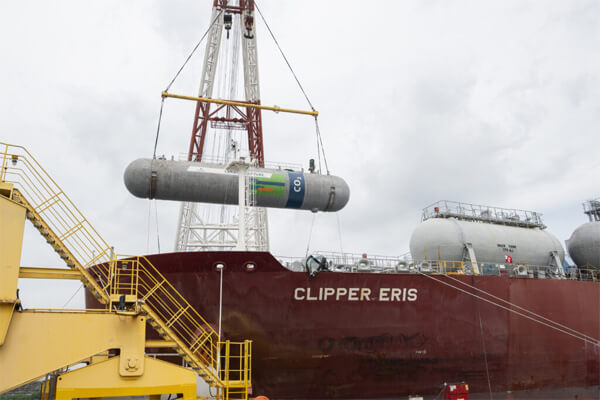
Seatrium was contracted to install a seven-megawatt capacity carbon capture system from Wärtsilä. The capture system uses amine scrubber technology to pull about 70 percent of the CO2 out of the exhaust gas from the main engine. The CO2 stream will be chilled, liquefied, and stored on board the vessel for later offloading. Part of the project added large tanks visible on the deck of the vessel. Seatrium carried out engineering, procurement, upgrading of electrical and automation systems, and integration of the carbon capture and compression/storage system.


The retrofit adding the carbon tanks is taking place in Singapore (Solvang)


“The introduction of carbon capture and storage capabilities on board the Clipper Eris is a major leap forward for maritime sustainability,” says Roger Holm, President of Wärtsilä Marine. “It represents a system change that has been made possible by close collaboration between our companies.”

The Clipper Eris is the first vessel to be outfitted with this version of the technology and the pilot is scheduled to run for a year. The Norwegian shipping company received funding from the Norwegian State, through Enova, in 2023, making it possible to start the pilot project.

For OCCS to be a success on a larger scale, Solvang notes that more shipping companies and industry stakeholders must see the benefits and join in. Solvang CEO Edvin Endresen points to challenges with infrastructure and global regulations that need to be addressed for OCCS technology to succeed in the shipping industry.

“CO2 can be recycled and used in land-based industries, but the global infrastructure for discharge for shipping needs to be developed fast. In addition, IMO must implement global regulations with benefits and penalty schemes for achieving the set goals. Predictability is necessary for the industry to invest in solutions for reducing CO2 emissions,” says Endresen.

Solvang hopes this technology becomes a milestone for the world’s trading fleet on route to zero emissions. The company highlights that it has seven new vessels under construction, all designed and ready for installation of OCCS technology.


Video: USCG Icebreakers Aid Great Lakes Bulkers as Winter Sets In

icebreaking Great Lakes
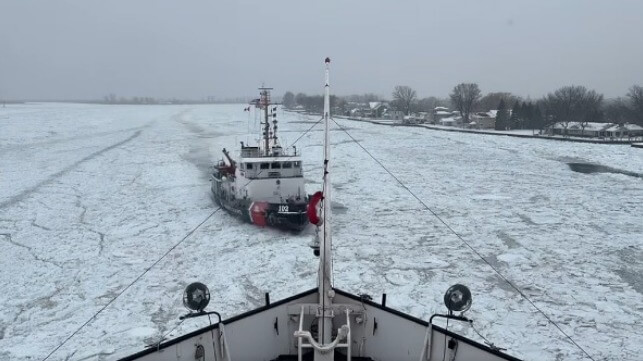
USCG cutter creating a path for the bulker on the St. Clair River

Published Jan 17, 2025 2:12 PM by The Maritime Executive


It is the end of the season on the Great Lakes and with the deep cold that has set across the region this week, the U.S. Coast Guard extended its ongoing icebreaking operations to aid two bulkers caught in the ice flows. It is part of an annual tradition on the lakes as the U.S. and Canadian Coast Guards work jointly to maintain navigation.

U.S. Coast Guard Sector Northern Great Lakes reported it was commencing “Operation Taconite” to prevent newly formed ice from hindering commercial vessel traffic. Starting on January 6, it is the largest domestic icebreaking operation and it encompasses Lake Superior, Lake Michigan, the St. Marys River, the Straits of Mackinac, and Georgian Bay. Two cutters, Mackinaw and Mobile Bay, are assigned to the operation with Coast Guard officials reporting additional icebreakers will be assigned as the ice coverage expands.

This week, “Operation Coal Shovel” also commenced on January 14. It involved the cutters Bristol Bay and Morro Bay, working in the upper Lake St. Clair and St. Clair River areas around Detroit.

The icebreaking operations got underway just in time for the bulker Herbert C. Jackson, which operator Interlake Steamship Company highlighted on January 14 was “on the final leg of the season and headed to the barn for layup in Detroit.” 


Moving along the St. Clair River, the USCG reports the U.S.-flagged bulker which was built in 1959 “was struggling to navigate for several hours” through the ice. The Detroit News quoted USCG as saying she was not stuck but dealing with icy conditions. The paper said the crew could also be seen on deck clearing ice and snow.

The cutters Bristol Bay and Morro Bay came to her rescue. They opened a channel and moved alongside the bulker to make sure she could make it to the dock and her winter layup. Interlake notes while the locks are closed and waterways heavy with ice, its fleet spends about two months undergoing maintenance and readying for the next season.


(Click to see video)


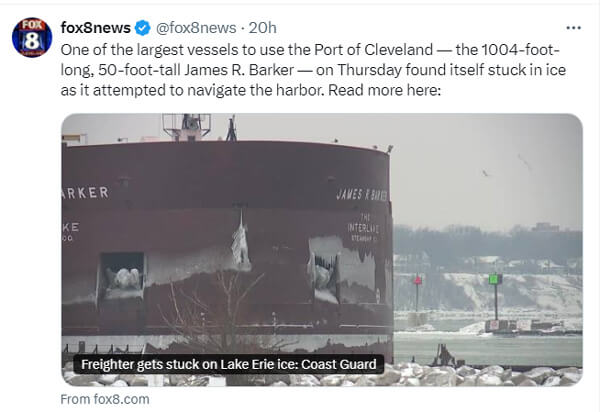
Interlake’s bulker James R. Baker (61,500 dwt) also found itself caught in the ice with local news reports saying she got stuck on Thursday, January 16, in Port of Cleveland. Built in 1976, the U.S.-registered bulker is one of the larger vessels operating on the Lakes. Attempting to navigate the harbor, she encountered the ice. They were able to free her after about three hours from the ice on Lake Erie and maneuver her to dock so that she could offload a cargo of coal.


Carriers Adopt New Standard to Prevent Deadly Charcoal Fires

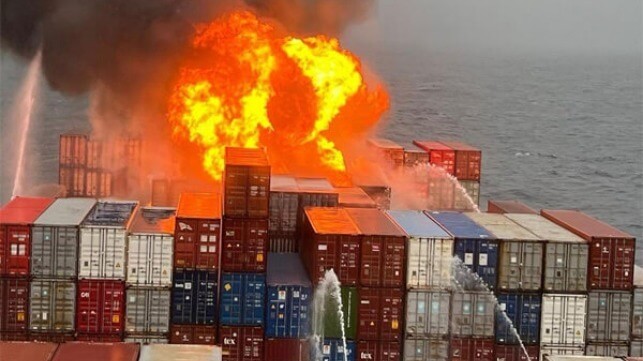
container fire
Crackdown moves to ensure charcoal is treated as dangerous goods and properly loaded
 (Indian Coast Guard file photo)

Published Jan 17, 2025 5:39 PM by The Maritime Executive


The shipping industry is taking proactive steps to implement improved safety measures for transporting charcoal, ahead of mandatory IMO regulations in 2026. Experts have long warned that misdeclared, poorly handled, and poorly packed dangerous goods are one of the largest dangers for cargo fires and the industry is moving to crackdown on charcoal loaded in containers.

“We’ve seen too many preventable fires onboard vessels caused by improper handling of charcoal,” said Joe Kramek, President and CEO of the World Shipping Council (WSC). “We’re eager to see the new regulations implemented as the status quo hasn’t been adequate at keeping crew, cargo, and vessels safe.”

The Cargo Incident Notification System (CINS), a safety initiative representing container shipping lines and maritime insurance interests published a comprehensive advisory publication in the fall of 2024 to alert carriers and shipping to the issues. Now, the World Shipping Council, with IGP&I and TT Club created a quick reference guide to further call attention to the new regulations. 

WSC warns shippers should be ready to see carriers phase in new tighter regulations this year.??They report it is in response to a series of devastating fires caused by improperly handled charcoal.

“It is estimated that global production of charcoal for domestic and export markets is over 50 million tonnes per year (as of 2020). From the incident records created by CINS members, it is known that there were at least 68 fire incidents on board ships between January 2015 and December 2022,” they wrote in the October 2024 advisory. “Most of these incidents were caused by misdeclared cargo and therefore the carrier was not aware of the hazards presented.”

The new regulations require all charcoal shipments to be declared as dangerous goods under the International Maritime Dangerous Goods (IMDG) Code. No exemptions will be allowed. There are also new treatment, packing, and stowage requirements for shipments of charcoal.? 

“Treating all charcoal as dangerous goods ensures uniform safety standards and gives everyone involved – from shippers to carriers – the tools and clarity needed to prevent future tragedies,” added WSC’s Kramek.? 

Fire continues to be one of the most challenging issues for containerships. Global insurer Allianz in its Safety and Shipping Review 2024 said that the constant high numbers of fire incidents remain a major concern. The report highlights that in 2023, 205 fire incidents were reported, the second-highest total for a decade after 2022. Over the past five years, Allianz documented 55 losses caused by fires noting that fire remains a key safety issue on larger vessels. In addition to the potential threat to life, Allianz highlighted the scale of the damage, and as a result, the associated costs which it said can be severe.

 Australia shuts its biggest iron ore port on cyclone threat

Bloomberg News | January 18, 2025 | 

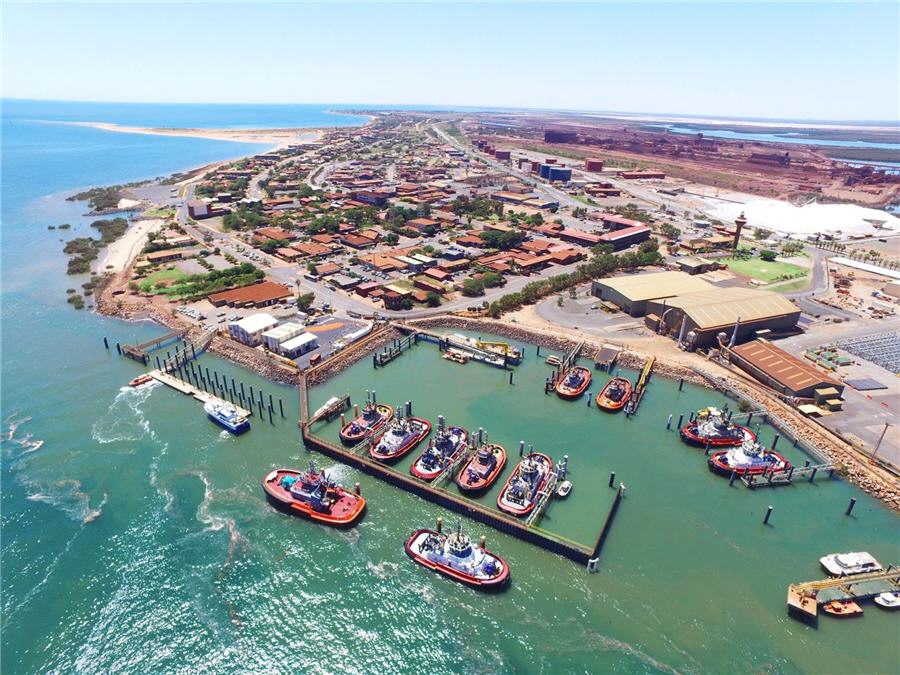
Port Hedland.
 Image courtesy of Port Hedland, the world’s largest iron ore export terminal

Australia’s largest iron ore export hub Port Hedland has been closed as a tropical cyclone develops offshore the Pilbara region of Western Australia state.


The operator, Pilbara Ports Authority, ordered all bulk carriers to leave the port by 6 p.m. local time, as two tropical lows offshore are expected to merge into a cyclone. The weather systems have already brought severe rain to the region. Port procedure mandates that only essential personnel will remain onsite.

Port Hedland handles vast volumes of iron ore from all major miners including BHP Group, Rio Tinto Group, and Fortescue Ltd.

The Australian Bureau of Meteorology issued a cyclone warning Saturday, saying it would form by Sunday and was likely to impact Port Hedland as well as the Dampier region where a second iron ore export port is located. A warning has also been issued for the town of Karratha, home to a massive liquefied natural gas plant operated by Woodside Energy Group Ltd.

Port Hedland’s iron ore exports fell to 47.614m tons in December from 48.755m tons in November.

(By Paul-Alain Hunt)


Insolvency Administrators Confident in Sale of FSG Shipyards

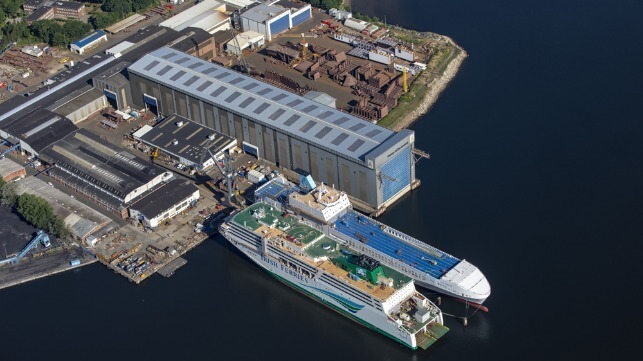
FSG shipyard Germany
FSG builds ferries while the Nobiskrug yard builds mostly yachts (file photo)

Published Jan 17, 2025 3:13 PM by The Maritime Executive


The provision insolvency administrators for Germany’s FSG and Nobiskrug shipbuilders told government officials and union leaders they remain confident in the efforts to save the financially troubled yards. Meeting on Friday, January 17 at the Nobiskrug shipyard in Rendsburg, Prime Minister Daniel Günther told reporters the state was willing to help in order to save the nearly 500 jobs at the two yards.

Insolvency hearings commenced against the group in December and are scheduled to proceed to court at the beginning of February. In addition, the provisional administrators told government officials that interim financing would run out by the end of January. While they remain confident, they now believe there will be an interruption of work at both yards.

The proposal put forward to the union calls for a transfer company to be established with the workers given the option of moving to this typically German arrangement until deals can be completed for the sale of the shipyards. The proposal calls for the workers to receive 80 percent of their wages with the purpose of the transfer company being to aid in training and transitioning to new permanent positions. According to media reports, while the shipyards are likely to find buyers, not all the workers will continue to have jobs even when work resumes in the spring.

Lawyers Christoph Morgen and Hendrik Gittermann were provisionally appointed by the court in December and each is handling one of the shipyards. During the meeting on Friday, they said several potential buyers had expressed interest but it is down to one potential buyer for each yard. The potential buyers are said to be from within the industry as opposed to investors.

The yards were brought under a single company three years ago by the current owner, investor Lars Windhorst, who is reported to now be playing only a minor role in the efforts to save the companies. Previously, Windhorst had rejected the insolvency claims and said he would refinance the companies. Media reports say he is no longer blocking the sale efforts.

Morgen reports that Australian shipowner SeaRoad which has a ferry under construction at FSG has expressed interest in negotiating with the potential buyer of the yard. Morgen hopes work could resume on the ferry in February. Nobiskrug builds luxury yachts with reports that there are several unfinished hulls in the shops. The buyer for this operation hopes to resume work by the spring.

Both administrators report there is much work to be done. They said the accounting at the yards is lacking creating concerns among buyers who are trying to understand the full depth of the financial problems. 

The state has said once the yards are on a sound financial footing it would be willing to guarantee loans. The Prime Minister along with the Economics Minister Claus Ruhe Madsen expressed interest in maintaining the operations. Günther highlighted potential opportunities for offshore converter construction for wind farms on the North and Baltic Seas as well as naval shipbuilding for the yards. 

The company’s works councils and union IG Metall participated in the meeting on Friday. They are anxious to find a solution to maintain their jobs. The union has also called on the state to intervene to provide protections for the workers.


Wallenius Wilhelmsen Wins Car Terminal Concession at Port of Gothenburg

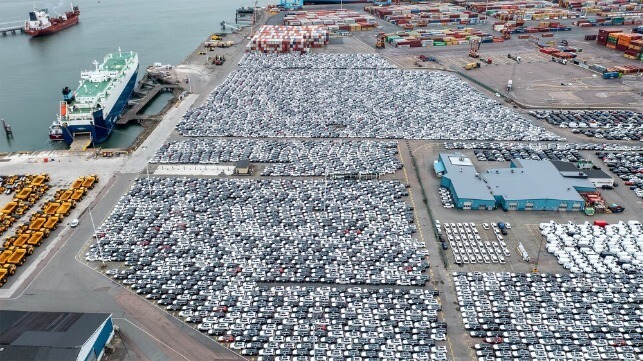
Gothenburg Sweden
RoRo terminal in Gothenburg to be operated starting in 2026 by Wallenius Wilhelmsen (Port of Gothenburg)

Published Jan 17, 2025 6:37 PM by The Maritime Executive


Norway’s Wallenius Wilhelmsen won a 12-year concession to operate the vehicle and roll-on/roll-off (RoRo) terminal at Sweden’s Port of Gothenburg. The company has committed to investments to strengthen the terminal’s operations.

“We are very optimistic about Wallenius Wilhelmsen's ability to continue developing the vehicle and RoRo terminal at the Port of Gothenburg,” said Göran Eriksson, CEO of the Port of Gothenburg. “The company has presented a strong business plan and has credibly demonstrated how they will achieve the volume targets they have committed to and operate a competitive terminal with a customer-centric approach.”

Eriksson added that Gothenburg is confident that Wallenius Wilhelmsen can take the port a step closer to its overarching goal of becoming the world's most competitive port. As the largest port in Scandinavia, Gothenburg handles around 20 percent of Swedish foreign trade and over 50 percent of all container traffic. The port is focusing on sustainability, innovation, and digitalization to build a climate-efficient freight transport system.

Gothenburg highlighted that it received several strong bids from companies interested in operating the terminal but selected Wallenius Wilhelmsen due to the Norwegian company’s extensive experience in terminal operations at several ports worldwide. It also offered attractive commitments on infrastructure investments.

Wallenius Wilhelmsen will take over the operations of the terminal in February next year from Logent Ports and Terminals. The Swedish firm has been operating the terminal since 2011. Wallenius Wilhelmsen will create a newly established, independent company, to operate the terminal.

In its bid, Wallenius Wilhelmsen committed to invest approximately $6.1 million to modernize the terminal's areas, buildings, and infrastructure to further strengthen its market offering. The company intends to transform the terminal into a “one-stop-shop” for all carriers and customers. It received a 12-year concession to operate the terminal.

Apart from loading and unloading vehicles, Wallenius Wilhelmsen will also offer pre-delivery inspections of vehicles, as well as the capability to handle larger project cargo and high & heavy goods.

“Our ability to provide seamless and efficient logistics solutions will contribute to further developing the Port of Gothenburg as the leading vehicle and RoRo terminal,” said John Felitto, Wallenius Wilhelmsen COO Logistics Services. “We look forward to serving the Scandinavian market while supporting our vision of innovative and sustainable growth.”

Gothenburg’s vehicle and RoRo terminal has two quay positions consisting of 240,000 square meters of terminal space, rail connectivity, and pre-delivery inspection facilities. The port has been witnessing a steady increase in vehicles handled in recent years. In 2023, vehicle volumes increased by 14 percent to 267,000 compared to 238,000 in 2022. The volume accounted for 37 percent of the total Swedish market, making Gothenburg Sweden’s largest vehicle port. It is strategically positioned and is a key hub that connects the Nordic countries with regions such as the Far East, North America, Africa, Australia, and Northern Europe.

Gothenburg becomes the ninth terminal that Wallenius Wilhelmsen will operate, adding to its RoRo logistical experience. The company also operates approximately 125 vessels servicing 15 trade routes to six continents.


Harland & Wolff Puts Yards into Administration Ahead of Asset Sale

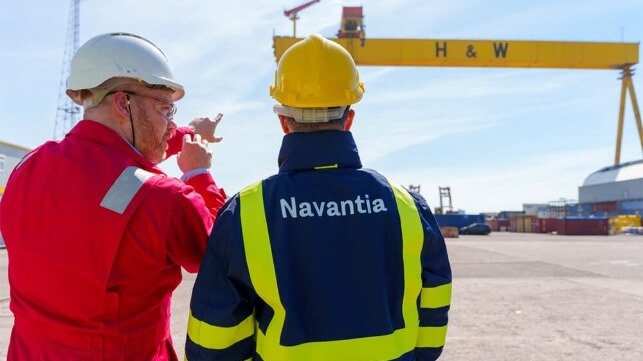
Harland & Wolff shipyard
Shipyards entering administration ahead of asset sale to Navantia (Navanatia)

Published Jan 16, 2025 2:15 PM by The Maritime Executive


The deal to save the shipyards of Harland & Wolff is reported to be proceeding with the board of the company saying this week that it expects the sale process to be completed in the coming weeks. Preparing for the sale of the assets, however, the company reported it will move the individual businesses into administration after previously reporting it had the finances to maintain the operations during the transition.

“The directors have reluctantly taken the decision, after a lengthy sales process with assistance from leading advisers, that survival of the companies is no longer viable,” they wrote in a filing on January 14. They noted that the companies, which include the four shipyards, are currently subject to a sale process, reporting, “This sale will see the purchaser acquiring the majority of assets of the core Harland & Wolff businesses.”

The notice of intention to file for administration encompasses the shipyards in Belfast and Appledore as well as the smaller yards being used for fabrication at Arnish and Methil. It also includes the “People & Skills” division. Previously, the publicly traded parent company was placed into administration in December, but the yards had continued to operate. They received temporary financing from Spain’s Navantia group and filings were being made to “enable business operations to continue normally throughout the transition period.”

The latest announcement said, “The trading environment has become increasingly challenging and throughout that time, steps have been taken to minimize spend within the business.”

The status of the acquisition by Navantia was also the subject of discussion in the House of Commons on January 15. The Secretary of State for Northern Ireland, Hilary Benn, responded during the question period saying the commercial agreement was proceeding and that adjustments had been made to the contract to ensure that the fleet solid support ships contract for the Royal Navy Fleet Auxiliary could go ahead. 

Asked about debts to suppliers, Benn, said it would be up to Navantia “to decide which of the invoices it wishes to pay, but it will want to secure a relationship with suppliers contributing to the fleet solid support ship program.”

The acquisition requires regulatory approval before it can proceed. The companies said in December that they were targeting January for the closing.
 

Pragmatism over ideology marks new chapter in China-UK ties

By Adriel Kasonta | China Daily | Updated: 2025-01-18 

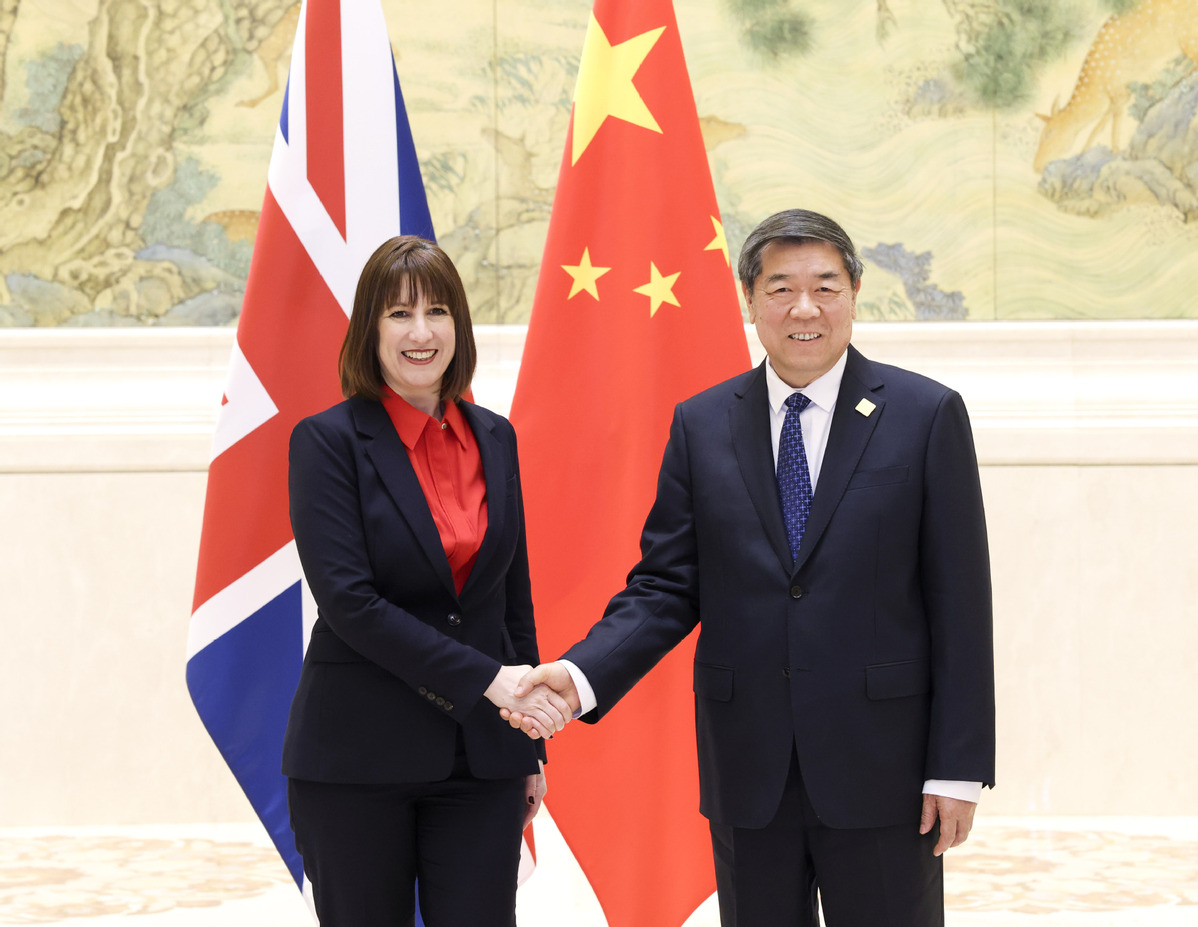
Chinese Vice-Premier He Lifeng and British Chancellor of the Exchequer Rachel Reeves co-chair the 11th China-UK Economic and Financial Dialogue held in Beijing on Jan 11, 2025. [Photo/Xinhua]

British Chancellor of the Exchequer Rachel Reeves' recent three-day visit to China marks a critical turning point in a relationship oscillating between hope and frustration over the past decade. Reeves' was the first visit of a British chancellor to China since 2019, signaling not just a return to diplomatic engagement but a shift toward strategic pragmatism.

In a world rife with geopolitical uncertainties, especially due to the return of Donald Trump to the White House, the United Kingdom government led by Prime Minister Keir Starmer is sending a clear message: economic growth and stability must be prioritized over ideology.

Lost opportunities and dashed hopes


The last decade of UK-China relations was marked by dashed hopes, with former British prime minister David Cameron's bold "Golden Era" investment plans faltering after political changes and international tensions escalated. Successive Conservative governments were often entangled in the ideological fog of China's human rights record and perceived geopolitical threats, leading to the UK's withdrawal from global economic engagement with China. That was not merely a political misstep, but a lost opportunity for boosting the UK's economic growth at a time when it needed it most.

Fast forward to today: a more prudent approach under Starmer's leadership is giving new life to UK-China relations.

During her visit to Beijing, Reeves reinforced the UK's economic aspirations, saying "Growth is the number one mission of this government. The fiscal rules laid out in the budget are non-negotiable. Economic stability is the bedrock for economic growth and prosperity." Reeves' message echoed the deepening awareness that economic success depends on building robust relationships with the world's key players.

Indeed, Reeves' visit is a recognition of a strategic economic reality. With the cost of government borrowing rising and the pound sterling falling, the stakes have never been higher for the UK's economic stability. Her engagement with China — a relationship critical to both countries' economic health — has delivered tangible results. Amid mounting opposition criticism, Reeves secured agreements worth about £600 million ($732.86 million) for the UK economy.

Numbers don't lie


Despite their bumpy political history, economic relations between the UK and China are too significant to ignore, not least because China (including the Hong Kong Special Administrative Region) remains the UK's third-largest trading partner, with bilateral trade reaching £103.1 billion in 2024. China is also the UK's sixth-largest export market, with the UK's exports reaching£38.6 billion last year.

Besides, Chinese investment in the UK has been a cornerstone of the bilateral relationship, as Chinese enterprises invested £64.5 billion in the UK, the most significant amount among European countries, between 2000 and 2023.

Also, the UK remains a top destination for Chinese students, who contributed £5.4 billion to the UK economy. In 2022-23 alone, more than 170,000 Chinese students enrolled in British universities. This symbiotic relationship has immense untapped potential and, as Reeves emphasized, strengthening UK-China ties is a win-win for both sides.

Reviving the UK-China Joint Economic and Trade Commission, which the previous Conservative government froze, would be a crucial step toward building on these existing economic ties. In this regard, the momentum generated by Starmer's interactions with Chinese President Xi Jinping on the sidelines of the G20 Summit in Rio de Janeiro, Brazil, should be leveraged to the fullest extent.

Strategic areas of cooperation


The strategic imperatives of this new engagement go beyond trade deals and financial partnerships. One of the key areas where the UK and China can collaborate is in the green economy. Climate change and sustainability are priorities for the Labour government, with commitments to realize net-zero emissions and stop the sale of new combustion engine cars by 2030. Here, China has a significant role to play as a global leader in the production of electric vehicles and battery storage technology. The UK, in turn, can create for China opportunities to expand into a stable, growth-oriented market economy.

Energy transition is another common global challenge, with both the UK and China having much to gain from working together on clean energy technologies. With China offering affordable EVs and solutions for energy storage, the UK can meet its ambitious environmental targets, and accelerate its shift toward a green economy, further strengthening bilateral economic relations.

Moreover, the UK's decision to not follow the United States and the European Union in imposing tariffs on Chinese-made EVs and solar panels underlines the country's independent stance, sending a positive signal to Beijing. With the return of Trump to the White House, the US is expected to double down on its protectionist policies, particularly in sectors critical to the green economy, which makes China's role as a stable and reliable partner all the more critical for the UK.

Timely realignment for mutual benefit


With economic uncertainties weighing heavily on the UK, particularly in the wake of rising debt and inflation, the need for diversifying its economic partnerships is more pressing than ever. As Reeves aptly said, the UK's current fiscal position is the worst since World War II, and the need for growth is undeniable.

Given these facts, the UK should remove the ideological constraints that historically defined its relationship with China. As former British prime minister Lord Palmerston famously said, "We have no eternal allies, and we have no perpetual enemies. Our interests are eternal and perpetual, and it is our duty to follow those interests."

As the UK enters a new era of multipolarity, pursuing growth must take precedence over ideological purity. While the US under Trump may adopt an aggressive stance toward China, the UK must avoid following Washington's lead on matters that may not align with its best interests. Instead, it should adopt a sovereign, independent approach rooted in mutual benefit and pragmatism to build a prosperous future.

Reeves' visit to China is a bold first step in the new direction — one where the UK recognizes the importance of economic cooperation for long-term growth and stability. By prioritizing renewed engagement with the world's second-largest economy, the UK stands poised to reclaim its position as a key player in a rapidly changing world order.

The author is a political risk consultant and lawyer based in London who has served as the chairman of the international affairs committee at the Bow Group, which is the UK's oldest conservative think tank. The views don't necessarily reflect those of China Daily.


CHINA/AFRICA

Together despite US narrative


By STEPHEN NDEGWA | China Daily Global | Updated: 2025-01-17 
SHI YU/CHINA DAILY

The China-Africa partnership's success will depend on its ability to transcend external interference and deliver concrete results that improve the lives of millions

As Donald Trump is to assume his second term in office on Jan 20, the global geopolitical landscape is increasingly being defined by great power competition. Africa has become a significant arena for this rivalry, particularly in the contest between the United States and China. Central to this dynamic is the enduring partnership between China and Africa — a relationship that has weathered sustained external criticism and pressure, particularly during Trump's first term. Moving forward, both China and Africa must navigate an intensified environment of competition, leveraging their shared history, comprehensive strategies and mutual benefits to strengthen their partnership and achieve common goals.

Trump's first term brought a mercantilist approach to US foreign policy, marked by sporadic engagement with Africa. His administration frequently cast China's presence on the continent in a negative light, advancing narratives of "debt-trap" diplomacy and alleged exploitation of African resources. These claims were amplified by Western media and policy circles, portraying Chinese investments as predatory rather than constructive.

However, these critiques ignore the substantial benefits that Chinese partnerships have brought to Africa. Unlike Western aid, which is often tied to conditional strings regarding governance or political reforms, China's model emphasizes respect for sovereignty and aligns with Africa's own development priorities.

Far from the "debt trap" claims, Chinese loans and investments have helped address Africa's longstanding infrastructure deficits. Projects such as Kenya's Standard Gauge Railway, Ethiopia's industrial parks and Nigeria's hydropower facilities have created vital economic lifelines. Studies by organizations such as the Jubilee Debt Campaign have debunked the idea that Chinese loans dominate African debt burdens. In most cases, African debt crises stem from Eurobond markets and domestic financial mismanagement rather than Chinese financing. Furthermore, China has shown flexibility, restructuring or forgiving loans when needed, as evidenced during the COVID-19 pandemic when it provided debt relief to several African nations.

Washington is likely to ramp up its efforts to frame Chinese influence as a challenge to Western values and African sovereignty. For African nations, this competition presents risks of polarization and external interference. Yet, it also offers an opportunity to leverage the rivalry for greater investments and favorable terms. The key lies in maintaining agency, ensuring that partnerships with either power align with Africa's long-term development goals.

China's ability to sustain its strong ties with Africa will depend on its continued focus on initiatives such as the Global Development Initiative, the Global Security Initiative and the Global Civilization Initiative. These frameworks address Africa's most pressing challenges, such as poverty eradication, peace and security, and cultural exchanges. The Global Development Initiative, for example, complements Africa's Agenda 2063 by prioritizing industrialization, food security and poverty reduction. The Global Security Initiative's focus on peacebuilding is particularly relevant in conflict-prone regions such as the Sahel region and the Horn of Africa, while the Global Civilization Initiative fosters deeper people-to-people connections, reinforcing the cultural and diplomatic foundations of partnerships.

The accusation of Chinese "debt traps" is not the only myth that needs debunking. Critics have also painted China as an economic colonizer, a narrative that fails to recognize the transformative impact of Chinese investments on local economies. For example, Chinese-funded infrastructure projects often involve significant local labor and capacity-building components, creating jobs and transferring skills to African workers. Initiatives such as the Luban Workshop, a project named after an ancient Chinese master craftsman that provides vocational skills training for African youth, exemplify China's commitment to empowering local communities.

This non-prescriptive approach to development resonates deeply with African leaders. Unlike Western models, which frequently impose governance reforms or ideological frameworks, China respects the sovereignty of its African partners. This respect is not synonymous with indifference, however. African leaders have highlighted their ability to negotiate terms that meet their national priorities, ensuring that the benefits of partnership are mutually shared. For example, Ethiopia has leveraged Chinese investments to develop industrial parks that align with its manufacturing-led development strategy, while Rwanda has utilized Chinese technology to enhance its e-governance systems.

At the same time, Africa has much to gain by replicating aspects of China's development trajectory. Over the past four decades, China has lifted over 800 million people out of abject poverty through a strategic focus on infrastructure, education and agricultural modernization. These experiences offer valuable insights for African countries seeking to address poverty, inequality and underdevelopment. Adapting these strategies to local contexts can help African nations accelerate their progress toward the United Nations Sustainable Development Goals.

Beyond infrastructure and economic development, China and Africa must collaborate on emerging challenges such as climate change, digital transformation and public health. Africa's vulnerability to climate change necessitates investments in renewable energy and sustainable agriculture — areas where China has significant expertise. Similarly, bridging the digital divide through investments in information and communications technology infrastructure can position Africa as a competitive player in the global digital economy. The COVID-19 pandemic also underscored the importance of health cooperation. China's support for vaccine distribution and the establishment of the Africa Centres for Disease Control and Prevention highlights the potential for deeper collaboration in strengthening healthcare systems.

Trump's second term poses a test for the resilience of China-Africa relations. The intensified geopolitical rivalry will require both partners to navigate external pressures while staying focused on their shared objectives. African nations must resist being drawn into binary alignments, leveraging their partnerships with China and the US to secure the best outcomes for their people. For China, the focus must continue to remain on delivering tangible benefits, addressing misconceptions, and deepening its commitment to mutual respect and shared prosperity.

The China-Africa partnership has demonstrated remarkable resilience in the face of challenges. Its foundation lies in the principles of mutual benefit, respect for sovereignty and a shared vision for development. By building on these principles, addressing emerging challenges and remaining adaptable to changing global dynamics, China and Africa can continue to strengthen their partnership, setting an example of constructive engagement in an increasingly polarized world.

In the coming years, the partnership's success will depend on its ability to transcend external narratives and deliver concrete results that improve the lives of millions. It is a strategic alliance rooted in shared aspirations and a commitment to a more equitable global order. As great power competition reshapes the international landscape, China and Africa have the opportunity to demonstrate that cooperation, not confrontation, is the path to a brighter future. By doing so, they can not only navigate the complexities of Trump's second term but also lay the groundwork for a new era of global collaboration.

The author is executive director of South-South Dialogues, a Nairobi-based communications development think tank. The author contributed this article to China Watch, a think tank powered by China Daily. The views do not necessarily reflect those of China Daily.

Contact the editor at editor@chinawatch.cn.