Thursday, February 26, 2026


UK

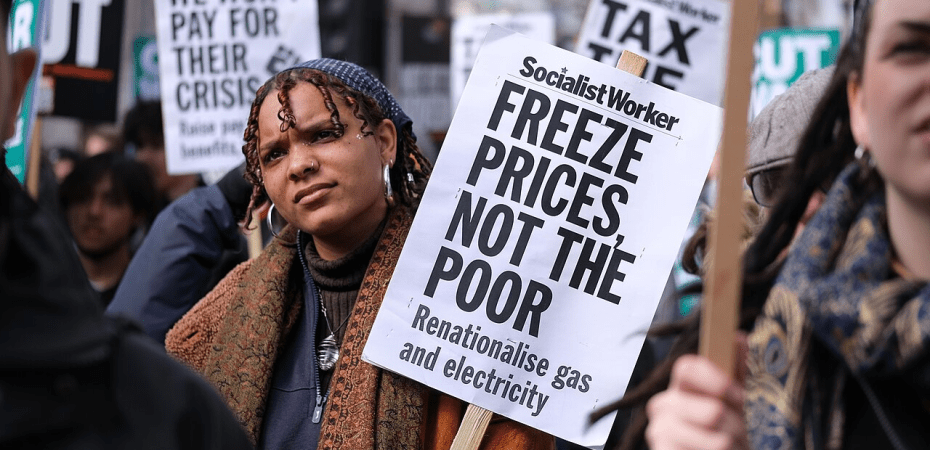
People freeze, companies profit – but more renewables will weaken their grip
FEBRUARY 20, 2026


New official figures from the UK Health Security Agency reveal that more than 2,500 people died in England last winter in connection with cold weather. The National Pensioners Convention joined anti-fuel poverty campaigners in pointing out that the government’s decision to end Winter Fuel Payments for many pensioners was a factor in the new figures.

Simon Francis, coordinator of the End Fuel Poverty Coalition, said the figure laid bare ”the awful reality that far too many pensioners are still trapped in cold, damp homes that put their health and lives at risk.

“Volatile gas prices, poor quality housing and a lack of adequate support have all contributed to this crisis. And in 2024/25 the situation was made worse by decisions to remove Winter Fuel Payments from many pensioners. We warned this would leave vulnerable older people exposed, and these figures show the deadly consequences of failing to protect those most at risk.

“These deaths also underline the need to go further with cold weather support. Cold Weather Payments too often arrive only after prolonged freezing conditions, when the damage is already being done. Support should be automatic and triggered in advance of forecast cold snaps, not weeks later.

“Ultimately, the only lasting way to stop people dying in cold homes is to tackle the root causes. That means targeted financial support for those most at risk, rapid upgrades to the coldest and leakiest homes through the Warm Homes Plan and wider reform of energy pricing so households are not left paying the price of volatile gas markets. No one should be facing another winter where staying warm is a matter of life and death.”

Centrica profits – and why they matter

The shocking statistic came as Centrica, the largest supplier of gas to domestic customers in the United Kingdom, and one of the largest suppliers of electricity, announced its profits. The company reported a sharp fall in profits – but that did not it awarding its chief executive a £3.6m bonus, bringing his annual pay to £4.7m.

Centrica, operating under the trading names British Gas in England and Wales and Scottish Gas in Scotland, is no longer simply a retail supplier, but a major player across gas imports, storage and wholesale markets, with significant influence over the energy system and therefore household energy bills.

Analysis shows the UK will soon be unable to meet heating demand from domestically extracted gas by 2027, making imported gas and the companies that control its supply even more critical to national energy security. Through a strategic import arrangement with Equinor, Centrica effectively controls around 10% of the UK’s gas supply, a share that gives it influence over the market just as the country becomes increasingly reliant on gas imports.

Centrica also has part-ownership of a key gas import terminal, further underpinning its position at the heart of UK gas flows, pricing and security. It is a major player in the market trading and optimisation of energy supply. This means it can profit from the volatility in the energy system. In July 2023, it was reported that market price movement meant that its energy marketing and trading division alone made £1.4 billion in profit during the year.

Centrica remains the owner of the Rough gas storage facility, a key piece of infrastructure that helps balance supply in winter and mitigate price volatility, yet storage has sat below optimal levels in recent seasons, exposing households to supply risks and higher costs, as the firm argues it needs state support.

British Gas, owned by Centrica, was at the centre of the forced prepayment meter scandal, where vulnerable households were switched onto pay-as-you-go energy or faced the threat of disconnection. A formal investigation into the firm is still ongoing, almost three years after it was opened.

Simon Francis again: “Centrica is becoming a profit-hungry gas giant with real leverage over the nation’s energy supply and security. Through gas import deals, control of storage, stakes in key facilities and role in energy trading and price setting, Centrica sits at the centre of a market most of us only feel when the bills arrive.

“This influence matters because the country is becoming more reliant on imported gas as North Sea output declines. In that context, huge annual profits are not an accident, they reflect a system where utility companies extract value from high bills while households struggle, especially as millions live in cold, damp homes. Ministers must ask whether the energy system really works for people, not for the big energy giants that have generated over £125bn in UK profits since 2020.”

Uplift Deputy Director Robert Palmer said: “The latest profits add to the over £9 billion that Centrica has made since the start of the energy crisis in 2020, all while millions of people have struggled to afford their gas bills.

“The British Gas owner wants us to stay hooked on expensive gas, even though the UK has burned most of the gas that was in the North Sea. Regardless of any new drilling in the UK, we will be dependent on gas imports for nearly two thirds of our gas needs in just five years time and almost 100 per cent by 2050.

“British Gas’s new slogan is ‘fair’s fair’, but there is nothing fair about a company extracting excessive profits from households, while also driving the climate impacts we’re all now witnessing, whether that’s worsening flooding or rising food prices.”

Changes to the price cap

The End Fuel Poverty Coalition are also warning consumers to check their bills carefully, as significant changes are being made to the next Ofgem price cap.

Simon Francis said: “Budget decisions to remove costs from bills and Government moves to alter how the Warm Home Discount is paid for, will mean changes across standing charges and unit costs. Even those on fixed tariffs will need to look carefully to check that energy firms pass on the changes and potential savings to these customers.

“Meanwhile, volatile gas prices earlier this year also make the wholesale element subject to uncertainty and may create an upward pressure on bills for those on the standard variable tariff.”

Uplift Deputy Director Robert Palmer said: “The only real, long-term route to lowering bills is to get off volatile gas, whether that’s supplied by Putin, Trump’s America or profit-hungry oil and gas companies.

“It’s not just our bills that will benefit from more renewables, it’s our planet. Already we’re seeing the impacts of climate change caused by our oil and gas dependency and the costs it imposes on everyone, whether that’s flooded homes and businesses or rising food prices.”

Image: https://commons.wikimedia.org/wiki/File:Freeze_Prices_-_Not_the_Poor._(51981171207).jpg Source: Freeze Prices – Not the Poor. Author: Alisdare Hickson from Woolwich, United Kingdom, licensed under the Creative Commons Attribution-Share Alike 2.0 Generic license.

UK

“Burn down the party to inherit the ashes”: the inside story of Labour Together

FEBRUARY 24, 2026

Andrew Coates reviews The Fraud: Keir Starmer, Morgan McSweeney, and the Crisis of British Democracy, by Paul Holden, published by OR Books.

Barely a day goes past without Labour Together appearing in a major news story. The think tank that claims to offer “Bold ideas for a Labour government” is now known not only for factionalism, but for commissioning, amongst other operations, a report which looked into the background of a number of journalists. The author of this book, Paul Holden, who is a member of the National Union of Journalists, was said to be “part of a far-left network… which disseminates pro-Russian propaganda.”

The book looks in great detail at the central role of Labour Together. Headed by the now notorious, and disgraced, Morgan McSweeney, it began preparing for the aftermath of Labour’s 2017 General Election defeat. Investigating “the Starmer project”, the author states that the Labour Together Project had two missions.

The first was to prepare a candidate who would replace Labour leader Jeremy Corbyn. The second, Holden alleges, was to “ensure Labour lost badly” – a view also reported by journalists Maguire and Pogrund. Only this would pave the way for the Party’s renewal.

McSweeney and his allies would “burn down the party to inherit the ashes.” The “conspiracy to destroy Corbynism” was carried out in “utmost secrecy”. This was made possible through hundreds of thousands of pounds in donations, which McSweeney apparently failed to report to the Electoral Commission, “as required by law”.

One aspect above all stands out. The Labour Together Project would, using some evidence of “undeniable antisemitism”, help push a tidal wave of panic about antisemitism in Corbyn’s Labour Party. Labour Together was “at least one hidden hand orchestrating the ‘antisemitism crisis’.” Its vehicles included the ‘astroturf’ bodies, Stop Funding Fake News which was the centre of the rows, and overseen by Labour Together. and the Center [sic] for Countering Digital Hate (CCDH).

This “proxy battle” between the pro-Israel establishment and “non-conformist” and “non-Zionist” Jews in the labour movement ran deep. It did not just serve Labour Together’s factional ends. Used in a mission to “permanently destroy the Labour left”, it ended with expulsions of Labour members. Many will know the personal grief this caused, and the intense arguments that led, in some cases, to the break-up of sometimes decades-long alliances and friendships on the left.

There is a great deal more detail about the Starmer Project. extending from moral panic to the investigation and suspension of Labour Conferences delegates, to stich-ups over candidate selection. It’ not surprising that The Fraud has many enemies, prepared to plough through its lengthy, 541-page narrative, a read not helped by the lack of an index or a glossary for the numerous acronyms.

That a leader with a background in the 1980s radical left could end with a group that exulted in “pushing the heads of left-wingers in school toilets” is bad enough. But Starmer’s increasingly Faragist rhetoric, resented by BAME staff, his “embrace of the Billionaires” and support, with whispered reservations, for Israel’s war on Gaza, overshadow present day politics.

The rickety legacy of Labour’s “loveless landslide” 2025 electoral victory is still playing out. On 8th February 2026, following increasing internal pressures, McSweeney resigned as Starmer’s chief of staff. The May local elections, which are predicted to see a surge in Reform and Green wins, are approaching.

Andrew Coates is a European socialist internationalist who lives in East Anglia. He blogs here.


Backbench Labour MPs call for an independent investigation into Labour Together

FEBRUARY 23, 2026

Ian ByrneJohn McDonnell, Rebecca Long-Bailey and Clive Lewis are among two dozen Labour MPs calling for a fully independent investigation into the allegations surrounding the shadowy Labour Together group in an open letter to Prime Minister Keir Starmer and the Labour Party General Secretary today.

The last week has been dominated by media revelations alleging that Labour Together hired a PR company to snoop on the background of journalists who were investigating legitimate matters of public interest.

 Labour Together paid APCO Worldwide at least £30,000 to “investigate the sourcing, funding and origins” of a story about its undeclared donations before the general election. APCO’s  report included details about a journalist’s Jewish faith, relationships and upbringing. It claimed – without evidence – that the story was based on data hacked from the Electoral Commission, which it linked to Russia.

Today, according to the Sunday Times, the man who authored the report has since been examining an investigations correspondent at the Guardian, who has been reporting on the revelations, as recently as last week, and suggesting – without any evidence – that he too could have been part of a wider pro-Russia campaign.

Last week, the Telegraph reported that Labour Together director Josh Simons “used a law firm to smear a journalist who was looking into pro-Starmer group Labour Together.” It claimed he instructed Mishcon de Reya to warn Telegraph journalists that it had ‘serious doubts about [the] motivation’ of Paul Holden, who was writing a book about the Starmerite think tank, and ‘his credibility should be treated with extreme caution’.”

It further emerged that Simons was also involved in telling security officials that journalist Paul Holden was “living with” the daughter of a former adviser to Jeremy Corbyn. Officials were told by Simons’ team that the former adviser was “suspected of links to Russian intelligence”.

Paul Holden’s book The Fraud lifts the lid on the workings of Labour Together and its role in Keir Starmer’s rise to the Labour leadership. The sources of much of the information collated are Party whistleblowers. As for his personal relationships, they are mentioned in the Acknowledgments at the end of the book – hardly a secret and certainly not a matter for the security services.

Over 100 Labour MPs are thought to have benefited from Labour Together donations to their election campaigns. Many are prominent Starmer supporters, including some Cabinet members.

Last week, the Prime Minister succumbed to backbench pressure and set up a Cabinet Office inquiry into the affair. The problem is that the key Labour Together director Josh Simons at the centre of the allegations is now a minister at the Cabinet Office in charge of the inquiry.

That is why today’s letter from backbench MPs calls for an independent investigation. “Any investigation led or overseen by government departments containing individuals with past or present links to Labour Together risks undermining public trust,” it says.

The letter calls for a full independent investigation, with clear published terms of reference and a commitment that its findings will be made public in full.

Image: https://www.flickr.com/photos/number10gov/54776870025 Creator: Simon Dawson / No 10 Downing Str | Credit: Simon Dawson / No 10 Downing Str Copyright: Crown copyright Licence: Attribution-NonCommercial-NoDerivatives 4.0 International CC BY-NC-ND 4.0 Deed

 UK

One System, Same Pressures

FEBRUARY 25, 2026

Simon Pearson analyses the government’s proposed reform of Special Educational Needs and Disability.

The government says it wants one education system, not two. It has inherited one shaped by scarcity, defensive accountability and broken trust. The new SEND reform tries to redesign how support is delivered. It does not change the conditions the system operates in.

The existing model is adversarial and inefficient. Families fight local authorities for assessments. Schools ration support. Education, Health and Care Plans (EHCPs) function as both lifeline and bottleneck. Councils run deficits. Tribunals expand. Everyone involved knows the process is slow, legalistic and exhausting, yet no one trusts the alternatives. The government acknowledges this and attempts a reset: earlier support in mainstream settings, less dependence on statutory escalation, and a layered system of provision intended to catch need before it hardens into crisis.

The most serious proposal for years

It is the most substantial structural redesign in years. Support is meant to sit at multiple levels inside ordinary schools rather than behind the threshold of an EHCP. Specialist provision is to be embedded more directly in mainstream settings through a new Experts at Hand service, commissioning educational psychologists, speech and language therapists and occupational therapists at local level, available to schools whether or not a child holds an EHCP. The government says an average secondary will receive over 160 days of dedicated specialist time per year. Training is promised. £1.6 billion over three years goes directly to schools for early intervention. Ofsted will inspect explicitly for inclusion. The architecture is coherent and the investment is real.

This is the most serious proposal for SEND in years. It deserves to be recognised as such.

But seriousness is not the same as sufficiency.

The reform assumes mainstream schools can absorb greater complexity: more varied need, earlier intervention, sustained coordination with health and care services. Schools are already operating under pressure from staffing shortages, behaviour challenges, attendance concerns and tight budgets. Whether inclusion becomes real depends less on policy ambition than on whether there is enough time, expertise and stability inside the classroom to make it work.

Inclusion is a material commitment. Smaller classes. Specialist staff working alongside teachers. Time to adapt curriculum and practice. Reliable access to therapists and psychologists. These are not matters of ethos; they are matters of capacity.

The 160 days of specialist time sounds substantial until you consider what a typical secondary school actually carries: dozens of pupils with complex and varied needs, many without EHCPs, managed by staff already stretched across competing demands. Spread across a school year, across a full cohort, 160 days is a start. It is not a transformation.

The reform also sits inside an accountability system that rewards risk management. Performance grades, inspection frameworks and attendance metrics shape how schools behave. A school that takes on high-need pupils assumes institutional risk. That risk affects results, reputation and intake. You can require an Inclusion Strategy. You cannot legislate away institutional self-preservation.

Scarcity sharpens that instinct. Local authorities remain financially exposed, carrying deficits built up across years of rising demand and frozen funding. The government’s investment comes on top of a system already running significant high-needs deficits. Record investment in a deficit-ridden system is not the same as sufficient investment. Health services tied to SEND provision are uneven and overstretched. The Experts at Hand model depends on councils, schools and integrated care boards coordinating effectively. Each of those institutions is already under pressure. A service that relies on three overstretched systems working together is not the same as a service that is simply available.

Trust completes the picture. Phillipson acknowledged directly that EHCPs have become “the only way to get what your child needs.” That is not a bureaucratic failure. It is a confession that the system surrounding statutory provision has already collapsed. Parents escalate to EHCPs because everything beneath them proved unreliable. The reform asks those same parents to trust a new layer of informal provision, delivered by the same overstretched schools, inside the same underfunded system. That is a significant ask.

Wait four years

It is made harder by the timeline. The new framework does not come into force until 2030. Parents fighting for their children now are being asked to wait four years for a system that has not yet been built, on the basis of a promise the current adversarial culture has given them little reason to trust. The press release is written as though the reforms are already happening. The gap between that language and the operational reality is where families will live in the meantime.

The detail of what changes for whom makes the trust problem concrete. Under the new system, parents unhappy with an Individual Support Plan appeal first to the school, then to the local authority or the Department for Education. They do not get access to an independent tribunal. The one mechanism that has consistently forced provision to happen is removed for the majority of SEND children. Where EHCPs are retained, tribunals will no longer be able to direct which school a child attends, shifting that power to the councils whose financial exposure the reform is partly designed to reduce. The system is projected to produce around 270,000 fewer EHCPs than at peak, transferring that cohort from statutory protection to a framework with no independent legal route when things go wrong. Parents are not being asked to trust a new system on faith alone. They are being asked to give up the only lever that worked.

The reform is not uniformly regressive. Around a million pupils currently have identified special needs but no EHCP and very little reliable support. For that group, a statutory right to assessment and access to commissioned specialists is a genuine advance. But the children moving from EHCPs to ISPs at transition face a different calculation. They lose access to independent tribunals and enter a school complaints system instead. Families who spent years securing statutory protection because informal provision failed them are being asked to accept a weaker guarantee in its place. The reform extends something meaningful to one group while quietly reducing the legal floor for another.

Future cohorts will encounter a further change in how need is defined. EHCPs will be granted on the basis of standardised specialist provision packages, modelled on NHS clinical pathways. Consistent thresholds may reduce the postcode lottery. But clinical pathway models can also exclude children whose needs are complex and do not fit standard categories. The detail of how those thresholds are drawn will matter as much as any funding commitment.

These pressures are not separate. They reinforce one another. Accountability frameworks push schools to manage risk. Scarcity makes that risk harder to absorb. Parents, aware of both, escalate to secure certainty. Escalation increases tribunal use and local authority deficits, deepening scarcity. The cycle predates the current system and will outlast this one unless the underlying conditions change.

The White Paper addresses process with care. It is less direct about the spending decisions that produced the crisis. SEND provision sits at the intersection of education, health and local government. All three spent a decade under fiscal restraint. Services cut. Specialist expertise thinned. Waiting lists lengthened. Schools absorbed the consequences.

The reform promises new funding and a different delivery model. The test is whether those resources are sufficient to alter day-to-day incentives inside the system, not simply to support a new framework on paper. If capacity does not rise alongside expectation, schools will still be asked to manage complexity they cannot securely carry.

Reactions

The Council for Disabled Children, representing over 300 organisations in the sector, welcomed the scale of the vision while asking the question the document does not fully answer: how will accountability work when the new model fails to deliver? That question is not hostile to the reform. It is the reform’s central problem. ISPs will carry legal weight, but the enforcement routes remain unclear. Parents who have spent years learning that informal assurances do not hold will want to know what recourse they have when a school’s Inclusion Strategy turns out to be aspirational rather than operational.

Helen Hayes, the Labour Chair of the Education Select Committee, refused to give the measures her wholehearted support, saying she was looking for cast-iron guarantees that children’s rights would be strengthened rather than eroded. If the government cannot satisfy its own Select Committee Chair on that point, the accountability gap is not a detail to be resolved in consultation. It is the fault line the entire reform sits on.

It is worth noting what the alternatives look like. Reform UK and the commentary that surrounds it treats rising SEND numbers as a symptom of ideological capture rather than genuine need: the idea that diagnosis has been inflated by therapeutic culture, parental gaming or ideologically motivated professionals rather than by a real increase in children requiring support. That framing is not just wrong. It is actively harmful, because it treats a public health and educational reality as a culture war target. The children showing up in classrooms with unmet needs did not invent their difficulties to inconvenience anyone. The professionals identifying those needs are not engaged in a political project. Dismissing the scale of demand does not reduce it. It just means more children wait longer for support that should already be there.

The Conservatives present a different problem. They built the current framework through the 2014 reforms and presided over a substantial increase in EHCP provision. But they created a system and then starved it of the resources it required to function. The deficits local authorities are now carrying, the waiting lists, the thinned-out specialist services: these are the direct consequences of a decade of underfunding a framework the Conservatives themselves designed. The failure is not one of intent but of political will. They built the architecture and removed the foundations.

Neither position takes the scale of the problem seriously. Reform UK denies the need exists. The Conservatives acknowledged it and then refused to fund it. That is the political landscape this reform is entering, and it matters, because the case for getting this right has never been stronger or less contested from any direction that counts.

Will it work?

This is the best SEND proposal in years. It is also one that relies too heavily on a system already in crisis. The investment is genuine. The intentions are serious. But the reform asks schools worried about results, councils managing deficits and health services running on reduced capacity to collectively deliver something none of them could manage before the money arrived. That is not a reason to dismiss it. It is a reason to be precise about what it can and cannot achieve.

None of this makes the reform insincere. It reflects a genuine attempt to reduce conflict, intervene earlier and integrate support. But design cannot override structure. A system shaped by austerity, performance pressure and eroded trust will reproduce adversarial behaviour under new labels unless its underlying conditions shift.

The likely outcome is not failure in any dramatic sense. It is something more familiar: some processes improve, some conflicts ease, but disputes shift rather than disappear. Parents keep escalating. Mainstream schools keep struggling quietly. The adversarial culture finds new forms because its causes have not changed.

The government has done the serious work. It has looked at the system, named what is broken, and put money behind a different model. That is more than its predecessors managed. But the test is not the announcement. It is what happens in 2030 when a parent in a poorly resourced authority finds their child’s ISP is not being delivered and discovers the tribunal route is closed. That moment will come. How the system responds to it will tell us whether this was real reform or a reorganisation of the deckchairs.​​​​​​​​​​​​​​​​

Simon Pearson writes at Anti-Capitalist Musings on Substack, where this article first appeared.

Image: https://www.flickr.com/photos/number10gov/53966056604 Orpington, United Kingdom. Prime Minister Keir Starmer and Bridget Phillipson, Secretary of State for Education visit Primary school children in Orpington. Creator: Simon Dawson / No 10 Downing Str | Credit: Simon Dawson / No 10 Downing Str. Copyright: Crown copyright. Licence: Attribution-NonCommercial-NoDerivs 2.0 Generic CC BY-NC-ND 2.0 Deed

Ruthless, cruel and destructive: Trump’s purge of America’s public servants


FEBRUARY 26, 2026

Sasha Abramsky introduces his new book American Carnage: How Trump, Musk, and DOGE Butchered the US Government.

In January 2025, with a triumphant, and wrathful Donald J. Trump returning to the White House, Elon Musk’s Department of Government Efficiency (DOGE) was unleashed on the federal civilian workforce. Its tech-savvy shock troops had a mission: to either fire, or drive into resignation or retirement, hundreds of thousands of workers, and to bludgeon entire agencies into a state of terminal decline.

Uninterested in the niceties of constitutional government – including the fact that “departments” have to be created by Congress, which didn’t occur in the creation of DOGE, and that agencies and departments brought into being by Congress can only be killed off by that branch of government – they set to work on their wrecking ball expedition. Within months, one in seven federal workers had left government employ.

The parts of the federal government that worked on overseas aid, public health, workplace protections, education policy, environmental issues – in particular relating to climate change – and racial and economic justice all found themselves in the DOGE crosshairs, their employees essentially labeled by the most powerful people on earth as “the enemy within,” and their work denigrated as being un-American.

As the DOGE purges accelerated, I began putting out feelers to find federal workers who would talk to me about what was going on in their workplaces– and, by extension, how their lives were being upended. In the months that followed it rapidly became clear that DOGE was less to do with efficiency – after all, if Trump and Musk really wanted to save the US taxpayers money, they wouldn’t have thrown their muscle behind an unprecedented, and extraordinarily costly, expansion of ICE as well as a massive military buildup – and more to do with destroying the parts of the professionalized civil service that might have acted as braking mechanisms against Trump’s authoritarian power grab and extreme ideological agenda.

A year into Trump 2.0, large parts of the American civil service have been destroyed, while other parts have been coopted to implement not only MAGA’s broader political agenda but also Trump’s vengeance campaign against individuals who investigated him or took part in efforts to understand what had happened on January 6th, 2021. My book, American Carnage: How Trump, Musk, and DOGE Butchered the US Government, explains that story, focusing on eleven individuals, across eight government agencies, as they were buffeted by the hurricane force winds unleashed by Trump and Musk.

Some of them, like USAID staffer Taly Lind, were senior figures who had been in government service for decades. Others, like the young man I wrote about who had gotten a job, fresh out of college, with the Internal Revenue Service answering phone calls from taxpayers needing advice, were right at the start of their careers. Still others, such as Hannah Echt – who agreed to speak to me in her capacity as an American Federation of Government Employees union member and steward — had carved out niche areas of expertise only to suddenly find that the work they did was no longer valued by the United States government.

Ever since her father had taken her to his place of work at the National Institute for Occupational Safety and Health, Echt had always wanted to work at NIOSH. Other kids dreamed of being astronauts or firefighters; Echt desired nothing more than to be an industrial hygienist, investigating dangerous workplace conditions and coming up with solutions that would help save workers’ lives. As a young adult, she realized that dream, conducting workplace evaluations at places as diverse as railyards, construction sites, and cannabis processing facilities. Then, in early 2025, everything ground to a sudden halt. Following Donald Trump’s January inauguration and DOGE’s onslaught against federal employees, her Cincinnati office’s “funds were frozen, travel was paused, and external communications, including our ability to publish and present our findings, were stifled.” Months later, large parts of the NIOSH operations were still non-functional and she and all of her colleagues were in the fight of their lives to keep their agency, and their jobs, above water.

The deep freeze that large parts of the US government had been plunged into was anything but accidental. The DOGE project was to create a deliberately manufactured dysfunction that would encroach into pretty much every corner, except those harboring the burgeoning security and anti-immigrant apparatus, of the federal government.

At the Consumer Financial Protection Bureau, which had long been loathed by conservative Republicans, workers were bombarded with one extraordinarily demeaning email after another. On February 8th, they were directed to “halt several classes of work unless ‘required by law’ or expressly approved by the Acting Director.” They were ordered by that acting director to “cease any pending investigations” and not to open any new ones, to “cease all supervision and examination activity,” and to “cease all stakeholder engagement.” In short, they were mandated to stop doing everything that their agency had been created to do.

Two days later, the acting director followed up by telling the CFPB staff that the headquarters building they worked in was closed and that “employees should not come into the office. Please do not perform any work tasks… employees should stand down from performing any work task.” But eighteen days after that, having been told that they couldn’t work they were then ordered to fill in the Musk-mandated questionnaire listing “5 bullets describing what you accomplished last week and cc your manager. Going forward, please complete the above task each week by Mondays at 11.59pm ET.” It was, quite simply, Orwellian: having been ordered not to carry out their duties, or even to show up to their place of work, they were now being forced to justify their continued employment by saying what work accomplishments they had achieved each week.

The opening act of Trump 2.0 was ruthless and cruel, ultimately destroying the careers and financial stability of hundreds of thousands of civil servants. It was also a prelude to a much farther-reaching breakdown of basic governing norms. In sabotaging large parts of the federal government, DOGE set the stage for a pervasive use of humiliation and of extra-constitutional raw power grabs as tactics to bring perceived enemy institutions and individuals, both at home and overseas, to their knees.

In 2024, Trump had promised to be his supporters’ sword of justice and their retribution. In Trump 2.0 he has sought to make that a reality, to burn to the ground a system he views as having cheated and harassed and attempted to imprison him, and that his supporters view as being hopelessly entangled in a globalist vision they no longer want a part of.

By narrating the story of DOGE’s purges, and of the workers victimized in these attacks, my book ends up telling a much larger tale: the unprecedented saga of the world’s most powerful nation turning in on itself and cannibalizing the very institutions that have undergirded that power – and the reputation that accompanied it – for so many decades.

Sasha Abramsky is a freelance journalist and author of several books. American Carnage: How Trump, Musk and DOGE Butchered the US Government is published by OR Books.

Sasha Abramsky will be talking about his book at two events in London next month, firstly at the Boston Room at George IV, 185 Chiswick High Rd W4 3DF on Sunday March 15th at 7pm, tickets here; and secondly at  Burley Fisher bookshop, 400 Kingsland Rd, London E8 4AA on Wednesday March 18th at 6pm, tickets here.


UK
Gorton and Denton by-election Today

The priority is stopping the far right

FEBRUARY 26, 2026

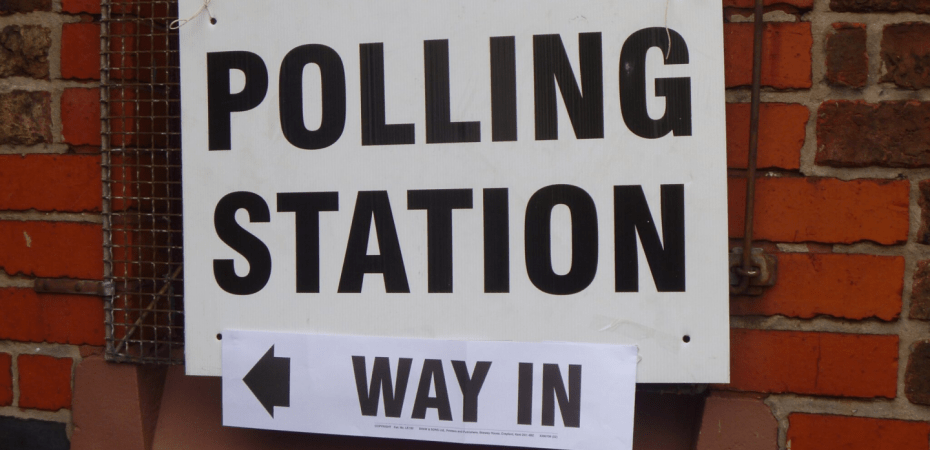
Sally Hayes reports from Gorton and Denton on today’s crucial by-election.

For the past three weeks, the area I live in has been the centre of a much-reported and discussed by-election in Gorton and Denton. I don’t think there is a constituent who is unaware of it. Now writing as voters go to the polls, there is still real doubt as to the outcome and huge numbers of people who are either not saying or not voting, perhaps 30%.

The risks facing us are extreme. We are in danger of a far right Reform MP being elected through a combination of people who have been treated with contempt for years, people who will vote with their feet, and the prospect of a large Green and a smaller but significant Labour vote. And this Reform candidate is the high profile extreme far right Matt Goodwin, a pundit from GB News, supported by the far right extremists who have been a feature of the campaign.

The permitted ‘retirement’ of  the disgraced Labour Andrew Gwynne MP which led to the vacancy, together with the subsequent blocking of Andy Burnham personally by Keir Starmer, would surely in itself have caused many local Labour voters to reject a party where their MP showed the depth of his and others’ contempt for their constituents, and the leadership nationally have continued to do so.

This is an area where the Labour majority at the last election was over13,000 and roots in the labour movement run deep, but it is also one with high levels of poverty and election turnout last time was low at 47%.  We have seen the complacency  and contempt shown towards local people by some of the councillors within Tameside Council covering Denton along with their MP, which was exposed on their “Trigger me Timbers” WhatsApp group. Six Labour councillors in Greater Manchester were suspended over offensive messages, which allegedly included racism, anti-Semitism, sexism, hate speech and even death threats towards constituents. It  was genuinely shocking.

In the Manchester wards where I live, the demographics are different. The Labour Group backed moving several wards, as proposed by the electoral boundaries commission, into a newly created constituency with boundaries that no longer made any sense. This was partly to ensure that left Labour branches were split off from Manchester Central and Gorton constituencies.

Longsight ward had previously caused the biggest upset in Manchester Labour by narrowly voting in Shahbaz Sarwar, a Workers’ Party candidate, in an area with a high Muslim population. This was in a ward dominated for many years by a small group which rarely met as a Labour branch and conducted its real business behind closed doors.

I personally left the Labour Party a year ago after finally despairing that the thousands of people on the left who built the Party and elected Jeremy Corbyn as leader would be drawn back into it again, and when the appalling treachery of the right finally became too multi-faceted and too grave for it to be possible to continue to work for internal change, in my view. It was not an easy choice and the absence of a truly labour movement alternative continues. Building a left within the Party now appears to be such a long, protracted and doomed option set against the scale and urgency of the task. The future creation of a left labour movement party attracting mass support and with union affiliation remains a goal we are all aiming for, however we build it. Conversations between friends and comrades in our community centres on the big question: are Labour really ahead in seeing off Reform?

But is that the case? Young people, students, climate change activists and thousands more have been drawn to the Green Party in this vacuum. While personally not a member, I recognise they have brought together hundreds of activists into a well organised campaign with a real chance of winning the seat. It is by no means a shoo-in, but the parts of the constituency with high levels of professionals, students and Muslim voters are a large part of the electorate and there is also Green support across the rest of the constituency. 

Labour has the history, the data, and retains loyalty for some, and they have brought in Andy Burnham to ensure he is seen backing the campaign, along with London Mayor Sadiq Khan. This week, Keir Starmer also visited.

Reform have been largely absent other than through mailouts. Goodwin has used GB News and some far right heavies on occasion but has otherwise been invisible, other than to his own supporters, even failing to appear at local hustings. With no high-profile media coverage and a lot of enthusiasm from supporters coming from Sheffield, Liverpool and further afield, Greens have saturated the area with leaflets, door knocking, a bright, personable, local candidate and tons of energy.

Polling will end today. But the ramifications of this election will be felt locally and pundits will extrapolate endlessly. For most of us the issue is what does it mean to have a united front against the far right?  Labour is almost certainly running third, but continue to generate material showing they are beating the Greens, based on a discredited survey of 51 people before the by-election was even announced.

Huffington Post reports: “Labour is embroiled in a dirty tricks row over a campaign leaflet featuring a ‘fictitious’ tactical voting company. It says: ‘The Tactical Choice says Vote Labour. Based on a new prediction made in the last 24 hours we are recommending voting Labour.’ However, no organisation called ‘Tactical Choice’ appears to exist. The offending literature has been put through voters’ doors on the eve of Thursday’s crunch Gorton and Denton by-election.”

“Bookies make the Greens odds-on favourites, followed by Reform and then Labour,” says the report, adding, “ Two real tactical voting organisations – Tactical.Vote and StopTheTories.Vote – have already recommended voters back the Greens to stop Reform winning.”

In 2017, a friend in the Green Party at the time persuaded his local party to not stand a candidate against a left Labour candidate. The result was that the Labour candidate won by 600 votes. He joined the Labour Party in that period. In the following election that agreement was not continued and the Labour MP lost by a similar number of votes to the Tories. The friend subsequently was suspended by the Labour party for being too close to the Greens and after no progress in appealing his suspension he left the Party. Right now, maintaining the position of the Starmer cabal has clearly been shown here to be more important than the damage being done to us by the election of the far right.

Sally Hayes is a local activist and voter in the Gorton Denton by-election.

Image: Creator: rawpixel.com | Credit: rawpixel.com. CC0 1.0 UNIVERSAL Deed

Jeremy Corbyn backs the Green Party in the Gorton and Denton by-election


Olivia Barber 
24 February, 2026 
Left Foot Forward 


'There is only one way we will defeat Reform: together.'


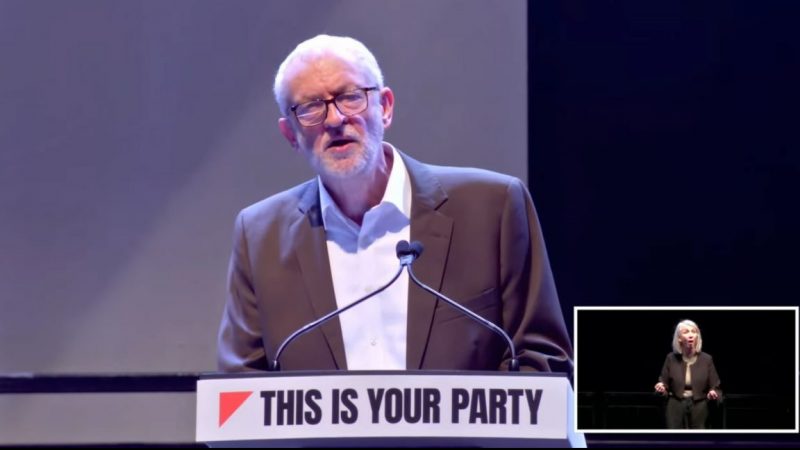
Former Labour leader Jeremy Corbyn has thrown his support behind the Green Party candidate Hannah Spencer in the Gorton and Denton by-election this week.

Voters in the Greater Manchester seat will go to the polls this Thursday 26 February.

Corbyn has joined fellow Your Party co-founder Zarah Sultana in backing the Greens as a way of defeating Reform UK’s candidate Matt Goodwin.

In a post on X on Sunday, Corbyn wrote: “There is only one way we will defeat Reform: together. That’s why I’m backing the Greens in the Gorton and Denton by-election.

“We are a mass movement of all ages, backgrounds and faiths — united in a belief that things can, and will, change.”

An Omnisis poll carried out last week put the Greens on 33%, Reform on 29% and Labour on 26% in the by-election.

It has, however, been criticised for its small sample size. The survey polled 452 voters, but excluding undecideds, only had 265 respondents.

The Greens also remain the bookmakers’ favourite to win the contest.

Olivia Barber is a reporter at Left Foot Forward


Hannah Spencer: ‘We need more people who do jobs like mine in Parliament’

20 February, 2026 
Left Foot Forward 

The Greens' by-election candidate speaks to Left Foot Forward about why Parliament needs more working class MPs and her mission to restore trust in politics


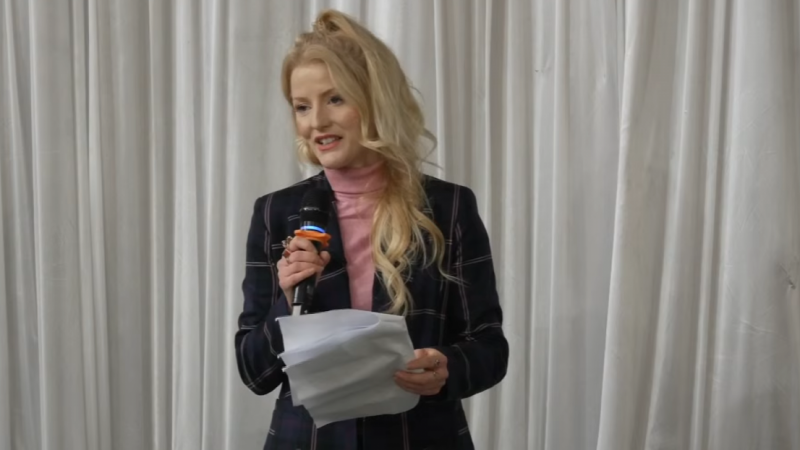
Hannah Spencer, a working class plumber and the Green Party candidate in Gorton and Denton, says “we need more people who do jobs like mine and from backgrounds like mine” in Parliament.

In an interview with Left Foot Forward ahead of the Gorton and Denton by-election next Thursday, Spencer said that the public is used to “stuffy” people from “the elite and establishment” representing them.

However, she said that if she is elected as the Greens’ first MP in the North of England, as a woman with a trade and who is working class, it “will show absolutely everybody that there is a place in politics for them and I think that will be how we start to change politics”.

Spencer recounts how one voter said to her, “He said, ‘I never thought anyone like you could do that,” she said she responded: “anyone like you as well, it’s not just me, it’s everybody”.

Misinformation and restoring trust

Spencer wants to help restore people’s trust in politics by being “honest with people about what we can and can’t do together. We’re not out there selling people this impossible dream”.

Despite prioritising honesty, Spencer says that during the campaign a fair amount of “misinformation” has been circulating about her and is affecting who people decide to vote for.

She says rumours have spread in Facebook groups claiming that she lives in a £3 million gated community house with her multimillionaire husband, who is a chief executive Astrazeneca.

“None of those things are true,” she adds.

Spencer says that “when things are presented to people in a really believable way, that’s affecting their decisions and it’s a really alarming shift in democracy how rampant that misinformation is spreading”.


‘Money laundering takeaways’

The Telegraph published an article saying that Spencer had once posted a comment online saying how glad she was to be moving out of Levenshulme, which is in Gorton and Denton, due to it being full of “money laundering takeaways”.

Labour produced a video saying that her comments were “dogwhistle” and that the Greens are against the community.

The Green candidate, who originally hails from Bolton, said she is happy to be held accountable for her comments and that she has been open about having lived a challenging period of her life in the constituency.

Spencer went on to say that “There is nothing wrong with aspiration, but aspiration to leave an area is something we’ve all been made to feel.”

She said that people end up having to leave their communities, where they have roots, because they’re not being invested in.

“Life expectancy is the starkest thing, like moving to a different postcode will add years to your life, and I don’t want that for me and I certainly don’t want that for anyone else,” she said.


Reform’s claims about Gorton and Denton

During his campaign, the Reform candidate and GB News presenter, Matt Goodwin, has complained about anti-social behaviour in Gorton and Denton and accused politicians of allowing the area to fall into a state of “managed decline”.

Goodwin also claimed he’d seen children who should have been at school out in the street while campaigning.

Spencer noted that Gorton and Denton has some of the highest child poverty rates in England and Wales, with 12,100 children in the constituency living in poverty.

The Green candidate said she visited a youth centre called HideOut yesterday, which runs activities and provides opportunities to young people.

Spencer said that children are growing up “in really difficult circumstances” and in poverty, and slammed Reform for wanting to reinstate the two child benefit limit so they can reduce the cost of a pint by 5p.

She said of Reform, “They’re not at all interested or bothered about the life chances and circumstances of kids in our constituency, because they’re not coming up with solutions to make life better.”

She said: “We can all have a moan about things, but I’m actually out here trying to come up with ways to fix things.”


Spencer’s pledges to Gorton and Denton

If elected next Thursday, Spencer says she will hold Labour to account on nationalising public services, and better access to the NHS, including free prescriptions, dentistry, eye care and hearing aids.

With her plumber hat on, she wants to focus on insulating people’s homes properly due to help reduce people’s bills and help the climate.

The Greens are currently the bookmakers’ favourite to win the by-election, with Reform second and Labour third.

Asked whether it was really fair to say Labour is out of the running in this by-election, as the Greens have claimed, Spencer said: “It was clear from what people were saying on the doorstep from the outset, we weren’t having to do much convincing.”

She added that “People were sort of coming up to tell us that they couldn’t vote Labour again.”

Left Foot Forward has contacted Labour’s candidate Angeliki Stogia to request an interview.


No more double standards on air pollution

FEBRUARY 26, 2026

In the TUC Year of Climate Action, Graham Petersen explains why it’s now time to act.

As each year passes, the need to address the risks caused by climate breakdown becomes more urgent. In the case of air pollution, the existing cocktail of toxic substances, is now made worse by the impacts of climate risks like extreme heat.

The World Health Organisation (WHO) has identified air pollution as the greatest environmental risk to health in the UK. Despite this, the standards to protect workers from these dangers are totally inadequate. 2026 is the TUC Year of Climate Action. We need a campaign that highlights the dangerous levels of pollutants in many workplaces, the poor occupational exposure limits, and the lack of enforcement of even these inadequate standards.

One opportunity to voice these concerns is via the Environmental Audit Committee Inquiry on “Air Pollution in England”. The Trade Union Clean Air Network (TUCAN) has published a submission to the Inquiry (closing date March 3rd 2026), TUCAN Campaigns – Greener Jobs Alliance which explains these double standards.

In summary our main points are:

  • Public and Occupational Health – The focus of air pollution research and policy development has been on public health, particularly vulnerable groups like children. While this is vital, it has been done at the expense of largely ignoring the impact on workers. Workers are a particularly vulnerable group, but you would not think so if you delve through local, regional and national climate resilience and air pollution policies. This is even though many workers are at greater risk – exposed to more dangerous substances, higher pollution levels, and for longer periods of time. Worker protection is barely mentioned, if at all. When it is, the standards are not fit for purpose. The HSE Workplace Exposure Limits set limits for Particulate Matter (PM2.5) that are hopelessly out of date. How is it that a worker can be exposed to over 250 times the levels of PM2.5 – respirable dust -compared to a member of the public in an outdoor setting? When compared to the WHO 5 µg/m³ standard the difference is even more stark – the HSE standard is 800 times more than the WHO one.
  • Outdoor and Indoor Air – There has been much less research and policy development on indoor air. This is not just the view of TUCAN: it is borne out by the Chief Medical Officer’s Report: “While there has been extensive consideration of, and effective plans for, many aspects of outdoor air pollution, the air we breathe indoors has not been considered as widely. As outdoor pollution has decreased, and is set to decrease further, the relative importance of indoor air pollution increases.”Given that people can spend up to 90% of their time indoors, this takes on even more importance. In the case of workers, this can often mean high exposures in poorly ventilated workplaces.
  • Individual and Corporate Responsibilities – The Government is failing to place sufficient duties on businesses. Most air pollution is directly or indirectly linked to economic activity. A study of the latest Department for Environment, Food & Rural Affairs (Defra) statistics shows that industrial and commercial direct emissions from industry / energy sectors account for significant levels of the main pollutants – Particulate Matter (PM 2.5 and 10), Ammonia, Nitrogen Dioxide (NO2), Volatile Organic Compounds (VOCs), and Sulphur Dioxide (SO2). Once you include the indirect emissions from the other sectors, for example, road transport and people travelling to work, it is considerably higher. Over two-thirds of the six air pollutants identified in the Defra stats are directly or indirectly work-related. Yet the emphasis in air pollution policy continues to be on individual behaviour with limited references to new business obligations.

Let’s have some air pollution action

Unions and progressive political parties need to forge a campaign that includes:

  • Implementation of the WHO Air Quality Guidelines by 2030
  • Support for the Clean Air (Human Rights) Bill
  • Amendments to health and safety legislation to place a duty on employers to conduct air pollution and climate risk assessments. These assessments to be conducted in conjunction with workers and recognised trade unions
  • Amendments to occupational exposure standards to bring them in line with outdoor public health standards
  • Provision of the necessary funding and powers for the statutory bodies to monitor and enforce improved air pollution standards.

TUCAN works with the Healthy Air Coalition to make the case for change. We also work with local and regional authorities to support initiatives. For example, in London we are working with the Greater London Authority to include air pollution risk assessments in the Mayor’s Good Work Standard for employers. We provide resources for unions to support union engagement. Please get in touch using the form on the web site if you want further information.

Graham Petersen is a founding member of the Trade Union Clean Air Network (TUCAN). It was set up in 2019 and 15 national trade unions, as well as other organisations, have endorsed its Clean Air Charter. He has written a range of climate change publications for the TUC and for his own trade union, the University and College Union, where he was previously their Environment Co-ordinator. He has also represented Education International, the global union federation of over 30 million workers in the education sector, at UN climate and air quality events.


UK Charities pull together to highlight the link between climate issues and poverty and hunger

21 February, 2026 
Left Foot Forward

“Environmental change doesn’t put us all in the same boat. It just worsens the storm you’re in.”


Charities have joined forces to spotlight the deepening connection between climate change, poverty and hunger, warning that environmental action must go hand in hand with social justice.

Food bank charity Trussell has partnered with Friends of the Earth to highlight that a greener future is not only vital for the planet but can also play a decisive role in reducing poverty and the need for food banks. Far from being separate crises, climate breakdown and economic hardship are increasingly intertwined, and require shared solutions.

To better understand this link, Trussell commissioned a report drawing on its own research, national data and the testimonies of people with lived experience of poverty who rely on food banks. The ‘Environmental change, hunger and hardship in the UK’ report examines how environmental challenges are affecting people facing hunger and financial insecurity, and argues that green policies must prioritise those most at risk.

One key finding is that climate change is already driving up the cost of essentials. Rising food prices and soaring energy bills are placing additional strain on households that were already struggling. Environmental shocks, from extreme heat to severe storms and flooding, bring sudden, unexpected costs that low-income families are least able to recover from.

The review concludes that insecure work, substandard housing and gaps in the social security system leave people especially vulnerable to climate-related impacts. For instance, flooding can cause damage to homes, yet those on the lowest incomes are less likely to be able to afford adequate insurance. As climate change increases the frequency and severity of such events, the financial risks multiply, particularly for those already relying on food banks.

The report also finds that the most vulnerable groups, including disabled people, carers and those experiencing mental health challenges, face compounded difficulties as environmental pressures intensify.

People living in poverty who contributed to the study want action that protects the environment and reduces poverty. They call for their voices to be heard in decision-making, for the fair distribution of costs and benefits, and for energy cost support.

In the report’s conclusion, Trussell states: “The move to a greener economy can help end the need for food banks but only if it’s fair. Policymakers must ensure that environmental action tackles poverty, not deepens it.”

Writing about the report in the Big Issue, Helen Barnard of Trussell and Mike Childs of Friends of the Earth note how climate impacts are already being felt. One interviewee described how flooding ruined a child’s bed. Unable to afford a replacement, the family resorted to piling up soft clothes to create somewhere to sleep.

As they write: “Environmental change doesn’t put us all in the same boat. It just worsens the storm you’re in.”

The charities are urging policymakers to make homes more resilient to extreme weather, reducing the damage caused by flooding, damp and heatwaves. They argue that investment in renewable energy, such as solar panels, can cut energy bills, while improving access to green spaces can cool urban areas, boost mental health and strengthen communities.

They call on decision-makers to connect the dots between climate change and poverty, and to commit to a fair transition to a greener economy. That means creating secure green jobs, improving public transport, expanding affordable renewable energy, upgrading housing to be energy efficient, and protecting and enhancing green spaces.

Ending the need for food banks and tackling the climate crisis are often framed as separate challenges. But as these charities argue:

“Ending the need for food banks and tackling the climate crisis are challenges that can have shared solutions. It can be a win-win.”