Wednesday, May 05, 2021

Ford: It's about time male politicians in Alberta recognize the value of universal daycare

Author of the article:Catherine Ford

Publishing date:May 05, 2021 • 
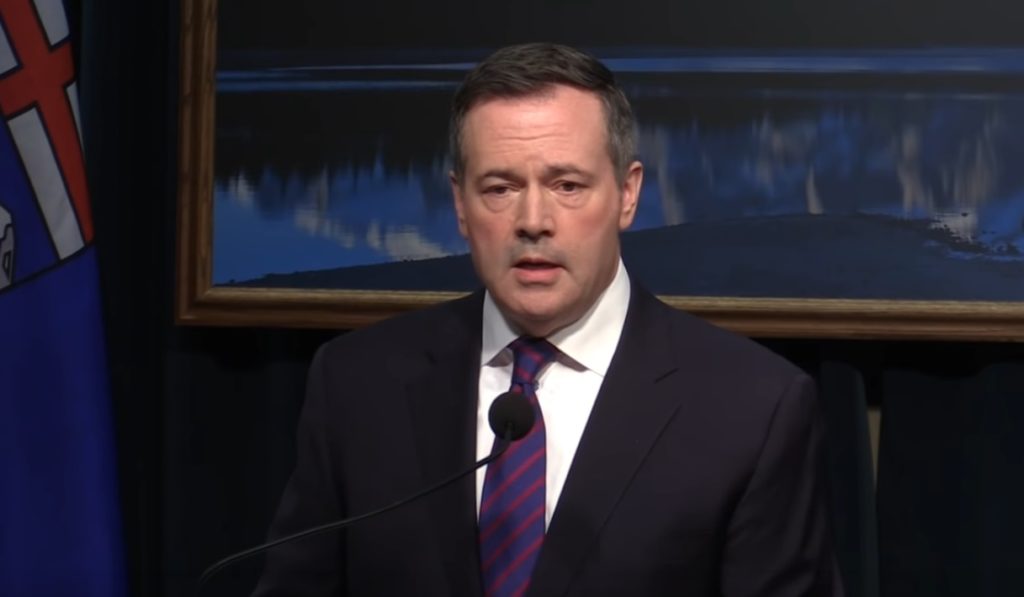
Premier Jason Kenney would contribute greatly to the province's well-being if he accepts universal daycare, writes Catherine Ford. PHOTO BY CHRIS SCHWARZ/GOVERNMENT OF ALBERTA

Child care is fundamental to Canada’s economy. Such a statement of the obvious should not have to be written. But could someone please tell Alberta Premier Jason Kenney that fact?

Maybe, just maybe, a middle-aged (he’s 52) single man without children would naturally be unaware of the advantages of having licensed daycare for other people’s children. Yeah, right. (Cue the sarcasm.

He apparently wasn’t paying any attention to what has been revealed during this pandemic, that being a working mother isn’t for the faint of heart or skint of wallet. My friend, whose daughter has two children and a full-time job, says the cost of childcare in Calgary — and likely across this country with the exception of Quebec — can be more than monthly mortgage payments.

I’d have a lot more respect for any man and, in particular, for any male politician, who recognizes the importance of early childhood education and supports a universal concept. Like universal health care, it doesn’t start in kindergarten, it starts with the first words said to a baby and continues throughout childhood, just the same as health care. That’s why warehousing the very young in unlicensed and unregulated care homes is not satisfactory. At the moment, though, that’s sometimes the only choice available to working mothers.

It’s strange that experience doesn’t seem to count. I remember the on-site daycare at the Calgary Herald and what a benefit it was to employees with children. (Truth be told, it was also a boon to the rest of us whose daily jobs were lightened and heartened by the sight and sounds of small children playing outside our office windows.)

A made-in-Ottawa plan, outlined in the recent budget might not be the ideal way to start, but it would be a start. To roll out $10-a-day childcare within five years — at an estimated cost of $30 billion — will take compromise and compliance on the part of the provinces. Kenney had already dismissed what he refers to as “institutional” care, suggesting it would only serve the urban elite and unionized workplaces.

Curiously, I am assuming the premier actually supports the “institution” of schools where children are sent most weekdays during the school year, whether they wish to go or not.

Further, Kenney has already hinted he believes the federal government is leaving too many families out of the equation: “rural families, shift workers and many Indigenous people,” he said. And what about people who choose to stay home with their children, don’t they deserve equal consideration, some cash maybe? In a word: No. If you make that choice, if you can afford to live on one income, good for you. But the plan is not to provide for the well-off middle class, but to provide support for those who cannot make that decision.

Scalded cats have already weighed in on the gaps and problems. But I side with one of the Famous Five, Nellie McClung, on this: “Never explain, never retract, never apologize. Just get the thing done and let them howl.”

My interest in the subject is simple: I am an elderly woman who has never raised children, but I know the success of the adult rests on the success of childhood. I‘m a curious and vocal adult because, among other advantages, my parents sent me to the Calgary Montessori School at age four.

In other words, I have no skin in this game and neither does the premier — but the care of children should not be just a family’s decision, but the collective force of society. We can’t afford, literally, to allow marginalized and disadvantaged children to be left out and down in our economy. Their success starts with affordable, equitable childcare.

The suggestion that cash in hand so parents can spend it on whatever version of childcare they can find is beyond stupid. It reminds me of nothing less than the outrageous Alberta Prosperity program when then-premier Ralph Klein decided to waste about $1.4 billion of an estimated $8.5-billion surplus by sending out $400 cheques to every Albertan, including children. Imagine if he had decided to use that money to support universal early childhood education. But that’s not the populist’s way; that’s not the right-of-centre way. It didn’t save Klein’s job and Kenney’s popularity is heading down the same rabbit hole.

Catherine Ford is a regular columnist for the Calgary Herald.

THE ONLY NON TORY MP IN ALBERTA
Kenney under fire during Commons emergency debate on Alberta's COVID-19 crisis

OTTAWA — Alberta's legislature may have been silenced but its partisan warfare has relocated to the House of Commons as MPs hold an emergency debate tonight on the province's soaring number of COVID-19 cases.

© Provided by The Canadian Press

Edmonton New Democrat MP Heather McPherson requested the debate and is using it to blast what she calls Alberta Premier Jason Kenney's disastrous mishandling of the health crisis.

She says the "stumbling and bumbling" of Kenney's government has led to the biggest health crisis in the province's history.

But she's also blaming the federal Liberal government for not doing enough to help, alleging that Prime Minister Justin Trudeau would rather watch Alberta burn than help Kenney.


This report by The Canadian Press was first published May 5, 2021.

The Canadian Pres
Premier of Alberta under fire as COVID-19 surges


May 5, 2021 Reuters


Alberta Premier Jason KenneyAlberta Premier Jason Kenney’s mixed public-health messaging as the province grapples with a third wave of the COVID-19 pandemic is undermining efforts to tackle the outbreak, experts say, while infuriating voters across the political spectrum.


Canada’s oil-rich western province has the highest COVID-19 rates in North America per capita sharp increase.


The COVID-19 resurgence is stoking frustration towards United Conservative Party leader Kenney, who throughout the pandemic has tried to walk a fine line between urging people to follow official guidance, and assuring Albertans they are entitled to their rights and freedoms.


“It’s confusing, he’s trying to please everybody,” said Lorian Hardcastle, an associate professor at the University of Calgary specialising in health law and policy. “He’s trying to walk this middle ground but not doing public health or the economy any favours.”

Alberta’s economy shrank 8.1% in 2020, the biggest contraction among the provinces, according to Statistics Canada.

An Angus Reid poll from April shows 45% of Albertans said COVID-19 restrictions in the province go too far, while another 45% said they don’t go far enough. Three-quarters of Albertans polled said Kenney was doing a poor job of handling the pandemic.

Hardcastle said the premier’s public comments are fuelling non-compliance with health measures.

“His message will be that we have restrictions, and almost in the same breath he says people are not following them anyway. That just gives people justification to break rules,” Hardcastle said.

Kenney’s office did not immediately respond to a request for comment.

Cultural differences between Alberta and the rest of Canada are also contributing to resistance to pandemic restrictions. Canada’s energy heartland, which sometimes refers to itself as the Texas of the North, has a preference for a hands-off approach from government.

Rural communities pride themselves on a frontier spirit, which Kenney appealed to during his 2019 election campaign. That rural conservative base is the backbone of UCP support, but Kenney’s attempts to appease those voters while also introducing restrictions is backfiring.

A “no more lockdowns” rodeo took place in central Alberta last weekend, attracting an estimated 2,000 people. An Edmonton pastor on trial for breaking COVID-19 in his church services said he was encouraged by Kenney’s comments last year that the pandemic was a type of influenza.

Members of Kenney’s own caucus are also rebelling. Sixteen UCP lawmakers signed an open letter in April slamming restrictions.


“What Albertans need is a leader they can trust… who when they make decisions make them on the basis of evidence, of science, and not on their own political needs and challenges,” Rachel Notley, leader of the opposition NDP, told a news conference on Tuesday.

Voter dissatisfaction with the premier has been mounting since Christmas, when Kenney was slow to reprimand a UCP politician who ignored government advice and travelled abroad.


Alberta’s next election is not scheduled until spring 2023 but Lori Williams, a political scientist at Mount Royal University, said frustration over Kenney’s handling of the pandemic could linger.

“A lot of people are going to remember how angry they were during this time,” Williams said. “It looks like Jason Kenney is being driven not by health and economic concerns, but by concerns about his political future. That may be the most damaging thing of all.
Jean rips Kenney for ‘new base’ comment, says premier has ‘failed’

POOR KENNEY GETS ATTACKED FROM HIS RIGHT WING BASE 

“When a politician rejects the people whose votes he campaigned for, it is always his fault and never theirs,” said Brian Jean.


May 4, 2021
By Dave Naylor
WESTERN STANDARD


Former Wildrose Leader and UCP co-founder Brian Jean tore a strip off of Alberta Premier Jason Kenney for telling the UCP caucus that “If they are our base, I want a new base.”

“You might want a ‘new base.’ Albertans want better leadership,” Jean said in a Tuesday night Facebook post.

“When a politician rejects the people whose votes he campaigned for, it is always his fault and never theirs.”

“The UCP was created to unite a wide variety of Albertans,” Jean continued. “They were attracted to the thought of Alberta being governed by a common-sense party that listened to them, that answered their questions and that was straight with them. Premier, if many Albertans have stopped doing what you want, that is on you.”


Jean was referring to a Sunday incident when Kenney told a closed-door UCP caucus meeting “I want a new base” as he slammed the rogue anti-lockdown rodeo in Bowden.

Kenney used the meeting to rail against the ‘No More Lockdowns Rodeo’, which attracted approximately 4,000-5,000 attendees over the weekend.

Three UCP MLAs, who spoke to the Western Standard on the condition of anonymity, said another MLA spoke up and reminded Kenney that the people who went to the rodeo were the “base” of the UCP’s support.

“If they are our base, I want a new base,” Kenney told the meeting, according to the three MLAs.


Kenney called the story “false.”

But it didn’t sit to well with Jean, who also blasted Kenney for his latest COVID-19 lockdown tightening and restrictions.

“You have failed to answer their questions. You have failed to give them the data and information they were looking for. You have failed to keep them persuaded,” Jean wrote.

“Leaders bring people together. Leaders listen and explain and convince. Leaders answer questions and provide the information that people need to understand things. A leader is sometimes in the hot seat – take it. It is your job.


“A few weeks ago, I wrote about how AHS is hiding critical health data from Albertans – you have done nothing about that. I wrote about how the CMOH wasn’t being asked the right questions and how to fix that. You ignored that too. I made suggestions on how you could reach across the political aisle and unify Albertans. Your response was to arrogantly reject even those Albertans who voted for you.

The mayor of Alberta's COVID-19 hotspot says Kenney government won't share modelling data


“Premier, Albertans have lost confidence in you. Those who didn’t vote for you have concluded that you are even worse than they feared. Those who did vote for you, know that you are not governing as they would have hoped.”

Jean was first elected as a Tory MP in a Fort McMurray-area riding in 2004. He was re-elected in 2008 and 2011. He resigned in 2014, and the next year become the leader of Alberta’s Wildrose Party.

After the party merged with the UCP, Jean ran to become leader but lost to Kenney.

Dave Naylor is the News Editor of the Western Standard


Vote accepted

HOW DO YOU FEEL ABOUT THE RECENT COVID-19 RESTRICTIONS IN ALBERTA?
  • They're going too far60%
  • They aren't going far enough26.67%
  • They're about where they should be13.33%

Kenney says after death threats he wants to make it clear — 'extremists are not [the UCP's] base'
BUT THEY ARE HE IS IN DENIAL 
Premier speculates that some Albertans are in 'COVID-denial'
BUT THEY ARE HIS BASE 

Sarah Rieger · CBC News · Posted: May 04,2021
Premier Jason Kenney says he has received death threats in regards to the public health measures he's taken during the pandemic. (Jason Kenney/Facebook

Premier Jason Kenney says he is making it clear to his caucus that extremists are not the United Conservative Party's base, after receiving death threats from members of that group.

In a Facebook livestream on Tuesday, shortly after introducing new public health restrictions, Kenney said after a recent news conference he received two messages in short succession, one of which threatened his 83-year-old mother who lives alone.

He said the messages read: "You will be executed for your crimes against humanity" and "We know where your mother lives."

I think there's a small minority of the population creating their own reality … and maybe they're acting accordingly.- Premier Jason Kenney

Kenney said he told his caucus that people sending those types of messages or purporting "insane" conspiracy theories are not his party's base.


"These people, we don't want people making death threats, people threatening to lock up Dr. [Deena] Hinshaw, people organizing rallies with Tiki torches based on the neo-Nazi rally in Virginia — those are not our supporters. Those are not Alberta Conservatives, those are not mainstream Albertans," Kenney said.

"Those are voices of extremism and hatred."

WHICH IS WHAT UCP IS 

He also read out a message that he said could best be described as "tin-foil hat" from the organizers of a recent rodeo that was held in protest of public health restrictions near Bowden.

The message described Kenney as a "tyrannical being" and said his actions — barring large gatherings during a pandemic — violate human rights.

While Alberta Health Services is exploring its legal options toward the organizers of that rodeo, RCMP and the province took no action during the weekend regarding enforcement.

Alberta Health Services explores legal options after hundreds attend rodeo

The premier said he appreciates skepticism and debate about government overreach, and said he's been "viciously attacked" for tolerating that type of debate.

He said he welcomes different views, as long as they are within the common goal of keeping the broader population safe and minimizing COVID-19 spread.

Protesters against public health restrictions, including a woman in a fake nurse's costume covered in dolls meant to represent dead babies, gathered at several locations around Calgary over the weekend, including briefly disrupting traffic on 17th Avenue S.W. on Saturday. (Submitted)

Kenney has been criticized by health professionals and the Opposition for waiting too long to bring in new restrictions and failing to enforce those rules that are in place — but some of the criticisms of his actions to protect public health have come from inside his own caucus.

Almost half of the party's back-bencher MLAs signed a letter in early April against public health measures, commentary Kenney said he condones as long as the MLAs do not break health restrictions themselves.

Shortly before the letter was released, two of the signatories left a coalition against health restrictions after one of the organizers invoked Hitler, while another has falsely claimed that the worst of the pandemic is over and helped to spread misinformation by hinting the federal government could be creating COVID concentration camps.

Alberta is currently combating the highest case numbers of the pandemic so far with 23,623 active cases, a positivity rate of 12 per cent and an R-value of 1.12.

Alberta Premier Jason Kenney announced basic fines for violations of public health measures are doubling to $2,000, and repeat offenders would face tougher enforcement protocols. 0:30  VIDEOS Kenney says after death threats he wants to make it clear — 'extremists are not [the UCP's] base' | CBC News

The province has the highest active case rate of anywhere in Canada or the U.S., more than twice the rate of the next highest province, Ontario.

Kenney speculated that Alberta might have a larger problem with non-compliance with health measures to protect others than other provinces because many are in "COVID-denial."

"I think there's a small minority of the population creating their own reality based on the Facebook pages they follow or whatever silos of information they're getting and maybe they're acting accordingly."

OUCH BITCH SLAPPED FROM THE RIGHT
GUNTER: Province counting on Albertans to voluntarily follow new, unenforceable restrictions
Author of the article: Lorne Gunter
Publishing date: May 04, 2021 •
SUN/POSTMEDIA
Facebook video screen grab of Alberta Premier Jason Kenney announcing new public health measures to limit the spread of COVID-19. Postmedia Network

Oh, lucky us. Albertans get to relive April and May 2020 when our province was in its deepest lockdown.


Let no one be fooled, the measures announced Tuesday evening by Premier Jason Kenney will not bring our province’s COVID infection rate down directly.


We are shutting schools to in-person learning, even though schools aren’t spreading the infection.

People aren’t catching COVID while they’re having their hair cut or their nails done, yet we’re closing all salons for three weeks.

Outdoor patios at restaurants aren’t a big source of spread, but they’re being closed, too.

Most workplaces aren’t hotspots (the few that are, typically aren’t offices or stores), yet office workers are urged to work from home and retail stores are forced to reduce capacity to 10 per cent.

The same goes for gyms. Very few have outbreaks, but they are closed, too, by government order.

So if most of the places and activities that Kenney shuttered Tuesday night are not causing COVID, why in heaven’s name did he close them?


Why did he also limit outdoor social gatherings to five people (from 10) and from no more than two family groups? Was there a lot of evidence from the province’s vast army of contact tracers that beers around a firepit was driving the recent third-wave spike?

Nope.

All these measures — plus further limits on funerals, worship services and youth and adult sports — are not designed to stop the spread. They’re designed to keep you at home for three weeks, so your socializing doesn’t increase the infection rates.

The schools are a good example. There are a lot of schools and classrooms subject to isolation because one or two students either have COVID or are suspected of having it.

That’s not the same as an outbreak.

Once enough teachers and staff are in isolation, even though very few of them have actual COVID, there aren’t enough substitutes and replacements around to cover.

So the schools aren’t being forced online specifically because there is a lot of infection in them. They’re closing in-person learning because as soon as kids are made to stay home, public health officials know 20 to 25 per cent of the workforce will have to stay home, too, to look after their kids.

Had daycares been closed as well, the portion of working people forced home would rise to more than 30 per cent.

Closing schools is about limiting adults’ mobility, not stopping a spike among kids’.

So will all this arbitrariness work? Only if Albertans decide to limit interpersonal contact on their own.

There aren’t enough police, peace officers, judges and jails in Alberta to enforce these recycled regulations if ordinary citizens refuse to listen.


The provincial government and police might be able to stop another rogue rodeo like the one last weekend in Bowden. But could they stop two? Or six?

And one GraceLife Church can be fenced off, but a dozen? That seems impossib
le.

The second-wave restrictions last December worked because Albertans on their own agreed to give up Christmas with family. There weren’t enough officials in the province to patrol each home and make sure no feast was happening.


Same applies with the regs announced Tuesday.

I suspect enough Albertans will say, “OK, OK, fine. We’ll put with this one more time.” And over the coming weeks infection rates will come down. (Infections, hospitalizations and deaths may already have plateaued.)

After that, vaccination rates should be high enough to prevent another spike.

But ordinary Albertans aren’t as fearful of the pandemic as they were a year ago when these tactics were first tried. So if enough decide not to follow the old rules again, there isn’t enough law enforcement to force them.
Alberta protests against COVID measures a 'slap in the face' to health-care workers: doctor

Events where virus could spread 'just adding to the burden': Dr. Gabriel Fabreau

CBC Radio · Posted: May 05, 2021 
Protesters against public health restrictions gathered at several locations around Calgary over the weekend. (Submitted)

223
comments


The Current 19:38New restrictions, growing frustration as COVID-19 cases soar in Alberta


Large anti-lockdown protests in Alberta are "a slap in the face" to health-care workers fighting the third wave, says a doctor in Calgary.

"We know that there's a significant probability that that event is going to become a super-spreader event, and that those people or people that attended rallies such as that, will become our patients," said Dr. Gabriel Fabreau, an internist at the Peter Lougheed Centre in Calgary, and an assistant professor at the University of Calgary.

"We're doing everything we can to save every life we can … anybody and everyone, irrespective of their beliefs, but that's just adding to the burden," he told The Current's Matt Galloway.

"When everyone's working as hard as they are, it's a bit of a slap in the face."

Fabreau said he had to send three patients to the ICU on Sunday night, and tell their families the news over the phone.

"Knowing that all of that is preventable with better adherence to public health measures earlier — you know, it hurts," he said.


Hundreds in Alberta defy public health orders as COVID-19 cases surge3 days ago
3:22
  
Despite restrictions on gatherings in Alberta, hundreds defied the rules at protests and even a rodeo. Meanwhile, Premier Jason Kenney faces calls to take more action as he suspended the provincial legislature. 

Alberta's per-capita COVID-19 case count became the highest in North America this week, with an all-time high of 22,920 active COVID-19 cases recorded in the province at the weekend. On Tuesday, the seven-day average of daily new cases also broke records when it hit 1,973 cases.

All Albertans aged 12 and older will be eligible for vaccines by Monday, premier says

Over the weekend, hundreds of people attended a rodeo 30 kilometres south of Red Deer, Alta., billed as a protest against COVID-19 restrictions. Alberta Health Services said it is exploring its legal options over the event, which contravened public health orders banning outdoor gatherings of more than 10 people.

On Tuesday, Premier Jason Kenney announced that the fine for violating public health measures will double to $2,000. The maximum fine for serious offences remains $100,000.

He also announced new public-health measures Tuesday evening, intended to curb the spread in schools, places of worship, businesses and private gatherings.

ANALYSISCOVID denialism and the Alberta context

"If exponential growth of COVID-19 in Alberta continues, it would begin to push the outer limits of even our surged and expanded hospital capacity within weeks," Kenney said Tuesday.

"We must not and we will not force our doctors and nurses to decide who gets care and who doesn't."


The Current 1:19
Anti-masker exposed health care workers to virus, says doctor
Dr. Gabriel Fabreau says he recently treated someone who hid COVID-19 symptoms when going for surger

Fabreau said he's relieved stronger measures are being introduced to slow the spread, but also frustrated they weren't introduced sooner.

"No matter what happens now, we know there's a lag so it'll be another two weeks of increasing hospitalizations, and we worry about the sustainability of that," he said.
Kenney rejects 'tin-foil hat' conspiracies

Dr. Gabriel Fabreau says he's relieved that stronger measures are being introduced. (FaceTime)


On a Facebook livestream Tuesday night, Kenney said he had received a message from organizers of last weekend's rodeo, who described him as "tyrannical" and accused him of violating human rights for limiting public gatherings in the pandemic.

Kenney described the message as "tin-foil hat," and said people buying into "insane" conspiracy theories are not a part of the United Conservative Party's base.

Melanee Thomas, a professor of political science at the University of Calgary, said that "saying it that way doesn't help much, but also it is pretty clear that that is part of the base."

She pointed to a public letter against public health measures in April, signed by several UCP MLA backbenchers. At the time Kenney said dissent within UCP caucus was OK, as long as MLAs did not break health restrictions themselves.

Kenney says after death threats he wants to make it clear — 'extremists are not [the UCP's] base'

During Tuesday's livestream, the premier said he has been "viciously attacked" for tolerating skepticism and debate about government overreach, but that he still welcomes differing views as long as they do not pose a risk to public health.

Thomas said "the positioning that he's taking, the language that's being used" suggest politics might be at play.

"They strike me as much more about political goals and maintaining internal party unity than they are about acting on advice from public health experts, and epidemiologists to actually get it under control," she said.

Kenney has faced criticism for delaying the implementation of restrictions, relying on personal responsibility, and failing to enforce measures when they are put in place.

Melanee Thomas highlighted resistance to COVID-19 restrictions within the premier's own party. (David Bell/CBC)

Tim Caulfield, Canada research chair in health law and policy at the University of Alberta, thinks that a "confused patchwork approach to policy has frustrated Albertans."

That makes it harder to tackle the pandemic because "those that are not following the restrictions and those that are protesting against the restrictions are clearly embracing misinformation," he said.

'Incredibly frustrating': Calgary mayor wants courts to uphold COVID-19 measures

OPINION Kenney is invoking a circuit breaker — but not the kind Alberta needs

He told Galloway that "being frustrated, feeling distress, feeling untrustworthy towards your government means you're more likely to embrace misinformation."

He warned that polarization of public opinion could be one of the legacies of the pandemic across all of Canada.

"Early days, we very much were in it together, but we have become more polarized," he said.


"Still, let's always remember most Canadians... support vaccination, support these lockdowns, want to get through this together."


Written by Padraig Moran, with files from CBC News. Prodcued by Alex Zabjek and Rachel Levy-McLaughlin.

Hear full episodes of The Current on CBC Listen, our free audio streaming service.

COVID-19 vaccine approval too little, too late for Alberta teachers, support staff

'How do you have gratitude, and say thank you for this when it comes so late? It's hard to be optimistic at this point'

Author of the article: Eva Ferguson
Publishing date: May 04, 2021 • 
Alberta Teachers’ Association (ATA) president Jason Schilling PHOTO BY SHAUGHN BUTTS / POSTMEDIA

With less than two months remaining in a stressful, disruptive school year, front-line school staff say this week’s approval to book their vaccinations has arrived too little, too late.

Vaccine bookings became open to teachers on the same day Premier Jason Kenney announced K-12 students will all move to online learning on Friday.

“I know this is a real disruption for both kids and parents,” Kenney said in a 6 p.m. address Tuesday, where he did not take questions from reporters.

“But with the current level of community spread, we have about 80,000 students and staff in isolation, and we’ll soon reach a point where many schools won’t be able to operate.”

Younger students will join older grade 7 to 12 students who have been learning online in Calgary since mid-April, a two-week break that turned into four when local school districts asked for an extension.

All students are expected to go back to class by May 26, after the long weekend.

“This has come way too late,” said Troy Killam, president for the Canadian Union of Public Employees Local 40, representing caretakers.

“We’ve had members that have already contracted COVID, or they are living with fear of spreading it to family members, many living in multi-generational households.

“It’s been an incredibly stressful year, our staff are working overtime, long days, and they’re exhausted, being in such close contact with kids for so long. It’s been really hard on their health, but also their mental wellness.”

Alberta has spiralled into a concerning third wave of COVID variant spread in recent weeks, averaging more than 2,000 cases on most days. The province tops the country for cases per capita.

Additional restrictions announced Tuesday included reduced capacity in retail and restaurants, as well as funerals and places of worship.

Education Minister Adriana LaGrange will join Kenney on Wednesday morning for a news conference to answer concerns about the closure of schools on Friday.


The province’s vaccine rollout is now offering immunization appointments to more than 52,000 teachers, 29,000 support staff and 24,000 child-care workers. Bookings are open through Alberta Health Services’ online booking tool, 811 and at participating pharmacies.

Teachers, substitute teachers and administrators at public, separate, francophone, charter, private/independent/ECS operators and First Nations schools are eligible, as well as bus drivers, education assistants, custodians and others who support schools.

Staff working in licensed child-care programs such as daycares, out-of-school care, preschool programs and family day homes are also eligible.

Still, staff are feeling disillusioned and exhausted, said Rae-Ann Royal, chair of the Calgary Board of Education Staff Association.

“How do you have gratitude and say thank you for this when it comes so late? It’s hard to be optimistic at this point.”

Royal said many of the 5,000 members, including educational assistants, librarians, lunchroom supervisors and office receptionists, say students have become increasingly less compliant as the school year goes on, creating more stress for front-line staff.

“I worry every day about the staff, when we know things are becoming more and more lax, with kids running around not wearing masks.

“We have seen so many staff having to isolate at least four or five times this year already.”

Jason Schilling, president of the Alberta Teachers’ Association, said the union has been advocating for months for teachers to be prioritized for vaccines.

“I really wish staff had been prioritized much earlier, with large class sizes it is very difficult to socially distance.”

Schilling added that since Bill 71, the Employment Standards Amendment Act, was passed in the legislature April 21, teachers and support staff will be provided up to three hours with pay for vaccine appointments.

Killam added caretakers will also be paid for any time needed to get vaccinated.

PODCASTS | THIS MATTERS

Alberta’s COVID crisis, explained | The Star


By Adrian CheungPodcast Co-Host/Producer
Wed., May 5, 2021

Guest: Alex Boyd, reporter in the Star’s Calgary Bureau

Alberta’s COVID-19 case numbers per capita are the worst in Canada and higher than almost every U.S. state. The test positivity rate in the province has reached 12 per cent. While Alberta Premier Jason Kenney has announced new restrictions to combat these trends, what decisions led up to this crisis? Why has Alberta resisted stronger restrictions, and how does political culture and industry play into the decision making? We explain how Alberta charted a different course than the rest of Canada and where it’s headed next.


Adrian Cheung is a co-host and producer on the Star’s podcast team. He is based in Toronto. Reach him via email: adriancheung@thestar.ca

'Continuing his pattern of overpromising and under delivering': Notley responds to new restrictions

Notley raised questions surrounding UCP MLAs, saying she is concerned to hear they oppose the new measures.
“I call on Jason Kenney to finally throw these MLAs out of his caucus. If you can’t support keeping Albertans safe, then you just can’t sit in the government caucus. Period.”

BY JOSH RITCHIE
Posted May 4, 2021 

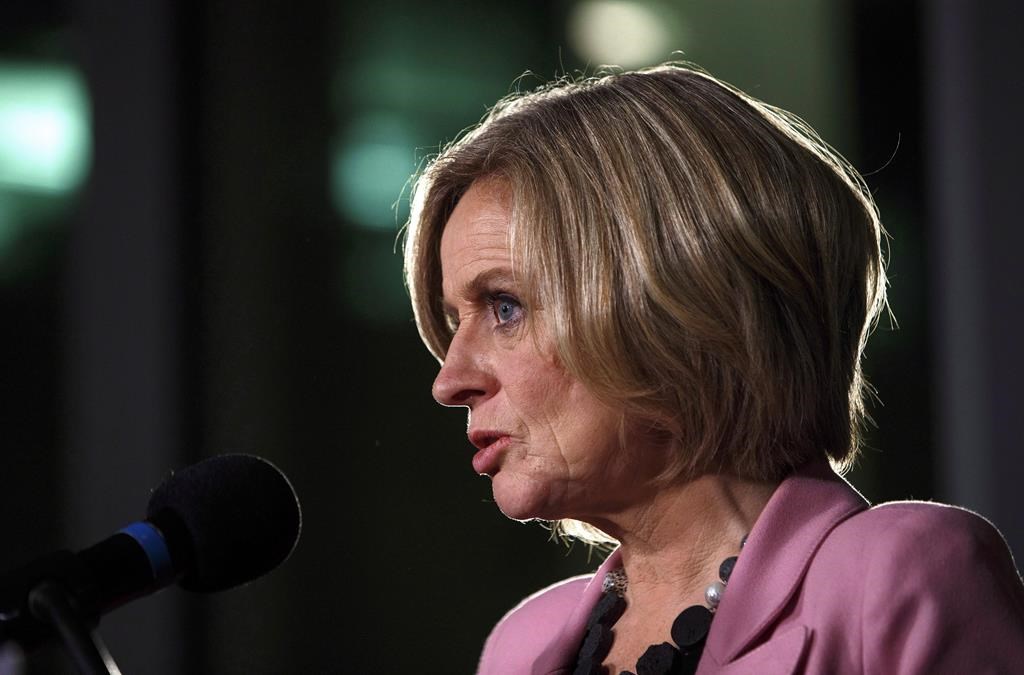
Alberta Premier Rachel Notley speaks during an announcement in Edmonton on Sunday, Dec. 2, 2018. THE CANADIAN PRESS/Jason Franson


CALGARY (660 NEWS) — Alberta NDP leader Rachel Notley is responding to the new restrictions announced by Alberta premier Jason Kenney on Tuesday.

“This announcement should have helped and I’m sure it just created more questions,” she said.

Notley questioned how the new restrictions will work across the province, calling them a “profound failure” if they are implemented on a regional basis.

WATCH: Alberta NDP leader Rachel Notley responds to new restrictions


“The regions described last week were based not on evidence, or science, but on the location of UCP MLAs,” she said. “That means many, many Albertans will be let down.”

Notley went on to say Kenney is continuing his pattern of “overpromising and under delivering” by creating false hope and making false promises, setting up further challenges and disappointment in the weeks to come.

“I’m referencing, in particular, the announcement that these measures will apply for slightly over two weeks only, this is confusing and it creates instability and unpredictability.”


RELATED: All Alberta schools to go online, retail capacity reduced, restaurants back to take-out only

She says these new measures are going to have an immediate impact on small business owners struggling to stay afloat during the pandemic, adding they do not have adequate support.

Notley then called on Kenney to provide much greater support to help these businesses out.

“With broader eligibility and greater grants, and to enact many other measures we’ve proposed to support small businesses outlined at AlbertasFuture.ca.”

Notley then shifted her focus to schools and how Kenney “minimized the problem in schools for months.”

“He claimed school boards were safe and sat on his hands while school boards, teachers and parents begged for help,” she said. “He’s failed each and every student in our province.”

She then called on the UCP government to immediately establish an Alberta Learn From Home fund to help support families as students move online.

Notley then raised concerns with workers in the province having to choose between getting paid, or staying saf
e.


She says since most of these workers don’t have a sick pay program, they will continue to work at our grocery stores, gas stations and more.

“We know scientists in Ontario have suggested that provision of sick pay could drop infection rates by 50 per cent, yet today there was no mention of that from Jason Kenney at all.”


Finally, Notley raised questions surrounding UCP MLAs, saying she is concerned to hear they oppose the new measures.

“In advance, I condemn this behaviour in the strongest possible terms. And, I call on Jason Kenney to finally throw these MLAs out of his caucus. If you can’t support keeping Albertans safe, then you just can’t sit in the government caucus. Period.”

Braid: Kenney faces a test to regain trust of public and his party

Kenney has given too much comfort to those who flout the rules. They simply scorn his frequent scolding

Unchecked, a truly alarming protest movement has sprung up, aspiring almost to insurrection. It’s hard to miss the similarity, at least in language, with what happened at the U.S. Capitol on Jan. 6.

Author of the article :Don Braid • Calgary Herald
Publishing date:May 04, 2021 • 
A few hundred anti-mask protesters came out to rally against the tighter restrictions by Premier Jason Kenney at the McDougall Centre in Calgary on Tuesday, May 4, 2021. PHOTO BY DARREN MAKOWICHUK/POSTMEDIA

The Kenney government is taking the province back to the hard regimen of last spring — patios, gyms, hair salons and personal services to close; K-6 schooling will go online; outdoor gatherings limited to five people; and much more.

This will be enormously painful to many businesses, families and individuals.

But for the next few weeks, there’s really no other way.

The UCP’s special cabinet committee debated for hours Tuesday before coming out with rules that will infuriate many in Premier Jason Kenney’s uneasy caucus.

As we’ve seen in Alberta, rules don’t work without public compliance and enforcement. Both have slipped badly, along with public faith in frequent promises that the crisis will end quickly.


A new poll from Marc Henry’s ThinkHQ shows that 44 per cent of Albertans feel COVID-19 problems will extend into 2022.

A small number think we’ll return to something like normal life by the end of summer, or maybe October.

In total, just 46 per cent believe the ordeal will be over at any point this year.


A month ago, on April 6, Kenney said effusively: “If we just stick to our guns for a few more weeks, we’ll head into what I truly believe will be the best summer in Alberta’s history.”

At that point, the variant strains didn’t dominate. Vaccination was starting to push down deaths. Kenney had some cause for optimism, although many medical experts said he was wrong.

Then the third wave took over, increasing hospitalizations and giving Alberta the highest infection rate in all of Canada.

Saskatchewan and B.C. had similar challenges but are doing much better.

Alberta’s plight is stark and obvious. We are the new epicentre of COVID-19 in Canada. We’re far behind in medical and economic recovery.

This has finally snapped trust in the mantra that if we just do everything right for a little while longer, it will soon end.

The crazy thing is that the UCP line could finally be close to the truth. Vaccine is flooding into the provinces. That will surely push the infection numbers down and ease pressure on the hospitals.

But it won’t be easy for the UCP to win back public confidence.

Kenney has given too much comfort to those who flout the rules. They simply scorn his frequent scolding.

The resistance has spread right into his own caucus, with MLAs who themselves spread ideas that can prolong the pandemic in Alberta.

Marc Henry says, “Kenney has been trying to ride two horses at once. It doesn’t work.” Except in the rodeo.


Unchecked, a truly alarming protest movement has sprung up, aspiring almost to insurrection. It’s hard to miss the similarity, at least in language, with what happened at the U.S. Capitol on Jan. 6.
ALBERTA POLITICS / Jason Kenney steps up to rostrum, announces new COVID-19 restrictions, then skedaddles

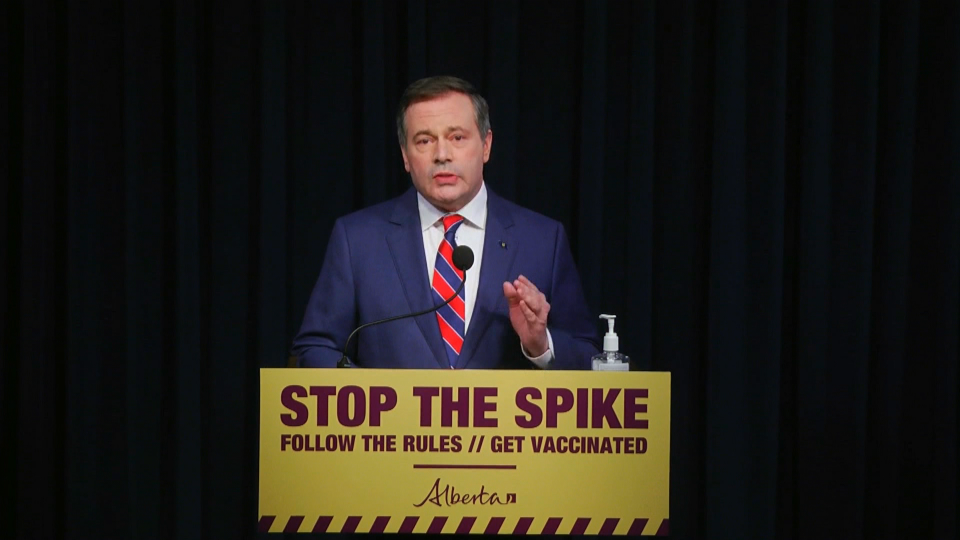
ALBERTA PREMIER JASON KENNEY AT HIS 9.5-MINUTE SPEAKING APPEARANCE YESTERDAY EVENING (PHOTO: SCREENSHOT OF ALBERTA GOVERNMENT VIDEO).


DAVID CLIMENHAGA
POSTED ON MAY 05, 2021

Alberta Premier Jason Kenney stepped up to the rostrum at his hastily scheduled 6:02 p.m. “news conference” yesterday, reeled off what he proposes to do about the fact Alberta now has the worst collective case of COVID-19 in North America, and skedaddled.

The whole affair took roughly nine and a half minutes, if you don’t count the two minutes of elevator music on the government website before the picture came on.


Opposition Leader Rachel Notley, the former premier of Alberta, at her news conference last night (Photo: Screenshot of Opposition video).


Since no questions were permitted, you can’t really call it a news conference. It was more like a photo opportunity with a soundtrack. Let’s call it a live-streamed announcement. Instead of sticking around to answer journalists’ questions, Mr. Kenney hurried away to the more congenial and controlled circumstances of a Facebook Live session with his supporters.

Trouble was, when the dust from the premier’s swift departure had dissipated like so many wisps of smoke as he dashed away, puzzled viewers were left scratching their heads about what he’d really announced. Some things were clear. Others, not so much.

The premier seemed to have two principal messages.


First, to the silent majority of Albertans furious about aggressive COVID deniers endangering their lives and frightened by the rapid spread of variants of concern when days ago the premier was promising us the best summer ever, that the government is taking serious measures to get this disease under control in jig time.

Second, to his COVID-denying base and the 17 or 18 members of his United Conservative Party’s COVID Denial Caucus, don’t worry about it, you’ll have to be bad repeatedly before this affects you.

No one will be satisfied.


So, all post-secondary classes will move online, retail stores will be allowed to stay open, but capacity will be capped at 10 per cent of fire code, worship services will be limited to 15 people, and funerals, go figure, to 10. This begins today and will last three weeks.

Former Wildrose Party leader Brian Jean (Photo: David J. Climenhaga).


All students from kindergarten to Grade 12 will study at home until May 25. That commences Friday.

Hair salons and tattoo parlours will have to close, ditto fitness studios; restaurants and bars will be restricted to take out and delivery, and doctors, dentists, accountants and lawyers will see clients by appointment only (so what else is new?). That commences at midnight Sunday, late enough to save the Mother’s Day restaurant trade, although at what cost remains to be seen.

The basic fine for violating public health measures will double to $2,000.

The details are found in the government’s press release.

But what, you’re wondering, about enforcement? “We are introducing a tougher enforcement protocol for repeat offenders,” Mr. Kenney said in his announcement. (Emphasis added.) What about first time offenders? We don’t know. Remember, there were no questions.

What’s more, there will be exceptions. “These stepped-up measures will take effect province-wide, with the exception of a few communities that have very low levels of spread,” Mr. Kenney said.


Chief Medical Officer of Health Deena Hinshaw (Photo: Alberta Newsroom/Flickr).


“These new measures apply to all Albertans, businesses, organizations and service providers in municipalities or areas with more than 50 cases per 100,000 people and with 30 or more active cases,” the government’s news release said.

Opposition Leader Rachel Notley, the province’s former NDP premier, held her own live-streamed news conference soon after Mr. Kenney’s fleeting appearance.

“Albertans, you’re frustrated, you’re confused, you’re angry and you’re scared, and this announcement should have helped, but I’m afraid it has mostly just created more questions,” she said.

She assailed the premier for not making the restrictions apply to the entire province. “First and foremost, do the measures that were announced … apply across the province, or are they still being applied on the regional basis that was put forward last week? If it’s the latter, it’s a profile of failure. The regions described last week were based not on evidence or science, but on the location of UCP MLAs.”

Restrictions, she added, “must apply consistently across the province to be effective.”

Moreover, Ms. Notley said, “by making false promises and creating false hopes, he’s setting up further challenges and disappointments in the weeks to come.”


Health Minister Tyler Shandro (Photo: Screenshot of Alberta Government video).


As for the premier’s statement that only repeat offenders would be prosecuted, Ms. Notley called it “a declaration that invites more non-compliance. … He’s just given people permission to offend at least once.”

Unlike the premier, Ms. Notley entertained questions from reporters, telling them it sounded as if Mr. Kenney and his advisors “are making it up on the fly.” It’s hard to dispute that assessment.


Former Wildrose Leader Brian Jean also got in brisk shot at Mr. Kenney. “When a politician rejects the people whose votes he campaigned for, it is always his fault and never theirs,” Mr. Jean said in a post on Facebook. “Albertans have lost confidence in you.

“Those who didn’t vote for you have concluded that you are even worse than they feared,” said the second-place finisher in the 2017 UCP leadership race, which was marred by accusations of cheating by Mr. Kenney’s supporters. “Those who did vote for you, know that you are not governing as they would have hoped.”


Judging from last night’s government news release, Health Minister Tyler Shandro, Education Minister Adriana La Grange, and Justice Minister Kaycee Madu remain in the premier’s corner. Those three, along with Chief Medical Officer of Health Deena Hinshaw and the premier, will have yet another news conference this morning.

That will be the third in as many days, all on the same topic.


RALPH KLEIN'S BIOGRAPHER
Don Martin: Being Jason Kenney is the worst job in politics today


POLITICS | Opinion
Don MartinContributor
@DonMartinCTV Contact
Published Wednesday, May 5, 2021


VIDEO

Alberta Premier Jason Kenney announces on May 4, 202 new restrictions amid a third COVID-19 wave.


OTTAWA -- As former Alberta premier Ralph Klein used to say, the secret to being a successful politician is to figure out which way the parade is going and jump in front of it.

So spare some pity for current Premier Jason Kenney as he tries to straddle two marching bands of public opinion, which are on a nasty collision course over his handling of the pandemic.

In short, Kenney is failing spectacularly in every direction he’s turned – and the result has been the fastest infection surge anywhere in North America coupled with Canada’s loudest public revolt against overdue restrictions to curb the outbreak.

It’s a uniquely tricky business bordering on mission impossible to govern Alberta even in good times, where voters are happiest with the least amount of government in their lives.

As one rural MLA noted many years ago, “My folks think that painting a yellow stripe down the middle of the highway is too much government interference.”

But mix an oil industry meltdown with enterprise-killing lockdowns and hospitals near the breaking point and you create the perfect storm of angry opposition.

Closing down businesses, schools and rodeos has sparked outrage and defiance in rural areas, where COVID-19 is not spreading as quickly.

But by heeding the cries of the United Conservative Party’s rural base to go slow on restrictions, the Kenney government has infuriated cities where soaring third-wave infection rates are swamping intensive care units.

COVID-19 tracker: Compare Canada's provinces to American states

Kenney’s challenge has been complicated by an internal revolt of his own MLAs, some still smarting from the absorption of the Wild Rose Party to create the United Progress Conservatives, who have taken a very public stand against restrictions they deem excessive.

During a long news conference on Wednesday, a weary-eyed Kenney shrugged off the internal dissent as merely a welcome exercise in democratic debate.

Sorry, but attacking public health measures designed to save lives is not up for debate and Kenney really needs to send a no-nonsense signal this is not tolerated with a mutineer expulsion or two.

I digress.

The point is that, in just the last few weeks, Premier Kenney has simultaneously infuriated the entire province, divided his own party and created the continent’s worst health care crisis. That’s quite the dubious accomplishment.

And it will get worse when the three weeks of enhanced restrictions end at the precise moment Kenney projects the hospital system will buckle if case counts continue to soar. In other words, the lockdown will be extended.

All this has, not surprisingly, cratered his party and personal popularity in the polls.

THQ pollster Marc Henry’s latest tracking has Kenney’s approval ratings in a freefall to levels rarely seen in true-blue Alberta amid clear signs of an NDP government on the comeback.

“If the current hastened decline in support for Kenney and his government continues on this trajectory through the summer and into the fall, his position as the leader of a party inching toward an election in 2023 could be untenable," Henry told me Wednesday.

There is personal blame for this mess to be shouldered by Kenney.

Whispers from informed sources say he mostly listens to himself or a small band of senior staff on pandemic and other policies to the exclusion of experts and his own MLAs.

And by flicking the switch on and off lockdowns, being slow to act when there should’ve been forceful action and tolerating backstabbing from his own side of the legislature, Kenney often gives the appearance of a hesitant gopher trapped on the TransCanada Highway.


Now, to be fair, credit Alberta for moving in the right direction on multiple pandemic fronts.

The new restrictions match most other hard-hit provinces and should, if the public respects them, reverse the spike.

The vaccination push in places like meatpacking plants make perfect, if not overdue, sense.

And being the first province to open up vaccination to anyone over the age of 12 beginning Monday is a bold step toward getting back to a new normal.

For most premiers, the pandemic has proven to be a soul-destroying exercise which was unimaginable when they applied for the job. There’s no precedent. There’s no playbook. And every hopeful sign of a way out gets sideswiped by the next wave.

But for the usually-cagey Jason Kenney, trying to juggle a rural base of support with an urban outbreak of infection has been particularly toxic.

The only parade he seems to be leading is straight into the jaws of electoral defeat.

That’s the bottom line.


KENNEY THE GREAT BEAST OF THE PANDEMIC
COVID-19: Alberta reports 2,271 new active cases, 666 people in hospital Wednesday

Jeff Labine 
EDMONTON JOURNAL
MAY 5,2021
© Provided by Edmonton Journal The coronavirus COVID-19


The number of new COVID-19 cases in Alberta surpassed 2,000 again Wednesday as the province reported its second-highest single-day case count to date
.
Alberta recorded 2,271 new cases, bringing the total number of active cases to a new record high of 24,156. The province has been dealing with a surge in cases since last month, resulting in Premier Jason Kenney announcing on Tuesday some of the strongest measures the government has taken to date

Kenney said during a news conference Wednesday that the measures were necessary to stop the spike of the third wave and ease the burden on the health-care system.

“We must act to bend the curve down one last time,” he said. “The good news is that we have vaccines on our side. They’re already working wonders and they’re finally arriving in larger volumes and larger doses.”  BENDING THE CURVE HAS NOT WORKED FOR THE PAST YEAR, KENNEY IS AFRAID TO LOCK DOWN THE PROVINCE BECAUSE OF HIS UCP MEMBERS 

Alberta currently has the highest active per-capita rate in Canada at 534 per 100,000.

Kenney’s statement comes as the province reports 666 people in hospital, with 146 of those in intensive care. Three additional deaths raise the death toll to 2,102. There were 903 new variant cases of concern reported on Wednesday.


Variants make up less than 60 per cent of all cases.

More than 20,000 Albertans were tested on Tuesday and approximately 174,000 have recovered from the virus.

The province has administered more than 1.6 million doses, resulting in 31.1 per cent of the population receiving at least one dose. On Wednesday, the province announced Albertans born in 1991 or earlier will be eligible for a vaccine starting next week. Bookings are being staggered to avoid overwhelming the system.

On Tuesday, the province confirmed an Alberta woman in her 50s died from what is known as vaccine-induced immune thrombotic thrombocytopenia (VITT) after receiving the AstraZeneca vaccine.

Alberta’s chief medical officer of health Dr. Deena Hinshaw said in a statement that the risks of dying or suffering other severe outcomes from COVID-19 remain far greater than the risk following an AstraZeneca vaccine inoculation.

“The Alberta case marks the second VITT case and only death related to VITT out of more than 253,000 doses of AstraZeneca or CoviSHIELD/AstraZeneca that have been administered in Alberta to date,” she said.

Meanwhile, Edmonton Public Schools reported on Wednesday single cases at Steinhauer, Elizabeth Finch, Princeton, Lymburn, McArthur, Mount Royal, Richard Secord and three cases at Baturyn.

Edmonton Catholic Schools reported single cases at St. Vladimir, St. Bonaventure, St. Richard, St. Catherine, St. Oscar Romero and two cases at Anne Fitzger

US WAIVES PATENT PROTECTION ON VACCINE

WASHINGTON — The Biden administration on Wednesday joined calls for more sharing of the technology behind COVID-19 vaccines to help speed the end of the pandemic, a shift that puts the U.S. alongside many in the developing world who want rich countries to do more to get doses to the needy.
© Provided by The Canadian Press

United States Trade Representative Katherine Tai announced the government's position, amid World Trade Organization talks about a possible temporary waiver of its protections that would allow more manufacturers to produce the life-saving vaccines.

“The Administration believes strongly in intellectual property protections, but in service of ending this pandemic, supports the waiver of those protections for COVID-19 vaccines," Tai said in a statement.

She cautioned that it would take time to reach the required global “consensus” to waive the protections under WTO rules, and U.S. officials said it would not have an immediate effect on the global supply of COVID-19 shots.

Tai's announcement came hours after WTO Director-General Ngozi Okonjo-Iweala spoke to a closed-door meeting of ambassadors from developing and developed countries that have been wrangling over the issue, but agree on the need for wider access to COVID-19 treatments.

The WTO’s General Council took up the issue of a temporary waiver for intellectual property protections on COVID-19 vaccines and other tools, which South Africa and India first proposed in October. The idea has gained support among some progressive lawmakers in the West.

More than 100 countries have come out in support of the proposal, and a group of 110 members of Congress — all fellow Democrats of Biden — sent him a letter last month that called on him to support the waiver.

Opponents — especially from industry — say a waiver would be no panacea. They insist that production of coronavirus vaccines is complex and can’t be ramped up by easing intellectual property. They also say lifting protections could hurt future innovation.

Stephen Ubl, president and CEO of the Pharmaceutical Research and Manufacturers of America, said the U.S. decision “will sow confusion between public and private partners, further weaken already strained supply chains and foster the proliferation of counterfeit vaccines.”

Dr. Michelle McMurry-Heath, chief executive of the Biotechnology Innovation Organization trade group, said in a statement that the decision will undermine incentives to develop vaccines and treatments for future pandemics.

“Handing needy countries a recipe book without the ingredients, safeguards, and sizable workforce needed will not help people waiting for the vaccine," she said.

Pfizer declined to comment on Biden’s announcement, as did Johnson & Johnson, which developed a one-dose vaccine meant to ease vaccination campaigns in poor and rural areas. Moderna and AstraZeneca didn’t immediately respond to requests for comment.

The companies have made some efforts to provide vaccine doses to poor countries at prices well below what they’re charging wealthy nations.

For instance, Johnson & Johnson agreed last week to provide up to 220 million doses of its vaccine to the African Union’s 55 member states, starting in this year’s third quarter, and agreed in December to provide up to 500 million vaccines through 2022 for low-income countries via Gavi, The Vaccine Alliance.

Shares of Pfizer, AstraZeneca and Johnson & Johnson — huge companies with many lucrative products — fell less than 1% on the news. But Moderna, whose vaccine is the company’s only product, fell 6.2% in late-afternoon trading before gaining back two-thirds of a per cent in after-hours trading.

It remained unclear how some countries in Europe, which have influential pharmaceutical industries and had previously shared U.S. reservations about the waiver, would respond.

WTO spokesman Keith Rockwell said a panel on intellectual property at the trade body was expected to take up the waiver proposal again at a “tentative” meeting later this month, before a formal meeting June 8-9. That means any final deal could be weeks away at best.

Authors of the proposal have been revising it in hopes of making it more palatable.

Okonjo-Iweala, in remarks posted on the WTO website, said it was “incumbent on us to move quickly to put the revised text on the table, but also to begin and undertake text-based negotiations.”

“I am firmly convinced that once we can sit down with an actual text in front of us, we shall find a pragmatic way forward” that is “acceptable to all sides,” she said.

Co-sponsors of the idea were shuttling between different diplomatic missions to make their case, according to a Geneva trade official who was not authorized to speak publicly on the matter. A deadlock persists, and opposing sides remain far apart, the official said.

The argument, part of a long-running debate about intellectual property protections, centres on lifting patents, copyrights and protections for industrial design and confidential information to help expand the production and deployment of vaccines during supply shortages. The aim is to suspend the rules for several years, just long enough to beat down the pandemic.

The issue has become more pressing with a surge in cases in India, the world’s second-most populous country and a key producer of vaccines — including one for COVID-19 that relies on technology from Oxford University and British-Swedish pharmaceutical maker AstraZeneca.

Michael Yee, a Jefferies Group biotech analyst, wrote to investors that the key access issues for developing countries aren’t patents or price, but an inadequate supply of the materials needed and the know-how to produce the vaccines and keep quality high — which one of Johnson & Johnson’s contract manufacturers in the U.S. failed to do, ruining millions of doses.

“Manufacturing supplies, raw materials, vials, stoppers, and other key materials are in limited supply for 2021,” and may still be next year and beyond, Yee wrote. That’s partly because it takes time to make all those components, and Moderna and Pfizer have commitments to buy them “from major suppliers in huge bulk over the foreseeable future.”

He added that Pfizer previously sought authorization to sell its vaccine to India, which rejected its application and asked that additional studies be run. The U.S., European Union and many other countries have given that emergency authorization.

Proponents, including WHO Director-General Tedros Adhanom Ghebreyesus, note that such waivers are part of the WTO toolbox and insist there’s no better time to use them than during the once-in-a-century pandemic that has taken 3.2 million lives, infected more than 437 million people and devastated economies, according to Johns Hopkins University.

“This is a monumental moment in the fight against COVID-19," Tedros said in Wednesday statement. He said the U.S. commitment "to support the waiver of IP protections on vaccines is a powerful example of American leadership to address global health challenges.”

__

Keaten reported from Geneva. AP Medical Writer Linda A. Johnson contributed from Fairless Hills, Pa.

Jamey Keaten And Zeke Miller, The Associated Press