Showing posts sorted by relevance for query EMOLUMENTS. Sort by date Show all posts

Saturday, October 22, 2022

Trump's Secret Service scam goes even deeper than we thought

Opinion by Richard W. Painter - 

We always knew that Donald Trump sought to personally profit from the presidency, whether by receiving foreign government emoluments (aka payoffs) or scheduling a G-7 meeting at his own golf club. Recently, we learned more about the true extent of his grift – the exorbitant amounts he charged taxpayers for Secret Service agents to stay in his hotels and clubs. On paper, the agents’ job was to protect him and his family. In reality, they had a second job: to make taxpayers pay him a lot of money (our money) at the same time. But we the taxpayers are not without ways of stopping Trump’s scam.


A Secret Service detail clears out the lobby in the Trump Tower just before a surprise downstairs visit by Donald Trump on Jan. 13, 2017.© Provided by MSNBC
SECRET SERVICE IN SECRET PENTAGRAM FORMATION

While the government has long paid the costs for Secret Service agents to travel with and protect the president and the first family, only one president has made money renting rooms to his protection. On Monday, the House Committee on Oversight and Reform released forms showing room rates more than five times what's allowable for federal employees. Some of these bills were incurred right in Washington, where the president stayed at the White House, and could have overnight guests. When his sons Don Jr. and Eric visited him, they chose not to stay at the White House but at a hotel – the Trump Hotel, of course.

We the taxpayers are not without ways of stopping Trump’s scam.

Taxpayers were charged $1,160 per room per night at the Trump International Hotel in Washington for Secret Service agents protecting Eric Trump on March 8, 2017, a night for which the government rate was $242. Taxpayers were charged $1,185 per room per night for agents protecting Donald Trump Jr. on Nov. 8, 2017 at the Trump Hotel, at a time when the government rate was $201. For most presidential offspring of presidents, being guarded by Secret Service agents would be enough of a thrill. For the Trump family, making money at taxpayer expense was apparently an even greater thrill.

Oversight Committee Chair Carolyn Maloney, D-N.Y., recently wrote a letter to the Secret Service demanding more information about these stays. Her letter explained that Trump visited his properties more than 500 times while in office, and noted that early in his term, “the Secret Service received authorization for additional flexibility for expenses during protective missions, including per diem expenses above the government rate.” Yes, $1,000 a night hotel rooms need a lot of “flexibility.”


House inquiry: Trump charged Secret Service ‘exorbitant’ rates for hotel stays
Duration 5:50

“Records show the Secret Service spent more than $1.4 million on lodging at Trump-owned properties in the United States from Jan. 20, 2017, through Sept. 15, 2021,” Maloney concluded. That’s a lot of money – our money.

There are multiple avenues for recapturing Trump’s profiteering at the expense of the federal government – or at least preventing it in the future. First, his actions were a violation of the domestic emoluments clause of the Constitution, which provides that the president cannot receive compensation from the states or from the federal government in excess of his salary and pension set by Congress.

There are multiple avenues for recapturing Trump’s profiteering at the expense of the federal government – or at least preventing it again in the future.

As with the foreign emoluments clause, the domestic emoluments clause does not provide an enforcement mechanism. Rep. Jamie Raskin, D-Md., introduced a bill in 2018 that would have enforced the domestic emoluments clause by stopping the flow of federal money to Trump properties, but Republicans made sure that bill went nowhere. In the lame-duck session at the end of the year, however, Democrats could throw their weight behind the Foreign and Domestic Emoluments Enforcement Act, introduced last year by Sen. Richard Blumenthal.

Another approach would be the False Claims Act, which imposes liability on any person who knowingly submitted false claims to the government and provides that violators are liable for treble damages plus a monetary penalty. Simply charging the government more than the usual government rate for hotel rooms may violate the act, but any misrepresentation of material facts made in connection with the Secret Service approvals, or in any other part of the process of getting these invoices paid, could be a violation. Representations that the Trump Organization charged “market rates,” or that cheaper alternative accommodations were not available in the area, for example, could amount to fraud. In that case, the Department of Justice could - and should - add the Trump Organization to the long list of defendants that have been sued under this law for defrauding the federal government.


Report: Trump’s Secret Service grift


While the government should make claims against the Trump Organization for return of the exorbitant amounts paid for rooms during the Trump presidency, it’s just as important to restore the precedent that such conduct is prohibited. Because former presidents and some family members also are entitled to Secret Service protection, these practices could easily continue well past the Trump presidency, and cost taxpayers millions more in coming years. Going forward, the Secret Service should not pay to any Trump hotel or club any amounts exceeding the federal rate. Whenever possible, Secret Service agents protecting Trump should stay at hotels not owned by the Trump family.

There is of course another perhaps cheaper alternative: Secret Service protection for a former president who is an incarcerated federal inmate. Given the seriousness of crimes committed during the Trump presidency, particularly between the 2020 election and Jan. 6, 2021, I have urged elsewhere that the criminal process against President Trump begin. If a criminal trial did end badly for Trump, perhaps future Secret Service accommodations could be at properties recommended by the Bureau of Prisons. The federal room rate will surely suffice.

This article was originally published on MSNBC.com

Friday, January 05, 2024

'Prohibited emoluments'

Foreign govts paid Trump firms millions while president: report

New York (AFP) – Former US president Donald Trump's businesses received at least $7.8 million from foreign governments including China during his time in the White House, a congressional report claimed Thursday.


Issued on: 04/01/2024 - 
A Chinese embassy delegation spent $19,391 at the Trump International Hotel in Washington, DC 
© CHIP SOMODEVILLA / GETTY IMAGES NORTH AMERICA/AFP

Officials from Saudi Arabia, India, Turkey and Democratic Republic of Congo were among some 20 countries' representatives who paid money to Trump's hotel and real estate businesses during his presidency, Democrats on the House Oversight Committee wrote in their report.

The authors claim that such revenues from overseas governments violated a constitutional ban on "foreign emoluments."

"As President, Donald Trump accepted more than $7.8 million in payments from foreign states and their leaders, including some of the world's most unsavory regimes," said the report titled "White House for Sale."

"We know about only some of the payments that passed into former President Trump's hands during just two years of his presidency from just 20 of the more than 190 nations in the world through just four of his more than 500 businesses."

In the case of China, the report alleged that Beijing as well as businesses including ICBC bank and Hainan Airlines spent $5.5 million at Trump-owned properties.

"Former President Trump violated the Constitution when the businesses he owned accepted these emoluments paid by (Beijing) without the consent of Congress," the report said.

The authors say that the full amount could be higher as the $5.5 million figure is based only on limited disclosures from Trump's accountants Mazars and filings with the American financial regulator, the SEC.

In one expenditure dated August 27, 2017, a Chinese embassy delegation spent $19,391 at the Trump International Hotel in Washington.

The report also claims that "Saudi Arabia paid at least $615,422 in prohibited emoluments to former President Trump's businesses over the course of his term in office from just (the Trump World Tower) and the March 2018 stay at the Trump International Hotel in Washington, DC."

"Former President Trump has also boasted about the continued willingness of the Saudis to do business on terms highly favorable to him," the report stated.

Trump's Washington hotel was sold in 2022 to a private investor group and rebranded under the luxury Waldorf Astoria line.

The frontrunner for the 2024 Republican presidential nomination, Trump separately faces a civil fraud trial in New York over claims that his real estate businesses fraudulently inflated the value of their assets.

He is to go on trial in Washington in March for conspiring to overturn the results of the 2020 election, and in Florida in May on charges of mishandling top secret government documents.

The twice-impeached former president also faces racketeering charges in Georgia for allegedly conspiring to upend the election results in the southern state after his 2020 defeat by Democrat Joe Biden.

© 2024 AFP

Wednesday, December 18, 2024

Trump’s for-profit presidency

The many ways that Donald Trump could use the presidency for personal gain — again.


by Nicole Narea
Dec 17, 2024
VOX

President Donald Trump and Mohammed bin Salman, crown prince of Saudi Arabia, at the start of the 2019 G20 summit in Osaka, Japan. 
Bernd von Jutrczenka/picture alliance via Getty Images

“Victory” cologne and perfume. “Crypto President” watches. Limited-edition “American Eagle” guitars. T-branded golf shoes and “Fight Fight Fight” high-top sneakers.


These are just a sample of the many products licensed to bear President-elect Donald Trump’s brand, including some that he has promoted on his social media site Truth Social just weeks before his inauguration. If he continues to hawk his merchandise after returning to the White House, that could raise ethical concerns.

Consumer goods may be the least of Trump’s issues, however. He has a number of business ventures — including his social media platform, a nascent crypto firm, and the Trump Organization’s partnerships in the Middle East — that could present conflicts of interest, make the presidency vulnerable to foreign influence, and violate federal law.

Related:Trump has set up a perfect avenue for potential corruption

That includes the Constitution’s foreign emoluments clause, which prevents the president from receiving gifts from foreign governments. Enforcement of the clause against a sitting president has been rare, in part because previous presidents upheld a norm of divesting from holdings that could present a conflict of interest while in office. Trump, however, broke with that tradition during his first term.


While President Jimmy Carter famously put his peanut farm in a blind trust, Trump had his sons take over the Trump Organization when he became president in 2016. His global business empire reaped $2.4 billion in revenue, including from foreign governments, in the four years that followed. Government ethics organizations consequently sued him, claiming that he had violated the foreign emoluments clause, but the litigation was never resolved before he left office.

Now, that litigation may be reprised, potentially providing harder limits on presidents’ ability to benefit financially from their time in office. A representative for the Trump transition team did not respond to a request for comment.

“We saw rampant conflicts of interest, abuses of power, profiting from serving in government during his first administration,” said Aaron Scherb, senior director of legislative affairs at Common Cause, a left-leaning watchdog group focused on ethics in government. “This next administration, we expect to see more of the same, and unfortunately, it seems like a fairly complicit Congress.”

Trump’s conflicts of interest in his first term, explained

At the start of his first term, Trump suggested that he would take steps to separate himself from his properties.


However, he never divested from his properties, remaining in close contact with his sons about Trump Organization dealings. As president, he made a total of at least 500 visits to his own hotel and golf properties, calling his Florida club Mar-a-Lago the “Winter White House.” This brought an influx of taxpayer money to those properties.

It also sent a message that patronizing his properties might win lobbyists, foreign actors, and others influence in the Trump administration.


For instance, diplomats from Bahrain, Azerbaijan, Kuwait, Malaysia, Georgia, and other countries either hosted events at Trump properties or stayed at Trump hotels, including his now-sold Trump International Hotel in Washington, DC. Overall, the government oversight group Citizens for Responsibility and Ethics in Washington (CREW) estimated that Trump benefited from about $13.6 million in payments from foreign governments during his first term as a result.


CREW has argued that Trump’s actions were not just slimy but illegal. In a lawsuit filed shortly after his inauguration in 2017, the organization argued that he had violated the foreign emoluments clause. Attorneys general from Washington, DC, and Maryland made a similar argument in a separate case.


Two appeals courts — the Second Circuit and the Fourth Circuit — allowed those cases to move forward over Trump’s objections. The president appealed to the US Supreme Court just before the 2020 election. When he lost the election to Joe Biden, his lawyers argued that the justices should just wait to rule in the cases until after the inauguration, which would make them moot and allow them to be dismissed without creating a precedent.


That’s exactly what the justices eventually did. As a result, any future litigation would essentially have to start from scratch in challenging any emoluments clause violations by Trump.


Having never suffered adverse legal consequences for his conflicts of interest, Trump upended ethical expectations of the president, as well as those of officials around him, said Lisa Gilbert, co-president of Public Citizen, a left-leaning consumer rights advocacy group. Former Trump adviser Kellyanne Conway, for instance, promoted products marketed by Trump’s daughter, Ivanka Trump, potentially violating federal ethics rules preventing executive branch employees from boosting products on behalf of their friends or associates.


“The fish rots from the head,” Gilbert said. “Seeing that he was very limited in the constraints he placed on himself absolutely emboldened those around him.”

How Trump could profit off the presidency this time around


Trump made an ethics pledge for a second term, but it doesn’t make any commitments in terms of how he might resolve his persistent conflicts of interest stemming from his now even more sprawling businesses. This time, there are many more ways that he could use the presidency for his own personal gain — and potentially be vulnerable to the influence of foreign actors.


“He’s essentially flouting ethics rules and conflicts of interest laws much more blatantly, much more obviously than last time,” Scherb said. “He’s not even trying to hide what he’s doing at all this time.”


Chief among these conflicts of interest is his stake in the publicly traded parent company of Truth Social, the president-elect’s social media platform. Just after he won the election, that stake was worth $3.5 billion. The value of the company’s stock has oscillated in the month since, but Trump’s stake still makes up a large portion of his estimated $6.8 billion net worth.


Never before has a president had such a significant stake in a publicly traded company, and for good reason: Foreign actors could easily and entirely legally buy up its stock, inflating its value and Trump’s net worth. Not only that, they could also “threaten to just dump all their shares at once, which would crater his net worth,” giving them potentially a “huge amount of leverage over the president,” said Jordan Libowitz, a spokesperson for CREW.


The Trump Organization has also recently struck a series of deals worth hundreds of millions of dollars to construct luxury hotels and properties in Saudi Arabia, Oman, and the United Arab Emirates, as well as established a partnership with the Saudi-funded LIV Golf. That has drawn Trump into an even closer relationship with the Saudis, which dates back to 2017 when he made the country stop number one on his first overseas trip as president.


“That’s an easy way for the Saudis to pump money into the Trump org,” Libowitz said.


In September, Trump also launched a crypto venture, World Liberty Financial, alongside his sons and his new Middle East envoy, billionaire real estate tycoon Steve Witkoff.


Libowitz raised concerns about a $30 million investment in the company from Chinese crypto entrepreneur Justin Sun, who is currently fighting fraud charges from the Securities and Exchange Commission. Trump and his family are expected to net roughly $20 million thanks to that deal, according to the BBC. Notably, Trump has recently nominated crypto advocate Paul Atkins to head the SEC.


Scherb said he isn’t expecting robust oversight of these conflicts of interest from the incoming Republican-controlled Congress. But if Trump again faces lawsuits challenging his conflicts of interest, he may employ a familiar legal strategy: delay, delay, delay. That’s what allowed him to run out the clock at the Supreme Court during the first round of emoluments cases.


“Team Trump is expert at delaying litigation, as has been shown through his criminal cases over the last four years,” Gilbert said. “That said, there are going to be a plethora of violations and ways for us to act, so I wouldn’t assume they can avoid them all.”


Nicole Narea covers politics and society for Vox. She first joined Vox in 2019, and her work has also appeared in Politico, Washington Monthly, and the New Republic.

Sunday, October 10, 2021

Trump received 'undisclosed preferential treatment' on a $170 million loan from Deutsche Bank for his DC hotel, House Oversight Committee says

trump international hotel dc
The north entrance of the Trump International in Washington, DC. Mark Tenally/AP
  • Deutsche Bank gave Trump "undisclosed preferential treatment" on a $170 million loan for his DC hotel, the House Oversight Committee said.

  • The German bank allowed Trump to delay making principal payments on the loan, the committee said.

  • "Trump did not publicly disclose this significant benefit from a foreign bank while he was President," the committee said.

Former President Donald Trump "received undisclosed preferential treatment" on a $170 million loan from the German financial institution Deutsche Bank on his Washington, DC, hotel that he "personally guaranteed," the House Oversight Committee said on Friday.

The committee's findings are based on documents obtained from the General Services Administration (GSA), a sprawling agency that helps keep the federal government running.

The documents show Deutsche Bank in 2018 provided Trump a "significant financial benefit" by permitting him to delay making principal payments on the loan for a six-year period, the committee said in a statement.

"Without this deferral, the hotel may have needed to pay tens of millions of additional dollars to Deutsche Bank at a time when it was already facing steep losses. Mr. Trump did not publicly disclose this significant benefit from a foreign bank while he was President," the committee said.

The statement also said that while Trump was president the Trump International Hotel received more than $3.7 million from foreign governments between 2017 to 2020, which raises "concerns about possible violations of the Constitution's Foreign Emoluments Clause."

Trump in financial disclosures reported over $150 million in income from the hotel.

But the hotel lost over $70 million between 2016 to 2020, the committee said, "leading the former President's holding company to inject at least $24 million to aid the struggling hotel."

The committee said that Trump "grossly exaggerated" the financial status of the hotel with "misleading" disclosures, and seemingly hid "potential conflicts of interest stemming not just from his ownership of this failing business but also from his roles as the hotel's lender and the guarantor of its third-party loans."

The Trump hotel in the nation's capital is located in the federally owned Old Post Office Pavilion, and the GSA manages the lease. The House Oversight Committee said the GSA failed to comply with its investigation into the hotel during the Trump era, but "finally" produced a "subset of requested documents" in July.

Committee chairwoman Carolyn Maloney and subcommittee on government operations chairman Gerald Connolly sent a letter to the GSA requesting additional information.

"The documents provided by GSA raise new and troubling questions about former President Trump's lease with GSA and the agency's ability to manage the former President's conflicts of interest during his term in office when he was effectively on both sides of the contract, as landlord and tenant," the letter stated.

Collectively, the documents show "that far from being a successful investment, the Trump Hotel was a failing business saddled by debt that required bailouts from President Trump's other businesses," the letter went on to say.

Daniel Hunter, a spokesperson for Deutsche Bank, in a statement to Insider said, "The Committee's letter makes several inaccurate statements regarding Deutsche Bank and its loan agreement."

In response, a House Oversight spokesperson told Insider, "The Committee's letter merely highlighted what was written in audited financial statements that the Trump Organization provided to the federal government and certified as 'correct, accurate and complete.'"

"For example, on December 28, 2016, Trump Organization CFO Allen Weisselberg submitted a copy of the Trump Hotel's audited financial statements certifying them to be correct," the spokesperson added. "The statement indicated that no principal payments were required 'until August 12, 2018.' The certified 2017 financial statement included the same information. The 2018 financial statement, however, stated that principal payments were not due 'until maturity,' which will be in 2024."

The spokesperson went on to say that if Trump believes "these financial statements are inaccurate, the Trump Organization has a duty to correct the certified statements it previously submitted" to the GSA.

Representatives for Trump and the GSA did not immediately respond to Insider's requests for comment.

Trump's refusal to divest himself from his business empire while president raised myriad conflict of interest concerns. The former president broke from his predecessors by not placing his assets in a blind trust, and scoffed at calls to distance himself from his businesses.

In 2019, Trump called the emoluments clause "phony" as legal experts accused him of violating it.

The foreign emoluments clause is enshrined in Article I, Section 9, Paragraph 8 of the US Constitution. The provision prohibits public officials from receiving gifts or cash from foreign governments without congressional approval.

It states: "No Person holding any Office of Profit or Trust under [the United States], shall, without the Consent of the Congress, accept of any present, Emolument, Office, or Title, of any kind whatever, from any King, Prince, or foreign State."

A New York Times review of Trump's tax returns released last year showed he earned $73 million in revenue from the Trump Organization's interests in foreign countries across the first half of his single-term presidency alone.

Additionally, there's a domestic emoluments clause that bars the president from receiving money from the US government other than an annual salary.

It states: "The President shall, at stated Times, receive for his Services, a Compensation, which shall neither be increased nor diminished during the Period for which he shall have been elected, and he shall not receive within that Period any other Emolument from the United States, or any of them."

In September 2020, The Washington Post reported that Trump's properties raked in $1.1 million in tax dollars from the Secret Service since he entered the White House.

Donald Trump’s endorsements are the latest example of his misogyny
Eric Garcia
Fri, October 8, 2021

Trump Rally (Copyright 2020 The Associated Press. All rights reserved)

Donald Trump may no longer be president, but for much of the GOP, especially those who wrongly believe the 2020 election was stolen from him, his endorsement essentially clears a GOP field. But his vanity means that he often endorses whoever heaps praise upon him in the most pathetic or obsequious ways, without considering whether the candidate is actually electable.

That impulse can cause headaches for Republicans and those close to him. The Associated Press reported that Trump has failed to properly vet Republican candidates with sordid histories with women that often include allegations of abuse. This includes former football player Herschel Walker, who Trump urged to run for Senate for months and froze out other likely more electable Georgia Republicans, and the AP revealed allegations that he threatened to kill his wife. Similarly, as his former press secretary, Stephanie Grisham has conducted her book tour, she has alleged that Max Miller, who worked in the administration with him, abused her even after she confided in Trump about it. Miller denies the claims and has filed a libel lawsuit against Grisham.

The slew of candidates with allegations of being abusive or generally terrible towards women prompted one Trump donor to tell the AP: “There is no vetting process – at least not on policy and electability.” But another theory might be that Trump hasn’t refrained from endorsing them because as a man who has consistently shown disdain for women who challenge him, misogyny is not a disqualifying factor.


During the first Republican primary debate, one of the first questions Megyn Kelly asked him was about his history of misogynistic comments, including “fat pigs, dogs, slobs and disgusting animals”. But rather than backing down from it, Trump retaliated by calling her a “bimbo” and said Kelly “had blood coming out of her eyes. Or blood coming out of her wherever.” Such crude comments would have in the past disqualified Republican politicians (indeed, Todd Akin, the former Republican Missouri Senate candidate who talked about “legitimate rape” and sunk his campaign was a political cautionary tale; he died this week ). But Trump faced no consequences; he still spouts nonsense on Fox News, while Kelly is no longer on the network.

Trump’s history of misogyny doesn’t need explaining, but he found that he would face no consequences for his poor treatment of women. He said Barack Obama “schlonged” Hillary Clinton, whom he called a “nasty woman”, and bragged about sexually assaulting women, infamously declaring on a leaked Access Hollywood tape, “when you’re a star, they let you do it”. After perfunctory Republican outrage, the party rallied around Trump and he won the presidency.

Similarly, he’s defended both friend and foe when they faced sexual assault allegations. When Christine Blasey Ford accused Brett Kavanaugh of sexually assaulting her when they were younger, he not only supported Kavanaugh steadfastly (which helped the judge get confirmed), he mocked her at a rally with glee. If anything, Kavanaugh facing allegations likely made Trump more sympathetic to him because it reminded him of how multiple women have accused Trump of sexual misconduct of varying degrees.

Even when his opponent Joe Biden faced allegations of sexual assault, instead of using them to bludgeon Sleepy Joe, he empathised with Biden by saying “I’ve had many false accusations made” and that “And maybe it is a false accusation. Frankly, I hope it is for his sake.” For Trump, the impulse is to always side with men because he sees this as the way men should behave and to hold it against them is tantamount to criticising a man for what he considers normal conduct.

But not every candidate is a former reality television show host who was broadcast into people’s homes while he was cosplaying as a billionaire blowhard. Even after Trump’s election, Republican and Democratic men alike, from Roy Moore to Al Franken, have faced consequences for inappropriate behaviour that stems from male entitlement. If someone doesn’t have that wide name recognition, they won’t shake the allegations as easily as Trump did.

That may be the reason why Republicans are fretting that they might lose otherwise winnable races in Pennsylvania’s open Senate race – where Trump has backed Sean Parnell, whose wife requested restraining orders during their divorce – and in Georgia, where Republicans have a legitimate chance to beat Sen Raphael Warnock with a Republican candidate who doesn’t have a litany of allegations against him like Walker. Republicans’ unconditional loyalty to Trump now risks their otherwise winnable races.

But for Trump, loyalty to him precedes any other trait. In fact, if a Trump ally is accused of sexual misconduct, it’s an opportunity for the former president to declare a case of fake news. For Trump and the party he now dominates, dominance and a distaste for “political correctness” makes a candidate worthy of a MAGA endorsement.

Wednesday, April 27, 2022

Jared Kushner Sold Out to Saudis for $2 Billion and Nobody Seems to Care

Have we all been witnessing a young con-man walk away with billions after selling out Yemen, Khashoggi, and the U.S.? 

With virtually no questions from Congress or the mainstream media?


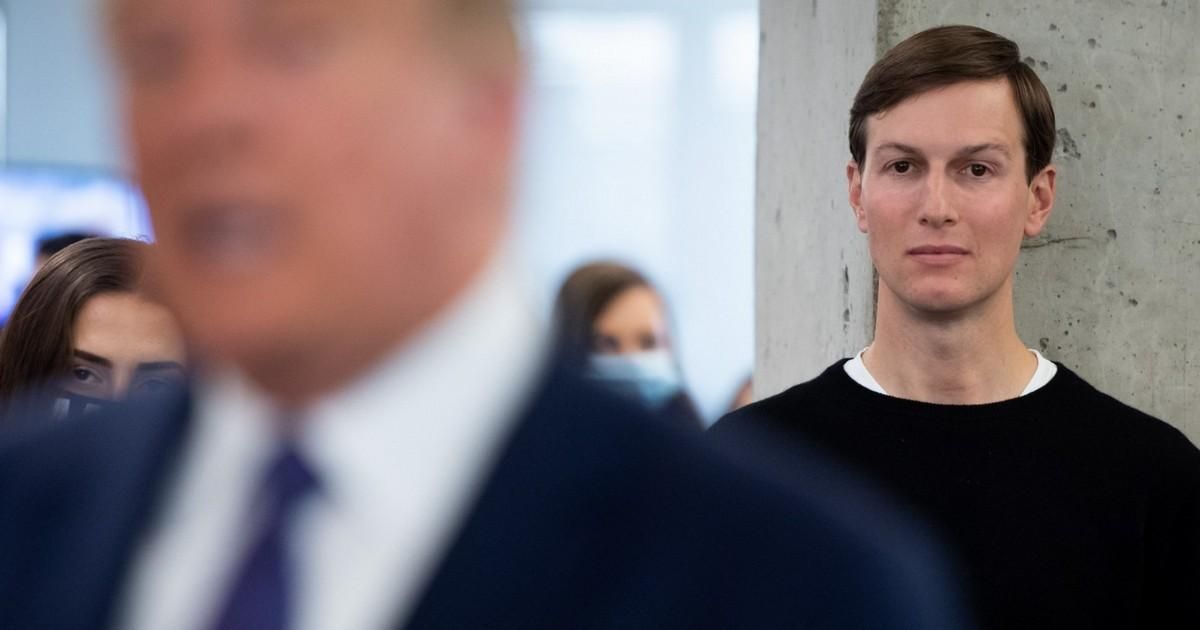
Jared Kushner listens as then-President Donald Trump visits his campaign headquarters in Arlington, Virginia, November 3, 2020.
(Photo: Saul Loeb/AFP via Getty Images)


THOM HARTMANN
April 26, 2022

After President John F. Kennedy appointed his brother as Attorney General, Republicans freaked out and passed an anti-nepotism law against presidents hiring family members.

After Kushner met in secret with MBS, America's ally and the ruler of Saudi Arabia MBN was arrested and thrown into prison where he remains to this day.

When Donald Trump put Jared Kushner into the White House (even after he failed a security clearance), his Justice Department's Office of Legal Counsel ruled, essentially, that Trump could ignore the law.

Saudi Arabia was then run by Crown Prince Mohammed bin Nayef (MBN), the grandson of the nation's founder, King Abdulaziz; MBN's father, Nayef bin Abdulaziz, had run the country before him.

Like his father and grandfather, MBN was tight with US intelligence agencies and committed to a stable long-term relationship with the United States and Europe.

When Trump came into office in 2017, MBN's cousin, Mohammed bin Salman (MBS) was merely one of many Saudi princes jockeying for position and power in the kingdom.

At the time Trump appointed Kushner in 2017, US intelligence and the State Department were concerned that if MBS were to overthrow MBN the consequences could be unpredictable for the United States. Kushner, with his new security clearance in hand, would have had access to that information.

Things were getting wild in the kingdom.

MBS wanted to overthrow MBN, and, according to some extraordinary reporting from Vicki Ward (who's Substack newsletter is worth subscribing to), Jared saw an opportunity to go around US interests and help MBS overthrow and imprison his cousin so MBS could seize control of the Kingdom and its more than $700 billion:

"Four well-placed sources," she reports, "say that the primary reason Kushner has now received $2 billion is that he helped MBS depose MBN, knowing that this went directly against what U.S. intelligence wanted or thought was good for national security. (Kushner has always said he did not give U.S. intelligence to the Saudis.)"

Suddenly, the news was full of stories about members of the Saudi royal family who were being held by security forces in fancy hotels, some being tortured and a few even "vanished."

After Kushner met in secret with MBS, America's ally and the ruler of Saudi Arabia MBN was arrested and thrown into prison where he remains to this day.

As a result, Jared's buddy MBS now runs the kingdom and controls its money.

David Ignatius of the Washington Post noted a few weeks after MBS began arresting his royal political foes, apparently using information from inside US intelligence agencies:


"It was probably no accident that last month, Jared Kushner, Trump's senior adviser and son-in-law, made a personal visit to Riyadh. The two princes are said to have stayed up until nearly 4 a.m. several nights, swapping stories and planning strategy."

Did Jared sell out American interests for $2 billion?

It was with MBS that President Trump negotiated a 2.2 million-barrels-a-day production cut in 2020, when the pandemic had crashed demand for oil.

It was MBS who reportedly said he had Jared "in his pocket."


It was MBS who reportedly had Washington Post writer Jamal Khashoggi murdered and dismembered by an assassination squad when visiting a Saudi embassy to get a visa to marry his fiancé.

And, the New York Times notes, it was Jared who was there for MBS when he needed a friend on the inside: "As the killing set off a firestorm around the world and American intelligence agencies concluded that it was ordered by Prince Mohammed [MBS], Mr. Kushner became the prince's most important defender inside the White House…"

It's MBS who The Wall Street Journal reports is now moving his country "closer" to Russia and China to "punish" President Joe Biden.

It's also MBS who's today refusing to take President Biden's calls about restoring that oil production, which would reduce oil prices and relieve much of the political pressure now on Biden and Democrats as we head toward the 2022 and 2024 elections.

Have we all been witnessing a young con-man walk away with billions after selling out Yemen, Khashoggi, and the United States? With virtually no questions from the mainstream media or Congress?

The son of a professional grifter (Charles Kushner, who was pardoned by Trump) and a minor slumlord, Jared is said to have gotten advice from a PR professional when his father went to prison. Ben Walsh noted for Huffington Post that Jared's dad tells the story that his PR friend advised Jared:

"Step one: Buy a New York newspaper. Don't be too particular…. Any newspaper will do. Step two: Buy a big Manhattan building. Any building will do. Step three: Marry the daughter of a rich New York family. Anyone will do."

Jared, the story goes, then purchased the New York Observer newspaper, overpaid for the 666 Fifth Avenue office building just down the street from Trump Tower, and, now impressively credentialed as a Serious Guy, hooked up with Donald Trump's daughter, Ivanka.

From there it was a straight shot to the White House and then cashing in with $2 billion from Saudi Arabia, authorized by MBS, who had to override his investment advisors to hand the cash to Jared.

Which is a crime.


Our Constitution contains two emoluments clauses, both forbidding officials from taking gifts from foreign governments. The most well-known one (in Article II) forbids presidents from taking what could be bribes; the second, from Article I of the Constitution, forbids such behavior by anybody working in the federal government without the explicit permission of Congress:

"[N]o Person holding any Office of Profit or Trust under [the United States], shall, without the Consent of the Congress, accept of any present, Emolument, Office, or Title, of any kind whatever, from any King, Prince, or foreign State."

As the Congressional Research Service (CRS) notes:

"The purpose of the Foreign Emoluments Clause is to prevent corruption and limit foreign influence on federal officers. The Clause grew out of the Framers' experience with the European custom of gift-giving to foreign diplomats, which the Articles of Confederation prohibited. Following that precedent, the Foreign Emoluments Clause prohibits federal officers from accepting foreign emoluments without congressional consent."

History will tell us if Jared Kushner sold out his country and damaged prospects for peace in the world by helping MBS rise to power and then push Saudi Arabia toward Russia, just to get his hands on a few billion dollars.

But that history is being written today, and if there was ever a scandal more worthy of a DOJ and congressional investigation than Benghazi or Hillary's emails, this is it.

This article first appeared at the Hartmann Report and appears here with permission.


Our work is licensed under Creative Commons (CC BY-NC-ND 3.0). Feel free to republish and share widely.

THOM HARTMANN

Thom Hartmann is a talk-show host and the author of "The Hidden History of Monopolies: How Big Business Destroyed the American Dream" (2020); "The Hidden History of the Supreme Court and the Betrayal of America" (2019); and more than 25 other books in print.

Monday, August 14, 2023

CHUTZPAH
As GOP attacks Bidens, Rep. Jamie Raskin promises report on ‘foreign government emoluments’ to Trump

Shant Shahrigian, New York Daily News
Sun, August 13, 2023 

Drew Angerer/Getty Images North America/TNS


Amid GOP howls over the Hunter Biden case, lawmakers are scrutinizing former President Donald Trump’s business dealings during his time in office, Rep. Jamie Raskin said Sunday.

The Maryland Democrat promised a new report on cash that foreign governments gave to Trump businesses, though he did not go into detail.

“We’re going to release a report about all of the foreign government emoluments — millions of dollars — we can document that Donald Trump pocketed at the hotels, at the golf courses (and) business deals when he was president and that his family got,” Raskin told ABC’s “This Week.”

The comment came amid a series of questions to Raskin about GOP and federal probes of Hunter Biden. Republicans in Congress have been investigating whether the troubled son inappropriately benefited from his powerful father, among other accusations that remain unproven.

Raskin said his Republican counterparts should look closer to home.

“During the Trump administration, we saw the development of a completely new public philosophy, which is that government is not an instrument of the common good in the public interest,” he said.

While a frequent news subject during the Trump years, the former president’s business dealings with foreign governments drew no legal consequences. In 2021, the Supreme Court ended lawsuits accusing the president of taking illegal payments, saying they were irrelevant since he was out of office.

But Raskin accused Republicans including Rep. James Comer of Kentucky of having a double standard by probing the Bidens while ignoring Trump and his family.

“We have said, let the justice system run its course. They’re not saying that about Donald Trump,” Raskin remarked.

While Trump has been one of the loudest voices accusing the Bidens of corruption, he faces a swath of unprecedented prosecutions himself.

On top of his existing multiple indictments, a Georgia district attorney is reportedly set to present evidence in an election interference case against Trump to a grand jury this week after witnesses give testimony.


Raskin compares Trump White House to Putin’s Kremlin

BY LAUREN SFORZA - 08/13/23
Greg Nash
Rep. Jamie Raskin (D-Md.) is seen during a House National Security, the Border, and Foreign Affairs Subcommittee hearing to discuss Unidentified Anomalous Phenomena on Wednesday, July 26, 2023.


Rep. Jamie Raskin (D-Md.) on Sunday compared a “public philosophy” he says was developed by former President Trump’s administration to a model similar to that of Russian President Vladimir Putin.

“During the Trump administration, we saw the development of a completely new public philosophy, which is that government is not an instrument of the common,” Raskin said on “This Week,” ABC’s Sunday show. “Government is an instrument for private self-enrichment for the guy who gets in, his family, for his private businesses.”

Raskin noted that he does not approve of this model, saying “That’s what Putin is doing.” He called on House Oversight and Accountability Committee Chairman James Comer (R-Ky.) to conduct an analysis of what the laws should be about moneymaking in government.

Raskin was responding to a series of questions in which he was asked whether foreign business dealings by President Biden’s son, Hunter Biden, concerned him at all. He deflected and instead addressed his concerns about former President Trump and his son-in-law, Jared Kushner, during the previous administration.How a start-up is using AI to write fundraising emailsGOP sees turnout disaster without Trump

“And I’m concerned, not just about public officials like Donald Trump and Jared Kushner, but even family members who go along for the ride, and I’ve been begging my colleague, Chairman Comer, for us to do a serious analysis of what the laws should be about moneymaking,” he said.

Trump’s business dealings during his time as president had been the subject of investigations by House Democrats. Raskin criticized Republicans for their focus only on the Biden family business dealings and not of the president of their own party. Comer is leading the congressional investigations into Biden family business dealings.

“And we’re gonna release a report about all of the foreign government emoluments — millions of dollars — we can document that Donald Trump pocketed at the hotels at the golf courses to business deals when he was president and that his family got,” Raskin added. “But they’ve not laid a glove on Joe Biden. As president, they haven’t been able to show any criminal corruption on his part — what they’ve got is Hunter Biden.


Saturday, July 05, 2025

The Impeachment Problem

I wish U.S. academics would spend less time fantasizing choices between various murders with trollies, or playing games with theories about how greedy robots might do diplomacy, and more time on the impeachment problem.

The United States has an impeachment problem. Impeachment was put into a Constitution that made no mention of, allowance for, or plans to survive the existence of political parties. Presidents are now generally not impeached for any abuse or outrage unless there is one party that doesn’t itself engage in that same abuse or outrage and that party is in the majority in the House. The use of a sex scandal for the impeachment of Bill Clinton was part of the process of destroying the impeachment power, but we’re now probably past sex scandals, for better or worse. We’re reduced to obscure or even fictional offenses, or physical attacks on Congress Members. And even those can be impeachable only when the non-presidential party has a House majority. And even then, the same party would have to have a two-thirds majority in the Senate to get a conviction, since a president’s party’s members will do virtually anything a president commands.

This impeachment problem, unless it is solved, effectively means that a popular nonviolent movement to oust a lawless dictator from the throne on Pennsylvania Avenue must turn out the entire government and start over. The reason the proper course is not the one everyone has been conditioned to mindlessly follow, namely waiting for a distant election, is the same reason impeachment was put into the Constitution: some abuses and outrages should never be tolerated. They do too much massive damage, and they set precedents that are very hard to undo. When Bush-Cheney and then Obama were allowed to finish out and not be removed, warmaking became more acceptable than ever, as did warrantless spying, lawless imprisonment, torture, murder by missile, etc. Criminal thuggery became firmly a policy choice, not an impeachable or prosecutable offense — unless of course you’re not the president. The top impeachable offenses by Bush are in this list of 35. Partway into the Obama presidency, I documented his continuation of 27 of those 35.

The Trump-Biden-Trump era has iced the cake of acceptable and legalistic monstrosities.  In 2019, RootsAction put together a list of 25 articles of impeachment for Trump:

Violation of Constitution on Domestic Emoluments
Violation of Constitution on Foreign Emoluments
Incitement of Violence
Interference With Voting Rights
Discrimination Based On Religion
Illegal War
Illegal Threat of Nuclear War
Abuse of Pardon Power
Obstruction of Justice
Politicizing Prosecutions
Collusion Against the United States with a Foreign Government
Failure to Reasonably Prepare for or Respond to Hurricanes Harvey and Maria
Separating Children and Infants from Families
Illegally Attempting to Influence an Election
Tax Fraud and Public Misrepresentation
Assaulting Freedom of the Press
Supporting a Coup in Venezuela
Unconstitutional Declaration of Emergency
Instructing Border Patrol to Violate the Law
Refusal to Comply With Subpoenas
Declaration of Emergency Without Basis In Order to Violate the Will of Congress
Illegal Proliferation of Nuclear Technology
Illegally Removing the United States from the Intermediate-Range Nuclear Forces Treaty
Seeking to Use Foreign Governments’ Resources Against Political Rivals
Refusal to Comply with Impeachment Inquiry

One could go on piling up the articles of impeachment or documenting their continuation and expansion. But what’s missing is not the documentation. Here’s a guy who incited violence at his campaign events prior to his first stint on the throne. RootsAction proposed his impeachment for open financial corruption on his first inauguration day. The case was beyond solid, and has been built up ever since. Every weapons shipment for genocide by Biden, Trump, or a harmoniously bipartisan Congress violates numerous U.S. laws. The corruption is gradiose, fantastic, megalithic. The wars, the lies, the kidnappings by masked thugs, the environmental destruction, the promotion of bigotry and hatred — it’s a festival of flagrantly overly justified grounds for removal from office. But what’s missing is the will to make removal happen. On June 24, a huge, happy, bipartisan majority voted not to impeach Trump for making himself a king, just 10 days after huge demonstrations all across the country denouncing Trump for having made himself a king.

I’m afraid of what will happen instead of impeachment. President Kennedy said that those who make peaceful revolution impossible make violent revolution inevitable. And there is nobility in that idea. But there is no such thing as making nonviolent revolution impossible. And the powers of nonviolent action are virtually unknown in U.S. culture. Mildly objecting to mass murdering foreign people is a lot for us. The notion that we might actually learn from the successes of foreign people could be asking too much. And so the vast panoply of options between demanding impeachment and hitting Capitol Police officers with flag poles may be lost on too many of us. It may be lost on us beyond our ability to recognize the absurd insufficiency of choosing between two disastrous candidates every four years. We may realize what a scam this so-called democracy is, but not realize our latent power to take it over without counterproductive violence. That does not bode well.


David Swanson is an author, activist, journalist, and radio host. He is director of WorldBeyondWar.org and campaign coordinator for RootsAction.org. Swanson's books include War Is A Lie. He blogs at DavidSwanson.org and War Is a Crime.org. He hosts Talk Nation Radio. Follow him on Twitter: @davidcnswanson and FaceBookRead other articles by David.