Showing posts sorted by relevance for query Walpurgis. Sort by date Show all posts

Monday, April 30, 2007

Tax Time and Walpurgisnacht


There is something sinister about the Canadian Tax system. It is declared that we must file taxes by Midnight April 30. This is Walpurgisnacht, or night of the witches, the ancient pagan festival of fire; Beltane, and consumption of the last of the salted meat from harvest in celebration of the new life of spring.

Death and Taxes as they say. Leads to rebirth new life.

Walpurgisnacht,night of the witches the celebration of the end of darkness and the fire rituals of spring. We pays our taxes and hopes we gets some back from the tax man. A sacrifice, even if it is in coin, as the season demands.

Goethe and Mendelssohn express this Euroean pagan tradition in verse and song.
Mendelssohn's Choral arrangement is a modernist paenan to paganism. But damn we still must give unto Caesar; the real meaning of the festival of fools........

Mendelssohn’s Walpurgisnacht
Conductor :
Valérie Fayet
Walpurgis Night, based on a work by Goethe, celebrates the popular tradition which talks about pagan gatherings taking place on the “witches' mountain” during the night of May 1 st.
Mendelssohn's work is admirably clear, colourful and full of energy.

Die erste Walpurgisnacht Op. 60: So weit gebracht, dass wir bei Nacht
Listen
Die Erste Walpurgisnacht, cantata for chorus & orchestra, Op. 60 So weit gebracht, daß wir bei Nacht
Composed by Felix Mendelssohn
Performed by Chamber Orchestra Europe
Conducted by Nikolaus Harnoncourt

A period of travel and concert-giving introduced Mendelssohn to England, Scotland (1829) and Italy (1830-31); after return visits to Paris (1831) and London (1832, 1833) he took up a conducting post at Düsseldorf (1833-5), concentrating on Handel's oratorios. Among the chief products of this time were The Hebrides (first performed in London, 1832), the g Minor Piano Concerto, Die erste Walpurgisnacht, the Italian Symphony (1833, London)


6533 Mendelssohn: Walpurgisnacht

5. Die Erste Walpurgisnacht, Op. 60: Ouverture: 1. Das schlechte 2. Der Ubergang zum Fruhling -
6. Die Erste Walpurgisnacht, Op. 60: I Es lacht der Mai! -
7. Die Erste Walpurgisnacht, Op. 60: II Konnt ihr so verwegen handeln? -
8. Die Erste Walpurgisnacht, Op. 60: III Wer Opfer heut' zu bringen scheut -
9. Die Erste Walpurgisnacht, Op. 60: IV Verteilt euch hier -
10. Die Erste Walpurgisnacht, Op. 60: V Diese dumpfen Pfaffenchristen - Kommt mit Zacken und mit Gabeln -
11. Die Erste Walpurgisnacht, Op. 60: VII So weit gebracht - VIII Hilf, ach hilf mir, Kriegsgeselle - IX Die Flamme reinigt sich vom Rauch -
O+1+2.nwc:0: Overture
:1: Now may again
:2: Know ye not a deed so daring?
3+4.nwc :3: The man who flies
:4: Disperse, ye gallant men
5+6+7+8+9.nwc:5: Should our Christian foes assail us
:6: Come with torches brightly flashing
:7: Restrain'd by might
:8: Help, my comrades
:9: Unclouded now, the flame is bright


"...don't you think this could become a new kind of cantata?" Rituality, Authenticity and Staging in Mendelssohn’s Walpurgisnacht

Assuming a potential analogy between art and ritual, or between art and the interpretation of ritual as a Gesamtkunstwerk,
the question arises as to what degree boundaries or transitions between aesthetic presentation, staging and identification with ritual can be determined in art. This topic could be discussed in terms of reception-aesthetics, with the question of the participation of an implicit or exclusive audience in ritual or in art. On the other hand, the perspective of this question can also be developed, as in this article, in terms of production-aesthetics, using the model of a musical composition based on a preexisting literary text. In Goethe's and Mendelssohn's texts,' not only their cultic-religious rituality will be investigated, but also the problem of how far beyond the cultic subject the immanent formative principles of ritual in terms of music are effective. Although in his early ballad Die erste Walpurgisnacht (The First Walpurgis Night) of 1799 Goethe distinguished the pagan Walpurgis night from the classical and romantic in both stages of Faust, in his own way Mendelssohn related these three forms of ritual directly to one another within one work.

Cantata - LoveToKnow 1911

In modern times the term cantata is applied almost exclusively to choral, as distinguished from solo vocal music. There has, perhaps, been only one kind of cantata since Bach which can be recognized as an art form and not as a mere title for works otherwise impossible to classify. It is just possible to recognize as a distinct artistic type that kind of early r9th-century cantata in which the chorus is the vehicle for music more lyric and songlike than the oratorio style, though at the same time not exclude ing the possibility of a brilliant climax in the shape of a light order of fugue. Beethoven's Glorreiche Augenblick is a brilliant "pot-boiler" in this style; Weber's Jubel Cantata is a typical specimen, and Mendelssohn's Walpurgisnacht is the classic.

The Jews seem fated to wanDer forever among other nations and be faced perpetually with minority status and a legitimate pressure to acculturate and assimilate. If one compares the ending of The Eternal Road to Felix Mendelssohn's setting of Goethe's Die erste Walpurgisnacht, one is struck by a vital difference. Mendelssohn, although bearing the most celebrated name in early nineteenth-century German-Jewish history, had been converted and become a devout Protestant. Nevertheless through his music he celebrated with empathy and pride the courageous resistance of the Druids to the siege on their traditions and beliefs laid by violent Christian attackers. In contrast, The Eternal Road ends much more ambiguously with a vague hope for a return to Zion among a defeated and divided community, bowing to a fate of perpetual exclusion, persecution, and powerlessness.


Mendelssohn, Goethe, and the Walpurgis Night

The Heathen Muse in European Culture, 1700-1850
John Michael Cooper


Mendelssohn, Goethe, and the Walpurgis Night is a book about tolerance and acceptance in the face of cultural, political, and religious strife. Its point of departure is the Walpurgis Night. The Night, also known as Beltane or May Eve, was supposedly an annual witches' Sabbath that centered around the Brocken, the highest peak of the Harz Mountains.
After exploring how a notoriously pagan celebration came to be named after the Christian missionary St. Walpurgis (ca. 710-79), John Michael Cooper discusses the Night's treatments in several closely interwoven works by Goethe and Mendelssohn. His book situates those works in their immediate personal and professional contexts, as well as among treatments by a wide array of other artists, philosophers, and political thinkers, including Voltaire, Lessing, Shelley, Heine, Delacroix, and Berlioz.
In an age of decisive political and religious conflict, Walpurgis Night became a heathen muse: a source of spiritual inspiration that was neither specifically Christian, nor Jewish, nor Muslim. And Mendelssohn's and Goethe's engagements with it offer new insights into its role in European cultural history, as well as into issues of political, religious, and social identity -- and the relations between cultural groups -- in today's world.


Among some of his (Goethe’s) most engaging/compelling musical experiences of his late maturity were the visits of Felix Mendelssohn, who was 12 years old in 1821 and had been introduced to Goethe personally in Weimar by his (Mendelssohn’s) teacher, Zelter. Further visits took place in 1822, 1825, and 1830. Goethe had Mendelssohn play for him and explain to him technical matters concerning music and music history. This relationship became one of tender devotion on the part of Goethe towards Mendelssohn: in 1822 Goethe said to Mendelssohn: “I am Saul and you are my David,” and in his last letter to Mendelssohn, Goethe began with “My dear son.” Mendelssohn dedicated his Piano Quartet in B minor, opus 3 to Goethe and composed music for “Die erste Walpurgisnacht” (1st version in 1832)…. Goethe was eager to hear instrumental music which was played by Reichardt, Kayser, Zelter, Eberwein, Hummel, Spohr, Beethoven, Baron Oliva, Szymanowska (female pianist), J. H. F. Schütz, and finally by Mendelssohn whom he repeatedly asked to play something for him.”]


Mendelssohn's Die erste Walpurgisnacht, one of his greatest cantatas, was based on Goethe's Faust, and on Goethe's personal interpretation of the scene (Grove Dictionary 146). Mendelssohn's friendship with the poet lasted for a great many years, up until Goethe's death in 1832.

The first Walpurgisnacht

The Ouverture represents the transition from the winter to spring. The beginning in A-Moll is overwritten with “the bad weather”, while with the idiom into the Dur variant approaching the Walpurgisnacht in spring is announced. It is described in the following, as the priests and Druiden of the Celts meet secretly in the inhospitable mountains of the resin, in order to address after old custom with fire their prayer to the all father of the sky and the earth. Since their rites are forbidden by the Christian gentlemen however, everything must happen in the secret one. With cheat and to linings the soldiers of the Christians were frightened in such a manner that the Celts in peace can celebrate their Walpurgisnacht.
There are two Walpurgisnächte in Goethe's work. Admits is above all that from that fist I, in which a typical Hexensabbat is sworn to in visionär grotesque way. On the other hand Goethe takes poem the first Walpurgisnacht a heidnisches victim celebration developed to 1799 in that during thunderstorm eight to the cause to confront two incompatible ways of thinking and being LV each other.
Whole 19. Through century the romantic composers let themselves fist be inspired again and again from the picture world of the I and fist II, while the first Walpurgisnacht remained almost unknown. Only Carl Friedrich Zelter, Goethe friend and musical advisor, have try, the poem tone. It kept full fifteen years it under its papers, before it took distance finally from a project, which exceeded its imagination.
That was introduced by Zelter at that time twelve-year-old boy Mendelssohn with around sixty years the older Olympier Goethe, whom time and fame had coined/shaped. By Beethoven and Schubert to judge, understood the old gentleman not much about music. In its youth he had heard some of the Mozarts' works, whose clarity and harmony it zollte still at the age attention and acknowledgment; and it found favours to feel with the citizen of Berlin miracle child from good family the aftereffect of those melodies in those the ideal of its own youth lived. It would be inaccurate to speak of a co-operation between Goethe and Mendelssohn. The first important piece, to which the poet energized the young musician, was the Ouvertüre sea silence and lucky travel, which arrived only in the year 1832, Goethe's death year, at the public performance. That Goethe would have known to appreciate a music, so clearly under Beethovens the influence is to be doubted. Just as little it the score of the first Walpurgisnacht would have probably behagt. The work, in which orchestras and voices verwoben closely into one another are, becomes not completely fair the central thought of the artist Philosphen. From its “Faible for witches” seduced, Mendelssohn stated little interest in the deeper meaning of the poem: the always-lasting conflict between the instinktiven natural forces on the one hand and the mental clarity of a thought world coined/shaped by the clearing-up on the other hand. With the primarily romantic treatment of the article it remains on the level of a descriptive poem and tears us in tumbles uncontrolled thunderstorm eight.
The 1831 completed first minute of the score experienced substantial changes, before she arrived to 1842 at the premiere. Goethe did not experience no more, which regulation to his verses assign became, whose Vertonung lends a fascinating juvenile fire to them. Mendelssohn proves here as genuine romantics. It uses a pallet of magnificent tone qualities, lets the horns from the supple fabric of the Streicher step out and gives to the Holzbläsern a most personal note. The choirs are from a Schlichtheit, which lends occasionally the serious character of a Volksliedes to them, while proper large airs are assigned to the soloist.
The whole wealth of the romantic opera is united in this musical illustration of a poem, which reminds at the Feenzauber of shakespearscher scenes. The choir of the Druiden (No. 6 of the score) is from an imaginativeness, which only the late Verdi in the last act of its Falstaff reaches again. The composer, at whom Goethe estimated the causing its own youth, somehow not completely up-to-date one, appears here surprisingly as one of the prophets of the music 19. Century. With deciveness it secures the transition from Beethoven to the large rhapsodies of Brahms.
Jean Francois Labie
(Translation: Ingrid trusting man)


G O E T H E ' S   P A G A N   P O E T R Y

Goethe, a genius with unmistakable Pagan sympathies,
excelled as a poet, dramatist, novelist, essayist,
philosopher and scientist (his works occupy 140
volumes!). Here are several of his Pagan poems,
including his ballade "The First Walpurgis-Night," in
which the Pagans score a Discordian victory over their
oppressors. (I'm sure Goethe now dwells happily among
the Pagan Gods.) The ballade has been set to music by
Mendelssohn (Die Erste Walpurgisnacht), which is quite
good, but not suitable for small group performance.
Perhaps the Muses will help some modern Pagan to
compose a version for contemporary witches' sabbats.
Although only the God (Allvater) is mentioned, I've
left Goethe's text unchanged; it's easy to substitute
"Mother" for some or all of the "Father"s if you like.
-- John Opsopaus


THE FIRST WALPURGIS-NIGHT
Johann Wolfgang von Goethe

A DRUID.

Sweet smiles the May!
The forest gay
From frost and ice is freed;
No snow is found,
Glad songs resound
Across the verdant mead.
Upon the height
The snow lies light,
Yet thither now we go,
There to extol our Father's name,
Whom we for ages know.
Amid the smoke shall gleam the flame;
Thus pure the heart will grow.

THE DRUIDS.

Amid the smoke shall gleam the flame;
Extol we now our Father's name,
Whom we for ages know!
Up, up, then, let us go!

ONE OF THE PEOPLE.

Would ye, then, so rashly act?
Would ye instant death attract?
Know ye not the cruel threats
Of the victors we obey?
Round about are placed their nets
In the sinful Heathen's way.
Ah! upon the lofty wall
Wife and children slaughter they;
And we all
Hasten to a certain fall.

CHORUS OF WOMEN.

Ay, upon the camp's high wall
All our children loved they slay.
Ah, what cruel victors they!
And we all
Hasten to a certain fall.

A DRUID.

Who fears to-day
His rites to pay,
Deserves his chains to wear.
The forest's free!
This wood take we,
And straight a pile prepare!
Yet in the wood
To stay 'tis good
By day till all is still,
With watchers all around us placed
Protecting you from ill.
With courage fresh, then, let us haste
Our duties to fulfil.

CHORUS OF WATCHERS.

Ye valiant watchers now divide
Your numbers through the forest wide,
And see that all is still,
While they their rites fulfil.

A WATCHER.

Let us in a cunning wise,
Yon dull Christian priests surprise!
With the devil of their talk
We'll those very priests confound.
Come with prong and come with fork,
Raise a wild and rattling sound
Through the livelong night, and prowl
All the rocky passes round.
Screech-owl, owl,
Join in chorus with our howl!

CHORUS OF WATCHERS.

Come with prong, and come with fork,
Like the devil of their talk,
And with wildly rattling sound,
Prowl the desert rocks around!
Screech owl, owl,
Join in chorus with our howl!

A DRUID.

This far 'tis right,
That we by night
Our Father's praises sing;
Yet when 'tis day,
To Thee we may
A heart unsullied bring.
'Tis true that now,
And often, Thou
Favorest the foe in fight.
As from the smoke is freed the blaze,
So let our faith burn bright!
And if they crush our olden ways,
Who e'er can crush Thy light?

A CHRISTIAN WATCHER.

Comrades, quick! your aid afford!
All the brood of hell's abroad:
See how their enchanted forms
Through and through with flames are glowing!
Dragon-women, men-wolf swarms,
On in quick succession going!
Let us, let us haste to fly!
Wilder yet the sounds are growing,
And the arch fiend roars on high;
From the ground
Hellish vapors rise around.

CHORUS OF CHRISTIAN WATCHERS.

Terrible enchanted forms,
Dragon-women, men-wolf swarms!
Wilder yet the sounds are growing!
See, the arch fiend comes, all-glowing!
From the ground
Hellish vapors rise around.

CHORUS OF DRUIDS

As from the smoke is freed the blaze,
So let our faith burn bright!
And if they crush our olden ways,
Whoe'er can crush Thy light?

[Bowring translation]


THE CONSECRATED SPOT

When in the dance of the Nymphs, in the
moonlight so holy assembled,
Mingle the Graces, down from Olympus in secret
descending,
Here doth the minstrel hide, and list to their
numbers enthralling,
Here doth he watch their silent dances'
mysterious measure.
[tr. Bowring]


[All selections from "The Poems of Goethe," New York:
John D. Williams, 1882.]

finis


The Romantic Mendelssohn: The Composition of Die erste Walpurgisnacht

JSTOR: The Music of To-Day

THE FAUST LEGEND IN MUSIC


SEE

Paganism


Find blog posts, photos, events and more off-site about:
, , , , , , , , , , , ,
, , , ,

Tuesday, April 30, 2024


Tax Time and Walpurgisnacht


There is something sinister about the Canadian Tax system. It is declared that we must file taxes by Midnight April 30. This is Walpurgisnacht, or night of the witches, the ancient pagan festival of fire; Beltane, and consumption of the last of the salted meat from harvest in celebration of the new life of spring.

Death and Taxes as they say. Leads to rebirth new life.

Walpurgisnacht,night of the witches the celebration of the end of darkness and the fire rituals of spring. We pays our taxes and hopes we gets some back from the tax man. A sacrifice, even if it is in coin, as the season demands.

Goethe and Mendelssohn express this Euroean pagan tradition in verse and song.
Mendelssohn's Choral arrangement is a modernist paenan to paganism. But damn we still must give unto Caesar; the real meaning of the festival of fools........

Mendelssohn’s Walpurgisnacht
Conductor : 
Valérie Fayet
Walpurgis Night, based on a work by Goethe, celebrates the popular tradition which talks about pagan gatherings taking place on the “witches' mountain” during the night of May 1 st.
Mendelssohn's work is admirably clear, colourful and full of energy.

Die erste Walpurgisnacht Op. 60: So weit gebracht, dass wir bei Nacht
Listen
Die Erste Walpurgisnacht, cantata for chorus & orchestra, Op. 60 So weit gebracht, daß wir bei Nacht
Composed by Felix Mendelssohn
Performed by Chamber Orchestra Europe
Conducted by Nikolaus Harnoncourt

A period of travel and concert-giving introduced Mendelssohn to England, Scotland (1829) and Italy (1830-31); after return visits to Paris (1831) and London (1832, 1833) he took up a conducting post at Düsseldorf (1833-5), concentrating on Handel's oratorios. Among the chief products of this time were The Hebrides (first performed in London, 1832), the g Minor Piano Concerto, Die erste Walpurgisnacht, the Italian Symphony (1833, London)

5. Die Erste Walpurgisnacht, Op. 60: Ouverture: 1. Das schlechte 2. Der Ubergang zum Fruhling -
6. Die Erste Walpurgisnacht, Op. 60: I Es lacht der Mai! -
7. Die Erste Walpurgisnacht, Op. 60: II Konnt ihr so verwegen handeln? -
8. Die Erste Walpurgisnacht, Op. 60: III Wer Opfer heut' zu bringen scheut -
9. Die Erste Walpurgisnacht, Op. 60: IV Verteilt euch hier -
10. Die Erste Walpurgisnacht, Op. 60: V Diese dumpfen Pfaffenchristen - Kommt mit Zacken und mit Gabeln -
11. Die Erste Walpurgisnacht, Op. 60: VII So weit gebracht - VIII Hilf, ach hilf mir, Kriegsgeselle - IX Die Flamme reinigt sich vom Rauch -
O+1+2.nwc:0: Overture
:1: Now may again
:2: Know ye not a deed so daring?
3+4.nwc :3: The man who flies
:4: Disperse, ye gallant men
5+6+7+8+9.nwc:5: Should our Christian foes assail us
:6: Come with torches brightly flashing
:7: Restrain'd by might
:8: Help, my comrades
:9: Unclouded now, the flame is bright


"...don't you think this could become a new kind of cantata?" Rituality, Authenticity and Staging in Mendelssohn’s Walpurgisnacht

Assuming a potential analogy between art and ritual, or between art and the interpretation of ritual as a Gesamtkunstwerk, 
the question arises as to what degree boundaries or transitions between aesthetic presentation, staging and identification with ritual can be determined in art. This topic could be discussed in terms of reception-aesthetics, with the question of the participation of an implicit or exclusive audience in ritual or in art. On the other hand, the perspective of this question can also be developed, as in this article, in terms of production-aesthetics, using the model of a musical composition based on a preexisting literary text. In Goethe's and Mendelssohn's texts,' not only their cultic-religious rituality will be investigated, but also the problem of how far beyond the cultic subject the immanent formative principles of ritual in terms of music are effective. Although in his early ballad Die erste Walpurgisnacht (The First Walpurgis Night) of 1799 Goethe distinguished the pagan Walpurgis night from the classical and romantic in both stages of Faust, in his own way Mendelssohn related these three forms of ritual directly to one another within one work.

Cantata - LoveToKnow 1911

In modern times the term cantata is applied almost exclusively to choral, as distinguished from solo vocal music. There has, perhaps, been only one kind of cantata since Bach which can be recognized as an art form and not as a mere title for works otherwise impossible to classify. It is just possible to recognize as a distinct artistic type that kind of early r9th-century cantata in which the chorus is the vehicle for music more lyric and songlike than the oratorio style, though at the same time not exclude ing the possibility of a brilliant climax in the shape of a light order of fugue. Beethoven's Glorreiche Augenblick is a brilliant "pot-boiler" in this style; Weber's Jubel Cantata is a typical specimen, and Mendelssohn's Walpurgisnacht is the classic.

The Jews seem fated to wanDer forever among other nations and be faced perpetually with minority status and a legitimate pressure to acculturate and assimilate. If one compares the ending of The Eternal Road to Felix Mendelssohn's setting of Goethe's Die erste Walpurgisnacht, one is struck by a vital difference. Mendelssohn, although bearing the most celebrated name in early nineteenth-century German-Jewish history, had been converted and become a devout Protestant. Nevertheless through his music he celebrated with empathy and pride the courageous resistance of the Druids to the siege on their traditions and beliefs laid by violent Christian attackers. In contrast, The Eternal Road ends much more ambiguously with a vague hope for a return to Zion among a defeated and divided community, bowing to a fate of perpetual exclusion, persecution, and powerlessness.


Mendelssohn, Goethe, and the Walpurgis Night

The Heathen Muse in European Culture, 1700-1850
John Michael Cooper


Mendelssohn, Goethe, and the Walpurgis Night is a book about tolerance and acceptance in the face of cultural, political, and religious strife. Its point of departure is the Walpurgis Night. The Night, also known as Beltane or May Eve, was supposedly an annual witches' Sabbath that centered around the Brocken, the highest peak of the Harz Mountains.
After exploring how a notoriously pagan celebration came to be named after the Christian missionary St. Walpurgis (ca. 710-79), John Michael Cooper discusses the Night's treatments in several closely interwoven works by Goethe and Mendelssohn. His book situates those works in their immediate personal and professional contexts, as well as among treatments by a wide array of other artists, philosophers, and political thinkers, including Voltaire, Lessing, Shelley, Heine, Delacroix, and Berlioz.
In an age of decisive political and religious conflict, Walpurgis Night became a heathen muse: a source of spiritual inspiration that was neither specifically Christian, nor Jewish, nor Muslim. And Mendelssohn's and Goethe's engagements with it offer new insights into its role in European cultural history, as well as into issues of political, religious, and social identity -- and the relations between cultural groups -- in today's world.


Among some of his (Goethe’s) most engaging/compelling musical experiences of his late maturity were the visits of Felix Mendelssohn, who was 12 years old in 1821 and had been introduced to Goethe personally in Weimar by his (Mendelssohn’s) teacher, Zelter. Further visits took place in 1822, 1825, and 1830. Goethe had Mendelssohn play for him and explain to him technical matters concerning music and music history. This relationship became one of tender devotion on the part of Goethe towards Mendelssohn: in 1822 Goethe said to Mendelssohn: “I am Saul and you are my David,” and in his last letter to Mendelssohn, Goethe began with “My dear son.” Mendelssohn dedicated his Piano Quartet in B minor, opus 3 to Goethe and composed music for “Die erste Walpurgisnacht” (1st version in 1832)…. Goethe was eager to hear instrumental music which was played by Reichardt, Kayser, Zelter, Eberwein, Hummel, Spohr, Beethoven, Baron Oliva, Szymanowska (female pianist), J. H. F. Schütz, and finally by Mendelssohn whom he repeatedly asked to play something for him.”]


Mendelssohn's Die erste Walpurgisnacht, one of his greatest cantatas, was based on Goethe's Faust, and on Goethe's personal interpretation of the scene (Grove Dictionary 146). Mendelssohn's friendship with the poet lasted for a great many years, up until Goethe's death in 1832.

The first Walpurgisnacht

The Ouverture represents the transition from the winter to spring. The beginning in A-Moll is overwritten with “the bad weather”, while with the idiom into the Dur variant approaching the Walpurgisnacht in spring is announced. It is described in the following, as the priests and Druiden of the Celts meet secretly in the inhospitable mountains of the resin, in order to address after old custom with fire their prayer to the all father of the sky and the earth. Since their rites are forbidden by the Christian gentlemen however, everything must happen in the secret one. With cheat and to linings the soldiers of the Christians were frightened in such a manner that the Celts in peace can celebrate their Walpurgisnacht.
There are two Walpurgisnächte in Goethe's work. Admits is above all that from that fist I, in which a typical Hexensabbat is sworn to in visionär grotesque way. On the other hand Goethe takes poem the first Walpurgisnacht a heidnisches victim celebration developed to 1799 in that during thunderstorm eight to the cause to confront two incompatible ways of thinking and being LV each other.
Whole 19. Through century the romantic composers let themselves fist be inspired again and again from the picture world of the I and fist II, while the first Walpurgisnacht remained almost unknown. Only Carl Friedrich Zelter, Goethe friend and musical advisor, have try, the poem tone. It kept full fifteen years it under its papers, before it took distance finally from a project, which exceeded its imagination.
That was introduced by Zelter at that time twelve-year-old boy Mendelssohn with around sixty years the older Olympier Goethe, whom time and fame had coined/shaped. By Beethoven and Schubert to judge, understood the old gentleman not much about music. In its youth he had heard some of the Mozarts' works, whose clarity and harmony it zollte still at the age attention and acknowledgment; and it found favours to feel with the citizen of Berlin miracle child from good family the aftereffect of those melodies in those the ideal of its own youth lived. It would be inaccurate to speak of a co-operation between Goethe and Mendelssohn. The first important piece, to which the poet energized the young musician, was the Ouvertüre sea silence and lucky travel, which arrived only in the year 1832, Goethe's death year, at the public performance. That Goethe would have known to appreciate a music, so clearly under Beethovens the influence is to be doubted. Just as little it the score of the first Walpurgisnacht would have probably behagt. The work, in which orchestras and voices verwoben closely into one another are, becomes not completely fair the central thought of the artist Philosphen. From its “Faible for witches” seduced, Mendelssohn stated little interest in the deeper meaning of the poem: the always-lasting conflict between the instinktiven natural forces on the one hand and the mental clarity of a thought world coined/shaped by the clearing-up on the other hand. With the primarily romantic treatment of the article it remains on the level of a descriptive poem and tears us in tumbles uncontrolled thunderstorm eight.
The 1831 completed first minute of the score experienced substantial changes, before she arrived to 1842 at the premiere. Goethe did not experience no more, which regulation to his verses assign became, whose Vertonung lends a fascinating juvenile fire to them. Mendelssohn proves here as genuine romantics. It uses a pallet of magnificent tone qualities, lets the horns from the supple fabric of the Streicher step out and gives to the Holzbläsern a most personal note. The choirs are from a Schlichtheit, which lends occasionally the serious character of a Volksliedes to them, while proper large airs are assigned to the soloist.
The whole wealth of the romantic opera is united in this musical illustration of a poem, which reminds at the Feenzauber of shakespearscher scenes. The choir of the Druiden (No. 6 of the score) is from an imaginativeness, which only the late Verdi in the last act of its Falstaff reaches again. The composer, at whom Goethe estimated the causing its own youth, somehow not completely up-to-date one, appears here surprisingly as one of the prophets of the music 19. Century. With deciveness it secures the transition from Beethoven to the large rhapsodies of Brahms.
Jean Francois Labie
(Translation: Ingrid trusting man)


G O E T H E ' S   P A G A N   P O E T R Y

Goethe, a genius with unmistakable Pagan sympathies,
excelled as a poet, dramatist, novelist, essayist,
philosopher and scientist (his works occupy 140
volumes!). Here are several of his Pagan poems,
including his ballade "The First Walpurgis-Night," in
which the Pagans score a Discordian victory over their
oppressors. (I'm sure Goethe now dwells happily among
the Pagan Gods.) The ballade has been set to music by
Mendelssohn (Die Erste Walpurgisnacht), which is quite
good, but not suitable for small group performance.
Perhaps the Muses will help some modern Pagan to
compose a version for contemporary witches' sabbats.
Although only the God (Allvater) is mentioned, I've
left Goethe's text unchanged; it's easy to substitute
"Mother" for some or all of the "Father"s if you like.
-- John Opsopaus


THE FIRST WALPURGIS-NIGHT
Johann Wolfgang von Goethe

A DRUID.

Sweet smiles the May!
The forest gay
From frost and ice is freed;
No snow is found,
Glad songs resound
Across the verdant mead.
Upon the height
The snow lies light,
Yet thither now we go,
There to extol our Father's name,
Whom we for ages know.
Amid the smoke shall gleam the flame;
Thus pure the heart will grow.

THE DRUIDS.

Amid the smoke shall gleam the flame;
Extol we now our Father's name,
Whom we for ages know!
Up, up, then, let us go!

ONE OF THE PEOPLE.

Would ye, then, so rashly act?
Would ye instant death attract?
Know ye not the cruel threats
Of the victors we obey?
Round about are placed their nets
In the sinful Heathen's way.
Ah! upon the lofty wall
Wife and children slaughter they;
And we all
Hasten to a certain fall.

CHORUS OF WOMEN.

Ay, upon the camp's high wall
All our children loved they slay.
Ah, what cruel victors they!
And we all
Hasten to a certain fall.

A DRUID.

Who fears to-day
His rites to pay,
Deserves his chains to wear.
The forest's free!
This wood take we,
And straight a pile prepare!
Yet in the wood
To stay 'tis good
By day till all is still,
With watchers all around us placed
Protecting you from ill.
With courage fresh, then, let us haste
Our duties to fulfil.

CHORUS OF WATCHERS.

Ye valiant watchers now divide
Your numbers through the forest wide,
And see that all is still,
While they their rites fulfil.

A WATCHER.

Let us in a cunning wise,
Yon dull Christian priests surprise!
With the devil of their talk
We'll those very priests confound.
Come with prong and come with fork,
Raise a wild and rattling sound
Through the livelong night, and prowl
All the rocky passes round.
Screech-owl, owl,
Join in chorus with our howl!

CHORUS OF WATCHERS.

Come with prong, and come with fork,
Like the devil of their talk,
And with wildly rattling sound,
Prowl the desert rocks around!
Screech owl, owl,
Join in chorus with our howl!

A DRUID.

This far 'tis right,
That we by night
Our Father's praises sing;
Yet when 'tis day,
To Thee we may
A heart unsullied bring.
'Tis true that now,
And often, Thou
Favorest the foe in fight.
As from the smoke is freed the blaze,
So let our faith burn bright!
And if they crush our olden ways,
Who e'er can crush Thy light?

A CHRISTIAN WATCHER.

Comrades, quick! your aid afford!
All the brood of hell's abroad:
See how their enchanted forms
Through and through with flames are glowing!
Dragon-women, men-wolf swarms,
On in quick succession going!
Let us, let us haste to fly!
Wilder yet the sounds are growing,
And the arch fiend roars on high;
From the ground
Hellish vapors rise around.

CHORUS OF CHRISTIAN WATCHERS.

Terrible enchanted forms,
Dragon-women, men-wolf swarms!
Wilder yet the sounds are growing!
See, the arch fiend comes, all-glowing!
From the ground
Hellish vapors rise around.

CHORUS OF DRUIDS

As from the smoke is freed the blaze,
So let our faith burn bright!
And if they crush our olden ways,
Whoe'er can crush Thy light?

[Bowring translation]


THE CONSECRATED SPOT

When in the dance of the Nymphs, in the
moonlight so holy assembled,
Mingle the Graces, down from Olympus in secret
descending,
Here doth the minstrel hide, and list to their
numbers enthralling,
Here doth he watch their silent dances'
mysterious measure.
[tr. Bowring]


[All selections from "The Poems of Goethe," New York:
John D. Williams, 1882.]

finis


The Romantic Mendelssohn: The Composition of Die erste Walpurgisnacht

THE FAUST LEGEND IN MUSIC


Monday, April 30, 2007


Sunday, April 30, 2023


A witch in the family

Karin Helmstaedt, DW

For Walpurgis Night, the April 30 feast associated with witchcraft in German folklore, DW's Karin Helmstaedt looked into the tragic story of her ancestor who was burned as a witch in Winningen.


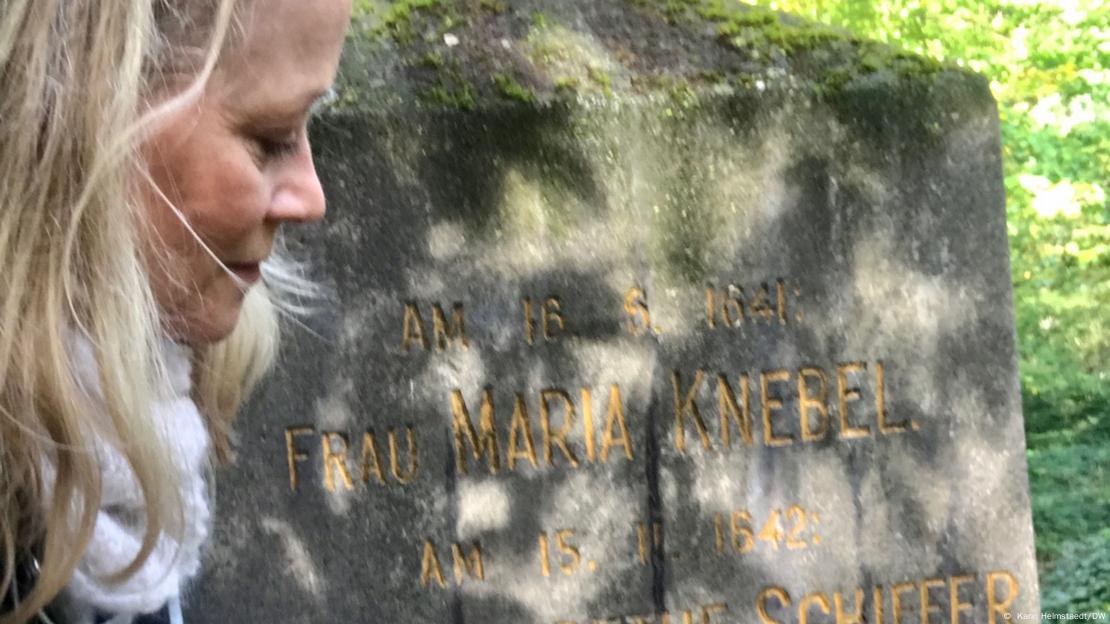
I remember the day I learned we had a witch in the family. I walked with my parents up a leafy hillside overlooking Winningen, a picturesque wine-making town on the banks of Germany's Moselle River. It was a pilgrimage to the top of the "Hexenhügel," or Witches' Hill, where a sombre obelisk commemorates 21 people who died as a result of the Winningen Witch Trials.

For a Canadian kid just discovering Europe, it was quite a revelation. My mind was instantly filled with horrifying images. I ran my finger over the rough engraving of my 9th great-grandmother's name: Margarethe Kröber. She had died over 300 years earlier, burned as a witch in November 1642.

Decades later, I was still haunted by her story and tried to find out more.

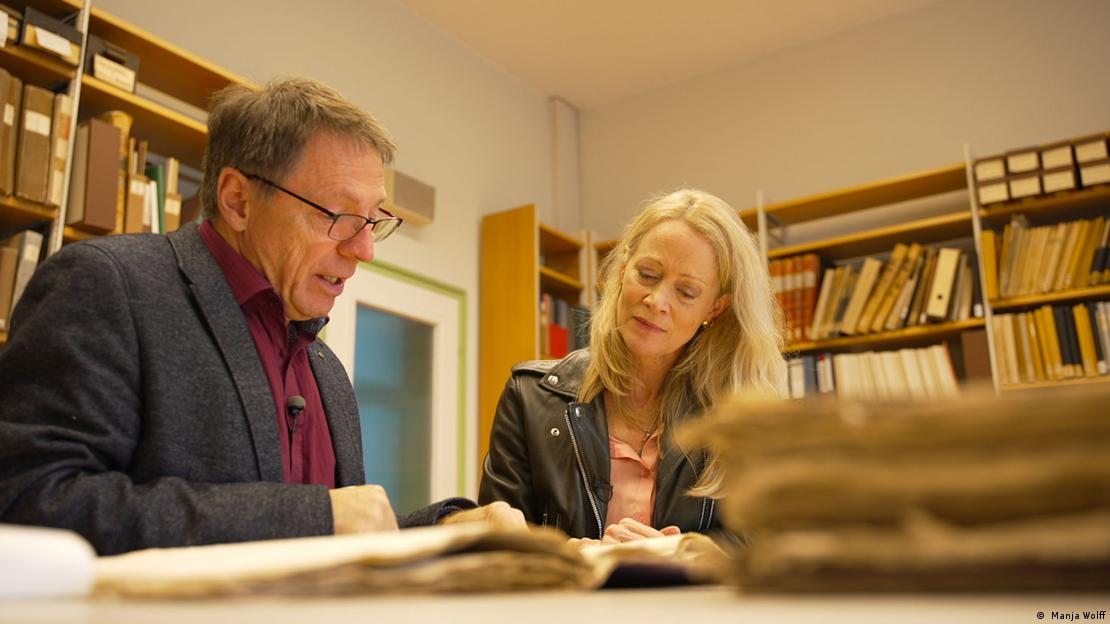
"Her case is particularly tragic," historian Walter Rummel told me. The hands-down expert on the topic in Winningen says the area was unique for the fact that its extensive witch trial records — over 8,000 pages worth — were not only highly detailed but also extraordinarily well preserved. Cross-referenced with tax records, church and commercial registers, they offered a window into how the townspeople reacted to the threat of alleged witches in their midst — and how some knew to use the situation to their advantage.

A complex chapter

The European Witch Hunts represent a complicated chapter, and by its very nature misconceptions abound.


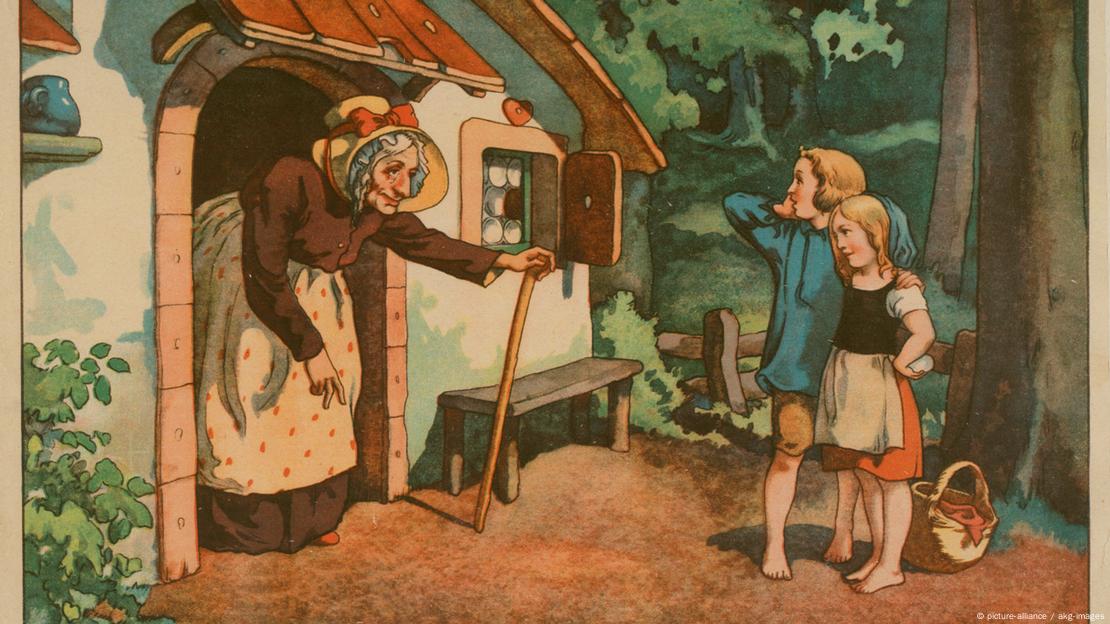
Add literature, radical feminist politics and the rise of Neo-Pagan religious movements like Wicca into the mix — and things get even murkier. From the Brothers Grimm to the Wizard of Oz, mythology surrounding the figure of the witch has been crystallized into our cultural subconscious.
In the Brothers Grimm fairytale, Hansel and Gretel are captured by a witch living in the forest

But beyond the imagery we often see as historical fact — for instance, that witches were burned at the stake in the Middle Ages, that midwives or red-haired women were most likely to be targeted, or that witch hunts were an instrument of the patriarchal Church to keep women down — things were far more complex. Early modern Europe saw a collusion of circumstances — social, political, religious and climactic — that set the stage for three centuries of witch hunts.

Wolfgang Behringer, an expert on early modern history, researched this tumultuous period and found that the major waves of witch hunts in Europe were linked with a noticeable climatic deterioration now referred to as the Little Ice Age (1306-1860), when a prevalence of epidemics and natural disasters meant European populations were massively stressed — and looking for explanations.

"If we assume that failed harvests played a big role in the desire for witch hunts, then we find that most of them are not initiated by the State or the Church, but rather by the populace," said Behringer, who describes with hunts as a "form of protest" initiated by citizens.

Witch hunts had less to do with religion and more to do with forms of settlement, added Behringer: "There are practically no witch hunts in nomadic societies, or if a population is sparse. The village structure where people sit on top of each other, watch each other and get suspicious if any misfortune occurs, is (a more likely scenario for witch hunts) as so often witch trials are about subsistence."

According to Rita Voltmer, historian and author of "Hexen" (2008), the figure of the witch was repeatedly instrumentalized — and romanticized — by early feminists like Matilda Joslyn Gage and even by Nazi propagandists to bolster the argument that the Catholic Church was the main driver of witch hunts.

"They were all part of this movement that took up the idea of the wise woman priestess — sometimes of Celtic origin, sometimes of Germanic origin — and that the blond and red-haired women, our forefathers and mothers, were deliberately persecuted by the Jewish-influenced Christian Church that was out to destroy the true Germanic race," she said.

DW's Karin Helstaedt returned to Winningen to find out more about her ancestor's fate
Image: Karin Helmstaedt/DW

A lethal mix in Germany

Currently experts agree that some 50-60,000 people died between 1450 and 1789 in Europe as a result of witch hunts. And while there were "hot spots" in many countries, it's a grim fact that roughly half — or 25,000 — were killed within the boundaries of present-day Germany.

Nearly 80% of the victims were women, but there were stark regional variations and in places like Iceland, Russia, or the province of Normandy, the vast majority of those accused of witchcraft or sorcery were men.

In Germany, then part of the Holy Roman Empire, the persecution of witches had a legal basis, thanks to the "Peinliche Gerichtsordnung" enacted by Emperor Charles V in 1532. This early penal code, also known as the "Carolina," counted sorcery as a serious crime.

From then on witch trials across the Empire could supposedly be conducted in the name of law and order, but divided as it was into countless entities, and coupled with religious pressure and conflicts in the wake of the Reformation, Germany's social fabric made for a particularly lethal mix.
Extract from the indictment of Margarethe Kröber, 1642
Image: Karin Helmstaedt/DW
Anatomy of a witch trial

Which brings us back to Winningen. Of the 24 people accused there of witchcraft, 19 were executed, two died in prison, and the remaining three managed to fight their case and be acquitted.

My ancestor Margarethe came from a well-situated family. She married Zacharias Kröber, a judge, so together they belonged to the town's social elite. Written records indicate that she had a rebellious nature. She had been married eight years and had two small boys when she was officially denounced for being a witch.

And it turns out she wasn't the only one in the family to die on the Witches' Hill. Margarethe's own mother was in fact the first person in Winningen to be executed for witchcraft. Subsequently her aunt, her cousin and, as time went on, all her sisters and brother-in law met the same fate.
Winningen's 'Hexenstein' commemorates the victims of Witch Trials in the 17th century, including Margarethe Kröber
Image: Karin Helmstaedt/DW

A clear case of the the upper crust being a target of witch hunts, which was typical for this area, but even Walter Rummel agrees the systematic destruction of an entire generation of Kröber spouses is exceptional. "Witchcraft was an accusation that couldn't be topped," he said, "and like a reactor, it irradiated everyone and everything around it."

Through the witch trial protocols, all in ornate 17th-century script, I learned that she was accused of a long list of charges, including attending a Witches' Sabbath, flying and poisoning people.

Margarethe had thumbed her nose at any rumors surrounding her for years, but was eventually arrested, strip searched, shaved and interrogated. She denied all the charges against her, and called on her husband to vouch for her innocence.

But in a heartbreaking turn of events — and ostensibly to protect his position in the town — Zacharias left her in the lurch, claiming that if she was a devout Christian, her body would withstand the torture, and that at any rate, she should simply confess "because you know you're a witch."

The cruelty of Europe's witch trials

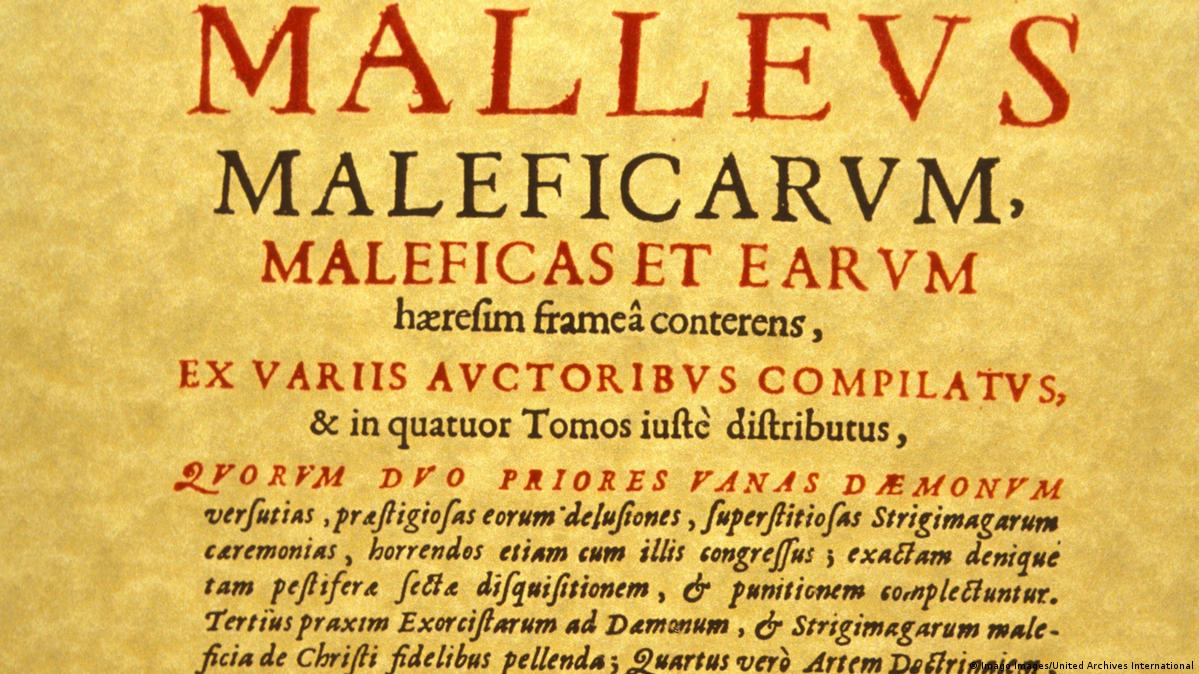
An estimated three million witch trials took place between 1450 to 1750. Around 60,000 people met gruesome deaths.Image: Imago Images/United Archives International
Thousands of deaths at the stake


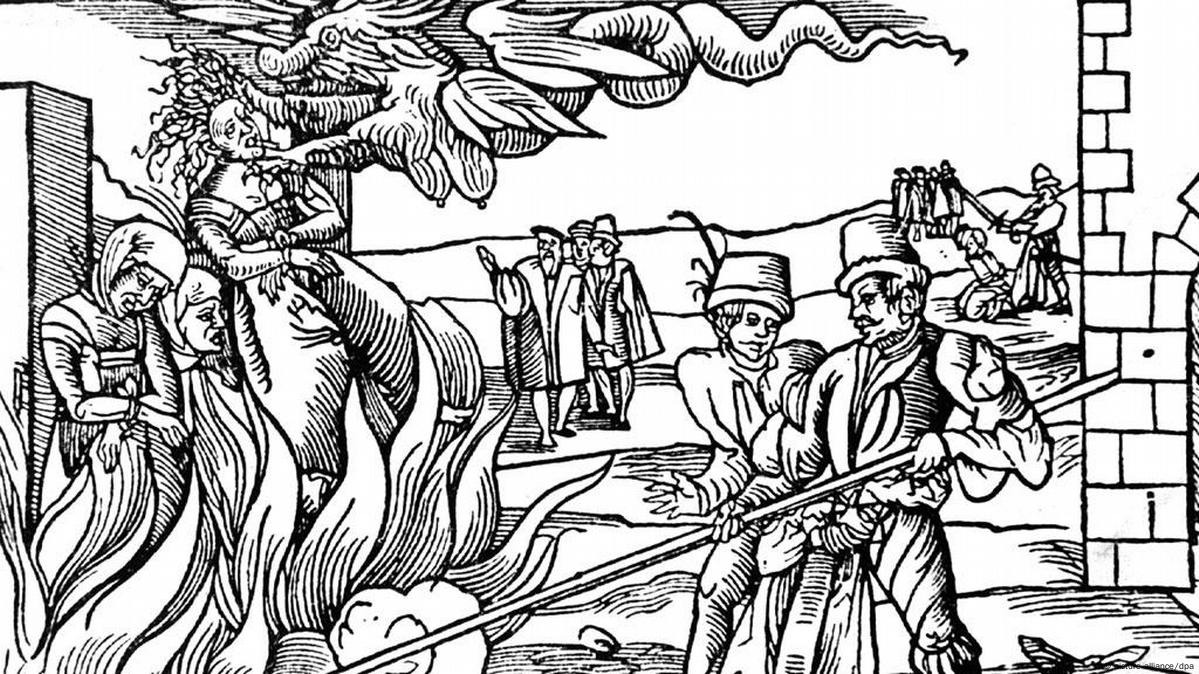
A leaflet in 1555 reports "a shocking scene" and shows the burning of alleged witches in Derenburg. It occurred during the peak of Europe's witch-hunting madness, which took place from 1450 to 1750. Interestingly, it was not way back in the Middle Ages, but rather in modern times that witch hunting reached its peak. In Germany, tens of thousands of "witches" were burned alive.Image: picture-alliance/dpa

9 images


To extract her "confession," the Witch Commission then resorted to torture, using crushing devices such as the so-called "boot," and submitting her to "reverse hanging."

At this point the trial records are excruciating to read. Her screams and suffering — "clamat et torturam" — were duly recorded. Tragically, her only way out of the torment was to lie — a mortal sin from a devout 17th-century perspective.

After two days of agony, she confessed to being a witch, effectively sealing her own death sentence. She was also forced to denounce another woman for witchcraft, ensuring the cycle of witch hunts could continue.

Two days later she was hauled up to the execution site and forced to beg forgiveness from the townspeople who had gathered to witness her execution. Thus exonerated, she was granted a "merciful" death by beheading before her body was burned.

The final anomaly came next in the form of a feeding frenzy: According to records, 250 liters of wine were carted up to the execution site — ensuring the whole town was complicit, while the caterers made a killing. Margarethe's husband was handed the bill.
Karin Helmstaedt and historian Walter Rummel studying the witch trial records at the Koblenz state Archives
Image: Manja Wolff

In short, power, money, envy and resentment were behind the witch trials which, in Winningen, were always directed at society's upper echelons.

The last witch trial in Winningen in 1659 did not end in execution, as families mobilized resources to fight for their alleged witches' cause. It was the beginning of the end — as people simply doubted so many could be guilty of witchcraft.

Witch hunting hysteria in Europe began to die down as key laws were changed. The age of Enlightenment meant science and reason took precedence over superstition. Food was more plentiful, and the advent of insurance meant people were less prone to disaster.

The last alleged witch in Europe was beheaded in Switzerland in 1782 — marking the end of a dark chapter in European history.

Edited by: Elizabeth Grenier


Wednesday, April 30, 2008

Worth Reprinting

April 30 is Walpurgis Nacht; Night of the Witches which corresponds to Samhain; Halloween, October 31 as both days herald a major year changing festival.

Walpurgis heralds May Day, Samhain heralds All Saints Day.

They are opposite ends of the season. One is spring planting and the other is fall harvest.

And of course April 30 is the time the devil asks for his due; 

Tax Time and Walpurgisnacht


LA REVUE GAUCHE - Left Comment: Search results for MAYDAY 

Sunday, July 27, 2025

Better to Reign in Art Than Serve the Algorithm: Ozzy Osbourne as One of the Last Rebels


 July 25, 2025

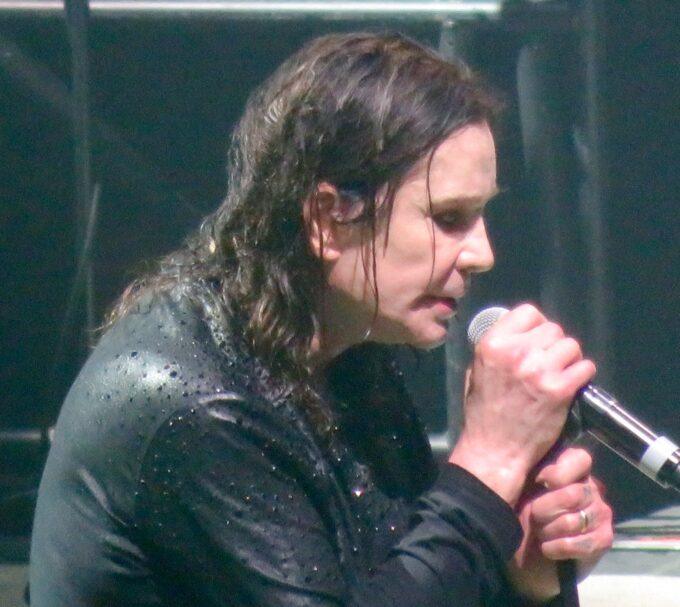
Ozzy Osbourne performing in Birmingham, England with Black Sabbath, February 2017. Photo: Wikimedia Commons. CC BY-SA 4.0

My wife recently told our 23-year-old nephew about how Ozzy Osbourne bit the head off a live bat. It was in 1982 on the appropriately named, “Diary of a Madman,” tour. Blood dripped down the heavy metal dark lord’s chin to an enthralled, yet horrified audience in Des Moines, Iowa. Ozzy thought that the bat was fake, and grew exhausted with subsequent requests for him to use his teeth to decapitate winged creatures. In the immediate aftermath of his death, PETA issued a statement praising Ozzy for the “gentle side he showed to animals.” The bat-homicide was an unintentional anomaly, but it still became an immortal part of rock and roll lore. Our nephew was curious, surprised, and confused. He had never heard of anything so bizarre, a reaction he communicated with repetition of an inquisitive, “No!?”

23-year-olds have come of age in a stale and stagnant culture. It is the culture of the pre-packaged interview, the “social media consultant,” the Instagram filter, the carefully parsed public relations-penned announcement, statement, or apology, the focus group tested product, and the imperialistic, hegemonic algorithm, forever directing people what to consume, when to feel, and how to think. It is all dull, monotonous, and mundane drag; an endless bore that results in a sad status quo of late senior citizens, like the 76-year-old Ozzy Osbourne, being more fascinating and daring than young pop stars. 

Here is a question: When was the last time you remember a pop star doing anything interesting? And by “interesting,” I don’t mean interesting to you, as tastes are subjective, but culturally interesting enough to generate conversation, and to make people respond like my nephew, “What!? No!?”

Pop stars are no longer exciting, adventurous, or innovative, because they no longer live or create as human beings. Instead, they actually self-apply the term, “brand.” In their ambition to become walking and talking, sentient incarnations of the golden arches, white swoosh, or gray apple, they cannot risk surprising their fan base, because surprise could lead to alienation, and alienation could lead to loss of profit. One journalist for the Guardian lamented that his celebrity interview subjects no longer meet in bars for a few drinks, but instead invite him to a hotel suite packed wall to wall with publicists, agents, handlers and unidentified nervous nellies who say, “You can’t ask that” or “you can’t answer that.” Of course, the control team is largely unnecessary, because the celebrities give scripted answers anyway. Their words are meticulously crafted to appeal to the broadest set of social media users. The same newspaper ran an interview with Kathryn Frazier, a “rock star whisperer,” who helps musicians acquire and navigate fame. A major part of the operation is rising to high levels of “influencer” stardom. In a culturally catastrophic inversion, marketing is no longer a tool to sell a product. It is the goal itself. Once the marketing succeeds in building a massive online following for a human “brand,” the record company is ready to sell the product. Creativity and originality are as dead as the bat whose brain Ozzy Osbourne crushed with his molars. 

Vox surveyed the dry and decaying cultural landscape, and concluded, “Everyone’s a sellout now,” advising readers that if they want success in a “creative field,” they have no choice but to rise through the ranks on Tik Tok. Imagine Joni Mitchell posting videos about her shoe collection and skin care routine in the 1970s or Herbie Hancock sharing a “sponsored” reel for Versace, and you can begin to estimate the damages to artistic independence and integrity – and flat out fun – that our society is currently inflicting on itself.

Even though I was already an admirer of Black Sabbath, I reacted like my nephew when an older friend told me about when he saw the inventors of heavy metal for the first time. He had never even heard of Black Sabbath. They were on their first American tour, opening for some inferior band at the Auditorium Theatre. “The lights went out, the whole place was dark,” my friend said, “Then we heard the crushing opening chord to ‘Black Sabbath,’ the lights started flashing like in some crazy movie, and then Ozzy came out in a black jacket and hood, crouched low, looking like a vampire.”

As a guitarist who toughed it out in rock bands his entire life, the introduction to Black Sabbath was a defining moment in his musical formation. On the simpler level of human experience, he said, “I felt excited and scared at the same time.” 

A cliched phrase is “fear of the unknown.” It describes a natural instinct that humans have developed for survival. Black Sabbath’s music was not only scary because of the deliberately spooky aesthetics and lyrics that Ozzy, Tony Iommi, Geezer Butler, and Bill Ward built around it, but also because it was unknown. The invention of a new art form unnerved the audience. Black Sabbath rebelled against the protocol and parameters of their time, and in doing so, became timeless. 

Their first four records constitute one of the greatest runs in the history of rock music, standing alongside any single artist or band in terms of musicianship, originality, and depth. While Ozzy’s antics, such as the aforementioned bat incident, might have become as recognizable as the music itself, his songs were not only musically groundbreaking, but also lyrically brilliant. Critics have a tendency to overlook or dismiss lyrical substance from bands that play heavy music. Black Sabbath was the Edgar Allan Poe of rock and roll, alchemizing the macabre into an inspection of the core elements of life. Their expression of dark passions and questions explored the deepest subject matter, such as mortality, the influence of death on life, and questions of justice. 

“War Pigs” is a strong candidate for the greatest anti-war song ever written. Ozzy Osbourne explained that the “flower children” writing protest songs against the Vietnam War wrote only light material, fodder for sing-a-longs. Black Sabbath aimed to write a song that captured the sound of evil itself. The original title was “Walpurgis,” meaning the witches’ sabbath. “Walpurgis is like Christmas for Satanists,” bassist and co-writer Geezer Butler said, “And to me, war was the big Satan.”

“War Pigs” is one example of something that is increasingly rare in popular music: artistry. “Children of the Grave,” “Sweet Leaf,” “Supernaut,” “Hole in the Sky,” and so many other songs capture a group of musicians who mastered a craft, and fused their mastery with a desire to say something relevant about human life and the state of the world. Crucial to these songs were the songwriting contributions and vocals stylings of Osbounre. His voice was unique and forceful, and it certainly helped that he could make it sound as creepy as a snake slithering down a dark alley. 

The music created a genre, inspiring all the musicians that played Ozzy Osbourne’s massive farewell show on July 5th: Metallica, Slayer, Alice in Chains, Steven Tyler, and on an on. It also made its mark in surprising centers of musical architecture. Jazz Sabbath, a collective of jazz musicians led by pianist, Adam Wakeman, has released three great tribute records to their namesake. 

Larkin Poe, a sister blues-folk duo, credit Ozzy Osbourne as a major vocal influence, “an old-time singer.” 

Ozzy’s solo music never reached the heights of Black Sabbath, but songs like “No More Tears,” “Mama, I’m Coming Home,” and of course, “Crazy Train,” demonstrate that he was more than capable of creating powerful music without the other members of Sabbath. 

None of this is to say that Ozzy Osbourne did not become a “brand” himself. The reality television show that aired on MTV, the TV commercials in which he appeared, and even his touring music festival, Ozzfest, all reaped the pecuniary benefits of his frightening-turned-lovable image. What distinguishes Ozzy from the boring and unimaginative pop stars of the algorithm is that it was an image he created. And when he created that image, he was often battling against record company executives, promotors, and PR stiffs. Finally, it was an image he created in congruence with his music, in order to sell his music. He wasn’t a mere image with songs in the background. No “rock star whisperer” was going to tame Ozzy Osbourne. 

The death of Ozzy Osbourne is most heartbreaking for those who knew and loved him. It is also sad for anyone who cares about cultural vibrancy and musical artistry. Ozzy Osbourne was one of the last rebels who made it on a grand level – selling out arenas and stadiums, rising to the top of the charts. Anyone honest would have to acknowledge that it is impossible to imagine the rise of anyone like Ozzy in the contemporary “marketplace,” which more than anything is what it sounds like – a zone where commerce has finally won its ancient fight with art. 

The Prince of Darkness leaves his Earthly home when the United States is regressing into an increasingly repressive and religious home of Satanic Panic paranoiacs. In 2023, Sam Smith and Kim Petras performed their pop duet, “Unholy,” dressed as devilish ministers, surrounded by fire and backup singers whose outfits borrowed heavily from the horror movie, The Ring. Republican officials, such as Senator Ted Cruz, whined that it was “devil worship,” while right wing podcast buffoons claimed that it was part of a conspiracy to lead children to Satanism. Have these people ever heard of Ozzy Osbourne? What will they do when they find out that he actually sang, “Would you like to see the Pope on the end of a rope?” and “My name is Lucifer, please take my hand”?


In Paradise Lost, John Milton famously writes Lucifer as declaring, “Better to reign in Hell than serve in Heaven.”

Because of his Luciferian rebellion, fighting for freedom, personal expression, and self-earned artistry, Ozzy Osbourne reigned on Earth. Contemporary celebrities know only how to serve. This isn’t exactly heaven. 

David Masciotra is the author of six books, including Exurbia Now: The Battleground of American Democracy and I Am Somebody: Why Jesse Jackson Matters. He has written for the Progressive, New Republic, Liberties, and many other publications about politics, literature, and music. He and his wife live in Indiana, where he teaches at Indiana University Northwest.   

David Masciotra is the author of six books, including Exurbia Now: The Battleground of American Democracy and I Am Somebody: Why Jesse Jackson Matters. He has written for the Progressive, New Republic, Liberties, and many other publications about politics, literature, and music. He and his wife live in Indiana, where he teaches at Indiana University Northwest.  


War Pigs
Black Sabbath
Producer
Rodger Bain
Track 8 on
The Vinyl Collection 1970-1978
Sep. 18, 1970
3

War Pigs Lyrics


As the opening track of the influential Black Sabbath album, Paranoid, “War Pigs” was originally titled “Walpurgis.” Walpurgis Night takes place on the 30th April to mark the eve of the feast day of Saint Walpurga, an 8th-century English missionary to the Frankish Empire. It is also believed to be the night of a witches’ meeting or sabbath. The instrumental outro is entitled, “Luke’s Wall.” It is one of the most-covered songs in history and is frequently ranked among the greatest rock songs of all time.

[Instrumental Intro]

[Verse 1]
Generals gathered in their masses
Just like witches at black masses
Evil minds that plot destruction
Sorcerer of death's construction
In the fields, the bodies burning
As the war machine keeps turning
Death and hatred to mankind
Poisoning their brainwashed minds

Oh, Lord, yeahhttp://

[Instrumental Break]

[Bridge]
Politicians hide themselves away
They only started the war
Why should they go out to fight?
They leave that all to the poor, yeah
Time will tell on their power minds
Making war just for fun

Treating people just like pawns in chess
Wait till their judgment day comes, yeah

[Guitar Solo]


[Verse 2]
Now, in darkness, world stops turning
Ashes where their bodies burning
No more war pigs have the power
Hand of God has struck the hour
Day of Judgment, God is calling
On their knees, the war pigs crawling
Begging mercies for their sins
Satan, laughing, spreads his wings

Oh, Lord, yeah

[Instrumental Outro]


The song talks about war and—like the hippies—Black Sabbath was totally against it, specifically the Vietnam War (occurring at the time), and although Geezer Butler has stated that:

[“War Pigs” is] totally against the Vietnam War, about how these rich politicians and rich people start all the wars for their benefit and get all the poor people to die for them.

And in an interview with Mojo in 2017:

Britain was on the verge of being brought into it, there was protests in the street, all kinds of anti-Vietnam things going on. War is the real Satanism. Politicians are the real Satanists. That’s what I was trying to say.

Ozzy Osbourne has said that:

[The group] knew nothing about Vietnam. It’s just an anti-war song.