It’s possible that I shall make an ass of myself. But in that case one can always get out of it with a little dialectic. I have, of course, so worded my proposition as to be right either way (K.Marx, Letter to F.Engels on the Indian Mutiny)
Saturday, October 31, 2026
Food safety in India: A challenge for the world's most populous country
India's food industry feeds more than a billion people every day. But ensuring that what reaches consumers is safe has become an increasingly difficult challenge. The country has witnessed a rise in cases of food adulteration, with sometimes fatal consequences. As concerns over adulteration and poor hygiene grow, questions are being raised about whether regulators can effectively oversee such a sprawling sector.
Food safety is now a growing public concern in India, exposing the challenges of policing one of the world's largest and most complex food systems.
FRANCE 24's Selma Daoui, Nabeel Ahmed, Supriya Kumar and Jeanne Hutin report.
Foiled Hindu temple plot exposes rising anti-Indian sentiment in the US
In this edition of Access Asia, we explore why anti-Indian sentiment is rising in the United States in the wake of the foiled plot targeting a Hindu temple in Illinois. We ask the executive director of the Center for the Study of Organized Hate what's behind the trend, and whether the rhetoric coming from the Trump White House is to blame.
Plus, Beijing acknowledges Kylian Mbappé's apology, but the French footballer is set to learn the hard way not to cross China's red lines after a joke about a meme depicting Mao Zedong.
Flavio Bolsonaro’s great escape: Is this the beginning of the end for ‘Bolsonarism’?
The Brazilian election results had barely been announced before the defeated presidential candidate, Flavio Bolsonaro, packed his bags and fled with his family to the United States. The move may have dealt a serious blow to the already tarnished family brand, but does it spell the end for “Bolsonarism”?
According to several news outlets, the Bolsonaro family had already left Brazil on Tuesday. Their journey took them through both Argentina and Ecuador before they got on the private jet that would eventually fly them across the continent and keep the embattled far-right politician at arm’s length from Brazilian justice.
A family tradition
Although Bolsonaro’s whereabouts, and the destination for his escape, were initially shrouded in mystery, his ally US President Donald Trump appeared to almost have been waiting for him, greeting him with a US visa more or less the moment he arrived.
By choosing the US exile route, however, Bolsonaro could deal a devastating blow to “Bolsonarism” – the macho ideology championed by his father, ex-president Jair Bolsonaro, and which glorifies the strong man who stops at nothing when the going gets tough.
But Bolsonaro junior is hardly the first in the family to have sought refuge in the US as soon as his political fortunes start to fade. His father did so in 2022 – just two days before Lula was inaugurated for a third presidential mandate – after facing a number of criminal probes. And last year, his brother Eduardo went into “voluntary” US exile after accusations he had sought to convince Washington to impose sanctions on Lula’s Brazil.
Fiona Macauley, a Brazil expert at the University of Bradford, labelled the escapes, and especially the latest one, as “very negative” for the Bolsonaro family brand.
“It’s an incredible admission of guilt,” she said, adding that many of the people who voted for him are likely to be disappointed.
“If you were one of the nearly 60 million people who voted for Bolsonaro, you would now be feeling very bitter about the lack of courage.”
In other words, the values defining Bolsonarism become hard to defend when the Bolsonaros’ systematically run to Trump for help every time they face any kind of legal woes.
Larissa Peixoto Gomes, a specialist in Brazilian politics at the University of Edinburgh, said it looks “really bad”, especially to undecided voters “who were key” in the elections. Shadow government in the works?
Indeed the Bolsonaro family's multiple escapes make president-elect Lula, who has himself been subject to investigations and even served time in prison before finally being acquitted, look even stronger.
“It makes him look good,” Chris Lyon, a Brazil expert at the University of Birmingham, said. “Because when he faced corruption charges, he stayed, he didn't run away.”
With the elder Bolsonaro currently under house arrest (where he is serving a 27-year sentence), and two of his sons risking lengthy prison terms if they return to Brazil, it has become increasingly difficult for the family to exercise its political influence.
But experts say they could potentially set up a parallel or shadow government in the US, mimicking the Cuban or Venezuelan opposition in exile models.
However, Janaina Maldonado, a Brazilian politics expert with the German Institute for Global and Area Studies (GIGA), said that “the Brazilian scenario is completely different from what we had in Venezuela and what we have in Cuba”, making both her and her peers very sceptical that such plans would actually work. Not least because much of the international community – save Trump who suggested the election was “rigged” – has already recognised Lula as the legitimate winner.
Another potential hurdle is the Brazilian diaspora.
Macauley said that in contrast to the Cubans and Venezuelans in the US, most Brazilians living there are economic migrants and are not looking for a leader to rally behind. The Bolsonaro reserves
This week's escape hardly spells the end for Bolsonaro politics being played out in Brazil. The Bolsonaro family is big and still very influential. “You've still got four Bolsonaros in the national elected office,” Lyon said.
The most prominent of them is Michelle Bolsonaro, Jair Bolsonaro’s wife who was recently handed a senator seat in Brasilia, as well as the couple’s second oldest son Carlos – also known as the family’s social media mastermind – who is a senator in Santa Catarina.
But there are more. The youngest son, Renan, is a federal deputy, and so is Bolsonaro senior's brother, Renato.
Corneel Weyers, a Brazil expert at Sciences Po’s Centre for International Studies (CERI) in Paris, said that while Carlos is expected to “carry on the Bolsonaro legacy”, Michelle has equally become a “major player”.
“She has a lot of influence and visibility with parts of the ‘Bolsonarista’ electoral coalition, especially among women and evangelicals.”
The day after the Brazilian election, the president of Bolsonaro’s party even had a meeting with her to discuss the party’s future.
Maldonado said the Bolsonaros who have just entered the political arena are likely to play the “political persecution” card going forward, hoping to galvanise the radicalised supporters who already subscribe to that idea even more.
“This part of the electorate is not minor,” she said. Flavio Bolsonaro “got 59 million votes, and these people have a lot to say still”.
This article was adapted from the original in French by Louise Nordstrom.
Star Wars: Has Russia's war with Ukraine gone intergalactic?
Russian made an unprecedented combative move this month as one of its military satellites, the Cosmos-2612, encroached upon the orbit of Ukrainian commercial satellite, Iceye-X36, in behaviour deemed "threatening" by the US State Department. Norbert Pouzin, an orbital analyst at French space tech firm, Aldoria, described the mercenary manoeuvre as the first of its kind.
Has space become a new frontier in Russia's war with Ukraine?
Russian military satellite Cosmos-2612 carried out a manoeuvre between October 15 and 18 that brought it “dangerously close” to Ukrainian commercial satellite, Iceye-X36. The move was described by US Under Secretary of State for Arms Control and International Security as "threatening".
Operated by Finnish company Iceye, Iceye-X36 is a Finnish-American civilian satellite equipped with Synthetic-aperture radar (SAR) to provide satellite images to the Ukrainian Armed Forces.
The US State Department said Russia's tactic was consistent with “in-orbit military operations”
Analysts specialising in space surveillance have been following Cosmos-2612 since its launch in April.
"Cosmos-2612 was one of six satellites launched in total. It was immediately apparent that this wasn't a classic deployment. As soon as they took off, the satellites started changing orbit to pursue Iceye satellites,” said Norbert Pouzin, an orbital analyst at Aldoria, a French space surveillance firm.
Cosmos-2612 took off on April 6, 2026 alongside Cosmos-2609, Cosmos-2610, Cosmos-2611, Cosmos-2613 and Cosmos-2614. KeepTrack, a site specialising in satellite navigation, enables viewers to track their paths.
Orbit re-routing – as has been the case of the Cosmos satellites – is a move that consumes a lot of fuel. It’s also the first step in approaching another satellite, Pouzin explains:
"If two satellites are travelling in the same orbit, then they don’t need as much fuel to approach one another. Changing directions in space uses a lot of fuel. But once in the same orbit as another satellite, you’ve already executed the most costly move fuel-wise, if you then want to carry out an approach.” From a kilometre to within just a few hundred metres
As the imaging data via site, Satellite Tracker, corroborates, Cosmos-2612 diverted from its original position – around 400-500 km from Iceye-X36 – to get closer to the Finnish-American satellite.
"On October 15, Cosmos-2612 was within 5 kilometres of Iceye-X36. Its position continued to narrow in on the satellite on October 16 and 17, before finally getting to within a few hundred metres and a kilometre of Iceye-X36 ,” Pouzin said.
Satellite imaging company Vantor published a photo of the two satellites on October 22, depicting their orbits withing just 1.02 kilometres of one another. This photo of COSMOS-2612 and ICEYE-X36 was taken on October 17, 2026. Source: Vantor.
Data from KeepTrack also revealed that Cosmos-2612 and Iceye-X36 later embarked on the same orbit, meaning the Russian satellite was “following” the Finnish-American satellite.
So why did Cosmos-2612 carry out this “threatening” manoeuvre?
Given the lack of debris, it doesn’t appear that Iceye-X36 was the target of a “kinetic” attack – that is, a physical strike involving a collision or the launch of a projectile. But according to Pouzin, the manoeuvre by Cosmos-2612 could be interpreted as a form of exerting pressure on Ukraine, as it is the direct recipient of the data gathered by the Iceye satellite:
"SAR satellites have unique observation plans [Editor’s note: a schedule that coordinates how radar satellites can scan specific parts of the planet.] If an operator knows about these, then he could – for a short time – disrupt the satellite’s mission, potentially causing repercussions for ground-based or maritime operations, for example."
"While Russia regularly launches military satellites in the same orbital planes as classified American military satellites; carrying out this particular kind of approach on a commercial satellite while in a low orbit is something new. Furthermore it seemed to be non-cooperative in nature: we are dealing with two actors who are not on the same side and these are satellites not operated by the same entity."
The initiative also revealed something about Russia’s capabilities, Pouzin concluded:
"The move demonstrated a certain agility by the Russian operator, a skilled knowledge of the space domain, and a very high level of mastery in this type of navigation.”
'Five churches set on fire by Muslims?' Fake news by Islamophobic social media accounts Several social media accounts associated with sharing anti-immigrant views claim French Muslims were responsible for burning five churches on October 17 – the day the nation was rocked by en masse protests. But both this number and story are fictitious. The French government agency that monitors religious heritage sites confirmed only one fire in a church occured in recent days; its cause unknown.
The fake claim that groups of Muslims are responsible for setting fire to five churches in France over the course of a single day has been circulating online. The acts supposedly took place on October 17 when violence erupted across several French cities, marring a series of planned peaceful demonstrations.
The claim has mainly been propagated by accounts known for anti-immigrant and islamophobic rhetoric, some of which have exploited footage of previous protests, taking them out of context. 'Muslims want to destroy Christianity'
American conspiracy theorist and podcaster Alex Jones made the claim originally via a post on X on October 25. It included a video purporting to be of one of the churches on fire, but the FRANCE 24 Observers team was able to geolocate the video to confirm in reality it actually showed a rubbish bin on fire in front of an apartment building in Lyon. In early October, Jones also made the unsubstanciated allegation that Catholic priests had been set alight during the protest led by French high schoolers.
"European heritage and history will soon be nothing but ashes without Remigration", read a post by a pro-Trump account, MAGA Nation 47, on X. The post featured a video of the Saint-Michel Church in Bordeaux, appearing to be on fire. But this post also used out-of-context images to deceive viewers. The video was actually filmed back in July and it shows a fire that started at a homeless encampment – which did not reach the church. Several media outlets misreported the false claims.
And such stories haven’t just come from the American far-right. The FRANCE 24 Observers team found one of the most widely shared posts to derive from an Italy-based account. In a Facebook post from October 23, a social media user claiming to be Catholic and with a history of Islamophobic posts – Mauro D. – declared five churches had been set on fire the day prior “by Muslims who want to destroy Christianity”. While he didn't specify details around the location of the churches, his post was shared nearly 10,000 times.
His post featured an image of a fire at the Parisian church of Saint-Sulpice. But the photo dates from 2019 when its door caught fire. Media coverage and early findings by the police laboratory indicated possible arson.
Our team contacted the author of the post but he did not respond.
In reality, there have been no fires from October 17 attributed to anyone of Muslim faith, Vice President of the Observatory for Religious Heritage, Maxime Cumunel told FRANCE 24 Observers.
The association – which records any damage to religious structures – only recorded a single fire around this period: at Saint-Médard in Fenouillet, a village near Toulouse.
In a statement published on October 21 by the city council and picked up by a number of media outlets, it has not been possible to determine the exact cause of the fire. Fires affect 20 to 30 churches a year
It isn’t the first time that false information about church fires has circulated in France. Back in July, the FRANCE 24 Observers team looked into misinformation about a fire at a disused church. At the time, the fake news story was shared by far-right Spanish accounts claiming the fire was linked to “mass immigration.”
Maxime Cumunel told our team that there are many causes for church fires – most often to do with disrepair.
"We are talking about numbers that remain relatively low, with only about 20 to 30 structures affected by fire each year,” he shared.
The Observatory for Religious Heritage published a letter on October 21 denouncing several acts of church vandalism that took place amid the general violence on the periphery of the October 17 protests, including “hateful graffiti” left on the Church of Sainte-Marie-Madeleine des Chartreux in Marseille.
In 2025, a total of 843 anti-Christian acts were recorded in France, representing 34% of all recorded anti-religious acts, according to data published by the Ministry of the Interior that cited the Observatory. This represents a 9% increase on 2024. In 87% of such cases, acts involve damage to property (including graffiti, damage, desecration and theft of sacred objects).
"We are seeing an increase in damage to cultural buildings because we are in a period of crisis. Notably, we are seeing the theft of objects made of precious metal, like chalices, because they have market value,” Hadrien Lacoste, vice president of the Observatory told our team.
Israeli election: 'Netanyahu did not win, he lost dramatically,' former PM Barak says
In an interview with FRANCE 24, former Israeli prime minister Ehud Barak said Prime Minister Benjamin Netanyahu "did not win" this week's election in Israel but "lost dramatically", and that his rival Gadi Eisenkot should ally with Arab parties. Barak also suggested that claims of Qatari funding for an Arab party aimed to distract from an ongoing corruption scandal, and warned that Netanyahu was ready to strike Iran to stay in power.
Speaking to FRANCE 24 from Tel Aviv, former Israeli prime minister Ehud Barak said that, counting the Arab parties, Benjamin Netanyahu's opponents won 67 seats, against 53 for his right-wing and far-right coalition.
"Netanyahu did not win. He lost dramatically," Barak said.
Opposition leader Gadi Eisenkot and his allies have ruled out a coalition with Arab parties, but Barak believes they "can change their mind", as Netanyahu would no doubt do in their place.
"If Netanyahu had a similar problem, he would immediately invite Mansour Abbas" (leader of the Arab party Raam) and "give him the role of a minister of interior," Barak said.
Netanyahu's camp says the election was rigged, citing alleged Qatari funding of an Arab party, which Doha denies. Barak suggested the claim aimed to divert attention from "Qatargate", the investigation into alleged ties between two of Netanyahu's close aides and Qatar.
"The real suspect should be Netanyahu's own closest aides and government," he said.
Finally, Barak warned that Netanyahu was "ready" to strike Iran, possibly after the US midterm elections, in order to "remain in power until the next (Israeli) election".
"It has nothing to do with the national interest of Israel," he said, dismissing Netanyahu's claims that Iran was "planning something" as "fake news".
Canada and EU seek to 'withstand shocks together' through closer alliance Canada and the European Union on Friday held talks to deepen cooperation on areas spanning critical minerals, artificial intelligence and trade; to better navigate global tensions and reduce reliance on the United States and China.
The two parties are set to unveil a series of deals – from critical minerals to artificial intelligence – and lay the groundwork for a broader alliance, also open to other democracies seeking to better navigate global trade tensions.
"It means affordability, more competition, more choice, easier access. It means opportunity," Canadian Prime Minister Mark Carney said of closer cooperation with the EU, as he arrived at the talks.
"And it means, at its base: sovereignty, greater resilience, ability to withstand shocks together."
Already sharing a free trade agreement, Canada and the EU have sought to move closer together since US President Donald Trump's return to the White House upended relations with Washington's traditional allies.
Both Canada and the EU have been hit with US tariffs and territorial threats. ‘Stronger together’: Canada’s Carney welcomes EU ‘associate member’ proposal
President of the European Commission, Ursula von der Leyen said Canada could not become a "full-fledged" EU member due to its geographical location, but said the bloc wanted to bring it "as close as possible".
A senior EU official explained the new relationship would be unique to Canada.
It entails aligning policies – such as on climate and artificial intelligence – Canada joining some EU programmes, and creating a stable governance framework, the official said.
The partners are expected to kick off with a series of deals on Friday.
Critical minerals are a key focus of the two-day summit which officially began Thursday evening.
They are needed for green technologies such as batteries and wind turbines that Europe sources mostly from China but are also in plentiful stock in Canada.
But Canada needs massive infrastructure investment to jump-start its mining industry.
An agreement allowing the European Investment Bank to back Canadian critical mineral projects is expected to be unveiled at the summit.
'Alliance for the Future'
Brussels and Ottawa also want to collaborate on AI, a field where they are playing catch-up with the United States and China.
Europe is ready to open its supercomputing infrastructure to Canadian researchers, industry and start-ups, von der Leyen said.
On Thursday, Ottawa announced a CAN$1.6 billion ($1.1 billion) investment in Canadian AI firm, Cohere. The company has recently partnered with Germany's Aleph Alpha in a move that Carney said was an example of what Europe and Canada could do together.
"We are not waiting for the future of AI to be decided somewhere else by those we don't know or by those we don't trust," Carney said.
A digital trade deal allowing faster and cheaper online transactions is also in the offering.
The two parties should also work towards Canada's participation in EU initiatives like the Erasmus programme, which allows university students to spend a semester abroad, and the Galileo satellite programme – an alternative to the American Global Positioning System (GPS).
The summit will additionally establish the basis for a larger "Alliance for the Future" open to other "trusted partners" such as Japan, South Korea or Australia, the senior EU official said.
This idea is to form a "common space for economic prosperity" and better coordinate trade policies such as tariffs to avoid mutual harm, the official said.
"There is always a risk that inadvertently you hit one of your partners with your economic measures," the official noted.
(FRANCE 24 with AFP)
Canada and EU drop associate membership plan in bid to deepen ties Canada and the European Union will pursue closer ties but have dropped a proposal for associate EU membership, according to a joint declaration ahead of Thursday’s summit in Montreal. Prime Minister Mark Carney is seeking to reduce Canada’s reliance on the US, despite warnings from Donald Trump.
Canada and the European Union (EU) agreed to "ever closer association" but dropped the contentious idea of associate EU membership in a joint declaration seen by Reuters ahead of a Montreal summit hosted by Canadian Prime Minister Mark Carney starting on Thursday.
The declaration, which officials plan to make public on Friday, said work to define the Canada-EU relationship would continue until another summit next year.
European Commission President Ursula von der Leyen's suggestion of associate membership six weeks ago had been a divisive issue in negotiations among EU countries on the summit declaration, with Germany leading a group that argued they could not sign up to a concept that had no legal status and had not been fleshed out, diplomats said.
Deeper ties to Europe are an important part of Carney's strategy to reduce Canada’s economic and security reliance on America since US President Donald Trump imposed tariffs on Canadian goods. Still, Canada's efforts to draw closer to the EU risk angering Trump as trade talks between Canada and the US continue.
There is no precedent or legal definition for an EU “associate member”.
Trump previously called the EU’s proposal to make Canada an associate member “laughable” and said if he interpreted the move as a “hostile act,” the US might stop trading with Europe “on many things”.
Carney told reporters on Tuesday that the summit this week is the launch of further formal negotiations that will take another year.
“The good news is it doesn’t matter about specific names or nomenclature,” Carney said. “What matters is the difference it will make to the lives of Canadians.”
A previous draft statement had included at least two references to Canada as an associate member, including an acknowledgement that defining the term would take another year.
The statement includes a joint initiative to improve international connectivity between Europe, Canada and Asia through "new subsea cable infrastructure". It also proposes conducting a joint feasibility study on Canadian liquefied natural gas exports to Europe and enabling young Canadians and Europeans to work across the Atlantic.
Julian Karaguesian, a former adviser at Canada’s Finance Ministry, described the summit as “a bit of a show”. “Canada’s effort to be closer friends with the EU is very ill-defined,” he said, adding that increased collaboration with the EU would not necessarily address Carney’s drive to diversify the country's relationships. Canada ships nearly 70% of its exports to the US while the EU accounts for about 9% of Canada’s total trade.
Carney's office declined to comment.
'Highly provocative' statement
The statement says European and Canadian leaders pledge to reaffirm their commitment to a rules-based international order and that they “deeply regret” the sanctions the US imposed on the Netherlands-based International Criminal Court.
“All that talk of multilateralism and support for international law is basically like sticking a finger into President Trump’s eye,” said Barry Appleton, an international trade lawyer and fellow at the Balsillie School of International Affairs in Waterloo, Ontario.
Appleton said Canada and the EU agreeing to work closely on economic security measures might anger the US. He added that the statement commits Canada to making its AI and digital rules work alongside Europe’s, when Washington considers EU-style digital regulation a trade barrier.
“This is a highly provocative statement from the EU and Canada,” Appleton said.
The White House said in response to a request for comment that US and Canadian trade officials are talking.
EU officials said at a briefing Tuesday that the summit was a “historic milestone”, saying it was about renewing their commitment to Canada and shaping an ambitious new chapter in the partnership. They said all member states support the closest possible relationship with Canada.
(FRANCE 24 with Reuters)
‘Scared of crossing the border’: The Arizona farmers who rely on Mexican workers
From our correspondent in Arizona – The vast produce farms of Yuma County, Arizona, rely heavily on foreign workers who cross the border every day from Mexico. John Boelts, a farmer and staunch supporter of US President Donald Trump, praises the administration’s strict border controls – though he says that competing Republican factions have complicated efforts to hire foreign labourers.
A melon in one hand and a machete in the other, John Boelts squints at the fruit, carves off a hunk and pops it in his mouth. Out in his sprawling fields in Yuma, Arizona, he knows how to spot a ripe cantaloupe. Even in early October, the temperature still reaches 43°C (109°F) in the region after having soared to a scorching 47°C at the start of September – well above the seasonal average. The harvest begins next week.
“The melons are starting to pull sugar, they are getting ready,” he said, dressed in jeans and a pristine checkered shirt.
“Once they're ready to harvest, you typically have about two days to get the melons harvested and off the vine.”
Last spring, this race against the clock took a heavy toll. Even as the produce stood ripe in the fields, the Mexican labourers he had hired to bring in the crop still hadn’t received their working visas. They finally arrived, six days late.
Midterms 2026: The farmers calling for more migrant workers
They lost most of two or three fields, he said, adding that it could have cost him as much as $100,000.
“Those fields were the fields we probably could have made the most money off of during the spring season this year – we were super frustrated.”
Boelts, 49, is one of the main figures of this agricultural sector that depends so deeply on foreign labour. He sits at the head of Desert Premium Farms, an agricultural operation he set up with his wife Alicia and another couple. He also presides over the Arizona Farm Bureau.
To get to the Boelts’ farm, you first have to go through Wellton, a small town in the middle of the Sonora Desert. The roads cut straight between the fields, bordered by clay-coloured mountains. Here, there are no hedges or trees, just vast fields in brown and green, dotted with tractors and workers tending row after row of lettuce, covered head to toe to shield them from the sun.
Standing in the arid landscape, it’s hard to imagine that this region grows between 70 to 90 percent of all the leafy greens and vegetables consumed by the US and Canada during the long winter stretch between November and April.
Irrigation channels bring water from the Colorado River to nourish sweeping fields of lettuce, broccoli, cauliflower, spinach and melon – the fields of Yuma bring forth these greens on a massive scale, earning southwest Arizona its reputation as North America’s “winter salad bowl”.
These farms rely heavily on foreign workers – many of whom live on the other side of the border in San Luis Rio Colorado, in Mexico. In the high season, around 15,000 farm labourers cross the border every day to work in American fields, according to the Arizona Farm Bureau.
The hardline immigration policies put into place by US President Donald Trump, including the mass detention and deportation of suspected undocumented migrants by Immigration and Customs Enforcement (ICE) agents, have only complicated the flow of workers. ‘People are scared’
One man spoke to FRANCE 24 near an irrigation canal while helping his coworkers shift heavy pipes, explaining in Spanish that some labourers have become more reluctant to cross the border since Trump returned to power.
“They’re not comfortable with the laws, they think they won’t come anymore because of the problems linked to immigration,” said Alan, who has worked these fields for five years. “It’s not as easy as it was before – things have really become more complicated under Trump. People are scared of crossing the border, because they can get sent off to other places.”
In another field, Ana said that she now has to anticipate long lines at the border crossing. She said she regularly gets there at 1am to avoid missing the bus that brings workers from the border to the fields.
“Sometimes we wait one or two hours in line,” she said.
Ana said that she had, however, noticed a recent reduction in the wait time, which she attributes to the renovation and expansion of the border crossing. “It’s really modern, and a little bit faster,” she said.
Once in the fields, Ana works beneath the pounding sun, skin hidden behind long sleeves, gloves, and a black cap and mask. Around her, colleagues work to the sound of music. It’s tiring work, she said, but she appreciates the solidarity she feels with her fellow workers.
“We know each other really well,” she said. “We support each other, and we make a good team. And in any case it’s very pleasant to work in the fields, in the open air."
The work continues until midday.
Ana, a farm worker hired to work the fields in Wellton, Arizona.
To work his fields, Boelts directly employs between 30 to 50 workers and puts out calls for teams of between 30 to 100 temporary workers every day. Almost all of them are Mexican.
“We're short of workers in American agriculture,” he said. “Each year, for the last 20 years, we've been more in need of people. No one hardly ever comes around looking for work – it's pretty rare to have somebody come asking if they can work for us.”
Workers on his farm are paid above the minimum wage, and sometimes more than $20 an hour depending on the technical skills required for different tasks, he said.
“We'd be glad to hire folks that are here in the country, a legal workforce here in the country,” he said. “But we don't have it.”
Of the more than 415,000 job listings in agriculture posted over the 2025 fiscal year, just 182 received domestic applications. For Boelts, the conclusions are simple enough to draw – there just aren’t enough willing US workers to meet the industry’s needs.
Farming is about more than just picking fruit, he said. Bringing in a harvest requires specific skills, and not every worker is suited to each position.
“The federal government wrongly thinks that people who work in agriculture are unskilled workers,” he said. “It’s absolutely not the case.” Bringing in ‘guest workers’
To hire foreign workers legally, farmers can apply through the H-2A visa programme set up in 1986. It only allows employers to hire foreign workers temporarily if they are unable to find US citizens to fill the posts.
Employers are first required to establish that they have tried to recruit locally, as well as to respect basic obligations around salaries, accommodation and transport.
While Boelts considers the programme essential to his business, he complained that navigating the system often felt like running an obstacle course.
“If the programme was easier to work with, streamlined and simpler to use – if you didn't have to hire a professional HR team and lawyers to be able to work with the federal government, to have to work with four or five federal agencies, wait nine months, plan nine months in advance for the workers you need ... the whole idea is crazy, really,” he said.
The sight of melons wasting in their fields shows how costly this system can be. Boelts is calling for the scheme to be reformed, as called for by Republican Congressman Glenn “GT” Thompson, who has been arguing for the programme’s modernisation in Congress.
Boelts credits the Trump administration for trying to streamline the programme, while at the same time slamming the political obstacles that he said are holding up the reforms.
“It's getting derailed by folks that are telling all kinds of lies, that talk about the H-2A programme like it's an immigration programme,” he said. “It's not. It's a guest worker programme.”
For Boelts, the distinction is fundamental: bringing in foreign workers on a temporary basis to meet specific needs has nothing to do with opening up the US southern border. ‘Tired of being a political football’
He is not shy about his support for the current administration.
“I think President Trump and [Agriculture Secretary Brooke] Rollins are doing an amazing job,” he said, though he suggested that the president could sometimes let himself be steered in the wrong direction.
He called on Trump to publicly defend the H-2A visa programme reforms.
“Farmers are tired of being a political football,” he said. “We're tired of being left with certain administrations making things more difficult.” He added that he hoped the Republicans would be able to work together on agriculture after the upcoming midterm elections.
For Boelts, the priority is securing the border while still ensuring there are legal pathways for the foreign workers that the US economy needs.
He said that one of his employees was struck in the head by a “drug trafficker” while watering the fields at night in an apparent attempt to steal his vehicle. The attacker fled over the border to Mexico, he said, with his haul in tow.
“That's the sort of crap we have to put up with here,” he said. “Our border regions can be safe places of legal commerce, and they don't have to be places where there's contraband and human smuggling going on.”
Boelts said he doesn't see workers getting more worried about crossing the border – but not everyone agrees.
“We live in a community here where 15,000 people cross the border each morning from November until sometime in March, when the season starts to wind down,” he said. “Those people aren't afraid to come to work ... I have not seen them act in fear. People that have a legal right to work, they go to work. That's it.”
In the fields, the day’s work goes on. The labourers will soon be able to take a short lunch break before returning to the fields for a few more hours’ work. Later in the afternoon, once their work is done, they will get back in the buses that will take them across the border to San Luis.
Behind the difficulties of recruiting, another anxiety is weighing more and more heavily on the minds of Arizona’s farmers: the growing scarcity of water, a crucial issue in the midterms.
But Boelts worries that this protection may soon not be enough.
“The only reason the system hasn't run dry is agriculture typically isn't using its full allocation,” he said. “We're worried we're going to be up against it in the next year or two.” This article has been adapted from the original in French.
With the US midterms approaching, we examine the power of the women's vote in an election that will shape the balance of power in Washington during Donald Trump’s final two years in office. Annette Young talks to Annie Karni, congressional correspondent for The New York Times and Kelly Dittmar, Director of Research at the Centre for American Women and Politics.
They have left everything behind to get away from US President Donald Trump's America. Entrepreneurs, academics, scientists and students: tens of thousands of US citizens have moved to Ireland in recent years. Last year alone, some 10,000 Americans settled there and nearly 100 even applied for asylum – citing political, racial or gender persecution.
For some US citizens, moving to Ireland feels like coming home. Around one in 10 Americans claims to have Irish roots, with ancestors who fled famine and hardship in the 19th century onwards, and applications for Irish passports have never been higher.
Emma Hensley is a postgraduate student at Trinity College Dublin. For her, Trump's America no longer guarantees women's rights. In County Cork, southern Ireland, Daniel Rothman has just arrived from Alaska, where he lost his job at NOAA, the US agency for oceans, fisheries and climate policies, after budget cuts imposed by Elon Musk's Department of Government Efficiency (DOGE). Finally, Ophelia and her wife Zahra, a transgender couple, describe the increasingly dangerous discrimination faced by transgender people.
Ireland is welcoming these new arrivals from the US, but they could upset a fragile diplomatic balance. Dublin is a long-standing ally of Washington and one that relies on US investment to sustain its growth.
FRANCE 24's Chloé Domat, Sophie Guignon and Merlin Ferret report.
'Let's reclaim our future': Thousands protest in Italy over rising living costs
Thousands of protesters marched across Italy on Friday over the rising cost of living, education funding cuts and government spending on defence. Minor clashes were reported in the northwestern Italian city of Turin, while police maintained a heavy presence across the country.
Thousands of students and workers took to the streets across Italy on Friday, calling for more school funding and relief from the soaring cost of living, amid a high police presence to avert possible clashes.
Friday's Italy-wide protests came after weeks of demonstrations led by students who set up tent camps and occupied schools to make their demands heard – fuelled by similar movements in nearby France and Spain.
A general strike called by Italy's USB trade union attracted thousands of workers to Friday's protests, including truck drivers, taxi drivers and farmers, each of whom have rallied in recent weeks over the spike in fuel prices and to oppose rising defence spending.
Marches were held in dozens of cities up and down the country, including in Bologna, Genoa, Naples, and Turin – where a few minor skirmishes between protesters and riot police occurred at the start of the demonstrations.
In Rome, university student Beatrice Chilelli told AFP students were "at a breaking point".
"They can't afford to pay exorbitant tuition fees, and rent... which weighs heavily on their parents' shoulders," said the 21-year-old, citing student housing in Rome that could reach 1,200 euros per month for a single room.
Thousands of people left Rome's central Termini train station, accompanied by two tractors and a taxi, making their way past the Colosseum as they waved flags, unfurled banners and shouted into megaphones.
An AFP photographer witnessed a heavy police presence outside the Economy Ministry, which the procession passed by.
"We need more houses, not bombs!" sang one group in the crowd, as a troupe of protesters gave a brief performance imitating terrified civilians in a Gaza bombing raid.
The Milan protest also began at the central train station, but then headed outside the city – far from the centre where young vandals had looted stores, destroyed property and clashed with police two weeks ago after another sanctioned cost-of-living demonstration.
"Let's reclaim our future" read one banner unfurled by students in Milan.
Police in riot gear blocked off streets, but no major clashes had been reported as of midday.
Besides students, the demonstrators at Friday's protest included teachers, workers and retired people, with one man in Rome bearing a sign that read "Pensioners – Pissed Off and Furious".
Many pro-Palestine flags were seen in the crowds in major cities.
Ahead of the demonstration, a spokesperson for the OSA student movement, 18-year-old Laura Teresi, told AFP she expected a "massive" mobilisation that would empty out schools.
"We will take to the streets to denounce the rearmament policies of (Prime Minister Giorgia) Meloni's government and the rising cost of living, which is weighing ever more heavily on families, workers and students," she added.
The students will also protest against the "endless budget cuts to teaching", Teresi said. Law and order
Following the October 17-18 weekend of clashes between youth and police in Milan, Meloni's hard-right government toughened laws on public gatherings while easing rules on detaining minors.
The government also last week agreed on a 175.2-million-euro ($195 million) aid package for truck drivers, farmers and fishermen hit by soaring fuel prices linked to the war in the Middle East.
Measures in favour of young people and families are also planned in the draft 2027 budget currently being discussed among the various governing parties, such as an annual bonus of 2,500 euros for workers under 30.
"I hope this can provide answers for young people in general... who feel that the state doesn't care about them," Meloni said at a press conference on Wednesday, stressing that these measures were "not for those who smash windows".
(FRANCE 24 with AFP)
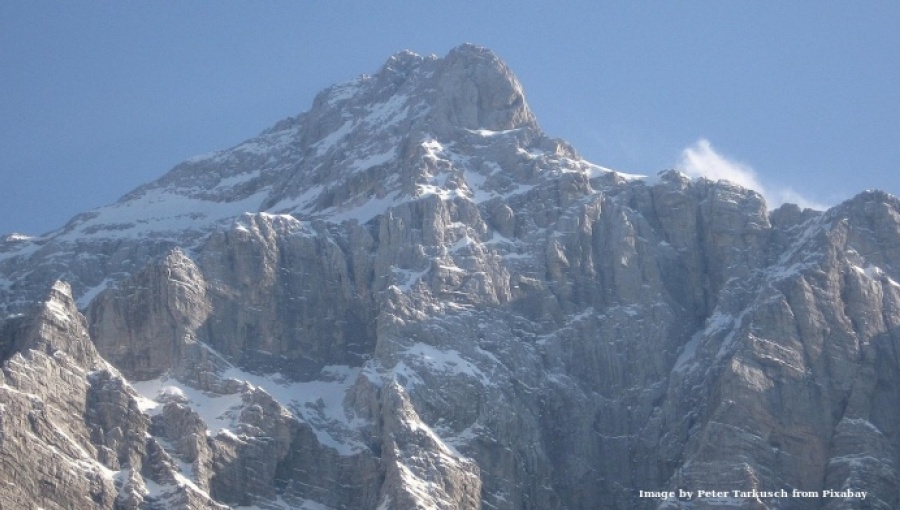
Slovenia’s Triglav Glacier disappears after record-breaking summer
The glacier beneath Mount Triglav, Slovenia’s highest peak and a national symbol, shrank dramatically over the past two centuries as temperatures rose.Facebook
Slovenia’s Triglav Glacier, one of the country’s most recognisable natural landmarks, has lost its remaining ice following this year’s exceptionally hot summer, with the last patches disappearing at the end of the melting season in September, The Guardian reported.
The glacier beneath Mount Triglav, Slovenia’s highest peak and a national symbol, shrank dramatically over the past two centuries as temperatures rose.
It covered around 40 hectares in the mid-19th century, but its area had fallen to 14 hectares by the mid-20th century. Between 1983 and 2003, it lost 93% of its surface area, eventually surviving only as scattered patches of ice.
Researchers from the Anton Melik Geographical Institute at the Scientific Research Centre of the Slovenian Academy of Sciences and Arts have monitored the glacier since 1946. In August, they warned that the remaining ice was likely to disappear by the end of the 2026 melting season.
The melting season generally runs from early May to the end of October, when average monthly temperatures at the nearby Kredarica weather station, at 2,513 metres above sea level, are above freezing.
The remains of the Skuta Glacier, another small Slovenian glacier protected by its shaded location, could survive for several more years, according to the Guardian.
The disappearance of the Triglav Glacier highlights the effects of rising temperatures on mountain environments across Europe and beyond. Glacier loss threatens fragile alpine ecosystems and can affect water availability, as meltwater helps sustain rivers during summer.
The trend is also evident in other mountain regions, including the Himalayas, where retreating glaciers and related hazards pose growing risks to communities and infrastructure.
UN nature summit approves two key agreements after marathon negotiations
Almost 200 nations approved two agreements on Friday to halt biodiversity loss by 2030, following almost two weeks of negotiations that ran into extra time on the final day.
Nearly 200 nations on Friday adopted hard-fought agreements at a UN biodiversity summit aimed at putting the world back on track in efforts to halt nature's destruction by 2030.
Delegates cheered as the crucial texts were approved in overtime following two weeks of tense negotiations at the COP17 conference in Armenia's capital Yerevan.
"And that's it. Perfect", said COP17 president Hambardzum Matevosyan to applause as he brought down the gavel on the documents, the final versions of which were not made immediately available to the public.
The world adopted a historic pact in 2022 setting ambitious targets to halt biodiversity loss by 2030.
But ahead of the summit, the UN warned that countries would fail to meet the goal unless they urgently corrected course.
Most of the objectives are falling short, including targets to protect 30 percent of Earth's land and oceans, tackle pollution, and provide poorer countries with greater conservation finance.A draft COP17 text earlier called on countries to "accelerate" efforts to keep the pact alive and stressed "increased action" was needed to tackle the root drivers of nature loss.
El Nino to intensify with peak in December, UN warns
Highlighting the disagreements that dogged the talks, the document proposed various options to achieve the 2030 goal. It was not immediately clear which of those options made the cut.
During negotiations, countries wrangled over reforming subsidies and other incentives that encourage activities harmful to nature, such as fossil fuels, intensive agriculture and overfishing.
A separate row revolved around finding new cash sources to fund conservation efforts around the globe – a hot-button issue with public budgets under strain amid an energy crisis and conflicts in Ukraine and the Middle East.
To restore degraded ecosystems, save endangered species and conserve forests, wetlands and other vital natural habitats, the world needs an estimated $700 billion more every year than it currently spends.
Climate change: Glacier loss and dry rivers threaten water security
The European Union led a charge for wealthy emerging economies such as China to join in paying for global conservation efforts – a contentious issue at COP17.
In a sign that a compromise was in the offing, another draft text that circulated earlier Friday invited countries outside the list of developed country donors to voluntarily join the group. Science under attack
Efforts to refine the lacklustre Cali Fund – a UN mechanism for sharing profits from corporations that use genetic data from plants and other organisms – also proved difficult.
The fund set out to raise $1 billion a year for conservation in developing countries when it launched in early 2025. So far, it has attracted around $10,000.
Nations have also feuded over key scientific reports, with a small handful of countries accused of stonewalling efforts to accept the benchmark findings of a UN-backed biodiversity body.
"The attacks on science have bothered me a lot," French Ecological Transition Minister Monique Barbut said.
Around 70 ministers joined the negotiations this week in an effort to nudge things along, while indigenous leaders and civil society activists appealed to nations to act with greater urgency.
At the last biodiversity summit in Colombia in 2024, talks ran overtime as nations haggled over conservation finance and ended without a deal. Negotiations resumed in Rome in 2025 where an agreement was reached.
The COP17 summit was also expected to decide on Friday whether Panama or Ecuador will host the next biodiversity summit in 2028.