Showing posts sorted by date for query FRANKFURT SCHOOL. Sort by relevance Show all posts

Sunday, September 06, 2026


Ladies Only: Afghan pop star Aryana Sayeed takes on Taliban with European tour


By Theo Farrant & Tokunbo Salako
Published on

Aryana Sayeed, one of Afghanistan’s biggest pop stars, is kicking off a women-only European tour, using her platform to bring Afghan women together and speak out for women’s rights.

She was one of Afghanistan’s biggest stars. Then the Taliban returned to power and she fled the country. Now, Aryana Sayeed is taking her music and message across Europe - with one key difference: the audiences will be women only.

Sayeed remains one of the most recognisable faces in Afghanistan, building a huge following as a singer, an outspoken advocate for women's rights, and from her time as a judge on The Voice Afghanistan and other major talent shows in the country.

But when the Taliban retook control of Afghanistan in 2021, her life and career changed dramatically. Unable to return home or perform there, Sayeed has continued her work from abroad, using her platform and her organisation DEFAW (Defenders of Equality, Freedom, and Advancement for Women) to speak out for Afghan women and girls living under what she calls "dark days."

Five years on, she is taking her message of hope across Europe with her "Ladies Only_"_ tour, a series of concerts exclusively for women. The tour begins this Friday in Rotterdam, where Sayeed will perform at the Laurenskerk. She will then head to Stockholm on 5 September, followed by Hamburg on 26 September and Wiesbaden, near Frankfurt, on 3 October.

Ahead of the shows, Euronews Culture spoke to her about what sparked the idea behind her Ladies Only concerts, the current situation facing women and girls in Afghanistan, and the message she hopes to share through her music and activism.

When did you come up with the idea for a ladies-only tour?

Aryana Sayeed: Well, I have been planning to do this Ladies-Only tour for the past three or four years. Since the Taliban took over the power in Afghanistan, you know, they literally banned women from most things. Like, they have banned schools for girls past grade six, and women are not allowed to work anymore.They are not even allowed to go to the park. You know, like some simple things in life. They're not allowed to do it anymore.

So when all of this happened, obviously, besides my singing career, I am also an activist for women's rights in Afghanistan. And I thought, you know what? We need to stand against this injustice, against the Taliban and what they're doing. And so I thought initially it would be a great idea to do this Ladies-Only concert where we show the power of women, where we stand together as women, and raise our voice and raise awareness against the injustices that are going on in Afghanistan and stand up for the millions of voiceless women in Afghanistan.

Many people around the world will know you from The Voice of Afghanistan. How influential has your voice been in Afghanistan, and how big are you there?

Well, it's really hard to talk about yourself and say how big you are, but I know that the things that I have been doing in Afghanistan for the past, I would say, 15 years have been quite effective. It has had major effects on the society. It has been able to give so much hope to the hopeless women of Afghanistan.

Empowering them in a way to think differently, to know their rights and to stand up for their rights and things like that. As much as I've been focused on my singing career, as much I've been focused on my activist side as well, trying to give voice to the voiceless women of Afghanistan.

I used to be a judge on these talent shows, and I used to be present there during all of these problems and issues as well. Even before the Taliban came, Afghan women did not have their full rights at all. Before the Taliban came, things were getting along really well, and the things that we were doing in Afghanistan, the effect it had on society, was going really well.

Since the Taliban returned to power five years ago, do you feel more free and more heard outside Afghanistan, as a performer and as someone delivering a message of hope?

Even when I was in Afghanistan, I still had my concerts outside of Afghanistan. I still was touring all this time. For me, there's no major difference in that field. But I do feel that we are very isolated now. I do feel like there's so much that I could do in my country. There's so much more that I could. But right now, I am unable to do that because of the fact that I'm not allowed to go back to Afghanistan. I'm not allowed to physically be there, be on the screen of the TV, give out my messages, be that support and that hope for the Afghan women.

But the one thing that I'm grateful for is the fact that we were able to establish the organisation outside Afghanistan. I have this organisation called DEFAW, which stands for Defenders of Equality, Freedom and Advancement for Women. And through the organisation, I've been trying to be active and do my activism through that and raise awareness and try to be the support for the voiceless women of Afghanistan, do interviews all around the world and try to be, you know, as helpful as I can.

And the great thing is that in Afghanistan, we still have YouTube, we still have all these platforms where women can be connected with me, so they can still hear me, they can still see my videos.
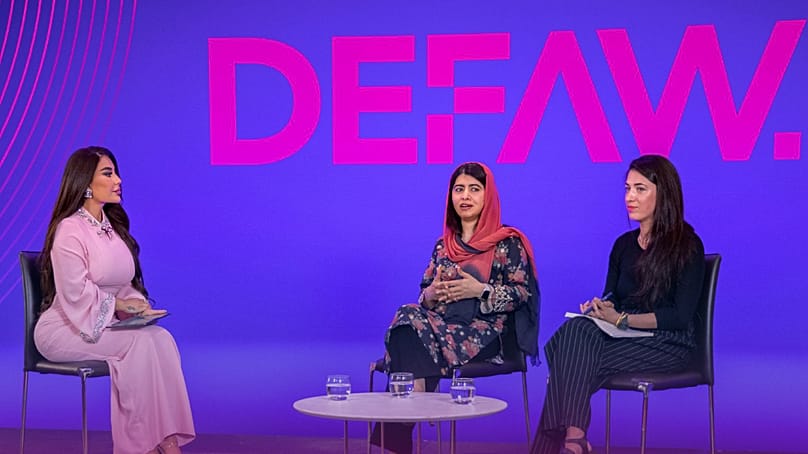
Aryana Sayeed moderating a talk with Pakistani education activist Malala Yousafzai & Sahar Halaimzai, director of Malala Fund's Afghanistan Initiative, 15 August 2025, London Credit: DEFAW/Hasib Sayed

You can’t completely silence voices like yours, particularly when young girls can still access your work online. What message would you give to those girls who look up to you?

The one advice that I constantly keep giving them is not to give up hope because honestly, they are living in the dark, dark, dark ages right now. I speak to around 100 Afghan women or girls inside Afghanistan on a monthly basis through my organisation, through Zoom. And I actually get to speak to them, ask them questions, hear their stories. And what they tell me is heartbreaking, quite sad.

They literally talk without crying because of the fact that they've been abandoned from school and from work, and they feel so hopeless and they feel so useless as humans. Most of them have to just go ahead and get married, you know, at a young age because they don't see a future and they don't have another choice.

Let's say a woman who doesn't have a husband and doesn't have somebody to support the family with the income, with the food, with the money and everything. What is she going to do? And she's not allowed to go to work. So the only choice left for her is just go to bed. That's it. And so it's really sad to hear all these stories.

Because I honestly, I do feel from the bottom of my heart that these dark days will pass. They will not exist forever. This is, at least as a human, what I think, because what they have brought upon women in Afghanistan is ridiculous and inhumane, and this kind of a life, I don't think it's going to last forever.

People will eventually raise their voices. People will eventually stand up against them, and justice will prevail. Maybe it will. I don't know when. Maybe it will last another two, three, four or five years. But it cannot be forever. I don't believe that.

Men will obviously have a crucial role in making that change happen. What is your message to Afghan men, both inside Afghanistan and those living in exile?

I have literally made videos on social media and asked the Afghan men all around the world, and particularly in Afghanistan, to stand up for the rights of their women, for their mothers, for sisters, and for the women in general. And that's my message to them. I have a strong feeling that unless Afghan men come together and stand up for the women, women alone cannot do much for themselves.

And in order for this change to come, or for the women to have their full rights, men need to start supporting them. And I have seen a glimpse of, you know, their support here and there. Of course, not inside Afghanistan yet, but I have seen Afghan men getting together for protests outside the country, like, for example, in Germany and the U.S. and other countries like this, which is a good sign, which is a good thing to happen.

And hopefully, there will be more of that in the future.

How would you describe your music?

Well, I mostly sing pop. My songs are pop. That's how I started. I started with R&B and then pop music, but then I also have a lot of traditional songs. Funny enough, when I went to Afghanistan for the first time in 2011, I mixed a few songs of, like, old 40, 50-year-old songs and I made them with new music, and I presented them on the stage to people and people just loved those songs.

For me, that gave me kind of this indication that people still love the traditional music. So I do traditional music, but also a big portion of my songs are dedicated to the rights of Afghan women. And those are the ones that are the most effective in the society, I would say. And I actually performed some of them at the European Parliament, at UNICEF and all these big government gatherings that take place.

And it's been amazing. And this is the part of my career I love and enjoy the most. The songs actually, you know, give me something that is very fulfilling as a human being and that performing well.

You mentioned what music means to you as a human being, so I can’t let you go without asking about artificial intelligence. A significant proportion of music streamed these days is either created or influenced by AI. Are you open to using AI in your music?

I find it scary. I honestly am not for AI at all. I don't like it. It scares me and it makes me worried of where are heading. I know in a way it's - it can be really good. It can be fantastic. But in a way we are losing that human touch. For example, nowadays they can even create the sound of the singers, they can create my sound, they can create my videos when I'm not even there.

And that scares me. That's not nice. I feel like the human touch should exist, and it should be there. And you cannot even compare it with AI at all. And I don't like AI, and I don't use it, and I'm not for it. I don't support it at all.

Monday, August 10, 2026


Hindu students ask schools to discern the swastika from the Nazi Hakenkreuz

(RNS) — ‘I think it’s very important that young people are told that the swastika has a very positive meaning, but it has been taken and used as a racist symbol,’ said Baijayanti Roy of Goethe University Frankfurt. ‘The swastika does not have any negative connotations, whereas the Hakenkreuz stands for evil.’
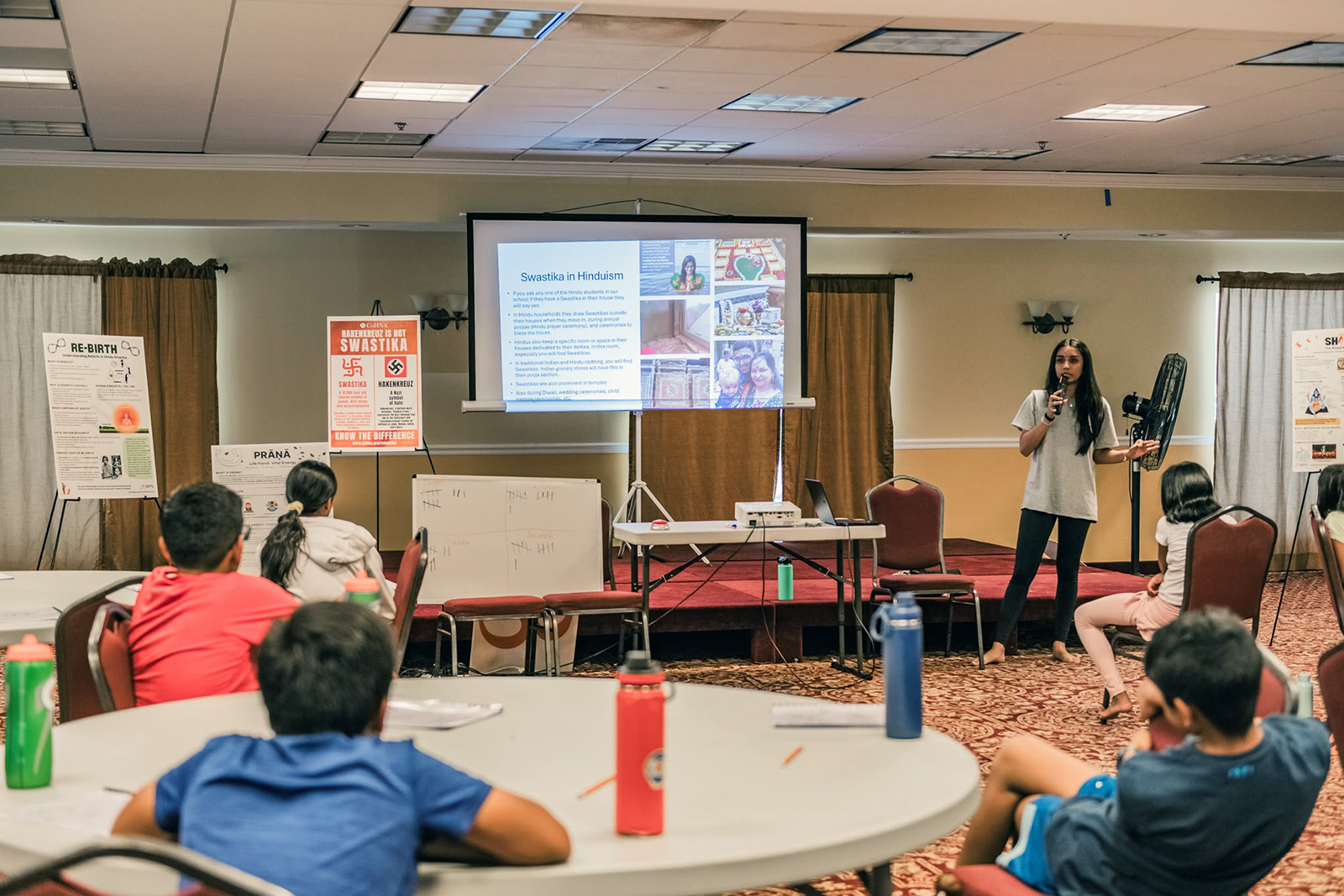
Mira Trivedi, right, presents a lesson about swastika history to kids. Photo courtesy of Mira Trivedi)


(RNS) — Mira Trivedi, 15, grew up surrounded by the swastika. Her family hung it around their home for holidays. A priest drew it on her newborn cousin’s forehead. Her family members wore jewelry with the symbol.

To Trivedi, who is Hindu, the swastika always signaled its auspicious Sanskrit meaning: well-being, good fortune and peace.

So when her eighth grade social studies teacher said the swastika was a hate symbol representing Hitler’s genocidal antisemitism, Trivedi went up after class to explain that the Nazi symbol was not the swastika but the Hakenkreuz, a German word meaning “hooked cross.” The swastika, which is usually slightly different in appearance, is a devotional symbol in South Asian religions, including Hinduism, Buddhism and Jainism, she said. 

Trivedi hoped for a lightbulb moment after her spiel, but the teacher said only higher ups could implement changes about what’s taught about the symbol. “That’s what started my whole journey,” Trivedi said.

She presented her case to the vice principal, principal and board of education at her central New Jersey school in May 2025. “I was sweating through the entire meeting, I was so nervous,” she said. But the effort paid off, and she convinced the school board to educate 35 teachers about the difference between the symbols. 

In recent months, a small but growing contingent of Hindu students across the country like Trivedi have successfully pushed for curriculum changes and education about the difference.

The conflation between the swastika and the Hakenkreuz emerged in the 1930s, but the presence of the swastika in Germany dates back to the late 1800s, said Baijayanti Roy, a lecturer and researcher on interactions between India and Nazi Germany at Goethe University Frankfurt in Germany. During this era, Germany’s Theosophists and Buddhists, who revered Indian philosophy, used the symbol to represent appreciation.

But at the turn of the 20th century, the racist and antisemitic völkisch movement co-opted the swastika to signal Aryan German heritage, Roy said. The proposed design for the fledgling Nazi party’s flag arrived in front of Hitler bearing a mirrored version of the swastika. Hitler approved the design, with one exception: Due to his hatred of Indians, whom he perceived as bastardized Aryans, he replaced the swastika with the “Hakenkreuz” by changing the tilt and removing the four dots and flourishes that typically, but not always, adorn the swastika.


Thus was born a new symbol, stripped of dharmic roots, to represent the Third Reich.

From then on, the Nazis referred to the symbol only as the Hakenkreuz. While some leaders of the Indian independence movement like Subhas Chandra Bose sought tactical military alliances with Hitler, Hitler maintained his animosity toward South Asians as he set into motion the murder of 6 million Jews.

When American media mistakenly described the swastika as a Nazi symbol in the 1930s, the misconception pervaded the American psyche.

“I think it’s very important that young people are told that the swastika has a very positive meaning, but it has been taken and used as a racist symbol,” Roy said. “The swastika does not have any negative connotations, whereas the Hakenkreuz stands for evil.”

 (Photo by Nidhi Srivastava/Flickr/Creative Commons)

But as immigration and globalization increased — and as concerns about antisemitism have ebbed and flowed — the obfuscation has led to fear and confusion about the swastika as a hate symbol.

Members of the nonprofit Coalition of Hindus of North America have sought help from its leaders, as some have panicked after being reported as neo-Nazis by well-intentioned neighbors and coworkers, said Pushpita Prasad, CoHNA’s chief communications officer. 

During the COVID-19 pandemic, for example, workers who glimpsed swastikas in their Hindu colleagues’ homes via Zoom would sometimes report them to human resources. Neighbors, seeing swastikas drawn for Hindu festivals, sometimes called the police. The ensuing investigations were usually dropped once the context became clear. But especially for immigrants with visas, “it was a very shaky, unpleasant experience,” Prasad said.

It’s an example of what scholars have called a context collapse, said Susan Benesch, director of the Dangerous Speech Project, part of the Center for the Study of Organized Hate, a Washington, D.C., group dedicated to preventing and combating hate. “You have people who are existing in two different normative communities and the two sets of norms collide,” she said. 

Many Hindu students across the United States have witnessed and experienced that context collapse. Trivedi said her Hindu neighbors store away devotional objects bearing the swastika whenever guests of non-dharmic faiths visit to avoid painful misunderstandings.

Saisha Vyas, 15, grew up seeing her family draw swastikas on new cars, denoting good fortune. But when her uncle had to take his car back to the dealership, she said the workers called the police on him.

And Priya Bakshi, 17, often longed to wear a sentimental swastika-inscribed necklace to school, but it was banned in her Maryland county. “It’s infringing on our First Amendment rights,” she told RNS. “We cannot express our religion.”  

Vyas and Bakshi, who are both Hindu high schoolers in Maryland’s Howard County Public School System, decided to campaign in their school district for a distinction between the swastika and the Hakenkreuz, emphasizing the intention with which they’re displayed.

After months of preparing educational material, they convinced the school board in February to ban the Nazi Hakenkreuz instead of the swastika, changing the rules for nearly 50,000 students in the district.

Still, they faced challenges. Trivedi became known among her classmates for her campaign. “One kid decided to draw the symbol on my notebook when I stepped away from my desk for a moment, and right underneath that symbol, ‘Nazi’ was written,” she recounted.

But moments of support have vastly outnumbered the antagonism, the three students said. Bakshi said her Jewish friends have been particularly receptive, and she and Vyas met with Jewish groups. “I think they realized that we are trying to help their community as well,” she said, suggesting that the misconception gives the Nazis ongoing power over a symbol and religious practice they despised. “When people come together with genuine empathy, I think it really does help bring everybody in the circle closer together.”

The fundamental question at the heart of the campaign harkens back to the landmark 2003 Supreme Court case Virginia v. Black, which considered whether states could ban cross burning. The case determined that its legality depended on whether the act was done in order to intimidate, Benesch explained. This same distinction can be made about whether a Hakenkreuz is scratched in a school bathroom or a highway overpass, versus a swastika depicted on a Hindu student’s bracelet or in a devotional painting in one’s home.


“None of this stuff is easy,” Benesch said of context clashes. “Even though the collision can often be unpleasant at the time for both parties, in the long run, it can be a very salutary form of public education.”

The students’ successful campaigns over the past two years were built on a smattering of past examples. In 2021, after the Oregon Department of Education heard feedback from Hindu students as well as Native American students who used the whirling log to signify well-being and protection, the statewide policy was edited to refer to the Nazi symbol as the Hakenkreuz.

CoHNA has also campaigned for similar policy updates in Virginia, New York, California, Canada and other regions, Prasad said.

The students hope to formalize the distinction at the state level, and they believe that their recent victories can herald a wider student movement to distinguish the two symbols. Several classmates have signed on to their campaigns. And across the country, their peers have held discussions in Hindu student groups, written essays on the subject and initiated their own dialogues with teachers. 

“I want them to see what we’re doing and feel like they can do the same,” Vyas said. “I can also speak up at my school. I can also speak up in my county. I can make an impact for my own culture.”


Saturday, July 11, 2026

Towards a Revolutionary Psychoanalysis


 July 10, 2026

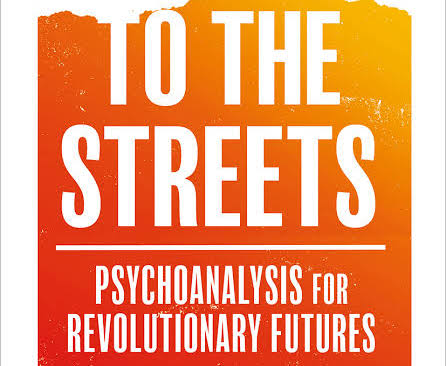
Cover art for the book From the Clinic to the Streets: Psychoanalysis for Revolutionary Futures by Lara Sheehi

Psyops are part and parcel of warfare, especially in modern times. Familiarly called winning hearts and minds during Washington’s war on the Vietnamese, one can argue that the incorporation of modern psychology into what might be termed propaganda exercises enhanced those “exercises”. Whether or not bringing psychological insights into the combat for the hearts and minds of non-combatants made war propaganda more effective is up for debate. However, its use in convincing the people back home—the ones paying for the war with their money and their children—seems to have been very effective. The evidence for this statement lies in the support wars tend to get by those governments waging them; a support that waxes and wanes often according to how the killing is presented.

That being said, there is another possible use of psychology that rejects the underlying goal of mainstream practice, that is, to get people to adjust to the structure of control and repression the state and its system of servitude demands. This alternative use of psychology is one that encourages liberation, in fact sets liberation as its goal. In a manner similar to the understanding championed by R.D. Laing and other rebel psychiatrists and psychologists that, generally speaking, insanity is a reasonable response to an insane society, a psychology that suggests a revolutionary struggle is an appropriate response to the current structure of capitalism, militarism and empire.

It is this concept of a liberation psychology that informs a new book by clinical psychologist and host of the Psychic Militancy podcast Lara Sheehi. Titled From the Clinic to the Streets: Psychoanalysis for Revolutionary Futures, Sheehi states in her introduction that “the story begins with Frantz Fanon,” as all psychoanalysis should. This is not just an opinion, writes Sheehi, but a political necessity. If one considers the essence of Fanon’s writing about colonialism and the struggle against it—in history and in the present—it becomes clear that the work of psychologists should not be to get the patient to accept the status quo. Instead, it should be to change the status quo so that the patient (in both an individual and collective sense) can experience a more complete humanity found in fighting for one’s liberation.

Fanon argued that for the colonized, the deepest struggle is not land, but consciousness. While colonized people may regain territory, they often remain mentally subjugated long after liberation. Conversely, the liberation of the mind and the maintenance of an anti-colonial and anti-imperialist history can help keep the struggle for the territory alive; this is the case as regards the struggle for Palestinian liberation. The imperialist mindset must be rejected and replaced with a revolutionary one. This, writes Sheehi, is the role of a liberatory psychoanalytic practice and psychology itself.

Referring to the liberation struggles of oppressed peoples from Africa to San Quentin, Vietnam to Palestine, Sheehi writes that the oppressor operates by creating exhaustion, confusion, fear and despair. Their work involves the study of what she calls psychological intrusions which are manipulated by psyops agents in the government and the sycophantic media that conspires consciously and otherwise with it. We must understand these phenomena in order to prevent them from working on us; the liberatory psychoanalysis which she presents is part of this educational and ultimately liberatory process. Quoting Black Panther George Jackson in his book Blood in My Eye, she discusses Jackson’s concept of the oppressive contract—a scenario which leads the potential revolutionary among the oppressed in modern capitalist society to choose the life of the outlaw instead of the revolutionary. She quotes Jackson: “the commitment to total revolution must involve an analysis of both the economic and the psycho-social motives which perpetuate the oppressive contract.” (50) Without this understanding and a means to gain it, revolutionaries (organized or not) end up becoming outlaws. There’s probably no better illustration of the truth of Jackson’s statement in the United States than the individual histories of revolutionaries like Panther Huey Newton and Weather Underground member JJ (John Jacobs), both of whom died living mostly outside of the society they fought to change, one in a senseless gangland slaying and the other during a medical event in his exile as an itinerant worker and weed dealer in Vancouver, BC.

In my consideration of psychology and its practices I have usually been of the mind that its role is to make people adjust to the existing power structure dominated by capitalism and its manifestations. Frantz Fanon was the first to challenge that perception; author Sheehi’s text enhances the oppositional theories put forth by Fanon and, in doing so, remakes psychology itself. This is an important book. Its intention is even more so. Written with the anti-colonial resistance of the Palestinian people in the face of imperial/colonial genocide in our feeds every day—a struggle considered by many to be the most important liberation struggle since that of the Vietnamese—the author Sheehi has issued a clearly written, clearly revolutionary and quite timely demand to people around the world opposed to US imperialism and its subsidiaries that they move forward in their resistance. Furthermore, the reader is encouraged to practice the revolutionary love espoused by Che so it becomes the standard by which we fight to save our planet from those who are destroying it.

Ron Jacobs is the author of several books, including Daydream Sunset: Sixties Counterculture in the Seventies published by CounterPunch Books. His latest book, titled Reality, Resistance, Rock and Roll is a collection of book reviews written for Counterpunch over the years and is now available. He lives in Vermont. He can be reached at: ronj1955@gmail.com 


LA REVUE GAUCHE - Left Comment: Search results for R D LAING

LA REVUE GAUCHE - Left Comment: Search results for ANTI PSYCHIATRY

LA REVUE GAUCHE - Left Comment: Search results for Michel Foucault

LA REVUE GAUCHE - Left Comment: Search results for ALDOUS HUXLEY

LA REVUE GAUCHE - Left Comment: Search results for MARX AND FREUD

LA REVUE GAUCHE - Left Comment: Search results for ERIC FROMM

LA REVUE GAUCHE - Left Comment: Search results for HERBERT MARCUSE

LA REVUE GAUCHE - Left Comment: Search results for FRANKFURT SCHOOL