Saturday, November 19, 2022

GEMOLOGY
Lucara extends sales deal with HB by 10 years

Cecilia Jamasmie | November 17, 2022 |

A 393.5 carat top white Type IIa gem quality diamond dug up at Karowe. (Image courtesy of Lucara Diamond.)

Canada’s Lucara Diamond (TSX: LUC) has extended its sales agreement with HB Trading covering high-value diamonds from the Karowe mine, in Botswana, for another ten years.


The contract will see Lucara’s +10.8 carat production sold at prices based on the estimated polished outcome of each diamond. This is determined through state-of-the-art scanning and planning technology, with a true up paid on actual achieved polished sales thereafter, less a fee and the cost of manufacturing.

The company first partnered with HB in 2020 to sell Karowe’s large, high value diamonds. These kinds of gems have historically accounted for about 60% to 70% of Lucara’s annual revenues.

The fresh agreement extends this arrangement for ten years, Lucara said.

“For the first time in our ten-year history, we have insight on what becomes of each and every +10.8 ct rough diamond produced from our mine, participating in each step of the planning and manufacturing process right through to the final polished sale,” Lucara CEO Eira Thomas said in the statement.

The Vancouver-based miner is in the midst of expanding Karowe underground, with first production expected in mid-2026. The project will extend the mine’s life until 2040.

Karowe remains one of the highest-margin diamond mines in the world, producing an average of 300,000 carats each year.

Since beginning commercial operations in 2012, it has become the only mine in recorded history to have yielded two 1,000+ carat diamonds — the 1,758 carat SewelĂ´ in 2019 and the 1,109 carat Lesedi La Rona in 2015, which sold for $53 million.

Massive emerald cluster sets new record at Gemfields auction

Cecilia Jamasmie | November 18, 2022 |
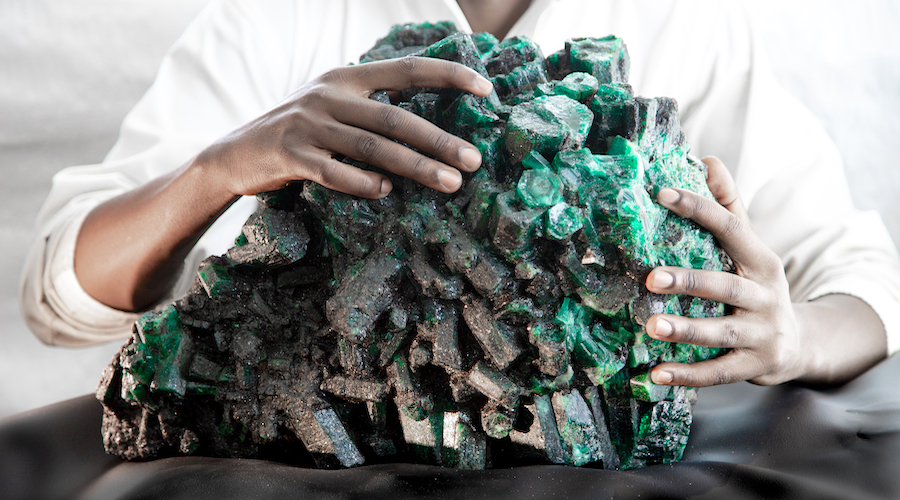
The Kafubu Cluster was found at the Kagem emerald mine in Zambia in March 2020. 
(Image courtesy of Gemfields.)

Africa-focused Gemfields (LON: GEM) (JSE: GML) racked up $30.8 million in revenue from its latest emerald action, which included a massive cluster of emeralds weighing 187,775 carats (37,555 grams).


The Kafubu Cluster, discovered at its Kagem mine in Zambia in March 2020, set a new record as the most expensive single emerald item ever sold by Gemfields, the miner said without providing specifics.

“Our end-of-year emerald auction has delivered a pleasing and solid result despite a clear softening of both prices and sentiment when compared with the remarkable highs we enjoyed in May 2022,” Adrian Banks, managing director of product and sales, said. “This has been a record-shattering year for Kagem with an amazing $149 million in auction sales.”

The coloured gems producer said proceeds will be reinvested in Zambia, including royalties due to the country’s government, which has a 25% stake in Kagem.

Zambian emeralds tend to have a higher iron content than emeralds from other origins, which means they are less fragile. High iron content also means fewer surface-reaching fractures and less need for treatments and enhancements.    
The 37.5 kg cluster set a record as the most expensive single emerald item ever sold by Gemfields. (Image courtesy of Gemfields.)

Batteries’ ‘guts’ reveal details on why they fail

Staff Writer | November 17, 2022 | 

Advanced Li-Ion battery. (Reference image by the Argonne National Laboratory, Flickr.)

Engineers and chemists at the University of Illinois Urbana-Champaign are working together to combine a powerful new electron microscopy technique and data mining to visually pinpoint areas of chemical and physical alteration within rechargeable ion batteries.


In a paper published in the journal Nature Materials, the scientists explain that their efforts are the first to map out altered domains inside rechargeable ion batteries at the nanoscale – a 10-fold or more increase in resolution over current X-ray and optical methods.

According to the group, previous efforts to understand the working and failure mechanisms of battery materials have primarily focused on the chemical effect of recharging cycles, namely, the changes in the chemical composition of the battery electrodes.

But the new electron microscopy technique, called four-dimensional scanning transmission electron microscopy, allows the team to use a highly focused probe to collect images of the inner workings of batteries.

“During the operation of rechargeable ion batteries, ions diffuse in and out of the electrodes, causing mechanical strain and sometimes cracking failures,” Wenxiang Chen, first author of the study, said in a media statement. “Using the new electron microscopy method, we can capture the strain-caused nanoscale domains inside battery materials for the first time.”

Chen pointed out that these types of microstructural heterogeneity transformations have been widely studied in ceramics and metallurgy but have not been used in energy storage materials until this study.

He and his colleagues also believe that the 4D-STEM method is critical to map otherwise inaccessible variations of crystallinity and domain orientations inside the materials.

“The combined data mining and 4D-STEM data show a pattern of nucleation, growth and coalescence process inside the batteries as the strained nanoscale domains develop,” co-author Qian Chen said. “These patterns were further verified using X-ray diffraction data collected by materials science and engineering professor and study co-author Daniel Shoemaker.”

Qian Chen plans to further this research by creating movies of this process – something for which her lab is well known.

“The impact of this research can go beyond the multivalent ion battery system studied here,” said Paul Braun, a materials science and engineering professor, also co-author of the study.

“The concept, principles and the enabling characterization framework apply to electrodes in a variety of Li-ion and post-Li-ion batteries and other electrochemical systems including fuel cells, synaptic transistors and electrochromics.”
BAD CHINESE MINER
Mining operations at MMG’s Las Bambas mine in Peru down to 30% due to blockade
Reuters | November 17, 2022 |

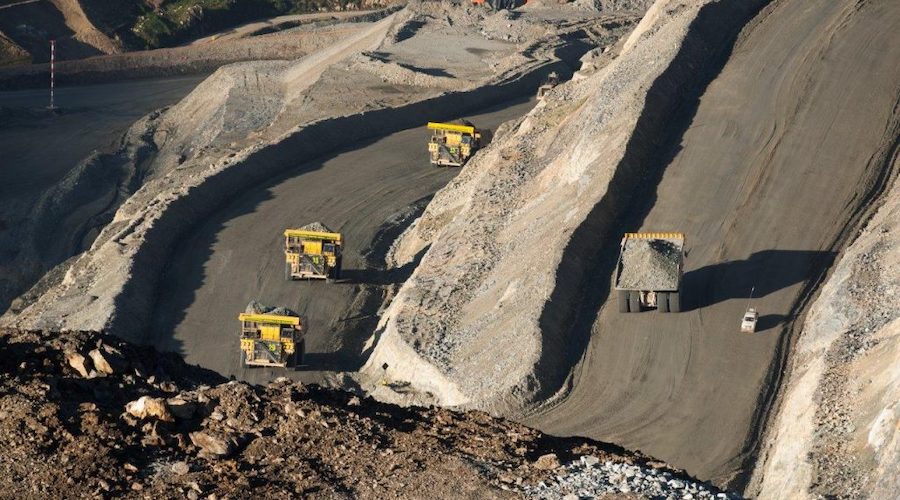
Las Bambas open pit. (Image courtesy of MMG).

Mining activities at MMG Ltd’s Las Bambas copper mine are operating at just 30% of capacity, a source close to the company said on Thursday, due to blockades from nearby communities.


The blockades started in late October, the source said, and have slowly reduced mining activities due to lack to of supplies. The company had previously announced the reduction of operations but had not detailed its extent.

Chinese-owned Las Bambas ranks among the world’s biggest copper mines but has been repeatedly disrupted by social conflicts with nearby indigenous communities since it opened in 2016.

Peru is the world’s No. 2 copper producer.

Alberta health minister says 4-year-old child among first influenza deaths in province

ANTIVAXXER PREMIER SMITH SEZ

NO MASKS IN SCHOOLS


Death comes as children’s hospitals face treating a deluge

of sick kids

MASKS SAVE LIVES
The influenza virus, as seen under an electron microscope. Alberta Health data shows that as of Nov. 12 there have been six flu deaths in the province. (U.S. National Institute of Allergy and Infectious Diseases)

In a social media post on Thursday evening, Alberta's health minister said the province is reporting its first influenza-related deaths of the season. 

Among those dead is a four-year-old child, Alberta Health Minister Jason Copping wrote in a tweet. 

Copping said he would not be providing additional identifying details due to privacy, so the child's gender and location is unknown. 

"I would like to extend my condolences to their family and loved ones at this difficult time," Copping wrote. 

"This season, as we see influenza virus circulate through the province at higher levels, we can again expect to see an increase in severe outcomes." 

Alberta Health data shows that as of Nov. 12 there have been six flu deaths in the province. 

The child's death comes at a time when many Alberta students are home sick with respiratory illnesses, including the flu, COVID-19, and RSV, and as children's hospitals in Alberta are under intense pressure as they deal with an influx of sick kids

Doctors at the Alberta Children's Hospital in Calgary and the Stollery Children's Hospital in Edmonton are battling a deluge of viral illnesses.

"I appreciate this news is distressing for parents and guardians, and many may be looking for guidance on how to protect their children from becoming ill," Copping tweeted. 

Copping said he advises all Albertans to get their flu slot — he also recommended people stay home when sick and wear a mask to reduce the risk of infection. 

Alberta Health data states there are 34 people in the ICU with an influenza infection, and 355 people hospitalized, as of Nov. 12. 

There have been 2,082 laboratory-confirmed cases this year.

MASK USE HARM IS BS

Mask-use harms among children debated

as Calgary Board of Education posts high

 absenteeism rates

Stephanie Thomas
CTV News Calgary Video Journalist
Follow Contact
Updated Nov. 17, 2022 

As rapidly spreading respiratory illnesses are causing many Calgary students to miss school, Alberta's political leaders remain opposed to reintroducing mask mandates in schools, even saying they cause harm to children.

Yet some health experts say there's little evidence of the downsides, and are encouraging parents to make choices to keep their kids safe.

The Calgary Board of Education (CBE) is now posting daily updates with the rate of absenteeism for illness among its student population.

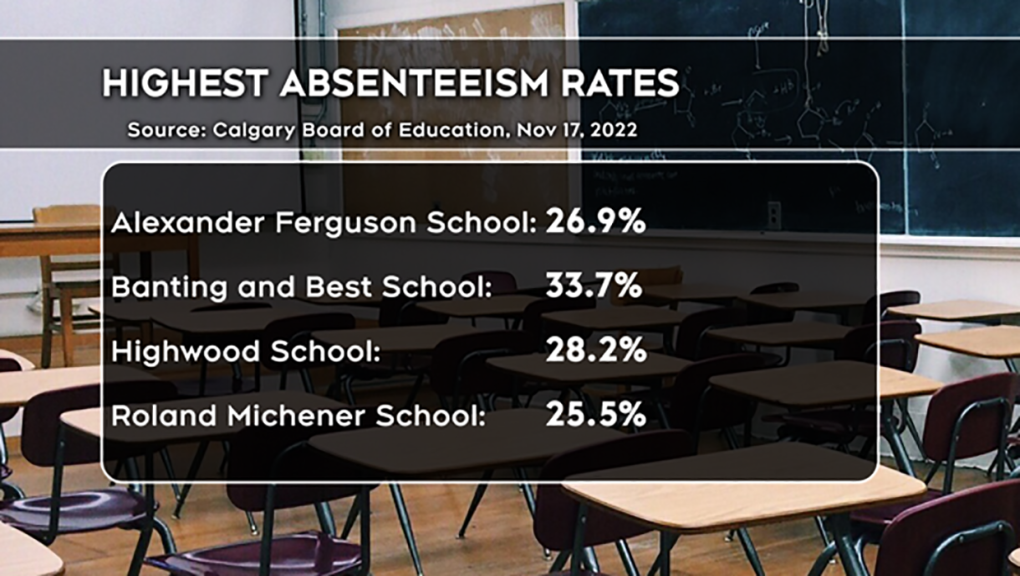
"There are a lot of viruses going around and kids are getting sick," said Christine, a mom of a student at Alexander Ferguson School, which has an absentee rate of 26.9 per cent as of Thursday.

She added, "Unfortunately I feel like it's the little kids that are taking the brunt of it but hopefully it passes."

At least three other CBE schools have rates near 30 per cent.

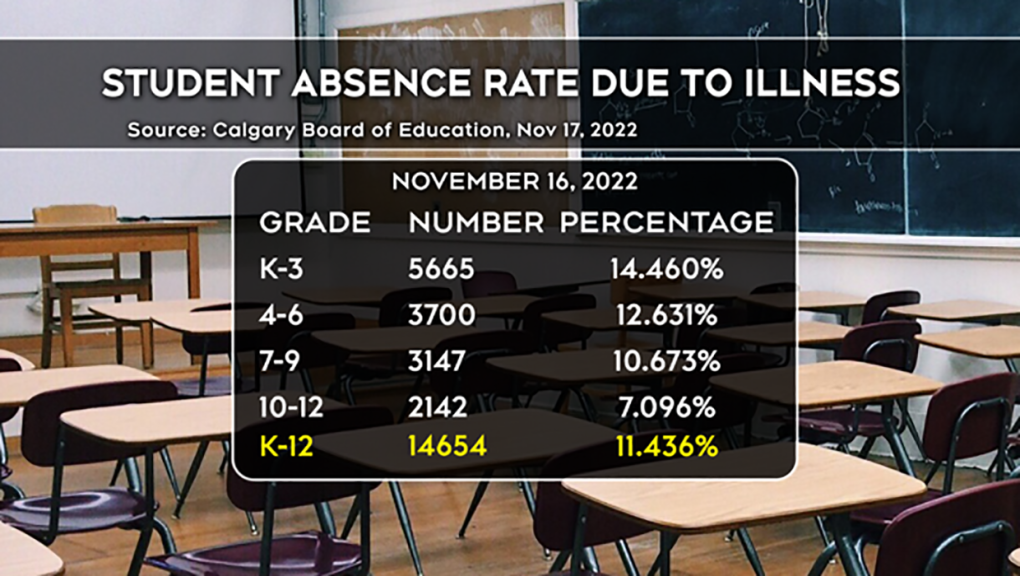
Overall, the board of education says 11 per cent of K-12 students are missing class for sickness.

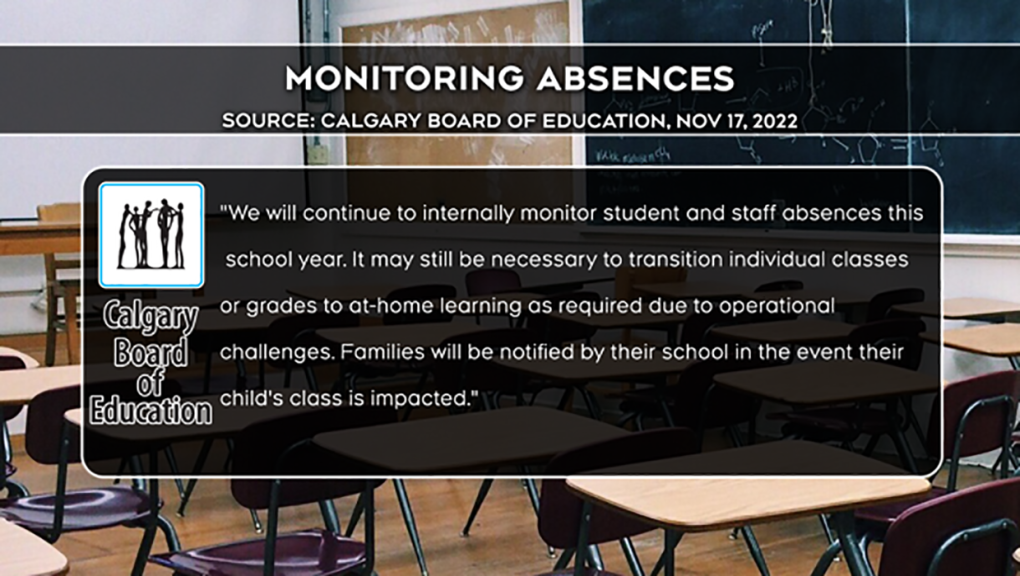
On its website the CBE says "we will continue to internally monitor student and staff absences this school year. It may still be necessary to transition individual classes or grades to at-home learning as required due to operational challenges. Families will be notified by their school in the event their child's class is impacted."

Schools with the highest absenteeism rates

PUSHBACK AGAINST MASKS

SUNDAY SCHOOL TEACHER IS EDUCATION MINISTER

On Wednesday the education minister pushed back against reintroducing mask mandates in Alberta schools, saying they were linked with poor mental health outcomes.

"I also hear from parents, and teachers and children themselves, that it was the masking that contributed to those challenges. And to those feelings of anxiety, some have had issues with breathing properly learning properly," said Adriana Lagrange.


Earlier this week Premier Danielle Smith also announced opposition to resuming mask requirements in schools, sayings it's a choice individuals and their children are free to make.


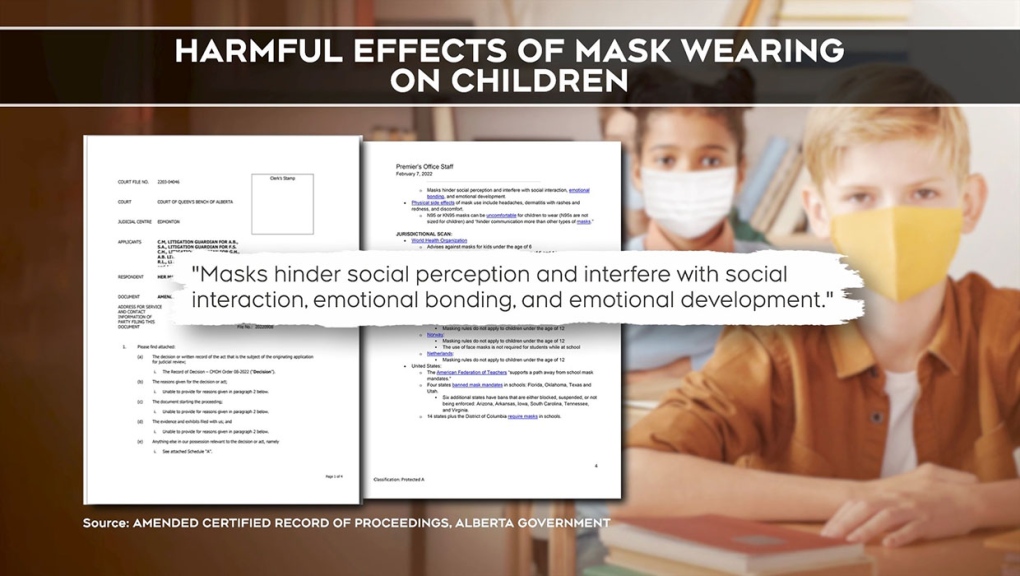
The province lifted mask requirements last spring but internal provincial documents released by court-order showed the data supporting claims masks are harmful to children included several opinion columns, surveys, or comparisons to jurisdictions very different from Alberta.


"I think that (the premier and education minister) can make whatever policy choices they want to make as elected officials, but they can't lie to the public about the science," said Lorian Hardcastle, health and law professor at the University of Calgary.

She says the evidence that masks are physically harmful, cause behavioural and developmental delays are "myths" and unbalanced against science about the efficacy of mask-wearing to slow the spread of viruses like COVID-19.


Monitoring absences policy of Calgary Board of Education

EXPERTS FIND WEAK EVIDENCES MASKS CAUSE HARM


Some Infectious diseases experts tell CTV News the data supporting mask-wearing is strong, but studies saying masks cause harm to children are flawed.

Dr. Stephanie Smith from the University of Alberta says there could be theoretical mental health impacts for children wearing masks, but there isn't compelling data to suggest there's a real threat.

"I think it's an area that's harder to study and to have rigorous evidence to point to say, absolutely, this is going to cause children under the age of five (will have) their speech and language be delayed," said Smith.

Other experts say there have been studies to analyze psychological symptoms like anxiety, stress, concentration and learning problems, but they failed to isolate mask-use from other impacts like school closures and canceled activities.

"When you look back at those studies, a lot of them were significantly biased by the fact that there were a lot of other restrictions going on at the same time," said Dr. Cora Constantinescu, pediatric infectious disease physician at Alberta Children's Hospital.

She adds that keeping children in school settings are proven to be beneficial, and says mask-use is a minor inconvenience to maximize in-person learning opportunities.

Craig Jenne, a U of C infectious diseases expert also agreed that the evidence masks decrease transmission and illness is strong.

"In the province of Alberta last year at this time, we had a lot of COVID-19 in the community, but we had masking in schools, the number of absentee days was dramatically lower."

Jenne continued, "Now without masks or other public health measures, even though we have less COVID in the community, we are seeing record numbers of absentee rates throughout the province. So it really points to that power of masks in reducing the chances you'll be exposed."

Provincial study on harmful effects of masking

THE WAY FORWARD

The teachers' union says teachers are looking for clear guidance from political leaders.

"Teachers are looking for direction from government and from the chief medical officer in Alberta. And there's such a lack of information right now," said Jason Schilling, president of the Alberta Teachers' Association.

Constantinescu says Alberta families should consider increasing mask-wearing at school and in indoor social settings.

She also recommends Albertans of all ages get the available booster dose against COVID-19 and its variants, and to get the seasonal flu shot.

Advice to stay home when sick and to maintain hand hygiene continues to be important to protect against high rates of viral spread in Alberta.


Overall, the board of education says 11 per cent of K-12 students are missing class for sickness.


1st statement from Alberta’s new chief medical officer of health on RSV, flu season

By Emily Mertz Global News
Updated November 17, 2022 


WATCH: Throughout the COVID-19 pandemic, masking was an issue that created questions and division. Now, with respiratory illnesses riding, Edmonton's medical officer of health is recommending you put your mask back on in indoor public settings. But getting Albertans to get onboard could be tough. Chris Chacon explains.


Alberta’s newly appointed top public health doctor released a statement about the rising number of respiratory viruses — flu, RSV and COVID-19 — circulating in the province.

Dr. Mark Joffe, who was named Alberta’s chief medical officer of health on Nov. 14, encouraged Albertans to get their flu shot and take other steps to reduce the spread.

READ MORE: Joffe to replace Hinshaw as Alberta’s chief medical officer of health: provincial government

He said Canada’s flu season usually mimics Australia’s, which has seen a severe respiratory virus season.

“In Australia, the highest rates of influenza disease were in children and teenagers, and children under 16 years of age accounted for the majority of influenza hospitalizations. Influenza can also have a severe impact on the elderly.

“While most children, youth and adults recover from the flu without complications, some can get very sick and need to be treated in hospital,” Joffe said in an emailed statement.


1:43 AHS says Albertans should put masks on as respiratory illness spreads


“We can expect to see similar outcomes in Alberta. Over the last few weeks, Alberta has seen an increase in reports of symptoms such as cough and fever in schools and daycares. We are monitoring the situation in schools closely,” Joffe’s statement continued.

“The province continues to transition back to longstanding practices to manage respiratory infections in general. That includes local public health officials notifying schools of outbreaks and giving them advice and support as needed.

“Transmission levels will fluctuate over time and between communities. We encourage Albertans to judge their risk at any point in time and take appropriate precautions.”


Since being named the new interim CMOH, Albertans have not heard from Joffe.

Several hospital executives held news conferences on Tuesday, addressing the spike in children’s respiratory illnesses, high numbers of Respiratory Syncytial Virus (RSV), early onset of the flu season, the Stollery Children’s Hospital being at capacity and long waits at Alberta emergency rooms.


The Edmonton Public School Board is also managing high absenteeism in schools with many children away sick. The board is contemplating asking the CMOH for specific advice and recommendations.


“I encourage Albertans to take simple, daily actions to help prevent the spread of respiratory viruses,” Joffe said, including:Stay home when feeling sick;
Make the choice to stay up to date on your vaccinations, and speak to a physician or other care provider if you have questions about options;
Wearing a well-fitting, high-quality mask can help reduce the risk of becoming sick and help protect others from being exposed. “Albertans should be supported regardless of their choice to mask or not,” he wrote.
If possible, avoid close contact with people who are sick;
Regularly clean hands with alcohol-based hand sanitizer or wash hands with soap and warm water for at least 20 seconds;
Avoid touching eyes, nose or mouth with unwashed hands;
Maintain good respiratory etiquette by covering coughs and sneezes;
Avoid or limit time spent in crowded indoor places;
Clean and disinfect frequently touched surfaces and items at home, especially when someone in your home is sick.


In a statement Wednesday, the City of Edmonton said: “City administration has not recommended consideration of a mask bylaw to city council recently. We are keeping an eye on the situation in Edmonton as cases of respiratory illness, COVID-19 and influenza rise.

“People are welcome to wear masks on transit and in city buildings, and since the most recent easing of health restrictions, we have been encouraging our employees to respect every person’s choice around mask wearing.”


A spokesperson for the City of Calgary said it is “carefully monitoring public health advice to help keep employees and members of the public safe and will not be making a recommendation to reintroduce a masking mandate at this time.

“The province amended the Municipal Government Act to expressly limit the authority of a municipality to enact a bylaw requiring masking. Such a bylaw is only valid if approved by the minister of Municipal Affairs.

“Legislation does, however, permit the city to pass a bylaw requiring masking on or in city-owned property.

“The city will continue to monitor the situation carefully, and collaborate closely with our partners at Alberta Health Services to align with their recommendations.

“We are encouraging city of Calgary employees to help fight viruses at home and at work by washing their hands regularly, cleaning as they go, and supporting the use of face masks as a personal choice. We encourage everyone in Calgary to take personal health actions to limit the spread of respiratory illnesses.”

1:41 Mask on or off? Mandatory face covering bylaw gone in Edmonton leaves people with choices to make

Joffe’s statement also included information about booking immunization appointments.

Albertans can book flu shots or COVID-19 boosters through the Alberta Vaccine Booking System or by calling Health Link at 811.

Some pharmacies also offer walk-in vaccinations.

Joffe’s biography page on the Alberta Health Services website says his “diverse clinical experience includes his specialty practice in infectious diseases.” The Calgary native has worked at the Royal Alexandra Hospital in Edmonton as well as at the Edmonton Sexually Transmitted Diseases Centre and the Edmonton Institution for Women.

Since becoming premier last month, Smith has said she would be replacing Hinshaw and finding new people to give her government advice on decisions related to public health.


0:38 Alberta Premier Danielle Smith says she will find new health officials for province

In a news release issued by the provincial government late Monday afternoon, Health Minister Jason Copping said Joffe “brings this wealth of experience and knowledge to the role of chief medical officer of health. I look forward to working with him.

“I also wish to thank Dr. Deena Hinshaw for her service and dedication to Albertans through the past several years.”

The government noted Joffe will continue to work under his current contract with AHS and not receive any additional compensation for his new role.


In a news conference earlier Wednesday addressing the rising number of respiratory illnesses, Opposition NDP leader Rachel Notley said Albertans deserved to hear updates and plans from the premier, health minister and CMOH.

“We’ve got school boards, for instance, here in Edmonton desperately calling on the provincial government and particularly the chief medical officer of health to provide more fulsome information on the state of outbreaks across the board, as well as specific recommendations for how best to keep our kids safe and also about what we can expect going forward. And we’re not getting that kind of information,” Notley said.

READ MORE:
 Edmonton Public Schools asks province to bring back mask mandates during illness outbreaks  SMITH SEZ NO

“We have a serious infectious disease outbreak impacting our kids to the point that we have 12-hour lineups at children’s emergency rooms and we don’t seem to have anybody who thinks it’s their job to step up and address the matter.

“No one is in charge. As a result, no one is responsible. No one is providing leadership. No one is protecting the health and safety of our kids across this province and that’s a complete failure of leadership.”

Notley also said the firing of Hinshaw and appointment of Joffe as the new interim CMOH sends a message.

“We have a chief medical officer of health who, although a very credible human being, is not actually even being paid to do the job. And he’s still doing his other complete job. So that sounds to me like we’ve got a government that doesn’t really value that role.

“Moreover, the previous chief medical officer of health was literally fired because they didn’t agree politically with the scientific evidence she was putting forward or trying to put forward,” Notley said.

“We have a new acting chief medical officer of health has actually has a gargantuan range of responsibilities in his current job who’s been given no time and no extra money to do this whole other job.”

New funding advances landmark hydrogen project in the Edmonton region

Article content

The Greater Edmonton Region will soon become a world leader in hydrogen production.

A total of $476 million in funding from the federal and provincial governments has been awarded to Air Products, an American multinational gas and chemical corporation, to support building the world’s largest net-zero blue hydrogen facility in the Edmonton region.

Ottawa is providing $300 million supplemented by $161 million from the Alberta Petrochemicals Incentive Program and $15 million from the province’s Technology, Innovation and Emissions Reduction program — funded by a carbon tax on industrial emitters for the project. The facility will be situated in Aurum Energy Park, located north of Yellowhead Trail neighbouring Sherwood Park.

“Alberta is Canada’s hydrogen powerhouse and projects like this will create jobs, diversify the economy, and build additional clean energy capacity for use across Western Canada. With such a huge attachment to the hydrogen market, our government’s Alberta Petrochemicals Incentive Program is making us the most attractive jurisdiction for companies looking to invest in hydrogen. Alberta’s economy will continue to charge ahead full steam with an investment climate that encourages businesses to grow and fuel job growth,” said Alberta Premier Danielle Smith.

Advertisement 3

The project, announced in June 2021, represents a $1.6 billion investment and will create an estimated 4,760 direct, indirect, and induced jobs for the Edmonton region over the next couple of years according to a 2022 study commissioned by Edmonton Global. Once operational, the project will contribute an estimated $809 million to the region’s GDP.  

The project relies on an innovative combination of well-established technologies to produce net-zero hydrogen used as an energy source for a number of applications difficult to de-carbonize including heavy-duty transportation, steel production, glass production, home and industrial heating, and others.

Air Products chose the Edmonton region for this project because of its access to abundant and low-cost natural resources, extensive infrastructure, highly skilled workforce, and innovative spirit to be a model for other jurisdictions around the globe. As Canada’s first established hydrogen hub, the Edmonton region is set to become the driving force for the country’s hydrogen economy and will support Canada in meeting its net-zero commitments. 

Advertisement 

“This announcement brings us one step closer to becoming a more climate-resilient city. The facility will produce clean hydrogen for key Canadian Industrial sectors, such as the growing transportation market. This investment will help Edmonton’s post-pandemic recovery efforts and will allow Canada to advance clean energy by securing an early foothold in the global hydrogen market. Edmonton is leading the way in climate resilience and achieving net zero, and this announcement is an important step forward,” said Amarjeet Sohi, Mayor of Edmonton.

Estimated to be fully operational in 2024, the hydrogen facility is envisioned to reach over 1,500 tonnes of hydrogen production per day and achieve greater than three million tonnes per year of CO2 capture. Hydrogen has been proven to have a substantial technological advantage over battery electric vehicles in heavy-duty transportation applications due to those vehicles’ duty cycles, especially in Canada’s extreme climate conditions.

Advertisement 5

Article content

Blue hydrogen is a cheaper form of the element made from natural gas using carbon capture and storage. The Air Products facility will aim to capture 95 per cent of its own carbon emissions. However, to become fully net zero, it will offset the five per cent of carbon emitted and use hydrogen to produce “clean power” for the facility and make extra power for the grid to compensate for the carbon put into the air.

“The hydrogen economy is a reality in our region. We already produce close to 60 per cent of all the hydrogen in Canada and this project is about to increase that dramatically. By securing this funding, Air Products will be able to break ground on this world-scale project. This investment is a clear signal to the investment community that there is broad support from all levels of government for the hydrogen economy. Our region is at the centre of Canada’s hydrogen economy and we’re aggressively driving for more,” said Malcolm Bruce, CEO, Edmonton Global.

rhowell@postmedia.com

GM Collaborates With Nel ASA On Cost-Effective Hydrogen Production


BY JONATHAN LOPEZ
— NOV 16, 2022

GM may be focusing heavily on the development of new battery-electric vehicles and related Ultium technologies, but it’s also looking into new opportunities around hydrogen fuel cells. Now, The General has announced that it will collaborate with Nel Hydrogen US, a subsidiary of Nel ASA, to pursue cost-effective hydrogen fuel production via a new joint development agreement.

Founded in 1927 and based in Oslo, Norway, Nel ASA is focused on the production, storage, and distribution of hydrogen from renewable energy sources. Nel was the first company in the world with a fully automated alkaline electrolyzer production line, creating an opportunity to industrialize the production of its PEM electrolyzer equipment. Meanwhile, GM has made great strides in fuel cell technology development, thus offering substantial synergies with Nel’s PEM platform.

“Adding Nel as a strategic collaborator is an important step to help us commercialize fuel cell technology,” said GM executive director, Global HydroTec, Charles Freese. “Electrolysis is key to creating consistent, clean sources of hydrogen to power fuel cells.”

The Nel PEM electrolyzer works on the same principle as a hydrogen fuel cell, but in reverse. While GM’s HydroTec fuel cells combine hydrogen and oxygen to create electricity and water, the PEM electrolyzer uses electricity and water to produce hydrogen and oxygen.

“Nel has some of the most promising electrolyzer technology to help develop clean hydrogen infrastructure, and we believe our HydroTec fuel cell IP can help them get closer to scale,” Freese added.

In exchange for its hydrogen fuel cell IP and development work, Nel will compensate GM on an ongoing basis and pay a license following successful commercialization of the end product. The license will be dependent on how much of the end product is based on GM technology.

“An automated production concept is key when scaling up and driving down cost on electrolyzer technology,” said Nel CEO, HĂĄkon Volldal. “By utilizing the combined expertise of both companies, it will help to more quickly develop a green hydrogen technology that is competitive with fossil fuels.”


COVID pandemic led to surge in superbug infections: EU agency

Image: Reuters

People queue to get tested for the coronavirus disease (COVID-19) after the Christmas holiday break, amid the COVID-19 pandemic, at Doce de Octubre Hospital in Madrid, Spain December 27, 2021.

Infections from some antibiotic-resistant pathogens known as superbugs have more than doubled in healthcare facilities in Europe, an EU agency said on Thursday, providing further evidence of the wider impact of the COVID-19 pandemic.

The European Centre for Disease Prevention and Control report said reported cases of two highly drug-resistant pathogens increased in 2020, the first year of the COVID-19 pandemic, then sharply jumped in 2021.

The surge stemmed from outbreaks in intensive care units of hospitals and in European Union countries where antimicrobial-resistant infections were already widespread, ECDC official Dominique Monnet told a news conference.

Data showed that in Europe last year, reported cases of the Acinetobacter bacteria group more than doubled compared with pre-pandemic annual numbers.

Cases of another bacteria, Klebsiella pneumoniae, which is resistant to last-resort antibiotics, jumped by 31% in 2020 and by 20% in 2021.

The report did not include data on how many people died from the infections in 2020 and 2021. Experts say it can be challenging to definitively attribute the cause of death when patients were hospitalised for COVID-19, for example.

Some scientists link the rise in hospital-acquired superbug infections during the pandemic to wider antibiotic prescriptions to treat COVID-19 and other bacterial infections during long hospital stays.

Monnet said that was “the most plausible hypothesis”, but his agency had yet to conduct a thorough analysis.

He also said the data showed decreases in cases of some other common superbugs in European hospitals. The ECDC believes that is because the COVID crisis led operations to being postponed.

The European report is consistent with a trend noted last year in the United States, where government data showed that U.S. deaths from drug-resistant infections jumped 15% in 2020.

Drug resistance evolves through the misuse or overuse of antibiotics. Concerns about it are not new.

Experts call superbug infections, including fungal pathogens, a silent pandemic that causes more than a million deaths annually but does not draw attendant focus or funding for research.


ISRAEL APARTHEID STATE

Israel’s Netanyahu agrees to legalise West Bank settler outposts

Incoming Israeli PM promises far-right ally Ben Gvir that illegal settler outposts will be legalised in the new government’s first 60 days.

Israeli Prime Minister-elect Benjamin Netanyahu (left) and right-wing Knesset member Itamar Ben-Gvir (right) during the swearing-in ceremony for the new Israeli parliament the 25th Knesset in Jerusalem, November 15, 2022. [Abir Sultan/Reuters]


Published On 17 Nov 2022

Ramallah, occupied West Bank – Benjamin Netanyahu, currently tasked with forming a new Israeli government after his coalition won elections earlier this month, has pledged to legalise dozens of illegal settler outposts in the occupied West Bank, after a meeting with far-right, controversial politician Itamar Ben-Gvir.

The two met on Wednesday, during which they agreed to retroactively legalise the outposts within 60 days of the government being sworn in, according to Israeli media.

KEEP READINGlist of 3 itemslist 1 of 3
Israeli settlers attack Palestinians in Nablus amid army siegelist 2 of 3
Inside the Lions’ Den: Will Palestinian resistance keep growing?list 3 of 3
Palestinians injured after Israeli settlers march to outpostend of list

Netanyahu’s right-wing Likud party said in a statement after a meeting with Ben-Gvir’s Jewish Power party that the two politicians made “significant advancements”.

However, even if a deal has been made, there is no guarantee it would pass the required number of votes in Israel’s parliament (Knesset) to be implemented.

Among the outposts to be legalised under the plan is Homesh, a controversial settlement that was evacuated in 2005, located between the Palestinian cities of Nablus and Jenin. It lies on Route 60 – the main north-south highway in the occupied West Bank, which is used by Palestinians and Jewish settlers.

All Israeli settlements, including outposts, are illegal under international law. Israel however considers only outposts as illegal under its own laws, claiming that they were built by individual settlers or settler groups, and not by the government.

Dozens of reports by monitoring and rights groups have shown that the Israeli government provides infrastructure, support and funding for settlers to build outposts. In addition, the Israeli government has over the past few years retroactively legalised many outposts and has passed legislation that makes it easier to do so.

Netanyahu, who was unseated after 12 years in power in 2021, was formally tasked on Sunday by Israeli President Isaac Herzog with forming a government.

His Likud party and ultra-nationalist allies including Ben-Gvir and Bezalel Smotrich of the Religious Zionism alliance received a clear majority in elections that took place on November 1 for the 120-seat Knesset.

Palestinians in Nablus say the plans are highly worrying, particularly given the already tense reality on the ground since last year, with an increase in settler attacks.

“The resettlement of Homesh, in particular, will mean destruction for Palestinians on the Nablus-Jenin road,” local journalist Shadi Jararah told Al Jazeera.

“Currently, there are near-daily settler attacks against Palestinians on the main road 60, and also on homes in Burqa,” continued Jararah, referring to the Palestinian village next to Homesh. “The presence of settlers in Homesh, and on the main road to Jenin, will lead to higher tensions.”

Jararah noted that due to the presence of settlements in the area, and increasing armed attacks on soldiers and settlers in the area since last year, the Israeli army has placed three checkpoints on the main road, along a distance of about 11 kilometres (6.8 miles), between the nearby settlement of Shavei Shomron, and the outpost of Homesh.

Since last year, the northern West Bank cities of Nablus and Jenin have emerged as hubs of armed resistance to decades-long Israeli occupation, with an evident increase in attacks on Israeli military bases, checkpoints, soldiers, and settlers. The attacks have also spread to Salfit, Hebron and Jerusalem over the past several weeks.

On Tuesday, an 18-year-old Palestinian man carried out a car-ramming and stabbing attack near the illegal settlement of Ariel in Salfit in the northern occupied West Bank, killing three Israelis, before he was shot dead by Israeli forces.

Legalising Homesh

The outpost of Homesh was originally built in 1978 as an Israeli military base on private Palestinian land before it was handed over to settlers in 1980. It was then evacuated in 2005 as part of then-Prime Minister Ariel Sharon’s “disengagement plan”.


Legalising Homesh would mean an amendment in the 2005 Disengagement Law, to allow Jews to resettle the outpost.

Despite the evacuation of the outpost, the Israeli army maintains a military base at the location, and settlers are allowed to access it, even while Palestinian landowners are forbidden from doing so.


In 2007, settlers established a religious school, or “yeshiva”, at the outpost. The school continues to operate, and settlers are allowed to camp, and hold events and protests at the outpost, but are not allowed to have permanent homes.

Israeli settlements are fortified Jewish-only housing complexes built on Palestinian land in violation of international law. More than 700,000 Israeli settlers live in at least 250 illegal settlements in the occupied West Bank and East Jerusalem.


In their meeting on Wednesday, Netanyahu and Ben-Gvir also agreed to establish a religious school at the Evyatar outpost built on lands from the Palestinian village of Beita. Settlers left Eyvatar last year.

In a separate meeting on Tuesday with Smotrich, and on the heels of the Ariel attack, Netanyahu suggested that the new government “take advantage of the opportunity,” to recognise unauthorised outposts, a Likud source told Israeli daily Haaretz.

Israeli politicians have in the past regularly and publicly announced new illegal settlement activity in response to attacks by Palestinians.

That is likely to expand in a government including figures such as Ben-Gvir and Smotrich.

Ben-Gvir is notorious for his harassment of families in the Palestinian neighbourhood of Sheikh Jarrah and for leading raids into the Al-Aqsa Mosque compound in occupied East Jerusalem.

Last week, Israeli President Herzog’s comments were overheard when he thought his microphone was off saying “the whole world is worried” about Ben-Gvir’s positions.

The newly elected legislator has previously been convicted of incitement to racism, destroying property, and supporting a “terror” organisation – Meir Kahane’s outlawed Kach group.

Ghassan Daghlas, the head of monitoring of settlement activity in the northern occupied West Bank for the Palestinian Authority (PA), said he believes conditions will worsen for Palestinians across the West Bank under the new government.

“We expect this new government will make big decisions by legalising outposts, building settlements, annexing more land, creating contiguity between settlements. They also want to build more and expand settler roads to bypass Palestinian villages,” Daghlas, who is from Burqa, told Al Jazeera.

In Burqa and the area of Homesh, he continued “we already live in a military zone, but this will lead to tension 24 hours a day”.

“The settlers already have power over the soldiers, they carry out attacks during the day, they hold rallies and shut down main roads in the hundreds,” said Daghlas. “They did this before the election results, so you can imagine what it will be like now.”

SOURCE: AL JAZEERA