Sunday, March 22, 2026


Aquatic plant reduces antibiotics in water and genetic damage in fish


A study conducted in the Piracicaba River in the state of São Paulo, Brazil, shows that the macrophyte Salvinia auriculata can act as a sink for these contaminants, reducing bioaccumulation and genotoxicity.


Fundação de Amparo à Pesquisa do Estado de São Paulo

Aquatic plant reduces antibiotics in water and genetic damage in fish 

image: 

X-ray of a lambari fish contaminated with carbon-14-radiolabeled enrofloxacin. The color indicates the radiative intensity of the signal, ranging from low (blue) to high (red) 

view more 

Credit: Patrícia Alexandre Evangelista


A study conducted by researchers at the Center for Nuclear Energy in Agriculture at the University of São Paulo (CENA-USP) and published in the journal Environmental Sciences Europe identified residues of different classes of antibiotics in the Piracicaba River, one of the main waterways in the interior of the state of São Paulo, Brazil. The study also assessed how these substances accumulate in fish and how an aquatic plant widely found in the region, Salvinia auriculata, can partially mitigate this accumulation.

Led by Patrícia Alexandre Evangelista and supported by FAPESP, the study combined environmental monitoring, bioaccumulation studies, genetic damage analyses in aquatic organisms, and phytoremediation experiments. This integrated approach enabled the researchers not only to map contamination but also discuss ecological risks and potential strategies for addressing a problem associated with both human and veterinary use of medications.

Samples were collected in the region of the Santa Maria da Serra dam, near the Barra Bonita reservoir, where pollutants from the entire Piracicaba River basin accumulate. This area receives contributions from treated urban sewage, domestic effluents, and activities associated with aquaculture and pig farming, as well as diffuse runoff from agriculture.

Water, sediment, and fish samples were analyzed during two periods: the rainy season and the dry season. In total, the monitoring included 12 antibiotics from widely used classes – tetracyclines, fluoroquinolones, sulfonamides, and phenols. “The results showed a clear pattern of seasonality. During the rainy season, most antibiotics had concentrations below detection limits. In the dry season, however, when water volume decreases and contaminants become concentrated, different compounds were detected,” says Evangelista.

Concentrations ranged from nanograms per liter in the water to micrograms per kilogram in the sediment. For example, fluoroquinolones such as enrofloxacin and sulfonamides were detected in the sediment at levels higher than those reported in comparable international studies. The sediment is rich in organic matter and nutrients, such as phosphorus, calcium, and magnesium. This composition allows the sediment to act as a reservoir for these compounds, with the potential for remobilization over time.

“One of the most significant findings of the study was the detection of chloramphenicol in lambari fish (Astyanax sp.) collected from local fishermen in the Barra Bonita region. Chloramphenicol is an antibiotic whose use in livestock is prohibited in Brazil precisely because of the risks associated with its toxicity,” the researcher states.

The substance was found in the fish only during the dry season, with concentrations in the range of tens of micrograms per kilogram. This is noteworthy because the fish species is widely sold and consumed locally, indicating a possible indirect route of human exposure through food.

Evangelista explains that the choice of chloramphenicol and enrofloxacin as the focus of the laboratory experiments was due to their environmental and health relevance. “Enrofloxacin is widely used in animal husbandry, including aquaculture, as well as in human medicine. Chloramphenicol, on the other hand, is still used in humans despite being banned for food-producing animals and serves as a historical marker of persistent contamination,” she explains.

In addition to mapping contamination, the study investigated whether Salvinia auriculata, a floating macrophyte often considered a water body pest, could help remove antibiotics from the environment.

In laboratory experiments, the plant was exposed to environmental and 100-times-higher concentrations of enrofloxacin and chloramphenicol using carbon-14-radiolabeled compounds. Using radiolabeled molecules allowed for precise tracking of the fate of the antibiotics in the water, plant, and fish.

“The results showed the high efficiency of Salvinia in removing enrofloxacin. In treatments with higher plant biomass, more than 95% of the antibiotic was removed from the water within a few days. The half-life of the compound dropped to about two to three days. In the case of chloramphenicol, removal was slower and partial. The plant was able to remove 30% to 45% of the antibiotic from the water, with half-lives ranging from 16 to 20 days, indicating the greater persistence of the compound in the environment,” the researcher reports.

Autoradiography images revealed that in both cases, the antibiotics were concentrated primarily in the roots of the plant, suggesting that rhizofiltration and root absorption play a central role in the process.

One of the most complex aspects of the study concerns bioaccumulation in fish. Controlled experiments showed that reducing the antibiotic concentration in the water does not necessarily result in lower absorption by the organism.

For enrofloxacin, most of the compound remained dissolved in the water and was quickly eliminated by the lambari, with a half-life of about 21 days. The bioconcentration factor was low, indicating a lower tendency for accumulation in tissues. Chloramphenicol, on the other hand, exhibited different behavior. This antibiotic showed greater persistence in the organism, with a half-life exceeding 90 days and a high bioconcentration factor reflecting greater retention in fish tissues.

The presence of Salvinia auriculata altered this dynamic. While the plant significantly reduced the amount of antibiotic in the water, there was sometimes an increase in the absorption rate by the fish. One hypothesis is that the plant may partially transform the original compound, making it more bioavailable even at lower total concentrations.
 
“This shows that using plants as ‘sponges’ for contaminants is not a trivial matter. The presence of the macrophyte changes the entire system, including the way the organism comes into contact with the contaminant,” Evangelista notes.

Despite these complexities, significant results emerged from the genotoxic analyses. Chloramphenicol significantly increased DNA damage in the fish, as measured by the frequency of micronuclei and nuclear abnormalities in blood cells. When Salvinia auriculata was present in the system, however, this damage was reduced, approaching the levels observed in the control groups. For enrofloxacin, however, the presence of the plant did not lead to a significant reduction in genotoxic effects.

“The interpretation we propose is that, in the case of chloramphenicol, the plant may generate fewer genotoxic byproducts or release antioxidant compounds into the rhizosphere, reducing oxidative stress in the fish. On the other hand, enrofloxacin is chemically more stable and may produce persistent and potentially toxic metabolites whose action is not neutralized by the macrophyte,” the researcher comments.

Evangelista emphasizes that Salvinia auriculata should not be viewed as a simple or definitive solution to antibiotic pollution. The study highlights its potential and limitations. In addition to uncertainties regarding byproduct formation, there is the challenge of managing contaminated biomass. If not properly removed and treated, the plant can become a secondary source of pollution by reintroducing antibiotics into the environment.

Nevertheless, the results suggest that aquatic macrophytes could be incorporated into cost-effective, nature-based mitigation strategies, particularly in systems where advanced treatment technologies, such as ozonation or oxidative processes, are economically infeasible.

“The study shows that the problem is real, measurable, and complex. And any strategy to address it must consider not only the removal of the contaminant, but also its biological and ecological effects,” the researcher concludes.

“The detection of antibiotic residues in the water, sediments, and fish of the Piracicaba River shows just how harmful human activities can be. The resistance of microorganisms to antibiotics can lead to the emergence of superbugs in the environment. The research yielded positive results with low-cost environmental solutions and enabled a better understanding of the integrated functioning of aquatic ecosystems and the use of effective natural techniques for impact mitigation,” adds Valdemar Luiz Tornisielo, supervisor of Evangelista’s research and co-author of the article.

The radiolabeled molecules used in the study were provided by the International Atomic Energy Agency (IAEA).

About São Paulo Research Foundation (FAPESP)
The São Paulo Research Foundation (FAPESP) is a public institution with the mission of supporting scientific research in all fields of knowledge by awarding scholarships, fellowships and grants to investigators linked with higher education and research institutions in the State of São Paulo, Brazil. FAPESP is aware that the very best research can only be done by working with the best researchers internationally. Therefore, it has established partnerships with funding agencies, higher education, private companies, and research organizations in other countries known for the quality of their research and has been encouraging scientists funded by its grants to further develop their international collaboration. You can learn more about FAPESP at www.fapesp.br/en and visit FAPESP news agency at www.agencia.fapesp.br/en to keep updated with the latest scientific breakthroughs FAPESP helps achieve through its many programs, awards and research centers. You may also subscribe to FAPESP news agency at http://agencia.fapesp.br/subscribe.


Long-term road surveys reveal widespread declines in South African birds of prey


University of Cape Town - Faculty of Science

Secretarybird by Megan Murgatroyd 

image: 

A new study has revealed widespread declines of many birds of prey across South Africa, including species such as this secretarybird, which showed declines of 68% over 16 years

view more 

Credit: Photo by Megan Murgatroyd


A comprehensive study has revealed substantial declines in many of South Africa’s birds of prey (raptors) over the past 16 years, raising fresh concerns about the conservation status of several iconic and threatened species. Researchers assessed population trends for 18 raptor and 8 large terrestrial bird species across central South Africa between 2009 and 2025. Half of the species experienced significant declines, many exceeding 50%, while only three showed clear increases.

“These results point to widespread and often severe population declines across South Africa’s raptor community,” said Dr Santiago Zuluaga, lead author of the study and a researcher at the University of Cape Town and National Museum of Natural Sciences of Spain. “What is particularly concerning is that some of the steepest declines were detected in species that play key ecological roles and are already considered conservation priorities.”

DECLINES IN THREATENED AND ICONIC RAPTORS  
Several globally threatened raptors showed steep declines, including the Endangered Secretarybird, which dropped 68% over 16 years. “The declines detected in species such as  Secretarybirds are especially worrying,” said Dr Megan Murgatroyd, International Programs Director at HawkWatch International and a co-author on the study. “These birds require vast areas to survive and reproduce, so sustained population losses at this scale suggest that pressures across the landscape are having real and lasting impacts.” 

The study also found strong declines in migratory raptors such as Lesser Kestrel, Amur Falcon, and Steppe Buzzard, highlighting the vulnerability of species dependent on multiple regions. Sharp declines were also detected in species currently listed as Least Concern, including Spotted Eagle-Owl and Jackal Buzzard, suggesting population changes may occur before they are reflected in formal conservation assessments.

THE VALUE OF LONG-TERM MONITORING
The road count data underpinning the study were collected over more than 15 years, largely through repeated surveys conducted across central South Africa.

“When I started these road counts over 15 years ago, I never expected that they would reveal such severe declines across so many species,” said Ronelle Visagie of the Endangered Wildlife Trust, who carried out the fieldwork. “It involved a huge amount of time on the road, counting birds year after year, but it is reassuring to see that all that effort has produced something meaningful that can genuinely inform conservation.”

STRENGTHENING THE EVIDENCE BASE FOR CONSERVATION  
To place these findings in a broader context, researchers compared their road-survey results with trends from the Southern African Bird Atlas Project (SABAP2), a key citizen-science initiative. While atlas data remain invaluable for mapping species distributions and supporting biodiversity monitoring, the comparison showed that different survey approaches can sometimes produce contrasting signals of population change. “Citizen science atlas projects like SABAP2 are absolutely vital for bird conservation in Africa,” said Associate Professor Arjun Amar, senior author of the study from the University of Cape Town. “Our findings underline the importance of combining multiple monitoring approaches, particularly for wide-ranging species such as raptors, to ensure we have the most accurate picture possible of how populations are changing.”

WHY IT MATTERS  
Raptors are vital as top predators and scavengers, indicators of environmental health, yet across Africa they are among the fastest-declining bird groups, pressured by land-use change, infrastructure, illegal killing, and climate change. “With human populations in Africa projected to increase sharply over the coming decades, pressures on biodiversity are only likely to intensify,” said Zuluaga. “Robust, long-term monitoring is essential if we are to detect declines early and implement conservation actions before populations reach critical levels.


SCIENCE SUNDAY


ISSAC ASIMOV


The Three Laws of Robotics (often shortened to The Three Laws or Asimov's Laws) are a set of rules devised by science fiction author Isaac Asimov, which were to be followed by robots in several of his stories. The rules were introduced in his 1942 short story "Runaround" (included in the 1950 collection I, Robot), although similar restrictions had been implied in earlier stories.

The Laws

The Three Laws, presented to be from the fictional "Handbook of Robotics, 56th Edition, 2058 A.D.", are:[1]

  1. A robot may not injure a human being or, through inaction, allow a human being to come to harm.
  2. A robot must obey the orders given it by human beings except where such orders would conflict with the First Law.
  3. A robot must protect its own existence as long as such protection does not conflict with the First or Second Law.

Gaza Tribunal: UK government complicit in atrocity crimes – Peace and Justice Project

Featured image: Jeremy Corbyn addresses a rally in solidarity with Palestine. Photo credit: Jeremy Corbyn MP on Twitter/X

“In some instances, the British government has even been an active participant in these crimes.”

The Peace and Justice Project on the launch of Jeremy Corbyn’s Gaza Tribunal.

Over 100 pages long, the Report compiles testimony examining the devastating human impact of the genocide and the role of the British government.

Read the report here.

In the words of Jeremy Corbyn, we hope the report serves as “a landmark contribution to the campaign for justice, and as a historical repository of evidence for generations to come.”

Over the last two years of genocide, there has been the complete destruction of the healthcare system, the education system and the genocide has resulted in the production of famine.

The United Kingdom has heightened responsibilities in relation to Israel’s conduct in Gaza and the wider Occupied Palestinian Territory (OPT), and the government has failed in every single legal obligation. This failure has contributed to the mass killing of Palestinian civilians and the wholesale destruction of civilian objects, the desecration of international law and the further erosion of Britain’s status as a nation committed to the rule of law 

The report concludes the British government has failed in its fundamental obligation to prevent genocide and has been complicit in atrocity crimes. In some instances, the British government has even been an active participant in these crimes.

You can watch the press conference here.

As Tayyab Ali told the Tribunal, “The people of Britain deserve the truth. The people of Palestine deserve justice.”

We hope that this report is a step on that road to justice.


UK

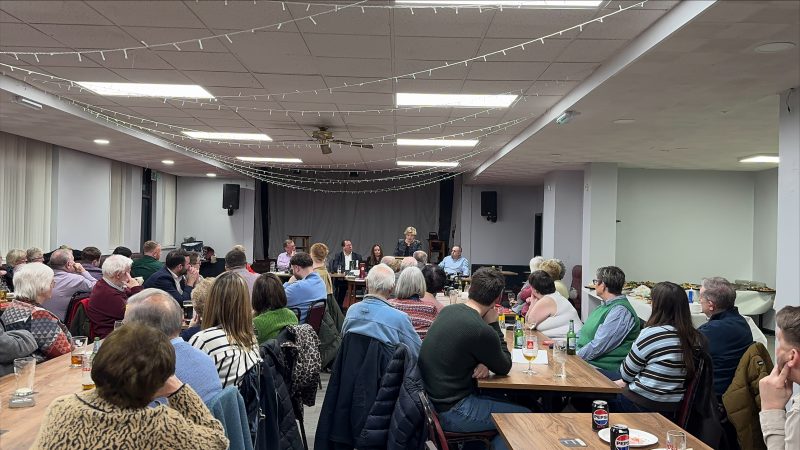
Emily Thornberry Keir Hardie Lecture in full


Emily Thornberry delivers the Keir Hardie Lecture.

I am so honoured to have been invited to speak here today and to have the opportunity to reflect on the values of our first leader, Keir Hardie, and to ask what his vision demands of the Labour Party today. 

It was a hundred and twenty years ago that our movement chose its first leader: a man called Keir. And in the 1906 General Election, under our Labour name, that young party won 29 seats in Parliament. 

Today, another Keir leads our family, and at the last General Election the British people placed their trust in us on a scale that our founder could never have imagined.  

We now have over 400 MPs. We have come a long, long way. 

People call it a “historic” victory. And they are absolutely right. We stood on a Labour platform, and the British public gifted us a majority on an extraordinary scale. But they expect something in return. And they expect what we said we would give, which was change. That’s what we promised. And that’s what we have to deliver.

So far so good. But it’s not is it? 

Here we are today, with that thumping great majority, with that clear mandate to do big things, really shake things up. And yet, we seem to be wrestling with something really quite troubling. 

We seem to be wrestling with a crisis of identity, a crisis of confidence.  

It’s as if we started to question what it means to be a Labour Party, to be a Labour Government. 

And the public are furious with us about that.

Insecurity in government isn’t just poor politics, it’s dangerous. Because when a government doesn’t know what it stands for, it risks squandering the hope and goodwill of the great many people who trusted us to do better. To be better. 

We cannot afford to be insecure, to be unsure of ourselves. 

We cannot waste this opportunity, this opportunity to enact generational change, to show Britain what a Labour government driven by Labour values really means. 

So, we must ask ourselves: Who are we? What are we fighting for? 

I think in moments like this, it helps to remember where we’ve come from. In order to know who we are, and where we’re going next.

Because when we understand where we’ve come from, when we understand the principles upon which we’ve built this movement, we can see more clearly what we need to do. 

Today, I want to talk in particular about Labour’s place in the world. About our Internationalism. 

Everyone always says “oh we’re Labour. We’re such great internationalists” 

But what does that mean? What does it really mean? 

Well, I think it means believing in something both very simple and yet very radical. 

It comes from believing that whoever you are, wherever you come from, you have a place in our socialist movement. And that we are all equal brothers and sisters.

That when you join Labour, you become part of something bigger than yourself. 

But it goes much further. We believe that spirit of solidarity goes beyond borders. Keir Hardie saw that working people were working people wherever in the world they came from across the world.

It means recognising that we all have far more in common than we have that divides us. 

We might have different eye colour.

We might have different skin colour.

We might call our God a different name.

We might speak a different language.

We might wear strange exotic hats.

But fundamentally, fundamentally at the level that really matters, we are all the same.

That’s our internationalism. That’s what it means. And it comes from our socialist origins to the progressive politics we practise today. There has always been something fundamentally internationalist about the Labour Party. 

And history bears that out. 

It was a Labour Prime Minister – Clem Attlee – who helped establish the United Nations and declared that the world should never again descend into the horrors of war. And that’s what it means to be Labour.

It was a Labour Foreign Secretary – Ernest Bevin – who helped create NATO, ensuring that Britain and its allies could defend peace in an uncertain world. And do it together. All for one and one for all. And that’s what it means to be Labour.

And it was a Labour minister – Barbara Castle – who, working with the Fabians, helped establish the Office for Overseas Development, because she understood that helping people thousands of miles away isn’t charity. It’s solidarity. And that’s what it means to be Labour. 

So alright. We are a party of internationalists. 

But how does that history, those values, help guide us through the crossroads we face today? 

Well, it reminds us that there are certain things that Labour has always rejected. 

We reject the idea that our prosperity should ever be built on the exploitation of others. 

We reject what Keir Hardie called the “plunder and butchery” of imperialism. 

And we reject the notion that the suffering of a stranger somehow means less than the suffering of a neighbour. 

Hardie understood this. 

Or more truthfully, he learnt this on his world tour. Where he travelled India and South Africa as the first leader of the Labour Party. And he learnt along the way that Labour was not just about the miner in the Rhondda Valley, or the dock worker in East London, or the millworker in Lanarkshire.

It was a movement for all those fighting for dignity, security and a better life. 

He learnt that Labour is a family borne of class but driven by values. Values of solidarity, and empathy. 

And I suspect no one in this room would disagree with those instincts. Those Labour instincts remain good ones. And they remain true.

They are beliefs to be proud of and they should remain the moral compass which guides us today. Our light in darkness.

But let’s be honest. It is easy to say these things. It is easy to celebrate these values. But values are meaningless if we do not deliver on them. 

So, we believe all these things. What are we prepared to do about it? 

Well, in the last two weeks, I think we may have seen those values in action. 

Our leader – the younger Keir that is – was confronted with precisely the kind of moment that tests a government. That reveals what exactly a government is prepared to stand up for. It was a true test of the mettle of a leader.

When the pressure came, our Prime Minister made clear that this Labour government should stand up for what is right. 

He made clear that Britain should not be drawn into war for war’s sake. 

A war with no clear purpose.

A war that is contrary to law. 

If people are going to die, either bravely and willingly as combatants, or just because they were in the way, like a little girl’s school, they deserve to know why they have to die.

And Keir has held that line. 

And let’s be honest, it’s not easy for Prime Minister to do that. It’s not easy for a Prime Minister when you’ve got the Americans breathing down your neck. They are close friends and allies and we rely on the US for defence and security, although that reliance is mutual.

But just as Harold Wilson refused to send British troops to fight in Vietnam, this Labour government knows that we have principles that we are not prepared to violate. Unlike the Tories, we stuck to our guns and said we have values that define who we are. It is the first time that a British Prime Minister has said no to an American President since the 1960s.

So no Mr President. We say no.

And with every passing day, I think we see just how important that decision actually was. How hard it was, and how pivotal it has been for this second Keir. 

Because the pressure did not come only from the United States. 

It came from the press. 

It came from the Opposition Benches. 

It came from the armchair generals beating their chests and roaring us on into war.

We forget it now but just two weeks ago, the drumbeat was relentless: The claim that Britain had to fall in line, that refusing to do so would somehow place us on the “wrong side” of the Americans. And how difficult and dangerous that would be for our country. 

I think it took real courage for the Government to resist that kind of pressure. 

But once you stand firm and say so, something remarkable happens – the fog clears. And suddenly the path becomes obvious. 

Of course we had to stand up for what was right. Of course we can’t be involved in attacking another country, no matter how hateful their regime is. And no one is apologising for Iran, but where is it going to end? What is the plan? And who is going to decide when that plan has been fulfilled, that we have done everything we wanted to do in that war, if we don’t have a clear idea what we’re going to do before we get involved?

The answer had to be no.

Unlike many of our founding fathers and mothers, not many of us in the Labour Party are pacifists these days. But we cannot agree to violence and the loss of life without either the agreement of the international community, or the real need for self-defence. That’s the law. And that’s what’s right. 

Of course we had to put principles before pressure. 

And looking back you can see this is exactly the kind of courage Keir Hardie displayed when he stood so firmly against the First World War. 

When he was ridiculed. 

When he was called unpatriotic. 

When he was spat at in the street. 

But history proved him right. 

Hardie was such a relentless advocate for peace that the outbreak of war very much killed him. But I think what he said in the weeks before the First World War tells us a lot about what it means to be an internationalist Labour Party. 

He told Parliament: “Our honour is said to be involved in entering into the war. That is always the excuse.” 

He went on: “I suppose our honour was involved in the Crimean war, and who today justifies it? Our honour was involved in the Boer War, how many today will justify it?”

Let’s update that. Let’s change Crimea to Iraq. Let’s change Boer War to Libya. 

He concluded: “If we are led into this war, we shall look back in wonder and amazement at the flimsy reasons which induced the Government to take part in it.” 

More than a century later, those words still ring true. 

So, the lesson for us today is simple. 

Standing by Labour values may not always be easy in the moment. But when we do it – when we hold our nerve – we discover that is exactly what we should do. This is where Labour belongs. This is who we are. This is what it means to govern according to our principles. 

And look how Labour’s internationalism, our belief in treating others with respect, as brothers and sisters, has helped our standing in the world.

Just think back a couple of years. Back to the depths of Brexit.  

When Britain was a laughing stock.  

When people openly mocked us. They mocked the politicians that were supposed to represent us.

We had David Davis turning up for Brexit negotiations without any notes. I mean really. The arrogance. The entitlement. 

We had Boris Johnson making everything into some silly little game, some chance for him to just show off, when real working people paid the price for his incompetence. 

We had Dominic Raab deciding he’d sit on a beach in Greece while Kabul fell to the Taliban, rather than get up and do something about it. 

The politicians who represented Britain on the world stage let us down, and our credibility vanished. People didn’t know what Britain stood for anymore. And neither did we as a country.

These people said they were patriots, but I think real patriotism doesn’t need to brag. It needs to be comfortable with itself, it needs to believe in itself, it needs to be strong.  

And we were so far away from that.

But look at the difference we have made in the last 18 months. 

Under Labour, Britain is once again a serious player on the world stage. And we are doing it on our terms. On Labour terms.

We are a force for good.

We back international law because we know it is right.  

We back strong partnerships because we know we are better together.  

We back fighting for peace because we know it’s a hell of a lot easier to get into a war than it is to get out of one. 

I have to say, I found it deeply disturbing to see Kemi Badenoch and her Shadow Attorney General arguing that we should simply ignore international law if we didn’t like it and commit our troops to unlawful action. 

That when the Americans asked us to jump our response, they thought, should be: “how high, Mr President?” 

She said that our troops were “just hanging around,” when they were bravely defending our partners and bases from incoming fire. 

It’s disgraceful. 

Sending our young men and women to war is one of the most solemn decisions any government can ever make. And the eagerness of the Tories and Reform to trample over the UN Charter, to ignore the legal protections Britain helped write and to embrace what is essentially the law of the jungle – that should trouble every one of us. They are the alternative.

Under Labour, we will not let our country be seduced by self-serving populists who are prepared to put our country’s security on the line. 

Under Labour, we will not be afraid to do what is right, no matter how loud the warmongers shout. 

Under Labour, we will never again forget who we are and what we are fighting for. 

Getting ourselves into the right place internationally at a time of war, is no small thing. 

But we need to show that same strength, the same vision, the same clarity of principle when it comes to our domestic policy.  

If we do that, if we stay true to our values and our principles then I know we are going to be alright. 

And more than that, we will take the country along with us. 

It’s about understanding the nervousness people feel when they believe there is no control of our borders without falling into the trap of being unfair and cruel to vulnerable people who come here seeking safety and a better life. 

It’s about being brave when it comes to tackling the crisis in social care. Because we know in our hearts we are never going to fix the NHS without being bold and ambitious and finally, finally ensuring the elderly, disabled, and vulnerable have the care they need to live in dignity and to keep them healthy.

Yes, some of these things look really difficult, but we need to take a deep breath, listen to our hearts, listen to who we are, and take action. 

How many people here think we should be standing up for our children and protecting them from the addictive nature of social media? Or protecting people from the vile abuse they suffer online?

How many people here think we should be doing something about the manipulative algorithms feeding us all of this hate, and division, or disinformation? Or the blatant use of bots to promote hatred by hijacking the algorithms and supporting the Right?

Exactly.

We just have to go for it.

We have to be brave, and bold, and go for it.

We know it’s about time we updated our laws to give equal rights to couples who are not married. By not updating the law, we are not protecting marriage, we’re just disadvantaging children, the majority of whose parents are not married in Britain these days. And we’re disadvantaging women who believe being a “common-law wife” gives you some sort of rights. It doesn’t. It doesn’t give you anything. 

We know it’s about time we had a proper green revolution so people can actually afford their heating bills.  

But we can’t do that unless our homes are insulated properly and unless we build the pylons to get the clean energy to where it is needed. We can’t secure a warm future for people while most of us, 73% of us across the country, and 84% here in Merthyr, still rely on gas. We have to change that. It’s going to take a lot. We have to do it. We are Labour

We cannot continue to be unsure about ourselves. We have to say: people have got to have heating they can afford and we just have to get it done. We are in power. We have a big majority. We are Labour.

I’m not saying Britain is broken. I don’t believe it is. But I am saying we have to sort this out, and we can sort this out.

We can only do it though, with a Labour government that believes in itself, that knows where it comes from, and that is willing to be a bit braver, a bit louder, a bit prouder. 

If we are not sufficiently clear and confident, if all we have to offer the country is something which seems a bit timid, a bit boring, a bit managerial, if Labour is no longer a moral crusade, then what are we? Not much.

And we make the populists even more attractive.  

Because if we can’t be clear about what we stand for, we are in trouble.

But if we can be clear and if we can be positive and we can be passionate: then we win.  

Because we have the truth on our side. We have the arguments that stack up. We have a vision that makes sense. And we have a plan.

The problem with populists, whether it’s Reform or the Greens or Plaid, is that they just say what they think people want to hear. 

It’s never about knowing the cost of delivering it. Or how they’re going to do it. Or what the consequences will be. They never think that through.

Of course, we do. Trouble is, sometimes it seems like that’s all we do. And we forget the reason why we’re doing it, what the essence of the plan is and where we want to go.

We’ve spent so much time talking about the cost, about next steps. And yes, of course we must do that because we are a responsible party of power.

But we also need to be able to look people in the eye and say: we know where we’re going, that things are going to be alright. Stick with us, and we can sort things out together. 

Because if we don’t, people will just turn to the Farage’s, the Polanski’s, the ap Iorwerth’s. The snake-oil salesmen. Whatever their names are, we see them. They are prepared in their vanity and glibness, to make us all poorer, to make us all more divided. 

I think that lately, we could be forgiven for thinking that all our passion, and beliefs, and confidence in our Labour values, had been beaten out of us. But our Labour values are still here. They’re still here in our hearts. They haven’t gone anywhere. We just have to rediscover it.   

 We have a duty to take advantage of this massive chance the public has given us to transform our country. 

 To be as brave as Keir Hardie was.  

 To be as bold as Keir Hardie dreamed.  

 To be Labour, as Keir Hardie envisaged. 

 And to show Britain what a strong Labour government, grounded in proud, Labour values, can truly achieve. 

 Thank you.