Thursday, September 03, 2026

Bosnia-Herzegovina

Mladic, the war criminal, dies - we remember Srebrenica


Tuesday 1 September 2026, by Geoff Ryan
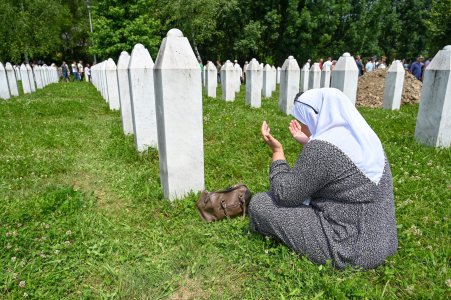


The 11th of July marked the 30th anniversary of the genocide in July 1995 of over 8,000 largely Bosniak [1] men and male children by Bosnian Serb forces under the command of Ratko Mladic. They were buried in mass graves. Many thousand more fled into the forest and embarked on a harrowing journey lasting up to 7 days before reaching the eastern Bosnia village of Nezuk. What led up to the massacre and how it has been treated compared to two other wars: Russia’s invasion of Ukraine and Israel’s genocide against the Palestinians..

Srebrenica remains the worst massacre in a single day in Europe since the second world war and was classed as genocide by both the International Criminal Tribunal for the Former Yugoslavia) (ICTY) and the International Court of Justice (ICJ). 16 people were convicted of crimes committed in Srebrenica including army chief Ratko Mladic and Radovan Karadzic President of the Bosnian Serb state Republika Srpska both of whom are serving life sentences in the Hague.

Slobodan Milosevic, former President of Serbia and the main war criminal, was also eventually arrested, sent for trial and imprisoned in the Hague where he died in 2006. His deputy and head of the modern day fascist Cetniks, Vojislav Seselj, is also imprisoned in the Hague. How different from the current situation of Vladimir Putin and Benjamin Netanyahu.

How different as well from the attitude to the daily massacres of Palestinians in Gaza and the West Bank. The murder of 8,000 Bosniaks is called genocide whereas the description of perhaps ten times as many Palestinians is hotly contested, particularly by western governments.

In May 2024, the United Nations General Assembly adopted Resolution A/RES/78/282 which designated 11 July as the International Day of Reflection and Commemoration of the 1995 Genocide in Srebrenica, to be observed annually.

The same resolution also condemned any denial that genocide had been committed at Srebrenica and urged member states to preserve the established facts and to ‘act in remembrance, towards preventing denial, distortion and occurrence of genocides in the future’.

However, the UN failed to explain how the genocide could take place in an area that had been designated ‘a safe ‘area’ and that was supposedly protected by UN troops from the Netherlands. The Dutch ‘blue helmets’ were in an almost impossible position because they were ‘peacekeepers’ and therefore very restricted in how they could respond to Serb and Serbian attacks on the Bosniak population. [2] The Netherlands was the only state that offered to supply troops and western governments were preoccupied with discussing them plan to end the war drawn up by US Secretary of State Cyrus Vance and British Foreign Secretary David Owen.

Irish UN troops were shot at by Israeli forces during Israel’s recent war in Lebanon. The difficulties faced by the Dutch at at Srebrenica do not appear to have been taken on board.

The Srebrenica genocide is not just an important horrible event from the past. It also impacts how we relate to current struggles, in particular in Ukraine and Palestine. To understand that we have to go back in history and look at the dynamics that led to the break-up of the Socialist Federal Republic of Yugoslavia. [3]

The Socialist Federal Republic of Yugoslavia (SFRY)

The SFRY [4] was created at the end of the second world war from the ruins of the old Yugoslavia. The dominant forces was the Partisan army in which the Communist Party was hegemonic. The Partisans had fought the invading German armies, the pro-Nazi Serbian government in Belgrade, [5] the equally pro-Nazi Ustase regime in Croatia and Bosnia-Herzegovina and the Serb nationalist Cetnik movement before emerging victorious.

The main struggles took place in Croatia and Bosnia-Herzegovina. Although the majority of the Partizans were Serbs, they were predominantly from Serb areas of Croatia and Bosnia-Herzegovina rather than from Serbia itself. Their leading figure Josip Broz (better known as Tito) was part Croat and part Slovene.

The Partizans were fully aware that one of the causes of the break-up of the old Yugoslavia was the conflict between different national groups. In particular they were concerned to prevent domination by Serbs, the largest national grouping. The solution was a federal state consisting of the Republics of Serbia, Croatia, Slovenia, Macedonia, Bosnia-Herzegovina and Montenegro.

At the same time the Yugoslav Communists were involved in a struggle with Stalin and the Cominform. Under the agreement Stalin had reached with Winston Churchill, Yugoslavia was supposed to be in the British sphere of influence and Stalin was decidedly unhappy that the Yugoslavs had taken power. Tito and the Partizans were ostracised and expelled from international communist organizations.

The split with Moscow had a real impact on the development of Yugoslavia as a federal state. The Republics were allowed some autonomy; ‘workers’ self-management’ was promoted in contrast to the highly bureaucratized model in the Soviet Union. On the international stage, the Yugoslavs were actively involved in creating and developing the Nonaligned Movement. But behind the scenes developments were taking place that would eventually lead to the destruction of the SFRY after the death of Tito

Kosova [6] Uprising

By the late 1980s the SFRY was experiencing major problems. The economy was in serious trouble, unable to pay the massive borrowing undertaken in the 1970s. Economic problems were most acute in the autonomous province of Kosova, part of Serbia with an Albanian majority but with an almost mythical significance for Serb nationalists. [7] Unemployment was over 20%. Young people took to the streets and demanded that Kosova should become a Republic independent of Serbia but within the SFRY. Their protests were brutally suppressed by the police and army who were increasingly loyal to Slobodan Milosevic who had come to power in 1987.

After he came to power Milosevic set about changing the balance of forces. He replaced the party leadership in Montenegro, abolished the autonomous status of the two provinces of Kosova and Vojvodina (the latter had no majority nationality, but Hungarians formed the largest minority) but retained their seats on the Federal bodies, thereby giving himself a minimum of 4 votes out of 8.

The other Republics were also experiencing severe economic difficulties. But whereas in Serbia and Montenegro Milosevic advocated much greater federal control in Croatia, and especially Slovenia the leadership of the League of Communists wanted looser controls, greater decentralisation.
Slovenia Versus Serbia

The very different perspectives of the leaderships of the League of Communists of Serbia and the League of Communists of Slovenia and the conflict between them are central to understanding the breakup of Yugoslavia. Serbia wanted a more tightly controlled economy alongside a more centralized state: the Slovenes wanted greater economic freedom and a more decentralized state with greater autonomy for the Republics. Both sides wanted greater concessions to capitalism and the market: it is completely wrong to see Milosevic as defending socialism and Slovene leader Milan Kucan supporting capitalism.

Milosevic’s increasingly authoritarian tendencies eventually led to the leadership of the League of Communists of Slovenia declaring independence, something they were theoretically guaranteed the right to do under the 1974 constitution. The response of Milosevic and the leadership of the Jugoslav People’s Army (JNA) was military. For ten days, from 27 June to 7 July 1991, the Slovenian Territorial Defence Force and the police fought against the JNA. The war ended with a ceasefire and the withdrawal of JNA forces.

Why did the JNA withdraw and why did Milosevic support this? Primarily because there were very few Serbs in Slovenia and by this time Milosevic was a confirmed Serb nationalist. Milosevic’s decision to call off the war against Slovenia would, however, have major repercussions in Croatia and later Bosnia because once Slovenia was allowed to secede from the SFRY then it was almost inevitable that Croatia would follow and that Bosnia-Herzegovina would not be far behind.

War In Croatia: Echoes of Ukraine

Milosevic may well have been willing to let Slovenia go but Croatia was a totally different issue. Croatia, unlike Slovenia, had many Serbs and Milosevic was determined to pull them into a Greater Serbia. Milosevic’s supporters in Croatia had initially come into conflict with the then Communist government when they organised demonstrations supporting the repression of the Albanian population of Kosova. Now they came up against the government of former Communist turned Croatian nationalist Franjo Tudjman.

There is little evidence that Serbs in Croatia were initially threatened by the Croatian government, nor is there evidence that the government were Ustase. Just as there is no evidence that Zelenskyy in Ukraine is a neo-Nazi, as claimed by Putin and his supporters. The parallels between the wars in Croatia and Ukraine are striking.

Milosevic and the JNA invaded Croatia just as Putin and the Russian army invaded Ukraine. Both of the invading forces included activists from far-right parties. Vukovar was destroyed in Croatia just as was Mariupol in Ukraine. Fraudulent referenda were used in Croatia to establish the Krajina Serb Republic just as they were to establish the pro-Russian ‘republics’ in eastern Ukraine. Zelenskyy is accused of being a Banderite just as Tudjman was accused of being an Ustasa. The Serbs in Krajina were not primarily motivated by defending Serbs but by making an independent Croatian state impossible, in a similar way to the pro-Russian (and very often Russian) forces in the Donbass who appear more concerned to destroy Ukraine rather than defend the people of Donetsk and Luhansk.

Sadly, there is also one other parallel: the inability of the left, particularly in Britain, to see beyond their preoccupation with an all-powerful western imperialism that controls all events. So, the Socialist Workers Party at the time claimed that the war in Croatia was the fault of Germany, because Germany recognized the independence of Croatia. The fact that other states recognized Croatia before Germany was ignored as well as the fact that the recognition came after the war had begun.

Western intervention was blamed, the people of Croatia mere puppets to be manipulated at will by imperialism. More echoes of Ukraine where much of the left in Britain denies any agency to the people of Ukraine in their war against Putin.They too are mere puppets in the hands of imperialist powers. The Maidan protests were all manipulated by the USA or neo-Nazis – and other nonsense.

In any case, is not recognizing a state not also a form of imperialist intervention? Are we indifferent as to whether or not the British government recognizes a Palestinian state for example.

War in Bosnia

The conclusion of the war against Croatia led Milosevic inevitably into war against Bosnia-Herzegovina. Given his determination to gather the largest possible of Serbs into a single Greater Serbia state there was no way he would ignore the large Serb population in Bosnia. His attempt to carve up Bosnia was aided by his former enemy Franjo Tudman who also tried to carve out the largely Croat Herzegovina for his vision of a Greater Croatia.

Much of the left in Britain again failed to understand the war in Bosnia-Herzegovina, seeing it as purely a clash of different nationalisms. [8] They didn’t have an understanding of the complexities of Bosnian society and particularly failed to grasp the multi-national nation of the state and, for that matter, the government in Bosnia-Herzegovina. Despite the worst efforts of Milosevic and Tudjman, a multi-national government survived including Bosniaks, Croats, Serbs and other national minorities. The head of the Bosnian army was a Serb. The editor of the pro-government daily newspaper Oslobodjenje, which continued to publish throughout the war, was a Serb.

Above all the workers’ movement remained multi-national. In the industrial town of Tuzla, the trade unions organized defence forces which included Serbs, Croats and Bosniaks, Yugoslavs who refused ethnic categorization, and all the nationalities of the region. Tuzla became a central focus for those on the left throughout western Europe who could understand the difference between the multi-national, multi-ethnic government of Bosnia and the ultra-nationalism of Milosevic and Tudjman. The Fourth International is rightly proud of the role of its militants in aiding the struggle of the workers of Tuzla and building International Workers Aid. [9]

Source: Anti*Capitalist Resistance.

Footnotes

[1] Bosniaks are also known as Bosnian Muslims who were classed as a ‘nation’ in the Socialist Federal Republic of Yugoslavia before its destruction. About 1,000 of the dead remain unidentified.

[2] For an account of the difficulties faced by the Dutchbat troops see: Jan Willem Honig and Norbert Both, Srebrenica: Record of a War Crime, Penguin 1996.

[3] What follows is a brief sketch of the formation and disintegration of Yugoslavia from 1945 to the 1990s. For a more complete analysis see Geoff Ryan (ed) Bosnia 1994: Armageddon in Europe available at Scanned Image – Marxists Internet Archive)

[4] Strictly speaking the Federative People’s Republic of Yugoslavia until 1963 when the name was changed to SFRY. For convenience I have used SFRY throughout.

[5] This government is often forgotten about in accounts of the second world war in Yugoslavia. The brutality and antisemitism of the Ustase government in Croatia is frequently mentioned yet the fact that the Serbian government was the first in Europe to declare its country judenrein (cleared of Jews) is ignored.

[6] I have used the Albanian spelling rather than the Serb Kosovo.

[7] It was in Kosova that the Serbian army was defeated by the Ottoman army and Serbia came under Ottoman control. The battle took place in 1389, though for Serb nationalists it could have been yesterday.

[8] There were some exceptions, particularly Workers Power and the Workers Revolutionary Party who in their own ways supported the right of Bosnia-Herzegovina to exist but the sectarianism of the WRP in particular made it impossible to build a joint solidarity campaign. International Workers Aid was supported by the Fourth International and comrades from Belgium, Denmark, Sweden and Britain amongst others played important roles in getting aid to Bosnia. As indeed did the WRPs Workers Aid for Bosnia.

[9] For more information on Workers Aid see Nicholas Moll, Solidarity Is More Than a Slogan available to download from Rosa Luxemburg Foundation.

Denmark

Impressive commitments – but now it’s time to fight!

Wednesday 2 September 2026, by SAP Executive Committee


The Red-Green Alliance’s negotiation team managed to secure some impressive commitments in the newly formed government’s policy programme. In order to realise these commitments, we must now mobilise the opposition and the left-wing movements. [1]

We imagine virtually everyone was impressed by the mark that Alternativet [the Green Party], and perhaps especially the Red-Green Alliance, managed to make on the new government’s policy platform.

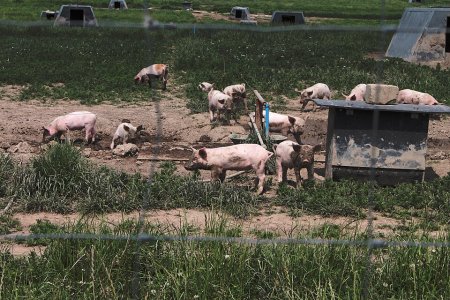
Impressed by scope of the commitments: I.e. the immediate, albeit temporary, halt to any expansion of conventional pig farming and the ceasing of tail docking and extreme breeding; the redistribution of agricultural subsidies; the investment of 4 billion DKK (over €133 million) into free dental care aiming for free dental care for everyone by 2035; making buses and trains across the country free for everyone up to the age of 22, and cutting VAT on food by half and removing VAT from fruit and vegetables entirely.

And also impressed by the number of positive fingerprints. There is simply a wealth of good intentions and a long row of more or less concrete promises in the government’s policy programme. Not just in the areas of agriculture and the environment, but across a long list of areas ranging from schools in remote areas and the victims of social security reforms to fairer conditions for trade unions.

Freedom to oppose

Almost more importantly, it was made clear that the Red-Green Alliance and the Alternative are entirely free to take a relentless stance against all the neoliberal, climate-destructive and right wing policies which, quite as expected, were also set out in the government’s programme. For example, the tax cuts for companies and shareholders and for those with the highest incomes; even accompanied by minor tax increases which disproportionately affect those with the very lowest incomes. The continued xenophobic immigration and integration policy, the absurd 5 per cent of GDP spent on military spending, the unchanged policy on Palestine, and so on.

Similarly, we are free to criticise the climate policy, which, on the whole, unfortunately remains catastrophically lax by ignoring the 2030 target and setting the 2035 target at a paltry 85 per cent reduction. The government’s platform only pays lip service to Denmark’s global consumption-based carbon footprint, which is an entirely different and far more embarrassing matter. The fact that not even the opening of new oil digging sites is being halted exposes the fact that Denmark’s climate hypocrisy continues.

Of course, the government’s policy platform will do nothing to address this problem. Because – despite the green rhetoric – we are dealing with a government whose primary objective is to stimulate endless capitalist growth, preferably based on cheap green energy in enormous quantities and by the rapid roll-out of AI –and with a declared openness to the introduction of nuclear power in Denmark.

The experiences of the Red-Green Alliance in relation to the government

If the Red Green Alliance did not have this freedom to simultaneously act as the left-wing opposition, it would, of course, be a political disaster to give political support for this government. But we do have that freedom, as Denmark has a negative parliamentarian system. That is why it was the right decision to let the Social Democratic-Reformist-Petite Bourgeoisie coalition come to power; to secure as many political commitments as possible from the situation rather than risk facing something worse.

Despite the clear centre-right majority in the Parliament, this government is not fundamentally different from governments for which RGL has previously provided parliamentary support. Take, for example, the Thorning government (2011-2015), where Margrethe Vestager certainly did not wield the rich’s baton any less than Lars Løkke does now. There we learnt – the hard way – that it was important to be in clear opposition. We were on the barricades in tough battles against the government, including in the teachers’ labour dispute and against the privatisation of the electricity company. We also learnt that we might need to be more willing to bring down such a government in situations where there was a shift to the left amongst the population.

Between 2019 and 2022, we sought to draw on the lessons learnt from the Thorning era to set limits on the bourgeois tendencies of the Social Democratic government by means of an internal so-called ‘memorandum of understanding’. That period was unusual due to the coronavirus pandemic. But we must at least acknowledge that, even though the Red-Green Alliance, armed with this document, secured a number of concessions – whilst formally remaining just as independent as we are now – the party came across too much as a supporting party rather than an opposition party. This applied, for example, to the series of climate agreements which, despite many fine words, formed the framework for the ‘hockey stick model’ and the Danish climate hypocrisy with which we are still living.

Has the Red-Green Alliance succeeded?

The RGA negotiating group has been open about the fact that it is not our policy, but that of the government and the centre-right parliamentary majority, which is reflected, for example, in the government’s policy on Palestine, in its immigration policy with the plans of opening asylum-processing facilities in Rwanda, in the anti-social tax cuts, and so on.

However, in the external communications from the Red-Green Alliance, it must be said that there has been room for enthusiasm – to such an extent that one could say we have oversold our influence and left an overly positive impression of the government’s platform as a whole. For example, it does not provide an accurate description of the new government when Pelle Dragsted (spokesperson for the RGA) apparently presents it at a meeting of the European left as a major step forward for the ‘Tax the Rich’ movement.

There is absolutely no reason to believe that all the positive promises in the government’s policy programme will be fulfilled automatically. Many of them are vague and/or unfunded. It is rather worrying that many of the specific objectives are explicitly not to be achieved within this term of office – not even in the form of clear interim targets.

Even in the most promising area, animal welfare, the deadline for phasing in compliance with the statutory ban on tail docking has been set for 2030, which is after the next election, and the deadline for ending extreme breeding practices has been set for 2035.

The VAT reductions are already being postponed until 2030. The reforms to social security benefits, etc., will reportedly require a great deal of ‘back-and-forth’ before they are implemented. We must be prepared to exert massive pressure on the government, or many of the long-term promises will remain shelved in committees up until the next general election, where they then risk being scrapped altogether.

We also run the risk that the government will attempt to link the fulfilment of its promises to the Red-Green Alliance with ‘funding’ measures that miss the social mark entirely. Løkke, minister of finance from a right-wing party, has, after all, made it a condition that the rich should not have to pay, but rather be pampered.

So there may only be room for enthusiasm – and there will certainly be a great need for movements that fight fiercely for their cause, with this government as their expected opponent.

There’s nothing wrong with enthusiastically celebrating these fine promises! It’s fine to highlight them – to promote them as realistic goals in the class struggle. For example, the promises of free dental care and a complete overhaul of agriculture. The enthusiasm these promises arouse is an excellent springboard for waging a struggle to have these demands met. It will by no means be easy for the government to shove these hopes back into the coffin – and we must make the most of that momentum.

But statements such as ‘The Red-Green Alliance has now delivered on its election promises’ is misleading and creates false hopes. And if we phrase things as though this is something Pelle and the others have already sorted out or will sort out in the Parliament (provided we just remember to vote for them or donate €1,5 a month) – then we are sending out completely wrong signals. For the Red-Green Alliance’s most important task is not to maximise the number of votes, but to organise and mobilise people. Not make people pin their hopes on politicians, but to become active themselves in pursuit of their own interests and views.

From enthusiasm to action

That is why enthusiasm must be used as a driving force for action.

The green movement – which bears the main responsibility for ensuring that pigs and drinking water were included reasonably well in the government’s policy platform – must be strengthened by us all to become even stronger, whilst we see the requirements through to the end. Otherwise, it could well end up with Løkke and the agricultural lobbyists undoing most of the ‘achievements’. That is why we must not give the impression that this matter has already been settled.

There will probably also be grounds for a social movement – or at least protests – rejecting tax cuts for the rich and tax increases for the poorest – as a precursor to VAT reductions that might lead to falling prices, but only in a year or two or even four.

We must use the enthusiasm generated by the many incentives in the government’s policy platform to mobilise support for the fight to make them a reality. Right now, the focus is on the fact that we on the left – not the far-right – are the ones actually trying to improve the livelihoods of those who are struggling financially. That is why people will listen if we call for action on this issue.

And of course, we won’t stop there! When VAT falls but prices do not fall to the same extent – that presents an obvious opportunity to demand price controls – and perhaps even to organise them ourselves. Danish retail prices have long been the highest in Europe and profit margins in the grocery sector are high.

Similarly, a victory over the pig farmers will be a victory for the entire green movement – which can strengthen the green struggle in general. It is a movement that can and will set a completely different (and urgently needed) growth and climate agenda than that of the government. An agenda that challenges the profit-driven approach which is currently driving the world towards the abyss.

And the struggle for Palestine continues! Now, as before, with the Red-Green Alliance – but unfortunately not the government – on the right side of the barricade.

Victories and mass mobilisations can be a ‘grinding mill of the class struggle’, which we’d love to set in motion, and through that sidelining the far-right completely. And when it becomes necessary and possible to topple the government, the way will be paved for something truly red and green.

A potential horror story

So much for that optimistic, enthusiastic and hopeful vision of the future. Unfortunately, things could also turn out quite differently: If the Red-Green Alliance becomes so fixated on having to rely only on negotiations in the Parliament that – in order to ‘deliver on our promises’ – we vote for one dubious ‘package’ after another, we will end up merely chasing our own tails.

If we allow ourselves to be pressured into voting for austerity budgets because there are signs of an economic downturn, and Løkke demands that rich and poor alike should share the burden.
And if the Red-Green Alliance wants to ‘save’ the government at any cost – because we’re hoping that in 5 or 10 years’ time it will fulfil the promises made to us in its government programme.
Well, then enthusiasm won’t last long. Frustration and anger will spread and, quite rightly, be directed towards the government. But also at its (in this nightmare scenario) ‘loyal supporting party’, the Red-Green Alliance. In that situation, we’ll quickly be seen as, and become, part of ‘the system’, ‘the Copenhagen elite’, who make the little people pay whilst the rich get by just fine.

In that situation, however, there are other forces that are only too happy to step in as the opposition. Other forces that will give voice to the justified anger – in their own way. So it may well be the xenophobic and/or neoliberal far-right that, riding on the back of the people’s anger, take over Government after the next election. And then there probably won’t be many of those 5- to 10-year promises that hold true. Neither for pigs nor for people.

21 August 2026

P.S.

If you like this article or have found it useful, please consider donating towards the work of International Viewpoint. Simply follow this link: Donate then enter an amount of your choice. One-off donations are very welcome. But regular donations by standing order are also vital to our continuing functioning. See the last paragraph of this article for our bank account details and take out a standing order. Thanks.

Footnotes

[1] Photo: Sten Porse, license: CC-BY 3.0

Help Antiwar.com Expose the War Machine’s Abuses at Home and Abroad

Some people say that being anti-war is to be against “the troops” – the Americans who in the past were drafted to fight and today volunteer to serve. But that is a superficial criticism that distracts from what the criticism of U.S. wars really should be.

Many of us believe in a strong national defense. That requires a fully equipped and properly disposed military of men and women in uniform to defend the country from attack. The “anti” in “anti-war” is a healthy skepticism of the state abusing its power to wage wars of choice, typically in service of ideological and corporatist agendas that have nothing to do with safeguarding Americans. In fact, in many cases, Washington’s overseas interventions over the last century have reflected an imperialist urge that would have been abhorred by the American founders. These wars have blown back domestically to make our communities less safe and less free. Citizen soldiers in the form of our state National Guards were exploited to extend the wars in Iraq and Afghanistan and are still being taken away from responsibilities at home to be sent to – and killed – in far flung active duty operations that most Americans know little about.

Today we hear about the deplorable conditions on U.S. Navy vessels in the Middle East. President Donald Trump’s decision to take the nation to war with Iran, without Constitutional approval, and to deploy ships to maintain an illegal blockade far beyond appropriate and safe measure for the men and women on them, is another indication of how Washington and its masters come before those who serve. Top Pentagon officials and the president himself have chosen to downplay the USS Abraham Lincoln scandal and engage in what seems to be coordinated attacks on the press sharing the sailors’ stories. This should raise alarms for everyone, not just the service members and their families. More than ever, we are convinced that Washington and its wars have nothing to do with us. Just see how dirty the powerful fight to protect their own interests.

But on a positive note, today’s rank and file, after 20 years of war, access to social media and more real time information – and more important, alternative, independent news coverage – are thinking more critically about the war policies that affect them and their families. Veterans are seeking out more data, they are writing about their experiences, and they are becoming more proactive in protecting each other, whether that be on health care, improving conditions on base, or pursuing reforms that challenge a military industrial complex that sends their peers into reckless adventures overseas, often unprepared and underserved. One of the biggest under-the-radar stories is that the military industrial complex puts more money into big weapons systems, including ships, that underperform and are even dangerous for our soldiers, Marines and airmen, than they do in outfitting and training its human resources. Why? Because it’s all about the industry, the contractors, Wall Street, and the E-Ring, not the people.

Antiwar.com has become one of the best places for all Americans – including our military and veterans – to get information about this racket. About the secretive military operations overseas, blowback on the homeland, the harm the government is putting our uniformed men and women in everyday, and how they are not taken care of when they get home. This is information that makes people mad, but can also spur awareness and action. Continuing to support Antiwar.com allows it to reach more readers, cultivate new writers, maybe even some who thought “anti-war” was not for them. The fact is that the Washington war machine’s abuses are far reaching. We need a forum that speaks for everyone and anyone who has had enough.

Kelley Beaucar Vlahos is Editorial Director of Responsible Statecraft and Senior Advisor at the Quincy Institute. She was a regular news writer and reporter for Antiwar.com from 2009 to 2014. She served for three years as Executive Editor of the The American Conservative magazine, where she had been reporting and publishing regular articles on national security, civil liberties, foreign policy, veterans, and Washington politics since 2007. From 2013 to 2017, Vlahos served as director of social media and online editor at WTOP News in Washington, D.C. She also spent 15 years as an online political reporter for Fox News at the channel’s Washington D.C. bureau, as well as Washington correspondent for Homeland Security Today magazine.

Baiting Turkey: Israel’s Strategy in Syria

by | Aug 31, 2026 | Antiwar.com

The base at Abu al-Duhur had been dead for thirteen years. Wrecked in the Syrian war, out of service since 2012, its runways cratered and its hangars stripped, it sat in Idlib province about 60 kilometers from the Turkish border, useful to no air force. On the night of August 18 eight Israeli missiles fell on it. Israel said it had struck to stop Turkish troops from moving in.

Six days before the strike, Israel had gone to Washington with the same warning. Its intelligence, it said, indicated there might be Turkish movement into the airfield. The Americans took the warning and ran it down through their own agencies. Tom Barrack, Donald Trump’s ambassador to Ankara and his envoy for Syria, described what came back. “We all did our due diligence. We went back to our respective intelligence agencies. The answer we got is, no, that’s not happening.”

Then Barrack said the thing an envoy is not supposed to say in public about an ally. “One theory is they were just baiting Turkiye.” He called the strike aggressive and timed, and he named what it was timed to. Israel votes on October 27.

Israel’s defence minister, Israel Katz, called Barrack’s account “full of inaccuracies” and said the intelligence had been clear. Both cannot be true. Either Turkey was about to seize a derelict runway and the closest ally Israel has could not find the evidence, or it was not, and a NATO member’s base was bombed on a claim that dissolved the moment anyone checked it. The envoy who checked it settled the matter to his own satisfaction on a podcast, five days after the missiles landed, by guessing at the motive.

The motive was on a billboard before it was in the air. Along Tel Aviv’s main highway, above the traffic, Recep Tayyip ErdoÄŸan had appeared beside Iran’s supreme leader, the head of Hezbollah and the mayor of New York, under a single line: “They want Netanyahu to lose. Don’t let them win.” Benjamin Netanyahu is the first sitting Israeli prime minister to be tried for corruption. His Likud has been falling in the polls. Trump has told him to wind down the wars on Iran and Lebanon that filled his last two years. A man who runs as the wall between his country and its enemies had run short of enemies he was still allowed to fight.

Turkey filled the gap, and filled it safely. Iran could be bombed toward collapse. Turkey cannot. It holds NATO’s second-largest army, its president has a warm line to the American one, and a quarrel with it can be conducted in airstrikes on other people’s territory and in warnings traded through the press, at no risk of a war that reaches Israeli cities. The opposition read the timing on sight. Yair Lapid, who backed the strike, ridiculed the noise around it: “if you struck, stay quiet.” Ehud Barak wrote that the whole escalation smelled of a plan to fight the election on a war footing.

What is less often said is that the man on the billboard had his own use for it. Through the past year ErdoÄŸan jailed Ekrem İmamoÄŸlu, the Istanbul mayor who was his most dangerous rival, and opened a settlement with the imprisoned Kurdish leader Abdullah Öcalan meant to draw Turkey’s Kurds out of the opposition and clear the path to a new constitution, one that might let him run again after his term ends in 2028. An Israel behaving as an aggressor on Syrian soil handed him a cause under which Kurds, Islamists and nationalists could stand behind the same government. His officials called the strike “cheap politics” for Netanyahu, which it was, and treated it as a gift, which it also was. Barrack, once more on the record, said both leaders were “in a political campaign,” each running toward a vote, each knowing what his voters wanted to see. A confrontation with two authors is harder to call off than one, because calling it off costs both of them something at home.

None of which makes the underlying quarrel invented. A year before the strike, a committee Netanyahu had appointed under his former acting national security adviser, Jacob Nagel, told him to prepare for direct war with Turkey. The Syrian threat, the report said, “could evolve into something even more dangerous than the Iranian threat.” It urged raising the defense budget by up to 15 billion shekels a year and buying the long-range aircraft such a war would require. After October 7 Israel had already traded deterrence for prevention: not to wait for a threat and answer it, but to destroy it before it forms. Abu al-Duhur was that rule carried out on concrete. Hit the runway while it is still only a runway, before Turkish soldiers arrive and turn it into a piece of NATO. The rehearsal was on the record too. In the spring of 2025 Turkish teams had surveyed the airfields at T4, Palmyra and Hama for a deeper presence, and Israel had struck each in turn.

The legal cover was being drafted while the fires were still out at Abu al-Duhur. Two days after the strike a former Israeli official, Shay Gal, wrote in the Adelson-owned daily Israel Hayom that Turkish soldiers in Syria would be, in plain terms, targets. Article 5 of the NATO treaty, he argued, “protects Turkish territory; Turkish troops do not carry that territory with them” onto Syrian ground. Israel had acted, he wrote, “before Turkish military depth matured.” The paper is owned by Miriam Adelson, the largest single donor to the American president. An opinion column in such a place is not a fringe position tossed into the void. It is a balloon released over friendly airspace to see who salutes.

Underneath the doctrine and the theater lies something plainer, which is money. Turkey’s arms exports reached about 10 billion dollars in 2025, close to half again what they had been the year before, and climbed another 26 percent through the first seven months of 2026, to 11.2 billion dollars over the trailing year. Ankara now sells something near two-thirds of the world’s armed drones. The pitch it makes is the one Israel has made for decades to the Gulf and the wider Arab world: capable weapons, delivered faster and cheaper than the Western competition, to the same buyers. And the rivalry runs straight through Netanyahu’s own telephone. Before Trump flew to Ankara in July, Netanyahu called him to press him not to let Turkey back into the F-35 program or sell it the F110 engines its home-built KAAN fighter needs. To do so, he told Fox and afterward CNN, would “upset the power balance in the Middle East, which is ultimately guaranteed by Israeli air superiority.” The sentence is honest about what is being defended. Air superiority is a weapon over Israeli cities and it is also a catalogue, and the customers are the ones Turkey is taking.

The two designs for Syria cannot both hold on the same soil. Turkey wants a single Syrian state under Ahmed al-Sharaa, its Kurdish militias folded into a national army, its refugees sent home, its northern border shut. Israel wants Syria kept weak and split, its minorities shielded from Damascus, its south left open to Israeli entry. The foreign minister in Jerusalem has been clear that Turkish radar and air defense and aircraft would close skies that Israeli jets now cross at will, and would make a future strike on Iran harder to fly. Al-Sharaa, pressed from both sides, takes Turkish training and reconstruction while quietly thinning the Turkish-shaped units inside his own army, unwilling to become anyone’s client. Syria is not where the rivalry is happening. Syria is what it is over. The place it is most likely to tear is the Kurdish seam, where a force armed by Washington is being pushed into a state that Turkey wants it dissolved by, and that Israel would sooner see it armed against.

That Turkey is not Iran is the danger, not the reassurance. It carries NATO’s second army, a new mutual-defense pact with Saudi Arabia and Pakistan, and a president nearer to Trump than any in years. To bomb a base that Turkey backs is to strike at the rim of the alliance that underwrites Western security, and the alliance has no agreed answer for the morning after. The shield may bring the collision on rather than hold it off. If NATO membership tempts Ankara to push a little deeper into Syria, trusting that Israel will not risk hitting a protected army, and if that trust pushes Israel to strike sooner, before the protection attaches, the deterrent has turned into its opposite. Washington sees it. Barrack has spent weeks trying to build a channel among Israel, Turkey and Syria so that jets do not meet by accident. Israel does not want the channel. A formal mechanism, its officials fear, would set into intelligence-sharing and bind their hands, taking from them the freedom to strike whenever they alone decide a threat is forming.

Netanyahu once ran precisely such a channel with Vladimir Putin, to keep Israeli and Russian pilots from firing on each other over Syria, and it held for close to a decade. It worked because both sides wanted it to. This time one side is bombing empty runways two months before an election and filing the result under deterrence.

For a generation the region was arranged on the belief that Israel stood at its center, wired to Washington, its supremacy the fixed point the Abrahamic accords and all that followed were built around. That belief is coming apart. The strike on Abu al-Duhur was not the confident act of a power sure of its place. It was the nervous act of one no longer sure of it, a country cratering a dead airbase to prove a dominance that a NATO member’s drones and export ledgers are quietly taking away. The threat the missiles answered could not be found by the ally sent to look for it. What could be found was the billboard, the trial, the sinking polls, the rival in an Istanbul cell, the constitution still to be rewritten in Ankara, the engines Netanyahu wants Turkey never to hold. Two men who need the same war moved a step nearer to it, on land that belongs to neither, over a runway no one was using.

Thomas Karat writes investigative work published at karat.substack.com and the Libertarian Institute, drawing on a corporate career and academic training as a behavior analyst to examine how institutions manufacture consent and influence.