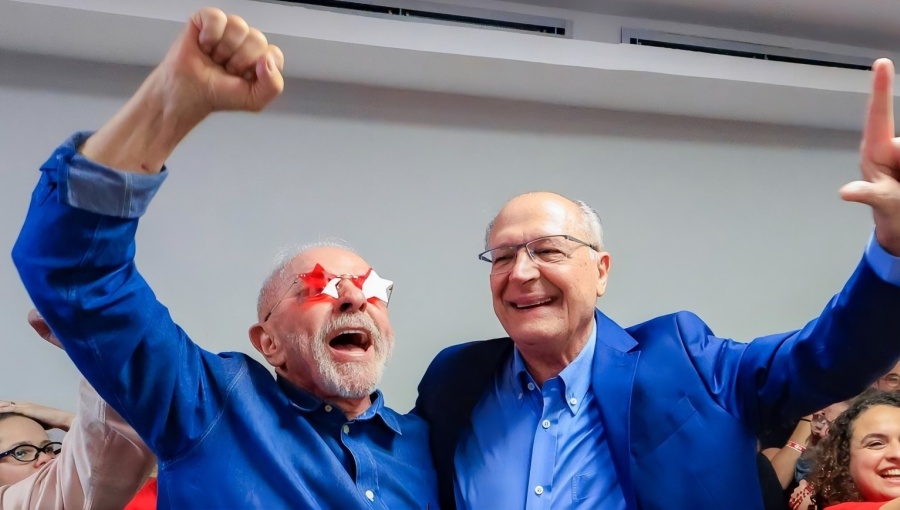
Brazilian President Luiz Inácio Lula da Silva won a fourth term on October 25, overturning a first-round deficit to beat right-wing Senator Flávio Bolsonaro in a close runoff.
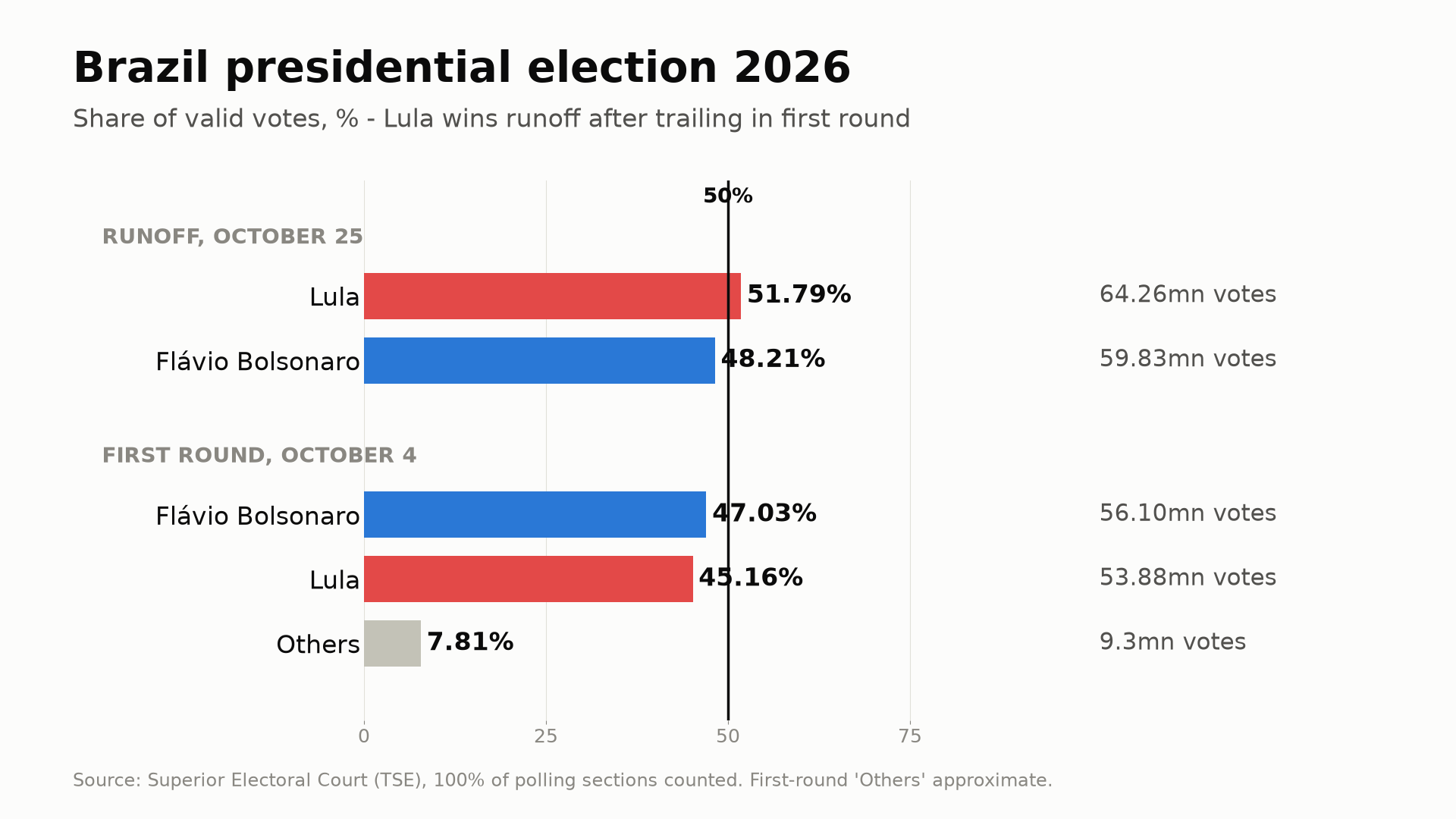
Lula took 51.79% of valid votes in the runoff after finishing second with 45.16% on October 4. Source: Superior Electoral Court (TSE).
Lula took 51.79% of valid votes, or 64.26mn, against 48.21%, or 59.83mn, for Bolsonaro, after 100% of polling sections were totalised by midnight, according to the Superior Electoral Court (TSE), which called the race for the incumbent. The margin of 4.43mn votes is more than twice the one by which Lula beat Bolsonaro's father, former president Jair Bolsonaro, in 2022, Reuters reported.
The result puts the brakes on a run of right-wing victories across Latin America and is the 80-year-old's latest comeback in a career full of them. Lula is the first candidate since Brazil's return to democracy in the 1980s to win the presidency after finishing second in the first round, and he did it against the polls: Bolsonaro led by a point in a Quaest survey four days before the vote, and markets had bet heavily on a change of government.
Bolsonaro has refused to concede. He said he would ask for the result to be annulled because a Supreme Court justice appointed by Lula extended voting by two hours late on polling day over alleged irregularities in voter transport.
"It is impossible to recognize the election results, given the circumstances under which things unfolded," Bolsonaro told journalists.
Analysts give the challenge little chance. His campaign also asked for an extension, citing heavy rain in the conservative-leaning south, and the margin is wide. "It's very improbable that it will lead to the reversal of the result," Mario Braga, a Latin America analyst at risk consultancy RANE, told Reuters, though he expects right-wing protests in the coming days. Jair Bolsonaro never accepted his 2022 defeat and is serving a 27-year sentence for plotting a coup.
Lula struck a conciliatory note in his victory speech at a hotel in São Paulo. "I won't speak of national unity, because that doesn't always fit the reality of this country. No one is obliged to like the elected president, but he was put in place to govern for everyone," he said.
How Brazil voted
The country split along familiar lines in the first round on October 4, when Bolsonaro took 47.03% to Lula's 45.16%. Lula piled up majorities of 60% or more across the poor northeast, peaking at 71% in Piauí, while Bolsonaro dominated the agricultural centre-west and the south, with more than 65% in Santa Catarina, Rondônia, Mato Grosso and Roraima. The swing came in the states Lula had carried in 2022: Bolsonaro took Minas Gerais, the populous bellwether, and Tocantins.
| State | Lula | Flávio Bolsonaro |
| Amazonas | 48.1% | 45.1% |
| Minas Gerais | 43.3% | 48.3% |
| Pará | 49.9% | 44.5% |
| Tocantins | 43.4% | 50.4% |
| Alagoas | 54.7% | 40.5% |
| Rio Grande do Norte | 59.8% | 34.8% |
| Paraíba | 61.3% | 33.1% |
| Ceará | 63.3% | 31.3% |
| Sergipe | 62.8% | 30.6% |
| Pernambuco | 63.4% | 31.0% |
| Maranhão | 63.9% | 30.9% |
| Bahia | 66.1% | 28.6% |
| Piauí | 71.0% | 24.1% |
First round, October 4: states won by Lula in 2022, share of valid votes. Source: TSE data compiled by Reuters.
| State | Lula | Flávio Bolsonaro |
| Amapá | 45.7% | 45.7% |
| Distrito Federal | 38.1% | 51.3% |
| Rio de Janeiro | 39.4% | 53.0% |
| São Paulo | 38.2% | 51.9% |
| Espírito Santo | 37.8% | 54.8% |
| Rio Grande do Sul | 35.7% | 55.6% |
| Goiás | 31.1% | 53.6% |
| Mato Grosso do Sul | 34.7% | 58.6% |
| Paraná | 31.2% | 59.9% |
| Acre | 28.7% | 64.6% |
| Mato Grosso | 29.2% | 65.2% |
| Rondônia | 25.9% | 67.5% |
| Santa Catarina | 25.0% | 66.7% |
| Roraima | 22.9% | 71.1% |
First round, October 4: states won by Jair Bolsonaro in 2022, share of valid votes. Lula edged Amapá on votes with both at 45.7%. Source: TSE data compiled by Reuters.
Pollsters credited a better-than-expected turnout for the runoff turnaround. Some 128.2mn Brazilians voted, with abstention at 19.2% of the electorate.
Congratulations, but not from Washington
Regional leaders lined up to congratulate Lula overnight, while there was no immediate comment from US President Donald Trump, whose State Department campaigned to return the Bolsonaros to power, Reuters reported. Lula's win deprives Washington of a major addition to the bloc of right-wing Latin American governments that have signed up to its agenda on security and migration.
"Let's seize this opportunity to make it even stronger, together - to create major new trade opportunities, protect the environment, and build greater prosperity for both our peoples," said Canadian Prime Minister Mark Carney.
Chile's right-wing President José Antonio Kast said he had spoken to Lula and promised to keep working on "economic integration and the fight against organized crime in the region". Mexican President Claudia Sheinbaum said: "Long live democracy, the people of Brazil won." Cuban President Miguel Díaz-Canel said the "historic victory ensures the continuity of the path of peace, sovereignty, and social justice".
The presidents of Uruguay, Paraguay, Peru, Ecuador, Bolivia and Panama also sent congratulations. Uruguay's Yamandú Orsi called Lula "a friend".
Markets took the result badly. A Tokyo-listed exchange-traded fund tracking Brazil's Bovespa index fell nearly 15% in Asian trading on October 26, and the real was expected to drop sharply against the dollar as investors unwound bets on a Bolsonaro win.
A hostile Congress and a debt problem
Lula's fourth term, which starts in January, may be his hardest. On October 4 voters also elected the most conservative Congress since the return to democracy, and Bolsonaro's Liberal Party and its allies could hold more than 280 seats in the lower house and up to 50 in the Senate, enough for opposition majorities in both chambers. Lula has already struggled to get his nominees to the Supreme Court, the central bank and the regulators through the Senate.
The public finances are the biggest problem. Public debt has risen by more than 10 percentage points of GDP during his current term to over 82%, the highest since the pandemic, driven by mandatory spending that leaves less than 8% of the federal budget open to adjustment. His team has promised to keep the fiscal rules, but Lula also pledged to raise the minimum wage faster than inflation, which lifts pension costs, and to increase his flagship Bolsa Família welfare payments by 15%. Goldman Sachs expects modest progress at most on spending.
Monetary policy offers little relief. The central bank cut its Selic rate for a fifth straight time in September, to 13.75%, but inflation was 4.6% in September, above the 1.5%-4.5% tolerance band, and markets expect it to stay above the 3% target until as late as 2029. The government forecasts growth of just 2.3% next year.
A record of nearly 84mn Brazilians and 9.3mn businesses are behind on debt payments, according to credit bureau Serasa. Lula plans a new round of debt relief, buying distressed household loans from banks at a discount, and a new value-added tax takes effect in January, though the government has still not disclosed its rate, which analysts put at around 28%.
'Democracy has won': Europe celebrates Lula's surprise victory in Brazil
 Copyright European Union.
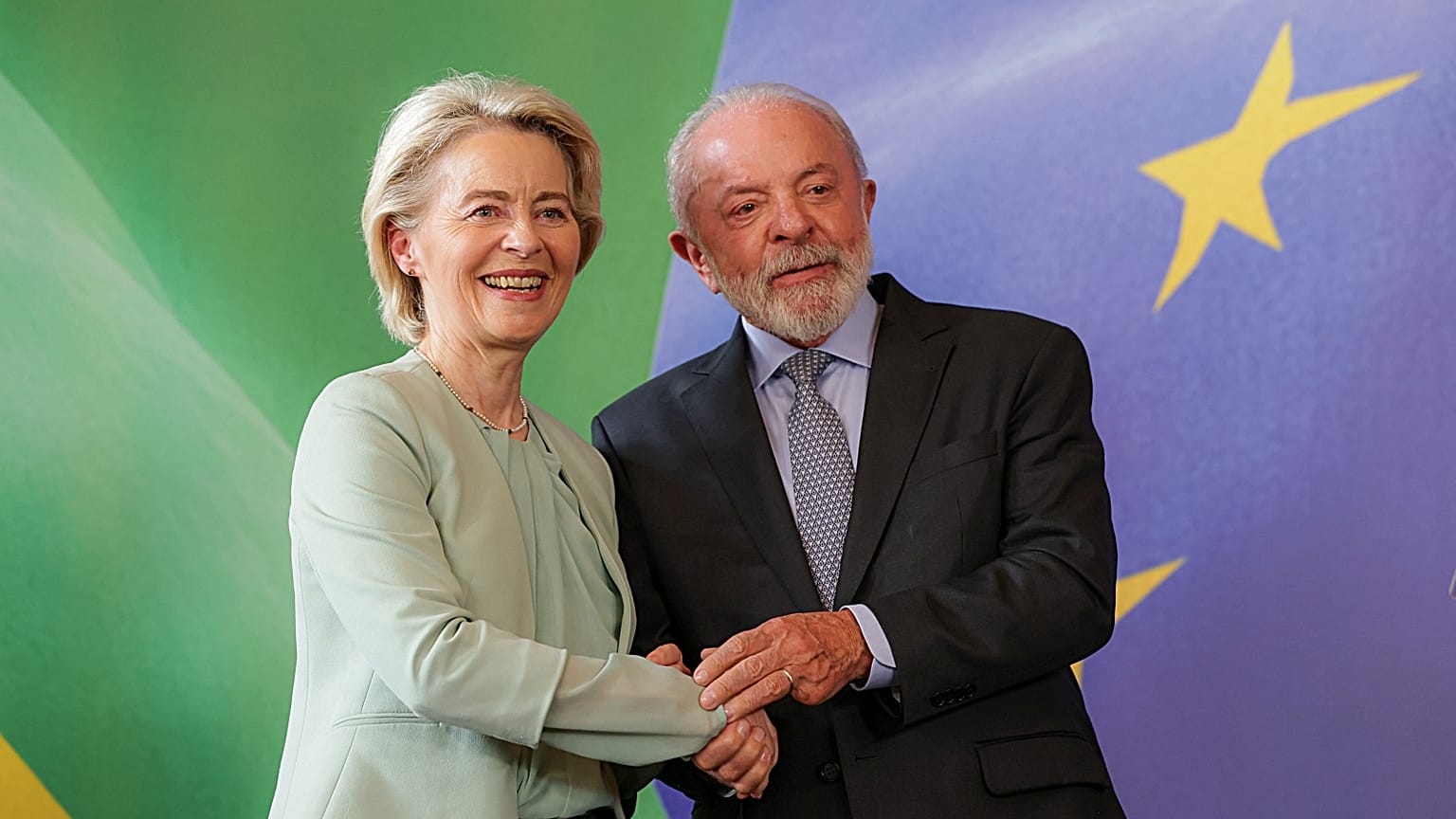
European leaders have greeted Lula's re-election in Brazil. "Democracy and multilateralism have won in Brazil," Ursula von der Leyen said.
European leaders have hailed Brazilian President Lula da Silva's re-election for a fourth term, defying predictions of a right-wing surge in Latin America's most populous country and securing a key ally for the EU.
European Commission President Ursula von der Leyen and European Council President António Costa were among the first to congratulate Lula, with whom they worked closely to secure the EU-Mercosur trade deal.
The agreement, signed in January with the South American trading bloc comprising Brazil, Argentina, Paraguay and Uruguay, was seen as a rebuke to US President Donald Trump's punitive tariffs. Brussels had feared that Lula's right-wing rival, Flávio Bolsonaro, would jeopardise the deal after calling on Brazil to break free of Mercosur's "shackles" and pursue independent trade agreements, including with the US.
"Congratulations to my friend, Lula," von der Leyen said on social media.
"Democracy and multilateralism have won in Brazil. Europe's partnership with Brazil is thriving. We will remain by your side for the years to come," she went on.
"Together we will keep working closely for free and open trade. A rules-based global order. And strong ambitions for our climate."
Costa spoke with Lula on Sunday night to personally congratulate him.
"The Brazilian people have spoken," Costa said.
"We will continue to work together to deepen our ties, tackle global challenges and build a more peaceful and prosperous world."
French President Emmanuel Macron, Dutch Prime Minister Rob Jetten and Portuguese Prime Minister Luís Montenegro also joined the chorus.
"In the face of the great challenges of our time, let us strengthen our strategic partnership and bring to life the friendship between our two countries in service of a more just world," Macron said.
Pedro Sánchez, the most prominent left-wing leader in Europe, hailed Lula's re-election as a "great victory" and drew a parallel with his country, where the conservative opposition leads the polls ahead of snap elections next month.
"What has happened in Brazil will happen in Spain," Sánchez said. "The comeback of global progressivism has just begun."
The European reactions poured in as the results from Brazil showed Lula with a lead of nearly 4.4 million votes over Bolsonaro, giving him 51.8% of the total vote.
Bolsonaro, whose father, Jair Bolsonaro, is in jail for leading a coup attempt, has contested the tally and said the election should be annulled.
Bolsonaro claimed the order by Brazil's judiciary to extend voting hours due to public transportation delays and torrential rains was a "dirty trick".
A win for Bolsonaro, as many opinion polls had predicted after the first round, would have consolidated Latin America's right-wing turn. The Trump administration has tried to assert dominance in the region under the so-called "Donroe Doctrine".
Trump has been credited with bringing the EU and Brazil closer together, as the two searched for reliable partners in an increasingly volatile world.
The EU and Brazil have found common ground on areas that Trump has challenged, such as free trade, the multilateral order and climate action, with a focus on the Amazon.
Some crucial differences remain, most notably on Russia's full-scale invasion of Ukraine. Brazil, as a member of the BRICS, maintain close ties with Russia.
From metalworker to Brazil's president: Lula da Silva's rise
 Copyright AP Photo
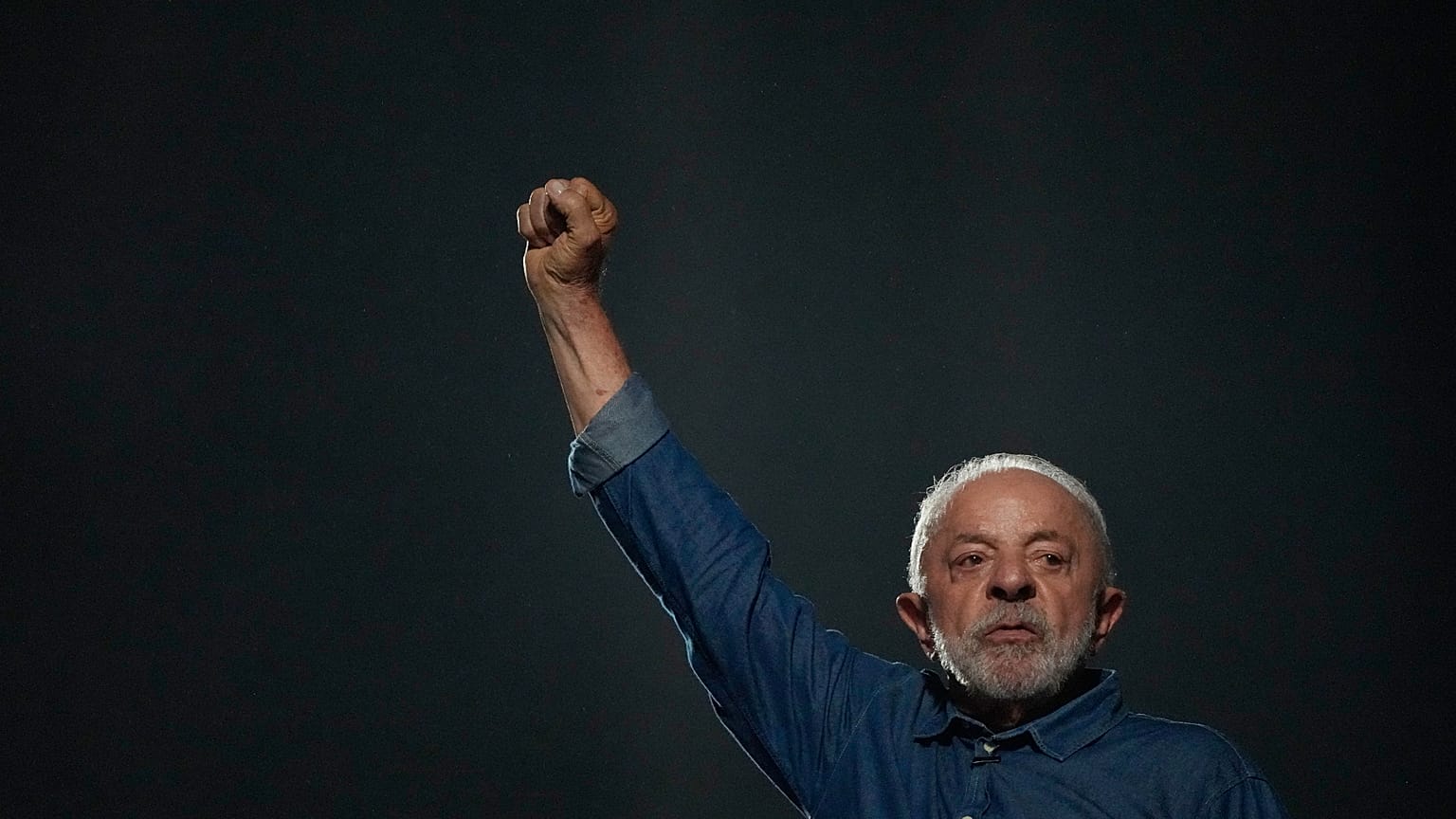
Lula broke with his unfavourable record since 1989, winning the runoff after losing the first round, crowning a career that took him from metalworker to Brazil's presidency.
After losing in the first round, Lula da Silva pulled off a historic comeback to be re-elected president of Brazil in the second round. Back in the Palácio do Planalto, which he had never left, the leader of the Workers' Party (PT) defied unfavourable precedent: since 1989, the year when Brazil returned to direct presidential elections and introduced the two-round system**,** no candidate trailing after the first round had ever gone on to win the second.
"I owe this to you. I have always thought that God has been very generous to me, because there are so many people better prepared than I am, so many people with more diplomas than I have, so many people who have read more books than I have, so many people who have studied more than I have," he said in his victory speech, his fourth after a presidential election.
It was a first for Lula, too. In 1989, he finished 13.3 points behind his rival Fernando Collor de Mello in the first round and failed to close the gap in the second.
From factory worker to trade unionist, from trade unionist to politician, from politician to president of Brazil. Nothing has ever seemed impossible for Lula, who once again showed with this election that adversity is not always insurmountable.
"I want to tell you that I am enormously proud. First, because I am the only president of the Republic, a metalworker without a university degree, elected four times, democratically, to call for peace," he told the crowd.
Lula, who turns 81 on Tuesday, promised "the best term" in Brazilian history.
"The day after tomorrow, on the 27th, I will turn 81. And I want to make a pledge in front of the press and in front of you. I am going to deliver the best term any president has ever served in the history of this country," he vowed.
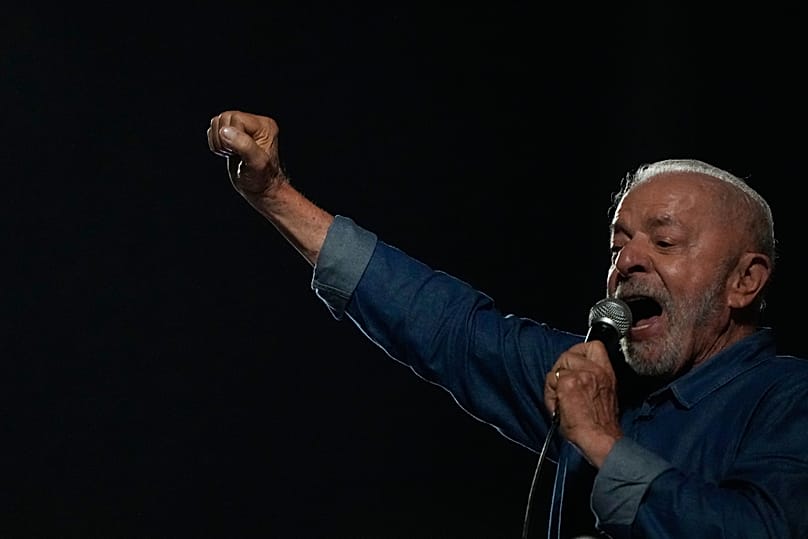 Lula da Silva addresses his supporters during a victory rally after the second round of the presidential election AP Photo/Natacha Pisarenko
The seventh child of illiterate farmer parents, Luiz Inácio Lula da Silva was born on 27 October 1945 in the Brazilian city of Garanhuns, in the north-eastern state of Pernambuco. He was only seven when he moved with his family to São Paulo, and 14 when he was admitted to a technical course in metalworking. Before that, he had already worked as a street vendor, shoeshine boy, and dye-shop assistant. He went on to become a metalworker, a profession he later defended as a trade unionist.
"Lula" began as a nickname and was later officially incorporated into his name – he is the epitome of the worker who becomes a politician: it was as a union leader and organiser of metalworkers' strikes in the São Paulo region, during the military dictatorship, that he made his name. During his years as a metalworker, he lost a finger in a workplace accident, which later earned him the disparaging nickname “nine fingers” among opponents.
It was these strikes, which he led between 1978 and 1980, that paved the way for the founding of the Workers' Party (PT) in 1980. The party would go on to emerge as the main force on Brazil's left after the country's democratisation between 1985 and 1988, with Lula as its leading figure.
After losing the presidential elections of 1989, 1994 and 1998, he finally reached the presidency in 2002, where he remained for two terms. He was the first trade union leader and manual worker to enter the Palácio do Planalto.
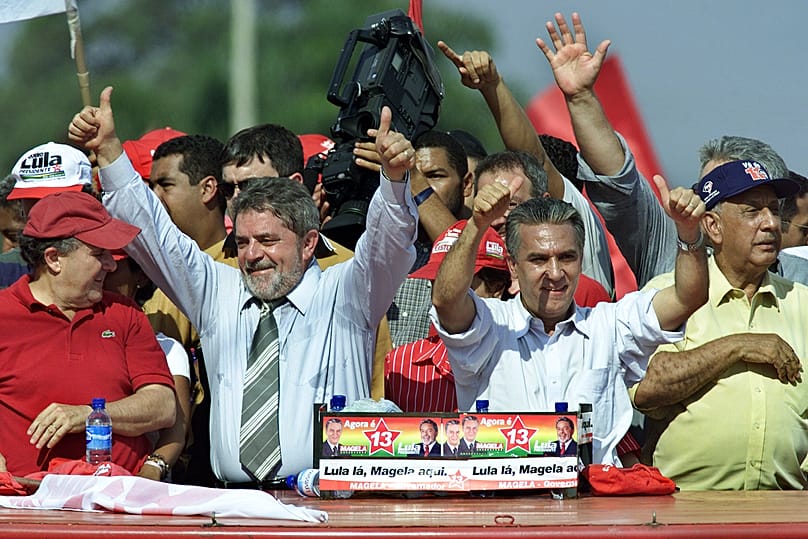 Lula waves from the top of a lorry during a rally in Brasília, Brazil, on Tuesday, 22 October 2002. ERALDO PERES/AP
Supporters of his political legacy point to the transformation of a country marked by extreme poverty and illiteracy into a more prosperous and more equal Brazil, through social policy measures such as the introduction of the "Bolsa Família" in 2003 and the creation of the "Zero Hunger" programme.
Lula ended his first term with an approval rating of 57% and was re-elected in 2006 with more than 58 million votes, the highest tally in Brazil's history.
The results would ultimately bolster Lula's narrative that the state can play a decisive role in reducing poverty and hunger. In 2014, under the government of Dilma Rousseff, Lula's political successor, Brazil left the United Nations' Hunger Map after a significant reduction in undernourishment in the country. The shift was linked to a package of social and economic policies.
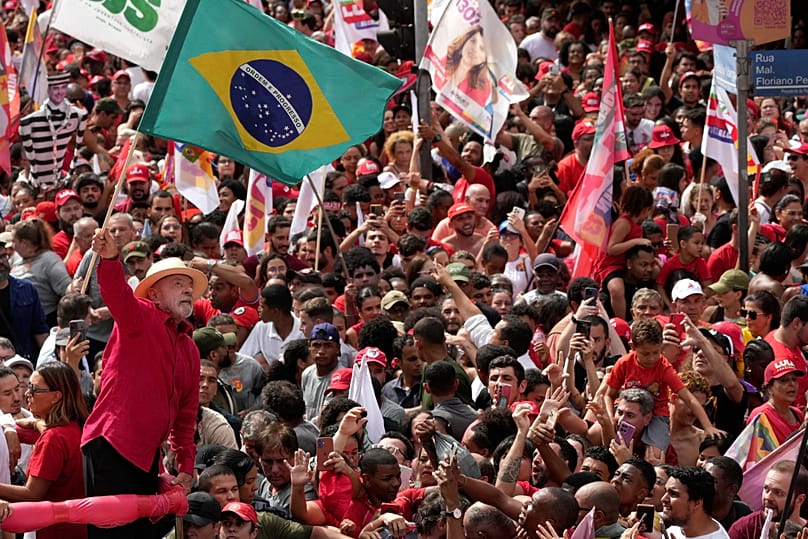 Luiz Inácio Lula da Silva during a campaign rally in Juiz de Fora, in the state of Minas Gerais AP Photo/Silvia Izquierdo
Politically, he has always presented himself as a defender of multilateralism, diplomacy and an international order in which decisions are not determined solely by the power of the major powers.
"War is not the continuation of politics by other means. It is the total failure of politics. In an interdependent world, to lead is to reconcile the interests of the homeland with those of humanity. That is the reflection of someone who represents a nation that cherishes peace and freedom. Someone who fought against a military dictatorship and defended his country against an attempted coup. It is the conviction of a worker elected three times as president who took Brazil off the Hunger Map," he declared on 22 September 2026 in his speech to the 81st United Nations General Assembly in New York.
But the corruption scandals engulfing Lula and the PT would catch up with him, temporarily curtailing his political career.
The "Car Wash" investigation and subsequent trials led by judge Sérgio Moro (later Bolsonaro's justice minister) dominated the second half of the 2010s. It brought down numerous heavyweights and sent dozens of politicians from across the spectrum to prison. The investigation, which exposed a complex bribery and kickback scheme centred on the semi-state oil company Petrobras and the construction giant Odebrecht, was central to fuelling distrust of Brazil's political class and the rise of right-wing populism embodied by Jair Bolsonaro.
Lula was jailed in March 2018, after being sentenced to nine years in prison for allegedly receiving a flat in exchange for political favours. After 580 days in custody, Lula was released in November 2019, following a change in Supreme Federal Court case law on when a sentence may begin to be served.
In 2021, the Supreme Court went further and annulled the former president's convictions in the case, ruling that the court in Curitiba lacked jurisdiction to try him. This cleared the way for the PT founder to return to the presidential race, which he went on to win in 2022.
His victory in the 2026 election marks a new phase in a political story defined by his ability to return to power, even if the road ahead now appears somewhat steeper.
The Brazil Lula now governs is not the one he led in the 2000s: the country remains deeply polarised, Congress is dominated by the centre-right and Bolsonarism still commands significant electoral strength.
After losing in the first round, Lula da Silva pulled off a historic comeback to be re-elected president of Brazil in the second round. Back in the Palácio do Planalto, which he had never left, the leader of the Workers' Party (PT) defied unfavourable precedent: since 1989, the year when Brazil returned to direct presidential elections and introduced the two-round system**,** no candidate trailing after the first round had ever gone on to win the second.
"I owe this to you. I have always thought that God has been very generous to me, because there are so many people better prepared than I am, so many people with more diplomas than I have, so many people who have read more books than I have, so many people who have studied more than I have," he said in his victory speech, his fourth after a presidential election.
It was a first for Lula, too. In 1989, he finished 13.3 points behind his rival Fernando Collor de Mello in the first round and failed to close the gap in the second.
From factory worker to trade unionist, from trade unionist to politician, from politician to president of Brazil. Nothing has ever seemed impossible for Lula, who once again showed with this election that adversity is not always insurmountable.
"I want to tell you that I am enormously proud. First, because I am the only president of the Republic, a metalworker without a university degree, elected four times, democratically, to call for peace," he told the crowd.
Lula, who turns 81 on Tuesday, promised "the best term" in Brazilian history.
"The day after tomorrow, on the 27th, I will turn 81. And I want to make a pledge in front of the press and in front of you. I am going to deliver the best term any president has ever served in the history of this country," he vowed.
The seventh child of illiterate farmer parents, Luiz Inácio Lula da Silva was born on 27 October 1945 in the Brazilian city of Garanhuns, in the north-eastern state of Pernambuco. He was only seven when he moved with his family to São Paulo, and 14 when he was admitted to a technical course in metalworking. Before that, he had already worked as a street vendor, shoeshine boy, and dye-shop assistant. He went on to become a metalworker, a profession he later defended as a trade unionist.
"Lula" began as a nickname and was later officially incorporated into his name – he is the epitome of the worker who becomes a politician: it was as a union leader and organiser of metalworkers' strikes in the São Paulo region, during the military dictatorship, that he made his name. During his years as a metalworker, he lost a finger in a workplace accident, which later earned him the disparaging nickname “nine fingers” among opponents.
It was these strikes, which he led between 1978 and 1980, that paved the way for the founding of the Workers' Party (PT) in 1980. The party would go on to emerge as the main force on Brazil's left after the country's democratisation between 1985 and 1988, with Lula as its leading figure.
After losing the presidential elections of 1989, 1994 and 1998, he finally reached the presidency in 2002, where he remained for two terms. He was the first trade union leader and manual worker to enter the Palácio do Planalto.
Supporters of his political legacy point to the transformation of a country marked by extreme poverty and illiteracy into a more prosperous and more equal Brazil, through social policy measures such as the introduction of the "Bolsa Família" in 2003 and the creation of the "Zero Hunger" programme.
Lula ended his first term with an approval rating of 57% and was re-elected in 2006 with more than 58 million votes, the highest tally in Brazil's history.
The results would ultimately bolster Lula's narrative that the state can play a decisive role in reducing poverty and hunger. In 2014, under the government of Dilma Rousseff, Lula's political successor, Brazil left the United Nations' Hunger Map after a significant reduction in undernourishment in the country. The shift was linked to a package of social and economic policies.
Politically, he has always presented himself as a defender of multilateralism, diplomacy and an international order in which decisions are not determined solely by the power of the major powers.
"War is not the continuation of politics by other means. It is the total failure of politics. In an interdependent world, to lead is to reconcile the interests of the homeland with those of humanity. That is the reflection of someone who represents a nation that cherishes peace and freedom. Someone who fought against a military dictatorship and defended his country against an attempted coup. It is the conviction of a worker elected three times as president who took Brazil off the Hunger Map," he declared on 22 September 2026 in his speech to the 81st United Nations General Assembly in New York.
But the corruption scandals engulfing Lula and the PT would catch up with him, temporarily curtailing his political career.
The "Car Wash" investigation and subsequent trials led by judge Sérgio Moro (later Bolsonaro's justice minister) dominated the second half of the 2010s. It brought down numerous heavyweights and sent dozens of politicians from across the spectrum to prison. The investigation, which exposed a complex bribery and kickback scheme centred on the semi-state oil company Petrobras and the construction giant Odebrecht, was central to fuelling distrust of Brazil's political class and the rise of right-wing populism embodied by Jair Bolsonaro.
Lula was jailed in March 2018, after being sentenced to nine years in prison for allegedly receiving a flat in exchange for political favours. After 580 days in custody, Lula was released in November 2019, following a change in Supreme Federal Court case law on when a sentence may begin to be served.
In 2021, the Supreme Court went further and annulled the former president's convictions in the case, ruling that the court in Curitiba lacked jurisdiction to try him. This cleared the way for the PT founder to return to the presidential race, which he went on to win in 2022.
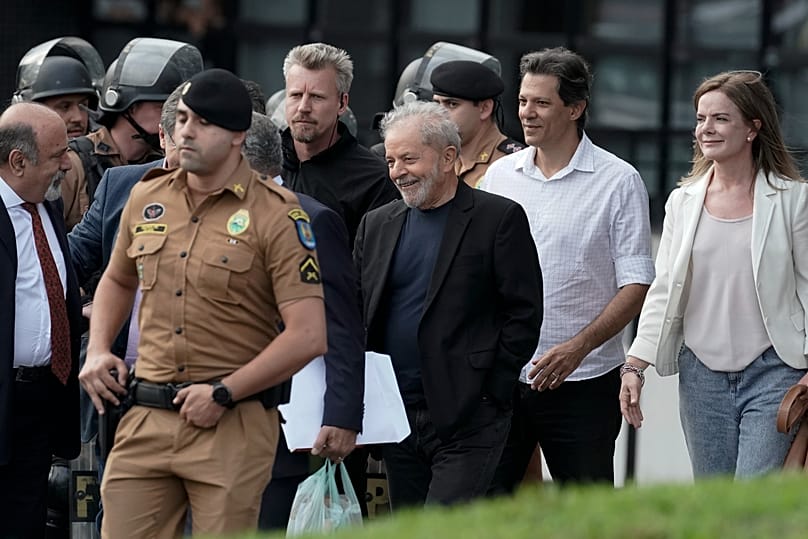
His victory in the 2026 election marks a new phase in a political story defined by his ability to return to power, even if the road ahead now appears somewhat steeper.
The Brazil Lula now governs is not the one he led in the 2000s: the country remains deeply polarised, Congress is dominated by the centre-right and Bolsonarism still commands significant electoral strength.

